Home Blog Page 1099

Every hipster will find something to watch at VIFF

0

Do you want to become a real hipster, not just someone who plays the persona in floral clothes from Value Village? Want to be cultured and informed about issues plaguing all corners of the globe? Or, do you just want to be able to say you liked something before it was cool?

If you answered affirmative to any of the above questions, then the 33rd annual Vancouver International Film Festival, which runs September 25 to October 10, will likely tickle your fancy. The event features almost 350 films from more than 70 countries, and this year’s festival is a strong meld of genre films, non-fiction documentaries, and undiluted short films, from established auteurs to up-and-coming filmmakers.

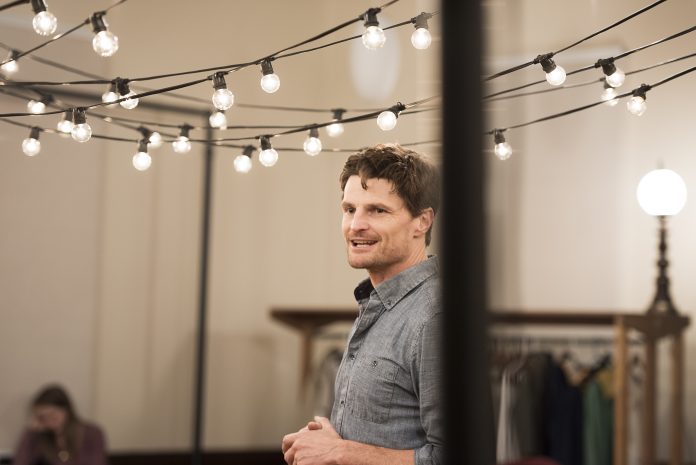
According to SFU alumnus Curtis Woloschuk, the festival’s program logistics coordinator, Canadian images shorts programmer, and above all, bona fide hipster, it’s “one of the strongest line-ups in recent years.”

Which films will different kinds of hipsters enjoy at this year’s VIFF? Read on.

Genre Films: For the phony hipster who likes to think he’s artsy, but goes to a film festival to see something accessible

The Rio Theatre has the bonkers genre films which play every Friday and Saturday night during VIFF (among other times). “I’m really happy with the genre line-up,” Woloschuk exclaimed, later saying that a film called Housebound is a “fantastic New Zealand horror-comedy that manages to subvert most expectations” and that two Canadian films playing late night at the Rio, The Editor and Bloody Knuckles are also “fantastic.”

Non-fiction documentaries: For the hipster who cares about social justice, environmental, and personal issues . . . or at least pretends to

Cinephiles can catch docs such as South Africa’s Khalo Matabane’s personal, Nelson Mandela, The Myth and Me, which delves into the director’s conflicted feelings towards the iconic and celebrated figure. Another, Gabe Polsky’s Red Army, looks at the relationship between the USSR’s hockey team and their national identity.

Woloschuk also noted a particular trend of non-fiction films which happens to have its own independent section called Arts & Letters — a component devoted to narrative and documentary filmmaking which centres on music. A Glen Campbell documentary, Glen Campbell: I’ll be Mine, explores the filmmakers Alzheimer’s diagnosis and attempts to reduce the impact of the disease with music.

Another noted film is The Possibilities are Endless: Edwin Collins, the frontman for Orange Juice and a solo artist, had two massive strokes and must learn to play music again.

Short Films: For the hipster who can’t go 10 minutes without adding a new selfie to their Instagram. Don’t worry there’s a little break between these!

Woloschuk said, “I think one of the great things about the short films is that you get to see people operate [. . .] within budgetary constrictions that doesn’t necessarily impact the story they want to tell. I think you can see people who really get to realize their vision and tell that 10-minute story without needing to be beholden to other forces like funding agencies.”

Additionally, he proclaimed that the “two films by UBC students, one called Light, one called Hard Card are fantastic short films.” He continued, “When you see that many films from one talent pool, it’s kind of remarkable the quality of the work and how strong it is overall.”

Canadian films and directors: For the patriotic Canadian hipster who thinks that negotiating their independence is way cooler than fighting for it.

“We have a good number of Canadian films who have really established themselves and now have American casts,” Woloschuk stated. Among them is Jean Marc-Vallee’s Wild (starring Reese Witherspoon on a soul searching journey in the wild) and David Cronenberg’s latest, Maps to the Stars.

Perhaps the most intriguing among the Canadian filmmakers featured at VIFF is the young and prolific Xavier Dolan. His new film Mommy experiments with an oddball 1:1 aspect ratio.

Established auteurs: For the hipster who dismisses “pretentious” films by saying “you just don’t get it.”

“Mike Leigh has a new film this year [Mr. Turner] that certainly stands out,” Woloschuk said before explaining that the Cannes Palme D’or winner, Winter’s Sleep, will also be in the line-up. However, the one that is bound to raise the most eyebrows is the influential French new-wave director Jean-Luc Godard’s Goodbye to Language 3D. Yes, you read that correctly: Godard in the 3D. It sounds bonkers.

Some hipsters, like some films, defy categorization. Some of the unclassifiable films are Damien Cazelle’s Sundance Jury Prize winning, Whiplash, which follows a jazz drummer as he’s pushed to the limit by his teacher, and Bennett Miller’s Foxcatcher, which took home Best Director from Cannes.

One could talk about the diverse selection at this year’s VIFF forever, but there is a universal element which is bound to affect more than just the hipsters. Woloschuk described this when he said, “People look for different things in cinema, the late night screenings kind of feed into this. You can watch a scary movie at home but when you watch it with several hundred other people, it’s a very different experience. We’re just trying to find different ways of making the festival experience be an experience for people, and that kind of goes beyond watching a film.”

The Maze Runner is predictable and dull

0

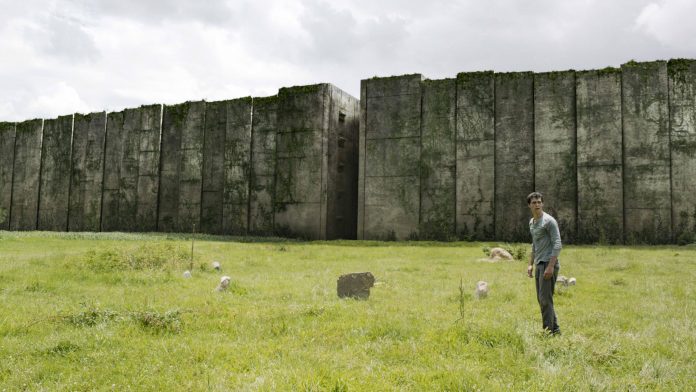
Wes Ball’s The Maze Runner (adapted from a young adult novel of the same name) begins with an elevator rushing to a bright light at the top of a dark shaft. A teenager awakens surprised and afraid as the cabin thunderously rushes to the top. He doesn’t remember his name, background, or hometown.  When the elevator reaches the top he realizes he is trapped in a small community surrounded by enormous concrete walls. The little town is inhabited by teenage boys who have all experienced the same thing. They arrive with no memories or understanding of where or why they are trapped.

Behind the concrete walls is a maze that opens every morning and closes that same night. The boys in the community send skilled ‘runners’ to map out the maze and attempt to find a way out. However, they must make it back before nightfall because inside the labyrinth the maze grievers, mechanical killer spiders, awaken to prey on any runners left inside. We are told no one has ever lasted overnight in the maze.

This concept, a cross between Lord of the Flies and Dark City, had me intrigued with many questions and awaiting an equally intriguing conclusion. Now I am still waiting. The film builds to a revelation, but is let down by a resolution that explains the essentials in a predictable expository speech that doesn’t even make sense of some of the smaller clues presented.

Paradoxically, we understand what is going on but are in the dark as to the significance and the connection between all the clues. More disappointingly, however, is that in the end, the reason for the entire fiasco was the first thought that came to my mind. My point is not that I’m smart, but that this movie is that shallow.

At times, the film hints at higher realms of science fiction by using the story to examine male nature or community break down; however, it eventually ignores this potential second layer to weave its charade of a plot.

The Maze Runner is science fiction with no subtext, a mystery without a satisfying resolution, and an action movie which utilizes the same tropes over and over (every ‘tense’ situation is either contrived from the closing walls and the characters needing to make it to the other side in time or a pop out scare with deafening sound design). It all seems like something you don’t want to see, but when it is evaluated in context alongside its peers, it doesn’t stoop to having schmaltzy pop songs thundering over make-out montages. There is no love story or developed characters that are later exploited for sentimentality’s sake — although one instance in the climax comes close — which is to say that Wes Ball could have made a worse movie.

Watching The Maze Runner is like paying to enter a corn maze where signs are posted showing you the exit, except that you must endure nearly two dull hours before escaping.

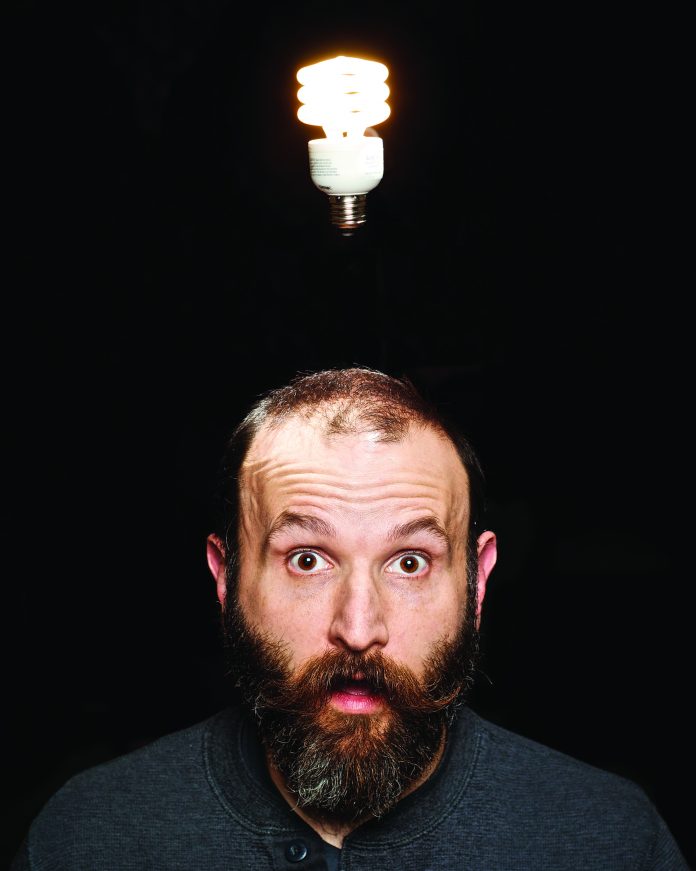
Ideas worth spreading in Vancouver

1

This year’s TEDxVancouver will take place on Saturday, October 18 at the Queen Elizabeth Theatre. An independent event affiliated with the TED Talks, this is the sixth year that TEDx will be held in Vancouver.

Presenting on the theme of turning your dreams into reality, the first three speakers announced for the event are Victor Chan, Treana Peake, and Jay DeMerit — three individuals from the diverse fields of fashion, sport, spirituality, and philanthropy. With different backgrounds and experiences from opposite ends of the world, they each bring their unique stories with them to the inspiring TEDxVancouver this fall. Although they are speaking on diverse subject areas, they have one thing in common: they are all excited and honoured to be using this unique platform to share their “ideas worth spreading.”

Jay Demerit attributes much of his success as a professional soccer player to his strong family support system, helping him each step of the way. In fact, he is now in the process of creating the Rise and Shine Retreat, where he can support aspiring sports stars of the next generation. Rather than just a sports camp, he and his wife envisioned a place where “not only can they get a soccer education, they get a life education as well.” An overwhelming goal for the camp is to “create good people.”

Demerit is one who can attest to this year’s theme of turning your dreams into reality since that is exactly what he has done in his career. After not making a professional team in the US, he took all his money and his determination to Europe where he was signed to semi-professional Northwood and then to Watford where he played in the Championship and Premier leagues. From there, he created a legacy for himself as the first American-born captain in his team’s history. He continued this legacy by playing every minute of FIFA 2010, and as the Vancouver Whitecaps Captain until this year.

As someone who has triumphed over challenges, Demerit hopes that those who hear him speak will be able to apply his experiences to their own lives. When this happens, Demerit says he will have done his job at TEDxVancouver.

Treana Peake is a fashion designer who takes a unique approach to the fashion industry and its far reaching influence. Though it is quite an achievement to see her Obakki pieces on red carpet celebrities, some of the brand’s biggest accomplishments have been through the philanthropic efforts of the Obakki Foundation.

As someone who had been involved in philanthropy all of her life, Peake recognized the opportunity to incorporate the two different aspects under one brand. As she said, “there was a platform to be used, for good.” With these philanthropic endeavors, she not only created a foundation that funds orphanages, schools, and focuses on bringing clean water to areas that wouldn’t otherwise have access to it, she also created a new fundraising model.

Rather than the typical organization with overhead costs that cut into philanthropic goals and accomplishments, the Obakki clothing line absorbs any and all fees incurred by the foundation. Donor money does not pay for a cent of the line’s operating costs, which allows the foundation to focus on its goals, including building hundreds of water wells. “So many things expand from water,” says Peake, and with her time at TEDxVancouver, she hopes she can inspire the audience with all that a new take on a classic charitable idea can do.

When Victor Chan looks back at all that has happened leading to this present moment — being kidnapped by three rifle-wielding men in Afghanistan in the 70s, and adventuring with a fellow escapee to meet the Dalai Lama — he asserts that without these events, we would not be speaking to him nor hearing him speak.

Chan never set out to meet the Dalai Lama, nor did he predict he would become a co-author with and friend of His Holiness. However, he realizes what a privilege it has been to learn from someone “who has such moral authority,” and today, the two of them travel together promoting their two co-authored books.

Victor previously spoke at TEDxArgentina, and attended TEDxOxford. He is looking forward to speaking at the Vancouver event, spreading the ideas of living in a holistic and balanced way, a way that strongly values the worth of a “warm heart.”

His experience is a stark reminder of how the paths we take in life can change us. The overall message Chan has received from the Dalai Lama, and wishes to reiterate in his writing and his speaking, is one of compassion. He says, “We all want to be happy. The surest way to attain sustainable happiness is through compassion.”

Each of these speakers will present inspiring stories and speak about their unique ideas and experiences when they visit Vancouver in October. Most importantly, they all have ideas worth spreading.

Our Town: as much as things change, they always stay the same

0

Sitting at a picnic table beside the main stage tent at Bard on the Beach, Bob Frazer explains that Thornton Wilder and Shakespeare have one very important thing in common: they wrote plays about human emotions. “One of the great things about Shakespeare, and why I firmly believe he gets done over and over again, is that he doesn’t deal with his time period, he doesn’t deal with what’s going on, he deals with human emotions. Our Town may take place between 1901 and 1913, but that’s not the point. The point is that it deals with human emotions and human truth.”

As his summer acting in Equivocation and Cymbeline at Bard on the Beach comes to a close, Frazer’s company, Osimous Theatre, has started rehearsing their production of Our Town. The play has been around since 1938 and is still so popular that it is staged daily somewhere in the world. It hasn’t been done professionally in Vancouver in over 20 years, and Frazer said he thinks this has to do with the play’s unfortunate reputation as a play reserved for high school drama class or community theatre.

“It’s unfortunate because the core of the story is something you can’t really understand when you’re in grade 10 or 11. There’s a reputation that goes with the play that it’s hokey and sentimental,” said Frazer, “but it’s much deeper than that. It’s one of the most beautiful plays ever written. It’s sad because if you do it with people who understand that life is slipping away from them, it’s going to have more resonance — and that resonance is going to carry over into an audience.”

Osimous Theatre will immerse the audience in this play in a unique way, as they plan to perform it in a church with flexible seating arrangements. “The audience isn’t seated in normal seats. In fact, they come to the show and we say ‘hey where do you want to sit. What do you want to sit on — do you want to sit on that couch? Ok let’s move it over here.’” They will arrange the seating based on where audience members want to sit, and the seven-member cast playing multiple characters will play through, among, and in between them, allowing for a new perspective on a traditional play.

Audience members will also have a chance to say a line or two in the play. As people enter, explained Frazer, they will choose a few audience members and ask them if they’re willing to say a line. “There’s a couple of lines from the audience in the play, and just at the moment they’re supposed to say it we’ll just shove them a cue card and they’ll say the line. They don’t know what they’re saying until they read it.”

The two intermissions will also provide some unexpected changes to the traditional theatre experience. “We’re moving the sets throughout the intermission, so when you come back your seat won’t be in the same place.” Suddenly you’ll be looking a different way and have a different perspective. “It will be fun, I hope people can find their seats again,” laughed Frazer.

Depending on where they’re seated, audience members may be so immersed in the action that they essentially become part of the set. “At the end, the audience may find themselves sitting in a place they were sitting the whole time and realize that it actually becomes a set piece. What we are trying to do is just allow people to fall into the play without forcing them into the play.”

In a similar way, the unassuming plot, or lack of plot, draws people in before they realize it. “The funny thing about this play is that there’s no real conflict, no real story arc. The first act is called ‘A Day in the Life,’ and it’s just these people, and yet within these people who are complicated and complex, you recognize your life.” This is the beauty of what Wilder is doing in Our Town. “He’s showing us life, and then all of a sudden by the end of it you find yourself involved in these characters — and it’s not that you’re involved in their life — but what you find is that your life has suddenly become intertwined with their lives.”

A major theme of the play is time slipping away, as well as the idea that our lives are very similar in terms of the everyday things we all experience. “One of the things Thornton Wilder talks a lot about is numbers. He uses the words millions, hundreds, thousands, etc, and he’s trying to show you that our lives are always the same. You’ve done the same things that I’ve done and our ancestors have done and the next generations will do the exact same things. They’ll all get married, they’ll all live and die, they’ll all go through love and hate — it’s the same thing. They’ll cook breakfast; they’ll eat lunch, see the sun set, and he says that’s ok; that’s what life is. Don’t expect it to be anything more than that.” He is trying to illustrate that while your life is unique, it has been done millions of times before.

This theme resonates with people of any generation, and as Frazer explained, we all go through a period of distraction where we’re not seeing those everyday moments and not really noticing our lives as they pass by. “Back in the 80s when I was a teenager, it was all about hair bands, and partying, and ACDC, and it was just a frivolous time. And you realized, wow I wasted so much time doing that. Today everyone’s texting everybody — they don’t look up and see the world — but we were on our walkmans; we were playing Atari. It was totally the same, yet so different. It’s not relevant to any one time because it’s relevant to all time.”

It’s relevant to all time, and also relevant to all places. The play is set in the fictional town of Grover’s Corners with many references to Massachusetts and the provinces above New York, but Frazer explained that there was no need to set the play in Vancouver or change these references. “It’s a universal play. It’s profound in the sense that it’s about life, and that life exists anywhere. It doesn’t just exist in Massachusetts or Grover’s Corners or New York; it exists here as well. The only updates to the play are things like the pocket watch that is now an iphone and their modern clothing.

Our Town will likely make you look at the theatre and the world around you in a new way. One of the most famous lines in the play occurs when the protagonist Emily asks the stage manager, “Do human beings ever really realize life while they live it, every, every minute?” He replies, “No, maybe the poets and saints, but no, nobody does.”

“I think that’s what the audience gets from it — they fall in love with people they recognize or themselves and then they walk away going ‘am I seeing life?,’” explained Frazer. Perhaps audiences will pay more attention to life’s little moments that Wilder is talking about. “He’s talking about the everyday things — the smell of bacon, or the sound of your mother’s voice, or your dad’s smell — his aftershave, whatever that is. That’s what Thornton Wilder is saying that we miss all the time, and that’s why it’s profound because once you understand that you start to see the world differently.”

As he’s working with his company to mount this play, Frazer said that one line from Wilder’s prologue has stuck with him: “All you need for the climax of Our Town is five square feet of boarding and the passion to know what life means to us.”

Our Town will be presented by Osimous Theatre September 30 to October 18 at the First Christian Reformed Church. For more information, visit osimous.com.

Don’t board the ‘hate train’

0

Fads occur when an item of popular culture, be it online or in real life, becomes inexplicably popular for a short period of time. For instance, I can still remember when everyone seemed to obsess over Pokemon, Yu-gi-oh, and Beyblade. Some more recent fads include Angry Birds, Duck Dynasty, and Game of Thrones.

Interestingly, some of these fads are still celebrated amongst small pockets of people, and I feel that if something brings you minor joy, entertainment, or amusement, then you have every right to it.

‘Hate fads,’ however, are an entirely different story.

I find that fads can also encompass the way some people go about ‘hating’ on things, rather than enjoying them, for short periods of time. If you haven’t noticed, the internet is full of people expressing their dislike for certain things, whether it be through chat boxes, videos, or other means. Oftentimes, it seems that people just enjoy coming together to hate stuff.

Normally, a little bit of collective dislike is fine and dandy; it can be fun to talk about the things that really grind your gears, especially with people who agree with you, or at least don’t rebuff your opinion.

However, the problem with a lot of these hate fads is that it seems as if many people hate certain things because everybody else hates them; in other words, they jump on the ‘hate bandwagon.’

It’s snobby to assume that people should listen to, watch, or even wear certain things.

One example would be the recent hate towards the band Nickelback. The issue here is not that people genuinely dislike the band, but more so the fact that they express their dislike because its the ‘cool’ thing to do.

Another example would be the hate I see toward Justin Bieber. While I don’t find any enjoyment in listening to his music, is he that extraordinarily bad that he needs to be singled out? I feel it has become a rite of passage for everyone to point fingers and agree on how much they seemingly dislike his music.

The main problem here is that we live in a culture in which we’re pressured to dislike certain things. In reality, everyone should be entitled to their own interests without feeling this pressure — it’s snobby to assume that people should listen to, watch, or even wear certain things.

Truthfully, though, whatever you get enjoyment out of should be good enough for both you and anyone else. It does not matter if it has been deemed by some internet society to be terrible. What I might call ‘cookie-cutter crap’ may deeply connect with someone else, or just plain sound good, and there’s nothing wrong with this notion.

With taste, there is no right or wrong, there is only the subjective. The only person’s taste that really matters is your own. So remember, if you’re going to hate, only hate what you actually hate, not what the group has decided that everyone should hate. Don’t board the hate-train, think for yourself.

Liam Neeson takes A Walk Among the Tombstones

0

Aim low; achieve average; feel awesome: this is Liam Neeson’s recent strategy for choosing roles. Your enjoyment of Scott Frank’s A Walk Among the Tombstones will depend heavily upon your expectations. What do you want out of a Liam Neeson thriller?

Neeson’s recent flicks never surprise me; they all have inherent b-movie fun that leaves me neither completely enthralled nor entirely bored. I have seen him kick butt so many times, in so many different places, in so many different ways, and in so many different movies (Non- Stop, Unknown, and Taken, to name a few) that I expect this trademark.

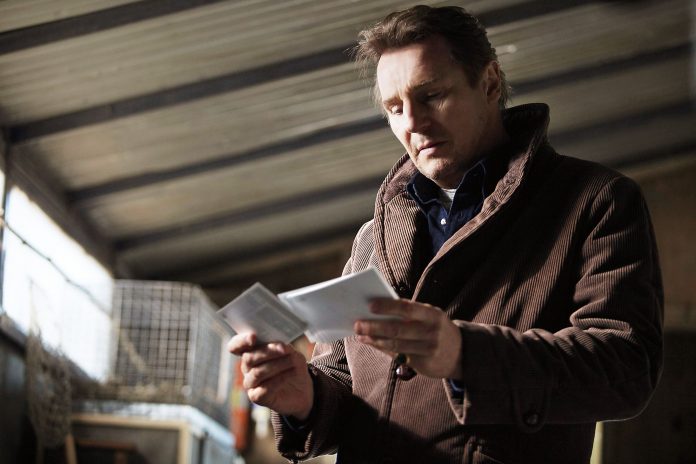
In this film, Neeson plays Matt Scudder, a cop who shoots three thugs as they’re holding up a bar. He is drunk during the entire ordeal and accidentally kills a seven year old girl. Skip ahead seven years and Matt is retired. He is sober and attending AA meetings. He is introduced to a drug trafficker whose wife has been kidnapped. Matt investigates this disappearance and finds that the abductors have done this more than once.

Prima facie, the film appears to have the same conventions, clichés, and genre tropes of Neeson’s other recent films, but this one managed to subvert nearly every one of those prejudices; the atmospheric settings and lead character’s heavy conscience kept me pinned to the edge of my seat. Tombstones is a character piece disguised as a crime mystery that, in its climactic shootout, ignores the action in favour of exploring the cryptic themes and ambiguity of the protagonist. Expect something more akin to David Fincher’s Seven or Zodiac, with an additional hint of self-awareness.

It’s surprising that the actor who showed remarkable dramatic chops in Schindler’s List is now a fierce 60-year old action star. Here he draws from both the nuanced and pulpy portions of his career to deliver a performance that is his best since 2011’s underrated The Grey.

Where in Neeson’s other films we don’t flinch at the sight of him shooting an evil dude’s brains out, here we are jarred and reflect on the sight because it so rarely occurs. It’s like a horror movie where the horrors aren’t dismissible supernaturalism, but rather the characters’ debilitating addictions, situations, and decisions. The slow pace will annoy many with false expectations, but those willing to surrender themselves over will probably find themselves shaken and immersed.

Scott Frank’s stylized direction keeps the film interesting even when the plot in the midsection becomes monotonous (we follow Matt from clue to clue over and over again). He often shoots with wide compositions which highlight the gloomy setting and transport us into the auras of the backwards New York City sights: a rooftop, a graveyard, and a rundown diner. All of it screams of a world losing its hope and morality. The film’s setting is reminiscent of the twisted worlds of classic pot boiling noirs.

My expectations were subverted and exceeded. Go in with an open mind and no false expectations and I think yours will be too.

Reimagining Terry

0
Those shoes look like they're in pretty good shape, all considered.
Terry Fox is as close as we have to a national hero — but deifying him only takes away from what he accomplished.

“Terry” Fox is the closest thing our country has to a national hero.

Think about that for a minute. Our folk hero isn’t a politician and reformer, like George Washington in the United States; nor the leader of a widespread social movement, like Mahatma Gandhi in India; nor a warrior or a prophet, like Joan of Arc in France. Where other nations idolize big people from big families occupying big places in world history, Canada has a suburban kid from Port Coquitlam whose heroism didn’t lie in organizing the people, or conquering the people, or even telling them what to do or how to think. And that’s what makes him great.

If you grew up in this province like I did, you’ll surely remember the countless hours of class time dedicated each and every September to discussing Terry’s legacy — his Marathon of Hope; his stubborn, unwavering dedication to the goal of raising money for cancer research in the face of his own declining health; his untimely death at the age of 22.

Imagining Terry as an icon and not a human being takes away from the real heroism of what he accomplished.

I don’t mean to make you relive this story. Terry’s tale has been firmly and repeatedly ingrained into the collective consciousness of British Columbia; we’ve all heard it over and over again.

What we often miss out on, though, is the portrait of Terry as he really was: not some heroic übermensch or irreproachable deity, but a regular kid with a commitment to making the world we live in a better and healthier place.

Think of Terry before he became the cultural icon he is today, before his statue, in mid-gait, stood in the Academic Quadrangle he once walked through as a regular undergrad. His mother convinced him to enrol in Simon Fraser University, where he chose to study kinesiology. He wanted to be a PE teacher — in another world, it’s easy to imagine him coaching ninth graders to run laps in the mud and rain.

By all accounts, Terry was a friendly, goofy kid with a passionate love for sports and competition. He would not have been unrecognizable as a university student to you or I. He earned a spot on the school’s basketball team during his junior year; after his cancer forced the amputation of his leg, he played on Canada’s wheelchair basketball team, and helped win them three titles between 1978–1980.

It was his experiences during this period of his life, before he received surgery for the osteosarcoma which had spread in his knee, that inspired him to run his Marathon of Hope. His time in chemotherapy treatment inspired his deep empathy for other cancer survivors; his resolve to change the way that we think about and research cancer originated from his human need to reduce the suffering of others. He promised himself that, if he survived treatment, he would do everything he could to make life better for cancer sufferers around the world.

This is something we all do in our daily lives. We see systems that are broken, and people in need; we feel for them, and we want to help them, even if we’re not sure how. It was Terry’s choice to do something about it, to find a way to make a lasting contribution to a cause he so believed in, that made him truly great.

Terry trained for 14 months before embarking on his now-legendary Marathon of Hope, and it must have a been a gruelling experience. He said that it took 20 minutes of running before the pain reached a threshold where he could ignore it; his prosthetic running leg gave him cuts, bruises, and blisters that took weeks to heal.

When he began his run in April of 1980, he maintained that the public response should be focused solely on promoting cancer research; he shied away from media scrutiny, insisted that his corporate sponsors not make any profit off his marathon, and only attended events and promotions he felt would result in more donations to the cause. Until the spread of cancer to his lungs forced him to end his run short, he never took a day off — even on his 22nd birthday, which would be his last.

It’s easy to bristle at the story of a folk hero whose inspirational struggles seem cheesy and idealized, especially when schoolteachers and media outlets have been forcing you to revisit the story every year since childhood.

But there was plenty about Terry that was subversive and challenging. He ignored the calls of doctors and friends who told him he was endangering his own life. He refused to think of himself as ‘disabled,’ and maintained that his life had become more rewarding since his amputation. Despite the immense toll his 143-straight-day marathon took on his physical and mental wellness, Terry never sought out any personal attention or glory.

We should remember Terry now, 34 years later, for his willpower, his success in uniting people towards a common goal of curing one of the most destructive and tenacious diseases in human history, and for his courage and kindness, even in his final moments. Each year, we run — like he did — to raise money for those who still suffer through surgeries and chemotherapy.

Ultimately, imagining Terry as an icon and not a human being takes away from the real heroism of what he accomplished. It ignores the fact that Terry wasn’t born exceptional. He made a choice he felt was in the best interest of those he cared most about, and he didn’t waver once until his disease forced him to step aside. That’s an example we could all learn from.

Have a little faith

0
Why don't more people use prayer beads? It "beads" me!
For many university students, religion is an integral aspect of student life.

Religion. It’s a word that people tend to avoid using; one of those topics that often gets swept under the rug and doesn’t make its way into everyday conversation. I can talk to my best friend about TV shows, what I ate for dinner, and everything in between, but religion is never a part of our daily dialogue. This is because she is an atheist and I am a Christian, and it’s always awkward to discuss a topic on which we have such widely different — even opposing — views.

Still, I’ve often thought to myself, “Shouldn’t I be able to talk to her about my beliefs, since they are an essential part of who I am as a person?”

An ideal balance of faith on campus is one that is founded on open dialogue and respect across all belief systems.

The dictionary definition of religion is “a cause, principle, or system of beliefs held to with ardour and faith.” For me, it’s much more; the way I see it and experience it in my daily life, religion is a feeling of passion and trust in something that is much bigger than myself.

Maybe this is because religion can be so diverse and complex that people have a hard time engaging with the topic in the first place. However, SFU has a variety of religiously affiliated clubs, along with many connections to off-campus religious groups. From Christian Outreach to the Muslim Student Association, religion is a key aspect of campus life for students from all walks.

The Interfaith Centre

The Interfaith Centre is a resource offered to students through SFU’s Student Services, the same organization that provides students with options on academic advising and opportunities to find work in the co-op program. But unlike those services, the Interfaith Centre is a resource that, for many students, seems to fly under the radar.

According to the statement posted on their website, the Centre is “a place on campus that supports the spiritual well-being of students, staff, and faculty through increasing understanding of several religious beliefs and practices.” Located in the heart of Burnaby campus, the Academic Quadrangle, the Centre provides a safe space for over 750 students, where they can participate in a variety of faith-based activities. Prayer mats and rooms are available for student use, and church services are conducted at the Centre as well.

After hearing that I worked as an SFU campus tour guide at Student Central, a priest in the Centre asked me to do him a favour: he asked if I would mention the Interfaith Centre to every tour group that I led, because he was tired of having 3rd- and 4th-year students saying that they wish they had known the space existed earlier on in their studies.

I kept my word. Now, every guest that I take on a tour will hear me point out the Interfaith Centre as a valuable and often under-appreciated resource on campus.

Religions on campus

Those who follow Christianity believe in having a relationship with Jesus Christ, as he was crucified and rose from the dead after three days in order to provide atonement for the sins of humankind. Most Christian groups desire to spread the love of Christ and the Gospel message of salvation. Several Christian clubs and organizations call the Interfaith Centre home.

Jean-Luc Padley is the president of SFU’s chapter of Catholic Christian Outreach (CCO), a movement focused on spreading the Gospel message and the basics of Catholicism to others. “CCO’s primary mission,” Padley says, “is to evangelize university campuses in a simple way with an emphasis on developing leaders for the renewal of the world.”

The club hosts a series of faith-based studies that allow students to explore and discover the many elements of the Christian faith. Aside from this, they also host events such as their fall retreat and an ever-popular pancake breakfast.

University Christian Ministries (UCM) is a student-organized club supported by the Pentecostal chaplaincy. It is an interdenominational organization which fosters student growth in their relationships with God through activities such as worship, fellowship, and outreach.

Seth Greenham is the Pentecostal chaplain at the Interfaith Centre, and also provides pastoral oversight for UCM’s activities. “Faith and spirituality transcend many people’s lives, and it is important for them to have a space on campus where they can practice their faith,” he says. “People come to university to learn and grow in knowledge, and spirituality is part of that experience.”

Other Christian organizations on campus include Power to Change, The Point church, the Chinese Catholic Club, and the Korean Campus Mission.

“People come to university to learn and grow in knowledge, and spirituality is part of that experience.”

Islam is another widely practiced religion on campus. Those who practice the faith, known as Muslims, believe in the monotheistic existence of God, or Allah, in which He is the one creator of the universe. Their beliefs are founded in the teachings of the Prophet Muhammad and those found in their holy book, the Qur’an. The Interfaith Centre is the location for many of the activities practiced by Muslim groups on campus.

The Shia Muslim Society was founded in 2009 by a group of students who felt the need to establish a welcoming Muslim society on campus. Laya Behbahani was one of the original members who founded the society.

“The Interfaith Centre is a valuable resource for students, faculty and staff,” Behbahani says, “primarily because it provides a space for our five daily prayers, which is one of the most important, if not the most important, aspect of a Muslim’s life. It is also a place where we all come together and have the opportunity to learn about different faiths in a casual and comfortable environment.”

The Shia Muslim Society’s primary mission statement is grounded in providing information about the Muslim faith to the university community through the organization of religious and educational events in hopes of fostering a better understanding about the Islamic way of life.

Other organizations include the Muslim Student Association and the Ismaili Student Association, which are both run by volunteer Muslim students on campus. The Muslim Student Association provides prayer space for daily prayers in the Interfaith Centre as well. According to their website, they “aim to provide a platform for engaging Muslim and non-Muslim audiences at SFU and the greater community in meaningful dialogue and conversation, with aspirations of combatting constant misconceptions and corrupt perceptions of Muslims and Islam.”

Apart from Christian and Muslim groups, there’s also Hillel BC, a Jewish group spread across many campuses in the province — its SFU club meets at the Cornerstone Building in Univercity. According to their website, the group “promotes Jewish life on campus and beyond  [. . .] We are committed to enhancing the lives of young Jewish adults by enabling them to explore their Jewish identity and relationship to Israel within a safe, pluralistic and inclusive community.”

Along with SFU’s Interfaith groups, there are also spaces on campus for those with no religious affiliation — atheists. When it comes to answering life’s big questions, the SFU Skeptics club takes a philosophical and humanist approach rather than a religious one. Skepticism values scientific evidence and reasoning when forming beliefs, while humanism takes into account the welfare of humans and uses scientific evidence and rationality to solve social and ethical problems.

The SFU Skeptics club exists in order to advocate for non-religious students on campus and to promote scientific thinking. “A skeptic answers inquiry with curiousness and critical thinking to make the most informed decision they can, and when presented with new information re-evaluates their position,” former vice president Gabrielle Jackson explains.

The club holds weekly meetings every Friday, during which members discuss a diverse range of topics, from philosophy to politics to pop culture.

“Speaking as a non-religious student, you don’t need this nebulous thing called ‘spirituality’ to be happy or to be good,” says current club executive Matthew Burgess.“But it’s an important part of some students’ identities, and it’s not going away. A university education exposes you to critical thinking and gives you tools. What you do with those is up to you.”

Why it all matters

Professor emeritus Donald Grayston taught religious studies at SFU before retiring in 2004. He is also a retired priest of the Anglican Diocese of New Westminster. The Interfaith Centre was established after he had already left SFU, but he still expresses support for the structure.

“In Canada, where there is no official religion, everybody is free to express their beliefs however they wish to,” he says. “The university itself has no official position on God, so [having] a place like the Interfaith Centre is a great way for students of all religious faiths to have opportunities to meet and understand each other.”

One’s religion is an integral part of their life, and having a space to share that with other people is precious. “My beliefs touch every aspect of my life and guide the daily decisions I make,” Padley says. “They give me assurance that what I’m doing has meaning, whether good or bad, and give me a context for my action.”

“The Interfaith Centre is a great way for students of all [religions] to meet and understand each other.”

Behbahani echoes this sentiment. “My belief system shapes a hundred per cent of the way I live my life,” she shares. “It provides a moral framework, a set of values that place dignity and respect for human beings, animals, and the earth at the forefront, and finally, it provides the highest system of ethics.”

Even outside of the context of religion, connecting with those who share a common belief system remains a key value for Burgess and Jackson. “Coming out of a conservative religious tradition, I felt the need to spend some time with people who wouldn’t see my lack of belief as something to be fixed,” Burgess says. Jackson recalls her first meeting with the Skeptics club as she was “surrounded by intelligent and friendly people with similar ideals to [her] own.”

I personally believe that every-body has a form of spirituality, regardless of whether or not they are religious. I see it as the root of everything good in the human spirit. I know that there are people who believe in forces that are greater than those on earth — some call these forces God or gods, while others don’t. Spirituality comes from striving for a purpose in life and the desire to ultimately find peace — two things that I believe everyone is looking for, regardless of whether or not they believe in a God.

That being said, my love for God is my life. It is not something that I can pack away in a box and take out only on Sundays. Many people feel the same way about their beliefs: that they are an essential part of their entire being.

An ideal balance of faith on campus is one that is founded on open dialogue and respect across all belief systems. I am proud to be part of a university that has so many groups that are focused on doing just that.


Intelligences are limitless

0

We live in a society obsessed with the elite. Whether it’s athletes, musicians, or painters, we look upon them with awe, and wonder how it would feel to break the shackles of being average.

When it comes to intelligence, this obsession is ever the case, especially in university. We are thrown into an environment where it feels as if our intelligence is constantly being evaluated and compared. But is there any way that we can accurately measure intelligence? And even if there is, does it have any real worth?

Intelligence is not an abstract concept beyond the range of common understanding, but the definition remains vague. The Oxford English Dictionary defines intelligence as an individual’s “ability to acquire and apply knowledge and skills,” but there are many ways this can be interpreted.

For example, an individual may be skilled in the traditional senses of intelligence — amazing at writing and analyzing texts, or at manipulating complex mathematical equations. But in a broader sense, intelligence can also describe skills, such as being an effective communicator, or having the bodily awareness necessary to be a dancer or rock climber.

We must look beyond the classic IQ test to determine intelligence. In all simplicity, the test only measures your ability to perform on that specific test; it doesn’t measure whether you will be the next Steve Jobs, Margaret Atwood, or Aristotle.

An IQ test doesn’t measure whether you’ll be the next Steve Jobs, Margaret Atwood, or Aristotle.

In high school, I had my IQ evaluated because I had had some academic difficulties. At first, it was sort of fun to have my skills categorized and quantified, but after a while the numbers began to weigh on my mind, making me more insecure than ever.

I soon became obsessed with my score, and found that my mind would wander off and calculate how many people in my graduating class were statistically more or less intelligent than me. I would aimlessly search the web to get an idea of what kinds of jobs people with my IQ usually had.

It became a toxic pursuit; and I felt limited in ways I hadn’t before. If I didn’t excel in a field I was told I was gifted in, I felt ashamed and angry. For this reason, I still do not discuss my test scores with friends, regardless of the fact that this all happened half a decade ago.

I failed to realize that other kinds of intelligence are just as important as the skills measured by an IQ score, and that no one skill can determine our future successes or failures. Emotional, intrapersonal, musical, and naturalist are just a few types of intelligence that aren’t commonly discussed, yet in combination they are what constitute a unique set of abilities that grow and shift as we navigate through life.

Intelligence is more complex than what is commonly assumed. It is not a simple, quantifiable value, and it is not something stagnant that cannot be developed and improved upon. Instead of focusing on the elite and the skills we lack, we should appreciate our own abilities, as well as others’, and what they can contribute to the world.

Night walk raises safety awareness for women

0
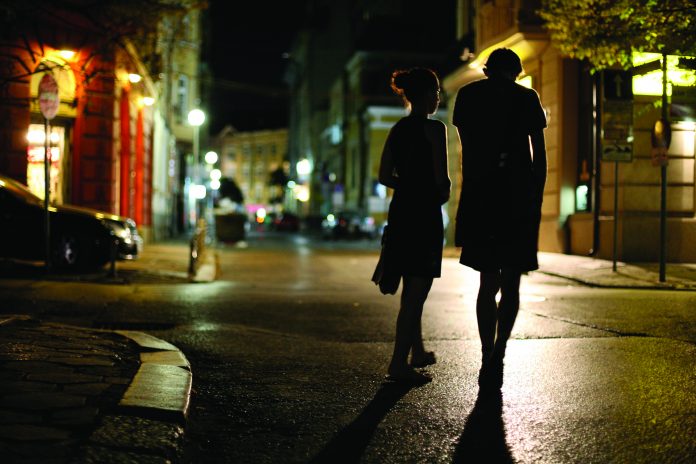
Many women find themselves at risk of harassment when out walking after dark.

In order to address the anxiety many women feel when walking or taking transit alone at night, a group of self-identified women went on a walk of solidarity through downtown Vancouver after dark.

SFU Women’s Centre held its first Night Walk on Saturday, September 13, which invited self-identified women — including some who had experienced harassment when out at night — to take their safety into their own hands.

Participants met at SFU’s Burnaby campus, then took the bus to Production and continued on the skytrain to Downtown Vancouver to begin their walk. The group continued on foot through the downtown area, and then bused to East Hastings Street and Commercial Drive. The event lasted three hours.

The solidarity walk included not only SFU students, but women who take late night classes, work late shifts, or simply find the night a time to think clearly.

Women’s Centre coordinator Nadine Chambers said, “For me, [this event] was a way of focusing on the way that women walk through the world.” 

Chambers talked about the issues regarding victim blaming and encouraged a different sort of dialogue: “Let’s talk about what we should do, rather than just about what we shouldn’t do.” She referred to how the onus can be placed on victims’ shoulders to avoid being assaulted at night — wearing conservative clothing or walking with a man for safety, for instance.

The timing of the Night Walk was a deliberate choice made by the Women’s Centre to reflect when most women are out at night. “What many people don’t realize,” Chambers explained, “is that at around midnight, many of the women [. . .] who clean the skyscrapers downtown stream out to catch one of the last Skytrains. So 12:30 at night is the time when there are many women are on the Skytrain, [rather than] when all the clubs let out people later on.

“There are so many different ways to make a network with people who go out at night — they don’t just consist of the people who go out to clubs.”

One of the highlights of the night was the Women’s Self Defence Wenlido class, hosted by Diane Jacobs and held in real-time as they traversed the city. During the walk, participants were invited to share situations that made them feel at risk, afraid, or simply uncomfortable, and what they did in response.

The group also collectively addressed concerns such as how to effectively form a protective group, how to holler for help, and what to do if a stranger approaches. Self-defence instructor Diane Jacobs’ methods did not include any specific rules. She explained, “There is no wrong way [to defend yourself,] as long as it works.”

Jacobs also offered tips on intervening physically when confronted at night, and facing aggressors verbally with assertiveness, as well as texting your cab number to a friend. She mentioned that kneecaps are surprisingly easy to dislocate.

“Being aware of their surroundings and mentally prepared to confront possible attackers enables women to escape a majority of dangerous situations unharmed,” said Jacobs.

Participants and staff continued to trade stories for the rest of the evening, touching on everything from awkward bus conversations to stiletto-turned-weapon encounters on the streets.

The return trip to SFU on the 135 was filled with laughter, anecdotes, and a heightened awareness of both the risks and rewards of being a woman out at night.