Home Blog Page 1062

Woohoo, Boohoo:

0
Image Credit: Flickr

Woohoo: Wisdom

Where would our lives be without wisdom? Our society thrives — and is dependent — on wisdom to succeed. Generational knowledge and experience is passed down among family, at work, and at school; sometimes this knowledge is amended due to societal or ideological change before it is passed down further. Regardless, the experiences that past positions have had remain embedded in history, forever to be referenced and applied.

Wisdom is everywhere. I’m offered wisdom every time I flip on the TV or browse the Internet; this university is essentially wisdom in a concrete enclosure; my grandmother splurges neverending wisdom as she pounds back the whiskey. I don’t know what I would do without the knowledge that has been passed down to me. Three cheers for wisdom!

Boohoo: Wisdom Teeth

Who the fuck named those terrible, crooked teeth at the backs of our evolutionarily shrinking jaws? I associate wisdom with good judgement, peace and prosperity. When I had my wisdom teeth removed, I felt none of those things.

In fact, all I felt were the effects of the copious T3s, stool softeners, and ice packets I had to use during the week that my face resembled a grapefruit. The pain was astounding. I didn’t gain any knowledge or self-fulfillment as I drooled all over my pillow, practically suffocating on gauze. The only wisdom I took from the experience was that I never wanted to go through that hell again!

Meet the Clan: Danielle Raison

0
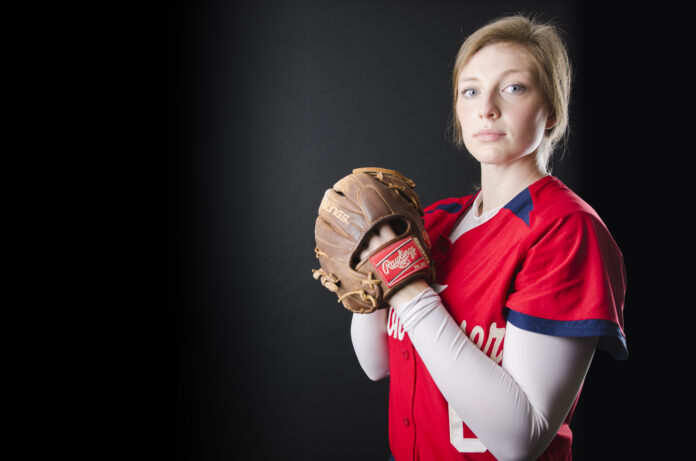
Shortstop Danielle Raison has proven to be a key part of the Clan’s success — she is currently second on the team in runs scored with 10. Image Credit: Brandon Hillier /The Peak
Shortstop Danielle Raison has proven to be a key part of the Clan’s success — she is currently second on the team in runs scored with 10.          Image Credit: Brandon Hillier /The Peak

Screen Shot 2015-02-20 at 11.18.27 PMSoftball is a true team sport — one in which every player must exert confidence in their positions and maintain a consistent mental and physical alertness when called upon in order for the team to win. For the shortstop, however, there is the highest demand for these qualities, and every movement requires great agility.

Enter Danielle Raison, SFU’s starting shortstop and one of the most vital cogs to the Clan outfield. The senior member of the team is entering her final season, and recalls her transition to the position from third baseman during her years of club softball.

“We had a couple of third basemen and fewer at shortstop, so I decided to make the move over there,” says Danielle. “I had a strong enough arm and was still on the left-hand side of the field, so it made for a pretty easy transition. It stuck with me, and I played all the way through to university.”

Danielle’s love of the outdoors and being active stems from growing up in her family acreage and spending time riding her horses. Despite attending an arts school with no sports teams, she spent as much time outside of the classroom as she could playing soccer and softball.

“I played metro soccer and high-level softball as well, so I was active as a child!” adds Danielle. “I’ve always played very competitive and medalled at three nationals for youth ball.

“Time commitments made me choose one [sport]. I think I was better at softball, and that’s why I chose it; you get to play in the summer and it’s nice.”

With a wealth of experience playing at such high levels, the Langley native began a strong commitment to her sport and to training harder to open the door to joining a university team.

Thankfully, Danielle became a Clan player, and faced a new level of competition within the Great Northwest Athletic Conference.

“[Moving to] shortstop at a university level from club ball is a big move. There are so many more things to incorporate into your game — not just fielding the ball and throwing the ball. You need to know the plays and be aware of the game a whole lot.”

Every aspiring player needs expert guidance and leadership to advance their game, and Raison feels that head coach Mike Renney has helped her game improve each day.

“He’s a really knowledgeable softball coach, [. . .] There is always something you could be working on and he always pushes you to do better,” she notes. “As soon as you reach one milestone, he has another one to make you continuously get better.”

Since her arrival in shortstop zone, Danielle has proven to be a key part of the Clan’s success. An unfortunate knee injury kept her sidelined for a majority of the 2014 campaign, one in which the team struggled into last place in the conference with only four wins.

Regardless of the setback, Danielle took every step to return to full fitness, while also helping her team weather the storm without her.

“After my surgery, it was nice to just get back on the field and into normal practices. It was a pretty awful feeling having your girls do their normal routine while I was on the sidelines doing something a lot less,” she explains. “I like getting back to the swing of things. As one of the few upperclassmen last year I was still there helping out the younger girls and still playing a part in the team.”

With her emphasis on helping her teammates, it should come as no surprise that Danielle has chosen Health Science as her major here at SFU; following her upcoming fourth year of study, she will pursue a nursing career. She is confident that she possesses the skills necessary for yet another demanding position.

“I want to use the skills I’ve used here to be a team player and carry that into the health field and a career setting that I really enjoy.”

Her contributions as a team player have already made an impact in preseason play, as the Clan returned from their recent 12-game road trip having already beaten the wins record of last season.

“I think we’ve got off to a great start going 7–5,” she says. “We’ll use this to identify things we need to work on and get ourselves rolling for the season. Making the playoff spot is a goal of ours, and definitely attainable.”

The future indeed looks bright with Danielle back on the field, where she continues to both improve her game and lead her teammates into a brand new season.

Fun Fact:
Inspiration:
“[Former] senior Leah Riske was starting shortstop when I came into the program and she taught me a lot. Pretty much all my upperclassmen passed the torch down to me, and now hopefully I can pass it down and share that experience with the girls now.”

Voters must realize that TransLink is not on the transit plebiscite

0
Image Credit: Talha Qadir

As you are probably already aware, the transportation funding plebiscite is fast approaching and both sides of the debate are actively trying to win your vote. The ‘no’ side, championed by the Canadian Taxpayer’s Federation (CTF), has arguably been the more vocal side, but it is important to consider what they have to say with a healthy dose of skepticism. 

There is one point in particular that the CTF has decided to dwell on: the question of TransLink, its management, and perceived waste. The ‘no’ side wants you to believe that a ‘no’ vote on this plebiscite will send a message to the provincial leaders that you are unhappy with TransLink, as a company, and want to see a change in their leadership or structure.

It will not.

The purpose of this plebiscite is very clear, and the voting options are very simple. We have the opportunity to approve or disapprove of a new funding source for regional transportation projects — specifically, the projects outlined in the Mayors’ Council Plan. The vote is a simple ‘yes’ or ‘no.’ If you agree that the projects will benefit the region and agree with the funding proposal, then vote ‘yes.’  If you’re absolutely sure that you don’t agree with the funding source, then you should probably vote ‘no.’

The CTF and their cronies have attempted to hijack this vote.

In no way, shape, or form is this vote about TransLink’s governance structure, management, or responsibilities. After all, the provincial government leaders aren’t mind readers, and despite what the CTF would like you to think, there simply isn’t a way a ‘no’ vote can be interpreted as a ‘yes to transit, but no to TransLink.’  It’s a completely ludicrous idea; you can bet your bottom dollar that a ‘no’ vote will be interpreted as a big fat no to transportation projects. 

The CTF and their cronies have attempted to hijack this vote and deflect public debate onto the agency in charge, instead of the real debate on the projects and their funding source.

Still unsure of how you’re going to vote? Here are few more facts to persuade you: once this funding source is secured, it is guaranteed (or as close to guaranteed as you can get) to be spent on transportation projects. 

It really is a damn good deal.  For a small 0.5 per cent increase in the PST, our fair city will get more than 30 kilometres of new rapid rail transit, a 25 per cent increase in bus service, 2,700 kilometres of bikeways, and a new Pattullo bridge.

That’s not much for what will certainly be a world-class transportation system, which our region desperately needs. The nice thing about this plan is that it offers something for literally every region within Metro Vancouver, and for all transportation modes. Everyone will benefit, whether they take transit or not.

So in the next month or two, get registered to vote, make sure you do your research about the projects and funding source, and finally: vote! Just remember what you are actually voting for.

More Than Just a Month

0

girl

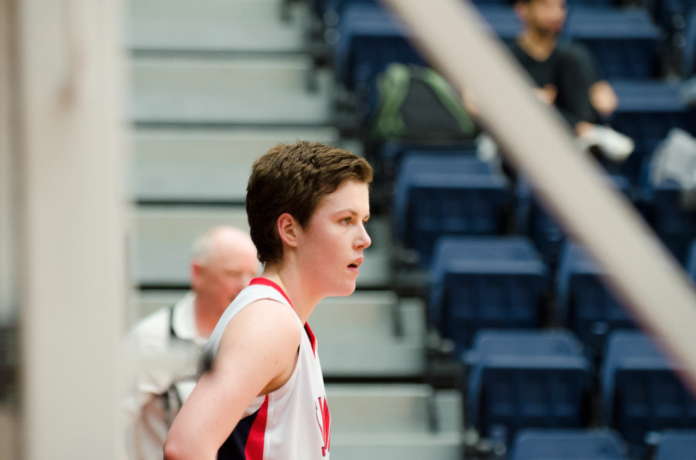
As we sat in the bleachers overlooking the men’s basketball game and discussed plans for upcoming Black History Month celebrations for the Black Awareness Students’ Initiative Network, an older white gentleman came over to our seating area and politely asked us to watch his bag.

With a smile, we motioned him to leave his belongings with us.  We proceeded to converse but he quickly posed the awkward question of whether we were sisters of his black friend Tonya.

Pardon our French but, “the fuck we look like?”

We stared at each other in disbelief, wondering whether we were back in 1968, where every black person apparently knew each other. It was the second time that week that we were “Mauried” — yes, “Mauried.” You know, “are you the sister/daughter/cousin of my black friend?”

The Struggle

Being the only black student in the class isn’t a rare experience. Tokenism is pervasive in the classroom, as well as in social encounters and at the workplace.

Being tokenized may instantly transform you into an expert on all things black, but it does not make you the voice of all black people. However, when it comes to distasteful comments, there are a plethora of examples to draw from.

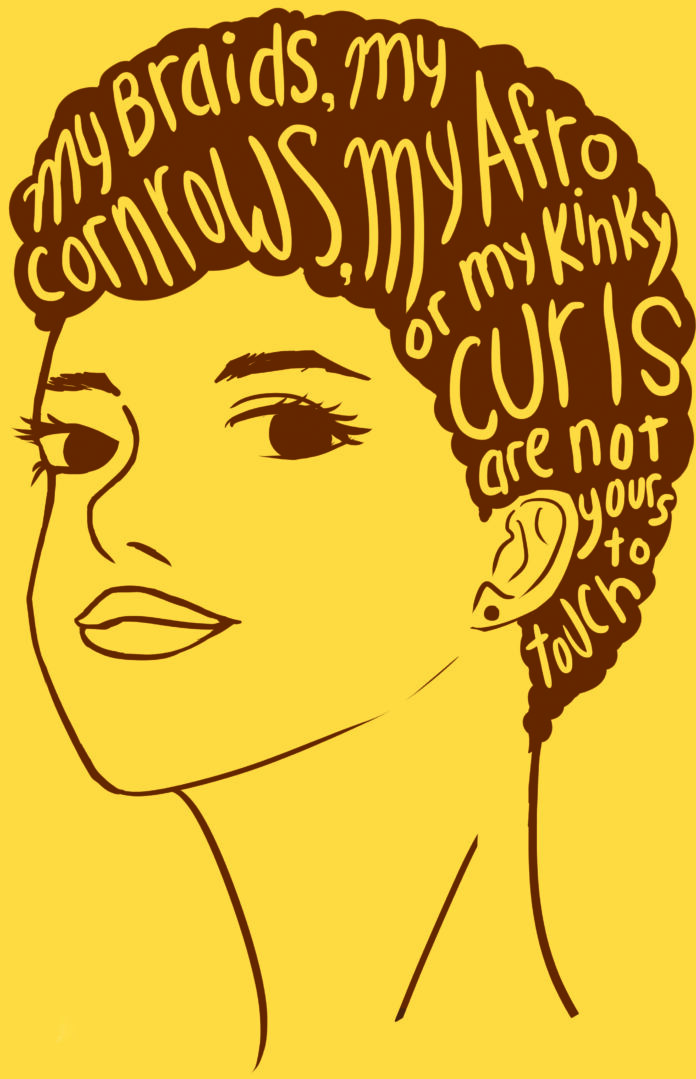
My braids, my cornrows, my Afro or my kinky curls are not yours to touch. The texture and quality of black hair hold a magical and endless fascination for some people, and this seems to make them instinctively want to touch it.

Our hair is not on display for strangers to simply touch. Personal space is learned and respected at a young age, and this is a clear invasion of it.

I remember another preposterous moment when a fellow student, who may listen to hip-hop more than I do, declared themselves “blacker” than me.

Breath… they know not of what they speak.

As Saul Williams powerfully states, “We cannot continually barricade ourselves under some falsified idea of race, because our idea of blackness and race is simply reactionary. Africans didn’t walk around Africa being black and proud, they walked around proud.” Defining ourselves as, opposed to being defined by others, is always a challenge; there is no single definition of blackness. Our blackness is not defined by the music we listen to, how we dress or how we speak. If the latter were true nearly anyone could be “black!”

You see, we can’t just choose to be black for one month out of the year. It’s an ongoing, lived experience.  And we can only go through so many of these situations before being driven up the wall. It is crucial to respond to instances of prejudice with intelligence, and even to be witty!

But asserting oneself in the face of casual racism is conflicting, as we run the risk of being misinterpreted. Responding with aggression will only serve to shut down communication. You’ve got to play fool to catch the wise, as they say; observe situations in order to become aware of the environment and the individuals within it.

When you are the only black student in your class and a question related to civil rights surfaces, you are well-prepared for the eager 40-plus eyeballs staring and waiting on your response.

The Nod

The nod is a symbol of unity and form of acknowledgement in the black community. It’s a metaphorical ethnic solidarity, a handshake. Use the nod.

As you walk through the halls, the nod says, “I see you,” and “more power to you,” when you’re in an overwhelmingly white space. Our roots and lineage are diverse, and through our ties and heritage the nod maintains our sense of community. This speaks volumes when you’re outnumbered.

In the same way a smile from a stranger can pick you up when you’re down, the nod manifests as a source of community connection.

Pardon Me For Being ____

The phrase “more than just a month” refers to the importance of continuing to celebrate Black History beyond the confines of the February alone. Knowing and understanding our past builds a foundation for our future. The practice must not begin and end in the month of February.

In contemporary western society, many make the claim of being “colourblind” or that they “don’t see colour.” But this narrow mentality only denies racial experiences, and invalidates racial inequalities, by wrongly asserting that race does not matter.

Social inclusion cannot be reached if these stories are not acknowledged. Equality does not mean justice. Canada cannot sit idly by in the wake of the #BlackLivesMatter movement taking shape in the United States.

Our communities, our streets, our schools, our homes, and our prisons in the “true north strong and free” are not free of anti-black racism.

There is a need for collective accountability. Events like “Pardon me for being ____.”, organized by the Black Awareness Students’ Initiative Network, are efforts to unite black, biracial, Caribbean and African diaspora students, as well our allies within the SFU community, to create space, dialogue and networks that illuminate our lived experiences here at Simon Fraser University.

Black History Month celebrates a rich, grand, and vast cultural tradition, and it does not simply belong to blacks — it has universal significance, which embraces the concept of equality.

We are a part of a diverse community of staff, scholars, and learners; however, there is a huge underrepresentation of our experiences at SFU. Thus, Black History Month and “Pardon me for being ____.” is a movement of resistance against the one-dimensional image of our experiences, and an opportunity to create a discourse among the student body.

It is a creation of space that offers a competing view that more accurately reflects the reality, where individuals of different origins see themselves represented, feel respected and empowered.


A Dear John letter, as written by my TiVo

0
Photo courtesy of Paladin27 (Flickr)

Dear Jacey,

The last three Parks and Recreation-filled years spent with you have been great, and there’s no easy way for me to do this, so I’m just going to say it: I think I should start seeing other people.

This probably won’t come as a total surprise for you. We’ve been like strangers for months, ever since we jokingly watched Pitbull’s New Year’s Revolution together the morning after — while you were stuck on the couch, too hungover to function. Remember that? We laughed for hours at Pitbull’s terrible hosting, and poked fun at how impossibly irrelevant a New Year’s special with Enrique Iglesias was in the year 2014. 

That was the last time I actually remember being happy with you. With us. Shortly after that, you started your new semester, and things totally changed.

I want you to know that I don’t blame you, and I hope you don’t blame me either. You’re really busy, and the shows nowadays don’t have the same draw like they used to. The television landscape is always shifting, and I knew there would be bad days as well as good days when I agreed to be your TiVo. But it’s like I don’t even exist to you anymore.

It’s not my fault they decided to split Mad Men’s final season into two parts and have a 10 month hiatus in between. Just like it wasn’t my fault that TLC decided to cancel Here Comes Honey Boo-Boo or that Californication went off the air back in June. How was that show still even on? Never mind, though. This isn’t the time or place for another one of our David Duchovny-fuelled arguments. Not because I’m right or because I’m right, but because the days for those are over.

Remember how good things were in the beginning? Episodes of Modern Family and The Simpsons backlogged for as far as the menu could scroll. We used to spend hours across from each other, you shirtless on the couch, wearing those pajama pants that were so torn around the cuffs that you turned them into shorts, with your hand perpetually stuck in a rotating bag of either Cool Ranch or Nacho Cheese Doritos. Do you think we got too comfortable with each other? Maybe that’s why you started to drift away from me.

The time we spent together was amazing, really, but I need a change. I want someone who comes home from school and is too lazy to go to the gym later on. I want someone who will put reruns of 16 & Pregnant before their school work and any other obligation that might inevitably come up. I want. . . someone else.

I wish I could say that we’ll still be friends, but we both know that’s not true. I’ve already called your cable company, and they’re supposed to be setting me up with someone new. Maybe they’ll even be “the one”? I suppose there’s only one way to find out though.

Take care of yourself, Jacey. I’ll never forget those Breaking Bad marathons we shared together.

Always in your heart (but not always on your mind),
            Your TiVo

Cypress Mountain announces plans to reopen with slate of dirt-centred activities

0
Illustration by Anosha Ashfaq

After experiencing disappointing levels of snowfall since opening in November, local ski destination Cypress Mountain has reportedly halted regular attractions and will, for the rest of the “season,” be offering a new range of dirt-orientated activities better suited for the mountain’s current conditions.

“We wanted our faithful customers and season ticket holders to still be able to enjoy the mountain they know and love, regardless of what the average daily temperatures and lack of snowfall have to say,” explained Cypress Mountain marketing representative Charlene Willis. “With this exciting crop of fun, family-friendly activities, you’ll soon be asking yourself, ‘Snow who?’”

The slate of attractions, which will become available March 1, are advertising “new classic activities” such as downhill mud-skiing and mud-snowboarding, dirt snowshoeing, and even a twist on an old favourite, soil-tubing. Willis says that depending on how temperate things remain, conditions might also permit for visitors to take advantage of the expansive cross-country silt-skiing trails that Cypress is sure to become popular for.

The “multi-faceted mudplex,” as it’s being described, is the first of its kind in the world, and could arguably pave the way for similar ventures elsewhere, depending on whether the rest of the season turns a profit.

“Cypress Mountain is going where no ski and snow resort has gone before,” added Willis. “We’re hoping folks will come out, grab hold of the nearest dirt tube, and join us for what’s sure to be a heck of a ride!”

In addition to the new attractions, construction is now underway on a new 50-person spa on the mountain that will offer several mud-related relaxation experiences.

“Mud baths, loam facials, mud pedicures, clay massages. Are some of those things even real? We’re going to find out at Cypress Mountain’s Premiere Spa and Salon Retreat,” explained Willis. “We’re interested in giving visitors the full Cypress Mountain experience and if that means caking them head to toe, literally, in local mud, then we’ll do it. Basically we’ll try anything at this point.”

This comes as good news for locals who already purchased season passes for Cypress Mountain earlier this year, as Willis says these individuals will enjoy priority guestlisting to the spa when it opens and two-for-one tube rentals throughout all of March.

So far, the announcement and new activities have drawn a polarized response from those on social media, with some praising the integration of mud as creative and exciting while others argue that Mount Cypress is prematurely committing to a passing fad, a decision they’ll regret once global warming is proven to be nothing but a hoax.

Sports Briefs

0
Image Credit: Brandon Hillier /The Peak

Men’s Basketball

The men’s basketball team returned to their winning ways Thursday night, putting up a 103–87 victory over Saint Martin’ University. This marks the Clan’s sixth Great Northwest Athletic Conference (GNAC) win, double their previous record. Guard Justin Cole once again led SFU in points with 23.

Softball

Softball split the Desert Stinger held in Las Vegas from February 13–15, to improve to a 7–5 record — surpassing last season, where they had only four wins. “I am really pleased to be returning home with a winning record,” head coach Mike Renney told SFU Athletics. “This team is a more battle-tested group than last year’s team, and although we are still young, it’s a competitive and driven bunch.”

Wrestling

SFU’s Abby Lloyd won silver at the Women’s College Wrestling Association Nationals held in St. Louis, MO on Saturday, February 14, while three other wrestlers — Bailey Halvorson, Darby Huckle, and Payten Smith — achieved bronze medals. As a team, SFU finished fourth. The Clan won the national championship in 2013.

UBC or SFU?

On February 17, the UBC Thunderbirds Twitter account announced that Spencer Moore, a linebacker from St. Thomas More Collegiate, who had initially signed a letter of intent with SFU football, has instead committed to UBC. Last week, recruiting coordinator Bryan Wyllie told The Peak that Moore was the most college-ready prospect of the then-four signings.

Track and Field

SFU’s track and field team competed at the University of Washington (UW) Husky Classic and the UW Open from February 13-15. Clan senior Jennifer Johnson moved to first in the GNAC and third in NCAA Division II competition by shaving eight seconds off her previous best time for the 3000 m race.

Clan Gathering

SFU Athletics announced February 16 that TSN commentator and SFU alumnus Farhan Lalji will be the MC for the Gathering of the Clan breakfast to be held on Tuesday, March 3. The event, which will also feature Steve Nash as a speaker, costs $200 per seat, and aims to raise money for athletic scholarships at SFU.

With files from SFU Athletics and @ubctbirds.

Younger is better: realizing my potential

0
Photo credit: Brandon Hillier

Working in an office of your friends and peers is a wonderful thing, but there are certain difficulties that come with being the youngest of the group.

I’ve had the good fortune to have worked in a few different environments lately alongside many incredibly bright, good-humoured young adults. Almost exclusively, all of them have been older than me.

It’s also not uncommon for me to be the second Roach working at a job, either. The dynamic between me and my future co-workers is usually predetermined by the impression they get of me from my older sister and boss — our radiant Editor-in-Chief, Alison.

This comes with a certain amount of baggage. Most of the time, they know me by her favourite pet name — Smelly — before they ever see my face. They’ve heard about the time I dove into the shallow end of the pool on our family vacation, only to emerge looking like something out of the movie Carrie.

Being the youngest in the workplace can be intimidating. It’s easy to feel dismissed, underqualified, undeserving. What’s more, the fear that I had been hired due to nepotism — and that others would perceive it that way — rather than based on my skillset, was a cloud that darkened my first weeks of work at the paper, especially.

It’s easy to feel dismissed, underqualified, or undeserving.

As a result, I’ve often found myself in a ‘fake it ‘til you make it’ kind of mindset. All there was for me to do was to do my work, build up my confidence, and hope that my sister’s peers would become my peers, too.

Having been in my editing job for a year, I find myself taking on more responsibility in my position at The Peak. It’s a strange feeling, coming to grips with the idea that you might actually know what you’re doing after feeling uncertain for so long.

Adopting the philosophy that nothing is inherently good or bad, and only thinking makes it so, I’ve tried to approach it from a different angle. Instead of feeling like I shouldn’t be where I am, I look to great people who have accomplished things at an early age. Usually the remark people make is that that person did something noteworthy, “and they were only this old.”

Instead of feeling like a faker, I’ve realized I might try taking pride in the work I do, while always trying to rise to the occasion.

And maybe, just maybe, I will be known as simply ‘Melissa,’ and not ‘Smelly.’’

Multilingual road signs are crucial for cultural inclusivity

0
Image Credit: Alanah Heffez (Flickr)

The City of Kamloops recently denied a proposal from Councilor Donovan Cavers to add the word “estil,” meaning “stop” in the Aboriginal language Secwepemc, to their traffic stop signs. The council’s reasoning was clear: To add the word violates the Motor Vehicle Act. An additional language could prove to be hazardous, as drivers could become confused, which could be potentially dangerous.

Such changes to these traffic signs should not be seen as a “driving hazard,” as multilingual road signs are in place in other parts of the country. Although Cavers’s proposal contravened provincial law, such a proposal was a positive step in respecting local First Nations culture and promoting racial equality.

To address the issue of multilingual signs as driving hazards: if they truly are, then bilingual stop signs in eastern Canadian provinces such as New Brunswick, Nova Scotia, and Prince Edward Island would be driving hazards as well. There are even road signs containing both English and Chinese in Richmond. However, these signs are not viewed as driving hazards, according to the laws in these regions.

It is unsurprising for Cavers to make such a bold move in calling for the acknowledgment of Shuswap history.

Contrary to our provincial government’s beliefs, multilingual signs help non-English speakers reduce risk while driving. Moreover, these signs show respect and inclusivity to different cultural populations, which is a big step in making a more tolerable, free, and equal society. Declining the use of multilingual signs is a big deal, as it rejects racial equality by promoting ignorance toward the Secwepemc language and people.

A better resolution would be for provincial laws to take into consideration the culture, history, and language of regions such as Kamloops. They might even consider multilingual headers on drivers’ licences, as speakers of other languages might be less confused in reading the important information on these cards.

Today, many Secwepemc people still live in Kamloops, and have tried hard to preserve their language through different projects. The Secwepemc language plays such a great role in this culture, that it is unsurprising for an activist like Cavers to make such a bold move in calling for the acknowledgment of Shuswap history.

Cavers’ language proposal should be commended as a step forward on the long road to equality — a prospect that our multicultural nation should continue to push for. Before we can fully recognize Aboriginal culture in Kamloops and cultural equality among Canadians from all backgrounds, provincial laws that promote cultural inclusivity must be created.

Partial skull uncovers clues of human origins

0
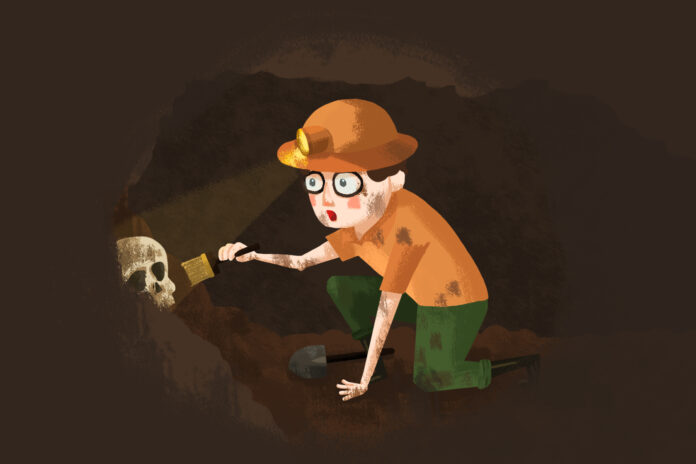
The skull was found in a cave that had been sealed for the past 30,000 years. - Chen Chen
The skull was found in a cave that had been sealed for the past 30,000 years.
– Chen Chen

A recent scientific paper published in Nature focusing on the analysis of a partial human skull provides substantial evidence for the “Out of Africa” theory.

The skull — also referred to as a calvarium — was discovered in 2008 when excavators expanding a sewage line accidentally poked through the roof of a cave which had remained sealed for the past 30,000 years.

The morphological characteristics of the fossil skull were analyzed fairly quickly. The results suggest that it was closely related to modern Africans and Upper Paleolithic Europeans.

However, it’s taken several years to precisely date the skull to 55,000 years old using Uranium-thorium dating.

This is the first fossil evidence that modern humans and Neanderthals coexisted in Israel 55,000 years ago, and possibly interbred. This evidence also fits the genetic and archaeological models for the dispersal of modern humans in waves out of Africa instead of evolving on the way to Europe or in Europe.

All these conjectures were gleaned from one partial skull found in a cave that still has more secrets to uncover.

SFU professor of archaeology Francesco Berna, who worked with the archaeological team on analyzing the calvarium, has been conducting further work at the Manot Cave in Israel where the skull was discovered.

“When you get into the cave, you need a minute to adjust because it’s very dark,” he explained.

The cave is large with steps leading down and huge columns of stalactites and stalagmites extending from floor to ceiling. Excavations take place every year inside the cave, from which researchers remove sediments to process and clean bones and artifacts.

By analyzing the mineralogy from the sediments, Berna is trying to see “how they are built up and how the humans used the cave.” This allows him to see natural processes, and human actions like trampling and making fire.

Meg Thibodeau, an MA student whose main interest is how early humans made and used fire, assisted Berna last year in the Manot cave with sediment analysis.

As an archaeologist, the most exciting thing for Berna was when his predictions concerning how humans used the cave and where they made fire coincided to where they actually did. “You feel so excited, everything starts to make total sense” he said.

Berna plans to continue working on this cave with the team in order to find more clues regarding when the Upper Paleolithic began. “If we can get to the Middle Paleolithic to Upper Paleolithic transition, it will be fantastic. That will be a major discovery,” he said.