Home Blog Page 1063

Fat-shaming encourages unhealthy stigmatization

0
Image Credit: 95Berlin (Flickr)

9256942464_e24ea30870_b

I’d like to respond to last week’s article titled “Obese modelling encourages unhealthy lifestyles,” which claimed that overweight bodies are more susceptible to disease and other health risks, and therefore shouldn’t be put in the media spotlight.

This article is fat-shaming at its most dangerous and disturbing, and it’s crucial to speak out about these types of discrimination. The crux of writer Anthony Bianco’s argument relies upon the stereotype that all fat bodies are inherently unhealthy. Not only is this not true, but it leads to the oppression of fat people and the impossible notion that there is one uniform “healthy body weight.”

Bianco stated the weight and height of Tess Holliday — a hugely successful model and body-positive activist — as if that is any indication of Holliday’s health. Let me be as clear as possible: a person’s size or shape provides absolutely no grounds for assumption about their health, personality, or human rights.

As Bianco wrote, “Her recent ascent to fame now makes her a role model for millions, and sends the message that having a weight labelled as obese is okay, or even cool.” First of all, it is never okay to diagnose someone with obesity unless you are a healthcare practitioner. In her book Health at Every Size, Dr. Linda Bacon wrote, “Fat isn’t the problem [. . .] A medical establishment that equates ‘thin’ with ‘healthy’ is the problem.”

It is never okay to diagnose someone with obesity unless you are a healthcare practitioner.

The article in The Peak also avoids using the word “fat,” which is the first sign of fat-shaming. The use of words like “grossly overweight” and “obese” are misinterpreted as value-neutral because they are used in a medical context — this is just as discriminatory as calling someone “fat” as an insult. As writer and activist Lindsay King-Miller wrote in an article for Bitch last year, “if you don’t need to be thin to be considered a worthwhile or complete person, then ‘fat’ isn’t an insult, just a descriptor.”

Finally, epidemiological studies on weight rarely account for factors like socioeconomic status, activity, and nutrient intake, which all are equally relevant is assessing risk for disease. The presumed public health crisis of obesity is actually more of a moral panic against the publicity of fat bodies.

But the weakest aspect of Bianco’s argument by far is the assumption that fat models hold ideological influence over the public. It’s laughable to presume that the success and fame of fat people could somehow force consumers to make choices that will leave them susceptible to disease and other health risks.

If we see any ideological consequence of a diverse presentation of bodies in mainstream media, it will most likely be the shocking realization that it’s acceptable to have a body that doesn’t resemble all the overwhelmingly white, able-bodied, thin, and cisgender models currently in the spotlight.


Actual interviews with actual people: Viper, the rapper

0
Photo courtesy of Lee Carter

Few modern hip-hop artists are more enigmatic than Houston rapper Viper. Real name Lee Carter, Viper has many accomplishments under his belt — including making 347 albums in 2014 alone, single-handedly reinventing the cloud rap subgenre with his viral sensation You’ll Cowards Don’t Even Smoke Crack in 2008, and operating his own real estate company out of his hometown — but he’s flown under the radar for years. The Peak recently caught up with Viper to talk about his achievements up until this point and what’s next.

The Peak: What kind of statement does You’ll Cowards Don’t Even Smoke Crack make in light of today’s hip-hop music industry?
Viper: I was really trying to show the gritty side of hip-hop. I’m a hardcore rap artist. When I make a song, it’s an attempt to not be commercial and to be real. Everything I say in the lyrics is to be true and real to the rap game. I was trying to show the side of the rap game that you don’t see [. . .] the underground side. Gangsta rappers, we don’t just rap. We do all kinds of things that you don’t see.

P: What was your favourite song off the album and the one you feel most represented you?
V: I think my favourite song off the album was “I Sell Dope Boy.” That song really represented the album [. . .] it wasn’t that I smoke crack — that was the point of the album — it’s that I sell dope. The whole crack thing was an eye-catcher to shock the public.

P: You mentioned on Twitter that you would be collabing with San Francisco rapper Lil B. How is that working out and what offers and reception have you received from other rappers?
V: I’m gonna be making a trip to Oakland in February to shoot my next video for my new album Tha Jamminest Album You Eva Heard. If I can get in touch with Lil B, I’ll shoot him some bread and we can record a track and do a video for it. I’m doing a double-feature album with an artist called Cali Cashflow. He’s actually from New York but he calls himself that because he’s got money coming up and down the coast.

P: What do you feel you have to offer to the rap game? What kind of style are you aiming to go for?
V: When you hear my stuff, you’re gonna want to dance, lay back, smoke a joint, drink some wine, kick it with your girl. You’re gonna want to do anything and everything when you hear my stuff, and there’s gonna be nothing that’s gonna make you want to turn it off.

P: Who is your music for? Is it for everyone or do you have a target audience?
V: I want to get everyone involved. People who are incarcerated, CEOs of big companies, people in rehab, college students, preachers, teachers. I want everyone to get involved.

P: What is your motivation to stay in the rap game despite obstacles, and where does it come from?
V: I’m trying to bring back that gritty side of hip-hop that was lost. There’s only room for one or two artists like that nowadays. I’m just going to keep banging on the door until they let me in.

P: What projects are you currently working on?
V: As far as future projects, I’m finishing up my new album Tha Jamminest Album You Eva Heard, along with my album with Cali. I’m also trying to get attention from MTV and World Star Hip-Hop. I’m also working on setting up my own site like World Star Hip-Hop called World Rap Star [. . .] it’ll help out other artists get their names out there. I’d love to do a full-time tour of Canada, so if y’all know any promoters up there hit me up. I’m down for whatever. Long-term, I’m just trying to become a household name.

If you want to know more about the outlandish but very real Viper, you can follow him @RapperViper on Twitter.

Killing seals for food is an acceptable practice

0
Image Credit: Stefan Magdalinski (Flickr)

Canadians often fail to realize the difference between trophy hunting and hunting for food. These two types of hunting are prevalent in Canadian society and history, but one places trophies on a wall, while another puts food on the table. The slaughter of animals purely for the purposes of adding another bearskin rug or mounted set of antlers to a wooden hunting shack is not okay in my mind, but hunting to put food on a table is another story.

While a small percentage of seal hunting is done by Inuit people today, this practice has been tradition among many indigenous cultures, including those of Canada and the United States. In Canada, there has been a great deal of outrage over the traditional Inuit ritual of seal hunting. Many agencies see this as inhumane, uncivilized, or completely unnecessary. In other words, many people in Canada associate seal hunting with traditional Inuit practices, and view consumption of seal meat as barbaric.

Don Cherry, Canadian celebrity and host of Hockey Night in Canada’s “Coach’s Corner,” expressed this view during a Saturday night broadcast last week. He referred to colleague Ron MacLean as “a savage [and] a barbarian,” for eating a seal burger from a restaurant in St. John’s. This view is not uncommon among Canadians, but is deeply problematic — associating one of the oldest, most sacred practices of the Indigenous Inuit peoples of Canada with plain savagery.

Though Cherry’s views might echo those of most Canadians, seal hunting should not be associated with barbarism is any manner. Just as other hunting industries are regulated, the Canadian Department of Fisheries and Oceans (DFO) heavily regulates the seal hunting industry to maintain humane standards and allow for the protection of the seal population.

When it comes to other animals like deer or lambs, rarely are pictures of their cuteness shoved in our faces.

Misconceptions abound in regards to this practice, starting with viewing the hakapik — a club used to kill seals — as an inhumane ways to hunt these animals. This is addressed on the Government of Canada website, which states that the hakapik is “at least as humane as, and often more humane than, the killing methods used in commercial slaughterhouses.” Yet, when it comes to traditional Inuit hunting practices that have been passed down through generations of hunters, we still associate seal hunting with cruelty.

Seals are cute. They present an awful picture when dragged over the ice, but so do lambs or piglets — all of which are main portions of the food industry. Most animals are cute, but the cuteness of seals is used to prove that only barbarians could kill something so sweet. When it comes to other animals like deer or lambs, rarely are pictures of their cuteness shoved in the faces of the public.

Hunting is an time-honoured way of providing food for one’s family, and there’s no reason for us to think differently about the hunting that occurs today. People who hunt for food rather than for trophies often fill their freezers with game meat, and teach their children to do the same.

When hunting is used as a way to feed a family, or simply a way to put meat on the table, I support it. Properly purchasing licenses (the profits of which may be used to fund habitat preservation efforts), shooting only game in season, and following the regulations established by the DFO all make for environmentally sustainable and humane hunting.

In all respects, the seal hunting industry in Canada falls under this category.

Why I am a Conservative

0
Image Credit: Brandon Hillier

It has been a little over a year since the Mr. Right Wing column first came into existence. In that time, I have done my best to try and keep our readers aware of the fact that the opinions they hold, popular or not, are not necessarily the strongest ones on a variety of issues. In this space I have brought up the legalization of marijuana, the Israeli-Palestinian conflict, and even broached the uncomfortable topic of abortion, all while taking time to criticize Trudeau at least once a month.

Yet, I realize now that I have never once explained to readers the motivation behind why I write what I write and pledge my support to my party. So, in the interest of clarity, allow me to explain just why I am a Conservative.

Let me start by stating that I am probably not as conservative as you would think. For example, I am a strong supporter of the healthcare system as it operates in our country, which is not something one might expect from a hardline right-winger. I am also a strong believer in social programs and income assistance as a temporary measure to aid those in need.

I do, however, believe that we need to set conditions and standards on those assistance programs so that they are not abused, and so that the funds that are distributed from them are used appropriately.

In most political organizations, such a deviation from the typical ideals of conservatism would see me alienated or denied participation. Fortunately, I belong to a party that embraces diversity of opinion, so that I can still believe both in the right of same-sex couples to get married, and that no doctor should be forced to perform a procedure that they believe compromises their own integrity and morality, including abortion or euthanasia.

I believe in a country under the rule of law, with a code of crime and punishment.

If I were to be a Liberal supporter, I would have to abandon those beliefs, but as a Conservative, I can remain true to my own ideals.

Furthermore, I believe that the government should seek to balance its budget not by raising taxes, but by using the funds available to them in order to meet the needs of its people. National budgets need to operate the same as personal ones; I cannot simply force my employers to give me more money, and neither should our elected officials.

A government needs to be able to deliver on promised programs without increasing the burden on Canadian citizens, especially those who are gaining little to no benefit from such programs.

I believe in a strong Canada; one whose trade is not solely reliant on the United States, but who reaches out to the world in order to maximize opportunity. I believe in a country under the rule of law, with a code of crime and punishment, whose elected representatives leaders respect, uphold and obey the laws of the nation, even when they do not necessarily agree with them.

I believe in a Canadian Armed Forces that is fully equipped to continue a proud legacy of serving in humanitarian missions in the wider world. I believe in having a leader who represents the Canadians who put him in office, and is not afraid to stand up for what is right, especially when it isn’t easy. So I am now, and will forever be, a Conservative.

This week in comics

0

webcomicIf HAL 9000 worked at the W.A.C. Bennett library (Eric Smith & Justin Stevens)

Agoraphobia ManThe Adventures of Agoraphobia Man: World Defender (Jacey Gibb)

webbearsSFU bear sightings (Elizabeth Pau & Justin Stevens)

CMYK-Pun 2 3Pun 2 3 (Sarah Walker)

CMYK-Seagull Square#2Seagull Square (Jill Mandrake)

University Briefs

0

Students wielding hunting knives stir controversy

Students at the University of the Fraser Valley have voiced their discomfort with fellow students carrying knives around campus.

Mike Twolan, head of UFV security, points out that “Carrying a knife [. . .] is not against the law. Certain knives are against the law: switchblades, stilettos, blades that retract and protract automatically, spring-loaded.”

Although the discomfort of others does not make carrying a knife illegal, Twolan does not support students bringing knives to school, and UFV security is working on a policy to restrict it. However, this is keeping in mind that to some students’ knives, such as the kirpan, hold religious significance.

With files from The Cascade

A glass of wine not equivalent to an hour at the gym

In contrary to recent viral claims, University of Alberta researchers have proven that drinking one glass of wine does not give the same benefits of working out.

A study produced by U of A’s Dr. Jason Dyck in 2012 found that the polyphenol compound resveratrol — found in red wine — may naturally make exercising easier, especially for heart failure patients.

Though resveratrol appears naturally in foods such as nuts, fruits and red wine, Dyck noted that one would have to drink “100 to 1,000 bottles [of wine] a day” to reach the prescribed amount used in their study. 

With files from The Gateway

Ryerson introduces a major program in a native language

Ryerson University’s department of Languages, Literatures and Cultures (LLC) introduced a new BA program, the bachelor of Language and Intercultural Relations.

The degree program, which is the LLC’s first, will allow students to pursue a major in literature studies in their native language.

Dean of the faculty of arts, Jean-Paul Boudreau, said, “We think that language and the importance of linguistic diversity is really foundational to building a strong, first-rate University.”

With files from The Eyeopener

Satellite Signals

0
Photo by Bill Moyers

Harbour Centre

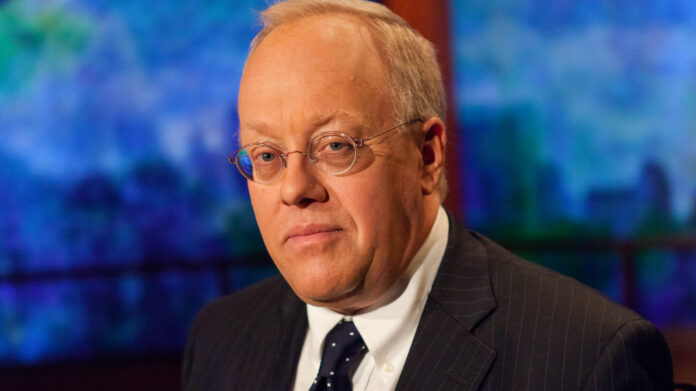
On Thursday February 19, the SFU Vancouver Speakers Series, in partnership with SFU Public Square, hosted a lecture by Pulitzer Prize-winning journalist and writer Chris Hedges titled “The Rules of Revolt: What do citizens owe ourselves, each other, and our governments?” The event took place at St. Andrew’s-Wesley United Church.

Woodward’s

Tickets were sold out for an interdisciplinary performance presented by SFU’s Vancity Office of Community Engagement, titled “Spell to Bring Lost Creatures Home.”

The performance incorporated the works of visual artist Shary Boyle and songwriter Christine Fellows in a series of vignettes, projected live and accompanied by music.

Surrey

SFU’s Task Force on Flexible Education hosted its third “World Café” on the relevance and flexibility of a university degree.

The event, open to students, staff, and faculty members, was previously held at the Burnaby and Vancouver campuses. It addressed questions such as, “How can SFU provide more relevant learning experiences to its students?”

SFU student designs power-generating shoe

0
Taylor Ward is currently completing a joint design and marketing major at SFU. - SFU News
Taylor Ward is currently completing a joint design and marketing major at SFU. – SFU News

Imagine a pair of insoles that took the kinetic energy of your steps and converted it into usable electricity.

SFU student Taylor Ward’s newest design, STEP, is meant to do just that. The concept of STEP centres on finding a way to create renewable energy from a device that has been around for thousands of years: the shoe.

The purpose of the insole is to help users store energy generated by their steps, roughly 100 W for each step. This energy is then pumped back into the city through the form of public transfer stations connected to a city-wide power grid.

Ward travelled to San Francisco earlier this month to present his idea at the Interaction15 Conference as part of the 2015 IxDA Student Design Challenge. At the conference, he presented his idea before an audience including roughly 900 IxD professionals as part of the final portion of the competition.

The competition challenged graduate as well as undergraduate students around the world to design a product that will hold practical usage, both in the world as it is today and the world we aim towards in the future. This year’s challenge was based on the concept of a “wearable city.”

The concept of a wearable city is an initiative to think about how our everyday lives are creating an impact on the world and its environment, and whether a design could benefit from what is already there, either in progress or in use. As IxDA mentioned on their website, this competition seeks to challenge students to dive deeper, beyond the feasibility or even application of their design, and to explore what it means to be cognisant of the environment.

Ward, who is currently completing his joint design and marketing major, took first place at the competition.

STEP was largely inspired by Vancouver’s 2020 action plan, Ward informed The Province. He also took inspiration from the current usage of electricity within Canada. As he explained in his IxDA submission video, “Canada’s domestic consumption of electricity was nearly 560 trillion watts of power, expanded in a single hour.”

When Ward looked at people’s travelling patterns around Vancouver, he discovered that harnessing their existing behaviours could convert them into mini power plants and potentially address our overconsumption of electricity and power.

Ward explains that the components for the insole are based on the technology of piezoelectric nano-generators and capacitors, which are used to convert the kinetic energy of a step into electricity.

Despite the idea being a conceptual design, it is very plausible, he told The Province.  The insole would not only benefit from walkers, but also runners, and perhaps even cyclists.

Ward expanded the potential benefactors of this concept to include people in developing nations. If people could help power up their own villages with STEP, it could decrease the usage of other potentially damaging sources, such as high volumes of coal.

For Ward, the possibilities are endless. “In our lifetimes we take approximately 150 million steps,” Ward stated in his video. “Imagine if we could capture that power.”

You’re doin’ fine, Oklahoma

0
Photo courtesy of David Cooper.

Speaking in drawls and singing their hearts out, the cast of Studio 58’s Oklahoma did this Rodgers and Hammerstein classic justice.

In Oklahoma Territory (just before it became a state in 1906), Laurey (Alexandra Wever) plays hard to get with Curly (Owen Bishop), a local cowboy who wants to take her to the box social in his “Surrey with the fringe on top” (a fancy horse-drawn carriage).

Meanwhile, her friend, Ado Annie (Adelleh Furseth), does the opposite with any man who “talks purdy” to her. Annie’s song “I Cain’t Say No!” stood out due to Furseth’s hilarious facial expressions and gestures.

Annie has been promised to Will Parker (Sean Sonier), but when the travelling salesman Ali Hakim (Arash Ghorbani) comes through town, she falls for him. Ali Hakim is one of the funniest characters in this musical, as he peddles his wares while trying to stay out the line of fire of Annie’s father.   

Photo courtesy of David Cooper.

Laurey likes Curly, but is afraid of being too forthcoming, so she entertains the idea that her farmhand Jud Fry (Kamyar Pazandeh) might take her to the box social. Curly goes to visit Jud at the smoke house where he’s staying to have a heart-to-heart. He ends up discussing how easy it would be for Jud to hang himself and end his misery, and the emotional intensity displayed as Jud sang “Pore Jud is Daid” was mesmerizing.

Through it all, Laurey’s Aunt Eller (Olivia Hutt) offers her advice and tries to mediate the various conflicts that arise. Her southern drawl was one of the strongest of the cast, and she served as the voice of reason holding everyone together.

This production made the best of their relatively small space, particularly during their creative staging of Laurey’s nightmare dream sequence about Jud. Also notable was the use of a clothesline covered in white sheets to show shadows mirroring Laurey as she dances in the grove.

I attended on sing-along night, and we in the audience had a blast shouting out songs like the ever-uplifting “Oh, What a Beautiful Mornin’” along with the live band.

There’s something about the innocent, youthful joy that emanates from the characters in this musical that leaves you uplifted and hopeful, and that’s what has made it such a popular, enduring production. As the cast belts out “Yeeow! Aye-yip-aye-yo-ee-ay!…O – K – L – A – H – O – M – A, OKLAHOMA!” you get the feeling that, no matter what, everything is going to be “OK.”

Oklahoma is presented by Studio 58 February 5 to March 1. For more information, visit studio58.ca.

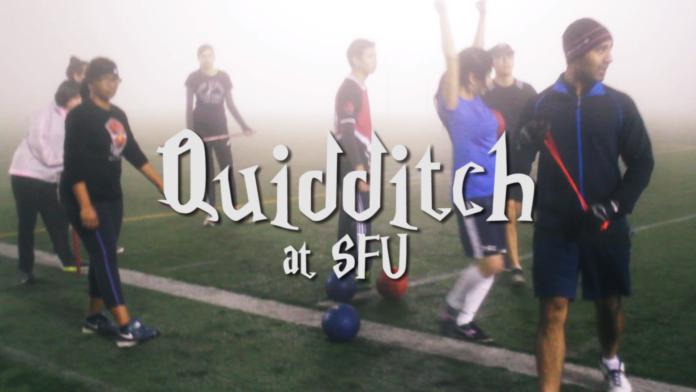
VIDEO: Quidditch at SFU!

0

SFU’s Quidditch team shows us how to play the game of broom sticks and dodge balls. Surprisingly, it is more intense and complicated than one might expect.

Created by Paige Smith & Eric Smith

Staring Austin Cozicar

Special thanks to the SFU Quidditch team