Home Blog Page 103

UBCM passes resolution for better provincial hearing healthcare

0
This is a photo of a woman with red hair moving her hair back to show her hearing aid.
PHOTO: GN Group / Unsplash

By: Caitlin Kingsmill, News Writer

On September 19, a resolution calling for provincial hearing healthcare funding was passed at a Union of BC Municipalities (UBCM) meeting in Vancouver. The resolution was presented by the District of Saanich Council and reflects the work of Help BC Hear Better, a group that has advocated for provincial hearing healthcare since its formation in 2022.

The UBCM “provides an opportunity for local governments of all sizes and from all areas of the province to come together, share their experiences, and take a united position.” The group is “advocating for the creation of a formal provincial Hearing Health Program that includes the funding of hearing aids, particularly for the vulnerable populations of children and seniors.” Hearing loss can “lead to delayed speech and language development in children, and have an impact on social development.” It can also increase social isolation in seniors.

The Peak interviewed Lorienne Jenstad, audiologist and associate professor at UBC’s school of audiology and speech sciences. Jenstad provided research support for Help BC Hear Better since the group’s inception, with the group mostly consisting of hearing health professionals. “We have noticed that cost is a barrier to folks actually seeking hearing aids, seeking hearing healthcare,” she said. “People aren’t getting the best healthcare they could be getting and there’s something we can do about it.”

A pair of hearing aids generally costs between $3,000–8,000 in BC. However, hearing aids typically need to be replaced every four to five years — a significant financial barrier for those who need them. Jenstad also noted that the services of the hearing health professional are an expense.

BC only provides hearing aid funding for children ages zero to five through the BC Early Hearing Program. Meanwhile, Ontario, Quebec, New Brunswick, and PEI offer funding for all age groups.

“Having something pass at UBCM in this manner isn’t necessarily binding,” explained Jenstad. This is because provincial healthcare spending and funding allocation are outside the scope of what the UBCM can do. “But what it does is it really recognizes the importance of hearing health and the need for funding it.”

Jenstad said that part of the work Help BC Hear Better does is spread awareness about the discrepancy in hearing health coverage to Members of the Legislative Assembly (MLAs) across the province. “It’s been interesting when we have met with some MLAs who don’t have health in their portfolio, they’ve actually been really surprised by this,” said Jenstad. “Maybe you have this assumption that hearing healthcare is covered, but it isn’t.”

Help BC Hear Better plans to continue to spread the word about this issue. Their website features an online petition and template letter people can send to MLAs to raise awareness about the importance of hearing healthcare. 

While the recent resolution may not lead to immediate action in BC, it’s an important step to Jenstad and other advocates.

“To me, it’s really crucially important that they stepped forward and said this is an important issue,” explained Jenstad. “Even if we can’t make sure funding happens, we are spreading the message [that] this is something we care about and folks living in our cities care about as well.”


Horoscopes October 7 – 13

0
An illustration of a girl, stars and astrological signs strewn in her hair.
ILLUSTRATION: Marissa Ouyang / The Peak

By: Tam Nguyen, Staff Writer

Aries
March 21–April 19

Breaking news: Aries, Queen Bee of the New York Socialites, is stepping down after her scandalous angry outburst at her friend because “she chews too loud.” I wonder who’s next in line to the throne? 

Taurus
April 20–May 20

Spotted fleeing without dessert at a three-Michelin-starred restaurant in Manhattan, self-proclaimed food critic Taurus announced, “These restaurants ain’t shit,” and she could make better lime cheesecake. 

Gemini
May 21–June 20

Spotted: Gemini is heartbroken after confessing his unrequited love for his best friend. Can our Casanova, who charms everyone and ghosts them the next day, truly fall for someone? Shocking. Who knew the famous playboy turned out to be a lover boy?

Cancer
June 21–July 22

After three tequila shots, our innocent, kind-hearted princess, Cancer, was spotted going wild at the club. It looks like the little princess is not so little anymore. Are we witnessing the rising of a new Queen Bee?

Leo
July 23–August 22

Rumour has it the former Queen Bee got defeated. Everyone turns to the new it girl, Leo, to be the next on the throne. Let’s see how long the new Queen with the sharpest eyeliner would last this time. 

Virgo
August 23–September 22

Spotted: lonely boy Virgo is cleaning his living room for the fifth time this morning. Seems like he’s expecting some special guests. Seems like lonely boy isn’t lonely anymore. 

Libra
September 23–October 22

Hey, Upper East Siders, serial dater Libra has been single and independent for over 30 days. Rumour has it our certified lover boy wants to get back to the dating game soon. Watch out ladies.

Scorpio
October 23–November 21

Spotted on a date with CEO of a billionaire empire, our ambitious social climber Scorpio is getting her Prada bag regardless. Don’t forget to get your best friend a Dior purse, never forget to pay your debts.

Sagittarius
November 22–December 21

Word is that our bad girl has gone good. No more rave and clubbing, just a cup of hot tea and doom scrolling in bed by 10 this fall semester. I wonder what happened with the sudden changes? May the truth unfold soon.

Capricorn
December 22–January 19

Look like Little C keeps getting her shit done no matter how many times haters wish for her downfall. Great game, C. Upper Easiders, you gonna need to step up the game if you wanna go toe-to-toe with C.

Aquarius
January 20–February 18

Spotted: alternative, patchwork tattoos, self-proclaimed feminist Aquarius got caught listening to Andrew Tate’s podcast. Such an embarrassing turn of events for the president of the local chapter of “the cis hetero men championing female-identifying students league.” Sometimes, the truth is better sealed tightly. 

Pisces
February 19–March 20

Rumor has it Pisces and her best girlfriend break up over kissing the same girl. Jeez . . . lesbians need to come up with a new girl code cause they’re gonna date the same person anyway. 

XOXOGossip Girl

Unpacking patriarchal self-help

0
An illustration of a man holding text bubbles with typical messages found in self help books aimed to men, such as “Master attraction, charm, and seduction.”
ILLUSTRATION: Jaimin Bai / The Peak

By: Yildiz Subuk, Staff Writer

The self-help industry, meaning books, media, and services geared towards personal growth and improvement, has grown to become a billion-dollar industry — in 2022, the self-help genre accounted for 17% of non-fiction book purchases in Canada. Among these books is something I call “patriarchal self-help.” Under patriarchy, men seek power and are convinced that their value is determined by how much power they have, or how well they can fit traditional notions of masculinity. A glaring problem arises in this culture; men feeling shame for, and never truly understanding, their own emotional needs. It leads to feelings of isolation, unfulfillment, and misdirected anger that affects both themselves and everyone within proximity. 

Examining some of the most popular books regarding self-help geared toward men, I noticed a pattern — they all push the narrative that men need to take control of their lives, become dominant in their respective fields, and portray a sense of value. The titles of these books reveal a lot: Can’t Hurt Me: Master Your Mind and Defy the Odds, How to Win Friends and Influence People, and 48 Laws of Power. To contrast, feminist self-help literature tends to focus on advocacy, healing, and emphasizes emotional intelligence. Books like All About Love or the Will to Change by bell hooks, focus on nurturing relationships

“Self love cannot flourish in isolation.” — bell hooks in All About Love

In a survey from 2021, about 15% of Canadian men aged 15–34 reported often feeling lonely, and about half of them have also reported poor mental health. Men account for about 75% of suicides in Canada, and they’re at increased risk, three times more likely, of experiencing substance use disorders; in BC alone men accounted for over 753 of overdose deaths in 2020. Loneliness is partly driven by societal expectations that men need to focus on career-driven motives, excel financially, and “toughen up.” As a result, many men have trouble opening up, which can block opportunities for close friendships and also prevent them from seeking out mental health support. Those who grew up in patriarchal environments have trouble communicating their feelings. They are taught to “man up” and deal with their problems by themselves, without relying on external support.

How can we understand ourselves without first understanding the relationships we have with others? If we cannot give words to our feelings, then acknowledging how we are affected by them becomes a confusing process. 

Conceptions about masculinity differ from culture to culture, but the most normalized ideal is men that are tall, strong, have good facial hair, and are reserved when it comes to showing emotion. The pressure to fit this mold distorts men’s perception of themselves and is reinforced through best-selling books. 

Patriarchal self-help often frames betterment in relation to becoming the “ideal man,” however, this term implies that there is only one proper way to be a man, which is untrue — there is no singular form of masculinity. 

While not everything within the self-help space is useless, or necessarily negative, there is a shocking lack of self-help books for men written by psychologists. Self-help cannot be achieved if there is no understanding of the root cause. 

While there are self-help books that are written by psychologists, all the previously mentioned ones do not take a psychological approach. They are written with the intent to sell, not help. 48 Laws of Power, for example, is a clear example of a title that attracts attention. However, examining the contents of this book can be appalling as it teaches manipulation tactics and gives historical accounts of powerful figures using such tactics efficiently. Within the table of contents, author Robert Greene has listed each law of power with a brief explanation. Some examples include “get others to do the work for you, but always take the credit,” “learn to keep people dependent on you,” and most alarming “use selective honesty and generosity to disarm your victim.” These are specific tactics that abusers use to manipulate others — the normalization of the phrase “your victim” is indicative of harm. How to Win Friends and Influence People by Dale Carnegie, “teaches” a superficial form of self-help, encouraging people-pleasing to advance your image.

These books’ approach to viewing others as collateral damage in the ultimate goal of building infinite money and success shows how patriarchy and capitalism are one and the same. If dominance is a way of demonstrating value, then the understanding of value is deeply flawed. Dominance is a toxic masculine trait.

Books that teach exploitative behavior are often grouped with works like All About Love. If the primary goal of a self-help book is to entice rather than encourage reflection, then who is really being helped– yourself or the author?  

Navigating emotion, as well as understanding the need for connection (verbalizing what one is going through), should be the first steps taken towards self-help. 

Examples of  resources, which focus on the importance of empathy and emotional intelligence as a means of self-help:

International students aren’t responsible for Canada’s systemic problems

1
A large Canada flag on a flagpole
PHOTO: Katelyn Connor / The Peak

By: Yasmin Hassan, Staff Writer

This January, immigration minister Marc Miller announced Canada’s federal government will be introducing a cap on the intake of international students. His claim is that it will help offload “pressures on housing, health care, and other services.” SFU reports as of April 2024 to have 5,635 international undergraduate students (19.3%) and 1,897 international graduate students (36.7%). International students make up a large and valuable portion of our student body, and it’s unfair to blame them for issues beyond their control. 

The housing problem that exists in Canada is beyond the scope of international students. Economist Claire Fan notes that “even if one were to equate each permit to an individual and consider a potential decrease of 215,000 students annually — as per the cap — that would represent just 0.5% of the current Canadian population.” Fan says “it’s very negligible” to see material change from the cap with regard to inflation, consumer demand, and interest rates.

International students contribute significantly to Canada’s economy by spending money on tuition, living expenses, and other goods and services. Their tuition spending alone surpasses Canada’s exports of major industries like auto parts, lumber, or aircraft — totalling a whopping $21 billion annually. You don’t have to be an economics major to understand that international students are helping the economy and strengthening the labour force. Quite a few international students are also in STEM. If some of these students choose to stay and contribute to high-demand fields like healthcare and engineering, it would be especially important as Canada faces challenges of an aging population and shrinking workforce. About 40% of international undergraduate students stay in the country to work after completing their degree, and 1 in 4 healthcare workers in Canada are immigrants. Capping the intake of international students may have the opposite intended effect in the long run, as the number of essential healthcare workers would decrease.

The experience of most international students is nothing short of disappointing. A good friend of mine told me about his experience with finding housing as an international student and the conditions he had to live with for years. On top of paying more than a Canadian student would for tuition, the housing was unaffordable and cramped as he had to share with multiple other roommates. His experience is not the only one of its kind, as many other international students have to endure unforeseen circumstances and live in borderline squalor while paying often high rent. Landlords are getting away with providing unclean and unsafe living spaces for absurd prices, knowing that international students have few options. Immigrants cannot be blamed for a system they also suffer under. Just because international students are in a position to afford studying in a different country doesn’t mean they’re any less deserving of respect and equity. The caps will do nothing but create a false illusion of “improvement” and perpetuate negative stereotypes about immigrants.

The housing crisis in Canada has been worsening since the ‘80s, when the government started to claw back its social housing investments in favour of privatization. This resulted in fewer homes being constructed both in the private and public sector. On the topic of healthcare, the exhaustion of emergency departments and lack of family doctors should tell you something about long-lasting issues reaching their eventual breaking point. Immigrants and permanent residents alike are houseless, pay unreasonable amounts of rent, and are mistreated. These caps are the government trying to convince themselves that they’re solving a problem, when in reality they’re avoiding real reform. Economist Rebekah Young states that “we wouldn’t have needed a cap had there been better checks and balances in the system.” Structural issues have always been present, but international students just “exposed them and are now bearing the brunt of these issues.” Blaming immigrants for housing unaffordability distracts from some of its real culprits: corporate landlords and investors.  

If we care about the integrity of our public institutions like housing and healthcare, we must look beyond immigration. By shoving the blame onto others — taking the attention away from leaders who can make a change — we are putting a Band-Aid on a bursting pipe. This is coming from a government that’s gloated about multiculturalism and immigration, while saying otherwise through its actions. Western University’s president told Toronto Star that “the post-secondary system is bulging with offerings to entice students from around the world” but “the students they attract are not supported equally when they arrive.” Our hospitality is marketed as a paradise of people saying sorry and being friendly, but perhaps apologizing profusely won’t solve the problem of unaffordable housing and unfair treatment. Neither will these new immigration caps.

Sick leave shouldn’t be up to professors

0
SFU’s Maggie Benson Centre as seen from the sidewalk outside
PHOTO: Emily Le / The Peak

By: Tam Nguyen, Staff Writer

Life is unpredictable and often beyond our control. As students, health conditions or personal emergencies can impact our ability to stay on top of courses. Things like contagious illnesses, mental health issues, or loved ones passing away can take a heavy toll on someone’s day-to-day functioning. There are all kinds of emergencies that can happen to anyone. It’s hard enough to go through these events, but it’s even worse that SFU students must rely on professors’ discretion if academic concessions are needed.

Academic concessions can include things like being excused for missing classes, or not completing exams and coursework. At SFU, they’re granted when “unexpected situations or circumstances prevent students from participating in course-related activities.” While this sounds like a good option, the system in place is not standardized. SFU states that “concessions are normally granted at the discretion of individual instructors” and “students should always speak to their instructor as a first step.” Some professors may be empathetic and grant academic concessions after you send them an email, but others will require you to go through bureaucratic hoops and get extensive documentation — which takes additional time and sometimes money — just to prove you’re incapable of keeping up with the course.

Some might suggest going through SFU’s Centre for Accessible Learning (CAL). After you register with them, SFU has a legal obligation to provide required accommodations. However, CAL doesn’t accommodate non-disability related matters such as personal or family emergencies. They also require extensive documentation and appointments to set up accommodations, which are still ultimately at the discretion of your disability advisor. Unlike accommodations, academic concessions are not bound by any laws or standardized process — and it’s often up to your professor to accept or deny your request. 

This leads to different outcomes for students depending on the professor, which is unfair. It’s also absurd that a student struggling with their physical or mental health may be asked to book an appointment with their physician and pay for a doctor’s note — something that isn’t covered by most insurance plans, and can cost up to $100. That is to assume students are even able to get in to see a doctor in a timely manner, and can afford a doctor’s note. It’s inhumane and no one deserves to go through this when they’re already in a bad place.

SFU needs to have a more standardized system for navigating unexpected health conditions and personal emergencies. Hiring additional trained staff to grant academic concessions in accordance with standardized guidelines would make more sense than expecting professors to make unqualified decisions. This would ensure fairer, more consistent outcomes for students, and also reduce the amount of work for professors. This solution is not new. For example, UofT has their ACORN Absence Declaration system to help students self-declare their academic consideration requests. UBC also has their self-declaration form to support academic concessions without documentation from doctors. Putting academic concessions at the discretion of individual professors does nothing but make matters worse for students who need support. 

BC Premier plans to expand involuntary care

0
This is a photo of David Eby speaking in front of a podium that says “StrongerBC for everyone.”
PHOTO: Province of British Columbia / Flickr

By: Sofia Chassomeris, News Writer

Content warning: brief mentions of substance use, mental health disorders, brain injuries, death, and involuntary detainment.

On September 15, BC Premier David Eby’s office released a statement detailing plans to open more involuntary long-term care facilities in the province. Individuals with severe mental health combined with substance use disorders, or brain injuries from drug poisioning, would be detained at the facilities under BC’s Mental Health Act (MHA). This comes amid BC’s eight-year opioid crisis, as those with substance use disorders are being detained under the MHA at increasingly high rates.

Involuntary treatment is not a new concept. Under BC’s MHA, courts and police have the authority to transport individuals to designated mental health facilities for involuntary assessments. There, a doctor or nurse practitioner can certify and detain them for involuntary treatment. 

The provincial government is currently “building more than 400 mental health beds at new and expanded hospitals.” The government also plans to include a “designated mental health unit” for at least one BC correctional centre to provide treatment to those held on remand or in custody. 

The BC Association of Social Workers (BCASW) raised concerns about infringing on people’s autonomy, urging the provincial government to take “an evidence-based approach” to involuntary treatment. The Peak interviewed Michael Crawford, president of the BCASW. Crawford said the government already has a “significant” amount of power under the MHA to enforce involuntary treatment, yet they are proposing an expansion of that. 

Crawford referred to the MHA’s existing policies as “archaic” and “badly in need of multiple revisions, if not a complete rewrite.” BC has the highest rate of involuntary detainments in Canada with around 20,000 individuals apprehended each year. According to the Canadian Mental Health Association BC (CMHA), “people with substance use disorder are the fastest growing population being detained.” The CMHA, in agreement with the BCASW, raised the concern that there is a “lack of evidence” in support of involuntary treatment’s efficacy for people with substance use disorders. Existing evidence “suggests that involuntary treatment leads to an increased risk of death due to drug poisoning upon release.”

“Relapse is a part of the problem with addiction,” Crawford said. “It happens, and you don’t punish people for relapsing, you double down on your efforts and continue to make those services available.” He stated that BC’s over-reliance on involuntary care and detention is a “reflection of our inability to deal with mental health problems earlier on.” 

Crawford also discussed social determinants of health like housing status, employment, and educational opportunities that impact a person’s quality of life. “That’s the investment that we need to make and that’s the investment that we have failed to make.”

He said the same for the government’s response to the toxic unregulated drug supply. Both BC’s Provincial Health Officer Dr. Bonnie Henry and former Chief Coroner Lisa Lapointe recommended expansions to the province’s safer supply programs as a meaningful way to prevent overdose deaths. Safer supply makes a “range of medications” accessible through prescription to “reduce the risk of drug toxicity death due to accessing the illicit drug supply.” However, the government rejected this recommendation in November 2023.

The BC Green Party proposed their plan for addressing BC’s toxic supply crisis, while the Conservative Party of BC plans to end the safer supply program. John Rustad, the Conservative leader, has criticized evidence-based harm reduction practices. 

“We’re not having a good debate about this proposal, and we won’t have one until after the election,” said Crawford. “You can see the split between harm reduction proponents and treatment proponents, and probably the best way forth is with both, not either or.

“We just need a government that really is determined to invest in people,” said Crawford. “Are we going to put our money into prisons, hospital beds, and policing, or are we going to do something that is much more meaningful?”

Increase in SFU students sleeping at Burnaby campus

0
This is a photo of an SFU student in West Mall Centre pretending to be sleeping for the photo.
PHOTO: Katelyn Connor / The Peak

Editor’s note (12/10/24): The Peak reached out to SFU for a statement but didn’t receive a response by the publication deadline. We failed to initially include this fact in the article when it was published.

By: Hailey Miller, Staff Writer

Over the past few months, the number of SFU students found sleeping at the SFU Burnaby campus has increased. The lack of affordability and accessibility to housing and Burnaby campus dorms are reported to be a major problem. 

The Peak spoke with SFSS president Emmanuel Adegboyega, who said he has “seen certain students living on campus and staying in academic buildings.” Housing in the Lower Mainland has skyrocketed to unaffordable amounts over the past few years. This year, Vancouver was ranked the third-least affordable housing market globally. “We see students not being able to afford to live on or off campus,” said Adegboyega. 

He said another part of this problem is the continual increases in tuition and other student fees, alongside the overall cost of living in BC. The cost of living has increased to almost $4,000 a month — nearly a 3% increase from the previous year. 

The SFSS president explained that those most impacted by the housing crisis are international and out-of-province students. Many international students aren’t guaranteed housing upon arrival to Canada for their studies, and out-of-province students don’t have the potential option of living with family or friends. Adegboyega said inaccessible and unaffordable housing only poses more challenges to studying in a new country. For one, international students have to maintain specific requirements, like working below a certain amount of hours, to continue studying at SFU.

The housing crisis is not only of concern to post-secondary students in BC, but all across Canada. While inflation drives up the costs of university operations and maintenance, universities respond by increasing student fees.

“When it comes to trying to find a safe space to live, it’s a challenge for students because having to meet those monthly rents is almost unsustainable for students if you compare the ratio of how much university students make and how much their total expenses add up to,” explained Adegboyega. 

In order to address the problem, he said SFU needs to do more to help alleviate the struggles of students. Adegboyega expressed that addressing the housing accessibility issue on campus would allow for better housing options. “That’s been the frontline of our advocacy to the university,” he said, on behalf of the SFSS.

A new housing project has been announced to increase the number of beds on the Burnaby campus by 445 in fall 2027. This would bring the total amount of beds on the mountain to about 4,445. Adegboyega stressed that this doesn’t begin to put a dent in the waitlist for on-campus housing, nor the housing crisis overall. He said this does nothing for students currently waiting for housing on campus because by fall 2027, most of these students will have graduated.

The SFSS is proposing for SFU and the provincial government to expand housing beyond Burnaby campus.

“The university cannot take on all the costs and the responsibilities that comes from having to ensure that students have a safe place to live in,” said Adegboyega. He explained that another option is getting Burnaby city council involved in rezoning areas surrounding the campus to include more student housing options. 

The SFSS is also proposing for SFU and the BC government to start company partnerships that will help students find housing. “When it comes to resources outside the university, I think there’s a lot of businesses that are very much invested in student housing — some of them non-profit. There are resources out there that are willing to partner and be a solution to the current problem.” 

The Peak reached out to SFU but did not receive a response by the publication deadline.

Need to Know, Need to Go: Latincouver

0
Large blue, orange, yellow, and red kites with elaborate curling patterns are flown in the sky by various people.
ILLUSTRATION: Den Kinanti / The Peak

By: Abigail Streifel, SFU Student

October is Latin American Heritage Month (LAHM), and with it comes plenty of great events. Latincouver’s LAHM Festival invites us to “discover the rich vibrancy of Latin culture” through a series of workshops, art exhibitions, and ceremonies. The festival, which runs from October 15 to November 3, includes many different events celebrating Latin American communities and traditions. There’s something for everyone here, and these are just a few of the free activities you won’t want to miss.

Cuban Salsa Class
Ocean Art Works, 1531 Johnston St., Vancouver
October 19, 11:00 a.m.12:00 p.m.
The festival offers many hands-on workshops and classes focused on multiple cultural art forms. For those who like to get moving, or who are interested in dance, Latincouver will be hosting a Cuban salsa class at Ocean Art Works. The class is open to everyone, no matter your experience level, so beginners are encouraged to attend! Come to this exciting event to learn the basics of salsa, meet some new friends, and appreciate Cuban music and dance. 

Make Your Own Barrilete from Guatemala 
Ocean Art Works, 1531 Johnston St., Vancouver
October 20, 1:00 p.m.2:00 p.m.
In parts of Guatemala, barriletes (giant kites) are an important part of the Festival de los Barriletes Gigantes, which honours the dead and celebrates the living in a unique way: with tremendous, colourful kites, some of which are “more than 40 feet in diameter.” These kites have been said to “create peace for the good spirits” when flown at cemeteries, allowing them to rest undisturbed. 

Literatura Indigena Latinoamericana Workshop 
Ocean Art Works, 1531 Johnston St., Vancouver
October 26, 3:00 p.m.4:00 p.m.
The Literatura Indigena Latinoamericana workshop focuses on the significance of Indigenous languages in Latin America. This workshop is perfect for anyone interested in literature, languages, or learning more about various cultures. It is led by Silvana Goldemberg, an “educator and award-winning author of over twenty books published in Spanish and English.” 

Day of the Dead Market
1500 Old Bridge St, Vancouver and Ocean Art Works, 1531 Johnston St., Vancouver
November 2 and 3, 11:00 a.m.8:00 p.m.
Celebrate Día de los Muertos with this festive market on Granville Island! The Day of the Dead honours deceased loved ones with offerings of food and personal items, festivals, visits to cemeteries, music, and decorations. Join in the celebration at this lively market which will feature food, live music performances, and workshops. You can also enjoy the art exhibitions, including a live mural painting “Harmony,” led by artist Efrain Orellana

Anti-SOGI protests outnumbered by counter-protests

0
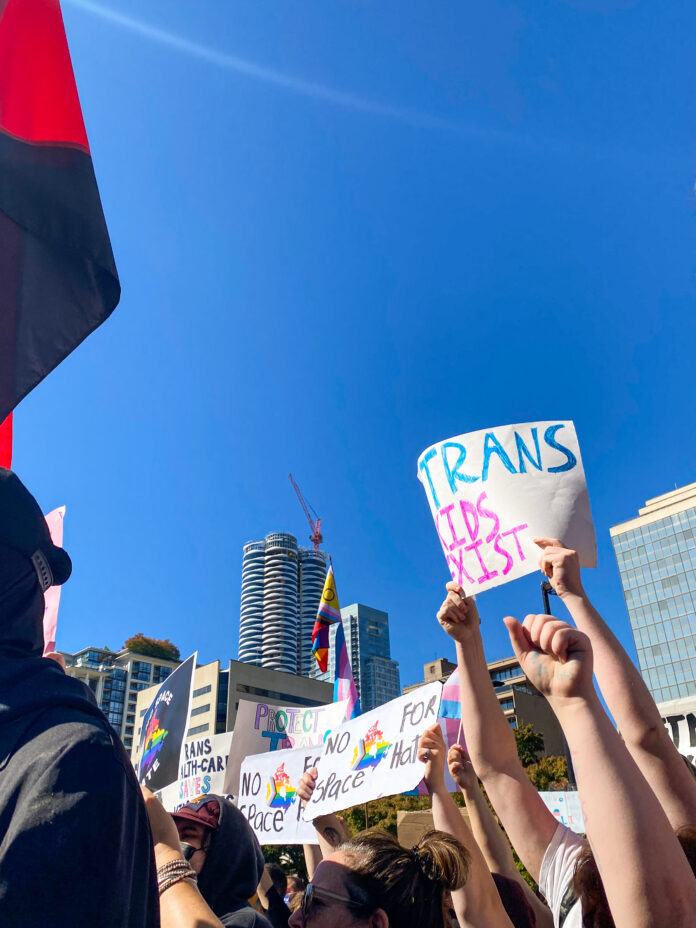
This is a photo of multiple pro-SOGI posters at a counter-protest in Vancouver. One reads, “TRANS KIDS EXIST.”
PHOTO: Gudrun Wai-Gunnarsson / The Peak

By: Sofia Chassomeris, News Writer

On September 20, parents against the addition of the Sexual Orientation and Gender Identity (SOGI) program to public schools organized “1 Million March 4 Children” protests across BC. Global News reported that the turnout for these protests was “sparse in comparison to previous years,” with more counter-protests that formed in opposition. 

The SOGI program describes itself as an “inclusive education initiative” that offers educators tools, resources, and strategies needed to address discrimination, foster inclusivity, and create welcoming classrooms. The resource package is not in the BC curriculum and its use is not mandated, but some classrooms use it. The provincial education ministry endorses the program.

Anti-SOGI protesters marched claiming to defend “parental rights” in deciding what their children learn. Wilbur Turner, 2SLGBTQIA+ rights advocate and president of Advocacy Canada, said opposition to SOGI was “spurred by misinformation” about the program’s role in public education. In 2023, the 1 Million March 4 Children drew “massive turnouts” from both anti-SOGI protestors and counter-protests across BC. This year, Global News reported “protests failed to materialize at all in Victoria or Vancouver.”

The SOGI program has been a point of contention since its introduction in 2016. The discussion has been raised in light of the upcoming provincial election, with the Conservative Party of BC campaigning for the removal of the SOGI program from classrooms. Leader John Rustad defended the protests, saying, “There’s no hate in that. The issue is around parental rights and parents being involved in their children’s education.”

The Vancouver Sun reported that SOGI “angered some parents who are religiously opposed or who argue it could encourage children to change genders.” The Peak interviewed Dr. Travers, professor of sociology at SFU. In response to parental concerns, Travers said, “Not having queer-inclusive and trans-inclusive education doesn’t make queer and trans students and people go away, it just makes us more miserable.” They said that the program provides instructors “guidance about how to create inclusive spaces for queer and trans students. 

“It doesn’t actually increase the number of [queer and trans] people, it just creates an environment where those who are queer and trans feel more comfortable being visible.”

The SOGI website has many resources for educators who are committed to fostering inclusivity. Travers explained the importance of the resources, saying, “We know that when queer and trans students don’t feel included in school spaces, they struggle with mental health issues, self-esteem, etc.” They also mentioned that creating safe school spaces “benefits all students,” citing a reduction in violence and bullying against 2SLGBTQIA+ students in schools where SOGI resources are used.

“People think you’re bringing sex and gender into the schools. No, we’re just interrupting the way that it normatively structures the institutions and curriculum,” they said, referencing the “taken-for-granted” normalization of heterosexuality that marginalizes queer and trans people. Heteronormativity assumes that all people are heterosexual and cisgender, which can exclude queer folks. 

In contrast to Rustad’s claim that there is “no hate” in anti-SOGI protests, Travers said “they’re anti-LGBT.” They spoke about the rise of politicians who are “using fear-mongering around queer and trans inclusion. 

“It’s a very deliberate creation of a moral panic that’s designed to help conservative politicians and movements seize state power in a way that is going to be very harsh for everyone,” said Travers. “All the advancements in social justice are on the table with these groups.”

The sweet potato in cupboard is my inspiration

0
C is holding a sweet potato in front of a white background. The sweet potato is sprouting and there are two leaves growing out of it.
PHOTO: C Icart / The Peak

By: C Icart, Humour Editor

They say you shouldn’t meet your heroes, but some of us didn’t have a choice. Some of us met our heroes way before they became our heroes. We met them at the grocery store in the produce aisle. They were chilling with all the other sweet potatoes, and taking a sweet potato home is a pretty normal thing to do when you’re at the grocery store. So, we brought the little spud home even though we don’t even really like sweet potatoes and stored it in our cupboard for the day we wake up with completely different taste buds. 

They say all the cells in your body get replaced every seven years. We haven’t had the sweet potato for seven years, so we still don’t like sweet potatoes because we still don’t have completely different taste buds. But that little orange trooper is not deterred by the fact that we’ve abandoned them. And one day, while we’re opening the cupboard to retrieve a potato that actually tastes good — russet — we notice the little guy has grown a leaf. 

They say Tupac wrote “the rose that grew from concrete” as a metaphor, but the sweet potato growing in our cupboard was real. It had managed to convince itself it was underground and decided it was time to be a parent. This entire time, we thought we needed to get our finances in order to do that, but our sweet potato has inspired us to jump in head first, no matter how shallow the pool is. 

All this to say, even if you’re a weird vegetable no one likes, even if you get deserted in the back of a dark cabinet while your owner hopes you disappear, you can grow! This will not result in your owner planting you, BUT at least they’ll take a picture. So, don’t forget to smile. Be fearless, be brave, be sweet potato.