Home Blog Page 988

University Briefs

0
Photo courtesy of The Excalibur

York University mascots stir controversy

[TORONTO] –– Earlier last year, a member of the Students Against Israeli Apartheid posed with the York University Lions mascots, carrying a sign supporting the Boycott, Divestment, Sanctions movement, inspiring anger from many Toronto Pro-Israel groups.

The university responded by saying that the mascots promote university spirit by walking around campus on a regular basis and posing for photographs when asked. A recent video was released showing York Lions mascots posing with random students, which the university hopes will affirm that there was no political intent behind the photograph.

With files from The Excalibur

UBC scientists receive $3 million to provide job-related training

[VANCOUVER] –– A number of UBC students were granted $3 millions worth in scholarships over six years by The National Sciences and Engineering Council of Canada to prepare them for the workforce.

The award is presented in a form of training programs, which give the opportunity for undergraduate, graduate, and postdoctoral students to have more practical training in the fields of science and technology. The two programs Collaborative Research and Training Experience, and ECOSCOPE were given the grant to help bridge the knowledge learned in university with actual job experience.

With files from The Ubyssey

Queen’s drafts new policy on sexual assault

[KINGSTON] –– The draft for a new policy at Queen’s University was released by their Sexual Assault Prevention and Response Working Group (SAPRWG) on June 1 demanding recommendations to the university Senate about inclusion and improvement of the policy already in effect.

In addition to resources available to victims, the new draft includes a list of definitions of words including sexual assault, consent, harassment and misconduct.

SAPRWG aims to present this policy to the Senate in the coming weeks hoping the new amendments come into effect before the start of the Fall semester.

With files from The Journal

The ‘Toblerone’ Scare

0
Photo Credit: Phoebe Lim

So there we were, sitting beside each other in a bustling Tim Hortons, reading-but-not-actually-reading a nondescript issue of the New Westminster NewsLeader, waiting to find out if there was indeed a human-to-be growing inside of my girlfriend’s uterus.

I’m hesitant to say that pregnancy-scares are just another part of growing up. Obviously there’s the factor of some people practicing abstinence, either intentionally or accidentally, and therefore entirely avoiding such distresses in the first place. But aside from that exception, I’m going to take a leap and say that almost everyone who’s been in a heterosexual relationship will have to go through a pregnancy scare at least once in their life.

Our day had started off like most should: lazily and with a stack of pancakes. Over the mess of syrup and battered remains left on our plates, my girlfriend at the time mentioned that she’d missed her last few periods. Even though she was on the pill and sometimes missed a month here or there, she still wanted to take a pregnancy test to be sure. Our lazy morning itinerary of pancakes and hanging out suddenly included a layover stop at Shoppers Drug Mart.

For the uninitiated reader curious to know, you can generally find pregnancy tests in the drugstore aisle under “family planning,” which reads like a twisted joke when you’re young and stupid and scared of what an unexpected pregnancy might possibly do to your life’s trajectory. After declining help from a friendly employee who asked if we needed “help looking for anything in particular,” we settled on a pregnancy test that hovered around the mid-price range (because you don’t want to get the cheapest one, but you also don’t need to pay top-dollar for something you’re going to pee on once and then throw away).

For the uninitiated, you can generally find pregnancy tests in the drugstore aisle under “family planning.”

But as we waited at the checkout and the line grew shorter, I unexpectedly became more and more uncomfortable with the thought of our cashier — a young-looking girl, who in all likelihood was probably around our own age — knowing the real reason why we were visiting a Shoppers so early in the morning. Eager to deceive her, I reached out and grabbed the closest thing: an over-sized Toblerone chocolate bar, one of many that were stacked in a bin and boasting a discount.

“There,” I remember sighing with relief, holding a giant Toblerone in one hand and a pregnancy test in the other, “now it won’t be as awkward.”

After that we ducked into the nearby Tim Hortons and both went into separate bathrooms to do the same thing for different reasons. I remember reconvening outside of the restrooms and pulling up a pair of stools to the nearest counter.

“I set an alarm for three minutes,” she said, a time window too narrow to do anything but too long to do nothing. I grabbed a nearby community newspaper and began casually flipping through pages while my free hand held my girlfriend’s.

Before long, our grasp had grown warm with sweat, though I couldn’t tell if it was from my hand or hers.

Transgenderism is a “social experiment” for a better society

1
Photo Credit: Saida Saetgareeva

On June 3, Mike Huckabee, a US Presidential candidate, argued that transgenderism is a “social experiment.” Although Huckabee’s and my opinions on gender identity issues greatly differ, there’s merit in the essence of this statement.

With headlines blown up by Caitlyn Jenner’s vogue debut, BuzzFeed videos going viral about transgender transitions, and public advocacy booming for gender neutral bathrooms, the question of gender and its place in society is a hot topic.

People like Huckabee like to joke about the ridiculousness of situations in which preexisting gender roles are questioned. In his speech addressed to the National Religious Broadcasters’ convention, Huckabee says that he would have pretended to be transgender if it meant showering with girls in high school, and that children shouldn’t have to see men in the women’s bathroom, implying that it’s inappropriate.

In both situations, Huckabee depicts men as stereotypically hyper-sexualized. He makes it seem as though it would be commonplace for boys to go so far as to change their gender identity in every aspect of their lives simply to ogle girls in a bathroom, an environment which I promise the former Arkansas Governor is far from sexy, no matter what porn tells him.

By saying that men in women’s washrooms is subjecting children to something inappropriate, Huckabee implied that parents should be worried about pedophiles in women’s washrooms. But something tells me that a woman in a men’s washroom would not concern Huckabee further than an awkward glance, rather than fearing for his children’s safety.

Putting aside the issues of gender and how people are classified, why would a straight man in a women’s washroom really be a threat? Are all men pedophiles? Why are washrooms any different than other public spaces such as busses — if a man sat near your child on a bus, would you be scared for their safety?

As a former Barbra Rae co-ed residence inhabitant, I can personally advocate that seeing men in my washroom isn’t as big a deal as naysayers make it out to be.

For the first week or so of using a co-ed bathroom (showers and all — shocking, I know), I did find a male presence a bit off-putting; but this is because I was outside the boundaries of what I had been taught was normal, not because I was worried for my safety or concerned about my privacy.

The borders placed upon gender and the classifications that come with it are taught to us, which also means public attitudes can be taught to change in the future. The popularization of topics such as transgenderism and gender identity in general brings to light the way people are taught to interact with one another.

I personally think that people like Caitlyn Jenner are advocating not only for transgender people but also for a generally better society. If transgenderism is a “social experiment,” I’d argue it’s a positive one.

We need to reevaluate the way we approach gender; the way we assume all men are predators, the way we feel that everyone must fit into a neat box. These on-trend topics act as a platform for a social experiment in bettering the way we, as a society, treat one another. It’s just time to make sure that people like Huckabee don’t drown out those looking for newfound equality.

BC forests can’t beat the summer heat

0
High temperatures, a low snowpack, and low percipitation increase the risk of forest fires. - Photo courtesy of Scott Lough

An SFU professor explains that British Columbians need to be aware of the looming danger from the extraordinarily dry spring we have experienced: an elevated risk of forest fires.

With several fires burning in BC already, including the Dunedin River Fire and the Little Bobtail Lake Fire, the upcoming fire season is predicted to be record–breaking. Experts are stating that there is a high possibility that BC will experience an increase in forest fires from previous years.

According to SFU professor and member of the Landscape and Conservation Science Research Group Meg Krawchuk, this elevated risk is due to a low snowpack in southern and central BC, high temperatures, and low amounts of precipitation in April and May.

The Vancouver region typically sees an average of 75 millimetres of rainfall for the month of May. However, the amount experienced this May was drastically lower: a measly 4.2 millimetres fell at Vancouver airport.

BC forests may be facing an added danger. Krawchuk also stated that some models suggest that dead trees resulting from the mountain pine beetle outbreak in BC’s back-country have increased the likelihood of fire, and resulted in more extreme fire behaviour. However, there is limited quantitative data to support this view.

The upcoming fire season is predicted to be record–breaking.

Although forest fires are often framed as being solely negative, they do offer several benefits. Lightning-based fires beginning from a natural source could provide several advantages for the surrounding ecosystem. Fire in this context provides the region with much-needed biodiversity, explained Krawchuk, as forest fires may remove decaying matter and are necessary for the persistence and resilience of our ecosystems.

Though we are entering forest fire season, there are several ways that people can reduce the risk of starting fires. According to Krawchuk, as most forest fires are caused by people, exerting caution when enjoying BC’s numerous outdoor activities can easily reduce the risk of endangering the surrounding environment.

Krawchuk urges people to be aware of campfire bans and regulations, as well as exerting caution when smoking in order to reduce the risk to our forests and having a safe summer season.

Internet.org is awful, but there isn’t a lot we can do

1
Credit: Momo Lin

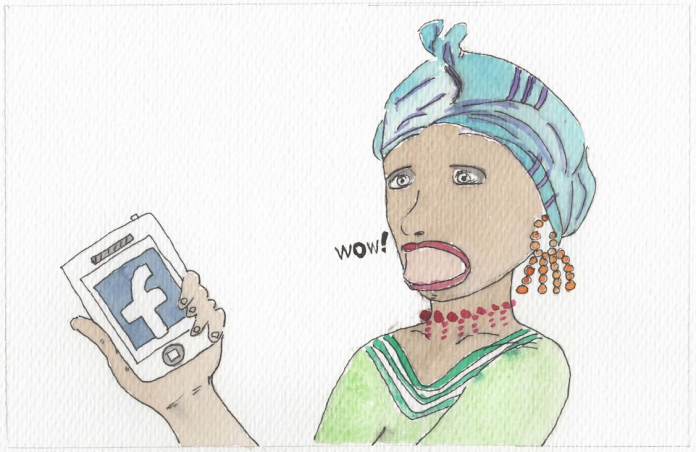
Wow! A whole lot of hate has been thrown at Mark Zuckerberg recently — both from media skeptics and other generally educated people. And while I’ve been painfully trying to play devil’s advocate toward some of the Facebook-related issues out there, I really just can’t with this one.

Zuckerberg’s Internet.org project, powered by Facebook, aims to bring the Internet to parts of the world that don’t have access. This means that an assortment of Middle Eastern and African countries will have access to basic, pre-determined Internet services: a saddeningly small selection of websites (yes, of course Facebook tops the list!) which will broaden these citizens’ minds and further connect the world. Sounds like a real utopia, right? A real marketing utopia, that is.

The ambitious project, deemed “The Fake Internet” by media rights organizations both foreign and domestic, has elicited harsh criticism over net neutrality by activists who proclaim a two-tiered Internet system under the corporation’s frightening leer.

Pakistan, say ‘hello’ to your new can of American worms: insecure websites, barred innovation, loss of free digital expression, and a complete lack of privacy. Facebook hasn’t ‘liberated’ you, it has invaded you.

So what are we going to do about it? Unfortunately, not much.

The social network has endured criticism from all forms of communication, and yet it keeps on truckin’.

Watching Facebook slither its way into Africa takes me back to the months I was working with SFU’s Media Democracy Project, an organization aiming to help ‘democratize’ our news media. As I scanned headlines on human rights in order to post weekly news roundups, I found I was reading — how should I put it? — a whole lot of ‘bark’ but not too much ‘bite.’

While activists from large-scale organizations against a variety of corporate causes were setting the awareness bar high, not a lot was being accomplished. This isn’t to say that activists are failures, or that the issues addressed weren’t important (they all are!). I just found that campaigns against large companies like Facebook only settled into a mish-mash of anger, resentment, and exasperation, while corporate entities continued to invade IP addresses and squeeze out ignorant dollars.

The unfortunate truth is that Facebook simply has too much power and influence; campaigns like OpenMedia can encourage people to sign petition forms, but in reality it will only result inasmuch as a scab on this corporate monster, whose claws already seep into one third of the world’s veins. The social network has endured public criticism through all forms of communication, yet it keeps on truckin’.

In this case, the only real choice is to sit back and watch Facebook brainwash an oblivious 65 per cent of Nigerians into thinking that “Facebook is the Internet,” and thwart Indians with the amazing possibilities that only a suffocated list of factually incorrect Wikipedia articles can bring. Zuckerberg will continue to pounce on this incredible marketing opportunity, widening the digital divide, taking advantage of those who don’t yet understand how their data will be used, and violating the principles of an open web.

I’m not here to demean the relentless work of interest groups or human rights organizations — I love them and am blissfully proud of their achievements — but folks, the truth may hurt: Facebook could be too big for you.

SFU Ombudsperson celebrates 50th anniversary

0
Jay Solman has served as SFU’s Ombudsperon since 2009. - Photo courtesy of Kamil Bialous

As old as the university itself, the SFU Office of the Ombudsperson is significant in that it was the first of its kind found at an academic institution in North America.

The office is an independent resource for the university community that aids in conflict resolution when it comes to issues of academic integrity, academic difficulties, or misunderstandings related to language skills or different culture.

The word Ombudsperson may throw some people off, as it has its roots in a 300-year-old Swedish term, ‘ombudsman’, meaning “person who has an ear to the people.” ‘Ombudsperson’ means an advocate for fairness and equity, rather than for individual’s specific complaints.

As the university opened in 1965, the students at the time felt that the Ombudsperson was something that would benefit the university. “At that point, there were no other ombudspersons in any other universities,” explained Jay Solman, SFU Ombudsperson.

For the 50th anniversary, a joint conference was held in May “where ombudspersons from all over North America and Europe came. It was hosted at the Harbour Centre downtown, and SFU did contribute to the conference as a sponsor,” said Solman.

The office has evolved over the years in response to turnover in students, faculty members, and student societies. In 2007, students had approached the university because they felt that the office was needed to fall in line with where other offices had gone.

Solman explained, “Over time, things start to get more professional, they grow. [. . .] So [SFU] felt that having a jointly funded office [by SFU, the Graduate Student Society, and the Simon Fraser Student Society] — that was fulfilling national standards.”

“[The university] should be transparent, we should be clear with our policies.”

Jay Solman,

SFU Ombudsperson

The office is independent, as it is not affiliated with any other parts of the university. According to Solman, “The independence is about the respect that the office is given, and the understanding that there is a reason for independence within the university.”

The primary role of the Ombudsperson at SFU is in conflict resolution between the university and students. When students feel like they have been treated unfairly by the university, the Ombudsperson is one of the resources that they can seek.

“This office helps the students exercise their rights, in some way, and also helps the students to understand how to resolve a problem within the university,” expresses Solman.

The Office of Ombudsperson works in two ways: holding the university accountable to a standard of treatment of its students and helping the students directly.

“[The university] should be transparent, we should be clear with our policies, we should be timely in the decisions we [make], and a student should have a real understanding of what happens if they are accused of something,” emphasized Solman.

About 400 students a year come see the Ombudsperson through referrals. There are variety of issues that the Ombudsperson deals with, such as students in Residence and Housing, students with extenuating circumstances, grade appeals, graduate students who have issues with their supervisors, issues around fees and transfer credits, students with issues about certain policies in the university and academic integrity.

Said Solman, “Every day is different. There are always unique problems.

“University is complicated, and then when you get different answers, that can be hard to figure that out,” he added.

“I am a resource. I am really here to help students resolve issues. [They do] not need to be huge issues.”

Reconciliation begins with respect

0
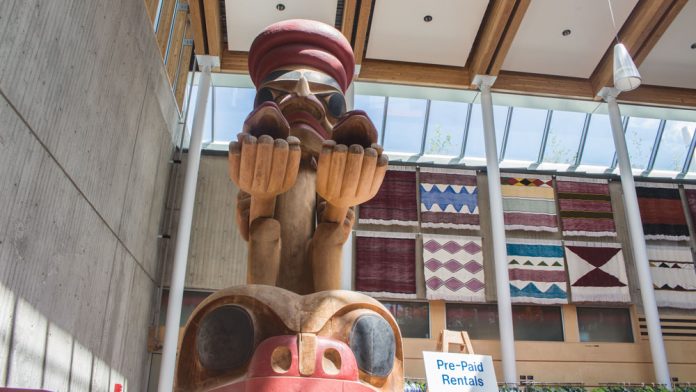
Photo Credit: Adam Madojemu

The damage that was inflicted on First Nations children within residential schools is a painful part of Canadian history. Children were forced to assimilate into Western culture, having their language and customs beaten out of them. Even when they had forgotten their native tongue and their home, they were always seen as outcasts, as peoples who never truly belonged in Canadian society.

On June 2, the Truth and Reconciliation Commission (TRC) released a final report which included 94 recommendations on how Canadians can begin to move forward in repairing the “cultural genocide” committed by residential school staff, as well as their relationships with First Nations peoples. These recommendations included the creation of a National Centre and Council for Truth and Reconciliation, and policy objectives regarding Aboriginal health, education, justice, and commemoration, among others.

While Stephen Harper publicly apologized to former residential school students in 2008, the pain and sorrow inflicted by these institutions is not something that a simple apology can fix. The atrocities committed at residential schools were actually far worse than the few details that Canadian public social studies and history classes imply.

In 1965, Russell Moses wrote a letter to the Indian Affairs branch of the federal government detailing his experiences in a residential school, after they had asked for a candid account of his schooling.

Education and legislature is important for raising awareness about what First Nations peoples have been through.

Moses spoke of scarcely having enough to eat, while some children resorted to stealing food scraps meant for the pigs to feed their  own empty bellies. The children had no toothbrushes, no underwear, and were beaten if they were caught speaking their native tongue. Religion was forced upon them, but it lacked any sentiment of Christian love and care.

Even back in the ‘60s, Moses emphasized the importance of the preservation of Aboriginal culture and, most of all, that people received a proper education. The TRC echoes this by combatting stigma and judgment against First Nations peoples, through putting an emphasis on educating the public about residential school history.

Education and legislation are important first steps towards raising awareness about what First Nations peoples have been through, but we can’t truly erase the hurt of the past. While the recommendations of the Commission are certainly admirable, they can only be put into action through collaboration with First Nations peoples on how to best implement these principles. Their input needs to be valued in order to ensure that their people and their culture are fully respected.

True reconciliation will only come with forgiveness, and the focus that the government and the general public place on making sure that history doesn’t repeat itself. We all have a part to play in remembering this dark part of Canada’s history, and moving forward to a future filled with hope and understanding.

Grad Corner

0

gss_logo_color-300Strategic Plan Consultation

The Council moved to hire an external consulting company to help the GSS develop and implement its Strategic Plan.

Greg Christie, Director of Finance prefaced the motion by saying, “We’re at a very interesting [point of time] in the society where we’ve been giving serious consideration to [. . .] how we want to run the GSS over the next few years.”

Scott Blythe from AdvanceU1st Consultants gave a brief summary of his firm’s proposal to assist the society to specify its goals, and to define and carry out actions to help achieve those goals. He identified a few points of improvement, including a lack of planned action to carry out goals and ways to measure their success, as well as there being no structured points of communication with university governing bodies like Senate or the Board of Governors.

Concerns from Council representatives included hiring externally instead of providing opportunities to grad students, and there were some questions regarding the ambiguity of the language in the proposal.

Interim Executive Director Mike Soron pointed out the advantages of having someone external who is not bogged down by regular society business to work on long-term planning.

The motion ultimately passed by simple majority.

Executive Director Hiring

While Mike Soron is currently filling in as Interim Executive Director of the GSS, come September, the staff position will once again be vacant.

Council voted to begin the hiring process of a new Executive Director and appointed a hiring panel. The society will advertise the position over weeks to come, and will be accepting applicants until the end of July. The selected candidate will be ratified at the August Council meeting and will be trained to take over in September.

The position will pay a yearly stipend of approximately $70,000 — a figure which was concerningly high to some representatives of the Council. It was pointed out that this was the national average for a director of a non-profit organization with one to two years of experience.

Some discussion revolved around the possibility of the position being held by a student, as the GSS has articulated a desire to create opportunities for graduate students. Soron replied, “We would be putting the society at risk, quite honestly, by not having somebody with the institutional memory lasting over a year, a full-time dedication to the society separate from any academic commitments [. . .] I do think that’s quite important.”

The hiring panel will add a testing component to the process to ensure candidates meet the desired level of skill for the position.

Satellite Signals

0

WEB-woodwardWoodwards

The Goldcorp Centre for the Arts will host a discussion on Tuesday, June 16 on the future of Canada, and the “dark history we may be unknowingly repeating” — referring to the removal of social security services in accordance to economic austerity policies.

The talk, led by Harry Leslie Smith, a 92-year old social activist and WWII veteran, and The Tyee, will present Smith’s personal anti-austerity beliefs, his experiences of the Great Depression, and his emigration to Canada.

surreySurrey

SFU is a co-sponsor of an art exhibition titled “From Punjab, with Love,” which is on display at the Surrey Art Gallery until August 2, 2015.

The exhibit features a 2.4 metre by 9.1 metre mural by Orijit Sen, based on his famous original housed at the Virasat-e-Khalsa Museum in Anandpur Sahib, India. The mural portrays “the daily life, history, myths, and festivities of the Punjab region through the centuries.”

vancouver

Harbour Centre

The Department of Gender, Sexuality, and Women’s Studies is hosting a “Herstory Cafe,” titled “Canadian Political Cartoonists View the Struggle for Women’s Rights.”

On Thursday June 18 from 7:00 to 8:30 p.m., political cartoonists Chris and Cynthia Hou will be discussing how Canadian cartoonists have portrayed issues regarding women and women’s rights over the past 150 years. 

Woohoo, Boohoo

0
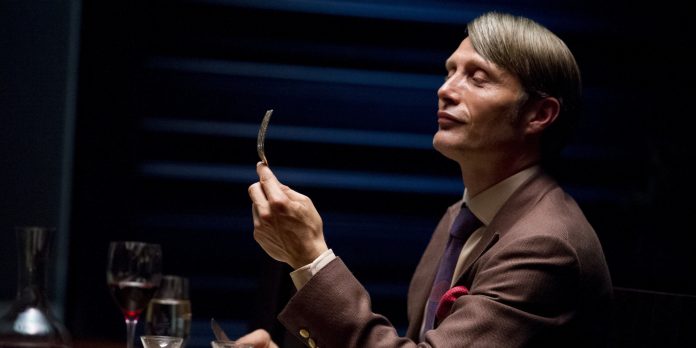
Photo courtesy of NBC

Woohoo: Hannibal

That’s right: the best show on TV that you’re still not watching is back. Get ready for another season of mouthwatering dishes made of human organs, overly stylized homoerotic tension, and Gillian Anderson being flawless.

This season, our favourite Dante-quoting, classical-music loving cannibal has settled down in Florence, where no one seems to notice he’s a wanted criminal even though it’s 2015 and the Internet has presumably posted pictures of his dreamy cheekbones on every Facebook wall and Twitter feed.

But who cares? Hannibal has never really been about believable plots — it’s about watching a suave serial killer gradually find his way into our hearts while his victims gradually find their way into his stomach. Don’t be surprised if the show’s third season ends up being its most visually striking and exciting yet, without having to resort to tired, misogynistic plot twists. Eat your heart out, Game of Thrones.


Boohoo: Hannibal

Okay, I admit it: Hannibal was pretty badass. Consistently ranked among the most talented military strategists in history — secondly only to Alexander the flipping Great — Hannibal’s exploits in the Second Punic Wars against the Roman Empire earned him his legendary status, most notably due to his march towards Rome in which he took 100,000 troops and 40 war elephants through the French Alps and almost took the capital. So you’re probably asking: how could this guy possibly count as a boohoo?

Well, if you were a Roman, you better believe Hannibal was a boohoo. Seriously: this guy posed a real threat to the most powerful empire in the world at the time, nearly capturing the city of Rome with little help from his native Carthage. When he was eventually exiled, he poisoned himself so as not to fall into enemy hands. And even after his death, Roman parents would use the story of his conquests to scare their children into behaving.

So yeah, don’t fuck with Hannibal.