Home Blog Page 94

South Korean 4B movement gains interest following US presidential election

0
This is a photo of three people in witch hats holding up signs in Korean as part of the 4B movement.
PHOTO: AFP / Free Malaysia Today

By: Sofia Chassomeris, News Writer

Content warning: mentions of gender-based violence, sexual assault, and Missing and Murdered Indigenous Women and Girls.

November 25 marks the first day of the annual 16 Days of Activism Against Gender-based Violence. The international campaign begins on the International Day for the Elimination of Violence Against Women, and ends on December 10, Human Rights Day. It is a time to reflect and make a “commitment to ending violence against women, girls, and 2SLGBTQIA+ individuals.” Following the re-election of Donald Trump as the 47th President of the US, more American women have shown interest in joining the South Korean feminist 4B movement.

In the past few years, South Korea’s National Police Agency reported on the country’s “sharp increase” in dating violence against women, including sexual assault and homicide. The Agency stated a record high of over 77,000 cases in 2023, with only 310 individuals prosecuted for their crimes. Critics of South Korea’s legal system, such as the Korea Women’s Hotline, point out that the small percentage of violent crimes against women that actually get reported are also treated as minor or “accidental” occurrences. 

As a response to this, the 4 B’s in “4B” represent the “four no’s” that participating South Korean women follow in response to misogynistic violence. They are “bihon, bichulsan, biyeonae, and bisekseu, which translate to no marriage, no childbirth, no dating, and no sex with men.” For most women, the movement takes the form ofquiet feminism,” in which women practice its principles but refrain from disclosing their feminist position publicly for their safety.

The 4B movement started on an extremist South Korean online forum called “Womad.” Experts note “Womad is a product of ‘Ilbe Storage,’ a right-wing website that expresses hatred toward women” with a history of members sharing nude photos of women without their consent. Despite “consistent public requests to shut down Ilbe,” the forum remains unrestricted. “This is a society where a trusting boyfriend commits a crime like this because they think it is nothing serious,” said one petitioner.

According to The Korea Times, many “radical feminist” communities “have wrongly developed the original concept of pursuing gender equality to a gender war,” with forums like Womad “mirroring” gendered hate speech and sharing posts about committing violence against men. Some of these women were part of the 4B movement, but it does not represent the whole.

The 4B movement caught attention abroad in the weeks following the 2024 US presidential election. The election of Trump and his party’s promise to implement Project 2025 — what the BBC calls a comprehensive “set of proposals that would expand presidential power and impose an ultra-conservative social vision” — has worsened concerns about reproductive rights. The Guardian reported that searches for 4B “spiked by 450%” the day after the election.

Canada has also experienced a rise in support for conservative politics. With increasing “dissatisfaction with the federal Liberal Party,” leader of the Conservative Party Pierre Poilievre and conservative premiers have appealed to many Canadians concerned with the heightening cost of living. Across Canada, conservative parties are imposing barriers for 2SLGBTQIA+ children in their education and medical needs. In Alberta, premier Danielle Smith’s government passed a bill requiring parents to “opt-in for their child to be taught” about gender identity and sexual orientation. In 2023, the United Nations’ Commission on Population and Development stressed that “deprivation of access to education on sexual and reproductive health and rights results in a range of harmful practices,” including “high levels of gender-based violence.” 

Indigenous women remain the most “disproportionately affected by gender-based violence.” They are more likely to be victims of homicide, intimate partner violence, and sexual assault. It has been five years since the National Inquiry into Missing and Murdered Indigenous Women and Girls released their final report in 2019, which includes 231 calls for justiceintended to address the root causes that sustain violence against First Nations, Inuit, and Métis women, girls, two-spirit, and gender-diverse people.” However, only two calls to action have been fulfilled, and more than half haven’t been started. The National Inquiry’s most recent Interim Report stressed that the government needs to take responsibility and “support accountability” for transformational change to be possible.

Speaking on the rise of the 4B movement, Ju Hui Judy Han, an assistant professor in gender studies at the University of California, told NPR, “What I think is most important is that it’s about women recognizing that they’re in a collective struggle and that there’s a collective sense of frustration.”

She also told CNN that this “movement is unlikely to become mainstream in the US.” She predicts it will be short-lived, and that “those inspired to join it as a result of the election are overlooking the fact that plenty of women voted for Trump, too.” Exit polls show that 45% of women, specifically, a majority (53%) of white women, voted for Trump in the 2024 election. In the recent BC election, 25% of BC Conservative voters were women, while 60% of women voted for BC NDP.

Read the full extended article on The Peak’s website, the-peak.ca.
Faculty for Palestine sends letter to SFU on May referendum breach

0
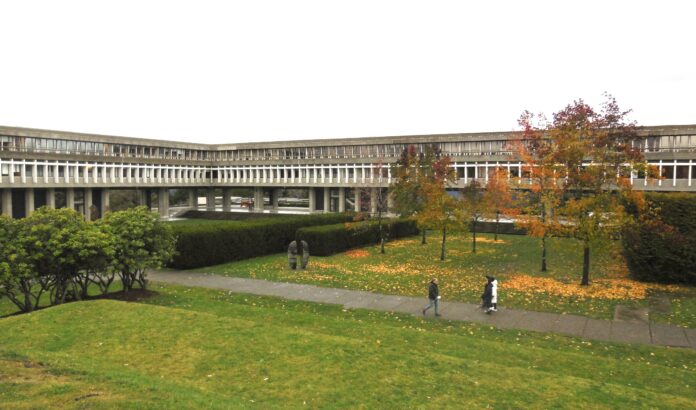
This is the outside of the Academic Quadrangle at SFU in the fall.
PHOTO: Shirlyn Zobayed / The Peak

By: Sofia Chassomeris, News Writer

On October 16, SFU’s Faculty for Palestine (F4P) sent a letter to SFU president Joy Johnson asking for transparency around a referendum breach this summer. Specifically, on May 17, voting by faculty to pass two motions around Palestinian liberation was reported to have been hacked. After the votes were later recast and the motions were passed, 13 faculty members opposed the motions and brought them to a BC court to argue for their nullification.

F4P is a “network of faculty who support the cause of Palestinian liberation.” In May, the group brought forward two motions for a vote among members of the Faculty Association of SFU (SFUFA): the motion on Israel/Palestine tells SFU administration to “condemn Israel’s destruction of the education system in the Gaza Strip and call for an immediate and permanent ceasefire and an end to scholasticide in Palestine.” The second motion, the motion to divest from arms production, urges the university to divest from corporations that gain revenue from military equipment and other war-related products. SFU currently has shares in “BAE Systems, Booz Allen Hamilton, and CAE Inc. According to SFU’s divestment policy, “the degree [to which the company] is involved in contributing to social injury and the severity of the injury” are considered by the university when the institution’s “social responsibility as an investor is questioned.”

After the hack occurred, “SFU’s IT department found that 305 identical votes were cast in a 30-minute period on the last day of voting,” according to independent publication The Maple. SFUFA members recast their votes using a different online voting platform. Both motions were passed by the union on June 7.

SFU provided The Peak with a statement regarding the incident: “There was no access to data within the system, so no personal information was compromised and identification of voters was not possible. The breach was not possible via the user interface, it required very specialized knowledge of software systems.” They also said that the WebSurvey application tool used for the referendum “was retired this summer as originally planned.”

SFU stated that since “the identity of the responsible individual(s) could not be confirmed, this incident is now considered closed.”

F4P’s recent letter stated the university failed to deal with “the grievous interference” and it is “entirely insufficient to argue [ . . . ] that the matter is closed because no personal information was compromised and the voting system has now been changed.” The letter asks the university for transparency around “whether the investigation identified the person(s) responsible for the interference” and if any disciplinary action was taken.

“It is now up to the SFU administration to do the right thing.” — SFU Faculty for Palestine

The Peak corresponded with F4P, who stated, “SFU has provided minimal information on what happened and who is responsible for the breach. Faculty are extremely disappointed that the university only acknowledged this breach recently while making it clear that the case file is closed.

“We expect more from our administration,” they continued.

13 faculty members who opposed the motions filed a petition challenging “the right of SFUFA to even put the motions to a vote.” In August, these faculty asked a BC court “to order the union to nullify the passing of the motions and reimburse them for their legal fees.” They also went to the “BC Supreme Court to declare what they call ‘impugned motions’ null and void,” and argued the union acted outside of its purpose under the BC Societies Act. The 13 faculty members included Rachel Altman, Shafik Bhalloo, Mark Collard, John Craig, Richard Frank, David Freeman, Paul Garfinkel, Steven Kates, Alexandra Lysova, Michael Silverman, Rochelle Tucker, Kay Wiese, and Rina Zazkis. The Peak reached out to these faculty members for comment, but didn’t receive a response by the publication deadline.

According to the Vancouver Sun, these faculty claimed the motions express “in a provocative manner a position on a deeply divisive political and geopolitical issue.”

“It is the right of any trade union to raise its collective voice on political issues of the day,” said F4P. “For professors, this means raising our voices against scholasticide — Israel’s destruction of all 12 universities and hundreds of UN schools in Gaza.

“SFU should have nothing to do with the arms industry or genocide [ . . . ] It is now up to the SFU administration to do the right thing,” they continued. “At this point, the administration has promised to review its so-called responsible investment policy.” They referenced SFU’s most recent October 28 statement on “responsible investments” as absurd, citing the university’s claim that “by divesting from fossil fuel companies, SFU no longer has a voice at the table to advocate for change.” 

“Are they seriously suggesting that staying invested in oil and the arms industry is somehow the right ethical choice?” F4P stated.

This is a story The Peak will continue to cover.

Aurélie Rivard and her remarkable Canadian legacy

0
A woman in a Canadian Olympic uniform waves to a crowd behind the camera as she holds a Canadian flag on her shoulders.
PHOTO: Courtesy of @aurelierivard / Instagram

By: Hailey Miller, Staff Writer

Aurélie Rivard has won the most medals of any woman in Canadian Paralympic swimming with a total of 14 Paralympic medals — six gold, four silver, and four bronze. She has won another 19 world championship medals and holds a plethora of world record titles to her name. She’s an inspiration to swimmers everywhere! 

As a 28-year-old Paralympian from Saint-Jean-sur Richelieu in Québec, Rivard is a powerhouse in the pool and has been swimming professionally for over a decade. Having been born with an underdeveloped left hand, she’s part of the S10, SB9, and SM10 Para-athletic classifications. She has stated that swimming throughout childhood was an escape from being bullied for her disability. Since then, she’s found a sense of belonging within the Para swimming community and made waves in the pool by scooping up more medals and records than one can count. 

Over 12 years into her swimming career, Rivard has been one of the top athletes to watch on the international stage. She has competed in four summer Paralympic games — London 2012, Rio 2016, Tokyo 2020, and Paris 2024. In Paris, she brought home another three medals — one of each colour. Although, I’m sure the best part was when she returned home from the games to see the newly-named Piscine Aurélie-Rivard — the pool where she trained as a child. What a milestone. 

Rivard holds world records for the S10 100m, 200m, and 400m freestyle, as well as Canadian records for multiple events. She first made a splash in the pool by placing on the podium at London 2012, scooping up a silver medal. Since then, she has placed on the podium at all Paralympic games she’s attended, alongside multiple world championships, Commonwealth Games, and Para Pan American Games.

Remarkably, Rivard has been awarded Female Para-Swimmer of the Year by Swimming Canada five times — from 2014 to 2016 consecutively, in 2019, and in 2021. Her training grounds are at Club de Natation Région de Québec. As a senior member of Team Canada, coached by Marc-André Pelletier, it’s no wonder she has such a legendary career.

When not taking laps and breaking records in the pool, Rivard is busy studying as a law student at Univerisité​ Laval. Talk about having a lot on your plate! Before she makes her next splash — whether in the pool, her future in the courtroom, or anything in between — she’ll be sure to continue to make waves when it comes to her career highlights and records overall. 

To Aurélie Rivard — it’s clear to see why you’re such a legend already at such a young age, and you’re not finished with your professional swimming career quite yet.

Félicitations!

A guide to winning the armrest on airplanes

0
Empty airplane cabin. You can see two rows of two seats and the clear skies out of the windows.
PHOTO: Aayush Shah / Pexels

By: Cam Darting, Peak Associate

High school history class focused on all sorts of armed conflicts. It taught us about the French Revolution, the World Wars, and more. However, they failed to teach us about one ongoing war that impacts people daily: the war for the armrest on the airplane.

Whether you get to rest your light and fragile arm on that hard plastic armrest can dictate your mood for not only the flight but the entire trip. You don’t wanna be sad walking around Hongdae looking for BTS because of a tired forearm, do you? Let me help you answer that: ANIYO! As a veteran of the war of armrests on an airplane, I am here at your Beck and call, almost like a Cat, to guide you through this battle and come out Victorious! (see what I did there;))

Like every war, you need to come prepared for battle. It is KEY to show up in a puffer jacket. Not only will it keep you warm from the harsh airplane air conditioning blasting from above like a puss-filled pimple being popped, but your puffiness will increase your volume. As a result, your puffer’s fabric reaches over to your neighbour’s personal space, making the person next to you feel uncomfortable, resulting in them leaning to the opposite side. You may think that is selfish, but I think it’s just a form of self care, and self care is never seen as bad in the eyes of Gen Z. 

Next, try and get your ass to your seat ASAP. You better be the first person to enter that airplane because positions matter. Being the top or bottom . . . of the line matters (get your mind out of the gutter). Being the first in your row to sit down gives your puffer more time to expand and take up square footage. 

Now, for the battle itself. This is where tensions get high, and people’s true colours show. You need to be fierce. You need to be cut-throat. You need to instantly place your elbow on that damn armrest. If you follow the two steps outlined above, the next piece of advice won’t be needed. 

If you find that your neighbour has taken the armrest first, you need to act fast. How? Push their arm off and place yours down like the princess it is. They’re mad? Don’t care. They’re upset? Not your problem. They call the flight attendant? Ignore their ass. You need to do whatever it takes for your pretty little arm to be resting. BTS is counting on you. I am counting on you.

What Grinds Our Gears: Transit isolation

0
The inside of a bus full of people wearing masks
PHOTO: Lisanto 李奕良 / Unsplash

By: Sofia Chassomeris, News Writer

A unique fatigue sets in after a long, wet day, dragging the hems of your soggy jeans across a bus floor and nearly getting bowled over by high schoolers on their way home. It’s loud and uncomfortably warm, and the person in front of you (re: on top of you) smells like that drugstore shampoo you used to buy from a time you’d rather forget.

Common symptoms of hyperindividuality call for simple, over-the-counter remedies: turn up the music, look out the window, and check out of life until you get where you’re going.

There’s the unsettling thrill of being so physically close to people you are emotionally strangers to — we stand face-to-face-to-face, toes stepping on others — but when I look at you I must look away, and you must do the same. 

Every time I tap my Compass I commit to the fantasy that nobody else in the world exists, and it makes my stomach churn. It’s a deep-seated anger that masquerades as annoyance over coffee with friends who already understand and are tired of hearing it.

Yes, they say. I feel lonely, too.

And then we take SkyTrains to the opposite ends of the city, in cars packed with other humans, too anxious to let a glance be more than fleeting. 

Individual liberties, my ass. The windows fog from our shared breath and we still have the audacity to view mere association as less than beautiful.

Do we not owe each other acknowledgement?

Hello!

Hello?

Hidden Gems: Local trans-owned businesses

0
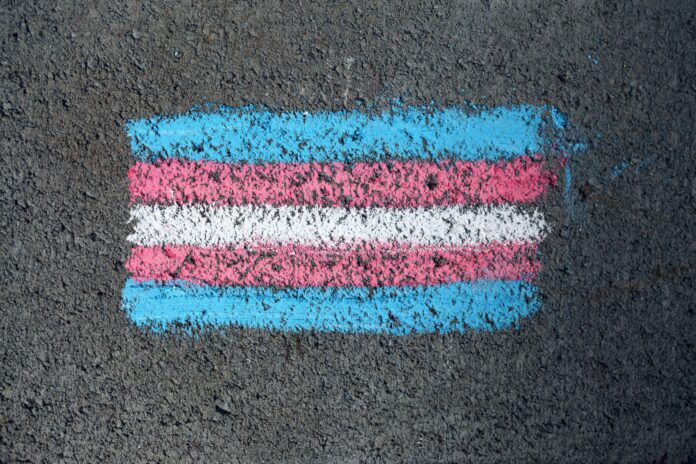
Chalk lines of blue, pink, white, pink again, and blue again drawn on concrete depicting a trans flag.
PHOTO: Katie Rainbow / Pexels

By: Yasmin Hassan, Staff Writer

Wednesday, November 20, is Trans Day of Remembrance: a day to “honour the memory of transgender people whose lives were lost as a result of anti-transgender violence.” Qmunity is hosting both a gathering at The Birdhouse to hold space for the community, and a vigil at Victory Square to mourn. This week, and every week, find ways to uplift trans folks by making the effort to be educated about issues in the trans community, and supporting trans-owned businesses. Here are some businesses based in so-called Vancouver you can check out.

Life of Bria Comics
Online 

From webcomics, to graphic novels, to voice-over art, the Vancouver-based illustrator Bria does it all! Bubbly yet morbidly funny, Life of Bria stemmed from her experiences coming out as transgender. Her free graphic novels touch on many different elements ranging from horror, to time traveling, to the experiences of a trans woman through her own lens! She also does commissions!

Peau de Loup 
1529 Venables St., Vancouver

PHOTO: Courtesy of @peaudeloup / Instagram

By using up-cycled material, Peau de Loup revolutionizes gender-neutral clothing for anyone and everyone! They describe themselves as “a vibrant and inclusive community that embraces self-expression and authenticity.” While they offer tees, sweatshirts, bottoms, outwear, hats, and more, my personal favourite is their railroad coaches jacket!

Big Bro’s Barbershop 
2375 E Broadway (at Nanaimo St.), Vancouver

Big Bro’s Barbershop, founded by Jessie Anderson in 2015, was developed to provide “a place where trans people could receive hair services without hassle.” They “host a number of projects, fundraisers, and independent contractors,” continuing to serve Vancouver’s trans community nearly a decade after first opening their doors. If you want to donate, or can, they also have a GoFundMe to relocate their shop to a more accessible location for patrons!

Samonte Cruz Studios
Online storefront 

PHOTO: Courtesy of @samontecruzstudios / Instagram

Cruz is a mixed-gender, mixed-race metalsmith who developed their abilities in goldsmithing while recovering from a serious spinal cord injury. They even worked at SFU in 2006 as a permanent coordinator for the LGBTQ+ Centre, supporting trans and gender non-conforming individuals! Cruz creates jewelry tailored to your wants and needs, such as uniquely personal wedding rings, all while running workshops and making music on the side. They’re an incredibly multifaceted individual, and so is their work. A piece that stood out to me was the solid gold balisong necklace, which pays homage to their Filipinx heritage!

Man Up — Queers and Beers
44 W 4th Ave., Vancouver 

Looking for a fun way to spend the night? Say less, Man Up has you covered. This organization highlights drag performances and offers a space for queer individuals of all walks of life to have a good time. While they’re known for doing pop-ups, they are mainly located at the Birdhouse (which is an amazing venue, by the way)! Catch them there next time on November 30 for “Break the Internet,” a drag show for cyber divas.

Red Leaf women fly, men fall at 2024 Canadian Tip-Off Classic

0
A man in a red basketball jersey jumps to swat a basketball away from a basketball hoop.
PHOTO: Kaja Antic / The Peak

By: Kaja Antic, Sports Writer

For the second consecutive year, 12 college basketball teams from across North America streamed through the doors of the Langley Events Centre. The 2024 Division II Conference Commissioners Association Canadian Tip-Off Classic took place from November 1 to 3, as the SFU Red Leafs men’s and women’s teams played host to their NCAA Division II counterparts.

The Red Leafs men’s team was joined by fellow Great Northwest Athletic Conference (GNAC) programs from Saint Martin’s and Western Oregon, along with the fifth-ranked Dallas Baptist, 14th-ranked California State University of San Bernardino, and Hawai’i Hilo who went undefeated at the 2023 tournament. 

The women’s team was met on the court by GNAC peers Seattle Pacific, along with St. Edward’s from Texas, Dominican from California, 11thranked Gannon, and fourth-ranked Tampa

Spectators filled the rows of seats. Some from local areas came looking for entertainment in the collegiate tournament, while others had seemingly travelled to cheer on a visiting school. I noticed a passionate contingent supporting the University of Hawai’i-Hilo Vulcans, some even carrying pom-poms that would be shaken whenever their team scored a point. Opposing teams not playing at the time would filter in on occasion, likely scoping out their competition for upcoming games.

The Red Leafs women’s squad had a decent showing through the tournament, going 2–1 over the weekend. The team earned wins against St. Edward’s and Dominican, but fell to Tampa 66–51 in the final game. Tampa was one of two women’s teams to go undefeated, with Gannon also earning the 3–0 statline.

Two Red Leafs earned “Player of the Game” honours, with senior Sophia Wisotzki gaining the title by scoring 31 points in a 78–62 win against St. Edward’s, and junior Myrlaine Shelvey being awarded the designation in a 77–67 win over Dominican.

The men’s team struggled throughout the tournament, going without a win over their three games played just as they had in the 2023 Classic. They weren’t the only team to go winless over the weekend, as GNAC rivals Western Oregon also went 0–3. Saint Martin’s, the final GNAC team in the tournament, went undefeated. Despite good offensive performances from players like sophomore Irish Coquia and junior Luke Howard, SFU was outscored 228–189 in losses to Hawai’i Hilo, CSU San Bernardino, and Dallas Baptist.

Two Red Leafs gained spots on the tournament all-star teams, with Wisotzki earning first team honours in the women’s tournament, and Coquia earning second team honours in the men’s tournament. 

As both teams’ collegiate seasons begin, the men’s team hopes to improve on a 2023–24 season that saw them placing ninth out of ten in GNAC standings, only above Western Oregon on the conference table. The team went 4–14 against GNAC opponents, and had a 6–23 record overall. 

The women’s team also looks for improvements on last year, after their season ended in a 65–51 loss against Central Washington in the GNAC Women’s Basketball Championship. Overall, the team held a 17–14 record for the 2023–24 season, with a 10–8 record against GNAC opponents, earning fifth in conference standings. The 2024–25 campaign already looks promising, as the team’s 2–1 record is an improvement on the 0–3 result they gained in the 2023 Classic.

Both the men’s and women’s programs begin their GNAC campaign on December 5, with the men’s team playing at Central Washington while the women’s team plays host to Seattle Pacific in SFU’s West Gym.

Stop with the Broccoli Heads! It’s bad!

0
A person wearing blue jeans and a white shirt. They have broccoli on their head instead of hair.
ILLUSTRATION: Yan Ting Leung / The Peak

By: Sarah Sorochuk, Peak Associate

There seems to be a trend among young people that seem to think bubbly perms are all the hype. Judging by the posters that have been put up around Burnaby Campus, urging people to “say no” to so-called “Broccoli Heads” — no one else agrees. Rather, it is a terrible mistake that needs to be rectified. 

It has been said that people getting these haircuts (particularly preteen boys) are doing it because their inner Disgust are telling them they are lesser than. This toxic emotion then coerces these people into an “aesthetic” look taken from the fibrous vegetables that should go into our mouths.

This tree-like entity controls their minds and convinces them it’s essential to have these tenacious tresses to achieve the perfect GymTok body, unfortunately for everyone else.  These brocco-not-bros register for any gym nearby. Gym regulars like the SFU FASS One peer mentors interviewed by The Peak say they now go out of their way to work out at different times because of these irritating Broccoli Heads. Though they are not the only ones changing their ways, Reddit is full of complaints where people say they now work out in home gyms “cause it’s inevitable that gyms are gonna be a natural habitat for broccolis and jerks.” These children with strange Kermit hair are bothering the regular, and to further the irritation,  these fake broccoli only work on abs, as they are going for the basic muscular look.

With only the idea of getting fit and strong in mind, these kids are barely even able to do abs. But if they do, the most they are able to get is hot girl fit — where the body is all for show, and cardio is non-existent — and for all this work over a green hairstyle . . . The gyms are just a cyclical system run by more Broccoli Heads, where the dread and longing for more meaning sinks into their souls, creating nothing more than a cycle of green gym bros.

Let’s stop the tragedy of Broccoli Heads! Say no to the style!

A message to the BC legislature: shut up and give me proportional representation

0
A silhouette of ballot box against a dark background, with a hand putting a ballot in
PHOTO: michael_swan / Flickr

By: Yagya Parihar, SFU Student

After an excruciatingly long period of counting and recounting ballots, we now know that the BC New Democratic Party (NDP) will form a slim majority government. While this is a relief considering the extreme stances of the BC Conservatives, it’s also frustrating to see just how close this election was. The disparities between the two major parties could not be more clear.  One party has a track record known to voters and has campaigned on principles of basic human decency, while the other is filled with people with all sorts of fringe, bigoted beliefs, and was much less popular in BC elections until a few months ago. It’s a shame that we as voters must worry about power abuses from opposition parties, as our current voting system doesn’t allow for effective representation. 

So, why is there this polarization, and why is such an extreme party so close to power? To know why, we need to understand the electoral system we use: first past the post (FPTP). In this system, provinces are divided into districts with similar population numbers. The candidate with the highest vote count wins control over the entire district. The party that wins the most districts forms the federal government. It’s plain and simple — right until it’s not.

The FPTP system doesn’t necessarily reward the party with the most popular support, and instead encourages two-party systems. Take the example of the district Courtenay-Comox on Vancouver Island, where the BC Conservative candidate won with only around 38% of the vote, despite the BC NDP candidate being only 92 votes behind, and the BC Greens candidate having a sizable 20% of the vote share there. Under FPTP, two large parties will effectively dominate political discussion. Voters are forced to pick a side they may not prefer, or risk having their voice shut out.

It’s clear that FPTP is far from being a fair and democratic system. That’s why we need a better solution. A proportional representation-based (PR) electoral system is one where election results reflect who each individual voted for, ensuring everyone has representation that matches their beliefs. Coalitions of parties can help establish a consensus, and can make it far less likely that a new policy will immediately be thrown out by the next government.

There are a few proportional systems out there, with two of the most popular being mixed-member proportional (MMP) and the single transferable vote (STV). In MMP, voters elect one local representative, but regional representatives are also elected from “top-up seats” to a party list to help compensate for the popular vote.  The issue with MMP is voters still only have one choice they can make. Additionally, political parties play a larger role than even in FPTP because of the party lists.

Major change is needed to fix things, and we simply can’t afford to make the mistakes of the past.

By contrast, with STV, elections use regional districts like FPTP, but they are enlarged and have multiple seats. On a ballot, voters can rank all the candidates in order of their preference. Voter’s choices are used to then decide which candidates get elected. This allows people to show support for all their preferred candidates. It makes it easier for independents to get elected, and helps avoid wasted votes. STV also reduces the power of political parties, as winning a seat isn’t as guaranteed as with FPTP or even MMP.

Even with the need for electoral reform, there is a major problem in implementing it. The traditional method to change the system is to first hold a referendum, and switch to the new system only upon its passing. The problem is that the government sets the conditions for the referendum question, and this can be twisted to make it fail.

In 2004, BC held a Citizens’ Assembly on Electoral Reform where participants proposed a variant of STV that they called BC-STV. The following year, the referendum on BC-STV had over 57% support with voters in 77 of 79 districts voting for it, a glowing endorsement that was largely due to the public engagement process. However, it failed, as it didn’t meet the 60% threshold set by the BC Liberal government. A similar result happened in subsequent referendums in 2009 and 2018.

With the failures of past referendums, some say it’s time we try another approach. The BC Greens suggest that the legislature should vote for a new electoral system first, hold the next couple of provincial elections under the new system, and then have voters decide on whether they want to keep it or change it back. This strategy lets people try out the new system and see the results in practice, which is appealing, but carries a risk in the precedent it sets. There is nothing that binds a future legislature to hold a referendum, and this could open up a Pandora’s box of governments changing electoral systems on the basis of political convenience. This has happened before: Alberta used to have a hybrid STV system for three decades, but in 1955, when more opposition candidates were elected in rural districts, the ruling Social Credit government switched back to FPTP to eliminate threats to their dominance.

It’s hard to say what strategy is the best to bring in electoral reform. On one hand, the people of BC are likely fed up with having three referendums within the past 20 years, but maybe after this extremely polarized election, there’s enough people who want things to change to drive a renewed push for another. On the other, pushing reform through the legislature would expedite the process, but it also raises the question of whether we can trust our politicians not to change the system in the future for their convenience. Regardless, it’s certain we cannot continue any longer with our broken electoral system. Major change is needed to fix things, and we simply can’t afford to make the mistakes of the past. Luckily for us, we have elected representatives who exist in the same political environment as we do, whose job is to debate these issues with consultation from expert policy advisors. My message to them is to shut up and do whatever it takes to get electoral reform done.

Don’t blame fashion resellers without acknowledging corporate greed

0
A person browsing through a clothing rack in a store
PHOTO: Ron Lach / Pexels

By: Manal Kashif, SFU Student

Thrifting has long been a way to purchase clothes while keeping it easy on your wallet. Unfortunately, along with its recent rise in popularity, prices of thrifted clothing have also skyrocketed. It’s easy to blame fashion resellers and shop owners for this. However, it’s unfair to say that all fashion resellers are exploitative or the sole reason for outrageous prices. The root causes come from the rise in fast fashion and the state of a consumerist economy.

It is true that many fashion resellers out there are hiking up their prices in an exploitative way, but that doesn’t fully explain the high cost of thrifting nowadays. While a corporation like Value Village, who is owned by Walmart, puts profit above all else, a non-profit or social enterprise that sells clothes and donates its money to charity clearly has a different purpose and shouldn’t be judged the same way. A good example of this is Vancouver-based Miscellany Thrift & Vintage. They are a local for-profit thrift store that believes in giving back quality resources to their community. 

When it comes to issues of high cost of living, smaller businesses are also “feeling the effects of inflation and the rising costs of rent.” Rent is due regardless of whether a business made sufficient profit that month, otherwise the business faces being evicted. Commercial buildings also face rent hikes when their leases expire that aren’t controlled adequately. This is a reason why thrift store owners likely feel pressured to increase their prices — to make a living.

The increase in fast fashion has not just made it harder for consumers to find quality clothing in thrift stores, but it also makes it harder for small businesses to stay afloat. A CBC article discussed how “more donations lead to higher prices.” This seems to not make sense at first, because if there’s more inventory, why would store owners need to charge more? The answer is they must pay and hire enough staff to go through piles of donations. There are costs to dispose of unwanted clothes, and many of them end up in landfills. Only 25% of clothing donations in Canada end up being purchased. A large part of this is due to overconsumption in general, which leads people to believe the impact of their unnecessary purchases is offset by donating to thrift stores. This ends up hurting smaller thrift stores the most, as they have less financial means to sort through and sell all their donations. 

In response to the oversaturation of fast fashion in thrift stores, many have turned to “thrift flippers.” Thrift flipping is when an individual buys used items from thrift stores and resells them at a higher price, usually on Facebook Marketplace, Poshmark, or Depop. If we were to assess the intentions of individual sellers, we may be tempted to feel some contempt towards them. Depop sellers often thrift top-tier items and sell them at ridiculous prices. However, many of these resellers may be dependent on what they earn from selling online for multiple reasons, with one being that many people need multiple sources of income due to the state of our economy. 

It’s easy to point fingers at resellers, but we should consider the time and effort that can go into collecting and curating different styles of clothing. With the number of low-quality fast fashion items saturating thrift stores, it can be helpful to find resellers that offer items without the hassle of picking through an entire Value Village just to find a couple items. This doesn’t change the fact that price gouging is inexcusable from both corporations and resellers, and we shouldn’t have to rely on resellers to find quality clothing. However, the consequences of the global fast fashion industry have bled into thrift shopping, and we should direct our anger towards corporations that uphold the status quo. 

Nowadays, many people turn to thrifting for environmental reasons. But finding quality clothing at an affordable price is becoming increasingly difficult — even in thrift stores. This won’t change until we move away from unnecessary fast fashion purchases as much as possible, and push our governments to take action against textile waste.