Home Blog Page 933

Remembering the ‘small’ losses

0
Photo courtesy of Marko Kudjerski (Flickr)

I have been very lucky. I haven’t lost any immediate family members within working memory, and have never had to say goodbye to a friend before their time. I have had very little experience with death. However, these past few months have changed that, and I am now acquainted with a type of loss that we do not normally discuss.

When I think of losing someone, I see the face of my sister; I get a startling agony at the very thought of losing her. But the reality is that the loss of close friends and family members is not the type that we will experience most frequently throughout the course of our lives. We are much more likely to lose someone that we used to know, or only met in passing. These losses are very different from the previously described, because the impact is not as immediately apparent.

This year I lost two people with whom I had not spoken for some time. My teacher, who had given me courage and guidance, and a friend who had shown me compassion, had already been absent from my life for a while. Nevertheless, their deaths made me feel an emptiness — like there was a hole in my heart that I didn’t know they had filled.

Knowing that I will never see them again, and knowing that they will no longer be able to share their presences with others as they had with me, filled me with a new kind of loss. It was not a sharp agony; instead it was a gentle emptiness that seeped into in my chest and flooded my mind with reminders of their voices and faces. The impact that they had on me is still alive in my memories.

Since this is all new for me, I catch myself saying that it is silly to miss someone who I haven’t thought about for months or even years; that I only care about them now because they are gone, and that it is selfish to involve myself in other people’s’ tragedies. But that’s simply not true, and I can’t treat myself this way. My feelings are valid and are important to acknowledge.

We don’t talk about these types of losses enough because they seem so insignificant compared to the big ones, but we should because they are relevant to everyone. When you lose someone who has influenced you, no matter how small of a way, you can really feel it. The feelings that result from losing someone from your past should not be discounted or brushed aside with the misconstrued perception of not having known them long enough.

When someone dies, all that is left of them is the impact they had on the world, much of which takes the form of scattered memories. Even if those memories are brief, they are still an important piece of the collection that should be both celebrated and mourned.


Charles Demers presents an alphabet of horrors

0

A collection of essays that have their subjects determined by the letters of the alphabet doesn’t sound particularly like the groundwork for an enjoyable read, but comedian Charles Demers manages to make it so in The Horrors: An A to Z of Funny Thoughts on Awful Things.

We are now in a new age of political correctness that causes us to feel some guilt laughing at certain topics, such as Nazis and depression — both of which are covered in this book, but Demers shifts the focus from the actual subjects to his own experiences with them. This takes away the awkwardness and guilt of the laugh that sometimes slips out in response to a tasteless joke.

That is not to say that these essays don’t deal with difficult topics; it is, after all, in the book’s subtitle that these are awful things. But Demers manages to inject humour into the entire awful alphabet. The more difficult entries such as “M for Motherlessness” are equal in hilarity to entries like “G for Golf.” This is a talent that Demers manages to make seem effortless.

The most refreshing change came not from Demers’ candid and honest thoughts on a whole host of political, social, and personal issues, but from his entry for the letter X. He chose not to write about a xylophone, an x-ray, or xenophobia (though he did touch on this in the essay), he picked xanthan gum: a seemingly innocuous food additive that is in everything from salad dressing to bread. He focused less on this strange product, and more on the food industry itself. Given the current state of food labeling, this essay is both timely and relevant and seems like it will prove to be for some time.

The collection also maintains a strong sense of continuity throughout. Beginning with “A for Adolescence” and ending with “Z for Zzz,” Demers builds from the previous letters. So although you can quite easily open the book to a random letter and enjoy whichever essay you stumble across, you run the risk of not getting the full picture if you don’t read the preceding letters of the alphabet.

All in all, Charles Demers’ The Horrors: An A to Z of Funny Thoughts on Awful Things is a must read. It acknowledges that life isn’t always rainbows and unicorns; it recognizes that sometimes life just plain sucks, but also that this is okay. There are really only two options: laugh about it or cry about it. Demers chooses to laugh, and, if given the opportunity, you should laugh with him. 

Who SFU Students are Voting for:

0

We asked SFU students how they’re planning to vote in the upcoming federal election. Who’s got your vote?

Created by Paige Smith

We Were Here First

0
Photo courtesy of Wikimedia Commons

CRAIG ASMUNDSONCraig 1965

SFU Kinesiology professor

Why did you choose to go to SFU?

It was a much easier commute for me coming up here. I couldn’t afford to go live at UBC on campus. And it was just an exciting place to be because it was a new and different university.

What is one of your earliest memories of SFU?

When I came here, I’d never even heard the word ‘marijuana.’ But by late ’66, ‘67, it was everywhere. When Louis Riel house opened, I lived there for a few years in ‘70, ’71. You could walk down the hall and almost get stoned from the smoke coming out of all the rooms.

What extracurricular activities were you involved in?

I was on the track team for about a year. I started a kinesiology students’ association. I was in the SFU Outdoor Club in the ‘60s, and in the ‘70s it was a big club. It had 400 members. So I was involved in that and became President for a couple of years. That was a great experience.

How did you feel about UBC back then?

I was irritated that so many people thought that SFU wasn’t a real university, that we were a fluff university, a pretend university. There was definitely an elitist feeling from a lot of people at UBC. The academic standards at SFU have been high from the very beginning.

How did your experience at SFU shift your path in life?

I changed majors three times in my first few years at SFU. A buddy of mine was in kinesiology and he said, try Kinesiology 142.  I took the course and thought that it was the greatest thing since sliced bread. (Asmundson currently teaches Kin 142 at SFU.)

What does SFU’s future hold?

I expect to see SFU continue to grow as the population of Metro Vancouver continues to grow. I expect there to be, hopefully, a lot more growth in SFU student numbers at the Surrey campus. I would like to see more programs get going out in Surrey, because that’s where the population growth is. Young people can’t afford to live on this side of the Fraser River.


TONY BUZANSFU_Student Annual_1965-66_Volume 1_Charter Edition.pdf

Inaugural Student Society president

Why did you choose to go to SFU?

I heard about Simon Fraser and what it was going to be: a new version of Athens. That was the dream of the architects and the academics. I very quickly came to the conclusion this was an ideal place for me to be next in my life.

What is one of your earliest memories of SFU?

When I came up the hill, it was as if I was the pilgrim discovering Shangri-La. It was magical. I was enchanted and immediately fell in love with it. Its architecture and its structure blended perfectly congruent with the purposes of the university.

What extracurricular activities were you involved in?

When I was there, I was beginning to study martial arts. I also became very involved in Mensa, the high IQ society, and that is where I began to investigate the meaning of intelligence. I also began to write poetry.

How did you feel about UBC back then?

The UBC engineers were like marauding gangs — samurais. Obviously, there were wonderful games to play with the newly beginning students and all the heckling [. . .] it was a wonderful opportunity.

How did your experience at SFU shift your path in life?

Simon Fraser affected my life a lot and it gave me more energy to reach my goals. [It] was the birthplace for the invention of mind maps, which is a pretty good birthplace. Mind maps are now spreading all over the world, [and are used by] 350 million people. A lot of that energy came from Simon Fraser.

What does SFU’s future hold?

I see it in the same vision I had when I first went up the mountain. It has a history. It has its DNA, and if that is constantly revisited and then encouraged, it can be wonderful. It can be a university based on its original dream of being a top university in the world, as a new Athens. A new Athens!


TRUDY DESJARDINE

Education student turned principal

Why did you choose to go to SFU?

I was raised in Burnaby. My dad was on the council at the time, and there was lots of hype around this fabulous, new university going up on top of the mountain, and there was all this hype in the papers. I thought it would be a great adventure.

What is one of your earliest memories of SFU?

The first semester up there, they offered ‘T’ for your final grades. ‘T’ meant, we’ll pass you, but please don’t take any more courses in this faculty. So that first semester I [got] three ‘T’s because I was just having too much fun!

What extracurricular activities were you involved in?

I ran for the student council the first year and didn’t win. But then I started the student guide service and worked as a guide. I was also secretary of the chess club for a time. But, the fellow I went with at the time was on the football and the basketball team, so I went to all the home or UBC games. Even though I didn’t play anything, I was involved in the sports.

How did you feel about UBC back then?

I only really thought about them when we were playing basketball or football against them. But other than that, there wasn’t a great rivalry for me.

How did your experience at SFU shift your path in life?

Well, [at the time] I could see myself [becoming] a translator at the United Nations, that’s why I started in languages. But my career in education was incredibly fulfilling and I have lots of happy memories from it and a real sense of satisfaction. I kind of knew that this would be profound for me. And it was.

What does SFU’s future hold?

I think it’s got a great future and it’s got a really great reputation. There are so many people there and that UniverCity. . . I think it would be exciting to live there because there is such an energy about the place.


BETSY GIBBONSBetsy Gibbons1964

Original ‘Madge Hogarth House’ girl

Why did you choose to go to SFU?

I went to Steveston High School, and although I had a big group of friends there, everybody was talking about sitting at the same library table at UBC, and I thought I’d like to meet some new people and do some new things.

What is one of your earliest memories of SFU?

[Living] in Madge Hogarth house [. . .] it was the only residence. [. . .] The rooms were concrete and the colour theme was bright orange and the most awful green. If you were out drinking and came home, this green was absolutely revolting.

What extracurricular activities were you involved in?

I was in the arts club. I think I was secretary/treasurer or vice president or whatever the title was. We put on a dance and [the band who played], I think, was Jefferson Airplane.

How did you feel about UBC back then?

Well, arch enemies of course. UBC Engineers held a couple of raids up at SFU. [Also] we had quite remarkable sports teams for a very young university. So we stood up well to UBC, an old established university.

How did your experience at SFU shift your path in life?

I think the professors were exceptionally good. They weren’t entitled or remote. They were active participants in university life and education. I think that was demonstrated in how they taught and how they inspired. So, later on in life, it has kept me open to innovation, to not go with the status quo.

What does SFU’s future hold?

It’s going to find itself more difficult, the bigger it gets, [to keep] that sense of community. Not that I want it to stay small, but keeping the sense of community is going to be harder the bigger you get, just like any large organizations. I think the challenge for SFU will be keeping its culture as it gets bigger and more and more successful.


RICK MCGRATHrick1a copy copy

Founding member of The Peak

Why did you choose to go to SFU?

I think SFU chose me. During 1965 the “instant university” on Burnaby Mountain was in the news quite frequently. It looked modern and sexy. And there was the attitude, too. UBC really didn’t care if you enrolled or not, and SFU was hungry for anyone with a pulse. But it was the architecture that attracted me.

What is one of your earliest memories of SFU?

I remember writing a poem about [SFU] and posting it on a bulletin board outside the library. Someone gave me 9/10 as I spelled ‘Fraser’ incorrectly.

What extracurricular activities were you involved in?

I was a founder of The Peak, and wrote for it for six or seven trimesters in a variety of roles. As for politics, I was a bit player in the SDU (Students for a Democratic University) and then an undergraduate and graduate student representative from 1969 to 1972.

How did you feel about UBC back then?

Distant. On our few comparative grounds — sports and student politics — we whooped their butts. Otherwise, it was like Canada vs. the USA.

How did your experience at SFU shift your path in life?

It didn’t shift it; it formed it. In many ways, I’m still typing away in the original Peak offices. I had no thoughts of any career when I entered SFU [and] the day I left I was hired as a newspaper reporter. Six years later I opened up an advertising agency. Twelve years later I was Vice President of Creative Services for RBC Dominion Securities in Toronto. Thanks, SFU!

What does SFU’s future hold?

Bigger and probably better. As for students, well, for me an obsession with grades over the social aspects of campus life seems to place higher education in the “near­-death experience” category. Arts degrees are easy to ace once you recognize how the structure of how SFU teaches can work to your advantage, resulting in high marks and lots of more important yak time.


 

SFU leads discussion on climate change

0
Tim Flannery is a noted author, lecturer, and advocate for taking on climate change. - Photo courtesy of AustralianOfTheYear

Tim Flannery, a professor at the University of Melbourne, recently unpacked the idea that substantial climate action is not only necessary, but absolutely possible.

On the night of Oct. 14, the Vancouver Playhouse hosted the lecture that doubled as a launch for Flannery’s new book, Atmosphere of Hope: Searching for Solutions to the Climate Crisis.

He shared his views on a relative inaction of the world after the Copenhagen Climate Council, and the enormous scale of humanity’s carbon emissions each year.

Over time, forest fires in his home country of Australia have dramatically increased in frequency and severity, and ocean acidification has lead to the widespread death of coral reefs he said.

Despite this, the overall message that Flannery wanted to convey was one of hope.

“Climate change now is a lived reality for people around the world,” said Flannery, speaking to the fact that climate change is a key issue in the current Canadian federal election.

He added that there has been an explosion of green technologies in the recent past. He gave the example of Carbon Engineering — a company based in Calgary — developing a capture method that draws carbon dioxide out of the air and compresses the gas for other uses.

“The fact that we’re seeing all of these announcements, these breakthroughs, gives me great hope,” Flannery said, adding that the minor energy efficiency upgrades that have been carried out in households across the world have also had a very positive effect on climate change.

Later, Andrea Reimer and Ross Beaty joined Flannery on stage after his lecture to discuss the reality of reconciling the economy with environmental initiatives. Reimer is a Vancouver City Counsellor, and has been celebrated for her role in the Greenest City Action Plan that led to Vancouver being named the fourth-greenest city on earth in 2014. Beaty is the Chairman of Pan American Silver Corp, but also has a history of involvement in renewable energy, having founded Magma Energy in 2008 in order to develop geothermal energy.

Shauna Sylvester, director of SFU’s Centre for Dialogue, led the three intellectuals in discussion, asking them probing questions about Vancouver’s response to climate change and how the economy will influence it.

Beaty commented that the social stigma building against carbon emitters will “withdraw their social license to operate.”

He also added later in the discussion that the decline of fossil fuel industries will be rapid, since there has been a dramatic reduction in cost of solar and wind power over the past decade.

Although many British Columbians may think of the provincial economy as resource-based, Reimer contended that there has been a transition. “We have learned to take knowledge, which is an infinitely renewable resource, and build our economy on it.” she said, explaining that among other industries, Vancouver has become a hub for art and technology. She also said that the perspectives of unconventional policy makers is invaluable, saying “We need people who won’t make very good politicians running for public office.”

When asked what he would say to the Prime Minister after Monday’s federal election, Flannery replied “Well, Mr. Mulcair. . .” to laughter and some cheers from the audience. Sylvester revealed an intimate part of Flannery’s relationship with the NDP, telling the audience that he was a pallbearer at Jack Layton’s funeral.

Flannery also revealed that former BC Premier Gordon Campbell told Flannery that his previous book, The Weather Makers, had persuaded him to adopt a carbon tax for British Columbia.

As a conclusion to the wide-ranging discussion, Sylvester asked for tangible ways that Vancouverites could influence climate change in their own lifestyles.

The three agreed that while individuals may not be able to make a huge impact themselves, their efforts are still absolutely necessary. Beaty said that everyone should “be that drop in a bucket,” Flannery adding, “Community leadership in this is extremely important.”

Gyoza Bar offers a new take on traditional Japanese

0

The exposed brick wall of a heritage building makes an unlikely interior for a Japanese restaurant, but Gyoza Bar carefully captures that balance between homeliness and urban fare.

Located within walking distance of SFU’s Vancouver campuses, Gyoza Bar offers fusion menus specializing in teppan gyoza (Japanese fried dumplings), ramen, and the newly released Bao Boards. Many of their namesake gyoza, such as the chili shrimp and soy-marinated ikura, are creatively and uniquely interpreted, while others, such as the regular pork teppan, keep an eye on tradition.

True to Japanese cooking, the gyoza are served on cast-iron skillets called teppanyaki, which keep the gyoza steaming hot and crispy. In a North American spin, however, their signature ramen features a tomato-saffron broth and other Western-inspired combinations.

Sake, along with wine and beer, are readily available. Instead of the round noodles you might be used to that come in dried bundles, Gyoza Bar’s fresh ramen is made in the classic tradition: slightly square-shaped and “al dente” in texture.

The restaurant’s philosophy is bringing people together with good food in an open, inviting environment. Located close to campus with late evening hours, Gyoza welcomes patrons to stay for the menu change. If you’re planning to stay a while, I suggest grabbing a Bao Board complete with “bao” buns, veggies, and five intensely flavourful protein or vegetarian options including soy-marinated and maple-garlic chicken.

Keeping things simple but interesting requires creativity and, in Vancouver, sustainability. Many of Gyoza Bar’s ingredients are made in-house, such as the flavoured oils used in their ramen, and all the protein is sourced within Canada — even the chicken foie gras comes from the East Coast. Of course, having access to the suppliers of Aburi Restaurant Group’s more upscale Miku Waterfront and Minami gives Gyoza Bar a leg up in stocking the freshest seafood and ingredients.

In addition to preparing fresh, local ingredients, the restaurant’s commitment to sustainability extends to the industrial interior design, which repurposes a lot of pine panelling and pine furniture that have unique markings due to pine beetle damage. Paired with designer cast-iron lighting, the honey-coloured interior really sets the mood for casual dining.

In the spirit of keeping things local and accessible, the interior was designed by a small company that focuses on sustainable projects like that of the reclaimed pine wood. The ramen bowls used are individually crafted by a local Japanese potter, and each one is unique.

So when you are sitting down to a sizzling plate of gyoza or mouth-watering ramen, you can feel good about what you’re eating and the bench you sit on. Be careful — it’s hot.

Kolton Stewart on the set of Some Assembly Required

0

Some Assembly Required is a Canadian comedy series created by Dan Signer (A.N.T. Farm, Mr. Young) and Howard Nemetz (Mr. Young, The Suite Life of Zack & Cody), and produced by Thunderbird Films. After a chemistry set from Knickknack Toys blows up his house, Jarvis Raines sues the company and becomes its CEO overnight. He hires his friends and some people from his school to help him run the company, and their adventures become increasingly zany and humorous.

You always hear that acting is glamorized, repetitive work, and I got to see that in action close-up for the first time at this live taping. 16-year-old Kolton Stewart and 19-year-old Harrison Houde (playing best friends Jarvis Raines and Bowie Sherman, respectively) were just a couple feet away from me, executing their lines with such ease, even with starry-eyed fans huddled around them.

The directors had a whole line-up of scenes they wanted to finish filming within four and a half hours. Each scene was filmed quite a number of times to get a good array of shots for the editing team to work with, but the actors were all very patient. It was amazing to see how professional they were, and how each actor carried him or herself.

In between the filming, an emcee came out to entertain the audience. He generally kept the atmosphere light and fun and hosted little contests, gave away prizes, and had the audience tweet or snap selfies for social media. He also gave the audience inside scoops and stories about the industry. The crew took exceedingly good care of the audience, providing everyone with bottles of water and giving out free pizza around dinner time. There were meet-and-greets with the stars and autograph signings after the filming wrapped.

It was a wonderful experience to get a peek into the film industry, and I left with a pretty good impression of the hardworking folks that make fantasy a reality. While there, I caught up with Kolton Stewart. Quieter and more reserved than his character, Stewart was still a friendly and engaging interviewee.

The Peak: How would you say your character has changed from the first season?

Kolton Stewart: [Jarvis] has changed in his maturity level. In the first season, he was so into toys; he was very business-driven. He’s now getting into himself more.

P: You started out with singing and have even performed on The Ellen Degeneres Show. Will your music be involved in Some Assembly Required?

KS: There’s a lot of music involved, especially in season three. We love putting music into our show; we have a really good time.

P: How was your audition process?

KS: It was awesome. The first audition, I actually auditioned for the role of Aster, and then they called me back to do the role of Jarvis. I auditioned this in Toronto, then they flew me out to Vancouver where they had the last two people for each character, and then I got the role.

P: If you could give some of your fans a tour around Vancouver, where would you go?

KS: Squamish. I love Squamish. I haven’t been to Whistler yet, but I heard it’s really great. Grouse Mountain is great. There’s this really nice breakfast spot called Dutch Wooden Shoe Cafe. Me and my friends like to hang out at the parks to play football and tennis.

Massey Theatre celebrates 65th anniversary

0
Image Resized at http://www.shrinkpictures.com

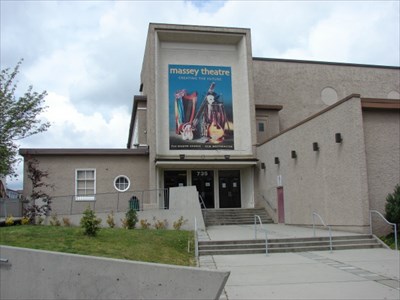
As part of their 65th anniversary celebrations, Massey Theatre presented an innovative new-age gala to encourage diversity and collaboration in the community theatre arts.

Walking to the Massey Theatre, I realized I had no idea exactly what kind of event I was attending. The description on their promotional pieces and press releases included words like gala, celebration, diversity, and performances. I found my seat with only a vague idea of what kinds of performances waited behind the stage’s majestic red curtains.

The night proved to be a charming and enticing program: local artists of different cultural practices, ages, and walks of life were paired with one another in a challenge to perform whilst complimenting both of their abilities. It was like a cultural battle of the bands, except instead of battling against each other, they strived to create unforgettable works together.

This collaboration of the arts summarized the last 65 years of the Massey Theatre: “A catalyst for an expressive community and a stage where any dream is possible,” as stated in their vision statement. It’s a place where all sorts of different talents and artists have graced the stage to establish a community spirit that actively exists today.

Act One included dance, song, and rhythm, but there was much more unique depth than what those words could possibly encompass. The show kicked off with a collaboration between a young rising ballet dancer, Sebastian Pateman, and the artistic director of Lamondance, Davi Rodrigues. Their performance was called “Journeys in Dance — Miles Traveled,” a blend of traditional and contemporary dance.

The complexity of the performance increased as it progressed, beginning with a beautiful solo act by Pateman followed by a more intricate acrobatic and storytelling dance by Rodrigues and nine additional dancers.

Next on the program was “Miraculous Voices,” an enchanting taste of Broadway by Jolene Bernardino, a senior high school student active in the musical performing arts community, and pianist/vocal coach Kerry O’Donovan. This performance captured the different generations and levels of experience coming together to celebrate two powerful, animated voices. They sang a couple of duets, but my personal favourite was Bernardino’s solo version of “My Man” from Funny Girl, a song that accented her incredible vocal range and talent.

To finish off act one, Jesse Cahill and Amika Kushwaha swooped in and made jaws drop with a stunning rhythmic performance. Cahill, an accomplished jazz drummer, and Kushwaha, a master of kathak, one of India’s eight classical dance forms, came together in an energetic performance that created an impressive visual and musical combination of energy and expression.

Act two began with “States of Mind,” pairing tabla master and vocalist Cassius Khan with classical guitar master John Oliver. This collaboration was well-coordinated and unique, with traditional tunes played on the electric guitar. It was organic meets electronic, east meets west. The performance and the message that Khan sang was inspiring: “If there was no melody in notes, then there would be no humanity. We all sing together and live in peace.”

Next up was “Improv Everyone?,” introducing comedy improv for the first time on the Massey stage. This was the most unpredictable performance of the evening. The show was an unrehearsed collaboration between a young teenager and an older, more experienced improv performer, the latter of whom told us their mantra of improv is to “never judge what’s about to happen, just let it happen.”

Last but not least, the show ended with “Body, Mind, Spirit,” a zen-like group performance by Jodi Proznick, Celeste Snowber, the New Westminster Secondary School Choir, and director Kelly Proznick. It was a harmonious and spiritual collaboration between three great leaders of the New Westminster community, and represented the community connection that Massey Theatre strives to exhibit on their stage.

Food Fight: IKEA makes for a surprisingly good restaurant

0

IKEA is amazing. It is filled to the rafters with enough affordable flat-pack furniture to keep marriage counselors in business until the sun swallows the planets whole, and a showroom that can keep even those with the shortest attention span occupied for a whole day testing out various chairs, beds, and sofas. This is what IKEA is known for, but what about their insanely affordable food in the cafeteria?

The idea of starting with something basic and adding on items to personalize it is a concept that is used for IKEA’s food as well as their furniture. Beginning with a basic plate and adding on extra items to build your meal seems an expensive way to eat, but IKEA has perfected this method, and the extras are priced just as affordably as the basic plate.

Take breakfast, for example: you start with a basic plate that includes scrambled eggs, two sausages, and hash browns. There is then the option to add on waffles, French toast, pancakes, bacon, cinnamon rolls, cake, and for some strange reason, salad and soup. There is also a very respectable selection of drinks as well. Depending on how many extras you add on and are willing to pay for, you can eat breakfast for less than $10.

The same applies to their lunch and dinner menu. You pick a basic plate of fish and chips, meatballs, veggie balls, or pasta, and work your way up from there. There is the option to add steamed veggies to these basic plates along with salad, soup, and dessert. One other shocking yet pleasant perk of eating in the IKEA cafeteria is that it is licensed, meaning you can have beer or wine to accompany your lunch or dinner. There are also pre-made sandwiches if meatballs aren’t your thing, and, again, many options for under $10.

While I have always been somewhat skeptical of very cheap food, the grub that they have in the IKEA cafeteria is highly underrated. While it may not compare to a fancy brunch or dinner in Gastown, for the price point, it is exceptional. You go there and know exactly what you are getting. There is no worry that your favourite dish will have been removed from the menu, or that the price will have skyrocketed due to an increased cost for the purchaser of a smaller restaurant.

If the thought of eating food at an establishment known more for making the table that you serve dinner on than the food you are serving makes you uneasy, go out for lunch or dinner and try the meatballs. There is something about the combination of lingonberry preserves with gravy on those little balls that just gets to you.

There is also the option of buying the frozen meatballs, gravy mix, and preserves from the grocery store section and making them at home — in case being close to the showroom means that you will leave IKEA with an entirely new living room.

Comic Connoisseur: Wayward is a supernatural atrocity

0

Let the record state that, I, the Comic Connoisseur, have come to observe a great many a strange and mind boggling animes and mangas in my 22 years of living. From the well-known dreadful epic Akira to the nonsensical onslaught of stupidity that is One Piece, I thought that I had seen all that could be seen from this strange but nonetheless captivating style of comics.

That was until I naively sauntered into my local comic shop and foolishly purchased the manga-inspired atrocity Wayward, a graphic novel so mindlessly puerile I think it might just have given me permanent brain damage.

Wayward follows the tale of Rori Lane, an Irish-Japanese girl who immigrates to Japan to be with her mother after she has a falling out with her father in Ireland. Within days of acquainting herself with her newfound home, Rori is attacked by the most blatant ripoff of the Ninja Turtles to ever hit a comic’s page.

Much to every reader’s misfortune, the character survives the ordeal when she is rescued by a ditzy cat-like vixen named Ayane, who then vanishes from the story just as quick as she entered. What follows is a supernatural odyssey across Tokyo filled with a string of inconsequential occurrences of lunacy. Wayward is quite literally a mix of concepts and ideas that could only have been justifiably ghostwritten by a six-year-old boy hopped up on a Costco-size bag of Jolly Ranchers.

Jim Zub writes a story devoid of any exposition whatsoever; events and characters are throw in with such irreverent reckless abandon, it’s a wonder he didn’t throw his kitchen sink in the story. Simply put, nothing makes any sense, and practically every scenario is filled with Swiss cheese-sized plot holes.

On the bright side, the series would make an excellent template for a drinking game. Readers can take a shot for every moment in the story that leaves them ragingly befuddled and cursing aloud, and likely garner cirrhosis of the liver in as little as the first 10 pages. 

The artwork, although not irredeemable, does hardly anything to save this half-baked infirmity. While the comic is filled with a bright and eye-catching color pallet, it is unfortunately spent on basic and uninventive artwork. Many of the supernatural creatures designed for the comic are mundane and unmemorable, leaving the reader greatly underwhelmed.

Wayward could at best be defined as an unintentional comedy. Hell, you could even try and make the case that it could be a satire of sorts. Alas, it still wouldn’t change the fact that this piece of ephemerally glossed toilet paper is just downright awful. If the creators had any mind, they would take it around back and shoot it to make room for literally anything else.