Home Blog Page 920

I have a lot of opinions. And I’m not changing.

0

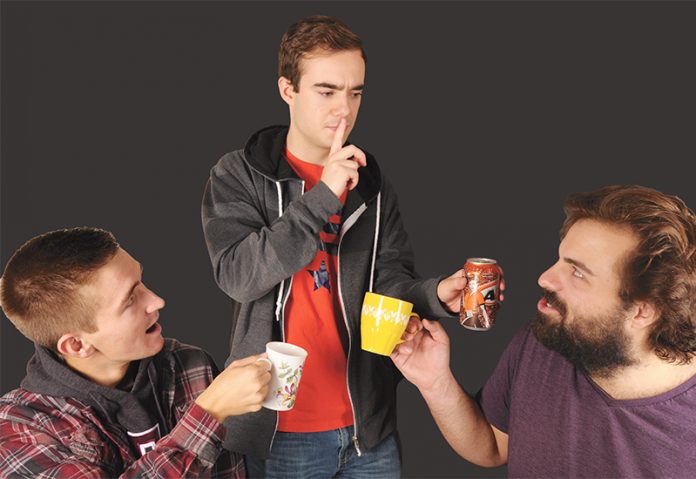
Among my co-editors at The Peak and among my close friends, I’m known as a very opinionated guy. And that’s putting it lightly. Ask me what my opinion is about almost anything, and I’ll be sure to give you some sort of response.

What I’ve found is that I’ve formed strong opinions on things that, in the scheme of it all, don’t matter a whole hell of a lot. And if I do have an opinion on something that has some weight to it, it’s probably something pretty stupid. For example, I don’t care a lot about provincial politics other than “Christy Clark sucks,” but I will defend with vigour that NHL 06 has the best soundtrack of any video game ever.

Some may call this ‘trolling,’ but I really don’t see it that way. I call it simply ‘trying to stand out a bit.’ Maybe that’s a bit childish, but it’s a part of who I am.

Looking back, it’s hard to pinpoint when I started to take a hard stance on everything. Likely, it was just a gradual realization that I was just an incredibly average person; some would say painfully average. I’ve never seen myself as one who has any real talent; and admittedly, I have gone through periods where I doubt myself at every turn. I’ve never seen myself as unique so I felt that to adopt stupid opinions gave me something by which to define myself.

But enough of that sappy stuff. I’ll list you some of my opinions. I’m telling you, if I ran things, it would be a heck of a lot different.

The Highland Pub is one of the only places on campus where you can get a drink, and yet it is always in the red. The only thing this place is consistent at is losing money. But I have a remedy to this problem, and it’s two words: strip club. Not only would it provide jobs on campus to students, it would at the very least mitigate the pub’s losses to a manageable number.

A popular topic I hear discussed is sexual education in public schools. I say forget learning that stuff in the classroom. Kids should learn about sex on the playground, through word of mouth. What kid wants to suffer through a talk about the birds and the bees from a parent or teacher twice their age? Just Google what you want to know when your parents go to bed. It saves both parties from an embarrassing and awkward conversation.

Twirling spaghetti on a spoon before eating it is the correct way to eat spaghetti. Anyone who says otherwise or has differing views is a heathen and must be dealt with accordingly.

Official power rankings for root beer: 1) A&W Root Beer, 2) Barq’s Root Beer, and 999) Mug Root Beer. No one likes Mug — not even the people who make it.

No hockey player should wear a number over 35, because it just looks stupid. I can’t explain exactly why, but players who skate around as #91 don’t look as good as #19 or #9. Plus, choosing your number after the year you were born is incredibly unoriginal. What are players born in 1999 going to do when they make the NHL?

Anyways, like I said, I’m an opinionated guy. It’s an extension of myself, and if you disagree with me that’s fine. But I’m not changing.

Why academic debate has gone dismally downhill

0
Political correctness has fostered needless intolerance.

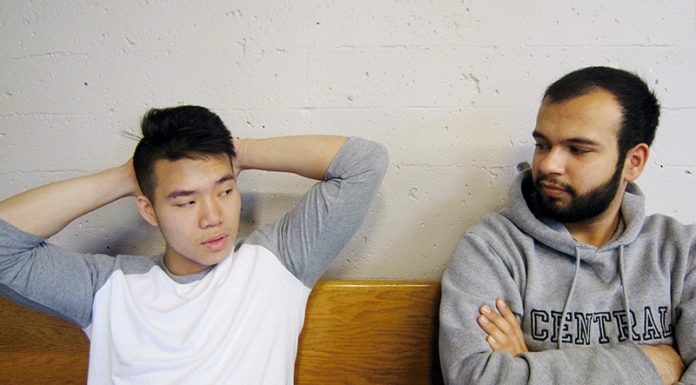
The act of thinking has become a dangerous game. These days, you would never know that we actually enjoy a good debate; half the time, we can’t stop accusing each other of ignorance to have a proper conversation. Hop online, where anonymity and mob mentality reign supreme, and the expression of divergent opinions, especially regarding race, gender, ethnicity, politics, sex and the like, can make one a target for annihilation.

Such was the case at Wesleyan University in Connecticut last week, in which the student government voted to slice the school newspaper’s funding for having published criticism on the Black Lives Matter movement — a prime example of hypersensitive stifling in an academic setting.

Although it’s obvious that people love to tear each other down, I’d like to think that there’s a slightly more civil reason than this for why we’re always so sensitive to a challenge of thinking.

One conclusion that Sarah Niedoba of The Globe and Mail put forth in a recent article is that, in universities, the conflict stems from groups whose viewpoints differ, and whose viewpoints are inabile to coexist. The author’s theory makes a lot of sense, especially if you consider the role of personal values.

We live in an age where common societal values have been defined through the process of political correctness; we have a society with a desire to respect and treat everyone in a fair, understanding way. Subsequently, we take great pains to ensure that we do not offend anyone.

In our attempts to accept all peoples, we have become, ironically, intolerant.

The real conflict arises when we try to insert our personal beliefs into the process, which may or may not fit the politically correct mould. Nothing changes the fact that there is no universally accepted position on any issue; we remain divided by our personal viewpoints, and this division breeds automatic sensitivity because it draws us as individuals into the issue.

Political correctness has only implemented a standard of ‘right’ and ‘wrong’ in thinking. Those who choose to approach issues differently than the socially accepted way are not only frowned upon, but also viewed as incorrect and closed-minded. Take the abortion debate, for example: pro-lifers in the Lower Mainland face constant criticism from our dominant progressive society for their supposedly ‘callous’ beliefs.

On the other hand, those who agree with the norm are often criticized by ‘viewers of the alternative’ as impractical and narrow-minded. Our sense of openness and encouragement has long disappeared, and we are no longer a population that desires to expand our thinking. In our attempts to accept all peoples, we have become, ironically, intolerant.

Is there a quick fix for this issue? Unfortunately, no. What we should focus on, however, is keeping open minds.

As we decide which matters are black and white and which are in shades of gray, we cannot be afraid to question others’ opinions, and to step in and out of the bounds of political correctness for the sake of discovery.

Similarly, we must not criticise those who do the same. This does not excuse rudeness or disrespect, and it doesn’t mean that you can’t have your own strong opinions — it simply requires allowing others to have opinions, and to seek to understand before you judge.

The motivation behind the creation of universities as institutions was, in part, meant to encourage learning and the widening of our perspectives. As fellow students, we can’t let that goal escape us. The next time you encounter someone who opposes what you think, pause before letting your academically fueled indignation loose. Having different opinions is okay.

Unconvinced? Let’s just agree to disagree.

Woohoo, Boohoo

0

Woohoo: The Kraken

Every once in a while, a gloriously terrifying deep-sea creature will wash ashore somewhere, making us realize that mother nature hides some pretty terrifying things in the water’s deepest, darkest depths.

Take for instance the Kraken, a monstrous cephalopod capable of eating ships and striking fear into the hearts of even the saltiest of sea dogs.

What makes it so terrifying? Is it that we know there are monster squid lurking beneath the surface, or the fact that we can see first hand an octopus’s advanced intelligence? It isn’t much of a stretch to imagine the ‘small’ giant squid that wash on shore as baby versions of this ship-eating monster.

Until we know for sure what lurks beneath the surface of the ocean, to scream “Release the Kraken!” will continue to strike wonderful fear into the tiny, delicious hearts of men.

Boohoo: The Loch Ness Monster

The Loch Ness Monster is only one good publicity campaign away from becoming the new leader of a Scottish independence movement, and even has a cute nickname to accompany its less-than-fearful reputation.

‘Nessie’ is considered the Holy Grail for cryptozoologists. What makes it intriguing is not so much the fact that it eats entire ships for breakfast but the fact that it pops up for blurry, foggy, and sporadic photo ops, which keep people vaguely interested in finding it.

Nessie is the monster you would bring home to your parents; the one who would tell your mom she is amazing at cooking haggis, and your dad that he is the best bagpiper in the land, even when your mom burnt the haggis on the outside and left it raw on the inside, and your dad sounds like he is murdering a sack of cats.

The Loch Ness monster is less monster and more overgrown kitten.

Why many educators ban laptops from class

0

Over the past couple of years, a number of articles have been published in The Peak discussing the pros and cons of students using laptops in classes, including one earlier this fall titled “Don’t ban my laptop from class.” As a postdoctoral fellow and aspiring educator, I understand why many educators don’t allow laptops in lectures – that being, you learn better if you handwrite. Plain and simple.

A recent study found that students who handwrite notes in lecture retain more information, understand the material better, perform better on exams and enjoy their classes more than their keyboarding peers. During lecture, skilled note-takers filter out the important information and reframe it in their own words.

Handwriting forces movement. Your hand moves differently to form letters than it does when you are typing. For many, movement helps memory. My guess is that what you remember best about your day, your weekend or weeks gone by was the doing, the activity, or the engagement. Taking an active role in learning has been my core belief both as a student and as an educator.

Back in my days as an undergraduate I found immense value in my active, handwritten note taking. Not only did I quickly learn my own shorthand, but I also learned to embellish the important points with stories and examples that resonated with me. One of the biology educators I had as an undergrad was able to turn mundane facts about life cycles into shocking stories with pictures and activities that kept me captivated and interested throughout his courses.

In a survey I designed prior to writing this response, I discovered that, like most university educators, this educator has learners who spend their time online, distracted rather than immersing themselves in his lectures. This is not new. I’ve taken some pretty boring courses; I’ve seen students sleeping in class or reading a novel — rude, but only self-impeding — not a distraction to students around them (40 per cent of students surveyed said they get distracted by other people using laptops in lecture).

I quickly learned my own shorthand, and to embellish the important points with examples that resonated with me.

In my opinion, laptops are too passive for note-taking and the Internet is too alluring (14 per cent of students I surveyed agree, and 54 per cent said they go online or work on other projects if the lecture is slow or boring), thus laptops (and other digital devices) may prevent students from learning.

I’m not alone in this opinion. The majority of the educators and students I surveyed agree that laptops are both distracting and poor learning tools. One educator commented that “laptops are ‘black holes’ for student attention.” Another wrote: “I actively discourage the use of laptops. I tell [students] about the studies linking note taking to retention and understanding, and impress upon them that the screen is for when I am not there. [. . .] They have to engage with me and the material, not a screen.”

However, both of these educators, like the vast majority of their peers, allow laptops in lectures.

As the world becomes more digitized, educators are learning to incorporate digital devices into their teaching. A second survey I conducted of elementary, middle, and high school teachers revealed that while most educators only allow students to use devices to listen to music up until grade six, others have started incorporating tablets into lessons at grade two.

What will this mean for our ‘modern’ quality of learning? Will we become better learners or more stagnant? The benefits of learning by active handwriting outweigh the convenience and distractions of typing. But is it my right, as an educator, to determine whether or not your style or ability to learn conforms to the majority? Clearly, more studies need to be done in order to determine how benefits of traditional learning can be incorporated into a digital style of learning.

SFU students honoured at We Day

0
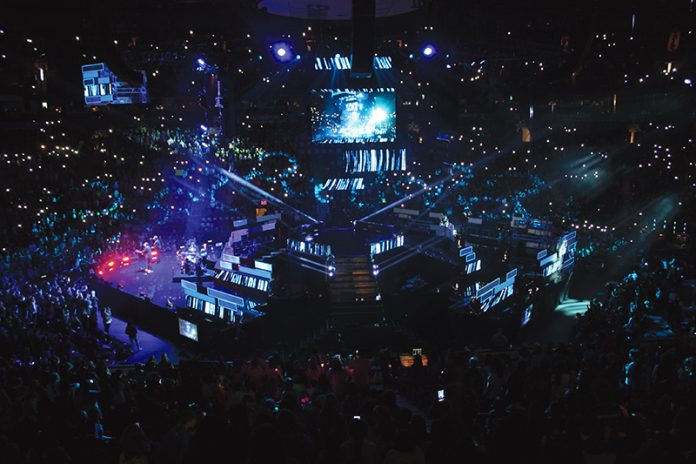
Thousands of youth gathered at Rogers Arena to celebrate and encourage social development. - Photo by Deeya Bhardwaj

20,000 students and educators from over 700 schools gathered in Rogers Arena on October 21 to celebrate We Day, one of a series of events around the world commending youth making a difference in their communities.

Tickets to this event granted access to a five-hour-long musical spectacular, with performances and presentations from notable celebrities, activists, and Canadian icons.

The stacked guest list included Chris Hadfield, Colbie Caillat, Hedley, Kardinal Offishall, and the Barenaked Ladies. The aim of the event was to not just entertain, but to educate, and many of the presenters and performers brought with them a message for the students.

Among the special guests was actor Henry Winkler, best known for his roles on Happy Days and Arrested Development, who shared his long list of triumphs, including having published 31 books despite being dyslexic and in the bottom three per cent of the nation academically. “You are not defined by your challenges,” said Winkler. “You are defined by your power.”

Since the event functioned as both a learning experience and reward, entry was free to all students with only one caveat: they must have participated in one local and one global action aimed at making a positive change in the community.

This year marks We Day’s eighth anniversary. It was originally started by Craig and Marc Kielburger, co-founders of Free the Children, an international charitable organization that aims to empower people to transform themselves, their communities, and the world through social development and outreach programs.

Said Kielburger, “The whole purpose of We Day [. . .] is to have the 20,000 students at the event and hundreds of thousands watching the live stream come out of the experience having discovered their cause.”

This year’s event also marks the first time SFU was represented at We Day. Among the invited participants was a group of SFU students who were being rewarded for their efforts with SFU’s own Free the Children (FTC) club. Three years ago, SFU student and founder of the club Puneet Mann decided that there was a need for this kind of presence on campus.

“FTC, at its heart, is about proactive youth empowerment. It is about creating globally and locally aware citizens who are passionate about creating change — not with financial handouts — but by using the sustainable tools that we have within ourselves along with the relationships that support us.

She noticed that this form of engagement was missing at SFU and wanted to create a place where “like-minded and passionate students who want to create change locally and globally [can] come together to tackle problems creatively and in a holistic manner.”

The club has received a favourable response from the SFU community, doubling in size since its creation. It also participated in a number of initiatives to help children worldwide, including food drives, bake sales, and fundraising events.

We Day was particularly significant for the club this year because not only was it their first time going as a group, it was also a way to honour a member whom they lost to an unfortunate accident earlier this year.

Mann shared, “Syed Wajahat Ali, or as he was more commonly known to his FTC SFU friends, Ali, [was] always smiling and ready to offer an extending hand. [He] pushed the club to be more inclusive, fun and successful and always looked forward to attending We Day and celebrating our collective achievements.

“This year, we took to We Day all our previous successes and kept Ali in our hearts.”

The club hopes to continue to increase their presence in the SFU community by engaging with the school through various fundraising initiatives. They also wish to reach their global cause of rebuilding a school in the central plateau region of Haiti.

Point/Counterpoint: Should Playboy ditch its nude photos?

0

Yes, and Playboy must seek a feminist route in doing so!

By Nathan Ross

After 62 years, Playboy has decided that it will no longer feature fully nude images of naked women in its pages, which has become known as their trademark.

So what?

This doesn’t mean anything except that Playboy is trying to stay relevant. It isn’t about not featuring erotic women, as it’s basically going to become a glorified version of Maxim, GQ, or one of several men’s-focused magazines out there. It really isn’t that different or groundbreaking.

In a world where naked photos of men, women, and people of identities between or off the gender binary are available for free in a second, seeing Playboy no longer dedicate a centerfold to nudes doesn’t really feel like that big of a deal.

The move was done to boost the magazine’s sales and online hits, which had reportedly been dropping fast over the last while.

Sure, if Hugh Hefner and company want to give Playboy a spark, this is definitely a quick fix that will generate good press for a little bit, which will parlay into raised sales. However, if Playboy Enterprises Inc. really want to give their flagship a permanent boost, there is something else they should really consider doing.

Make Playboy an openly feminist magazine.

Recently, writers like Noah Berlatsky have been saying that they are writing for the magazine because they are trying to promote women’s issues from within. Whether or not this is actually true or just another marketing technique, women’s issues are in some way on their radar.

Even though the way they’ve been going at it has so far been questionable, I think there’s a real market for Playboy, and that is those “He for She” feminists that want to be a part of the fight but understand that they aren’t the core of the issues. A large part of feminism is built around ‘women only’ safe spaces — as they rightfully should be — but in the last few years, there is a growing acknowledgement that what feminism is fighting for would also benefit men, and Playboy could help illustrate that in mainstream media.

A magazine to help uneducated males learn about toxic masculinity, how patriarchy actually hinders them, how to co-exist with the people in their lives, and so on is a valuable resource that we don’t have right now. It could be like the Terry Crews of magazines — the muscular, ex-NFL player, and ‘alpha male’-turned-actor who has also penned Manhood: How To Be A Better Man or Just Live With One.

Playboy removing its nudes is just step one, but unless it truly commits to taking this journey, it really isn’t that much of a difference at this point.

No, Playboy should actually keep its nudes to empower women!

By Jessica Whitesel

When I think of Playboy two things instantly come to mind: the classic “I only read it for the articles” line, and wondering which model was given the opportunity to grace the hallowed domain of the centerfold. With the recent decision to remove nudity from the legendary magazine, I’ve been left with a somewhat empty, quizzical feeling.

While in recent years the Internet porn business has boomed, and leaked celebrity nude shots have set the world buzzing, can these really take the place of a well-curated gentlemen’s magazine? I really don’t think they can.

Playboy began in 1953 with nude Marilyn Monroe in the centerfold. And while the magazine has taken a turn from the celebrity centerfold in recent years, it shocks me that more female celebrities who’ve had leaked photos chose not to re-take possession of their nudity and do a centerfold spread with the magazine. While it would be fueling the fire, so to speak, if one’s body is made ‘objectified,’ taking ownership of your nudity would coincide nicely with the movement to reclaim labels — and the actions associated with them — that are derogatory towards women.

Human trafficking and sexual exploitation are real problems that women face, but these women are not the ones who are represented in the pages of Playboy. The women in Playboy chose to be portrayed in a certain way, and as such, they made a personal choice to take ownership of their bodies. The issue that I take with removing nudity from Playboy is that there will no longer be this unique and potentially empowering avenue for women to take ownership of their own bodies.

I am not saying that all Internet porn is bad and filled with women who are part of human trafficking rings, but to remove Playboy’s nudity removes a publicly available (and relatively affordable) means for women to exert some form of sexual agency within an industry based largely on the desires of a male gaze.

SFU post-doc publishes science fiction novel

2
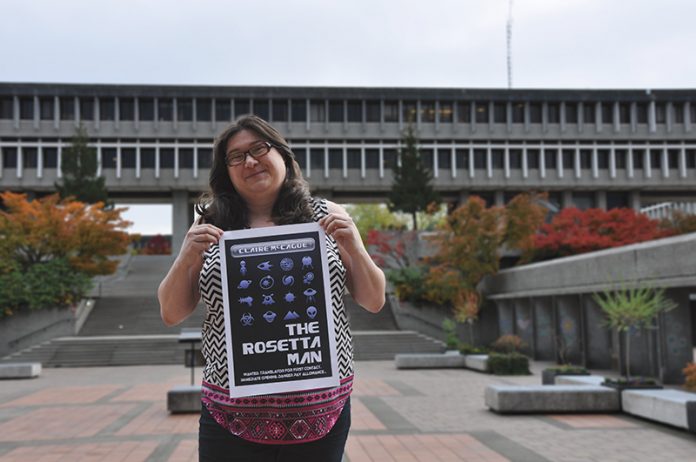
The Rosetta Man has only been published in an electronic format so far. - Photo by Jamal Dumas

An SFU scientist is turning science into fiction by publishing a novel that tells that tale of the first contact between humans and extraterrestrials.

The Rosetta Man is a novel which tells the story of the first contact between humans and aliens from outer space. It is the the first published novel for Dr. Claire McCague, who studied at SFU for her BsC in Chemistry and Archaeology and is now a post-doctoral fellow at the School of Mechatronic Systems Engineering, based at SFU’s Surrey campus.

McCague shared that she has always been a creative individual; she wrote her first novel while she was a teenager and she has written multiple plays performed in cities like Toronto and New York.

The main character in The Rosetta Man is Estlin Hume, a resident of Twin Butte, Alberta, who has been burdened with a unique problem throughout his life: he is followed by a large group of squirrels who follow him wherever he goes. McCague explained that this “really only means he’s been evicted from everywhere he’s ever lived, expelled from multiple universities, and chronically unemployed.”

This is, until he is discovered by an alien species who come to Earth and approach him to be a translator for their first contact with humans. However, if the films Independence Day and War of the Worlds are any indication, first contact between humans and extraterrestrials is often rocky.

Said McCague, “You’ve got the various military forces converging around threatening to kill the messenger.” Furthermore, one of the threads in the story is about an electromagnetic pulse emitted from space which a physicist believes will unlock the secret to interstellar transport; this is where The Rosetta Man gets its cryptic title.

Many aspects of the novel deviate from the archetypal human-alien contact story. For example, the aliens land in Wellington, New Zealand, as opposed to a major western metropolis. Said McCague, “[This] just puts you in an interesting playing scheme in terms of how the international politics swing into it and the question of why they landed in the South Pacific.”

In addition, the novel’s protagonist is not your typical human warrior fighting an alien invasion. His character is drawn as having an empathetic nature and communicating well with other species. McCague went on to say, “That was the angle — to go into the story with one of the main perspectives being the guy who’s the translator.”

Many aspects of the novel deviate from the archetypal human-alien contact story. For example, the aliens land in Wellington, New Zealand, as opposed to a major western metropolis. Said McCague, “[This] just puts you in an interesting playing scheme in terms of how the international politics swing into it and the question of why they landed in the South Pacific.”

In addition, the novel’s protagonist is not your typical human warrior fighting an alien invasion. His character is drawn as having an empathetic nature and communicating well with other species. McCague continued, “That was the angle — to go into the story with one of the main perspectives being the guy who’s the translator.”

The novel is the product of a three-day novel writing competition during which McCague created what was to become a first draft of The Rosetta Man, albeit shorter in length and set in the future as opposed to the present day.

She left this draft for several years and became stuck on how to work on it further. “There was this moment where I realized that the story had to be in the present day, and then suddenly things got infinitely more interesting.” McCague said, adding the practical benefits of writing in the present day: “I didn’t need to invent a political landscape because I could work off the existing one.”

Currently, McCague is travelling to scientific conventions around North America to promote her novel. “Now it’s a question of trying to build readership,” she remarked. Her travels have taken her to the World Science Fiction Convention, or Worldcon, in Spokane, Washington, the largest science fiction convention in the world.

In addition to doing readings from her book, she is also speaking on science fiction panels: “I get to bring out the other side of my life, which is my day job as a research scientist.” She mentioned one of her favourite panels, which looked at the tipping point between a “real scientist” and “mad scientist.”

The novel was first published in Kindle format about a month and a half ago, and in December it will be released in ePub and PDF format. McCague spoke to the changes in the publishing industry over time. She noted that ebooks are becoming increasingly popular for smaller publishers such as The Rosetta Man’s publisher, Edge Fiction.

McCague said that she could potentially see a sequel in the future: “Do I have notes of the next story? Yes. Is it going to be the next thing I write? I’m not sure yet. But there’s potential there.”

When done right, Halloween costumes can be empowering

0

A quick disclaimer: This is not another article about how your costume is culturally appropriative or sexist or racist or ableist — although, let’s be honest, it might be. As much as I do believe it’s important not to use Halloween as a chance to belittle cultural iconography and engage in hurtful, lazy stereotypes, I’m also acutely aware that you have already heard that argument before, probably more times than you can count.

You should already know why you shouldn’t wear a headdress or put on blackface this year, and if you don’t, it’s your own responsibility to figure that shit out.

Instead of writing that article, though, I’d like to look at the other side of the spectrum: namely, to celebrate the potential for Halloween to be empowering, and to allow us to show a side of ourselves that might not be considered “appropriate” the other 364 days of the year.

Think about it. Halloween is the only day of the year where it’s not only sanctioned but actually encouraged that you dress up as something radical, flamboyant, and over-the-top. If you’re into horror films, you can dress up as Freddy Krueger or Nosferatu; if you’re a comic book nerd, there are hundreds of different superheroes to choose from. Columbia may not be willing to sign off on a black Spider-Man, but you’re likely to see at least one roaming the streets come next Saturday night.

The idea that dressing however one wants can be acceptable [and] awesome is pretty underrated.

Better yet, All Hallow’s Eve doesn’t just allow superfans and weirdos to fly their freak flag — it gives the more reserved and awkward folks among us the chance to express ourselves in a situation where everyone else is equally dolled up and in no position to judge us. Want to show off your sexy gams or your totally ballin’ chest hair? Halloween’s your day. Eager to boast your sewing skills with a homemade costume that tops anything you’re likely to find at Value Village? Mark your calendars.

Especially in the increasingly button-down, niqab-ophobic Great White North, the idea that dressing however one wants can not only be acceptable but awesome is an idea that is, as far as I see it, pretty underrated. The other days of the year have a lot to learn from October 31.

This may seem obvious to many of you, but to me it’s an important part of Halloween — one that the annual shame-fest aimed at the latest idiot with an ill-advised costume tends to distract from. It’s important to hold racists and other assholes using Halloween as an excuse to show off their horribleness accountable, but it’s a mistake to let that take away from how empowering this holiday can be for everyone else. After all, few other occasions give us a chance to spend hours working on a costume to show off to our friends and to hand out free candy to trusting (!) children.

It’s easy to look at Halloween as the time of year where our culture’s most misogynistic and racially clueless aspects are brought to the forefront, and to an extent, that’s true. But Halloween also gives us a chance to take off our real costumes — our suits and ties, our fancy socks, our combed hair — and to dress the way we truly see ourselves.

We all have a superhero, a creepy ghoulie, and a Disney princess inside us, and we only get one day to show it off. So own it.

More trick and less treat this Halloween

0

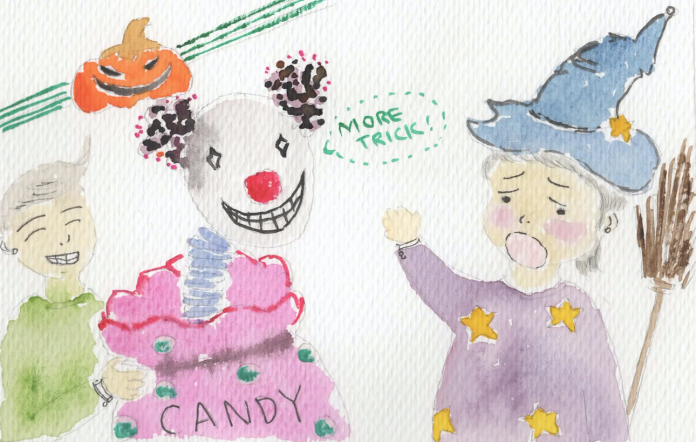
A special October night is upon us. No other occasion is as peculiar as it is intriguing. As we embrace the horror, adults play dress-up while children are encouraged to speak to strangers. “Trick or treat!” is Halloween’s catchphrase. In costume, one is asked to choose between doling out either a trick or a treat. Strangely, the norm is to choose the latter, even though the former is more entertaining.

It seems that the ‘trick’ element of this ritual is not even considered. In the unhealthy amount of time I’ve thought about this subject, the scarcity of tricks compared to treats is a downright tragedy. There sits a well filled with untapped possibility. The concept of ‘more trick, less treat’ could potentially make Halloween even more intriguing than it already is.

During the customary tradition of collecting candy, the trick is usually an idle threat in that it assumedly involves some kind of mischief. Though if the ‘more trick, less treat’ concept was adopted, senses would be heightened. Those opening their doors to kids will be as tense and curious as they are generous. What sort of pranks do they have in store?

That tension would contribute to the atmosphere that already defines Halloween; that is, excitement with a bit of fear in the mix. Tricks also shouldn’t be limited to little children. If every person collecting candy on horror’s anniversary participated in the mischief, Halloween would become even more exciting.

Apart from buying costumes and candy, to think of ideas for tricks creates a whole new space for creativity.

Interactivity is vastly underestimated on October 31. To put more emphasis on creating and performing tricks increases the opportunity for socialization. Apart from buying costumes and candy, to think of ideas for tricks creates a whole new space for creativity. One has the chance to brainstorm tricks that are unique in order to impress both friends and candy-givers.

As individuals don their costumes for the night, the ‘more trick, less treat’ concept means that strangers have the opportunity to break the ice with each other and show off their respective ‘tricks.’ A moment could be created between strangers in the attempt to trick one another.

Apart from the fun and mischief, there is a moral importance of placing a higher value on tricks over treats during Halloween. Children would not be handed candy just because they ask for it, and therefore a sense of entitlement would be removed. Halloween does not strictly become about the rewards of candy.

In the end, there would be an appreciation for the entire process of creation and execution. In a world where celebration is vast and diverse, Halloween is unique. The idea of ‘more trick, less treat’ maintains the major element that makes Halloween stand out: horror. While candy tastes great, let us all embrace our inner tricksters and produce a night of fear and fun.

Dickson twins are double trouble

0
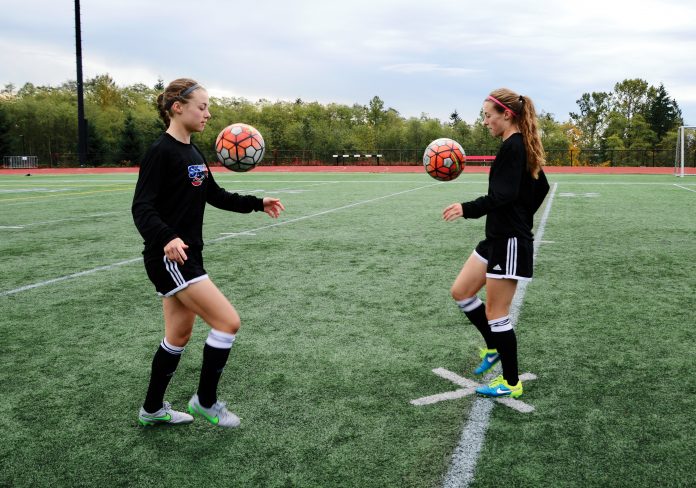
Christina and Allyson have been playing soccer together from an early age.

After a tough season last year — the Clan only won two games — the women’s soccer program needed something, anything, to lift their spirits. They seem to have found that in freshman twins Christina and Allyson Dickson. The two have been instrumental in helping the team climb from the bottom last year to, at publication time, fourth in the GNAC standings.

I immediately started the interview by embarrassing myself and confusing Allyson for her sister Christina. They weren’t surprised — people confuse the two all the time. “You kind of get use to it,” says Allyson.

Also unsurprising was their claim that the two have played together for almost their entire lives. “We’ve been playing soccer since we were five,” Allyson says. “We’ve always been on the same team.”

“I think it started [a] good chemistry when we were younger,” adds Christina. “We’ve always been on the same teams, so we’ve had similar experiences as well. And we usually play similar positions, so we’re always near each other on the pitch.”

Christina is currently ranked second in the GNAC in goals, an even more impressive feat considering she just recently started playing as a striker. “I used to play as a centre back during my youth career,” she reflects. “And then two years ago, I kind of switched, just because of the numbers at the time. We had a lot of defenders and we needed more forwards. Our coach put us both as forwards one game and we scored, so he said we could stay there.”

Allyson switched from defence to midfield around the same time. “I broke my collarbone when I was playing defence, so [Christina] got switched in for me. That’s why she started playing defence. And then we both got moved forward.”

It’s not always easy for freshman to integrate themselves into a new team, but both Christina and Allyson seem to have done just that, both starting nearly every game for the Clan this season. “It’s been pretty easy,” Allyson says. “All the girls on the team were super welcoming.”

“The atmosphere they create is really welcoming as well,” adds Christina.

“We’ve always been on the same teams, so we’ve had similar experiences.”

So what’s it been like to be a freshman on a relatively inexperienced team? “We’re not lacking experience, but we don’t have as much experience, just because of the young team,” explains Allyson.

“The experience is not going to come [during] first year,” notes Christina. “You’ve got to work towards that, so that’s what we’ll build later on.”

The duo have quickly become key members of the squad — perhaps the perfect example of this being Dickson’s recent hat trick against St. Martin’s University. She scored three goals in nine minutes, which is an unofficial school record.

“I don’t know, I think the thought process hit me afterwards,” reflects Christina. “During the game, it was kind of like, you’re in the moment [. . .] Afterwards, you kind of look back and reflect on it.”

“I thought the first one was supposed to be a cross,” Allyson remarks on her sister’s achievement. “Because I was on the bench at the time, and everyone was asking me. ‘Did she actually mean to shoot that?’” The answer to that question, it turns out, was no.

“It worked, though,” Christina laughs.

The twins had offers from other schools, but chose to come to SFU because of the school’s inclusion in the NCAA. “We had offers from UBC and Trinity Western, but what attracted us to the program was the NCAA,” explains Allyson. “That was a big selling point — as well as the great academic stuff.”

Both Allyson and Christina were very active growing up, playing multiple sports. “All through high school we played basketball,” remembers Christina. “We also did baseball and gymnastics when we were younger.”

“Probably around 10 years old is when we started concentrating on soccer,” Allyson remarks. “We started taking it more seriously, so more training sessions every week. We had to let go of gymnastics and baseball and just focus on soccer.”

The goal for the Dicksons, as well as for the entire women’s soccer program, is to eventually emulate the success that the men’s soccer program has had since moving over to the NCAA. “A goal for this year that me and some of the other girls had was to make the GNAC top four,” Allyson says, adding: “It’s totally reachable.”

It remains to be seen if the women’s soccer team will reach the goals it has set for itself, but one thing is for certain: both Christina and Allyson Dickson will be key components of the team for years to come.