Home Blog Page 908

HUMOUR: Copy Editor’s Corner (compiled)

0

October 19: Dangling modifiers

Hi there! You are reading a new weekly writing tips segment written by me, Joel MacKenzie, The Peak’s Copy Editor! Tune your eyes in every week to this corner of The Peak for writing tips and ideas to breeze through your B Courses.

Let me start by saying that editing copy, or editing our paper’s articles, is a lot of fun. There’s nothing more satisfying than holding a warm, newly printed paper every Monday, knowing that I had an integral say in every delicious bit of punctuation, phrasing, and hyphenation that went into every section. I get a dry tongue just thinking about it!

Mondays, the day our papers are usually delivered, are truly my vacation days of the week. Saturday and Sunday, I wait virtually the whole time in a ball of anxiety in anticipation of holding that fresh, ripe, wet-with-ink Peak against my face, knowing that I had an integral say in every delicious word that went on those pages. And knowing, of course, that the jokers at Douglas College’s newspaper The Other Press couldn’t cook up a paper if they had their tongues behind their backs! Can I state the obvious? Their pages are thin, chalky, and only to be chewed through with a stiff drink handy!

But I’m getting beside myself! Now incoming: writing advice. Here’s an example of a dangling modifier:

“Being such a lousy swimmer, you won’t see me at the pool any time soon.”

Come on back to this corner of The Peak every week for more writing tips from yours truly. See you next week, and never put down your pen!

Best,

Joel MacKenzie


October 26: Spelling

I’m very excited and contented to see that last week’s article, after weeks of attempts, was finally overlooked by our EIC Max, and now has way too much momentum to be erased behind my back again!

This week, let’s talk about the writing problem on everyone’s mind: how to spell “Halloween”!

Is it one “L”? Is it two “O”s?

The name “Halloween” has evolved from “All Hallow’s Eve,” which was a Pagan holiday coming one day before Hallow’s, the Christian apple-bobbing competition day! Halloween was made for kids, by kids, as a way to spook others into dropping their prized Pagan candy. This act, called, “trick-or-treating,” is derived from root words which roughly translate to “kids only!”

Trick-or-treating isn’t for anyone past 13, I’d venture to say. So, SFU students, if you’re thinking about taking part in this child’s game, remember: don’t!

For adults, the holiday is a time for getting away from the kids, seeing neighbours, dressing up like your closest friends, and making delicious papier-mache apples. This year, stay home and do that, because I’ll be watching! And I’ve started a community watch group for Burnaby! Haha.

Unless you want an issue of The Peak, which I’ll gladly give you! But just know that I’ll give you a Peak any time, because I’m proud of it, and because it’s free, not because I’m rewarding you for acting like a child on a child’s day! So just stay at home if you’ve got nothing better to do than destroy someone else’s irreplaceable heirloom carbonatite statues!

They had real sentimental value, as they say! Also, you wore your SFU sweaters over your costumes!

But really, Peaks can be sweet as candy, if prepared properly! Haha.

Halloween is spelled, “H-A-L-L-O-W-E-E-N.”

See you in next week’s pleasant-to-the-tongue Peak for your regular writing tips! Never put down your pen!

Best,

Joel MacKenzie


November 1: Fact checking

Hey, readers! This is your Copy Editor with more copy editing advice!

While this probably goes without saying, it’s November first, and I’m really tired today. This daylight savings really takes it out of me every March and November. I can’t say I’m too grateful to our Editor-in-Chief for being the first to tell me about it two and a half years ago! Haha. I completely forgot about this nightmare of a holiday until he reminded me again this Halloween.

Frankly, I don’t understand how we can keep setting our clocks back an hour every six months. I don’t ever seem to get my clocks right on the first try, and I’ll tell you why: I’m losing sleep! I don’t know what Edison was thinking.

Of course, the killer is the daylight savings week. The hours between one and four a.m. were once my most productive, especially for writing (I’m a writer, what can I say?), but with these hours completely erased from the day, it screws up my whole endocardium rhythm.

But I know you’re counting on your Copy Editor’s Corner writing advice hot and fresh in this week’s paper! I’m so tired. But let’s not forget we’re in this together!

This week’s editing tip: check your facts. Always check all the facts in all your sources, because this can be the difference between. . . things being right or wrong.

I’m just so exhausted.

Why do we do this to ourselves? I don’t even understand what “daylight” I’m “saving.” I just want to sleep! Am I right? Come on, Trudeau, we need real change in Canada! Daylight savings change.

Anyway, this week’s editing tip: etymology. Check your etymology, like the etymology of “daylight savings,” for instance. Always look up the etymology of every word in your paper, because it might reveal historical details that will help your writing.

Do you know what I mean?

I hope this is clear. I’m just really tired.

Okay, never put down your pen keep writing!

Best,

Joel MacKenzie


November 9: Hypotheticals

Hello, SFU students! Ready for your writing advice?

Recently, I received some fan mail! Basically, it read: “Joel, copy editing is a blast! But you need to give your writing advice sooner in your article!”

First, writer, thank you for the yellow carbonless CFB letter. It’s been a while since I’ve seen this delectable stuff; it’s smooth but still holds a modest, satisfying crunch. Draped in the writing of blue gel pen, this letter had a soft, dampened centre, but proved delicate and light, holding hints of hickory and ash.

In response to your letter, I think you need to get your own column! Haha.

This week’s writing advice concerns using “were” or “was” in hypothetical situations, e.g.: “if I was/were a DJ, all the world would dance!”

In this situation, the proper word is “were.” Here’s some examples of properly-constructed hypothetical sentences woven into one paragraph:

If I were a DJ, I would be worried about the decaying state of DJ jobs. If I were a DJ, I would promote a world of listening. Electronic music is currently dominated by electronic music robots, so if I were able to be anything, I would be a real, human DJ. If I were able to spread my DJ love to the entire planet, were I a DJ, I would create a world where people don’t war. I would promote listening, not mindless robot watching. If I were a DJ, I would break the digital technology spell that is hypnotizing our generation.

Hypnotising our generation, SFU.

Well, until next time: never put down your pen!

Best,

Joel MacKenzie


November 16: Introductions

Do you dream? Do you dream of holding something bigger than you in your hands? What about giving that dream gift to the world? Do you dream it as big as an elephant baby — as docile, as fragile?

Of course, I refer to the dream of DJing. Do you hold your DJing dream in your arms? Do you nurture it? That dream of spinning such fresh beats that the whole world would stop and listen?

SFU students, today’s writing advice concerns introductions. Essay introductions should always start with the general and hone in towards the specific. Here, for instance, I started with something general (dreaming) then moved to the specific (hands). I then played with the general again (dreaming), and flew back to the specific (baby elephants). I follow the elephant talk with concrete, tangible questions about the meaning of DJing.

This dissertation would be followed with more ideas concerning what it means to be a DJ. I would mention, for instance, the meaning of having a job that creates popularity, centred around sharing the gift of chilling with the world; a career about pressing play and being the dopest supporter of those vying to chill.

The monotony of class is starting to get to me, SFU students. I’m not sure how much longer I can go without DJing, without lighting the lights, chilling the dance, spinning the dopest spins, and flying the flyest ills. I’m not sure how much longer I can stay in classes, with only one delicious Peak page per day to look forward to. (I encourage you to consume more, but my doctor encourages me to consume less.)

Here, I would springboard into more specifics about DJing, while centreing around dreaming to dream.

Dream to dream of your essay coming to fruition, SFU students!

Never put down your pen.

Best,

Joel MacKenzie


November 23: Don’t give up

Hello SFU students!

Thank you for tuning in again to the hippest corner of the newspaper!

I’m happy to report that it has been a fantastic week for myself as a self-publicizing DJ. I’ve performed two shows across the Lower Mainland, playing both major and minor hits from today’s Top 40.

DJing as an art has proven a bit more difficult an endeavor than I was hoping for this week. Going into this, I thought that DJing was simply pressing play on a Top 40 hit song for whatever pool or house party I’m at; I didn’t think I would have to play different Top 40 hits to suit the room’s always-changing temperature at any given moment; I didn’t think that I would have to press play on a given smash hit in exact synchronicity with people’s many dance moves. But I’m not giving up!

Appropriately, this week’s writing/DJing advice is to never give up! When people get down on your slightly unorthodox writing rituals, like eating a little bit of construction paper to clear your mind between paragraphs, don’t give up! When your Top 40 smash hit isn’t perfectly synchronized with a dancer’s floor punch, don’t give up! When people shout rude things at you without thinking, don’t give up!

Ignore them! You are in this for you. You’ve got a life of love, dancing, and fresh beats ahead of you, not one of petty anger.

You’re also trying. You’re trying and they’re not. And that’s not their fault, but they’re just not recognizing that.

So their insults don’t matter very much! They aren’t in your shoes. They’ve never stood in front of crowds of dozens, and they don’t appreciate how hard it all is.

Ignore them, SFU students.

It’s fine. You’ll be fine.

And never put down your pen!

Best,

Joel MacKenzie


November 29: Sentimentality

SFU students,

Thank you for your support with this column.

Thank you, friends at The Peak, for hiding that one typo (you know) from our Editor-in-Chief Max. You look out for me.

Thank you to my beautiful girlfriend Elizabeth, who stayed up with me through late nights of searching for the perfect writing advice. Thank you for the endless toe massages, for reading me to sleep with countless Wiktionary pages, and for giving me the soothing, gentle haircuts that I needed, even when I didn’t know how to ask for them.

This week’s advice is about being sentimental. Sentimentality can be a powerful force in your final essays, SFU students. It adds personalization. Maybe it can cheer you up, and remind you there’s still good in the world.

I’m just. . . My DJing career tanked. It’s gone. I applied to venues, like the nightclub; to theatres, like the Queen Elizabeth and Cineplex Odeon; to commodores, like the Commodore, to no avail. I tried busking, but I didn’t have electricity. I simply sung the latest top 40 hits with an acoustic guitar; passersby told me that I was no DJ. It’s been two weeks of this. I’m exhausted.

I’m almost finished at SFU. Five years ago, I was full of hope. I looked from the skyscraper that is university life onto a city of glimmering lights. In their rows and circles, I would see lives to live. Stories to tell. Tight beats to be spun.

Now I just see lights.

I almost have the degree, but what’s that piece of paper? What’s paper that will read “Joel” without “DJ” before it?

. . . But, SFU students, those lights? I’m gonna walk out into them. With a stomach of hot, fresh Peak articles; with a heart of hope. I’m gonna find my title. We all need to find our titles.

SFU students, you are the freshest. You are the illest.

Never put down your hope.

Best,

Joel MacKenzie
UPDATED: GSWSSU criticises SFU Advocacy for Men & Boys in open letter

32
The open letter referred to the SFUAMB's event as "anti-feminist."

UPDATE: The SFU Advocacy for Men & Boys (SFUAMB) club have published their own open letter in response to the GSWSSU.

The letter is attributed to Theryn Meyer, the group’s president, speaking “on behalf of the SFUAMB.” It was published on the group’s website on Thursday, and includes a video of Meyer reciting the letter along with a written transcript. The letter disputes many of the GSWSSU’s arguments, including claims that the group is “anti-feminist” and “anti-woman.” It concludes with the following statement:

“[. . .] The general impression that I have gotten from this open letter is that of “you’re anti-woman/anti-feminist/misogynist because you don’t discuss gender the way we want you to and the way we demand you should.” This is simply an attempt at maintaining a monopoly on the conversation. Here at SFUAMB, we believe in a free market of ideas — no idea goes unchallenged.”

Full text of the letter can be found here.

The Gender, Sexuality, and Women’s Studies student union (GSWSSU) has published an open letter criticising SFU’s Advocacy for Men & Boys (SFU AMB) club, a campus group focused on addressing men’s issues, claiming that the club is “using men’s issues as a way to attack feminism.”

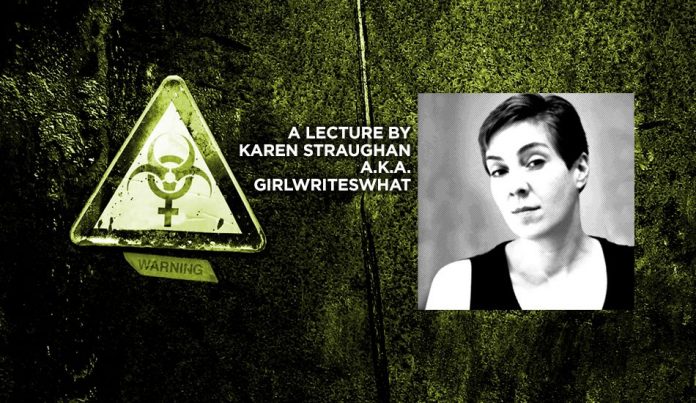
The letter was published on the union’s WordPress page on Monday, and is addressed primarily in response to SFU AMB’s November 8 event, “Toxic Masculinity & Toxic FEMININITY.” The event was promoted with posters showing a biohazard sign over a venus symbol, a gesture the open letter alleges is “offensive, hostile, and aggressive.” The main speaker for the event was Karen Straughan, a self-proclaimed “anti-feminist” and men’s rights advocate. A video recording of Straughan speaking at the event can be found here.

The letter also claims that the Simon Fraser Public Interest Research Group (SFPIRG) and Teaching Support Staff Union (TSSU) share the union’s concerns, and claims that the SFPIRG “will be releasing their own open letter soon.”

The SFU Advocacy for Men & Boys club identifies itself as being “committed to raising awareness about the issues that men and boys face in today’s society.” Jesse Velay-Vitow, Vice President of the group, responded to the open letter in an email correspondence with The Peak.

“The SFU AMB’s first priority is to increase awareness of and affect change concerning men’s issues,” he wrote. “If that can be done within a feminist framework, then great, but when it can not we will not hesitate to examine those beliefs and doctrines that harm men. Even if they are feminist.”

Velay-Vitow also noted that the group plans to “follow up with a more comprehensive response” to the letter in the near future.

When reached for comment, GSWSSU co-chair Laura Scheck expressed support for the letter, though she clarified that she did not write it herself and that the author wishes “to remain unnamed.” However, Scheck agreed to share a statement from the author: “given all the media attention given to rape chants at frosh and sexist Facebook pages and what’s happening at UBC right now, it’s surprising that SFU and the SFSS allow SFUAMB to hold events claiming that women and feminism are the problem.”

Currently, the SFUAMB is registered as an official club on the Simon Fraser Student Society (SFSS) website. The SFSS Club Constitution, which all registered clubs must follow, states that the “views and actions” of any given club “do not necessarily represent the voice of the SFSS.”

“The main point, from my perspective, of publishing this letter was to call public attention to the issues we have with SFU AMB, rather than keeping the arguments between us and them privately,” Scheck added. “We wanted to call them out in a productive way [. . .] while also pointing out how their actions are more reflective of anti-feminist activism than actual men’s rights activism.”

“[SFU AMB] is serious about raising awareness of and creating positive societal change for issues affecting men and boys — feedback and constructive criticism is essential in that mission,” Velay-Vitow stated.

The GSWSSU letter concluded, “Until SFU AMB can demonstrate that they are interested in doing anything more than blaming feminists for problems that are in fact rooted in patriarchy, racism, colonialism, heterosexism, capitalism, ableism, and other forms of oppression and exploitation, we encourage other members of SFU to join us and speak out against them.”

This story is ongoing. Check back for updates as the situation progresses.

The Parker Street Studios open their doors for the Eastside Culture Crawl

0

The Eastside Culture Crawl presents an excellent opportunity to see firsthand the variety and vibrancy of Vancouver’s arts and crafts culture. The 18th year of the Crawl featured over 400 participating artists. Focusing on the neighbourhoods of Vancouver with the highest concentration of artist’s studios, the Crawl takes place in the area North of 1st Avenue, West of Victoria Drive, and East of Columbia Street.

The event was spread out over four days from November 19 to 22, and it was a great time to walk around, see work, and explore studios. With artists present during the entirety of the event, it was also an opportunity to ask questions and chat with artists, as well as purchase their work. With the large population of artistic talent in the city, there is a bit of everything for everyone.

I started the Eastside Culture Crawl at its core: the studios at 1000 Parker Street, which have formed a part of the festival since its beginnings. 1000 Parker Street is a four-story warehouse located near Venables and Clark that has been converted into studio space. This year it featured 148 participating artists under its roof — a substantial chunk of the festival.

The scale of the building’s offerings is hard to tell at first, particularly from the back of the building on the Northwest side. A handful of individuals and the full set of lights in the warehouse were the only hint of its scope. The side door fed into the main artery of the building, and the increasing number of patrons and visitors within.

The journey inside went from studio to studio, and one could explore what our city’s artists have to offer. Though the ability to show and sell work to visitors was an important component of the event, monetary transactions are thankfully not the preeminent component of the Crawl’s atmosphere.

The atmosphere is more along the lines of an overly-crowded arts and crafts fair than a corporate mass sellout or high-brow art auction. Despite this, it’s important to admit that a considerable portion of the work remains squarely outside the disposable income of your typical university student.

On a first visit, wandering through the warehouse is an experience in getting lost and confused. Without a roadmap, discovery is based more on chancing upon unexpected studios. One of the first entries was a jeweller with brass bracelets repurposed from discarded numbered plaques that came from the main Vancouver post office on Georgia Street, which is set to be redeveloped.

Down the hall, I encountered a shoemaker who custom makes her wares by hand to the tastes of her clients. Admittedly beautiful and with the unique smell of quality leather, a pair remains out of reach for me, at least for the foreseeable future. They would have set me back about as much as a new smartphone.

Upstairs and around several corners was a photographer who focused on large format macro photographs of paints. It was a confusing but hyperreal experience that made me hungry for ice cream, cake icing, and other edible things — unlike paint.

Another studio had a light installation occupying the entire space. It was filled with large amorphous white forms that stuck out from the floors and walls. Flashing in sequences of blues and reds, entering the installation was both intimidating and disorienting. So I entered, and so I went.

Out of time several hours later, I made my way downstairs around corners I hadn’t ventured and past studios I hadn’t seen. Walking out into the brisk November air, I was not where I entered. Food trucks and festival goers milling about were unaware of my confusion. I couldn’t see the mountains, and couldn’t find North.

With directions from a vendor I walked away from the Parker street studios and finally accepted a harsh reality of the Culture Crawl: I simply couldn’t see all of it.

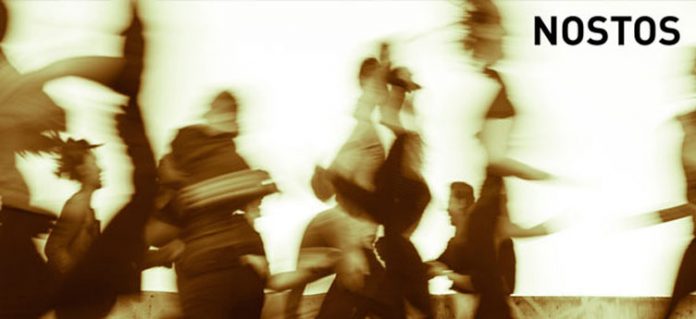
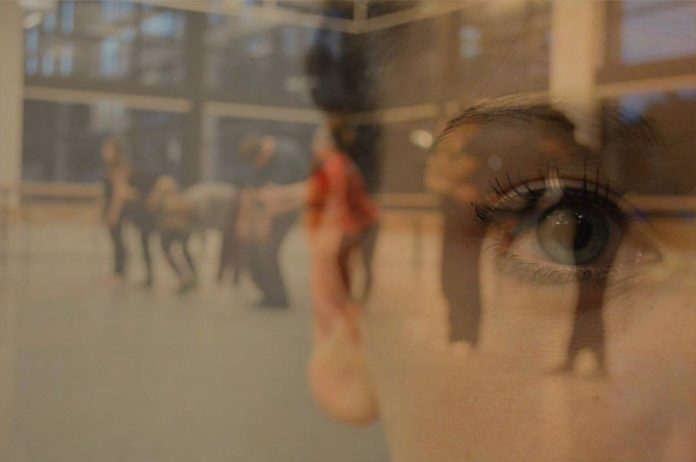
SFU’s dance mainstage, Nostos, lights up the stage

0

SFU’s Dance Mainstage was aflame with energy during the last week of November with new works by Peter Bingham, Shauna Elton, Rob Kitsos, and Lesley Telford. Nostos combined the work of choreographers, SFU dancers, live musicians, and designers based on the idea of nostalgia. The stage was literally on fire before the performance on Friday night (due to a technical malfunction), adding a little spontaneity to the evening. A flaming piece of lighting equipment fell onto the stage from the ceiling, causing a full evacuation from the Woodwards building into the cold November air. Thankfully, the performance started 45 minutes later without consequence.

The show started with the refreshing sound of a full band playing in sync. Vancouver band The Pugs and Crows established a soft melody that quickly became stuck in the minds of the audience, before they moved upstage behind a sheer curtain to be replaced by dancers in white and black. Movements in the first piece were meditative and thoughtful. The dancers shifted formations like ghosts, looking slowly behind them or down at one arm as if they had lost something. They moved in and out of the floor silently as though it were glass.

The second piece stood out the most to me. A performance of spoken word poetry by Barbara Adler coupled with rapid calculated gestures of dancers in grey and moments of gratuitous sweeping unison, the piece came together beautifully. Adler’s words took listeners into an internal world of memories: “a robin’s red breast” and “an October fire, the smell of it” felt like sad associations and moments passed. The final duets in the spotlight were a visual delight for the audience after a large amount of group choreography.

The rest of the performance was a blur of movement, as the performers rolled through the last two pieces swiftly and confidently. Certain moments of nostalgia were most effective: dancers held each other’s faces, gave hugs, lifted and repositioned each other to briefly expose moments of tragedy and celebration. The dancers showed an inexhaustible stamina in large diagonal pieces featuring floorwork and constant repetition. Fantastic projections of larger-than-life bodies moving on the screen and curtain behind them allowed the dancers to dance with their former selves.

The finale returned to the forlorn melody from the beginning, and the choreography combined the dancers’ bodies in endless ways. Nostalgia is a condition of losing touch with the present, and Nostos certainly evoked both the sadness and joy of memories past, a thrilling sense of disengagement with time, and our inability to harness it.

Ascension showcases SFU’s dance, music, and theatre students

0

At SFU Woodward’s Goldcorp Centre for the Arts, the end of semester includes a number of programs that showcase student learning and development as artists at the School for the Contemporary Arts. Amongst all this programming is the student-organized show Ascension, which is entering its fourth year.

Ascension is a unique initiative that encourages students to be in involved in every part of the creative and logistical process. From the dance, to the music, to the publicity and seating arrangements, it is organized and run entirely by SFU students. The show has a $5 student price, with nighttime shows on December 11 and 12, and a matinee on the 13.

Katherine Vincent, a third-year dance student and organizer for Ascension 4, described it as “a collaborative project in a professional atmosphere that helps form connections that can be taken outside of SFU to future works and projects after graduation.”

This year’s show involves a talented group of over 30 artists. These are SCA students involved in choreography, music composition, dance, lighting design and production. The program is a result of collaboration between the Dance, Music, and Theatre Student Unions, and is supported by both the Simon Fraser Student Society and the School for the Contemporary Arts.

Vincent explained that the preparations for the show take eight months, and start in April with the initial call-out for choreographers and composers. This is followed by participant selection, and the setting of partnerships between choreographer and composer that form the basis of the process. The summer then provides time for the students to develop ideas in preparation for the fall.

During the fall, these partnerships feature a long period of back and forth work as both the music and choreography start to grow. Discussions are followed by rehearsals and music sampling, as both sides work together to ensure that both choreography and composition create a cohesive whole.

In November, lighting designers begin to develop the technical and audiovisual support for the pieces. Throughout the fall, this work is shown in monthly internal performances, during which the performers receive feedback from their peers.

It is a long process that synthesises a breadth of different disciplines at the school. Vincent explained that the production can be difficult to balance in between different classes, work and other commitments.

As the performers develop the discipline and skills to collaborate and create Ascension, the work begins to mirror the production of pieces and events in the outside world. The students rely on each other’s specific fields of study during the process, while also working with external partners outside of their cohorts. This includes not only the SCA, but also the grant funding from the SFSS, and the hiring of professional musicians to play the music composed for the show.

Ascension presents unique opportunities for students in different programs, and is important for aspiring choreographers who don’t get many opportunities to create and showcase work in a professional setting. This show is an opportunity for the students to try different ideas, working on anything from solos and duets to complex pieces involving over a dozen dancers.

The show presents an excellent opportunity to see the talent in SFU’s SCA students, and see how those students combine and foster their ideas as they develop their growing artistic practices.  

Do you know how to study?

0

[dropcap]W[/dropcap]ith final exams fast approaching, everybody should be studying. (Keyword being should.) Do you know how to study effectively? What works for you might not be the same method that works for your peers. People study and learn in different ways, and you should cater your learning and studying for yourself, and no one else!

Quality studying means quality learning and vice versa. You can learn despite your professor, despite the material, and despite your own self-doubt, as long as you are willing to make the time and put in the effort.

Here are some general study tips that everybody should employ regardless of their study method.

Turn off all digital distractions

Don’t allow yourself to be distracted by texts, phone calls, emails and social media. Turn it off! A wise chemistry teacher once told me that people can only concentrate intensely on something for about 45 minutes. So put in the time, take a 15 minute break, then get back to studying.   

Prioritize and know you’ll become tired

Which classes are you confident in? Which exams do you have first? Answer these questions and decide which courses should be your number one priority. You should still be studying for the classes that you are confident in, but you might want to focus more attention on those classes you’re less sure about.

Likewise, you have more time to study for those classes that will be examined at the end of the exam period than those at the beginning, but you also have a higher chance of burning out before you get to those last exams, so manage your time wisely. You could even try studying for 45 minutes for one class and then 45 minutes for another — the change in subject might be the ‘break’ your brain needs. Just be careful to separate the material for the different classes.

Employ different study methods for different kinds of material

Material that you need to understand and apply cannot be studied in the same way as material that requires memorization. Using different study techniques will allow you to explore the material through different learning styles, which, for most of us means we will better understand and remember more of the material if we employ all three learning styles: visual, auditory and kinesthetic.

Choose your methods

Some of us believe that if you read through your notes enough times something will stick, and that may work for people who have photographic memories or are predominantly visual learners. However, most of us learn best using different study methods that exploit different learning styles. Make sure to use different methods to stimulate your brain’s different ways of learning, understanding, and memorizing.

Below are some study methods you might try. Remember to choose methods based on your learning. Not all methods work equally for everyone. If something isn’t working for you, choose something else.

Be quizzed

Have a friend or family member quiz you on course material. Go over your notes first, then have someone question you about definitions, dates, concepts and understanding. The person questioning you doesn’t need the same background you have on the subject. In fact, if they don’t know anything about the subject, even better — you will have to explain more, making you think, connect old material to new material and help you recognize what you don’t know.

Make flash cards

These are great for memorization (definitions, events, questions, concepts), but you must make the cards yourself! This will give you extra repetition and add a kinesthetic dimension to your learning. Stimulate auditory learning by asking and answering yourself aloud, you’ll find you are less likely to assume you know the answer if you hear yourself than if you just think it. Shuffle your cards and don’t be trapped into memorizing an order, as it might throw you during an exam.

Study in a group

Group learning is underrated. In a group you can act as both student and teacher. Explaining things to others allows you to determine how much you actually know and understand, and hearing explanations in a different light might help you understand things you’re stuck on. You’ll also be able to judge how well you can explain what you know. On the exam, you only get marks if you convey what you know in an understandable way.

If study groups don’t work out, teach a friend or family member. Teaching is a great learning tool.

Write an essay

Write a short essay about what you know, explain difficult concepts, and give it context. This will clarify what you actually know and understand. Plus, it’ll give you an idea of how well you convey what you know on paper. If you are finding something difficult, do research. Research helps clarify and expand your knowledge.

Do practice exams and make up questions

Use practice exam(s) to see where you’re at, but don’t rely on them as a portrait of the final. Your final will be different than the practice. Challenge yourself! Make up exam questions and answers designed to test understanding and application. Trade questions with a study buddy (they may have thought of something you haven’t).

These are just a few methods you might want to try if your current study methods aren’t working. If the methods described here don’t appeal to you, ask around; adapt other methods to work for you. Make studying about you. It’s your grades, your time, your money – make the most out of it!

A new governmental appreciation of science holds promise for climate change

0

[dropcap]A[/dropcap]fter nine years of silence, scientists who work for the Canadian government are once more free to speak to the media. This means that Canadians will again be able to hear about publicly funded research from the scientists themselves, and not statements released by a team of government spin doctors.

This is likely to usher in a new era of understanding climate change and how it will directly affect Canada. While climate research is being undertaken by scientists around the world,  since 2006 there has been a distinct lack of Canadian research into the area. It is a poorly-kept secret that the Conservative government under Stephen Harper didn’t really care about climate change and was more concerned with bolstering the economy, especially through the exploitation of fossil fuel resources.

The new Liberal government with Justin Trudeau at the helm is ushering in a new era of governmental respect for scientists. There is now a new cabinet position — Minister of Science — bringing the total number of science ministers to two; the other one being Minister of Innovation, Science and Economic Development. Also, there has been a rebranding of the Minister of Environment — now Minister of Environment and Climate Change.

The creation of a new cabinet position and the expansion of the duties for which the Minister of Environment is responsible should be of some indication that the new Liberal government is on track to value scientists and what they can do; not just for the research surrounding vaccines and other health issues, but for the work they can do to help preserve the health of the Canadian environment.

I am looking forward to seeing governmental policy guided by scientific findings instead of the promise of short-term economic gain.

All Canadians should take climate change and the health of the Canadian environment seriously, as it not only affects coastal communities through sea level change but also those who live in the nation’s interior. Those who live in the interior do most of the nation’s agricultural production. The fact that climate change affects the weather patterns across the country should be of great concern, as it begins to affect access to affordable food. By working towards improving the Canadian climate as a whole, the overall health of the nation can be improved.

So what should be most exciting with regards to our unmuzzled scientists isn’t that they can talk to the media again, it’s that they will be openly valued by this government for what they are; incredibly skilled people who know way more about one specific thing than most people will in their entire lives. And as a result, when making policy changes, the new Liberal government will openly consider what they know.

I am looking forward to seeing governmental policy guided by scientific findings instead of the promise of short-term economic gain. If the new government manages to keep its promises surrounding climate change and the importance of scientists — which, given the creation of a new cabinet position and the renaming of another, doesn’t seem like too much of a stretch — then our country will not only have re-entered the 21st century, but will have made dramatic progress on the world stage from 2006 when government scientists were wrongfully silenced by the Conservative government.   

The Arts Club brings back their beloved holiday classic, It’s a Wonderful Life

0

Sometimes we forget how good we have it. It can be easy to get depressed if we focus on what we don’t have or what we envy about other people’s lives, but It’s a Wonderful Life shows us that it’s important to practice gratitude and recognize all the wonderful things we have in our lives already. The Arts Club first presented this production in 2007, and after a three-year hiatus in 2012 the show is back once again. Directed by Dean Paul Gibson, the show features the same all-star cast, beautiful sets, and festive charm of its previous iterations.

The inimitable Bob Frazer stars at George Bailey, a responsible family man who takes over the family business at Bailey Building and Loan when his father unexpectedly passes away. After this, he watches his brother go to college, travel, and experience things outside of Bedford Falls that he himself had once dreamt of. As time passes, he becomes disenchanted with his life, and an $8,000 blunder by his uncle sets him on a path of self-destruction.  

Watching in the wings, while waiting for his own set of wings, is Clarence, the angel in training. He is shown George Bailey’s life story in order to lead up to the present moment when he needs to save his life. Bernard Cuffling’s performance as Clarence was full of subtle hilarity building until the climax of the play when he finally takes action.

Jennifer Lines plays George’s wife, Mary Bailey, and the combination of Frazer and Lines together on stage was the highlight of the show. It’s clear that they have an immense amount of respect for each other, and their friendship leads to wonderful chemistry. The only thing that briefly brought me out of the story was struggling to imagine the two of them as 18-year-olds while they frolicked in the street in borrowed clothes that they grabbed after falling into the high school pool.

I enjoyed the staging, which had the actors coming down the aisles a few times and bringing us into the action. Scenes from the film, played behind the actors at certain key moments, drew a nice parallel between the two versions of the story. The intricate sets were also instrumental in pulling us in and out of different scenes, such as Mr. Gowar’s drug store, Bailey Building and Loan, and the Bailey family home. The antique phones and period clothing helped to locate the story in time, though I couldn’t help but wonder if anyone in the audience would be confused by Mary Bailey calling the operator and asking to be put through each time.

When George returns home after his alternate reality experience with Clarence, he doesn’t care about anything except seeing his wife and kids. Bert, the local police officer phones to say George is under arrest for the mixup with the $8,000, and all he can say is “that’s nice — have you seen Mary?”

This heartwarming, classic Christmas tale is sure to get you in the spirit of the season, and I’m glad it’s back for another run to remind us that appreciating what you have is more important than being upset about what you don’t.     

It’s a Wonderful Life is presented by the Arts Club Theatre Company from November 19 to December 26. For more information, visit artsclub.com.

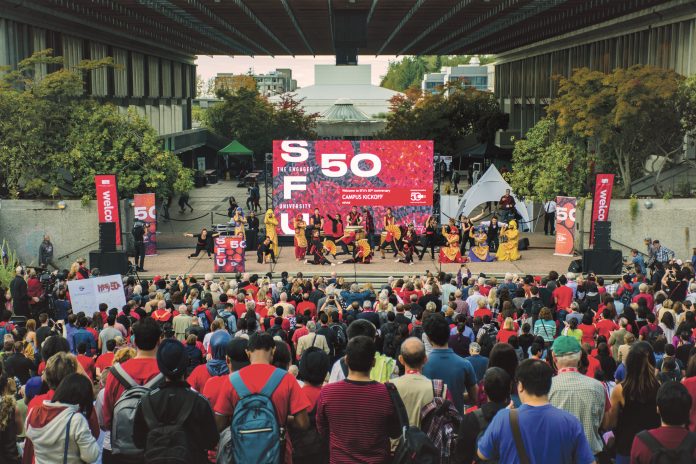
SFU’s 50th anniversary hangover

4
For a university that brands itself as "engaged," SFU's students are more estranged than ever.

[dropcap]W[/dropcap]hile walking to class on Burnaby campus, it’s hard to miss the vibrant chalk drawings adorning the pillars of Freedom Square, remnants of SFU’s extravagant birthday bash earlier this semester. “Flower power,” reads one particularly colourful entry. “Happy birthday, SFU!” read a few others.

Apart from these and a few other decorations, you would hardly know we celebrated a milestone here at all — status quo is everything at this school, and things have quickly returned to normal after the hustle and bustle of a celebratory September.

Now that the dust has settled on our 50th anniversary celebration, we can look at this university’s first half-century with a bit of much-needed hindsight. And I’ll be honest: it doesn’t look good.

For a campus that was once heralded as Berkeley North, our radical history has become little more than a sales pitch. The Convocation Mall, which was specifically designed to facilitate student protests and gatherings, sees more action these days during clubs days and organisational fundraisers. A student body that was once united in opposing governmental corruption, fighting for civil rights, and advocating for better treatment of students and staff has become apathetic and disconnected.

Today’s SFU would be unrecognisable to the radical trailblazers who gave the school its reputation, and I can’t help but think that many of the charter students invited to SFU’s Celebrate and Savour garden party were disappointed in its frivolous display of affluence.

Our radical history has become little more than a sales pitch.

This semester alone has shown just how separated SFU students are from the issues that affect them. The TSSU strike, a product of poisonous university policies that consistently devalue the people working to educate us, resulted in an avalanche of misplaced anger over TAs and sessionals withholding student grades. Skyrocketing international student fees and tuition hikes barely managed to elicit a yawn from all but the most keenly involved students. And the Build SFU project, one of the only issues capable of inspiring students to action, only attracted about 300 voters to the SFSS AGM this year — about one per cent of the student body.

These are issues that students would have fought tooth and nail 50 years ago. Today, most students are barely aware that these problems exist.

But it’s not just the students at fault here. Having celebrated a milestone that would have been unimaginable to the architects and planners building the “instant university” in 1965, SFU’s administration has consistently proven that they’re uninterested in fixing or even addressing the problems that plague our institution.

Our course registration system is broken. Student satisfaction placed 12th out of 15 comprehensive schools in the Maclean’s rankings this year, despite our first-place academic finish. The Kinder Morgan pipeline — which, contrary to popular belief, didn’t just disappear — still threatens the environment and safety of Burnaby Mountain, and our president is unwilling to take a stance towards it. Residents of the Louis Riel House still struggle to find permanent housing after mould concerns prompted the residence’s closure. Our school for contemporary arts is funded by a gold mining company infamous for its disregard for public health and the environment, and the campus itself has actively contributed to the ongoing gentrification of the Downtown Eastside.

And the list goes on.

Ultimately, the Simon Fraser University that you attend today is a far cry from the dreams of our radical progenitors. Our school was envisioned as an alternative to the corporatism and bureaucracy of larger, more historical institutions like UBC, yet we’ve spent the past half century inching closer and closer to that model in hopes of competing for students and funding. What was once the choice for students hoping to receive a different sort of education has become yet another cookie-cutter neoliberal assembly line, churning out devalued degrees to indifferent students and calling it “engagement.”

So why didn’t we hear more of these objections in September, when SFU was emblazoned in red and grey and celebrated as the best thing since sliced bread? I admit that even I joined in on the fun, partaking of sponsored hors d’oeuvres and Instagramming flashy light shows. It’s easy to get caught up in the spirit of celebration and difficult to cast a critical eye — but that work is valuable, especially when so few seem willing to do it.

Ultimately, SFU is a business, its students are its customers, and they will take any opportunity that they can to sell the school to you and to others.

Prickly topics like labour relations and divestment don’t make for effective advertising campaigns, and it’s easier to point towards some nebulous idea of radicalism than to actually live up to that legacy. Once we’re ready to admit that SFU is no longer the radical campus it once was, we can begin tackling the problems that we all face as students and as part of the system.

This isn’t a call to arms. I’m not asking you to sign a petition or volunteer for the SFPIRG or picket Kinder Morgan. What I am asking is for you to pay attention to what happens on your campus and on your dime. Even if you’re only here to get a degree, these issues affect you: namely, in how much you pay for your education, and the quality of the education you receive.

Left unchecked, the administration will continue to bleed you dry. They will keep paying their TAs and sessionals a wage well under the poverty line while refusing to hire new faculty, they will allow big corporations to thread oil pipes through the mountain on which your campus sits, they will deny you access to resources and refuse to fund the services upon which you rely, and most of all, they will revel in the fact that only one out of every thousand students is willing to stand up to them.

If anything, the 50th anniversary of our campus is not an opportunity to celebrate the university. It’s an opportunity to celebrate the students, and to empower us to fight for what we deserve.

Laugh Track: An interview with Jacob Samuel

0
Illustration by Janis McMath

When it comes to comedy in Vancouver, Jacob Samuel is the epitome of a multitasker. In addition to producing the monthly WHY? Stand-up and performing his own stand-up, Samuel also regularly publishes original comics on the website The Daily Snooze. (He also contributed comics to your favourite SFU newspaper, The Peak, back in 2012.) Read on to learn more about how The Simpsons plays into Samuel’s comedic origins, his proudest moments in comedy, and reflecting on being a terrible young person with his new show Teenage Dirtbag.

When did your relationship with comedy first begin?

I think it started because I watched The Simpsons, like three to four times a day every day after school. It’s a certain brand of comedy that really turns you onto other types of comedy. I was actually never that into stand-up growing up; I wanted to be a writer, and my ideal job was to be a writer on The Simpsons. [. . .] When I was growing up I mumbled a lot, and I wasn’t really a performer, so that’s why I got into cartooning — to become a joke writer in any way possible. And then I sort of realized there was no way to meet anyone or network. You had to perform, otherwise no one takes you seriously; you’re just typing at home.

When I started doing stand-up, because it was never a dream of mine, I figured I had nothing to lose with it. I was expecting to kind of fail and not be good at it, so that made it easier, emotionally. But it was the right way to go about it.

How did you get into drawing comics?

I did my undergrad at McGill and there’s a humour magazine there called the Red Herring and I enjoyed reading it, so I thought I’d contribute. I showed up late to a meeting and everyone was introducing themselves and I tried to make a joke and no one laughed, so I left and never went back. I was so afraid of rejection from strangers. I had a few cartoon ideas I was trying to get someone else to draw, but they weren’t getting around to it, so I just did it. Even though I was really, really bad at drawing, I enjoyed the process a lot. So I’d post them on my blog and my friends would see it and people would be very nice and complimentary, so I started to think maybe I can be funny.

Our family friend is the cartoonist for the National Post, so I met with him and said I was interested in it, and he said “It doesn’t really matter how good your drawings are, as long as you’re getting your idea across and being funny. Being funny is more important than drawing.” So it was pretty encouraging.

What’s the proudest moment that’s come from comedy, either from stand-up or cartoons?

For cartoons, probably the second time I sold one to The New Yorker. Because the first one, I thought it might just be a fluke, so I wanted to get at least more than one. So the second time meant a lot. With the first one, there was so much doubt. I thought, “Really? They picked THAT one?” and I thought they made a mistake. Between the first and second one I got a lot rejected, which is really tough.

With stand-up, I don’t know if there’s a single moment. What’s gratifying is looking back and seeing what I’ve gotten better at since I started. Even before you go on stage, thinking about how much more comfortable you are now. Honestly, the most gratifying thing about stand-up is my parents have heard my material and aren’t ashamed of me.

What do you remember about The Peak from when you contributed years ago?

I was actually pretty raw as a cartoonist. I showed my stuff to the editor and he thought they were great. I would just send in cartoons, and it felt really good because that was one of the first places where I got them published. I didn’t really have much contact with people in The Peak, but it was one of those steps along the way to, “I can do this.” It was a big deal for me at the time.

What can people expect from the new show you’re going to be producing at Hot Art Wet City?

The show’s called Teenage Dirtbag, and you can expect different performers — stand-up, improv, sketch — telling stories and jokes about their most painful memories of growing up. It’s about exploring the idea of why teenagers are shitty, and your relationship with your past self. I like the idea of reflecting on your growth as a person. I meet people as adults and I always wonder what they were like as a teenager, or what they would’ve been like in high school.

Do you have any advice for someone looking to get involved with the Vancouver comedy scene?

Try out different forms of comedy. Just because you’re not right for one doesn’t mean you can’t thrive in another. You might be someone who’s not good at performing, but you’re really good at producing shows. [. . .] Maybe you’re good at stand-up, or sketch, or a podcast. A lot of people give up when they’re bad at one thing, but there are a lot of different things you can do to be part of the comedy community.

Check out Jacob Samuel’s co-produced show WHY? Stand-up December 2 at Tangent Cafe, and mark January 16 on your calendar for the debut of his new show, Teenage Dirtbag.