Home Blog Page 906

25toLife campaign raises $30,000 for cancer research

0
This past semester’s contribution brings the total for all of Professor Masri’s past classes to above $80,000. - Photo courtesy of University Communications

Some students go the extra mile with their homework, but the students in one Beedie School of Business class set out to raise a grand total of $30,000 dollars for a class project — and they weren’t going to be denied. They succeeded in surpassing their goal by just $34.

The money they were raising was for the 25toLife Campaign, which is a joint project between the BUS 361: Project Management class and the Canadian Cancer Society to raise funds for cancer survivors.

Beedie Lecturer Kamal Masri has led this initiative for three semesters. This past semester, his class set a fundraising goal of 30-thousand that they managed to surpass through a number of fundraising events organized and led by students. It all began when Masri decided that students seemed bored with the class and allowed them to plan an event that served the community.

“The Canadian Cancer Society came and spoke with students, and said that their project is about helping those with cancer to live life to the fullest, so we came up with the name 25tolife to help raise $25 thousand to life,” he said.

Still, he was astonished to see the selfless effort from his students. The class only hit their aforementioned goal as students contributed money from their own pockets at the deadline to help them surpass their goal.

With their deadline looming and the group $500 short, class accountant Rhythm Tang turned to the students to donate the rest themselves in order to succeed.

“I mentioned to the class that if each person pitched in $10, we would be able to reach our goal. There were students one after the other coming up to the front of the room with bills and counting down the amount until we reached our goal,” said Tang, who is also one of the students of the class.

During the final push from his students, Masri filmed the donations on his phone to keep a record of it for himself.

“I’ve never seen students respond to another student like I saw that day. It was amazing and showed that they were working together rather than working for a grade,” he said.

Since beginning in 2013, Masri and his classes have raised over $80,000 for the Canadian Cancer Society each fall.

The class was divided into several groups to arrange their projects to work towards their goal. One of the bigger successes was the “Are You Tougher Than Cancer” obstacle course, which was sponsored by the Steve Nash Fitness Club. Thanks to a large turnout from the community, that event alone was able to raise one third of their goal.

Other events include an Amazing Race scavenger hunt, a Fun Run around Burnaby Lake, and a sold-out pub night in Langley.

The group was able to reach their goal in part, thanks to the support offered through the community, with a lot of participation and organizations such as Jeux du Commerce West and Enactus SFU.

Tang encourages more students to take part in this class, but warns that they should know what they are getting into.

“You should have a passion for working with others and leading events and being encouraged by seeing results,” she said. “Kamal challenges us and tells us we should never give up because there’s always hope in the end.”

Hermione Granger was never originally black, but who cares?

1

[dropcap]H[/dropcap]arry Potter was the first full-length novel I’d ever read. As my school’s library only had one very popular copy of The Philosopher’s Stone, upon a friend’s request, I convinced my parents to order me the book from a Scholastic book form, and ever since cracking open the fresh-scented, glossy paperback that one afternoon in second grade, my imagination was captivated.

I fell in love. The plots and settings were rich, the characters so believable I felt as though I knew them personally. I did know them personally. In too many respects, their trials and tribulations felt as if they were my own.

And yes, in my imagination all these characters, unless otherwise written, had white skin. I don’t feel racist admitting this. After all, growing up in a predominantly white environment, it’s only natural for me to envision fictional characters with my own ethnicity. I’ll also admit that, yes, I was rather taken aback to learn that the ever-clever Hermione Granger — a main character I’d grown so close to as a young reader — was recently cast in J.K. Rowling’s stageplay sequel Harry Potter and the Cursed Child as a black woman.

While I’m ultimately satisfied with this decision, inevitably there have been those devoted fans who are not.

Here’s the reality: until now, Hermione has always been stuck in a sort of invisible racial limbo; her ‘whiteness’ has never been confirmed in the series but has become ‘truth’ due to the way we (including Hollywood) mentally express our characters through our defaulted Caucasian imagery.

Yes, Hermione is now officially black, and it’s now implied that she has always been.

That being said, let’s face it, Rowling herself was obviously mired by these defaults as she wrote the series. She never delivered Hermione as a black character — a notion emphasized by her enthusiastic Twitter endorsement stating that she “loves” her character as black and that “white skin was never specified.”

Such a tweet conveying racial open-endedness clearly indicates that Rowling is just as accepting of this new idea as many of us are — otherwise we may have seen a post stating, “Yep, she was black all along!” Hermione is another piece in Rowling’s retroactively-tweaked canon. After the entire series was published, the author revealed that Hogwarts student Anthony Goldstein is Jewish, that Dumbledore is gay, and a variety of other unwritten characteristics to her wizarding world.

Rowling is retrospectively changing the initially straight, white world conveyed in her printed story. These aspects were never explicitly expressed on paper, but Rowling is seizing the day and moulding the canon to fit our shifting cultural ideals of diversity in today’s fiction. And there’s nothing wrong with this. The lack of diversity in the Harry Potter series has been longstanding, and perhaps Rowling feels a tad guilty over her monoracial characters.

To be clear, every reader envisions a slightly different Hermione, and it’s only natural to be surprised at a casting decision that doesn’t match with our personal image of that character.

Though I will say that because a black Hermione has now been approved and endorsed by Rowling herself to be in a play actually written by the author, she is now officially solidified in the Harry Potter canon as being of colour. Yes, Hermione is now officially black, and it’s now implied that she has always been. This may not have originally been the case in Rowling’s world — but now it is.

A fascinating and rare surprise to ever hit a canon. Let’s celebrate the now sealed and stamped black Hermione Granger.

And while too many fans will infiltrate public forums with shallow retorts along the lines of “she’s just not my Hermione,” or “she’s a product of forced diversity,” at least you can just shrug off these absurdities while you pat yourself on the back for perceiving this with such an openness. As the popular saying goes, “haters gonna hate,” right?

Satellite Signals

0

Harbour Centre vancouver

On January 12,beer enthusiasts can attend a workshop to learn more about SFU’s Craft Beer and Brewing Essentials Certificate at the Harbour Centre.

Prospective students will learn about classes they will take, ranging from “Introduction to Brewing” to “Quality Assessment of Beer” which will allow them to thrive in Vancouver’s beer market.

Surrey surrey

Those interested in becoming an employment counsellor or career consultant should check out the information session for SFU’s Career Development Practitioner Certificate. Hosted at SFU Surrey from 5:30–6:30 p.m., this free session will provide information on the program as well as a chance to meet others interested in the field.

Space is limited, and those interested can sign up via the SFU website.

segal_building-01Segal School of Business

The Beedie School of Business will host an alumni reunion at the Segal School of Business on January 13, featuring an interview with alumnus Bailey Klinger. Klinger is the co-inventor of Entrepreneurial Finance Lab (EFL) technology, a service offering psychometric credit scoring for small businesses.

The interview will be followed by a reception for alumni to connect and network. The $10 registration fee includes one drink ticket and appetizer.

Canada by car

0

[dropcap]A[/dropcap]fter driving 2,224 km across 10 provinces, taking 4 ferries, hitting one mink, and spending six weeks with my significant other, I can honestly say that driving across Canada is one of the best things I’ve ever done.

It was 2011, and I was working a co-op job in the Canada Revenue Agency call centre. Most of my time was spent answering boring tax questions or calming people down after they just received an intimidating letter from the CRA, but sometimes, when speaking to someone from the opposite end of the country, I would imagine what it was like where they lived. And this inspired to drive there and find out.

A trip like this is an opportunity that doesn’t come around often — so make sure you embrace it when it does. A semester off during university may be the only time that you can take such an extended leave and not worry about letting your commitments fall to the wayside. If you can, I suggest you take this road trip of a lifetime before you become encumbered with obligations and it becomes something that you always wish did.

My boyfriend and I set off on July 20 in our tiny Chevy Aveo and didn’t have to be home until Labour Day. That boyfriend is now my fiancé, and I have to say that this type of trip is also a great test of any relationship’s strength. Spending that amount of time with anyone is likely to make things a bit tense, but with little else except the road ahead, the only thing to do is be quiet and get over it unless you want to make your own way home.

Cash saving tip number one: get in touch with every friend and relative you have across this grand country and tell them you’ll be stopping by. Our first stop was my grandpa’s house in Kelowna — we took it easy on the first day and only drove a few hours. If you’re not used to long hours in the car, it’s probably a good idea not to overdo it on the first day.

From there, we made our way to Calgary, via a stop for the night at Banff National Park and the beautiful Lake Louise. That brings me to cash saving tip number two: get used to roughing it. That was our first camping stop, and although we only did about 50 percent camping (after a few days you just crave a real bed and a good shower), but we did manage to camp in every province.

What we thought was a deserted side road in the middle of the night turned out to be somebody’s driveway in the morning.

Roughing it also includes eating sub-par food. We equipped ourselves with a hand-me-down cooler and kept it stocked with cold drinks (this reduces unnecessary stops for overpriced gas station beverages) and a variety of groceries such as cold cuts for sandwiches and milk for cereal (not every cheap hotel comes with continental breakfast). With a couple of plastic bowls, plates, and cutlery, it’s surprising how many makeshift meals you can prepare. When camping, we would stop at a grocery store and buy some snacks, meat, and vegetables, throw our cheap grill on the fire, and voilà, dinner was served. Food is probably the most expensive component of any travel experience, and we were on a budget.

Of course, the other thing that adds up is the gas — cash saving tip number three: if you are planning to drive over 20,000 km, take a small car (even if people in Labrador stare at you like you’re from another planet).

In Calgary we had the fortune of staying with more family, and the only other places where we knew anyone were Cornwall, Montreal, Quebec City, and a tiny island in Nova Scotia. We continued on through Drumheller, Saskatoon, and Regina, and camped in the beautiful Buffalo Pound Provincial Park in Saskatchewan where we had the fortune of witnessing a spectacular lightning display that night. Saskatchewan is referred to as “land of living skies,” and when the sunset turns the whole sky pink, it’s magical.

Not everywhere in that province was as impressive. After a long day of driving we stopped at a roadside motel in the middle of nowhere. After checking in, we noticed countless bugs in our room — dead and alive, and could not imagine getting into the bed, never mind getting any sleep. Of course the next sign of civilization was a long way off, so we ended up deciding to park ourselves inconspicuously on a side road and sleep in the car. What we thought was a deserted side road in the middle of the night turned out to be somebody’s driveway in the morning. . . we woke up to a knock on the window, but instead of anger we were met with an invitation to come inside for coffee and breakfast. Those prairie people are just so friendly. We declined and said we had to be on our way.

Saskatchewan is referred to as “land of living skies,” and when the sunset turns the whole sky pink, it’s magical.

It was true, though, we did have to be somewhere by a certain date — Stratford. It had long been a dream of mine to visit the Stratford Shakespeare Festival, so I bought us tickets to Twelfth Night, and we were in a hurry to get there by July 30. Ontario isn’t nicknamed “longtario” for no reason, but we made it to the city of Shakespeare in time after a very scenic ferry ride across Lake Superior. On the way back across the country we stopped in Stratford again and saw Camelot and on the cliffs in St. John’s we were treated to a free outdoor production of Hamlet by Shakespeare by the Sea. One day, I’ll do a Shakespeare tour and stop at Shakespeare by the Saskatchewan as well.

We continued through Ontario and spent a few days in Niagara Falls, which is spectacular, spent some time in Montreal with family, and stayed in a friend’s cabin just outside Quebec City. The Gaspé Peninsula is another stunning sight that was worth the drive around, and that took us into the Maritimes. Confederation Bridge feels like it will never end, Anne of Green Gables’ house is just as magical as I pictured it, and New Brunswick has a beautiful coastline. In Nova Soctia, we spent a couple of nights with family in a hundred-year-old house on Long Island, only accessible by a ferry that runs once an hour. A 13 hour ferry ride got us to Newfoundland where I had trouble understanding a few people through their accents, and a ferry — a questionably seaworthy one — took us over to Labrador.

If I tell you everything about our trip, we’ll be here for a week, but one place that really stood out was Labrador. We saw the northern lights, drove on a gravel highway, got a flat tire, drove on a gravel highway with a spare tire, hit a mink, and slept in the car again. We almost slept in the car twice in a row, but Labrador City had one room left for us — at a bed and breakfast that turned out to be a spare room in someone’s house. The Atkins were a wonderful couple who took us in, fed us homemade cookies, helped get our tire fixed (there was only one of those left in the city too), and made us feel like we were right at home when we were the farthest we had been from it.

Our drive back across the country took less time and we did less sightseeing, but it was by no means boring. There is always more to see, and I hope I’ll be able to take this trip again someday. My favourite city in the country? That’s a tough one, but I will say Quebec City. It has that 400-year-old European charm, stunning architecture, and of course, le Français.

My least favourite city? That’s easy: Winnipeg.

First Nations Language Centre to begin testing on First Nations language apps

0
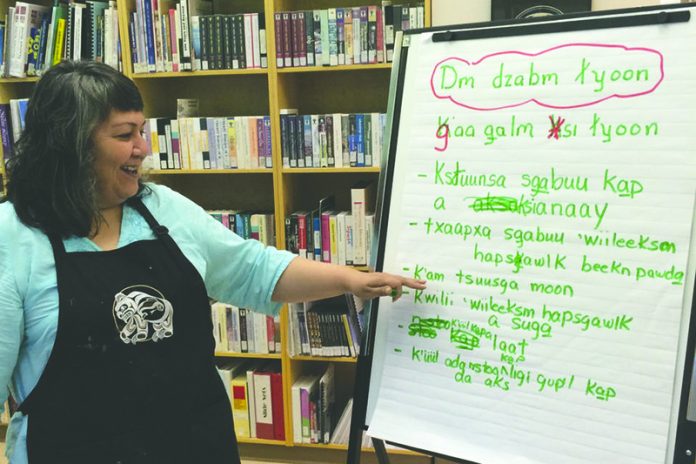
The app will focus on indigenous languages spoken in BC such as Haida (pictured), - Photo courtesy of SFU News

According to the First Peoples’ Cultural Council, a Crown Corporation working to revitalize Aboriginal languages and culture in BC, there are 203 First Nations communities in BC with over 40 recognized languages. Many languages have no remaining fluent speakers and many face extinction without outside intervention. Dr. Marianne Ignace of SFU’s First Nations Language Centre (FNLC) is working on a technological solution to this problem.

The Centre is working on the Tlli7sa Storybook Mobile and Web Application concept, a series of apps looking to provide educational content for courses and general use. It uses visual, auditory, and interactive tools to teach both the languages of a community and the community’s cultural history.

Ignace hopes the apps can raise awareness for the 12 Indigenous languages of BC and the Yukon that are the focus of the apps as well as all Indigenous languages of BC and the Yukon. Her team has worked closely with many groups such as the Haida, Tlingit, and the Skwxwu7mesh (Squamish), and have also worked with the Hellenic Studies Program by utilising a language tutor platform originally intended to teach Greek.

With a $2.5 million dollar federal government grant from the Social Sciences and Humanities Research Council to develop the app, the Centre expects to start testing early pilot versions sometime during 2016. Ignace hopes to release the first group of apps to learners in 2017.

The communities, all of whom are working with the Centre through a seven-year partnership that began in 2013, will be given the option to release the apps to everyone in the world, or to directly manage content and access through a server.

With everything falling into place, Ignace hopes to have developed all the apps within the next five years. But it has been difficult at times, “because the languages are so different from one another. It really [wasn’t] feasible to work with a single content template,” she told SFU News. The contents of the apps have also taken a lot of time and effort to produce, especially with its “storybook” format of visual and auditory learning aids.

Ignace explained to SFU News that she hopes that the app, along with the Centre’s current efforts, will “provide a unique avenue to [learn their ancestral language].

Star Wars: The Force Awakens is cheesy fun

1
Star Wars: The Force Awakens is a master class in fanservice.

First things first: yes, it’s better than the prequels. Much better.

Admittedly, that’s a pretty low bar to clear. But fans could be forgiven for their cautious sense of optimism in the leadup to J.J. Abrams’ much-anticipated reboot of the series. We’ve been hurt before — the previews of The Phantom Menace looked promising, too, and the early reviews were similarly positive. Paying to see another Star Wars sequel is a bit like going on vacation after surviving a plane crash, or eating at a restaurant where you got food poisoning: it takes a whole lot of trust.

Director J.J. Abrams has proven himself capable of helming a series reboot before, appeasing a famously capricious fanbase with his laudable Star Trek remake. (Well, the first one, anyway.)

Happily, this film continues his winning streak. Star Wars: The Force Awakens is, for better and for worse, exactly what fans have been asking for: a cheesy, fast-paced spectacle in the spirit of George Lucas’ original trilogy.

Even the smallest details seem tailor-made to appease diehard fans of the original series — it’s clear that Abrams and his team did their homework, and much of The Force Awakens feels like a labour of love, the handiwork of a fan who’s tried his best to do a beloved series proud.

The Force Awakens is a good movie that plays it safe, and misses out on greatness because of it.

This painstaking effort both to pay homage to the original series and to course-correct away from Lucas’ awful prequel trilogy makes for a film that is sure to satisfy fans of the series — however, its heavy reliance on the tropes and rhythms of the original flicks may leave the uninitiated struggling to keep up.

Little effort is made to establish an emotional connection with the series’ returning characters, whereas the time we do spend with Harrison Ford’s roguish Han Solo and Carrie Fisher’s stoic Princess cum General Leia detracts from the screentime of the series’ new characters, who end up feeling a bit short shifted.

This isn’t to say that the new characters are forgettable. In fact, I found myself annoyed we didn’t spend more time with them. Newcomers John Boyega, Daisy Ridley, Oscar Isaac, and Adam Driver all fit surprisingly well into the series’ universe, and there’s plenty of chemistry between them.

While the returning characters never feel out of place, their screentime borders on overkill. Much as I love Han Solo — I mean, come on, it’s Han Solo — the film seems burdened by the obligation of filling the screen with Harrison Ford as much as humanly possible.

It’s as though Abrams didn’t trust us to fall in love with the newbies on our own: an establishing moment for the film’s ostensible protagonist, Rey (Ridley), comes when Solo offers her a job on the Millennium Falcon. “Chewie likes you,” he deadpans. I liked her, too, before I had to be assured she had the approval of the old guard.

I guess I can’t fault the film for pandering to an audience wanting desperately to relive the excitement and fervor of the first Star Wars. But where The Force Awakens builds on the original trilogy’s strengths, it also co-opts many of its weaknesses: groan-worthy lines abound, including old chestnuts like, “It would take a miracle to save us now!” and my personal favourite, “We’ve got company.” There’s also plenty of as-if moments, such as a fissure that perfectly separates two lightsaber duellers, a chance encounter between old characters and new, and a literal deus ex machina involving an obligatory R2-D2 cameo.

In another film, I would call these flaws, but in The Force Awakens they feel more like stylistic choices meant to preserve a link with the original series. Yes, the first films are also flawed: the pacing is weird, the dialogue is stilted, the characters are thinly drawn. The Force Awakens makes little effort to correct these faults, instead trusting the audience to forgive them as they forgave the originals. Same star war, different day.

Ultimately, I can’t help but feel The Force Awakens is a good movie that plays it safe, and misses out on greatness because of it. Very little about the film feels original, challenging, or in any way different than what we’re used to.
To be fair, the prequels tried something different, and it failed spectacularly — perhaps Abrams was right to stick to the tried and true. The movie is a ton of fun because of it. But I desperately hope this film’s sequel, much like The Empire Strikes Back before it, builds on the film’s new characters in more emotionally complex and satisfying ways. Until then, this will have to do.

HUMOUR: Copy Editor’s Corner (compiled)

0

October 19: Dangling modifiers

Hi there! You are reading a new weekly writing tips segment written by me, Joel MacKenzie, The Peak’s Copy Editor! Tune your eyes in every week to this corner of The Peak for writing tips and ideas to breeze through your B Courses.

Let me start by saying that editing copy, or editing our paper’s articles, is a lot of fun. There’s nothing more satisfying than holding a warm, newly printed paper every Monday, knowing that I had an integral say in every delicious bit of punctuation, phrasing, and hyphenation that went into every section. I get a dry tongue just thinking about it!

Mondays, the day our papers are usually delivered, are truly my vacation days of the week. Saturday and Sunday, I wait virtually the whole time in a ball of anxiety in anticipation of holding that fresh, ripe, wet-with-ink Peak against my face, knowing that I had an integral say in every delicious word that went on those pages. And knowing, of course, that the jokers at Douglas College’s newspaper The Other Press couldn’t cook up a paper if they had their tongues behind their backs! Can I state the obvious? Their pages are thin, chalky, and only to be chewed through with a stiff drink handy!

But I’m getting beside myself! Now incoming: writing advice. Here’s an example of a dangling modifier:

“Being such a lousy swimmer, you won’t see me at the pool any time soon.”

Come on back to this corner of The Peak every week for more writing tips from yours truly. See you next week, and never put down your pen!

Best,

Joel MacKenzie


October 26: Spelling

I’m very excited and contented to see that last week’s article, after weeks of attempts, was finally overlooked by our EIC Max, and now has way too much momentum to be erased behind my back again!

This week, let’s talk about the writing problem on everyone’s mind: how to spell “Halloween”!

Is it one “L”? Is it two “O”s?

The name “Halloween” has evolved from “All Hallow’s Eve,” which was a Pagan holiday coming one day before Hallow’s, the Christian apple-bobbing competition day! Halloween was made for kids, by kids, as a way to spook others into dropping their prized Pagan candy. This act, called, “trick-or-treating,” is derived from root words which roughly translate to “kids only!”

Trick-or-treating isn’t for anyone past 13, I’d venture to say. So, SFU students, if you’re thinking about taking part in this child’s game, remember: don’t!

For adults, the holiday is a time for getting away from the kids, seeing neighbours, dressing up like your closest friends, and making delicious papier-mache apples. This year, stay home and do that, because I’ll be watching! And I’ve started a community watch group for Burnaby! Haha.

Unless you want an issue of The Peak, which I’ll gladly give you! But just know that I’ll give you a Peak any time, because I’m proud of it, and because it’s free, not because I’m rewarding you for acting like a child on a child’s day! So just stay at home if you’ve got nothing better to do than destroy someone else’s irreplaceable heirloom carbonatite statues!

They had real sentimental value, as they say! Also, you wore your SFU sweaters over your costumes!

But really, Peaks can be sweet as candy, if prepared properly! Haha.

Halloween is spelled, “H-A-L-L-O-W-E-E-N.”

See you in next week’s pleasant-to-the-tongue Peak for your regular writing tips! Never put down your pen!

Best,

Joel MacKenzie


November 1: Fact checking

Hey, readers! This is your Copy Editor with more copy editing advice!

While this probably goes without saying, it’s November first, and I’m really tired today. This daylight savings really takes it out of me every March and November. I can’t say I’m too grateful to our Editor-in-Chief for being the first to tell me about it two and a half years ago! Haha. I completely forgot about this nightmare of a holiday until he reminded me again this Halloween.

Frankly, I don’t understand how we can keep setting our clocks back an hour every six months. I don’t ever seem to get my clocks right on the first try, and I’ll tell you why: I’m losing sleep! I don’t know what Edison was thinking.

Of course, the killer is the daylight savings week. The hours between one and four a.m. were once my most productive, especially for writing (I’m a writer, what can I say?), but with these hours completely erased from the day, it screws up my whole endocardium rhythm.

But I know you’re counting on your Copy Editor’s Corner writing advice hot and fresh in this week’s paper! I’m so tired. But let’s not forget we’re in this together!

This week’s editing tip: check your facts. Always check all the facts in all your sources, because this can be the difference between. . . things being right or wrong.

I’m just so exhausted.

Why do we do this to ourselves? I don’t even understand what “daylight” I’m “saving.” I just want to sleep! Am I right? Come on, Trudeau, we need real change in Canada! Daylight savings change.

Anyway, this week’s editing tip: etymology. Check your etymology, like the etymology of “daylight savings,” for instance. Always look up the etymology of every word in your paper, because it might reveal historical details that will help your writing.

Do you know what I mean?

I hope this is clear. I’m just really tired.

Okay, never put down your pen keep writing!

Best,

Joel MacKenzie


November 9: Hypotheticals

Hello, SFU students! Ready for your writing advice?

Recently, I received some fan mail! Basically, it read: “Joel, copy editing is a blast! But you need to give your writing advice sooner in your article!”

First, writer, thank you for the yellow carbonless CFB letter. It’s been a while since I’ve seen this delectable stuff; it’s smooth but still holds a modest, satisfying crunch. Draped in the writing of blue gel pen, this letter had a soft, dampened centre, but proved delicate and light, holding hints of hickory and ash.

In response to your letter, I think you need to get your own column! Haha.

This week’s writing advice concerns using “were” or “was” in hypothetical situations, e.g.: “if I was/were a DJ, all the world would dance!”

In this situation, the proper word is “were.” Here’s some examples of properly-constructed hypothetical sentences woven into one paragraph:

If I were a DJ, I would be worried about the decaying state of DJ jobs. If I were a DJ, I would promote a world of listening. Electronic music is currently dominated by electronic music robots, so if I were able to be anything, I would be a real, human DJ. If I were able to spread my DJ love to the entire planet, were I a DJ, I would create a world where people don’t war. I would promote listening, not mindless robot watching. If I were a DJ, I would break the digital technology spell that is hypnotizing our generation.

Hypnotising our generation, SFU.

Well, until next time: never put down your pen!

Best,

Joel MacKenzie


November 16: Introductions

Do you dream? Do you dream of holding something bigger than you in your hands? What about giving that dream gift to the world? Do you dream it as big as an elephant baby — as docile, as fragile?

Of course, I refer to the dream of DJing. Do you hold your DJing dream in your arms? Do you nurture it? That dream of spinning such fresh beats that the whole world would stop and listen?

SFU students, today’s writing advice concerns introductions. Essay introductions should always start with the general and hone in towards the specific. Here, for instance, I started with something general (dreaming) then moved to the specific (hands). I then played with the general again (dreaming), and flew back to the specific (baby elephants). I follow the elephant talk with concrete, tangible questions about the meaning of DJing.

This dissertation would be followed with more ideas concerning what it means to be a DJ. I would mention, for instance, the meaning of having a job that creates popularity, centred around sharing the gift of chilling with the world; a career about pressing play and being the dopest supporter of those vying to chill.

The monotony of class is starting to get to me, SFU students. I’m not sure how much longer I can go without DJing, without lighting the lights, chilling the dance, spinning the dopest spins, and flying the flyest ills. I’m not sure how much longer I can stay in classes, with only one delicious Peak page per day to look forward to. (I encourage you to consume more, but my doctor encourages me to consume less.)

Here, I would springboard into more specifics about DJing, while centreing around dreaming to dream.

Dream to dream of your essay coming to fruition, SFU students!

Never put down your pen.

Best,

Joel MacKenzie


November 23: Don’t give up

Hello SFU students!

Thank you for tuning in again to the hippest corner of the newspaper!

I’m happy to report that it has been a fantastic week for myself as a self-publicizing DJ. I’ve performed two shows across the Lower Mainland, playing both major and minor hits from today’s Top 40.

DJing as an art has proven a bit more difficult an endeavor than I was hoping for this week. Going into this, I thought that DJing was simply pressing play on a Top 40 hit song for whatever pool or house party I’m at; I didn’t think I would have to play different Top 40 hits to suit the room’s always-changing temperature at any given moment; I didn’t think that I would have to press play on a given smash hit in exact synchronicity with people’s many dance moves. But I’m not giving up!

Appropriately, this week’s writing/DJing advice is to never give up! When people get down on your slightly unorthodox writing rituals, like eating a little bit of construction paper to clear your mind between paragraphs, don’t give up! When your Top 40 smash hit isn’t perfectly synchronized with a dancer’s floor punch, don’t give up! When people shout rude things at you without thinking, don’t give up!

Ignore them! You are in this for you. You’ve got a life of love, dancing, and fresh beats ahead of you, not one of petty anger.

You’re also trying. You’re trying and they’re not. And that’s not their fault, but they’re just not recognizing that.

So their insults don’t matter very much! They aren’t in your shoes. They’ve never stood in front of crowds of dozens, and they don’t appreciate how hard it all is.

Ignore them, SFU students.

It’s fine. You’ll be fine.

And never put down your pen!

Best,

Joel MacKenzie


November 29: Sentimentality

SFU students,

Thank you for your support with this column.

Thank you, friends at The Peak, for hiding that one typo (you know) from our Editor-in-Chief Max. You look out for me.

Thank you to my beautiful girlfriend Elizabeth, who stayed up with me through late nights of searching for the perfect writing advice. Thank you for the endless toe massages, for reading me to sleep with countless Wiktionary pages, and for giving me the soothing, gentle haircuts that I needed, even when I didn’t know how to ask for them.

This week’s advice is about being sentimental. Sentimentality can be a powerful force in your final essays, SFU students. It adds personalization. Maybe it can cheer you up, and remind you there’s still good in the world.

I’m just. . . My DJing career tanked. It’s gone. I applied to venues, like the nightclub; to theatres, like the Queen Elizabeth and Cineplex Odeon; to commodores, like the Commodore, to no avail. I tried busking, but I didn’t have electricity. I simply sung the latest top 40 hits with an acoustic guitar; passersby told me that I was no DJ. It’s been two weeks of this. I’m exhausted.

I’m almost finished at SFU. Five years ago, I was full of hope. I looked from the skyscraper that is university life onto a city of glimmering lights. In their rows and circles, I would see lives to live. Stories to tell. Tight beats to be spun.

Now I just see lights.

I almost have the degree, but what’s that piece of paper? What’s paper that will read “Joel” without “DJ” before it?

. . . But, SFU students, those lights? I’m gonna walk out into them. With a stomach of hot, fresh Peak articles; with a heart of hope. I’m gonna find my title. We all need to find our titles.

SFU students, you are the freshest. You are the illest.

Never put down your hope.

Best,

Joel MacKenzie

UPDATED: GSWSSU criticises SFU Advocacy for Men & Boys in open letter

32
The open letter referred to the SFUAMB's event as "anti-feminist."

UPDATE: The SFU Advocacy for Men & Boys (SFUAMB) club have published their own open letter in response to the GSWSSU.

The letter is attributed to Theryn Meyer, the group’s president, speaking “on behalf of the SFUAMB.” It was published on the group’s website on Thursday, and includes a video of Meyer reciting the letter along with a written transcript. The letter disputes many of the GSWSSU’s arguments, including claims that the group is “anti-feminist” and “anti-woman.” It concludes with the following statement:

“[. . .] The general impression that I have gotten from this open letter is that of “you’re anti-woman/anti-feminist/misogynist because you don’t discuss gender the way we want you to and the way we demand you should.” This is simply an attempt at maintaining a monopoly on the conversation. Here at SFUAMB, we believe in a free market of ideas — no idea goes unchallenged.”

Full text of the letter can be found here.

The Gender, Sexuality, and Women’s Studies student union (GSWSSU) has published an open letter criticising SFU’s Advocacy for Men & Boys (SFU AMB) club, a campus group focused on addressing men’s issues, claiming that the club is “using men’s issues as a way to attack feminism.”

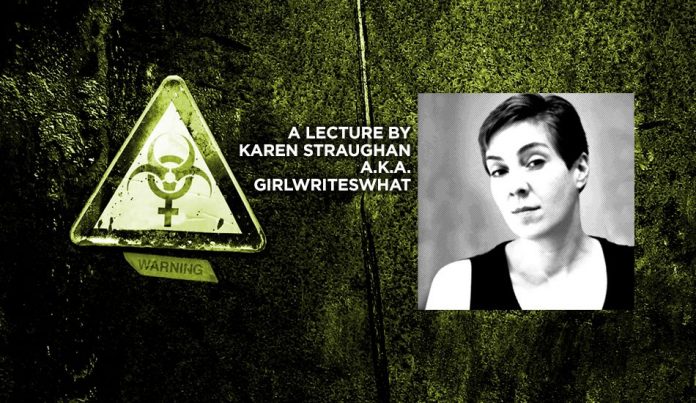
The letter was published on the union’s WordPress page on Monday, and is addressed primarily in response to SFU AMB’s November 8 event, “Toxic Masculinity & Toxic FEMININITY.” The event was promoted with posters showing a biohazard sign over a venus symbol, a gesture the open letter alleges is “offensive, hostile, and aggressive.” The main speaker for the event was Karen Straughan, a self-proclaimed “anti-feminist” and men’s rights advocate. A video recording of Straughan speaking at the event can be found here.

The letter also claims that the Simon Fraser Public Interest Research Group (SFPIRG) and Teaching Support Staff Union (TSSU) share the union’s concerns, and claims that the SFPIRG “will be releasing their own open letter soon.”

The SFU Advocacy for Men & Boys club identifies itself as being “committed to raising awareness about the issues that men and boys face in today’s society.” Jesse Velay-Vitow, Vice President of the group, responded to the open letter in an email correspondence with The Peak.

“The SFU AMB’s first priority is to increase awareness of and affect change concerning men’s issues,” he wrote. “If that can be done within a feminist framework, then great, but when it can not we will not hesitate to examine those beliefs and doctrines that harm men. Even if they are feminist.”

Velay-Vitow also noted that the group plans to “follow up with a more comprehensive response” to the letter in the near future.

When reached for comment, GSWSSU co-chair Laura Scheck expressed support for the letter, though she clarified that she did not write it herself and that the author wishes “to remain unnamed.” However, Scheck agreed to share a statement from the author: “given all the media attention given to rape chants at frosh and sexist Facebook pages and what’s happening at UBC right now, it’s surprising that SFU and the SFSS allow SFUAMB to hold events claiming that women and feminism are the problem.”

Currently, the SFUAMB is registered as an official club on the Simon Fraser Student Society (SFSS) website. The SFSS Club Constitution, which all registered clubs must follow, states that the “views and actions” of any given club “do not necessarily represent the voice of the SFSS.”

“The main point, from my perspective, of publishing this letter was to call public attention to the issues we have with SFU AMB, rather than keeping the arguments between us and them privately,” Scheck added. “We wanted to call them out in a productive way [. . .] while also pointing out how their actions are more reflective of anti-feminist activism than actual men’s rights activism.”

“[SFU AMB] is serious about raising awareness of and creating positive societal change for issues affecting men and boys — feedback and constructive criticism is essential in that mission,” Velay-Vitow stated.

The GSWSSU letter concluded, “Until SFU AMB can demonstrate that they are interested in doing anything more than blaming feminists for problems that are in fact rooted in patriarchy, racism, colonialism, heterosexism, capitalism, ableism, and other forms of oppression and exploitation, we encourage other members of SFU to join us and speak out against them.”

This story is ongoing. Check back for updates as the situation progresses.

The Parker Street Studios open their doors for the Eastside Culture Crawl

0

The Eastside Culture Crawl presents an excellent opportunity to see firsthand the variety and vibrancy of Vancouver’s arts and crafts culture. The 18th year of the Crawl featured over 400 participating artists. Focusing on the neighbourhoods of Vancouver with the highest concentration of artist’s studios, the Crawl takes place in the area North of 1st Avenue, West of Victoria Drive, and East of Columbia Street.

The event was spread out over four days from November 19 to 22, and it was a great time to walk around, see work, and explore studios. With artists present during the entirety of the event, it was also an opportunity to ask questions and chat with artists, as well as purchase their work. With the large population of artistic talent in the city, there is a bit of everything for everyone.

I started the Eastside Culture Crawl at its core: the studios at 1000 Parker Street, which have formed a part of the festival since its beginnings. 1000 Parker Street is a four-story warehouse located near Venables and Clark that has been converted into studio space. This year it featured 148 participating artists under its roof — a substantial chunk of the festival.

The scale of the building’s offerings is hard to tell at first, particularly from the back of the building on the Northwest side. A handful of individuals and the full set of lights in the warehouse were the only hint of its scope. The side door fed into the main artery of the building, and the increasing number of patrons and visitors within.

The journey inside went from studio to studio, and one could explore what our city’s artists have to offer. Though the ability to show and sell work to visitors was an important component of the event, monetary transactions are thankfully not the preeminent component of the Crawl’s atmosphere.

The atmosphere is more along the lines of an overly-crowded arts and crafts fair than a corporate mass sellout or high-brow art auction. Despite this, it’s important to admit that a considerable portion of the work remains squarely outside the disposable income of your typical university student.

On a first visit, wandering through the warehouse is an experience in getting lost and confused. Without a roadmap, discovery is based more on chancing upon unexpected studios. One of the first entries was a jeweller with brass bracelets repurposed from discarded numbered plaques that came from the main Vancouver post office on Georgia Street, which is set to be redeveloped.

Down the hall, I encountered a shoemaker who custom makes her wares by hand to the tastes of her clients. Admittedly beautiful and with the unique smell of quality leather, a pair remains out of reach for me, at least for the foreseeable future. They would have set me back about as much as a new smartphone.

Upstairs and around several corners was a photographer who focused on large format macro photographs of paints. It was a confusing but hyperreal experience that made me hungry for ice cream, cake icing, and other edible things — unlike paint.

Another studio had a light installation occupying the entire space. It was filled with large amorphous white forms that stuck out from the floors and walls. Flashing in sequences of blues and reds, entering the installation was both intimidating and disorienting. So I entered, and so I went.

Out of time several hours later, I made my way downstairs around corners I hadn’t ventured and past studios I hadn’t seen. Walking out into the brisk November air, I was not where I entered. Food trucks and festival goers milling about were unaware of my confusion. I couldn’t see the mountains, and couldn’t find North.

With directions from a vendor I walked away from the Parker street studios and finally accepted a harsh reality of the Culture Crawl: I simply couldn’t see all of it.

SFU’s dance mainstage, Nostos, lights up the stage

0

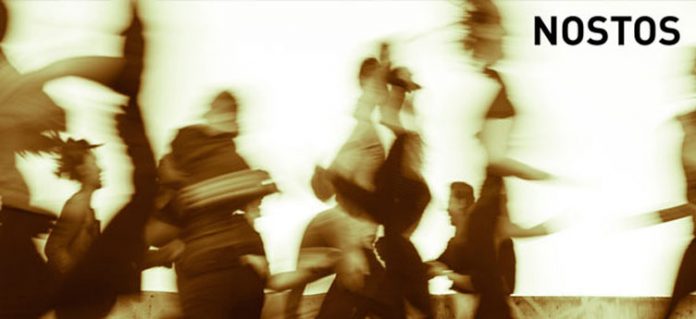
SFU’s Dance Mainstage was aflame with energy during the last week of November with new works by Peter Bingham, Shauna Elton, Rob Kitsos, and Lesley Telford. Nostos combined the work of choreographers, SFU dancers, live musicians, and designers based on the idea of nostalgia. The stage was literally on fire before the performance on Friday night (due to a technical malfunction), adding a little spontaneity to the evening. A flaming piece of lighting equipment fell onto the stage from the ceiling, causing a full evacuation from the Woodwards building into the cold November air. Thankfully, the performance started 45 minutes later without consequence.

The show started with the refreshing sound of a full band playing in sync. Vancouver band The Pugs and Crows established a soft melody that quickly became stuck in the minds of the audience, before they moved upstage behind a sheer curtain to be replaced by dancers in white and black. Movements in the first piece were meditative and thoughtful. The dancers shifted formations like ghosts, looking slowly behind them or down at one arm as if they had lost something. They moved in and out of the floor silently as though it were glass.

The second piece stood out the most to me. A performance of spoken word poetry by Barbara Adler coupled with rapid calculated gestures of dancers in grey and moments of gratuitous sweeping unison, the piece came together beautifully. Adler’s words took listeners into an internal world of memories: “a robin’s red breast” and “an October fire, the smell of it” felt like sad associations and moments passed. The final duets in the spotlight were a visual delight for the audience after a large amount of group choreography.

The rest of the performance was a blur of movement, as the performers rolled through the last two pieces swiftly and confidently. Certain moments of nostalgia were most effective: dancers held each other’s faces, gave hugs, lifted and repositioned each other to briefly expose moments of tragedy and celebration. The dancers showed an inexhaustible stamina in large diagonal pieces featuring floorwork and constant repetition. Fantastic projections of larger-than-life bodies moving on the screen and curtain behind them allowed the dancers to dance with their former selves.

The finale returned to the forlorn melody from the beginning, and the choreography combined the dancers’ bodies in endless ways. Nostalgia is a condition of losing touch with the present, and Nostos certainly evoked both the sadness and joy of memories past, a thrilling sense of disengagement with time, and our inability to harness it.