Home Blog Page 9

Beware of evil chipmunk pop stars when raising your child

0
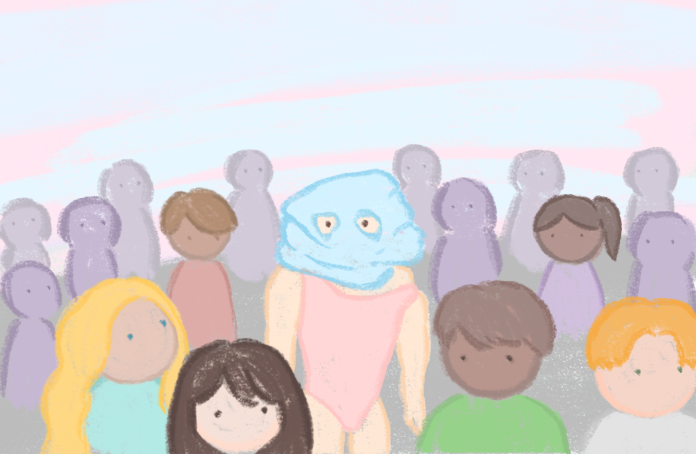
ILLUSTRATION: Cliff Ebora / The Peak

By: Maya Barillas Mohan, Staff Writer

When raising a child, you must follow three golden abstinences. A satisfying life is often defined through experiences gained and pursued, but boundaries are evergreen. Without limiting certain practices, chaos ensues.

  1. Don’t give them an iPad
  2. Don’t allow them to talk back
  3. DON’T LET THEM ANYWHERE NEAR ALVIN AND THE CHIPMUNKS

They’re adorable, fuzzy, vivacious little creatures. But they are GROSSLY INACCURATE PORTRAYALS OF RODENTS and possess unnaturally high and squeaky voices. While the appeal of Alvin is gravitational, despite his tiny size, his pathetic, anthropomorphized body must be barred from any and all screens in your home. If you allow your child to engage with Alvin and the Chipmunks in any capacity, you open your life to several dangers. For one, your child may be disappointed that the mice your landlord won’t evict can’t sing or play guitar. They might even attempt to catch one and domesticate it to bring out its hidden talents. Another issue that arises is they may request a CD version (or Bandcamp) of the Alvin and the Chipmunks soundtrack. You will be forced to relive your glory days of youth at the club with covers massacred by a CGI rodent’s abrasive croon. 

The bizarre rodent brothers are managed by their human father. This freak display rejects all genetic logic and is never explained. Imagine trying to explain the birds and the . . . chipmunks to your kid, who already looks nothing like you post-rhinoplasty. If these little scrappy critters are elevated to the dignity of a human child, there is no limit to what your child will believe is possible. You’re going to feel massively intolerant, trying to explain that families have to be composed of people. 

Alvin and his chipmunk brothers are grossly over-decorated, having EIGHT Grammy nominations. This represents the death of art and respect for music as a legitimate enterprise. Alvin and the Chipmunksmusic is pitched up, weakly inspired by the sound of an elementary school choir, without any of the soul behind music production. Their prolific catalogue is evidence that they are not making music for any reason besides the mass market. In Chipwrecked, the chipmunks get stranded on a deserted island en route to a music awards show. You will pray they remain there at the hand of their own hubris, but these squeaky, wretched creatures are infallible.

If you and your child follow this expansive chipmunk franchise, you are participating in the deterioration of art. Alvin doesn’t want to promote friendship or the virtue of learning an instrument — he wants to slap around his gentler and smarter brothers for cheap laughs on the TV. He wants to sell CDs and stuffed animals filled with microplastics. The gullible mom in you might even be persuaded to purchase tiny outfits to dress up these lifeless chipmunk dolls, accessories shrunken leagues beyond use.  

Beyond this, an unrealistic expectation is created about the lifespans of what are essentially glorified pets. The personification of these chipmunks has these three demons stuck at the same age throughout the show, despite a chipmunk only living until three years of age! True parents must order for the public execution of Alvin, Simon, and Theodore! 

Alvin and the Chipmunks does not promote good values, let alone good art. While chipmunks are low on the food chain, they will become a parasite in your home. Ban it.

Students raise concerns over alleged AI-use at the SFU bookstore

0
An SFU promotion poster for the bookstore features the raccoon, who is wearing a red SFU hoodie.
PHOTO: Juliana Manalo / The Peak

By: Mason Mattu, Section Editor

Recently, the SFU bookstore began sporting a raccoon graphic on stickers, magnets, keychains, buttons, and t-shirts. This became a topic of discussion on the r/simonfraser subreddit, where users questioned whether the graphics were generated by artificial intelligence (AI). Some pointed to minor variations in the raccoon’s appearance across different items, such as different paw, teeth, and tail styles. One person claiming to work with AI also noted grainy textures, which they believe are synonymous with AI usage. According to Capitol Technology University, AI usage signs in art involve small inconsistencies such as extra fingers or distortions. 

“If they commissioned an alum or current student, the artist would be pretty consistent in their character design. Artists don’t usually change up their character designs for the same project or series of merch,” one Redditor commented. “Sure, it can evolve over time, but these raccoons are used on the same few pieces of merch and posters.”

In a statement to The Peak, the bookstore’s products team lead wrote that AI was only used “at the very beginning of the mascot’s creation,” and not further. 

“I saw there were some comments around the raccoons and bears having slightly different designs or are too pixelated,” the representative said. “The graphic designer made a couple dozen designs of the mascots, so there were some variations between them. As for the pixelation, it’s just the type of medium used.” 

The SFU bookstore told The Peak that their “in-house graphics designer from Document Solutions at SFU” was happy to provide copyright information and drafts for all illustrations. The Peak contacted Document Solutions on four occasions over several weeks but did not receive a response. 

“What has been disappointing is these accusations are made directly for public condemnation; we were never contacted before the post was made on Reddit, presenting speculation as facts and allowing misinformation to spread,” the bookstore representative said. 

“Our reputation was damaged and our designer’s work was disrespected. In an academic environment at SFU and age of AI, exercising critical thinking, research, and source verifications has become more important than ever.” 

Eugene Lee, a design student at Capilano University, told The Peak that if this had been a use of AI, it could have been unintentional. 

“In-house designers also borrow [and buy the rights to a graphic] from clip art websites,” she said. Graphic designers “will be on a clip art website and looking for a graphic that they want, and choose one without knowing it’s AI. The person who made it knows that it’s AI, but the person choosing it might not be good with technology or at spotting AI art.”

The Peak also contacted SFU’s Interactive Arts and Technology Student Union for more input on the designs, but did not receive a response by publication time. 

Mapping bicycle infrastructure across Canada

0
A man and boy bike along a bike road in the suburbs.
PHOTO: Elliott Marquis / The Peak

By: Lucaiah Smith-Miodownik, News Writer

How far can two wheels take you? For SFU health sciences professor Dr. Meghan Winters, this is a question worth exploring. 

Winters works in the cities, health & active transportation research lab, which focuses on “the intersection of population health, urban environments, transportation, and safety to produce evidence to support practice, policy, and programs.” Recently, she headed a study chronicling the changes in bicycle infrastructure, or the various roads and paths intended for cycling, in Canada from 2022 to 2024. The Peak spoke with her for more information. 

Without a trail to follow, Winters and her team had to build their criteria before assembling a map of cycling networks across Canada in 2022. Doing so meant finding a way to measure the different types of bikeable areas throughout the country. “Not all bike lanes feel equal [ . . . ] there’s different levels of both comfort and objectively measured safety on different kinds of cycling infrastructure,” she said.

After researching engineering design guidelines and public health evidence, the team created the “Canadian bikeway comfort and safety” classification system. Bike infrastructure was rated as high, medium, or low comfort. High comfort meant “bike-only paths, cycle tracks, and local street bikeways,” while medium comfort was “paved multi-use paths,” and low comfort was “painted bike lanes.” From there, the team took their newly founded rating system and applied it to OpenStreetMap to form their own map.

According to the study, plotting cycling network data is a key step in “supporting healthy transportation options in cities of all sizes,” especially when some cities are removing bike lanes. 

The 2024 map indicates that the total distance of bike paths and lanes increased from 23,502 kilometres in 2022 to 27,089 two years later, with most additions being classified as medium comfort. Additionally, more growth was charted in small and medium cities (populations of 50,000 to 499,999) as opposed to large ones. “Areas with greater populations of recent immigrants, racialized people, and people with low incomes,” as well as “areas with lower proportions of populations of children and older adults” also saw more expansion.

Winters clarified that while these areas may see more bike infrastructure, it is not necessarily built with these populations in mind. In reality, busier streets with bike lanes may be home to more newcomers or lower-income populations, while children and families may live in more residential areas.

“When cities are planning their infrastructure, they have different criteria in mind, and the criteria may not be ‘are we building infrastructure near kids and the places kids need to go.

— Dr. Meghan Winters, SFU health sciences professor and lead author of the study

In regard to Vancouver, the city “showed little change over the time period” in terms of bike networks. “There is high-density cycling infrastructure in some areas, in the business district, around the Seawall [ . . . ] and yet there are a lot of areas of Vancouver that are very underserved,” Winters explained. Such a layout agrees with the study’s findings that “a common pattern in many cities’ cycling infrastructure is a focus on connecting to business districts, but often fewer connections between neighbourhoods.” 

“All through South and East Vancouver, it’s very hard to ride your bicycle. The connections aren’t there, the protection isn’t there, and it makes it hard for the people living in those neighbourhoods to be able to get across town to the places they need to go.”

These findings could inform future work, such as “offering the potential to explore linkages between cycling infrastructure and health and social outcomes.” They also support “evaluat[ing] the existing cycling network and prioritiz[ing] investments for populations who have been underserved or are underrepresented in the cycling community” when looking to expand bike networks in the future.

We can’t keep borrowing America’s story

0
a black and white photo of Hogan's Alley.
PHOTO: Courtesy of A.L. Yates / City of Vancouver Archives

By: Jonah Lazar, Staff Writer

In 2018, Canada made a historic decision to feature Viola Desmond on the $10 bill. In 1946, Desmond refused to leave the implicitly whites-only section of a movie theatre, leading to her being fined and jailed. Her case is often credited with having helped kickstart the Canadian civil rights movement. She is the first Black person, and first the Canadian woman, to stand alone on one of Canada’s banknotes. 

This was a watershed moment in the public perception and recognition of Black Canadian history. Unfortunately, there are still instances when Viola Desmond is referred to as “Canada’s Rosa Parks.” This is a common theme in Canada. Our proximity to a country with a sociopolitical influence like the US has often meant we adopt aspects of their history at the expense of learning about our own. During Black History Month, many of us will be exposed to stories of Martin Luther King Jr., Malcolm X, and the aforementioned Rosa Parks, due to their prominence in American media, which has a tendency to seep into our country. In Canada, these figures often take centre stage at the expense of championing the Black civil rights activists who fought for equality domestically. Viola Desmond, as well as many other Canadian civil rights activists, such as Charles Daniels and Lulu Anderson, who were both denied entry to theatres in Alberta, have for too long remained in the shadows of civil rights activists south of the border. 

This isn’t to say that the US’ civil rights movement shouldn’t be taught — the stories of freedom fighters in the US should be acknowledged — but it definitely shouldn’t be the focal narratives in Canada. Centring US stories erases the champions of Canada’s civil rights movement and creates a situation where accountability for the oppression of Black people in Canada goes unaddressed. This gives Canadians a false sense of their state’s innocence, as it allows them to focus on the injustices abroad in which they did not explicitly participate. This serves to erase the long, uncomfortable history of systemic oppression of Black people in Canada. Centring American history comes at the expense of acknowledging that segregation in some Canadian public schools continued until the 1980s.

We talk about Harlem at the expense of Africville.  

Centring Black Canadian history during Black History Month is crucial to rightfully celebrate Black Canadian civil rights activists whose contributions have not been recognized as much as the work by their American counterparts. In doing so, we situate Black Canadians who fought for civil rights in our country as being a visible part of our cultural fabric, rather than a mere spillover of the movement in the US. Finally, confronting these elements of Canada’s past creates important and necessary dialogue about the realities of discrimination still felt by Black people in Canada.

Student advocacy is a frontline defence against the war on Ukraine

0
a photo of a student protest in solidarity with Ukraine, by the Ukrainian Student Society of SFU.
PHOTO: Courtesy of @sfu_uss / Instagram

By: Iryna Shyshkina, SFU Student

Student advocacy has, historically, played a significant role in creating social change. For some, student advocacy is a necessary outlet to share one’s voice. This has become especially necessary for Ukrainian students. Some talk about Russia’s invasion of Ukraine, as if it began suddenly in February 2022. For Ukrainians, especially those in the diaspora, this framing is not just inaccurate; it is exhausting. Russia’s invasion of Ukraine is not a new crisis, but a long and escalating aggressive campaign that has shaped Ukrainian lives. For this reason, student advocacy becomes something larger than spreading awareness; it is a form of survival, resistance, and a fight to preserve cultural identity. 

After Ukraine regained independence in 1991, Russia continued attempting to maintain control through various tactics. Through acts of political pressure, economic coercion, information warfare, and efforts to undermine Ukrainian sovereignty. Russia’s aggression escalated in 2014 with the illegal annexation of the Crimean Peninsula and the creation of the so-called Donetsk and Luhansk “People’s Republics,” which were never recognized by Ukraine or by the international community. When the war is framed as something that just began in 2022, it pushes unaffected people to treat it as a single shocking event rather than a long struggle, perhaps making it easier to detach and grow numb over time. For Ukrainians, there has been an attack on our sovereignty, identity, and safety that is felt in all brutality on a daily basis. 

For those living outside of Ukraine, this creates a different but deeply personal loss. Many Ukrainian Canadian diaspora members worry about the physical safety of their loved ones, while also being emotionally attached to daily violence and horrors that are happening there.

Many in my community, including myself, have family members in Ukraine — waking up with news that our cities have been bombed, and not having the ability to contact our relatives immediately due to power outages.

This is a hard reality that many Ukrainians face. Advocacy becomes a sociopolitical necessity.

This is why student advocacy matters. All over Canada, students have rallied in support of Ukraine through student-led organizations. From McGill, to the University of Toronto, to the University of Victoria. The student body at SFU is no exception: the Ukrainian Student Society (USS) exists not only to raise awareness, but to actively counter discrimination, preserve historical context, and transform care into action (such as fundraising). In a media environment, where the situation is depicted as “complicated,” this student-led space provides verifiable information, education, and human support. Through events, lectures, cultural programming, and organizing, it allows us to keep Ukraine present, as a lived and ongoing reality. 

Advocacy helps counter feelings of helplessness. Seeing others speak up, post, organize, and become a voice for the Ukrainian people restores a sense of hope, reminding us we are not alone. 

Student-led advocacy is practical solidarity. The USS collaborates with organizations like All-Ukrainian Association “Patriot,” which supports adults and children affected by the war and assists Ukraine’s defence efforts through humanitarian initiatives. It also works with the Ukrainian Canadian Congress, which represents Canada’s Ukrainian community, advocates for their interests before the government, and strengthens cultural and political linkages with Ukraine. Advocacy can produce positive, tangible impacts. Cultural preservation happens not only through memory, also through active support and community mobilization. 

Russia’s war on Ukraine is about more than territory. It is a matter of whose history survives, whose culture continues, and whose future is allowed to exist. By organizing, educating, and sustaining Ukrainian culture overseas, the community resists erasure in real and meaningful ways. Student advocacy is not just a symbolic support; it is a real defence of identity, culture, and justice.

SFU Iranian students speak out

0
SFU Iran protest
PHOTO: J.J. Jang / The Peak

By: Jonah Lazar, Staff Writer and Petra Chase, Features Editor

It’s been over a month since the Islamic Republic of Iran began its crackdown on nationwide protests against the regime. Protests erupted in December 2025 regarding economic hardship and against Supreme Leader Ayatollah Ali Khamenei. While ongoing internet shutdowns and state repression have made exact figures unclear, the death toll has been climbing. Though estimates vary widely, the death toll has been reported to be anywhere between 7,000 to over 40,000. Iran International reported over 36,500 have been killed.

SFU’s Iranian student body is among the millions of Iranians in Iran and abroad reeling from loss, violence, and uncertainty. SFU Iranian Club started a change.org petition calling for greater flexibility in tuition and academic accommodations, and targeted mental health support. They want SFU to recognize and respond to the urgency of this crisis, as “internet restrictions have disrupted communication and interfered with access to banking and international money transfers,” the petition reads. “Allowing [students] to be academically or financially penalized by a geopolitical crisis contradicts [SFU’s] values and damages SFU’s reputation as a university that stands by its international students.” At the time of writing, this petition has 500 signatures.

The Peak interviewed members of the SFU Iranian club to find out more. Answers have been edited for concision. Ali and Leila are anonymous pseudonyms granted to protect those students’ identities.

How has the political situation in Iran affected you emotionally? Has this impacted your studies?

Kian: I am in a constant state of emotional shock and distress. I am repeatedly confronted with reports and videos showing the deaths of tens of thousands of people. Even simple daily activities, like going to a restaurant, attending an event, or playing soccer, remind me there are people in Iran who are no longer able to. I have found it increasingly difficult to concentrate and maintain focus on my studies.

Ali: During the protests, there was a period of 20 days when my parents and all the people in Iran didn’t have internet access, except the few with access to Starlink or links to the government. I didn’t know if my family was safe or not and had nightmares.

Leila: My parents live in Iran, and during periods of internet shutdown and unrest, not being able to contact them has been extremely distressing. The uncertainty of not knowing whether they’re safe is overwhelming.

It is very difficult to focus on school when you are constantly worried about your family’s safety. While I try to remain focused and meet my academic responsibilities, the emotional toll has made that very challenging.

— Leila, anonymous SFU student

Zahra: Is it even possible to witness the death of fellow citizens and loved ones in the worst way, to speak with the people who have lost someone, and not be affected? 

How has the internet shutdown in Iran affected your financial situation?

Zahra: It has affected me completely because it has disrupted money transfers for us. Even now, after the internet has partially returned, this has still not been fully restored. For example, my own online banking access has been blocked for more than a month, and I do not have access to it. As far as I know, many students were receiving their living and rent expenses from Iran, and they have faced serious difficulties. Even with part-time work, covering independent living costs in addition to international student tuition is not easy.

Kian: Due to the internet shutdown and broader instability, my family suddenly lost a significant part of our monthly income. This forced us to reassess our financial situation and reduce spending on daily necessities.

 The uncertainty surrounding communication and financial transfers has added an additional layer of stress to an already difficult situation.

— Kian, SFU student

How much contact have you had with friends and relatives currently residing in Iran since the beginning of the shutdowns and protests?

Zahra: I speak every day with different people in Iran. I try to support them psychologically and check in on how they are doing. 

Ali: Internet access has returned via VPNs and I am able to call them every day. But during those 20 days, it was not possible to call them. That, combined with all the footage of mass killings in Iran’s streets, created a very stressful situation.

Leila: My contact with friends and relatives in Iran has been inconsistent. There have been periods when I could not reach my parents at all. Communication depends on unstable connections or VPN access, and sometimes we go days without hearing from them.

Kian: During the internet blackout, we had to rely on unconventional and indirect methods of communication. In some cases, we reached out to people travelling between countries to carry messages on our behalf. I sent a message to someone I did not know personally, asking them to contact my relatives once they crossed the border and confirm whether they had survived the violence. We then had to wait for that individual to return and relay the message back to us. Eventually, we learned that one of my cousins was confirmed to have been killed. That period of uncertainty and waiting was one of the most distressing experiences of my life.

Have you reached out seeking support from SFU during this time, and how did they respond?

Kian: I have attended group counselling sessions provided by SFU. While I appreciate that support is available, I found it insufficient given the magnitude of what many Iranian students are experiencing. The general health and counselling services offered to all students and staff feel broad and not specifically tailored to the unique trauma and grief associated with this crisis. In my experience, there is a need for more specialized mental health support, including access to professionals who understand the cultural and political context of the situation. 

Leila: Some instructors, such as Dr. Sherryl Bisgrove and Dr. Gordon Rintoul were compassionate and understanding, and I am very grateful for their support. However, institutionally, I have not felt the same level of care. My classmates and I created posters around campus to raise awareness because we felt there was little acknowledgement of what Iranian students are going through. When I contacted student services to ask about dropping a course, I explained the situation in Iran and how it was affecting me. One of the responses did not acknowledge what I had shared at all. There was no recognition of the emotional hardship, which was disappointing and made me feel unseen during an already painful time. Overall, it has felt like the burden of navigating this situation has largely fallen on students.

How can/should SFU improve its support for Iranian students during this time? And are there any ways your peers and fellow SFU community members can show up and support you?

Zahra: SFU can help strengthen awareness of the magnitude of the situation within the community by amplifying our voices. Financial and practical support are also essential. Short-term emergency support, clear guidance on available resources, and compassionate academic flexibility would be very helpful. SFU’s collaboration with Iranian students to organize memorial and awareness events (in a safe and respectful way) would mean a great deal.

Peers and community members can support us by listening, sharing credible information responsibly, and showing up for student-led events and memorials. Simple acts, like checking in, offering practical help, and creating inclusive spaces can make a real difference.

I am also working with several Iranian students on building an initiative to support people inside Iran who are facing loss, injury, and serious economic hardship. We would sincerely appreciate any support SFU and the university community can offer to strengthen these efforts.

The Peak reached out to SFU for their response to the petition. “The university recognizes the on-going stress for Iranian international students and for students with family and loved ones in Iran,” SFU stated. “International Services for Students office has reached out to impacted students with resources around academic concessions and financial support and remains committed to ongoing consultation with Iranian student organizations. Impacted students have been advised to apply for bursaries to receive financial support from SFU. Students with immediate financial need can apply for one-time emergency funding through Financial Aid and Awards.” They also noted that academic concessions remain “up to the discretion of individual instructors.” They added, “Students can also contact Student Accounts to discuss their situation and will be provided with supports based on their specific situation.”

For resources on financial assistance and mental health support, visit the SFU Iranian Club’s linktree at www.linktr.ee/sfuiranianclub. Follow @sfuiranian on Instagram for updates.

Local school district Pokémon-ifies Black History Month curriculum

0
PHOTO: Mediamodifier / Unsplash

By: Heidi Kwok, Staff Writer

Official Memo

TO: School faculty and staff 

FROM: Board of Education of School District No. 145

DATE: Jan 26, 2026

SUBJECT: Emergency BHM teaching enhancement strategy

Esteemed faculty and staff of School District No. 145: 

With February just around the corner, we’re thrilled to announce that the ban on the teaching and distribution of Black history will once again be lifted exclusively for Black History Month (BHM). This is extremely exciting given that educators have taken a sacred oath to constrain this teaching to a single month out of the entire year. Why did we make them do this? We’re not sure either, but God forbid we incorporate Black history into a permanent year-round curriculum — that is simply not efficient. Why spread it out when the material can be condensed and delivered in a swift effective blow?

There are several changes coming to how BHM will be taught this month as per the recommendations of upper management. We have made the decision to go all hands-on-deck and escalate the teaching of Black history to make up for the 11 other months where we leave Black history out of the regular curriculum. We would like to thank our educators for their compliance with this unforeseen increase in work responsibilities — you will be expected to take one for the team and clock in 30 hours of overtime (per week) to work on developing unique BHM lesson plans.

To encourage participation, the Board will be implementing a revolutionary points-based system to reward educators who go above and beyond to integrate Black history teaching during all hours of the school day. Borrowing from the worldwide cultural phenomenon of Pokémon GO, teachers will be allotted points based on the frequency, spontaneity, and dramatic flair with which they mention noteworthy Black Canadian figures, locations, or histories, into as many subjects during the month of February (and February alone). An additional attack worth +80 points will be rewarded for extremely obscure facts. -300 points will be taken away if we overhear you mentioning Black history during January, March, and all the other months but February. In alignment with Pokémon GO’s gameplay, school faculty should aim to “catch ‘em all” before 11:59 p.m. on the last day of the month (and strictly, no later). To assist with your quest, trading cards with hit point and attack level designations of notable people and places will be distributed. 

A final show-down will take place in the last week of February, where finalists will compete against each other in a Black History Fact-Off. Competitors will be tasked with naming as many Black figures as possible within a one minute timeframe. 

To facilitate a smooth transition, volunteer representatives will be sent into classrooms to monitor and track each school’s progress. Their findings will be published in the school district’s Q1 forecast and strategically leveraged to meet our expected quarterly allyship quota. Rest assured that this oversight will terminate once BHM has concluded. Again, please note that you will be forbidden from teaching Black history after February.

We shall circle back and synergize our results on Feb 28. The institution who makes the most mentions of BHM histories will be granted a faculty pizza party and $10 gift cards — a small gesture of gratitude for bravely disrupting the status quo in such an actionable way. 

Lastly, a gentle reminder that March 1, 2026 marks the official commencement of Mustache March. We kindly ask our educators to refrain from all manners of facial hair extraction before then. 

Salutations,

Board of Education of School District No. 145

SFU and the First Nations Health Authority sign a Memorandum of Understanding

0
SFU president Joy Johnson and First Nations Health Authority CEO Monica McAlduff smile for the camera as they sign a Memorandum of Understanding.
PHOTO: Courtesy of SFU News

By: Heidi Kwok, Staff Writer

On January 19, SFU and the First Nations Health Authority (FNHA) signed a three-year Memorandum of Understanding (MOU) to formalize their longstanding collaboration and shared mission towards “advancing programs, research, policies, and services that support the health and well-being of First Nations peoples in BC.” The MOU became official upon the joint signatures from FNHA chief executive officer Monica McAlduff and SFU president Joy Johnson. An MOU is a non-binding bilateral agreement between two or more parties, indicating a shared commitment towards achieving a set of goals. The Peak corresponded with Monica McAlduff to learn more. 

McAlduff said this MOU reflects the progression of a “strong, values-aligned partnership” between the two parties. In 2020, the university facilitated greater federal funding for Indigenous health research through a mutual Research Affiliation Agreement with FNHA. SFU also financed a $2.5 million FNHA-led study to develop a harm-reduction response to the toxic drug overdose crisis affecting First Nations Peoples in BC. With the recent opening of the SFU School of Medicine, McAlduff said “the university demonstrated a deep commitment to cultural safety, Indigenous engagement, and addressing systemic inequities — priorities that echo our own,” referring to the FNHA’s 10‑Year Strategy on the Social Determinants of Health and the school’s focus on the factors of education, and culture, language, and ceremony as “essential determinants of wellness.

“These shared foundations created the right moment to formalize our partnership with the signing of this MOU.”

She anticipates that this MOU will bring forward “a more coordinated approach to improving health and wellness for First Nations people in BC,” and will also create “a more culturally safe healthcare system for everyone.” 

According to McAlduff, the primary goals of this partnership will include: “strengthened research and data‑governance partnership [that] will better support community‑driven analysis and planning,” as well as “meaningful, measurable improvements in how First Nations people experience healthcare and education,” and “increased First Nations leadership in medical education, research, and system planning.”

Decolonization and Indigenization of the medical school’s admissions process, curriculum, and collaboration with Indigenous communities represent a central objective of the MOU. The FNHA is also working with the SFU faculty of health sciences to integrate more First Nations knowledge into its course content. 

“We hope that our partnership will lead to improved wellness and better health outcomes for First Nations individuals, families, and communities across BC.”

— Monica McAlduff, CEO of the First Nations Health Authority

Brighter Side: Constantly caffeinated

0
A photo of a to-go cup of coffee. The background is bright yellow. And the cup has “My Little Cup,” written on it.
PHOTO: Samia Liamani / Unsplash

By: Diya Brar, SFU Student

Whether it’s a $1 gas station espresso shot that tastes like cardboard or a $9 overly sweetened latte with ludicrous foam art — coffee can change my day. Not my entire life, no need to exaggerate, but definitely my day. 

I think a lot of university students would agree that coffee is the quiet hero of campus life. Grabbing an iced vanilla latte from Renaissance Coffee before a three-class lecture day feels like putting on armour. Studying at a café on days when I feel restless — comforted by the sound of the machines, the clinking of glasses, and soft jazz — has become a weekly ritual. And on days when my motivation is nonexistent, I’ll convince myself to start my homework by making a homemade cold brew, complete with milk, cinnamon, and a wildly unnecessary amount of effort. 

Either way, coffee has consistently remained a pleasant background to my life, making everything I do just a little bit brighter. It keeps me company while I experience life’s stresses, boredom, and delight. I can’t decide if it’s the jolt of caffeine in my bloodstream, the sweet syrup piled up at the bottom of the cup, or simply the ritual of handcrafting coffee every morning that makes everything feel lighter. Maybe it’s all of it. It’s mundane but has the dizzying, mystical ability to make the normal feel more special. Coffee doesn’t solve my problems or write my essays, but it does make facing them a little less daunting. 

Remembering Assata Shakur

0
A black and white photo of Assata Shakur smiling.
PHOTO: Trenton Times / Wikimedia Commons

By: Zainab Salam, Opinions Editor

Content warning: mentions of solitary confinement.

Humans of all walks of life leave an imprint as they live. But once they’re gone, this imprint solidifies itself into a legacy. Assata Olugbala Shakur is one of those people. Born JoAnne Deborah Bryon in 1947, she grew up in New York and North Carolina. As a young Black woman exposed to structural inequalities, Shakur forged her identity through acts of liberation. 

Raised by her mother, grandparents, and aunt Evelyn A. Williams — a civil rights organizer — Shakur grew up amid financial instability. As a child, she experienced segregated and integrated schooling, and later became increasingly aware of the distortions of official histories taught in classrooms. 

During her university years, she became involved in anti-war and civil rights organization. These environments encouraged her to study revolutionary movements globally and view Black liberation in connection to anti-colonialism. With the intensification of her activism came the target on her back.  

In a move to reclaim her identity, Shakur changed her name to reflect her connection to her roots. She chose Assata (“she who struggles” in Swahili) Olugbala (“love for the people” in Yoruban) Shakur (“the thankful” in Arabic). The choice to have Shakur as her last name is particularly meaningful, as it was the name of her comrade: Zayd Malik Shakur. 

Shakur experienced the criminalization faced by many Black activists of her era. Like countless other freedom fighters, she was publicly framed as a criminal, cast by law enforcement and media narratives as a dangerous enemy. In reality, her prosecution reflected deeply entrenched patterns of oppression and violence directed towards Black people and Black liberation movements.  

Shakur was involved with the Black Panther Party, and later, the Black Liberation Army, a Marxist underground armed group fighting for internal community security from law enforcement. She demonstrated a deep commitment to community organizing, political education, and anti-imperialist struggle during a period marked by intense state repression of Black activism, and civil rights organizing. 

In 1973, Shakur, along with two of her comrades, Zayd Malik Shakur and Sundiata Acoli, were pulled over on a New Jersey turnpike for a faulty tail light. With the escalation of the state trooper, Zayd and the state trooper were killed. The wound and overall violence that she sustained became central to interpretations of the event, with Shakur later recounting the altercation in Assata: An Autobiography. In the aftermath of this incident, Shakur’s name was firmly etched into public record and national debate.

Following this, Shakur faced a highly publicized trial that would dominate headlines and legal debates for years. In 1977, she was convicted of first degree murder for the death of the state trooper, and was sentenced to life in prison. The proceedings were emblematic of the broader systemic bias against Black people — an all-white jury that set forth a guilty verdict based on a witness testimony and no concrete evidence. 

Her prison sentence consisted of a list of inhumane treatment, including periods of solitary confinement, which she later described as both physically and psychologically taxing. With the help of a network of individuals from the Black Liberation Army, she escaped prison in 1979. Following her escape she remained in the US, in hiding, until she secured political asylum in Cuba, in 1984. 

Central to her message is the importance of fighting capitalistic ideologies as they sustain racial oppression. Shakur linked Black liberation to broader struggles against capitalism and class exploitation. Drawing from global anti-colonial movements, she argued that liberation could not be achieved solely by removing overt racial domination if exploitative systems remained intact. Reflecting on African independence struggles, many movements recognized that without dismantling capitalist structures, political freedom would simply reproduce new hierarchies of power. This perspective led Shakur to frame oppression as rooted in both race and class — highlighting that economic inequality allows the elites, regardless of their race, to benefit from systems that marginalize working people. 

Yet Shakur’s political philosophy is not limited to her critique. In her poem “Affirmations,” Shakur asserts her philosophy: “I believe in living. / I believe in birth. / I believe in the sweat of love / and in the fire of truth.” She explains, “I have been locked by the lawless. / Handcuffed by the haters. / Gagged by the greedy. / And, if I know any thing at all, / it’s that a wall is just a wall / and nothing more at all. / It can be broken down.” 

Words are as much a weapon as any other; perhaps more effective. Words have the capacity to challenge dominant narratives, preserve experiences that might otherwise be erased, and inspire resistance long after the conditions that produced them have shifted. 

What remains most accessible to us, is Shakur’s legacy through her written and spoken words, which continue to commemorate and transmit her philosophies. Her writing, particularly her autobiography, has since publication become foundational to contemporary movements for racial justice. Her memoir is widely regarded as a crucial text in civil rights literature. It documents her arduous journey through systemic racial violence in the US, and her dedication to fighting for dignity and self-determination. 

Despite decades of exile in Cuba, Shakur’s imprint remains tangible in global political discourse, inspiring artists, organizers, and scholars who continue to engage her work as both historical testimony and living political theory. 

Shakur passed away in September of 2025, in Havana, Cuba, at the age of 78. Her passing marked the end of a life that remained politically charged until its final moments. Many see her as a revolutionary thinker while some continue to view her through a criminalized lens.

Until her passing, she had been the first woman to be included in the US’ Federal Bureau of Investigation most-wanted list. She had been added to that list in 2013, with a whopping $2 million dollars reward for whomever helps catch her. Suffice to say, she died a free woman.