Home Blog Page 866

FOOD FIGHT: Best carnivorous food trucks in Vancouver

1
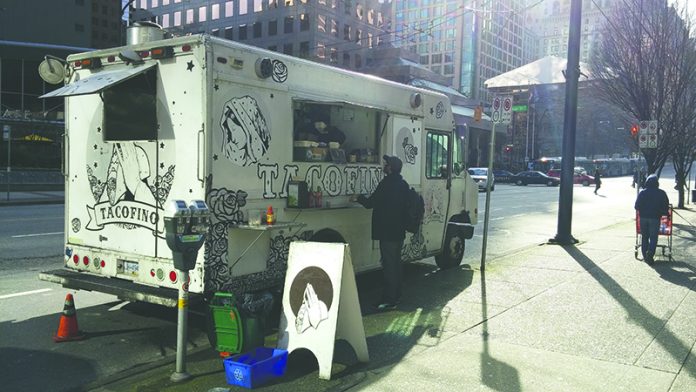
Tacofino is the runner up for “Bart’s Fave Street Eat.”

Food Fight is dedicated to highlighting the differences between vegan and omnivorous cuisines. By reviewing restaurants in Metro-Vancouver, our columnists Yelin and Bart show that you can have the best of both worlds.


Vancouver is blessed with an assortment of wonderful food trucks, and every year more and more are added to the armada present on the streets. While most of these carts are definitely worth a visit, there are three stand head and shoulders above the rest and deserve special recognition.

3) Japadog

One cannot simply speak of the Vancouver food truck scene without mentioning Japadog. This Japanese-inspired hot dog cart is what brought Vancouver street food onto the world stage, and its mixture of Western-style wieners and Asian toppings has given them a unique flavour that sets them apart from all other run-of-the-mill hot dog carts.

However, I have my reservations about Japadog. It makes my top three not due to flavour, but rather it international recognition. I, being Polish and all, am incredibly picky with hot dogs, and to be honest with you, Japadog’s value for the price is not exactly great. However, even with that knock against it, its international pedigree earns it a spot in my top three.

2) Tacofino

Taco carts have been a staple of the mobile food industry since the time of the dinosaurs, and the competition for being king of the tacos has always been fierce. There is one cart that does stand out above the rest in Vancity, and it’s called Tacofino.

There’s a variety of Mexican-inspired options available from this glorious truck, and if you’ve never been before then it is mandatory that you try their fish taco first. Made with perfectly seared ling cod and complemented with delicious homemade salsa and chipotle mayo, the fish taco is bursting with flavour, yet light enough that it leaves you longing for more. And at six bucks each, getting more isn’t a problem.

If fish isn’t your cup of tea, then give their pork burrito a try: it’s made with delicious slow-cooked pork tangoes with tasty refried beans and a healthy dose of cheese. If this isn’t good enough for you, then frankly, nothing ever will be.

1) Mr. Shawarma

The key to a good food truck meal is balance. Is it the perfect size, the perfect price, moist and crisp, served at the perfect temperature, easy to eat, beyond incredible to taste?

Mr. Shawarma’s chicken pita wrap is all of these things, and for that it wins the prestigious “Bart’s Fave Street Eat” prize. The chicken is cooked and marinated to absolute perfection, and is moist all the way through. The vegetables inside are excellently grilled, and the whole thing is topped with a delicious spicy sauce that, while it tantalizes your mouth it doesn’t go overboard and make the wrap inedible.

The pita in which the wrap is served should not be overlooked. A good meat container is vital for excellent street food, and their flatbread wrap is both crisp yet flexible. The $7 price tag for this pita is a bargain, and once you’ve had one, you’ll definitely be back for more.

Give your ears something to do

1

By: Vincent Justin Mitra, SFU Student

Our ears usually aren’t busy. I use my hands to hold things and my eyes to see if there are any seats on the 145; but my ears? They usually have a lot of free time. That’s where podcasts come in.

If you’ve heard of podcasts, you’ve probably heard of Serial, whose first season shot to the top of the charts almost overnight in late 2014. If you’ve heard of podcasts and are a nerd like me, you’ve also probably heard of Welcome to Night Vale, the podcast that made America weird again. Podcasts are a relatively new form of digital media that embodies the mobile and electronically accessible world in which we live, while also harkening back to the radio programs from when the world dreamed in black and white.

The word “podcast” is a combination of the word “pod” — as in iPod — and the word “broadcast” and refers to a category of episodic programs that are distributed online. The whole process used to be more tedious, but these days you can just subscribe to one and you’ll receive episodes as they come out. They’re like Netflix for your ears. Some are scripted and have a single host, while others are free-form discussions between a group of people. Most importantly, however, is that they cover a wide range of topics.

From fact to fantasy, video games to historical literature, photography to cooking to self-help — even one about that book series you adored in the ’90s. There’s one designed intentionally to put people to asleep. And another explores ideas of social science by looking at contemporary pop music.

The popular ones get enough press as it is, so here are five great podcasts you probably haven’t heard of.

Lore 

Looking for something spooky? Hosted by Aaron Mahnke, each episode of Lore focuses on a particular spooky historical object or occurrence and the facts and rumours surrounding it. One episode discussed Robert the Doll, a doll which is said to have murdered its owner. Another episode talked about Spring-Heeled Jack, a mysterious figure with clawed hands and fiery red eyes sighted in London during the Victorian Era. Another discussed the legendary Pied Piper of Hamelin.

What makes Lore a podcast different than someone simply telling ghost stories by the campfire is how Mahnke is able to tell these stories clearly and compellingly, while also doing his best to explain the truth behind the myth. To quote Mahnke, “sometimes the truth is more frightening than fiction.”

New episodes are released every other Monday.

 Spontaneanation with Paul F. Tompkins  

Hosted by comedian/actor Paul F. Tompkins, Spontaneanation is “a completely improvised show, from monologue to interview to narrative sketch.” It features Tompkins, guests, improvisers, and accompanist Eban Schletter to provide “an hour of comedy that none of them ever see coming.” The improv sketches are based around a location, chosen by the guest, which in the past have included “paediatrician’s office,” “pet store, post robbery,” “Dracula’s bedroom,” and “a clown cemetery.”

Each episode is a joy to listen to. I’ve often found myself laughing out loud on the bus, much to the concern of my fellow passengers. Tompkins and his guests are very skilled in improvisation and in constructing the absurdly hilarious stories that the form allows.

New episodes are released every Monday.

No Such Thing As A Fish

A spin-off of the London based panel quiz show QI, the three hosts follow the pattern of their parent show by sharing obscure facts and correcting widely believed misconceptions. In each episode the hosts take turns sharing a broad and interesting fact, while the others share smaller facts that are vaguely related. Notable facts have included: “parrot fish eat their own pyjamas,” “Albert Einstein has a social media team,” and that “Gary Numan is slightly older than Gary Oldman.”

If you’re someone who likes learning one new thing every day, then you’ll find each episode to be an embarrassment of riches. Learn new facts! Impress your friends! Become slightly more interesting at parties!

New episodes are released every Thursday.

 The Psychology of Video Games Podcast 

Hosted by Jamie Madigan, PhD, this podcast resides at the multifaceted intersection between psychology and video gaming. The website describes it as a discussion about these two topics, featuring an expert on a specific topic: “Guests include those working in academia, [or] the gaming industry, or as consultants.”

Topics have included micro-transactions, the effect of violence in video games, the idea of “flow,” how games are different from other forms of media, and if video games can make people smarter.

As video games grow in popularity, and given the increasing ease with which individuals can create games, the moral panic surrounding games has increased primarily through gut-feelings and assumptions rather than science and data. This podcast brings the latest research to the table to better inform people of which concerns are legitimate and which are not.

New episodes are released around the middle of each month.

The Hindsight, An Animorphs Podcast

Do you remember the Animorphs book series by K.A. Applegate? Of course you do; it was the best series of kids’ books in the ’90s. That’s right, better than Goosebumps. In this podcast, hosts Hannah and Kelly go through each book in the series and discuss the plot, character development and motivation, and the surprisingly dark and complex themes present at every level of the text. 

The hosts do an excellent job of analyzing each book and of discussing how they relate to topics of linguistics, or psychology, or identity, or how awesome it would be to turn into a red-tailed hawk. By returning to the series as adults, they are able to better notice the depth of the books and how their own lives have been shaped by the characters and lessons within.

So, if you’re a fan of the books, or just want to hear people do a very intelligent and well-informed close reading of a text, then I strongly, strongly recommend subscribing to this podcast.

New episodes are released twice a month.

Satellite Signals

0

Vancouver

vancouverOn March 15, the final chapter of SFU’s 50th Anniversary Speaker Series will be taking place at Segal Room 1400 at the Vancouver campus. The evening is titled In Conversation with Anne Giardini: Women, Power, and Tools for Change.

Giardini will be talking about her experiences as a lawyer, business executive, and community leader while discussing issues and stigmas surrounding the relationship women and power in North America.

Woodward’sWEB-woodward

The March edition of Reel Causes will be taking place this week on March 17, with the film Siddharth being screened alongside the photo exhibit Betrayed: Portraits of Strength.

Siddharth is based on the true story of an Indian man who travelled across India in pursuit of his lost son, and Betrayed is a photo exhibit about human trafficking. Tickets are $15 for regular members, $5 for premium members.

surreyDouble Trouble (Surrey and Vancouver)

Election fever will be sweeping the satellite campuses this week as an all-candidate debate will be taking place at both of the campuses, with Surrey’s on March 14 and Vancouver’s following two days later on March 16.
Come down to see both current executives and non-executives campaign for themselves and field questions from students, and get involved in the election leading up to the March 22–24 voting dates.

Make SFU great again

0

To the wonderful student population of Simon Fraser University,

The transition from February to March can only mean one thing: it’s time to welcome back election season at SFU. While majority of the plebs that go to this school may groan and roll their eyes at the sound of the word election, I trust that you who are reading this very newspaper come from a background of enlightenment, higher education, and one that actually “gives a shit,” as one commoner in my Partial Differential Equations class put his relationship with nonlinear equations.

But you may be wondering: who is this person insulting me? My name is Grace N. Howl, and I am here to tell you why you should give a shit about student politics and, more importantly, why you should vote for me to be your next president in the upcoming Simon Fraser Student Society (or SFSS for you lazy pricks).

Think to yourself: which one of the most recent “presidents” of the SFSS have selfies with the late and great Nelson Mandela?


CMYK-Rachel2-Lisa Dimyadi

I am a fourth-year student who is pursuing a double major in Political Science and Mathematics. My dream is to be prime minister one day; someone who can slay debates, balance the budget, and fix climate change, all while looking incredibly hot. I consider myself a worldly person, one who can speak four languages fluently and has been to every continent, with the exception of Antarctica. They aren’t ready for The Howl yet. I’ve brushed shoulders with the world’s most important people; gave the Queen some fashion tips to liven up her palette of pastels, and even talked to the Dalai Lama about what I think would help to improve world peace. Think to yourself: which one of the most recent presidents of the SFSS have selfies with the late and great Nelson Mandela?

Yeah, that’s what I thought.

CMYK-Rachel1-Lisa Dimyadi

You lazy students are awaiting a saviour, and I promise you that I, Grace N. Howl, will be the one to make SFU great again. I most certainly am exactly what you are looking for, as this is exactly why God put me on this earth. Don’t let my lack of height and tiny hands fool you — I am powerful, mighty, and probably your only chance for bringing prestige back to SFU. We have been living in UBC’s shadow for far too long, so it’s time to kick them to the curb. Let’s keep those dirty UBC students at bay with moats and walls, all funded out of my own pocket.

Who needs funding when you have Daddy’s inheritance? I probably have more money that any of you have ever seen in your lifetime, hence why I would be the only logical choice for your next SFSS president.

You lazy students are awaiting a saviour, and I promise you that I, Grace N. Howl, will be the one to make SFU great again.

If you need any further reason as to why you should vote for me, Grace N. Howl, to be SFSS president for the rest of eternity, then you clearly need to check your vision. I am the best, I am the richest, and I am immortal, so you don’t need to worry about state funerals anytime soon.

Regards,

Grace N. Howl

*All documentation has been personally received by Rachel Wong*

Want to follow Grace N. Howl’s process through the SFSS election? Check out the first entry of the web exclusive campaign diary here!

Senate Report

0

Student discipline report

The Academic Integrity and Good Conduct Office presented their annual incident report, covering the period from September of 2014 to August of 2015. This report revealed that overall student conduct incidents decreased by roughly 33 percent, and “Damage, Destruction, and Theft” down by 78 percent from the year prior. “Disruptive or Dangerous Behavior” constitutes the majority of the reports this year with 43 percent of the incidents.

Student Conduct Coordinator Dean Diamond also stated that approximately two thirds of all reports that came to the office that year were deemed to not have been a breach of student conduct. Senator Paul Percival expressed concern over students being unnecessarily dragged into a system that could potentially be traumatic, when their behavior results in the determination of “No Misconduct” regardless. Diamond commented on this, explaining that more often than not, the ruling occurs before students are ever notified of any such report.

Potential FASS enrollment decline

The Faculty of Arts and Social Sciences (FASS) has a target headcount of 2,675 new students this fall; however, predicted intake is only at 2,160, which is approximately 20 percent short of their goal. As the 2016 enrollment plan currently stands, incoming freshmen are required to average 80 percent in high school, and transfer students must have a 2.5 GPA.

The Faculty’s Dean, Dr. Jane Pulkingham, explained that they would not decrease the standards for students. This is because, as the Strategic Enrollment Management Committee explained, admission GPA is strongly correlated with first semester performance in university when you break it down by faculty. Senator Gordon Myers then stated that they “do not want to admit students who are going to struggle and suffer.”

SFU wants more international students

Simon Fraser University international students currently represent 17.6 percent of the overall undergrad student population. The university’s goal is to increase this percentage to 20 percent in coming years, while simultaneously decreasing the number of domestic students so as to keep the overall student body number constant.

Currently, the university has more domestic students than they receive funding for, which puts a strain on SFU’s financial status. With this increase in international students will come an increase in tuition for them as well, in order to compensate for the stress on resources (such as English as Second Language programs, etc.) that international students create.

SFU community urged to stand in solidarity with Indian students

0
Protestors gathered outside JNU’s gates in opposition to the student’s rally. - Photo courtesy of The Indian Express

“Faculty, Students, and Staff of Simon Fraser University urge the Vice Chancellor of JNU to uphold the institutional autonomy and the democratic rights of the student community,” reads the title of an online petition started by SFU’s Director of Humanities, Samir Gandesha. Dr. Gandesha created the petition in response to the recent arrests of students in Jawaharlal Nehru University in New Delhi, India, on accounts of sedition (a charge involving speech provoking others to rebel against the state).

According to The New York Times, an on-campus rally on February 9 ended with the arrest of the president of JNU’s student union, Kanhaiya Kumar. The rally was calling into question the trial and execution of Afzal Guru, a participant in a 2001 terrorist attack on India’s Parliament.

The issue further escalated when lawyers and supporters of the BJP, the party currently in power in the Indian government, assaulted students and journalists at the scene of Mr. Kumar’s hearing on the basis of their supposed anti-nationalism.

In regards to the events that transpired, Dr. Gandesha told The Peak that this incident speaks to a “much larger problem in the Indian state, certain elements with the Indian institution, [that are] not prepared to accept points of view they disagree with.”

The concept of sedition is one that is strongly propagated by the current Indian government, something which Dr. Gandesha found particularly troubling: “[The charge of sedition] is being used by the government to deal with any kind of dissent that the government doesn’t wish to see or doesn’t like.”

Dr. Gandesha’s petition stands alongside similar petitions and protests internationally. Once the students were taken into custody at JNU, the twitter handle #StandwithJNU began trending as various academics and intellectuals internationally began to stand in solidarity with the students. When asked why he started the petition, Dr. Gandesha said, “The more this action is condemned by the international community, and not just by Indians living in India, the more pressure will be brought to bear on the Indian government, including the courts, to address this case impartially and according to the rule of law.”

So far, the condemnation of the international community has been proven effective, as the JNSU president, Kanhaiya Kumar, was recently released on bail.

However, other students arrested at the time still remain in jail. The petition for SFU students has a goal of 1,000 signatures, and at the time of publication has  reached 179.

Dr. Gandesha hopes his petition will prompt the SFU community to “think about what is happening in India in relation to what is happening in Canada,” citing Bill C-51 as an example. “[Bill C-51] has been criticized by the BC Civil Liberties Association for criminalizing dissent. And this is exactly what’s going on in India — there’s a criminalization of dissent.”

Dr. Gandesha also emphasized the international implications of this pattern of suppression occurring currently in India: “We need to see this attack on civil liberties, academic freedom, freedom of expression as part of a worldwide pattern, a global pattern. It has to do with global spread of neoliberal policies.”

SFU’s various strategic ties further link SFU students to the country and its controversial current affairs.

Recent advancements in SFU’s relationship with India include our partnership with Ryerson University and the Bombay Exchange Institute to develop an incubator and accelerator program in India in January 2014, as well as the expansion in the relationship between SFU and Indian Oil Corp. Ltd. in fuel cell technology research in October 2014.

The university commented on SFU’s increasing links towards India in the face of the current events concerning academic freedom of speech in the country, in a statement sent to The Peak: “The current situation at JNU is concerning and is quickly evolving. SFU is committed to intellectual and academic freedom. We respect and protect the right to free speech [. . .]”

“Why should we have ties to a country where academic freedom doesn’t mean anything?” questioned Dr. Gandesha.

“We expect our students to be safe, even when they speak out and say things we necessarily may not agree with. We have to expect that from all universities we partner with. That, to me, is a given. And it’s a question of human rights.”

Comics!

0

Creator’s Pet (Destiny Hsu)

CP_021

Peers (Leslie Lu)

Week6(6)

Mystic Man (Reuben Newton)

newMystic Man 11 vs the imperial guard

The SkyTrain redemption

1

[dropcap]L[/dropcap]ost in the wallows of two bombed midterms, I nearly miss the voice of a forty something Fijian-Canadian man beside me as he sparks a conversation on the Expo line. 

“It’s so weird,” he says in what begins as a muffled whisper.

Worlds away, I look up from my phone, still orbiting the sphere of my own self-pity, “Pardon?”

“I haven’t been on the SkyTrain in a long time — it’s so different.” His eyes drift forlornly out the window before locking onto my gaze with intensity, “I just got out of prison.”

My eyes widen slightly and my grip tightens around the corded straps of my school bag.

“I killed a guy.”

I slowly nod, trying to keep calm. I can feel my cheeks begin to heat up and my pulse quickening. I had come to observe a chilling assortment of characters on transit over the years, but even the most abrasive paled in comparison to this man adjacent to me, and his resonating force of intimidation.

A shiver drifts down my spine. I feel frightened. More than I have been in a very long time.

I start preparing contingencies in my mind. My eyes dart back and forth for the nearest exit. Calculations swirl as I measure if my arms can reach the yellow security strip above the window. Blood flows fast throughout my body. I have never been in a fight. I dread to think my first might come at the hands of an incarcerated criminal. I go over every scenario — good and bad — in preparation for the events to come.

What happens next catches me off guard.

Around his eyes, glistening tears begins to materialize. He fights them back with what I can only imagine is all the willpower he can muster.

“When you’re in prison they tell you when to eat, piss, and shit,” his voice waivers as he speaks, like a worn out record. “Now, I’m out. I’m free. But I’m not. I don’t know what I’m supposed to do.”

My grip loosens on the straps of my back pack. My heart rate, once a Buddy Rich drumline, shifts back to its regular calm tempo.

With some hesitancy and just enough courage, I slide my phone into my pocket and turn my body to face the man. I put aside my fears and begin to talk with him, albeit cautiously.

It doesn’t take me long to realize that I have given the man what no one else had seemingly given him in a long time: acknowledgement.

He confides in me his past, and the lifestyle he endured for 10 years behind bars. He tells me that he is remorseful of his actions and ready to take the first steps towards a brighter tomorrow. However, he confesses that he is lost in this world he has returned to. Even with a second chance, part of him still wishes he was in prison amidst order and routine.

After a heartfelt back and forth, the man stands up as the train halts at Surrey Central. His eyes, still lined with weariness, glint for a moment with optimism. He clasps the top of my hand and thanks me for listening.

“Keep your chin up,” I call to him as the doors open.

As the doors close, I think back to the universe I was lost in only 10 minutes prior. Suddenly, two bombed midterms don’t seem to matter all that much.

A call for inclusive climate action

0

[dropcap]W[/dropcap]e’ve all seen the ads — the polar bears precariously balancing on blocks of ice for a Coca Cola commercial, the devastated ecosystems captured by Discovery Channel documentaries. However, what we don’t see is input from indigenous peoples on the serious issue of climate change, despite being those who inhabited the land on which we currently live before settlers came to take it away from them.

On March 2, the Assembly of First Nations (AFN), the Inuit Tapiriit Kanatami, and the Métis National Council were all invited to meet with Prime Minister Justin Trudeau in Vancouver, to voice their concerns on a variety of issues concerning them. AFN National Chief Perry Bellegarde said that indigenous peoples should be included on the development of plans to combat climate change, as they are often among the first to feel its effects. However, the Congress of Aboriginal Peoples and the Native Women’s Association of Canada were not invited to this meeting and are advocating to be a part of it.

The fact that Trudeau is even meeting with organizations that advocate for the interests of Aboriginal peoples is noteworthy in itself, for there has been a long history of silencing these voices in order to further self-serving colonial interests.

Indigenous peoples are the first to feel the effects of climate change.

Maisaloon Al-Ashkar is a second-year SFU student who is majoring in First Nations Studies. She is also a board member of the Simon Fraser Public Interest Research Group (SFPIRG) and an organization called Fossil Free Faith, in which she uses her Muslim faith as a voice to advocate for climate justice.

Al-Ashkar had these powerful words to say on the topic: “Climate change has developed because of colonial ideals of exploiting the land and those who rely upon it. To nurture climate justice, we need to acknowledge that our well-being and the environment’s  well-being are deeply interconnected, and this is knowledge that’s beautifully embedded in many diverse indigenous worldviews.”

Her words point to the long history of exploitation and oppression of Indigenous peoples in Canada, as well as alternative solutions and ideas for world issues that those who are currently in power may never even have considered.

Most importantly, more collaborative efforts between governments and Indigenous peoples would be an important step towards reconciliation. In working with them and valuing their input, the Canadian government would be doing more for Aboriginal reconciliation than an official apology ever could. Indigenous peoples are finally beginning to have their voices heard, but they need to be an integral part of every important conversation. It is about time that we let their voices shine.

University Briefs

0
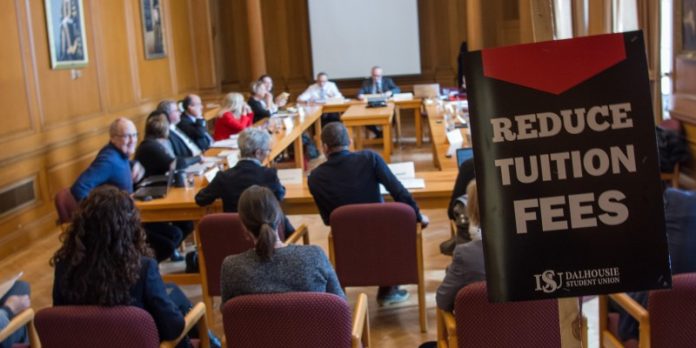
Photo courtesy of The Dalhousie Gazette

Difficulty coordinating harm-reduction efforts at UVic

[VICTORIA] – A 2013 national survey on substance use by post-secondary students found the consumption levels of University of Victoria students ranked steadily higher than other Canadian universities. These results incited Changing the Culture of Substance Use in Residence (CCSUR) to launch through the university with the intention of encouraging moderation of substance use.

Concurrently, the advocacy group UVic Pride, which provides a space at UVic with clean tools for safer drug use, notes that many community members access their resources but express concerns for UVic administration’s lack of funding or involvement with immediate harm-reduction groups like itself.

With files from The Martlet

Sexual violence policy passed at Queen’s

[KINGSTON] – Queen’s Board of Trustees have approved a university-wide sexual violence policy. It is subject to future adjustments in order to align with anticipated new provincial legislation regarding sexual violence.

The draft was released in December to allow for a two-month feedback period. The policy has passed following a 2014 Toronto Star investigation stating that only nine of 78 Canadian universities had such a policy. Ryerson and York University have also since passed designated sexual assault policies.

With files from The Journal

Dalhousie students protest proposed tuition hike

[HALIFAX] – Dalhousie students are protesting proposed tuition increases from the university’s Budget Advisory Committee. The changes being considered include an increase of 15 percent for engineering and pharmacy programs and 18.9 percent for agriculture.

Students have raised concerns about the high tuition fees already in place, the affordability of their education, and the feeling of not being supported by their university’s administration. The university’s Board of Governors are to vote on the approval of these increases on April 19.

With files from The Dalhousie Gazette