Home Blog Page 786

SFU hockey loses to Trinity Western 3–1

0
SFU is for now top of the BCIHL with 15 points in 10 games.

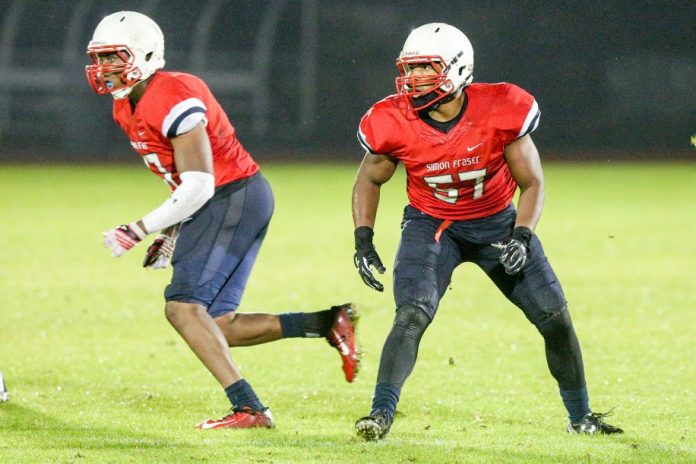
Saturday’s game marked the return of forward Tyler Basham, but he alone was not able to get SFU hockey into the win column. The Clan lost to the Trinity Western Spartans 3-1 on the road.

“The first period was kind of sloppy by both teams” head coach Mark Coletta told The Peak. “Second period I thought we did well to come out of the gate, but we took a penalty and gave up a shorthanded goal which changed the tide a bit. We did tie it up but never really got a groove in the second. I thought the third period we were definitely the better team and pressed [. . .] we caused some pressure but we couldn’t score.”

SFU’s lone goal was scored by the aforementioned Tyler Basham in the second period. It was Basham’s first game since injuring his shoulder on October 22nd against Eastern Washington.

“I think he’s always going to be a little apprehensive, with the shoulder” remarked Coletta. “In hockey, you use them all the time, whether you’re making a hit or protecting yourself from a hit. [. . .] he did a good job, and he’s [now] comfortable after a game under his belt.

However, the Clan could have, and probably should have, scored more goals. SFU peppered Trinity Western goalie Silas Matthys with 35 shots, but were only able to get a single goal. For his efforts, Matthys was named first star of the game.

“It’s not always going to be 11 and 6 goal outbursts, we have to really focus on shooting with a purpose is one thing” said Coletta on how to improve goal scoring. “Getting traffic to the net, sticks on the ice when you’re going to the net. Getting to that neck front and creating havoc for not only the defencemen but the goalie as well. Traffic is obviously a cliche, but we definitely want to be going to the net the proper way, not just going there to go there.”

Jordan Liem was in goal for SFU and “played well” according to Coletta. Next’s week starter is yet to be determined, but if Liem does start again, it will be his eighth start of the season.

Next up for SFU is a game against rivals Selkirk College. If the Clan can defeat them in regulation, they’ll be three points clear of them in the standings.

“We have to use our team speed and our aggressiveness on our forecheck” said Coletta on how to get a result against the Saints. [. . .] When we went up there in the beginning of the year, we played a real in your face style, and we were successful.”

Puck drop is at 7 p.m. at Bill Copeland.

SFU volleyball finish regular season with sweep on seniors night

0
Alison McKay finished with 19 digs in her final game in the West Gym.

The SFU Clan volleyball team (21-7) hosted Montana State University Billings (7-23) for their last regular season game this past Saturday. They wrapped up the season nicely, winning three straight sets on senior night to seal the win. It was a great sendoff for some of the great senior talent that SFU has and that have served the program well.

Four seniors were in the starting lineup for the Clan this Saturday. Emma Jennings, Alison McKay, Devon May, and Tamara Nipp all played their last games in West Gym, each contributing to the win.

“We wanted to play well on senior night and I think we did that. A lot of people contributed and I thought we did a good job with our offense. Everybody was in rhythm tonight. Overall a great team performance,” head coach Gina Schmidt said of the team.

When asked if the rest of team felt the need to perform for their senior teammates, she added,  “Yeah, it’s always special playing your last home game, and also last match of the season against the home crowd. They wanted to play well for the seniors and the team as a whole after a good overall season to finish on a high note.”

The offense was certainly in rhythm, as Nipp racked up a staggering 45 assists in the contest. The Clan was strong in their defense as well, as McKay added 19 digs to her season total.

The two-time GNAC defensive player of the year finished her last regular season game proud of her teammates’ effort. “It was nice getting the win because it shows the improvement of this team and everything we’ve worked for. It was nice to end on home court with the W and everyone played really well,” she said when asked about how she felt ending the regular season on a high note.

It’s always special playing your last home game, and also last match of the season against the home crowd

The Clan will now wait in anticipation for the selection results for the NCAA national tournament. Currently, the Clan sit in third place in the West Region. To qualify for nationals, they will need to hold onto at least a top five finish.

When asked if the team will now turn their attention to playoffs, a place SFU has never been, coach Schmidt indicated that they are already on her mind. “That’s definitely what we’re preparing for,” she said. “I think knowing the competition and having seen a couple of the other teams let’s us go in with a mindframe that we’re not just happy to be there. There’s more to accomplish.”

McKay echoed her coach’s statement, saying that, “I think we’re pretty pumped. I think after tonight we’re definitely going to start prepping for that and getting some good practices in.”

All attention turns now to the selection show today at 430, where the Clan will find out for sure if they will be competing in the postseason. After wrapping up their best regular season of all-time, it seems only fitting that they move onto to the NCAA tournament.

Vancouver’s “empty home” fine is a band-aid for a deep wound

0

The Vancouver housing market, as many desperate renters and potential homeowners hope, might turn out to be one pleasant bubble fuelled largely by foreign speculation. As things stand now, though, it looks more like an annoying zit plaguing beautiful BC, and she doesn’t want to wait it out.

Following August’s 15 percent foreign home buyers plan, the city is planning to impose a one percent tax on vacant homes, as well as a maximum fine of $10,000 on anybody caught misreporting occupancy status or where their principle home is.

Before delving into details, let’s assess the issue through some stats. According to census data, the non-resident occupancy rate (measuring the percentage of homes either vacant or occupied by non-residents) stood at 3.5 percent in 2001. That figure almost doubled by 2011, and is still increasing. Similarly, the number of homes occupied across Metro Vancouver by non-residents grew from about 27,564 in 2001 to about 58,229 in 2011.

Put bluntly, those numbers have been on the rise for over a decade. While it would’ve been helpful for lawmakers to place greater importance on this issue before it grew so dire, looming exams and elections seem to draw the best from students and public servants, respectively.

In any case, the 15 percent foreign buyers tax from earlier this year and the new one percent tax appear to be “band-aid” solutions, applied to a deep wound that really requires surgery. Having said that, we do need to start somewhere.

Housing shouldn’t be like company stocks, or bullion — a field of speculation, where you buy or sell based on whether the market’s ripe or sinking. Nevertheless, it’s turned out to be just that, more so in historically populous areas like Toronto and Vancouver than, say, towns in the Prairies.

With the demographic shifts of the new century — where people living in rural locales, especially those entering the middle class, are looking to move to the big cities — the influx of people is not going to flatten out. Our public policy experts and city planners will eventually have to grapple with the same housing issues that their counterparts in San Francisco, Tokyo, or Mumbai deal with.

Given the circumstances, this is the perfect time to see the emergence of affordable housing as a human right, in an official way. More importantly, any housing policy must be targeted towards the concerns of the people actually living in the city.

The flat one percent tax does have potential to add volume to the market, as it attempts to disincentivize keeping a second home vacant. However, one percent annually seems like too little, while the daily fine rate for loophole seekers is absurd. Instead, a progressive tax rate would yield better results.

The ostensible crackdown on Airbnb also won’t solve the issue. On average, only about 13 percent of the homes occupied by non-residents are occupied by temporary (e.g. Airbnb) or foreign residents. The mechanics of reporting and verifying the status of homes and the business of catching offenders is going to cost the public exchequer anywhere from $2–2.5 million in the coming years, and there needs to be more clarity on that.

Additionally, while there are some provisions laid out for exemptions, such as those for snowbirds and part-time residents, there need to be additional exemptions to account for other situations, such as deceased owner, owner in residential care, change in ownership, and the like, to avoid legal hardships for individuals.

While the strategies against the housing crisis aren’t perfect right now, they’re the beginning of countermeasures that could really be effective. Right now, the priority should be continuing to refine this response, and to learn from this experience: the sooner we address Vancouver’s problems, the better.

Learn what the words you use mean

0

I remember that it was an early Saturday morning, but not what set the conversation off. I probably made a silly joke at somebody’s expense. One girl turned to me and told me that what I said triggered her.

I was incredibly alarmed and apologetic for a few seconds, until I realized that she wasn’t, in fact, triggered — as in, having a flashback to a traumatic episode, or feeling overwhelmed by sudden panic, or experiencing an urge to once again engage in a past detrimental behaviour. She just thought she’d pulled the perfect comeback in our verbal repartee.

I told her she shouldn’t throw that word around. She didn’t get it.

So I explained the word “triggered,” and how it wasn’t the best choice for casual conversation, because it alludes to a genuine negative reaction from people with PTSD and anxiety disorders. I pointed out that her sarcastic use was very much like that of the people on the Internet who use it ironically to refer to pointless issues which, intentionally or not, makes a mockery of a very real phenomenon.

Her irked response was that well, she didn’t know, so that made it OK, and she’d keep saying it, too, because what did it matter, if her intention wasn’t to hurt anyone?

Personally, I feel like it matters to people who don’t have the luxury of choosing what does and doesn’t hurt.

I’ve never needed content warnings, so I won’t claim to speak for people who do. But I’m sick of seeing people co-opt others’ pain so they can pepper their speech with “trendy” and “edgy” words. More broadly, I’m sick of people using words they don’t understand.

I’ve watched friends insult politicians and criminals and anyone else they don’t like with the term “cocksucker,” as if performing oral sex is shameful, or being attracted to guys is insulting. I’ve tried to tell people that changing the last couple of letters of the N-word doesn’t transform it into this magical new word of allyship just because they see it done in media, and I’ve been brushed off.

It might be unreasonable for me to have such a visceral response to this. I understand that it’s not always an intentional thing, and I know I’ve been guilty of verbal faux pas in the past myself. But while I don’t want to take any sort of high ground, I do think it’s important to point these things out.

But often, people don’t just brush their actions away — they get offended. It makes sense: even when the intention isn’t to condemn someone morally, it’s easy for the other person to feel like they’re being called out, and I get that. Alternatively, they might bristle against the idea of being “educated,” because the way our education system works here implies a clear power relationship.

Either way, people start to make a point of intentionally labelling themselves “anti-PC,” like it’s woke, like it’s enlightened to feel free to say the R-word freely or to jokingly call Muslims terrorists.

But if you do that, you’re just trivializing what the targets of those words have undergone for your own self-satisfaction.

So do your homework. Don’t toss around slurs like they don’t matter. You can fire blanks in a crowd all you want and say that it’s fine, nobody’s getting hurt, but that doesn’t excuse the fear you put people through.

I often hear that definitions change over time, that words “become OK” after they’re used enough colloquially. But I don’t think that’s up to any one person to decide, and it certainly shouldn’t be up to people who’ve never been burned by those words.

If we want to talk about the wonders of language, then we should really discuss the broadness of it — and the fact that there are myriad ways for you to express what you want to say without being disrespectful of somebody’s past, their orientation, or their race.

Canadian conservatism shouldn’t be scary

1

Right-wing political movements are gaining momentum worldwide, with the public expressing their opinions on the most recent political phenomena, such as Brexit, or the new, very Republican government in America. We’re due to see how this plays out in Canada, and to pray that the sort of insidious hateful thought seen in these movements doesn’t take hold here too; our right wing doesn’t need to look like the one seen elsewhere.

One clear revelation of these events is that people are dissatisfied with globalism and liberal elitism. Nationalism is gaining ground, and erosion of economic sovereignty and culture was seen as such a threat that the United States turned to a dangerously unqualified candidate as their champion.

Right-wing America has scapegoated illegal Mexican immigrants, radical Islam, and Washington insiders, among other things. Canada doesn’t have the same issue with illegal immigration that America does, so our political fodder for the right wing won’t focus on Mexican immigrants taking away low-paying jobs, but rather, the obscenely wealthy who buy up real estate and drive up prices, without interest in working in Canada.

Still, immigration is a hot topic in Canadian politics. The Conservative Party leadership race in progress has MP Kellie Leitch calling for anti-Canadian values screening for immigrants — an alarming sentiment, to be sure. This campaign season may have rejuvenated the racist underbelly of the United States, but that doesn’t have to be the case here.

The unelected, life-tenured upper house of Canada has been the subject of recent expense scandal, and many Canadians hold the Senate — and our current politics in general — in disdain, placing the government body in the crosshairs. Trudeau’s new “independent” appointment process may not be enough to quell Canadians’ Senate resentment.

While the US continues to deny climate change, they won’t be making any meaningful strides toward climate action. Canada’s right, like Brad Wall in Saskatchewan, will take advantage of this, and claim now is not the right time for action. Our next election will certainly see discourse regarding the Liberal’s climate plan. They are spending $2.65 billion in other countries to develop clean energy, and implementing a carbon tax in Canada. Political opposition could take advantage of this foreign spending through nationalist economic policies calling for increased spending at home.

I like to believe the negative energy that’s engendered conservative campaigns elsewhere doesn’t exist in Canada. It isn’t lying in wait for a firebrand to ignite into an inferno, and I hope I’m not proven wrong.

I hope anti-establishmentism and nationalism’s energy in Canada will result in a viable alternative for voters who don’t agree with the direction of the Liberals’ policy, or with liberal elitism overall, without resorting to hateful rhetoric. I believe that in a Canadian fashion of compromise and respect, politicians and media personalities can address the dissatisfaction that is dividing nations right now, and keep Canada great.

TRUDUMP

0

A sad pile of luscious Liberal locks is single and ready to mingle. The Trudeau-Obama bromance was too hot to handle, but with Obama wanting to move on and “see other people,” we’re all left hanging in an uncomfortable limbo.

Thankfully, there is a new world leader on the table. He’s tall, orange, and kind of out of shape.

The Trudump ship is about to sail. So get on board, kiddos, this is a bromance that will go down in history. One is only left to imagine their first date . . .

5 p.m.

Trudeau waits eagerly at the door. His uncertainty about this date only rivals his uncertainty about keeping his campaign promises to amend Bill C-51, usher in a new electoral system that’s just and democratic, and end the extremely biased pipeline review process. This handsome stud just doesn’t know what he wants.

6 p.m.

Trump is late. He accidentally went to pick up Ivanka first, but then remembered she’s his daughter and he can’t date her. Honest mistake.

7 p.m.

Trudump arrives at the restaurant. After much back and forth, they both agreed upon a Mexican place, because who can say no to guac’?! Trump wonders if the cook is really sending their best tacos to the customers. Trump tries explaining to Trudeau that when the cook makes tacos, he keeps the best ones for himself and only sends the bad ones out to guests.

8 p.m.

Trudump finishes eating and decides to take a walk. A slight November breeze brushes past Trump’s cheek. “We need global warming,” he exclaims, looking passionately into Trudeau’s eyes, which are deeper than Trump’s list of tax-evading strategies.

9 p.m.

Trump walks Trudeau to his door. Trudeau thanks him for dinner, and stresses how glad he is that they have shared interests. Trudeau is a little nervous: he isn’t sure if he needs to grab him by the penis, or if he should wait for Trump to make the first move. To break the tension, Trudeau pulls friendship bracelets out of his pocket. “I <3 NAFTA,” they read in brightly coloured beads. Trump declines, calling him a “nasty man.”

10 p.m.

Trudeau sits alone in his room and reaches for the phone. Trudeau has been thinking long and hard if he wants to maintain this unfortunate, long-term partnership. He dials up the Queen. . . “Mummy, I’m ready to come home now.”

How to be an SFU gold digger

0

Post-secondary academics suck your wallet dry and flood your calendar with to-dos. But if you can make some time in your busy life to cultivate your gold-digging talents, you’ll be free of these earthly constraints. Here’s how to become a master!

Identifying your target

Like in 18th century France, clear markers divide SFU’s filthy rich and dirt poor. Let those signs determine who you get filthy with!

A limousine in the parkade is cause for investigation. A candidate who always looks well-rested clearly doesn’t pull all-nighters finishing papers; they earn As from TAs with their parents’ hard-earned C-A-S-H. If he looks like a milk-white prune, it’s a sign that he can afford to pay tuition for kicks, and Western society generously rewards having connections to elderly rich white men.


For a long-term investment, risk getting frisky with a starving med student! In 10 years, he’ll be rich, you’ll be next-of-kin, and your time with him will have taught you his testicles’ worth on the black market.

Luring them into your deep waters

Seduction’s surprisingly simple. With the confidence boost that comes from needing no real emotional attachment, you’ll obliterate hearts and bank accounts alike.

Don’t be scared to say hello. When they don’t recognize you, dispel awkwardness by reminding them of your name, your address, and their address; people love good listeners, and listening doesn’t get better than wiretapping calls to Panago.

Now, make conversation! Don’t ask about their job (they might be old money). Provide opportunities for them to talk about their possessions constantly, and discuss classes — it’s a great way to drop hints that you plan to use your English degree to become a trophy spouse.

Joining them in holy matri-money

Let’s capitalize on your chance to reinvent your relationship with capitalism. That means finalizing your relationship with your local money sink!

In tutorial (because if they’re still not devoted enough to coordinate their entire course schedule with yours, you’re not ready for this), ask your TA loudly and regularly about when your “term paper . . . proposal . . .” is due. Whenever you make eye contact, begin gently suckling a Ring Pop.

If all else fails, you’ll be in a common-law marriage after two years living together. Literally just move into their home — if they still haven’t caught onto your scheme, they’re not observant enough to notice or care about the extra freeloader; at least, not until you find their credit card number.


How Taylor Swift’s “Blank Space” predicted the Trump presidency

0

By: Vincent Justin Mitra, Peak Associate

Popular singer-songwriter Taylor Swift, known for songs such as “Love Story and “Shake it Off,” has been revealed to be gifted with powers of precognition beyond that of mortal man, after it came to light that she had warned the world of current president-elect Donald Trump in the lyrics of her hit 2014 song “Blank Space.” Here are just a few of the chilling lines describing our dark future.


“Oh my God, look at that face

You look like my next mistake”

This line, which appears early in the song, references a notable or otherwise shocking face. Throughout much of his time in the public eye, many remarks have been made about the face of Donald Trump, such as how it resembles a constipated jack-o’-lantern left under a barber’s chair. Swift then speaks from the perspective of the nation by declaring him to be America’s “next mistake.”


“New money, suit and tie

I can read you like a magazine

Ain’t it funny, rumors fly

And I know you heard about me”

These lines further clarify that she is talking about Trump by noting his love of suits. One is reminded of when, on the way to a baseball game, Trump wordlessly struck down his own son for wearing a jersey rather than a suit. Which is surprising: such a feat seems impossible for such a baby-fingered troll.  This passage also contains a reference to Trump’s failed magazine, Trump Magazine,  which shut down in 2009 and was not notable enough to even have a Wikipedia page (making it even less notable than the least notable Pokémon).

Boys only want love if it’s torture

Trump has mentioned multiple times to be in favour of torture methods like waterboarding, which suggests his love of torture is similar to his love for his daughter: vocal, public, and weirdly sexual. He mentioned he would also make the American military commit war crimes. This forcing will likely take the form of stomping his feet or, as a last resort, holding his breath.


“It’ll leave you breathless

Or with a nasty scar”

These lines predict the alarming spike in hate crimes that began on the day immediately following the election, surprising no one, due to the platform having been inspired entirely by the songs of Disney villains.


These excerpts are only a few of many hidden in the song; clearly Swift is the prophet of our time. Her warnings of other cataclysmic events, which are no doubt hidden in most if not all of her other songs, still remain to be seen. Does “Love Story” predict a soon-to-be-revealed love affair between Trump and his running mate Mike Pence? Is “The Story of Us” actually the story of the US? Was Back to December” a message to time travelers about the Electoral College? Only time will tell. After all, to quote Swift, “Don’t say I didn’t, say I didn’t warn ya.”

#YesWeChen prevails, Larissa voted in as SFSS president

1

The SFU undergraduate student body has spoken — well, some of it, anyways — and has elected Larissa Chen to become the official president of the Simon Fraser Student Society (SFSS).

With just over five percent of the student body casting a vote, Chen defeated opponents Deepak Sharma and Darien Lechner. This is Lechner’s second defeat in a presidential race this year, while Sharma failed in an attempt to reclaim the position he infamously resigned from back in June.

Of the 1,574 students who cast a vote for president, 55.8 percent chose Chen, making her the overwhelming favourite. Lechner — who was not present at the announcement  — came in second with 25.9 percent of the vote, and Sharma in third with 18.3 percent.

Chen seemed very grateful for the way the vote went, and could barely process the results herself.

“I think I am still in shock. I feel overwhelmed; the past few weeks have just been so overwhelming with support, so much interaction with people,” she said. “It was kind of interesting to step away from board and see the real world outside of board, and now I know what students think about certain things and how we can go about changing it. I am excited to incorporate this new mindset into board.”

Sharma was on hand at the announcement ceremony Friday morning, and while he was disappointed at not getting another chance at the presidency, he had nothing but kind things to say about Chen.

The biggest thing I want to say is thank you to the membership for giving me at least one opportunity to serve as president. Second time ‘round it didn’t work out, but I am very thankful that I was even given the opportunity to run again and additionally being proud that I did go through with it,” he said.

“That being said, I am very happy for Larissa, as you may have noticed,” he said, having hugged Chen upon the announcement of her victory. “I still think this was quite a positive campaign between both of us, and I think she is gonna make sure the board continues towards the success it has already had this year.”

Chen is eager to return to the board after resigning from her original position as VP student services to run for chair of the board of directors. She acknowledged that her time away from board gave her some perspective on how students view the SFSS, and noted that the student society is disconnected from students.

I am excited to work with the staff again and students again, and I think that the little period where I stepped away from the the board, it did give me a perspective of someone who is not so engulfed in this environment,” she said.

“Once you are in that environment, all you think is, that environment, that’s the norm, but it’s not the norm, it doesn’t have to be.”

Meanwhile, Thadoe Wai defeated Supreet Malhi for the position of environment representative, collecting 61 of the 91 votes cast in the race. He will fill a position that has been vacant since April, as there were no candidates in the general election for the role — a vacancy which was the original cause of the byelection.

“I am feeling elated about it, to be honest,” Wai said. “It was kind of nerve-wracking, I guess, although I’m pretty happy about the result.

“Next few months, to be honest it’s hard to say [what my plan is], but I do hope to start working together with people from my DSU [Departmental Student Union] as well as other people from the faculty and start forming a plan to help strengthen the faculty.”

It’s been a whirlwind year, but the dream isn’t over for PUP

0
PUP has had a busy 2016 and 2017 is all ready shaping up to look the same. After a short break for the holidays the band is heading out on a tour of Europe and the UK.

This has been a big year for Toronto-based punk band PUP.

Their second album — The Dream is Over — was released in May, and made the shortlist for the 2016 Polaris Music Prize. If that already wasn’t enough for one year, the band has also spent the majority of 2016 touring North America, Australia, and Europe.

The Peak spoke with guitarist Steve Sladkowski ahead of their Vancouver show, and he credited the band’s success to a mix of hard work, community, dumb luck, and determination: “I think we went all in from the beginning. We were gonna do whatever we needed to. When all of us were working, we were still playing three to five times a week. When it came time to go on tour and take that leap and quit our jobs, we were all willing to do it.”

Saying “yes” to any opportunity that comes up is one explanation for the band’s exhaustive tour schedule. “I guess part of the reason we spend so much time on tour is that we just wanted to do whatever sounded cool,” Sladkowski said, laughing. “Cool things just kept coming up and so we didn’t say no. That might’ve affected us a little bit in terms of burning us out a little bit, but this is what the four of us dreamed about when we started playing at 12, 15 years old.”

For a band that’s consistently on the road, maintaining relationships at home and keeping things as normal as possible is key. “You try as much as possible to bridge the gap between the touring life and the home life, if that makes sense?” Sladkowski said. “We all have girlfriends who are in Toronto whom we miss, obviously. We played in New York and Boston last month and a couple of our girlfriends were in Boston. It was like a big family affair. So you have little moments like that.”

Sladkowski also emphasized the importance of giving PUP’s fans the best possible experience at every show: “We might drink a bit too much, but it’s not a wild party every night. It’s more like after a show we’ll go to a hotel or a friend’s place and have a couple beers. Even our drinking is boring. But that’s how you’re able to maintain that standard.

“One of the most important things for us is the consistency of the live performances. This is still a job and you want to be good at your job, especially one like the one we have.”

Building a following in the United States is another reason Sladkowski thinks PUP has reached its current level of success: “We were very lucky to very early on focus ourselves on trying to build a following not only in Canada, but in the United States. We were also lucky to pair up with an American record label in Los Angeles called SideOneDummy Records.”

On the topic of the United States, it’s no secret that the recent presidential election results are on everybody’s mind. As someone who was touring the United States for much of this year leading up to election night, Sladkowski said he “wasn’t expecting it. But on the Monday before the election, we were driving through Pennsylvania, which was one of the states that swung for Trump. We probably went about 200 kilometres without seeing a Hillary Clinton sign.

“We only saw Trump signs, and there were a lot of hand-painted, home-made signs. We saw signs that said ‘Pray Before You Vote’ and that sort of thing. So, in terms of a visual sight test, that was when I sort of had this feeling in the back of my mind, like, ‘Something is going on here. . .’”

Sladowski was also able to observe the reactions of fellow Canadians towards Trump’s win. “There’s this smugness, this belief that somehow the decision-making in our country and the political zeitgeist of the country are not connected to the United States, rather than having empathy.

“But Toronto elected Rob Ford, and I saw signs in the suburbs of Toronto on the way back home that said ‘Canadians for Trump.’ This is not something that is contained just within the United States. It’s more important than ever to try and be open and empathetic and have conversations while also not losing sight of the fact that you have to stand up to hatred and bigotry and all that shit.”

In the wake of the election results, the band found a way to give back to communities in America. “We were able to make a donation to Planned Parenthood a couple nights ago from proceeds that we raised in Chicago. Our merch guy donated all of his tip money from the event in Chicago to an LGBTQ community centre in downtown Chicago. We’re trying to help however we can, whether that’s through donations or through moral support. We’ve made enough money in the United States and we work here a lot, so we felt like that would be an appropriate way to show solidarity with people that we love and friends that we’ve met here.”

On a lighter note, we also talked about the difference between music festivals and club shows. Sladkowski weighed the intimacy of club shows (“They’re sweaty, or at least our shows are, and there’s beer everywhere and people are having a great time. It’s kind of like human soup.”) against the opportunities to play with your idols at festivals.

He talked about a festival PUP played with the Smith Street Band in Tasmania in 2015: “It was in this little town of like a thousand people. We played in the hills of these mountains and we were playing as the sun was setting. So we were watching the sunset in the mountains in Tasmania playing this show, and you get those sorts of experiences that are kind of burned into your memory.”

After a whirlwind of a year, Sladkowski is ready for some downtime. “I think first and foremost we are all ready for some time off and a little bit of rest and relaxation over the holidays.” However, the downtime will be somewhat short-lived: PUP heads back to Europe and the UK in early 2017.

Sladkowski has his sights set on more new adventures, too: “We all really want to go tour Japan and South America and stuff and get culture shock. We would love to play in the Northwest Territories and the Yukon. So those are all things that are on the wish list right now.”