Home Blog Page 761

SFU alum, Hasan Namir, on Islam and intimacy

0

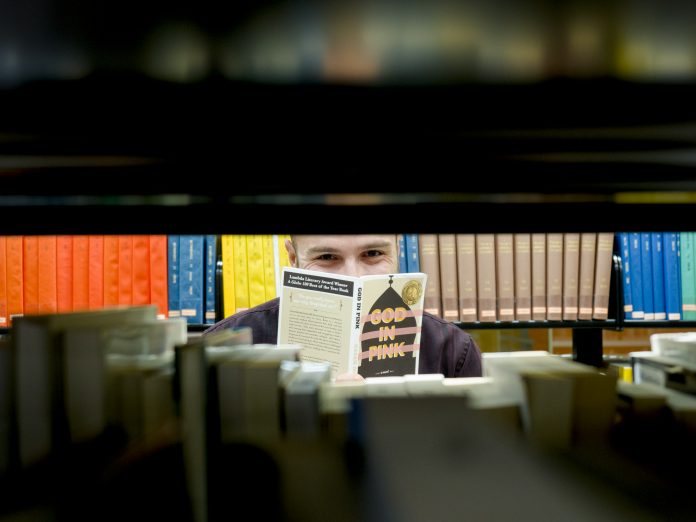
[dropcap]F[/dropcap]earlessly and unapologetically, SFU alumnus Hasan Namir tackles homophobia, religion, and coming-of-age in his award-winning debut novel, God in Pink. The novel is set in Iraq in 2003 and tells the story of Ramy, an orphaned homosexual university student who seeks guidance from Ammar, a sheikh at his local mosque, as he struggles to reconcile his culture and religion with his identity.

On the second anniversary of Namir signing the publishing contract for his novel, The Peak sat down with him to talk about his personal story of coming out as queer, his journey with religion and spirituality, and his SFU experience all which served as inspiration for the bold novel.

Talking with Namir was an incredibly warm and easy-going experience; he overflows with excitement about how well his novel has done it has won a 2016 Lambda Literary Award and been named a Globe 100 Best Book of the Year as well as gratitude and a deep appreciation for life in general. Namir describes himself as a social butterfly, and, between the easy and endless conversation he holds as well as his accounts of his friends and husband, the description seems to fit. Namir is so at ease with himself, it’s hard to imagine there was a time when he hid, and tried to change, who he was.

Coming out

Until the age of 10, Namir lived with his family in Iraq before moving to Canada. In a YouTube documentary based on his book, Namir talks about how he’d always known he was attracted to men. When he came out to his older sister at the age of fourteen, he remembers she laughed and replied, “Yes, Hasan. I know. I’ve always known.”

Through his childhood, Namir tried to hide or mitigate his sexuality in front of his parents, but when the family went on a trip to Europe in 2010 and his father became aware of his sleeping with men, their relationship fell apart. “He just couldn’t accept the fact that I was gay,” Hasan recalls, “So he said ‘you have two weeks, and I’m going to kick you out of the house. You’re not my son anymore.’”

After the fallout with his family, Namir entered a period of depression and experienced suicidal thoughts. The pain Namir feels over his estrangement from his family shows clearly on his face when he speaks about his parents: “My mom was the closest thing to me and sometimes I just wish I could see her.”

Moving on from discussing his rocky familial ties, Namir’s face lights up when he starts to talk about his husband, Tarn. Namir met Tarn in 2011, and he can still perfectly recall the moment he first met him: “When I first saw him, my heart just skipped a beat. And for a moment, I just saw my entire life through him.” Namir’s sister speaks of Tarn’s entrance into Namir’s life as “the push he needed [. . .] to stand up for what he believed in, put family aside, and follow his heart.”

“Well, I’ve read the books, too, and I’ve come up with my own interpretation.”

However, following his heart has come at a price to Namir. Nothing has since been the same for the torn family. No happy occasions or milestones pass without tears. While he’s received overwhelmingly positive feedback from his sisters, cousins, and husband, Namir’s parents haven’t read the book.

It’s been six years since Namir last spoke with his father, but he hopes that someday his parents will read the book dedicated to them and understand where he’s coming from.

Conflicting identities: religion and homosexuality

Namir admits that he still grapples with his faith, and this journey of his, as well as the polarizing portrayals of religion in the media, is what emboldened him to tackle the sticky topics of religion and homophobia in his own novel.

“Religion is not black and white,” he adds, “there are complexities that really fascinate me.” While Namir’s family was never very religious he only went to a mosque in Iraq once he personally testifies to being a very spiritual person, having studied various religions including Judaism, Christianity, Hinduism, Sikhism, Buddhism, and Islam. Reading religion from different perspectives and analyzing different interpretations especially interests Namir. “People’s ideologies and thoughts lead them to come up with their interpretation,” Namir explains.

“Well, I’ve read the books, too, and I’ve come up with my own interpretation.”

Despite his openness to faith, it’s unclear for Namir whether his faith is open to him as he is still trying to reconcile his religion with his identity as a homosexual. “I’ve lived my whole life trying to find answers by reading the Qur’an. In some ways, I think religion accepts me,” Namir affirms, “but in other ways, it doesn’t. It’s conflicting and I still haven’t found full answers.” For Namir, penning his characters’ struggles with their religion brings him one step closer to untangling his own.

In God in Pink, not only does Ramy struggle with his faith, but so does the sheikh of the local mosque, showing a discrepancy between the sometimes rigid way religion is taught versus how flexible Namir truly believes it to be. Namir wants to bring this feeling of tolerance and inclusivity to eastern religions, which can sometimes seem mysterious or foreign to western interpreters. “I don’t ever want to force thoughts,” Namir made sure to clarify. “I just want readers to come up with their own interpretation. Religion is all about interpretation, and my book is the same.”

For a multitude of reasons both personal and political Namir has decided on religion playing an important role in all his works. Despite his rocky relationship with his faith, today Namir still firmly stands by his faith: “I believe in God it’s what kept me strong through all these years.”

Growing at SFU

When I asked Namir about his experiences at SFU, I was expecting perhaps a courteous nod towards the institution which provided him with his BA in English, but what I got was an outpouring of love for the university.

“I owe so much to SFU,” Namir declares.

He recalls his most valued and educational experience at the institution as being the workshop sessions in his English creative writing classes, where he actually got to work in a peer group setting and get feedback on excerpts from God in Pink. The process of sitting down in a group of like-minded aspiring authors, going through each person’s work, and constructively critiquing it shaped Namir as a writer “I’m very indebted to that experience,” he says.

Namir honed his skills and gained confidence as a writer during his years at SFU. He was awarded the Won Ying Chen Creative Writing Student Award from SFU, and spoke fondly of Jordan Scott and Jacqueline Turner as his influential mentors during his development as a writer.

“I’m very happy with my experience at SFU,” Namir gushes. “I met a lot of amazing people, writers, and peers.”

Moving forward

While he enjoys the acclaim his first novel has been receiving, and goes on book readings and talks, Namir is also planning for future publications. Currently, he’s looking to get his book of poems published. Some of the poems were also workshopped during his time at SFU, and he hopes the poetry collection will show his versatility as an author.

He predicts that his second novel, still in its early stages, will deal more heavily with themes of religious extremism, but with the same touch of tolerance and empathy for character ideologies and actions as displayed in God in Pink. Namir’s favorite critiques from his first novel were protests from readers that it wasn’t long enough, so he anticipates his second story to be longer, more complex, and to continue to develop the ideas of cultural appropriation, religion, and gender identities that he introduced in his first novel.

Namir’s most ambitious goal as an author is to become a bestselling author: not for the fame or profits, but rather to expand his reach as an author. God in Pink has already been translated into Turkish, and he hopes it will be also translated into Arabic and other languages as well.

“I want to give the silent a voice, to inspire others out there,” Namir says of his motivation for his writing. “The ones who feel lost, who are in the closet and fall in love with someone, and can’t be who they are. The ones in the parts of the world where they can’t be who they are.”

Namir writes from experience, and from the heart.

Vancouver joins worldwide Women’s March on Washington

1

“This would not have happened if every one of you hadn’t stepped up,” organiser Lisa Langevin told a vocal crowd of nearly 15,000. “It takes a village to raise a child, and this village raised this child.”

The crowd was gathered in Jack Poole plaza for the Women’s March on Washington – Vancouver, held downtown on a brisk Saturday morning.

The event was just one of a series of gatherings across the globe, with millions marching everywhere from the United States to France to Ghana. While ostensibly an anti-Trump rally, the march in Vancouver also addressed broader efforts to combat racism, sexism, and other forms of injustice through protest and other forms of activism.

After a short concert, the event began with presentations from several speakers, including representatives of the Musqueam, Squamish, and Tsleil-Waututh peoples, on whose unceded land the event took place.

In an emotional address, Rhiannon Bennett, one of the organisers and a member of the Musqueam First Nation, shed light on the unique struggle of indigenous women in Canada, pointing to the hundreds of unsolved cases of missing and murdered indigenous women across Canada.

“It is disgusting that there is a highway known as a Highway of Tears,” said Bennett. “If those were any other women, something would have been done by now.”

The addresses also referenced Canada’s colonial history on the eve of its 150th anniversary, with one organiser expressing the hope that the next 150 years would see more positive change and reconciliation efforts from the federal government.

The march began around 10:30 a.m., filling the streets and spanning several city blocks. Some attendees held signs quoting prominent activists such as Audre Lorde and Martin Luther King Jr., while others sported slogans like Pussies Grab Back and Love Trumps Hate.

Many also wore knitted pink toques as part of the Pussyhat Project, a campaign meant as a way for both attendees and non-attendees to show their support.


“I think everyone here is taking a stand and saying ‘no’ to patriarchy, to misogyny, to racism, to nationalism,” said Kathleen Millar, an assistant professor of anthropology at SFU who marched with the group SFU Academic Women. “[We] need to learn to come out and be in solidarity against multiple forms of discrimination and oppression.”

The march culminated at Trump Tower on West Georgia street, where many left their placards and banners. At one moment, a young girl was hoisted above the crowd on her father’s shoulders, holding a poster that read Girl Power. Others held middle fingers up to the building’s large Trump sign.

After the march concluded, several attendees returned to Jack Poole Plaza for a series of closing speeches, including one from SFU student Samaah Jaffer.

“I think it’s really important that in the conversation on women’s rights, we acknowledge that systemic racism and our colonial history in Canada are so closely tied to patriarchy, and any kind of conversation on women’s rights needs to include conversation on the rights of people of colour in general,” Jaffer told The Peak.

“We cannot talk about the equality of women if we’re not talking about the equality all people.”

Jaffer’s speech also focused on the notable absence of Vancouver’s Black Lives Matter chapter at the event. In a statement on their website, the chapter said that they had “not been contacted in any way by the organizers of the Women’s March in Vancouver,” and maligned the lack of inclusion of black or trans voices in the event’s organisation.

This is in contrast to the event’s description on its Facebook page, which promised that participants in the march would “rally together in solidarity, equality, diversity and inclusion.”

For her part, Langevin expressed joy at the amount of support the march had earned. Addressing a smaller but no less engaged crowd in the final moments of the event, she noted that the fight for equal rights across Canada was far from over, and urged listeners to continue making their voices heard through protests and other actions.

“If not you, then who,” she asked the crowd, “and for heaven’s sake, if not now then when?”

NEW MUSIC FRIDAY

0

Follow The Peak on Spotify to stay up to date on New Music Friday.

“Living Single” – Big Sean feat. Chance the Rapper and Jeremih

Jessica Whitesel: I honestly don’t know what to say about this song. Like, the beat is good and the rapping is on point, but I don’t really know if this song is actually about living single, or if it’s about being in relationship, or if it’s about just sleeping with as many women as possible. I JUST DON’T UNDERSTAND THE THEME OF THIS SONG.

Jessica Pickering: …what? The intro makes me so uncomfortable. Actually, all of it makes me uncomfortable. I’m scared and confused and I want to go home.

Rita Ovis: This song posits some truth about modern dating. It’s the grooviest way to weigh the pros and cons of being a relationship. Chance the Rapper also makes a very solid guest appearance which can make any song 35% better.

“StraitJacket” – Raleigh Ritchie

JW: I still can’t get over that this is Greyworm from Game of Thrones. I loved his first album and this song does not disappoin. It might be unexpected given the content of that album, but like, I’m down for this.

JP: It’s not the worst song I’ve heard on the NMF playlist (which isn’t saying much if you listened to the first song), but it’s not my favourite either. Huge improvement from last week’s ENTIRE playlist though.

RO: This guy has a James Blake-y/Frank Ocean-y vibe and I’m feeling it! There are some points where there is definitely too much going on in this though, like way too many instruments at one moment, but you can get past it to enjoy this smooth R&B ballad.

“Text From Your Ex” – Tinie Tempah feat. Tinashé

JW: What? Who was the text from? I don’t know if it actually comes through with the song. JK, it totally does and I’m not loving this at all. You think it might get better, but it doesn’t. If anything, it gets worse. Much, much worse.

JP: This could low-key be Carly Rae Jepsen. But like, a shitty version of Carly Rae. The voice sounds similar to her, but the rest is terrible. I’m going to go listen to E•MO•TION to make myself feel better.

RO: This song made me laugh out loud a little. They get really deep into a text from your ex. But also, girl, are you really going to steal your friend’s ex-boyfriend? C’mon.

“You Look Good” – Lady Antebellum

JW: Is it a country song if beer and trucks aren’t mentioned? Maybe or maybe not. We’ll never find out since this song mentions both about five seconds in.

JP: Noooooooooooooooooooooooooooooooooooooooooooope.

RO: This is pretty much a classic pop country song. That is all.

“High for Hours” – J. Cole

JW: Woke AF. However, he did spend a good chunk of time rapping about why this song is called “High for Hours.” But, still woke and that’s when rap is at its best.

JP: The dude just explained why his song was called “High for Hours.” I could be wrong, but isn’t that like explaining the punchline of a joke? If I don’t get it on my own, it’s not that good. There’s a great message in this song, but I’m just focusing on the fact that he explained his title to me.

RO: Oh man, this song is intense. J. Cole is basically explaining that American politics are messed up and it makes him want to get really high to try to forget about it. This could be appropriate for our current political climate — J. Cole in general has been super political lately, so I’m not surprised.

“Så så så säg” – Thomas Stenström

JW: What year is it? I feel like I should be surfing in the early 1960s before going to malt shop. But in Sweden! Do with that information what you will.

JP: Beach Boys meets techno. This might be what they play in Hawaiian night clubs. Also, is it in English? Is it in Swedish? Who knows! It’s all very confusing.

RO: No idea what language the bulk of this song is in, but it doesn’t matter because this song is extremely peppy and danceable! It’s in the language of music. Ha. Ha. Ha.

“Doomsday” – Ryan Adams

JW: I always think that there should be more harmonica solos to open songs. Actually, that’s a lie. If you are going to do a harmonica solo do it in the middle of a song and not one that sounds like a Bruce Springsteen B-side.

JP: Ah, harmonica; played well by few, played often by others. This is like a weird U2/Neil Young/Bruce Springsteen vibe. I feel like my mom’s CDs all fused together and this is what came out. Also, harmonica at the beginning is a Springsteen thing and you can’t pull it off, so fuck you.

RO: Honestly, I think this is just a really cheesy song pleading for love, he sounds desperate and dude, you could seriously do better.

“Over the Edge” – Borgeous tyDi Dia

JW: What is up with the group’s name? Why are there so many fake words and weird capitalizations. I do not like. It also sounds like country techno, and it makes me uncomfortable.

JP: Are they from X-Factor? They always seem to be from X-Factor. Sorry, by them I mean shitty high pitched “trendy” singers/band. Is it a singer or is it a band? I don’t know.

RO: I would describe this as Lana Del Rey at a rave in space.

“Broken Dreams” – Anti Pony

JW: What is an Anti Pony? Is it like a tiny cow? I really want to know what an Anti Pony is. But I’m scared to Google it because the internet can be a dark and scary place. This song is scarily bad enough that I don’t want to go further down the rabbit hole.

JP: This is probably not true, but I’m hoping this name came about because someone was really upset about the Ginuwine song. “Ride your pony? No! I will not! I will. . . Anti pony. Oh shit! What a great band name!” — how that conversation went, probably (hopefully).

RO: This song is actually quite unique in a lot of ways — the girl’s voice is unlike anything I’ve heard before it’s rich and wispy at the same time. The instrumental part is kind of electronic-psychedelic-rock-y which is also very interesting.

“Crying on the Bathroom Floor” – MUNA

JW: The ’80s are over. Maybe that was when the last calendar was put up in the studio. Who knows? I just know that I want to cry on the bathroom floor after hearing this, because that sounds like it would be more fun than listening to this.

JP: If I made music this bad, I would also be crying on the bathroom floor. If everyone could stop trying to be Lana del Rey, that’d be great.

RO: Ooh this has some ’80s vibes, that’s a good thing! It’s kind of a sad song though, she has a lot of feelings. I’m sending my good vibes her way. I hope the ’80s can help save her!

“Boys Like You” – Whitehorse

JW: I saw Whitehorse at Calgary Folk Fest this summer and they are a husband-wife duo with talent to spare. I think that they might have played this as a teaser for their new album, I don’t really remember; I may or may not have been drinking. However, it falls flat without their stage presence (which is amazing by the way).

JP: Holy shit did Beck get a band? Like, not actually, but basically. Either way, I don’t care for it. Their website is shit, too.

RO: This is cool! Reminds me a bit of Beck actually. I especially like the lyric: “Boys like you they live with their mothers for ever and ever.” I think I know what kind of boys they’re talking about.

“Swimming in Strange Waters” – The Wooden Sky

JW: It is so echoey!!!! Like when you put wax paper over a toilet paper roll to make a kazoo, that kind of echoey. Also don’t go swimming in strange waters. What if there is a riptide? Know before you go. Then swim to your heart’s content.

JP: I WANT TO GO SWIMMING SO BAD OMG. I know that’s not what we’re talking about, but I don’t care for this song and I love swimming. Why is winter here so cold? Someone take me to Mexico.

RO: I could imagine this song playing at an outdoor music festival and everyone bobbing their heads and smiling. It’s good, but it’s the kind of song that I think would be better live? Is that weird?

“Night Bus” – Gabrielle Aplin

JW: Piano! And then more electronic stuff. Why is everything electronic? But, like, Gene Belcher keyboard kind of electronic. However, this is actually not a bad song and having been on many night buses I would listen to this on one and not be sad about it.

JP: I like the background of the album artwork. Very pretty. The song matches the image. Best song I’ve heard on NMF for a while (like a 7/10, but that’s not bad).

RO: We all know that staring out the window on the bus moodily makes you realize things. This song captures that notion. The flow of the song makes me imagine a bus cruising through the city. This is just a solid song in general. I don’t usually like this style of electronic-pop music, but this song is an exception!

NFL Blitz with Jason Romisher: Conference Finals Preview

0
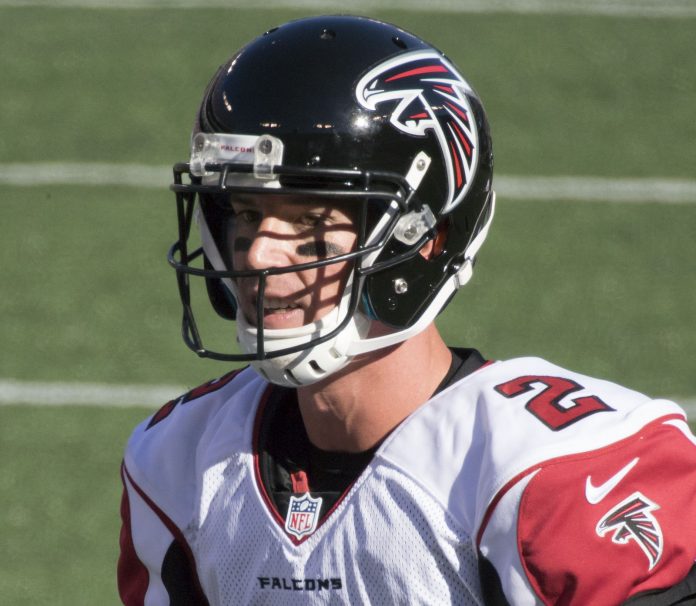
Matt Ryan passed for 4,944 yards, and had 38 touchdowns and seven interceptions this season — giving him a strong chance for the NFL’s MVP.

The Chiefs came oh-so-close last week to defeating the Steelers, whom they kept out of the endzone and limited to six field goals. If you didn’t catch it, the Chiefs scored a last-minute touchdown and converted for two points to tie the game 18–18, but left tackle Eric Fisher was flagged for holding James Harrison. With that, my Chiefs pick last week did not come through. Nevertheless, 3–1 on the weekend and 5–3 overall for the playoffs.

In other action, the Patriots didn’t play well, but still managed to thump the Texans 34–16 despite Tom Brady’s uncharacteristically poor play (two interceptions). The Falcons looked dominant at home against the Seahawks and the Packers won a thrilling game against the Cowboys on Mason Crosby’s last-second field goal after a miraculous Aaron Rodgers to Jared Cook completion.

The four teams remaining are all on long winning streaks; New England (8), Pittsburgh (8), Green Bay (8), and Atlanta (5). I cannot remember four teams converging in the Conference Finals that are this red hot. This weekend any team has the pedigree to win their Conference and advance to the Super Bowl. Both games are incredible matchups and there are no significant underdogs so upset specials and game of the week distinctions are out the window.

Green Bay (12–6) at Atlanta (12–5), Sunday 12:05 p.m.

I am old enough to remember, and to have watched, the Falcons play in their lone Super Bowl in the 1998 season.  It was incredibly disappointing seeing them advance to the big game after an improbable road victory against the 16–1 Vikings featuring Randall Cunningham, Cris Carter, and some guy named Randy Moss on offence. They promptly served as a foil for John Elway’s second Super Bowl win in the final game of his illustrious career.

This Falcons team is far more dynamic than that edition on the strength of having the league’s number one offence. Much is being made of the low overall ratings of the Falcons’ defence this season, but the unit has played very well in the latter part of the season. Holding the Seahawks, led by Russell Wilson, to just 20 points is a testament to this unit’s growth and development under their defensive-minded head coach, Dan Quinn. The top weapon is of course, Julio Jones, who is difficult to cover and capable of shredding any defence. Last week, he put up 67 yards and a touchdown despite being shadowed all day by elite corner Richard Sherman. The Falcons have also remained healthy on the offensive line being the only team in the whole league that has started the same five men at the position all season. Line play is so important to any offensive system and elite skill players are essentially negated if the line cannot play with effectiveness.

Leading the Falcons’ attack is quarterback Matt Ryan who has a strong case to be this season’s MVP.  Ryan had an incredible season, passing for 4,944 yards with 38 touchdowns and 7 interceptions. During the five-game win streak, Ryan posted 14 touchdowns and zero interceptions. He also is not reliant on Jones or anyone else in the passing game as he consistently spreads the ball around to all of his receivers, backs, and tight ends.  It was very impressive last week with how unfazed the Falcons were, despite being backed up to their two-yard line after a punt.  Most teams play it conservatively in that situation, but Ryan just lined up and started slinging darts and moving the sticks.  Stopping Atlanta will be a tall task for Green Bay, whose pass defence was ranked 31st in the league this year.  For instance, last week, rookie Dak Prescott lit up the Packers for three touchdown passes and 302 yards. These two teams met in week eight with the Falcons prevailing 33–32 on the strength of Ryan’s three touchdown passes and 288 yards. Green Bay does have the ability to pressure the passer with hall of fame candidate Julius Peppers still able to cause havoc as well as the presence of disruptive linebacker Clay Matthews III.

During Green Bay’s eight-game winning streak, Rodgers has played as well as at any point in his stellar career. He also has a strong MVP case, passing for 4,428 yards with 40 touchdowns and just seven interceptions, and with 21 touchdowns, one interception and a 68.9% completion rate during the winning streak. It would seem like a disappointment if such an incredible player retired with just the one Super Bowl. In the last three years, the Packers have been ousted from the playoffs twice in overtime and once by a last-second field goal. If they go out, you better believe it will be with full offensive guns blazing. One cause for concern is that top receiver Jordy Nelson may miss another game with a rib injury and number two target Davante Adams is also questionable.  Nevertheless, Rodgers demonstrated last week that he can work with second unit players and still get the job done.  An interesting development has been the dynamic play of receiver Ty Montgomery, as his receiving ability makes him a matchup nightmare for opposing linebackers.  

A key side note, for those of you who are patriotic and do not have a rooting interest in this game, is that Falcons general manager Tom Dimitroff Jr. is Canadian and a graduate of the University of Guelph. His father, Tom Dimitroff Sr., was the head coach at the University of Guelph and led the team to a 1984 Vanier Cup victory. Dimitroff Jr. also takes care of his old Guelph football buddies. My good friend Jeff Hale — an outstanding coach who I had the privilege of coaching with for several years — has been down to Atlanta on a few occasions with full facility access and field passes.

Rodgers is tough to pick against but I just cannot see the Packers stopping Atlanta enough times to win this football game. Expect a high scoring shootout similar to the Cardinals epic 51–45 overtime win over the Packers in the 2009 season.

Prediction: Falcons 48 Packers 45       

Pittsburgh (13–5) at New England (15–2), Sunday 3:40 p.m.

Can you believe that Ben Roethlisberger and Tom Brady have only met once in the postseason? This really surprised me as these two teams are perennially in the playoffs and have six Super Bowl titles since New England with Brady won their first.  The Patriots are also playing for their seventh American Football Conference title in the Brady and Belichick era. Brady is currently tied with Terry Bradshaw and Joe Montana for most Super Bowl wins with four, and would love a fifth this season — especially because of the actions during the “deflategate” scandal. It may be the most ludicrous suspension in the history of professional sports.  To put the suspension into perspective, the League suspended Josh Brown this season for just one game for domestic abuse. How satisfying would it be for Brady to hoist the Lombardi trophy in the face of commissioner Goodell after robbing his career of four precious games?

The Patriots have a huge advantage being at home where they are 15–3 since they began their playoff run in the 2001 season.  Offensively, the Patriots are without star tight end Rob Gronkowski.  However, they have the ability to run a spread offence with Brady or run a punishing ground game with bruising running back Legarrette Blount who had 1,161 yards and 18 touchdowns this season.  Last week Dion Lewis, a shiftier running back, was the first player in playoff NFL history to return a kick for a touchdown, rush for a touchdown, and catch a pass for a touchdown.  Lewis has battled injuries, but is finally healthy and ready to contribute.  

What is so fun about the Patriots is how well coached they are. You always have to be ready for brand new schemes and trick plays whenever the Patriots are in a big game. Defensively, their unit is extremely well-coached, so much so that their players are able to call out the offense’s plays based on formation and situation.

Facing the Patriots are the Steelers, one of the premiere franchises in football over the past five decades (they stunk prior), who are looking for their seventh Super Bowl title and ninth appearance in the big game. The Steelers were hit by a big time distraction this week when star receiver Antonio Brown inexplicably decided to broadcast on Facebook live during the post-game team meeting in the locker room after the Chiefs victory. In the video, head coach Mike Tomlin was heard making disparaging remarks about the Patriots. Tomlin met with the media and admonished Brown’s actions in no uncertain terms. Nevertheless, the Steelers will need their star receiver to play well if the Steelers want to win in New England. Brown, Roethlisberger, and running back Le’Veon Bell are top skill position players on the Steelers. Bell may be the best offensive player in the league right now. He carved up both the Dolphins and Chiefs with his unique running style and elite pass catching skills. Bell has set and then raised the Steelers playoff single game rushing record in his first two career playoff games with 29 carries for 167 yards and two touchdowns against the Dolphins, and 30 carries for 170 yards against the Chiefs.

The Patriots will seek to neutralize Bell and force Roethlisberger to beat them through the air. Big Ben has not played overly well this season on the road and will look to correct this trend in a pressure-packed situation. The Steelers also have a young and improving defence that will be up to the challenge of stopping the Patriots. I have been extremely impressed by the play of 38 year-old James Harrison who continues to be a force as an edge rusher and full time linebacker for the Steelers. Harrison, you might remember, made one of the greatest plays in Super Bowl history during the Steelers’ last championship season and is doing everything he can to lead a young unit back to the show.

As much as I like this Steelers team, I am leery that they were unable to score a touchdown last week against the Chiefs. The Patriots will have a great game plan in place and have a great shot to keep the Steelers under 20 points.  If they do they will be Super Bowl bound.

Prediction: Patriots 20 Steelers 17

#CorporationsArentPeople so why do they pretend to be?

0

[dropcap]C[/dropcap]apitalism is evil and corporations are everywhere, including beloved social media forums like Twitter and Tumblr. From billboards to television ads to upscale shopping malls, there are never-ending reminders from companies to buy their stuff that will make us look slimmer, be stronger, smell better. . . basically corporations think we need to become a kind of self-indulgent superhuman.

Corporations are also worming their way into the realm of social media.  But sometimes, they try to venture out of the advertising of their products and attempt to relate to their consumers as people. I use the word “attempt” with emphasis. These efforts are often done in poor taste, and leave buyers feeling mildly to extremely uncomfortable.

The Internet Uncle

You know that wildly inappropriate uncle you have at the dinner table? The one who says things that everyone disagrees with? Who uses racial slurs and justifies them? Who most likely voiced his support for Donald Trump during discussions about the presidential election? He may be an accomplished businessman or been in a career field for thirty years, but he is a certified asshole. Corporate Twitter is that uncle in Internet form, inducing cringeworthy moments when companies attempt to comment on current events and issues.

For instance, the Twitter hashtag, “#WhyIStayed,” was used as a powerful tool for survivors of domestic violence to provide a voice on the complicated nature of their experiences and how they couldn’t just leave abusive relationships. But of course, company DiGiorno Pizza decided to use this hashtag in a tweet that read, “#WhyIStayed You had pizza.” Not only did DiGiorno discount the experiences of survivors by using the hashtag to promote their products, they did so in poor taste. As a result, they received backlash from the media and the public due to their venture into Twitter trends.

There is also the fact that corporations keep interjecting on online conversations that they have no business in being a part of. Some examples include the Twitter account of PopChips, who tweeted on Martin Luther King Jr. Day that he was an “eternal poptimist,” and Cinnabon recently tweeted a tribute in ill taste for the late Carrie Fisher, saying that she “had the best buns in the galaxy.”

Now, I am actually someone who usually loves puns and witty phrases (and make them only to be met by groans from my friends), but even I have to draw the line at the appropriate times to use them. At the end of the day, these tweets are eyeroll-worthy, only prompting anger and complaints from the audiences of these accounts. This prompts of the question: why do corporations even engage in these conversations in the first place? Masquerading behinding an online profile, these companies pretend to care about people and movements the way a human would — all for the sake of manipulating us into caring about their product.

A cocktail of concerning online behaviour

While the main goal of a corporation is to make a profit, in order to accomplish that they need to gain recognition for their brand. In the age of the Internet, going viral is equivalent to gaining recognition, and while that recognition can come in the form of negative backlash, it is still recognition nonetheless. Internet culture has ensured that the most shocking statements will receive plenty of attention, and these inappropriate tweets ensure that the brand’s name is getting out there.

TV personality John Oliver compared Twitter to a cocktail party, the kind where everyone is having detailed conversations about events, and friends and strangers can meet and chat. He then went on to say that corporations don’t belong in these conversations, and used the exaggerated example of Tony the Tiger bursting in with his slogan, “It’s grrreat!” in the middle of a conversation about abortion to illustrate his point.

Corporate Twitter Done Right

Of course, there are also hilarious ways that corporate Twitter accounts gain notoriety. The main example of this is the blessing that is Wendy’s Twitter account. Answering customer inquiries with off-the-charts levels of sass, the fast food chain does customer service like no other. Somebody tweeted at them asking what to do if there was no Wendy’s in their area; they replied with the concise answer of, “Move.” The account has also engaged in online banter with fast food rivals McDonald’s and Burger King, describing the former with the picture of a trash can and calling out the latter for not serving edible food.

The blatant honesty and rivalry on Wendy’s Twitter account is refreshing, as it isn’t veiled behind advertising practices that try and emotionally manipulate us. It also gives the brand an added depth that makes it stand out from other corporations on Twitter, and promotes audience engagement by responding to customer inquiries with pop culture references such as Hamilton or Kim Kardashian gifs. Regardless what one may think about their food, Wendy’s does corporate Twitter right.

Corporations sell things to the public, and they should stick to selling things to the public, even online. They shouldn’t be using current events to sell their products unless they are served in the form of lighthearted memes or with copious amounts of sass. Simply put, corporations should stick to just selling us shit.

Jordan Herdman invited to Senior Bowl

0
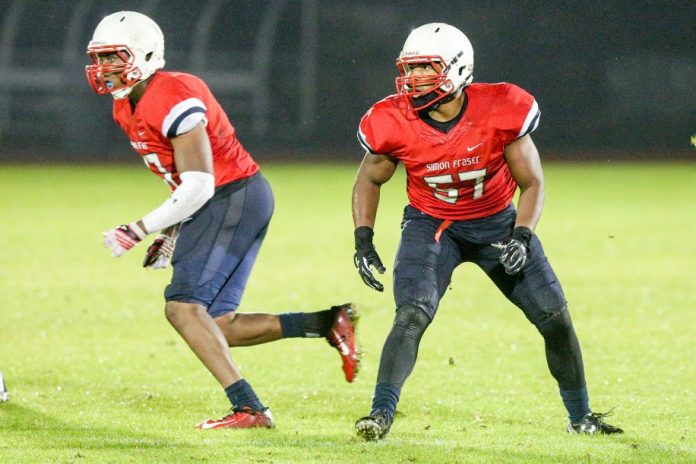
Jordan Herdman (#57) holds numerous conference records, including most tackles in a season and total tackles.

SFU football linebacker Jordan Herdman is off to the 2017 Reese’s Senior Bowl on January 28. The event showcases all of the graduating seniors from NCAA football programs who are eligible to be drafted into the National Football League (NFL). Herdman will be competing against players who will likely be chosen in the upcoming NFL Draft, and is widely considered the showcase event for the top senior football prospects.


We at SFU football are tremendously proud of Jordan,” said football head coach Kelly Bates to SFU Athletics. “During his time as a member of SFU football, Jordan provided a great example of what every student athlete should strive to be and accomplish. He continues to push himself to be the best player he can be and his hard work and commitment have been rewarded both on and off the field.”

Herdman was a dominant force during his time in the Great Northwest Athletic Conference playing for SFU football. He holds conference records in tackles with 428, and holds the single game record for most tackles in a game with 26. He also holds the record for most tackles in a single season with 165. He was ninth in all of Division II in tackles per game.

What this means for his future career remains to be seen. He likely has a shot after this to compete in some NFL free agent camps, but if he has an outstanding game could be chosen late in the NFL draft. This game represents a huge opportunity to raise his draft stock.

And of course, there is always the Canadian Football League (CFL). He curiously wasn’t included in the CFL’s top prospects list back in September, but was included at 16th in the updated rankings in December. However, with the season’s he’s had, he could be in contention for the first overall pick.

The Senior Bowl will be broadcasted on the NFL Network . Kick-off is at 11:30 a.m. Pacific.

Minutes from Emergency Board Meeting

0

The Peak Publications Society Board of Directors
January 20, 2017
The Peak offices
Chair: Jessica Pickering

SFU women’s basketball defeat Montana State 86–72

0
Wilson recorded her second straight double double, finishing with 16 points and 11 rebounds, as well as three steals.

After Tuesday night’s emotional loss, SFU was looking for a way to bounce back and show that they were still a dominant team in the Great Northwest Athletic Conference (GNAC). They found the perfect tonic in the Montana State University Billings. In a performance typical of the season thus far, the Clan got solid performances up and down the lineup to win 86–72.

“I thought some things were very good,” said head coach Bruce Langford after the game. “[Rachel] Fradgley was efficient, I thought that [Ellen] Kett was efficient, [and] I thought that we were resilient. They had some runs at us, and we maintained our composure and came back.”

The first quarter was a tight affair. SFU, frankly, missed some easy baskets, which allowed Montana State to take a three point lead. However, back-to-back threes by freshman Tia Tsang meant the Clan were up by two by the end of it. They were able to extend that lead to nine by the end of the half — Ellen Kett hit a clutch corner three, and also dished it out to Meg Wilson inside for an easy two points. SFU showed some resilience in the second half, battling back from two Montana State surges to eventually take the game by 14.

The dominant player throughout the game was easily Meg Wilson. Recording her second straight double-double, she finished with 16 points, 11 rebounds, four assists, and three steals in a type of performance that is starting to become commonplace.  

“She has a lot of weapons,” said Langford on what makes Wilson such a dominant player. “She can shoot the three, drive and finish inside tight, she rebounds well, [and] she usually gets a steal and a breakaway layup every now and again, which makes things easy for us. She’s got a great diverse skillset that allows her to have success.”

Another standout performance came from Division I transfer Tayla Jackson. Although she only recorded eight points, those all came in the final 3:05 of the game where she showed off what could make her a dominant force in the future — and perhaps making the case for more playing time.

“I thought that we were resilient. They had some runs at us, and we maintained our composure and came back.”

“Hopefully it will help her upside,” commented Langford. “She’s struggled a little bit with some things, and she had a lucky bounce that went in beautifully, and then she had two or three moves in a row that got stopped.

“I think she got frustrated, but then she had things go her way for a little bit. She had a nice drop step that open from a nice pass, and so I’m sure that’s going to help a little bit with her confidence.”

Ellen Kett once again led SFU in minutes played with 35, and finished with 13 points and seven assists. Rachel Fradgley finished with 15 points and three rebounds. Ozi Nwabuko rounded out the double-digit SFU players, finishing with 12 points and three rebounds.

Next Games: SFU now are on a bit of a break, as they don’t play until next Thursday against Concordia University. SFU has already beaten Concordia this year, winning convincingly 80–58 on the back of Ozi Nwabuko’s 18 points. They’re currently seventh in the GNAC with a 3–6 conference record, but things could be different this time around. Of their six overall wins this year, four of them have come at home. They’re also third in the conference in three-point percentage. Despite that, it should be a fairly winnable game.

After that, it’s off to Western Oregon on Saturday. SFU has beaten them already this year 71–57. Similarly to Concordia, they’re a lot better at home — they’re 5–3 compared to their 1–6 away record. They currently sit in tenth place in the GNAC and are in the bottom half in pretty much every category, including turnover margin — meaning they give up the ball a lot more than they take it away from the opposition.

Like the last time these two teams met, the key will be to try and limit Shelby Snook’s opportunities — she’s currently fifth in conference scoring, averaging just over 16 points per game. When these two teams played last, SFU was able to do just that, as Snook had only six points in 33 minutes, of which five came in the first half. Ozi Nwabuko was tasked to shut her down, and she did so brilliantly. If SFU can repeat that gameplan, they should have no problem winning this one.

Both games start at 7 p.m.

Clan show signs of improvement, but fall short against Central Washington 97–85

0

It was a game that highlighted both the youth on Simon Fraser’s basketball team, and the three-point making ability that Central Washington has displayed all season.

Coming into the game on a 12-game losing streak against the second place Central Washington Wildcats, the Clan knew they were facing a challenge. While they ended up losing the game, coach Steve Hanson was positive regarding the team’s effort.

“I thought our guys battled hard,” said the coach when asked about the game. “There were great stretches of effort, we just haven’t had a game of 40 minutes.”

The game started in favour of Central Washington, as two blocked shots by Fuquan Niles led to transition threes for Dom Hunter and Naim Ladd, and gave the team a 13–9 lead early. A few minutes later, two Ladd free-throws stretched the lead to 27–16 for the visiting team.

Two fouls by starting SFU point guard Michael Provenzano forced coach Hanson to go to his bench early, where Othniel Spence provided a defensive spark. The Clan then went on a 12–3 run that was capped by a steal and made free-throw attempts by Spence, cutting the lead to two points.

“He brings us so much energy on the defensive end,” said Hanson when asked about Spence’s play as of late. “He’s learning every week [. . .] he’s getting better every week.”

A beautiful alley-oop from Spence to JJ Pankratz helped the Clan keep the game close, before two failed defensive rebounds lead to a three for Ladd and a converted-and-one dunk for Niles.

When asked about it after the game, coach Hanson said, “The difference was the offensive glass, we just gave up too many second chance points.” Central Washington was plus seven in second chance points in this one, outscoring Simon Fraser 13–6.

A four-point play by Ladd gave the Wildcats a 52–44 lead going into the half. While faced with a daunting challenge, the Clan seemed to be holding their own so far.

In the beginning of the second half, however, the game got away from them. The Wildcats went on a 22–4 run to start the half, giving them a 74–48 lead. While the Clan made a valiant effort to claw back, strong play by Ladd and Niles ended up being the difference in the game.

“There were great stretches of effort, we just haven’t had a game of 40 minutes.”

Ladd ended the game with an efficient 33 points in 30 minutes on 8–11 three pointers, which has been the story of the Wildcats’ season thus far, as they lead the Great Northwest Athletic Conference (GNAC) in three-pointers made per game. This combined with Niles dominating the paint with 14 rebounds and three blocks was too much for Simon Fraser to handle.

On the bright side, Kedar Wright had another solid performance for the Clan, with 25 points and seven rebounds on 8–17 shooting, including three three-pointers. When asked on his performance, coach Hanson responded with, “We see what Kedar can do on offense every day [. . .] he’s a very good three-point shooter.”

On top of this, the Clan were plus 17 in bench points, largely in part to Hidde Vos going 5–9 from behind the arc.

In a game in which Simon Fraser was a solid 48.3% from the field, the offense was not the problem. While showing bursts of effort on the defensive end, the 54.1% that Central Washington shot from the field alludes to the relatively young team that Simon Fraser has.

This can be summed up with coach Hanson’s post game quote: “We’re just not as big. . . not as old and strong.”

With this loss the Clan continue their skid with their 13th straight loss, and fall to 0–9 in the GNAC.

NEXT GAME: Simon Fraser will host the Northwest Nazarene University Crusaders on Saturday. The Crusaders are 1–4 in away games so far this season, giving the Clan a good opportunity to break their losing streak. They are tied for second in the GNAC in scoring defence, averaging 73 points per game.

Tip-off is at 7 p.m.

Politics Central: State of Innu reserve of Uashta-Maliotenam has been labeled as form of “apartheid”

0

By: Manon Busseron

Five suicide deaths have occurred in the Innu reserve of Uashat-Maliotenam, near Sept-Îles (Quebec), home of more than 4,000 people. An inquiry was conducted by Quebec’s coroner, Bernard LeFrançois, to determine the circumstances of these deaths and, above all, to analyze the victims’ broader living context in order to understand the high suicide rates that have affected aboriginal communities.

LeFrançois’ final report underlines that First Nations people are more affected by poverty,  unemployment, alcohol, drug consumption, imprisonment, domestic violence, school dropout, and suicide issues.

Since 1994, 44 deaths by suicide occurred in the reserve of Uashat-Maliotenam. LeFrançois and Innu Chief Mike McKenzie believe that although suicides are mostly linked to personal discontent, structural causes must also be examined. Indeed, LeFrançois said that the entire reserves system “contributes to mental health problem[s] and substance abuse.” Aboriginal people are often isolated from health and suicide prevention services. For instance, the Naskapi have to travel 900km to get addiction treatment in their own language or English.

In his report, LeFrançois called reserves an “apartheid system,” in reference to the discriminating system towards black people established in South Africa between 1948 and 1994.

He put this idea directly in relation to reserves and suicides, stating that “the great fundamental problem lies with the ‘apartheid’ system into which aboriginals have been thrust for 150 years or more,” and that “the Indian Act is an ancient and outdated law that establishes two kinds of citizens, aboriginals and non-aboriginals.” He described the exclusion aboriginal people have faced: “The aboriginal is a ward of the State, someone considered incapable and unfit.”

First Nations representatives reacted positively to this report. Jean-Claude Therrien Pinnette, a spokesman for Uashat-Maliotenam people, agreed with the label “apartheid,” with the understanding that the name was an accurate assessment.

The report is considered by the coroner and First Nations’ chiefs as a step towards improvement for the Uashat-Maliotenam reserve, but also for all the other aboriginal people that are affected by the issues previously mentioned. Indeed, the report acknowledges that the people who committed suicide had their own reasons but also shared an aboriginal identity marked by their life in reserves. It seeks to find solutions to sociological and structural problems in order to prevent any more suicide.

The report offers 44 recommendations to provinces and to social institutions, including the creation of an aboriginal suicide prevention centre with Indigenous staff in Ottawa, a regional task force to fight drug trafficking, and the development of therapy centers and addiction treatment facilities for aboriginal people.

Quebec’s Minister for Rehabilitation, Youth Protection, Public Health, and Healthy Living, Lucie Charlebois, also highlighted that her government was holding a multi-year inquiry into the treatment of Indigenous people.

The suicide rate among Aboriginal people in Canada remains twice as high as non-aboriginals’.

With files from CBC, & Bureau du Coroner Quebec