Home Blog Page 75

Mastering the Basics: Broomball

0
a man pushes a small orange ball along with an oar-like stick.
PHOTO: Courtesy of @broomballcanada / Instagram

By: Hailey Miller, Staff Writer

Are you a hockey or curling fan who’s looking for a new sport? Maybe you’re a fan of neither but open to hurling a ball down the ice with a paddle-shaped broomstick to give yourself a workout and partake in the comradery at the same time. Broomball is of particular interest for those who want to be on the ice but can’t skate, and want a bit more action than curling.

Broomball is a Canadian sport that’s a cross between hockey and curling, with players using a broom-like stick. Invented around the early 20th century, it’s since been played in the US and elsewhere internationally. The sport is played on a standard ice rink — the same that’s used for hockey — with many of the same rules. These include offside regulations, having three periods per game plus overtime, and penalties for high-sticking, cross-checking, slashing, and too many players on the ice. Broomball is a team sport in which six athletes take to the ice at a time including one goalie, two forwards, two defence, and one centre.  

The broomstick, like a curling brush and a hockey stick combined, is shaped like an angled, plastic paddle. Traditionally, the stick was a literal corn broom with bristles. The game is played with a hard rubber ball — a broomball, as the name states — and goal nets that differ from the shape and size of a hockey net.  

Players wear helmets similar to hockey headgear, team jerseys, and padded, spongy shoes similar to those used in curling. Broomball can be played both recreationally and competitively, and has both gender-specific and co-ed teams.

The invention of broomball is thought to have been loosely influenced by vikings thousands of years ago. Today, the modern game of broomball is more subdued, and players often partake in it for leisure — although the competitive leagues are nothing to mess with. To make things even more interesting, broomball can be played indoors or outdoors on ice, or even on a field

Broomball is preferably played on looser ice in a rink, yet sometimes it’s even played outside in the snow. Who needs a zamboni when you have a broom to do the work of sweeping up all the loose ice for you? Although broomball might seem like an obscure, and arguably, unconventional sport, it’s gained popularity in recreational and competitive leagues through to the modern 21st century. Soon enough you’ll be brushing your broomstick and reeling the broomball hard down the ice and into the net.

What are you waiting for? Grab your witch stick and let the broomball games begin! Bonus points if you dress in your best witchy wardrobe, channel your sporty spell-binding powers on ice, and concoct a cauldron of post-game glory to warm your chilled bones. May the best broom win! 

Check out the Greater Vancouver Broomball Association for more information on where to play near you. 

The workplace is missing something — MORE EFFECTIVE MICROMANAGEMENT

0
Employer standing over all of his employees in an office. He is using a magnifying glass to watch over them closely.
ILLUSTRATION: Victoria Lo / The Peak

By: Yildiz Subuk, Staff Writer

Are you missing a deep connection with your employees? Do you feel like sometimes that manager-employee bond is lacking? Do your employees poop on company time a little too long, which takes away from their productivity? Imagine if an expert micromanager could bang on the bathroom stall to tell them “times up” or “speed it up.” That type of encouragement is crucial for any staff member’s development.

Employees need constant critique of their work. They clearly don’t feel valued when they check their phones for a second or two, and their amazing manager isn’t there, slowly striding past them and making comments like, “Oops, let’s not get too distracted,” followed by a little smile or giggle. How do the staff maximize shareholder value if they’re not being called out for their laziness?

Luckily, SFU’s Beedie School of Business introduced a revolutionary major: micromanagement. This program is much more useful than Beedie’s other offerings. Who needs HR Management, IT Management, or Project Management (I have no idea what any of these do) once they’ve mastered micromanaging? 

Micromanagement is so crucial for the workplace. Oxford defines it as “the practice of controlling every detail of an activity or project, especially your employees’ work.” It is a form of radical encouragement that can only be enacted by being constantly present. As a manager, you have to treat your employees like children. You are essentially the parent, so parent them.

The Peak interviewed business ethics enthusiast Elon Musk about this program’s benefits and how it can become an ethical step forward in management. “The new program is perfect for passionate minds looking to make a difference in the workplace. Let’s be real, most employees like workplaces that feel like home,” he said, taking a drag from his vape. “The point is to remind everyone of home. What does home feel like? It’s when mom doesn’t let me leave the house until the bed’s made, or when dad glares at me when he watches me fumble my math homework. What do these things do? They force me to get better. That’s what a workplace is supposed to feel like.”

While the interview was cut short due to a minor assassination attempt on Mr. Musk’s life by an ex-Twitter employee, it was clear he was pumped up about this new program.

“We need to take the step in management,” said positive management expert Jeff Bezos in another interview. “For me, it’s never about making money. It’s about creating a workplace that is always aware of improvements, because even the smallest changes make a big difference. I don’t personally watch my employees in the bathroom because I don’t give them any bathroom breaks at all, but even the time they spend peeing in bottles should be accounted for. In the Amazon family, I’m not the father. I’m the big brother; always watching.” 

The micromanagement major will teach forward-thinking business minds to become some of the best managers in the world. No more lack of work supervision, we are headed towards a bright future where managers will gleefully remind their employees that they can “spend less time on their phones” or “take more initiative” at work, accompanied with a heartwarming smile that looks like it’s stapled to their face.

Queer dating in the un-dateable city

0
A person looking at a phone, with a dating app opened a various messages on display.
ILLUSTRATION: Angela Shen / The Peak

By: Tam Nguyen, Staff Writer

I saw S. through the glass window of the restaurant as I walked across the street on a gloomy afternoon. Almond-shaped eyes, long brunette hair, red lipstick, dressed in black from head to toe. First impression: she seemed mysterious and distanced, living up to her dark academia Tinder profile. As the conversation moved forward and S. started to open up, I realized she was a completely different person from her profile. I guess she was still trying to figure herself out. I liked listening to people talking about themselves, however, this date made me feel quite conflicted. She barely asked me any questions about myself. It wasn’t a bad experience, however it struck me that Tinder encouraged people to curate an image of themselves without embodying it. If people try to live up to the image they curated, it feels like nobody is getting a chance to know their date’s authentic self.

Maybe I’d have more luck joining different dating sites, I thought. I tried Bumble and went on a thrifting trip with my new date, K. It was going well until K. made a comment that caught me off guard — saying I spoke English very well for someone who was Vietnamese. I laughed it off at first. She went further by suggesting I should marry a Canadian for citizenship if I wanted to stay after finishing my studies. I wasn’t sure how to respond for a moment, then I decided to point out that it was microaggression. She reacted defensively, as many do when their biases are called out — rather than reflecting she succumbed to white fragility, leading to an uncomfortable and defensive reaction. Existing as a queer person of color, racism and microaggressions are a constant reality, especially within queer spaces dominated by white fragility. 

These encounters seem minor but once they add up, they can make you feel isolated in a space where you’re supposed to belong. It’s not easy to balance setting boundaries and maintaining connections with others because most of the time, they don’t mean harm intentionally. But if someone isn’t willing to admit that their behaviors are hurtful and problematic, you probably don’t want to hang around them in the future.

I considered myself a hopeful romantic, so of course I didn’t give up. I deleted both Tinder and Bumble to clear room for Hinge. So there I was, on a Saturday night, sitting next to B. inside a jazz club. It was a nice ambience, and B. was no doubt beautiful. However, she tried to project in me expectations of a man, saying how easier it is to date a masc woman compared to a man, because we are essentially the same, minus the toxic masculinity. In a society dominated by heteronormativity, I wasn’t surprised that people still misunderstand what it means to be in a sapphic relationship. 

My dating journey in Vancouver ended that night. For the longest time, I blamed the city for being so expensive and how antisocial people are in real life — I felt forced to turn to dating apps. However, once I hung out with some decent, whose feelings I couldn’t reciprocate, I thought maybe I was the problem. I had a chance to have a good relationship, yet I turned it down. Is it because I’m only attracted to toxic people and deep down, I’m self-destructive and don’t think I deserve any affection? Or because I’m lowkey in love with my best friend and she’s the only one I need? Maybe it’s not that deep and I’m overthinking, but who knows? 

Growing up in a country with queerphobic laws and a culture based on homophobic and patriarchal views, being aware of my queerness early in life was not easy. Watching classmates enter heterosexual relationships in highschool, while I struggled to make peace with my sexuality, left me feeling alienated and lonely. I turned to movies and TV shows looking for comfort. Instead I saw unrealistic portrayals of high school romance, which only deepened the FOMO (fear of missing out). This conditioned me to crave love and believe that a relationship would make me feel whole and fulfilled, even with the wrong partner. 

It took me a long time to realize how bad my perspective on relationships has been twisted, and I can say that I’m happy on my own. I want to focus on myself and build friendships rather than romantic relationships. If you are going through the same thing, know it’s not your fault the dating scene is horrible, and the right person will come along eventually. One of the best ways to meet new people and maximize your chances in dating is by joining an organization, club, or social movement that aligns with your values and beliefs. 

“Just be yourself” sounds cliché, I know, but for me, it means living up to my core values, spending time doing things that matter to me, and fostering relationships with people who value the same things. Activism is where I find my support community and life-long friendships. Good luck on your journey, and remember, take care of yourself first and foremost!

What Grinds Our Gears: Winter commutes to Burnaby Mountain

0
Illustration of someone standing knee deep in snow with a disgruntled expression on their face. They have long black textured hair and are bundled in winter layers.
ILLUSTRATION: Abigail Streifel / The Peak

By: Yulissa Huamani, SFU student

Imagine waking up to a perfect snowy morning in the Lower Mainland. The temperature is cold, but the view outside your window looks stunning. You struggle to get up, but then you realize your university is on top of a mountain — and all of a sudden you’re wide awake. Time to grab a thick jacket, a banana, and run outside to catch the bus to campus. 

It doesn’t matter how early you arrive at the bus stop — if there’s a long line, consider yourself dead, cooked, deceased or roasted, you name it!

The buses just keep getting cancelled, and when your hopes finally rise, surprise! The next bus just got cancelled or is extremely delayed. And even if your bus somehow arrives on time, there’s no way on earth that everyone will fit in it. The struggle isn’t any easier for those taking afternoon and evening classes. The sky is dark at 4:00 p.m., and what if it snows while you’re in class? I recall my experience when the transit person told us he hadn’t seen a bus for two hours. I’m still trying to recover financially from the Uber that accepted our shared ride.

As we head into November, I’m reminded that there’s nothing I dread more than commuting to campus when classes should’ve been cancelled. Universities should rely on the power of the internet more often — and especially during winter semesters.

There needs to be a better consensus on microplastics

0
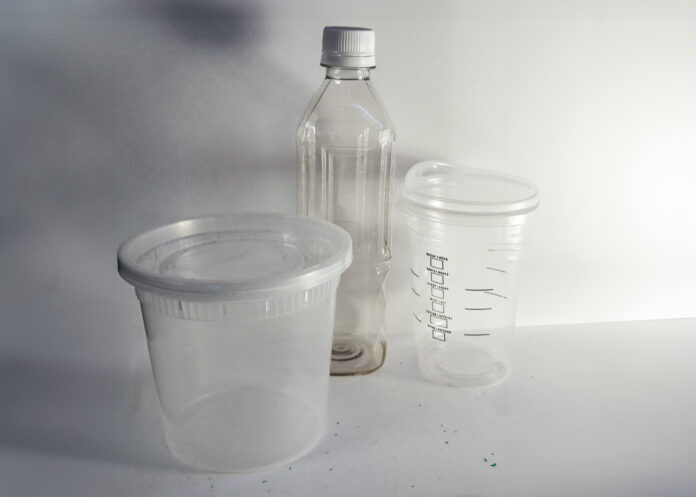
Plastic containers and bottles on a desk
PHOTO: Victoria Lo / The Peak

By: Hailey Miller, Staff Writer

Content warning: medical descriptions and bodily fluids.

Microplastics are everywhere. They’re in our food, clothing, the oceans, lakes — anywhere in nature — and then some. Wherever you go, microplastics follow. Not only are they widespread, but they’re potentially harmful to humans and other species, alongside their habitats. There isn’t a strong consensus on exactly how harmful microplastics are, and what impact they’ll have on our society going forward. More funding is needed to fully understand their consequences, because it shouldn’t be up to individuals to avoid a material that’s present almost everywhere.

Microplastics are miniscule particles of plastic waste that result from the breakdown of plastic products. They can embed in surfaces, through clothes, and even in body cavities such as lungs, breast milk, intestines, and blood. They often include harmful toxins such as Bisphenol A, which can potentially cause diseases of the endocrine and reproductive systems, as well as insulin resistance and cancer. Not only are microplastics a concern for the health and well-being of animals, but they also threaten the vegetation of their surrounding environments. With oceans and shorelines full of plastics, toxins leach into water and surrounding environments. This can disrupt food chains, as microplastics are transmitted between species through animal consumption. Inevitably, species of all kinds consume microplastics without knowing it — as do we. 

There has been recent debate within the scientific community about microplastics, with some arguing that concerns are overblown due to a lack of scientific consensus. However, this wouldn’t be the first time that long-term effects from a toxic substance have taken a while to uncover. For example, lead was used widely for over 5,000 years in products like paint and fuel before it was found to be highly toxic. The same is true for cigarettes, which were found to be harmful in the ‘50s after a century of use. Microplastics were first discovered in 2004, and it wasn’t until recent years that the scientific community started making major discoveries about their presence in human bodies. Although not enough information is known regarding the extent of damage caused by microplastics, that doesn’t mean we shouldn’t be concerned. We can’t sit back and wait for the damage to be done — action must be taken now on a governmental and global level.

As long as plastic continues to be produced, microplastics will still be an issue. And even if plastic alternatives become more commonplace, microplastics will continue to circulate the earth because they never truly disappear. In order to reduce the level of exposure to microplastics present in everything from soaps and clothes, to food and water, we must find effective plastic alternatives, avoid single-use plastics, and reuse items. But we as individuals cannot solve this problem alone. There needs to be a better consensus on how harmful microplastics are to our health, which means more studies are direly needed.

1, 2, 3, 4, We don’t want Outlook no more!

0
Student wearing a grey sweatshirt and green backpack holding up a sign that reads: “SFU Students Against Outlook.”
ILLUSTRATION: Victoria Lo / The Peak

By: Hana Hoffman, Peak Associate

I apologize for bringing this up because I’m sure most of you are still grieving the discontinuance of the old SFU Mail system. However, due to my frustrations with Outlook, I need to rant.

I spent my first two years at SFU using the old SFU Mail, and I was so attached. It was perfect. Transitioning to Outlook just made life so much more complicated. For the first three months or so, I kept forgetting about the change, and I would waste so much time just trying to find the old SFU Mail (old at SFU but young in my heart). How can I “navigate [my] way towards academic success” under these conditions? This transition has negatively affected my grades by eating up my study time. I would love to do my schooling without having to check Outlook every day, but unfortunately, that’s where the profs and TAs always contact me.

To this day, I still don’t know if it’s called Microsoft Outlook, Microsoft Exchange, Outlook Exchange, or Microsoft Outlook Exchange. Which one am I supposed to search up so I can find the right link to my inbox? My oh my, what a hassle it’s been.

Here’s another anti-Outlook point. Having a new email platform means adding another section on the favourites bar. Back when SFU Mail had the red icon, it was way easier to find. That cute little red logo has been embedded in my head and is irreplaceable. But now, no matter what I name the bookmark, the blue will never catch my eye. What should I call it? NEW SFU MAIL, SFU MICROSOFT INBOX, or LOOK OVER HERE? I just don’t want to look at the word Outlook anymore; it hurts my eyes. When I read that word, I actually read “Out-lookaway.”

Other than the issues already mentioned, what’s your outlook on Outlook? Do you see any benefit from it? Maybe we should all just contact each other through the Canvas inbox so that we only need one app instead of two. Are you impressed by any aspect of Outlook? One thing it needs to do ASAP is to make the unsend option last longer because right now, if you send an email and you don’t click “unsend” within the blink of an eye, then it’s permanently out there. It’s just another piece of technology that mocks the slowness of human reaction speed.

Outlook, get out, bro!

How to dress like a professor

0
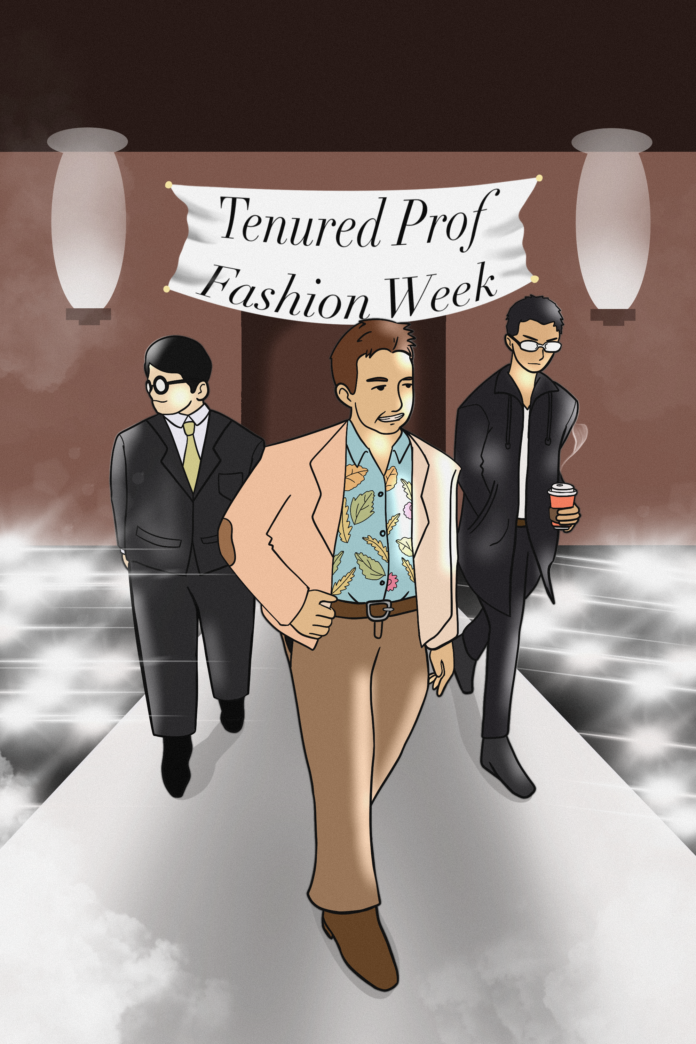
Three professors on a runway. There is a sign behind them that reads, “Tenured Prof Fashion Week.”
ILLUSTRATION: Cliff Ebora / The Peak

By: Yasmin Hassan, Staff Writer

If you’re looking for inspiration for a niche fashion archetype, you don’t have to look to your fave celebs; the professors of SFU are underrated fashion icons. Here’s an essential guide to help you find your true academic chic.

Starting with bottoms, the hottest looks of most tenured profs are usually some form of khaki, cargo, or loose denim jeans. These pants are functional — 15 different pockets for keeping pens, sticky notes, and granola bars — and extremely versatile. They keep everyone around them guessing: are they going to class, or are they going for a hike down the mountain? If you’re not feeling pants, wear a timeless long skirt or dress that goes to your ankles, usually argyle, some funky print, or singlecoloured. You could say profs are promoting quiet luxury.

For tops, tenured profs are all about layering. To emulate this style, you’ll want to layer a t-shirt that has been through multiple finals and grad ceremonies, a flannel or unbuttoned dress shirt, and a dark raincoat. You also have the option to wear a raincoat that is neon orange for extra visibility as you’re strutting down the halls of the AQ. Layering is the answer to all your problems. You can professorize any shirt with this method. The only clean top you have is a Hawaiian shirt? Wear an extremely professional blazer to balance it out.

Now for shoes, tenured profs are embracing the theme of sports casual. Almost all the profs I’ve had wear chunky hiking boots, aerodynamic running sneakers, or clogs. They want to be able to withstand hours of seminars, office hours, travelling from campus to office, and everywhere in between. Personally, if I were a prof, I’d wear slippers because I couldn’t be bothered to try. But in reality, profs aim to balance swag with comfort in a functional but weird way. All the profs that wear heels or heeled boots have a different kind of strength, so it’s not for the weak, wear at your own risk. 

You’ll need a large canvas, messenger bag, or leather handbag that carries your lunch, notes, and everything else you might need, except for that one student’s assignment because it’s sitting on your office desk (whoops). You can wear quirky earrings, chunky necklaces, and perhaps even a bangle or two. Never forget about the infinity scarf that has survived from 2013 and the toque that’s either Arcteryx or North Face. Optional accessories include unconventional king-sized coffee mug, glasses, sunglasses, glasses that turn into sunglasses, sports backpack, biking helmet, and smart phone that has lasted you at least seven years. 

As the weather keeps getting colder, don’t be afraid to change things up when keeping warm. Profs take on fashion with practical, cozy, and effortless looks. If you dress like a prof, you get in the mindset of one. You’ll unlock the secrets of scholars, the way of the academics, one cardigan at a time. Do you think if I dress like my economics professor, I’ll start understanding supply and demand curves . . .? Yes? No? OK.

Nutritious nibbles, Diwali edition: spicy tomato cheese squares

0
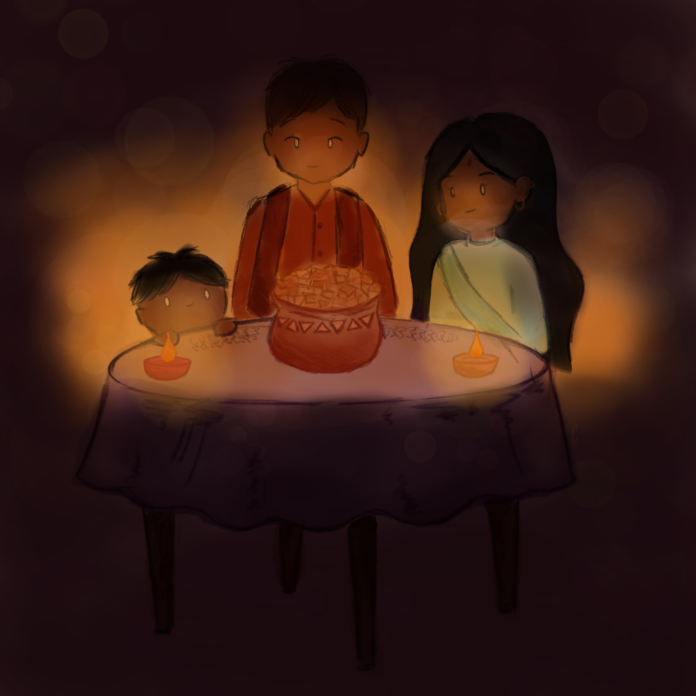
Illustration of people celebrating Diwali by eating small, deep-fried cube snacks
ILLUSTRATION: Winnie Shen / The Peak

By: Dhrumi Mayur Shah, SFU Student

As a child, I remember watching from the living room as my mother prepared delicious, crispy, deep-fried spicy tomato cheese squares — reminiscent of a thicker version of a chip. She learned this recipe from one of her friends who knew my family’s love for the snack. She decided to prepare it every Diwali, and it eventually became a staple at my house during these celebrations! The flavourful bursts of the tangy tomato, hints of the gooey cheese, and the spice from the various masalas are still fresh in my mind even as a teen. Before moving out, I was really fond of this snack, as every flavor reminded me of the festival of joy, lights, and prosperity. As a parting gift, my mother taught me this recipe — even today, every bite reminds me of home. Let’s dive into it!

Ingredients: (makes about 20 squares)

  • All purpose flour (1 cup) 
  • Cheese of your choice (1 cube about the size of a lime) 
  • Salt (a pinch, to taste) 
  • 2 tomatoes 
  • Chaat masala (2 teaspoons) 
  • Chili powder or seasoning of your choice (1 teaspoon) 
  • Beetroot (quarter piece) 
  • Oil (1 tablespoon) 
  • Cream (1 teaspoon) 

Recipe: 

  1. Place a tablespoon of oil in a deep pan or wok at low flame. 
  2. In a bowl, add and mix one cup of all purpose flour, a pinch of salt, a whole cube of cheese, one teaspoon of chaat masala, and chili powder or a seasoning of your choice. 
  3. Separately, boil two tomatoes along with a quarter piece of beetroot for colour. Once boiled and al-dente, strain them into another bowl. 
  4. Blend the tomatoes and beetroot together until it becomes a rich, thick puree. 
  5. Add the puree into the bowl with the dry ingredients. 
  6. Mix the dry and wet ingredients together. Once the dough is thoroughly mixed and has a pinkish colour with the consistency of play dough, start making small golf ball-sized balls of the dough. 
  7. Roll the balls of dough into a thin flat bread. Once these are flattened to your satisfaction (ideally as thin as possible), begin cutting them into diamond-like shapes. 
  8. Once the squares have been cut, fry them in the pre-prepared oil. When the squares start to rise to the top of the pan, put them in a box. For a healthier alternative, the squares can also be air fried in an air fryer for seven minutes. 
  9. After being fried and set aside, let the squares cool to room temperature. 
  10. Sprinkle a teaspoon of chaat masala over the squares, close the box, and shake it well so the seasoning mixes. Once satisfied, open the box, and viola! You have some spicy tomato cheese squares to enjoy for Diwali.

The surreal story of masks and an art movement

0
Three masks. The farthest left mask has stringy brown hair drifting from its top, and green, black, brown, and red splotches creating a face. The middle has black hair as well as black eyebrows and a black moustache. On the right is a black mask with a red mouth, big eyes, and thick white lines.
ILLUSTRATION: Winnie Shen / The Peak

By: Tam Nguyen, staff writer

Content warning: mentions of racial discrimination, cultural genocide, and colonization. 

One of the best documentaries I saw this year was So Surreal: Behind the Masks, which played during the 2024 Vancouver International Film Festival. Created by Cree Canadian filmmaker Neil Diamond and director and actor Joanne Robertson, it follows the modern-day journey of the people of the Kwakwa̱ka̱ʼwakw Nation trying to retrieve masks that were stolen from them in the ‘20s. It also explains how these masks helped ignite the artistic movement known as surrealism

The documentary starts with the Potlatch — a traditional dance ceremony of the Kwakwa̱ka̱ʼwakw Nation to “celebrate life” and important events such as “birth, marriage, name giving, standing up a new Chief, and death.” Potlatches are practiced as “the essence of Kwakwa̱ka̱ʼwakw culture.” The practice was criminalized with the amendment of the Indian Act, which banned Potlatches starting April 19, 1884. This lasted until 1951, with anyone engaged in the Potlatch being imprisoned for two to three months. 

In 1921, during a big Potlatch at Mimkwa̱mlis (Village Island), 45 people were arrested by two so-calledIndian agents” (individuals who “implemented government policy” within reserves, including overseeing the adherence to the Indian Act). The tribe’s Chief signed an agreement to give up their Potlatch masks and ceremonial objects in exchange for the suspension of 22 people. This event marked a turning point for the masks, as they started being sold to private collectors and art dealers. 

The documentary goes on to follow one noticeable art collector, Georges Duthuit, who bought the collection and brought it to Paris, France. During this time, an art movement called surrealism began emerging, with pioneers such as Leonora Carrington, Max Ernst, and Roberto Matta to name a few. The movement quickly spread through Europe, with the main focus being the unconscious, dream-like, and non-conforming nature that allows artists to express themselves freely in painting, literature, and film. 

Moving from Europe to New York City, the documentary travels to where the mask collection would reside for the coming years. Some of the masks were sold at a boutique on 3rd Avenue on the East Side of Manhattan. Surrealist artists who fled Paris to New York at the same time due to World War II were mesmerized by the spirituality and silhouette curves of the masks. Artist Breton even proclaimed that “the masks were more surreal than the surrealists.” As a result, these artists began incorporating these patterns into their paintings. 

Lots of the masks finally ended up in the collection of Indigenous artifact collector George Heye, founder of the National Museum of the American Indian. During this time, pairs of masks that were supposed to stay together were separated due to the ignorance of the collectors. These collectors thought they “accidentally” had two duplicates, so they exhibited one of them and stored the other or sold it for a cheap price to antique stores. 

The quest for the collection to be brought back to their rightful owners has been going on since the ‘60s after the Indian Act was revised in 1951. In the documentary, the people of the Kwakwa̱ka̱ʼwakw Nation are shown working with allies like art dealer Donald Ellis to negotiate with private owners who have the masks. They have also contacted museums and exhibits to retrieve the masks. However, the raven transformation mask is still in the possession of the Duthuit family in Paris. 

This documentary explores Kwakwa̱ka̱ʼwakw history, Potlatches, and their stolen masks with thorough research, beautiful cinematography, and the occasional hand-drawn map. It also shows us the detrimental effects of colonialism and imperialism on Indigenous peoples, and the absurdity of fighting so hard for what is rightfully theirs. 

Climb the mountain of flavours at Karakoram

0
Against a dark background, a bright, white light-up sign reads ‘we keep it halal’ in cursive. Beside the sign is a Palestinian flag.
PHOTO: Yasmin Hassan / The Peak

By: Yasmin Hassan, Staff Writer

On a quiet Thursday evening in October, I found myself walking the streets of a humble Fraserview Vancouver neighborhood. In the midst of this unassuming area, warm orange and yellow-ish lights peered through large windows belonging to what used to be a kebab shop, luring me in without a word. Karakoram — a name derived from the mountain range in between Central and South Asia — is a restaurant offering traditional Pakistani dishes and flavour, opening late and closing even later, from 4:00 p.m. to 2:00 a.m. This is home cooking reimagined in a fine dining restaurant. I grew up eating halal food from Middle Eastern cuisines of all kinds, and I had my occasional Indian food here and there, but no former tasting experience could’ve prepared me for the Pakistani fusion of a little bit of everything.

PHOTO: Yasmin Hassan / The Peak

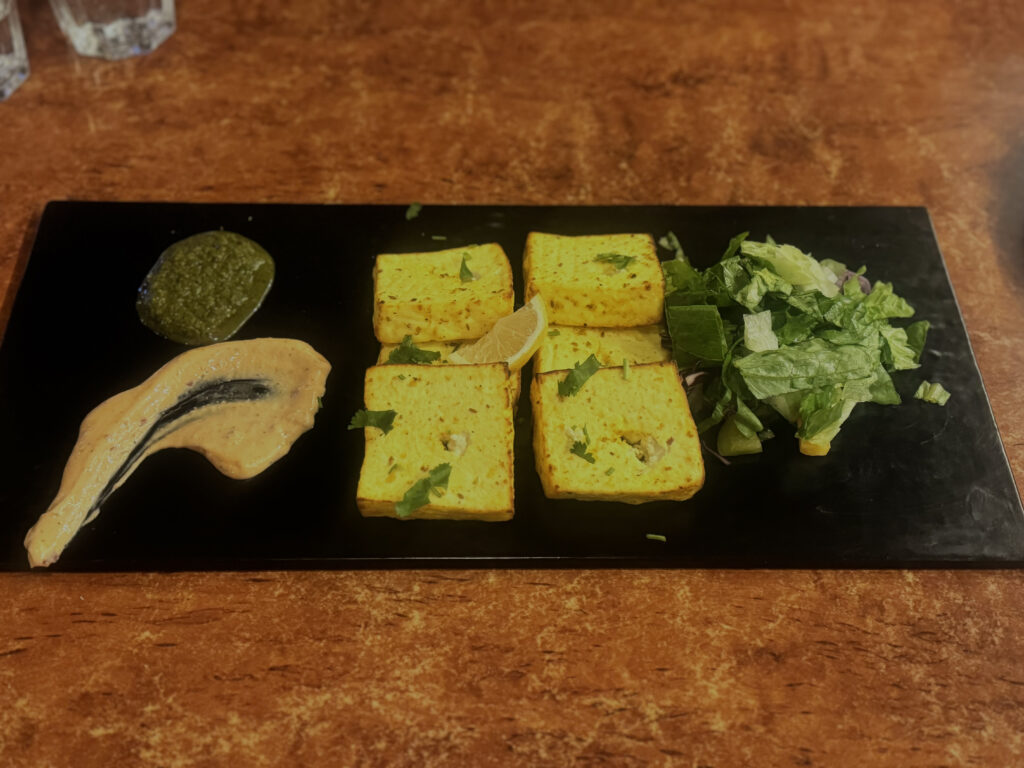
One thing to note before we ordered: we spent a good 15 minutes deciding what to get — that’s just how big their menu is. There’s something for everyone! After paging through each section of the menu, my friend and I decided to start with the paneer tikka. Paneer is a soft, unaged cheese made from curdled milk, and this appetizer called for it to be grilled in spices and served with a fragrant green chutney. If you’ve ever had haloumi, think of it as similar to that but much milder on the palette. It was firm on the outside, softly chewy on the inside, and provided a lightweight, vegetarian-friendly start to our dining experience.  

PHOTO: Yasmin Hassan / The Peak

The special thing about Pakistani cuisine is that it’s a unique blend of regional, Indian, Middle Eastern, and Central Asian influences. Although many compare the similarities between Indian and Pakistani cuisines, there are distinct differences in the use of dairy products and meat. Where Indian dishes mostly use ghee (clarified butter), Pakistani dishes call for butter and cream, which make them richer. 

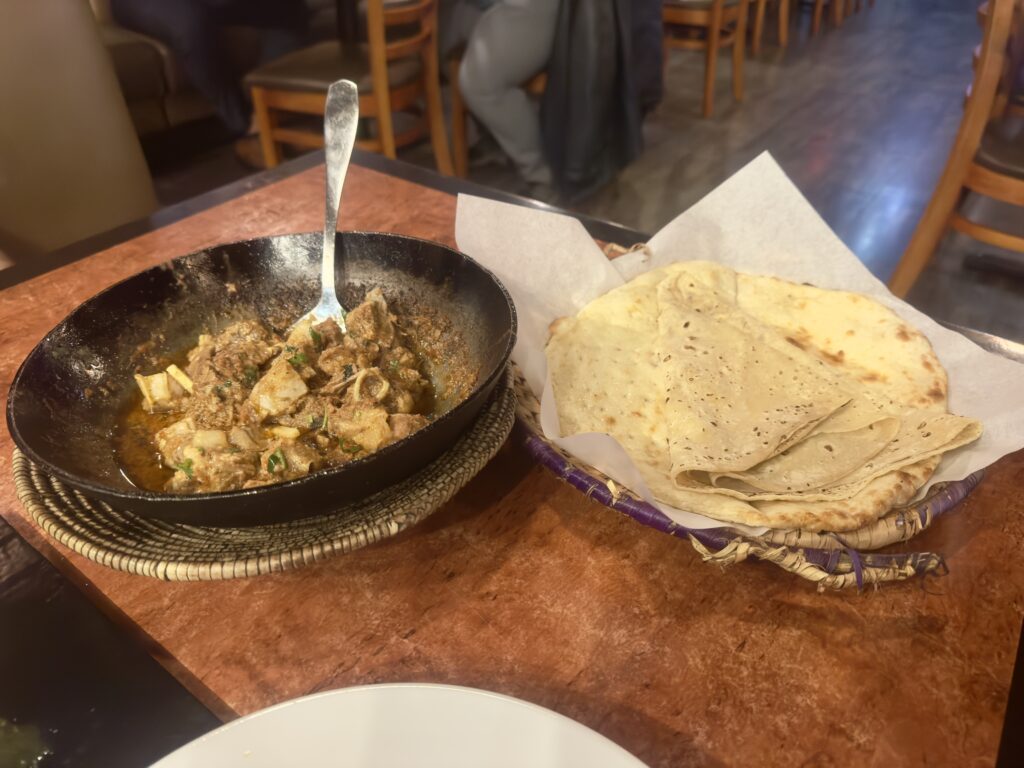
We asked our server what she recommended, and we were told that the house karahi is their most popular dish. Karahi is a thick, gravy-like masala curry with a tomato-green chili-ginger base. This dish originates from the Khyber Pakhtunkhwa region of Pakistan, and is named after the deep pot in which its cooked in; the karahi or kadai. We chose the lamb Karakoram special, which came with fresh buttery naan and roti. Tender lamb stewed in a medley of aromatic spices, vegetables, and garnished with green chilies and coriander, scooped up in warm naan and roti . . . what more do you need to warm you up on a cold autumn night?

When I thought the delights stopped there, I was gravely mistaken. A mango lassi was in our sights, and we both agreed it’d be worth it; boy, were we right. The sweet and tangy mango puree blended with smooth yogurt soothed our mouths and stomachs after all the savoury goods. It was a reminder to never skip dessert. We were interested in the falooda — a popular Mughlai dessert made with vermicelli and milk — but they unfortunately didn’t have it, as delicious as it sounded. The Gulab Jamun looked like the next best thing, and I hate to pat myself on the back, but it was. Fried khoya dough soaked in fragrant rose-water and a sugary syrup, garnished with almond slivers; what a way to end off the night. For those of you who are seasoned vets or are curious in exploring halal cuisines, give Karakoram a try! You won’t regret it!