Home Blog Page 74

Creative Corner: Cosplaying to get into the Halloween spirit

0
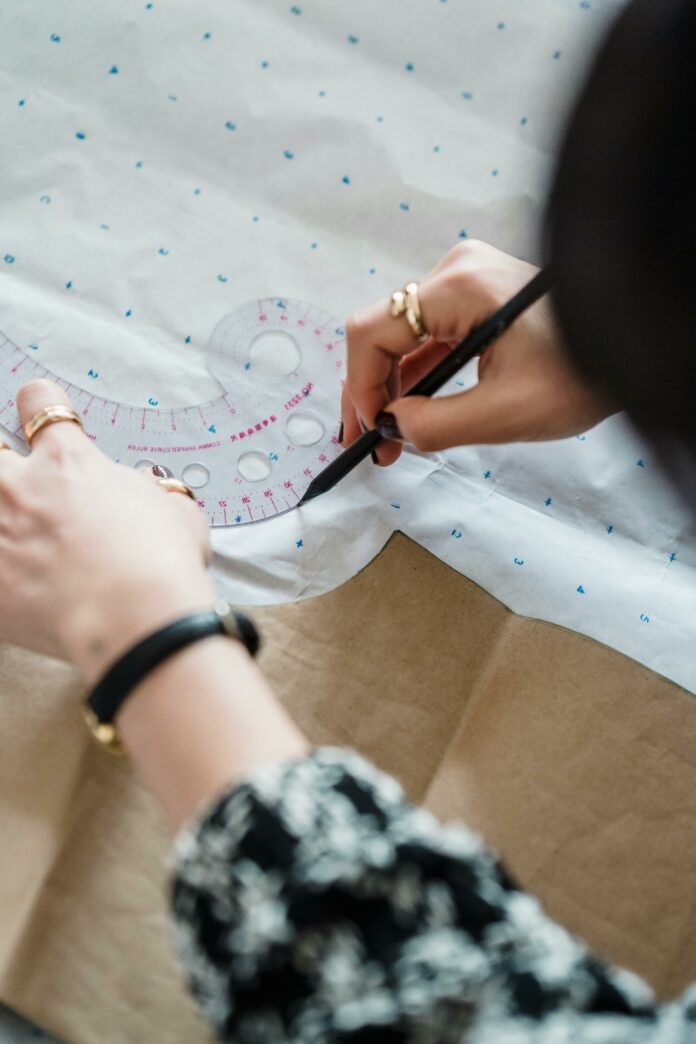
A person holds a ruler-labeled stencil down on a sheet of marked paper. Using another hand, they use a pen to trace around the stencil.
PHOTO: Michael Burrows / Pexels

By: Cindy Wang, SFU Student

I’m a digital artist who loves to draw and design my own original characters. It’s been a passion of mine since I was a teenager. However, ever since the COVID-19 pandemic hit, my mental health has rapidly worsened from the stress of university, resulting in art block. My passion for drawing has been dwindling for a while, but this year, I found a way to break out of that funk. I got out of my comfort zone and took up a new creative hobby. 

Dressing up isn’t exclusively a kid’s activity — it should be for everyone who wants to bring out their Halloween spirit. I wanted to dress up for Halloween, but when I went to the store, the costumes were so expensive. I didn’t want to spend $90 on something I was never going to wear again, so this spooky season, I decided to try DIY cosplaying.

Cosplay involves dressing up as popular characters from media as a year-round hobby (by buying or creating a costume). I’ve done a bit of cosplaying before, particularly in high school. I made a Kagamine Rin cosplay for one Halloween and a Todoroki Shoto cosplay for another. Although I enjoyed making those costumes, I haven’t created any more since I started university. I enjoyed making those costumes a lot back then and I wanted to start pursuing it again, so this year, I made it my mission to do it differently. This season heightened my Halloween spirits and gave me a new passion project.

At first, I was a little overwhelmed. Although there were a lot of characters I wanted to dress up as, their designs were too complicated — I didn’t have enough time to prepare all the necessary materials. As a beginner cosplayer, I decided to create a simple costume using old clothes from my storage. I rummaged through my closet and found an old green dress. I looked up “characters with a green dress” and saw an old childhood favourite — Fiona from the Shrek movies.

Since Fiona’s dress was pretty similar to mine, I decided to try replicating her costume. She had some yellow linings on her dress, so I cut up an old yellow shirt of mine and glued it on my waistband and neckline. For the flower pattern top, I decided it was easier to paint the details with some gold paint. A bit of pride swelled in me as I admired the finished design — both from how it looked and how I made it. To finish it off, I went to the costume shop, bought a wig and some green face paint, and made the ogre ears out of cardboard. The cosplay turned out pretty good for a low-budget project and I was proud of my work. 

It felt amazing making my Fiona cosplay. It was a lot of hard work, but the finished product was worth it. Not only am I excited to dress up as her for Halloween, but it also helped me overcome my art block. I’ve even taken up drawing again! This spooky season really inspired me, not only with reigniting this high school hobby of mine, but also with helping me get back into my artistic passions. 

Burnaby barred from speaking out against TMX under $20.1 million deal

0
This is a photo of the Trans Mountain Burnaby Terminal tank farm.
PHOTO: Amirul Anirban / The Peak

By: Mason Mattu, SFU Student

The City of Burnaby recently struck a $20.1 million deal with Trans Mountain Corporation to prohibit any negative public communications about the Trans Mountain Pipeline expansion project (TMX). This comes after the city published a risk assessment report investigating the “potential for disaster from a major incident at a Trans Mountain Pipeline facility.” The report details risks such as oil spills, tank fires, and explosions at the Westridge Marine Terminal and the Burnaby Mountain Terminal

This $20.1 million deal, dubbed a “community contribution agreement,” comes with a promise from Trans Mountain to invest in emergency planning and safety enhancements. The deal prohibits either party from publishing “any negative public communications” about the other “whether based on fact or opinion or otherwise.” 

In 2019, Vancouver experienced the height of protests against TMX. Trans Mountain Corporation is a Canadian Crown Corporation that has operated in Canada since 1951. Their latest project, TMX, will see oil transported from Alberta to BC for export. In 2020, “the Sḵwx̱wú7mesh (Squamish) and səlilwətaɬ (Tsleil-Waututh) Nations, the C’eletkwmx (Coldwater People), and a coalition of smaller Indigenous Nations” expressed concerns about protecting the environment and their rights

Though the City of Burnaby agreed to the deal, Burnaby mayor Mike Hurley stated in 2019 that the expansion of TMX “[ignored] public safety and environmental threat to people whose lives and property will be at risk moving forward.” This year, however, Hurley told CBC that the “reality is, those tankers are coming in now. There’s one getting filled every day.” He added, “Oil is still flowing through Burnaby Mountain and down to that loading facility [ . . . ] and we can’t be prepared without an agreement with TMX about how that’s going to be managed.” 

Burnaby councillor Alison Gu told The Peak, “The City of Burnaby, particularly myself, remain opposed to the project, but have little to no tools for recourse.” She also said, “what should be happening is supporting municipalities who are faced to bear the brunt of decisions made at other levels of government.”

Duff Conacher, a representative from Democracy Watch, expressed his concern on this issue, stating that Trans Mountain “has essentially bought the silence of the city, and at the same time, the city has essentially gagged itself.” 

In addition, Green Party leader Elizabeth May said, “This type of agreement should not be legal in Canada,” in a statement on October 8. “Our governments, at all levels, must have the ability to openly scrutinize and hold companies accountable for actions that threaten public safety and the environment.” She added, “Since TMX is a Crown Corporation, this is public money shutting down free speech.” 

In a statement to The Peak, the City of Burnaby stated, “The community contribution agreement signals our commitment to public safety, recognizing that the most effective way to ensure the safety of residents is to work collaboratively with Trans Mountain.” They added that the deal “does not restrict mayor and council from voicing their opinions on matters concerning Trans Mountain.”

Trans Mountain is currently finishing construction on the Burnaby terminus on top of Burnaby Mountain, close to SFU.

What Grinds Our Gears: TikTok’s constantly-changing layout

0
A Tik-Tok screen on a phone
PHOTO: Ivan Radic / Flickr

By: Dani Santos, SFU Student

Change isn’t always good. Especially when that “change” happens every couple of weeks. 

To me, TikTok is a form of escape. An escape should be something that provides comfort, joy, and familiarity. But how am I supposed to feel a sense of familiarity when TikTok’s layout changes every time I open it!? 

TikTok has experimented with different kinds of feeds their users can choose from: Friends, Following, For You, Explore, Shop, and even a STEM feed. 

Sure, it’s nice to have all these options to choose from, but why do some occasionally disappear and reappear? Sometimes they even move and switch around different spots. It’s disorienting! There have been moments where my mind has been conditioned to press the “Friends” button at the bottom of my screen for it to have been moved to the top and I end up pressing the “Shop” button instead and it grinds. My. Gears.

I just wish TikTok could just decide on a layout and stick to it for as long as possible (or at least for long enough for users to get used to one).

Your Red Leafs Halloween costumes

0
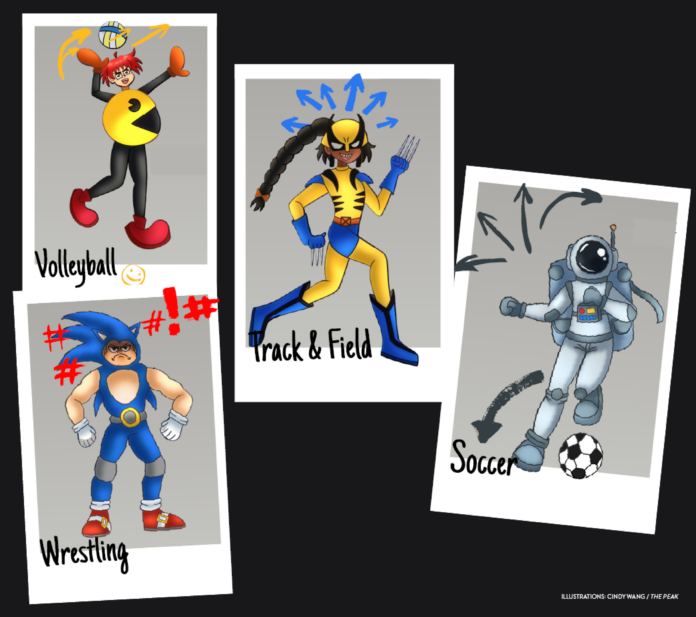
Four costumes for one SFU sports team. Volleyball is a girl with orange hair wearing all black and a Pac-Man costume. Track and Field is a girl dressed in X-Men’s Wolverine costume, with a yellow jumpsuit and blue boots gloves, shoulderpads, and shorts. Wrestling is dressed in a Sonic costume that is blue with spiky hair. Soccer is dressed in a gray astronaut costume while kicking a ball.
ILLUSTRATIONS: Cindy Wang / The Peak

By: Yildiz Subuk, Staff Writer

Halloween is the perfect opportunity for groups to coordinate costumes. If you’re part of a team, discussing what to wear for this holiday can be a great bonding experience, but picking from the endless possibilities can be overwhelming. The Peak has researched and found some fun group costume suggestions for SFU Red Leafs teams to try out this spooktober.

Track & field

The X-Men saga has provided pop culture with one of the most diverse casts of characters. These superhumans are not gods, but individuals whose unique gifts make them stand out. They’re the perfect team costume for those who love comic books, but also those looking to pull off a dynamic and eye-catching costume. There are hundreds of characters with all sorts of variations to choose from. If you’re looking for fairly simple costumes, the ones from the film X-Men First Class work the best, as they only require a black and yellow jacket with black pants. The Red Leafs track and field program is filled with some remarkable athletes, so what is more fitting than dressing as some of the most iconic superhuman characters from a beloved franchise?

Men’s & women’s soccer

Space is key when it comes to soccer. Understanding how to find, create, and take advantage of space is integral to a team’s performance. On the pitch, teams work together to find and navigate whichever empty space can be found. Who else are experts at navigating space? Astronauts. Well, maybe not that kind of space, but close enough. There are plenty of places one can draw inspiration from when it comes to astronaut-themed costumes the Apollo 11, with their bulky white suits, the Nostromo crew outfits from the film Alien (1979), or even the characters from Star Trek’s iconic crew the U.S.S. Enterprise. Instead of shooting at a net, this Halloween, shoot for the stars!

Men’s & women’s wrestling

While wrestling isn’t all fighting, a combat sport invites some rowdy but exciting costume opportunities. For these teams, The Peak suggests dressing as your favourite character from the video game series Super Smash Bros. While Mario, Luigi, and Sonic the Hedgehog are all great choices, there are a lot of other great fighters to choose from. You could dress as Kirby (wear a big sumo suit and paint it pink), Bowser (if you have a big turtle shell and a bit of an attitude, you are set), or if you are wholesome and cheery, try Toad. The wrestling team knows better than anyone how to win a battle with endurance, strength, and the ability to push someone off a platform. You are all Smash Bros characters at heart.

Volleyball

Volleyball requires an immense amount of coordination, which means the best costume suggestion for the team is one where everyone comes together. Pac-Man and the Ghosts may not seem like conventional choices, but think about it the ghosts are always trying to coordinate ways they can trap and defeat Pac-Man. For this group costume, one person (maybe a coach) can dress up as Pac-Man while the rest of the team goes as different coloured ghosts!

Horrorscopes: October 28 – November 3

0
An illustration of a girl, stars and astrological signs strewn in her hair.
ILLUSTRATION: Marissa Ouyang / The Peak

By: Sarah Sorochuk, Peak Associate

Aries
March 21–April 19
Aries! The Karens of fall. You have just awakened in time for spooky season and are entering your natural state. Be aware not everyone is like you! They won’t care when you are possessed and order every fall-flavoured drink off the menu at your local café. But we will get testy when you inevitably complain that the drink doesn’t have enough pumpkin, cinnamon, or syrup. So you might be in your natural habitat, but fall will bring the evil out of the rest of us.

Taurus
April 20–May 20
I see you! I know you, and we both know that you will be getting into that stash of candy far before October 31 shows up. We both know you will be hitting the stores, buying the bulk boxes of chocolate, chips, and candy — and keeping a pile for yourself. I’m sure you are already a regular who buys candy at every store you visit. So why not take advantage of the spooky season? 

Gemini
May 21–June 20
Moody, impulsive, devious, guarded, and possibly acting childishly. Are you Beetlejuice? Do your negative traits align with all the good ones from Betelgeuse? I bet you’ll watch it in theatres and then ask why Beetlejuice seems so familiar. Don’t ask me; the answer’s within yourself.

Cancer
June 21–July 22
This is supposed to be your time of year! Fall romances! And yummy fall flavours. But now you remember October 3, when it was National Boyfriend Day, and you were sitting there alone. Once again, you are living without a cute autumn romance. The best you have are the boyfriends and girlfriends within the pages. Bring your favourite romance novel to an upcoming Halloween party to show your suitors exactly what you’re looking for.

Leo
July 23–August 22
It has become “Sweater Weather,” and you are rushing to all the stores for the hottest new knit sweaters to fit the aesthetic with a PSL in your hand. Your bank account might be screaming “no,” but your shopping obsession and the love for a new outfit take over and say “yes!” The new sweater will be yours, and now you’re all stocked up for fall with a full Hallmark-style wardrobe. However, since it is Halloween, expect the price of looking fantastic to be horrifying.

Virgo
August 23–September 22
You all tend to be perfectionists — so good luck carving and hollowing out your pumpkins. The slimy, gross insides do have to come out. RIP Virgos. Since you’re looking for things to stay calm and in control, this is the wrong season for you. It’s Halloween, nothing is normal, but do not worry, you’re still the pick of the pumpkin patch, darlin’.

Libra
September 23–October 22
Libras, we know you. And we know you have been hoping and dreaming of living your Red era with a cute autumn romance like Taylor and Travis in a football stadium after the Superbowl. So you are probably going to dress up as Taylor’s Red era and your friends, as her other eras for Halloween. But we know that the majority of you, (90%) are going to end up looking like evermore. We all know the season, “All Too Well.”

Scorpio
October 23–November 21
Like Regina George, you want to control everything from the people sitting with you to your friends’ clothes. But reality check time, Scorpios, you can’t bully or even fight the weather. The leaves will change colour regardless. Goodbye summer warmth, and hello, fall cold. But don’t let that stop you from showing some skin. “Halloween is the one night a year when [anyone] can dress like a total slut and no other [people] can say anything about it . . . ” Although if you are itching for a fight, I hear arguments over the most popular Halloween movie of 2024 are all the rage. 

Sagittarius
November 22–December 21
We knew lots of people would attend fall kickoff. Including the YOLO, free Sagittarius, who has approaching midterms they should be studying for. But then again, Sagittarius are typically business students and what do you really have to hand in? Business plans? Colouring sheets? Aside from that, be safe out there peeps, enough movies have shown the group of friends at a party screaming YOLO tend to die first. 

Capricorn
December 22–January 19
Self righteous, you are the killer in the story. Don’t blame everyone from running from you this Halloween, you feel it don’t you? Did something happen and now you’re a changed person? Are the spirits taking control? When you zone out, or become distracted, how much control of your physical form do you really have?

Aquarius
January 20–February 18
We all want to be the Rory Gilmore of fall, but you know who tops everyone? Aquarius, with their “it girl” quirks, and wannabe fall vibes. They are bound for trouble this Halloween. Or the alternative is spending the whole night indoors with a good book and a coffee. Either way, Aquarius are going to have a spook-tacular night for themselves.

Pisces
February 19–March 20
Pisces, best to go out this Halloween! Ideally a corn maze with your friends, where with your dreamy escape from reality vibe you will surely get lost. Allowing the possibility of your own Lara Jean moment in the meadow. Where you get to live your happily ever after, only after getting tragically lost in a maze. I hear “cat and mouse” has been a popular game recently. Best not to lose your opportunity for a fall romance to be replaced with a “Corpse Bride” style situation, and Halloween funeral. 

Marigolds for Día de los Muertos and beyond

0
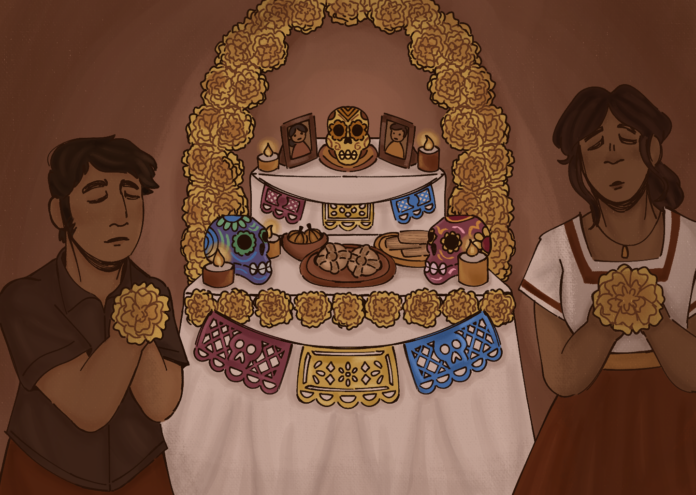
A man (left) and a woman (right) stand on each side of an ofrenda decorated with marigolds, papel picado, talavera skulls, various types of food, and framed photos of people. In the man and woman’s hands are marigolds.
ILLUSTRATION: Abigail Streifel / The Peak

By: Maria Fernanda Osorio Arredondo, SFU Student

Grief is a universal language expressed differently by everyone. Día de los Muertos (Day of the Dead), despite being known for its colours and joy, acknowledges the heartbreak of losing someone. Honouring the memories of a deceased loved one has allowed me to understand that I’m hurt because I care — more than that, because I love. I don’t put the latter verb in the past because death doesn’t mean you stop loving. Author Jamie Anderson notes that “grief is just love with no place to go.” To me, Día de los Muertos is an opportunity to reconnect with this love, and marigolds are the pathway to that reconnection. The Aztecs believed that the powerful scent of cempasúchils (marigolds) is what guides your ancestors back to you during Día de los Muertos. The flowers’ aroma is key in dissolving the barrier between the world of the living and the dead. 

My maternal grandmother had an unbelievable green thumb. She used to say that in order for your plants to thrive, you must have a kind soul. However, I once bought an air plant, which didn’t even need soil, and I still managed to kill it in record time. 

Both my mom and I are terrible with plants, so for this Día de los Muertos, we decided to look for artificial flowers as an offering. As we looked at the selection in the dollar store, reveling in their realism, I was tempted to bow my head and discover their plastic fragrances. 

My mom pointed to an orange flower and asked my thoughts. Before I could answer, a lady beside us quickly took the flower and left. I grimaced and asked, “Is there another?” 

My mom searched briefly and cursed. I suggested we take a fall-coloured rose as a replacement. It might be cliché, but my favorite flowers are roses. I liked how these ones curled up on themselves, petals hugging petals in a hypnotizing spiral. 

After baking pan de muerto (bread of the dead) and inundating the house in a sweet orange smell, my mom prepared the ofrenda, an altar to honour our deceased loved ones. On a wooden table, she put pumpkins of different sizes, autumn leaves, talavera skulls, papel picado banners, pan de muerto, photographs, and the flower we purchased. Traditionally, marigolds would adorn the ofrenda, but as a diaspora family, we sometimes need to improvise. 

In Mexico, a legend says that marigolds were “miraculously gifted to the Nahua people by Tonatiuh, their sun god, so that they might honor their dead.” During Día de los Muertos, it is thought that marigolds “guide the spirits of the deceased back to the world of the living.” Similar to Día de los Muertos, marigolds are important in various Hindu festivals like Diwali and Navratri. They also play a central role in weddings and religious ceremonies. In India, marigolds are associated with “purity, auspiciousness, and the divine.” Symbolic of the sun’s energy, these flowers are believed to chase away negative auras and evil spirits. 

Khushi, a close friend of mine, is the one who introduced me to the meaning of marigolds in India. We quickly bonded over our common backgrounds as older sisters who are passionate about art. Upon learning about our shared connections to the orange flower, we decided to nickname ourselves “marigold sisters.” 

“Grow your colours, / marigold / Golden rays / Don’t you hideaway / Show your colours, / marigold.”

The lyrics above from Anusha Savi’s song “Marigold” represent how marigolds help us celebrate others and ourselves. Savi’s song, which Khushi shared with me last summer, made me realize how my love for marigolds is rooted in both collective cultural and individual experiences. Marigolds, even when impersonated by a plastic rose, have made me feel closer to people living and dead. There’s no need to say “they love me, they love me not” while plucking petals to feel loved around the vibrant and warm colors of the marigold.

The living tradition of Día de los Muertos

0
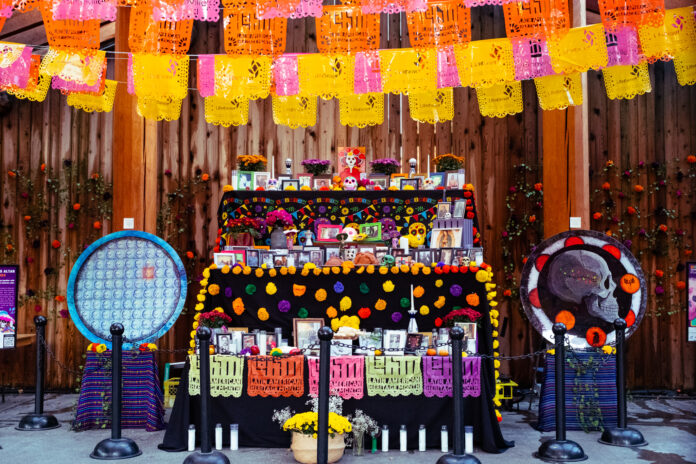
A photo of a Day of the Dead altar
PHOTO: Emily Le / The Peak

By: Daniel Salcedo Rubio, Features Editor

Día de los Muertos (Day of the Dead) is a traditional celebration, originating from a mixture of Indigenous and Spanish cultures. The death cult was a core aspect of Indigenous cultures — families of those who had passed away organized parties to guide them towards the Mictlán (the underworld) and offered them food that they liked. The Day of the Dead was seen as the momentary return of those souls looking to spend time with their families and nurture from the food offerings in their altars — it was, and continues to be, a celebration of life. With the coming of the Spanish colonization, many traditions were adapted to the Catholic palate and were mixed with Catholic rituals — this was the case for the Indigenous vision of the Day of the Dead, which gave origin to the contemporary tradition. 

While the name of the tradition specifies “day,” the reality is that, in Mexico, the celebration takes place over several days, in many different forms. In Mexico City we hold events such as the annual Day of the Dead Parade, and throughout the entire month of October, day-to-day shops such as bakeries, florists, and street vendors sell pan de muerto, cempasúchil, alebrijes, and calaveritas. Pan de muerto and calaveritas are typical treats of the month, each with their own unique symbolism. Alebrijes, which are sculptures of magical creatures, are a more recent addition to the festivities. Created by Pedro Linares López in the ‘30s, they were “revealed” to him in a fever dream. Cempasúchil flowers are probably one of the most iconic items of Día de los Muertos. Not only do they have a unique scent and bright, orange petals, but because of their importance and symbolism in the tradition. Considered by the Mexicas (also known as the Aztecs) as a symbol of life and death, in an ofrenda it marks the path meant to guide the souls to the ofrenda. However, one of the most recognizable ways of celebrating this tradition tends to be more intimate: the family ofrenda. 

Ofrendas, a word which translates to something close to altars, are made to honour our loved ones who have passed away. The belief behind them, similar to the pre-Hispanic traditions, is that our loved ones come back to the land of the living, and as such we decorate and build our ofrendas with items that remind us of them. While the official tradition only considers the ofrenda to be from October 31 to November 2, it has evolved. October 27 is the day to honour our animal companions, “October 28 is for those who had an accidental or tragic death, October 29 is for the forgotten and the souls in purgatory, and October 30 and 31 is for the children who died unbaptized.” While this might seem complicated, the core aspects of the ofrenda will remain the same.

First, comes the placement and overall structure of the ofrenda. Typically, ofrendas are made of two to three levels, representing heaven, earth, and purgatory. However, the tradition actually calls for seven levels, representing seven of the nine strata of the Mictlán. Also, while not a well known fact, the ofrenda should be built facing towards the sunset. In my home, we always opted for just one or two levels, with one being the floor and the other one a couple of small wooden crates covered in a white table cloth. Once the basic structure of the ofrenda is ready, we can start collecting the essential items and decorations: cempasúchil, calaveritas, papel picado, fruits, pan de muerto, and most importantly, photos of your loved ones. 

We usually lay out the papel picado, chopped paper, first. Papel picado is meant to represent the “fragility of life,” because, if you have held one in your hand, you know just how fragile these are. It can be placed both flat as a mat or hanging from the ceiling or from one of the levels of the ofrenda. As for colours, we usually stick to orange, purple, and light blue, which nicely complement the colours of the flowers and other decorations, but many ofrendas don’t stick to this rule and use a variety of colours. 

Next, we usually take a couple of cempasúchil flowers and spread their petals all over the ofrenda. Some people like to get creative and make entire pieces of art using petals of different flowers. An ofrenda should also include a flower arch, made with cempasúchil flowers, representing the entrance to the land of the dead. However, this element might not be present as it’s a bit harder to set up. Finally, we also spread a couple of cempasúchil and purple celosia flowers throughout the ofrenda.

Then comes the food and drinks. Here, the most important part of the tradition is to offer the favourite foods and drinks of your loved ones, so don’t worry if you can’t find pan de muerto or calaveritas. Both of these items are typically found in an ofrenda, while not required, they are liked by so many so it’s almost impossible to find an ofrenda without them. Pan de muerto, which translates to bread of the dead, is a type of pan dulce (sweet bread) that is usually only baked during this time of the year. Similarly, calaveritas are candy shaped as a skull, usually made out of sugar or chocolate, and are used more as decor than as actual food, but you can definitely eat them — a reminder that death can also be sweet. While pan de muerto isn’t required, an offering of bread is usually included in the ofrenda, following the Catholic symbolism of it being the “Body of Christ.” But back to the important aspect: the favourite foods and drinks. Those who have passed away are coming all the way back to the land of the living, and as such we offer their favourite foods and drinks to honour them. This includes fruits and snacks, complex dishes such as pollo con mole, and alcoholic drinks such as tequila — so if you’re honouring someone who loved timbits, then you better add some timbits to your ofrenda. These items are placed in the lower level of the ofrenda, in what would represent the earth. Plate them as nicely as possible and don’t forget to leave a glass of water, they’re probably thirsty from their trip.

Now, our loved ones. Print photos of them and put them in a nice frame, they’re going on the top level, the one representing heaven. There isn’t much to say decor wise, but this is probably the most important step of building the ofrenda. Funny story, in my first ofrenda competition, we were meant to build an ofrenda for Mexican celebrities. However, I misunderstood the assignment; I thought it was an ofrenda for historical figures and printed a photo of Mexican dictator, Porfirio Diaz. It was a bit hard to explain what Don Porfirio was doing among the photos of celebrities like María Félix or Pedro Infante. Talking and remembering the life of those who have left us as well as the love we have for them is part of the tradition. That’s why a lot of people have started to also include photos of their pets in their ofrendas, and we’ve even dedicated an entire day to them — October 27, the day where the souls of our pets return. While the title of the celebration alludes to death, this tradition is really rooted in the celebration of their life and the love we have for them. 

Finally, the finishing touches. Cempasúchil petals guide our loved ones to their ofrenda, so we make a path with them, from the outside of our house all the way back to the ofrenda. Smaller towns, such as the one seen in Coco, go the extra mile and create a path all the way from the cemetery and back to their ofrenda — just as the tradition dictates. While candles are part of the tradition, due to them being a fire hazard, we don’t include them in my home — be careful and take appropriate precautions if included. The ofrenda concludes with the aromatics. Cempasúchil by itself has a pleasant scent, but other aromatic plants tend to be included throughout the ofrenda: laurel, rosemary, and thyme give a pleasant smell that harmonises with the scent of cempasúchil and are believed to purify the air.

These are the core aspects of an ofrenda, but feel free to add more. With the addition of a day to commemorate our animal companions, some have also included their pet’s favourite toys and treats. Some include toys so the children visiting will have something to play with or unusual items with strong ties to their loved ones’ memories: watches, pieces of clothing, or music instruments. Día de los Muertos, and by extension the ofrenda, are intimate ways to celebrate and commemorate the life of those we love and who have passed, so really, you just need to make your ofrenda reflect that sentiment and enjoy the festivities.

City of Vancouver to cut down 160,000 trees in Stanley Park

0
This is a photo of a few tall trees in Stanley Park.
PHOTO: Karen / Flickr

By: Sofia Chassomeris, News Writer

On October 8, the Vancouver Park Board voted to proceed with their “Hemlock Looper Response and Mitigation Plan.” This comes months after a report submitted by “Canadian forestry consultant company” B.A. Blackwell & Associates Ltd. declared “over 32% of the trees in the park” have been damaged by hemlock looper moths. With phase two now underway, the City of Vancouver has already begun removing what could be 160,000 trees.

The hemlock looper moth, a native species, has been damaging and defoliating trees in Stanley Park since an outbreak was identified in 2020. The moth is named “hemlock” for the moth’s main host in western Canada — western hemlock trees. Looper outbreaks are “part of the natural forest ecosystem cycle” and “occur every 11 to 15 years.” 

The Peak interviewed Michael Caditz from the Stanley Park Preservation Society (SPPS), a registered non-profit committed to protecting the park from “irreparable harm due to actions of political officials without evidence-based scientific justification.” The City of Burnaby stated that although the hemlock looper outbreak occurs “roughly every 15 years” the 2020 outbreak “resulted in significant tree mortality in the park causing an elevated risk to public safety.” Caditz stated that a majority of the hemlock trees being removed are due to Blackwell’s claim in their report that they would become hazards, but this claim is “completely speculative.” He said the Park Board is proceeding with the project “without sufficient scientific basis for their claim that they will become hazards.”

Amit Gandha, director of parks, said, “Compared to other conifer species, western hemlocks are more susceptible to disease, windthrow, and stem breakage. Add to that, several years of drought and intense winters — and the trees in Stanley Park were more vulnerable to this insect outbreak and unlikely to recover.” Conifers, also known as evergreens, are a “large group of resinous, cone-bearing trees and shrubs.” Blackwell presumes the trees will fall and even increase the risk of wildfires if they aren’t cut down. In contrast, Caditz said, “The logging operation that’s being conducted now will increase the chances of wildfire and the chances of harm being caused by trees falling.

Over the past few months, “seven highly qualified experts” have toured and assessed Stanley Park to report on its damages, according to Caditz. However, the SPPS stated “neither public consultation nor peer-reviewed opinions were obtained prior to awarding the contract and embarking on the project.”

Earlier this year, four plaintiffs, including Caditz, filed a notice of civil claim against the City of Vancouver, the Park Board, Blackwell, and Joe McLeod, manager of urban forestry with the Park Board. A civil claim is a “legal dispute between individuals, businesses, and governments.” The plaintiffs allege the city has been negligent in their decision to remove thousands of trees.

“The relief that we’re seeking [from the suit] is to order the city to only remove trees that are an imminent hazard,” Caditz told The Peak. “We would expect the city to monitor the park and to mitigate trees that were [ . . . ] properly assessed.”

Caditz said standard assessment involves using the tree risk assessor qualification (TRAQ) method to identify and report individual trees that pose immediate danger. “They claim they are using the TRAQ system, but they’re not,” he said. “They are doing forest thinning in mass. Without documentation, without assessing individual trees, they are cutting down thousands of trees with no verification that the trees they’re cutting are immediate hazards.

“The overwhelming consensus [is] this logging operation is making matters much worse and much more dangerous than the looper.” 

The SPPS is collecting signatures for a petition to stop the logging immediately.

The Peak reached out to Blackwell for comment but did not receive a response by the publication deadline.

New mother’s tent seized at CRAB Park

0
CRAB Park in Downtown Vancouver
PHOTO: MikoFox / Flickr

By: Sofia Chassomeris, News Writer

On September 24, Vancouver Park Board officials cut open a new mother’s tent and disposed of her belongings at CRAB Park. The mother gave birth to her baby 30 hours before the incident and was speaking to outreach workers when the incident occurred. 

“They took a knife to the tent and then let the garbage people take it. I heard my air mattress popping in the truck,” said the woman. “It’s demonic.” The mother and her child are now staying with friends and family.

The tent city has been a community for many people without housing for the past three years despite the Park Board’s efforts to remove it. CRAB Park advocate Fiona York told CBC that “usually an encampment is swept or evicted within a year or less,” but this tent city is an exception due to a court ruling in 2022 that declared “there weren’t enough indoor spaces for those people to go to.” In 2023, the “Vancouver Police Department spent $409,536 to deploy dozens of officers over eight days” to do a street sweep at East Hastings.

In an interview with The Peak, York said the camp at CRAB Park “has an infrastructure, culture, and governance guided by residents themselves” with support from volunteers, community organizations, and many individual donors. As of late September, seven tents in the CRAB Park Designated Area remain. There were originally 16 in this area.

York also told Vancouver is Awesome that the use of force by park rangers is a regular occurrence that is part of a larger, “slow-moving decampment of the site.” A similar case occurred in June, making it the second time this year that a new mother’s tent and belongings were taken from her. The first incident was carried out while “the new mother was still in the hospital after delivering her baby. 

“Seizing tents and belongings directly after a birth is reminiscent of racist, colonial practices of removing children from families, and forced evictions,” stated advocates in a recent press release. These actions echo the Sixties Scoop, which was “the mass removal of [Indigenous] children from their families into the child welfare system, in most cases without the consent of their families” through the 1960s.

York explained that “Vancouver is unique, as no other city in Canada has a separate Park Board and city officials.” On-duty park rangers have “all the power and authority of a police constable” but are “not subject to the Police Act,” which allows for complaints to be made about abuse or misconduct from officers.

In the press release, advocates also noted that there has been a “major escalation” of the Park Board’s control over CRAB Park. For instance, “notices” were issued to residents concerning “rat attractants” inside the tents. The advocates stated that this “violates even the very low bar of the Park Board’s own bylaws that say the rangers cannot enter or open tents without at least 24 hours written notice.” York said the notices are “so-called ‘notices of violations’ of the park bylaws” — bylaws “changed in April 2024” that are “now far more restrictive.”

In the interview, York emphasized the “importance of lived experience” in informing decisions surrounding the camp. The bylaws previously mentioned were used as an example: “All of these were developed without input by those most affected.”

Earlier this year, CBC News reported on “the endurance of [the] community” against the city’s efforts to evict residents from the park. In December 2023, the residents filed a human rights complaint against the City of Vancouver and Park Board, claiming the city was discriminating against them for “failing to provide proper sanitation, electricity, protection from extreme heat, and good-faith consultation.” The date of the hearing has not yet been confirmed.

The Peak reached out to the City of Vancouver for a statement but did not receive a response by the publication deadline.

First past the post is ineffective and anti-democratic

0
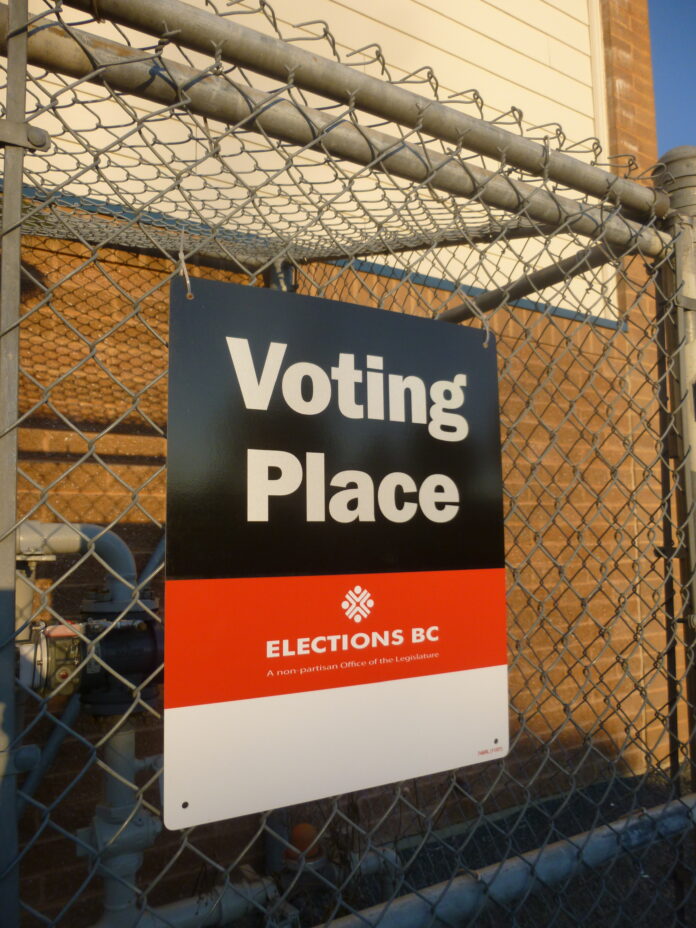
An elections BC sign
PHOTO: Krishitha Amarjothi Sreedharan / The Peak

By: Sofia Chassomeris, News Writer

This provincial election season has been a frustrating time. No, let me rephrase. Every election since learning what first past the post (FPTP) is has been a frustrating time. When you’re a kid, you’re taught democracy is fair, and puts power in the hands of the people. Unfortunately, the electoral system that we use in Canada, both provincially and federally, doesn’t put power in the hands of the majority — let alone the people as a whole.

To understand why FPTP is non-representative both on the provincial and federal level, we must look to the electoral districts. BC has 93 electoral districts that each vote to elect a member of the Legislative Assembly. Whichever party has a majority of the seats in parliament (47) has full control of the provincial legislature. In the 2017 provincial election, we had a minority government for the first time in over 50 years, where neither of the two most competitive parties (the NDP and former BC Liberals) were able to reach a majority of the seats. Until the NDP gained a majority in 2020, Green Party MLAs held a balance of power in the Legislative Assembly, since their votes were needed by either party to gain a majority and pass legislation. The same is happening again this time around, though the official vote is yet to be confirmed.

At a fleeting glance, FPTP might seem like a true majority-rules system, because if 40% of the population is voting for one party, and the rest of the population is split among the others, it is technically a “majority.” However, this is known as a “false majority,” which is when governments hold a majority of seats, despite a majority of total voters (say, 60%), casting their ballots for another party. 

The 2015 federal election saw the Liberal Party take control of government with only 39.5% popular support. Because there is absolutely no representation for voters whose candidates did not win in their electoral district, elections often produce results catering to one part of the total population. There is little to no consistency between terms if a different party takes complete control every election. The province can have drastically different policies in effect every four years. For instance, the BC provincial government passed the Declaration on the Rights of Indigenous Peoples Act into law in 2019 as a framework for reconciliation based on the United Nations’ declaration. The BC Conservatives have stated plans to immediately repeal this law, if they win a majority government. 

The BC Green Party has shown extensively on their platform, as well as during the leader’s debate, that they care about the quality of life for all British Columbians — not just the middle or upper class, who the NDP and Conservative parties both seem to be tripping over their shoes for. The Green Party is concerned for our youth and our future amid the climate crisis and are committed to investing in longevity. They understand it is much more effective to put money into education, healthcare, and housing — ensuring that people are able to live in stable and healthy conditions rather than waiting for a disaster and scrambling to clean it up. This is also significantly more financially responsible. 

The BC Conservatives plan to increase police spending. The NDP leader backtracked on the decriminalization of drugs while allocating funds to build involuntary care facilities, which have been shown to increase chances of relapse. This brings us to my recent dilemma, one I know is shared by many: do I vote for who I actually want to win?

The answer is no — for me, at least. My riding is competitive, and if I wanted my vote to have any influence in this election, my only real options are NDP or Conservative. Instead of voting for the party with a comprehensive platform and evidence-based policies that will improve life for many people, I have to vote “strategically.” Voting for who I actually want means there’s a higher chance that the people I definitely don’t want will be elected. So I take my voter registration to a polling booth, shove a spoon of more of the same in my mouth, and force it down with a cup of diluted hope.

We should try to be optimistic, though. There are more effective alternatives to first past the post — alternatives which a majority of Canadians would actually prefer. For example, proportional representation (PR) would eliminate the need for strategic voting because the amount of seats a party has in the legislature would reflect the percent of the population which voted for them. If 30% of voters supported a party, that party would hold 30% of legislative seats. A poll done by FairVote Canada found that 90% of people across the country and political parties agree with the fundamental principle of a proportionally representative system. 

A common criticism of PR is that it would lead to coalition governments forming, similarly to minority governments, which could lead to obstacles of disagreement when passing legislation. This criticism isn’t one I find compelling. If we cannot trust our elected officials to collaborate in our best interest, why are we electing them? A government should reflect the needs and wants of the people it serves, and our current first past the post electoral system does a terribly lacklustre job. It is time for a government by us all, for us all.