Home Blog Page 668

Stuff we like & don’t like

0
(Elena Hsu / The Peak)

We Like: a good cup of coffee on a fall morning

With the end of summer comes colder weather and earlier mornings, and nothing says coffee like an early morning. Not only does fall bring new school years and colourful leaves, it also brings the long-awaited return of the Pumpkin Spice Latte and many other beloved warm drinks which seem to have been forgotten in the summer heat. Arguably, every morning is a coffee morning, but those that come with rain and an alarm clock bring us an even greater need for a jolt of caffeine as we reluctantly crawl out of our warm beds and begin our day.

We Don’t Like: bad movie remakes.

In recent years we’ve been forced to endure a few too many failed attempts at remaking what were, originally, very beloved and successful films. The latest of these unfortunate remakes comes from the 1980s classic Dirty Dancing. How do you recreate such an irresistible and captivating movie? It’s a simple answer: you don’t. From the not-so-dirty dancing to the reconfigured plot line, the remake was a total disaster. Sadly, this is only one of many other less-than-mediocre attempts at remaking classic films.

THE BAD RAP: Hillary Clinton

0

I know that most people read the title and had a fully-fledged opinion about this piece already. I know, and I’m at peace with it — because that’s part of my point.

Hillary Clinton is one of those hyper-publicized people whose image is now stuck in place. By now, either you’ve fallen in love with her, or you’ve agreed that she’s “Crooked Hillary.” There doesn’t seem to be much of a grey area, which is problematic: after 25 years in the world of politics as first lady, presidential candidate, secretary of state, and senator, she has definitely given people a lot to think about.  

Despite the fact that any politician should warrant nuanced, critical examination from others, Hillary Clinton can write a book which, before it even comes out, receives scathing reviews from non-readers about how her book is centred on money and vanity. This might be criticism, but it doesn’t seem to be well-researched or well-thought-out criticism.

Hillary Clinton is a Yale graduate, and during her time there she volunteered at a legal aid clinic and the Yale New-Haven Hospital where she worked with abuse survivors. She was a pioneer of the children’s rights movement, doing research that paved the road for the Education For All Handicapped Children Law (1975). She established mandatory teacher testing in Arkansas. On the flip side, Clinton was seen as an uncharismatic candidate who failed to connect with some working-class Americans (including one campaign stop in which she elaborated on America’s shift towards green energy in a coal-dependent town).    

More than an advocate for women’s rights, she has supported and advanced she has supported and advanced feminist legislature: as First Lady she helped to create the Department of Justice’s Violence against Women Office. She was also the first female senator elected in New York, where she began a long journey of paving the way for women in what remains a male-dominated field.  

That experience, and the fact that she fearlessly draws attention to the misogyny that she faced along the way, or personal and anecdotal evidence that female politicians are treated differently, is important. Despite only winning the popular vote, Clinton’s time as a candidate has made it easier for the second, third, or fourth female presidential candidate — and, ultimately, for the United States’ first female president.  

I would give Clinton credit for taking some time off following the election before bouncing back in the public eye, ready to share that story, and label herself a “citizen activist.”  

All of these things and many more are swept under the rug of email scandals, the influence of Bill Clinton, or under an untouchable leftist worship warranted by ‘at least she wasn’t Donald Trump.’

I’m not calling Hillary Clinton a perfect politician, or a perfect person. But I’m calling her a person who deserves an evolving and accurate image in the public eye.

SFU research confirms most ancient earthquakes off BC’s south coast were massive

0

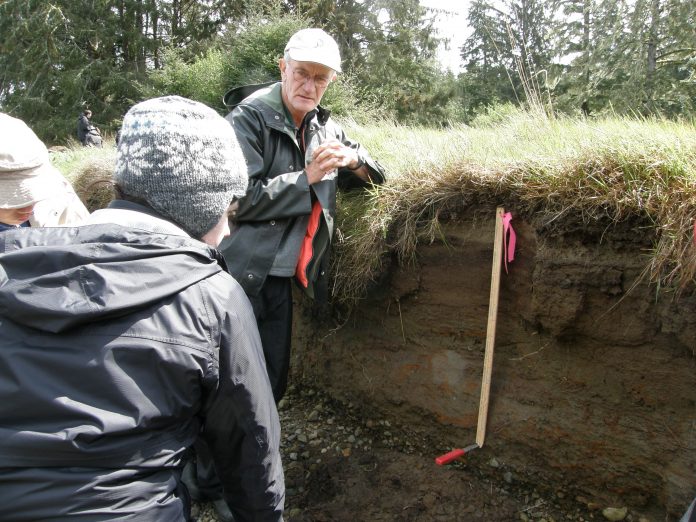
We are all warned of the “Big One,” a magnitude 9 mega quake forecast to hit Metro Vancouver at some point in the future. The history of these massive earthquakes off the southern BC coast has prompted researchers to investigate just how strong the tremors really were.

Vancouver sits above the Cascadia subduction zone where the continental North America plate overrides the oceanic Juan de Fuca plate. The boundary between the plates, from northern California to Vancouver Island, is currently locked and under strain. If the entire locked zone releases, it will cause a “giant” — magnitude 9 or higher — earthquake and create catastrophic damage.

Researchers Ian Hutchinson and John Clague recently published a study that probed whether all the earthquakes off BC’s coast in the last 3,000 years were giants, or only 8 or 9 magnitude quakes.

The difference is critical.

“The earthquake magnitude scale is not a linear scale. It’s more of a logarithmic scale. So the difference in the energy released between a magnitude 8 and a magnitude 9 earthquake is about 30 times,” explained Clague.

Currently, the notional idea of geologists is that the entire length of the Cascadia subduction zone, some 1,100 km, ruptures during each earthquake, meaning it releases quakes that are magnitude 9 or higher.

The magnitude of an earthquake carries implications for determining the risk. For example, earthquakes that rupture portions of a subduction zone are typically in the magnitude 8–8.8 range. This contrasts with an earthquake that ruptures all or nearly all the fault zone, which can exceed magnitude 9.

“Three of the last eight earthquakes at the northern end of the subduction zone appear to have been giants [and] two seem to have been restricted to this northern segment, and were probably magnitude 8–9 events,” Hutchinson said, summarizing his findings. “. . . [T]he status of the other three is unclear; they may have been giants, or they may not.”

The problem the researchers faced is that they “date these earthquakes using radiocarbon dating. It’s a technique that has uncertainty built in,” according to Hutchinson. As a result, the researchers couldn’t conclusively say that the ancient quakes that have occurred off BC’s southern coasts were all giant.

“If we had a dating tool that could tell us to the nearest year when an earthquake occurred . . . we would know for sure whether that quake involved a segment of, or the entire subduction zone,” Clague said.

“In reality, however, the only dating tool we have is radiocarbon or carbon dating . . . and unfortunately that tool yields dates that are only approximate. There is analytical uncertainty . . . that results in the age being imprecise.”

It remains uncertain as to whether all the earthquakes that have occurred in BC were all giants. However, the federal government says that of all the regions in Canada, the coast of BC is the most at risk for earthquakes.


Find your silver screen gems at VIFF

0
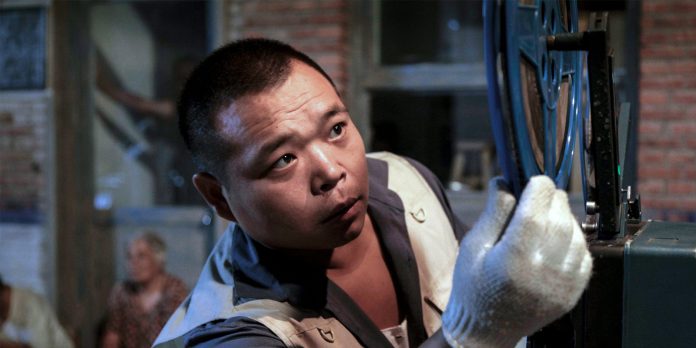
One of the films in this year’s line-up is called King of Peking–pictured above. It's about a father who is driven to holding illegal home screenings of bootlegged films to support his family. (Photo courtesy of VIFF)

The 36th annual Vancouver International Film Festival (VIFF) claims they are “expand[ing] the frame” to include more international films, more special presentations and industry talks, and more interdisciplinary events from September 28 to October 13.

     New this year is a whole day devoted to events from Buffer Festival, a showcase of YouTube content. Attendees can learn all about becoming a YouTube creator, watch exclusive YouTube premieres, and meet some of the creators in person.

“With over 300 films at the festival, it’s a good thing they are organized into thematic streams.”

     Another new aspect of the festival this year is VIFF Live which pairs films with live music. Headlining this series is Kronos Quartet who will perform a live score alongside The Green Fog, a re-imagining of Alfred Hitchcock’s Vertigo. Other artists featured in VIFF Live include Brasstronaut, Louise Burns, Jon and Roy, Little Destroyer, and Sam the Astronaut.

     The Opening Gala film on September 28 is Meditation Park by Vancouver director Mina Shum. Set in East Vancouver, it tells the story of Maria (Cheng Pei Pei) who finds another woman’s thong in her husband’s pocket and embarks on a mission to find out the truth. Closing the festival on October 13 will be Todd Haynes’ Wonderstruck, a time travel story that follows two deaf 12-year-olds, Ben (Oakes Fegley) and Rose (Millicent Simmonds), who end up in New York City trying to discover their identities.

     Other special presentations include a tennis drama, Borg vs. McEnroe, Ruben Östlund’s The Square about an art museum curator, and a Chinese action feature, The Hidden Sword. Bong Joon Ho returns to VIFF with his latest film, Okja, which will feature a special “In Conversation” session with the filmmaker after the screening on September 30. The BC Spotlight Awards Gala on October 7 features Melanie Wood’s Shut Up and Say Something, a documentary about spoken word star Shane Koyczan.

    With over 300 films at the festival, it’s a good thing they are organized into thematic streams to help festival-goers navigate the overwhelming variety. The Impact stream features documentary films about urgent social issues that can inspire us to take action such as Karina Holden’s BLUE about the declining health of our oceans and Ai Weiwei’s Human Flow about the global refugee crisis.  

     For films from right here in BC, check out the Sea to Sky stream, and for the best in Canadian film, there is the True North stream. A collection of Asian films is featured in the Gateway stream, and the M/A/D (music/art/design) stream features films that showcase artistic prowess such as Clive Davis: The Soundtrack of Our Lives about the legendary pop music producer, and Louise Lecavalier in Motion about the Canadian dance icon. In the ALT stream, one can find short films and cinema that defy categorization.

     The Panorama stream is aptly named for its wide-ranging offerings of French cinema, documentaries, and contemporary world cinema including Academy Award hopefuls such as Andy Serkis’ Breathe, the story of a charming young man who is stricken with polio at the age of 26 and left paralyzed.

With such a large variety of films, there is sure to be something to satisfy every taste. Whether you’re a film buff or a fair-weather film lover you won’t be disappointed by the choices offered at this year’s VIFF.

Aboriginal reconciliation report calls on university to indigenize campuses, classrooms

3
Chris Syeta’xtn Lewis, co-chair of the Aboriginal Reconciliation Council, at a ceremony marking the installation of a canoe carved by Haida artist Bill Reid on campus in 2015.

The Aboriginal Reconciliation Council (ARC) at Simon Fraser University has unveiled its final calls to action which will guide the university in allocating its $9 million reconciliation fund over the next three years. The report calls on the university to expand the spaces on campus that welcome Indigenous peoples, indigenize course curricula, and provide more support to Indigenous students.

“We don’t pretend in the report to have all the answers, but we sure do think that this idea of walking together toward a preferred future will create really substantial differences in this university,” said Kris Magnusson, council co-chair and dean of the faculty of education.

“Ideally, we would see fundamental changes to the ways in which Indigenous people actually thrive on campus.”

A Kwis Ns7eyx̱ (witness) ceremony with attendees from local First Nations will mark the formal handing over of the report to the university on October 16.

Among the calls to action contained in the report is the creation of more dedicated cultural spaces on campus, which includes establishing a new cultural resource centre, including Aboriginal language signage, implementing cultural awareness training, and removing offensive colonial artworks from campus.

The report also calls for an Indigenous curriculum review committee to oversee the indigenization of courses as well as a scholarship program to support Indigenous students.

Magnusson said the university will now need to address visible issues to show the community it is making the calls to action a priority and the commitment should also be reflected in the plans set out by the major administrative offices.

The council consulted with members of the campus and local communities on eight occasions over the past year in order to establish priorities for reconciliation. The consultations included meetings with the Musqueam, Squamish, and Tsleil-Waututh nations in addition to the Métis Nation of BC.

“I think as much as anything the process that led to the report may have more impact,” Magnusson said. “The topics were framed differently and with more of a sense of urgency and respect at the same time, so I think that process itself has created a different atmosphere at the university.”

The council, co-chaired by Magnusson and Chris Syeta’xtn Lewis, a counsellor for the Squamish nation and member of the SFU Board of Governors, also went to the community for input on drafts of the report.

The feedback that was received pointed to some omissions, such as the need to emphasise repatriation of artifacts and remains currently in the possession of SFU to Indigenous communities, said Magnusson.

“I would characterize the feedback as being very supportive of the directions and wanting to find some way to ensure that the calls to actions would actually be acted upon,” he added. “More than just feedback, I think it was an expression of concern.”

However, it will be up to the university to decide how it will spend the $9 million in funding that was set aside for reconciliation efforts in 2016.

“We have very little direct control over how the report gets received,” Magnusson explained, adding that what the report did do was make the findings into calls to action, rather than simply calling them recommendations, and the upcoming witnessing ceremony will act as a form of accountability.

“No one can say that this can lay hidden now, it is a very public ceremony, [and] witnesses from the communities that took part will be there,” Magnusson said. “It may seem symbolic, but it is a powerful tradition.”

He added that the university should continue these open forum consultations between the school and the wider Indigenous community about progress towards reconciliation.

“As I am looking at this, there is a sense of pride in the communities that have come together [and] how this might make a difference for our university and for our communities,” Magnusson concluded.

Album Reviews

0

Special Edition Grand Master Deluxe by the Cool Kids

The return of the Cool Kids is a fantastic thing to witness. In the 2000s, the Illinois rap duo (made up of Chuck Inglish and Sir Michael Rocks) took over the airwaves with immediate hits like “Black Mags” and “Mikey Rocks,” becoming, almost literally, the coolest kids in hip hop. Their fashion sense was trend-setting, their music was everywhere, and their aesthetic continues to influence new rappers today. A few years into their career, however, the duo split up so that they could pursue solo careers, but the possibility of a comeback was never ruled out. This month, the Cool Kids returned with Special Edition Grand Master Deluxe.

     Perhaps the most fascinating thing about this album is the fact that, at 16 tracks, it divides evenly in half. The first eight songs are everything a Cool Kids fan could hope for: Chuck and Mikey trading verses about weed, women, and cars over Chuck’s signature production, sounding as fresh as they ever did. The second half, however, is overloaded with guest features. They diverge from their beloved sound to pander to ineffective R&B, awkward dancehall, or attempts at radio-friendly pop hits. Regardless, the first half makes up for the latter, and this isn’t an album you’d want to miss. – NM


Antisocialites by Alvvays

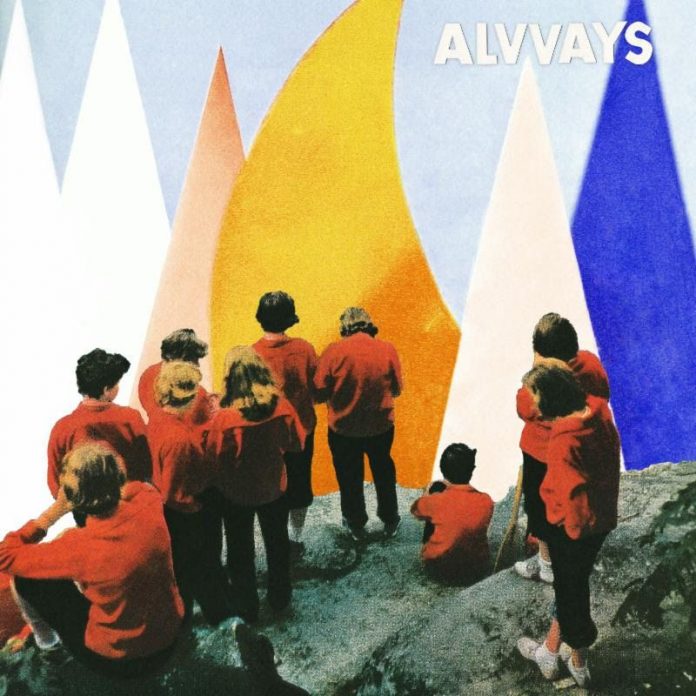
It makes me sad to say this, but Alvvays seems to have deteriorated. I enjoyed most of the songs on their self-titled album, and I liked the first couple songs on Antisocialites, but after that it got increasingly repetitive and I tuned out. Perhaps it was so mesmerizing that I drifted away? Probably not. Though I did like Molly Rankin’s lyricism on “In Undertow” and “Forget About Life,” the other songs just rolled by me.

     I feel like Alvvays used to be slightly profound, in a cynical, Vancouverite sort of way. This time around it sounded like they stuck instruments and angst in a tumbleweed and hoped for the best.

If you want extreme easy listening, so much so that you forget you’re listening, Antisocialites is the album for you. Good luck staying awake. – NT


God’s Poop or Clouds? by the Jet Age of Tomorrow

Odd Future (OF) may be well and truly broken up now, but the rap collective’s legacy is one of the strongest that hip hop has ever seen. One peripheral OF offshoot is the Jet Age of Tomorrow, an eclectic duo consisting of producer Matt Martians and rapper/producer Pyramid Vritra. God’s Poop or Clouds? is Jet Age’s fourth album, and to be honest, it doesn’t differ that much from their old material. The most notable change is the divergence from hip hop; while earlier albums often included guest verses from the likes of Mac Miller or Hodgy Beats, there isn’t a single guest rapper on Clouds.

     It’s an interesting album, nonetheless, tending towards very loose, freeform, improvisational jazz (a common element in Jet Age’s music), which unfortunately tends to lose itself in a single idea for an entire track. There are also parts of the album that sound too much like Matt Martian’s solo album, The Drum Chord Theory, or his work with the Internet. None of this is to say, that Clouds isn’t worth checking out. Both members are fantastic musicians, and tracks like “Buzzin’” or the Syd-assisted “The Long Way Home” are absolutely worth your time.  – NM

SFU students and staff receive mass training in defibrillator use

0
The first three minutes during a cardiac arrest are critical for survival.

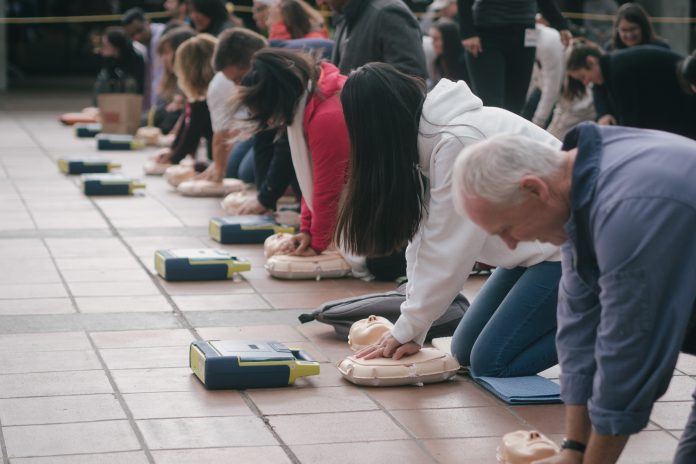
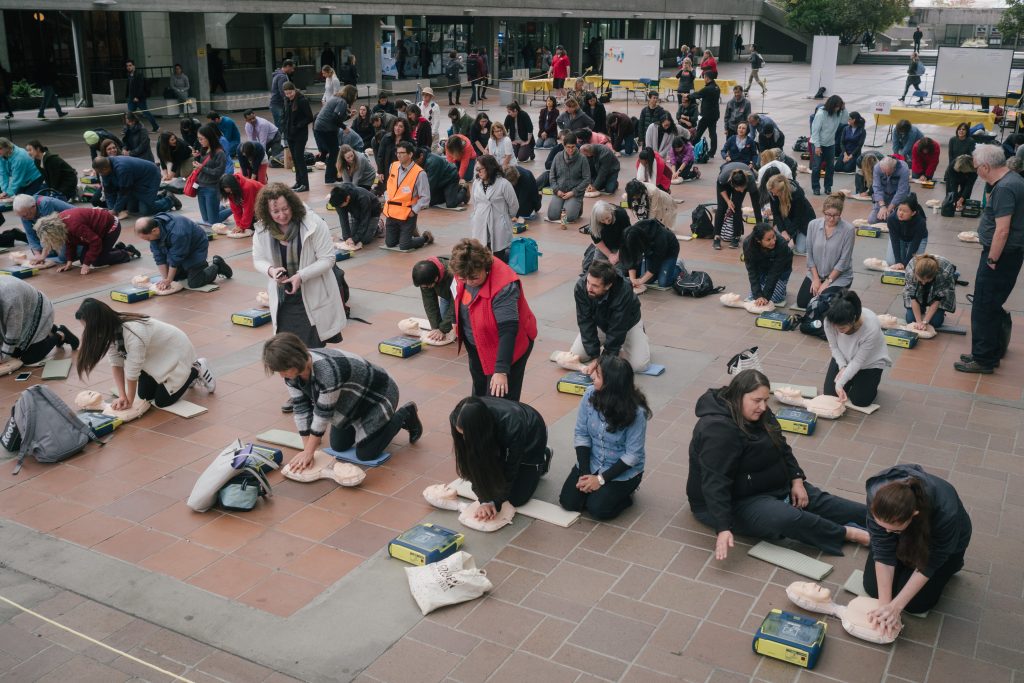
SFU students and staff can feel at ease knowing that more than 400 members of the SFU community completed mass training in resuscitation and the use of emergency defibrillators at the Burnaby campus on September 19.

SFU Safety and Risk Services partnered up with Iridia Medical and the Heart and Stroke Foundation to demonstrate to the community the importance of having this life-saving knowledge. The event also provided an opportunity for the SFU community to learn how to use cardiopulmonary resuscitation (CPR) and automated external defibrillators (AEDs) if someone suffers from cardiac arrest.

“The goal of the training is to increase awareness, familiarity, and increase overall confidence to intervene when necessary to help save a life,” said Laura Vajanto, program manager of emergency planning at SFU Safety and Risk Services.

As part of the initiative, SFU also installed defibrillators across all of its campuses last spring, bringing the total to 49 units accessible in the case of an emergency. The defibrillators were installed prominently, complete with instruction plaques, to promote their usage within the first three critical minutes of a cardiac arrest.

“We’ve heard from staff in many departments who have taken notice of these and appreciate the information. We’ve also received requests for further training which we will be doing on an annual basis,” said Vajanto.

The first three minutes during a cardiac arrest are critical for survival.

In BC, a cardiac emergency happens on average once every two hours. According to Vajanto, the first three minutes are crucial because every minute of delay in delivering the lifesaving shock decreases the survival chances of the victim by 7–10%.

The non-certificate CPR and AED training took place in half-hour sessions and consisted of a presentation conducted by instructors from the Heart and Stroke Foundation, who explained the basics of cardiac arrest. Participants were also able to practice these new skills on training mannequins.

According to Vajanto, the sessions had a high turnout and participants were impressed with the event. The university plans to offer similar training sessions at the Vancouver and Surrey campuses early next year.

The university website contains information about using CPR and AEDs and the school is committed to providing recurring training opportunities because “if you don’t practice the skills you are likely to forget them,” Vajanto explained.

“At SFU we see safety as part of a personal and civic responsibility,” Vajanto said. The skills obtained by the participants during the training sessions will allow SFU to increase the safety of its campuses as participants can now act as first responders in the critical first moments of cardiac emergencies.

Vajanto is pleased that the event achieved the goal of increased awareness about cardiac emergencies and that the SFU community was engaged in the learning process.

“It is clear that the SFU community values safety and the ability [to] apply lifesaving skills if ever necessary,” she added.

Must-see event: Indigenous Day 2K17 Burn the Borders

0
(Linda Shu / The Peak)

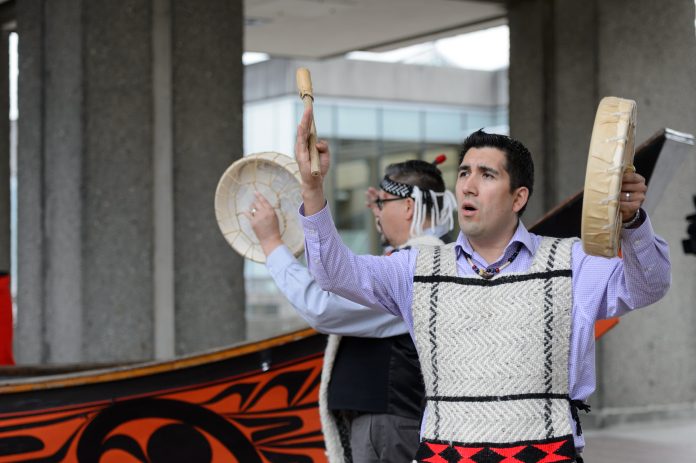
This event, put on by the First Nations Student Association, will be taking place on September 28 at SFU’s Convocation Mall. As stated on their Facebook page, the event will be held “on the Unceded Territories of the Tsleil-Waututh, Skxwu’7mesh, Musqueam, and Kwikwetlem Nations.” The event’s theme is “Burn the Borders,” which is designed to “celebrate [their] differences as Indigenous people and to have . . . who we are and where we come from [recognized].”

     The event emphasizes the diversity in Indigenous identities from all over the continent. There will be performances ranging from drumming, dancing, spoken word, and modern Indigenous music to live carving demonstrations. MCing the event will be JB the First Lady, and there will be many artists, artisans and vendors in attendance, as well as catering by Big Heart Bannock.

SFSS hosts largest kickoff concert to date, cancels after-party

1
Snapshot of 2017 Fall Kick-off (Photo courtesy of Simon Fraser Student Society)

The Simon Fraser Student Society (SFSS) hosted its largest ever fall kickoff concert despite cancelling the after-party due to safety concerns last Friday.  

The initial counts indicate that over 2,000 people attended the event held in Convocation Mall at the SFU Burnaby campus. The after-party scheduled to take place in the Diamond Alumni Centre was cancelled by university due to concerns about the safety of event goers.

“It honestly just came down to the safety of students,” explained Alam Khehra, SFSS vice-president student life. “It would have been nice, but had something happened at the after-party, that would have just dampened the entire experience.”

He said that the decision was made because of the high turnout this year, some students required medical attention at the concert due to intoxication, and the after-party was being held in the Diamond Alumni Centre, instead of the Highland Pub, which required students to walk across campus to the location. The society will offer those who purchased advance tickets to the after-party a refund, Khehra added.

The event clean up was mostly completed by the following morning.

There was also an altercation that occurred during the event just outside the concert boundaries, according to Khehra.

SFU spokesperson Kurt Heinrich told The Peak that police and campus security did respond to an incident involving a couple of people that evening. “There were no injuries or arrests and the incident was resolved informally at the scene,” Heinrich said.

Despite the setbacks, Khehra said the pre-sale tickets were sold out and overall sales exceeded the 2,100 for which the society had budgeted.

Furthermore, he said that students enjoyed the concert.

“The event was very successful in my opinion,” he said. “Students always complain that we are a commuter campus and we need to have more of a social atmosphere, and I think [this event] was definitely a stepping stone for us.”

Though the final cost of the event has not been calculated, Khehra is optimistic that the kickoff will be within budget and the cost incurred by the society will be minimal. With a total budget of $111,400 the society had accounted for a $14,400 loss.

“I think we should be within the budget,” he said. “We’re optimistic, but the after-party being cancelled . . . might be a factor.”

The Sexual Violence Support and Prevention Office welcomes their first-ever director

3

Six months after the Sexual Violence and Misconduct Prevention, Education and Support policy was passed by the Board of Governors, Simon Fraser University welcomes Dr. CJ Rowe as the inaugural director of SFU’s Sexual Violence Support and Prevention Office (SVO).

Rowe will begin their role as director on in October of this year. Prior to commencing their role at SFU, Rowe has obtained extensive experience in both post-secondary institutes and on the ground pertaining to sexual violence prevention.

“They’re an academic so they’ve done academic research on this topic. They also come from Qmunity [a non-profit organization for LGBTQ/2S individuals] where they were the executive director, so they have a really great understanding of how we can work with community organizations as well,” said Erin Biddlecombe, director of operations, planning, and projects. “They’re seen as a leader in Canada around this work.”

In addition, Rowe, who uses the pronoun they, has an academic background in sociology, women’s studies, legal studies, and education.

Even though Rowe hasn’t begun their work term yet, “the services and programs are open now [and] they will [continue] the minute they get here,” noted Nancy Johnston, vice-provost, students and international.

Moreover, the SVO doesn’t have its own office space yet. “We’re hoping it will be announced before the end of this calendar year,” said Johnston.

Originally, the committee wanted the new SVO office to open in fall 2017, but was delayed because they wanted “to get [Rowe’s] perspective and their experience and expertise on what the centre should look like and where it might be,” explained Johnston. “We felt strongly that Rowe ought to have [a] voice in this [matter as well]. So this will allow Rowe to give us their best understanding of where these kinds of centres [should be].”

However, what is certain is that the SVO and its services will be held primarily at the Burnaby campus. However, students and members of the SFU community can still get support from the office, regardless of which SFU campus they’re requesting aid from.

The point is that “you don’t have to go to the physical place. The people of the place can come to you,” said Peter Keller, vice-president academic.

As for the name of the office, where the words ‘sexual violence’ could be a trigger for sexual violence survivors, Biddlecombe explained that when the policy was created, the Central Resource Office was only a temporary name for the unit.

“The name ‘Sexual Violence Support and Prevention Office’ came through consultations with the community, students, staff, and faculty around the [purpose] of the centre and making sure it was a name that worked for our community so people would understand what they could get from that office,” said Biddlecombe.

Moreover, some of the services currently offered by the office are prevention support programs where SVO staff educate students and faculty members about topics related  to sexual violence.

“We do training around consent, we do training around responding to disclosures and sexual violence on campus. We also provide training around what we call ‘being an active bystander’: so if you see something happening on campus that you don’t feel comfortable with, [you know] how [to] safely intervene to prevent something from happening,” explained Biddlecombe.

Biddlecombe added that when Rowe arrives, “one of [their] priorities will be [to] bolster the strategy that already exist[s] around education prevention on campus, being mindful that we’ve got different community groups on campus,” said Biddlecombe.

Rowe will work together with staff, faculties, and students on implementing sexual prevention strategies at SFU in their role as the office’s inaugural director.