Home Blog Page 667

Men’s soccer shocked by Concordia University in first loss of the season

0
Connor Glennon had a goal and an assist, while Matteo Polisi scored a goal. (Photo courtesy of SFU athletics)

On Thursday, September 28, the number two ranked SFU men’s soccer team suffered their first loss of the season at the hands of Concordia Cavaliers in Portland, Oregon. The Clan, who opened the season 5–0–1, have been a formidable side while on their home pitch in Burnaby, scoring 14 goals in three games while only conceding one. Away from home, on the other hand, SFU has been a different side. Still going undefeated heading into Thursday’s match, the Clan had only managed five goals in three games, while giving up three.

Thursday was a new experience for SFU, who gave up a goal in just the third minute of play. After conceding early, the Clan would tie it up in the 19th minute thanks to Connor Glennon’s third goal of the season. Not too long after, Concordia would regain the lead, eventually adding another goal two minutes before halftime, making the score 3–1 going into the break.

This was the Clan’s first time trailing at the half this season. In fact, SFU never led the entire match. Down 3–1 after the first 45 minutes, head coach Clint Schneider stated, “We were not good enough in the first half and were punished by an organized, hungry, and hard-working team.” When looking at the first-half statistics, it was indeed not good enough from the Clan. The teams were even with seven shots a piece, but SFU led Concordia with six corner kicks to zero. It was clear that frustration was rising for SFU, with nine fouls to the Cavaliers’ three.

Come the second half, SFU came out firing, adding 17 more shots, four more corner kicks, and holding Concordia to zero shots and zero corner kicks. The Clan would get one goal back in the 79th minute, thanks to freshman Matteo Polisi, his sixth goal of the season.

“. . . [W]e had chances to equalize, [but we] just didn’t capitalize . . . I always expect to win every game we play . . . Every loss is a bad loss as far as I’m concerned,” said Schneider, who will be hoping to showcase just how strong SFU is with a dominant, statement performance in their next game this Saturday, September 30 in California.

A bright spot for SFU has been the streak that freshman Matteo Polisi has been on. Six goals in seven games for the Clan shows that the freshman is more than ready for NCAA soccer.

Additionally, freshman Connor Glennon has also started to hit his stride as of late, with two goals and an assist in his last two appearances. Schneider is very happy to have his young guys step up and get on the scoresheet, but is confident in how talented the rest of the team is, and strongly believes that this loss was nothing more than a bit of a bump in the road.

The Clan looks to get back on track this Saturday against California State in Carson City, California. The game is set to kick off at 5 p.m.

SFU Recreation and Athletics fee: a ballgame of inconsistency

0
OLYMPUS DIGITAL CAMERA

Last week, the tuition deadline fell upon our necks like the sword that snuffed out Anne Boleyn. Luckily, unlike the late queen, we have many long years to go. Unluckily, that means quite a few more sword-swings for us. Well, as they say: what doesn’t kill you makes you stronger.

Of course, this narrative is an awfully melodramatic way of putting things. If we want higher education, then — at least under the economy we have going — we’d better be ready to pay our tributes.

However, to me, certain aspects of our payment scheme look a little inconsistent. Something that not all SFU students realize is that the university offers a breakdown of roughly where your money goes (and, recently, The Peak featured a comprehensive breakdown of our own.)

More to the point, it gives you the option to opt out of some of those expenses. This makes complete sense: if, for instance, you can prove that you’re already covered for health under a family Medical Services Plan, why pay for one from SFU?

Of course, some fees already see regular discussion. The U-Pass fee is often hotly contested by those who exclusively drive to campus, particularly as the circumstances you’ve got to have to get out of paying it are so convoluted that you’d be better off just switching schools.

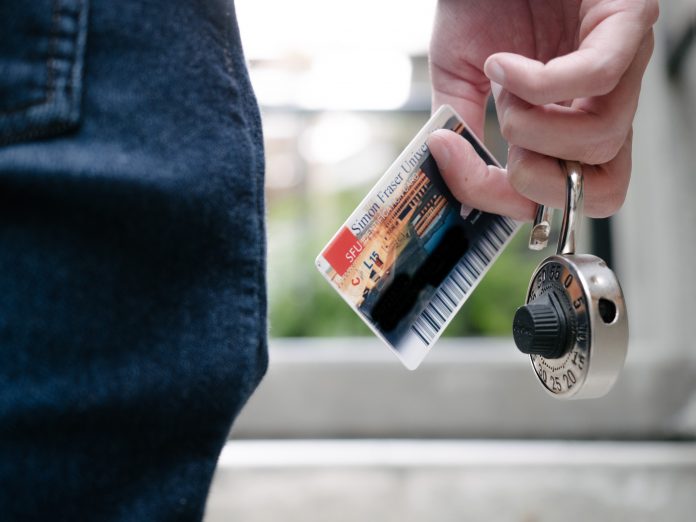
However, I’d like to look at the Recreation and Athletics fee, $75.42 per semester for full-time students and $37.71 for part-time. Unlike the Simon Fraser Student Society Health and Dental Plan, the U-Pass, and the various fees paid to our student societies through the student activity fee, there’s no immediately clear way to opt out of this one, no matter how much you insist that you’ve never so much as glimpsed an elliptical or a lacrosse stick.

The SFU Recreation policies mention that you can only get out of a purchased membership with documentation “such as (but not limited to)” the following: “written medical recommendation from a [d]octor,” or an “appeal that outlines the condition or set of circumstances that would prevent you from participating in SFU Recreation activities.”

Furthermore, as a footnote, it’s clarified that these exceptions apply only to people who separately bought the memberships from the Recreation Office. Anyone who paid the rec. fee through their tuition is “not subject to refunds.” (So, if I’m an SFU student with one leg in a cast for the three or four months I’m enrolled for that semester, am I just 100% screwed?)

The conclusion seems to be that there’s no getting out of the rec. fee. Why exactly is that? Why does SFU force us into that particular expense, when they seem OK with letting us opt out of other aspects of student life? No matter how you slice it, that’s an inconsistency.

Aside from injured students, it’s entirely possible that, even if you’re an active athletic student, you have a gym membership and external commitments that render the SFU services superfluous. In the same way that offering proof of health coverage gets you out of the Medical and Dental, proving that you don’t have any use for the Recreation services should be able to get you out of the cost.

Even if you just hate sports, there’s precedent for “I just don’t want this service” to be a valid way of getting out of costs, too. That’s how, for instance, you can opt out of paying fees to several student-run organizations.

Many American universities already face criticism for forcing athletic fees onto the whole of the student body, as Washington Post reported in 2015. Clemson University’s athletic director looked to charge $350 per year per student to add to his department’s budget, to “keep up with competition”; the University of Kansas saw some protest against the $50 athletics fee expected from its students.

The logistics obviously differ, given the clear financial differences between Canadian and American post-secondary students, but the fundamental logic outlives the scale: as one executive director of Student Debt Crisis, Natalia Abrams, told Washington Post, “these students are being forced to pay for something that they may or may not take advantage of.”

When students can get out of some activities and services and not others, it unfairly scales the importance of certain facets of the school over others, without really explicating how the school determines that scale. Is it about how much interest that activity gets? How expensive it gets? How much it gives back to the school? How much the student body collectively benefits from it? To summarize, which variables decide whether or not a service or activity is important enough to SFU to enforce its funding?

But, regardless: none of this is to suggest that the parts of the school that benefit from that Recreation and Athletics fee don’t deserve your money. I actually would say that they do. SFU Athletics has done great things, our student athletes and coaches are fantastic people, and I’m happy that the school offers services that help its membership stay healthy, should they take advantage of it.

Furthermore, I don’t want to advocate for anything that will make it actually impossible for SFU Athletics to do its thing. I can understand why the situation is what it is if they need every bit of that money; if there’s concrete reason to think that providing students with the option to opt out will cause the Athletics department to lose too much money to reasonably continue; and if it’s not realistic to increase the fee for those who do use the Recreation and Athletics services.

If there’s evidence to suggest that SFU’s current strategy really is the best and the fairest, under the circumstances, I’m open to that possibility as well. As a non-athlete, I can only try to empathize — I don’t have the experience to presume to understand the whole situation. But in that case, SFU should be making information about why things need to be this way more accessible.

No, that doesn’t mean just putting it on their website somewhere: I’m sure that even now anyone could find the raw numbers on where the rec. fee money goes if they put in enough time and effort. What I mean by accessible is that somewhere on the website that’s easy to find and intuitive to check, it explains why the cost breakdown works the way it does. It doesn’t need to be complicated, but it should be available. You might say that SFU doesn’t owe us that explanation, but we should always be looking for more transparency where possible.

What I’m advocating for is, simply, consistency. If people have the right to get out of one cost that isn’t fundamental to the basics of running the school, then they should be able to get out of similarly extraneous fees. Or, they should have to pay all of the fees, whether or not they personally need them, since one way or another we’re all getting something out of SFU. But we need to pick a philosophy and stick to it.


Board Briefs

0

SFU plans to hike student residence rates

The university is planning to substantially increase student residence fees next year. The rate hike could see costs for the graduate building Hamilton Hall increase by 9% while other accommodations will also see a slight rise in rental prices.

The proposal comes after an analysis commissioned by the university found that its rentals are priced well below market value.

Jamie Stewart, order-in-council, notified the SFU Board of Governors of the upcoming changes at the September 28 board meeting.

A notice addressed to the board finance committee stated that the company hired to complete the analysis found rates for Hamilton Hall were nearly 50% below market value compared to other studio apartments at universities across the province.

For students in Hamilton Hall this year, the rental rate is $804 per month for a studio apartment. However, next year the cost could climb to $879 — which keeps the building at 37% below market value according to the analysis.

The other residences, including SFU’s new graduate student residences downtown, could see a 2.6–4.6% increase in rental prices. A standard dorm room with a shared kitchen and bathroom currently costs $667, but may jump to $699 in the 2018–19 academic year. All student housing also tacks on a $30 wireless Internet fee each month.

“The intention is to gradually increase rates closer to market [rates] over a number of years, to minimize the impact on students in the residence,” the notice stated.

Board members discuss pub reopening

The board members noted that the Highland Pub on the Burnaby campus will be reopened to students, staff, and faculty under the administration of the university.

SFU President Andrew Petter said the closure of the pub by the Simon Fraser Student Society earlier this year was “a really unfortunate situation” and said that there appears to be an opportunity for the university that has come out of the decision.

“It is not going to be the same as a student pub,” Petter said. “It’s going to be a licensed facility that is not only great for students, but we hope [it] becomes very much a gathering space for the whole university.”

The Peak has reported that the university intends to revitalize the pub space and potentially open it up to underaged students as well.

Joey Bada$$ delivers a powerful performance at UBC

0
(Photo courtesy of The Come Up Show)

Recently UBC held its Welcome Back Barbecue, and, along with a group of artists I’d honestly never heard of (apologies to the Strange, Harrison Brome, Shaun Frank, and Vanic), New York rapper Joey Bada$$ performed.

     Joey Bada$$ is one of modern hip hop’s most acclaimed lyricists, a 22-year-old artist who bases his sound in the East Coast’s boom bap history. After debuting with the mixtape 1999 in 2012 (which might still be my favourite project of his), he’s gone on to receive international attention. His last album, All-Amerikkkan Badass (AABA), is one of 2017’s most critically-acclaimed projects.

     After getting through the long entrance lineup — and the even longer beer garden lineup — I managed to arrive just in time for Joey to appear on stage. Much of his set consisted, predictably, of tracks from AABA, beginning with “Land of the Free.” The melodic, radio-ready “Temptation” followed, before transitioning into the impassioned album-opener “For My People.” AABA is a highly political, relentlessly hard-hitting album, and this translated incredibly onstage. He brought a confident, stage-ready energy that not many his age could pull off.

     After the trio of thoughtful openers, Joey dove right into the meat of his album, jumping around to his ScHoolboy Q-assisted “Rockabye Baby” and the Beast Coast posse cut “Ring the Alarm.” Joey seemed surprised at the level of excitement in the audience, proclaiming more than once “I wasn’t expecting this shit, y’all is lit tonight” and engaging the crowd in call-and-response chants of “Pro Era Era, Pro Era Era Era.”

     The show did have its moments of lower energy thoughtfulness. Most notably when Joey surprised the crowd with a song that, according to him, doesn’t often get played live: AABA’s final track, “Amerikkkan Idol,” which features some of Joey’s most powerful writing to date.

     Luckily for longtime fans, the setlist included some older music from his first studio album, 2015’s B4.Da.$$: “Christ Conscious,” “No.99,” and the DJ Premier-assisted “Paper Trail$” all got their due time onstage. I was worried he was going to leave out his old catalogue, but he did take the time for one track from his early mixtape days: “Survival Tactics,” his first hit single, which features the late Capital Steez. Steez, a remarkably gifted MC who co-founded Joey’s Pro Era collective, tragically took his own life in 2012, shortly before his group really took off; ever since, Pro Era has been sure to make his memory an integral part of their music.

     Towards the end, Joey surprised the crowd one more time with a new track: “Pull Up,” which apparently features a guest verse from Flatbush Zombies’ Meechy Darko. The track is sure to be an instant hit when it finally gets released. He ended the show with “Devastated,” his biggest hit to date and a perfect high-energy finale to an incredible show. Joey was only on for about an hour, but his energy and excellent stage presence made it totally worth the ticket price.

The cutting edge of technology

0

Simon Fraser University is at the cutting edge of research in advanced organic materials. The Williams Group, headed by Dr. Vance Williams in the chemistry department, is working on the development of organic materials with functions as semiconductors, molecular photoswitches, and birefringent materials. Molecular photo switches are molecules that convert between two or more states when exposed to different wavelengths of light, while birefringent materials are materials that refract light in different ways based on their orientation.

The primary focus of the group is on liquid crystalline (LC) materials which are used in applications such as liquid crystal displays, medical imaging, and organic electronics. Research in the Williams Group consists of the combination of small organic molecules and the characterization of their physical, chemical, optical, and electronic properties. The goal of these studies is to gain a better understanding of the structure-property relationships of LC materials so that they can be used more efficiently in the future.

The most common and well-known commercial use of LC materials are in liquid crystal displays (LCDs) which we probably all encounter every day in our smartphones, televisions, and laptop computers. The function of such LCDs is based on the switching of a layer of LC molecules between two orientations by an applied electric field.

In one state, the molecules transmit light and the pixel is illuminated, and in the other state, the molecules block the light and the pixel is dark. In combination with other layers such as a colour filters, this process can be used to create colour images as well. In the case of an LCD, a relatively fluid type of LC phase is used to achieve fast response times and thus a seamless moving picture or video.

A new and exciting research direction for LC materials is towards organic electronics. Historically, most electronics are made from inorganic materials. However, in the past 10 years or so, research has been in the process of developing organic materials that arguably parallel the function of inorganics at what seems to be a fraction of the processing cost.

One of the most important components of any electronic device is a semiconductor — which essentially regulates the flow of electricity. A major challenge in producing a high performance organic semiconductor is achieving a highly ordered material for efficient charge transfer. To address this problem, PhD student David Ester in the Williams Group is currently working on the development of LC organic semiconductors.

What makes LC materials unique and useful is that they form an intermediate state between solid and liquid. In crystalline solids, molecules are highly ordered, with their positions and orientations fixed, making them rigid. In liquids, molecules have much less order, and both their positions and orientations are free to change, making them fluid. In the LC phase, molecules have an intermediate degree of order, and their orientations and positions may be fixed in one or two, but not all three, dimensions. By combining features of both states, the LC phase allows chemists to exploit benefits of both solids and liquids simultaneously.

Another important factor is that LC materials exhibit ‘self-assembly’ — this means that molecules assume a certain order without any external stimuli, simply due to their inherent intermolecular interactions, a process which occurs spontaneously based on temperature. With these exceptional properties, LC materials give scientists the possibility to create materials with new functionality unprecedented for solids or liquids alone.

The picture shown above is a polarized optical microscope (POM) image taken by David Ester as part of his research. The picture is 1400 x 900 micrometers; just over a millimetre in length, and just under a millimetre in width. It is invisible to the human eye, but captured in all of it’s beauty by the POM.

POM is a commonly used tool in the characterization of LC materials, not only producing striking patterns with beautiful colours, but also providing vital information about the order of molecules in the sample being studied. The textures in this image helped the Williams Group identify the structure of the LC phase of this material. “This particular focal-conic fan-shaped texture consists of layers of hexagonally packed molecules, the kind of phases that are being targeted for high-performance organic semiconductors,” Ester explains.

The POM image is also a candidate in the Science Exposed photo contest put on by the National Science and Engineering Research Council of Canada (NSERC). NSERC, as one of the primary sources of scientific research funding in Canada, is also a key sponsor of research being done by the Williams Group.

The purpose of the photo contest is to promote scientific awareness and generate an interest in science across Canada through the use of visually striking and scientifically significant photos. Scientists from a variety of fields, and coming from all over Canada, have submitted images to the contest, and Ester’s has been chosen among the top 20 finalists.

The repeated conical pattern found in Ester’s image comes from the ways in which the molecules assemble themselves. The patterns are not forced upon them. Instead, when the molecules are placed in an environment of a particular temperature, the molecules self-assemble into this pattern. The fact that this is the pattern that the molecules arrange themselves in is important in figuring out how they function, and in finding the best ways to use them in modern technology.

Vancouverites walk to promote reconciliation with Indigenous peoples

0

The second Walk for Reconciliation in Vancouver had an incredible turnout as tens of thousands of people representing diverse communities came together to support Indigenous peoples in Canada on Sunday.

The event was hosted in partnership between Reconciliation Canada and the City of Vancouver to bring together non-Indigenous and Indigenous peoples in a positive way. This is only the second year this event has taken place since the inaugural walk of about 70,000 people in 2013 to gather support for the Truth and Reconciliation hearings being held at the time.

“This walk this year comes amidst a time of heightened awareness of the reconciliation movement in Canada, due to a lot of great work accomplished by other national organizations in this space,” said Michelle Cho, communications director at Reconciliation Canada.

The walk concluded in Strathcona Park where there were festivities, performers, and speakers for the remainder of the day. The park was stirred to life with a blanketing ceremony led by Chief Ian Campbell of the Squamish Nation. With the attention of thousands of people, he gave a short unifying speech that brought many to tears.

“We are beginning the new trajectory of Canadian history, and entering a post-colonial age,” said Campbell. “Our history is your history. We will no longer be invisible in our own land. Our history is your history.”  

Many of the other speakers expressed that despite the progress made in recent years, the country still has a long way to go in terms of changing the dialogue around Indigenous peoples and making reconciliation a national priority.

“There were so many beautiful moments throughout the day.  At some point, we were show[n] a photo of the Georgia Street viaduct from an aerial perspective. The viaduct was entirely lined with people, from all backgrounds, ages, faiths, and cultures. It was a beautiful sight to see,” Cho told The Peak.

There were also many members of the SFU community who took part in the walk.

“In the next year, we hope to see a groundswell of individual, organization, and community-led initiatives focused on action and implementation of reconciliation action plans,” said Cho “Reconciliation is a journey that involves everyone — reconciliation begins with oneself and then extends into our families, relationships, workplaces, and eventually into our communities.”

Aside from the many performing artists like the N’we Jinan Artists and Eagle Song Dancers, there were also booths placed along the outskirts of the park, equipping the citizens of Vancouver with resources and education.

Cho expressed the importance of students and youth getting involved in reconciliation events and conversation as the future of the country.

“Canadians have a high sense of justice and equality. In order to live up to who we aspire to be as a country, we must collectively work towards a future where all peoples can achieve their full potential and shared prosperity,” said Cho. “ We thank you for joining us in taking a step toward a new way forward.”

Men’s and women’s golf continue to dazzle

1
Scott Kerr edged out teammate Chris Crisologo to finish first overall. (Photo courtesy of SFU athletics)

Both the men’s and women’s golf teams had strong tournaments on September 25 and 26, although they competed in different states. The men travelled to the Western Washington University Invitational in Washington, while the women competed in the Rose City Collegiate in Oregon. Both teams had outstanding performances, both team-wise and individually, with the men’s team finishing first overall and the women’s team finishing sixth overall and first out of the Great Northwest Athletic Conference (GNAC) teams competing in the tournament.

For the men, sophomore Scott Kerr and senior Chris Crisologo had brilliant tournaments, finishing first and second overall. Crisologo, a two-time GNAC Player of the Year award winner, actually went into the final day of the tournament with a two stroke lead on Kerr, before Kerr shot six-under par (66 strokes) in the final round. Kerr finished the three-round tournament with a score of 10-under par (71–69–66) while Crisologo finished with a score of eight-under par (71–67–70).

Also contributing to the Clan’s scores were Sy Lovan, Alan Tolusso, Marcus Brown, and Ryan Stolys. They finished 31st (five-over-par), 45th (nine-over-par), 53rd (eleven-over-par), and 66th (13-over-par), respectively. These scores contributed to the final team score of minus eight, giving the Clan an 11-stroke victory over second place.

SFU senior Craig Titterington also competed in the tournament, finishing 12th with a final score of even par, but was competing as an individual.

On the women’s side, Emily Leung finished in a five-player tie for fifth with a score of two-over par (72, 72, 74). The tournament was won by Tara Finigan of Portland State with a three-stroke lead over second place, and a final score of four-under par.

SFU golfers Jaya Rampuri, Laura Jones, Michelle Waters, and Erin Farner also gave strong contributions for the Clan. They finished 16th (seven-over par), 26th (nine-over par), 49th (15-over par), and 65th (24-over par), respectively.

The highlights of the tournament included Laura Jones’ eagle (one of only seven in the tournament), as well as the record-breaking scores for the Clan in the first two rounds. They finished round one with a team score of 297 (the first time SFU women’s golf has finished a round sub-300), before bettering the record in round two with a team score of 294.

The women’s team finished sixth place out of 14 teams, but had the best score out of teams with the GNAC.

Both teams will have a little bit of a break before their next tournaments. The women’s team will be travelling to Washington to compete in the St. Martin’s University Invitational on October 6 and 7, while the men will be travelling to Oregon to compete in the Concordia University Invitational on October 9 and 10.

Canadian youth struggling without adequate mental health support, study finds

0

Canadian youth have insufficient access to mental health and addictions services, according to a Canada-wide study lead by SFU researchers. The study concluded that youth fare poorer overall compared to older age categories, but there is significant variation in provincial health outcomes.

“We saw important differences in suicide rates, access to a regular physician, and mortality among people with a mental illness,” said Amanda Butler, research program manager at the SFU Centre for Applied Research in Mental Health and Addiction (CARMHA). “The provincial differences are important because they suggest areas of needed attention, and opportunities for provinces to learn from one another.”

The study is the first to examine mental health and addictions data from five provinces. Researchers developed a set of common indicators to measure performance between provincial health care systems, overcoming the limitations of inconsistent methods of reporting.

A number of stakeholders have been calling for national-level evaluation of mental health and addictions services for decades, according to the study.

“We cannot monitor what we cannot measure. As it currently stands, we are not even able to measure the status quo,” said Butler. “One of the continued gaps in the area of mental health and addiction is government accountability.”

The provinces involved included British Columbia, Alberta, Manitoba, Ontario, and Quebec with researchers and data analysts from SFU’s CARMHA, the University of Calgary, Alberta Health Services, Alberta SPOR SUPPORT Unit, Manitoba Centre for Health Policy, and Institut national de santé publique de Québec. The research was initially led by Elliot Goldner, the director of SFU’s CARMHA, until November 2016.

Despite the differences in health care services between these provinces, the research team looked at performance indicators for mental health and addictions that would lead to the most reliable and accurate report possible. The indicators included access to a family doctor, visits to the emergency room as the first point of treatment, follow-ups after hospital visits, suicide rates, and mortality.

“I was shocked to see that for children, 40–50% of their first contact with the system for a mental health reason is the emergency department,” said Butler. “There is definitely room for improvement across all provinces in prevention and early intervention to prevent adverse outcomes.”

The study operated as a ‘proof of concept’ project to prove that it is possible to work together nationwide and generate data that can be compared and utilized to better mental health and addictions support. This study succeeded in proving that data analysis and comparison across multiple provinces is possible — and the conclusive recommendation is for an ongoing system for performance measurement to be implemented.

“We know from research that more . . . information leads to less stigmatizing attitudes and behaviours,” said Butler. “It important to keep talking about the issues.”

World News Beats

0

CANADA – Prime Minister makes Indigenous reconciliation speech to UN

Canadian Prime Minister Justin Trudeau admitted in his speech to the UN General Assembly last week that Canada has failed Indigenous people and pledged to improve efforts to support Indigenous self-determination and reconciliation. Trudeau used the international platform to highlight the issue, though, two years after taking office, critics say he is not doing enough to mend the country’s relationship with Indigenous peoples. Many Indigenous communities face many issues from unsafe drinking water to high levels of poverty. Trudeau recently reorganized his cabinet to emphasize Indigenous affairs.

With files from Reuters.

MEXICO – Another earthquake strikes the country

Another magnitude 6.1 earthquake struck the Mexican state of Oaxaca this past weekend, the state most battered by an earlier earthquake on September 7. The state government said that buildings collapsed and at least two people died in the recent quake. The US Geological Survey suggested that this recent earthquake was an aftershock of the earthquake earlier this month. In the capital, Mexico City, rescue efforts following an earthquake on September 19 that killed over 300 people were temporarily halted as residents felt the tremors. The Mexican president said that government workers would provide help to those in need.

With files from AP News and BBC News.

NORTH KOREA – US military deploys bombers to North Korean coast

The US Air Force has sent bombers into international airspace off the North Korean east coast in a show of force. The military states that this is the furthest north of the Korean demilitarized zone that any of its aircraft have travelled in the new millennium. The deployment comes amidst the tension and verbal sparring between governments in the United States and North Korea. Earlier this month, the UN Security Council implemented additional sanctions on North Korea for its missile program. The US and South Korea are still at war with North Korea since the Korean War in the 1950s only ended in a truce.

With files from Reuters.

GERMANY – Merkel wins fourth term as chancellor

Angela Merkel has won a fourth term as Chancellor of Germany but her conservative Christian Democratic Union Party received its worst election outcome since 1949. Their control of the Bundestag parliament has fallen to 32.9% compared to 41.5% in the 2013 election. The far-right Alternative for Germany (AfD) Party also stunned the establishment by being the first far-right party to enter the Bundestag in over 50 years. The Social Democrat Party also had their worst result since 1933.

With files from Reuters.

The 10 Commandments of using a public washroom

0
Illustration by Carolyn Yip


I’m going to have to engrave these rules on the brutalist stone walls of this institution, or scrawl them on the bathroom mirror with that one used tampon you left on the floor because these regulations are important. All of us would rather be taking care of business in the comfort of our own homes, but we’re going to have to cooperate to make the best out of the one single bathroom not under renovations in West Mall.

  1. Thou shall flush used and unused toilet paper instead of plastering it on the floor like a five-year-old who has just discovered paper maché.                                                        
  2. Thou shall also flush the toilet itself.                                                                                  
  3. Thou shall aim for the inside of the toilet bowl. Not the outside. The inside. And definitely not the floor.                                                                                                          
  4. Thou shall wash thy hands.                                                                                                          
  5. While washing thy hands, thou shall not splash water everywhere so that the rest of us have a dry place to put down $100 textbooks and $1,000 laptops while we cleanse ourselves.                                                                                                                          
  6. If there are under three sinks, thou shall not block one of them by standing next to thy friend while they cleanse the bacteria from their hands, so that the poor unfortunate soul with back-to-back classes will have enough time to empty their bladder and grab coffee.                                                                                                                                                                                                                                                    
  7. If thou layeth thine eyes on somebody else using the bathroom, thou shall mind your own business and thou shall not question their right to use the bathroom that they pick.                                                                                                                                                              
  8. Thou shall not sit on thy throne of porcelain to finish a Sudoku, check your texts, or, heaven forbid, spiral into the rabbit hole that is Facebook in the interest of those of us who have places to be, damn it.                                                                                                                                      
  9. In the event that thou decorate the walls with thy romantic exploits, thou shall keep the graffiti up-to-date in case thy stops hearting TIM (5EVER), as to replenish our community reading material.                                                                                                           
  10. While in line for thine opportunity to go, thou shall stand against the wall so those of us who have clean hands and satisfied bladders can still leave the bathroom because do you want to see my schedule?