Home Blog Page 638

Your Shot

0
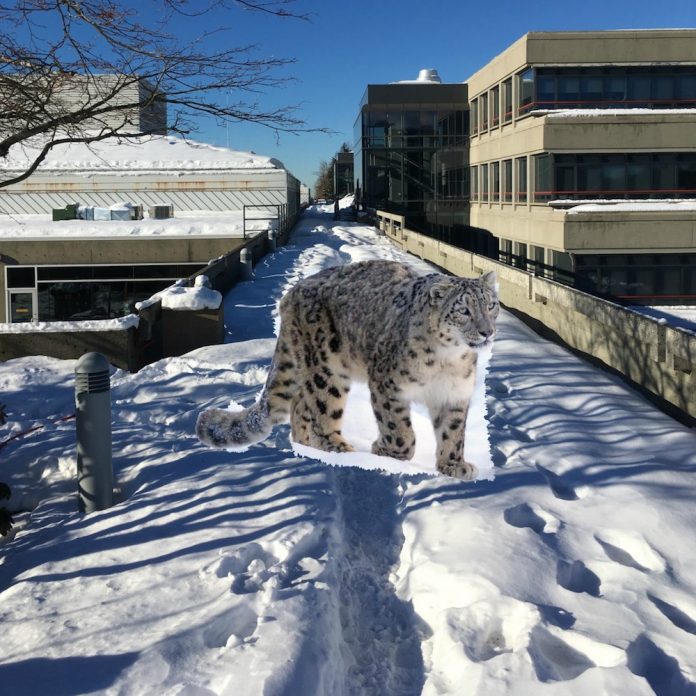
A totally 100% real snow leopard stalks SFU Burnaby campus. (Alex Bloom / The Peak)
Alex Bloom / The Peak

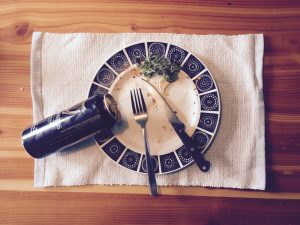
Left: 

This photographer forgot that you’re supposed to eat your food after Instagramming it.


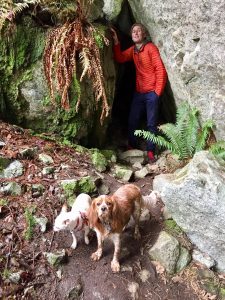
Right:

Andrew Latimer / The Peak

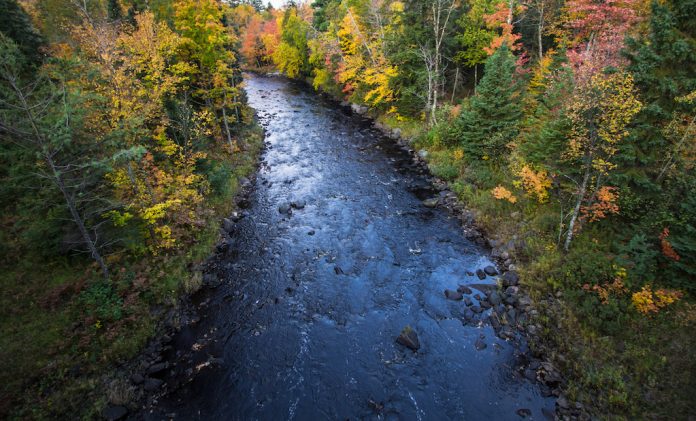
An SFU student peers from his cave, clearly much happier in his new habitat.

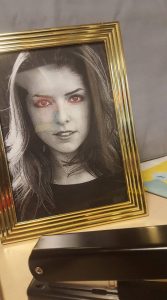
Below:

Are you reflected in Anna Kendrick, or is Anna Kendrick reflected in you?

Courtney Miller / The Peak


Right:

Victoria Lopatka / The Peak

One of our wildlife correspondents managed to snap a photo of the foods that the students eat.

SFU becomes wildlife reserve

0
Linda Shu / The Peak

By: Alex Bloom

In a recent bid to increase revenue, SFU has decided to transition into a wildlife reserve. Now called Simon Fraser Shelter for Endangered Students (SFSES), this new status allows the institution to save money on taxes due to its classification as a non-profit organization dedicated to “preserving the millennial population.” We spoke with sitting SFSS VP of student life Hunter MacTavish, an early proponent of the changes, about the realities of the new campus.

     “I’ll be honest, this was partly a cost-saving measure, but it has greatly increased the student population,” says MacTavish. “Not only did it allow us to do away with frivolous expenditures like classrooms and lecturers, it opened up new opportunities for profit.” What MacTavish is referring to is the second phase of the SFSES project, which offers safaris where tourists can come see the students in their natural habitat — from the safety of a Jeep, of course — and explore the wonders of beautiful British Columbia.

     “The safaris have been a fantastic addition to our revenue stream, and I can happily say we’re in the black! Naturally, the students still pay tuition, but in exchange they get a home for life in the park,” explains MacTavish. According to SFSES records, the student population has been skyrocketing since it became an officially recognized wildlife reserve. This new surge in enrolment numbers is likely due, in part, to the fact that students are not allowed to leave the grounds.

     “We had to make some budget cuts to fund the demolition of the student residences, the building of their new habitats, and the purchasing of Jeeps for visitors to tour the park — as well as the electrified fence that surrounds it. There have been some assets — er, students, who have escaped over the fences, but my parents didn’t name me Hunter for nothing . . .”

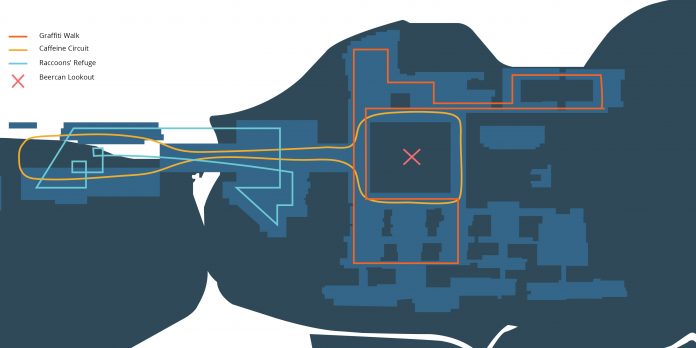
     The greatest attractions the park has to offer, however, are the safari packages. Starting at $2,400 per person, the “freshman” package grants visitors one night of lodgings in the Maggie Benston camp, and a day’s Jeep tour of the AQ. The “double major” package comes in at $5,500, and includes a three-night stay in the sixth floor AQ VIP tower, Jeep tours, an authentic meal in the Dining Hall, and access to all the campus walking trails (listed below). It is possible to come into contact with students on the trails. The park advises that you exercise caution, and that you do not feed the students as they will not be able to survive in the wild if they become accustomed to human contact. And remember, never stray from the path.

A safari jeep tours the Caffeine Circuit.
(Cora Fu / The Peak)


     Beercan lookout: Created as a result of the students’ appetite for beer, this trail leads you up the winding path to the summit of the Empty Mountain — which the engineering students constructed using a combination of beer cans, ping-pong balls, and red plastic cups cemented with their dung. Offering majestic views of the entire wildlife reserve, this trail is a crowd favourite.

     Graffiti Walk: A guided tour through the student bathrooms, where dozens of pieces of graffiti art can be seen. Some experts have posited that this is a sign of intelligence in the students, but the theory has been dismissed as wishful thinking. Favourite examples include the drunk octopus, the wall of phalluses, and the flame war.

     The Caffeine Circuit: Following the the main driveable route in the AQ through to the West Mall Centre, this is a leisurely walk for beginner hikers. The trail passes all the coffee shops on campus, which are watering holes for students. It is best to walk this trail in the later part of morning so you can observe the change in student behaviour as they have their first coffee of the day. It is best not to go any earlier, to avoid encountering too many students before they have had any caffeine, as they can become aggressive.

     Raccoons’ Refuge: More of a spelunking expedition than a hike, this trail takes you through the racoon warrens in the ceiling of the West Mall Centre. This trail is not recommended for beginners as it can be physically challenging at times, and the racoons have been known to become quite aggressive when guests enter their lair. This hike is perfect for thrill seekers, and explorers alike. (Tetanus shot sold separately.) Rumour has it that some particularly feral students have been accepted into the raccoon nest.

SFU students fail the criteria for life, researchers confirm

0
The results leave a gaping hole in the classification system of organisms — where do SFU students fit? (Chris Ho / The Peak)

By: Elise Burgert, “Life” Sciences Experimenter


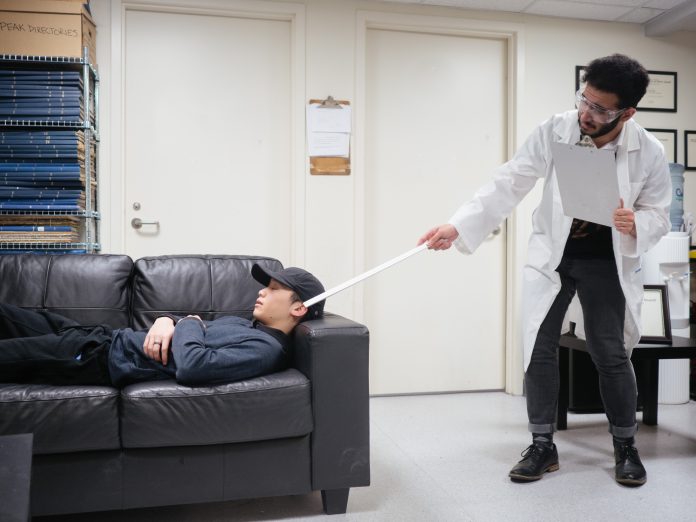
Throughout history, scientific consensus has been that the organisms occupying Simon Fraser University, a concrete behemoth sitting atop Burnaby Mountain, were homo sapiens. Recent evidence, however, has unveiled shocking findings. Not only are they incorrectly classified, but the students of SFU do not even meet the definition of living organisms. This story will discuss the illuminating rationale behind this extraordinary declassification: the journey through which scientists have proven that sometimes even our most fundamental assumptions are, in fact, flawed.

      One crucial feature of life is that an organism must be responsive to their environment when presented with stimuli. To determine whether SFU students were responsive to their environment, our researchers examined the ecosystem of the ‘145 bus’ on a Monday morning. This was an ideal place to study the behaviour of SFU students, as they congregate in extremely dense groups in the ‘145 bus’ ecosystem.

      Our researchers altered the ecosystem to attempt to elicit a response in the students, by announcing over the bus speaker that a zombie apocalypse had begun and the passengers would be converted to the undead faction upon their arrival at SFU Transportation Centre Bay 3. However, of the 150 students studied, the behaviour of not a single student changed. 90% of the SFU students continued to simultaneously sleep while vaguely scrolling through Instagram or Reddit. The other 10% continued frantically cramming an entire textbook in the 20-minute journey. This suggests that SFU students are completely unresponsive even to a massive threat to their alleged status as mortal beings.

     It is worth noting a possible error in this experiment, being that the students studied were either listening to music (38%) or pretending to listen to music to avoid social interaction of any sort (62%), perhaps distracting them from the zombie threat. However, the researchers say this is not an error, but a causal factor that further supports their hypothesis.

     A second feature of life is that an organism must be able to grow and change. Our researchers thought this requisite would be easily met by the SFU students, but they were wildly wrong. Given that SFU students are allegedly pursuing the enhancement of their cognitive abilities through education, it was hypothesized that over the course of one semester, the students would have increased their understanding of the subject studied.

     Our researchers followed the students enrolled in a microbiology class. Originally, the findings were hopeful: they measured the students’ knowledge four months into the semester by analyzing the marks that students received on their final exams, and determined that students knew considerably more about obscure terminology and vague biological processes on their final exams than they did before starting the course.

     However, this inference was devastatingly falsified when a sample of students were polled about the same subject the day after their final exam. Once the final exam was over, without exception these university microbiology students had forgotten literally every definition and biochemical reaction they had learned before the final exam. A shocking 84% could not even name the function of the mitochondria, suggesting that the course had not only failed to increase cognitive understanding, but had actually caused the destruction knowledge they had previously known since grade nine.

     It is clear SFU students cannot be classified as alive. What, then, are they? That is a question for the natural sciences to answer in the coming years. Perhaps the answer lies in the insightful new hypothesis that, just as fire does nothing but consume biomass and leave a trail of destruction, SFU students do nothing but consume coffee and leave a trail of tears.

The diets and natural habitats of the most common SFU faculties

0

Environmental sciences

Diet:

Predominantly vegan and vegetarian

Green leaf salads with no dressing

Kombucha

Chickpeas

Tofu

Hummus

Rice crackers

Dandelions

Pure unfiltered sunlight

Behaviour and habitat:

They can often be found grazing at Renaissance Coffee, Nature’s Garden Café near the upper bus loop on University High Street, or sitting in the grass by the koi pond and the avocado statue. You can identify an environmental sciences student easily in the summer semester: they love being outside and are the first to don dresses, blouses, and shorts when the weather gets even a little bit warm. They have been known to attack engineering students, but only in a pack of other environmental sciences students.  


Criminology

Diet:

Chicken teriyaki

Avocado rolls

Steak cooked medium rare with eggs over easy

Hash browns

Toast with jelly and butter, milk, and juice (the traditional last meal for those on death row)

Dark chocolate cupcakes

Bloody Marys

Cherries

Behaviour and habitat:

These students get their life energy through documentaries on serial killers, correcting people’s incorrect use of the term “psychopath,” and having debates over punitive vs. restorative justice approaches. If you’re seeking out a criminology student, they can be found in the group study section on the second floor of the library, where they undoubtedly will attract other crim students until a pack forms, or in Saywell Hall. It is said that all criminology students share a telepathic connection with students of the same major, but evidence of the existence of this ability is slim.


Business

Diet:

Gin and tonic

Moscow mules

Timbits

Smoothies with extra protein

Devil’s food cake

Super, SUPER rare steaks

Coffee grounds — not even black coffee, just the grounds.


Behaviour and habitat:

If you spot a business student in the wild, remain calm, avoid eye contact, and walk away quickly. In recent years, there have been multiple documented sightings of a business major sucking the blood out of freshmen students that stay on campus after dark. Business students can be found in packs in the classrooms far below Images Theatre.


Visual arts

Diet:

Hard candy

White chocolate Kit Kats

Strawberries

Smoothie bowls

Cappuccinos with art in the foam

Yellow, red, white, black, and blue oil paint

Glue

Behaviour and habitat:

They have been known to die if someone doesn’t ask to see their sketchbook at least once a week. They are prey to all other majors, except gender, sexuality, and women’s studies students and interactive arts and technology students. If you are trying to decide if the student you are observing is a visual arts student, pay attention to see if there are charcoal or paint marks on their hands and clothes. They can be found mindlessly doodling in empty classrooms — or sometimes during other classes.


Communications

Diet:

The blood and body of Marshall McLuhan

Behaviour and habitat:

Communications students tend to gather around outlets located on campus, charging their phones and laptops as they binge on current events and YouTube videos. Their natural diet consists of electricity, men that resemble Mark Zuckerburg, crosswords, Menchie’s frozen yogurt, cheese pizza, and poutine. It may be difficult to spot a communications student with their face buried in their laptop screen, but if they have about a dozen tabs open with key words like “Frankfurt School,” “Internet Proletariat,” “Huffington Post,” and “Vox,” you’re most likely observing a comm major in their natural habitat. These students get along with most faculties, but most frequently co-exist with English and interactive arts and technology majors.


Philosophy

Diet:

Cheap red wine

Green olives

French bread

Pages from old books

Dying stars

Edibles

Behaviour and habitat:

The philosophy student is a nearly extinct species and is rarely sighted in the wild. If you would like to spot one of these fine creatures, ask, “What is the meaning of life?” aloud and one will surely appear. These students can be found staring at the ceiling in basement suites and old apartments. They are the natural predators of English and physics students.


Psychology

Diet:

Human brains

Myers-Briggs personality test results

Behaviour and habitat:

Psychology students are one of the most dangerous student species on the planet. These students can coexist with criminology and sociology students, but no other faculties. They can be found predatorily people-watching in the AQ.


Education

Diet:

Matcha green tea

Lattes served in cute or funny mugs

Smiley French fries

Dry white chalkboard chalk

Mint chocolate chip ice cream

Brown bag lunches

Behaviour and habitat:

Education students rarely drink alcohol, but if they do, they have fruity cocktails or light-calorie beer. If you want to see an education student, try locally owned, plant-filled coffee shops or the private study spaces on the second floor of the library.

A day in the life of an SFUer

0
The SFUer can spend up to three hours a day trying to keep their balance on transit. (Tiffany Chan / The Peak)

By: Alannah Wallace, SFUer Expert


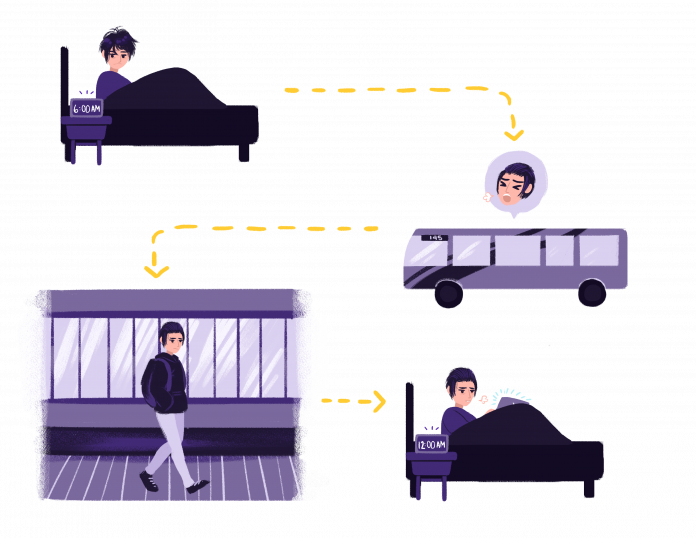
The SFUer has a home and bed, but they do not sleep much. Most days, they wake up so tired that they feel weak and sickly. Throughout the semester, 90% of SFUers on average will develop a persistent cough. In the morning, the SFUers put on sweatpants over their PJs, gather gloves, a toque, and umbrella (even if it is sunny out), and set out on the treacherous journey up the mountain.  

     After shuffling off the Production SkyTrain platform down to the bus loop, the SFUer must carefully choose which door of the bus to line up at. If they are not careful, they risk not getting on the bus and having to wait for the next one with the rest of the peasant lemmings.

     Once the transportation unit has arrived, the SFUers are herded onto it and remain squished and expressionless with glazed-over eyes for the next 15 minutes. In these 15 minutes, the SFUers are blasted with heat from the bus air vents even though they are all wearing winter coats and do not have the mobility to remove them. You can hear coughing from the far ends of the bus and loud rap blaring from the headphones of buddy-guy a few seats away.

     Upon arrival at campus, the SFUers spill out of the transportation unit in every direction onto what often looks like a foggy, eerie, and silent Call of Duty scene that constantly smells of hotdogs at 9:14 a.m. They move around campus like sickly slugs sliding slowly through time, with flu-like symptoms from lack of sleep. It is common for them to develop multiple illnesses, exacerbating the coughing phenomenon throughout campus. Some SFUers wisely choose to stick to the outskirts of campus, only walking outside in non-crowded areas to get to their classes to avoid the sickly SFUers and their coughing plague.

     After class, they often wander the halls looking for the perfect study spot. They do laps of the AQ looking for the best spot, and then later, due to scarcity of resting places, settle for any study spot at all. Ultimately, the SFUer ends up in the depths of the RCB basement where you can hear the coughs of the SFUers echo through the big empty halls. They stay sheltered here, awaiting their last class while avoiding any form of socializing.

     Food has been scarce this year on the tundra (SFU campus) since the Triple O’s disappeared along with Triple O Tuesdays, the main source of an SFUer’s diet. This winter has been especially hard since the Highland Pub also shut down, depriving the poor SFUers of Wednesday wings night. The SFUer’s only chance at fattening up for the winter is to search for scraps in the Tim Hortons and Renaissance Coffee lineups.

     As soon as their last classes end, SFUers panic and run for the bus loop. One must remove themselves from campus immediately. There shall be no socializing in the SFUer daily pattern. As we have observed, the SFUer has problems making friends. The SFUers also rarely mate, unless they find themselves on the tundra by the avocado sculpture with no one else around late at night. The SFUers have not yet figured out that their mating call, the cough, actually functions as more of an anti-mating call.

      Finally, the SFUer arrives at home. They burrow into a thick layer of blankets and pillows where they can cough freely. The SFUer has survived another day.

New student-eating bird discovered at SFU

0
ILLUSTRATION: Tiffany Chan

By: Jennifer Low, Avian Correspondent

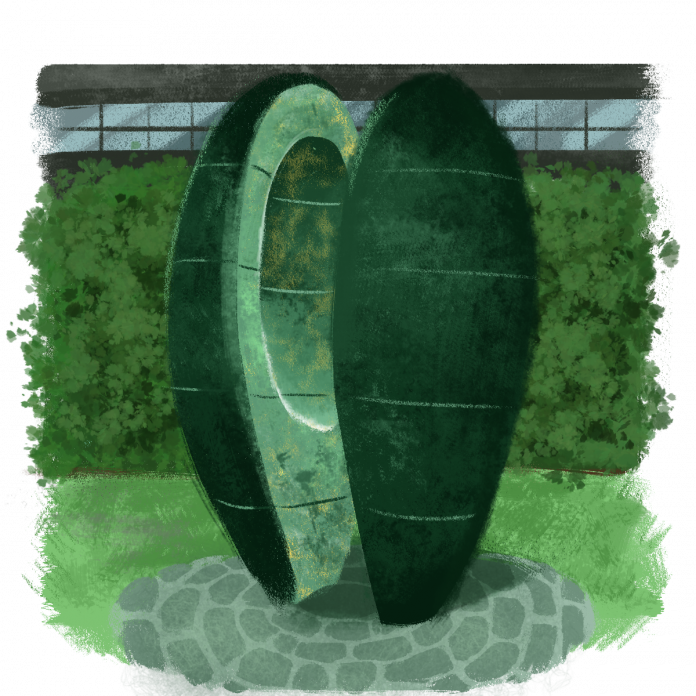
Ever wonder why SFU’s architecture is filled with dark tunnels and hallways? Or what the heck the avocado/egg in the AQ really is? Well, world-renowned researcher and scientist, the one and only Joe King, reveals that his team’s shocking discovery of a new addition to SFU’s fauna may be the answer.

Dr. Joe King and his team have found evidence of a new species of bird that has apparently inhabited Burnaby Mountain and SFU’s campus since the first few weeks of the school’s construction. Based on substantial DNA tests, it is revealed to have hatched from what SFU students have always assumed was merely an egg-shaped statue.

According to King, the newly identified animal is found only on Burnaby Mountain due to the ideal elevation level. The organism has left scientists puzzled for years, owing to its elusive behaviour and flight patterns. Not one to fork over hard-earned cash for outrageously priced food, the animal subsists off the koi fish found in the AQ’s reflection pond and first-years who do not know the hallways well enough to remain indoors to get to class.

The animal’s dietary habits have landed the new species with the name: studiosum comedenti or “student eater.” According to University of Lou Decruss geneticist Bill Lowney, who has been studying birds of prey for over a decade, the creature is a member of the vulture family. “The students are basically dead inside, so that makes this thing a vulture, doesn’t it?” he states.

When asked if SFU will still remain open in light of this discovery, the team and government officials assure the public that the creature, though dangerous, will not impact the operation of the university.

“SFU was built to be a mountain fortress,” says Howard I. Noh, an SFU representative.  “There’s no use hiding that fact any more . . . the architects  were warned that there could be something . . . something lurking on the mountain and thus the building came to be what it is. It was always assumed [that] there was something on the mountain, but with no hard evidence, there was no reason to why a school shouldn’t be up there. Even now that they have identified the studiosum comedenti, the school will remain open . . . so what if a first-year gets carried off every now and again? We get hundreds of applications daily!”

Despite asserting that professors are doing all they can to keep students safe by giving them essays, assignments, exams, and long lectures to keep them indoors as long as possible, Noh recommends that students refrain from wearing brightly coloured clothing and opt for the more generic dark grey hoodies that can be purchased from the SFU Bookstore to stay safe.

Dr. Candice B. Fureal, an educator at SFU, recalls giving a three-hour lecture and requiring her students to attend tutorials and complete online assignments just to ensure their safety. “I do what I can!” she states in an emotional interview. “I would give them more work if I could!  

Fureal is not the only one looking out for students’ well-being; professor Mark Hardy spends extra time to make sure his tests are as difficult as possible to ensure his students spend more time safely in the library than in the dangerous outdoors.

“I have this theory,” says Hardy, “that the Bird is more likely go after students with higher GPAs because if you’re going to eat a student, why wouldn’t you go after the best and brightest? I know that theory hasn’t been tested yet, but I like to lower my students’ GPAs just because I care!”

The animal is described as being one of the largest flying birds in existence. It is an effective hunter with a sharp, pointed beak and talons, and the ability to camouflage itself amongst its surroundings in order to sneak up on prey. The studiosum comedenti possesses a well-developed sense of smell that enables them to seek out fresh blood. They are capable of very fast flight for several hours at a time and seldom hang out on the ground. The bird is an expert mimic and is discovered to be particularly good at mimicking the sound of the university’s fire alarm, much to the annoyance of students living in residence. Busting yet another mystery of SFU’s Burnaby campus, the vibrations given off from the bird’s flapping wings is credited with disrupting cell and Wi-Fi service in all areas of the campus.

“The wings move tremendously fast,” King explains, “Faster than even that of a hummingbird . . . and with its immense size, the vibrations can cause some serious disruption to digital signals.”

After years of research and blind hope, King is happy to finally have undeniable proof of the creature’s existence.

“I was really struggling,” King confesses. “For years people said I was crazy, but I knew there had to be a reason for the lack of fish in the koi pond, the strange, unknown piece of public art, and why the university looks like a government facility! I just knew it!”

Studies of the bird’s genetic makeup suggests that the studiosum comedenti egg may have been laid several hundred years ago. Due to the cement-like fossilization of the egg, scientists have concluded that the creature may have taken years to hatch, which may be why its detection has taken so long. Despite the fact that these groundbreaking discoveries have offered some answers, what we know about the studiosum comedenti is still limited. King and his team are excited to take on the challenge.

SFU students help draft Canadian youth policy

0
(Chris Ho / The Peak)

By: Nathaniel Tok, Peak Associate


Earlier this year, SFU students Pallvi Sehijpaul and Leejoo Hwang participated in The Canada We Want Conference series in Ontario to help the federal government develop Canada’s first youth policy.

     The brainchild of Prime Minister Justin Trudeau, who is also Canada’s Minister of Youth, the youth policy is intended to give youth a voice which can help guide government policy and create meaningful change for youth in Canada. Under the policy, youth are defined as those 15 to 24 years old.

     According to Trudeau, “This initiative is about making sure young Canadians from all walks of life, across the country, can have their say on what the Government’s priorities should be for youth. The youth policy for Canada — built for youth and by youth — will make sure that their important perspectives guide our way forward.”

     The policy will examine issues faced by Canadian youth and look for ways to resolve those issues to support youth. According to Hwang, the policy aims to “give youth a voice, give them a sense of responsibility, [. . .] just to get youth involved.”

     The Canada We Want Conference was the largest youth consultation process in Canada and had participants examine a wide range of topics from mental health to truth and reconciliation to how food is marketed to youth.

     “We came together across Canada,” Sehijpaul said. “There was enough representation from everywhere. There was a lot of voice from the Indigenous population, and that was meaningful because often we don’t hear their voices. We all contributed our ideas and thoughts around each topic and how they are reflected in our communities.”

      According to Sehijpaul, each group would “filter the major themes of the problem and [come] up with solutions with ways to fix those problems on the national and local level. We came up with 10 recommendations.” The conference allowed participants to talk through their ideas about the various topics to governmental and business representatives. At the end of the conference, members presented the issues faced by youth and their possible solutions to decision makers from the government and the business sector.

     Students unable to attend the conference are encouraged to give feedback on the policy online at youthaction.ca; the website also lists various events around the country that are being held to allow youth to enter into dialogue with the federal government. Moving forward, Hwang and Sehijpaul are aiming to have local consultation meetings on SFU campus to encourage other SFU students to participate in the process.

     Sehijpaul believes the youth policy will benefit youth and it will “create a foundation for youth to thrive.” She encouraged others to get involved, saying “your voices matters and is taken into account.”

Clan go 1–3 in crucial four-game series against Northwest Nazarene University

0
With a win and a loss, Jessica Tate is now 4–3 on the season. (Photo courtesy of SFU Athletics)

After struggling on a road trip in California from March 23–25, SFU’s softball team’s road woes continued as they travelled to Northwest Nazarene University (NNU) this past weekend. The Clan, who came into the weekend as second in the conference with a dominant 8–4 conference record, have now fallen to 9–7, placing them behind Northwest Nazarene for fourth place in the Great Northwest Athletic Conference (GNAC) by winning percentage. A win in the first game of the series indicated that SFU was back to its winning ways, but the team went on to get swept in the next three games.

Game 1: 2–0 for SFU

Obviously the highlight of the weekend for the Clan, game one was won by fantastic pitching for SFU. The effort was done by Jessica Tate and Alia Stachoski, who pitched four and three innings each, respectively, combining to only give up four runs in the shutout. For Northwest Nazarene, however, freshman pitcher Jordan Adams managed to lower her GNAC-leading earned-run-average to 1.99, as both runs for the Clan were unearned. SFU managed only three hits in the complete-game effort, but made them count. Victoria Saunders got the hit of the game, hitting a double to lead off the fourth inning before scoring on an error. In the sixth inning, SFU added on another one, as Hailey Gearey hit a single, moved to second on a sacrifice groundout, moved to third on a sacrifice bunt, and scored on a throwing error. For a game in which the Clan struggled with offence, great pitching and a couple errors from their opponent would make the difference.

Game 2: 7–8 for NNU

Game two was the exact opposite, as both teams did a great job of hitting, with Northwest Nazarene narrowly beating out SFU. After shutting out their opponents in game one, the Clan gave up five runs to the Nighthawks in the first inning, and were playing catch up from then on out. After being down 8–1 heading into the sixth inning, however, SFU managed to make a game of it. In the sixth inning, the team scored six runs on six hits, with doubles from Gearey, Hannah Boulanger, and Taylor Lundrigan being the big hits. Despite this, NNU starter Rae Young came back to pitch the seventh and final inning and managed to shut out the Clan.

Game 3: 0–3 for NNU

After giving up zero earned runs in game one of the series, Adams came back for the Nighthawks to pitch a complete game gem in game three. She gave up only three hits in the contest, while striking out eight. This marks her eighth consecutive start giving up one earned run or less, as she continues to dominate the National Collegiate Athletic Association II. For SFU, Tate also pitched a fantastic game, giving up only five hits. Her one mistake came in the fourth inning when she gave up a two-run homerun to Shelbie Martinez. She is now 4–3 on the season.

Game 4: 2–8 for NNU

The finishing touch on a disappointing weekend, hardly anything went the Clan’s way in game four. The only bright spot was the fourth inning, where SFU scored two runs; one off a double by Amanda James, and one off of a Kate Fergusson single. For NNU, they scored three runs in the third, two in the fourth, and put the game out of reach with a three-run homerun in the fifth. Stachoski started, giving up five runs in 4.1 innings of work. She is now 8–8 on the season.


After nine straight games on the road, the Clan will happily return to Terry Fox Field next weekend. They will play a double-header against Saint Martin’s University on Saturday, April 7, before playing a double-header against Central Washington the next day. Saint Martin’s sits right behind the Clan with a 6–6 conference record, while Central Washington is first in the GNAC with a 9–3 record.   

SFU track and field impress at two events in California

0
Ally Ginther ran her first 5,000 metre race for the Clan after transferring from Washington State. (Photo courtesy of SFU Athletics)

This past weekend, the SFU track and field team travelled down to sunny California to compete in the San Francisco Distance Carnival and the Stanford Invitational. The trip would prove to be very successful for a handful of the SFU distance runners, as Aaron Ahl, Reta Dobie, Ally Ginther, Oliver Jorgensen, and Addy Townsend all recorded top times.

The feel-good story of the weekend was certainly that of Jorgensen’s. He has battled leg injuries for the past two years and was awarded the Rick Jones Award for Courage at the SFU Athletics Awards Show earlier this week. Saturday, then, was his first 3,000 metre steeplechase race since injuring his ankle last summer. As if that wasn’t enough, he blew everybody away by running seven seconds better than his previous personal best time with a time of 8:58.72.

In what was a tight race for first spot in the heat, Jorgensen finished third, just one second behind heat winner Ricardo Estremera from Puerto Rico. He finished fifth out of the 82 total competitors in the event. Perhaps most importantly, however, Jorgensen placed himself in the National Collegiate Athletic Association (NCAA) II top ten, as his time was the sixth best time ran in the nation this season.

In the same event, Ahl finished with a time of 9:15.28. This time now has him ranked 14th nationally, although he finished 20th in the event. This is due to the event being an “invitational,” meaning that runners from both Division I and outside the NCAA were also competing.

On the women’s side, Dobie also ran a personal best in the event. She won her heat comfortably, leading the pack of runners for the final three laps of the race. With a time of 10:40.12, she is now ranked seventh in the NCAA II for the 3,000 metre steeplechase.

Ginther, a redshirt senior who transferred from Washington State, ran in her first 5,000 metre race for SFU this weekend. She finished 14th in the event with a time of 17:10.90, which gets her barely inside the top 10 in the nation at tenth.

As can be expected, Townsend continued to impress in a SFU uniform as she competed in the 1,500 metre. Her time of 4:26.94 placed her fourth in the heat, but more importantly, sixth in the event nationally. Her best event is still the 800 metre, in which she is ranked fifth nationally.

SFU’s next event will be next weekend, as they host the Emilie Mondor Invitational. Catch all the action on Terry Fox Field on Saturday, April 7.

A student’s experience at the Kin Games 2018

0
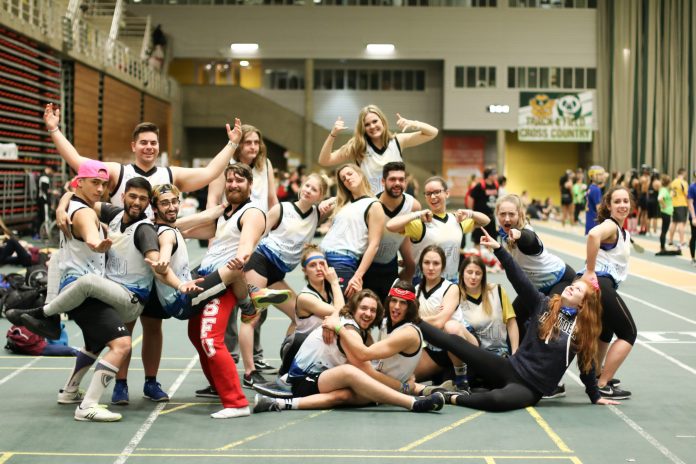
“Kin games is love and friendship. It is one weekend where you make 600 new best friends; this is exactly what the world needs now.” – Malcolm MacRitchie (Kin Games rookie–top row, fifth from left). Hannah Davis / The Peak

By: Hannah Davis

The Kinesiology Games (Kin Games) is an annual kinesiology conference which brings university students together for three days to meet new friends, network, learn, compete, and promote their respective schools’ kinesiology programs. Universities from across Canada send teams composed of students to participate in the games and proudly represent their schools. This year, the University of Alberta was the Kin Games’ gracious host, meaning us West Coast kids got to experience Edmonton’s prairie cold. There were 32 teams from universities across the country who entered the games, and Simon Fraser University was one of them.

I can proudly say that SFU REPRESENTED at Kin Games. The team brought home first in the dance category, second in the spirit category, and third place overall, meaning our university was elite amongst 31 competing schools. The trophies and past jerseys are displayed in the kinesiology wing, by the Kinesiology General Office, so anyone can go and have a look at them. While it is incredibly significant that the team could proudly take home three wins, it becomes even more significant when considering this team’s origins. The team has progressed immensely since its humble beginning five years ago. While talking to Erin Williams, one of the captains of this year’s team, she said that it was initially challenging to build a substantial team each year that could consistently attend the event, and now look at us! We have become a true contender at the Kin Games.

“Kin Games is a fantastic opportunity to meet friends on campus and across Canada. I’m lucky I got to be a part of a team like this, especially at a school like SFU where it can be hard to make friends.” – Lucas Zayonc (Kin Games veteran). Hannah Davis / The Peak

This was my first year participating in the Kin Games, and people were right when they told me that the experience would surpass any expectations I had. Upon arriving in Edmonton, I immediately felt welcome and included at the event. The team of dedicated volunteers and staff who ushered me in on the first day were friendly and inviting, and acted as an indication of what the rest of the conference would be like. There was something really amazing and almost indescribable about the way in which the event seems to foster an intense sense of community, or more accurately, KINmmunity. To exemplify this, some taglines of the weekend were: “you’re a beauty,” “you’re all tens,” and my favourite, “we are all best friends.” Sometimes entire groups of people would break out chanting the latter, which felt entirely reminiscent of summer camp, but better and with less mosquitos. Team members also traded gear; hoodies, T-shirts, rubber wristbands, hats, and any other variation of their school’s swag, a practice which further emphasizes the conference’s ever-present promotion of community.

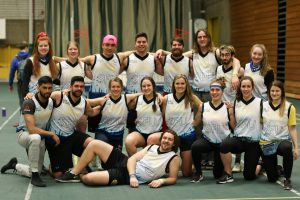
“[Kin Games was the] best weekend of my university career. [I’m] so lucky to have been apart of such a positive and hilarious group of beauties.” – Alison Bogar (Kin Games rookie, third from left). Hannah Davis / The Peak
At the conference, there were four categories in which teams could be awarded points: sports, dance, academics, and spirit. The points scored in each each category ultimately determined the final rankings of the competition. This year’s sports were unfamiliar to most participants: sepak takraw (armless volleyball), Aussie rules football (fancy Australian rugby), hurling (Irish lacrosse) and Quidditch (Harry Potter sport), which ensured that each competitor would be on a relatively even playing field upon entering the competition.

Each school also prepared a dance to perform, and were scored based on a number of components including creativity, technique/execution, difficulty, and presentation quality. SFU’s awesome choreographer, Katriana Wong, included waaking and krump into the team’s choreography. To get an understanding of what this means, check out the dance video here.

The spirit category included a wide range of challenges, from donating to a charity (SFU’s Kin Games team donated clothing and other items to the Developmental Disabilities Association), to making up chants, to taking photos with bears at the University of Alberta campus, to overall being a positive and encouraging group of people while participating in all conference events. Academics consisted of each team attending a variety of lectures, then having the team collectively tested on their knowledge at checkpoints during a 2.5 km run/race. Never have I felt so much pressure to pay attention during lecture.

The SFU team held weekly practices to rehearse and learn the dance, as well as go over sports rules and discuss spirit challenges. While the primary function of these weekly meetings was evidently to prepare for Kin Games, they also acted as an outlet and distraction from the inherent stresses of being a university student. Erin Williams, one of the captains and veterans of this year’s team, exemplified this idea in sharing that “it’s really easy to get consumed in school stress, especially in upper-division courses, and Kin Games has always been a way for me to get away from that once a week. It’s shown me how important it is to find balance, and also introduced me to some great people to look up to along the way.”

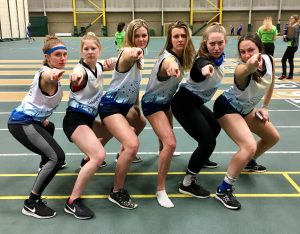
Certainly a great experience for the SFU Kin team! Hannah Davis / The Peak

Overall, the support each person had for each other, for their team, and for teams from other universities was staggering. As one who may not always step out of her shell upon meeting new groups of people, I felt included and encouraged at all times. I feel so happy and lucky to have had the opportunity to participate in the event, and to have been able to get to know such an incredible group of people. Kin Games veteran Konrad Maludzinski said, “Kin Games has made my university experience more fun and meaningful than I could ever imagine,” which emphasizes the profound effect the conference has on individuals. While both rookies and vets of the team have their own particular experiences of the Kin Games, the heart of what each person communicates seems to remain similar: the love, support, and feeling of community is real at Kin Games.