Home Blog Page 621

Seven-Minute Majors: Find out what SFU students like about their majors (part one)

0
Image courtesy of Youth Change

By: Tessa Earnshaw, Michelle Gomez (Staff Writer), Amneet Mann (News Editor), Gabrielle McLaren (Features Editor) and Nathaniel Tok

Engineering

This major is going to help you become the nerd you always knew you could be.

If you’re anything like me, you have zero tech background as you consider joining engineering. Contrary to common perceptions of engineering students, you don’t need an intimate relationship with your operating system to do well in engineering. You just need to be open-minded towards experiencing the beauty of math, and before you know it, you’ll be saying things like “beauty of math” and building filters and coding instruction sets of your own.

The best professor I’ve had during this degree is hands-down Brenda Davison. Brenda is actually a math professor, but after taking four courses with her, I think she qualifies for this category. Brenda is clear, reassuring, and unrelentingly curious about the subject. Her knack for explaining equations in a way that makes them relevant turned me from a person merely ambivalent about math to someone who now has a deep appreciation for the subject.

The best classes I’ve had in engineering are the ones that make you stop and reflect on the fact that, wow, you actually are doing it — you are building the circuit, solving the equations, and doing whatever other tech-y thing you never imagined you’d be good at doing. For me, these classes have been ENSC 220 and ENSC 320 (Electric Circuits I and II), MACM 316 (Numerical Analysis), and ENSC 225 (Microelectronics I). These are classes that push you to use your classroom knowledge — the seemingly never-ending math, physics, and circuits courses — to design and build your own circuits and evaluate numerical techniques to reach meaningful conclusions about robustness and efficiency.

If you can put up with the trial-and-error and frequent googling that comes along with the learning process in this degree, then maybe engineering is for you too. – AM


English

If you love reading, writing, and critical thinking, then you should consider majoring in English. You get to read the best literature ever written, have interesting discussions with others who actually appreciate it, and analyze it for both your enjoyment and your assignments. You also learn about multiple other subjects such as history, politics, religion, and geography in the context of what you read, leaving you with a better understanding of the text and the world around you.

The English department consists of some of the best professors at SFU; they are all extremely passionate about their fields of study and are always willing to help students. I have loved every professor I have had, but some of my favourites include Paul Budra, Jon Smith, Peter Cramer, and David Coley. My favourite classes so far have been ENGL 385 (Across Time, Across Space), because of its wide variety of fascinating literature and history, and ENGL 311 (Early Shakespeare, because what English major doesn’t love Shakespeare?)

SFU’s English program is truly remarkable; it has fantastic, helpful professors, interesting classes that you actually want to attend, and passionate students who will quickly become some of your best friends. Most importantly, English allows you to look at situations from many different perspectives and improve both your writing and critical thinking, which are essential skills for any career. It prepares you for the future, regardless of your career path. – TE


Health Sciences

My department, or rather, faculty, is Health Sciences. For those who are unfamiliar with us, it’s the glass hallway at Blusson Hall you barely think about when you are dashing to and from the bus loop.

We are a weird mix of scholars. There are professors and researchers who specialize in almost anything you can think of: philosophy and ethics, policy and healthcare, geography and geological information systems, economics, microbiology, psychology, sociology . . . as long as it can be related to healthcare, we probably have someone who does it. This leaves students (or me at least) feeling a little lost, since although we study health and the human body, there are courses we can relate to in many departments.

Profs and classes are generally pretty good. I am biased, but my experience in health sciences classes often feels better compared to when I do classes outside my faculty. My favorite class so far is probably HSCI 305 (The Canadian Health System). The prof teaching our class kept things relevant and connected lecture topics to current news. Assignments were broken up so you didn’t hand in an entire term’s worth of work at once just before exams.

An interesting book I read in a health sciences course was The Big Necessity by Rose George. The prof insisted that we read something in the popular science book category rather than journal articles, to make it easier for students. The book was about problems and potential solutions on how to deal with human biological waste. I never really thought about this topic before, so it was eye-opening to see how such an important issue was often overlooked. Well, that’s my major in seven minutes or less. – NT


History 

Confession time: I hated history in high school. I hated reciting lists of events, I hated the boring textbooks, and I hated memorizing all the damned dates. But because I liked museums, historical books, and movies set in the past, I took a history class in university and fell in love — hence why I’m currently pursuing a double major in world literature (read more on that next week) and history.

I liked how history, to me, felt like a series of stories. The history department helped me pick those stories apart and understand their details, the causalities precipitating them, and the complexities of how they got to us and why. Interesting characters, wildly different worlds, hilarious anecdotes, and complicated storylines all come up on a regular basis.

My critical thinking skills have always been pushed in history classes, where there are not only facts and undeniable realities, but also complicated sources, repercussions, motives, causalities to understand and discuss. My research skills have definitely been sharpened thanks to the nature of the work I’m assigned. Classes tend to be reading-intensive, but also very much discussion-based.

What I appreciate at SFU is that you need to take classes from a variety of course types (Europe, The Americas, Africa/Middle East/Asia, and Global/Comparative), which means you get a little bit of everything, and get pushed out of your comfort zone and into new interests. I had no idea when I started this degree that Indigenous history and environmental history would be so interesting to me. Professors whose classes I’ve actively planned my schedule around to take again include Dr. Joseph Taylor and Dr. Mary Ellen Kelm. – GM


International Studies

What attracted me to the international studies (IS) department was the broad range of topics that it covers, allowing each student to study specifically what they are interested in. There are three streams in IS: international security and conflict; comparative world politics, culture, and society; and international development, economic, and environmental issues.

Since IS is such an extensive program, having these streams allows students to narrow down their studies and focus on a specific interest area. Students in all of the streams have to take similar lower-division courses, which are usually overviews of a wide topic. As it is with most degrees, the upper-division courses vary and are more specific. In fact, IS upper-divisions get so weirdly specific that there really is something for everyone.

The most interesting lower-division courses are IS 209 (Latin America: The National Period), and IS 220 (The Wealth and Poverty of Nations). Keep in mind that many first- and second-year courses in IS involve a decent amount history in the curriculum, as it is very important to understand context and background when studying foreign countries.

For upper-divisions, you are able to choose courses from a list that includes other subjects, such as sociology and anthropology, political science, and history. The one downside for me was that all streams require at least one ECON course — it was all fun and games until I had my first macroeconomics midterm.

My favourite part about being in IS is that there is a sense of engagement and respect in classes when students partake in friendly debate. It is obvious that most IS students are passionate about what they study. -MG


Editor’s note: More Seven Minute Majors will be coming next week! Check online for our full selection, including some submissions not in print this week.  

Removal of at-large representative linked to sexual misconduct allegations

1
The removal of the at-large representative was previously attributed to abandonment of office. (Chris Ho/The Peak)

Written by: Amneet Mann, News Editor


The removal of former Simon Fraser Student Society (SFSS) at-large representative Wareez Ola Giwa as a director, which was previously attributed to him missing two board meetings, has now been linked to sexual misconduct allegations.

The allegations have been brought forward by vice-president external relations Jasdeep Gill, business representative Jessica Nguyen, and a third board member who requested to remain anonymous.

The female board members submitted a formal complaint regarding Giwa’s behaviour to SFU’s Sexual Violence Support and Prevention Office (SVSPO) on July 30. The report, which has been provided to The Peak by the women involved, details incidents in which Giwa engaged in misconduct.

These included Giwa setting up a one-on-one meeting with Gill and then using the time to ask her “personal and inappropriate questions,” putting his hand on one board member’s thigh, and asking Nguyen if she could be his “superwoman” or call him “daddy” while cornering her in the board office.

In their report to the SVSPO, the women asked for a formal restraining order against Giwa, an evaluation of his status as an SFU student, and increased security in Maggie Benston Centre.


“We were basically brushed under the rug”

In an interview with The Peak, the women expressed frustration at how the situation was handled within the board office.

According to Nguyen, when she approached SFSS president Jas Randhawa, who was one of the human resource (HR) representatives for the board office at the time, he was not willing to take disciplinary action against Giwa for fear of public backlash.

“He’s more concerned about the SFSS reputation rather than the three females who are trying to work here and have a safe place,” said Nguyen. She said Randhawa told her to “just ignore it.”

“We were basically brushed under the rug, not taken seriously.” – Jessica Nguyen, SFSS business representative

The women involved expressed that during this period, they avoided coming to the board office and felt their work was affected.

“I would like to start off by questioning the integrity of the directors who are bringing forward such allegations by asking why allegations are being brought up this late,” wrote Randhawa in an email interview in response to these statements by Nguyen. “The allegations being made here are disgusting and of severe desperation.”

Randhawa stated that he immediately contacted the SVSPO upon hearing the women’s complaints. Randhawa provided screenshots of email correspondence between him and the SVSPO dated June 24, in which the three female directors were CC’d. In the email, he asked to set up a meeting time with the office. According to Randhawa, none of the three female directors followed up with scheduling a meeting.

Nguyen responded that she did not follow up to schedule a meeting with the SVSPO because she did not believe it would lead to a removal of Giwa as a director, which is what she “wanted and needed.”

“I personally did not need any of the services offered by the SVSPO office (counseling, referrals to off-campus support, information packages, etc),” wrote Nguyen. “What I needed was to have Ola removed from the board because he was constantly harassing me which was not being done. So the SVSPO just seemed like a lost cause.”

The three women stated that Randhawa withheld their complaints from vice-president university relations Jackson Freedman, the board’s second HR representative at the time, and CEO Martin Wyant.

Gill stated that the women had recently found out that Wyant had offered to sit down with them to find a solution to the problem, but that Randhawa had told Wyant the women did not want his help. “We were never told that Martin had ever offered us any help,” said Gill.

Wyant confirmed that he had offered help to the women and was told by Randhawa that “the three female board members did not want to meet with me.”

Randhawa responded that his only intervention was to ensure Wyant did not “force a decision onto these women as I did not want Martin to control what action these women take.”

Nguyen said that after receiving little support from Randhawa, she then went to Freedman.

“Our other HR representative had no information at all, and it wasn’t until Jessica told Jackson that something was actually done,” stated the third board director.

Freedman corroborated the women’s claim that he was “not adequately consulted or involved in the decision-making process over the resolution of this dispute.” He stated that Randhawa had reassured him that the board members’ concerns had been appropriately addressed and a resolution found.

“This was clearly not the case,” added Freedman. Upon learning about the complaints, he had recommended that the women contact the SVSPO.

Randhawa alleged that Freedman had been involved throughout the entire process and was mostly concerned with helping Giwa draft apology letters for the women.

The women then filed a complaint to the SVSPO and received apology letters written by Giwa with Freedman’s help. The women did not accept the apologies.


A quiet resignation

Following the registration of their complaint, the women stated that they still did not feel safe in their workplace.

“So that was done and still we have events, like socials for the board and stuff like that, [and Gill and the third board member are] not showing up and that’s not fair because we still have this one guy,” recalled Nguyen.

In this period of time, the women stated that they found themselves working in close proximity with Giwa. He was assigned to work on the Surrey Campus Committee with Gill and the third board member, a subcommittee with Gill, and seated next to the third female during a meeting.

“So it just goes to show that [Randhawa] didn’t care,” said the board member.

Nguyen stated that Randhawa continued to refuse to remove Giwa from board.

According to Randhawa, he did not have the authority to remove Giwa as a director without resignation, impeachment, or abandonment of office as per SFSS by-law 17.

“The issue regarding the now inactive board member was resolved in no small effort from my part.” – Jas Randhawa, SFSS president

Nguyen stated that after she continued to advocate for herself and the women, threatening to approach The Peak, Freedman and Randhawa approached Giwa and told him “he could resign quietly” by missing two consecutive board meetings.

“Technically, that’s what happened,” said Nguyen referring to Giwa’s official removal from board at a previous board of directors meeting, “but [this is] the backstory, because they wouldn’t remove him because of this issue.”

According to one of the board’s current HR representatives and science representative Natasha Birdi, there is no protocol in the SFSS’s by-laws and policies nor in the BC Societies Act that outlines a response to sexual harassment in the board office. “For situations like this, we would refer to SFU’s general guidelines and take any incidents to SFU’s Sexual Violence Prevention Office,” she wrote in an email interview.


Leaked information

The women told The Peak that they decided to come forward with the sexual misconduct allegations after they had learned that Randhawa had begun circulating information regarding these allegations to the public without their permission.

“He’s jeopardized our own safety and confidentiality,” stated the female board member. “Obviously this is something we don’t want our names to be attached to as well. It’s something so personal; he invaded our space.”

“He told Ola if he resigned quietly, which is what happened, then none of these [documents] would be released [. . .] [but] he released them,” added Nguyen.

Randhawa denied that he had circulated information regarding the incident and called the claims “entirely baseless.”

He stated that asking Giwa to resign privately was made in the interest of the “women in the workplace [who] did not want this to go public. [. . .] [The three women] continuously stated that it would be embarrassing for them if the story went public and I respected this until these directors decided to switch around the narrative to try and push me out.”

The Peak had received details regarding the sexual misconduct incidents and how they were handled within the board, including screenshots provided as evidence, from Randhawa prior to this interview with the female board members.


Allegations against president in regards to women in the workplace

The third board member added that Randhawa himself did not seem to be considerate towards women in the workplace. She stated that Randhawa often cut her off in meetings. She cited a meeting in which she was the only female board member in the room where Randhawa “made the meeting about how [she] takes things too personally and [. . .] based [it] on [her] feelings.”

Randhawa denies that a meeting like this ever took place and questions the legitimacy of the claim without any evidence.

In a document addressed to the SFSS membership by the board of directors, the mishandling of the sexual misconduct allegations and the circulation of confidential information relating to these allegations was cited as one of the concerns which led to the proposal of Randhawa’s impeachment.

The board has declined to comment on the official reason for Giwa’s removal from the board in light of the sexual misconduct allegations being made public.

The Peak reached out to Giwa for comment on the allegations made against him, but received no response by the publication date of this article.


The Hanging Girl is a gripping story that will keep you on your toes

0
Image courtesy of Good Reads

By: Michelle Chiang


      The Hanging Girl follows seventeen-year-old Skye Thorn, who often gave tarot readings for her classmates throughout her life. And when their small town’s golden girl Paige Bonnet goes missing, Skye decides to use her so-called “abilities” to feed information to the police. But the small prank goes awry, and Skye realises she has to soon figure out who the true perpetrator is.

      The novel may be a classic mystery, but the heart of The Hanging Girl centers on characters’ and the relationships between them instead. While the characters do follow certain tropes the outcast main character, the supportive best friend, the school bitch none of the characters feel two-dimensional. Throughout the story, Skye struggles with her friends, and her enemies. She stands conflicted about  her feelings towards her mother, someone she loves but is also embarrassed by. The main conflict almost seems to parallel her personal struggles.

     However, the novel is lacklustre when it comes to the plot. Cook attempts to mislead the reader through the placement of red herring perpetrators, but all of them are embarrassingly easy to spot. The pacing of the novel could also be improved — it isn’t until the second half of the book that the story really starts moving, which means muddling through a lot of monotony before getting to the satisfying bits.

     The Hanging Girl stands as an unexpectedly poignant story, featuring an incredibly diverse cast, grapples with complex relationships, and what it means to tell a lie.


Staying In: The Mindy Project

0

By: Kitty Cheung, Peak Associate

     Are you a sappy, hopeless romantic who recites the lines alongside Meg Ryan as she declares her love to Tom Hanks? Are you down to kick your feet up and laugh alongside a strong feminist heroine? Well, good news: The Mindy Project is the next lighthearted comedy to fill the deepest of your Saturday night couch potato desires! Mindy Kaling was hailed as a groundbreaker for creating and starring in her own television show as an Indian-American woman, and in The Mindy Project, Kaling offers an exaggerated version of herself to the audience.

     Her protagonist, Mindy Lahiri, is a melodramatic, egotistical, totally extra hot mess who will keep you laughing with her sharp quips and embarrassing exploits. Mindy is a successful OBGYN working in a professional practice alongside kooky and lovable characters, often rushing to the hospital to deliver babies as well as punchlines. As an established career woman, audiences are asked to join Mindy as she searches for love and self-growth in a haze of smart and satirical rom-com tropes.

     This show delivers clever, self-deprecating humour in an upbeat way. Mindy’s fearless and unapologetic jokes hit hard as she promotes body positivity, feminism, independence, and self-love. Laugh along with Mindy, and wallow alongside her on the pink rug of her office during times of heartbreak and despair.

Best for:

  • Hopeless romantics
  • Comedy goofs
  • Unapologetic feminists

Available on: Netflix (all six seasons)

SFU should use its social media pages to improve students’ real-world social lives

0
Photo by Gene Cole / The Peak

Written by: Amal Javad Abdullah, Staff Writer

As a school that boasts of being Canada’s most “engaged” university, one thing we can’t deny SFU’s its apparent engagement on social media. SFU’s various departments, faculties, student programs, student services, and even clubs are everywhere on social media. Several departments have their own social media pages, followers, and regular updates.

Much of the content on SFU and SFU-branched social media pages is student engagement — posts which the pages’ operators perceive as relatable to the everyday SFU student. These are usually pictures around campus, mentions of student accomplishments, or even the occasional corny meme.

While this content technically makes our university live up to its slogan, it isn’t always relevant to SFU students. We follow these pages and see these posts, but scroll past them without a second thought. They’re nice for a quick glance, maybe a like, but usually aren’t engaging enough to look into more deeply or share. They mostly serve as placeholder content to keep the page active and make it look pretty for the occasional interested viewer, maybe a prospective student.

Of course, there’s nothing inherently wrong with this. There shouldn’t be a need to engage students on social media when they’re physically at an SFU campus, or busy with things related to SFU. We consume enough from our school as it is without also needing to see more of it in our faces when we’re on social media to relax and take a break.

SFU and its branched social media pages shouldn’t spend great amounts of effort trying to engage students exclusively online, because there really isn’t a need. To try to do that would be to try to occupy the students’ online social lives, and that just isn’t necessary.

Instead, the core goal of SFU social media should be to update students on things that could help their social lives offline.

Our school is known for its students having non-existent social lives. Its reputation as a commuter school could be changed if social media was used as a complement to students’ social lives.

The “commuter school” reputation only stands because students leave right after class. This leads to few people being on campus long enough to know what events are happening. The ones who know, meanwhile, don’t want to bother going to an event if it means they’ll have to commute home late or during rush hour.

If social media were used, it could help mitigate this problem. A student could come across the event beforehand on Facebook, read what it was about, then invite a few friends to make plans to go with them together. Moderators of these pages can help facilitate this discussion and detail events with people posting about it who seem unsure. Things like this could be a powerful tool for encouraging student engagement, and it should be utilized as effectively and extensively as possible.

Most of the content from SFU social media pages does little more than fill up our social media timelines, but it has the ability to do something far more tangible and beneficial. It needs to shift away from these unsubstantial posts, and create a more social atmosphere on campus through focus on events and student life.

Keeping it slow and stable in the animal world

0
(Cameron Spencer/Getty Images)

Written by: Amneet Mann, News Editor and Agnetha de Sa, Peak Associate


Animals are slow to catch on

SFU researchers have published a study investigating and comparing the delays of animal reflexes between small and large animals.

The study, published in the Proceedings of the Royal Society B. by researchers from SFU’s biomedical physiology and kinesiology department, has found that animal reflexes are “remarkably slow,” according to SFU News.

To put reflex time into context, researcher Heather More explained that “it takes less time for an orbiting satellite to send a signal to earth than for an elephant’s spinal cord to send a signal to its lower leg.”

The researchers found that, while large animals have slower reflexes than smaller animals, the relative delay between different-sized animals is quite small. “Relative delay is only twice as long in an elephant as in a shrew, putting large animals at only a slight disadvantage,” said More.

In contrast, a different measure of delay which considers synaptic transmission within the spinal cord is shorter in larger animals compared to small animals. This delay affects how the animals adapt to their slow reflexes. While small animals depend on “pre-reflexive control”, responding to stimuli or disturbances without thinking, larger animals have more time to think about how to respond to environmental changes.

– AM


The stars of kelp forests

Jenn Burt, a SFU resource and environmental management researcher, and her team recently discovered key relationships within B.C’.s kelp forests.

In her study, Burt and her team surveyed multiple communities annually and found that sea otters and sea stars have important roles in ensuring kelp forest health and resilience.

As “complementary predators of sea urchins,” Burt and her team observed that both otters and stars were needed in order to keep the urchin population under control. Otters eat large urchins and stars eat the medium to small urchins.

Sea urchins feast on kelp, which is an essential part of the ecosystem. Like their counterparts on land, kelp forests play vital roles in habitat formation for various species and absorbing carbon dioxide from Earth’s atmosphere. If otters or stars are not present, urchin populations can increase, rapidly consuming kelp and negatively impacting the health of the kelp forest.

-AS


100 Days in Uranium City is a quiet, calm read that’ll leave you empathizing with the life of a 70s miner

0

By: Amal Javed Abdullah

If you’re looking for a short yet meaningful read, 100 Days in Uranium City by Canadian illustrator Ariane Dénommé is the perfect graphic novel to pick up. Best to read on a rainy day by a window, this comic is quiet, calm — almost soothing. 100 Days beautifully combines the two opposing elements of insightfulness in its message and intrigue in its plot, weaving them together to create an intricate storyline.   

     Set in the 70s, the story follows Daniel, a 24-year-old miner. After hurting himself and being sent home on sick leave, Daniel is reassigned to a Uranium mining town. The town is far removed from the rest of civilization, and work is completed in blocks of 100 day shifts with two-week breaks in between. Daniel sets off, leaving his girlfriend Carole behind, taking the reader on a journey to the mining town with him.

     He discovers that while the pay is good, not only is the work exhausting and tedious, but the seclusion from loved ones is depressing — this aspect drives some men to count down the 100 days to when they get to return home. Following Daniel’s story gives insight to a number of things: they ways these men deal with the grueling work of the mine, the coping mechanisms they adopt for being isolated from their loved ones, and their thoughts on their experiences in the mining town.

      This graphic novel is presented in the form of sketches accompanying text. As someone who hasn’t read a comic book since when Captain Underpants was all the rage in elementary school, this graphic novel was a pleasant introduction back into the genre. The text is minimal, leaving the reader to fashion their own story from the pictures. While it took me quite a few pages to wrap my brain around this form, I found it an enjoyable format for communicating thoughts and ideas from the mines. The very nominal text and dependency on the sketches gives the story a certain magic, putting the onus on the reader to choose how they interpret and understand 100 Days in Uranium’s narrative.

Specialized clubs can sometimes deter gamers, but it’s still a great way to find gaming partners

0
Photo by Maxwell Gawlic / The Peak

Written by: Alexander Kenny, Peak Associate

I’ve heard a lot of the same things from students discussing their inability to keep up with hobbies like tabletop games and video games — things like “I wish I had time to play games, but I just don’t!”, or “I enjoy games, but all the clubs only focus on specific games, and I’m not a big fan!” While I can understand the frustration that most clubs are heavily specialized, this mentality towards how to find people who enjoy similar games has to change.         

Just because a club focuses on a certain game or niche within gaming doesn’t mean that valuable connections can’t be made through those clubs, both in gaming and general life. School gaming clubs should not be seen as organizations that provide you with people to play with. They’re a valuable resource to meet new people and to bond with them.

This goes for all clubs, as the possibilities that arise from meeting people in clubs should never be limited to the topic that the club nominally focuses on— or in the case of gaming groups, the specific game or genre. It’d immediately put a stop to the growth of a club’s success as a social catalyst, and the main goal of most clubs is to encourage that social atmosphere.

For example, say you wanted to check out SFU’s League of Legends club, without being much of an expert yourself. Most people in the club are likely more familiar with the game than. But the club still welcomes people who haven’t played the game much and are simply interested in playing, or learning more about it.

If you find you don’t enjoy it, there’s no obligation to go to future events, but there’s still an opportunity to use the time you’re there to socialize with the members. This gives you a lot of opportunity to find something else to play with the people you meet there outside of club activities, or even to make connections beyond that specific club’s circle.

That said, especially when it comes to board gaming hobbies, there are undoubtedly challenges when gaming through clubs. Many can be variant and inconsistent with the games they play, so finding common ground with group members can be difficult. However, putting in the effort to do so is something that no one should be afraid of doing. A majority of the time, the worst that happens is that you try again elsewhere.

But the best-case scenario is that you make friends within the club. Even if you can’t get into their theme, or aren’t fond of the club’s overall vibe, spending time with people who share general interests still opens the door for to play games with new friends. In my experience, I’ve found a good number of friends this way who enjoy gaming in similar ways, and we ended up starting weekly sessions outside of campus and club meetings.

One of the most important steps we can all take when trying to find other gamers is to approach every group and opportunity with an open mind — as with everything else in life. Forget about whether the club is centred on a certain game, avoid thinking too much about the game, and just try to get to know people. Clubs and groups are all about trying new things and being with people. Once these are covered, gaming comes far easier.

Political Corner: The end of NAFTA may be the biggest current threat to Canadian industries

0
Photo by Israrul Haque / The Peak

Since the beginning of his presidency, United States President Donald Trump has talked about ending the North American Free Trade Agreement (NAFTA). On Monday, August 27, President Trump got one step closer to achieving this goal by signing a preliminary trade deal with Mexico.

After securing said deal, President Trump switched his focus to Canada and assigned a deadline of Friday, August 31 for the two countries to reach a deal. However, the deadline turned out to be an empty threat, as trade discussions ended early on Friday. It was announced that they will be continued this week.

The issue President Trump has taken with NAFTA is merely another battle in his personal trade war, and one of the most significant that Canada has had to deal with since the aluminum and steel tariffs were placed on Canada in March. But with an ending to NAFTA, Canada could face dangers and costs to far more industries.

One of the major points of contention in the Canada-US trade discussion is Canada’s dairy, eggs, and poultry industries. Canada has been able to keep fixed prices on these industries since the 1970s, allowing them to take a much larger profit. While keeping protections on these industries are a large priority for Canada, there is also the threat of President Trump taking automotive production jobs from Canada.

There is no easy solution to these trade discussions. The United States has been Canada’s largest trading partner for a very long time. However, these trade discussions in America have been fully at the expense of Canada. Negotiators on Canada’s side cannot forget this, because having America as our largest trade partner is not worth retaining when it’s solely at the expense of Canadians.

SFU Rugby thrives despite not being recognized as a varsity team

1
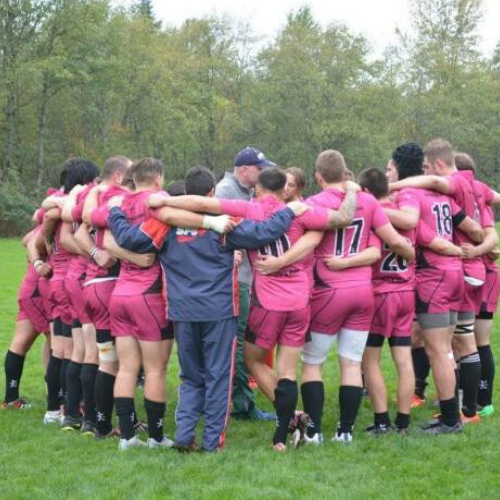
Essentially all funding for SFU Rugby comes from alumni and players. (Photo courtesy of SFU Rugby)

SFU Rugby is the biggest club that SFU has to offer. It has been around for as long as the university has — 53 years and counting. The program’s rich history has seen the club tour around the world, establish themselves as a premier program in British Columbia, and develop players at the national level.

We interviewed head coaches Conan Cooper (men’s) and Shaun Fickling (women’s), as well as important players Tapiwa Samkange and Jessica Piot, to find out more about SFU Rugby.

Achievements:

The men’s team won the provincial championship as recently as 2015 , while the women’s team has a “fairly storied history of success in both prem and division one,” as per Fickling. However, a different type of achievement stood out most from the group of interviewees’ accomplishments: putting up the rugby posts in 2014.

“We put the rugby posts up on field two and that solidified our position as a club at SFU, ‘cause [SFU] can’t kick us out now — we’ve installed posts onto [their] field,” says Piot with some laughter. “That was a huge achievement because we had to fundraise and get so many donations for those. A lot of teamwork and executive work went into getting that, and giving us an official rugby field.”

The SFU Rugby Club “Family”:

It is this ability to band together that makes SFU Rugby so special. When asked if there was a family aspect to the club, all interviewees responded with a resounding yes.

SFU definitely has a family aspect. In fact there are over 15 marriages since 2000 from within the club. All rugby programs have a fellowship within the clubs – it’s part of the whole attraction to the sport and what keeps people in it […] There’s a lot of friendship and helping out one another that develops out of the way rugby is played. We rely on each other and just know everyone will be there in place for us when the play is set – a lot like a family,” said Cooper when interviewed via email.

SFU Rugby alumni continually give back to the program, allowing it to be what it is today. Due to the funds received through their alumni, SFU Rugby is able to offer bursaries and scholarships to some of its players.

Similarly to how the alumni give back to the program, however, SFU Rugby players also give back to their communities. Various players coach at high schools around the lower mainland. In the long run, this may also benefit the club as players who graduate from these high schools are able to put a face to SFU Rugby and are perhaps more likely to join SFU as a result.

Family is a familiar concept to rugby players and fans, and has been a huge part of the sport’s history. The home team is expected to feed the visiting team after a match, adding an element of camaraderie to the game that is unheard of in other sports. Given the competitive nature of the players, it can also lead to some interesting scenarios. “You might hate someone but you’re serving them food [after the game],” said Piot.

Being a club and not a varsity team:

While SFU Rugby excels with the resources that they have, a common theme that came up in the interviews was the difficulties of not being a varsity team.

One of the main struggles is player recruitment.

“I know quite a few women who attend SFU as a school, but they have a rugby club that’s closer to home, so they go to that one instead of our rugby club. But if we were varsity, they would travel miles for that opportunity,” said Piot.

The same thing goes for the men, as many of the clubs that they play against have “youth development programs that span two to six years,” as stated by Cooper.

The club also must rely on internal means to get funding for coaches, materials, and travel. “We rely heavily on fundraising and alumni to fund the program. SFU gives very little,” said Cooper. “All staff are funded by players/alumni, and we mainly rely on volunteers.”

“It’s a very different situation at other B.C. universities, other NCAA universities with rugby, and programs in eastern Canada. What would be a huge investment for us of just a couple tens of thousands would be considered very small contributions to the universities that get internal funding or who get more recognition from private supporters as varsity programs,” Cooper continued. “The programs that have some funding tend to attract even more funding because that base is there.”

Furthermore, “even just the couple perks you get for [playing for] a varsity team like early enrolment, potential for scholarships and stuff like that goes a long way in getting people to continue to come back and work harder, and improve themselves as players. Once your team is doing well it’s easy to recruit people,” said Samkange.

There are comparable universities in B.C. with varsity rugby programs, such as UBC and UVic. Since SFU competes in the NCAA, however, becoming a varsity team would require travelling to the United States often. While this is a goal for the club eventually, it would take a lot of commitment from the university in order to make it a reality.

Balancing rugby with student life:

Even though it is a club, the players and coaches still have comparable schedules to varsity players and staff. Both teams practice Tuesdays and Thursdays from 7–9 p.m, and have games nearly every weekend from September to April, apart from a winter break.  

Balancing rugby with student life becomes an important part of the players’ and coaches’ lives, but according to Piot, Fickling, and Samkange, it is very doable.

Piot, who did the Professional Development Program (PDP) and graduated in economics said, “A lot of students who went through the PDP told me to essentially drop anything that I like because the program is too intensive to do any of that stuff, but I kept up with rugby. I just find that you have to learn to see what your exams and midterms and assignments will be in the future, and start those early in order to balance them with rugby.”

Samkange added on to this, saying, “I think the balance comes with what you make as a priority. You’ll find time if you do your work first, or as one of your first priorities – [rugby] won’t be a problem with managing everything. But if you’re trying to have too many things going on at once it’s easy to blame rugby for why something is going wrong.”

Rugby can also be seen as a physical outlet, as discussed by Fickling, a full-time PHD student at SFU. “For me [rugby] helps me manage stress. I know rugby is the same every week, it doesn’t change, it’s always exciting, it’s always fun, and it’s a great break from work.”

Goals for the upcoming season:

While what SFU Rugby has been able to achieve up to date is impressive, both head coaches are focused on the upcoming season.

“This year we’re looking forward to returning to the Western University Championships – the Hindson Cup – and touring Washington and Oregon in the spring. In performance our team goals are to make top three in Westerns, and finish in the top half of the league table. For us that will be a great achievement for a second year in the program and being a development club.

“From a coach perspective, I want to see players and other coaches maintain what we built last season and put that forward to gaining new understanding and tactical advantage this year. We’re already really showing a carry-over from last season [which] bodes well for our game in 2019,” said Cooper when discussing the men’s team’s goals.

As per the women’s side, this is what Fickling had to say:

“Our biggest goal is obviously to compete and win the league [ . . . ] We’re in division A now so we’re playing against the best of the best now. We’ve had a couple years of development, trying to build up a squad, and we’re at the point now where we’re looking to push on and want to compete and want to start challenging for the trophy ultimately, but as always our ongoing focus is development and recruiting players.”

How to get involved:

All interviewees were adamant that SFU Rugby has something to offer everybody, no matter how big or small you are, how fast you are, or how new to the game you are. If you want to get involved, the best way to do so is to show up at a practice on Tuesday or Thursday at 7 p.m, or to contact SFU Rugby at their email: [email protected].