Home Blog Page 599

Boy Erased is a brutal film on gay conversion therapy, and straight people need to watch it

0
Photo courtesy of Focus Features

By: Winona Young, Arts Editor


Boy Erased is centred around the story of a young man sent to a gay conversion therapy program. Taking place after his first year of university, Jared Eamons (played by Lucas Hedges), the son of a soon-to-be-Baptist priest (Russell Crowe) and dutiful mother (Nicole Kidman). The film shows Jared’s time at the Love In Action (L.I.A.) center and his journey leading up to it.

      Not only is the film an adaptation of a famous memoir, but across the board, the film features stellar performances — from Russell Crowe as a prideful but deeply confused Baptist father to Nicole Kidman as a loving, if not impassive mother. Not only do big names from the cast shine in their respective roles, but actors like Britton Sear excel as the soft-spoken Cameron or Théodore Pellerin as a caring Xavier.

     Given the fact that all of these characters are based off of real people, what struck me about Boy Erased was the deep empathy that each actor applied to their character, including the not-quite-antagonist of the film, head therapist Victor Sykes (Joel Edgerton). Each are crafted with such sympathy and depth, it easily makes some of the performances, most notably the young Lucas Hedges’, utterly poignant.

     The soundtrack included for stirring and tense instrumentations from Sigur Ros’ Jónsi, or loving ballads from the film’s own Troye Sivan — both of which helped fully carry the emotional weight of the film, respectfully.

     Boy Erased takes the bold stance that coming out is not only a time of forgiveness and acceptance, but of overdue apologies. We follow Jared’s tale mostly in silence — we absorb and live in Jared’s life as much as possible. And in doing so, we are exposed to the injustice and apathy he receives.

     When the film reaches its emotional crescendo, it affirms not just the tired sentiment of  “I’m gay and it’s OK,” but “You need to be OK with the fact that I’m gay.” The film excels in its poignancy and radical nature with having a gay character not only assert their own acceptance for themselves, but to demand that they be given that acceptance unabashedly.

     Which brings me to why I adore Boy Erased so much — out of so many coming-out narratives, especially done by straight filmmakers, this is the most radical in being an unabashed story of coming out, demanding not only tolerance and acceptance, but an apology, from its straight counterparts.

      The film, of course, is not without its flaws. The use of voiceover, while running contingently with the book, may be confusing to audiences who haven’t read the memoir. Also, when dealing with something as contentious as sexual assault, a trigger warning would have been very much appreciated, especially since the content may very well be tragic to LGBTQ+ youth who have gone through the same thing.

     While the film does little to balance the flashbacks with its current storyline, at times jumping drastically, it does ultimately weave a cohesive story of Jared’s growth.

      I hope that this film be helpful for religious LGBTQ+ youth, and more importantly, as actor Troye Sivan himself said in an interview with Stephen Colbert, the parents of such youth. With only Pride having passed just a month ago, it can be difficult for straight individuals to truly understand the plight of LGBTQ+ community, but with a film like Boy Erased, that gap of understanding can be bridged. This film serves as a microcosm of change, and as director Joel Edgerton said at the film’s screening at the Toronto International Film Festival, it will be redundant after a few years.


Boy Erased will be available for audiences at the Vancouver International Film Festival on October 6, and in theatres November 2018.

Despite losing leading scorers, SFU men’s basketball team is bigger and better

0
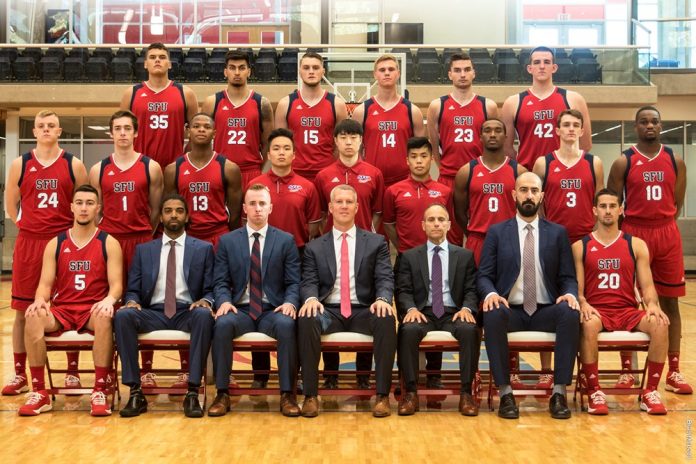
The Clan have multiple scorers that can heat up at any time. (Photo courtesy of SFU Athletics)

There are a lot of similarities between the men and women’s SFU basketball teams for this upcoming season. Like the women’s team, the men’s team is relatively young, with a lot of new faces in the locker room who will be looking to contribute from day one. Like the women’s team, we can expect the men’s team to improve throughout the season as they gel together. Like the women’s team, we can expect a dynamic offence from head coach Steve Hanson’s side, with a plethora of shooters than can heat up at any time. And like the women’s team, there are play-off expectations for the 2018–19 SFU men’s basketball team.

One of the main goals for the team this past offseason was to get more size inside. Julian Roche, a 6’11” transfer from Division I school Santa Clara, accomplishes the goal instantly. Joining him as the new faces for this Clan’s team are 6’8” NAIA transfer Jasdeep Singh, 6’7” freshman Jusuf Sehic, 6’7” freshman Sam Bailey, and 6’9” freshman Dominic Postle, none of whom would comfortably fit in your basement suite.

“Our conference is a big conference, and if you don’t have the size to match some of the bigger teams, you struggle. One of our biggest focuses this year is rebounding,” said Hanson on the size the team added this past offseason.

Other than adding size, however, one of the biggest stories surrounding the team are what they lost from last year. Their three leading scorers from the 2017–2018 season, Kedar Salam (20.4 points per game), JJ Pankratz (11.4 points per game), and Iziah Sherman-Newsome (10.3 points per game), have all graduated from the program.

Hanson does not see this as a negative, however, as the team will display a much more balanced offence than last season, where isolation plays were often drawn up for Salam. Furthermore, improvements from players such as junior guards Michael Provenzano and Othniel Spence, senior guard Jordan Muir-Keung, and returning sophomore swingman Graham Miller (who sat out last season with an ACL injury) should offset the departure of Salam’s scoring. Expect a dynamic offence from the Clan, one where the team isn’t carried by one player offensively, but rather finds the open man with regularity.

“We’re going to be an exciting team this year. On any given night we got a lot of guys that can light it up and shoot the basketball so we should be a pretty exciting team to watch,” said Hanson.

With the number of new faces on this year’s team, building team chemistry on the court will be a big factor in the team’s success. Hanson sees this, saying “gelling as a team defensively” is the group’s main goal heading into the beginning of the GNAC season at the end of November.

We will be able to see this process when the Clan hosts the first ever “SFU Showdown” tournament on Burnaby Mountain on November 16–17, where four NCAA DIV II teams, including SFU, will compete.  

After that, GNAC play will begin on November 29, and expectations for this year’s group are high.

“I think the GNAC is pretty wide open, but every night is just going to be a dogfight. I think we lost four our five games last year by less the four points. We have to win those games this year if we want to be a playoff team and that’s our goal,” said Hanson.

With the strong new recruits, the return of Miller, and a year of improvement from the returning players, we may see a lot of success from the year’s Clan.

Researchers study how to better treat mental health problems for seniors and youth

0
(Screengrab from www.free-play-mahjong.com)

Written by: Nathaniel Tok, Peak Associate


Video games can help seniors maintain health

SFU education and gerontology researcher David Kaufman has found that playing video games is good for the mental health of the elderly.

Kaufman’s research, which surveyed 1,200 seniors, indicates that video games slow “mental decline” and help seniors build and maintain social connections, staving off feelings of loneliness and depression. Many among the elderly are socially isolated.

Seniors who played video games with each other were found to gain more from it than seniors who played alone. As part of this analysis, Kaufman’s research team created team-based video game competitions at residential care facilities where seniors could socialize.

Different types of games bring different benefits, says Kaufman. For example, the game Angry Birds was found to help improve reaction time, while online traditional games such as Chess or Mahjong, which were the most played by seniors, brought “cognitive benefits.”

This week, Kaufman presented his work at the 2018 AGE-WELL conference, a meeting of gerontology and tech experts.

With files from CBC News.  


Forced addiction treatment for youth could actually do more harm

A new study released by Andreas Pilarinos, Perry Kendall, Danya Fast, and Kora DeBeck, researchers affiliated with the B.C. Centre on Substance Use and SFU, have found that forced treatment could make youth more likely to overdose later in life.

The report, published in the Canadian Medical Association Journal, suggests that such use of forceful treatment reduces the trust and connection between youth and health or social services.

According to the report, such treatment methods “did not improve outcomes for substance use” and could lead to higher rates of mental health problems, homelessness, and relapse back to substance use when the youth becomes an adult.

Instead, the paper suggests building trust with youth drug users, together with coordinated evidence-based treatment across different levels of healthcare, to treat addiction.

The report also called for an early intervention and more emotional, social, and material support for addicted youth and their families.

B.C. is considering the use of the “Secure Care Act,” which would allow youth using “high-risk” substances to be forcibly detained and treated as protection from drug-related harm.

With files from The Georgia Straight.

Expect a lot of threes from this year’s SFU women’s basketball team

0
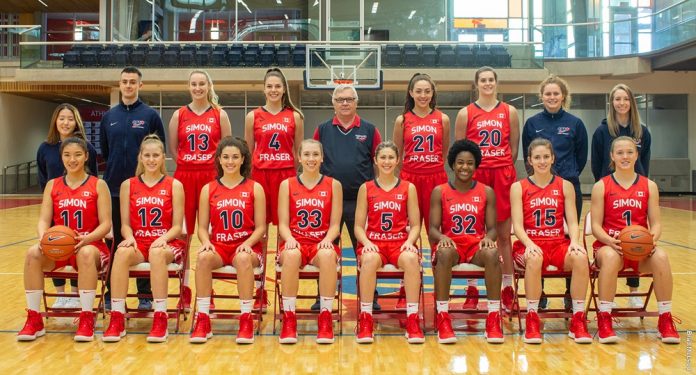
Five freshmen will look to contribute from day one for the 2018–2019 Clan. (Photo courtesy of SFU Athletics)

Every new season brings with it a sense of excitement for what’s to come. This especially goes for the SFU women’s basketball team, who have brought in new faces and returning players alike for the 2018–2019 season. We sat down with head coach Bruce Langford to talk about the upcoming campaign and what he thinks about this year’s group.

“I think we’re young, I think that we should get better and better as we get a chance to play more,” was his first comment, and he isn’t wrong. The team has five freshmen: Sierra Lenz, Sophie Klassen, Georgia Swant (Sophie Swant’s sister), Justina Chan, and Emma Kramer.

Langford is quite excited about this year’s new recruits, and they will be put in a position to succeed from the get-go. Langford already believes that Lenz will be a starter on the team, due to her rebounding ability and competitive spirit — two things that this year’s group will need.

He also believes that Georgia Swant and Kramer will be able to contribute with their shooting ability, which will fit in nicely with the three-heavy offence the team runs. Chan’s offensive ability should also help the team once she gets accustomed to the speed of the NCAA Div II.

Langford seemed most excited, however, about Klassen. Klassen has been nicknamed “Lily” because she’s not the only Sophie on the team, and in Langford’s words, “She’d be a tiger lily if she was a real lily because she’s a tiger out there. She competes like mad; she’s getting better every day. She probably [has] the fastest learning curve of any kid I’ve coached.”

Despite the large freshman class, perhaps the most important “new” pieces for this year’s team are sophomore Ozioma Nwabuko and senior Samantha Beauchamp. Nwabuko missed all of last year with a major injury, requiring microsurgery, while Beauchamp sat out the 2017–2018 season due to personal reasons.

Nwabuko should be a stalwart on defence for the Clan, if her rookie season is any sign, as she often guarded the opposing team’s best offensive player during the 2016–2017 season. Her defensive versatility and fantastic motor will be crucial to the young team’s success. Expectations have to be tempered, however, as she is still battling her injury and might be limited by it to start the season, according to Langford.

Beauchamp will add a much-needed inside presence to an otherwise undersized team. Her 6’3” frame will be a huge presence in the middle, and she will be looked upon for her rebounding ability and inside presence all year.

The only other senior on the team is Sophie Swant, who led the team in scoring (14.2 points per game) and rebounding (5.7 rebounds per game) last season. Expect her to be a vital member of the team again this year, and for her to set the standard for this young Clan team both on and off the court.

Two other returning starters include guards Tayler Drynan and Jessica Jones, who will be looking to build upon strong campaigns last year. After a fantastic season shooting the ball last year, Jones is in line to be a focal point of the Clan offence.

”We need a lot of production from her,” said Langford. “She’s a very good offensive player: she can shoot the ball, she can drive the ball and we need her to do that. We need her to consistently hit shots, and we need her to be strong and tough through adversity because teams are going to try to put a lot of pressure on her to not be able to do what she wants to do.”

While the group may struggle against bigger teams, their fast style of play and shooting ability will make for exciting basketball throughout the year. They will be shooting a lot of threes, and will be making a lot of them as well.

The team was ranked third in the GNAC in the recent coaches’ poll, which would put them in a playoff spot. Realistically, the team will look to make a postseason berth, but if all things click, this could be a team that’s playing in national competition at the end of the season.

Comedic Poetry: The Synonymity of Marijuana and Midterms

0
Illustrated by Cora Fu

Written by: Youeal Abera

It’s legal? So what?
I’m sleepy, my eyes are red —
None of this shit’s new

Staying In: Hilda

0
Image courtesy of Polygon

By: Karman Schaad


Best for: Over the Garden Wall lovers, animation geeks, folklore nerds


Hilda is an animated show about a young girl — the titular Hilda — who interacts with the magic and supernatural creatures in the world around her. It was released on Netflix on September 21, and has quickly climbed the ranks of my favourite shows. Hilda lives with her mother and her deerfox pet, Twig, in a town called Trolberg. The show follows her journey and the creatures she encounters and befriends. Hilda is a breath of fresh air; it is a very calm, relaxing, yet intriguing and compelling piece of media. It takes a very interesting method of world-building — the characters in the world are completely accustomed to the magic and supernatural. Twig the deerfox is considered a normal pet, and no one is surprised by trolls (though they are afraid of them). This strange familiarity with the supernatural makes the world feel completely new, and yet, like home. I would thoroughly recommend you check out this simple and beautiful show next time you sit down for some good old Netflix.


Hilda is available on Netflix

Major in a Minute: Communication

0
Illustrated by: Marissa Ouyang

Written by: Michelle Gomez

If you’re nearing the end of your first or second year and still have no idea what to major in because you aren’t smart enough for sciences and you hate every arts subject you’ve tried so far, then communication is the major for you!

Here is the makeup of students in your classes:

  • 30%: communication majors who failed out of SIAT.
  • 30%: students who decided to throw a communication minor onto their degree after finding out that the minor program is only six courses.
  • 20%: students in need of an easy elective outside of their major.
  • 15%: student athletes who are in communication because they had to pick a major in order to play in a university league.
  • 2%: people who are actually interested in the discipline of communication and will probably go on to complete a master’s.
  • 3%: you have no idea because they only showed up to the first class and one other time to hand in an essay.

The good:

  • You will be able to scrape a solid B in almost all of your courses without doing any readings.
  • Although you will have no applicable life skills, you will develop the ability to bullshit essays really well.
  • Communication is so vague that you can probably talk your way into pretty much any job that requires an arts degree.
  • You will have amazing professors.

The bad:

  • At some point, you will be forced to actually read Marshall McLuhan (instead of just reading about him — which you will be doing a lot too) and this will cause you to forget everything you’ve ever learned about academic writing.
  • You will go through a phase where you become extremely paranoid that the government is watching your every move, and as a result, you will tape your laptop webcam and only send messages to people via BBM.
  • Prepare to feel attacked when people ask what job you can get with a communication degree, or what communication actually is, and everytime you are asked if you learn how to talk to people.
  • You will have very strange TAs (they were the 2% in your class mentioned above that went on to pursue a graduate degree in a subject that will never get them a job — other than being a communications TA).

Pro Tips:

  • Reserve the entire last month of the semester for writing papers. For the other three months of each semester, you will literally have no work to do and are free.
  • Enroll in at least six communication courses each semester because at least two will be cancelled the day before classes start “due to unforeseen circumstances.”
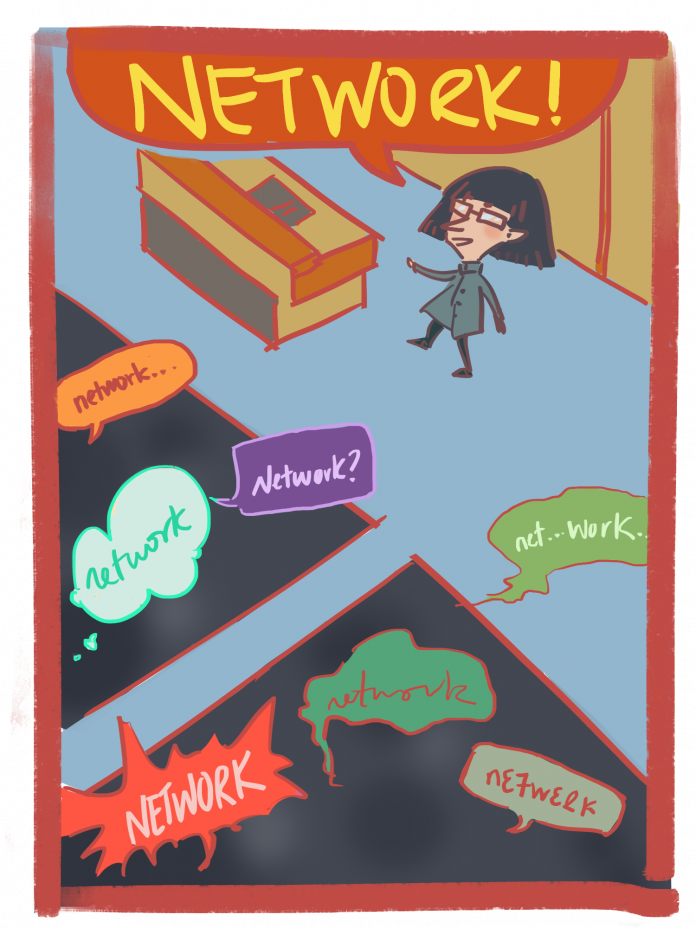
  • If you had a dollar for every time your CMNS 110 prof says the word “network,” you would be able to pay off your student loans.

Urban planning displaces Black populations, says professor

0
(Images courtesy of University of Toronto Press, Viralscape)

Written by: Michelle Gomez, Staff Writer


A public lecture held at SFU Harbour Centre on October 24 tackled the issue of how urban planning constantly fails to consider the Black population. The talk was held by Ted Rutland, associate professor in the department of geography, planning, and environment at Concordia University. Rutland structured the lecture around his book, Displacing Blackness: Planning, Power, and Race in Twentieth Century Halifax.

The book used Halifax, Nova Scotia as a case study to examine how the Black population has historically been displaced during urban planning by being pushed to the outskirts of major cities. It also critiqued current urban planning literature and offered suggestions to fill in the existing knowledge gaps.

Rutland began the lecture with an excerpt from his book, summarizing the history of urban planning in Halifax and how it has consistently neglected to consider Black residents.

“While we’re a long way from Halifax, we’re not outside of the orbit, of course, of anti-Blackness or Black displacement. Vancouver has its own history of anti-Blackness that dates back at least to the 1850s,” he explained.

Before discussing the book in detail, Rutland also acknowledged his own privilege as a white author writing about the presence of anti-Blackness in urban planning.

“My privilege to write this book as a white scholar depends on a series of racial privileges that are tied in various ways to anti-Blackness, and [ . . . ] the analysis in the book is derived from a long history of Black intellectual production,” he said.

“This book rests on the courageous work of others.”

Rutland then introduced his book’s three key themes. The first is about identifying racial oppression as a key phenomenon at the core of urban planning. Accordng to Rutland, much of the literature on city planning focuses on economic oppression rather than racism, referencing race “strictly in the language of poverty and access to resources” and placing urban planning as “this unique realm where racism doesn’t operate.” Rutland explains that this is problematic because racial oppression actually plays a very large part in city planning.

The second theme is about recognizing racism as something that exists in every part of urban life. Again, Rutland critiques the existing literature, as it “tends to focus on very specific spaces and lives, generally places where people of color are more likely to reside,” ignoring other spaces and assuming that racism does not operate in white spaces.

The third theme looked at how Black social movements are categorized and how this categorization can be problematic for planning. Currently, literature on Black social movements discusses them in various categories, including civil rights, Black power, and environmental. Rutland explained that, while this categorization is accurate (because that is how these movements classify themselves), “these movements are [also] concerned in one way or another with planning.” He emphasized that planners must not separate these movements from the discipline of planning and must look at the planning-related demands that these groups make.

Rutland concluded by summarizing his suggestions to improve the way planners approach their discipline, and explained how these suggestions would help fulfil the three key themes outlined above. Lastly, he stressed that while his analysis was focused on Halifax in the twentieth century, it can be applied to us in Vancouver in 2018.

Rutland ended the lecture with a quote from his book, stating that a different future requires us “to leave our place within the boundaries of humanity that has always depended for its coherence on the dehumanization of others [. . .] A new form of planning, one released from its centuries old connection to race and power will be created here, or nowhere.”

Clan dominate Mariners for second night in a row to sweep weekend series

0
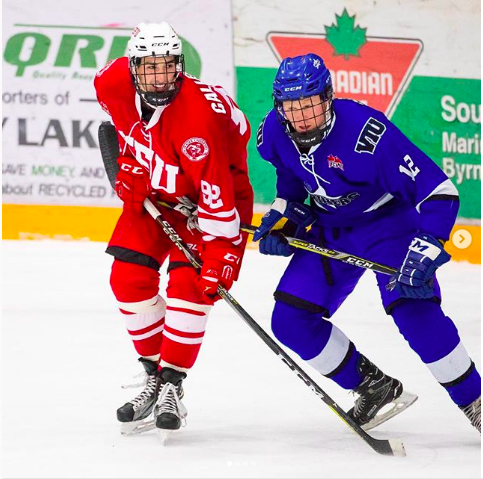
It was all smiles for the Clan this weekend. (Photo courtesy of SFU hockey)

By: Dylan Webb

After months of hard work, SFU hockey finally grabbed ahold of first place overall in the BCIHL standings (at least for now) with another huge win over the Vancouver Island University Mariners at Bill Copeland Sports Centre on Saturday night.

SFU defeated the Mariners 6–3. In contrast to the previous night’s game, where SFU went down 3–0 in the first period, this victory relied on opening the game with four straight unanswered goals. With these four goals, the Clan’s weekend scoring streak versus the Mariners went up to twelve unanswered across the weekend double-header. While VIU eventually broke through late in the second period, unfortunately for them, this was too little and too late to challenge the Clan’s weekend sweep of the visiting team.

The Clan were dominant from the drop of the puck, and the team was immediately rewarded for their hard work. Despite only outshooting their opponent by a slim margin by the end of the game (33–27) the Clan carried the play, spent a disproportionate amount of time in the offensive zone and, in general, demonstrated that when they play to their potential, they are one of the strongest teams in the league.

The first period saw only one goal and quite a bit of neutral-zone play as the Clan outshot VIU 12–6 and benefitted from Cole Plotnikoff’s second career BCIHL goal to give them a one-goal lead after one.

In the second and third, forwards Nicholas Holowko, Brendan Lamont, Mac Colasimone, Jaret Babych and defenseman Austina Adam all tallied multi-point nights as the Clan. Babych, striking for two goals in the second period with his signature laser beam of a shot, led the way in establishing the four-goal lead the Clan would carry into the third.

The third period saw the Clan become a little complacent in the context of a huge lead on the scoreboard, allowing the Mariners to outshoot them 17–9 and score three goals in the frame. However, despite a bit of overly relaxed play in the defensive zone, the offense continued to carry the Clan and smooth over any inconsistencies in the team. Regardless of this game’s outcome, SFU will have to work on minimizing or removing these inconsistencies and prove that they can play a consistent 60 minutes night in and night out.

Between the pipes, Michael Lenko secured his second win in as many nights and his third win of the season with a solid performance. Lenko has now started a majority of the games for SFU this season and looks to be in line for the starting position if he can keep giving the team a chance to win on a nightly basis.

“The team is really coming together in terms of chemistry and sacrificing for each other on a nightly basis,” said coach Mark Coletta on the topic of SFU’s weekend sweep of the visiting team.

Coletta emphasized that a key takeaway from the first month or so of the season was that the next step in developing a league-dominating Clan team was working on consistency. Looking ahead to their next game at the Langley Events Centre on Friday night, the Clan will certainly need to make a consistent effort if they want to break the perfect record of their main rival, the Trinity Western University Spartans.

The Clan will now use a week of practice to prepare for their upcoming game against the Spartans, who carry a 4–0 record into the matchup, which will now be a battle for first place in the league standings. Following the Friday night tilt, SFU will look ahead to a familiar two-game Vancouver Island roadtrip before an anomalous two-week break from league games that will give the team a chance to catch its breath, catch up on school work, and bask in the glow of their recent success while working hard to keep it up.

Six underrated artists you should be giving a listen

0

By: Ahad Ghani


Tove Lo:

A few summers ago, Tove’s “Habits (Stay High)” was inescapable. While her music’s quality has since remained consistent, none of her follow-ups to that song have garnered the same attention. She recently released Blue Lips (2017), the second half of her two-piece concept album, preceded by Lady Wood (2016). One of the album’s standouts, “Cool Girl,” inspired by the film Gone Girl, is about questioning the power moves in a relationship. Both albums were succeeded by short films that follow Tove and her fictional relationships, while exploring the lyrical content of the songs.

        Her brash, confessional style sets Tove apart from her contemporaries. She’s collaborated with the likes of Coldplay, Nick Jonas, and Major Lazer, as well as serving as a co-writer on Ellie Goulding’s massive hit “Love Me Like You Do.” Tove has also contributed to the soundtracks of Fifty Shades Darker and The Hunger Games: Mockingjay, Part 1 in the form of “Lies in the Dark” and “Scream My Name.”

Top 3 Songs: Cool Girl, Talking Body, True Disaster


Tinashe:

Tinashe is undoubtedly talented. She has the voice, the moves, and the catchy tunes. Her choreography in the music video for “Company” and her vocals in “Flame” are a testament to her talent. She’s also had a recurring role on Two and a Half Men, among other TV roles. However, unlike her peers Kehlani and Ella Mai, Tinashe has never fully resonated with audiences.

        Tinashe’s style of music includes hip hop, pop, and R&B. With features from Future and A$AP Rocky, Aquarius (2014) was adored by critics as well as its fair share of fans. She has collaborated with a multitude of artists such as Nick Jonas and Britney Spears, as well as tour with the likes of Nicki Minaj and Maroon 5. It’s only fair that Tinashe have her breakthrough as a full-fledged pop star soon.

Top 3 Songs: All Hands on Deck, No Drama (feat. Offset), Slumber Party (with Britney Spears)


Marina and the Diamonds:

Despite her several critically acclaimed albums and a devoted fan base, Marina has yet to achieve a huge hit, and it’s not for lack of trying. Her single “Primadonna,” produced by the people behind Katy Perry’s “Dark Horse”, should’ve been her breakthrough song. From her anthemic electro-pop songs to her aesthetically pleasing visuals, Marina might just be the most underrated artist on this list.

        In her concept album Electra Heart (2012), Marina portrayed several personas in songs such as “Homewrecker” and “Teen Idle,” which depict different stereotypical female archetypes. For her album Froot (2015), written entirely by herself, she took on a more indie-pop sound. Upon hearing about the Boston Marathon bombing, the artist began developing a song about the violence of sexual assault and murder, which would eventually become “Savages.” For her forthcoming album, she is speculated to drop “and the Diamonds” from her stage name.

Top 3 Songs: Can’t Pin Me Down, Primadonna, Blue  


Bebe Rexha:

Bebe Rexha’s songs are crafted to dominate the pop charts, which is a shame since her biggest hit to date is “Meant to Be,” a country song. She’s had success on the pop charts in the form of “Hey Mama,” a collaboration with David Guetta and Nicki Minaj, and “Me, Myself & I” with G-Eazy. However, her solo music has yet to garner the same amount of attention.

         She has a charming personality and a powerful voice that sounds just as good onstage. Her album Expectations (2018), preceded by two EPs, remains one of the most solid debuts of the year. With potential hits reminiscent of Rihanna and Shakira, such as “Self Control” and “I’m a Mess,” it’s clear that Bebe is destined to be the new face of pop music, alongside Dua Lipa and Camila Cabello.

Top 3 Songs: Ferrari, I’m a Mess, In the Name of Love (with Martin Garrix)


Troye Sivan:

 Troye is the male pop star 2018 needed. Despite a string of Top 10 albums and a couple million followers, he’s destined for much more. Troye, who made his start on YouTube, released his critically acclaimed debut Blue Neighborhood in 2015. In “Heaven,” which details Troye’s struggle with coming out as gay, he questions if he’ll ever make it to Heaven. The album was preceded by a music video trilogy, which follows Troye’s fictional relationship and the struggles they face.

        Sivan followed up his debut with one of the best albums of the year, Bloom (2018), which not only features huge electro-pop moments such as “My My My!” but more downbeat tracks, including “Postcard.” He has collaborated with the likes of Ariana Grande, Alessia Cara and Martin Garrix. Catch him in Vancouver on The Bloom Tour on November 8, 2018.

Top 3 Songs: Dance to This (feat. Ariana Grande), Bite, Cool


Charli XCX:

Charli has written massive hits for the likes of Selena Gomez and Camila Cabello, to name a few. She’s also had solid success on her own, notching Top 10 hits in the form of “Boom Clap” and “Fancy” with rapper Iggy Azalea. However, since then, she has failed to score a hit as big as the aforementioned songs, which is quite disappointing since she’s managed to release some of the catchiest pop songs ever.

        Charli isn’t afraid of taking risks, having collaborated with equally underrated artists such as Carly Rae Jepsen and , as well as every artist that appears on this list. Her 2017 music video for “Boys,” directed by Charli herself, features numerous cameos, from Joe Jonas and Cameron Dallas to Brendon Urie of Panic! At The Disco. She’s known to experiment with different styles of music, and takes on a more futuristic pop sound in her 2017 mixtape Pop 2.

Top 3 Songs: Boys, Moonlight (with Lil Xan), Porsche (feat. MØ)