Home Blog Page 529

A Pint of Science

0
Image courtesy of news wire

By: Onosholema Ogoigbe, News Team Member

This week, SFU’s Department of Earth Science sponsored the first Pint of Science Festival in Vancouver. Pint of Science is a non-profit organization that brings some exceptional scientists to a local pub to talk about their latest research over a pint of beer with interested locals. According to city co-ordinator Elizabeth Dingle, who is currently undergoing her postdoc in Geography at SFU, the events are mostly volunteer-run with each theme getting three to four volunteers organizing venues and speakers.

The Pint of Science festival occurs every May, with occasional events run during other months. The organisation itself started in 2012 in the UK and the first Pint of Science events held in Canada were in 2016. This is Vancouver’s first year participating.

The event spanned over three days, May 20–22, with three event themes: Planet Earth, Our Body, and Beautiful Mind. On May 21, The Peak attended the Planet Earth themed event, titled “Where things are wetter: oceans and coasts” at Mahony & Sons. Both speakers, Simon Brandl and Jessica Pilarczyk, were affiliated with SFU.

Brandl, a postdoctoral research fellow in the department of biological sciences, presented on cryptobenthic fish and coral reefs, their role in ecosystems, why they were important, and their relevance in conversations about climate change. When asked about his decision to partake in the event, Brandl admitted that he enjoys talking to the public about his research, though he does not often get to do so.

“Unfortunately, as scientists, we don’t often have the opportunity to talk in a public forum like [Pint of Science] so it was… a no-brainer,” said Brandl.

After Brandl’s presentation, there was a question period for the audience followed by a brief intermission and a science-based trivia game to engage festival-goers.

The second speaker of the evening was Jessica Pilarczyk, an assistant professor of earth sciences. Her presentation centred around tsunamis, and how future tsunamis can be anticipated using fossilized microorganisms living on the seafloor.

When asked why she wanted to speak at Pint of Science Vancouver, Pilarczyk responded by saying that she’d always liked the idea of making science “fun and informative.” She added that she considered the experience a “win-win” where those attending would learn something new and she in turn would be presented with questions that would make her “think and see her research in a different way.”

The event ended with questions for Pilarczyk, a brief note of thanks, recommendations to attend the next and last couple events of the series and a reminder to take home and plant the Pint of Science beer mats provided during the event.


SFSS president Giovanni HoSang plans to work remotely during summer co-op in Seattle

2
Reslus

By: Gabrielle McLaren, Editor-in-Chief

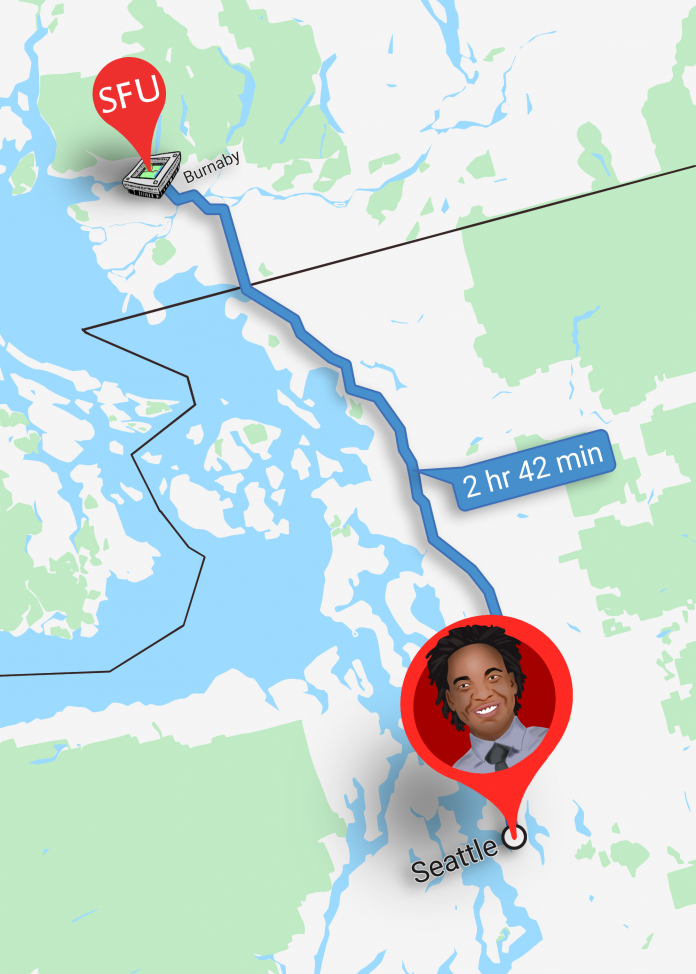
At the first board meeting for the 2019–20 SFSS Board of Directors on May 16, SFSS president Giovanni HoSang presented his mandate and goals for this summer, including how he would juggle his responsibilities as president with a co-op in Seattle with Microsoft, from June to August.

HoSang outlined how he planned to act as president remotely, with goals such as responsive communication through email and text, especially on weekends. He spoke of fulfilling his engagement hours via Skype and Google Hangouts. The slides for this presentation were shared on HoSang’s presidential Facebook page “SFSS President – Giovanni HoSang” on May 17.

HoSang also listed ways his time with Microsoft could benefit the society. Knowledge and contacts he could gain within the tech industry could modernize the SFSS and upgrade the society’s structure, he stressed.

“It’s not a vacancy,” HoSang said at the conclusion of the presentation. “It is remote work.”

HoSang stated that he was hired by Microsoft in November 2018, at which point he shared the information on his personal social media. When he was elected president, HoSang tried to postpone his co-op but was told that this would not be possible.

Part of HoSang’s plan included delegating presidential responsibilities to some fellow SFSS directors with parallel portfolios, and establishing emergency points of contact within the board. This point was addressed during the ensuing discussion by Jasdeep Gill, vice-president external relations, who was the first to speak.

“My first initial thought about this… it wasn’t developed with the exec team or with anyone being looped in that you’re expecting us to take on these responsibilities,” Gill said. “I do have a problem with this being framed as your absence from board being a benefit to the board.”

HoSang also stated that he would waive his stipend for the period he was working remotely, if allowed by the vice-president finance. A guest in attendance asked if that stipend could be split between the executives who would be taking on his presidential duties. Executive Director Sylvia Ceacero clarified that due to the B.C. Societies Act, she would check in with a lawyer about this.

“Before we can say he can waive it and redistribute it, I need to check and do due diligence for the board,” Ceacero said.

Gill also voiced concerns that HoSang’s absence would harm the board of directors’ growth, as the board was still developing their annual board plan. Gill worried that this plan would not be complete by the time HoSang left for Seattle.

These concerns were echoed by vice-president finance Tawanda Nigel Chipati.

“I think this would have been better if we had finished our priorities, spoken together and your mandates would have been in alignment with what the board was trying to achieve together. And then that way it will be easier now to say, ‘Now you’re leaving, and the team your leaving behind, they’re carrying forward the vision that they’ve [created] all together.’ But that hasn’t been done…”

In a follow-up interview with The Peak, Gill expressed frustration over HoSang’s plans.

“When we saw these slides and I saw my role mentioned, it was automatically, in his eyes, assumed that I would take on these additional roles and responsibilities,” Gill said. “It was never a conversation.”

Jessica Nguyen, vice-president student life, shared Gill’s concern. In the board meeting, she questioned how the board would function efficiently without the president. Nguyen noted that she had shared her frustrations with HoSang in the past, and she felt that he was not taking those concerns seriously.

“The mitigation that I can do is what I have done,” HoSang responded.

Gill pushed back. “You are taking a position that you were elected to by students and you are vacating it for three months. And you say it’s not a vacancy, it’s remote work, but you’re going to be at your internship from normal business hours [ . . . ] If you expect us to take additional responsibilities or work on the weekends and after hours, I don’t see how you can justify that that’s not going to be detrimental to the board as a whole.”

Gill also drew on her experience as a board member in 2018–19, when the board functioned without a president following Jas Randhawa’s impeachment.

“What happens is that the exec team [ . . . ] would be burdened with the roles that the president was supposed to be doing in the first place. And I think it’s going to lead to a lot of conflict, whether it’s internally or externally.”

Nguyen echoed these concerns, who shared them with HoSang in the meeting. “You said that there will be a president to contact in times of need. But what if my times of need are when you are at your internship? Then I don’t have a president to contact.”

As a returning board member, Nguyen also questioned whether the president could mentor new board members while working remotely.

“I am trying to support [new board members] but it’s extremely draining,” Nguyen said, citing her own pre-existing responsibilities on the board.

Stating that he was unsure what else could be done, HoSang reiterated that he would be available electronically.

“I don’t understand why you even ran, and said you’d be there for students,” Nguyen summed up. “I don’t feel like you’re here for the students when you’re going on an internship with Microsoft. You knew that going in, when you ran.”

Various guests present at the board meeting spoke up on the matter, many of whom voiced support of HoSang’s plans. Ali Versi, who attended the board meeting as a guest, commended HoSang for being proactive, and brought up the fact that the 2018-2019 board had previously operated with no president at all.

“I have faith that you guys can work this out together,” he said.  

“I do understand both sides of the story,” another guest, Simran Randshawa, spoke up. She later stated that, “I have worked with Giovanni for a lot of projects [ . . . ] You can always reach out to him.”  

GSS director of external relations Matthew McDonald was also present, and told the board that “I have the fullest confidence in VP Shina to be my negotiating partner during [meetings with SFU in HoSang’s absence] [ . . . ]  I want to express full confidence in this arrangement from my side. . .”

HoSang also stated that, “This has all been very transparent.” HoSang referred to announcements on his personal social media channels, and on the Facebook page created during his campaign, “SFSS President – Giovanni HoSang,” through which his co-op was communicated.

In a follow-up email interview, HoSang confirmed that the earliest mention of his co-op through his presidential Facebook page was on April 30, eight days after the election results had been announced.

HoSang wrote: “I notified multiple students in various conversations and before and during campaigning about the co-op and my intention to continue fighting for students every step of the way, I said I notified students of the co-op on the Facebook Page of my President Page (in this case on April 30), as well as my personal page from as early as October.”

“I know he claims that he made all these Facebook statuses, but it was told to board members at different times,” Nguyen said in a follow-up interview with The Peak. She learned of his co-op during a one-on-one held shortly after the election.

Gill found out through other board members. She had heard that HoSang had been offered an internship, but she had assumed that he would defer it once elected to the board.

In an interview with The Peak following the meeting, HoSang expressed that he did not think that his working remotely had to be communicated through official SFSS channels as “I will continue the [president’s] work.”

“Working remotely is not a vacancy,” he reiterated once more. “I will still continue to work with students [ . . . ] This is more for internal purposes, but there will be no impact on the society’s performance or the performance of the president.”


Lot 21 graduate housing governance brought to GSS Council’s attention

0
Chris Ho/The Peak

By Kitty Cheung, Staff Writer

Sibo Chen, graduate student and former SFU UniverCity Community Trust board member, presented a briefing on Lot 21, a graduate student housing project to be built in UniverCity to the Graduate Student Society (GSS) during their May 14 council meeting. The presentation was given with the intent to include the GSS in the conversation surrounding Lot 21 and its eventual management.

Accompanied by professor emeritus Robert Anderson, Chen told the council that 50 units will be designated as family-oriented housing and 50 studio units will be for single students. The pricing will be 10% below market rate, which Chen characterized as not truly affordable. When asked by a TSSU representative if that pricing was open to negotiation, Chen responded that “If GSS joins the conversation [ . . . ] maybe.” However, having just finished his term on the board of the SFU Community Trust, he “[could] not say.”

During the meeting, the TSSU representative later provided data on the costs of housing in the Louis Riel Building, a former SFU graduate residence which has now been demolished. According to this TSSU representative, Louis Riel costed $759 per month for a one bedroom residence ($896 per month after today’s inflation). For a two-bedroom residence, this would be $897 per month ($1050 today). To put that into perspective, the TSSU representative cited the “most recent statistics” from the City of Vancouver regarding affordable housing as $1,900 for one bedroom and $2,700 for two bedroom.

This project comes from an earlier program that did not go through called “SFU Burnaby Mountain College.” Chen said that a college structure could be established to improve graduate student life.

When asked during the meeting about what this college structure would entail, Chen responded by using UBC’s Green College as an example, stating that it functions as a residence and also has  a small budget to facilitate graduate-student-only activities. Chen described the college as a “management structure” which would govern what kind of residents will live in that building, as well as the programming which would be developed “to create a more collective graduate life.”

According to Chen,  all of the engineering details have been confirmed but the board has yet to finalize a contractor. However, the main issue with this housing project is management.

Chen stated that the board would finish the building but currently does not have anyone assigned to govern it. Chen is now coming forward to the GSS about getting involved in the management of Lot 21, asking the council to “agree in principle to initiate a working group to discuss the issue.” According to Chen, the Dean of Graduate Studies is already in favour of this housing project, but that by going directly to the GSS, a conversation could be initiated with graduate students themselves.

During the question period, the TSSU representative brought up that a GSS working group had been established regarding the 2016 demolition of the Louis Riel Building. Having been a part of this working group, the TSSU representative suggested using the same framework to assist with any Lot 21 discussions, since it also dealt with graduate housing issues.

GSS Advocate and Policy Advisor Harjap Grewal expressed that if a working group was created, the GSS would need people who work well together to step up. “Even if at this meeting, we can get an indication of some people [ . . . ] who are interested in joining, that would be really helpful for us to get going,” Grewal stated.

Matthew McDonald, director of external relations, added that his predecessor Noortje de Weers had worked on Lot 21, and that he himself will be involved in making sure that this housing project will be as “affordable as possible” for graduate students.

“Personally, a working group on this sounds like a great idea and I’d be [a] part of it,” stated McDonald.

SOCA’s proposal for tier 2 constituency postponed

0
Andres Chavarriaga

By: Winona Young, Staff Writer

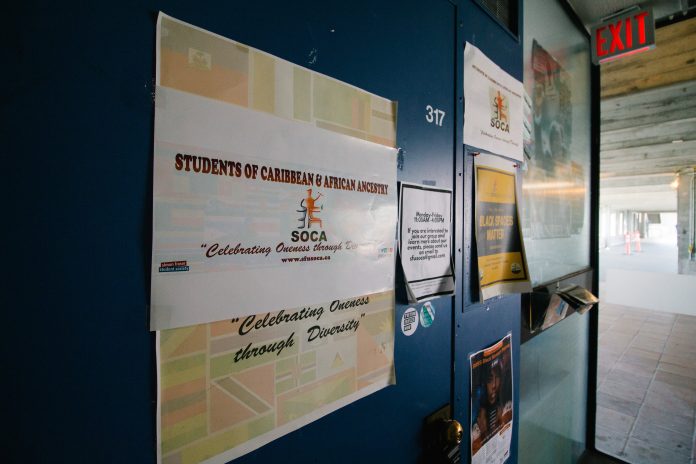
On Thursday, May 16, SFU Students of Caribbean and African Ancestry (SOCA) delivered a presentation to the SFSS Board proposing that SOCA receive status as a tier 2 constituency group.

According to the SFSS, any SFU group that are “student-run bodies that represent undergraduate students that share an experience of oppression, systemic discrimination and/or barriers” are constituency groups. There are three tiers of constituency groups with corresponding benefits.

For context, Students United for Disability Support (SUDS) are comparable in tier 2 status, since they are recognized within the Student Union Resource Office. The First Nations Student Association (FNSA) and Out on Campus (OOC) are tier 3 as they are a “collective.”

If recognized as a tier 2 constituency, SOCA would receive a seat and vote on SFSS Council, and funding from the Student Union Resource Office. The group’s governance and administration would need to match that of other departmental and faculty student unions, such as SUDS.

The presentation was led by SOCA member Balqees Jama and vice president Sebastian Baretto. The half-hour presentation began with the pair explaining what SOCA does, what they’ve accomplished, as well as incidents of racism Black students have faced at SFU.

With issues of complaints being met with ambivalence and a sense of alienation among the Black community of SFU, Baretto emphasised the necessity of SOCA.

“SOCA acting as a cultural hub allows student experiences to be proliferated,” said Baretto. “ It shows Black students and our allies [ . . . ] that there is a place that can be afforded to you.”

Later in the presentation, Jama discussed why tier 2 constituency would be important to SOCA, particularly in terms of funding.

“It means increased funding, so up to $300 [ . . .] that would be incredible, because so much of SOCA’s funds come from our personal pockets,” she said.

In a follow-up email with The Peak, Baretto further elaborated on how tier 2 status would help SOCA.

“Tier 2 constituency status would allocate better funding to be used for social advocacy, outreach and community events,” he wrote.

Baretto expanded by insisting that SOCA would grow further as a group to further uplift SFU’s Black students and community. The vice president emphasized the potential to strengthen the image of the SFSS as an organization that supports marginalized groups and to create a more welcoming environment overall.

In the ensuing discussion that followed the presentation, some board members expressed a desire to postpone the motion. Jasdeep Gill, vice-president external relations, and Tawanda Nigel Chipati, vice-president finance, both stated their desire for more time to fully grasp the tier system.

Not every board member agreed with this assessment. Health sciences representative Osob Mohamed noted that it appeared fairly clear what the tiers were under the policy distributed prior to the meeting, further questioning what else the board needed to understand the system. Guests also spoke to the board, with one pointing out that the tier system was, at the moment, ill-defined in the SFSS’ practises and was never intended as policy.

Ultimately, the SFSS board ruled to postpone the decision. In a follow-up statement emailed to The Peak, Barreto outlined SOCA’s position on the matter.

“The SFSS Board’s postponement of the vote was disappointing from SOCA’s perspective as we believe the emotion and truth of our presentation may be lost.”

“However, we are looking forward to the board’s vote and we remain hopeful that we will be recognized as a Tier 2 Constituency.”

Andrew Petter unable to leave SFU after becoming trapped in construction labyrinth of his own making

0
Illustration by Alice Zhang

Written by: Kitty Cheung, Staff Writer & Zoe Vedova, Humour Editor

BURNABY, B.C. — After announcing his intent to step down from presidency in December 2018, SFU president Andrew Petter, 66, became unable to vacate his position after becoming trapped in the construction labyrinth that is Burnaby campus. Having slated Petter to remain president until August 2020, the university is now at a loss.

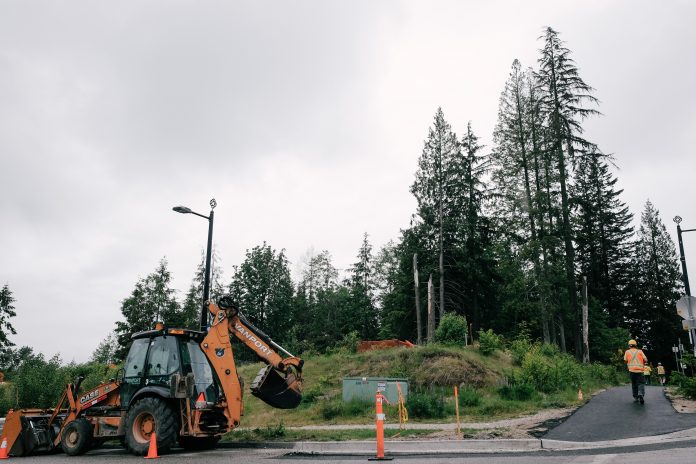
University administration confirms that for the last 39 days, Petter has been stuck in the mess of blue fencing, massive tarps, and cumbersome construction scaffolding that his own school commissioned. As students cross through campus on their way to class, one can listen closely to hear Petter’s howls of despair mixed into the cacophony of construction clamour as he attempts to escape the construction maze.

According to local satyr Robert Engaginghoof, 201, Petter was last seen exhausted and dehydrated, briefcase in hand as he dodged orange pylons and scrambled across cardboard flooring in Convocation Mall. The Order of Canada honouree had supposedly been running away from the monstrous creatures who reside within the labyrinth: construction workers, irritated undergraduates, and apathetic security guards.

“A narrow escape,” comments Engaginghoof as he munches on what The Peak has identified as Petter’s term contract. “His briefcase pretty much exploded as he ran away. It was such a flurry of paperwork — makes for a great snack.”

Confused harpy Heather Plumage, 138, alleges that she has actually been in contact with the ill-fated ex-SFU president. “We were both competing with the local raccoons for any small prey lurking in the shadows,” she states. “Despite the fact he could reasonably enter the Maggie Benson Centre for a bubble waffle, they seem to be his only sustenance.”

When asked about the former MLA’s psychological state, Plumage replies, “Ugh, he kept going on and on about the terrifying drone of a jackhammer coming ever closer, saying he can’t escape blah blah how he’ll be stuck here forever yada yada.” After a rustling of feathers and an audible sigh, Plumage continues, “It was so inconvenient for the hunt. He kept scaring off the high school tour groups.”

On the one-month anniversary of the day Petter fell into the construction trap, a vigil was held. Petter’s family and close colleagues read excerpts from his book, The Politics of the Charter: The Illusive Promise of Constitutional Rights and hoped for his safe return, despite him being no more than 17 metres from where they stood. Candles were lit as more scaffolding was set up among the tarps surrounding the AQ pond.

An extraction team of youngblood demigods have been commissioned to search the construction maze. The Peak has received an audio recording from the team, on which can be heard the sound of deafening drills interspersed with what has been identified as Petter screaming, “OH GOD WHY DID I SIGN OFF ON THIS? MY OWN HUBRIS HAS LED ME HERE!” A snippet of this audio is now available as the jingle to the new Peak Speaks podcast, created in collaboration with CJSF 90.1FM.

With the demigod team’s most recent reports, however, The Peak can conclude that Petter has since opted out of his esteemed position in the New Democratic Party to become a construction minotaur.


Pokémon Detective Pikachu: Hollywood’s latest nostalgia film

0
Courtesy of Warner Bros

By: Marco Ovies, Peak Associate

Within the first couple shots of the Pidgeot flying across the screen, I felt like a kid starting my own Pokémon adventure again. Seeing all these creatures I grew up with perfectly exist in the real world had me giddy with excitement.

Movies based on video games are always tough to execute, but Pokémon Detective Pikachu flawlessly creates the world of Pokémon that fans will instantly fall into. The story revolves around Tim, played by Justice Smith, who ventures to Rhyme City after the mysterious death of his father. There he meets Detective Pikachu, voiced by Ryan Reynolds, and together they must solve the mystery of Tim’s father’s death.

The thing that Detective Pikachu does extremely well is create a world where Pokémon and people coexist. Within the first frames, we dive head first into this world of stunning CGI. Studios quite often struggle with bringing video-game characters to life (as we saw in the Sonic the Hedgehog trailer), but here director Rob Letterman and his team has absolutely nailed the look of all these extremely unique creatures.

There was never a point in the film where the Pokémon felt fake or animated. The expressive creatures added a depth to the story that other CGI films seem to lack. In particular, the animation of Detective Pikachu himself was wonderful. The textures of his fur-covered body looked realistic and his tiny face was extremely expressive.

Overall, however, the plot is quite simple. The movie involves little character development aside from Justice Smith’s character Tim, who has a miniscule moment of self-discovery. Viewers will find that the ending is, unfortunately, as predictable as you might expect for a blockbuster children’s movie. Walking into Detective Pikachu, I had my theories on what the big plot twist would be, but I don’t think anyone was surprised by the film’s ending — I know I wasn’t. But perhaps, since this was a movie involving my beloved childhood characters, I had walked in with my expectations too high.

However, both the young and the old will find something to enjoy with Detective Pikachu. The movie has a couple of good laughs from the incredibly talented Ryan Reynolds — though don’t expect to be reprising his role of Deadpool as Detective Pikachu. Great moments included the scene involving Mr. Mime being forced to communicate strictly through, well, pantomime.

At the end of the day, this is just another film that reuses old — if beloved — characters, but one that I gladly dove head first into. But what makes Pokémon Detective Pikachu good is the fact that it does more than just play off of nostalgia. It features a real story that may not be complex but will captivate the attention of movie-goers. I give this movie three and a half out of five Poké Balls for its stunning visual effects, comedic moments, and fun, if simple, story.

Catch it before it’s gone: Spaces for Reading at the SFU Gallery has less than a month left

0
The installation invites you to sit down and take a break to enjoy some art. Image by Blaine Campell courtesy of SFU Galleries.

By: Kitty Cheung, Staff Writer

Hurrying through the AQ hallways between classes, you may have passed by a room with what seems like a large white block, dotted with books and pillows. The SFU Gallery’s current exhibit, Spaces for Reading, combines the work of artists Ann Beam and the late Carl Beam. By displaying the work of these artists in the same space, the exhibit is rich with insights from the different lenses through which the two artists create.

The gallery is minimalist in its style of display. Framed artworks by Ann Beam and Carl Beam are hung in a line, creating a single row that extends across several walls. Walking through the exhibit, the space overall is quiet and contemplative, and the two artists seem to be in dialogue with each other through the gallery.

There is a sense of public and private communication going on through the pieces, demonstrating the intimate relationship between the two artists. The exhibit includes images of the couple building their home together from adobe bricks and even reading materials on display that discuss their creative relationship with their daughter, Anong Migwans Beam, who is also a visual artist.

Carl’s work focuses on Indigenous issues, using an image transfer process as a medium to empower. Untitled (17 Works) (1998) is a series of nonlinear collages depicting historical events charged with political commentary.

Concurrently, Ann’s work tends to focus on the woman — as a mother, homebuilder, nurturer, and more. Her feminist artistry is especially prevalent in her “Studies for the Motherline” collection, some pieces of which can be found in the exhibit. She even goes on to explore outer space, creating watercolour paintings of planets and suns.

The centre of the room holds a large terraced white block, with reading materials selected in response to the works hung on the walls. The selected readings include work by poet Mackenzie Ground, artist Sandra Semchuk, and writer Richard Hill. These reading materials, which are spaced throughout one level of the terraced structure, include books and publications featuring Indigenous art, history, and perspectives. Pillows are also neatly arranged on a lower level, so that the space itself extends an invitation for each gallery visitor to sit down and peruse its reading materials.

On the white block centrepiece, one can also find exhibit pamphlets, which include an annotated bibliography contributed by Ground, Semchuk and Hill, as well as a conversation between Semchuk and Hill about Ann Beam and Carl Beam. I would recommend picking up one of these pamphlets for a more insightful gallery experience, as the intention and reasoning behind the way works are displayed can be just as important as the works themselves. The annotations, or comments about the reading materials chosen to be in the exhibit, offer direct explanations from Ground, Semchuk, and Hill about the decision behind each selection. Semchuk and Hill’s conversation also provides additional perspectives on the works from Ann Beam and Carl Beam.

Before you rush off to the next 145 after class, I would encourage you to take some time to explore the work of Ann Beam and Carl Beam.

Spaces for Reading will be on display in the SFU Gallery (open Tuesday–Thursday from noon to 5 p.m. in AQ 3004) until June 20.

Need to Know, Need to Go: May 27-31

0
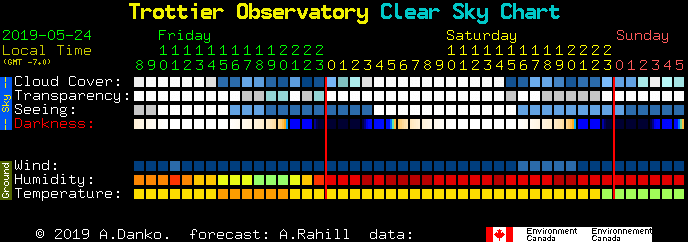
Sky Chart courtesy of SFU Trottier Observatory

By: Marco Ovies, Peak Associate, Winona Young, Head Staff Writer, and Alison Wick, Arts Editor

Trottier Observatory Starry Nights

If you ever wanted to learn more about space, look no further than Starry Nights at the SFU Trottier Observatory on Burnaby Mountain. At these evening star parties, you will be able to discover many of the wondrous celestial objects that inhabit our solar system. You can even bring your own telescope and have experienced astronomers teach you how to use it and what to look for.

The next star party to be held will be on May 31 at 9 p.m. weather permitting. Check out @sfutrottobs on Twitter for up to date information on the status of Star Parties.

Logo image by Samaqani Cocahq / Natalie Sappier courtesy of Skoden Festival

Skoden Indigenous Film Festival

The Skoden Indigenous Film Festival is being held at the SFU Goldcorp Centre for the Arts, inside the Djavad Mowafaghian Cinema. The one-day festival will consist of two film programs, an awards ceremony, and an after-party.

Skoden is an Indigenous slang term for “let’s go then” and reflects the festival’s intentions to bring people together to celebrate Indigenous-centred filmmaking of the Pacific NorthWest, and Indigenize SFU. The festival will be within Musqueam, Sḵwxwú7mesh, and Tsleil-Waututh territories, with the family screening at 1 p.m, followed by the adult screening at 4 p.m. Both showings will require separate tickets.

The Skoden Indigenous Film Festival on Saturday, June 1, 2019. The event has a sliding scale for tickets which consists of: Salmon $0 / Bear $5 / Raven $10 / Coyote $20. Separate tickets are required for the 1 p.m. and 4 p.m. screening. The awards ceremony requires no tickets but has limited seating.

IVAs 2019 Logo Courtesy of the Indigenous Voices Awards

Indigenous Voices Awards 2019 Gala

This is the second year of the annual Indigenous Voices Awards, which seeks to highlight, celebrate, and award the literary accomplishments of emerging Indigenous writers. This year there are 14 finalists in seven categories, and a total of $1,400 dollars will be awarded to the different writers at the gala on June 4. The IVAs are not just about prizes, however, as they also seek to foster relationships and create connections to reject the individualism and lack of support of prize culture.

The gala will be held at UBC this year and will feature performances and readings in addition to the awards themselves. Spearheaded by SFU’s own Dr Deanna Reder (Cree/Métis), the Indigenous Voices Awards 2019 Gala is the perfect opportunity to learn about, experience, and celebrate the variety and talent of Indigenous voices.

The Gala is being held June 4 at UBC. Tickets are free, and you can RSVP through Eventbrite.

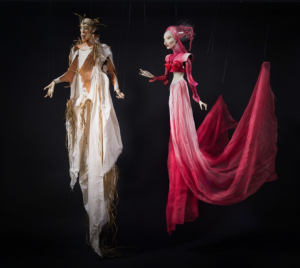
Image courtesy of MOA

Shadows, Strings, and Other Things at the MOA

Think Potter Puppet Pals, only from different countries and centuries and even better at storytelling.

Theatrical takes on a new meaning with the Museum of Anthropology’s exhibition of Shadows, Strings, and Other Things: The Enchanting Theatre of Puppets. With 250 handcrafted pieces from all over the world, including Portugal, China, and the UK, this puppet exhibition is bursting with a diverse array of art styles. As curator Dr. Nicola Levell of UBC insists, “no matter the origin, size, or medium, puppets are powerful conduits of creativity, activism, and social commentary.”

Shadows, Strings, and Other Things is being exhibited from May 16 to October 14, 2019 in The Museum of Anthropology at the University of British Columbia. Tickets are $16 (without tax) for students, $10 on Thursday evenings from 5 to 9 p.m, and are free for Indigenous peoples.

Joshua Whitehead’s full-metal indigiqueer is inspired by love, identity, and the Internet

0
full-metal indigiqueer cover art. Image courtesy of Talon Books.

By: Alison Wick, Arts Editor

I often find poetry to be a difficult medium of literature to digest. I think, as for many of us, this largely comes from an understanding that poetry is not really meant to be understood or read for fun. As we are force-fed Shakespeare and Milton throughout high school, we learn that poetry is not something to have fun with but rather something to sit in the classroom and analyze. It’s an ivory-tower pursuit wholly detached from the real world.

However, most writers of poetry will tell you, and books like full-metal indigiqueer will show you, the opposite.

Joshua Whitehead’s full-metal indigiqueer is poetry like you may have never seen before. It is as much a visual piece of art as it is a literary piece of poetry. The book opens with “birthing sequence,” 15 pages that read like a comic flip book as a white dot grows to reveal what feels like binary code. The page becomes filled by a pattern made with colons and spaces, and the word “H3R314M” at the centre. You then turn the page and are thrown right into Whitehead’s visually and linguistically complex book of poetry with the poem “i no bo — d[i]y” which explores the idea of authenticity and the complexity of names.

This collection of poems is created through Whitehead’s Indigequeer character Zoa, who, as the book’s back cover puts it, “brings together the organic (the protozoan) and the technological (the binaric) to re-beautify and re-member queer Indigeneity.” Whitehead rethinks the construction of the English poetry canon by reimagining Indigenous Peoples and characters at the centre or these works — disrupting, changing, and reclaiming narratives — through his two-spirit trickster character, Zoa. This was a large reason he created the trickster, to create a character that would be able to shapeshift and travel between, through, and within these texts. Shakespeare, Milton, and Dickens are some of the names and dead celebrities of poetry that Zoa breaks apart and rearranges.

Although the book is technically a collection, the poems are still all intimately connected through the sense of disruption and revisionism. The cyberpunk poems all seek to dissect and break down their topics — right down the words on the page. Numbers are mixed with letters, single words are cut up and spread out across the page, and colons are used to create code-like patterns as the book downloads the poems onto the page.

A visually striking and thematically challenging book, I highly recommend full-metal indigiqueer to anyone who enjoys exploring new kinds of poetry and anyone interested in giving the genre another try. There is much more to poetry than roses by any other names.

Last year full-metal indigiqueer was a finalist in the category of Most Significant Work of Poetry in English at the Indigenous Voices Awards 2018 Gala. This year Whitehead is a finalist again, this time in the Category of Best Published Prose with his second book and first novel Jonny Appleseed. The 2019 Awards gala will be happening at UBC on June 4 and is open to the public.

SFSS directors need to be prepared to answer for how they vote

0
Photo by Andres Chavarriaga/The Peak

By: Nicole Magas, Opinions Editor

New SFSS president Giovanni HoSang said it best when he called the April 18 outgoing board’s decision to stop publishing voting decisions a “slap in the face.” The decision makes it such that SFSS board members no longer have the decisions of individual board members made public — a move that dramatically limits the power of the undergraduate student body to hold their student society accountable. The sudden reversal of this policy is an insult to everyone who voted for the outgoing board believing their promises of clarity, openness, and transparency.

Former vice-president university relations, Jackson Freedman, explained that, “We [the board of directors] deal with a lot of controversial issues [ . . . ] Individuals shouldn’t have to be held personally accountable for their decisions; the board of directors should be held accountable for their decisions.” He further states that the SFSS is not a political body, and shouldn’t be subject to political expectations of transparency. “We talk about student politics,” he said. “We see ourselves as student politicians, but that’s really not what this is. We’re a not-for-profit organization, and this is just not standard practice with any not-for-profit organization that I’ve really ever seen.”

There are several problems with this reasoning. First off, no one is forcing unprepared students to run for or assume a role on the Board of Directors. These are elected, paid positions. Students campaign for board positions on clearly defined platforms that the undergraduate student body then votes on. Theoretically, no one is going into this blind. Besides, when has “I’m new to this job” ever been a good reason to avoid taking responsibility for a mistake? You own it, you learn from it, you adjust, and move on.

Similarly, in regard to the pressures of the role, let me suggest that the SFSS Board of Directors should not be an entry-level position. Ideally, elected board members should have some experience as an executive in a lower-stakes organization such as a departmental student union. In fact, several 2018–19 members cited previous volunteer experience as proof that they were ready for the responsibility of being on the board. There is no excuse, then, for backtracking on transparency because the Board doesn’t want a paper trail to follow its “inexperienced” members.

As far as not technically being a student government goes, be that as it may, the fact remains that the SFSS and its Board of Directors is ultimately accountable to its member base — in this case, the entirety of the undergraduate student body. We have a right to know how our board’s members are voting and whether or not they are actually representing us. This is the only way to ensure an informed voter base for future elections.

Many of the 2018–19 directors campaigned on platforms of transparency and greater trust with the student unions who collectively represent the larger student body. This 180-degree reversal on a policy designed to make board decisions open and transparent to the students is a worrying dismissal of sort the values students voted for.

As undergraduates yes, we are students; yes we may not have years of experience making far-reaching decisions, but we are the future of politics — both as politicians and as voters. We should demand better of our organizations now, and build a culture of trust and transparency to carry forward into tomorrow.