Home Blog Page 464

Coming Up at SFU Jan 27—Feb 2

0

Written by: Meera Eragoda, Staff Writer

Ready, Set, Craft: SAAM Creative Bash

January 28 | James Douglas Safe Study Area | 12 p.m.—3 p.m.| Free

January is Sexual Assault Awareness Month (SAAM) and SFU is running a series of events with the goal of raising awareness, addressing sexual violence, and promoting a necessary and positive environment of “consent, care, and respect.” This event focuses on the importance of creating and supporting a culture of consent. Attendees will have the opportunity to get creative and make buttons and shirts to spread awareness about consent culture.

Bunny Café

January 29 | Maggie Benston Centre 0300, Group Rooms 1 & 2 | 11 a.m.–3 p.m. | Free

SFU’s Health & Counselling is partnering up with Rabbitats Rescue Society to bring you BUNNIES. What better way to practice self-care than by getting some bunny cuddles? They will be running five 45-minute sessions throughout the day, all of which will be first come, first serve. This event is sure to be popular so be sure to get there early. The Bunny Cafe will be accepting donations to Rabbitats.

Rabbitats is a non-profit charity whose goal is to “safely house the large (and ever expanding) feral rabbit population in a sustainable and affordable way.

The session times are as follows:

Session #1 – 11:00 a.m.–11:45 a.m.

Session #2 – 11:45 a.m.–12:30 p.m.

Session #3 – 12:35 p.m.–1:20 p.m.

Session #4 – 1:25 p.m.–2:10 p.m.

Session #5 – 2:15 p.m.–3:00 p.m.

Further details can be found on the SFU events page.

A Shield and An Ornament

January 29 | Morris J Wosk Centre for Dialogue, RM 320–370 | 6:30 p.m.–8:30 p.m. | Free

Keynote speaker for SFU’s Sexual Assault Awareness Month (SAAM), Vivek Shraya, will be reading excerpts from her newest books “I’m Afraid of Men” and “Death Threat”, followed by a Q&A related to the themes present in the books. According to the Eventbrite page, the discussion will centre around “the relationships between transphobia, art and resilience . . . as they relate to building awareness around the impacts of gender-based violence.” In light of transphobic events in the Fall 2019 semester, this event will contribute to an ongoing conversation at SFU regarding transphobia and accessibility for transgendered persons. 

Shraya is a multidisciplinary artist, Assistant Professor of Creative Writing at the University of Calgary, and five-time Lambda Award winner. 

Registration is required, and can be found on the SFU events page.

One Book One SFU

January 30 | Djavad Mowafaghian Cinema | 7 p.m. | Free

As part of SFU’s ongoing One Book One SFU series, Esi Edugyan will be giving a reading from her latest award-winning novel, Washington Black. According to a statement from the Publisher on the novel, it “span[s] the Caribbean to the frozen Far North, London to Morocco.” Following the reading will be a discussion on the novel facilitated by award-winning journalist and author, Omar El Akkad.

Edugyan is a John Hopkins University graduate, winner of the Scotiabank Giller Prize for both Washington Black and Half-Blood Blues, and a finalist for five other awards.

Registration is required, and can be found on the SFU events page.

Council catch-up: January 22

0
The SFSS 2020 Elections debate was held on Wednesday March 18

Written by: Paige Riding, News Writer

Council agrees to a referendum to address the lack of Rotunda space allocations

The SFSS Council passed a motion to hold a student referendum on housing Rotunda groups in the Student Union Building (SUB) in the Spring 2020 SFSS general elections.

Council wrote a letter of condemnation to the SFSS Board of Directors in December, asking them to reconsider their decision not to house Rotunda groups in the SUB. During the SFSS Board meeting on January 8, the Board members drafted a response to Council’s letter. The SFSS’s response reiterated that they would not reconsider their earlier decision, and that housing these groups in the Forum Chambers and the Undergrounds is a viable option. 

The referendum will ask students if the SFSS should sublease organizational suites in the SUB to Embark, SOCA, SFPIRG, and CJSF for a minimum of 10 years. 

Women’s Centre Collective Representative Simran Randhawa said, “I don’t think 10 years is fair at all, because these organizations should have gotten permanent space to begin with. But at this point, 10 years is the least that we can ask for in this referendum because it provides some form of stability.”

SFU student and former SFSS Board member Corbett Gildersleve addresses Fall Kickoff deficit

Corbett Gildersleve, SFU student and former SFSS Board member, presented on the 2019 Fall Kickoff’s deficit of over $100,000. In his presentation, Gildersleve urged Council to recommend that the Board conduct a forensic audit. 

Gildersleve described the event as “high risk,” and noted that that the budget report following the event was “only two pages long.” He mentioned that the emergency Board meeting in August where the SFSS decided to increase the allowable deficit from $15,000 to $60,000 only lasted 14 minutes long.

“Realistically, the debate period was between eight-to-ten minutes at most,” Gildersleve said.

According to Gildersleve, a forensic audit is much more thorough than the standard audit that the SFSS conducts yearly, and would be able to better determine how the event was planned.

The SFSS cuts ties with student resource Lifeline

Osob Mohamed, Health Science Representative on the Board of Directors, commented during the meeting that Lifeline will no longer be funded through the SFSS. 

“We had a discussion with the group, and from that moment forward, they were made aware that they would no longer be funded through the SFSS, they were not permitted to participate in clubs days, and they will no longer from this moment forward be receiving any resources.” 

Gabe Liosis and Tristan Raymond voted chair and vice-chair of the Council

The two Council members will hold these positions for the remainder of the 20192020 term. Liosis is the Representative of the Political Science Student Union. Raymond heads the Psychology Student Union as their president and representative on Council.

Peak Speaks Podcast – A Discussion on Dating

0

Listen here: https://pod.link/1464226637

1917 is not just a war film, but a movie-going experience

0
Courtesy of Universal Pictures

by Marisa Rizzo, SFU Student

When the Golden Globes aired, many viewers (including myself) were surprised to see that the First World War film 1917 took home the award for not only Best Director, but Best Motion Picture-Drama. Against the likes of directors such as Martin Scorsese and Quentin Tarantino, and with stiff competition such as The Irishman, Marriage Story, and Joker, this film managed to win. So when it finally came out for wide release, the people flocked to see why this movie was receiving so much praise.

1917 is about two young British soldiers who have been given a mission to deliver a message miles away in order to stop a planned attack on the Germans during the First World War. If they fail to make it in time, over a thousand allied soldiers would be killed.

I was completely blown away by multiple aspects of the film and can now see why it won the awards it did. It has amazing performances from our two young leads, actors George Mackay and Dean-Charles Chapman. Both actors were able to flawlessly show the naivety of youth in such a dark place, but also the bravery that was required in these life-or-death situations. 

Mackay shared that one of the film’s climactic scenes contained some choreographed mistakes that were kept in the film. As he was running across the battlefield, he bumped into an extra and fell to the ground. However, he kept acting, got up, and continued running so that the take could still potentially get used. Filmmaking moments and choices such as this give an added sense of realism to an already elevated story.  

What makes this film such a unique movie-going experience is that it appears to be shot all in one take. This technique adds to the overall immersion and really puts the audience alongside the main characters. Director and writer Sam Mendes has said how difficult this kind of filmmaking is and how the crew planned it all meticulously. He and co-writer Krysty Wilson-Cairns crafted a screenplay with this goal in mind to have the story grounded and not bouncing around to other characters and locations. What really brought this vision to reality is the cinematography and editing. There are some shots where you can see how they were planning a transition to a new scene, but it all flows so seamlessly that the shot is uninterrupted.

Another aspect of the film I thoroughly enjoyed was the overall pacing of the story. There’s a balance between  intense, action filled scenes to more quiet and raw ones. We get a chance to see not only how the soldiers are being affected by the horrors of the war, but the physical and environmental aspects of it as well. From chopped down trees to destroyed towns that are burning to the ground, this demonstrated the far reaches and impact that a war can bring about. 

Overall, I highly recommend seeing this film in theatres. The acting from both George MacKay and Dean-Charles Chapman is phenomenal, the visuals are breathtaking, and you will find yourself fully immersed in the movie leaving you at the edge of your seat.

Extinguishing the Flame of Hatred and Islamophobia

0
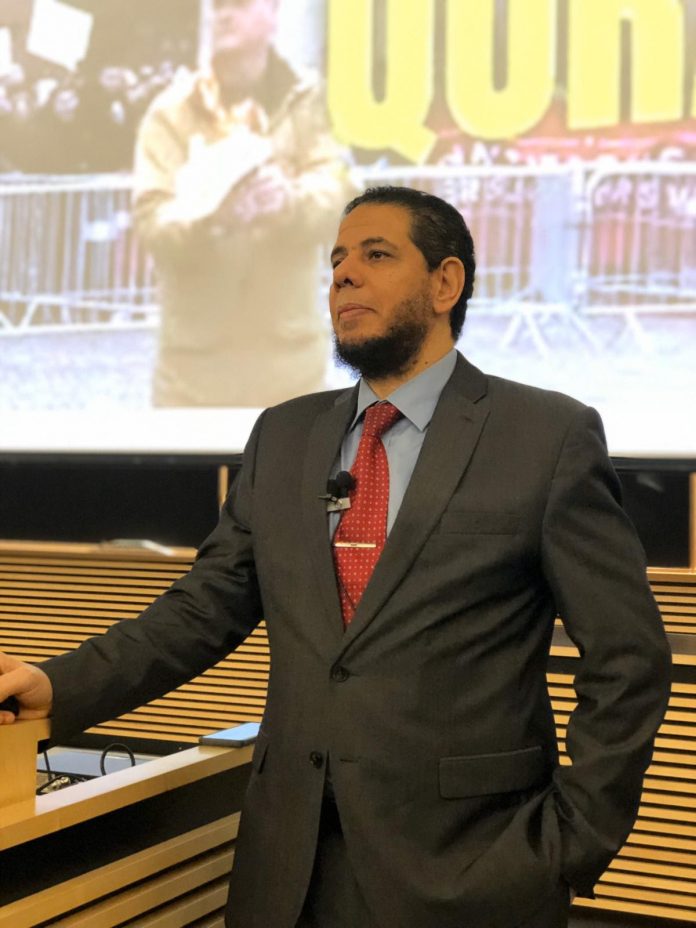
Dr. Reda Bedeir spoke at Islam Awareness Week at SFU

By: Harvin Bhathal, News Team Research Assistant

A harrowing image begins a lecture: a white man, in his hands a Qur’an that was on fire as an act of hatred. The lecture, from Dr. Reda Bedeir, was titled Qur’an Burning Doubt. Throughout the talk, Bedeir kept coming back to this image, but from a perspective of empathy: those who have hatred towards the religion of Islam and Muslims have likely never read or studied the Qur’an.

The lecture was part of Islam Awareness Week, that ran from Jan. 20 to 25 and was organized by Simon Fraser University’s Muslim Student Association. The weeklong event featured a series of lectures that were intended to raise awareness and address various political and practical elements of the religious practice.

Bedeir, an associate professor at Al Azhar in Egypt, the oldest university in the world, comes from Edmonton, Alberta. He is also a former professor at Simon Fraser University. He brings a background of a man who has experienced racism and prejudice, only to respond with a smile and see the good in people. When he was a professor at the University of Calgary, a colleague from the religious studies department asked him, “Why do you always smile?” to which he responded, “Because I believe in the power of Allah.” During the lecture, the positivity and energy through his smile was evident. 

“Read the [Qur’an] and the book will burn the doubt within you,” Bedeir said repeatedly. He listed a myriad of reasons of why people accept the Qur’an. It is the word of Allah (God), revealed through the Angel Gabriel to Muhammad, Islam’s final prophet. The verses have been unaltered since their revelation in the 7th Century, preserving its authenticity. Verse 57:25 reads, “We have already sent Our messengers with clear evidences and sent down and sent down with them the Scripture and the balance that the people may maintain [their affairs] in justice,” which is the main objective of the Qur’an.

There is a misconception that Islam was spread through the sword, which Bedeir counters by saying it was spread through love, through its words. With nearly 2 billion people following Islam, it is the second-largest religion in the world and one of the fastest growing, especially in North America and Europe. 

Bedeir spent a portion of the lecture discussing the doubts people have about the religion. Islam is often thought of as the religion of terrorists but Jihadists decontextualize verses of the Qur’an and apply them to their own beliefs, comparable to white supremacy and the decontextualization of the Bible. 

Bedeir’s sense of humour was seen when he was throwing candy to a student in the audience for answering a question correctly. The candy did not reach the student, making a loud sound when it clanged against metal and Bedier said, “That’s violence, that’s terrorism, I’m sorry,” to which the audience burst intolaughter. 

Islam is often perceived as  restricting women’s agency, but before the advent of Islam, women were killed for having daughters instead of sons. Prophet Muhammad teachings are what modern day Islam is known as, to respect life. Verse 49:13 speaks on the equality of women and men. Women wear a hijab and concealed clothing in the Muslim world but the misconception is that it is forced. For the majority of Muslim women around the world, it is their decision and they do so because Allah requires women, as well as men, to dress modestly.

When asked what he does to reach a wider audience beyond Muslims, Bedeir stated that he never declines invitations to speak, speaking at churches and interfaith dialogues often. “It’s a chance for me to… [explain] the basics of Islam,” he explained. (2:40)

At its core, the Qur’an unites humanity to an ethico-legal framework constructed upon Allah’s divine wisdom and justice (67:14). In the Qur’an, the world operates by the law of justice, not the law of the jungle, which is what has been happening for centuries. With a grin, Bedeir gave the example of “Operation Iraqi Liberation,” or the United States invading Iraq for oil. But,Islam is about finding peace in this world, within oneself and in physical form. 

“It is the miracle of all miracles and the [Qur’an] will burn the doubt within you,” said Bedeir. 

A City Without Artists? talks art space amid the condo race

0
Screenshot via Facebook

by Ben McGuinness, Peak Associate

On January 16, SFU Public Square held a meeting in its City Conversations series called “A City Without Artists?” to discuss the challenge of maintaining space for artists in Vancouver. The room was packed with a diverse audience of all ages and backgrounds. Three stakeholders in the topic led the discussion, but it was emphasized that everyone in the room was welcome to participate.

The first guest, sculptor Michael Vandermeer, expressed frustrations over watching artist space sit empty during his 20 years working at on Granville Island at studio ie: Creative. He explained that Granville Island is federally owned and is intended to have 125,000 square feet of space dedicated to arts and crafts, but in reality provides much less than that. Public pressure is needed, he insists, to remind the government that the space and its intended purpose of fostering arts belongs to us.

Painter Eri Ishii spoke of her experience trying to defend her studio space at 901 Main Street from developers. In speaking with the city, she found they were completely unaware that artists had been working and holding cultural events in the building for years, and that they as individual renters had little ground to defend it. As part of her campaign she formed the 901 Artists Cooperative, which founded Portside Studios nearby and is better equipped to protect their new space as a collective.

Brian McBay, executive director of artspace planning non-profit 221A, explained that very little funding is being put into arts and many organizations must both fill the gap with private donors and navigate the politics of those partnerships. He sees a foreboding risk to our democratic freedoms in the struggle and corporatization of arts. He also posed an interesting challenge to the notion that artists are subject to market forces, seeing their struggle instead as an issue in a city’s DNA to be rectified by better planning.

The audience occasionally cheered, hollered, and booed as they empathized with the experiences and challenges that the speakers shared. It was clear that most people in the room, unlike myself who was there to learn more about the issue, were already deeply invested in it.

Those who took the microphone to speak had just as much to share as the guest presenters did. A printmaker named Peter explained that he was invited to Singapore to teach his craft — where the city-state invests in cultural assets to make up for its lack of physical resources — and came back to find that the City of Vancouver did the opposite, choosing to instead focus on selling their assets for short-term revenue.

Audience member Kate came well-prepared to speak from the administrative office of Granville Island, explaining that they want to open up space for artists but lack funding for the major costs associated with keeping buildings up to strict Vancouver code. They hope to turn the former Emily Carr building into a multi-use space, leasing out some of it for a profit in order to provide the majority of it as subsidized space to artists.

This discussion seemed to ruffle feathers for those who did not see this as a valid explanation for the lack of progress. Brian reeled the conversation up to a broader one about the way that Vancouver’s insanely high building standards make it hard for cultural projects to flourish — although safety is, of course, important. As he had stated before, the foundation of Vancouver’s city planning seems to squelch creativity.

I couldn’t help thinking that the real solution is to get these outspoken stakeholders, especially those that butted heads, into a meeting room for an in-depth conversation about what needs to happen next. I’m glad to see that SFU facilitated the first step, which was to gather diverse voices and inspire the rare feeling that there really is a democratic public sphere someplace.

If you’d like to attend the next City Conversations session, consider subscribing to their newsletter to find out about upcoming events.

A Trial Week journey into the world of Iaido

0
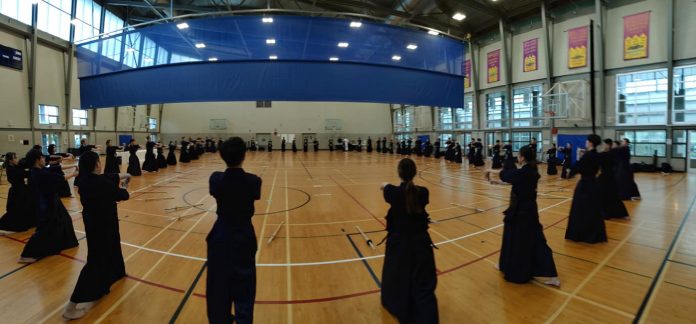
Iaido, kendo, and kuydo all hail from a similar branch of Japanese martial arts. — Photo credit / SFU Kendo Club

By: Meera Eragoda, Staff Writer (they/them/theirs)

I decided SFU Recreation’s trial week would be a good opportunity to try out an activity that would not normally be up my alley. I chose iaido because, though I had never heard of it previously, when I read the description, I thought, “Cool! Swords!”

Iaido is the Japanese art of sword drawing, and the iaido sessions on campus are offered by the SFU Kendo Club. Armed with my incredibly limited knowledge of the sport, I entered the Central Gym at Lorne Davies prepared for anything. I was instructed to take off my shoes and socks, and was handed a bokuto, which is a wooden training sword. We were then led in a series of warm-up exercises that included how to step properly, how to hold and raise the bokuto, and how to hold the desired tempo — slow for the drawing, but quick for the cuts.

Iaido has a series of twelve sequences, called katas, and one of the club members walked us through the first kata, mae. It entailed swiping vertically with the bokuto, then back to cut down enemies behind you, and finally, bringing the bokuto to your temple in a move called chiburi that literally translates to “wipe the blood of your enemies off your sword.”

From everything I’ve described, iaido might seem cutthroat, but the best way I can describe it is like tai-chi, but with swords. Every movement is very controlled, as iaido is meant to be more about defense than offense. At its core, it’s actually about self-improvement and people practice the same moves for years. This may sound a little monotonous, but you would be surprised how quickly the time will pass when you are focused on perfecting the zen art of swords. I’ve only tried the first kata, but even then there are so many components to it, such as what angle to hold the bokuto at, how quickly to draw it, and how to step and maintain your centre.

If you want to try something a little bit unusual that involves moving your body without super high-intensity, iaido might be for you. The steps and moving the sword will strengthen your arms, back, legs, and core. It’s also like a more dynamic form of meditation because it forces you to be highly-aware of your body, but you don’t have to sit still while alone in a room to do it.

Once you prove yourself with a bokuto you are allowed to upgrade to an iaito, which is a non-sharpened sword, but only with permission from the sensei. SFU iaido meets happen on Mondays and Wednesdays and the registration fee is $74 per semester plus a $5 club fee. The club supplies the bokuto, but students will need to buy knee pads as many of the movements involve quite a bit of kneeling. Once someone has decided to commit to iaido, they will also need to purchase a keikogi, or uniform, which costs around $120. Intakes happen at the beginning of each semester. If you are looking for a new martial art to practice, it’s definitely worth taking a stab at iaido. 

Hot campus cocoa

0
Photo taken by Meera Eragoda

By: Meera Eragoda, Staff Writer

Lower Mainlanders, we were not made for the snow. The week I wrote this, getting to campus was an intimidating prospect. If not the ever-looming threat of being stranded on the mountain, there was also the uncertainty of whether or not to make the trek to campus — only to have your professor cancel class at the last minute because they also (fairly) don’t want to deal with the snow. We were like fragile drooping houseplants in non-ideal conditions. But what better way to perk us up during these trying times than with the warm hug of some hot cocoa? I’ve tried lots of hot cocoa from as many different places as I could so you can have your Goldilocks moment with hot cocoa — without having to face three bears.

Blenz Coffee:

Photo taken by Meera Eragoda

I had fairly low expectations for this one, but the Blenz hot chocolate actually made me feel like Archie (from the comics, not the TV show Riverdale) whenever he walks by a pretty girl. It spun my taste buds around and literal heart emojis may have emerged from my mouth. Hot chocolate could not have described a drink more clearly. It was rich, thick, warm, and very chocolatey. I chose dark chocolate, but milk chocolate would be a lighter option for those not as willing to drown their mouth in so much intensity. There is also a white chocolate option.

Price: $4.99 (including tax)

Available: Vancouver and Surrey campuses

Rating: 8/10, Willy Wonka chocolate rivers


Tree’s Organic Cafe:

Photo taken by Meera Eragoda

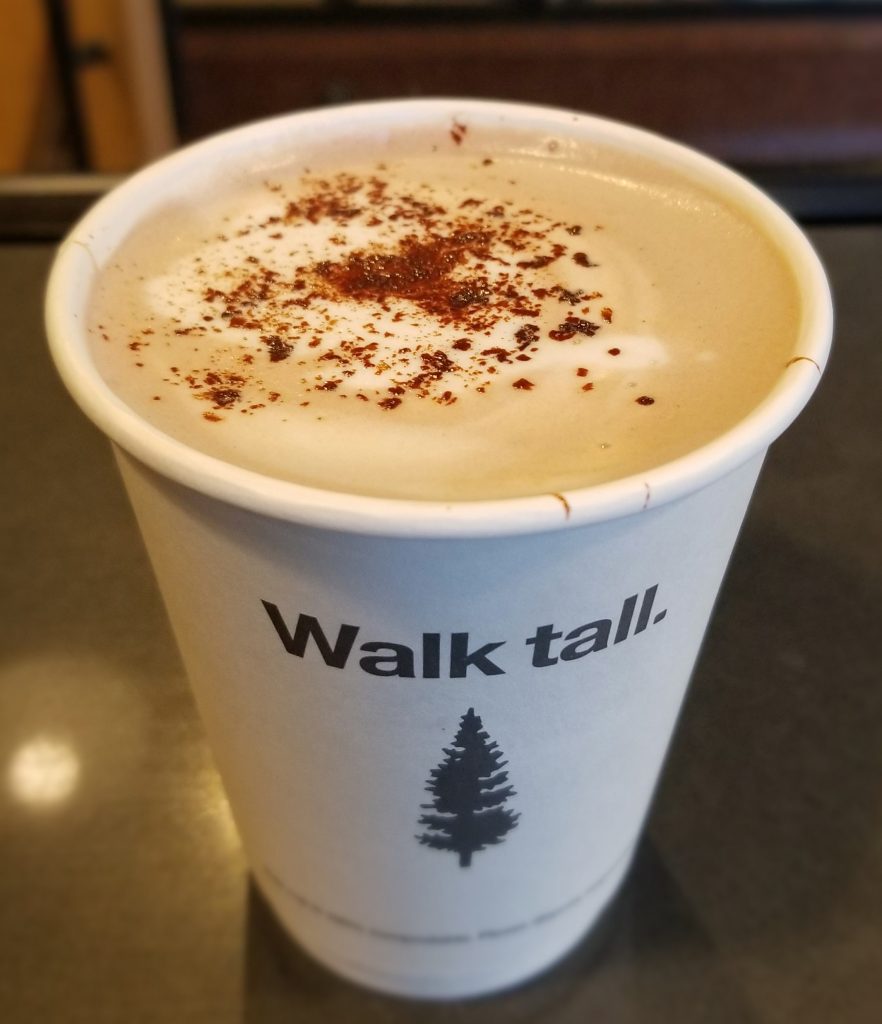
Tree’s hot cocoa is sweet — but not too sweet. It’s chocolatey, creamy, and has a nice little frothy layer on top. It’s maybe a little too overpriced for what it is, but if you’re feeling like treating yourself after a particularly exhausting day, or if you’re expecting to  need some chocolate courage to face your day, this might not be a bad place to do it at. Bonus: the cup tells you to “walk tall” and haven’t we all, at one point or another, needed our beverage to make us believe we’re ents?

Price: $4.10 (including tax)

Available: Vancouver campus

Rating: 7/10, cute, encouraging messages


Starbucks:

Photo taken by Meera Eragoda

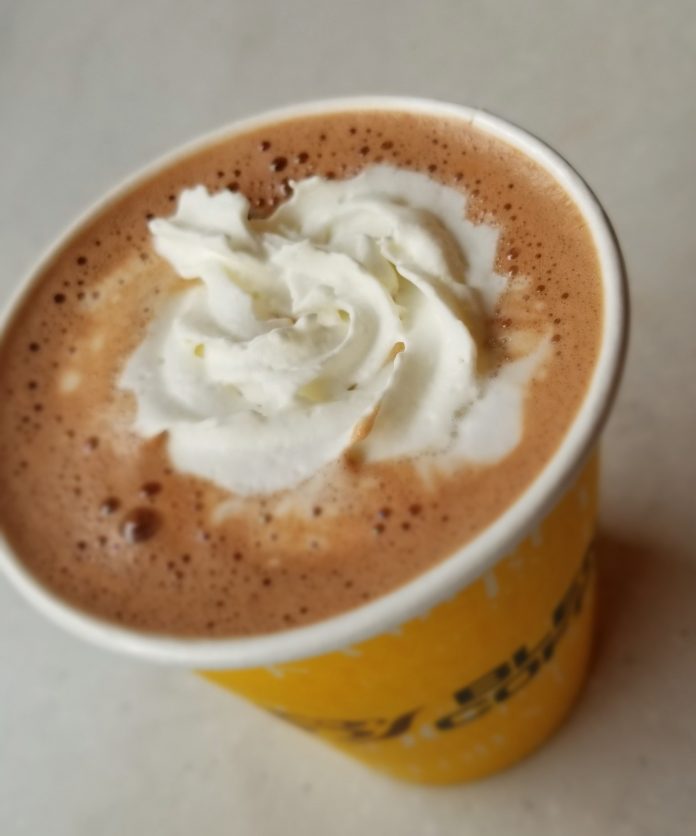
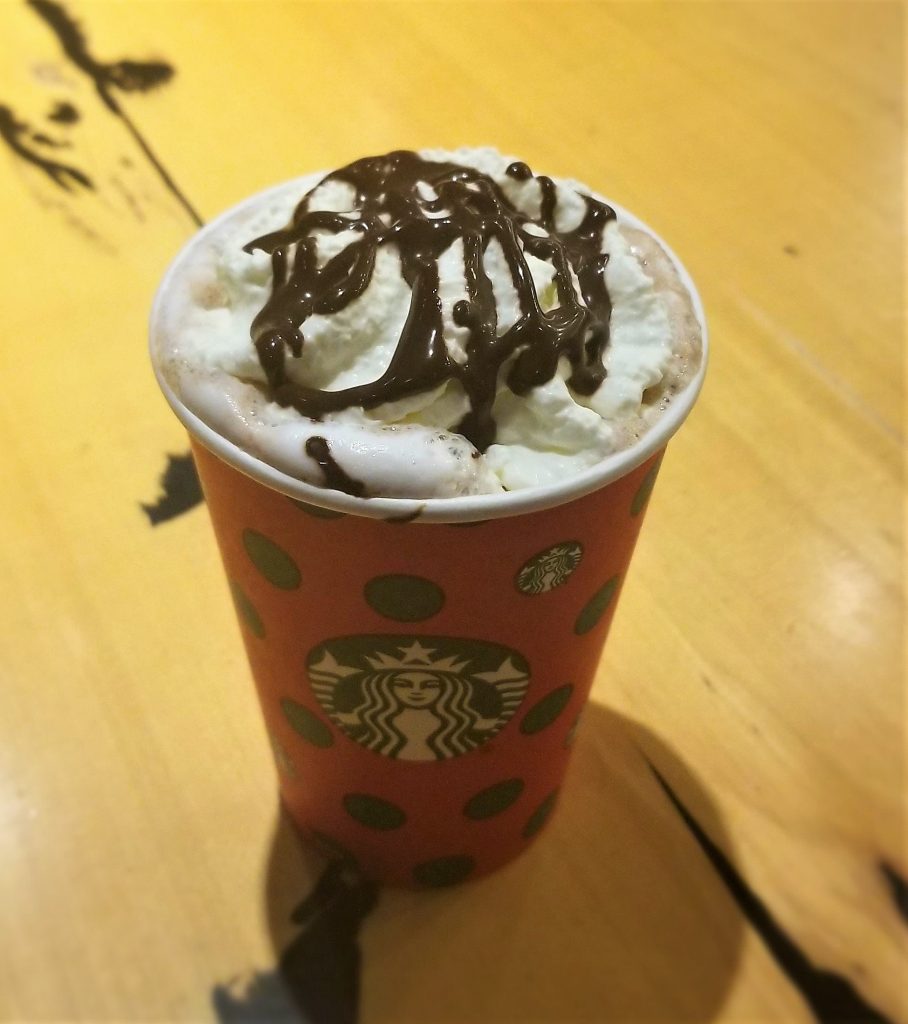
Can we be real for a moment and recognize that Starbucks drinks are literally just different flavours of syrup? No shade here, I love me a peppermint mocha in the winter, but their hot chocolate is just chocolate flavoured syrup. Perfect if you have a super sweet tooth, but you may want to get it half-sweetened, if not. The whipped cream and chocolate drizzle on top add a nice creaminess and real-chocolate taste to it; if you’re not lactose intolerant, I would highly recommend adding.

Price: $3.83 (for the tall size, including tax)

Available: Vancouver, Surrey, and Burnaby campuses

Rating: 5/10, syrups with a side of milk


Cartems Donuts:

Photo taken by Meera Eragoda

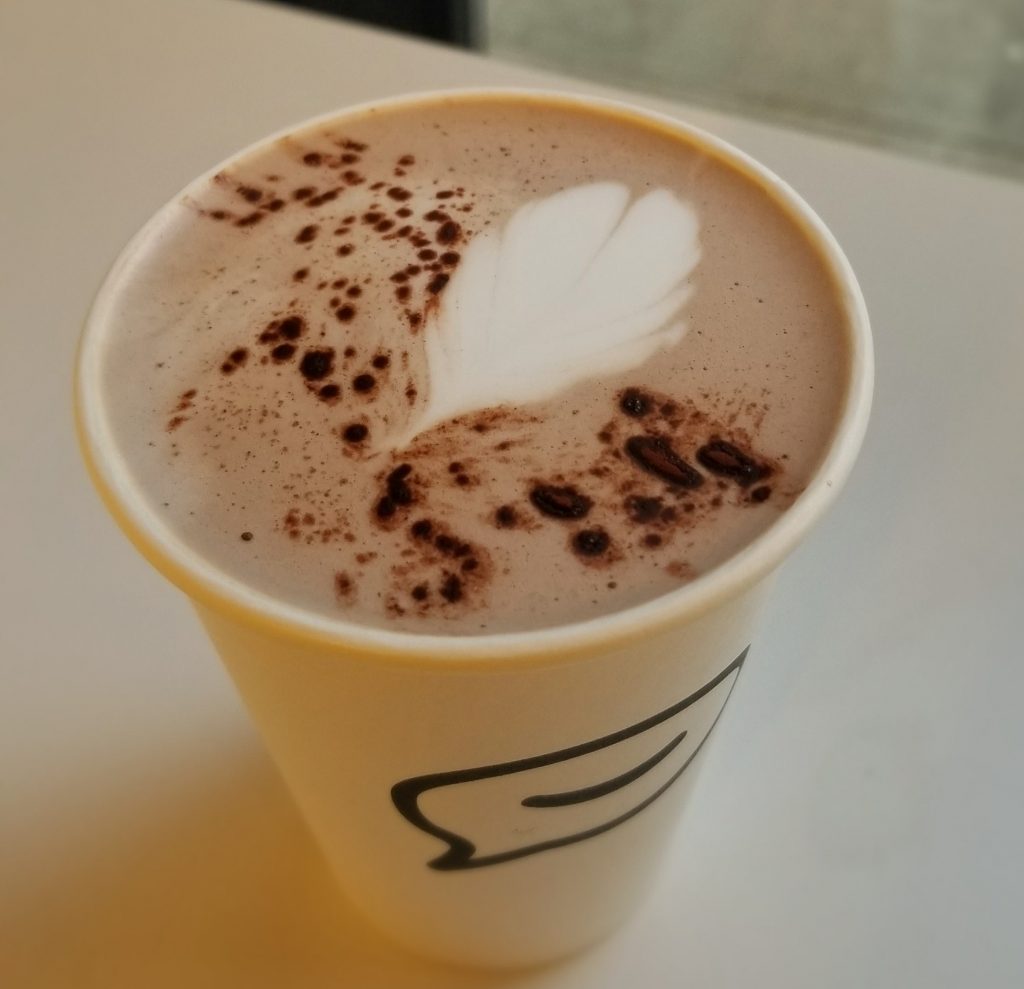
I don’t think it should come as a surprise that Cartems does hot chocolate well. This was my favourite because it’s not overly sweet, so the chocolate really does shine through. It was creamy, milky, and the dusting of cocoa on top adds a nice bit of bitterness to it that made it a more complex hot chocolate than the others. I recognize that this is going to be most appealing to people who tend to find drinks at all the other places on this list just a little too sweet. Luckily, if this is not you, there are opportunities to satisfy your sweet tooth with one of their delicious donuts after (the Earl Grey is a classic).

Price: $4.45 (including tax)

Available: Vancouver campus

Rating: 9/10 cocoa dustings


Renaissance Coffee

Photo taken by Meera Eragda

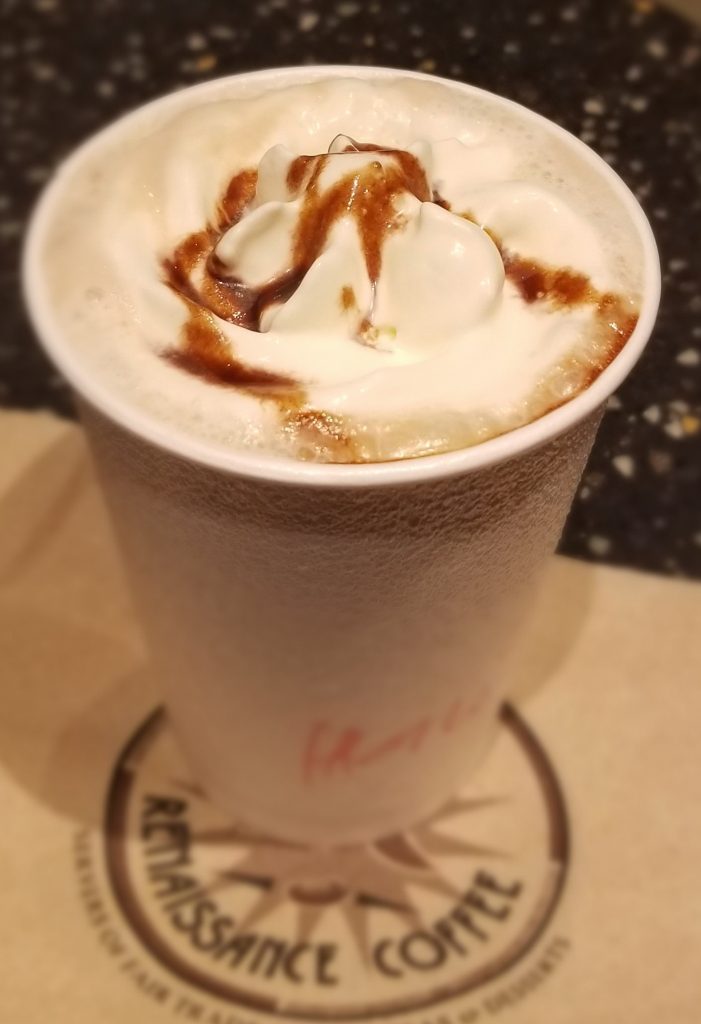
If you’re on the Burnaby campus, this one’s for you — especially if you don’t feel like waiting in line at Tim Hortons. This is the second cheapest option on that campus, and, like everything else at Renaissance, it’s decently solid. Honestly, Renaissance is like the dependable, reliable friend that everyone always takes for granted. The hot cocoa is more chocolatey-sweet than syrupy-sweet (I’m looking at you Starbucks), and the whipped cream on top is nice and light, which works for it. The drizzle they add makes the drink taste kind of caramely which is a pleasant twist.

Price: $2.75 (including tax)

Available: Burnaby campus

Rating: 7.5/10, light, fluffy whipped cream clouds


Tim Hortons

Photo taken by Meera Eragoda

Ok, this may be controversial, but Tim Hortons has a good classic, hot cocoa. When I say classic, I mean like the stuff you would make for yourself at home with a store-bought mix. It’s got that nostalgic, no-fuss feel — and in a world where you never know if things are as they seem, isn’t it nice to have something that represents itself as purely as Tim Hortons hot cocoa? It’s not trying to be anything fancy, but that means it’s not trying to swindle you either. It’s the cheapest option on this list and I’m not mad about it. Are you?

Price: $1.88

Available: Vancouver, Surrey, and Burnaby campuses

Rating: 9/10, basic b’s

Political Corner: World leaders can’t continue to shrug off wildfires while courting Big Coal

0
The Australian wildfires have razed the continent, killing humans, animals, and whole ecosystems. Photo: Getty Images

By: Kelly Grounds, Peak Associate

Last year, the world watched as forest fires in the Amazon led to some of the worst environmental damage the world has seen in recent decades. Throughout all of the devastation, there was a hope through multinational cooperation that we would never have to witness destruction on that level again. Yet less that a year later, Australia is battling approximately 135 separate bushfires in its southeast, including one “megafire.”

The bushfires did not come out of nowhere. Although Australia experiences annual seasonal bushfires, the fires this year are larger, more numerous, and subsequently harder to deal with. This is in part due to rising temperatures and more frequent droughts that have increased the vulnerability of their ecosystem to fires. 

Worsening weather patterns is a result of the willful ignorance of global politicians. Throughout 2019, the Australian prime minister and his party fought against bills that would have lowered Australia’s emissions in favour of protecting the coal industry. The United Nations has also been critical of Australia’s process to limit their emissions, and stated that the country was one of the G20 nations in need of improving their numbers. 

Right now, the Australian bushfires feel like a distant tragedy, but the experience of losing everything to fire is not a distant feeling for many residents of BC. In 2017 and 2018, the province fought several devastating forest fires that cost taxpayers millions of dollars. While 2019 saw fewer fires than the past two years, there is no guarantee that 2020 will follow suit. The reality is that extreme weather events are becoming the new normal.

As weather patterns become harder to predict, we find ourselves in a dangerous middle ground between trying to stop the planet from warming further, and adapting to what changing climate throws us — like devastating fires. This does not mean that we stop fighting climate change. There has to be continued urgency in pressuring policy makers to develop plans that have a real impact on curbing CO2 emissions, and halting more devastation.


Comparing GPAs is a recipe for dissatisfaction and unnecessary stress

0
GPA-envy doesn’t have to define your university experience. Illustration: Ashley Yien/The Peak

By: Lubaba Mahmud, Staff Writer

Success in university shouldn’t be interpreted as a zero-sum game where students are indirectly encouraged to compare grades. Extreme academic competitiveness is evident in some departments more than others, but wherever it goes it creates an unnecessarily harmful competitive atmosphere, which can lead to student stress. Instead of comparing GPAs with peers, students should recognise that there are other, equally valid ways of measuring success.

Before disregarding this somewhat obvious stance that students are stressed about their grades, hear me out: I’m not going to spew some nonsense on how grades don’t matter. They absolutely do. What I’m saying is comparing grades with peers shouldn’t be the only way students measure success. Success has many layers to it, but by insisting on comparing GPAs, one is limiting oneself to a narrow definition of it.

My department has a policy of curving grades, which means that only a fixed percentage of students can get As, Bs, and so on. This can make it especially hard to not be competitive, because the grade one gets is essentially also based on others’ performances. While competition is not inherently unhealthy, this form of direct comparison can be discouraging. It’s important to remember that students have different levels of capabilities, and different strengths and weaknesses. This grading system shifts the focus from trying to do the best one can, to trying to do better than one’s peers. In classes like these, I found myself worrying too much about how my classmates were doing in their exams, which ended up negatively impacting my mental health. 

I had to remind myself that success cannot possibly boil down to just my GPA. There are a range of other measures of success that a university student can look to, in order to be satisfied with their experience at SFU. Learning new skills, trying something new, learning to set realistic goals, learning to be kinder to oneself, etc. are also equally valuable take-aways from university.

One of my personal goals has been to step outside of my comfort zone and make use of the many opportunities that SFU provides. For example, I opted for some electives that seemed really interesting to me, even though I could have taken the easy path of choosing “GPA boosters” that would play to my strengths. I don’t know a great deal about Canadian history since I’m an international student, so last year I took a Canadian labour studies elective to learn more about it. It was a little daunting as I saw other students quickly connect the dots, while I had to spend more time doing some research on my own to fully understand the content. It turned out to be a great learning experience — one that encouraged me to challenge myself more often, rather than give into the GPA rat-race.

Even though grades are an important part of the whole university experience, it is not the only worthwhile aspect of it. GPA isn’t the be-all end-all of your post-secondary journey. That’s why students should consider making a personalised list of goals that are more meaningful to them than a simple grade comparison — or at least find meaning in their own grades and not others. In the end, your success at university cannot and should not be defined by other people.