Home Blog Page 450

Monday Music: Songs to dismantle the establishment to

1
"Monday Music" in giant yellow block letters with a red background
Monday Music: your weekly themed playlist. Image courtesy of The Peak.

by Madeleine Chan, Staff Writer

When I think of the phrase “fuck the government” in relation to music, I think of punk rock bands like Green Day, The Clash, Dead Kennedys, and Bikini Kill that have strong anti-establishment messages sung with chaotic melodies and rhythms. But there are many other songs that wouldn’t be considered typical thrashing “punk” that still contain the spirit and essence of going against mainstream notions. So to help you embrace your inner rebel, I’ve compiled a list of songs that all fit the vibe of dismantling the establishment. Now you have some good tunes to scream, cry, riot, and rebel against the institutional forces that oppress all of us with. 

If you’re frustrated with the SFSS, wanting to stop ongoing colonial oppression, or just fed up with how the world works, these are the songs for you.


Freedom” by Dakota Bear

I first heard this song at the Vancouver Climate Strike last October. The event is known for Greta Thunberg’s attendance, but for me it was the place where I first heard Dakota Bear’s impactful voice. A simple piano melody rests gently below his graceful yet powerful rapping about wanting to be free from colonial oppression. An almost ticking rhythm reminiscent of a clock is present as well, signifying both the long, historical struggle against colonial forces. Alongside this, the message that time’s up and things have to change now is strong. This soft yet strong song gives me hope by looking forward to a potential prosperous and non-colonial future.


Screwed” (feat. Zoë Kravitz) + “Django Jane” by Janelle Monae

These are two halves of a whole killer bop. “Screwed” begins by celebrating the fact that, yes, we are all figuratively getting screwed by external powers but that we still have the power to fuck shit up as well. The end of the song then slowly transitions into the vibe of the next song and has an incredible rhyme in the lyrics: “Hundred men telling me to cover up my areolas / Why they blocking equal pay, sipping on they Coca Colas.” In “Django Jane,” Janelle Monae goes off on the patriarchy with a deep, simmering anger in her strong, assertive voice against a similarly furious-feeling beat. These two songs are an anthem for any who feel like they’ve been fucked. 


This Land” by Gary Clark Jr.

This song makes me want to tear down Trump’s border wall with my bare hands. It has an infectious, dark, and seething energy that could be defined musically as grungy, R&B, and blues-y. Lyrically, it’s a rage against post-slavery, racist America and its expulsion of all things “other.” Clark also defiantly declares “Fuck you, I’m America’s son / This is where I come from” in the audacious chorus. This definitely is a tune that defies both genre and racial hegemony. 


Megalomaniac” by Incubus

Written during the Bush era, but not specifically in response to Bush, this song is more of a classic and angsty rebellious jam. The lyrics call out an authoritarian figure and demands that they step down. The switch from heavy emphasis on crashing drums in the choruses and more held-back beats in the verses make for explosive and dynamic feelings of disobedience. I suggest you bust this song out whenever you feel like the people in power around you aren’t doing their best to serve the people, which is all of the time, so you better be playing this 24/7. 

If you liked those, then you should also check out:

100 Years” by Florence and the Machine

People” by The 1975

Now” by Paramore

American Idiot” by Green Day

Killing In The Name” by Rage Against the Machine

Girls Like Girls” by Hayley Kiyoko

Lonely first-year fed up that no one has saved him from his inner darkness yet

0
Illustration by Tiffany Chan / The Peak

Written by Jennifer Low, Peak Associate

A first year SFU student is threatening to sue the university for false advertising: namely, their failure to provide the happiness and friendship he expected to finally receive after high school.

“I don’t understand it! I’ve been here, like, for a whole semester already,” Collin lamented to The Peak. “But no one has gone out of their way to talk to me, befriend me, or even save me from my inner darkness. I’ve tried everything!” 

“Everything,” according to Collin, includes countless days spent sulking in the back corner of lecture halls, brooding on the fifth floor of the library, and hurrying to the 145 the second his classes end. Though highly effective in urban fantasy YA romances, Collin’s aloof and mysterious behaviour has surprisingly failed to attract the attention of any of his peers.

“It’s like no one is making the effort but me,” the first-year concluded. 

Collin described his worst experience on campus as the time he wandered around the AQ, unloved, for hours and hours. 

“I had my SFU sweater hood pulled over my eyes to build intrigue, and an extra cup of coffee to share with a potential acquaintance. In 12 hours, the only person who talked to me was someone trying to get me to sign up for their psychology study on sleep deprivation!”

The lack of personal and extensive effort from Collin’s peers to liberate him from his self-isolation has left Collin with no choice but to hold the university responsible. The first year student blames this on SFU’s lack of seating areas.

“The best strategy to start conversations is to sit in front of them in total silence and force them to watch you eat your lunch in despair,” he concludes. “Until finally they get uncomfortable and say something about your weird chewing. That’s how real friendships start, and SFU is ruining that, on purpose!”

With many personal anecdotes and journals filled with angsty comments, Collin is confident that he has enough items to enter into evidence for a strong court case against SFU.

Just like all of the other students, SFU has declined to respond to any of Collin’s comments.

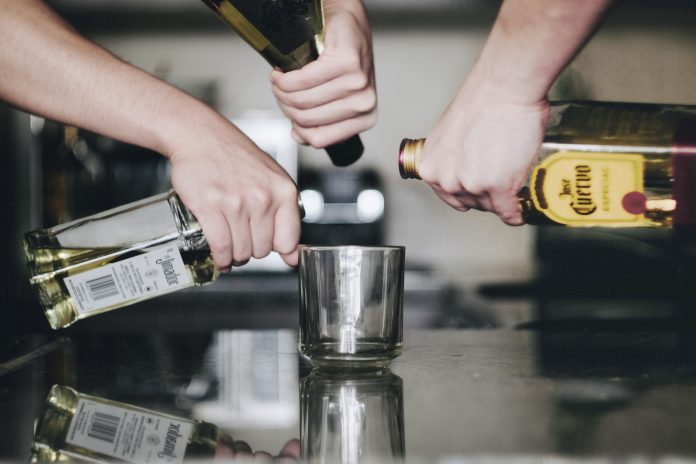
SUBJECT: Time To Unionize, Fellow Tall Pale Male Bartenders of Vancouver

0
Chris Ho / The Peak

Written by Meera Eragoda, Staff Writer

From: [email protected]

Subject: The Revolution Stouts Now

Comrades in Ales,

Have you ever found yourself wondering about the struggle that so many of us are facing of late? You go in to get a half-sleeve tattoo of the East Van sign (even though you live in Gastown) with some hops or wheat or whatever, but it turns out that you can only afford the first session, and now you’re walking around with the outline, not knowing when you’ll be able to get it completed?

Or how about being expected to exude a certain image at this job of ours? You know, the hipster uniform of a perfectly maintained fade and a gentrified lumberman’s beard along with the ageless plaid? 

Are you finding that it’s getting more and more difficult to enjoy the pure and simple pretentiousness of your morning pour over (or cold brew in the summer) because you’re worried about how, sooner or later, people will start realizing that women were brewing beer for thousands of years before you? 

This is the plight of us, the underserved (in every way except beer). We need to unionize to make sure our two very simple demands are met!

  1. FAIR WAGES commensurate with the rate of inflation on beard oil and tattoos.

AND

2. JOB SECURITY in case people start realizing that women are strong enough to do these jobs.

Our positions are ones of prestige. But are we really being valued as highly as we should? Are we being treated fairly? 

Let’s fight for our rights and make sure we secure our place in the dimness of the bar, the dimness of the pub, the dimness of the generic gentrified craft brewery. After all, our pasty white skin can’t handle the sun. And we need to retain our privilege somehow, right?

Join us this Friday at 3 a.m. along the sidewalks of Granville Street with your IPAs in hand. It’s time to BREWstorm a way forward.

Friends beg their friend-turned-Twitter-activist to let them live ignorantly in peace

0
Courtesy of Marten Bjork via Unsplash

Written by Kim Regala, Staff Writer

Have a seat, Steve.

Before we begin, we want you to know that we’re only doing this out of pure concern. Concern for you, but most importantly, concern for the recent changes in your Twitter feed, changes to which we are being subjected. This may be painful for you to hear, but we’re your friends, and it hurts us even more.

Ready to listen? Good. 

Steve, what you do behind closed doors is entirely up to you. But as soon as you start broadcasting your . . . political alignments for us to see, it’s a whole other level of selfishness. 

Just last Tuesday, you retweeted something from CBC News. Now, I’ve come to master the art of swiping past anything with the word “News” on it. I’m basically like Cassandra of Troy but for predicting invasive updates on current events. Just this once, though, I slipped up. There I was. Staring at Justin Trudeau delivering some speech. 

I had to binge three hours worth of TikToks afterward, just to rebalance my neurochemistry. All thanks to you.

And this isn’t an isolated incident. I didn’t want to say anything, Steve, but I was the first to notice your problem. Just over a month ago, I saw that you followed . . . The New York Times. At first I told myself that maybe this was just some prank. But, as always, we would have been way better off accepting what we were seeing online at total face value with no further speculation or critical thinking. 

Because you really were a Twitter warrior now, Steve. And things escalated quickly as you went from Retweets of news outlets to Tweets of your own. It was so difficult for us to witness your downfall into #cdnpoli.

The worst day was when you started making . . . Threads. At that point, we couldn’t even feel sorry for you, just repulsed. Your very first string of “(1/?)”, “(2/?)”, “(3/?)”, onward was not just a countdown to the end of your socially aware tirade. It was the countdown to disaster — but not one of those cute disasters like earthquakes or hurricanes, the kind we blandly acknowledge in conversation while never donating to relief efforts. It was the disaster of losing a best friend to madness and empathy for others. 

Steve, we should have reached out and offered you help right away. I know, and I’m sorry that we didn’t. I’m so sorry — for us. Maybe if I had talked to you when I first caught wind of what was going on, your problem wouldn’t be as bad as it is now, and it wouldn’t now be our problem. 

But honestly? I, at least, was in denial. I mean, God forbid we have someone in our friend group who actually pays attention to what’s happening in the world. 

I thought you of all people would be the last to ever try and destroy our dynamic like this. But I was so wrong. I guess that’s the one downside of being consistently misinformed, you know. Being wrong every so often.

You’re out of hand, Steve. We don’t think you’re a bad person, but we do think you need a lot of help. We love you, and we just want things back to the way they used to be.

Your weekly SFU horoscopes: March 9–March 15

0
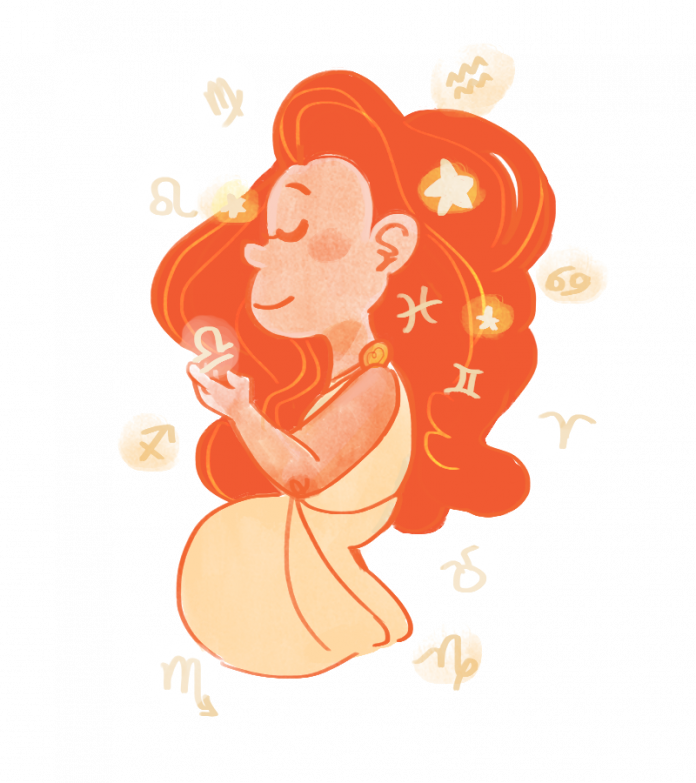
An illustration of a girl with long flowing hair. Astrological signs and stars shine around her.
ILLUSTRATION: Marissa Ouyang / The Peak

Written by Zach Siddiqui, Humour Editor

Aries — March 21–April 19

You yearn to rest this week, but you may find it difficult to properly recharge. You’ll try to learn from your phone’s example, only to be faced with a big, sudden shock. Energy comes in good and bad forms — like the difference between nine hours of sleep and electrocution.

Taurus — April 20–May 20

The continued motionlessness of SFU’s satellite campuses means continued inertia for your love life. Just like Selena Gomez, you are “so sick of that same old love.” Unlike Selena Gomez, you have no money, power, or influence amongst Wizards of Waverly Place fans with which to build a better existence for yourself. Fade away into the concrete. 

Gemini — May 21–June 20

Choose the correct fate this week. Be the real you. Let your Dairy Queen overrule your Orange Julius. 

Cancer — June 21–July 22

Buy a fresh bucket of chicken when the desire takes you. It will be more fulfilling than the bad poetry you fleetingly considered writing instead.

Leo — July 23–August 22

Playing crane games would be dangerous this week. You will relate too heavily to everyone who’s ever failed to get to know you. Then again, the pain of the inferior does smell delightfully of lavender.

Virgo — August 23–September 22

The television is usurping you this week. You’re the one who’s supposed to be brainwashing the masses, not media corporations. It’s fine. Let it go. Someone else can guide humanity to a utopian future for once. 

Libra — September 23–October 22

You may awaken to find yourself lying on the operating table. Not literally, like in a horror movie. But figuratively, as in realizing mid-conversation that you’re being mentally dissected in search of insecurities to prey on. Don’t let them find out about your occasional dark impulse to unbalance your most annoying roommate’s chequebook.

Scorpio — October 23–November 21

Cashiers will lie to you this week about selling you the item you said you wanted. Don’t hold a grudge. It’s not like that random thing you paid $5 and totally didn’t need is really what you “wanted,” either. Nothing could fill that category, besides absolution. 

Sagittarius — November 22–December 21

So when are you graduating, anyway?

Capricorn — December 22–January 19

You have been on the path of discarding the trash people in your life. This is the week to properly sort them, as per municipal by-laws. Some deserve to be composted. Others, such as the plastic-hearted friends who have more LinkedIn connections than you, could stand to be recycled. 

Aquarius — January 20–February 18

You may struggle with zipping and unzipping your backpack this week. If you don’t, then you have an abnormally low amount of baggage, and I’m scared.

Pisces — February 19–March 20

You may find yourself navigating the dark realms of St. Patrick’s Day this week. Shamrocks? More like scamrocks. The only greenery worth celebrating is the Amazon Rainforest, lungs of the world (after you ignore the phytoplankton in the oceans because they don’t evoke a good enough emotional response from readers) — you can’t breathe luck.

The Best of 2020’s Hot Chocolate Festival

0
Photo: Sara Wong / The Peak

by Sara Wong, Peak Associate

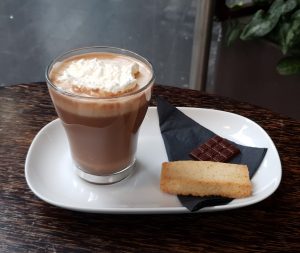
Vancouver’s Hot Chocolate Festival only comes around once a year, and for 2020 I went all out. There were 44 participating cafes offering 114 flavours, and I ended up going to 22 places and trying 43 flavours. Was I crazy? Yes. Was it worth it? Most definitely. Without further ado, here are my top 5 favourite hot chocolates from this year’s festival. 


  1. “Japanese First Kiss” – Baker and Table Cafe
Photo: Sara Wong / The Peak

As soon as I took a sip of this hot chocolate, all my problems melted away. Baker and Table used Callebaut chocolate from Belgium. This made the drink nice and decadent while the incorporation of yuzu (which is a small Asian citrus fruit) ensured that the hot chocolate was not too rich. I thought the size of the hot chocolate was small, but once I ate the mochi bun that came with it I realized that it was the perfect portion. Speaking of that mochi bun, it was the most addicting and life-changing dessert I’ve had in the past year! No wonder they’re Baker and Table’s specialty item. The dough was soft and pillowy on the inside, with a nice crust on the outside for texture difference, and the chocolate raspberry mochi filling was sticky and sweet, without going overboard. I was very happy with this pairing.


  1. “Taste of Peru” – Thierry 
Photo: Sara Wong / The Peak

Since this was an anniversary special, it actually wasn’t my first time trying Thierry’s “Taste of Peru” hot chocolate. The fact that it has remained on my top 5 list for this year reflects how good this drink is. The hot chocolate was made with a bittersweet chocolate from the Marañón region of Peru called Fortunato No.4. It was paired with a buttery coconut sable cookie and mini tempered chocolate bar. Every element was executed well and everything together created an enjoyable drinking experience.


  1. “Amethyst Kiss” –  La Glace
Photo: Sara Wong / The Peak

La Glace’s “Amethyst Kiss” was definitely one of the most unique hot chocolates I had during this year’s festival. I liked how the white hot chocolate was smooth and creamy, yet not cloyingly sweet. They infused the white chocolate with violet, which was translated clearly with the sprinkling of flower petals on top that also boosted the presentation. On the side was a mini cone of violet cassis sherbet that complimented the drink nicely; the berry flavour of cassis added more depth of flavour to the subtle taste of violets. The sherbet was so delicious that I ended up buying an entire pint of it to bring home! 


  1. “Where the Grass is Greener” – Cadeaux Bakery
Photo: Sara Wong / The Peak

My eyes almost popped out of my head when I got this drink. I love bubble tea and I love hot chocolate; Cadeaux was giving me the best of both worlds! The drink itself was huge — without a doubt the best value of all the hot chocolates I drank for the festival. Compared to the majority of the other drinks, Cadeaux’s was a simple milk chocolate . . . but it was one of the best damn milk hot chocolate I have had in my life. The grass jelly hiding beneath the surface was a fun addition, and the pandan pistachio sable cookie sandwich served on the side was chock full of flavour and texture. I seriously hope they bring back this flavour next year.


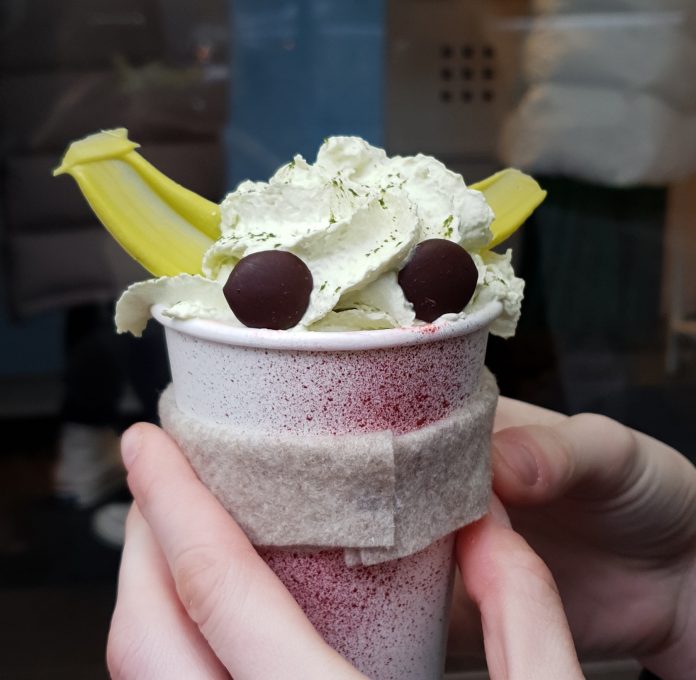
  1. “Hot Yoda” – Soirette
Photo: Sara Wong / The Peak

In this case, the hot chocolate lived up to the hype. Previously, I found Soirette to deliver phenomenally on presentation, but not so much on flavour. However, this year, they really stepped up their game. The challenge in picking my all-time favourite hot chocolate flavour of 2020 was not where, but which. Soirette served two more flavours alongside the Baby Yoda inspired hot chocolate, a mango-chocolate drink decorated with a chocolate llama topper, and a strawberry and peach schnapps hot chocolate with a unicorn design. Originally, I had the mango-chocolate llama as my favourite, but after having their drinks twice, my mind was changed. The “Hot Yoda” hot chocolate was rich and earthy thanks to the hojicha; it was the epitome of how a hot chocolate should make you feel — warm, happy, and content.

To see more of the hot chocolate I drank this year, check out my Instagram profile @sara_star_

Wet’suwet’en Student Walkout draws crowd of around 100 to Convocation Mall

2
SFU students walked out of class in solidarity with Wet'suwet'en

By: Gabrielle McLaren, Editor-in-Chief

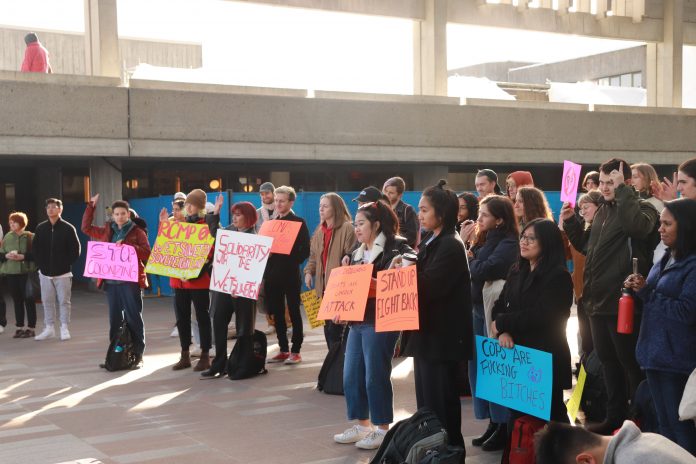
Students gathered in Convocation Mall on the afternoon of March 4 to listen to Indigenous speakers, singers, and drummers during a Student Walkout in support of the Wet’suwet’en nation. 

As the Walkout’s media advisory described, “The nation-wide student walkout is a peaceful, decentralized action of solidarity. Students across the country stand firmly in solidarity with the Wet’suwet’en hereditary chiefs and will continue to do so until their demands have been fully met. Our academic institutions are complicit in this violent violation of Wet’suwet’en sovereignty. Many institutions have declined to make a statement, and maintain Foundation and pension investments in TC Energy and the Coastal Gaslink Pipeline.” 

Baby Lee-Young, one of the event organizers, who identified as a second-generation Korean settler, started off the event by acknowledging the territories on which the event was held and which commuters had most likely crossed en route to campus. They emphasized the importance of Indigenous voices and stories in today’s event, asking media inquiries to the event’s media coordinator. 

Diverse speakers spoke about a range of issues to a crowd whose size waned from 50 to 100 students throughout the afternoon. 

Terrence shared his experience as a near-lifelong land defender before sharing Cree songs. He also spoke about the ongoing violence faced by his Indigenous friends and family. Saskia, a Heiltsuk Nation student, spoke of the importance of preserving land for future generations and respecting Indigenous laws and sovereignty on Indigenous land.  

Matt considered himself privileged to be able to attend SFU and of his hopes to use his education and Indigenous heritage to work in public policy. He also made the crowd aware of the risks that protestors were exposing themselves to and encouraged activists to look after one another — and Indigenous elders, women, and youth as well. Isaiah played a few songs on the drum he brought, which was shared with protestors. 

Edgard, of Tahitian, Kaska, and Nahua heritage, spoke about the discrimination faced by urban Indigenous peoples and the ongoing effects of genocide and discrimination. Kayah, an SFU student of the Tulalip and Tsleil-Waututh Nations, spoke about her own nation and family’s long-lasting fight against a pipeline in their own land. 

SFSS President Giovanni HoSang, a Jamaican settler with Canadian citizenship, was the only non-Indigenous speaker. He positioned himself as a stolen person on stolen land, as someone descended from enslaved peoples, before leading the crowd in chants and song. 

The Peak spoke with SFU Indigenous Studies and Health Sciences student April Kornitsky, who was a media spokesperson for the student walkout. 

“Support from students has been outstanding,” said media spokesperson and SFU Indigenous Studies student April, in an interview with The Peak. She added that her professor sent an email to the entire class, encouraging them to attend the walkout. “I have to do a write up on Indigenous events that I’ve attended and do it’s encouraged to do the first walkout that was done at SMU as one of the events that you can report on,” she said.

April also said that she has come across instances of ignorance on campus about Indigenous issues, and the Wet’suwet’en protest specifically. “I find that there is a lot of misinformation, people are taking out of context bits from the media. [ . . . ] They don’t understand the difference between the hereditary and appointed chiefs. 

People believe it’s solely about the coastal gas pipeline, but there’s so many more issues at hand regarding the laws and human rights, RCMP violence, and people don’t understand the full story of what’s going on,” she said.

April added, “I would like to add that this is not a protest. This is a demand of human rights to be respected.” 

Throughout the event, a table by the front stage was installed where attendees could purchase jewellery and art made by Indigenous youth by donations, which would go to support the ongoing protests and the Unist’ot’en Camp

The event ended with an invitation by event organizers to join them in marching down to Gaglardi way for a temporary partial road blockade, covered in a separate article.

Read The Peak’s coverage of the road blockade here

Students block Gaglardi in solidarity with Wet’suwet’en

2

By: Gabrielle McLaren, Editor-in-Chief

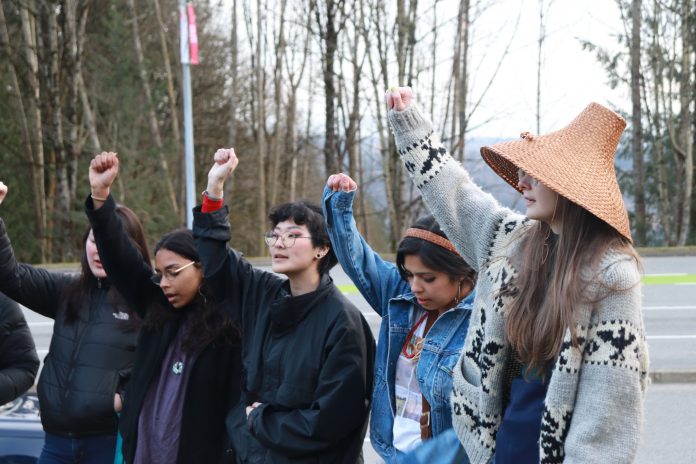
Following a rally in solidarity with the Wet’suwet’en Nation at Convocation Mall, a group of Indigenous and settler students marched down Burnaby Mountain to block part of the intersection at Gaglardi Way and University Drive East. SFU students joined others across the province and the country in the March 4 National Student Walkout. The road was blocked for over 40 minutes. 

Event organizers preceded the march down to Gaglardi by describing the itinerary to students and notifying the crowd that SFU Security was present. They were clear that students concerned for their safety should reach out to event organizers. 

“Know that you protect each other [ . . . ] Just do what you think is right for yourself and make sure that you are with a group,” said Baby Lee-Young, one of the event’s organizers who identified during the rally as a second-generation settler.

SFSS President Giovanni HoSang and one of the rally speakers Kayah, a student of the Tulalip and Tsleil-Waututh nations, led the group in chants as they walked down the mountain. Students carried signs ranging from the SFSS’s “In Solidarity” banner to homemade signs reading “No Pipeline on Stolen Land,” “The Métis Nation stands in solidarity with Wet’suwet’en,” and “Reconciliation is Dead.” Chants and singing continued for as long as the line was held. 

Traffic up and down Gaglardi Road was partially blocked. Some buses did stop and unload passengers (some of whom joined the line), and some vehicles coming up the mountain were redirected to University Drive. Masked protestors and students encouraged drivers to make U-turns back up the mountain and leave by following University Drive East down to the Burnaby Mountain Parkway. 

SFU Security was on the scene, as were TransLink transit supervisors. 

Student reactions at the intersection and on social media 

Content note: the following section includes threats of violence issued against students. Readers may skip to the next header to read about the event’s closure, including thoughts from Indigenous participants. 

Students were met with various reactions from passersby, including honks, bicycle bells ringing, heckling, and cheers. A masked protestor who helped students organize on the street and direct traffic away from the blocked street warned students that drivers may attempt to inch closer to them as a scare tactic. 

They later informed The Peak that one driver who refused to go back up the mountain threatened to drive through protestors. A cement truck driver honked for over 10 minutes before turning around to the sound of cheering and applause.  

In regards to the backlash, one leader reminded students that “Indigenous people do this every day!” before leading a chant: “What do we do when Indigenous rights are under attack?” / “Stand up, fight back!” 

Students who weren’t in attendance took to social media to spread the news and share their thoughts. A post in the Facebook group Must Knows for Courses at SFU had a range of comments, including one comment with over 30 Likes reading “Lol what a fucking joke. Anyone participating in this is a degenerate.” 

Another student, whose comment received over 100 Likes read: “Reminder that, just like the TransLink strike, the people who have the power to stop this are the government. If you are angry that infrastructure is being blocked, be angry at the government for not respecting the basic rights of [I]ndigenous peoples according to provincial, federal, and international law. The government is responsible for the inconvenience you’re incurring, not the protesters.”  

Some students also reacted with humour, including one who wrote “lol if it weren’t for the protest, one would think the 145 broke down again . . .” to which someone else replied “pick your poison I suppose!”     

Students on the SFU subreddit noted that the protest was an inconvenience to them. One user wrote: “I had to walk down the entire mountain to Burquitlam. Halfway through my trip I guess they started letting buses through so I watched around 10 pass me by on my journey. Great times.” 

Other users called for protesters to be arrested. One student wished that “it was legal to run them off the road” and another asked “Is it your fault if you run them over?” Another student, who insisted that the nature of protests was to disrupt, wrote “I’m sorry you were minorly inconvenienced, I guess.” 

In an email interview with The Peak, HoSang wrote that he was pleased with the turnout at both the rally and partial blockade. He noted that “The SFSS has received some complaints regarding some inconvenience that the partial blockade had caused and I appreciate their patience.”

He emphasized that an alternative pathway to exit the mountain was undisturbed by students, and added: “I would love to refer folks to our statement regarding actions in solidarity and why it is necessary for student unions to use our collective power to stand in solidarity with Wet’suwet’en.”

The SFSS issued a statement of solidarity back in early February and was one of the eight BC student societies to sign an additional statement on the day of the National Walkout. 

Two members of the RCMP arrived shortly after students walked off the street to reconvene on the grass on the side of the road. 

Closing the event 

Students gathered on a patch of grass off the road and an Indigenous student named April smudged the circle. She took the time to explain to The Peak what smudging was and why smudging the circle — something she had never done before — was important to her.

“I brought my medicines with me just in case,” April explained. “ . . . I smudged the circle with sage to allow space for positive energy because sage clears the negative air. These are my traditional teachings, they have been gifted to me, this eagle feather that I use, it was a gift to me, and it’s not something that’s done very casually. I thought that it was appropriate in this situation though.”  

April also shared her view of the event, which she considers a demand of human rights more than anything else. She reminded students to be critical of media at this time, and encouraged them to always refer back to sources from the front lines. 

“Being silent is being a bystander,” she said when encouraging students to be vocal on social media. “Make posts, put them on your story, and share correct information.” 

Saskia, a Heiltsuk student who spoke at the rally, addressed the group before students returned to Burnaby Mountain to go home. She expressed how unique the wave of solidarity for the Wet’suwet’en was.

“I’m hearing it from people who have been on the front lines their whole lives, that this is different [ . . . ] because the settler population is taking interest in our lives and our livelihoods and our water and our health, the health of our Earth. And we as Indigenous people are the custodians of this land.” 

Kayah called the experience beautiful.

“To stand shoulder to shoulder with each and every one of you was absolutely amazing,” she said. “Wet’suwet’en, and all the youth, and all the Indigenous people, and the future generations, and the land, and the water thank you all for being here, for standing up, and being strong.” 

If you’re not using RateMyProfessors by now, you should be

0
Find out definitively what other students think of your potential professor. Illustration: Maple Sukontasukkul/The Peak

By: Nicole Magas, Opinions Editor

We are over the hump of the semester, so to speak, which for most SFU students means it’s time for course selection. As we drag ourselves out of the carnage of midterm season, a new sort of panic sets it. Will the classes you want fill up before you get a seat? Is that last breadth course you need available in the summer? How do you know this one class or professor won’t absolutely murder your GPA?

That said, it is prime time in the semester for SFU memes to be replaced with questions about classes and professors on social media. And I understand it — fear of the unknown can be just as bad as suffering through a semester with a genuinely bad professor. However, social media sites like Facebook and Reddit aren’t the greatest places to go for information on professors or classes. Honestly, outside of asking friends who may have taken the same class, I rely almost exclusively on RateMyProfessors.com.

There are a number of reasons why RateMyProfessors is a superior source of information to social media — take specificity, for example. You can throw dozens of questions into the wind about this-or-that class  or Dr. So-and-so and not get any answers. This is because social media users aren’t going to these sites exclusively to answer your questions about professors. (Also apathy, but there’s not much we can do about that.) RateMyProfessors is all about rating professors, period, and it does so with clear and simple criteria that makes information easily understandable.

The structure of the site is another advantage. I often see questions on social media framed in terms of whether or not this-or-that class is difficult. However, questions like these aren’t likely to yield useful results. How a class is taught — even what material is taught in a class — is subject to change depending on which professor is teaching it. Since professors tend to rotate class schedules depending on availability, asking about the difficulty of a class in any given semester from students who have already taken it is going to give a mix of answers. RateMyProfessors, on the other hand, shows students which classes each professor has taught, so they can get the opinions of students who have been in the same situation.

And speaking of students like you, RateMyProfessors allows users to self-report what grades they received in the class. This is important because we’ve all heard a C-average student who spends more time at The Study than actually studying complaining about what awful professors they’ve had. Like, buddy, are they really that bad, or are you just a shitty student? By comparing reported grades to professor reviews, students can take reviews at the extreme ends of the grade bell curve with a grain of salt. Or, they can find reviews with grades that match their own average and read about those students’ experiences. 

Finally, let’s talk about anonymity. RateMyProfessors is completely anonymous. On the internet, this always comes with some risk of attracting bad actors, and I’m not going to pretend that this isn’t potentially the case here as well. However, I feel that the anonymity on RateMyProfessors actually helps more than hurts what the site is trying to do. This is because anonymity erases identity, which erases ego. No one is going to get internet points by trashing or exaggerating on RateMyProfessors. If people are salty about a professor, they usually leave their reasons for why. It’s not hard to compare those reviews with others to get a sense of which people are out to get a professor, and which ones genuinely want to leave their feedback. 

Of course, RateMyProfessors is only as good as the people who leave reviews, so I encourage everyone to rate their professors at the end of each semester to help fellow students out. But the way I see it, we spend hours filling out bubble sheets of confidential professor feedback in class every semester that students never get to see. RateMyProfessors actually provides a dedicated platform for students to share this valuable information amongst themselves.


7 Minute Majors: How to decide what to study

0
Photo courtesy of SFU

By: Meera Eragoda, Staff Writer

SFU’s Academic Advising Department held an event entitled 7 Minute Majors, on March 5 at 10:30 a.m. According to the event page, this event is for anyone who is unsure of what to major in, interested in exploring other program options, or would like to hear from directly from students in various programs.

The event took place in Saywell Hall and attendees were provided pizza and refreshments. A representative from each major was placed at a table and one to two attendees made their way to a table every seven minutes.

The majors represented were communication, health science, human geography, linguistics, political science, philosophy, resource and environmental management, economics, criminology, and actuarial science.

At each table, the representatives asked what the attendees’ majors were and, where possible, attempted to relate the major they were representing to the majors of the attendees. They covered what each program was like and why they were passionate about it, with the caveat that they were not allowed to talk about career opportunities that these majors led to.

Kaitlyn Brown, a first year student and undeclared major, found the event helpful. “I just wanted to get an idea of the possibilities that were out there to major in because I didn’t really know what was out there.” 

Prior to this event, she had taken a couple of linguistics courses and found herself very interested in it. As a result of this event, and getting to talk to the representative for linguistics, she believes she’s found her major. 

“It really helped me understand more about it so I found that really helpful because now I think I might major in it.”

A transfer student from Douglas College, Julia Brown, was at the event exploring minor options to complement her sociology major. When asked how she found the event, Brown responded, “Inspirational. It informs me that there’s a lot more major opportunities than what you think are there. You think of the big ones, english, psych, science, you don’t really think there’s all these facets you can get into. But this has now shown me that there are so many.” 

Brown also added, “It’s a tad overwhelming because there are so many options and you really have to take advantage of these resources, academic advisors, and career advisors because with so many opportunities you just have to narrow them down. In that sense, it might be overwhelming but it’s still really good.”

Leo Chen, the representative for actuarial science, told The Peak that he decided to volunteer because there are only about 12 people in the program this year. 

“Because of how small it is, I thought it would be nice to get the word out about our program because it may be something people might want to explore. But if [students] don’t know about it, how do they know to explore?”

Human Geography representative, Leo Dittmer said that he wanted to participate in this event because he changed his major since starting at SFU. 

“I think I understand what people might be thinking if they’re not sure what they want to go into. And then also because I think if I hadn’t taken a human geography course, I wouldn’t have any idea what it was like,” he said. “It’s one of those ones that unless somebody explains it to you, you have no idea what that is.”