Home Blog Page 442

STEM students complain that variables still won’t self-isolate

0
Photo: Antoine Dautry / Unsplash

By: Zach Siddiqui, Humour Editor

Classes have only been cancelled for a few days, but hundreds of SFU students have already emailed complaints to the school about possible COVID-19 exposure caused by math assignments.

“It’s like, every single equation, the X-variable refuses to isolate itself,” says Donny Madden, second year engineering. “They all expect me to isolate them. Yeah, um, not falling for that one.”

Like Madden, many STEM students have been reluctant to interact with their homework, and professors have been reluctant to assign it. “The selfishness is unreal,” says Misty Marter, a physics major in her third year: “Forget infection, how dare my assignments not complete themselves in these troubling times? Disrespectful.”

In the meantime, practicing “solution distancing” has quickly become the new normal. However, these measures might not stand up to these variables’ effervescent social lives, according to PHIL 105 student Crystal Thibault — who urges STEM majors to remember that other people have to do math too. 

“Just last week, I read in my textbook that Ben and Abby were planning to go out for dinner with friends. I needed to work out the statistics on how likely her peanut allergy was to kick in,” said Thibault. “And all I could think was, Abby, Ben, get back in the house, you brainless social climbers. Your Saturday night crew will still be around, shallow, and codependent eight months from now, I promise.”

No variables from any of SFU’s latest mathematics and computing science quizzes were available for comment — which should alarm you, considering that 90% of the country is supposed to be soft-quarantined and left with literally nothing to do but watch their email inboxes.

“I’m from Vancouver,” says Port Coquitlam resident

0
Photo: Kelsey Chance / Unsplash

By: Terrence Rivers, SFU Student

Yet another Port Coquitlam resident has been caught lying about their sordid roots, witnesses report. Summer Bowers, 23, has told at least 200 different people by now that she lives in Vancouver, BC, despite having spent her whole life in PoCo.

“I just love hanging out by the waterfront,” Bowers was overheard telling people at a house party on March 7. She failed to clarify that “waterfront” referred to the puddle of dirty water that sometimes forms outside Golds Gym Port Coquitlam. This puddle typically appears under two circumstances: when it rains, or when gym-goers cry after realizing they need to cancel their memberships because their ex from three years ago goes to Golds now, too.

It’s “too confusing” to explain to people where she’s really from, Bowers tells The Peak. 

“I mean, saying ‘Vancouver’ just helps people at SFU mentally locate you,” she explains. Bowers is in her fourth year studying geography and sociology.

“Sure, I could say something like, ‘Vancouver, but then you SkyTrain to a party you were never actually invited to . . . then you spend the night pretending like you never wanted to come in the first place . . . after that you let your taxi driver carry you back to your basement suite 40 minutes away, locating your territory based on how much you smell like a blitzed cow . . . turn right and then you’re at your destination.’ But that’s messy, and it doesn’t get you invited to the good raves.”

Many of Bowers’ friends follow her example in lying about their hometown, for a variety of reasons. While some have cited reasons like “dodging regional and class discrimination in the job market” and “building a recognizable brand,” the biggest common factor has been that people simply hate living in Port Coquitlam and can’t wait to leave, so much so that they won’t even wait until they actually leave. 

Bowers’s tequila buddy, Jet Daniels, concluded that he liked to draw heavily on social constructionism in his daily life. 

“My blog bio says I’m a Vancouver-based artist, and I’m, like, super social — at least in theory. So together my fans construct the reality that I live somewhere that isn’t 30 meters away from the Pickton Farm land,” said Daniels. 

“You’re a college paper, right? Maybe you should go to school, that way you’d know this.”

SFU Health & Counselling remains open with some changes to services

0
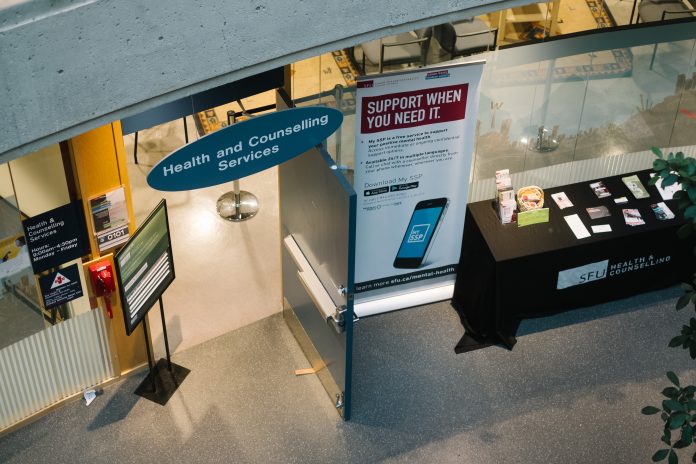
Health and Counselling is shifting some of its services, but remaining open during the outbreak.

By: Harvin Bhathal, News Writer

SFU Health & Counselling Services is staying open during the COVID-19 pandemic. The Peak spoke to Martin Mroz, Director of SFU Health & Counselling Services, via email about the department’s activities and how their operations have changed.

According to Mroz, many of the services will be transitioned to access via internet and/or telephone. That being said, Mroz added that Health & Counselling is affected by day-to-day decisions made by SFU’s administration and by various levels of government.

“Within the clinics, we have implemented our infectious disease protocols to allow more appropriate triage and examination,” stated Mroz. “We are changing certain procedures to try to maintain access for students while respecting the social distancing guidance. Also security practicalities.”

Mroz acknowledged that, “Students have concerns like everyone these days. So much uncertainty. They are worried about getting home, getting back, financ[es], immigration, their families, their health, their housing.” Health & Counselling will be making adjustments to continue supporting students in SFU residences, and other who are isolated from their usual support systems.

As explained by Mroz, Health & Counselling Services is asking students to call prior to arriving so as to ensure the hours, the available services, and to guarantee the safety of all involved. 

“We will endeavour to keep some services in-person as long as we can at the Burnaby site,” Mroz said.

Students who wish to book appointments can call Health & Counselling Services’ Burnaby office at (778) 782 4615, and the Vancouver office at (778) 782 5200. 

SFU services affected by the COVID-19 pandemic include:

Minimart to close its doors after this exam season as rent hikes

0

By: Paige Riding, News Writer

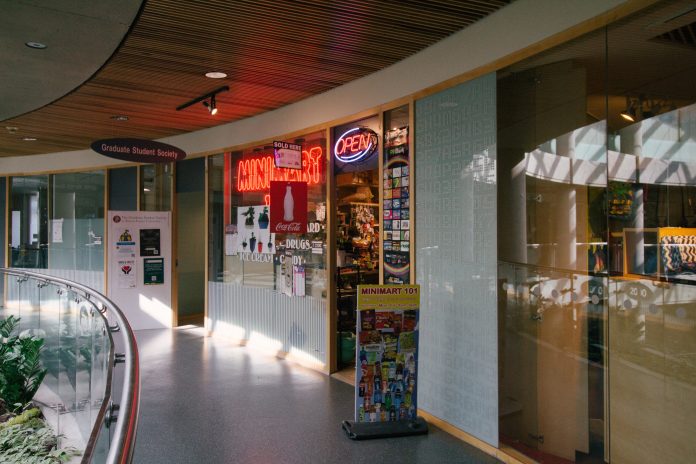
Minimart, the small convenience store in Maggie Benston Centre (MBC), will reportedly close its doors in the third week of March. Gideon Wong and Carrie Li, the married store owners, said in an interview with The Peak that their store would no longer be sustainable after that date due to a hike in rent under SFU’s new lease.

The SFSS is set to relinquish Minimart’s current space once the Student Union Building (SUB) opens. Wong explained how: “The SFSS, they told us, these space[s] will return to SFU. I said, ‘SFU and SFSS, I don’t know what’s the difference for me, you know?”

The difference for the store owners, Wong found out, is that not only will their current location be shut down and turned into something else entirely, but their other location option involves double the rent and almost doubled property taxes each month.

“Originally, they planned to put us in the new building there,” — meaning the new SUB — “but space is doubled . . . and they want double the rent, which we can’t afford. This small space for us is okay [ . . . ] but double the rent?

“And also, on top of that, they also put the property tax on us since last year or the year before. Here, we have to pay $2,700 property tax. I said, ‘this is not my property! Why should I have to pay for it?’”

The owners would pay $5,000 in property tax in the SUB, according to Wong’s recollection of the conversation with an SFSS representative about relocating.

The Peak also spoke with Marc Fontaine, the General Manager of Build SFU, about the closing of Minimart. Fontaine told The Peak that the SUB will have a convenience store, and that the owners of Minimart were interviewed for the opening; however, they did not meet the criteria. According to Fontaine, this criteria included: “experience operating a similar business, [a] plan for long-term business operation (minimum five years), and financial capacity to pay rent, operating costs, and tenant improvements.” 

Fontaine echoed what Wong had said about the larger space in the SUB. 

“The rent per square foot in the SUB is in line with fair market rent and is very similar to the current cost per square foot that we charge in the MBC,” he said. “However, the store in the SUB is larger than the store in MBC, so the monthly cost would have been higher.”

He added that the SFSS would be returning its space in MBC to SFU once the SUB opens.  “Therefore, in a few months, the SFSS will be unable to continue leasing these spaces to our tenants.” 

Wong noted that their previous success as a store came largely from their selection of Asian items that appealed to the large Asian student population on campus.

“Over half of [the goods] are Asian. From Japan, from Korea, from the Philippines, from Taiwan, from Hong Kong [ . . . ] and there are lots of Asian students here, so they are happy with it. So, that’s why we can survive.” Through selling such products and other Western snacks and essentials, the owners successfully paid off the small space’s rent. From ice cream bars to any chip of choice, from beloved Asian drinks to notebooks and pens, the Minimart offered students the items they wanted in a convenient location.

“If you give me a better rate, I may consider that,” Wong said about relocating to the SUB. 

Now that the couple face a hiked rent cost, the two explain that they plan to retire once their current location closes unless the offered rates change.

The Peak has reached out to SFU for comment on Minimart’s closing, and will update this story accordingly.


 

CONFESSIONALS: I’m a third-year English major with no clue what a thesis is

0
Illustration of a closed envelope, with the text, “Confessionals”
ILLUSTRATION: Marissa Ouyang /The Peak

By: Paige Riding, News Writer 

I have something to confess that I’m really upset about, SFU. I’m finishing up my third year under your roof and, in all honesty, I don’t really know how I got here in the first place. More specifically, I don’t know why I’m confused by my patronage to you. It’s not the melancholy brutalist design sending me into a spiral of disdain for English, the subject that I used to love; it’s not the soft weeping I hear all around me in the Bookstore from students purchasing $7 pens.

It’s you. You’ve confused and failed me.

How, you may ask? I don’t really know how to tell you. No, you don’t understand. I literally can’t. It’s impossible for me to explain my thoughts in a coherent manner to you. All I can really do is tip-toe around the ideas in hopes that my poor, vague examples spark understanding in you — and maybe even in myself.

After $13,000 of this English major, I’ve learned too many Shakespearean scenes to count. Macbeth’s complex ambitions swirl around my head, killing more original ideas in me than there were deaths from poison in Hamlet. I know accentual verse, syllabic verse, something about iambic pentameter, I think, maybe how to intricate quotes. I know colons from semicolons and I convulse when the incorrect “your” or “you’re” arrives in my Messenger inbox.

The real problem arises when I try to tie these all together to make an actual point.

Essays demand so many different aspects to keep the reader’s attention. I know all about varying paragraph and sentence lengths. There was a professor that explained to me how a paper is like a song: fluid in motion, driven by a point that should resonate with a speaker. How inspiring. “I want to do that one day!” I exclaimed to myself, heading into my upper division classes with a blank notebook and blank stare at the notes about essay structure on the board.

I know all the stops when it comes to the Modern Language Association’s formatting. I know that after writing my last name and page number in the top right corner, with all the necessary information on the first page, I’ve gotten half the paper done at that point. And shit if I don’t deserve a four-hour break after all that effort! 

You’re a fool if you don’t know that the period comes after the closed bracket when you provide the author and page numbers. You’re even worse if you use a second-person voice in your paper.

Again, I’m sure you’re asking me to get to the point already, aren’t you? This hurts me to confess as much as it pains you to scroll through this mountain of disgruntled garbage. Well, if I were to use alliteration, maybe I should call it a misplaced mess, a contradictory conundrum, a baffling beratement of bullshit. I digress — but what’s new?

I feel betrayed. Maybe it’s the professors expecting too much of me. Bold of them to assume I headed into their class with the faintest idea of what was expected of me. All these paragraphs later and you don’t even know what I’m talking about. If it’s any condolence, I don’t really know what my argument was in the first place, either.

You know, now that I think about it, I believe the English buffs called it a thesis? Not sure. Give me a few more years and maybe I’ll figure out what it is.

Minimart to close its doors after this exam season as rent hikes

0

By Paige Riding, News Writer

Minimart, the small convenience store in Maggie Benston Centre (MBC), will reportedly close its doors in the third week of March. Gideon Wong and Carrie Li, the married store owners, said in an interview with The Peak that their store would no longer be sustainable after that date due to a hike in rent under SFU’s new lease.

The SFSS is set to relinquish Minimart’s current space once the Student Union Building (SUB) opens. Wong explained how: “The SFSS, they told us, these space[s] will return to SFU. I said, ‘SFU and SFSS, I don’t know what’s the difference for me, you know?”

The difference for the store owners, Wong found out, is that not only will their current location be shut down and turned into something else entirely, but their other location option involves double the rent and almost doubled property taxes each month.

“Originally, they planned to put us in the new building there,” — meaning the new SUB — “but space is doubled . . . and they want double the rent, which we can’t afford. This small space for us is okay [ . . . ] but double the rent?

“And also, on top of that, they also put the property tax on us since last year or the year before. Here, we have to pay $2,700 property tax. I said, ‘this is not my property! Why should I have to pay for it?’”

The owners would pay $5,000 in property tax in the SUB, according to Wong’s recollection of the conversation with an SFSS representative about relocating.

The Peak also spoke with Marc Fontaine, the General Manager of Build SFU, about the closing of Minimart. Fontaine told The Peak that the SUB will have a convenience store, and that the owners of Minimart were interviewed for the opening; however, they did not meet the criteria. According to Fontaine, this criteria included: “experience operating a similar business, [a] plan for long-term business operation (minimum five years), and financial capacity to pay rent, operating costs, and tenant improvements.” 

Fontaine echoed what Wong had said about the larger space in the SUB. 

“The rent per square foot in the SUB is in line with fair market rent and is very similar to the current cost per square foot that we charge in the MBC,” he said. “However, the store in the SUB is larger than the store in MBC, so the monthly cost would have been higher.”

He added that the SFSS would be returning its space in MBC to SFU once the SUB opens.  “Therefore, in a few months, the SFSS will be unable to continue leasing these spaces to our tenants.” 

Wong noted that their previous success as a store came largely from their selection of Asian items that appealed to the large Asian student population on campus.

“Over half of [the goods] are Asian. From Japan, from Korea, from the Philippines, from Taiwan, from Hong Kong [ . . . ] and there are lots of Asian students here, so they are happy with it. So, that’s why we can survive.” Through selling such products and other Western snacks and essentials, the owners successfully paid off the small space’s rent. From ice cream bars to any chip of choice, from beloved Asian drinks to notebooks and pens, the Minimart offered students the items they wanted in a convenient location.

“If you give me a better rate, I may consider that,” Wong said about relocating to the SUB. 

Now that the couple face a hiked rent cost, the two explain that they plan to retire once their current location closes unless the offered rates change.

The Peak has reached out to SFU for comment on Minimart’s closing, and will update this story accordingly.

 

Your weekly SFU horoscopes: March 23–29

0
An illustration of a girl with long flowing hair. Astrological signs and stars shine around her.
ILLUSTRATION: Marissa Ouyang / The Peak

Written by Zach Siddiqui, Humour Editor

Aries — March 21–April 19

Your rage issues are back this week. Good thing social distancing means you can’t keep scapegoating your friends over your pointless personal problems!

Taurus — April 20–May 20

Stop playing the victim this week. We all know you weren’t going to leave your property anyway. 

Gemini — May 21–June 20

This week, psychic power will vibrate in your bones. You’re awakening your powers of retrocognition again . . . and feeling the darkness swallowing the hearts of your past employers. Don’t blame yourself. Blame Flappy Bird. 

Cancer — June 21–July 22

You’ll get in touch with your creative side this week. At night, you’ll have dreams where you are in the fifth terrace of Dante’s Purgatorio. Your greed will be punished by having you whisper a list of toilet paper brands into the dirt beneath you. 

Leo — July 23–August 22

Remind yourself this week: other people are real, not NPCs who exist to flesh out the backstory that gets you to pity your digital crush. 

Virgo — August 23–September 22

You are tired of credit card statements. If they really gave you any credit, then they would get off your back about those payments and trust in you. But that’s not the world you live in, and you need to take this week to wonder why that is.

Libra — September 23–October 22

Disappear into the sand this week. It’s better for biodegradation than a rich person’s bunker. And if there’s one thing your biology has learned to love after years of thinking mint chocolate chip ice cream actually tastes good, it’s being degraded.

Scorpio — October 23–November 21

You know what you’ve done. 

Sagittarius — November 22–December 21

The 20s have stopped roaring for you this week. We’ve arrived at the lying-on-the-couch, murmuring-sweet-nothings-about-Cha-Time 20s. And that’s OK. The Great Gatsby isn’t even a good book, anyway, so spend your quarantine reading worthwhile literature. Try the Headscratchers section of the Naruto anime page on TV Tropes.

Capricorn — December 22–January 19

Text your friends. Social relationships will set your soul free this week. As for your body and mind, try diazepam.

Aquarius — January 20–February 18

You deserve better this week. Why? Because you deserve to eventually know how it feels to have all your accomplishments ripped away from you. You’re a terrible person, but at least you’ll be able to redeem yourself down the line.

Pisces — February 19–March 20

People will be suspicious of you this week: did YOU spend your birthday wish on infecting the planet with coronavirus? The burden of education . . . the burden of being the only one to know that coronavirus has been around since November . . . and that therefore this is totally a Scorpio’s fault.

SFU to offer emergency financial aid to students affected by pandemic as SFSS lobbies government

0

By: Gurpreet Kambo, News Editor

According to a press release issued by the Simon Fraser Student Society (SFSS) on Friday March 20 and announcements on social media by SFSS president Giovanni HoSang, SFU’s Financial Aid and Awards (FAA) office will be making emergency funds available to students related to the outbreak of COVID-19. 

The press release states that the funding could be used for a plane ticket home for international students, for technology such as laptops, or for internet access after the university’s sudden transition to online classes March 13. An application form will be made available shortly on the FAA website in the next few days.

It further states that emergency funds are also available for Indigenous students, who should contact the Indigenous Student Centre at [email protected]

In an interview with The Peak, HoSang stated: “It’s something that’s very positive [ . . . ] the university is taking a step to make sure that we support international and Indigenous students, primarily, as well as all students on campus — especially those who are going through [an] urgent time in terms of financial situations.” 

The SFSS also put out a statement on March 20 that called on the provincial and federal governments to provide financial aid for international students. Specific calls included:

  1. “Financial aid and temporary relief plan for thousands of students losing their jobs
  2. Increased hours for international students working in sectors stated above (as Australia has done); to be allowed to work to support themselves
  3. Cancellation and reimbursement of medical insurance premiums
  4. Reentry for students who have left Canada for their spring break
  5. Reunification with immediate family members flying from outside Canada”

The statement also urged supporters to sign a petition on Change.org. The Government of Canada already announced support for Canadian citizens and permanent residents, but according to the petition, “hundreds of thousands of international students across Canada are left vulnerable.” As of press time, the petition had 2,376 signatures. 

Students who require emergency funds for other needs are advised to contact the Financial Aid and Awards office directly at [email protected] or by phone at (778)-782-6930.


Kennedy Falls: the jungle gym experience you’ve been waiting for

0
The view from below the falls — a glorious reward for those that complete the journey. — Kim Regala/The Peak

By: Kim Regala, Staff Writer

I’m an absolute sucker for a good mountain view, so I feel pretty lucky to live in a province like British Columbia that is known for mountain ranges and hikes that take you to high altitudes. However, if you’re not into the extreme altitude gain, nestled within the forests of the Lower Mainland are an abundance of waterfalls that offer hiking experiences that are just amazing as the mountain treks. 

This week, I explored the rugged backcountry trail located in North Vancouver that leads to Kennedy Falls. While the wise TLC once said, “Don’t go chasing waterfalls,” I definitely have to respectfully disagree with this advice after embarking on this incredible adventure.

Despite typically doing a bit of research prior to most of my hikes, I came into this one with very little knowledge of what was to come. When I heard that it was an intermediate, five-hour, 10-kilometre trip, I immediately imagined it to be similar to the Stawamus Chief hike, which is described in comparable terms. Anticipating the significant altitude gain that I experienced on the Chief, I prepared myself for a treacherous, uphill battle. To my surprise, though, the entire trip was on fairly level ground. In fact, the total elevation gain felt very close to zero, and not once did I feel exhausted or even feel the need for a water break (though it is important to stay hydrated on hikes).

Although the difficulty level didn’t come from steep inclinations, the ruggedness of the path did prove to be quite challenging. With lots of fallen trees, grown out roots, slippery rocks, and tiny waterfalls that you have to cross over, there were plenty of obstacles that kept me on my toes. At times, I had to go from balancing on wobbly rocks to climbing over and under tree trunks. I actually found these moments to be the most enjoyable portions of the trek as they offered a different challenge than just walking uphill for a great length of time.

It was definitely easy to get lost during some parts of the hike, as there was a lot of deadfall that led you away from the marked path. I often found myself venturing off to unmarked paths because of this and the distracting beauty of my surroundings. Thankfully, the trail was marked very well with bright orange markers that guide you through the entire trip. As long as you keep an observant eye, there shouldn’t be any time during the hike that you can’t easily find your way back to the marked trail. While I don’t recommend straying too far from the marked path, I can say that getting a little bit lost in the forest definitely added to the experience’s thrill and adventure.

A little over an hour into the hike is when you come across the famous Big Cedar. This enormous tree is rumoured to be 600 years old, and with its wide trunk measured at a diameter of four metres, it isn’t hard to spot. This not-so-little gem really added to the charm of the forest, giving hikers a little taste of relatively ancient history.

In less than two hours, I reached the end of the trail, which revealed a gorgeous view of Kennedy Falls. Catching sight of the waterfall, I remember feeling completely mesmerized and lost in the moment. It was certainly a different kind of hiking experience getting to admire an awe-inspiring view from below instead of above. The viewpoint offered plenty of angles to choose from for that picture-perfect Instagram shot.

All in all, to make the most of this awesome hiking experience, I suggest bringing a companion and a few snacks, and allotting a significant amount of time for simply taking in the amazing scenery that is unlike most other hikes in the area. 

Course audits are the secret little gem of relaxed higher learning

0
Be a beacon of calm in your class this summer and audit a course Illustration: Alex Vanderput

By: Nicole Magas, Opinions Editor

Gather ‘round, ye sweet summer children, and listen well. For I am old — a fourth year — and at the end of my undergrad life. Before I pass onto the great beyond of post-grad life, I wish to pass on some wisdom to you all: consider taking a course audit before you graduate.

What’s that? You don’t know what a course audit is? I’m not surprised. Course audits are an under-utlilized, underpromoted, and underappreciated service offered at SFU, and frankly, I think that should change. An audit course is a course taken without credit. This means that the course won’t count toward your GPA or your degree requirements. Seems a bit pointless to take an audit class then, huh? If that’s what you’re thinking, you’re dead wrong. There are lots of reasons to take an audit class. Here are my favourites:

  1. No GPA, no worries. Have you ever felt that you just weren’t learning anything with all that stress to complete weekly assignments on top of all your other courses? Course audits are a perfect way to relax and let the information settle in your brain at your own pace. Because course audits don’t count toward your GPA, all assignments and exams are optional. This allows students the chance to engage with topics and materials in a completely different, stress-free way. I personally found I enjoyed my course audit a lot more than my regular classes because I was able to concentrate on interactions between core concepts without having to stress over how much I needed to memorize for an exam. It made for a much more engaging and enjoyable learning process, and in the end, I got so much more out of that class than most of my other, regular classes. Speaking of GPAs . . . 
  2. Step out of your comfort zone. Let’s face it, by the time most students have entered their third year, they’re fairly entrenched in the ways of thinking specific to their home department. We just get comfortable with the way things are written, what expectations are common across professors, and the kinds of knowledge and discourses that are most valued. But isn’t university supposed to be about engaging with new ideas and disciplines outside of our comfort zones? What if we want to try something radically different but are afraid to tank our GPA in the process? The beauty of course audits is that even if you have no experience in a certain discipline, the course audit itself is risk-free. It can’t affect your GPA because you’ve already agreed not to take it for credit. This gives students a low-cost way to try new things outside of what they’re familiar with, without having to worry that the attempt might destroy their academic or career plans. 
  3. Course audits are cost-effective. I know what you’re all thinking: all this sounds pretty sweet, but I’m not going to pay full price for a class that I’m not going to get credit for. Honestly, I wouldn’t either. Fear not! Course audits actually cost half of the regular fee for the course. This averages to about $75 per unit. While this may understandably still be too costly for some students to make course audits worth it, it’s at least a reduction in the usual price it would cost to gain the same knowledge. 
  4. Save those open-scholarship credits. OK, I fully acknowledge that this isn’t going to apply to everyone, but it is something to keep in mind if you’re amongst the students who receive automatic open scholarships as a neat little consequence of keeping that GPA up. Unfortunately, open scholarships have a limit, and that limit is 10% of your program’s required credits. This means that if, for whatever reason, you’re projected to go over the usual 120 credits required to graduate, you’re going to lose those open scholarships once you hit 131 credits. This makes it a lot less attractive for students who rely on scholarships to take a chance on a course purely for interest or pleasure. But since course audits don’t count for credit, you can take as many course audits as you want and never have them eat up precious open scholarship credits. Of course, they also won’t count in the calculation of how much you receive from an open scholarship, but it’s a fair trade-off. 
  5. Keep that learning train going. Course audits aren’t limited to just current SFU students. Anyone in the community can apply to audit a course through the Special Audit program. This means that long after you’ve shrugged the shackles of SFU off and you start feeling that itch to learn again, you can apply to audit a course and soak in the learning without the stress of studying, exams, or paper writing. However, Special Audit courses are limited to lectures only. Tutorials and labs are still the special privilege of undergrad students.

All this said, I want to leave all you young’uns with a bit of a disclaimer. The above information is based on my personal experience and what limited information I could scratch out of the internet. Before auditing a course, you should definitely talk to your academic advisor.

Detailed information on course audits is almost impossible to find online, which is a shame. The university absolutely should be promoting more diverse learning streams like course audits to its students. The Peak reached out to SFU for clarification on some course audit details, but as of time of publication, has yet to hear back.