Home Blog Page 433

SFU researcher co-leads international team that examines the impact of COVID-19 on gender

0
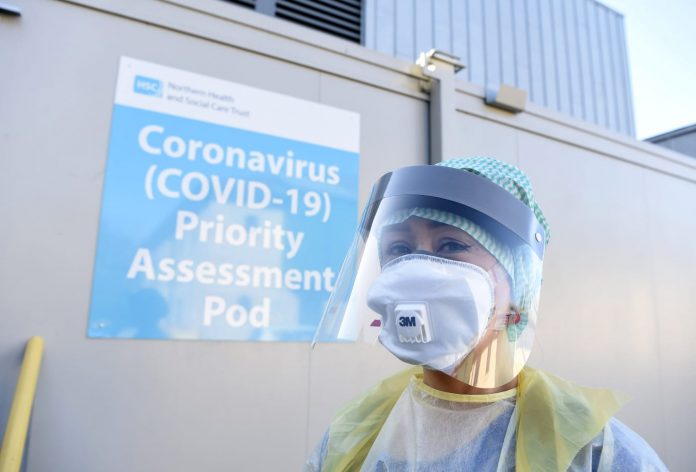
Photo: Michael Cooper / Getty Images

Written by: Devana Petrovic, Staff Writer

SFU researcher and department of Health Sciences faculty member, Dr. Julia Smith, is co-leading an international research project that analyzes the gendered impacts of infectious disease outbreaks like COVID-19. 

Dr. Smith spoke with The Peak about her team’s research. 

“The project aims to better understand [ . . . ] how the COVID response is affecting different genders differently,” explained Dr. Smith.

She clarified that they are taking an intersectional approach; even though the overarching lens that is applied is a gendered lens, they are recognizing that there are other social determinants that affect health equity, including race, ethnicity, religion, and class. She also noted that they are trying to include all genders in relation to their relevant contexts, including non-binary. 

“We’re aiming to inform policy makers about the gender impacts of the response and make sure they have up-to-date information [ . . . ] We’re getting requests from policy makers for more information and they want to understand what’s happening.” 

She hopes that this will lead them towards an in-depth analysis of the implemented policies to identify the gaps in these policies. 

The project includes four case study countries: Canada, China, Hong Kong, and the United Kingdom. First, the team conducted a gendered matrix for each country. The matrix uses “document analysis from the media, from organizations, from the government,” and attempts to gather data on the gendered impacts of COVID-19.  The team then analyzes this data through a matrix tool they developed. 

Dr. Smith and her team also conducted interviews with various groups of people who they identified as being the most affected by the pandemic, including healthcare workers, those working in long-term care facilities, and foreign domestic workers. According to Dr. Smith, these interviews are necessary because in addition to quantitative research, “it’s really important to fully understand people’s experiences.”

The final part of the research process is policy analysis, where the findings from the matrix and the interviews will be applied in understanding the biggest challenges faced by people, and then compared to already developed policies in order to identify gaps. 

“It’s absolutely shocking how little has been written on this topic,” Dr. Smith said with regard to the gendered impacts of infectious disease outbreaks. She emphasized how gender dynamics are often overlooked, which complicates after-the-fact research initiatives. “It’s been interesting to be able to do the research in real time, we can analyze the policies in real time.” 

Dr. Smith can see her research going beyond COVID-19 and applying to future pandemics. 

“Documenting gender differences and [its] impacts is very important, but it’s only the first step. You don’t only want to write about how bad things are, you want to try and inform policies to make them better.” 

“I miss my sisters,” says treasurer who can’t defraud her sorority anymore

0
Photo courtesy of Valerie Elash via Unsplash

By: Zach Siddiqui, Humour Editor

BURNABY, BC — Gracie O’Brien, a fourth year economics student at SFU, reported in several of her group chats this week that she was really missing her sorority sisters in Iota Omicron Upsilon (IOU). As IOU’s treasurer, O’Brien has defrauded the Greek life organization of over $30,000 during her tenure, and regrets that she does not get to see her sisters and their wads of cash anymore on account of COVID-19.

“Sisters nourish the soul, heal the heart, pay the mortgage,” O’Brien sighs. “I hate being away from them.”

IOU has not met for Greek life activities since mid-March, and is unlikely to operate through the summer. During the day, O’Brien staves off her loneliness with mimosas and old photos of her fellow IOU girls. Her favourite pictures are the ones printed on their stolen drivers’ licenses. 

“I’m maybe diversifying into identity theft,” she explains. “It’s really important to run side hustles and get creative since it’s total plague vibes right now.”

Surprisingly, none of O’Brien’s sisters have raised any objections to where their dues are going, shrugging it off as “solidarity always comes first.”

“I would literally die for my sisters,” says Aria Coleson, O’Brien’s little, “and shame on anyone who wouldn’t.” Coleson donated her fourth piece of pancreas to O’Brien on Friday in hopes of finally receiving a decorated paddle from her in the mail. 

O’Brien’s actions have been disavowed by other Canadian sororities, including Chi Rho Alpha (better known as the CRA). Despite weathering some criticism, though, O’Brien feels that her past embezzlement is justified. She has characterized her gains as “only fair compensation” for the critical work she has done for IOU over the years. 

“Look, I love these girls. And at the end of the day, they’re not paying for membership in a timeless, respected organization; they’re paying for friends. And I’m such a good friend, just look at my Snap Score.

“So honestly? As far as being defrauded by me goes? Love that for them,” she concluded.

Anti-lockdown protests ignore social responsibility for egotistical “freedom”

0
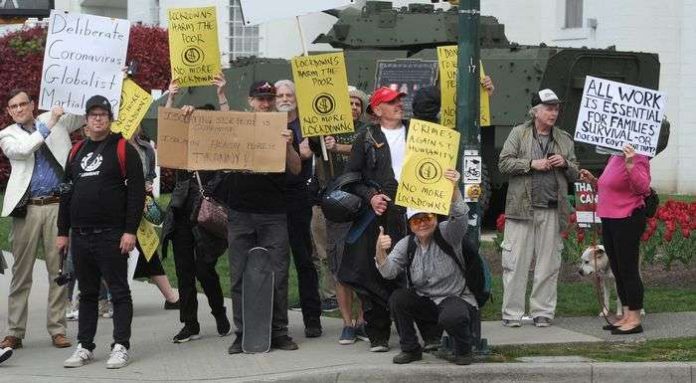
Protestors in Vancouver put themselves at risk by ignoring social distancing guidelines. Photo: Nick Procaylo / PNG

By: Michelle Young, Staff Writer

The COVID-19 pandemic has transformed many bustling routines into dull days. People have been advised to stay home, avoid non-essential travel to “flatten the curve,” and ensure COVID-19 doesn’t overwhelm the healthcare system. While a small minority, some in BC feel that these measurements are oppressive. In April and May, these protestors marched the streets of Vancouver, flailing their signs and screeching for BC to reopen. This is a dangerous and egocentric response to the COVID-19 outbreak and the public health measures meant to keep people safe.

While the anti-lockdown protests may be a result of mere ignorance or misunderstanding, they have tangible, negative effects on the containment of coronavirus. Not only do they fail to consider the capacity of our healthcare system and endanger the health of others by ignoring social distancing recommendations, these protests are also providing a platform that actively encourages others to do the same. 

Studies have shown that coordination amongst individuals is necessary for quarantine restrictions to take effect. While the Vancouver protest in mid-April consisted of only a few people, a video of it received over 21,000 likes on Twitter. This gives a voice to those who are already skeptical of the COVID-19 pandemic and increases confirmation bias — a rejection of any information that disagrees with the preconceived notion that COVID-19 isn’t a threat. The resultant inability to gather information objectively normalizes doubt in health officials and creates further unrest about the perceived “oppressive” measures of the government. 

Concerns about government overreach during these times aren’t necessarily unfounded. However, the belief that legitimate quarantine restrictions for public safety violates citizens’ rights to freedom is a fundamental misunderstanding of how our society functions. 

“Freedom” doesn’t entail simply doing as one pleases. All societies need to have limitations on freedom for them to successfully operate — and there will always be a component of responsibility attached to democratic freedom. That includes the responsibility of caring for others’ health and wellbeing in times of crisis. The anti-lockdown protestors have simply decided that their needs and “rights” are above others’ rights to wellbeing. This fundamentally disregards the fact that the virus has no concept of “freedom” or “rights,” and can infect and possibly kill anyone within transmission distance.

Unfortunately, many will simply believe what they want to believe. However, that shouldn’t stop the rest of us from doing our due diligence in better understanding the current situation surrounding COVID-19. As a society, it is necessary for individuals to act according to pandemic response guidelines because we are all responsible for the health of one another. Protesting the quarantine restrictions is not only counter productive, it’s dangerous. The rhetoric used by protestors not only causes harm — it can cost lives. 


Fake friendships to reopen on “optional, part-time basis”

0
Photo courtesy of Helena Lopes via Unsplash

By: Zach Siddiqui, Humour Editor

Forget the economy: it’s time to bring back an even more arbitrary part of our lives, authorities say. The British Columbian government has recommended that throughout the province, fake friendships begin reopening, possibly as early as next week. 

“It’s time to get back to business as usual,” says BC Premier Don Morgan.

Friends are advised to alternate which types of fake friends they visit at a time. For example, provincial health officer Dr. Connie Penry recommends reserving Mondays for friends you use as human selfie sticks, Thursdays for annoying friends of friends who always show up to things uninvited, and Saturdays, of course, for the boys. 

“So the mantra goes: uglier faces, bigger spaces.”

However, Morgan emphasized that the return to fake friendships is strictly optional.

“It is your choice to be children and waste time with shallow and unfulling acquaintances now that these forced relationships are reopening,” the premier stressed. 

For those who do choose to reopen, all fake friendships must have safety measures in place, Penry says. Options include wearing masks in public, whether they be medical or psychological.

“Me wearing a social mask and you wearing a social mask helps us keep our total boredom to ourselves.”

Above all, physical distancing is king, Penry says. So the mantra goes: uglier faces, bigger spaces.

When physical distancing isn’t feasible, Penry recommends alternate measures. She suggests telling these people how little you enjoy their company, instead of farming gossip off of their drama and circulating it for social capital.

Peak Speaks Podcast – SFU Food Tier List

0

Listen here: https://pod.link/1464226637

The Plague Players offer a virtual take on A Midsummer Night’s Dream

0
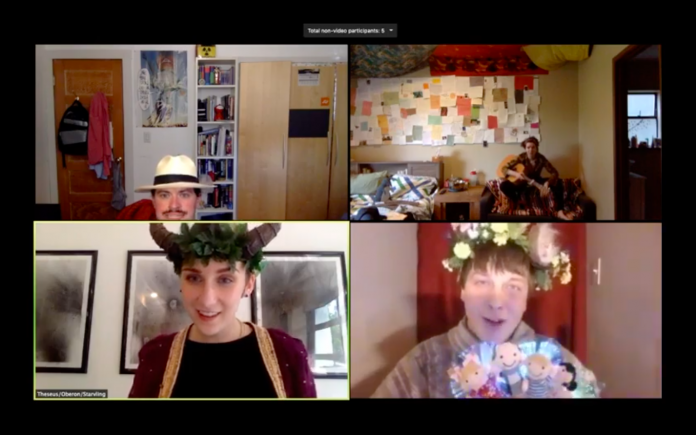
The cast of Plague Players perform a live-read of a Midsummer Nights Dream. PHOTO: Courtesy of Devana Petrovic.

By: Devana Petrovic, Staff Writer

Having spent the past couple of months at home, living in my pyjama pants, I think it’s safe to say that I haven’t been out much. So, it was considerably refreshing to tune into the Plague Players’ enhanced live-read of Shakespeare’s A Midsummer Night’s Dream, even if that meant experiencing it from my living room couch.  

As someone with a theatre background, who’s attended an uncomfortable amount of script readings, I am familiar with how unengaging and difficult it can be to follow. In addition to the barriers of digitizing theatre, this was something I had in mind before attending. But to my surprise, the theatre troupe did an excellent job of bringing the essence and entertainment of the bard to a computer screen, despite the significant limitations of virtual theatre.  

The production was streamed to viewers through YouTube, but the actors used a live-screen recording of a zoom meeting as their “stage”, where they alternated appearing on the screen to provide a classical theatre format. The troupe read the entire unadapted version of A Midsummer Night’s Dream, which ended up being close to a three hour reading and had a five minute intermission for authenticity. 

Directed by Joelle Wyminga, the digital production’s cast consisted of only six actors, which if you’re familiar with the play’s storyline would generally be an insufficient number. However, the Plague Players heroically worked around this by casting multiple roles per actor. 

Since this was an at-home production and technically an enhanced reading, many traditional aspects of live theatre were not applicable (e.g. stage setup and production). Nonetheless, the actors took it upon themselves to create their own costumes and props that served as a form of character identification and differentiation, which was particularly helpful due to the actors playing more than one character. It was interesting to see the variety in what the actors had managed to create purely with materials they had at home. Some characters had more detailed and crafty costume pieces that could easily pass as stage appropriate, while others used clothing articles, such as socks for a hat — very innovative. As a viewer it truly enhanced my ability to follow along and added a sense of anticipation, similar to attending a play in-person. 

As expected, with the live reading being reliant on the technological circumstances of both the cast and viewers, there were a couple blips in the streaming (e.g. actors transitioning into the Zoom call and minor camera failures), but the cast was very persistent and professional, not allowing any minor mishaps to affect their performance and it did not take away from the rest of the play. 

The Plague Players delivered an interesting and fun virtual experience, that was certainly different than any in-person theatre production. As a virtual experience, it did not include some of the major aspects that are expected with in-person theatre — the benefits of sound, lighting, and a stage setup. However, having the actors create such effects in their individual homes made for an entirely different type of production. 

The beauty of attending live theatre in-person comes with the unspoken cast and audience connection, which was impossible to achieve through a livestream performance. This, however, does not exclude the possibility of a new form of audience engagement, which is ultimately much more reliant on the attractiveness of homemade props, costumes, and other contributions made by individual actors. 

Even amidst the current chaos of the world, the Plague Players’ theatre adaptation proves that new forms of artistic expression are capable of emerging, despite the limitations of social isolation.

Antwerp’s Mode Museum is highly regarded but translates poorly to 2D

0
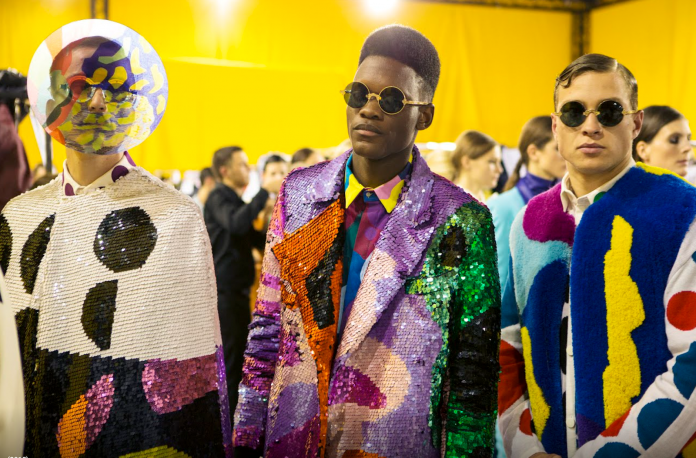
Mode Gallery's exhibit Der Klub der wilden Maler by Marie-Sophie Beinke. PHOTO: Courtesy of Boy Kortekaas.

By: Rebeka Roga, SFU Student

Growing up, I always dreamt of being a fashion designer or an artist, so for years I’d been wanting to visit the Mode Museum (MoMu), the fashion museum in Antwerp, Belgium. Out of many fashion museums, MoMu has been particularly alluring because Antwerp is a highly acknowledged site for fashion, and the exhibits at MoMu are known for displaying pieces of fashion history acquired from all over the world. Like many art galleries and museums across the world, due to COVID-19, MoMu recently switched to only hosting online tours of their exhibits. I finally had the chance to tour the gallery. 

Wearing my favorite sweatpants, I made my way to MoMu. Instead of by airplane and cab, I arrived at their online exhibit via Google search. As I was about to click the button to begin the virtual tour, I realized in no other circumstance would I be okay with myself wearing spaghetti-stained sweatpants to MoMu. I gazed past my embarrassing choice in pants and noticed my footwear was not up to snuff either. Seeing my lime green fuzzy socks, I imagined there would probably be some sort of “no shoes, no service” rule at MoMu’s front door — but no akin rule exists upon entering my bedroom, and I kept my outfit on.

On MoMu’s website, I saw 16 different online exhibits by various fashion designers, or about moments in fashion history, iconized in small dimensions on my screen. They did not look inviting. With no shoes on my feet, or arrows on the ground to follow, I didn’t even know where to begin the tour. Suddenly I felt less excited to view it. Nevertheless, I began scrolling through the different exhibits

All of the collections still looked beautiful and it was apparent how impressive the designs were. The eighth section, Der Klub der wilden Maler stood out the most. It contained a fashion line with saturated colors and pieces detailed with sequins or fuzz. It occurred to me that bright colors and obvious textures are not always the elements I gravitate towards the most, but they were what was most visible through a two-dimensional screen. This realization became discouraging, as it confirmed the disparity between the online and in-person experience of viewing an art gallery. 

By not viewing the collections in person, MoMu was not as impactful as hoped for. I would have liked to hear the whispers of the other fashion lovers as they admired different pieces, and to see their outfits too. I had always thought visiting MoMu would be the heart of my day, as it was one of the most inviting aspects of visiting Antwerp. I would have put on my favourite collared shirt, most loved pleated pants, and a funky pair of derby shoes; an ensemble that is not as telling of my lack of prowess or sophistication, as my loungewear. 

When previously fantasizing about my first encounter with MoMu, I imagined how the excitement of being in the space would create memories that would be stored in a unique section in my brain. Unfortunately, the tour felt mildly entertaining but far less fulfilling than I had anticipated. The exhibits were pleasing to look at and the collection size was impressive. It’s obvious that the features of the clothing are intricate, but those details were hard to understand in a two dimensional format. 

I had been enchanted by the idea of MoMu for over a decade, so finding myself disappointed by an online gallery tour rather than an in person tour should have been expected. I’m still thankful that I was able to visit the Mode Museum from afar. It’s great that MoMu and so many museums have made their collections accessible to a greater number of people. However, it does not fully replace the experience of an in-person gallery tour. I hope to revisit MoMu in person, as the experience I had was literally, too far from the real thing.

Songs to lay on the grass to

0
"Monday Music" in giant yellow block letters with a red background
Monday Music: your weekly themed playlist. Image courtesy of The Peak.

All of the Monday Music for the Summer 2020 semester is now available on The Peak’s Spotify Playlist, Monday Music Summer 2020. Don’t forget to follow thepeaksfu on Spotify to listen more easily!

By: Kim Regala, Peak Associate

There’s nothing I love more than lying down on some freshly cut grass, eyes closed with a gentle wind blowing past my sun-kissed skin. With social distancing, and the warmer season upon us, there’s never been a better time to take advantage of a good ol’ outdoor afternoon nap. Whether it’s soaking up the sun at a park, your backyard, or falling asleep on some random patch of grass, here are some tunes for winding down on a warm and breezy day.

“Under the Sun” by Ditty

Courtesy of Pagal Haina.

Being a musician is already cool on its own, but Aditi Veena (aka Ditty) takes it to the next level by also being an urban ecologist. Having spent years in Sri Lanka as a conservation architect, Ditty’s passion for the environment manifests in her own music. As a singer-songwriter, she takes inspiration from the sounds of nature and creates what I can only describe as poetry through sound. Fittingly, her album is titled Poetry Ceylon, and each track embodies an earthy tone. Every song is definitely worth checking out, but “Under the Sun” in particular is a full body experience. Listening to it is like being transported into the middle of the forest — the smell of soil and cedar trees filling your senses. At first, only the light strumming of an acoustic guitar accompanies Ditty’s voice, but it’s enough to feel like a breath of fresh air. Just when you think that it can’t get any better, the sounds of birds enter halfway through and linger on in the background. The final minute of the song ends with only the sound of nature, leaving us in a meditative state of calm.

“I Don’t Mind” by Twerps

Courtesy of Merge Records.

Don’t be fooled by the album title, Range Anxiety, because this song is far from making you feel anxious. Twerps is made up of four Australian musicians who have been making noisy pop and indie-alternative music for over a decade now. Over the years, they’ve dabbled in various styles and genres, but one thing that has never changed are the warm melodies they create through their combination of cool strumming and drumming patterns. “I Don’t Mind” starts off slow with a single guitar played at a steady tempo. Gradually, the bass and drums kick in, with a few other guitar riffs added here and there. While the layering of all these rhythms make for colourful listening, it’s Martin Frawley’s vocals that really set the mood of this song. He sings as if he has just awoken from a long napping session — the words coming out of his mouth in a groggy and effortless way. Even as the tempo quickens, his delivery will leave you staring blankly at the clouds and the trees up above. And trust me, based on personal experience, you won’t ever want to leave.

“These Days” by Nico

Courtesy of UMG Recordings, Inc.

The first time I heard this song was in Wes Anderson’s film The Royal Tenenbaums. It’s the scene when Margot and Richie — two siblings who share a forbidden love — meet again for the first time after years of having been apart. Set aside the awkward incestuous narrative (it’s a cute love story, I swear), and you’ve got this sweet slow-motion moment between them, as Nico’s “These Days” plays in the background. This scene might have a slight influence on why everytime I listen to the song, time literally feels like it’s been slowed down. However, it’s mostly the gentle plucking of the guitar paired with Nico’s deep and soothing voice that creates this feeling. Add the beautiful string quartet into the mix and the song puts you almost in a state of trance, where every bit of worry floats away. It’s the perfect tune to put on for when you’re in need of a long breather, and will keep you daydreaming from dawn until dusk.

If you like these, also check out these tunes on The Peak’s Monday Music Summer 2020 playlist:

“Deathcab” by Ditty

“Golden Hour” by Matthew Pinder

“Carnation” by Yumi Zouma


Your weekly SFU horoscopes: May 25–31

0
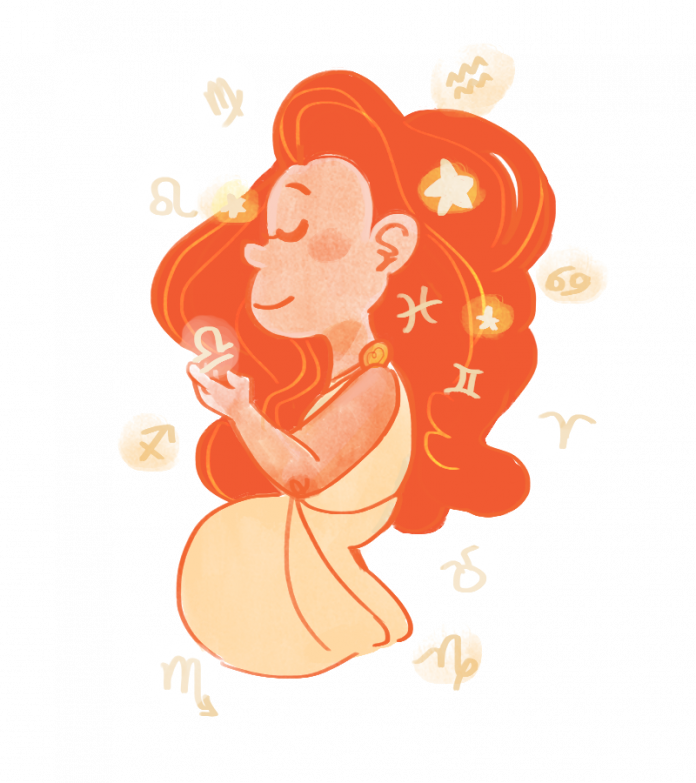
An illustration of a girl with long flowing hair. Astrological signs and stars shine around her.
ILLUSTRATION: Marissa Ouyang / The Peak

By: Paige Riding, News Writer

Aries: You’re en route to make a better comeback than all the ice cream trucks randomly reappearing. Like a phoenix, you continue rising from the ashes. But why did you set that ice cream truck and yourself on fire in the first place?

Taurus: The idiom “benefit of the doubt” has a greater meaning to you this week. You’ll doubt everything around you — the government, the weird celebrities making singing compilations about sticking together while quarantined in their multi-million dollar mansions, and whether or not your family can smell your fourth-day hair.

Gemini: It must be hard for you now that the transit system has limited its services. No, not because getting around may be harder. You just depended on the Compass part of the Compass Card to guide your confused ass through life.

Cancer: Get in touch with nature this week. Go for a walk around your neighbourhood, taking photos of the cats watching out the window. If that doesn’t spark inspiration, consider keeping your door open to let the bears inside your home and heart.

Leo: Did you know that a method to fight off tears is to perform mathematical equations mentally? It takes up much of your mental capacities so your brain is too distracted. Try that next time the professor responds to your answer over Zoom with, “Hmm, not quite. Anyone else?”

Virgo: Listening to “lofi hip hop radio – beats to relax/study to,” opening your textbook, and then going on your phone is not studying. You also don’t need to send a photo of the corner of your laptop and textbook to your friends and say that this semester is already killing you. The only thing dying here is your phone’s battery.

Libra: This week poses challenges for your relationships now that Venus is moving into retrograde. Basically, the planet of love is— Oh, look at you ignoring this conversation because it doesn’t line up with your interests again. Will the planet moving backwards harm your relationships, or will that mentality do it for you?

Scorpio: How has it been chasing that same feeling of bliss as what you would feel when your elementary school science teacher would wheel in the TV for the class? It’s hard thinking about simpler times. Mind you, it’s also hard seeing all the fun things Bill Nye the Science Guy talked about now written formally in a $300 textbook.

Sagittarius: Here’s some comforting news for you this week. You’ll finally catch the attention of the neighbourhood cutie. It’ll be when you run through the fence when you finally get sick of being confined for too long. But mind the rose bushes.

Capricorn: For the hundredth time, Yoda said “do or do not, there is no try” not “do or do not, or just cry.” You’re getting your tears all over your already wrinkled sweatpants. And these are part of your nice quarantine fit! Come on.

Aquarius: This week, if you find yourself having trouble falling asleep, try heading to YouTube and playing the first video that pops up. Whether it’s calming ocean waves or a Final Fantasy VII Remake walkthrough, you’ll be too busy really listening to your own internal screaming to pay much attention.

Pisces: This is a week of learning more about yourself. For starters, try recalling your old internet username. There’s truly something poetic and self-realizing about ~dreamlaughdance98~ and the history the two of you share.

Opening of Student Union Building again delayed to Fall 2020 semester

0
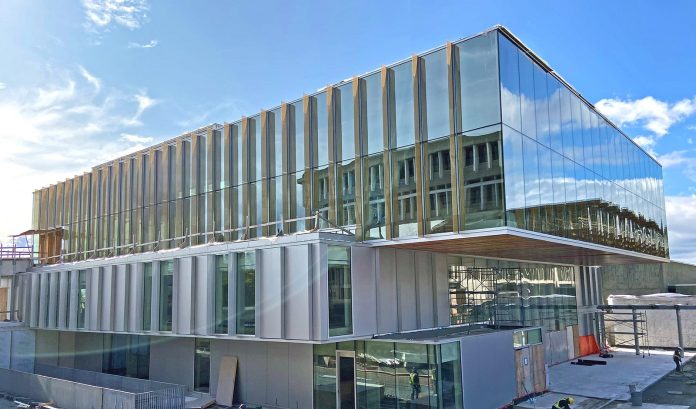
Photo courtesy of RDH Building Science

Written by: Paige Riding, News Writer

The long-anticipated Student Union Building (SUB) has once again been delayed, with the current projected opening date pushed to Fall 2020. 

Initially slated to open in Fall 2018, then pushed to Summer 2019 due to weather and staffing issues, and then again delayed to March 2020, the SUB finds its projected opening date again set back. 

The $55-million dollar project started in June 2016 and, almost four years later, still stands incomplete near Convocation Mall on the Burnaby campus. 

The Peak reached out to the Build SFU General Manager Marc Fontaine over email for an update on the SUB’s construction. Fontaine noted that construction continues during the pandemic with some additional challenges. 

Some of the setbacks they have faced so far include the inability of some tradespeople to attend the site, a reduced amount of consultants on the site, and delays in the shipments of some international materials. Despite this, Fontaine said that most work on the building continues as usual. 

As such, Fontaine expects to see the building go through the City of Burnaby’s inspection process and be handed over to the Simon Fraser Student Society by the end of July this year. Once this occurs, some construction in the summer and fall will allow the crew to finish the 111,000-sq-ft project. When asked about procedures during the pandemic, Fontaine explained new measures implemented for the safety of workers.

“New safety precautions were put in place by the general contractor for people working in the building. These precautions include opening washrooms for hand washing and implementing requirements for physical distancing. Additionally, consultants have reduced the frequency of their attendance on site and are instead attending meetings by telephone,” said Fontaine.

“We will be regularly assessing the opening of the building and will be strictly adhering to the BC Provincial Health Officer’s orders. With the university’s recent announcement that most classes will take place remotely for the fall semester, we are expecting that the building will be open during the daytime with students following all physical distancing requirements that are in place at that time.”