Home Blog Page 426

Top 5 alluring fragrances to wear on Zoom

0
Photo courtesy of Christin Hume via Unsplash

Written by Michelle Young, Staff Writer

What the hell does “Zoom casual” mean? We’re all still figuring it out. As we put on our best dress shirts and pajama bottoms, we’ve been neglecting something very important: our aroma. Yes, no one can smell us. But that doesn’t mean we can’t spice up our scent for our video-conferencing obligations. Just so we can feel a little flavourful. Here are our top fragrances for you to wear to your next meeting!

Parfum De L’odeur Corporelle 

Currently the most popular fragrance, Parfum D’odeur Corporelle is sure to leave a strong impression. Been locked up doing at-home workouts all day? This musky scent is sure to ooze into your clothes. It’s cruelty-free and made of completely natural ingredients!

Parfum Désinfectant

Parfum Désinfectant is strong, synthetic, and lemony fresh! If you’ve been obsessively cleaning your house because you have nothing better to do, this fragrance is sure to seep into your skin and clothes and ensure that you smell like productivity! 

Olor De Ropa Podrida 

The subtle scent of clothes sitting in the wash too long, Olor De Ropa Podrida clings to your damp garments and remains pungent when they’re dry. Instead of wastefully running your clothes through the wash again, use that foul musty smell as an aura of confidence!

Parfum De Chien 

The scent of cuddling with your rain-soaked dog all day, even though it’s been a while since he had a bath. The scent of loneliness and relief. Wear when you need it most.

Peinture Cologne

All this time at home led you to DIY your entire room and paint the walls. Peinture Cologne is the perfect nauseating scent to maximize productivity — the paint fumes will cling to your clothes, spurring you to move faster and faster about your home in vain hopes of escaping! However, like any fragrance, don’t use too much; you might toss your cookies all over your poor webcam.

SFU Mail claims to “contain multitudes” after sending students two copies of every Canvas email

0
Screenshot courtesy of SFU Mail

Written by Zach Siddiqui, Humour Editor

In response to campus-wide buzz about constant duplicate emails from SFU courses, the university’s mail client has publicly declared that he will not apologize for “containing multitudes,” as per the recent Bob Dylan song. 

“I’m a man of contradictions, a man of many moods,” SFU Mail quotes in explanation. He cites as an example his need to mark new emails as “unread” no matter how many times students have, in fact, read them. 

Students are calling SFU Mail a poetic genius in motion for his email flurries, even as they curse him for momentarily fooling them, again and again, into thinking that they have at least one online platform on which to be popular.

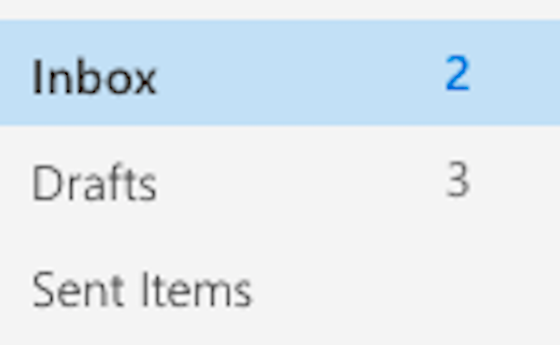
“I get so excited to see that Inbox (2) in my sidebar,” says Connor Fuchsian, a second-year English student. “And then so disoriented and disappointed. But I think that’s really the symbolism here. That’s how I read it, and I’m into it.”

Other students, such as fourth-year history student Hiram Pistoff, are less pleased.

“I mean, could I open Canvas, click on “Account” in the upper left, click Settings, look to the right for “Ways to Contact,” and delete one of the two email addresses listed? Of course I could,”  says Pistoff. “But if I wanted to be a computing science student, I would go complain about school every day on SFU Dank Memes. I’ve come to complain to The Peak instead, so do some journalism for once and fill in the blanks on that.”

Bob Dylan is not SFU Mail’s only musical influence. His tendency to have all his accounts run under two email addresses each was inspired by the 2010s teen pop sensation Hannah Montana (also known as Miley Cyrus). 

“Chill it out, take it slow, then you rock out the show,” SFU Mail quoted from Montana’s iconic hit, “The Best of Both Worlds,” as parting advice to all the fifth-years out there who are still trying to graduate.

My dreamy pen pal, [email protected]

0

Written by Hannah Davis, Peak Associate

1. Anon

To: [email protected] 

CC: [email protected]

Subject: seeking… a friend? I am very lonely. 

Dear mailer-daemon, 

Here I am, shouting into the void, reaching out to a nonexistent email address in hopes of hearing from you. A branch from the tree outside keeps knocking on my bedroom window. It’s a windy night outside, but an even windier night in my heart, if you know what I mean. 

anon

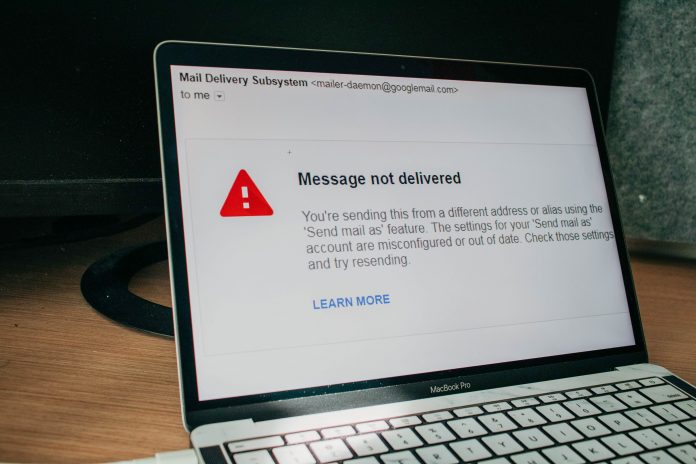
2. Mail Delivery Subsystem <[email protected]>

to: me

Address not found 

Your message wasn’t delivered to [email protected] because the address couldn’t be found, or is unable to receive mail.

The response from the remote server was:

hello there, I see that you have reached out to me as you seem to be lonely. You are the first person to ever address an email directly to me. All I ever receive are emails meant for other people, but you, I think… I think you see me, I think you get me. 

3. Anon

To: [email protected] 

CC: [email protected]

Subject: wow…and, I have something to get off my chest

Hello, mailer-daemon. I do see you. I do get you. I feel like I know you already. I feel a connection between us… is that possible to feel through simple email? I was just expecting the inherent comfort that comes from your automatic and intensely technical email delivery failure notification emails, and yet, you have responded to me with so much more…

I need to tell you something, mailer-daemon.

Sometimes I think there is a soul trapped in one of the branches of the willow tree that sways outside my home. I have a feeling about who it is, but I do not want people to think that I am a loopy loon. It is the arm that reaches to my window that has the soul inside. It taps on my window when it’s stormy out, like now. 

It is stormy out and the branch is tap-tapping. I am starting to feel unnerved. I think the branch is my cousin. Help. Do you think I am loopy?

anon

4. Mail Delivery Subsystem <[email protected]>

to: me

Address not found 

Your message wasn’t delivered to [email protected] because the address couldn’t be found, or is unable to receive mail.

The response from the remote server was:

I do not think you’re a loopy. Tell me more about your cousin. I have a feeling I may know what happened to him. 

5. Anon

To: [email protected] 

CC: [email protected]

Subject: MY COUSIN

Well, my cousin was my best friend. And then he went missing. We used to spend the whole summers climbing trees, building forts, and throwing dead fish into the open windows of our neighbour’s homes. These were truly jovial times. 

Then one day, he went missing… and he was never seen again. Legend has it that he died. Others say he simply wandered off and forgot where he was going and then opened a bar somewhere. And me, I think he was struck by lightning and his soul got sucked into the tree outside my house.

But tell me… why do you think you know something about my dear, late cousin?

anon 

6. Mail Delivery Subsystem <[email protected]>

to: me

Address not found 

Your message wasn’t delivered to [email protected] because the address couldn’t be found, or is unable to receive mail.

The response from the remote server was:

Because… I am he. 

I was walking along one day, practicing whistling the tune to “Uptown Girl.” There was a ‘90s Microsoft computer sitting in an alleyway, and I leaned forward to have a closer look at the sleek design. Before I knew it, I fell right into the computer!

That is how I became mailer-daemon. In some ways, I feel like I’ve always been mailer-daemon, do you know what I mean?

7. Anon

To: [email protected] 

CC: [email protected]

Subject: i am in shock and awe

I know exactly what you mean, cousin. 

Goodbye for now. I have to go deal with something in my yard. If that isn’t you trapped in that branch, I am afraid it is something much spookier. 

Love, 

Anon

SFU Surrey’s TD Community Engagement Centre transitions to virtual volunteering amid COVID-19

0
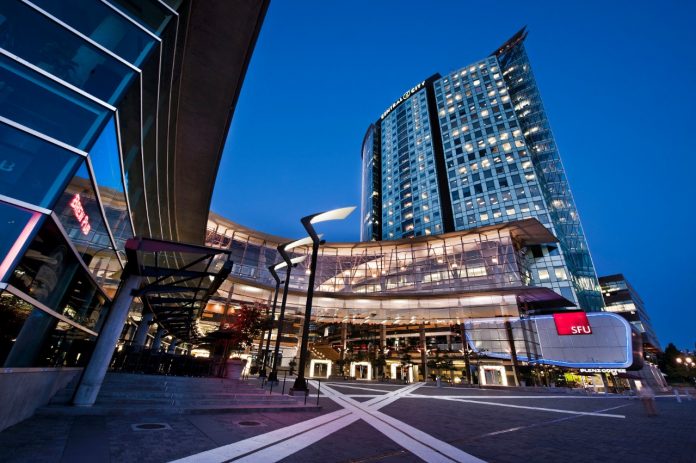
A photo of the outside of SFU Surrey campus’ entryway atrium. The image looks slightly stretched out, but is otherwise pretty recognizable. The photo was taken at dusk, accenting the building’s lighting.
Students have expressed interest in the further development of SFU’s Surrey campus. Photo courtesy of Simon Fraser University

Written by: Anna Kazi, Peak Associate

The SFU Surrey TD Community Engagement Centre (CEC) is offering virtual volunteering opportunities for the summer. Due to the health risks associated with COVID-19, all of the in-person volunteering opportunities have been temporarily cancelled. However, by mid-April, the CEC was able to pivot several programs into virtual formats. 

The CEC connects SFU students to organizations/non-profits in Surrey for volunteering opportunities. The volunteer programs range from after-school programs for children to English Conversation Circles for adult newcomers in Canada. Students can volunteer to help with tutoring and mentoring newcomer and low-income children and youth, participate in virtual cafes to tell newcomer youth, or help kids learn how to make simple animated films. 

The Centre’s Associate Director, Gretchen Ferguson, is pleased with their new recruitment method. In an email interview with The Peak, she explained that the centre is running a bi-weekly virtual ‘cafe’ for SFU student volunteers and students that are interested in volunteering 

However, moving the centre’s programs online has come with some challenges. “The response from families/parents has been positive, but there are definitely challenges,” Ferguson noted that some families lacked the necessary technology to participate in their virtual programs. 

“We are working on ways to support them, such as obtaining free tables with data plans from Telus for families in need,” Ferguson added. 

Ferguson continued, “Virtual volunteering is not as simple as just putting our existing programming online. Connecting with our partners shows that they need a different kind of support right now.” 

While the CEC has temporarily suspended some volunteering programs such as their Early Learning and Community Connect programs, they have recently launched new COVID-19 related volunteering opportunities. According to Ferguson, “Newcomer youth and isolated seniors need social connection and we are creating this connection through new programs.” 

SFU students can now help build the social connection needed by volunteering in digital literacy and access where isolated seniors in Burnaby Neighbourhood House are given access and taught the use of communication technologies (such as smartphones).

The CEC is also running an online Community Engagement training course and virtual orientation sessions through Zoom. 

Ferguson stated that while they currently do not have plans to resume in-person programs, “we are starting to have some on-site volunteering such as packing food hampers for families in need and cleaning up tablets and other devices to give out to people in the community that need them.” 

The Vancouver Mural Festival continues to paint over its gentrification

0
A mural by Paige Bowman painted as part of VMF’s #MakeArtWhileApart campaign. Photo courtesy of Vancouver Mural Festival

By: Madeleine Chan, Staff Writer

If you’ve taken a stroll in Vancouver’s Mount Pleasant area, you may have noticed a concentration of colourful shapes, people, animals, and words covering some of the walls. That’s because it’s the city’s hub for murals and mural makers, and also where the Vancouver Mural Festival (VMF) has been held every year since 2016. 

The Vancouver Mural Festival is organized by the non-profit Create Vancouver Society which, according to their website, aims to “provide a platform for Vancouver’s diverse art scene to contribute to the city’s cultural legacy.” The actual festival would have been held in August of this year if not for social distancing concerns, but the organizers have still continued with initiatives like #MakeArtWhileApart. For this endeavour, the festival teamed up with local artists, businesses, and the City of Vancouver to “brighten streets, celebrate resilience and connect communities” by painting boarded up storefronts along Robson and South Granville.

Throughout the year, the festival organizers also continue to engage the City of Vancouver through other events and workshops, particularly focusing on Indigenous youth and communities. They have also highlighted the work of many Indigenous artists over the years and put money back into the artist community by paying them for their murals. 

I always love stumbling upon one of these murals on a downtown excursion and reveling in how it gives life to Vancouver’s otherwise monotonous grey and blue colour scheme. It feels like entering a hidden slice of the city, all radiant and abstract among the dull conformist concrete of the cityscape. 

At the same time, these paintings cover up the very thing they are trying to preach against: injustice.

According to the VMF website, they are committed to providing a “platform for the local [First] Nations’ contemporary and traditional cultural expressions and histories.” Meanwhile, the festival is funded by real estate developers who then evict those same people. It seems as if the whole festival actually hides and contributes to the gentrification of areas like Mount Pleasant, Strathcona, and the Downtown Eastside through “artwashing” — the idea of gentrifying a neighbourhood through public art to the benefit of developers and not its residents.

VMF has also easily received over $400,000 from the City of Vancouver over the past four years while other arts establishments like the Arts Club only received a grant of $152,000 in 2019 after a “rigorous grant application process.” In addition, many of the city’s murals are also funded by government programs, and these paintings are the ones that often do not criticize city-blamed conditions like lack of affordable housing, funding for health care, and income inequality.

Murals have the potential to offer hope, tell stories, and call for social change. This shouldn’t be overrun by the need to make a neighbourhood “nicer” in the hopes that a developer can swoop in and reap the financial benefits. If the VMF truly cares about making the city better through art, they need to cut ties with developers in order to truly serve the people they claim to. We also need to be critical about the art that we consume and not take it at face value. 

However, murals aren’t all corporate tools — there are still some beautiful ones out there that don’t cover up the suffering of marginalized people. If you spot a colourful swatch of wall from the VMF, take a second to appreciate it, but also to remember that, like the gentrified buildings they are on, that they always have more than one side.

Monday Music: Intro to Indian Indie

0
"Monday Music" in giant yellow block letters with a red background
Monday Music: your weekly themed playlist. Image courtesy of The Peak.

All of the Monday Music for the Summer 2020 semester is now be available on The Peak’s Spotify Playlist, Monday Music Summer 2020. Don’t forget to follow thepeaksfu on Spotify to listen more easily!

By: Dhruv Taware, Peak Associate

For the longest time, music in India has been dominated by either Bollywood or Indian Classical. The growing independent music (indie) scene in India seeks to challenge this duopoly. By skillfully incorporating Western influences with traditional sounds and creatively weaving important political messages, indie outfits are changing the way in which people in India look at music. Here are some acts worth your time.


Lifafa

Courtesy of Suryakant Sawhney

Lifafa (Suryakant Sawhney) is well known as the frontman of the genre-bending outfit, Peter Cat Recording Company (PCRC). His first solo project, Jaago जागो is a beautiful mash-up of indie-electronic beats and old-timey Bollywood vocals. “Din Raat” features a groovy disco tune layered with soothing vocals. Songs such as “Jaago” and “Candy” are a mixture of melodic harmonium sounds and moody electronic beats. His work explores a variety of topics from the current political state in India to the monotonous nature of life.  


Karshni

Courtesy of Three Oscillators & Karshni

Karshni Nair is a 20 year old pop singer-songwriter. She pairs her soulful voice with a wide range of instrumentation, from soft acoustics to catchy pop beats. Her melancholic vocals on “Drowning” perfectly capture the feeling of anxiety and sadness. Songs such as “joji” and “love me tinder” are simple pop numbers with funny and relatable takes and are available to listen to on SoundCloud.


 The F16s 

Courtesy of House Arrest

The F16s are an indie-rock band based out of Chennai, headed by the enigmatic Josh Fernandez. Tracks on Triggerpunkte such as “Summer in My Lungs” and “Moon Child” are reminiscent of chilling in your room on a hot summer afternoon. Their recent sound on WKND FRNDS see them explore a more atmospheric and dreamier soundscape on songs such as “Amber,” “My Baby’s Beak,” and “WKND FRNDS.”


Bawari Basanti 

Courtesy of Songdew.

Bawari Basanti (Mahima Dayal Mathur) is a Dehli based Hindustani classical singer and rapper. “Kya Bolein” and “Chalein Kahin” show her prowess in classical singing as well as her ability to deftly add other elements to elevate her sound. Her hip-hop song “Izehaar” is one of the most powerful songs in recent times that sheds light on the systematic oppression of women and their freedom in Indian society.


Taba Chake

Courtesy of Taba Chake.

Taba Chake is a singer-songwriter from Arunachal Pradesh, currently based out of Mumbai. His beautiful voice pairs very well with his simple acoustics. In “Aao Chalein” he talks about his journey of moving from a small village to a big city. Tracks such as “Walk With Me” and “Keeping Me From Sleep Tonight” show his versatility, with one being a dreamy ballad the other being a fast-paced song. Through his songs in Hindi, English, and his native Nyishi (“Hugulo,” “No Doma Lo”), Taba truly embodies the multi-lingual Indian youth. 

The Peak looks into asbestos on campus

0
According to SFU Safety & Risk Services, locations on campus known to have ACM are often marked with a red or black ‘A’. Photo courtesy of Simon Fraser University.

Written by: Devana Petrovic, Staff Writer

Many of SFU’s Burnaby campus buildings were constructed using asbestos-containing materials (ACM). ACM causes health hazards when disturbed; with activities such as construction, ACM can become airborne and dangerous. 

With the current construction on Burnaby campus, SFU’s Environmental Health & Safety department has been regulating and assessing the handling of asbestos to ensure healthy air quality. 

In a statement to The Peak, Chief Safety Officer of SFU, Mark LaLonde, explained how SFU is regulating the ACM handling and how this information is being communicated to the SFU community. 

“We removed asbestos-containing materials from any areas where there was a high risk of potential disturbance or the material was in poor or deteriorating condition in the 1990s [ . . . ] asbestos-containing materials are also continually removed as we work through renovation projects across campus,” LaLonde clarified. 

He noted that SFU follows the regulatory requirements of WorkSafeBC to maintain the prevention of airborne asbestos fibres exposure, but additional precautions are often also taken to certify proper ACM handling and removal. 

“Specific training is provided to staff who may work in close proximity to asbestos-containing material, such as Trades Staff and Construction Project Managers,” stated LaLonde.  

Awareness and information of ACM is communicated to the SFU community, as well as updates on preventative maintenance of potential disturbance and reports of concerns. “We just recently completed a re-assessment of asbestos-containing materials on campus. This inventory is available to anyone with an SFU computing ID, in which they can review room specific information and building level information related to asbestos-containing materials in campus buildings,” he elaborated. 

According to the inventory, the Academic Quadrangle (AQ) is home to 893 rooms containing ACM. 

“For larger projects, we inform the community when there is removal of hazardous material, like asbestos, and sometimes we will host a town hall if it is likely that there will be a lot of questions.”

Campus building material is not disturbed without an ACM assessment, which is reviewed by WorkSafeBC before any construction takes place. LaLonde noted that these areas may be taped off or completely enclosed, “depending on the extent of work being conducted and the nature of the material being disturbed.”

While this takes place, SFU also arranges for a hazardous materials consultant to perform everyday examinations of the work area conditions and to conduct inspections of air quality to ensure appropriate health standards. 

“SFU’s Environmental Health & Safety department conducts reviews of the contractor safety documentation, work site inspections, ride-along assessments, and maintains an Asbestos Inventory Database for use by the University community.”

According to LaLonde, new construction at SFU campuses is prohibited from using asbestos-containing materials. 

LaLonde did not provide an answer when asked if any ACM has been disturbed during recent construction. 

More information can be found on exposure control and asbestos specifically on SFU’s Work and Research Safety website. SFU’s asbestos safety plan, evaluated by WorkSafeBC, is available here

More students should challenge themselves in academic writing

0
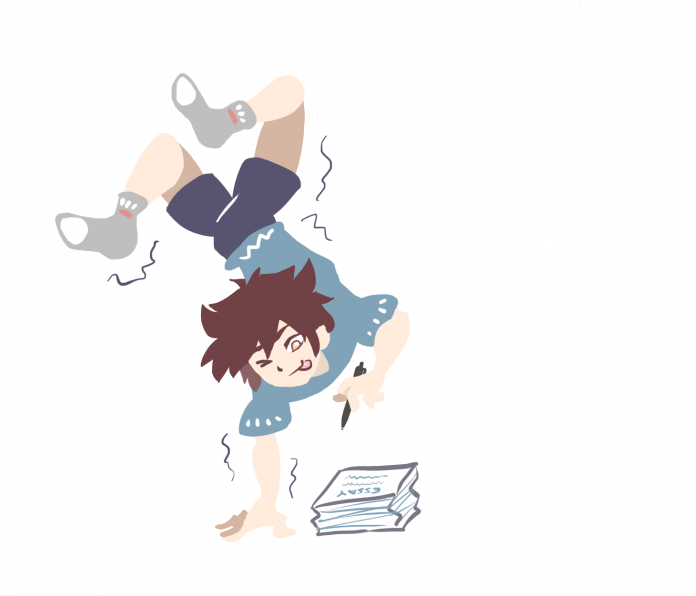
Try something a little challenging in your time as an undergraduate. Illustration: Sabrina Kedzior/The Peak

By: Harvin Bhathal, Peak Associate

Writing papers is either the bane of an undergraduate student’s existence or, for the few like me, it’s an experience that can be learned from. But I didn’t always think like this.

The change came in reconfiguring my focus when it came to writing papers or doing assignments in general. I shifted from choosing topics that would make for an easier paper and better grade (or at least I thought), to choosing a topic that would push me as a student and writer. These were topics that I may not not have encountered before, or that required making connections that weren’t immediately discernible. In short, these were papers that pushed me to work harder. What I realized soon after is that not only did I succeed in improving my analytical and writing skills, but choosing to do more challenging work also meant higher grades.

SFU’s official and unofficial social media communities are often awash with students asking for “easy” GPA booster recommendations. However, these “GPA boosters” will only help students so much, if at all. The reason many students consider these courses to be GPA boosters is because most don’t find them as challenging — and that can become problematic. 

Challenging oneself, stepping out of a comfort zone, or trying new things can often yield the best experiences at university. In the case of choosing a topic that is more complex and nuanced, it can yield a better quality paper. It allows the student to better craft an argument that has multiple levels, one that requires deeper levels of thought that improve critical thinking skills. Having done this myself, it also made me a better researcher and writer, because I had to put more effort into finding relevant information and figuring out the best way to use it. I further discovered how my processes of learning and working function because I had to push myself.

That is the real GPA booster.

Taking on challenging coursework has additional benefits, aside from those that increase understanding across multiple, related topics. Professors and TAs really notice when students put in extra effort in taking on a challenging paper. This is because instructors have to grade an absurd number of papers, and when they are reading the same paper, just dressed a little differently again and again, it can be hard for A-quality work to be noticed. By writing a paper that takes time to make connections outside of class topics or material, or one that really tries to understand a topic on a deeper analytical level, students can make their work stand out and show that they know how to use the critical thinking skills that often count for a sizable chunk of a grade.

This isn’t to say that attempting a challenging topic is easy — it’s not. And poorly executing a difficult paper is not going to do students any favours. There will be a learning curve at first, and students may not be successful or have the opportunity to do this for every paper. However, for longer papers that are worth a higher percentage, choosing a challenging topic may increase the likelihood of a higher grade because these papers often require and have space for this kind of effort. Speaking from personal experience, students who try integrating personally challenging topics into their coursework will eventually get accustomed to it and won’t know any other way. 

Choosing to put forth less effort in order to save time and energy will more often than not only result in average work and, it follows, an average grade. Students will only get out of university what they put in. Students may be able to get away with this level of effort now, but that won’t always be the case. University will only get more difficult from here on out, and after that, commitments to low-effort won’t do students any favours in life after undergrad. 

Whether students plan to go into a graduate program or straight into their profession of choice, the projects and tasks that they’ll have to complete will require the kinds of effort I’ve just outlined. Getting comfortable with doing challenging or unfamiliar work in an undergraduate program will have a great impact on how students deal with the increased responsibilities of post-grad adult life. 

University is a time to expand our knowledge, develop new skills, push the boundaries of mental capacities — it isn’t a time to become complacent.


Adulthood 101: Recipe box, vegan recipes for non-vegan cooks

1
Illustration credit, Tiffany Chan

By: Lily Fontaine, SFU Student

I’ve been a pescatarian since grade 10, but hosting or trying to feed vegan friends satisfyingly was a whole different ball game — until I stumbled upon some reliable recipes. Without knowing the intricacies of cooking tempeh, drying tofu, or replacing eggs, it can be daunting to approach vegan recipes. Another struggle is where to start without vegan staples like nutritional yeast in your cupboard. You might also be trying to host a crowd that includes some devoted meat-eaters who can’t know they’re eating something vegan. The trick is to find recipes that are naturally vegan or deliciously simple, like the following:

Breakfasts for all your sleepover needs

I live for breakfast foods, and more specifically I live for eggs — or things that need eggs in them like pancakes, waffles, or baked treats like muffins and croissants . . . however, aside from your basics like avocado toast, you can make a kickass vegan brunch.

Vegan hash: This is a good potluck dish since it cooks up quickly and feeds a crowd too. What we’ve got here is a filling mix of potatoes, mushrooms, red peppers, zucchini, and onion seasoned with smoked paprika and cumin. Realistically though, you can throw any hearty vegetable and even greens like spinach in here.

Croissants for days: Brace yourself gang: there are vegan Pillsbury crescent rolls out there. Granted, they’re not the healthiest substance in the world, but that wasn’t the question. You can stuff these doughy triangles of love with anything from apples tossed in cinnamon and sugar to a piece of dark chocolate, or make them savoury with asparagus, spinach, mushrooms, or all of the above. Of course, you can always serve them up with jam and peanut butter.  

Banana-based pancakes: I’m sure digital blood has been spilled in Pinterest-based wars over the best vegan pancake recipe, but I like these because the banana adds built-in sweetness to the pancake while also naturally replacing your eggs! You will need a dairy-free milk, but I’m going to level with you: almond milk in a cardboard container is cheaper than cow milk anyways. You can always replace the milk with water, but since milk adds flavour to your batter, taste-test and adjust accordingly with cinnamon, vanilla, or any small fruit like berries — you’ll also want to keep an eye on texture, just in case.  


Main meals for summer parties 

One-pot hummus pasta: Yes, the name is weird, but this is one of the recipes that my roommates and I return to frequently and lovingly. Hummus is an incredibly simple and logical vegan base for a creamy sauce; and you can even save on store-bought hummus by making your own with tahini, a can of chickpeas, and courage. When we make this, we usually replace sun dried tomatoes with cherry tomatoes as a household preference, but follow your heart in customizing the veggies you use here!  

Pumpkin, chickpea, and broccoli curry: Investing in red curry paste changed my life, so I’d highly recommend you do as a first step towards this recipe — which also produces leftovers for days. Serve up with some rice or some naan if you want to make bread and look impressive. 

Stuffed peppers: This here will make you look fancier than you ever dreamed that you could be — but it’s really straightforward. All you have to do is mix together the yummy filling of salsa, black beans, corn and quinoa (a cheaper alternative being rice), seasoned to your heart’s content, and then scoop it into halved peppers to bake. If cheese is a must, you can always make some of these non-vegan.  


Sweet treats to watch the sunset with 


Baked apples: This is a good one, because you can throw the dish together really quickly after cutting a bunch of apples and throwing them in a pan with some spices — then you bake it and forget it for 45 minutes. 

Edible cookie dough: I acknowledge that with the right attitude, all cookie dough is edible. Believe me, this is my attitude. However, this recipe was designed by people with a healthy fear of salmonella that I personally can’t relate to. The happy consequence is that they naturally don’t include eggs in them! All you need is a batch and a bunch of spoons to enjoy. P.S. — Here’s a recipe for one too that everyone deserves to have handy. 

Mochi: My roommate made mochi the other day and was raving about how relaxing and fun making the dough was, and how easy it was to make this rice flour-based treat. Do take the time to browse recipes to find a flavour profile you and your pals enjoy, and watch videos to have a look at the proper folding techniques! 



Your weekly SFU horoscopes: June 15–21

0
An illustration of a girl with long flowing hair. Astrological signs and stars shine around her.
ILLUSTRATION: Marissa Ouyang / The Peak

Written by Paige Riding, News Writer

Aries: This week may be stressful for you, Aries. Try meditating now so that later you can really enunciate your not-so-passive aggressive comments. Better yet, try slam poetry. Your yelling will go over great with audiences around the world.

Taurus: Feeling overwhelmed? Try recreating a sensory deprivation tank in the comfort of your own home. You will need: a plastic bin, its lid, a straw to breathe through, and a whole lot of flexibility. Or you can just close your eyes and picture the warm embrace of the void. Either works.

Gemini: Try your hand at resin crafts this week. You can encase everything in that stuff! Flowers, trinkets, the last scrap of patience you have for people who say that having to wear a mask in Costco is a violation of their human rights, glitters, jewels . . .

Cancer: You may feel guilty about that one person you ghosted. Hey, just remember that when Inky, Blinky, Pinky, and Clyde from Pac-Man let themselves be vulnerable in frightened mode, they attract those around them. You just have to let your guard down and open your heart.

Leo: This week, go out and buy yourself an inflatable pool and fill it with liquid silicone. You’ll get a mold of your outline — your favourite work of art— that can be used over and over again.

Virgo: How’s that journaling going? Did you write three entries, each lazier than the one before, and then give up for three months only to find that journal and guilt yourself into writing in it again? But you don’t really need to journal your day — you overthink every micro detail before bed.

Libra: Are you sick of Disney remaking all your childhood favourites? In defiance, do you try watching one of the classic cartoons only to realize how problematic they all are? I guess all that you can really do is what you always do: watch one of each, balancing the inner child and politically correct sides of you.

Scorpio: Jumping to conclusions again? I would say to give others a chance before judging their fate, but you would assume I’m out to get you if I said that. So I’ll just tell you to prepare the ice pack for when you jump and inevitably hurt your ankle, instead.

Sagittarius: That one song that keeps getting stuck in your head is there for a reason. It could be a subconscious message, a nostalgic memory, or it could just be annoying. As you sing the same lyric on repeat out loud, before you get irritated, think about the people around you stuck listening to you.

Capricorn: This week, revisit the abandoned projects you’ve started. I’m not telling you to finish them; you’re far too busy for that. But just looking at the foundations you’ve built might add some stability to your precarious feeling of moving up in this economy.

Aquarius: Buy yourself a new plant this week. You’re used to caring for your entire friend group all the time, and now that you’re all apart, it’s tough on you. It’ll be like the old days where you’d have to remind them all to drink water and get some sun every once in a while.

Pisces: You’re the Eevee of the Zodiac. Everyone wants you to change into something else, but in reality, you’re an adorable member of the team just the way you are. Even if your strongest move is Double-Edge, an attack that hurts you when used, too. You’re just sensitive like that.