Home Blog Page 399

Word Vancouver 2020 event highlights the power of family collaboration through poetry collection

0
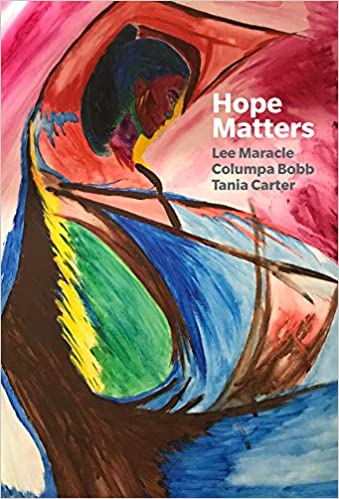
Hope Matters is a culmination of writings from family members Columpa Bobb, Tania Carter, and Lee Maracle. Courtesy of Book*hug press

By: Molly Lorette, Peak Associate

Due to the present circumstances of a pandemic, Word Vancouver converted their 2020 festival to an online format. Last year, the event celebrated its 25th anniversary and has been regarded as one of the largest free Canadian-focused literary festivals.

The festival took place over the span of eight days and included multiple panels and workshops focused on Canadian literature — these were held over Zoom and streamed through their Facebook page. I attended one such panel event, Writing Through The Generations, wherein host Russell Wallace led a wonderful discussion with the three poets behind Hope Matters

Written by Indigenous sisters Columpa Bonn and Tania Carter, along with their mother Lee Maracle, Hope Matters is a collection of collaborative poetry. As children, the two sisters would often write with their mother, and the three always dreamed of working collaboratively on a project one day. As they discussed in the panel, the production of this collection’s first draft involved the three sitting out on their back porch for three to four hours a day over the course of two weeks. Primarily, this consisted of call and response poetry, where titles were pitched and poems were written in return. What resulted was a breathtakingly candid collection recounting the journey from colonial beginnings to reconciliation, both in a wide sense for the greater Indigenous community as well as an interpersonal one. 

It was discussed that because so much damage was done within nations, the repairs made in efforts towards reconciliation cannot simply be surface-level. It is crucial to understand that residential schools did not only affect the residents in attendance, but the entire family involved. It is because of this reality that simple surface-level acts of reconciliation such as speeches, donations, and apologies cannot be expected to repair generations worth of damages. 

As Maracle explained, a large part of reconciliation for her has been reconciling herself with other members of her community, which has become more important than getting the government to take action. Further, host Wallace noted that words are simply words without an action to back it up. The impact of actions versus words was illustrated during the poetry reading, wherein the authors read through After the Sorry Clears Who Will Pay For The Headstones, which was written after Prime Minister Trudeau’s apology for residential schools. Bobb discussed how the day had felt heavy with death, as if someone had just dug up their graves. Yes, apologies are important, but without action taken towards rigging injustices, words can become hollow.

Further discussed was the notion of hope as a concept. Because there is no yearning without hope, such emotion is incredibly powerful, as it serves as both an activator, an animator, and an instigator. While the collection is written in tandem, each voice is individually heard, weaving together a singular familial poetic proclamation. Since governmental acts targeting Indigenous people were created in order to tear families apart, the act of bringing one’s family together once more is an act of both courage and defiance. The panel itself is viewable through Facebook, and I highly recommend tuning in and giving it a watch to continue the complex relationship between Candian politics and literature.

All Word Vancouver events are available for streaming on the WORDVancouver YouTube channel for the next three weeks.

Top ten things that probably made me gay

1
Very calm, very cool. Nothing wrong here. Illustration: Siloam Yeung / The Peak

By: Juztin Bello, Copy Editor

  1. “Everytime We Touch” by Cascada

When middle school me heard this Eurotrash 2000s staple for the first time, something awakened. Little did I know that something would grow and manifest into a desire to bump butts to this song at any gay club I could get into several years later. Truthfully, the only thing gayer than this song is bottoming, but I find listening to this song a lot less painful and it requires less crying (depending on the context.) Besides the song itself, the music video really unleashed the gay in me. With singer Natalie Horler’s choppy highlights and scene-stealing choreography in the middle of a library, Cascada solidified the gay mantra: go through some questionable hair choices, but always pull focus. 

2. The men’s underwear section of Wal-Mart 

You might not think Wal-Mart would be the birthplace of many gay awakenings since the energy Wal-Mart radiates is the culmination of a room-temperature Monster energy drink, broken shopping cart wheel, and unkempt handlebar moustache. But picture, if you will, a young, wide-eyed child bored out of their mind, dragged along on yet another shopping trip to Wal-Mart by their parents. After perusing the children’s clothing section, they stumble upon the men’s section, moving through the aisles of outdated graphic tees and horrendous walls of camouflage clothing until they reach the Holy Land of Packages: the men’s underwear section. You thought that child was wide-eyed before? Imagine how wide-eyed they are face-to-face with shredded dudes in Calvin Kleins and Fruit of the Looms, junk perfectly at eye-level and abs so close they can taste them. And thus with the gayness awakened, Wal-Mart’s slogan “Always low prices” manifests into the gay slogan, “Always low morals.” 

3. Playing as Princess Peach in Mario Kart 64

Ah yes, the selection screen of Mario Kart 64. I’ll never forget the days of seeing that roster as a youngin’, moving swiftly past the horrendous moustaches, an ape, some lizards, and a butt plug with eyes, until finally selecting her — the mushroom baddie herself, Princess Peach. Now, playing as Peach as a little boy was definitely met with some teasing, but I’ll never forget how fabulous it felt driving as the princess with her vibrant pink dress, gorgeous blonde hair, and worthy crown atop her head. As a gay, Peach was/is everything: men want her so bad they rescue and/or kidnap her and she’s royalty so you know she’s got money. Not to mention the fact she’s literally Princess Toadstool, so she’s royalty to a bunch of walking butt plugs — princess? No, that’s Queen behaviour.

4. Bananas

My favourite fruit growing up was always the banana; it had the best taste, was easy to acquire, and, of course, it’s shaped like a shlong. OK, it took me a while to discover that last factor was so important, but subconsciously I guess younger me knew from the start putting oblong objects in my mouth was the move. Fun fact: bananas are apparently a mood enhancer. I can guarantee any time a banana-esque object is in my mouth my mood is definitely enhanced. 

5. Angemon from Digimon

For anyone who needs context, Angemon is an Angel Digimon with long blond hair, ripped muscles, six wings, a helmet that covers his eyes, a deep and powerful voice, and is only wearing a loincloth. So you’re telling me as a young boy I was supposed to just enjoy my Saturday morning cartoons featuring a group of rambunctious kids and their digital friends and not fall for the muscular, long-haired, half-naked angel? One of Angemon’s signature attacks is Angel Rod — and boy what I would give to be on the blunt end of that

6. My wrists

Admittedly I’m very bad at languages, but there is one I’ve mastered from a young age: no, not English, I’m talking gay sign language. Growing up gay, you learn that being out and proud can often be a scary/dangerous thing, so alerting to gays around you that you are a fellow gay can be tricky. But that’s where the ol’ reliables come in, the subtle yet effective signs that you also like giving it/taking it from behind. That’s right — you know it, you love it, you mock it: the limp wrist. I’ll never forget the day my wrists went limp for the first time and Grindr immediately downloaded on my phone by itself. Since then, these bad boys have been the silent welcome signs at the club or in classes. Hot tip, if you’re at a function and need to look around the room for alliances, just look at the wrists — if that wrist is hanging limper than you were the first time you tried watching porn with a woman in it, you’ve got one. 

7. Gay jeans

For years scientists have been trying to crack the code on what makes gay people gay, even going so far as to assume there is a “gay gene.” What they should have been looking for is not found within the body, rather it’s what goes on the body — not gay genes, but gay jeans. I’ll never forget buying my first pair of super skinny jeans and feeling like my fashion sense had peaked. I thought I was the one. Looking back, my delusion must have been the result of my jeans cutting off circulation to my brain. Plus, I guess it was also hard for me to think straight having my balls constantly cupped like that.

8. My Motorola Razr

You can’t tell me that the drama of ending a phone call and slapping the phone shut didn’t manifest the horrendous, flamboyant bitchiness I exude to this very day. Mom’s late to pick you up from middle school? *SLAP* That one straight friend you really want to be close to because you actually have a crush on but don’t realize it’s a crush yet isn’t picking up the phone? *SLAP* Your cute female friend starts talking about how she likes the guy you don’t know you have a crush on? *SLAP* Motorola Razrs were the bitch slap before the bitch slap was a thing, and I live by that.

9. Any Disney princess movie

I’m sure many little boys watched The Little Mermaid, Sleeping Beauty, or any of the classics and realized that by doing heroic deeds they could win the girl. But what I learned from watching these films is that you don’t have to be the hero, you can just do nothing. Why be the one to go through all the effort of fighting a villain or rescuing the princess when you could be rescued instead? Why be a side character whose sole purpose is to appear once or twice when you can be the main character? Along these realizations was also the thought that being rescued by someone who looked like Shang from Mulan was ideal. Trust, I’d love for him to make a man out of me

10. That one student teacher

Every gay growing up knows about that one student teacher, the hot one who would reignite your passion for learning when they temporarily took over for the teacher you hated. As a replacement for your stuck-up, boring, usual teacher, that one student teacher was easy on the eyes and easy to fall for. It only took me a few days to realize that my growing efforts in class weren’t just because of my egotistical desire to look smart against my peers, but rather to impress this hot student teacher. Suffice to say, picturing he and I together after I impressed him made more than my brain throb during these classes.

Hannah Bel Davis’ film Pandemic! provides an exploration of remote learning challenges

0
Currently a student herself, Davis’ film is created with an understanding of the effects of the pandemic on students. Courtesy of Hannah Bel Davis

By: Charlene Aviles, Peak Associate

This past summer, Hannah Bel Davis, an SFU graduate with a Bachelor of Fine Arts in Film and English and a Certificate in Creative Writing, was hired by a Université Laval (Laval University) professor to direct, animate, and write a script for a short film, Pandemic!. This first animated short of Davis’ not only acknowledges the problems associated with online learning but also urges students to remain diligent during the remote semesters.

 As a new transfer student, the thought of leaving behind the familiarity of my former university and starting at SFU this past fall was overwhelming but exciting. My experience as a cross-enrolled student in both online and in-person secondary schools exposed me to different teaching styles, which made me eager to hear Davis’ advice on remote learning.

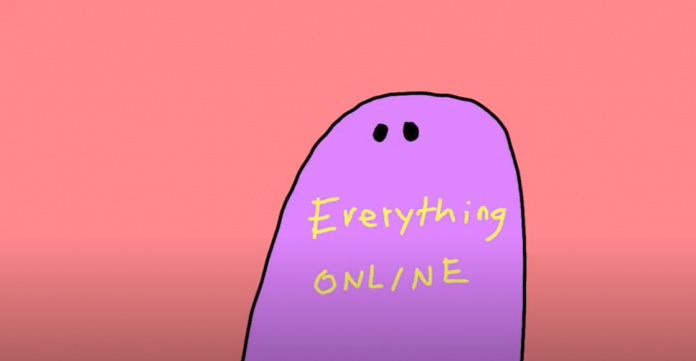
Narrated by Davis, Pandemic! follows a purple character (designed to be “easy to reproduce, cute, and androgenous” for future use) struggling to adapt to online learning during the pandemic. The film addresses how the seemingly “intangible and unreal” learning environment may increase feelings of isolation and hinder one’s motivation to learn. Despite these challenges, the film advises students to remain resourceful and organized.

To prevent procrastination, Pandemic! includes suggestions on how to remain motivated, such as writing a to-do list and stretching. A common theme throughout the tips was maintaining a work-life balance; without taking care of one’s physical and mental health, the quality of one’s work declines and the tendency to burn out increases. 

During an interview with The Peak, Davis, who is currently pursuing a Masters of Arts in Creative Writing at Concordia University, expressed her gratitude towards SFU’s film program and the short film assignments that prepared her for this film’s production process. 

When asked about the advice she would give to other students directing their first film, she admitted accepting constructive criticism and persevering despite difficulties are essential for one’s growth.

If you’re working on any sort of creative project, you always carry it very close to your heart [ . . . ] It feels like it’s an extension of you, and in some ways it is, but any time someone’s trying to give feedback, they’re trying to help [ . . . ] Just do your best just to remove yourself from the project for those feedback sessions and try to be objective when you’re hearing this feedback.”

Davis explained how the passion of creating a new project gave way to points where she felt doubt and a loss of motivation. Despite the challenges one may face, Davis encouraged students to keep persevering. 

She also suggested that students pursuing their first projects should stay true to their interests. “That’s how you develop a style and that’s how you develop what could potentially be a really unique voice that you have in your writing or your work or your film.”

Davis not only rose to the challenge of creating a short film but also presented online learning as an opportunity for students to grow. The film ends with an encouragement not to lose faith and hope: “We are each in different boats, but we are braving the same seas together, and we will get to calmer waters once again.” 

Pandemic! is available for streaming on YouTube.

An overview of BC’s 42nd provincial election

0
PHOTO: Arnaud Jaegers / Unsplash

Written by: Michelle Young, News Editor

On September 21, Premier John Horgan called a provincial election for October 24. While BC had an election date set for October 2021, Horgan cited COVID-19 as the reason for the early election, stating that “this pandemic will be with us for a year or more and that’s why I believe we need to have an election now.” He added, “The challenges we face are not for the next 12 months but indeed for the next four years and beyond.” 

Key Information

General registration closed on September 26. However, you can still register at the polling stations on election day. Advance voting begins on October 15 and ends October 21 at 8 p.m. Voting in advance is an option for all voters, though locations may differ from General Voting Day. 

On October 24, voters are assigned voting locations, but you can vote at another voting place if it is more convenient. Voters may also vote at any BC district electoral office, either from 8 a.m. to 8 p.m. during advance voting, or from 10 a.m. until 4 p.m. on October 24. You can find your polling station using Elections BC’s app here. 

COVID-19 protocols for in-person polling include physical distancing, capacity limits, and sanitizing stations, amongst other guidelines. According to Elections BC, “Voting places will follow the practices outlined in [their] voting place safety plan.” 

Voters can also vote by mail, and should request a vote-by-mail package by October 17. This allows voters to complete their ballot from home and mail them in. Packages must be received before 8 p.m. on voting day and can be requested by calling Elections BC or online. Vote-by-mail packages can still be requested after October 17, however they must be requested from a district electoral office. 

Major Party Pledges (as of Oct 4)

BC NDP

Horgan pledged to complete a hospital in Cloverdale and “10 new urgent and primary care centres by the end of the year.” He also promised to shift the funding from for-profit corporations to fund “new long-term care homes and improve wages for long-term care workers.” 

Furthermore, Horgan stated that he will “expand student access to up to $4,000 per year” to cover tuition, textbook, and school supplies. He also pledged that BC would reach net-zero carbon emissions by 2050. Lastly, Horgan promised to refund profits to drivers collected by ICBC during COVID-19. 

BC Liberals

Andrew Wilkinson pledged to remove the Speculation and Vacancy Tax, which is “an annual tax based on how owners use residential properties in major urban areas.” Wilkinson says he would then replace the tax “with an anti-flipping tax.” This aims to target those who buy a presale home and then resell it for profit. 

Furthermore, Wilkinson also promised free flu shots for all those in BC — as some remain ineligible for them. Wilkinson pledged to eliminate provincial sales tax for a year, aiming to reboot the economy. Finally, Wilkinson stated that he would “prevent protestors from blocking Trans Mountain pipeline construction.” 

BC Green Party

Sonia Furstenau pledged to “pause construction on the Site C dam.” Citizens have called on provincial governments to stop the project, following a BC Hydro Report that revealed the dam’s “geological risk.” According to the project’s website, it “will provide key benefits for BC, including energy [ . . . ] regional economic development, job creation, and benefits for communities” and Indigenous peoples. 

BC Conservative Party

The party pledged to “scrap the province’s carbon tax” and “allow private companies to compete with ICBC on basic insurance.”

For an updated list of party promises, check here

Political Implications 

Many have been discussing Horgan’s early election call — the motives, implications, and whether it was necessary. The Peak reached out to SFU political science professor Dr. Stewart Prest for more information regarding the election. 

Dr. Prest explained that after about six months since the last election, “a premier or a prime minister has the right, effectively, to ask for an election.” He added that in Canadian politics this is “business as usual” — even with a fixed election date. The controversy surrounding the 2020 election “is because we’re in the middle of a pandemic and there were no obvious, outward signs for a need for an election at this point.” Dr. Prest also noted that the NDP believe they have a chance at winning a majority government. 

In regards to COVID-19, Dr. Prest said that current indications demonstrate that the pandemic is “not going to have a huge impact on voting intentions.” He added, “We’ve seen some polling since the announcement of the election, and the NDP continue to enjoy that large lead in polls that led them to call the election in the first place.

“There is a roll of the dice by the NDP [ . . . ] If they do lose, they’re going to be wearing egg on their face.” Dr. Prest noted that the election will be an interesting one, as voter decisions will likely rely on the evolution of COVID-19. 

Voter turnout may also change, as it remains a possibility that overall turnout may be reduced in comparison to previous years. “That may be because of a couple of different factors,” he said. Factors that could influence voter turnout include frustration with the election call and discomfort going to polling stations on election day, if voters do not make arrangements to vote-by-mail or partake in advanced voting. 

Dr. Prest encourages “everyone to take part in the democractic process in a way that they feel comfortable with.” He concluded by stating, “One way to think about this election is that the BC NDP is effectively inviting judgement on the last three or so years of governance and asking for British Columbians’ opinion.”  

BC Election Resources

It’s no mystery that Netflix’s Enola Holmes is both a fun and empowering film

0
Millie Bobby Brown takes on the titular role in this mystery-adventure romp with enthusiastic energy and power. Courtesy of Netflix

By: Marisa Rizzo, SFU Student

It is time to finally meet Enola Holmes, the younger sister of the infamous literary detective Sherlock Holmes. Once you do, it might just have you asking, “Sherlock who?”

Based on the book series The Enola Holmes Mysteries by Nancy Springer, this recent Harry Bradbeer Netflix release tells the story of Enola Holmes, whose mother mysteriously vanishes on her 16th birthday. Using skills learned from her mother Eudoria (Helena Bonham Carter), such as jiu-jitsu and the ability to decode messages, Enola embarks on a journey from her countryside home to the city of London to find her.  

Stepping into the pivotal role of Enola Holmes is Stranger Things star Millie Bobby Brown who carries the movie splendidly. Enola defies societal conventions of who a woman can be and what she can do. Brown’s depiction encapsulates so much energy and wittiness in her performance, making Enola relatable and exciting. Thanks to the filmmaking choice of having Enola consistently break the fourth wall and talk with the audience, we get to hear her inner thoughts and become more acquainted with her.

Similarly to Brown, the rest of the cast also gives exceptional performances. Henry Cavill plays the famous Sherlock Holmes and, despite the various versions of Sherlock over the years, makes the character his own. Cavill’s Sherlock is full of wit and oozing with charm. We also get to see Sherlock be the caring older brother — a twist on previous portrayals. Alongside Cavill is Sam Claflin as Mycroft Holmes, another one of Enola’s older siblings. After seeing how his mother has taught Enola, he is appalled and comes to the conclusion that she should go learn etiquette at a finishing school. Claflin portrays Mycroft in a way that makes you love to hate his character for trying to make Enola someone she is not.   

Enola Holmes uniquely weaves feminism into the storyline, discussing how women in the Victorian era are expected to behave and act in a certain way that society has pre-determined for them. We see through characters such as Mycroft that women who are not “lady-like” are viewed as too wild. As a female protagonist who is educated, athletic, perceptive, and taught by other strong women, Enola rebels against those expectations.

The film also doesn’t shy away from touching on other inequalities in its plot. One scene in particular features a discussion between Sherlock and Black jiu-jitsu teacher and tea shop owner Edith, played by Susan Wokoma. Edith points out to Sherlock that he has the privilege to not question the society he is a part of since it works in his favour. I found that to be extremely relevant to what is going on today with the multiple movements for change that we are seeing occur worldwide.  

These powerful messages are woven into the storytelling and set to a backdrop of beautiful, rich settings, and gorgeous costumes. There are both quick shots when anyone is deciphering clues and a good use of flashbacks to Enola’s childhood of time spent with her mother to move the story along.

I highly recommend this film. It is full of action, adventure, humour, and moments of self-discovery, and has me hoping for a sequel.

Enola Holmes is now streaming on Netflix.

I’m tired of SFU’s performative activism

2
Courtesy of SFU News

by Marco Ovies, Editor-in-Chief

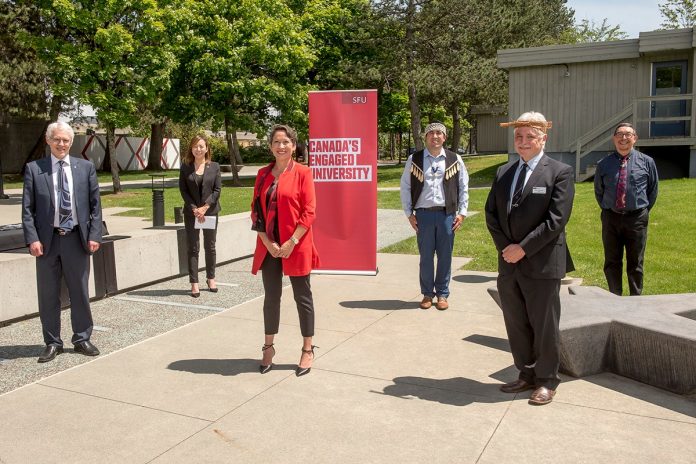
SFU has done it again: they have failed to consult Indigenous students on a building for Indigenous students. 

In a letter posted by the First Nations Student Association (FNSA), they stated they weren’t even invited to the consultative workshop for the creation of this building. Accompanying that was a list of recommendations that the University needs to put in place. This included: 

  1. Proper and ongoing consultation with host Nations
  • This includes but is not limited to protocol around ceremonial spaces, consultation to key community members from the Host Nations, this includes Chief and Council, Elders, Matriarchs, Knowledge Keepers
  1. Proper and ongoing consultation with key pillar community members, such as Indigenous Student Centre and First Nations Students Association
  2. Indigenous student outreach to ensure Indigenous student voices are hear
  3. Ongoing updates about the First Peoples Gathering House process that are public and accessible
  4. More student involvement and seats on the Aboriginal Reconciliation Council
  5. Meaningful consultation with SFU and the ARC Report

Not only has SFU failed to acknowledge the letter, it is clear that our institution does not even have a basic understanding of how to properly go about the creation of this building, or the needs of its Indigenous student population.

But what is most shocking is that they are putting this building in a public place. “Ceremonies are not spectacles for outside viewings” said the FNSA in their letter “our practices should not be displayed for the curiosity of settlers.” 

As a non-Indigenous, white-passing individual, I understand that my voice isn’t the one that needs to be heard right now. I also recognize that my writing this piece is symbolic of the lack of representation at this institution. But given that I have the platform to report on these atrocities, I find it necessary to utilize it in bringing awareness to these unjust actions by the university.

The creation of The First Person’s Gathering House feels like SFU is checking off the box labeled “Indigenous reconciliation” on their list of things they pretend to care about. It is performative and quite obviously shows where their values lie.

While you could say that performative activism is better than no activism, I argue that it’s not. Performative activism is no better than staying silent, you are just going through the motions because you are afraid of being called racist or ignorant. This prevents you from understanding and acknowledging the problems at hand. Performative activism is done to increase one’s social capital rather than one’s devotion to the cause.

This isn’t the first time SFU has failed it’s student body. The inherent racism regarding The Clan name change, the lack of opposition for the TMX pipeline, the failures of SFU Health & Counselling regarding LGBTQ2+ students, invading students privacy with proctoring software, and the raise in tuition are just a few of the examples from this semester. Why is our university pretending to be concerned about students’ well-being when their actions speak otherwise?

But what can you expect from a Board of Directors where the majority of members are White? Or from a Equity, Diversity, and Inclusion Council (EDI) with no representation from the Black community despite numerous people from the Students of Caribbean and African Ancestry (SOCA) applying. If we want our activism to be more than performative, we need to be including BIPOC individuals in the conversation, in positions of power, and giving them a platform to voice their concerns. 

Indigenous students and communities need to be included in the dialogue for any meaningful reconciliation, otherwise what is the point? Who are we doing this for? SFU needs to take a hard look at why they did not include Indigenous students’ perspectives in the decision process. Because if we aren’t building the First Persons’ Gathering House for Indigenous students, then who are we building it for?

SFU’s humanities and hellenic studies departments merge

0
PHOTO: Micheile Henderson / Unsplash

Written by: Sara Wong, Peak Associate

There’s a new home for the hellenic studies (HS) department at SFU, and it’s within the department of humanities (HUM). According to humanities department coordinator, Cristina Serverius, “The merger had been talked about informally for many years.” In her email statement to The Peak, Serverius added, “For HUM, the collaboration with HS makes sense because of the historic centrality of Hellenic Studies to the discipline of Humanities.” 

In hellenic studies, students explore Greek history and its relevance to today. Meanwhile, humanities courses range in focus — “from Ancient Greece to Modern Germany [and] from Taoism to Christianity.” Aside from studying history, the humanities program overview shows that courses also cover philosophy, art, literature, science, and political thought. Ultimately, “students will learn to pose questions and address concerns central to understanding the human condition.”

While the humanities and hellenic studies departments are now joint, the Institute for the Humanities and SNF Centre for Hellenic Studies will remain separate. 

However, these two organizations have similar mandates. The Institute’s foremost initiative is to “[plan and support] interdisciplinary programs, conferences, seminars and research which bring together faculty in the Humanities, Social Sciences and Arts.” 

The SNF Centre states that their goal is “to promote a better understanding of Hellenism in the community” and that “at its core [ . . . ] the Centre focuses and supports research at SFU on Hellenic topics, from Antiquity to present-day Greece, through grants and postdoctoral fellowships.” 

According to Serverius, the merger between humanities and hellenic studies signifies “more opportunities for joint programming and closer collaboration between the Centre and the Institute within the realm of possibilities of their respective unique mandates.” 

Starting in the Spring 2021 term, all hellenic studies classes will be designated as part of the humanities instead; but that’s not the only change to course planning that will result from this merger. 

“HS only [has] a certificate program; now that they are housed in HUM, they have access to a full academic department with majors, minors, and an MA program [ . . . ] we are planning to develop a minor in HS, and we are also using the opportunity of this merger to revamp the HUM major and minor,” Serverius shared. She predicts that changes regarding the HUM/HS majors and minors will not be in place “until Fall 2021 at the earliest.”

To stay up to date on news regarding the department of humanities, find them on Facebook or their events page

A Day in the Life of an SFU Student | Quarantine Edition

0

Meet the Team | Fall 2020

0

Dr. John Reynolds joins the Royal Society of Canada

0
PHOTO: SFU Communications & Marketing / Flickr

Written by: Mahdi Dialden, News Writer

SFU biology professor, Dr. John Reynolds has been inducted into the Royal Society of Canada which honours researchers for their achievements in their respective fields. 

“It’s a nice recognition when I think of some wonderful Canadian scientists who are a part of it” said Dr. Reynolds. “It’s nice to join them in that way.” 

One of his many involvements in conservation biology is as chair on the Committee on the Status of Endangered Wildlife in Canada (COSEWIC), which is “a federally appointed body of scientists from across the country who are responsible for assessing the status of the species of plants and animals for potential protection under our federal species at risk act.”

Dr. Reynolds is currently leading two major research projects, the first focusing on life histories and extinction risks. The project will attempt “to understand what makes some species vulnerable to extinction and not others.” He said that in some cases, such as habitat destruction, it’s clear why certain species would be more prone to extinction. However, for other species, “it’s not so obvious.” Dr. Reynolds added, “In fisheries, for example, some species can sustain heavy fishing and some can’t. And so I’m interested in the biology that underpins the response of species to the pressures that humans are putting on them.”

Dr. Reynolds is also leading a salmon conservation project, which looks at salmon and their effects on the ecosystem around them. “Salmon are connected to so many other components of ecosystems. Lots of things eat them and when they spawn and die, their carcasses can help fertilize forests.” This study gave Dr. Reynolds the ability to go to any stream in the Central Coast region, and by looking at the plants on the streams and the forest, allowed him to predict how many salmon had come back from the ocean to the streams at the end of the season to spawn, based on the plant composition. 

When asked about choosing his field, Dr. Reynolds stated that “In every step of the way, I’ve just been doing the thing that I love. In a sense, I’d never really had a choice because my choice was made for me, by my passion for the outdoors.”