Home Blog Page 386

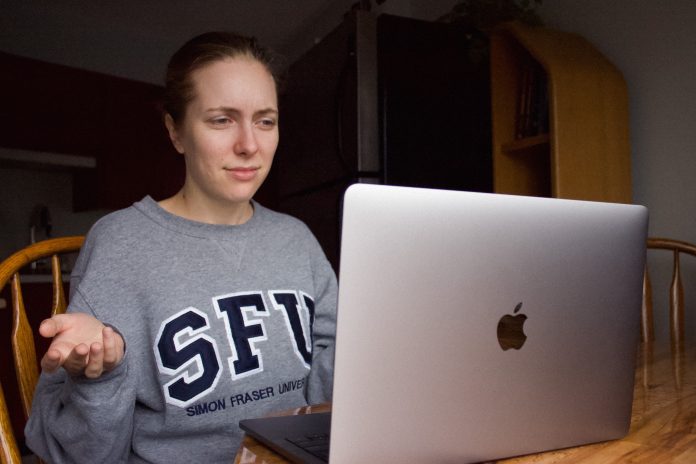
SFU saves student from exam stress by making exams 25 hours apart instead of 24

0
PHOTO: Gudrun Wai-Gunnarsson / The Peak

By: Paige Riding, Humour Editor

SFU proudly announced in a recent mass email that, to accommodate during these unprecedented times, the university’s administration decided on the Fall 2020 exam schedule after enrollment. This was to ensure that no student had multiple exams within the same 24 hours.

What does this mean for the scum of this godforsaken concrete deathtrap? Not only will students have a whole day and an hour to feel that good old nauseating test anxiety, but SFU can give themselves a big, self-congratulatory pat on the metaphorical back for helping practically no one — and honestly, they’ve earned it. From carrying on that very back the burden of terrifying past students during exams with invasive proctoring software, to raising tuition to such an extent that the SFSS’s poor chat had to be overrun by underwhelming memes during their AGM in an attempt to condemn them, SFU representatives may just deserve this one.

While it is unclear why SFU didn’t write exam schedules this way prior to the pandemic, students can now take the extra hour graciously provided to figure it out. 

On the other hand, math majors can finally shut up about their two 8:30 a.m. finals. One may be at this time, you fraction-comprehending fucks, but your next one, at the worst, will be at 9 a.m. It doesn’t have the same ring to it when you complain.

While most students have major projects still due within a few days of each other during exam season, this drastic change to finals will give students a massive break between exams to finish them all. To finally realize that two or more multiple-hour exams within a day is too much for a student . . . talk about Canada’s number one comprehensive university

Now you can’t say that SFU does nothing for its students. With exam anxiety resolved in one fell swoop, the university’s administration no longer has to worry about replacing its dog therapy to help with students’ mental health.

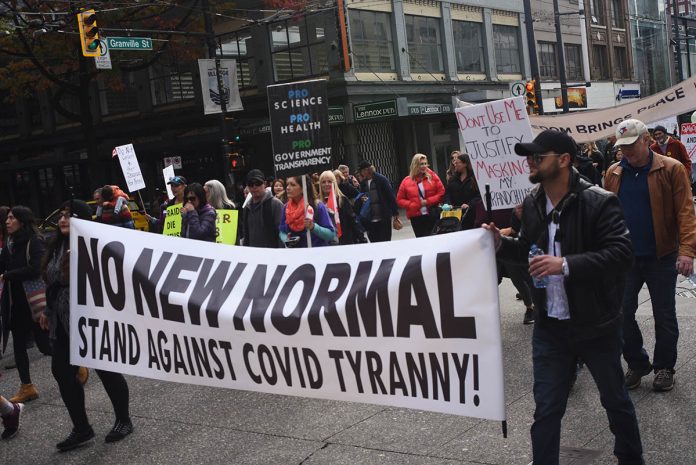
Anti-mask rallies held at Vancouver Art Gallery

0
Photo Courtesy of @CityHallWchVAN via Twitter

Editors’ Note: This article previously misspelled Dr. Sun-Ha Hong’s name as “Dr. Sung-Ha Hong.” It has now been corrected.

Written by: Mahdi Dialden, News Writer

Anti-mask rallies have been organized over the past weekends in Canada, including a “mega rally” on October 17 at the Vancouver Art Gallery. The event protested against the provincial health recommendations to wear a mask amid the COVID-19 pandemic. 

The rallies were hosted by Hugs Over Masks, an organization co-founded by Vladislav Sobolev. The Peak reached out to Sobolev for an interview for more information regarding his stance on the pandemic. He stated he was “pro-education and pro-science” and explained that he decided to kickstart the group when he attended an anti-mask protest in Toronto on May 2, with the objective of the rallies to educate and be “a place of compassion, of love, and positivity.”

According to Sobolev, the hugs in Hugs Over Masks “represents humanity in all its glory.” He added that masks are “a symbol of tyranny and fear because right now if you see anyone wearing masks in public, especially outside to me, [it] just shows that that person is very fearful,” he explained.

“When you have forced medical procedures happening — and a mask is a medical procedure — people don’t understand [that] when you’re wearing a mask, it alters how much oxygen your body gets.” Hugs Over Masks provided an academic source for this claim, however, it states that the cause behind the change in oxygen saturation is unclear, noting that the changes in oxygen found in the study “may be either due to the facial mask or the operational stress.” 

The World Health Organization (WHO) and Centers for Disease Control and Prevention both state that masks are recommended to limit the spread of COVID-19 and that masks do not affect oxygen levels.

“Snapchat filters [ . . . ] was one of the ways [social media] indoctrinated and brainwashed children specifically to put things on their faces,” Sobolev explained. He uses this as an example of many ways that children have been influenced by social media to accustom them to “wearing masks on their faces, which is completely harmful and devastating to the growing, developing [of] a child’s body.” The WHO states that masks are not recommended for children under the age of five. They also note that evidence remains limited regarding harms and benefits for children wearing masks. The WHO maintains that mask-wearing depends on the extent of COVID-19 transmission in their area, the child’s ability to wear a mask properly, and recommend considerations regarding psychosocial development and children with disabilities.  

The World Health Organization has labelled the surge in disinformation during the pandemic as an “infodemic” — a large consumption of information that leads to the spread of misinformation. Amongst other examples of mis/disinformation includes the claim that masks are detrimental to one’s health, according to multiple fact-checking sites. A study conducted by Cornell University evaluated 38 million English-written articles from traditional media worldwide and “identified over 1.1 million news articles that disseminated, amplified or reported on misinformation related to the pandemic.” Sarah Evanega, the lead author of the study and director of the Cornell Alliance for Science, said that “if people are misled by unscientific and unsubstantiated claims about the disease, they may be less likely to observe official guidance and thus risk spreading the virus.”

SFU Communication professor Dr. Sun-Ha Hong, who specializes in disinformation and conspiracies, says that it’s pivotal to go to the experts for any certain topic. “I am going to go by their best understanding of what is happening and what we need to do as a public to keep everybody safe.

“As a researcher myself, I know that it is often difficult to figure out exactly what a virus does or exactly what is known about a novel situation, so I understand that sometimes the advisories are going to change [ . . . ] or [that] there are certain margins of error. But I am not going to immediately believe that they must be lying.”

According to Dr. Hong, disinformation “creates an environment of doubt. So we find a lot of people that say, ‘I believe that the coronavirus is real. But I have my doubts about whether I need to wear a mask or whether I need to socially distance.’”

Dr. Hong added that attention does not directly correlate with credibility, and referenced Cornell University’s study which cited that politicians “are the single largest source of misinformation because they get amplified on television.

“[Politicians] tend to receive a disproportionate amount of media attention because they tend to be very good at strategizing on how to get that attention,” he said. 

Dr. Hong wanted to highlight that every profession and job has an outlier — and that doesn’t compromise the truth. “99% of people who actually do this job, know what common sense is, but you will always find one person who works at a restaurant who has said something crazy about restaurants.” He added, “We are tricked into thinking the hundred other official sources must be wrong because there are two sources that say something different.

“A lot of the time, the most reliable sources tend to be boring sources. The truth is not always exciting,” Dr. Hong said. “You can find any argument you want on the internet if you look closely enough. So if you see something that does that, that’s got nothing to do with whether it’s true.”

White person shocked to learn about racism for the first time through Instagram infographic

0
PHOTO: Katka Pavlickova / Unsplash

By: Serena Bains, Staff Writer

I just learned that racism existed when I opened Instagram feed the other day. Expecting my feed of custom Starbucks drinks, country music artists, and nothing but Live, Laugh, Love, I instead came across my awakening. My feed was filled with black squares with the hashtags #BlackTuesday and #TheShowMustBePaused. Something switched in me, and I desperately needed the world to know so. 

I was searching for a way to show my support for Black Lives Matter, but donating to BIPOC-led organizations that have been operating for decades and who are most equipped to help the victims of institutional violence just wasn’t for me. But posting a picture of a black square, completely ruining the aesthetic of my feed . . . now that’s brave. So I did just that. I even took the initiative to add #BlackLivesMatter in the caption.

I became an activist that day, and did so without causing harm to anyone. I didn’t have to stop supporting my favourite openly racist essential oil business owner or block roads like those hooligans — and I definitely didn’t co-opt a movement started by two Black women in the music industry. 

Now, I am the most woke person in my circle. I do really important work like constantly proclaiming that I don’t see colour, going to protests and posting pictures so I can prove that I went, and asking the one Black person I met in 2005 if they’re okay. It’s really exhausting work and the allyship fatigue that I have to endure from being such a selfless person is a burden. I couldn’t name another person that is more overwhelmed and exhausted by the emotions that come from doing this meaningful work.

Despite all of my tireless, thankless work, I still have this guilt that I’m not doing enough. I still need more evidence to rebut people’s claims that I have white privI mean, that my activism is performative. I have to innovate and come up with a solution to this problem.

Thankfully, I have the perfect idea. I’ll create necklaces from the broken glass from the protests, upcharge the piece by 1000%, and commodify off the trauma of others. Everytime I leave the comfort of my suburb to go into a Black community, my nervousness around Black people is curbed as I put the pieces back together from shattered lives. I’m providing society with a commodity that is truly worthwhile: overpriced costume jewelry. Taking something I consider to be dangerous in a Black community and making it safe by profiting from it in a White community . . . truly admirable.

Finally, my work has come to fruition. The dozens of white followers I’ve gained through constantly posting infographics about the police that I’ve never read all the way through on my story can be put to use. They’ll be able to placate their guilt from not supporting the BLM movement by increasing the profits of a white-owned business. It’s a win-win.

Online AGMs allow for students to be more engaged with their governance

0
PHOTO: John Schnobrich / Unsplash

by Madeleine Chan, Opinions Editor

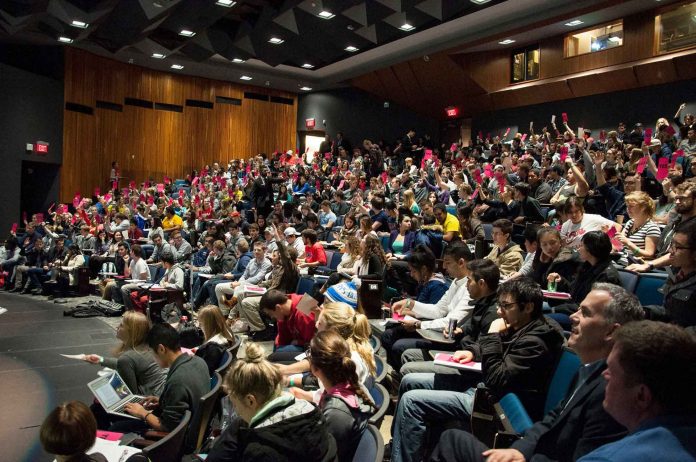
To be honest, I had never attended one of the SFSS’ Annual General Meetings (AGM). Not for lack of care, but because the in-person format never really jived with me. This year’s AGM, however, was the first that I’ve actually wanted to be at. The online format was something that the 600+ students who attended could agree is a large improvement from in-person meetings: its accessibility and ability to engage a large number of students would give incentive for me to attend the next one, if it’s online.

One of the main benefits of the online format, other than reaching students during a pandemic, is that it allows people who would not be able to come to campus to be present. This includes students with accessibility concerns, a course conflict, or even someone who doesn’t want to make the trek up to the mountain that day. Students who wouldn’t want to commit to sitting in a room for multiple hours can simply get a preview, a small dip in the world of student politics at their leisure.

Zoom’s technical difficulties are inevitable, but the minor glitches are nothing compared to the sheer amount of participation. Student attendance at this first online meeting, at one point, was 612 attendees. This was way over the required minimum of 250 to pass votes, and a number which bodes well for the future of student participation. The last AGM in recent years that met quorum was the one in 2018, and that’s only because everyone wanted to impeach the SFSS president. Everyone even left after the vote was cast. 

Granted, I think that most people who attended this meeting just wanted to win a prize. There shouldn’t have to be a bribe of electronics for students to care about decisions that impact their future, but it is an effective way to get them to come. In addition, the money saved from not having the meeting in-person allowed the SFSS to purchase those prizes to give back to students, a plus for student’s pandemic struggles. 

With online AGMs, you won’t get the rousing euphoria of everyone extending their hands to impeach a SFSS president, but also no one can smoke bomb the auditorium and delay the whole meeting. In addition, because of Zoom’s polling function, votes are anonymous and students can’t be swayed by a wave of hands. Not to mention that it’s more accurate than a guess from a quick glance.

The length and density of the online meeting did make it dreadfully boring, but it’s three hours in exchange for potential years of impactful change. It’s also a great introduction for students to get involved with and be aware of student politics. It gives them a lot of perspective on the routine business proceedings that go on behind the student-led organization that we benefit from. It would be beneficial for the whole student body for future AGM meetings to be held online, pandemic or not.

The online format of the AGM did exactly what the SFSS advertised and brought back student power. Not only from the resounding votes in favour of the motions that plan to do so, but in the inclusivity and accessibility of the event which gave attendees a greater understanding of the processes that empower them as students. Let’s hope that by next year the pandemic has passed, but online AGMs stay.

Meeting etiquette still applies even when it’s online

0
Photo Courtesy of the Simon Fraser Student Society

By: Marco Ovies, Editor-in-Chief

Last Monday, the Simon Fraser Student Society (SFSS) held their Annual General Meeting (AGM) online with over 600 people in attendance. The last time the AGM had a turnout like this was back in 2006, with the majority of students attending this year to condemn SFU for tuition hikes and for the many raffle prizes.

A benefit of the SFSS holding the AGM over Zoom was the use of the chat function. Students were able to talk to each other in real-time to ask questions and fix technical issues. Despite the high attendance through Zoom and the versatility of the chat, like any time you give students the opportunity to communicate freely, internet trolls came rushing in. 

While joking around with peers is fine, it needs to be understood that this was a serious meeting that affected not only the current student body, but future students’ lives as well. 

Online or in person, students should be respectful during meetings. The SFSS is not a club, they are a group that are trying to pass important policies to hold our university accountable and better the lives of its students. So it is helpful to no one when attendees come into the chat and send a mass block of white squares.

One of the more playful comments included: “I propose we give $20 million to SFU Anime Club just to see what happens,” with responses like “student engagement will only surge with the power of anime.” There was even a discussion of distributing body pillows to all SFU students. While these comments in the moment are fun, other comments had more negative connotations. 

“Everyone deny the vote for lols” said one SFU student regarding the motion to condemn SFU for the tuition increase, while another student suggested that we “vote against [it] to save time” in hopes that we could get to the raffle draw sooner. 

Just because we are online does not give students the excuse to not take these meetings seriously, and being disrespectful in chat is no benefit to anyone. It got to the point where Osob Mohamed — chair of the meeting and president of the SFSS — had to hop into the chat and say “I am reminding the assembly of the rules of the meeting.”

Additionally, spamming the chat just makes everything run slower. One user even said that “this chat is slowing my computer to the point of it not loading.” Spammers are not God’s gift to mankind because they think they’re funny in chat, especially when it is hindering others’ experience of the AGM.

If pointless behaviour like this continues, I’m sure chat functions will be disabled in potential future meetings, which will be worse for everyone. So just don’t be a dick, and leave dumb commentary to Reddit.

Monday Music: Songs that remind me of my ex-boyfriend Joe that I listen to while pleasuring myself and weeping

0
PHOTO: Kelly Sikkema / Unsplash

By: Juztin Bello, Copy Editor

So Joe and I have been broken up now for a week — a week, 11 hours, three minutes, and 43 seconds to be exact. Have I left bed since then? No. Have I stopped crying? Of course not. Has the muscle on my right forearm grown exponentially as thinking of my ex during the height of climaxing is the only way I can feel anything right now? Next question. If you’re like me and are in the need for songs specifically for jerking it while sobbing, this playlist might just be for you. (And Joe if you’re out there and you see this I love you baby I’d do anything to have you back.) 

“Deepthroat” – CupcakKe

This was our song. This will always be our song. As I blew you in the Denny’s parking lot on our second date with this song blaring on your car radio, you looked me in the eyes and said, “You and me forever, Clive” — to which I responded “GACKK AcKk” while trying not to vomit on your dick. This scene plays out in my head like a movie: the look in your eyes as I stared at you and gagged, your playful teasing of calling me the wrong name (my favourite recurring joke of yours), the ambient sound of the radio shouting “lick lick lick lick, I wanna eat your dick” mixed with the smell of piss wafting from the dumpster next to us, and the gasps of awe and wonder from the audience (AKA the onlookers from the Denny’s). I will replay this memory forever, Joe, especially while holding myself in the palm of my hand. 

“Cotton Eye Joe” – Rednex

It’s only natural to put a song with your ex’s name in it on such a playlist. You always hated this song because it’s actually about an STD, but I loved how that reminded me of you even more. For our three week anniversary, I made you that mixtape that was just this song on repeat 18 times. I bet you played that CD to death since it apparently broke so quickly. Should I make you another one? Would that get you back? Now here I am, just as lost as the narrator to this song. Where did you come from, but more importantly, Joe, where did you go?

“My Immortal” – Evanescence

This song hurts, in perhaps the best way possible. Sometimes lyrics that hit too close to home are what help you forget getting broken up with via a Snap that also had “streak” written out poorly on it. Sometimes perfect catharsis is the muffled sob you suppress as you shoot across the room at the wall 9ft away to an Evanescence song. It’s like Evanescence says, there’s just too much that time cannot erase. How can anyone expect me to get over a three month relationship this quickly? 

Jimmy Barnes screaming for 10 hours

Joe I’m losing my fucking mind without you. I’ve listened to this song on the daily since you’ve left. I don’t know how much longer I can do this. I don’t even fucking know who Jimmy Barnes is, but his howling against a mountain backdrop seems to pleasure me enough until I pass out from exhaustion. Is this what you wanted? Are you satisfied? 

Or are you testing me? Ohhh, I see what you’re doing. You’re doing this on purpose. You want me to get out of this funk and come to you right now, don’t you? I’m running out of Kleenex and lube, anyways. This must be a sign. I still remember where your family kept the spare key. I always remembered the tiny things like that. Fuck, I can’t take it anymore. Hang on, baby. I’m on my way.

SFU hosts Fall 2020 virtual convocation for graduates

0
Image Courtesy of Simon Fraser University

Written by: Mahdi Dialden, News Writer

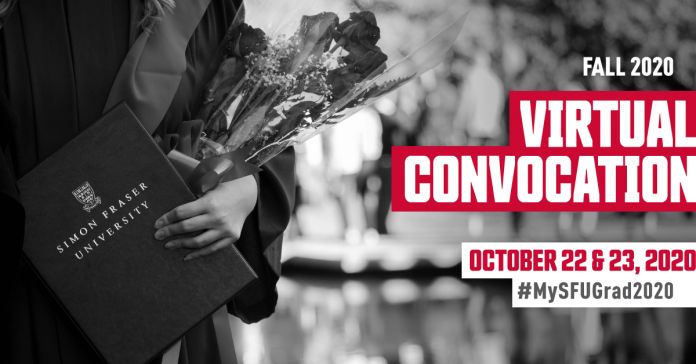
The SFU Fall 2020 Virtual Convocation took place on October 22 and 23 for recent graduates. This is SFU’s second virtual convocation due to COVID-19, following the one that took place last June. 

In an email statement to The Peak, Director of Ceremonies and Events Gloria Chu explained the planning process and changes to the event. An established committee was in charge of the virtual convocation, with representatives from each of the services: Communications & Marketing, Student Services, IT Services, Meeting, Event, and Conference Services, and Facilities Management.

“The group looked closely at the June virtual convocation graduate survey results, met with a focus group from the Fall graduating class, consulted with faculty and departmental contacts and deans, and reached out to other Canadian universities to create the plan,” Chu said. 

The main objective of the group was to try their best to replicate the real-life experience of a convocation ceremony in the virtual format. Graduates were given a chance to sing in a national anthem montage, and a hashtag (#MySFUGrad2020) was created for students to share their celebrations. Students Danaan Cordoni-Jordan, Alicia Fahrner, Davina Anthea Gounden, Margaret Kapitany, Michael Koziura, Madeline Lauener, Sumreen Kaur Rattan, and Nuvprit (Preet) Saini also featured to give speeches.

Each faculty organized interactive grad celebrations and a “Convocation Box” which includes parchment, a cap and tassel, an SFU Alumni Pin, the print program listing all grad names, and an item from their faculty. A range of virtual celebration tools was also provided to graduates, such as print-at-home signs, Zoom virtual backgrounds, and an Instagram filter. 

The changes that were implemented for these ceremonies included individually reading out names, degrees, displaying pictures, and a short message from every graduating student during the ceremony. In the spring, the convocation consisted of about 5,000 graduate students, hence the arrangement of four virtual ceremonies to allow for the name to be called. 

Chu said that the next convocation’s planning depends on upcoming advice from health authorities. They want to “assure the 2021 grads that the Planning Committee will do [their] best to make Convocation as engaging and meaningful as [they] can for them.”

Wallows’ new EP Remote as things I’ve done during quarantine

1
The EP was recorded and written from each band member’s respective homes. Courtesy of WEA International Inc.

By: Juztin Bello, Copy Editor

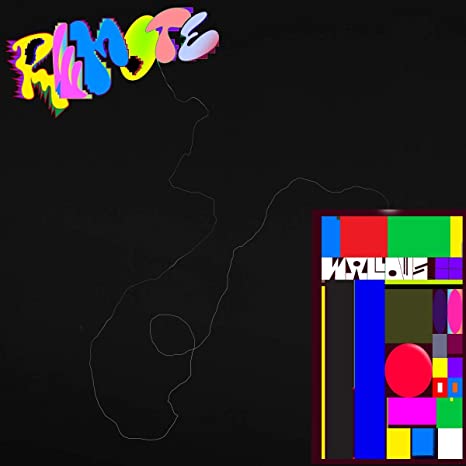
Does the current state of the world have you wallowing in despair? Well, hopefully the release of Wallows’ new EP Remote can help alleviate those worries for at least 16 and a half minutes. Wallows, consisting of Dylan Minnette, Braeden Lemasters, and Cole Preston, released Remote on October 23, following the release of their album Nothing Happens in 2019. As the name suggests, the album was completely done remotely in adherence with COVID-19 — to listeners, this is not apparent, due to both the sound and lyrical quality of the entire collection. To celebrate the release of this highly anticipated EP, here are some things that I did remotely that are definitely as time-inducing and require just as much talent as coming out with a remote EP during quarantine. 

“Virtual Aerobics” 

Remember when gyms were a thing? Me neither. With this upbeat starter to the EP, Minnette sings about doing virtual aerobics together, a nod to traversing the beginning stages of working things out with early partners and learning one another’s movements. Lyrics such as “Wanna dress in what makes you like me” demonstrate a desire to be flexible in order to mold to a partner’s desires. The virtual aspect of the song ties into the isolation normalized by quarantining, but the mental image of doing aerobics with another person from far away brings the feeling of connectedness back in. Listening to this song takes me back to attempting to workout during the early stages of quarantine in my tiny bedroom, having to learn to adapt to my smaller surroundings until finally moving in a way cohesive with my environment. Does it speak volumes that this song is about flirting with another person and I’m thinking about sweating alone in my room? Perhaps. 

“Dig What You Dug”

Grab your shovels, because you’re really going to dig this next track. (Sorry, I’ll just bury myself out back.) This second song features both Lemasters and Minnette sharing the spotlight overtop masterfully layered guitar tracks. As I listen to this song, I can’t help but think of all of the holes I’ve dug myself into, and which of those I need to deal with first. Will it be me digging myself out of the pile of work I constantly put off on a weekly basis? Will it be the hole I wish to bury myself in to avoid the stress brought on by 2020? Will it be my tendency to dig a little too deep into politics resulting in sleepless, stress-induced nights? Or all of the above? 

“Nobody Gets Me (Like You)”

As the EP’s lead single, “Nobody Gets Me (Like You)” was listeners’ first taste of Remote, and boy does this song have a decadent flavour. Featuring the vocal talents of Lemasters, the song boasts an early 2000s pop-rock sound detailing a chance encounter at a social event — socially distant, to be sure. Romance during the time of isolation has not been easy, but if there’s one person I’ve made a deep, personal connection with it has to be the delivery person who brings me sushi at least once a week. I know we barely know each other and hardly ever see each other with contactless delivery, but there’s a sort of comfort in knowing he just understands my needs and my preferences. So this one goes out to you, sushi delivery guy — there are so many people (who could deliver my food), and nobody gets me (my food) like you. 

“Coastlines”

A song that puts the distant in socially distant, “Coastlines” covers the lament of someone far from the person they want to be with. Minnette takes lead on this track, proclaiming he doesn’t “want to think about it” — it, in this sense, being distance, which fits the EP’s isolation theme. To me, this song harkens back to the early stages of quarantine, when my friends and I would plan group Zoom calls every Saturday. As I’m sure most can agree, the feeling of being with another person vs. seeing them on a screen is tremendously different, and while we hope that these techniques will compensate for the physical distance, sadly they do not. Though most of us are not on separate coastlines, this song addresses the fact that distance is tough and can feel grand no matter how far.

“Talk Like That”

You thought trying to flirt with people was hard before? Imagine trying to do it in the middle of a pandemic. The second-to-last song on the EP, “Talk Like That” brings me back to the numerous attempts I’ve made at trying to converse with men on dating apps, fully knowing that there’s a very slim chance it could go anywhere with restrictions and needs to isolate. I fully resonate with the lyrics “Imply one thing and I’ll think about it for days” and “feels like death” because that’s how the talking stages of flirting feel to me. The overall sound of this song is cheerier than the previous track, but somehow it makes me feel just as much remorse thinking about my love life. 

“Wish Me Luck”

The last song of the EP, “Wish Me Luck” features a more sombre sound compared to the other tracks, feeling like a song suited for a lonely late night with the faint lighting of a lamp barely luminating the room. With Minnette singing “I’m always just getting stuck inside of my mind / I’ll be fine,” I look back on the many nights I’ve spent in isolation lying atop my covers, the only sound being my own breathing under the rhythmic turning of a fan. It’s undeniable that isolation has been a major setback, but, looking back, what I appreciate about it is it gave me time to really just be alone and lose myself in my thoughts. Good or bad, there’s reassurance that regardless of what atrocities are happening around me, much like what this song states, “I’m alright, I’ll be fine.”

Remote can be streamed on Spotify and Apple Music, and purchased from Wallows’ website. Connect with Wallows on Instagram, Facebook, or Twitter.

Sunset Rollercoaster discusses inspirations, sound, and creative process on their new album Soft Storm

0
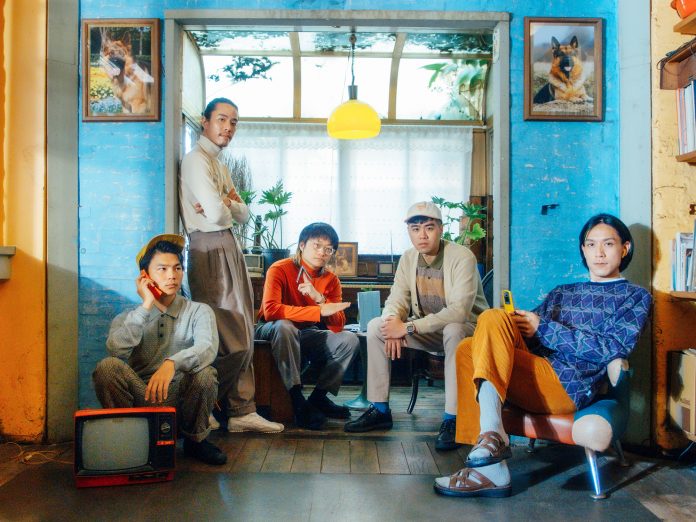
The Taiwanese band focuses on gentle comfort in their latest album. Photo courtesy of Sofia Lee

By: Michelle Young, News Editor

Synthy band Sunset Rollercoaster has returned with another dreamy record. The alternative Taiwanese band consists of members Tseng Kuo-Heng (vocals and guitar), Chen Hung-Li (bass), Lo Tsun-Lung (drums), Wang Shao-Hsuan (keyboard), and Huang Hao-Ting (saxophone). Their sound blends elements of R&B, city-pop, and soft rock to create pieces that balance vibrancy with melancholy. 

Their newest release, Soft Storm, is their third full-length record and explores the impact that large storms have on individuals. In an email interview with The Peak, the band said that the album concept was inspired by typhoons in Taiwan, stating that typhoons are “common childhood memories. In those memories, power shortages and storms were out there, but [accompanied] by our families and loved ones in the dark, we felt safe and warm. This year is like a storm to us, we are trying to make our music a soft one to connect to each other, so we [can] move on to a brighter future.”

Courtesy of Sunset Music Productions Co., Ltd

The album starts with a vibrant instrumental piece that swells from the pitter-patter of rain to an extravagantly layered synth arrangement. Then, Soft Storm melodiously blends gentle vocals and guitar on tracks like “Overlove” and “Teahouse” for songs that feel like a corner of comfort and a splinter of hope during dark times. 

On establishing their sound, the band said, “We are like unicorns flying around above the heaven of music, no burden, no boundaries. We slowly digest the music we dig online, then it naturally grows in us, we love it and believe in it.” 

Lyrics on Soft Storm describe longing for a simpler life in the midst of chaos as Tseng sings “My world is losing control,” “Please understand, there’s no paradise,” and “Don’t wake me up from this dream, I wanna live with you in a teahouse.” 

On the writing process, the band expressed that they “just spend hours and hours jamming, let[ting] the music do its own thing.” They then listen to the tracks on repeat which allows Tseng to make the music into songs. Though Taiwanese, their discography is primarily in English — Tseng’s second language. The band has previously stated that this to give their audience the space to derive their own meaning. 

Soft Storm leans into resonance with groovy uptunes on “Hyperfocus” and striking ambience on  “Midnight with Paul,” the penultimate track on the album. This blends into the final track, “Candlelight ft. OHHYUK” — a soft and synthy piece that explores mourning and the fragility of human life, which can be “snuffed out like candlelights.” 

The track starts gently, building to a burning point and ending the album with melancholic peace. The music video depicts the pain of a funeral and Sunset Rollercoaster explained that funerals mirror a “storm of emotion,” as “it brings chaos and darkness, but through love, it [solidifies] us [and makes] us stronger, so we [can] embrace a brighter future.

“During these hard times, music and love bring us together, let’s make the world a better place,” the band concluded. 

Soft Storm can be streamed on Spotify and Apple Music, and purchased on iTunes and BandcampConnect with Sunset Rollercoaster on Instagram, Facebook, or Twitter.

Being an international student during the pandemic — to stay or to not stay?

0
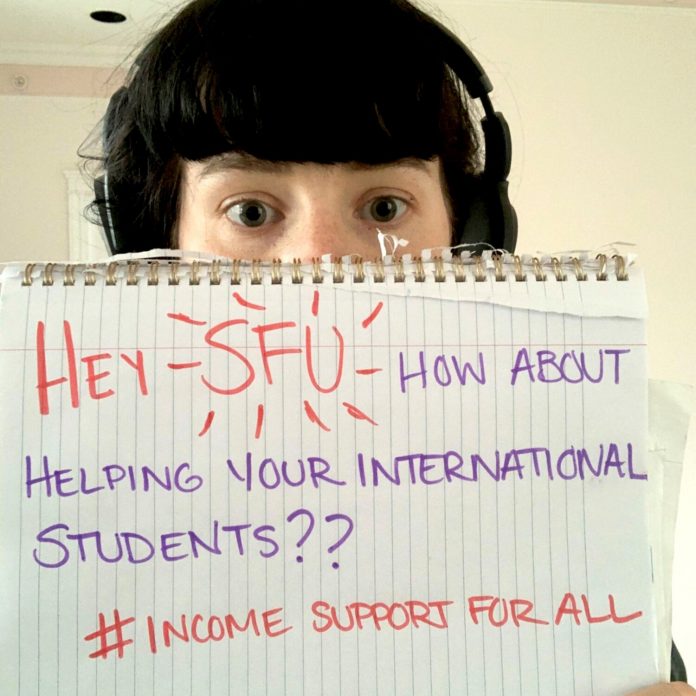
Photo courtesy of SFU C19 Coalition.

By My Huyen Le, Contributor

On March 12, 2020, four group members and I spent Thursday night discussing our projects over shared tuna stacks at Cactus Club Cafe. That night was the last time we got to see each other in-person, as none of us could have imagined that on March 17, the university would physically shut down. 

Of the many questions I’ve asked myself since the onset of the COVID-19 pandemic, one lingers. Should I be in Vietnam, where my family is, or should I be here, in Canada, where I can continue my studies and maintain student status? 

Being an international student is not easy to begin with, especially during the pandemic  — and it’s compounded by the fact that the university we attend doesn’t support us. 

I came to Canada when I was 17 and have been living alone for nearly 10 years. With no one to rely on, I am pretty much an expert in taking care of myself, even in the most difficult of times. I cautiously prepared myself for the pandemic. I stocked my shelves with rice, dried foods, and toilet paper; equipped myself with rubbing alcohol; and cleaned my doorknobs, shoes, and clothes after I came home. I was ready for the long quarantine — or so I thought I was.

Everything around me was eerily quiet. The construction noises I had hated so much had stopped. The streets were empty. The sounds of music and of laughter from people barbecuing during the weekends disappeared. If not for the weekly class on Zoom, I would have thought I was living in a post-apocalyptic world.

Not too long ago, my mom urged me to sign up for the Vietnamese government’s rescue plan to go home as soon as possible. Before hanging up, she told me, “At least at home you have me to take care of you.”

That’s when it began. I missed my mom’s wonderful dishes; her chicken mushroom recipe that she always cooks for me when I came home during Christmas, the soft but chewy texture of the chicken, the aromatic smell of mushroom that had been cooked for hours, and the richness of the soup that can be eaten with either bread or rice.

“Home” tugged at me, shattering the independent self that I had been building for years. I wanted to be with my family. I wanted to taste my mom’s dishes again, hear her nagging about my messiness, and I wanted to start stupid fights with my brothers. 

Unfortunately, there was no guarantee that I would see my family anytime soon. It made me feel more alone than ever.

It would have been nice, going back to Vietnam. Businesses there gradually reopened throughout the summer. I would’ve spent my time driving to the beach, soaking myself in the warm ocean, collecting seashells, and enjoying the finest and freshest seafood.

Despite that, I made the decision to stay in Canada to keep my student status.

I still have some savings to rely on for daily needs, which takes some financial burden off my shoulders. But other international students do not have it as easy; they must deal with the emotional toll from being away from their families and that of worrying about paying their bills — and if they’ve lost their jobs due to COVID-19, how to compete for new ones.

Most international students don’t qualify for the Canada Emergency Response Benefit, given many don’t work during the school year. Also, we do not have access to the Canada Emergency Student Benefit. For all those reasons, I wished international students like myself could receive more financial support from SFU.

Other universities have taken measures to support their students during the pandemic. For instance, Douglas College negotiated a U-Pass exemption with TransLink. Thompson Rivers University cut its student activity fees by 25%, even with having its facilities opened. 

SFU, instead, raised tuition fees as scheduled by 4% for international students, doubled the domestic students’ fees, left U-Pass fees as is, and kept student activity fees, despite the fact that most of those activities are not taking place. 

SFU prides itself on being unconventional, compassionate, and “ready”. We need SFU to demonstrate its compassion, its readiness to act, and that they care about all their students.

Many other international students will have returned to their home countries under circumstances different than mine. Deciding whether or not to stay in Canada is undoubtedly one of the most difficult choices that an international student makes during what can be lonely and uncertain times. 

I hope that my story brings attention to some of the many struggles international students experience and helps them understand that they are not alone.