Home Blog Page 382

What’s next for the SFSS after voting to condemn tuition increases

0

Written by: Karissa Ketter, News Writer 

At the Simon Fraser Student Society’s (SFSS) Annual General Meeting (AGM), roughly 600 attendees voted in favour of condemning the university for tuition increases during the pandemic. Vice-President, Academic and Provost pro tem Jonathan Driver and Vice-President, Finance and Administration Martin Pochurko also said in an email statement that SFU proposes that these increases continue for the next two years.

The Peak discussed the SFSS’s plans to continue to push for a tuition freeze with SFSS President Osob Mohamed. According to Mohamed, they’re “formalizing [their] essential demands of the university” in preparation to receive the university’s draft budget. She stated that SFU is going to be presenting the budget to the student societies in the coming months for feedback. Mohamed noted that if SFU “chooses to put out a draft budget that reflects even more tuition hikes during the pandemic, again, I think that that’s going to be a time for us to, you know, have some more action [and] continue with our campaign.”

The SFSS’s main priority is ensuring that students can afford their education. Mohamed noted they can work towards this by seeing “affordable tuition as a result of rollbacks of some of these increases.” The SFSS also wants post-secondary to receive more funding from the provincial government, which they believe is the minimum of their demands. Mohamed remarked that the SFSS doesn’t “want this to be a one time vote and for things to die down. [They] want students to see [ . . . ] you do have power and you do have a voice.” 

In response to the vote of condemnation, Driver and Pochurko released a statement to the SFSS explaining their decision to increase tuition citing that inflation and other economic factors are the main reason why the university’s expenses are rising. 

On this, Mohamed explained that raising tuition “is one of those issues that affects literally every single student.” For Mohamed, this is about students having “rights in the classroom with their instructors and we want students to be respected.” She also stated that the SFSS is disappointed with the university for forcing students to choose between attending SFU and “[worrying] about where their next meal is going to come from or how they’re going to pay their rent.

“I’m really hoping that more students are going to want to get involved with student movements that we have been working with and have endorsed, such as Tuition Freeze Now and the C19 Coalition.” According to Mohamed, “When you have a message that does come directly from the students [ . . . ] that is a lot of power and a lot of leverage.” 

SFU students can attend virtual budget information sessions, led by the university, on November 23 and 30 to learn more about SFU’s budget. 

COVID-19 family confessionals

0
PHOTO: Scott Webb / Unsplash

By: Turkish Delight and Oogly Boogly

By Turkish Delight

This is the tale of an eccentric mind experiencing the effects of the pandemic. It all started a couple months ago when my Dad started watching a Turkish television drama. Keep in mind, he’s not Turkish. Watching television or cinema from other countries is interesting and something people should partake in more, though. 

Here’s the twist — soon after he starts the show, the subtitles stop working. But does that deter him? Not at all. He decides to continue watching, except the subtitles are now in his mind. He makes up what the actresses and actors are saying based solely on their mannerisms and clues from the one episode he watched before the subtitles left. It might make sense if he wanted to learn the Turkish language, but that’s not even the case. 

While most of us lost our understanding of basic human interactions during quarantine, my dad purposely chose to watch shows he didn’t understand in the first place.

This is all to the dismay of my mom who just wants to go to sleep while the voices of Turkish actors boom around the whole house. I’m surprised that he hasn’t been banished to the couch by now, but maybe the Turkish voices mimic socialization, and I know we could all use more of that.

By Oogly Boogly

There’s a running joke in my household that a reality show centres around my family. This isn’t because we’re entertaining, compelling, or because my mother leaked my sex tape for celebrity status because marrying an Olympian and having O.J. Simpson’s child wasn’t enough. This is because we act like a ~quirky~ family sitcom that barely made it past pilot season. In quarantine, this only got worse. 

I could talk about my mother’s off-key singing or my adult brother’s newfound tendency to create board games and scream at them. The true star of the show, though, is my older sister. On day eight, she started hugging my legs. On day 20, she called the cat and me “oogly boogly.” On day 36, she gave me a sticky note that read: “oogly boogly, if you illegally download The Sims for me, I will stop quarantine touching you.” Was this a threat or a promise?

Turns out, the so-called quarantine touching wouldn’t end until day 52: Electric Boogaloo. She entered my room at 3 a.m. and asked me to name every single Chicago Blackhawks player and their jersey number. Each time I failed, she would suffocate me with a pillow until I got it right. 

It was somehow the thing about a group of men I was most afraid of.

That, dear reader, was the night I decided that the world needed to bear witness to these horrible acts. Please donate to my GoFundMe to officially produce the first season of Keeping Up with Yet Another White Family Getting Sick of Each Other and Being Toxic About It During COVID-19.

What PSSU’s Election Night viewing party taught me about partisanship

0
Photo courtesy of CBS News.

By Emma Jean, Staff Writer

Disclaimer: As a queer white cis woman, I only speak from my own experiences, and cannot speak on behalf of racialized or trans people who have experienced harm because of these ideologies and the policies and attitudes that spawned them, nor do I intend to. 

It had been three years, 11 months, and 26 days of waiting, and somehow it was finally here. The US presidential election was set for Tuesday, November 3, 2020, and every day leading up to it, a lurking dread sat in my stomach each time I looked at the polling. To commemorate these near four years of turmoil and a chance at a future, the Political Science Student Union (PSSU) decided to throw an election night viewing party over Zoom, complete with trivia and prizes.

A way to watch the election with built-in breaks to relax? Of course I was in. Not to mention, it would also be nice to share the evening with whoever was there, but that was something of an afterthought. What I didn’t realize at the time was that the students that participated in this event alongside me would stick with me the most. 

In an interview with The Peak, Christina Salvador, the PSSU president and an organizer of the event, told me that “this event is a space to approach these issues and maybe learn in a comfortable environment[ . . . ] that gives everyone a chance to voice their own opinions.” 

Boy, were they right. 

At 7:00 p.m., the night began and the event quickly grew to around 25 participants; even through the screen, the nervous and somewhat awkward energy was palpable. A CBC feed begins to play as students shouted over it to talk to their friends. People repeated new Biden-positive state totals as they come in, giving thumbs up each time. At 7:14 p.m., a voice pipes up. 

“Wait, are all of you guys Democrats?” 

A PSSU moderator then chimes in, reminding everyone to stay civil. The feed, which made other participants hard to hear, stops. Someone asks the student who asked about democrats if he is one. 

“Nope, I’m rooting for Trump.” 

You could have heard a digital pin drop. Someone asks him why. 

“Well, I’ve got a stake in finance in the states, and I like the way he’s been handling China and Jerusalem, so I’m on his side.” 

“Well . . . that’s okay!” says a moderator. The room grew silent yet again, and after a comment about Mike Pence, he ensured everyone that he has gay friends. 

Why are you voting against their rights then, I think. Someone soon gets called a cuck, and a no-swearing rule is established. Unfortunately, that doesn’t jive well with my instincts when I’m stressed. To be honest, the event wasn’t helping on that front. An ideological challenge from a group that doesn’t think I, and many, many others, should have the full rights of a human being wasn’t what I wanted or was expecting. 

Someone suggests that everyone introduce themselves to break the ice, and in a round-robin fashion, we all say our names, majors, and political alignments. The range in responses is both wider and slimmer than expected. Most identified themselves as some version of a centrist; some with political parties, some as whatever ‘creates the greatest good’, and some as whatever ‘elevates women’. 

I soon found myself realizing that I might be one of the only firmly left-wing students in attendance. 

As a communication student, the term “echo chamber” is thrown around a lot in my classes. It’s usually used in the context of social media as a place where people see their opinions parroted back to them on an endless loop, and while I certainly don’t have that in real life — three different federal parties are represented in my family alone — I can’t completely deny it online. This event, however, was far from an echo chamber. 

Attending a Christian high school, this certainly wasn’t the first time I’ve been outnumbered, but it wasn’t something I was expected to experience at this event. I would soon find out that we all had one thing in common: a desperate investment in a Joe Biden win.

As the results took their sweet time rolling in, the conversation warmed and the point of discussion became anything under the political sun ranging from Christy Clark’s ties to SFU (“we don’t talk about that here”), to Palestine, to, as it flip-flopped, what individuals would have actually deserved to win Texas (answers: The Rock, Kanye West, Andrew Yang). As California is called yet the midwest looks uncertain, a student predicts that Biden will only get 244 electoral votes, losing the presidency. 

But after about an hour of lively discussion, I noticed the Trump-supporting student was nowhere to be found. 

At times, our political differences were barely noticeable. We all hollered as Biden picked up states and worried when they were close. But at times, these differences were all I could think about. 

Around 10:30 p.m., a student began to theorize about how their political hero, former British Prime Minister Margaret Thatcher, would be able to handle all of this better, noting how cute she looked with former president Ronald Reagan. As if the election didn’t have my adrenaline pumping enough, it took my remaining nerves to keep a calm voice as I tried to articulate that the hundreds of thousands of people who died of AIDS while they refused to lift a finger made it hard for me to have any respect for either of them. 

Then the New York Times would call a state again, and we would all pump our fists in unison. It was something to see everyone ranging from a “card-carrying member of the Conservative party” to a democratic socialist disagree about everything under the sun, and then share the same joy each time a state turned blue.

Around 12:30 a.m., the results stalled and only six students remained. Rather than worry closely about election numbers, most students were wrapped in blankets, leaning back in chairs and beds, and musing loosely about academia, workplace drama, what they want out of life, television recommendations, and anything in between. This was a very different picture of election night than I imagined, but despite the palpable election tension I felt, it was a much kinder ending. 

As I closed my eyes, trying not to fall asleep, students were jumping over themselves to offer wisdom to a first-semester political science student. This was the sort of generosity of spirit that makes me a glimmer of optimism about the world and informs my political philosophy. If all these students can be generous with their time to help each other out, maybe we can too on the issues that plague our neighbours we feel removed from in our policies that would make their lives safer and better. 

This wasn’t about ‘all sides coming together’; we’re well past that when an ideology causes active harm to a large portion of the population. But meeting a broad range of people across the political spectrum reminded me that we’re all capable of being well-intentioned and caring for our fellow human and if that’s the case, a version of politics where we act on what those interests are rather than our own is possible, especially for those who are left behind by the housing crisis, drug policy and a deeply racist colonial system. It may not be there now, but I believe it could be.  

I had naively assumed that the night would end with all of us either ecstatic or despondent. How the night actually ended was at 2:00 a.m. with midwestern stalemates, heated arguments about Nietzshe, and an exhausted me trying desperately to butt in to bid the participants a goodnight. 

In a final act of goodwill, a student recognized my foggy mental state and swiftly barged in between the debaters to offer me the floor one last time to thank them for their company before I hit the hay. My goal had been to stay for the entire event, but as participants furiously raced to their bookshelves to cite their philosophical sources, I realized that, much like the election results we so desperately craved, this argument was just getting started.

It’s difficult to decide what to conclude from all of this. Does the election of Joe Biden, whose presidency will likely change nothing for the lives of many people but everything for others, mean a cause of celebration or a sobering look at how we got here? How do you see the value of a variety of political perspectives of others while acknowledging the damage they have caused? In those cases, I think that it’s possible to do both. 

As Christina from PSSU said, “I find if you approach politics from your own perspective, you’re never really going to be challenged.” As I see it, this isn’t about drifting towards the centre in an attempt to be balanced; it’s about knowing how to work with people you disagree with to create a better world. 

As I write this, Joe Biden is ahead in Georgia, Pennsylvania, Nevada, and Arizona, and with 253 electoral votes, it’s almost certain that he’ll win. I cried and hugged my dog when I saw that Georgia and Pennysvania had flipped blue, and I felt more optimistic about the potential state of American politics than I have in a long time, especially seeing a new wave of progressives coming to congress. The election of Joe Biden may not mean immediate positive change, but just like seeing the good-heartedness in so many of these students, it leaves the door open to a future worth being hopeful for. 

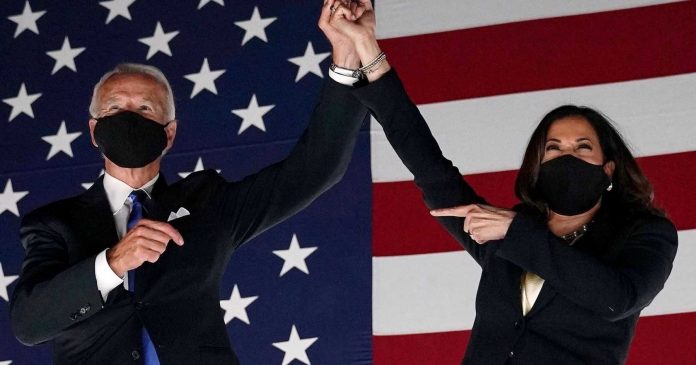
Update: Joe Biden is the 46th President-Elect of the United States of America, and Kamala Harris, a child of Jamaican and Indian immigrants, is the first Black person, first woman, first Black woman, first person of South Asian descent, and first woman of South Asian descent to be their Vice-President.

Still, the fight for equity and inclusion, as well as issues related to social and climate justice, does not stop with Biden and Harris being elected. Whether about the crime bill that Biden drafted in 1994 that disproportionately impacted Black people or Harris’ track record on issues related to trans and sex work issues, we must continue to hold leaders accountable for the purpose of protecting the democratic principles that govern a country.

How the WE Charity scandal led to the cancellation of the Canadian Student Service Grant program

6
Photo courtesy of Yahoo News Canada.

By Sara Wong, Peak Associate

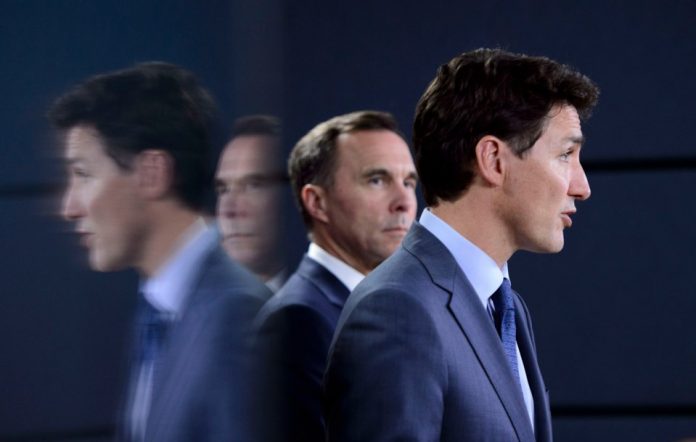
On June 25, Prime Minister Justin Trudeau unveiled a new initiative — the Canada Student Service Grant (CSSG) program — which would offer paid volunteer jobs to post-secondary students and recent graduates. However, before the $900 million program could officially launch, the WE Charity Scandal came to light. Here is a timeline of events that highlight the depth of this political controversy:

July 3: The WE Charity relinquished its $19.5 million contract with the Liberal government to run the CSSG, as criticism continued to grow on the organization’s founders, Craig and Marc Kielburger, and their connection to the Trudeau family. Following the WE Charity’s announcement, Global News reported that Canada’s Ethics Commissioner, Mario Dion, said “he would begin an examination [into the federal government’s handling of the WE Charity grant] and that he had notified Trudeau about it” on the same day.

July 9: Financial ties between the WE Charity and members of the Trudeau family were exposed. According to CTV News, “Trudeau’s mother, Margaret Trudeau, spoke at approximately 28 events and was paid [a total of] $250,000 in speaking honorariums between 2016 and 2020. His brother, Alexandre Trudeau, also spoke at eight events from 2017 to 2018 and was paid a total of approximately $32,000.” CBC News would later add to this report, writing in an Instagram caption that “the prime minister’s wife, Sophie Grégoire Trudeau, attended seven WE events and was reimbursed a total of $25,326.”

July 16: The Ethics Commissioner launches a separate investigation into then-Finance Minister, Bill Morneau. Like Justin Trudeau, Morneau had familial connections to the WE Charity. His two daughters, Grace Acan and Clare Morneau, worked for WE; the former was a contract employee, while the latter spoke at several WE Day events. Similar to Trudeau again, Morneau did not recuse himself from the government’s decision-making process on which organization would run the CSSG program. 

July 22: Global News discovers that the contract the Trudeau government awarded WE was for their foundation, not their charity, which Trudeau advertised the money was going to. Reportedly, the WE Charity Foundation “was described by WE as inactive in August 2018 and only became a federally registered charity in April 2019. Its stated purpose was to hold tens of millions worth of WE Charity real estate.” Also on this day, Bill Morneau repaid $41,000 in incurred expenses from his family’s WE Charity trips to Kenya and Ecuador. 

July 28: Craig and Marc Kielburger testify (virtually) in front of the finance committee. The meeting lasted just under four hours. In a clip posted by @cbcnews on Instagram, Craig Kielburger is recorded saying the following: “I’ve never seen the prime minister or Sophie Grégoire Trudeau in a social setting [ . . . ] the McCain-Morneau family are very generous philanthropists and we have hosted them on humanitarian trips, and, you know, all of this is in furtherance of the cause [ . . . ] what we’re doing here is fulfilling the purpose of our charity and that is a difference than a personal relationship.”

July 29: CBC News publishes an investigative report revealing that in 2018, employees of the WE Charity in Toronto were pressured into attending a holiday party hosted by Bill Morneau. One past employee, who remained anonymous in CBC’s article, explains that they were instructed “to go after work to ‘fill the room’ and that [the celebration was described] as though it were a ‘WE event or a Craig Kielburger event’.” The reason why employees did not speak up sooner was because of their NDAs (non-disclosure agreements), which CBC learned “forbids staff from disclosing ‘business and/or personal information about Craig Kielburger, Marc Kielburger’ and ‘any person or company’ with which WE ‘enters a strategic alliance or any other partnering arrangement’.” 

July 30: Justin Trudeau testifies in front of the finance committee, also done virtually. He claimed, as quoted from Global News, “that he didn’t know anything about the decision to give the deal to the WE Charity until the matter was set to come before his cabinet in early May.” You can watch the full meeting on YouTube.

August 17: Bill Morneau resigns as Finance Minister and as a Member of Parliament (MP). During his press conference, Morneau stated that he wished “that, in hindsight, [the government, including himself] had done things different around the We Charity.”

September 9: Craig and Marc Kielburger announce that they will be leaving the WE organization and that the WE Charity will cease operations in Canada. The Globe and Mail points out that “the charity’s statement did not make clear the future of its operations in the U.S. or Britain and didn’t address the future of ME to WE.”

October 8: At the ethics committee meeting that occurred on this date, the Conservative party put forward a motion to “revive a push for documents from the speaking organization WE Charity used to pay hundreds of thousands of dollars to members of Prime Minister Justin Trudeau’s family”, CTV News’ Rachel Gilmore writes. These documents had been requested in late July, however “when Trudeau prorogued Parliament, the ask evaporated alongside all other committee investigations into the WE controversy.” Furthermore, the meeting was adjourned before the motion could be voted on. The next ethics committee meeting has not been scheduled.

With the WE Charity Scandal ongoing, the CSSG program has been completely abandoned. “I had a couple friends sign up. There were a lot of remote opportunities, but aside from taking applications nothing ever happened,” a user on an SFU Discord noted when I posed a question on the WE Charity Scandal’s effect on students. 

On the scandal itself, the user added: “We got increased student loans instead [now that the CSSG is not running], which should have been done from the start, but we instead spent all this money on starting something that logistically was never going to fit into a summer timeline anyways.”

Prior to its cancellation, approximately 35,000 students had applied to take part. 

“Personally: I was looking for a summer job in order to finance my education, but due to COVID-19, the job market was (and still is) tough with many places having closed down or having hiring freezes. When the student service program was announced, I hoped to join it as it would at least earn me some money and would let me put some experience on my resume, as well as get a reference,” one SFU student shared with me via Instagram. 

When asked how the cancelled program had affected them, the student said, “I’m currently using CESB money to pay for tuition and supplies, but I’m not exactly sure what my longer-term financial outlook is.”

The CESB program has now ended, leaving many students without any monetary support from the government. Since applications for the CESB closed, the New Democratic Party (NDP) has been calling on Justin Trudeau to provide more financial aid to post-secondary students and recent graduates. 

As reported in The Gateway, the NDP Edmonton Strathcona Member of Parliament — Heather McPherson — “wants all the money [that was] allocated towards [the CSSG] program to be spent on extending the Canada Emergency Student Benefit (CESB).” 

This idea has been supported by cross-Canada student groups such as the Canadian Alliance of Student Associations (CASA) and the Canadian Federation of Students (CFS). 

Similar to CASA and CFS, the Simon Fraser Student Society (SFSS) released a statement calling on the federal government to provide more financial aid to students. Notably, the SFSS published their statement while the CESB was still in effect and before the CSSG program was announced.

The Mandalorian’s execution gives the Star Wars franchise new hope

0
The Mandalorian throws it back to the original films while maintaining its own originality. Courtesy of Disney

By: Emma Best, SFU Student

The Mandalorian is the best thing to happen to the Star Wars franchise since Star Wars: A New Hope (Episode IV) (1977). This show is a spaghetti western in space, filled with desert planet shootouts, a smooth score by Ludwig Göransson, and The Mandalorian as a Clint Eastwood-like gunslinger. It’s also sprinkled with the same Star Wars charm seen in the original trilogy and happens to feature the cutest sidekick since baby groot. Taking place five years after the events of Return of the Jedi, in a galaxy post-Vader and his empire, it stars Pedro Pascal as its titular Mandalorian — an unnamed bounty hunter from the now inhabitable planet of Mandalore. However, it was his smaller co-star the Child, colloquially dubbed Baby Yoda for the resemblance to Yoda, that helped get the show trending overnight when it first premiered last fall. 

I’ll admit, I wasn’t expecting to become invested in this show; but once the final episode of season one aired last December of last year, I spent all 10 months (not so) patiently waiting for the next season — which thankfully began on October 30 and did not disappoint. 

The first season found the Mandalorian with a target on his back, after collecting a mysterious bounty ordered by a similarly mysterious client (Werner Herzog) — that bounty being Baby Yoda. But season two finds him searching for the home of Baby Yoda, looking first for other Mandalorians that he believes will help him find his way. 

The Mandalorian continues to integrate all the best bits of Star Wars lore, mixed together in just the right quantities to make a perfect Star Wars cocktail. The show also manages to emulate the Star Wars feeling without entirely relying on nostalgia. While a bit of nostalgia is nice and makes watching films and TV shows feel like seeing an old friend, it can also diminish any originality within a story or affect the pre-existing canon. I found this to be a problem in the sequel trilogy that began with The Force Awakens in 2015. By relying too heavily on the past main characters Luke, Leia, and Han, fresh protagonists Rey, Kylo, Finn, and Poe weren’t able to fully stretch their legs and were overshadowed by their predecessors.

We are still given references to Star Wars canon (from wipe transitions between scenes to the new but familiar face of Baby Yoda) and easter eggs are sprinkled throughout The Mandalorian.  There are also theories that Boba Fett will appear in season two, but none of this is nearly enough to negatively affect the plot of the show. It’s a smart way to connect to the original films as well as delve deeper into an aspect of them without directly affecting the pre-existing canon. This is especially true with the second season diving into Baby Yoda’s origin.  

The use of practical effects in the show is also one of my favourite things about it. Having watched many TV shows and movies that rely too heavily on CGI (the prequel trilogy for example), it’s refreshing to see the use of prosthetic makeup, set design, and puppets throughout this show. Baby Yoda could’ve easily ended up as a horrible computer-generated nightmare — think Jar Jar Binks. However, by largely using a mix of puppetry and animatronics, we get the same charm and magic of the first films and the effects they used back in 1977 when large sets were actually oil matte paintings, and droids R2D2 and C3PO had real actors walking around in their suits.

Since the acquisition in 2012, some have criticized Disney for “ruiningStar Wars. And while I too was disappointed by how the sequel trilogy ended with The Rise of Skywalker last December, I think this TV show can be seen as a new hope for the future of Star Wars. The best thing since the original films, it’s stepping outside of recycled plot lines about Skywalkers and Jedi. This breathes fresh air into new plots that take place in a universe we are familiar with, following characters that we are unfamiliar with. Finding that perfect balance broadens its possibilities for future episodes and opens the doors to new viewers — even those who aren’t hardcore Star Wars fans. With its new season now premiering week by week on Disney+, Star Wars fan or not, this show is definitely worth the watch.


Dr. Ryan D’Arcy aids brain recovery with Project Iron Soldier

0
PHOTO: Simon Fraser University Communications & Marketing / Flickr

Written by: Mahdi Dialden, News Writer 

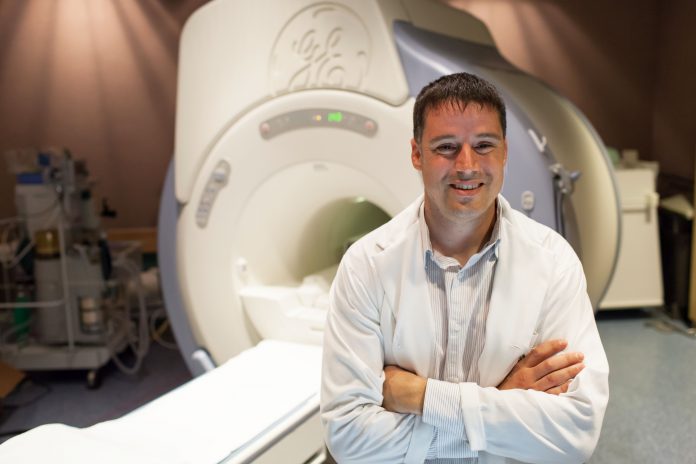
A study led by SFU applied sciences professor Ryan D’Arcy and an SFU team of researchers spearheaded Project Iron Soldier. The project surrounds Captain Trevor Greene, a retired veteran who was hit in the back of the head by an axe in Afghanistan while on duty in 2006 and suffered severe and traumatic brain injuries. 

Over 10 years ago, the Centre for Neurology Studies at Health Tech Connex, co-founded by Dr. D’Arcy, began working with Captain Greene. In an interview with The Peak, Dr. D’Arcy explained that Project Iron Soldier “aimed to help with recovery from brain injury and other devastating neurologic conditions using the scientific concept of neuroplasticity — which is basically just a fancy way to say rewiring the brain circuits to recover function.

“The main objective of the project has been from the outset, in the beginning, was to inspire people, to push the limits in their own brain health,” Dr. D’Arcy said. He expanded by adding that this can refer to “concussions, mental health, or optimizing overall brain health.”

Captain Greene’s rehabilitation with Dr. D’Arcy began three years after the injury, following a documentary Dr. D’Arcy watched about a captain called “Peace Warrior” who underwent rehabilitation with an orthopedics specialist. However, as a neuroscientist, Dr. D’Arcy realized the issue with “Peace Warrior” was related to his brain. Dr. D’Arcy emailed the producer of the documentary offering his help. 

“We got connected and we agreed that using advanced brain imaging, we could measure his brain rewiring through neuroplasticity. We could publish that as a research team together to get it into the medical literature,” he said. 

The treatment was expedited when Dr. D’Arcy and his team decided to do a 14-week trial with a device called the Portable Neuromodulation Stimulator (or PoNS). The function of the PoNS is to send “a series of small electrical impulses to the brain by stimulating the tongue.” This device, coupled with physical therapy, helped in the process of neuroplasticity, which is the ability of neural networks in the brain to change and grow,” and eventually seeing improvements in overall cognition. 

In 2015, the BC and Yukon Command of the Royal Canadian Legion gave Captain Greene a robotic exoskeleton that would aid in re-learning to walk. The work inspired the revitalization of the Canadian Royal Canadian Legion, and the creation of a Legion Veterans Village, currently under construction in Surrey, which is a center of excellence to treat post-traumatic stress disorder, mental health, and physical recovery for veterans. 

“We’re always looking for excited and interested students who think that this [ . . . ] is something that is of interest to them, and that can be from all walks of life. It can be from our applied sciences or engineering and our computing science [departments], but it can actually also be from our biological sciences, our neurosciences and our health sciences. I always love interacting with students and seeing if there’s ways to partner there,” Dr. D’Arcy concluded. 

What Grinds Our Gears: Wear a fucking helmet

0
You can’t look cool if you’re dead. PHOTO: Waldemar Brant / Unsplash

by Madeleine Chan, Opinions Editor

I cannot count the number of people that I’ve seen just this past summer that haven’t worn a helmet while biking. Yeah, when it’s nice out biking is great — for minimizing road congestion, avoiding potentially contagious people on the bus, or just to get some exercise. But this should always be done with a helmet.

It’s hard to believe that people think that helmets are only necessary for participating in extreme sports. Just because you’re not “on X Games mode” doesn’t mean you aren’t at risk of serious injury. A simple wrong turn, bump in the road, or distracted driver could turn an otherwise casual bike ride into a stay at the hospital, or worse, a grave. I recently got a concussion from biking — and I was wearing a helmet. Who knows what casualty I could have suffered if I wasn’t.

If affordability is a concern, it is worth the wait to save up for something that is the difference between life and death. If biking is the sole mode of transportation to a vocation, and it’s done without a helmet, think about the pay and/or school time that would be lost from a serious injury. There is literally no reason not to wear one if a prioritization on wellbeing is being made over looking hot. And, surprise! Showing off any newly barbered hair doesn’t work if you’re dead.

Regardless of any laws around mandatory helmets, there should always be a personal effort to wear one. It’s not cool if you don’t.

TransLink announces pilot copper-based initiative to combat COVID-19

1
Photo Courtesy of Teck Resources

Written by: Michelle Young, News Editor 

On November 10, TransLink announced a new pilot-program that aims to slow the spread of COVID-19. The initiative will use copper-based materials — which contain antimicrobial properties and are self-disinfecting — on high-touch areas of transit to “to help reduce the risk of transmission of pathogenic organisms.” 

Medical microbiologist Dr. Marthe Charles explained, “Copper has multiple ways of killing microorganisms, so one of the ways is by being toxic on contact, so that means that the microorganisms are not able to survive at the surface of the copper.

“We want to see if these products are durable and if they will retain their ability to kill germs over time while on public transportation. If this study was to be successful, self-disinfecting surfaces containing copper would become a valuable addition to cleaning hands and cleaning surfaces.” 

The pilot will take place on “two [SkyTrains], operating on the Expo-Millennium line and two charlie buses,” according to TransLink CEO Kevin Desmond.  

In regards to cost and whether fare prices were going to rise, Desmond stated, “I don’t want to say cost isn’t an issue, but the reality is [that] this is an example of testing out new technologies and innovations.” He explained that if the project yields good results, he hopes that “we figure out a way to implement something that could have lasting benefits even beyond the coronavirus.”

The initial components of the project are being funded by Teck Resources. CEO of the company Don Lindsay, stated that “the cost is approximately $90,000 and the key is to get the results from the pilot and to then we step back and decide what’s the next step and who would fund that.”

“It’s a pilot. We’re gonna see and we’re gonna learn [ . . . ] if it really is an effective approach to improving public health, and then if it can be expandable to the various different features of our broad and complicated transit system,” Desmond said. 

Five places to get vintage clothing without invading the commercialized thrifting market

0
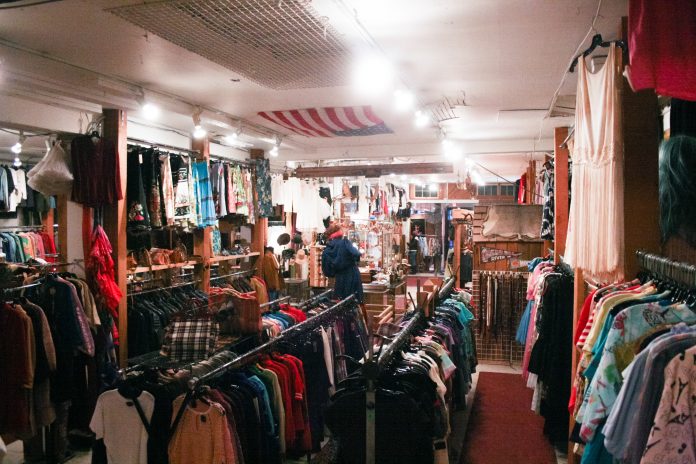
Many shops on this list announce deals on their social media, so I’d recommend following all of them. PHOTO: Gudrun Wai-Gunnarsson / The Peak

By: Juztin Bello, Copy Editor

As a fashion trend that has taken off in the past year, the hunt for vintage clothing to replicate looks of the 80s and 90s has people flocking to thrift stores all over, with one of the most popular destinations being Value Village. But while many want to hop on the vintage trend, some take issue with consumers clogging the secondhand market, resulting in the increased price range of thrifted clothing and an overhaul of middle-class consumers claiming goods intended for lower-income individuals. For people looking to put that retro flare into their wardrobes without contributing to the gentrification of thrift stores, here are five stores in the Metro Vancouver area to satisfy your vintage needs.

READ MORE: “Why we should be moving towards mindful thrifting

What’sGood? Vintage Apparel

Location: 815 12th St, New Westminster, BC
Hours: Thursday–Sunday 12 p.m.–6 p.m.
Instagram: @whatsgood_vintage

Perhaps my most visited on this list, WhatsGood? Is a small shop in New Westminster that boasts a small but ever-circulating collection of vintage clothing. Their collection of vintage hats, pullovers, brand-name pants (such as Levi’s and Carhartt), and their collection of handmade face masks help them stick out on this list. While only open four days a week, they compensate by doing daily restocks to ensure new products come in and out as quickly as possible. Because they’re open on fewer days, I’d suggest following them on Instagram since they allow online shopping through their page (with both shipping and pick-up) and update followers with their best and newest drops. 

Fun little anecdote: last time I went (donning a mask, of course) the two owners had gotten married the weekend before, and it was heartening to hear about their intimate ceremony during these socially distant times. 

Mintage Thrift

Location: 22780 Dewdney Trunk Rd, Maple Ridge, BC
Hours: Sunday 11 a.m.–5 p.m., Monday–Saturday 11 a.m.–6 p.m.
Instagram: @mintagethrift

Although there are three Mintage locations (Broadway, Commercial Drive, and Maple Ridge), the one I tend to find the most success with is the Maple Ridge location. Whether it’s because the store itself is the largest or because it’s further away and therefore less crowded is unclear, but ultimately their enormous collection of vintage t-shirts is what pulls me in. They also have a vast selection of vinyl records for as cheap as $5 for any of you vinyl record collectors. What’s more, I’ve found Mintage Thrift to be on the cheaper side compared to some of the other stores I’ve frequented —  plus, their custom tote bag is really cute, so I’d suggest picking up one of those while you’re there. 

F as in Frank Vintage Clothing

Location: 2425 Main St, Vancouver, BC
Hours: Sunday–Thursday 11 a.m.–7 p.m., Friday–Saturday 11 a.m.–8 p.m.
Instagram: @fasinfrankvancouver

F as in Frank? How about F as in fire, because the vintage clothing this store has to offer is absolute heat. Found along Main Street, this store features everything from Sailor Moon bags, to old school racing tees, to an abundance of Polo Ralph Lauren. For shoppers with a go-big-or-go-home approach to hunting vintage clothing and like a gamble, their website advertises wholesale options for buying in bundles, such as wholesale vintage t-shirt mystery boxes (up to $500 USD) and sports t-shirt bundles ($180 USD). If you’re like me and can’t commit to shopping like that, no sweat. Just take a trip down Main Street, grab some food at any of the great restaurants along the strip, and then pop right into F as in Frank — make a day of it. 

The Archive Apparel

Location: 10202 152 St #116, Surrey, BC
Hours: Tuesday–Sunday 12 p.m.–6 p.m.
Instagram: @thearchivebc 

Although this is one I’ve checked out less consistently than the rest, The Archive does not fail to grab my attention with the drips they share on their Instagram. Probably my favourite shopping spot in Surrey, this store, while small, delivers some of the freshest jackets and jerseys on the market. One notable aspect of The Archive is that they feature more footwear than I usually see at vintage clothing stores, with some really clean Jordans and (on a few occasions) Yeezys (which aren’t vintage, but look pretty sweet). They also advertise plenty of sales out of the blue, so keeping up with them on Instagram is a must. If you ask me whether to give this place a chance, the large Nike sign on the wall says it all: just do it. 

Stoxx Vintage Shop Vancouver

Location: Kingsgate Mall, 370 E Broadway Unit 118, Vancouver, BC
Hours: Monday–Wednesday/Saturday 9:30 a.m.–7 p.m., Thursday–Friday 9:30 a.m.–9 p.m., Sunday 11 a.m.–6 p.m.
Instagram: @stoxxvintage 

Found in Kingsgate Mall, Stoxx Vintage is a family owned and operated vintage clothing store that greets shoppers with a vast collection of cowboy boots, vintage brand-name apparel, and metal decor. With good music always bumping and a friendly family dynamic, a trip to Stoxx is guaranteed to be successful, regardless of how much vintage clothing you’re able to find. This past October, Stoxx Vintage did a giveaway worth $100 towards their store every week, so following their social media is beneficial for keeping up-to-date with these sort of opportunities.

SFU announces new restrictions following updated BC health orders

0
Photo Courtesy of Simon Fraser University via Facebook

Written by: Michelle Young, News Editor

With the new health orders announced for BC on November 7, SFU has followed regulations by updating their campus guidelines. Vice-President, Academic and Provost pro tem Jonathan Driver stated in an email that moving forward “staff, faculty, and students attending campus are required to conduct a self-assessment every day before they come to campus.” The email provided a link to the BC self-assessment tool, and stated that those who have possible symptoms are not to come to campus. 

Driver also stated that visitors are only permitted if they’re aiding “a core service” and must have “an invitation approved by a manager.” In-person courses will continue following protocols specific to each class. While study spaces remain open only for individual use, “common areas, including lunch rooms, are closed until further notice.” 

The email maintained that those on campus are expected to wear non-medical masks “in all indoor common areas” — which includes, entrances, hallways, staircases, washrooms, study spaces, dining areas, libraries, and “other high-traffic common areas where physical distancing cannot be maintained.”

Furthermore, “no in-person meetings, events or programs, except some essential academic meetings with approval, can proceed in-person during this time.” Driver also asked supervisors to have their staff work remotely, unless it is “related to [an] essential in-person service.”

The W.A.C. Bennett Library and Student Information Desk will “remain open with screening measures, physical distancing, and mask use in place.”

SFU Athletics & Recreation will consult with public health for guidance on updating their services. Find updated protocols on the SFU Athletics & Recreation website.

Driver concluded, “We thank everyone for doing their part to protect each other. If you become aware of safety protocols not being followed, you can report it anonymously.”