Home Blog Page 381

Senate Report: October 5, 2020

0
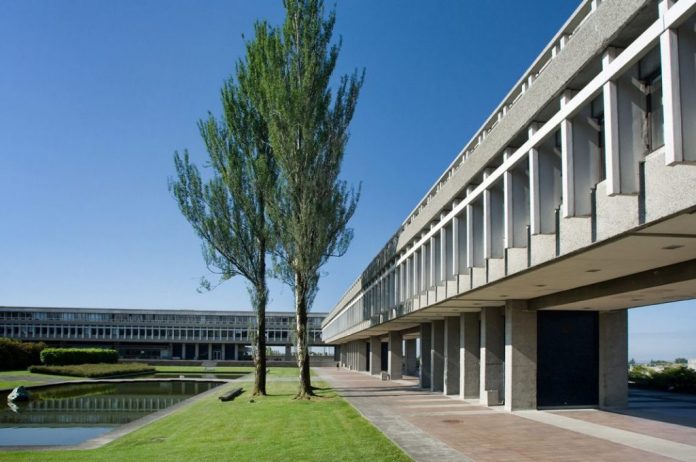
Photo from Peak archives

By: Serena Bains, Staff Writer

Exam invigilation software for the Fall 2020 term

During the question period, Senator Gabe Liosis discussed proctoring software. SFU expressed interest in implementing new exam invigilation for the Fall 2020 term. Liosis asked if there were any updates on what exam software would be used in the Fall term.

Senator Elizabeth Elle noted that instructors have the most knowledge of whether an exam is needed for their course. She added that if an exam is required, proctoring software is necessary to prevent cheating. SFU is currently piloting a new software to meet BC privacy requirements. Elle added that the software must be integrated into Canvas. The software is currently being piloted in 12 courses, which began the last week of September. 

Possible appointment of an Associate Vice-President of Equity, Diversity and Inclusion

Senator Liosis posed a question regarding the possible appointment of an Associate Vice-President of Equity, Diversity, and Inclusion (EDI). He asked what the process would look like, what the timeline would be, and whether President Johnson would consider a Vice-President of EDI rather than an Associate Vice-President.

President Johnson stated that her comments regarding EDI were said in a casual conversation about how to improve the structure of SFU. While she has not ruled out the possibility of a Vice-President of EDI, she stated that it is currently in the consulting phase. President Johnson said she would like to move forward with a recommendation later in the Fall.

Process to report academic dishonesty

Senator Eric Gedajlovic posed a series of questions related to the issue of academic dishonesty, discussing the significance of academic dishonesty in the Spring semester, what is being done to avoid this issue in the future, and the process for professors to deal with such instances. 

Vice-President, Academic and Provost pro tem Johnathan Driver stated that there have been concerns from professors and students alike regarding academic dishonesty. It was recommended that a working group be established to address the issue of academic dishonesty and any gaps currently present. The membership of the university board on student discipline has already been increased to address the greater number of cases of academic dishonesty. He added that, “We won’t solve all the problems by technological means, such as online proctoring software, but we will obviously be taking a look at this.”

According to Driver, the Centre for Educational Excellence has also developed resources for professors to deal with academic dishonesty and possible alternative forms of assessment that would make academic dishonesty less common. Professors can also receive guidance from the academic integrity advisors, department chairs, and the student conduct office to determine what an appropriate penalty would be for a specific offense.

Senator Rummana Hemani stated that there were 275 reported cases of academic dishonesty in the Summer 2020 semester, with two courses involving multiple students, classified as “mass-cheating.” Senator Hemani also described that the process for reporting academic dishonesty is already present in current policy. 

Driver also responded by stating that the amount of academic dishonesty that goes unreported may be anywhere from 20% to 60% of students and 50% of instructors speculate that cheating may have occurred in their courses. 

Driver did not state how instructors will be compensated for their increased workload as negotiations are ongoing with the faculty union, however he encouraged professors to document the additional time spent dealing with academic dishonesty.

The status of the student to faculty ratio in relation to tuition

Senator Gord Myers explained that more than 93% of the universities ranked in Quacquarelli Symonds have a greater student to faculty ratio than SFU. He added that the amount of tuition revenue has increased by 89% in the last 11 years, where the increase in the amount of tenured positions has been insignificant. Myers concluded by asking whether there was a plan for hiring more tenured professors. 

Vice-Provost and Associate Vice-President, Academic Wade Parkhouse responded by providing an overview of how SFU plans for an increase in faculty hiring. It was stated that the student-to-faculty ratio is part of the planning process. Senator Parkhouse affirmed that the numbers of faculty members from March 2020 show relatively no change. He noted that this is due to hiring usually occurring either in July or September, therefore, the statistic that Myers cited was indicative of the number of staff in the 2018/19 recruiting year. As of September there has been a net increase of 30 faculty members. 

The next senate meeting is planned to occur on Monday, November 2.

Need to Know, Need to Go: October 26 to November 1

0
Illustration of a blue calendar, with "Need to Know, Need to Go" written on top
Arts & Culture events to catch around the city. Image courtesy of Brianna Quan

By: Meera Eragoda, Arts & Culture Editor

Simon Fraser Student Society (SFSS) events | October 27 to 30 | Free

The SFSS is wrapping up their fall/Halloween offerings this week with a few more events. They will be hosting a vegan, salted caramel pretzel cookies workshop on Tuesday, October 27. Following this, painting fall landscapes with Bob Ross will occur on Wednesday, October 28. If you missed their previous lantern making workshop, there will be another one on Thursday, October 29, and they’re capping off the whole week in the Halloween spirit with a horror movie night on Friday, October 30. Follow their Instagram (@sfss_events) for details on how to attend.


Arts Connect: Fall Reading Session with Indigenous Brilliance | October 29 at 4 p.m. | Zoom | Free with registration

Hosted by the Vancouver Art Gallery (VAG) and organized by Room Magazine and Massy Books, the online Fall Reading Session with Indigenous Brilliance will feature poets Afuwa, Jónína Kirton, and Michelle Sylliboy, with artist and curator Emily Dundas Oke. They will gather via Zoom to perform their responses to VAG’s exhibit Uncommon Language which in itself is a response to the Eurocentric “desire for a universal aesthetic language.” Registration is required and can be done through VAG’s website.


Parade of the Lost Souls | October 31 | Free | On Co-op Radio Vancouver 100.5 FM | 6:30 p.m. to 8:30 p.m.

The Parade of Lost Souls, hosted by the Dusty Flowerpot Cabaret Society, usually hosts a parade on Halloween where attendees dress up in costumes and make their way through East Vancouver to Britannia Community Services Centre where a haunted house and other Halloween activities would be set up. This year, they’re adapting their programming to radio and will be guiding listeners through their own COVID-19-friendly gatherings with songs, dance breaks, campfire sing-a-longs, games, and storytelling. If you want to join in the fun or want to tune in to have it as background noise but don’t have a radio, they offer the live listening link through dustyflowerpotcabaret.com.


An Ocean of Peace: Curatorial Talk and Tour | November 1 at 2 p.m. | Zoom | Free with registration

The New Westminster Museum & Archives is hosting a virtual tour through their exhibit An Ocean of Peace: 100 Years of Sikhs in New Westminster with guest curators Naveen Girn and  Paneet Singh. The event will feature the perspectives of Sikh community members in New Westminster, and talks will cover topics such as the Sikh and South Asian diaspora and the gurdwara (place of worship). The event will explore their connections to the City of New Westminster. Registration is required and can be done through New Westminster Parks and Recreation’s website.

Monday Music: Songs for when you’re trapped in a horror movie of your own making

0
"Monday Music" in giant yellow block letters with a red background
Monday Music: your weekly themed playlist. Image courtesy of The Peak.

By: Kimia Mansouri, SFU Student

The veil between the world of the living and the dead is at its thinnest. So bathe under the rare, bright Full Blue moon, and celebrate Samhain properly with this playlist that takes you on a witchy, horror journey. Conjure your darkest desires this Halloween and give in to them. Summon Hecate and Pan, and attempt rituals that supposedly make you live forever. 

I will take no responsibility, lest the viewers commit any crimes upon reading this.*


“This Is Halloween” — Marilyn Manson

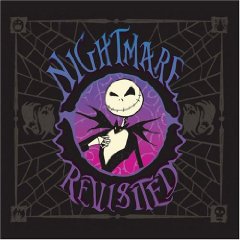
Courtesy of Disney


Nothing can go wrong with a song from a classic Tim Burton movie, but I cannot assure that with Marilyn Manson’s gothic metal twist added to the piece. Manson’s cover of The Nightmare Before Christmas’ most recognized song is ideal for embracing the frightening monster that you keep hidden in the back of your mind, because as Manson ominously sings, “Life’s no fun without a good scare.”


“A Little Piece of Heaven” — Avenged Sevenfold

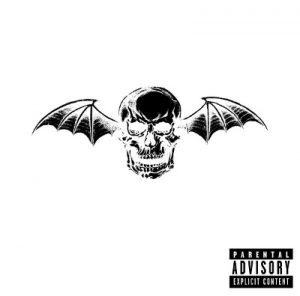
Courtesy of Warner Records Inc.


Have you ever felt like your relationship with a partner is going so well, that you murder them out of fear of breaking up? Great, this graphic metalcore and rock song could be your soundtrack. Celebrate your love with this song, as the narrator rips “her heart out right before her eyes”, and eats it. 


“Seven Devils” — Florence + The Machine 

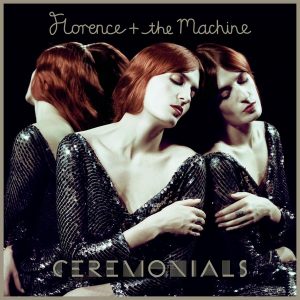
Courtesy of Universal Island Records


Get in losers, we’re casting dark magick on humans to avenge our ancestors in Salem. This alternative/indie song is the perfect backdrop for empowering all witches and is ideal for sacrificial rituals in the forest. Florence’s operatic ethereal voice raises the goosebumps on your skin and strengthens your connection to the craft.   


“In Boxes” — Aurora 


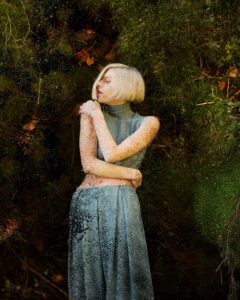
Courtesy of Glassnote Entertainment Group LLC

With her magical, goddess-like vocal range, on the surface, Aurora beautifully depicts a story of a lonely woman who murders her lovers and keeps parts of them in boxes underneath her bed. However, beneath the surface of this indie-pop song, you will find a well-formed extended metaphor about letting go of the weight of past relationships — a good resolution for this Witch’s New Year.


“Special Death” — Mirah

Courtesy of K Records


So far, we have scared kids, killed our beloved, and practiced dark magick by sacrificing our enemies. Time for the “what have I done?” moment, where you’ll be sitting head in hands, contemplating your life and your identity. When you are dead to the people you love and you lose the last bits of your innocence. There’s comfort in the melancholic mood of this indie/alternative song which resembles the paradigmatic ominous music box song featured in almost all ghost movies, flawlessly carrying out you fully over to the dark side.


More Songs for the Witching Hour:


*The Peak does not actually condone violence of any kind

What happens if the “Local Women in Your Area!” actually find you?

0
PHOTO: Priscilla Du Preez / Unsplash

By: Alex Masse, Peak Associate

Would you spend a devastating seven more bucks a month on a new streaming service for a show unavailable on Netflix, or do you risk some harmless little malware and maybe a housecall from the FBI on a pirating site? I know my pick.

If you’ve been to these sites, you’ve inevitably seen the ads that say, “Local Women in Your Area can’t wait to meet you!” They feature busty women with hungry grins who promise a good time — and they’re just a quick credit card entry away.

When I started episode one of What We Do in the Shadows on one of these sites, they were 10 kilometres away. As I loaded up the second, just eight. I didn’t think much of it: probably just some attempt at getting my attention. 

For episode three when they were only six kilometres away, it started to feel like a countdown. My double chins reflected in the computer screen tensed with mild fear.

Still, I did what I do when any stressor in my life risks rearing its head: I click on the next episode. Can’t hurt me if I’m watching a vampire sitcom. 

“Local women in your area! Now in your home!” the advertisement told me. Yeah, sure. 

Suddenly, my door shot open as though a gust of wind blew through. Only, I swear my door had been locked.

The distinct clacking of heels on wood signalled someone — something — approaching. It came in a seemingly endless rhythm, as if a whole army was on their way. Maybe if I hid under my desk still unused this semester despite it being October already, the monsters wouldn’t find my smooth brain appetizing.

My bedroom door slammed open. To my surprise, it was just one woman. Long, luscious black hair, perky breasts that caught my normally-respectful eyes, and as I continued looking down . . .  at least a dozen legs, distinctly insectoid in nature, each perfectly slid into a red-backed Louboutin heel. At least the horrifying (but hot?) insectoid about to rip open my flesh was stylish.

“Ready for a fun time?” She asked, leaning in closer, joints clicking as her neck and face neared mine. I realized her face didn’t move, as though it were a mask. From under her mask-like face (surprisingly blended for the gods?), a black tongue snaked out.

All I managed was to shake my head. I was not trying to find out what this creature meant by a fun time. 

“Then we’ll just sssssskip that and get more . . . comfortable,” she cooed. She patted my cheek with a cold, leathery hand. “You know what I’m talking about, right?” 

Again, I shook my head. Man, I just wanted to watch What We Do in the Shadows. Couldn’t she have picked on some guy watching hentai or something?

Her visage fell, almost revealing whatever lay underneath. “We’re gonna live here now. Our offspring will hatch and mature under your roof. And either you can bring us raw meat . . . or you can be the raw meat.”

Honestly, all this talk of raw meat just had me staring at her boobs again (respectfully).

Before I could object, she continued. “Also, I bricked your computer. For a laugh. But ssseriously, either feed us or we’ll literally eat you.”

In short, don’t pirate unless you want the sound of a stampede every time your roommate wants a midnight snack. And don’t complain, or you’ll be the midnight snack.

Guidelines on having a safe Halloween encourages trick-or-treating in small groups

0
PHOTO: @freestocks / Unsplash

Written by: Karissa Ketter, News Writer

The BC Centre for Disease Control (BCCDC) has released safety guidelines for a low-risk and fun Halloween this year. To prevent the risk of further COVID-19 outbreaks in the community, they recommend that no indoor Halloween parties — big or small — should take place. However, the BCCDC notes that trick-or-treating can be a safe activity for kids in small groups of no more than six people. 

As the BCCDC states, regardless of Halloween plans, those with any symptoms should stay home and keep the lights off to avoid having trick-or-treaters approach your residency. 

Trick-or-treating this year should take place in small groups of kids who consider incorporating non-medical face masks into their costumes. The BCCDC notes that it isn’t necessary to sanitize every treat, rather kids should sanitize or wash their hands after touching candy and not touching their face. Additionally, small groups should be distancing themselves from other groups.

Households handing out candy to children should consider using tongs or making a candy slide starting from the door to give extra space between themselves and kids. The BCCDC says that only sealed, pre-packaged treats should be distributed this year and sanitizing both your hands and the door should be done regularly throughout the evening, in addition to wearing a mask. They also recommend that people handing out candy stay outside to limit the amount of children touching and approaching their doors at once. 

The BCCDC notes that all indoor trick-or-treating, such as in the mall or community centres, is discouraged. 

It is recommended that all parties or gatherings are limited to six people and take place outside. Parties held on heated patios or fires are best as fresh air and social distancing lowers the risk of COVID-19 transmission. They also note that providing individual servings of food is optimal to avoid buffet-style food sharing. Additionally, the BCCDC states that no drinks, smokes, tokes, and vapes should be shared with others. 

For those that want to go out on Halloween, the BC Government’s Gatherings and Events Order states that restaurants and businesses can remain open as long as they follow safety guidelines. Events must be limited to no more than 50 people and social distancing of two meters from others in the establishment is mandatory. Patrons of events must be recorded and monitored for contact tracing. Establishments must supply hand sanitizer for patrons and indicate with floor markers two meters of social distancing. Additionally, tables in restaurants must not be occupied with more than six people at a time, liquor may not be served after 10:00 p.m, and no dance floors, karaoke, and dancing or singing is allowed in public spaces.

Toast the spirits in your building with horror podcast Demons and Bellinis

0
The SFU hosts aren’t afraid of getting serious about harmful horror tropes. Courtesy of Kate Maglalang

By: Kelly Chia, Peak Associate

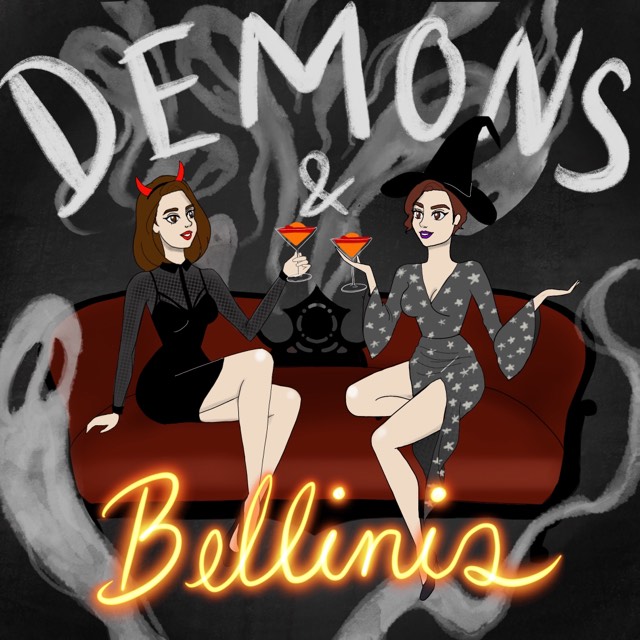
Demons and Bellinis is a podcast started by two SFU students, Molly Lorette and Ashley Smith, in 2018. Demons and Bellinis is a project where the two long-time friends talk shit about demons — and at 32 episodes, they’re still going strong. The Peak spoke with Lorette and Smith about this passion project and what it means to them to start a podcast like this.

As the title suggests, Demons and Bellinis is a casual podcast with a spooky undertone. Lorette describes it as having a “campfire ghost story kind of vibe, but you’re in your 20s talking shit.” Lorette and Smith’s contagious laughter as hosts truly make it feel that way.

Of all the episodes the two have recorded, “50 Berkeley Square” — about a supposedly haunted location in London — has been Lorette’s favourite to record. Lorette fondly recalls how the episode’s described entity had tendrils that made wet slapping noises, prompting Lorette and Smith to make numerous jokes about Victorian era hentai.

Though they love to joke and banter about horror, they also find themselves interested in the ways horror can be used as a lens for the past. “We have discussions about how there can definitely be more than meets the eye [ . . . ] Horror is definitely a product of a time and place: it can tell you a lot about philosophy, about psychology, and history. Stories bring us all together,” Lorette says.  

“Horror is definitely an interesting medium in learning history because there’s so much terror in what people were scared of and what the cultural anxieties were at the time,” Smith chimes. 

For example, Smith points out that many horror stories happen in homes, because it’s the place we know best and are most vulnerable in. “I think the idea of a home being haunted or something awful happening in the home scares a lot of people. It strikes them where they feel most at ease [ . . . ] If we lose our sense of safety at home, what do we have left?” 

The two are both passionate about exploring the full context of paranormal stories and noticed that while many paranormal podcasts recount these stories, most did not analyze them.

Smith critiques those in the paranormal community for not speaking up when these horror stories or tropes are founded on troubling history. “The Goatmen stories are loaded with racially charged history. You can’t just talk about the Goatman Bridge without talking about the KKK or white supremacy, you know?” 

These stories are about spirits that appear as half man, half goat, and seek revenge for injustices. One specific story discussed on the podcast is that of the Goatman on Alton Bridge, the location of the murder of a Black family by the KKK. 

Another harmful trope Lorette points out is the use of Indigenous culture as a backdrop for horror. “As someone who identifies as Métis [ . . . ] but also wasn’t raised in a Métis or Indigenous environment, it can feel like [ . . . ] I don’t have a place in this conversation because I’m white passing. But I can use my voice to elevate these issues.” 

Lorette feels a lot of frustration with the way Indigenous horror is handled in the paranormal community. “I [watched] a YouTuber who I really liked and looked up to using the term ‘Indian’ when referring to an Indigenous man, as well as making assumptions of him being wise, [playing into] the ‘Stoic Chief’ archetype that a lot of older Indigenous men frequently find themselves pegged as,” Lorette laments. 

In particular, she noted that the Swiftrunner story — about a Cree man who becomes possessed by a wendigo (an evil spirit largely known from Algonquin folklore) — is often covered in an unsatisfactory way. The wendigo that features in the story has been used as the basis for a lot of Western horror with writers excessively misrepresenting and oversimplifying the spirit. After reading an article on how non-Indigenous horror writers borrow from Indigenous experiences, she wanted to voice her concerns about how Indigenous stories are appropriated. 

“I finally found myself determined enough to cover the Swiftrunner case in particular in a way that didn’t centralize white people, as well as create dialogue revolving around the ways that the case is handled by white paranormal enthusiasts.” 

Demons and Bellinis is definitely a casual podcast, and the two know how to lighten the mood as they recognize the value in humour and good company — especially when talking about horror stories. But what grounds the podcast is Lorette and Smith’s ability to be critical. Horror so often creates caricatures out of marginalized people, be it BIPOC culture or people with mental disorders. Calling out horror when it appropriates and stereotypes people is necessary, especially when horror seems like a purely entertaining and apolitical space. 

For Lorette and Smith, horror is a way that the past interacts with the present, and a way to subvert the familiar.

“Horror writers and people in the paranormal community telling stories have a responsibility to [ . . . ] understand what these stories are trying to make us scared of and [whether] it’s justifiable or not. We shouldn’t be relying on these tropes to tell a scary story,” Smith explains.

As expected, with Halloween approaching, the pair is very excited about releasing new content. Coming up next? The Salem witch trials.

If you’re looking for a fun and introspective podcast this Halloween, Demons and Bellinis can be found on Spotify, Castbox, Podbean, and YouTube.

Don’t be spooked by trick-or-treating

0
Crystal Sing / Getty Images

by Emma Jean, Staff Writer

If one of the goals of trick-or-treating is to bring some scares, they may not be too successful with kids this year — but they’re knocking it out of the damn park with adults. It’s difficult to imagine how a holiday tradition revolving around children roaming the streets in hoards, breathing in the homes of strangers, and asking for unsanitized goods could be done in a manner that doesn’t result in outbreaks of COVID-19 in both kids and adults. I think it’s natural for anyone to be nervous about this sort of thing. But according to the opinions that really matter, it can be done. Considering the amount of kids and adults that children come into contact with at school, it becomes more and more understandable. 

The British Columbia Centre for Disease Control (BCCDC) released an outline for how usual Halloween festivities can take place, with a section dedicated to trick-or-treating. For an activity that seems to defy the interpersonal laws of social distancing, the list is short, to-the-point, and has practical advice on how to do it safely. 

According to the guide, the key components to most Halloween activities, for both trick-or-treaters and those giving them their goods, are staying outside, masking up, staying with a group of six people or less, and keeping your hands clean. As long as everyone follows those guidelines, Halloween should be a safe-as-possible event that doesn’t stop kids from missing out on some of the best days of childhood. 

Parents have the best judgement on how this works for their own children, but there seems to be little reason for Halloween alarm. Don’t just take it from me, a childless 19-year-old with no personal investment in this; take it from Dr. Henry and her team. 

If you wish to hand out candy and help these crazy kids have a safe night, the BCCDC recommends using tongs, individually wrapped bags and other methods to reduce surface contamination. If combined with the conventional guidelines of being outdoors, wearing masks and tips like avoiding decorations like smoke machines that could cause coughing (Huh! Never would have thought of that! These people are smart!), Halloween can be a healthy holiday for all. 

If fellow childless 19-year-old adjacents are looking for something to do beside go to house parties (please don’t go to house parties) and find themselves in a residence that trick-or-treaters will likely visit, why not go to town creating a socially distant fun way to give candy to neighbourhood kids? Put a fence six feet away from the door and make a game of throwing it to them; hang goody bags on a clothesline; put a slide at your doorstep and slip candy down to kids; the possibilities are endless. If you’re anything like me, solving a fun, creative problem that has no bearing on outside life is an unmatched mental escape. And if you take up this one, you’re contributing to your community while you’re at it. 

I know it can be easy to panic about the possibility of a virus infecting the kids in our lives, but as long as we follow the guidelines set out by the BCCDC, this should be a perfectly safe way for them, and the adults facilitating it, to have fun and stay healthy.

It’s time to cancel offensive costumes

0
PHOTO: Catherine Delahaye / Getty Images

by Devana Petrovic, Staff Writer

Topics surrounding culturally appropriative Halloween costumes, and the general audacity of what some people choose to dress up as, have floated around in past years. With that in mind, a lot has happened in the world since last Halloween — one major event being the Black Lives Matter movement, sparking increased discussion and action on racial justice. It is so important to be particularly conscious of how some stereotypical costumes can be harmful to the communities they are intended to represent. 

We’ve all seen the “Native American princess” costumes on the racks at Spirit Halloween. Really, it is an offensive and Americanized depiction of traditional Indigenous clothing, frankly far from accurate and honestly just a gross example of how neo-colonialism flourishes through capitalism. 

It is probably unrealistic to expect Halloween costume companies to just suddenly stop selling every single problematic costume. But we as consumers can do our part in boycotting the brands that sell culturally insensitive costumes, as well as by speaking out about the costumes that continue to plague the Halloween season. We have the freedom to choose a costume from a seemingly infinite amount of possibilities, so there’s absolutely no excuse for a racist or offensive costume if you can just pick something else. 

I understand that sometimes it can be confusing to know if a costume has offensive connotations. But at this point in time, where every social media platform is flooded with information about allyship and anti-racism, it’s not hard to find sources that clarify this sort of confusion. 

Yet, sometimes even a quick Google Search is not necessary. All it takes is to just read the room a little in order to understand that dressing up as a sexy cop might be insensitive and tone-deaf right now as it eroticizes and glorifies an oppressive institution. But then again, if you ever feel that your costume might not be entirely appropriate, chances are that it isn’t. 

Indigenous culture is not a Halloween costume; Black culture is not a Halloween costume —  especially not for someone who is not of that origin. Maybe, the intent behind these costumes isn’t to harm anyone. But, the reality is that regardless of intent or knowledge, a “Native American princess” or a “sexy cop” is problematic and hurtful to BIPOC, who directly face the true challenges of costumes like these being normalized. These aren’t “just costumes,” but they are dismissive portrayals of cultural symbols, mockeries of sacred traditions, and a glorification of violent systems. 

Costumes that portray racial stereotypes have not been OK for a long time now. It is especially problematic that costumes like these still exist in a time where there is a growing awareness of the oppression BIPOC communities face. But then again, it is just a costume and you can dress up as whatever you want. So, just be a fucking cat, and don’t flaunt your bad taste and racism on Halloween this year.

Deaf U pushes deaf culture into the mainstream by focusing on deaf perspectives

0
The docu-drama series examines the everyday experiences of deaf students at college. Courtesy of Netflix

By: Serena Bains, Staff Writer

New eight-episode Netflix series Deaf U was released on October 9. The series follows the lives of deaf students at Gallaudet University and acts as an introduction to the deaf community for hearing folk. 

The series is executively produced by Nyle DiMarco, a prominent deaf activist, actor, and model. DiMarco regularly pushes for greater deaf representation in media and committed to hiring a minimum of 30% of the crew from the deaf community. He stated that he wanted the show to be an opportunity for deaf people to break into the entertainment industry, while increasing representation.

The show is a college drama, where students who are deaf or hard of hearing go through the ups and downs of dating, identity, and academics, while navigating the challenges and benefits of the deaf community. Gallaudet University, where the show is set, is the world’s only university where all of the programs are accommodated to the needs of deaf or hard of hearing students.

As someone who, though disabled, is part of the hearing community, I appreciate how the show provides insights into the deaf community which is largely unrepresented in mainstream media. Deaf U effectively shows how the deaf community is small and tight knit, but is also not a monolith. Members of the community who can trace back many generations of non-hearing relatives, whose first language is American Sign Language (ASL), and who largely grew up in deaf culture are considered to be the “elite” of the community. People with cochran implants (CI), who can speak a language other than ASL fluently, those who don’t sign all the time, and those who mouth words, can be seen as privileged or “not deaf enough” as well. 

While showing some of the perceived privileged members of the deaf community, the show also speaks to the inaccessibility that deaf people face in a world where hearing culture is the norm. Deaf people have to move furniture or items to ensure that everyone’s signing is visible, showing how built infrastructure is not deaf friendly. Some cannot communicate when their hands are occupied with a different task such as hugging someone or getting a manicure. 

While the show is a much needed portrayal of the deaf community, it does not portray all members of the deaf community. For example, while there are Black men in the show, there are no Black women in the series, nor are there any people who appear to be physically disabled. Deaf U, however, does represent other intersections of identity, with cast members such as Renate who is queer and deals with depression and anxiety. 

Another fault of the show is that in many aspects it remains surface level. Though the levity in the show is needed at times as it does delve into difficult topics like abortion and unstable family structure, the eight episodes, each only 20-minutes long, leave something to be desired. It misses the opportunity to explicitly focus on the inaccessibility of hearing culture from the perspective of deaf people. It is not a perspective present in the mainstream and the show missed the opportunity to be one of the first series to make hearing people reflect on the privileges they have. 

While Deaf U could improve its representation of the various individuals within the deaf community, it goes without question that the show is a much needed first step. Disabilities are largely underrepresented in media, especially of those who are deaf or hard of hearing. The series communicates deaf culture to a hearing audience through ASL, captioning, and spoken language. The importance of deaf culture and the nuances of it could be better understood though with a more in-depth continuation of the series. Although a second season has not been confirmed, the show would benefit from delving deeper into deaf culture and it’s interactions with the ableism of the status quo.

Haunted locations across Vancouver

0

By Molly Lorette, Peak Associate

Frequently, the notion of a “haunted place” brings to mind images of decrepit old houses, abandoned hospitals, or perhaps decaying castles along a stormy coast. While I could certainly see myself choosing to haunt such a place given the choice, I can’t imagine many ghosts have the luxury of meeting their forever home in a place predisposed for dramatics.

As a matter of fact, rumours of hauntings span far further in context, as well as closer to home in proximity, than one might expect. Here are a few haunted locations local to Vancouver that have managed to captivate my imagination.

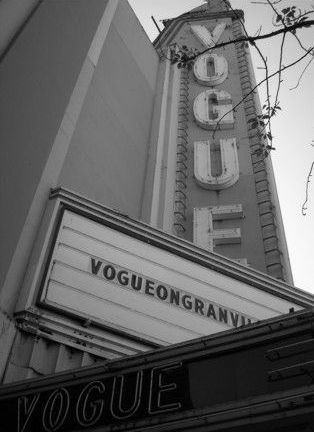
The Vogue Theatre

Image courtesy of ghostsofvancouver.com.

Originally opened in 1941, the Vogue Theatre is well loved as a live performance venue. I can personally say that I’ve seen some of my favourite artists perform within its walls, and partaken in a few too many drinks as I’ve cheered them on. Unbeknownst to me, however, a spirit may have been in attendance as well. 

It has been said that a ghost of unknown identity haunts various locations within the Vogue. Though he has been sighted on the audience-level occasionally, primarily he is spotted within the working areas of the venue, including the stage, the projection booth, the catwalks, and the basement hallways. A narrow corridor has even been nicknamed the “Haunted Highway” by staff members due to the paranormal activities experienced there, as well as the generally creepy atmosphere the area possesses. 

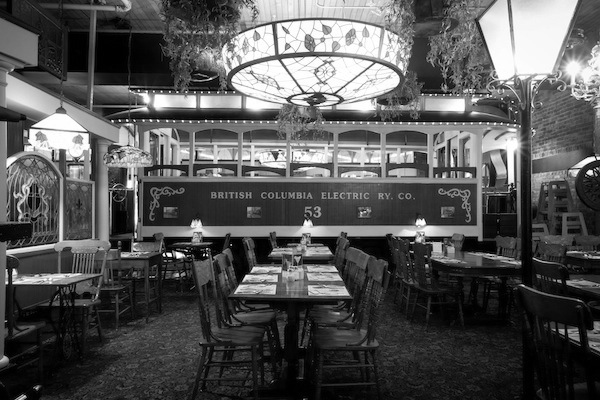
Gastown’s Old Spaghetti Factory

Image courtesy of gastown.org.

One of my favourite fun facts to tell friends when the topic of ghosts arises (surprisingly frequently) is that there are two locations of the Old Spaghetti Factory that are supposedly haunted. I suppose I can’t blame ghosts for wanting to eternally stay for spaghetti dinner, that garlic butter bread is to die for! One of the two haunted Spaghetti locations is in Gastown, and actually hosts four spirits within its dining halls. 

The most notorious of these spirits is the ghost of a uniformed tram conductor in the trolley car situated in the restaurant. While a few differing theories exist to explain his presence, he has nonetheless been spotted after hours once patrons have left. 

The second ghost is a mischievous red-haired ghost who resides in the kitchens, allegedly following employees and calling them out by name! The third ghost is a young boy who has been spotted running amok between tables after hours, even bending cutlery. Finally, the fourth spirit is that of a little girl holding a balloon near the front of the restaurant. While she appears to be harmless, the image of her would personally terrify me. 

Fairmont Hotel Vancouver

Image courtesy of ghostsofvancouver.com.

From approximately the late 1880s until the 1950s, a series of grand railway hotels were built across the country, designed to service the guests of the cross-country rail service in luxury. The Fairmont Hotel Vancouver, constructed between 1929 and 1939, served as Vancouver’s premier destination after the closure of two preceding Fairmont locations. Given the multitude of guests coming and going over the years, perhaps it is no grand surprise that the hotel has attracted some mysterious guests from the other side. 

The structure is said to be haunted by a lady in a red dress who is frequently spotted on the 14th floor and the ground lobby. Interestingly, these floors are the only remaining floors to be linked by a dummy elevator shaft. It has been theorized that this spectre is the spirit of a Vancouver 1940s socialite, Miss Jennie Pearl Cox. 

She was said to attend a great number of parties within the hotel, and loved it so much that she chose to permanently check-in post-mortem. She has been spotted many times throughout the years by a myriad of guests and employees, even making the news back in 2017 when she was caught on camera. To be fair, if my broke self were to be invited to party it up in such a lavish hotel, I don’t know if I would be keen to leave anytime soon either.

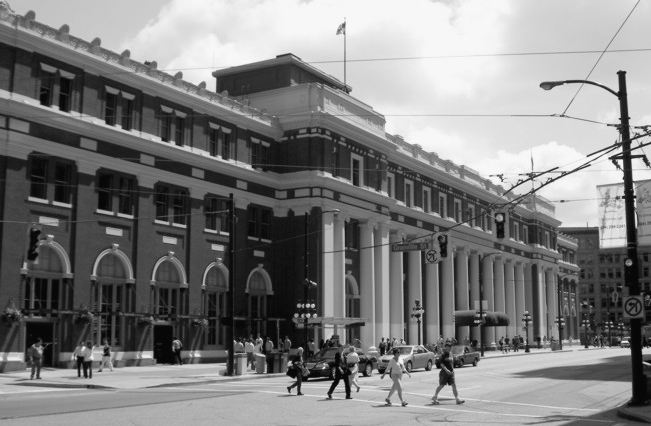
Waterfront Station

Image courtesy of ghostsofvancouver.com.

Now used primarily as a SkyTrain station, Waterfront Station has existed far longer than TransLink. Built in 1915, it has since hosted several creepy spirits, as well as phantom footsteps heard throughout the building.

Once, a guard of the station encountered a 1920s flapper on the west side of the building, dancing to jazz music. Apparently, once he approached her, she vanished.

On the Northwest end of the structure, another security guard encountered the spectre of a glowing, older lady, looking rather mournful. However, much like the flapper, she vanished once the guard got too close.

The last two ghost stories are what happen to fascinate me the most, the first of which is the tale of a spectre of another old woman who appeared before yet another security guard on patrol in the old kitchens. However, after this encounter he began to see her in mirrors and windows, even in his dreams. He then developed an uncanny urge to paint her. 

After the painting’s completion, his ghostly stalker ceased, and the painting was hung in the kitchen. Now, if anyone is to move the painting from its location, the person that does so will be haunted with similar images as the original painter until the artwork is once again reinstalled in its rightful place. 

Also, it has been said that a headless worker holding a lantern has been spotted outside the station and along the tracks. It has been theorized that this may be the spirit of Hub Clark, who died in 1928 when he slipped on a wet track, unfortunately knocking him out cold and rendering him helpless when a train came speeding along and decapitated him.