Home Blog Page 375

“Tenet,” the failed saviour of cinema, is a convoluted mess

0
The movie may have an A-list cast, but Tenet still falls short. Image courtesy of The Hollywood Tribune

By: Lester Leong, SFU Student

Before the COVID-19 pandemic forced movie studios to delay their upcoming releasesTenet was one of the most highly anticipated films of 2020. With the renowned success of Christopher Nolan’s filmography, many people were looking forward to finding out what Nolan had to offer with his latest picture. After suffering multiple delays, there was an extra degree of anticipation, as Tenet was heralded as the film that would save cinema. However, due to its underperformance at the box office and a divisive critical reception, it may have just led cinema to an early grave.

If you ask any cinephile about the impact that certain directors have on their burgeoning interests in cinema, Christopher Nolan would be an oft-mentioned name. It was the same in my case. Early on in my film appreciation journey, The Dark Knight and Interstellar had profound influences on my ability to appreciate filmmakers and analyze their distinct styles. 

Tenet continues Nolan’s obsession with manipulating time. Inception explores how fast time travels in different layers of dreams; Interstellar explores the relationship between time and space, and Dunkirk uses three different perspectives of time to tell the story of an urgent period in World War II. In Tenet, time is inverted, leading to lots of impressive visuals of people and objects moving backwards. However, what makes Christopher Nolan’s latest film significantly worse than his previous projects is that he doubles down on his storytelling flaws. 

Two of my main problems with Nolan’s storytelling are their cold, detached nature and the lack of any emotional depth. Some of Nolan’s more recent films, excluding The Dark Knight trilogy, are more concerned with exploring and explaining every little minutiae of their intriguing original concepts. But doing so leaves little room for enthralling characters or any emotional heft. Tenet is a prime example of this storytelling tendency.

Since the inception of his career, Nolan has always used genre conventions to explore an original sci-fi concept. Tenet is no different, but this time, the lack of any emotion or excitement is detrimental to the experience. However heavy-handed the dramatic aspects of Interstellar may be, that film at least gave audiences a resonating father-daughter relationship. Tenet has nothing that comes close to that. All we are left with are scenes of exposition that do nothing but make the internal logic of its world even more confusing. Time travel is an inherently convoluted premise and if you think too much about it, paradoxes and logic gaps are inevitable. Nolan attempts to address this by over-explaining every little detail about how time inversion works. Since time inversion is a novel concept in film, it allows the director greater leeway in establishing its rules and mechanics. However, the more the film tried to explain its logic, the more haphazard and baffling it became. 

What makes the exposition scenes even worse in Tenet is the atrocious sound mixing. The score and the sound effects take precedence over the dialogue, leading to barely audible scenes that are crucial in understanding the mechanics of time inversion. These scenes are juxtaposed with high-stakes action sequences that are impressive on a technical scale, but cold and hollow in terms of character development or emotional connection. 

Tenet isn’t without its merits. Nolan’s preference for practical effects lends an air of realism to the action. Ludwig Göransson’s score is eerily similar to the feel of a Hans Zimmer score, which fits right in with the style of a Nolan film. It is also ambitious, but ambition alone does not make a good film. Tenet is not good; it’s just disappointingly mediocre. It might be great for Nolan purists, but for general audiences, it is an unnecessarily convoluted mess. Nolan wanted to save theatres with Tenet, but instead it sped up the potential demise of the theatrical experience, alienating more of his fans in the process.
What Grinds Our Gears: Give Cold Tea the cold shoulder

1
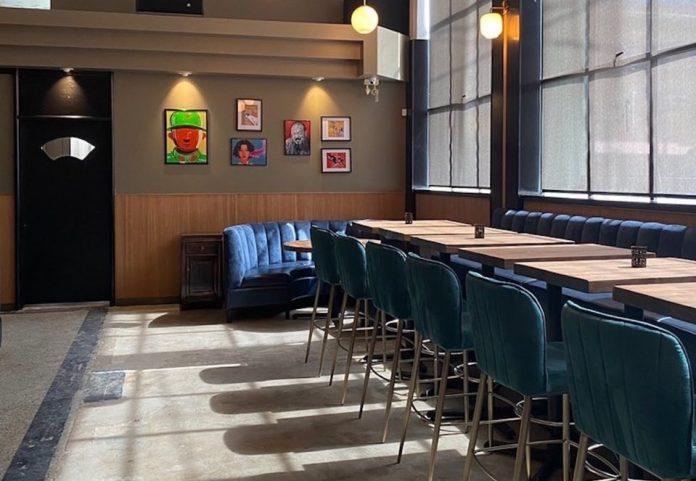
Illicit New Year’s Eve gatherings should be the final nail in the coffin. Photo courtesy of coldtearestaurant via Instagram

by Sara Wong, Arts & Culture Editor

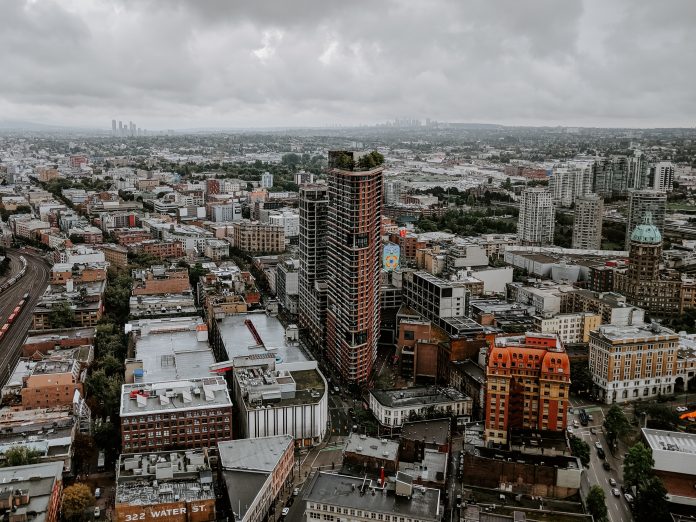
On New Year’s Eve, Vancouver’s Cold Tea restaurant decided to blatantly disregard COVID-19 safety regulations by hosting an all-night, 100-person gathering. In an interview with Global News, one of the restaurant’s owners took responsibility, but also defended their actions with the flimsy excuse of being a new business, stating that “survival instincts kicked in.” This shows that Cold Tea does not care for the health and safety of the community, which is concerning given that they are part of the hospitality industry. 

While I sympathize with their financial stress, Cold Tea is not the only new restaurant that has opened during this pandemic, nor are they the only small business suffering monetarily. Other local restaurants have found safe and creative ways to raise funds, such as encouraging gift card sales, selling DIY meal kits, and launching GoFundMe campaigns. Relying on “survival instincts,” on the other hand, meant putting a quick profit over the well-being of others, which is selfish, irresponsible, and absolutely inexcusable. 

BC’s COVID-19 regulations allow for dine-in services to still happen, which is a privilege that Cold Tea has taken for granted. Rather than owning up to their mistakes on social media, they have chosen to remain silent. Even when I spoke up on my platform, they had the audacity to block me — as well as any other users who criticized them. Cold Tea seems like they’re unwilling to change and do not deserve to remain in business, along with any other restaurant who would follow them.

New Dean of FCAT aims to prioritize equity, diversity, and inclusion within the faculty

0
Photo courtesy of SFU News

Written by: Jaymee Salisi, News Writer

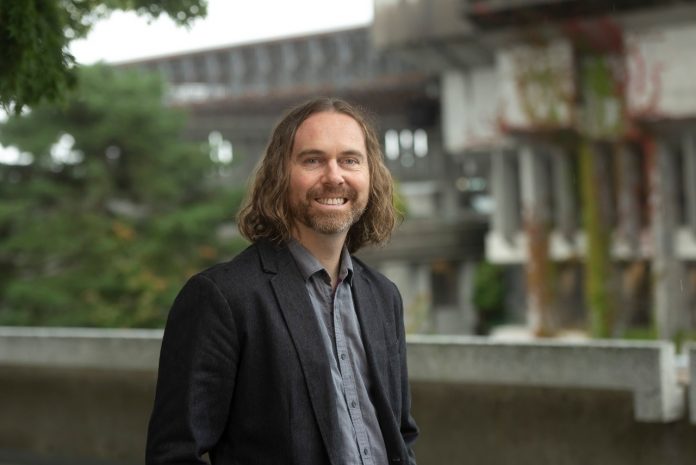
Carman Neustaedter has been named Dean of the Faculty of Communication, Art, and Technology (FCAT). Previously a professor and director for the School of Interactive Arts and Technology (SIAT), Neustaedter started the position on December 1, 2020.

In an interview with The Peak, Neustaedter explained that this new role has a broader scope in comparison to his previous position as director of SIAT as he is “now responsible for five schools and programs that are within FCAT.” As a result, he said this has expanded his level of thinking in regard to how the school operates. 

Neustaedter emphasized his goals of prioritizing equity, diversity, and inclusion within the faculty. He said that his experience on the university’s Equity, Diversity, and Inclusion Advisory Council provided him with a broader perspective in how he now sees the world, expressing his view that “[SFU] is behind” in efforts of reconciliation and decolonization.

He hopes to prioritize these endeavors by “addressing Indigenous student recruitment and retention, decolonization of the curriculum within all of [the faculty’s] programs, adaptation and reworkings of structures and policies within units, and much more.” 

Additionally, Neustaedter stated that he will continue to “work in FCAT on complex topics related to [equity, diversity, and inclusion] such as anti-racism.” He added that he aims to “make all students feel safe, comfortable, and accepted at SFU as their true selves.”

Currently in the process of creating a Dean’s Student Advisory Council, Neustaedter plans to consult students directly about how the student experience could be improved. 

“One of the most important things to me has always been the student experience and connecting with the students,” he said.

With a background in the field of human-computer interaction, telepresence, and family communication technology, Neustaedter studies social culture, user behaviours, group collaboration, and ubiquitous and mobile technology design. His work spans computer science, social psychology, sociology, and cultural anthropology. 

Neustaedter began working at SFU as an assistant professor in 2010. When he became a faculty member, he took on leadership roles within human-computer interaction. His involvement within the School of Interactive Arts and Technology (SIAT) led him to become the SIAT director — and now the Dean of FCAT.

He welcomes students within the Faculty of Communication, Art, and Technology who may be interested in being on the Council to email him directly at [email protected]

How quarantine has completely destroyed my socialization skills

0
ILLUSTRATION: Tiffany Chan / The Peak

By: Madeleine Chan, Kyla Dowling, and Nathan Tok

I can’t leave people on read IRL? (Madeleine)

I think I realized that human interaction isn’t for me anymore when I said “LOL” out loud, forgetting that, no, I’m not reacting to yet another pandemic meme that my aunt sent me. When I do interact with people, it’s like I can feel a loading sign on my forehead, making my words come out like a professor’s on a low-quality, buffering BB Collaborate video.

I had a five-minute, socially-distanced conversation with a friend and I had to keep reminding myself to talk and continue the conversation. It wasn’t a text message exchange where I could respond hours later, or with a quick double-tapped heart. I couldn’t even mute the extraneous noise that my coat seemed to make when I moved my arms, or turn off my camera to preserve the illusion that I’m an entity devoid of corporeal presence.

How will I cope when I can’t narcissistically check my appearance in the Narcissus lake that is my Zoom square whenever I’m talking to someone? It’s really a miracle that I know to reply with a clipped “good” when asked how I am nowadays.

My social ability is like my six-year-old iPhone 6S: still able to function, but just slow and glitchy enough that I should probably get a new one. But if Apple keeps pumping out thousand-dollar bricks of waste, I probably won’t be upgrading anytime soon. 

I wish my social skills were what the cat dragged in (Kyla)

I didn’t think my socialization skills had deteriorated in quarantine until I was trying to get my mother’s attention. She wouldn’t respond to me while on her phone, engaging with her seven followers on Twitter. She was ignoring my attempts to ask if she was making dinner or if I would have to sustain myself on Starbucks and ramen. 

It was in that moment I realized: she wouldn’t respond to me speaking to her, but you know what she would respond to? Our cat headbutting her. I bonked my forehead against her shoulder three times, and finally, she paid attention to me. That was it, I thought. If I needed her attention, I would resort to acting like her actual favourite child. 

A few nights later while on the phone with my boyfriend at 3 a.m. (I refuse to participate in a heterosexual relationship outside of the witching hour), I proved how severe my quarantine-induced catgirl existence was — and I’m not talking about the fun TikTok catgirls in maid costumes. When he yawned, I pitched my voice high and went “awww, bIg yAWn!” in response. That was the catalyst. That was when I decided to embrace it. 

Now, I alternate between meowing at my mother and petting her hair. My one reprieve from this? Having lengthy conversations in the English language with my cat. I’m pretty sure she understands me, and if she doesn’t? I guess I’ll try meowing at her, but I’m not sure how my accent will be. Will she be offended? 

My talking skills are in a galaxy far, far away (Nathan)

Being in quarantine means a lot of time at home streaming TV. I’ve been watching The Mandalorian. It’s great. Fantastic catchphrases. I also wish I had a huge bounty hunter protecting me at all times.

Recently, at a fast food place, I ordered the cheapest burger (The Peak doesn’t pay me enough) with some grilled onions. The staff member serving me must have been new because they said that didn’t exist on their menu. I insisted I had always gotten free grilled onions on my burger. Finally, another staff member came up to us asking what was wrong. After my server told him, he said that we were both right and wrong. Grilled onions were an option but they ran out earlier until just now, as they got a delivery. 

“YES!” I exclaimed, pumping my fist in victory with my mask spit smearing on my chin. “Young fool, you have paid the price for your lack of vision!” I quoted. “One star!” The whole restaurant turned to look at me. I was grateful for my mask that hid the now very red bottom half of my face. 

He keyed in the order and left so my server and I were both standing six feet apart, awkwardly looking at each other. I thought it would be weird to start talking after having a heated confrontation over onions and yelling, but I felt I had to say something. I just mumbled, “this is the way” as I got my burger with my precious grilled onions. 

The server nodded back. “I have spoken.” Well, I wish they had.

The Bright-er Side: Staying home is an opportunity to save money

0
ILLUSTRATION: Siloam Yeung / The Peak

by Brianna Condilenios, SFU Student

The pandemic has brought an onslaught of financial hardships for many. Job loss to small business struggles only skim the surface of these challenges. However, with fewer places to go and fewer things to do for students, financial stress can be relieved as there are greater opportunities to casually save money. 

For students who used to drive frequently, this does not need explanation; gas, parking passes, and potential repairs are expensive. In addition, most public tasks can, or have been, made virtual. Everything from speaking with a counsellor to weddings can be done from the comfort of our favourite pajamas. The time and money previously spent on transportation can now be put into working or resting.

Working and learning remotely from home also means eating out less. Naturally, whenever we are out, we tend to purchase whatever food or beverages are needed to sustain us until we get home. Sometimes this is a frantic coffee in the morning, or a small sandwich around 4 p.m. to power us through our last lecture. I’ve always tried to bring as much food as I’ll need for the day. However, I can’t think of a single semester where I did not forget my lunch, or just needed a little extra purchase to nourish my brain.

Likewise, socializing at restaurants, cafés, or bars is rare these days which means there is no longer social pressure to spend money out. Our friends calling us to various weekend brunches, Friday nights out, or coffee dates is just not a thing anymore. When these opportunities do surface, it is more than reasonable to decline them on the basis of safety. Additionally, this means other than purchasing casual and work clothes, there is no need to keep updating our wardrobes frivolously as there are simply not as many places to go. 

Many students would rather not think about these costs, but they do exist. Being aware of them can help us move forward in a more financially-conscious way. Of the money students spent on eating out, clothes, and travel pre-COVID-19, what can they put that money towards now? Paying off student loan debt? Saving up to move out? Investing the money in the stock market? The possibilities are endless.

Citing free speech doesn’t eliminate harm

0
SFU should protect students from potential free-speech harm. PHOTO: Andy Feliciotti / Unsplash

by Dev Petrovic, Staff Writer

The recent attack on the Washington Capitol has sparked several conversations as to where the line should be drawn between hate and free speech. However, this boundary between what constitutes a hate crime and what is considered freedom of expression seems to be vastly misunderstood. What happened in the United States was an attempted coup, but it is also an example of how passing off hate speech as free speech can escalate violently and cause serious harm. 

Multiple incidents of free speech controversy at SFU mean the school is certainly not exempt from this type of discourse. It’s time that this pattern of behaviour is recognized as harmful rather than being passed off as freedom.

In 2015, the then-active SFU Advocacy for Men & Boys (SFUAMB) club was criticized by many student groups for promoting misogynistic and anti-feminist views. Essentially, SFUAMB was a feminist-hate club that hid behind a men’s-issues-advocacy label. When a club spews this kind of rhetoric, it no longer feels welcoming for many and also gives leeway for other forms of hate speech to unravel on campus. 

Such organizations at SFU have been allowed to exist under a free speech safety net, even though their views have the potential to inflict harm on the student populace. Just because free speech is permitted on SFU campuses, that does not mean discriminatory attitudes should be openly practiced and advertised. SFU is still obligated to protect students from bigoted opinions and potential harm, and they should do so by looking more critically at these types of situations.

In 2019, noted trans and sex-worker-exclusionary speaker Meghan Murphy was permitted to host a panel at SFU before it got moved for safety reasons. Her views of gender essentialism deny that trans women are women and thus deny their experience and humanity. Murphy isn’t the only person who holds these exclusionary views, but she is able to amplify these attitudes because she is allowed a platform. This contributes to the perpetuation of the already-existing hate and violence towards trans and non-binary folks, as well as sex workers. They aren’t just words that she is promoting, but a platform for others to also engage with this exclusionary and hateful behaviour. This platform is especially problematic when it takes place in a public space, where everyone should feel safe.

This free speech discourse at SFU hasn’t tapered off either. Last February, SFU Lifeline (a pro-life club) had club status revoked for distributing resources on campus that “intended to shock, disturb, or harass students into adopting a particular belief with respect to sexual and reproductive health and reproductive rights (including abortion).” In response, the club complained that their right to free speech was being infringed on. While the group is entitled to have their own views, their intrusive behaviour only created further stigma and additional barriers for those already vulnerable. Preaching these attitudes is likely not going to revert people with pro-choice views into pro-lifers, but it does reach those who are already dealing with the huge physical, emotional, and psychological toll of dealing with an abortion.

When the line between hate speech and free speech is blurred, like with these incidents, there are serious and lasting repercussions on the folks being targeted and invalidated by them. The right to free speech is not more important than a person’s right to exist. Maintaining only the legal standard of what constitutes “hate speech” erases the experiences of marginalized folks, particularly BIPOC and LGBTQ2+ folks who are seriously impacted by the discrimination and violence that hateful behaviour invokes.

In Canada, an individual is free to speak out against their government and to critique policies without persecution from the government. But this fundamental right is often misconstrued and twisted to equate freedom of speech with freedom from consequences. The same applies to clubs at SFU. Students are entitled to free speech, but SFU is also responsible for maintaining a certain standard of protection. Everyone deserves to feel safe on campus and letting bigots hide behind a free speech label simply won’t do that.

The Rickshaw Theatre continues to honour the late David Bowie with a virtual “Bowie Ball”

0
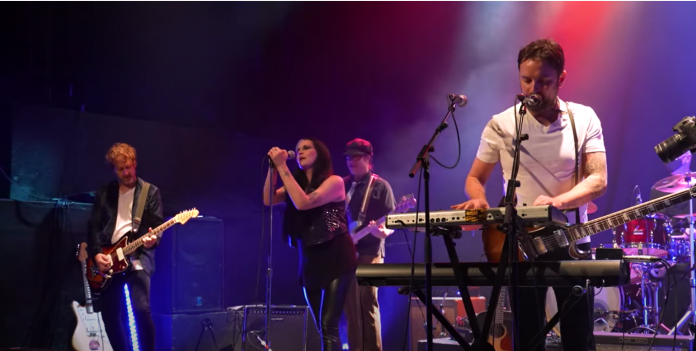
Space Junk performing for the Bowie Ball 2021 livestream. Image courtesy of The Rickshaw Theatre

By: Charlene Aviles, Peak Associate

On January 9, 2021, the Rickshaw Theatre and Stable Genius presented the 6th Annual Bowie Ball, an annual BC Cancer Foundation fundraiser featuring local bands performing David Bowie’s classic hits. Since Bowie’s passing in 2016, the Rickshaw Theatre has kept the tradition alive. The livestream incorporated a montage of music videos of various bands including Cass King & The Cassettes, Secret Asian Man, and Jimmy Baldwin’s Bowie Ball Band, and ended with a live performance from Space Junk

Normally, my music playlist consists of Ed Sheeran, 90s R&B, and boy bands, such as NSYNC and Boyz II Men, so the Bowie Ball was a chance for me to expand my music taste. This was my first Bowie Ball, and I intended to make the most out of it. As I waited for MCs Aaron Chapman, Tony Lee, and Dennis Mills to start the event, the livestream displayed a photo of David Bowie saluting. Beside him was a quote, “The future belongs to those who can see it.” This inspiring quote not only made me excited for the event but also reminded me to adopt an optimistic outlook for 2021. 

The very first Bowie song I heard at the event was “Heroes.” A slideshow of frontline health care workers played on screen, while Cass King & The Cassettes played their rendition of the song in the background. As I heard the lyrics “Oh we can be heroes, just for one day,” I immediately thought of my many relatives who are serving in the health care system. The fact that the slideshow indicated that the first song was a tribute to health care workers was very touching. Seeing the photos of their daily sacrifices reminded me of their courage and dedication to their patients.

The second song that caught my attention was “Dancing in the Street.” Eric Lowe and Tony Lee, known on stage as Secret Asian Man, sang in front of a green screen with changing backgrounds ranging from Vancouver streets to the running of bulls in Spain. At the same time, one of the two members of Secret Asian Man danced for the audience. His clapping and hip-swaying made me smile, and I found myself clapping along to each of the lyrics too. I also appreciated how he made the song his own by substituting some lyrics to incorporate various cities in the Metro Vancouver area, such as Surrey and Burnaby.

Later, when the Jimmy Baldwin’s Bowie Ball Band performed, the saxophonist Tim Sars’ talent immediately blew me away. During his soothing saxophone solos, it felt like time stopped. I was almost in a trance-like state, mesmerized by how he effortlessly hit all the notes.

After the fundraiser, the Rickshaw Theatre exceeded their goal of $10,000. In total, they raised $10,443 for the BC Cancer Foundation. You can still make a contribution to the BC Cancer Foundation and support the Rickshaw Theatre’s event production costs by donating through their respective websites.


Your weekly SFU Horoscopes: January 25–31

0
An illustration of a girl with long flowing hair. Astrological signs and stars shine around her.
ILLUSTRATION: Marissa Ouyang / The Peak

By: Alex Masse, Staff Writer

ARIES: Have you invested in “screaming into the void” lately? I think it’d be really therapeutic for you. If no void is available, there are a number of worthy substitutes. Try screaming into a pillow. Or even your cat’s belly. I’m sure that will go well for both of you.

TAURUS: Start a rock collection. They’re great company and make fantastic melee weapons. You never know when you’ll have to Cain and Abel someone over the last pack of kombucha at Whole Foods. You didn’t even want it until that jackass ex student-athlete from high school went for it.

GEMINI: Okay, so, you’re probably not doing too great in isolation, are you? If I were you, I’d look into mitosis. Become a twin — literally! Because really, there’s no better company than yourself. No one can stand being locked indoors with you better than yourself. Well, let’s hope, at least. 

CANCER: Stay hydrated, because oh, you’ve got a lot of crying ahead. Ah, you’ve already started. Stop! You’re smudging my notes about Aquarius! (Does anyone care about them but themselves, anyway?)

LEO: First of all, nice hair. Second of all, be extra careful combing that hair this week. With your nine year-old Scooby Doo pajama bottoms bringing down the average score of your Zoom call look, you may even want to invest in a leave-in conditioner.

VIRGO: Hey, you missed a spot. Where? Oh, you’ll find out soon enough. Trust me, you’ll find out soon enough.

LIBRA: It’s time you invoke your representative scales and go on a crusade in the name of justice. Or not. I don’t know, the stars are being pretty wishy-washy about it. Maybe just shake your fist at someone while their back is turned and call it a night.

SCORPIO: Do you remember that old folk tale about the frog that helped the scorpion across the lake, only for the scorpion to stab the frog to death because all scorpions know is stabbing people? Yeah, I was just seeing if you remembered. No particular reason. 

SAGITTARIUS: Ooh, I think there’s love in your future! Somewhere! Maybe not this week, maybe not next week, maybe not even this year, but I saw a glimmer of it. Wait, was that the sun reflecting off your overpriced hipster glasses? Who knows.

CAPRICORN: You know what you did, Capricorn. One day, you’ll have to pay that $300 in emotional damages and $1200 in property damage. Or maybe you forgot what you did because you forgot to roast your friend while it happened and can’t make the association?

AQUARIUS: The water-bearer is bearing fruit! All that hard work you did is going to pay off! Yes, you’ve been chosen! Or you won! Or . . . something! I don’t know, my notes get a bit smudged over here. Like, you could literally just be getting a fruit basket this week. But hey, it’s something! 

PISCES: Surprise, you’re getting gills for a week! I hope that doesn’t interfere with your Zoom calls. Maybe you can get, like, a waterproof phone? Or a fishbowl for a helmet? Just attend class in a tub full of Cancer’s tears, I guess.

“Perform for Pride” provides powerful performances for a purpose

0
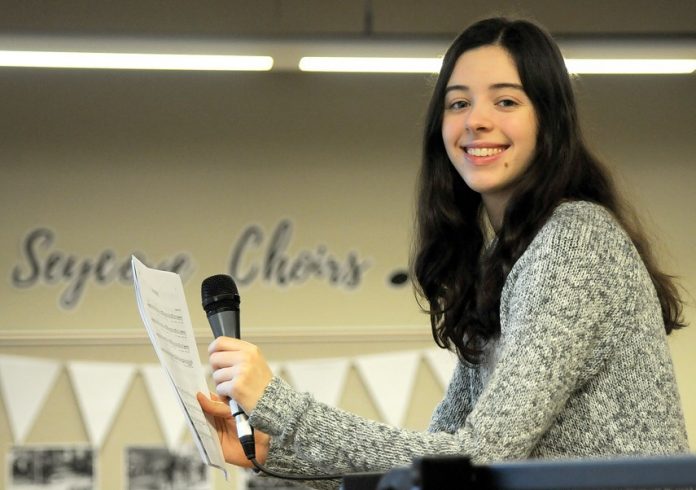
SFU student Reese Findler (pictured centre of the second row from the top) is the creator, organizer, and a performer in Perform for Pride. PHOTO: Mike Wakefield / North Shore News

By: Kyla Dowling, Staff Writer

Want to donate to an LGBTQ+ organization while also receiving access to a wonderful benefit celebrating youth performers? Look no further than Perform for Pride, a Vancouver-centric cabaret currently in its fourth year. The show features a multitude of performers, with some as young as 11, and performances include original songs, and queer musical theatre. With interviews from Broadway’s Jeanna de Waal and choreographer and Vancouver native Lyndsey Britten, the show is a non-stop whirlwind of heart-wrenching solos and delightful artists. Perform for Pride switched to a virtual format this year, premiering on January 9. 

Perform for Pride started four years ago, when creator and organizer Reese Findler, then a high school senior and now an SFU student, drew inspiration from Cabaret for a Cause and Concert for America, two musical theatre benefits raising money for various humanitarian organizations. The former, like Perform for Pride, centres around youth performers. 

“I walked out of the 5th Avenue Theatre in Downtown Seattle [where Concert for America was] and said ‘I’m gonna do that,’” Findler told The Peak. “Around six months later, in January of 2018, Perform for Pride was presented for the first time.” 

Findler, a theatre native, was not accustomed to working behind the scenes at first. “I relied on my instincts, on-stage knowledge, and advice from family, friends, and peers, and kind of dove headfirst into the process,” she said of her first year organizing the event. Now, Findler is in her third year at SFU. She majors in gender, sexuality, and women’s studies, but also took two semesters of stage management and another of production technology to gain more experience directing. 

The transition from an in-person cabaret to a virtual one was difficult but there were benefits. “When the show is live, whatever happens on stage is what happens,” Findler explained

The performers this year had the opportunity to redo their videos over and over until they were happy with the final product. Instead of rehearsals and collaboration, Findler spent the majority of her time editing the show. One of the few positives of the cabaret being virtual this year was the show’s accessibility. “Friends and family outside of Vancouver could watch it, audience size wasn’t limited by theatre capacity, and the video could be viewed on a different date than its premiere,” Findler explained.

This accessibility also benefits the fundraising work Findler is doing. Though she had to change her ticketing model due to the online format, there is technically an unlimited number of people who are able to buy tickets this year — and all of the proceeds go to Out On Screen, an LGBTQ+ organization focused on centering queer art. Not only have they created the Vancouver Queer Film Festival, but they also have youth-centric programs that use media to help educate on discrimination in schools. Findler noted that “Out on Screen’s missions aligned with what Perform for Pride is and does [and] there’s something full circle about youth raising funds for an organization that will then work with those youth to create inclusive environments.”

So what’s in the future for Perform for Pride? Hopefully an in-person cabaret for the fifth anniversary. Aside from that, Findler has sky-high goals. “I would love [Perform for Pride] to run for longer than one show a year and perform it in different theatres. I’ve also thought about curating Perform for Pride for schools — maybe partnering more with LGBTQ+ organizations and delivering some kind of performance-education hybrid to schools around the Lower Mainland.” To view this year’s Perform for Pride acts, visit their Instagram page @performforpride.

Minister of Environment announces Vancouver’s Low Carbon Cities Canada Innovation Centre will be at SFU

0
PHOTO: Aditya Chinchure / Unsplash

Written by: Karissa Ketter, News Writer 

On January 12, 2021, Minister of Environment and Climate Change, Honourable Jonathan Wilkinson, announced that Canada’s federal government had chosen SFU to house their newest Low Carbon Cities Canada (LC3) Innovation Centre. 

The Centre will be created in a partnership with the Renewable Cities Program at SFU’s Morris J. Wosk Centre for Dialogue. It is government funded with an endowment of $21.7 million. Wilkinson noted that “its aim is to [reduce] Metro Vancouver’s carbon footprint through research, capacity building, and the use of innovative financing tools.”

According to Wilkinson, “Many promising urban low-carbon solutions fail to make it from proven concept to implementation due to a whole range of different factors — including difficulty accessing capital and markets, risk aversion, and policy barriers.” He added, “SFU’s new urban climate centre will help overcome these barriers by investing in, derisking, demonstrating, and scaling up local decarbonizing solutions. The result will be investment-ready projects that can be taken to the next level by private or public sector partners.”

This announcement comes after the introduction of the Canadian Federal government’s new climate plan, A Healthy Environment and a Healthy Economy, announced in December 2020. It aims to exceed targets for 2030 carbon emissions and become net zero by 2050. Wilkinson noted that the LC3 Innovation Centre will reduce carbon emissions from Metro Vancouver, create local work, and protect the environment. 

The Metro Vancouver press conference held a panel discussion with various government officials and non-profit leaders including Wilkinson, Member of Parliament Terry Beech, City of Vancouver Mayor Kennedy Stewart, and Director of Renewable Cities Alex Boston.

Also in attendance was President of the Federation of Canadian Municipalities Garth Frizzell who noted in the press conference that the “announcement recognizes that local leadership is essential for cutting climate-changing emissions.” This was a sentiment echoed by Wilkinson in an interview with The Peak, where he said that the federal government has “started consultations with the provinces and territories about how [they’re] going to move forward [with the new climate plan].” Wilkinson said that “[they] are looking for the provinces to step up, and do more.”

He elaborated that this includes Indigenous communities and over the last few years the federal government has been committed to working in partnership with Indigenous leadership. They have ensured that the programs they come forward with are “effectively co-developed with Indigenous leadership.” According to Wilkinson, the new climate plan is “about actually getting [Indigenous] communities involved in economic opportunities.”

Regarding the federal government’s purchase of the Kinder Morgan Trans Mountain Pipeline Project, Wilkinson responded that “there’s no inconsistency with the Trans Mountain Pipeline and fighting climate change.” He said that instead, “it creates the building blocks for us, enabling us to achieve net zero by 2050.” 

At the press conference, Wilkinson said, “The challenge and the opportunity of our post-COVID recovery [ . . . ] is to lower greenhouse gas emissions in a way that strengthens Canada’s competitiveness, in what will increasingly be a low-carbon future around the world.” 

Serving as a Member of Parliament for North Vancouver, Wilkinson was pleased to see the centre located in Metro Vancouver. He elaborated, “Today’s announcement represents a part of these ambitious plans and [SFU] is a natural partner — a school whose namesake embodies the power and the potential of exploration and of innovation.”

Wilkinson told The Peak that the Innovation Centres in Calgary, Edmonton, Toronto, Ottawa, Montreal, Halifax, and now Metro Vancouver are each tasked with “identifying the areas of priority that are most important to the community that they live in.” Wilkinson noted that these Centres were inspired by Toronto’s Atmospheric Fund built in 1991.