Home Blog Page 37

Brighter Side: a love letter to children’s books

0
generic books on a bookshelf
PHOTO: Robyn Budlender / Unsplash

By: Ashima Shukla, Staff Writer

I first met The Little Prince as a child, but it feels more accurate to say the book met —  and saw through me. It told me that imagination was not foolish, that love and grief were bound together, and that growing up doesn’t mean surrendering wonder. I wept when the Little Prince left, but I also learned that love lives on in the stars and memory. 

That was the beginning of a lifelong love of children’s books. It returned when I needed it most, during my fourth year of undergrad, overwhelmed by deadlines and anxieties about my future. As a volunteer at a children’s literary festival in Hong Kong, I was tasked with accompanying authors to schools and one morning, I met Zeno

I watched as he read his book, My Strange Shrinking Parents, to a room full of wide-eyed fourth graders. His voice was gentle but steady, and somewhere between his beautiful illustrations and the children’s wonder, I forgot I was supposed to be taking pictures and found myself blinking back tears instead. 

Often, children’s books hold truths too large for us to grapple with otherwise. They talk about things many adults want to run away from. They make space for loss, joy, play, and transformation all at once. These books, and others like Goopy Gyne Bagha Byne, continue to colour my world. They remind me not to trade magic for “matters of consequence,” and to keep looking up at the stars and hear them laugh back at me. 

These books taught me how to sit with fear, how to forgive, and how to hope. Long before I knew the language of therapy or philosophy, I had these stories. And sometimes that’s still enough. 

The University Act is being misused to conceal the responsibilities of academic institutions

0
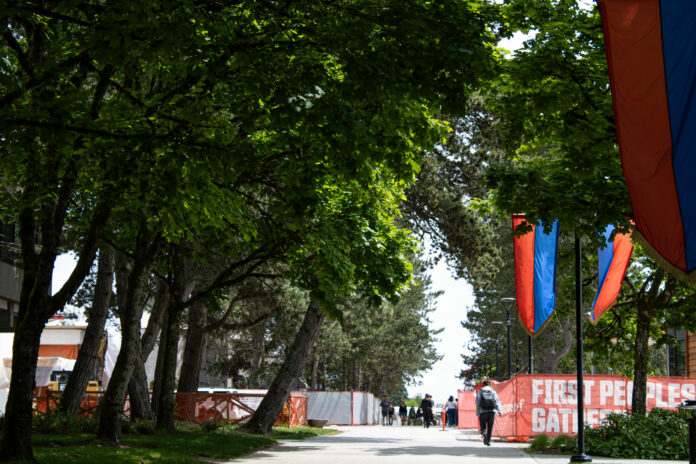
A neutral hallway or outside a building at Burnaby campus featuring student(s) walking
PHOTO: Prerita Garg / The Peak

By: Corbett Gildersleve, News Writer

On September 9, 2024, president Joy Johnson released a statement explaining why SFU abstains from commenting on “partisan political matters and current events.” This statement came after sustained pressure from students and faculty for SFU to take a stance on Israel’s ongoing genocide of the occupied Palestinian territories. According to the statement, “universities need to be a place where people can freely engage in academic inquiry, share ideas, learn from each other, disagree constructively, and peacefully protest.” Apparently, taking a stance would violate section 66 of the University Act, requiring universities to be “non-sectarian [non-religious] and non-political in principle.” 

What Johnson failed to acknowledge is that politics is not just opinion, but the application of opinion through a wide variety of means. She’s yet to acknowledge that the university has already taken its stance on Palestine, by investing $7.2 million in companies that supply arms to Israel, including BAE systems, Booz Allen Hamilton, and CAE Inc. SFU must take accountability for how their actions are political.

Section 66 of the Act has been raised again with a recent petition filed in the BC Supreme Court on April 7, against UBC by four professors and one graduate student. In this case, their targets are the university’s land acknowledgments, EDI statements in the hiring process, and resolutions passed by faculty and administration in support of Gaza. They argue that these items are either political or are still being hotly debated in academia. In their view, these things are violating university members’ academic freedom to freely engage in “controversial” topics. 

The administrative work of the university is political. It doesn’t suddenly become political once the communications department posts a public statement.

As the BC Civil Liberties Association called it, this petition is a “perverse interpretation of the University Act.” Section 66 exists to ensure universities do not become “tools of indoctrination for state-sponsored religions or ideologies.” The issue is that the Act doesn’t define “non-political.” Looking at its history, the Act was first passed in 1908 and has had amendments throughout the years. Both the 1908 and 1963 versions only spoke to universities being non-secretarian. This has always been part of the Act and prevents universities from being religious schools. It also regulates university involvement with theological colleges. It wasn’t until 1974 when the Act was revised significantly, that the words “and non-political in principle” were added.

Both universities and churches in Canada are charities, and similarly, the advancement of education and the advancement of religion are classified as charitable purposes. The Canada Revenue Agency restricts charities’ political engagement, banning them from supporting a party or candidate (being partisan). However, engaging in public policy dialogue and development activities (PPDDA) is allowed. PPDDAs generally involve efforts to influence laws, policies, or decisions of a government. Additionally, there’s no limit on the amount of resources a charity can devote to this work, as long as that activity furthers the charity’s purposes. The university, through its administration, is free to engage in public policy discussions and development. The very work of a university is to advance education and advocate for students, staff, faculty, and administrators. They have a responsibility to provide them support in times of political crisis, such as the ongoing genocide, or for marginalized identities. They also must take accountability for how they respond to their political environment.   

The petition and Johnson’s statement want to limit the university administration’s public statements to only being directly related to the university’s business. This business would include research produced, courses being taught, and other activities specific to their mission. The fundamental problem with this is that the administrative work of the university is also political. This includes decisions made by the Senate, the Board of Governors, the deans, directors, and their relevant committees. It doesn’t suddenly become political once the communications department posts a public statement. 

Politics is not just an opinion on taxes, laws, or whether Indigenous sovereignty exists; it’s the actions and activities to implement those opinions.

Politics is not just an opinion on taxes, laws, or whether Indigenous sovereignty exists; it’s the actions and activities to implement those opinions. By making and voting on policies, budgets, and plans, the university decides what research gets funded, who receives bursaries and scholarships, what department gets additional support staff, who goes into a new building, what programs get created or cut, and so on. These actions are not neutral. The university does not just create a place to “freely engage in academic inquiry [ . . . ] where people can have robust conversations” when they literally determine not only if there is a stage, but who gets to stand on it, and who gets to attend. 

The petition also cites section 47 of the University Act, which instructs universities to pursue “all branches of knowledge.” This is overly simple. These branches imply a tree with a central, unmoving trunk rooted in the ground, supporting all this work. A more accurate metaphor would be that a university is a forest in all its biodiversity, supporting not only the growth of different trees, bushes, and plants, but also animals, insects, and creatures that live within it. As some areas of knowledge are found to be incorrect (like the flat earth theory), those plants wither away. As such, there is no fixed center to the forest, instead, it shifts as the forest changes and grows. The administration, as the forest’s caretakers, have a responsibility to use this knowledge gained through scholarly work, to move along with it. 

All “partisan matters and world events” are the business of the university. President Johnson had that opportunity and instead, she has abdicated her responsibility and chosen silence forevermore.

Unpacking the India-Israel alliance and its global implications

0
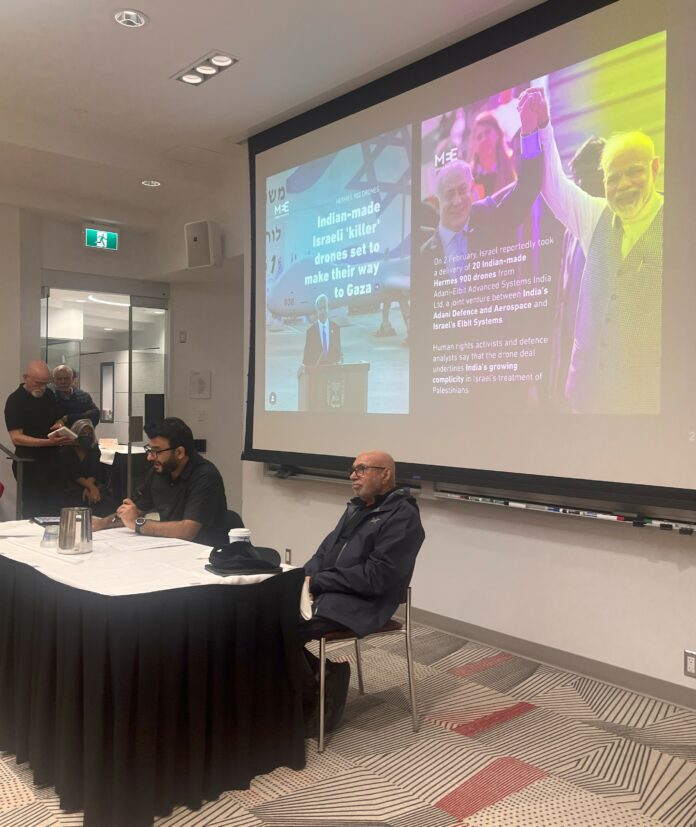
This is a photo of two men sitting at a table, one with a mic in his hand, in front of a slides presentation about the India-Israel alliance.
PHOTO: Sarah Moore / The Peak

By: Sarah Moore, SFU Student

In an address at the Annual Dr. Hari Sharma Memorial lecture on May 17, journalist and author Azad Essa critiqued the deepening alliance between India and Israel. Framing his lecture within the legacy of Hari Sharma, a fierce critic of US imperialism and Hindu nationalism, Essa painted a grim picture of a world increasingly shaped by authoritarianism, neocolonialism, and corporate greed. Sharma was also a professor emeritus of sociology and anthropology at SFU. 

Opening with a sweeping overview of global conflicts, from Sudan and Yemen to Congo and Chhattisgarh, Essa argued these crises are connected by a common thread of imperialism, environmental destruction, and the unchecked expansion of capital. In Congo, for instance, imperialism takes the form of multinational mining companies extracting cobalt and copper with little regard for local communities or ecosystems. Linking these to the global rise of the far-right over the last two decades, he warned how Israel’s occupation of Palestine serves as a model for repression everywhere. 

The Palestinian genocide “lies at the intersection of the building of a new world order in which the powerful are able to pursue expansion, domination, and the exertion of hard power over peoples, domestic or otherwise — with impunity,” Essa declared. “And the beating heart of this new pursuit is burgeoning India and Israel ties.”

Essa traced this alliance back to as early as the 1960s, when India first bought weapons from Israel during the Sino-Indian War. Since then, this relationship has deepened not just through continuing arms deals and surveillance tech, but also through a shared playbook of ethnonationalism. Drawing parallels between Zionism (Jewish nationalism) and Hindutva (Hindu nationalism), Essa emphasized their dependence on myths of civilizational superiority and existential threat. This also has severe domestic consequences for India, Essa noted, such as the normalization of Islamophobia and increased state violence against minorities in the country. 

The Palestinian genocide “lies at the intersection of the building of a new world order in which the powerful are able to pursue expansion, domination, and the exertion of hard power over peoples, domestic, or otherwise — with impunity. And the beating heart of this new pursuit is burgeoning India and Israel ties.” — Azad Essa, journalist, author

Essa also critiqued India using the Pahalgam attack as justification for deploying Israeli drones in Pakistan while adopting Israeli-style settlements in Indian occupied Kashmir. The Pahalgam attack occurred on April 22, with armed terrorists killing 26 tourists as they vacationed in Kashmir, the world’s most militarised zone. Building on a rich historical and geopolitical analysis from his book Hostile Homelands: The New Alliance Between India and Israel, Essa outlined how India (long portraying itself as pro-Palestinian and anti-colonial) has pivoted to embracing Israel not just in arms deals and military trainings but also in policy and tactics of surveillance, demographic reengineering, and suppression of dissent. 

As Essa explained, the India-Israel alliance is emblematic of a broader shift in global politics where authoritarian regimes shield one another from accountability. Despite these “incredibly distressing and heartbreaking” times, Essa emphasized the need to imagine different futures. Reflecting on Sharma’s legacy that framed the lecture, he concluded that the unequivocal present reality is stripping away global illusions: “Whereas it would have been very tough for South Asian scholars, activists, like professor Sharma, to speak about India in an academy that has largely valorised India, the road has been cleared now to speak and examine the Indian state,” he said. “The lack of ambiguity saves a lot of explanation.” Sharma’s political work extends more than 50 years, with his work related to India beginning in the ‘70s.

He also paid tribute to Malcolm X on the 100th anniversary of his birth: “As Michael E. Sawyer said last month, South Africa’s effort to take Israel to the International Court of Justice is Malcolm’s dream of a colonial entity being dragged to an international institution manifest.” 

Following the lecture, he was joined by Sid Shnaid of Independent Jewish Voices in a dialogue focusing on solidarity, resistance, and the role of diaspora communities in challenging oppression. The conversation touched on the complicity of Western institutions in legitimizing Benjamin Netanyahu’s and Narendra Modi’s regimes while calling for a unified global response.

SFU begins construction for residence building and expanded childcare centre

0
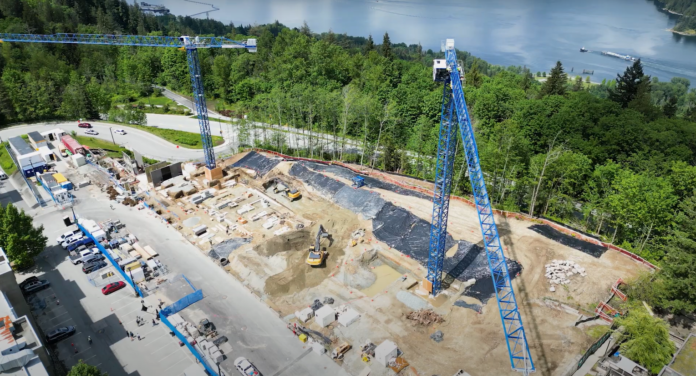
This is a birds eye view photo of the construction in the northern residence parking lot on a bright sunny day.
PHOTO: Courtesy of SFU

By: Corbett Gildersleve, News Writer

On May 21, SFU announced the start of construction on a new student residence and expanded childcare centre, expected to be completed in fall 2027 as part of phase three of their residence master plan

This eight-story residence will add space for 445 third and fourth-year students, allowing the total residence space to accommodate approximately 8% of “all SFU full-time students across all campuses.” The childcare centre will add “36 spaces for infant-toddlers and 124 spaces for kids from three to five years,” increasing the total number of childcare spaces to 570. The construction is estimated to cost $196.6 million, “shared between the province and SFU.” The cost of the project is relatively consistent with other student housing projects in BC, though Capilano University’s Squamish and North Vancouver projects cost $55 million for 333 beds and $58.2 million for 362 beds, respectively. Factors like the cost-per-bed in specific regions, as well as land and servicing costs, may contribute to this.

The Peak asked r/simonfaser about the project, with users raising concerns about the location and height of the residence building. One redditor noted how the new housing will take up part of the northern residence parking lot, possibly making it more difficult for students to find parking in the future. SFU said in a statement to The Peak, “While there are some limited impacts to parking during the construction period of phase three, which is currently underway, there will be no permanent loss of parking.” Another user said the buildings should be as tall as the ones in UniverCity to use the limited space on Burnaby Mountain. There, buildings can range in height, with some buildings like CentreBlock being 16 stories.

The final phase of SFU’s residence master plan includes the creation of 296 studio and 4-bedroom units for “nontraditional age students and graduate students,” slated to start in summer 2028.

The Peak also spoke with Abhishek Nanjundappa, executive director of the Graduate Student Society, and Remi Makinde, director of external relations. Nanjundappa said that an increase of 160 childcare seats is great, but there are still concerns about lengthy wait times for enrolling children. He added that it’s almost been 10 years since Louis Riel House closed, which resulted in the loss of 210 units that supported graduate students and families. Since then, just 88 units have been built to cover that loss with the construction of the Family Housing building in UniverCity. 65 of these units can support individuals with up to two children. 

The final phase of SFU’s residence master plan includes the creation of 296 studio and four bedroom units for “nontraditional age students and graduate students,” slated to start in summer 2028. Phase three of the plan was originally a different project, set to create 350 second and third-year student housing units at the Louis Riel site in summer 2022, as noted in SFU’s 2015 master plan report.

SFU told The Peak that “the master plan is the result of an extensive consultation process with a variety of key university stakeholders including students, faculty, professional, and student staff, university executives, and administrative staff.” They also mentioned the final phase “has not yet reached the design stage,” and the number of units may change.

Concerning the childcare centre, Dr. Jennifer Scott, director of labour relations from the SFU Faculty Association, said feedback from their members has been “overwhelmingly positive” and that “more on-campus childcare is always a good thing for our members, many of whom have children in the current SFU childcare centres.”

Italian Day returns to the Drive

0
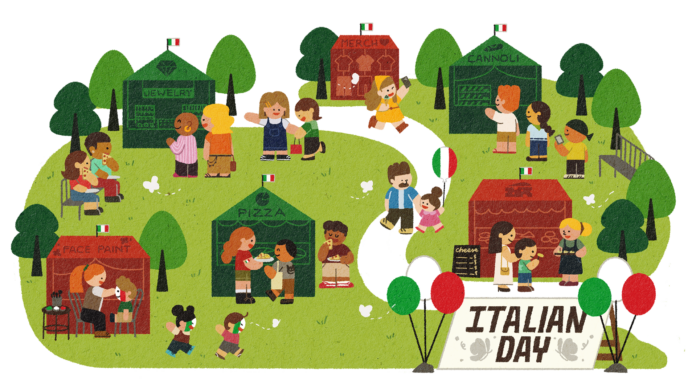
This is an illustration of the Italian Day celebrations, complete with food stalls and performances, with visitors walking around
ILLUSTRATION: Cassandra Ngyuen / The Peak

By: Abigail Streifel, Peak Associate

On June 8, Italian Day returns to Commercial Drive! The annual festival celebrates the culture and heritage of Italian Canadians with live music, food, and fun activities in Vancouver’s Little Italy. This year marks the 15th anniversary of the event that has brought so much excitement to Vancouver. The theme this year is Mille Baci, meaning a thousand kisses, which “[conveys] a magnified expression of love and respect” for the community that has supported the Italian Day festivities since it first started. The festival also takes place during Italian Heritage Month, the perfect time to appreciate the country’s culture. Join the celebration and check out any of the following events and attractions, or the many more happening along 14 blocks of Commercial Drive.

With attractions at seven intersections, there’s a lot to see on Italian Day. Enjoy diverse types of music, from classic Italian songs to opera to pop, acoustic, and jazz, all performed live on the festival’s stages. Follow along as contestants in the Giovani Talenti talent show compete. You can also enjoy the beautiful vocals of the Children’s Folk Choir, join in a dance party led by one of many DJs, or even catch surprise performances by the Vancouver Street Opera! There’s more entertainment than just music — the festival features fashion shows exhibiting designer Italian style from creators like Atelier GRANDI, JAC, and Kalena Shoes. Stilt walkers, jugglers, and living statues will also be performing throughout the day.

“The annual festival celebrates the culture and heritage of Italian Canadians with live music, food, and fun activities in Vancouver’s Little Italy.”

Of course, such a celebration wouldn’t be complete without food. Connect with fellow community members by appreciating “delicious food and drink from Drive merchants, vendors, and al fresco patios.” Montano’s Food, which provides “chef-prepared, ready to eat” meals, will be at the festival for the first time this year! La Grotta del Formaggio, a deli known for its delicious sandwiches, will also have a tent set up outside their shop. Café Calabria, another local business, will be joining in the excitement, too. You can also enjoy a “variety of local beers and Italian wines on tap” in one of the event’s multiple beverage gardens. Plus, both adults and youth will compete in pasta eating contests, racing to eat a plate without using their hands.

The excitement will continue with various activities for festival-goers to participate in! Carnival games offer the chance to win some prizes or simply to have some fun. Italian Day also promises “fun for the whole famiglia,” with a children’s zone where kids can play games and get their faces painted. There are also some unique games like human foosball, which will surely prove to be exciting. Yet another highlight of the event is the Viva l’Italia Raffle, which includes prizes going as far as a trip to Italy!

There are many ways to celebrate Italian Canadian culture, and Italian Day offers lots of possibilities to do so in a single event. Whether you’re dancing along to a live performance, sampling the food and drink, or competing in a game, you are sure to be immersed in the festivities.

Which Metro Vancouver mayor are you?

0
Port Coquitlam mayor Brad West rocking a brown beard with his black hair. Once again, an abnormally large forehead.
ILLUSTRATION: Yan Ting Leung / The Peak

By: Acting Chief of Apologies and Lawn Signs

Metro Vancouver mayors are more than just civic leaders; they’re a cast of characters from a random political sitcom none of us asked to be a part of. Whether they’re beefing with the BC government, filing defamation lawsuits, or being paid in gold bars (probably), these leaders are here to provide solace, so you know you aren’t the only one making questionable life choices. 

Which Metro Van mayor are you most like? Take this quiz to find out. 

1. A scandal breaks out. How do you react? 

      1. File a defamation lawsuit, hold a conference, and remember to rep Bitcoin
      2. Dramatically clutch your foot (that you claim has been run over) before shaking it off and heading into Save-On-Foods. 
      3. Redirect the rage into censuring an innocent city councillor trying to save trees, and then proceed to rant about cell tower coverage
      4. Say nothing. Refuse follow-up questions. Vanish into a TransLink committee.
      5. Change your mind, then ask your popular friend to vouch for your integrity. 

2. How do you handle bad press? 

      1. Apologize with charm and nonchalance. After all, it’s the “imperfect systems.” 
      2. Lawyer up. Bill the $300,000 to the city. Run for another election and act surprised when you lose. 
      3. Ignore local issues and focus on the province — explain your extreme dissatisfaction about how the ones you call  “do nothing” people, have a voice and don’t want pipelines built in their back yard. 
      4. Refuse to comment on anything or shake anyone’s hand after all is said and done. 
      5. Pivot to community building and avoid $100K vacations, for now.

3. What is your relationship with money like? 

      1. You own shares in Ethereum, have rich friends, and want to replace Park Boards with spreadsheets. 
      2. You rely on the city to pay legal fees over your personal dramas. 
      3. You want to slash everyone’s pay but yours.
      4. You are paid by every board in existence. 
      5. You say no to bullying but yaaaaaaas to a total of $393K in compensation and salary. 

4. What issues get you fired up? 

      1. People who care about parks and hate crypto. 
      2. Cronyism, public mischief, and foot-related injuries
      3. Harm reduction and hard-working city councillors.  
      4. People questioning your salary. 
      5. American tariffs and non-disparagement pacts with Big Oil (that is totally not a gag order). 

Mostly A’s — you’re Vancouver’s mayor, Ken Sim

Vancouver mayor Ken Sims. He has an abnormally large forehead and a combover haircut.
ILLUSTRATION: Yan Ting Leung / The Peak

You can host TED Talks and participate in court hearings in the same week, and believe in bitcoin as your religion. Your mantra? Apologize like CEOs, with zero follow-through!

Mostly B’s — former Surrey mayor, Doug McCallum, is that you? 

Former Surrey mayor Doug McCallum. He has wrinkles all over his face and looks exhausted.
ILLUSTRATION: Yan Ting Leung / The Peak

You know exactly how to make yourself the main character of every story — down to grocery trips with alleged soft-tissue damage. Your personality quirk? You’ve never met a lawsuit you couldn’t expense. 

Mostly C’s — Port Coquitlam’s favourite dictator, Brad West

Port Coquitlam mayor Brad West rocking a brown beard with his black hair. Once again, an abnormally large forehead.
ILLUSTRATION: Yan Ting Leung / The Peak

You think the entirety of Metro Vancouver is too soft and you secretly love Big Oil. Your favourite things to do? Speaking to reporters, going on random podcasts to talk about issues that are literally irrelevant to your job as mayor, and pretending to be an NDP’er when you’re really a closeted conservative. 

Mostly D’s — a very rich hello to Richmond’s incumbent mayor, Malcolm Brodie 

Richmond mayor Malcom Brodie. He has hair on the sides but not in the centre. He’s wearing glasses.
ILLUSTRATION: Yan Ting Leung / The Peak

You avoid eye-contact and accountability with ninja-like precision. Your super power? Being one of the highest-paid elected officials in BC. 

Mostly E’s — our very own, unchallenged, Burnaby mayor Mike Hurley 

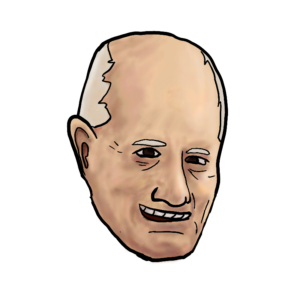
Burnaby mayor Mike Hurley. He too has many wrinkles and looks very worn out/exhausted.
ILLUSTRATION: Yan Ting Leung / The Peak

You love to give “we’re all in this together” speeches and napping (real dad energy right there). Your talent? The ability to lose to the Trans Mountain pipeline project six times before letting them buy your silence.

My letter to the News Editor: It’s time to put the fake back in news

0
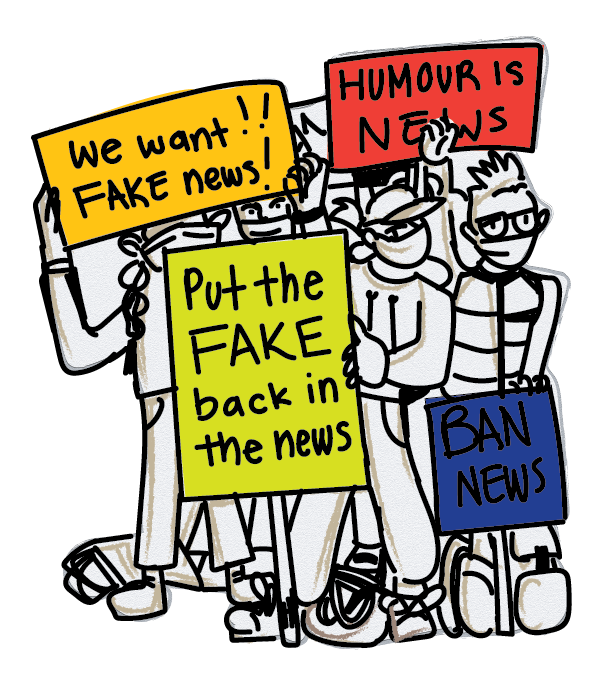
A group of students holding signs that read “We want fake news!” and “ban news!” and “put the fake back in news!” and “humour is news!”
ILLUSTRATION: Angela Shen / The Peak

By: Zainab Salam, Concerned Staff Writer

Dear Hannah (The Peak’s News Editor),

I write to you today as both a concerned member of the SFU student body and a staff writer for The Peak. With every passing day, I become more convinced that we must deviate from our current approach to journalism — fact-based, unbiased, legally sound — and find a more enthralling manner of sharing the news. Simply put, it is time to put the fake back in the news section of The Peak! If we have to trample over Canada’s libel laws to get there, so be it. 

I realize this may sound extreme. But ask yourself: When was the last time a meticulously accurate article about the Board of Governors moved you to tears? When did a careful summary of transit policy stir something deep in your soul? Yes, that’s right, NEVER! But imagine this headline: “SFU administration revealed to be a single wizard in a cloak: ‘Budget cuts are an illusion,’ says source.” Now that’s some cool shit. 

To me, news should be a gossip session. Spill the tea and meet no ramifications, or maybe do. Honestly, who cares? If the last paragraph doesn’t hit me with “xoxo, gossip peakie,” what are we even writing the article for? I need to end up more confused than I started. Don’t clarify, don’t expand — and if you have a source for your claim, don’t cite it. Make me work for it!   

To show that I am not alone in my yearning for fake news, I cornered a recovering News Writer, and present Humour Editor, Mason, while he was rushing to his Theoretical Physical Education course

Interview Transcript: 

Q: Mason, what are your thoughts on fake news? 

Mason: Honestly, I wish I had written more of it while working in news. I was bound by the ethical constraints of “journalistic integrity” and “laws,” but if I could go back, I would’ve made up at least 30 things a week in my pieces. 

Q: Do you regret not embracing libel? 

Mason: Every day. Libel is the only path to freedom. Real journalism has a spirit. Libel is how we thrive. 

Q: What advice would you give the News Editor? 

Mason: Free yourself. Ditch the fact-checking. Leave your ethical standards in a recycling bin behind Renaissance. Create chaos. Journalism should be dangerous, not accurate. It should be something you’re legally advised not to print. If your source says “no comment,” just make one up. Let lawyers fear us, loathe us, be annoyed by us! It’s time to take a stand and rebel. 

Mason’s wisdom is hard to ignore. He spoke with the conviction of a man who once tried to cite a Reddit comment as a primary source. 

I believe with the adoption of more baseless claims, we will be at the forefront of everyone’s minds. Imagine the joy, the confusion, the cease-and-desist letters! Imagine The Peak standing proudly as the province’s, nay, the nation’s most sued student paper. 

I thank you for your time, and I hope you’ll consider liberating student media from its fact-based cage. After all, if we don’t lie in the service of the truth, who will? 

Sincerely, 

Zainab Salam 
Staff Writer @ The Peak

Against climate realism: reclaiming climate futures

0
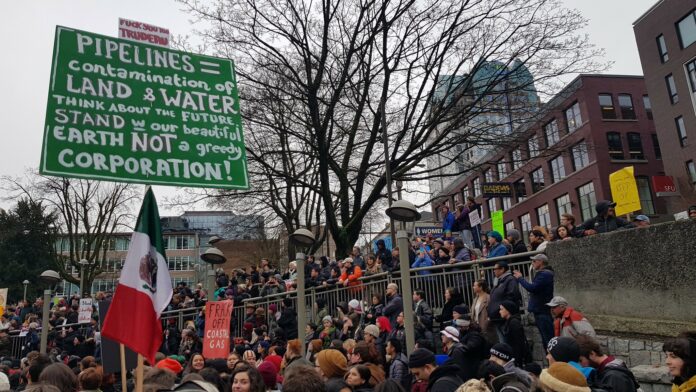
A protest against a pipeline in a city
PHOTO: Jen Castro / Flickr

By: Ashima Shukla, Staff Writer

In a recent article for the American think tank Council on Foreign Relations, senior fellow for energy and climate Varun Sivaram proposed a new doctrine for climate policy: climate realism. This seemingly pragmatic approach argues it’s impossible to avert climate change completely. Instead, it claims the US should favour more profitable and geopolitically strategic ways of managing climate consequences. 

In truth, climate realism is anything but realistic. This elitist discourse cloaks inaction, securitization, and racialized control.  For example, Sivaram weaves a story of how carbon emissions from “emerging and non-advanced economies” are threatening the survival of American society to justify penalizing countries in the Global South that use fossil fuels. Behind this facade lies an unsettling truth: climate realism is a luxury afforded only to those distant from disaster. For Indigenous communities around the world, this “climate apocalypse” is a long-lived reality. For many of us, the dystopia is now. 

But even on capitalism’s own terms, climate inaction is a losing game. In 2022 alone, climate-related disasters cost the global economy over $430 billion CAD in economic losses. Rising sea levels could add another $550–715 billion CAD per year by 2100, along with 250,000 more lives lost annually from 2030 to 2050

Yet, what this so-called realism sidelines holds our greatest hope: Indigenous communities across the world embody models of climate resilience based on reciprocity, relationality, and collective care. The Anishinaabe, for instance, find resilience in their heritage of fluid governance systems. These systems shift with seasons, mirror the dynamic rhythm of their ecosystems, and exist in conversation with the land, ancestors, and descendants

For Indigenous communities around the world, this “climate apocalypse” is a long-lived reality. For many of us, the dystopia is now.

The Menominee tradition similarly shifts our idea of space and identity, breaking down the human/non-human binary. When elder maple trees become our guardians, the forest is no longer a resource to be exploited. Confronted with settler colonialism, the Menominee ancestors chose kinship with the non-human, imagining sustainable harvesting practices that ensured the land’s long-term health. In doing so, they transformed the forest into a space of mutual learning, where Indigenous knowledge can be practiced alongside ecological science. The forest, then, is not only a source of economic sustenance but also a living, breathing archive of Menominee cultural endurance and wisdom. 

What might climate responsibility look like if we learned from such intergenerational accountability? If we followed environmental professor Robin Wall Kimmerer in integrating traditional ecological knowledges into conservation and began to ask not only “How do we return the gifts from our ancestors?” but also “How do we become good ancestors ourselves?” 

These are not just peripheral climate strategies but living embodiments of the 4Rs at the heart of many Indigenous knowledge systems: respect for all beings; relevance rooted in lived, localized experience; reciprocity as a fundamental ethic; and responsibility to care for what we inherit and leave behind. Climate realism, by contrast, is top-down, neocolonial, and ultimately nihilistic. And while despair, exhaustion, and grief are valid responses to a world built on organized greed, activist and prison abolitionist Mariame Kaba reminds us that “hope is a discipline.” It is a daily practice, a refusal to surrender, and a commitment to imagine otherwise. It is organizing, remembering, dreaming. 

Kimmerer, in her book Braiding Sweetgrass, explains that reciprocity is not a metaphor — it is a political imperative. We find ourselves in a profound contradiction where decay and delusion coexist with radical potential. We face stagnation and suffocation. And we also face a moment of rebirth: of resistance, of relational thinking, of decolonial worldmaking. The question isn’t whether alternatives exist, because they do. The question is whether we have the courage to learn from and live with them, for the world pulsing beneath our feet.

When the state kills, who is the enemy?

0
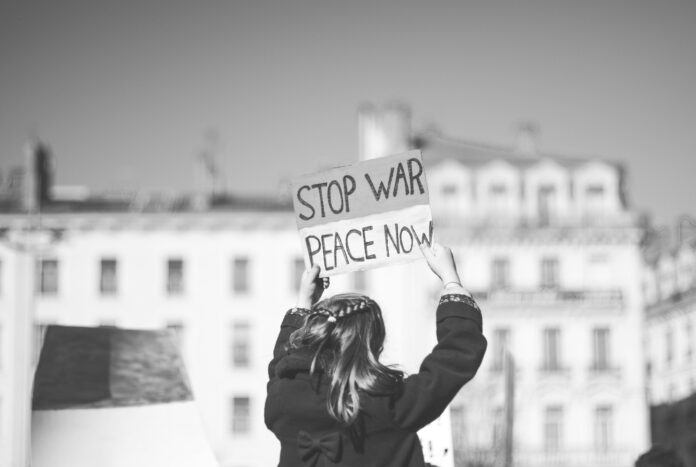
A person holding a sign that reads stop war, peace now
PHOTO: ev / Unsplash

By: Ashima Shukla, Staff Writer

Content warning: Mentions of war, violence, and death.

We are often told war can be justified. Our history textbooks glorify national victories. Our films wrap bloodshed in orchestral scores. Our news headlines echo political speeches about defending our honour and dignity. In all these stories nations tell about themselves, we are taught that under the right circumstances, violence is not only permissible, but a noble duty. Rooted in the Just War Theory — which stretches from Roman philosophers like Cicero and Augustine of Hippo to today’s Geneva Conventions and the United Nations Charter — war can be “fair” when declared by the proper authority, fought for a just cause, and with discretion. A morally palatable violence ready for society’s consumption. 

In reality, war refuses to stay within these boundaries. It burns through bodies, homes, histories. In all its chaos and brutality, can war be so easily justified? Can we — should we — accept any framework that permits organized violence against an “other” as a reasonable solution to conflict? This is not to romanticize non-violence. One should question who perpetuates the violence — a controlled enforced state or those resisting erasure? Across traditions to be explored here, thinkers have acknowledged that when confronted with annihilation, violence may be a necessary form of resistance. However, in asking if war is ever justified, what is needed is discernment: a reckoning with the difference between violence as survival and violence as ideology. If our goal is justice, we must begin by asking what kind of worlds we wish to inhabit and by having the radical hope to imagine other futures rooted in interdependence, not domination. 

Walter Benjamin, German philosopher and literary critic, in The Critique of Violence, explains how states hold a monopoly on violence, reserving the right to decide when force is justified in the name of preserving laws or creating new ones. What we are told is a “just” war, then, reflects not a universal morality but a project of state power — a story written by the hand that holds the gun, not those caught in its line of fire. If law itself is founded on violence — just as how several modern constitutions have been introduced as a result of revolutions, secessions, or colonial occupation — how can we trust it to regulate ethical violence? Can violence ever be ethical? Through the eyes of various philosophers, traditions, and critical theorists, let’s trace a different path. 

Confronting the absurd 

From an absurdist standpoint, war is not merely unjustifiable, it is a betrayal of human dignity. French philosopher Albert Camus shaped absurdist philosophy by arguing that the human condition is absurd because we seek meaning in a universe inherently devoid of it. In this light, war is an attempt to impose coherence through brute force rather than confronting the absurd with the conscious decision to live and act ethically despite the lack of a greater meaning. 

Following World War II, Camus reflected in one of his essays: “People like myself want not a world where murder no longer exists [ . . . ] but rather one in which murder is not legitimate.” 

His reflections reject this normalization of violence that imposes a false binary of force versus submission. Instead, he helps us realise that the choice is between force and solidarity. Writing from the ruins of war, he knew, as we must come to know, that the allure of righteous violence is just an illusion. In the promise of order and justice, what it actually delivers is grief and meaninglessness. He reminds us that we must preserve human dignity, that our longing for justice must not morph into a license to kill. Because there is no justice in death and destruction. 

Writing from the ruins of war, he knew, as we must come to know, that the allure of righteous violence is just an illusion. In the promise of order and justice, what it actually delivers is grief and meaninglessness.

The wisdom of non-contention 

Where absurdism teaches us to face the void with courage, Taoism invites us to dissolve the very self that clings to control, domination, and permanence. In Tao Te Ching, Laozi warns: 

Weapons are instruments of fear; they are not a wise man’s tools.

He uses them only when he has no choice.

Peace and quiet are dear to his heart,

And victory no cause for rejoicing.

If you rejoice in victory, then you delight in killing;

If you delight in killing, you cannot fulfill yourself. 

From a Taoist lens, then, war is not a necessary evil but a disruption to the natural order. When a nation exerts force to prove its greatness, it is already out of step with the Tao. To seek victory through domination is but a desperate attempt of the ego to preserve its attachment and delusion. Even when such a victory is achieved, the winner is spiritually diminished.

Similarly, in Buddhist philosophy, violence is born out of taṇhā (craving) and avidyā (ignorance). It arises when we attempt to impose fixed identities on what is transient: mine, yours, enemy, ally, nation, other. These labels are illusions of our separation that give rise to dukkha (suffering). In the core Buddhist text, The Dhammapada, it is said, “All tremble at violence; all fear death. Putting oneself in the place of another, one should not kill nor cause another to kill.” 

This ethic of non-harm is not about passivity but rooted in compassion and interdependence. When reality is understood as everchanging and impermanent, the self becomes fluid and relational, where harming another is no different than harming oneself. 

This idea of interdependence is one mirrored in many Indigenous traditions around the world. In The Dawn of Everything, scholars David Wengrow and David Graeber remind us that the idea of warfare as humanity’s default condition is a myth created by modern states to naturalize their own violence. Even when confronted with settler-colonialism, many Indigenous communities did not recognize war as an inevitable feature of human life. Instead, existence is understood as a web of relationships — between land, water, ancestors, spirits, animals, and fellow humans — where balance, reciprocity, and care are centred over domination or conquest. In this world view, violence can never be a solution because it ruptures this intricate web of being. 

Decolonial scholar Achille Mbembe argues that sovereignty today is not simply the power to rule, but the power to expose others to death. To decide whose lives are expendable, whose deaths are worth grief and memory. In the name of nationhood, or democracy, people are caged, bombed, starved. The military parade becomes a celebration of technological precision. This very logic of conquest — to penetrate, to dominate, to control — echoes every day gendered performances of dominance

Peace, then, cannot be built on the same scaffolding that upholds war. To move beyond the myth of a noble war it requires dismantling these deep roots of domination that frame conquest as justice. Across traditions, from Camus to Laozi, Buddhism to Indigenous thought, we find not just a rejection of war but a racial re-imagining of the world where care is not weakness, but a revolutionary force. As Anishinaabe scholar Leanne Betasamosake Simpson has argued, true resistance lies in returning to practices of care like storytelling and song that regenerate life without erasure. In rejecting righteous violence, we make space for a conception of justice that is rooted in our interconnectedness.


New study on cardiovascular disease takes alternative approach

0
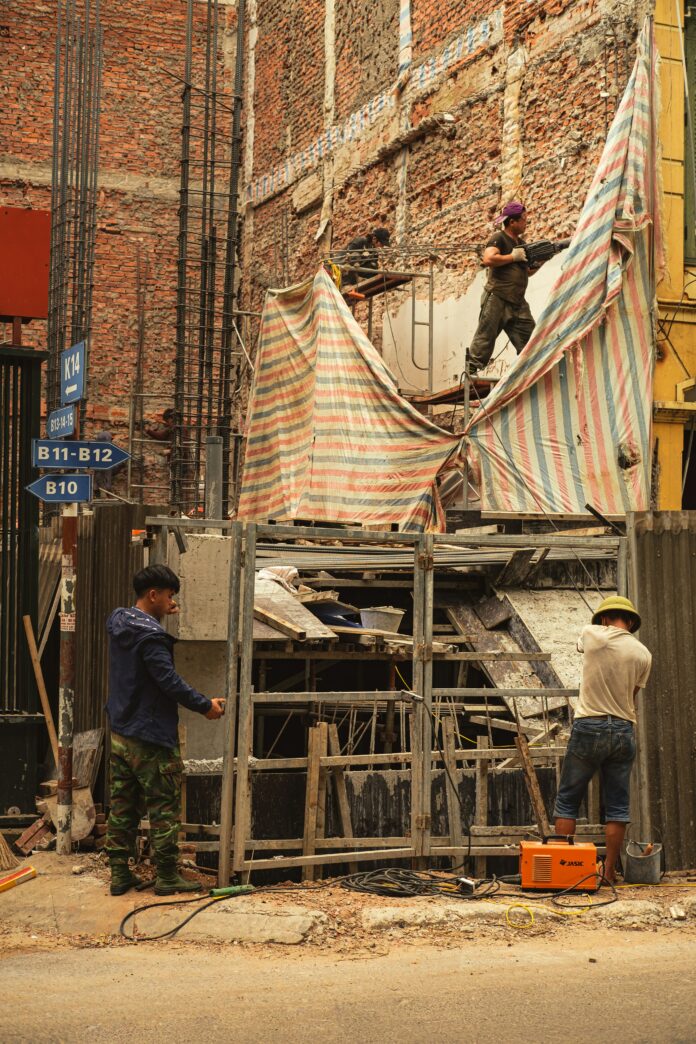
This is a photo of three men doing manual labour outside on metal scaffolding.
PHOTO: Nguyễn Hiệp / Unsplash

By: Lucaiah Smith-Miodownik, News Writer

Scott Lear is a professor of health sciences at SFU and the Pfizer/Heart and Stroke Foundation chair in Cardiovascular Prevention Research at St. Paul’s Hospital. He recently published a study with other researchers from around the world, examining determinants of cardiovascular disease (CVD). CVD (also known as heart disease) is related to atherosclerosis, which is the buildup of plaque in arteries, making it harder for blood to flow. Study findings offered new perspectives on combating CVD, while challenging the status quo on current global health guidelines for maintaining cardiovascular wellness.

Lear’s study was unique in examining CVD in low- and middle-income countries (LIC, MIC) rather than generalizing findings from high-income countries (HIC) to create universal guidelines. Prior to this research, much of the understanding regarding the effect of “environmental and social exposures and policies” on CVD came from sampling HICs only.

According to the study, LIC and MIC have “poorly funded health systems, poor access to prevention and treatment strategies,” and “a higher prevalence of chronic disease.” Worldwide, ischemic heart disease, a specific type of CVD, is the leading cause of death due to numerous individual and societal factors. From 2000 to 2021, the number of deaths climbed by 2.7 million to reach 9.1 million, per the World Health Organization. Other types of CVD include strokes, heart attacks, and more. According to an SFU press release on the new study, 80% of CVD deaths come from LIC and MIC. 

By using data from the Prospective Urban and Rural Epidemiological (PURE) study and related studies, Lear’s study was designed to shape “future policy and research recommendations” and  “accelerate the reduction of the global burden of CVD.” Specifically, his team highlighted findings from previous studies, which showed that individual biological and behavioural risk factors are influenced by social, environmental, and policy determinants, such as the walkability of one’s environment, tobacco price, and food accessibility. PURE conducts research about “CVD, diabetes, kidney and lung diseases, brain health, cancer, and more” internationally. The PURE study utilized data from 28 countries, with 87% of participants living in LIC or MIC. It includes statistics on various measures of health, including physical activity, diet, healthcare accessibility, social isolation and cohesion, and more. 

“We cannot assume that life is the same everywhere. The environments in which people live and the kind of work they do makes a huge difference to their health,” — Scott Lear, professor of health sciences and Pfizer/Heart and Stroke Foundation Chair in Cardiovascular Prevention Research

One takeaway from the PURE data was that “physical inactivity was the second strongest behavioural determinant of CVD after tobacco use.” However, while HIC residents spent more time partaking in recreational activities, those living in LICs reported higher rates of non-recreational activity, such as manual labour involving lifting things, walking to work, and doing household chores. Additionally, “only 4.4% of LIC participants reported sitting more than eight hours a day compared with 22.2% of HIC participants.” Lear’s team showed that measuring physical activity only by recreation omits significant context and details.

In terms of food, “while the absolute cost of fruits and vegetables was lowest in LIC, the cost relative to income was 50 times greater for fruits and 19 times greater for vegetables than in HIC.” Accordingly, HIC reported a greater mean consumption of fruits and vegetables than LIC. When we suggest that individuals “eat better” as a CVD guideline, the study recommends we must also recognize “the context of the local environment,” as well as “facilitators and barriers.”

Other recommendations include focusing more on “population-level measures to make healthy choices easier.” Additionally, the study emphasizes the importance of “enhancing collaborations between researchers with diverse backgrounds,” and “awareness of barriers to evidence-based health policies, including commercial determinants of health such as obstruction by vested interests.” 

The biggest takeaway? “Success can only come through engagement of multiple sectors and countries beyond HIC,” reports the study. “We cannot assume that life is the same everywhere,” Lear said in the SFU press release. “The environments in which people live and the kind of work they do makes a huge difference to their health.”