Home Blog Page 363

Need to Know, Need to Go: March 1–7

0
Illustration of a blue calendar, with "Need to Know, Need to Go" written on top
Arts & Culture events to catch around the city. Image courtesy of Brianna Quan

By: Charlene Aviles, Peak Associate

A Future for Memory: Art and Life After the Great East Japan Earthquake | Museum of Anthropology at UBC | February 11 – September 5 | $13 for students; free for Indigenous attendees

The latest exhibit at UBC’s Museum of Anthropology is a reflection on the aftermath of the March 2011 earthquake in Japan. Featuring the work of Japanese artists like Masao Okabe, Chihiro Minato, and Atsunobu Katagiri, A Future for Memory showcases the resilience of the earthquake’s survivors. Visitors can book their 30-minute visit on the museum’s website

All My Relations: Trauma-Informed Engagement | Online | March 2 from 10 a.m. – 12 p.m. | FREE with registration

SFU’s Morris J. Wosk Centre for Dialogue is hosting a talk with Dr. Karine Duhamel, the Director of Research for the National Inquiry into Missing and Murdered Indigenous Women and Girls. Duhamel will discuss intergenerational trauma and how to support its survivors. Seats can be reserved through Eventbrite.  

Feast for the Eyes: The Story of Food in Photography | The Polygon Gallery | March 4 – May 30 | By donation

Feast for the Eyes: The Story of Food in Photography looks at food’s role in “visual consumption,” culture, and entertainment. The exhibit centres around three themes — Still Life, Around the Table, and Playing with Food — and includes the works of over 50 artists. A book on the exhibition is available for purchase online.

“Just Is” ≠ Justice | Online | March 5 from 11 a.m. – 12:30 p.m. | FREE with registration

As part of UBC’s Sustainability Initiative, the “Just Is” ≠ Justice webinar will highlight those most susceptible to climate change. The discussion panel includes community leaders and climate activists Kathryn Harrison, Temitope Onifade, Terri-Lynn Williams-Davidson, and Eugene Kung. Tickets are available through Eventbrite.

Comics Workshop for Any Drawing Level | Zoom | Sundays from March 7 – 28, 2 – 3:30 p.m. | FREE with registration

The North Vancouver District Public Library is hosting a four-part workshop on creating comics. Each session will be taught by local cartoonist Kathleen Gros. The first three sessions will focus on brainstorming, composition, and design. During the last session, participants have the opportunity to present their final product. Participants can register online.

Cousins create candle business that hits all the right notes

0
Light up your life with these sustainable candles. Photo courtesy of Vela Candle Bar

By: Sara Wong, Arts & Culture Editor

For cousins Kelly Hui and Rita Law, making candles began as a shared hobby. But, as the pair detailed in an email interview with The Peak, that quickly turned into more. “We made a few batches and it became a hit amongst our friends and family,” Hui began. “The support was so encouraging that we decided to really consider starting a small business. We started testing and researching and learning about [different] fragrances, wax, vessels, wicks, etc. and eventually decided to turn our fun candle making activity into Vela Candle Bar!”

Hui and Law launched Vela Candle Bar in December 2020, and they have been busy ever since. “We love the local community and we’re so grateful for the support, regardless [of whether] it’s a [purchase], shout-out, or like/comment on a post,” they said.

The Vancouver-based duo hand-pours every candle, using a combination of natural soy wax, phthalate-free fragrance oils, and lead-free wicks. They explained that these elements lead to “a cleaner and longer burn.”   

In addition to the time it takes to melt the wax, add wicks to the jars, and mix the fragrance oils, each candle takes a minimum of two weeks to cure before they are ready to be delivered. “Every sale gets a happy dance! We always pinch ourselves because we can’t believe our little dream is now a reality,” they shared. 

The pair celebrate their success with every order because,, prior to starting Vela Candle Bar, they did not have a lot of business knowledge. “We had to research and reach out to our peers and resources to learn what we needed to operate a business,” revealed Hui. At the same time, Hui — an SFU alumna — found that what she had studied in school, majoring in Health Sciences and minoring in kinesiology, came in handy.

“Although my degree wasn’t directly related to entrepreneurship, I still gained many valuable skills that prepared me for it,” she said. “All the deadlines that we had for projects/assignments allowed me to learn how to budget my time accordingly [ . . . ] project work has taught me how to recognize and adapt to changes in my environment, and the tutorial discussions I used to have in class have allowed me to gain more confidence in public speaking.”

Vela Candle Bar is growing rapidly, both in sales and brand recognition, yet Hui and Law still consider the beginning of their business to be their biggest achievement. “We’re so proud to have taken the initiative in starting our own small business together and overcoming our fears and objectives prior to launching,” they wrote. And their advice to aspiring entrepreneurs is to do the same. “Just do it [ . . . ] you never know where it will take you. There’s nothing else scarier than not knowing what could have been if you don’t try,” Hui and Law encouraged. As for what to expect next from Vela, they told The Peak that they were working on some new products and that they also had upcoming partnerships and collaborations. 

For the latest updates from Vela Candle Bar, see their Facebook and Instagram profiles, @velacandlebar, or sign up for their newsletter through their website.

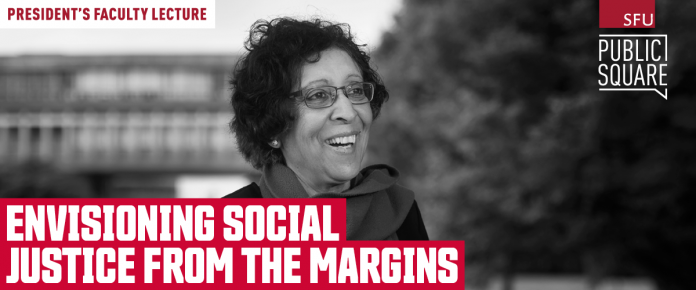
Dr. Parin Dossa envisions social justice from the margins

1
Image courtesy of SFU Public Square.

Written by: Emma Jean and Dev Petrovic

Content Warning: Discussion of war, islamophobia, racism

Living in a Western country in the Global North, it is often difficult to view social justice outside of the walls of our familiar political system. Envisioning Social Justice From the Margins was an eye-opening educational event that discussed viewing social justice as a collective aim. The lecture was conducted through dialogue about the divisions between the Eastern and Western fronts of the World.

Hosted by SFU Public Square, the event featured lecturer and professor of anthropology Parin Dossa. Dr. Dossa’s research centres on topics of migration and diaspora, with a focus on gender, health, and the circumstances of Iranian and Ismaili Muslim communities. She takes on an ethnographic narrative (examining stories) to foster a more intimate understanding of the impacts of war and its structural violence.

Dossa explained that her lecture would consist of diverse stories from her research participants, primarily those of Muslim women living on the margins and residing in Canada, Afghanistan, Kenya, Uganda, and India. She shared with participants that through the combined power of stories, we can collectively re-envision social justice. 

“The stories of people who are in the margins of society are not easily heard. They are buried,” said Dossa. She went on to describe each individual story as a thread in the tapestry of history. 

The first section she covered from that tapestry was Afghanistan. Dr. Dossa’s experience in Afghanistan centred around two key sources: interviews with several Muslim women who live there, and her own Canadian basis of reference. As she flew into Afghanistan, she noted the parallels of geography and the differences caused by invasion. She noticed the rocky mountains gracing both landscapes, as well as the differently utilized gated communities representing wealth disparity and disconnection, which Dossa noted impedes social justice. 

While she was there, she interviewed Muslim women and observed their lives as a guest and an anthropologist. Surrounded by constant reminders in the form of American and Soviet war helicopters among many other remnants, the impact of proxy war and invasion is all around Afghanistan, Dr. Dossa noted. “If the world has entered into political amnesia, the women of Afghanistan remember.” 

The three stories that she shared in response reflected how each interviewee experienced that manifestation. The first, a woman named Hamidad, described how her house was burned down in 2001, around the same time as the US’s War on Terror attacks began. The trauma had long-lasting impacts on her children. 

The second story featured how life for many Afghan Muslim women has settled now. This was further supported by Dossa’s observations of her hosts which she said included a constant, dawn-to-dusk cycle of childcare, exploitive work, and family obligations resulting in very busy days, all done with “strength and resilience.” Dossa elaborated, “Despite social justice having entered into the inner recesses of their lives, they also work for themselves as better mothers, better wives, better daughters.” 

The third centred a woman whose “every wrinkle has a story to tell.” Now living in Canada, she fought for a Canadian citizenship for years after her racialization prevented her from obtaining it. 

Each of these stories demonstrated that same “strength and resilience,” as well as a deep need for structural change that Dossa emphasized throughout the lecture.

Dossa’s second-case story looked at Muslims in India — which is where she indicated that she wanted to do research because it is her home country. She explained that the Muslim community has been disenfranchised due to the legacy of British colonisation, where the Hindu community was favored, and then after India’s independence, the Muslim community remained a minority. 

“What I found was the houses behind this dump are the places where Muslims reside. There is just garbage thrown outside their homes. The women [ . . . ] informed me that the children fall sick, but there is not much they can do. They have been deprived of sedition rights [right to rebel against established order], citizenship rights in terms of livelihood, health sector, and religion,” said Dossa while showing pictures of a family’s home. 

She described how despite their living environment being impoverished, “the Muslim women are, in fact, sustaining their everyday lives.” She provided examples of how they sustain themselves by waking up really early to prepare lunch because there is hardly any clean water or electricity. Dossa added that “one reason why they survive is because of interconnectivity because of cultivation of social networks.” 

The Muslim women in these poverty-strucken communities take on jobs like weaving fishnets, embroidering, or buying large stocks of food and reselling them in order to make some income, as minimal as it may be. The income from this is their daily budget, allowing them to survive. Dossa also explained that women with disabilities, who are not able to work, have to rely on social networks and help from the community to survive. She noted that “people are helpful to the extent that they can [be].”

It was eye-opening to hear about communities that are living on the margins due to systemic injustices, and how people are forced to learn to utilize what they have by connecting with other community members. It begs the question: if a small impoverished community can survive purely on collective aid, why can’t Western countries do the same? 

Dossa’s third and final case-story focused on the continent of Africa — specifically Kenya and her birthplace of Uganda — and the lasting effects of British colonization. A specific phenomenon she came across was the unexpected ties between the African care workers in the country and the elderly Asian people they took care of. 

Both groups, she described, are uniquely oppressed and disregarded in both Kenya and Uganda, where the imperial social system saw Asian people as lower class citizens, and African people even more so — something that didn’t change once Kenya established their independence. As many Asian families sought to move abroad away from the counties, many of their elders were left behind. The African care workers ended up being the ones to take care of them, and as a result, Dossa observed a social community that was formed and built “with loyalty, with warmth, and with what is referred to as fictive kinship,” a sociological term for friendship formed not out of convenience or need but affection.

Given the sentiment of community that grew out of it, a deeper examination on what drove the “Asian exodus,” to use Dossa’s words would have been enlightening. The political effects that events like Uganda’s expulsion of Asian citizens in 1972 (including many Muslims) as well as the other factors she described like “the global rise of capitalism” all shaped the phenomenon. Learning more about them could have contextualized those relationships more, but that was a lecture for another time. 

After Dossa’s lecture, a series of questions erupted regarding the dialogue on Muslim poverty. Many participants noted that the Muslim community was not the only population in India that experience disproportionate poverty, and that Hindu women and communities also face impoverishment.  

“I do recognize that there is diversity,” acknowledged Dossa. “Some of the very poor Hindu families reside in the same area as Muslim families.” 

Another participant called on Dossa for being “biased” as a Muslim woman herself. However, considering her research is focused on the Muslim experience, it was not surprising to that she did not get into explaining the experiences of other groups. Nonetheless, it was refreshing to hear her response and outlook on this disagreement. 

“I am not at all overlooking the fact that there are Hindu families that are poor, struggling, and have been short-changed by the rise of our neoliberal global capitalism,” explained Dossa. She mentioned that even though there are other communities that face challenges, Muslim communities face intergenerational, systemic poverty based on their religious identity. 

It was interesting to hear Dossa explain this, while also holding space to discuss the inequities of other communities when prompted.  

The final slide of Dossa’s presentation created a final vision of the tapestry she described — this time, with her path to social justice informed by the women Dossa encountered. 

The first thread was Alternative Pedagogies, or taking steps to fulfill your “obligation to work towards transformative change.” The second was Margins — looking towards the stories like those of the women featured who “embodied experience of injustice, rendered invisible” and making sure their stories are truly heard. In relation, the final thread was Journeying, where “striving for alternative knowledge beyond normative discourses and practices” can be achieved. 

With all of those principals in mind, Dossa continued, social justice that is centred around and works from the voices of the ignored can be achieved. 

Hosted by President Joy Johnson, this lecture was a part of The President’s Faculty Lecture Series that shares some of the research that takes place at SFU.


“Tipsy Taho” podcast promotes Filipino culture and diversity

0
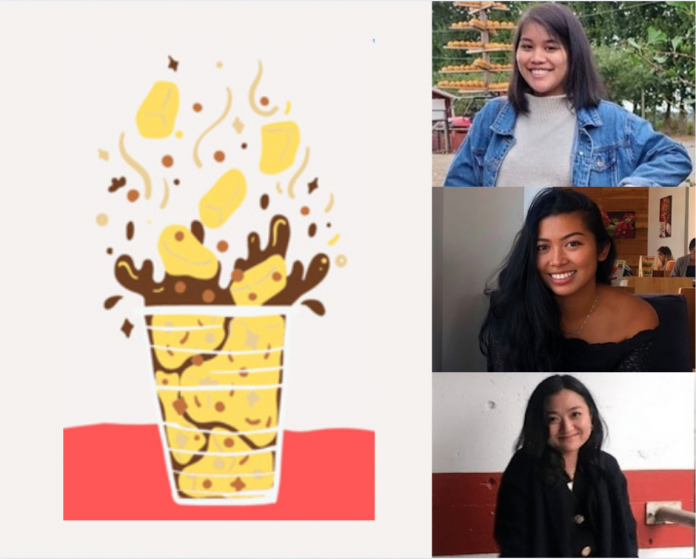
Capistrano, Melliza, and Regala are increasing representation of the Filipino-Canadian community. IMAGE: Sara Wong / The Peak

By: Charlene Aviles, Peak Associate

Editor’s note: For clarity, this piece has been modified to acknowledge that utang na loob can have different meanings to different communities.

A late-night Zoom call started it all. After Rio Therese Capistrano, Thea Marie Melliza, and Kim Regala three friends and Vancouver-based Filipinas got to talking, they became inspired to learn more and educate others about their Filipino culture. They named their podcast Tipsy Taho, after a Filipino dessert, taho, which contains tofu, brown sugar syrup, and tapioca pearls. In an interview with The Peak, Capistrano, Melliza, and Regala detailed the significance of their podcast. 

“We have our own identity, and it’s different from Canadians [and] from native Filipinos on the mainland, so we have our own experiences [that] we relate to in our Filipino-Canadian identity. We wanted to talk more about that and see if anyone else could relate,” Melliza explained.

Each region of the Philippines has its respective culture, and the Tipsy Taho hosts highlight that. Capistrano grew up in Parañaque city, Melliza’s parents are from Iloilo, and Regala’s hometown is Iligan, so they combine their unique experiences, along with research on the history of the Philippines, to showcase Filipino diversity in their podcasts.  

For Melliza, who was born in Canada, Tipsy Taho is a way for her to learn more about Filipino culture too. She admitted to feeling like the odd one out amongst her Filipino friends growing up. Realizing that in her childhood there were few resources for her to learn about her culture, she wanted to bridge that gap by educating others through the Tipsy Taho podcast and Instagram account. She uses the podcast to provide a platform for Filipino-Canadians to have their voices heard. Because Capistrano and Regala were born in the Philippines, Melliza will “ask questions that maybe they wouldn’t think about.” Expanding on the importance of this, Melliza illustrated that “when people don’t know much about something, they just assume or they use stereotypes [ . . . ] but that’s not all we are. What I want the public to gain from this [podcast] is to see that we’re all so different.” 

Capistrano expressed the same goal of using the podcast to bring more awareness to Filipino culture. Sharing what the community response has been like, she described a walk she took with Melliza, where they met Edwin Padilla, a Filipino musician from Laguna fundraising for Filipino earthquake survivors. “We were telling him about the podcast. He was excited with the fact that we’re trying to [recognize Filipinos] more,” Capistrano said. 

On the same page about the podcast’s goals, Regala said, “The three things that I want people to take out of this [are to learn] a lot more about the culture and how we’re raised as Filipino and Filipino-Canadian, [be] aware of the talent that our Filipino community has to offer, [and resonate] with it.”

In addition to educating herself, Capistrano aims to reintroduce cultural traditions. Since the Philippines was a Spanish and American colony, some Filipino traditions are a combination of Indigenous knowledge and Western influence. For example, in Tipsy Taho’s second episode, “We Love Love: Kiligs, Haranas, and Getting in Our Filipino Feels,” they discussed the Spanish-influenced tradition called harana. It entails suitors or hired musicians serenading Filipinas. Similar to the harana, the kundiman, a Filipino love song that can also express patriotism, is a tradition that became less common during courting. 

Inspired by her cultural values too, Regala incorporates utang na loob, which she sees as a debt of gratitude, into her role as a host. Regala was careful to stress that utang na loob has different meanings to different communities. For her, it means “you’re obligated to want to do something for someone, because they did something for you. You’re being a lot more selfless and a lot more giving.” Regala further explained that, based on her understanding of utang na loob, she “treat[s] [her] friends as if they’re family.” She takes that into the podcast host meetings, where she returns her friends’ support by being respectful of and grateful for their dedication.

Filipino representation in the media is also of interest to the hosts. Melliza noted that the entertainment industry has started to promote Filipino culture, such as in the shows Blues Clues and Ratched. She hopes to see the media actively “incorporating aspects of Filipino identity,” such as names and foods, to accurately portray Filipino characters. “[I think] using real Filipinos for characters that are Filipino [ . . . ] and honouring their Filipino identity in those characters [is] the first step,” she added.

Capistrano and Regala recognized the potential of social media to promote their culture and increase representation. Regala prefers “grassroots approaches,” such as podcasts, because these initiatives widen the scope to include a global audience.

Capistrano also discussed how Tipsy Taho provides opportunities for Filipinos to support each other and grow their media representation. On Instagram, Tipsy Taho celebrates Filipinos’ achievements and features local businesses. When asked about her message to the Filipino community in BC, Capistrano replied, “I want to be able to communicate and share our experiences, whether it’d be you being born here or being born back home [so] that we can have [and create] a community, a very strong Filipino community.” 

Tipsy Taho is available for streaming on Anchor, Breaker, Google Podcasts, Pocket Casts, RadioPublic, and Spotify. Listeners can support Tipsy Taho by following their Instagram account.

Climate Impacts on the Mental Health and Wellness of British Columbians

1
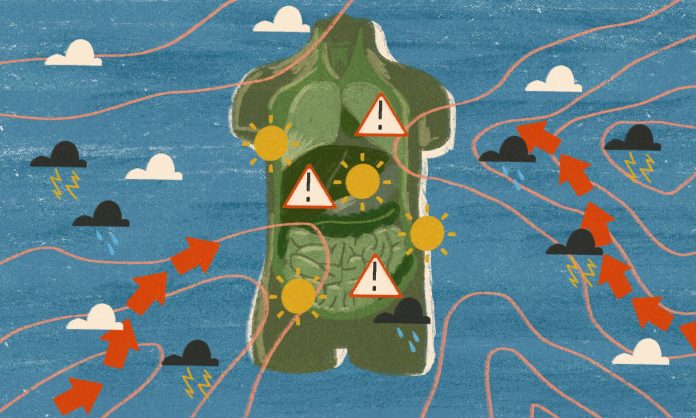
Illustration courtesy of Sonny Ross / The Guardian.

Written by: Charlene Aviles, Peak Associate

At Climate Impacts on the Mental Health and Wellness of British Columbians, the discussion on environmental degradation, mental health, and social injustices confronted the traditional narrative of the climate crisis. By identifying proactive ways to combat the climate crisis and in turn, related mental health problems, the speakers challenged school curriculums to transition from messages of pessimism to optimism.

The event featured speakers Abhay Sachal, Dr. Ashlee Cunsolo, Dr. Maya Gislason, and Elder Valerie Nicholson. A collaboration between the B.C. Centre for Excellence on HIV/AIDS (BC-CfE), Pacific Institute for Climate Solutions, and SFU, the talk addressed the relationship between the climate crisis and mental health.

Overwhelming Nature of the Climate Crisis

Abhay Sachal, Break The Divide’s co-founder and executive director began his activism with the Students on Ice Foundation Arctic expedition. As Sachal observed the melting ice, he felt “inundated by feelings of hopelessness and anxiety.” Overwhelmed by the consequences of rising global temperatures, he consulted his Inuit peers to learn how they adapted. Together with his brother Sukhmeet, they founded Break The Divide to facilitate discussions between secondary students in Inuvik, the Northwest Territories, and Delta, B.C. This, he said, allowed them to feel more connected and talk about their feelings around climate change.

Then, once again, in September 2020, Sachal found himself facing the same feelings of despair he’d felt during the Artic expedition. This time, the trigger was all of the smoke from California wildfires which he noticed during his run. He recalled the experiences of other climate activists who had felt the same way. Many of them had expressed that “the root cause of many of these stressors [ . . . ] is [sic] the political inaction that they see.”

Sachal admitted that climate activists often struggle with burnout but encouraged them to remember the amazing work being done on both climate change and mental health. “For me, the level of hope that I often experience comes from this idea of empathy for oneself, empathy for others, and empathy for the planet.” He advised environmentalists who combine “optimism with action” to take breaks and nurture their support networks.

The Indigenous Experience of the Climate Crisis

Dr. Ashlee Cunsolo, founding dean of the School of Arctic and Subarctic Studies at Memorial University, presented on her research in Rigolet, Nunatsiavut, where she studiedthe ways in which climate change is impacting Inuit lives, livelihoods, culture, and mental wellness.”

According to the Inuit community members she interviewed, the land is a “generational connection to both yourself and others” because it plays a crucial role in culture. 

Due to the research participants’ emotional connection and identification with the land, they also emphasized the land’s healing properties. Conversely, they attributed illness to the land deteriorating. 

Among those susceptible to the consequences of the climate crisis are youth, Indigenous peoples, women, the elderly, and those with low socio-economic status. For example, the increasing urbanization in northern Canada and Labrador disproportionately affects the Inuit who are “at the front lines of climate change.”  

Because the Inuit depend on the land for their basic needs, the effects of the climate crisis in Labrador (i.e. increased temperatures, melting sea ice, and permafrost warming) pose challenges for survival, health, and cultural traditions. According to Cunsolo, climate-sensitive mental health outcomes include anxiety, substance abuse, suicide, and “place-based loss.” The climate crisis interrupts the dissemination of cultural knowledge, which results in place-based loss as many Indigenous cultural practices and traditions are connected to land and to place.

Elder Valerie Nicholson, Peer Indigenous Research Associate at the BC-CfE, was asked about her work with YouthCo and their HIV leadership program for youth, Camp Moomba. She shared her wisdom from her Mi’kmaq, Haida, Roma, and English cultures, describing how her grandfather was a source of knowledge on nature and respect. 

She asserted that residential schools, the Sixties Scoop, and treaties resulted in Indigenous peoples knowledge of the land being “interrupted and disrupted through colonization,” as the cycle of sharing knowledge was impeded.

Dr. Gislason, an SFU health sciences assistant professor who specializes in health equity, also urged the importance of Indigenous elders who mentored children to become advocates and nurture their cultural and ancestral connection to the land.

In response to an audience member’s question, “What are your thoughts on the idea of anger at people who don’t share our same grief?” Nicholson explained that her cultures promote educating others instead of anger. She added, “We have to be strength-based. Anger will only pull everything down. For me, negativity is a bully that eats away at you, and you can’t carry that.”

Given that grief is a common response to the climate crisis, Cunsolo suggested that environmentalists use it to mobilize themselves and others. According to her, “Grief is an incredible gift, if we’re open to it because we only grieve what we love. If we love something, then it’s worth fighting for.”

Her cultural heritage also shapes her approach to “re-search.” “When we use the word re-search, we actually hyphenate that word because it’s already been there for us. We just have to search again for it, bring that back and to bring that connection back to ourselves, and interconnect ourselves in this beautiful web of life,” Nicholson illustrated.

The Impacts of the Climate Crisis on Children

Dr. Gislason noted that the report, “A future of the world’s children? A WHO-UNICEF-Lancet Commission,” recommended that Sustainable Development Goals prioritize children’s health and safety. According to the commission, “Children are key stakeholders in an interconnected web of rights and responsibilities, which binds humanity together and to our planet in a shared endeavour of mutual care.”

Like Dr. Cunsolo, Dr. Gislason agreed that the climate crisis is a health and social justice issue because it affects all developmental stages and exacerbates pre-existing injustices. She provided the audience with several calls to action to combat children’s mental health problems associated with the climate crisis: 

  • Accept and reflect on our feelings and contributions to the climate crisis
  • Persevere by implementing lifestyle changes
  • Actively listen to children’s concerns
  • Engage in community-led interventions
  • Cultivate children’s connection with nature by exposing them to the outdoors 
  • Implement an age-appropriate curriculum that equips children to be resilient

At the heart of her work was the concept that “grounded hope can help us not just bounce back, but bounce forward.” 

Final Thoughts

Because the climate crisis impacts physical and mental health, these keynote speakers emphasized the need for reform and the changing narrative on the climate crisis. To alleviate the emotional distress resulting from the crisis, activists encourage others to conserve the environment in all aspects of their lives, whether it is through education, family, or culture.

SFU Board of Governors appoints new chair and deputy chair

0
Photo Courtesy of SFU News

by Karissa Ketter, News Writer

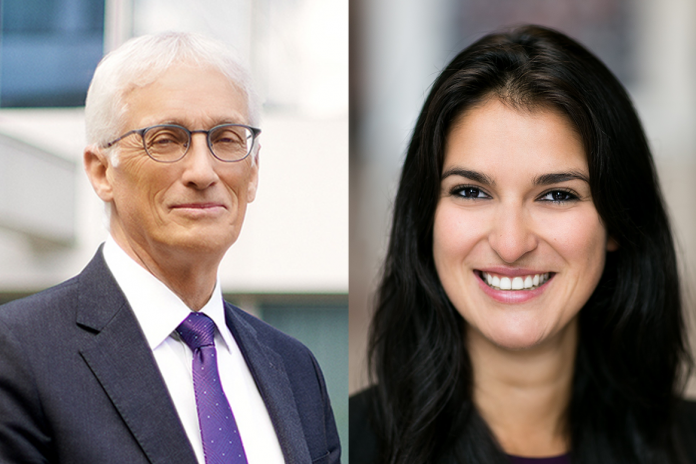
Newly appointed Board of Governors (BOG) chair James Stewart and deputy chair Angie Hall discussed their ideas to improve SFU administration with The Peak

The chair plays a role in representing the university to the outside world and vice versa, acting as a “close advisor to the President,” and offering suggestions for policy and actions in university affairs.

“I plan to be as involved as possible in helping President Joy Johnson put in effective strategies,” said Stewart. He noted his top priorities include “a re-evaluation of Board policies and procedures with a goal to make sure that the Board is functioning at its highest level.” 

Hall aims to focus on supporting the SFU community throughout the pandemic.  

SFU’s adaptation to online learning last spring impressed Hall and she plans to “continue to focus on how [SFU] can optimize the learning environment.” 

“It was sudden and unexpected and there was a lot of effort [from the Learning Centre] to help faculty provide a consistent level of learning.” While there continue to be challenges with online learning, such as academic integrity, Hall views these as an opportunity for SFU to improve. 

“The Board chair can be a real ally in discussions with governments for the benefit of students, for the benefit of researchers, for the benefit of the school as a whole,” said Stewart, noting the growing importance of the term “allyship” to him.

Stewart explained that his son lives with disabilities — he is blind and uses a wheelchair — and this has influenced Stewart’s career and community involvement. “[My son] taught me a long time ago that if you can help, then you should. If you can contribute, then you should.” 

Beyond practicing law for the majority of his career, Stewart has a history of working with various organizations such as the Environmental Sustainability Advisory Committee at the City of Surrey, Make-A-Wish Canada, and the Centre for Child Development. Stewart became involved with the SFU BOG in 2016 after his involvement with the SFU Surrey Community Advisory Committee around 10 years ago.

Stewart applauded the promise he sees SFU in a variety of fields, such as climate change, equity, diversity, and inclusion, and producing new learning technologies.

Hall added, “I’m an incredibly proud member of the SFU community; I think we are the leader in interdisciplinary learning. When I look at just the breadth of programs that we offer and the kind of research that’s being done at the institution, it’s really exciting.” 


Proud Boys named terrorist group in Canada

0
PHOTO: Anthony Crider / Flickr

Written by: Jaymee Salisi, News Writer 

On February 3, 2021, the Canadian government announced 13 groups as terrorist entities. Among these extremist groups were the Proud Boys. Bill Blair, Minister of Public Safety, stated in the government release that the terrorist designation is “an important step in [Canada’s] effort to combat violent extremism in all forms.”

Established in 2016 by Canadian Gavin McInnes, the Proud Boys are self-proclaimed “Western-chauvinists,” known for white supremacist ideologies. On his talk show, McInnes advocated for violence against women and stated he is “not a fan of Islam.” The group incited violence as counter-supporters during Black Lives Matter protests and participated in the recent insurrection of the US Capitol.

Following the events of January 6, 2021 at Capitol Hill in Washington, the New Democratic Party leader, Jagmeet Singh, called on Prime Minister Justin Trudeau to “immediately ban and designate the Proud Boys as a terrorist organization,” on the grounds that they are a “right-wing extremist group that promotes white supremacist views.”

In an interview with The Peak, associate humanities professor and political theorist Samir Gandesha explained how a terrorist designation is not an effective way to de-platform white supremacy groups. He cited the passing of The Anti-Terrorism Act, which former Canadian prime ministers and parliament members criticized for its loose restrictions on the disruption of terrorist activity. 

The act allows the criminalization of people who knowingly advocate or promote terrorism offenses in general. It also “allows the preventative arrest and detention of a person if it is ‘likely’ to prevent a terrorist activity.”

Gandesha said designating the Proud Boys as terrorists according to the Anti-Terrorism Act undermines the anti-terrorist efforts of groups such as ANTIFA, and could disproportionately increase vulnerability in marginalized communities by normalizing extremism. He noted, for example, that Indigenous people challenging developments such as pipeline construction could be defined and targeted as terrorists under the same act. Using “flawed legislation” is not the right way to make significant change against white supremacy in Canada, said Gandesha. 

Under this legislation, he explained, members of the Proud Boys can still participate in other groups as they have not been named individually and expressing hate is not a terrorist offence. For instance, the Proud Boys’ Manitoba chapter rebranded and may continue to function. 

Instead, Gandesha stated that the government needs to dismantle white supremacy by “creating the conditions that would make the emergence and expression of white supremacy less likely.” The solutions he suggested include “resourcing communities so they can engage in self-organization and self defense” He explained that doing this would mean significant reform within democratic institutions, like electoral reform and restructuring the economy, “for the benefit of the many and not the few.”

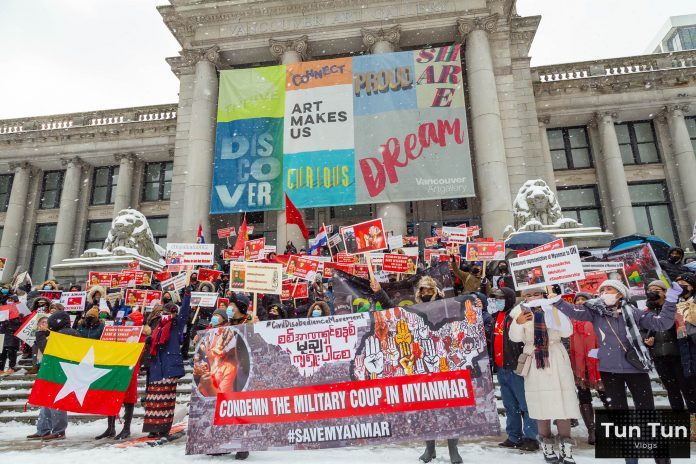
Protests held at Vancouver Art Gallery condemn Myanmar military coup

0
Photo Courtesy of Tun Tun Vlogs

by Petra Chase, SFU Student

On February 1, 2021, the Myanmar military staged a coup. Armed soldiers occupied the streets and democratically-elected officials were detained. Protesters organized at the Vancouver Art Gallery on February 3 and 13 to reject their takeover.

Demonstrators held signs with messages like “Let not their crimes be our fear.” They led group chants in both Burmese and English, asking the military to “get out.” The event remained peaceful and followed social distancing guidelines.

Myanmar’s military declared they would take power for a one-year state of emergency. Commander-in-chief Min Aung Hlaing reasoned that the November election voter lists “were found to have huge discrepancies.” However, there has not been evidence of fraudulence. 

At the protest, Calvin Yin, a Burmese international student at SFU, gave a speech, asking for “urgent assistance to stop the military coup by necessary actions and interventions immediately, to protect democracy and freedom of Myanmar.” He told The Peak in an interview, “There’s nothing much we can do except help them from here.”

Canada issued a statement condemning the coup: “We call upon the military to immediately end the state of emergency, restore power to the democratically-elected government, to release all those unjustly detained and to respect human rights and the rule of law.”  

Hundreds signed a petition calling for Canada to take further action, such as a draft “motion to refer this matter to the International Criminal Court.” The Myanmar in British Columbia group released a statement to recognize military leadership as illegitimate.

Yin recalls the past decade as being a period of improvement in democracy and freedom in Myanmar. “It was all taken away in one night,” he remarked.

David Matijasevich, an SFU professor specializing in South East Asian comparative politics explained, “While [Western powers] certainly want to put pressure on Myanmar [ . . . ] that might be harder to do because there’ll be concern that a very strong reaction against Myanmar might actually push it closer to China, and push it further into its camp.”

Matijasevich also told The Peak, “In terms of having a true multilateral response, that will be quite tough, because in the last decade or so, Russia and China have tended to lock or veto these types of calls for UN-sponsored sanctions on issues that are affecting their neighboring countries.”

In Myanmar, nation-wide protests against the military continue to intensify. The military has responded by using water cannons and rubber bullets against protesters, and releasing over 23,000 prisoners to make room for mass nightly arrests

“We are not the ones who are at immediate risk,” Yin said, referring to Myanmar people living abroad. “But to not know that something — anything — can happen at any time to our friends and family, it’s really worrying.”

On the February 13 protest in Vancouver, a minute of silence was held for 19-year-old protester Mya Thwe Thwe Khaing, who lost her life by the military.


Students question lack of diversity among SFU’s top leadership roles

0
PHOTO: Gudrun Wai-Gunnarsson / The Peak

by Karissa Ketter, News Writer

There has been discussion among SFU students online regarding the implementation of white faculty and staff to promote equity, diversity, and inclusion (EDI) policies. Though President Joy Johnson and Vice-President, Academic and Provost Catherine Dauvergne placed emphasis on implementing EDI policies, students have criticized the administration’s handling of BIPOC issues. 

The BIPOC Commitee’s At-Large Representative, Marie Haddad commented on Facebook that “SFU hiring white folk to EDI positions and allowing them to govern and make decisions on ‘behalf’ of BIPOC and [m]arginalized folks [is problematic because] many can’t even embody what it means to be BIPOC/[m]arginalized.” The comment was made in response to the recent appointment of FCAT dean Carman Neustaedter. SFSS VP University Relations Gabe Liosis added that the Simon Fraser Student Society (SFSS) had discussed these issues with SFU. 

In an email statement to The Peak, SFSS At-Large Representative Balqees Jama noted that 

“the neglect of Black, Indigenous & [p]eople of [c]olour (BIPOC) and other marginalized groups at SFU is a direct result of the university excluding these groups from initial policy creation and implementation.” She added, “The harm from lack of BIPOC involvement in SFU’s policy creation, implementation, and teaching in academia is severely felt by racialized students.” 

Citing the 2020 SFU Diversity Meter report, Jama noted that there is currently no Black or Indigenous senior leadership at SFU.

Catherine Stoddard, executive director in the Office of the Vice-President Academic, told The Peak in an email statement, “We work in every search to ensure our candidate pool is as diverse as possible.”

Stoddard explained SFU policy mandates that a search committee meets “with a diversity and inclusion specialist who provides information on EDI considerations and how to mitigate bias through the search process.”

According to Stoddard, SFU “encourages applications from all qualified individuals including women, persons with disabilities, visible minorities, Indigenous Peoples, people of all sexual orientations and gender identities.”

Jama noted that in leadership roles which advocate for Black, Indigenous, and people of colour, “lived experience is so important.” 

While Jama is glad to hear about SFU’s commitment to equity, she said “it is empty without creating tangible, equitable structures at the university. Until then, SFU still causes harm to marginalized faculty, staff, and students.

“I feel frustrated by the institutional stalling and gaslighting, especially of issues relating to Black students that the university constantly ignores. However, I also feel hopeful that we can mobilize and work together with the university for meaningful structural change,” says Jama. 

She further suggested that the SFU VP Equity role create a “broad anti-oppression strategy at the university that includes working with and empowering marginalized students.” Jama noted that BIPOC students had been advocating for that role, but were subsequently excluded from the development process.

According to Jama, “SFU needs to establish some tangible structural supports for marginalized students” such as “a system for accessible course scheduling and health-focused grading systems,” replacing police presence on campus with increased mental health supports and deescalation techniques, hiring more Black faculty, and increasing consultation with Indigenous students.

The SFSS has communicated these recommendations to SFU over the past year. However, Jama explained that they are frequently met with institutional stalling or deflection that “always come at marginalized communities’ expense.”

As co-chair of the SFSS BIPOC Committee on SFU Anti-Racism Efforts, Jama has also worked with fellow co-chair Matthew Provost to create a more extensive list of recommendations on how SFU can implement anti-racism policies.


What classes will look like once in-person schooling returns

0
Illustrated by Maple Sukontasukkul / The Peak

By: Alex Masse, Staff Writer

Picture this: it is a grand day to be a student at Simon Fraser University. In-person classes have begun, and the campus is once again bustling.

There are two outfit staples in this semester. First, sweatpants: many students have actually forgotten that their lower bodies can be perceived. Additionally, a good portion of students still sport masks, some with pockets for convenient AirPods storage. Genius, yet horrifically dystopian.

“I made this back in the summer,” says a student rocking a unique black mask with chains that would make any eboy jealous. She whips her head around, just about taking a classmate’s eye out. “You know, I think a lot of us are kind of attached to the mask as an aesthetic, even if we know we’re safe now.” She hesitated before adding, “Besides that, honestly, it just feels wrong to be in public with a bare face. Almost immodest, you know? Like, what kind of a harlot do you have to be to show your whole face to everybody?” 

Apparently, some kids these days are utterly horrified at exposed lips. Of course, then there’s the other end of the spectrum: students lost in the ecstasy of skin-to-skin contact. 

A group of them have clustered together in the back of the lecture hall. Human dogpile, but make it academia. Students, cooing incoherently all the while, caress each others’ cheeks for the entire three-hour lecture about isotopes. 

One student anxiously taps where his mute button used to be, only to realize it’s the back of the student’s head seated in front of him. The pen he’s been anxiously clicking is the loudest noise in the world. Meanwhile, the guy in front is trying to figure out how to ban the student behind him from this Discord server — oh.

Five minutes into class, three different students have been busted for loudly eating four-course meals in the lecture hall. They raise their hands in surrender and admit they kind of forgot that others could see them.

These students are far from being the only ones adapting to being perceived again. Another student sits in the corner, rocking back and forth, their hoodie hood drawn over their head. They mutter constantly about the mortifying ordeal of being known. Upon inquiry, the professor admitted she’s pretty sure the kid isn’t even enrolled in her course. They were here when she showed up. Occasionally, they burst out sobbing. 

Back to isotopes.

Several students arrive late, having gotten sidetracked by things like public hallways, public stairwells, and being able to sit down in common areas. One young woman claims she spent five minutes sitting in the Dining Hall, simply because she could. A man announced that he spent an hour touching every book on a library shelf, just to “feel something.”

“What’re others gonna catch, the common cold?” he jeered. “I can touch anything. And I never have to wash my hands again.”

His professor tried to explain that that was very much not how things worked, but someone cried out for a group hug, and her objections were lost. What had once been a second-year chemistry course soon became a writhing mass of limbs, and honestly, just about everyone involved wouldn’t have had it any other way. No real teaching was done, but no one was really expecting to learn anything. 

Also, there are reports of an orgy at the Avocado if you’re into that.