Home Blog Page 356

Vancouver’s first Poetry Phone is now available

0
The Poetry Phone project is making art more accessible during the pandemic. Image courtesy of Freerange

By: Alex Masse, Staff Writer

The Vancouver area has always had a thriving poetry scene, from its poetry house that runs festivals and slams to poetry clubs across university campuses — including one here at SFU. To bolster the scene, the City of Vancouver has unveiled its first free Poetry Phone. 

The process is simple: dial 1-833-POEMS-4-U (763-6748) and receive access to recordings of poems by 10 different local artists. Callers may press numbers zero to nine to enjoy different poems. The poems available vary in length from a little over 30 seconds to just under four minutes, with topics ranging from food to mortality to the Vancouver Aquarium’s otters. 

The Poetry Phone was curated by Renée Sarojini Saklikar, who also appears reciting her own poem, “And the Dance Most of All,” an eight-line piece dedicated to bees and how they communicate through dance. This poem was also featured in the 2018 book Listening to Bees, which was created alongside Dr. Mark Winston, an SFU professor and leading expert on honeybees. Saklikar is also the City of Surrey’s Poet Laureate, has worked as a lawyer, and is both an alum and current instructor here at SFU. She graduated from the Writer’s Studio in 2010, and currently teaches business communication and creative writing.  

“And the Dance Most of All” is a bite-sized delight, full of assonance, emotion, and in less than a minute, the love shines through. 

Saklikar is not the only Writer’s Studio instructor on the roster. Also of note are Fiona Tinwei Lam, another creative writing instructor whose work has been published in over 35 anthologies, Joanne Arnott, a poetry mentor with six books to her name, and Jónína Kirton, the Writer’s Studio’s BIPOC auntie — who gives support to BIPOC students and alumni of the program, “[offering] guidance to students working on projects that include characters from outside their own culture, as well as guiding staff, mentors, and editors on issues of inclusivity in writing and publishing.”

Tinwei offers a triplet of poems: “Ode to Chopsticks,” “Ode to the Potato,” and “Omelet.” Each tells a story, alive with imagery and colourful language, sharing treasured memories like learning from a grandfather or watching a loved one cook. 

Kirton’s poem, “Falling,” is a fantastical poem, telling the story of a woman’s resilience — her ascension from falling to floating — in less than a minute. 

In addition to the Poetry Phone, the poets hope to partake in outdoor readings of their chosen works this summer. The outdoor readings would be a part of downtown Vancouver’s Perch Program, which “[creates] privately owned but publicly accessible spaces [that provide] increased opportunities for socializing, destinations, entertainment, or respite in the public realm of Downtown Vancouver.” 

The Perch Program ran from June to September of last year, following approval from Vancouver Coastal Health regarding social distancing guidelines. 

For more information regarding the Poetry Phone’s poets and access to their poems, Downtown Vancouver has a webpage dedicated to this project. 

Jeff Cooper, creator of “The Mixd Project,” highlights Black-mixed folks’ experiences

0
Jeff Cooper used clips from his podcast to aid his discussion on the experience of Black-mixed folks. Photo courtesy of MXDFLZ

By: Yelin Gemma Lee, Peak Associate

On the evening of March 10, Vancouver creative Jeff Cooper gave a virtual presentation called Mixd: The past, the present and the future of Black folks of mixed race. Cooper’s seminar-style presentation connected the historical context of Black-mixed folks to their present day narratives. He’s exploring this through The Mixd Project, a podcast series where he photographs and interviews Black folks of mixed race. Being mixed himself, with a Black West Indian father and an Irish Catholic mother, Cooper’s project promises a kindred-spirit space for sharing stories. Cooper said that with all the folks he’s interviewed, there is a recurring theme of isolation and lack of belonging

Cooper began the talk by posing the question “Why are the stories of Blackmixed folks important?” He dove head-first into the colonial history of different geographical regions, revealing the differences experienced depending on place. Cooper used art history to reiterate how racism affected the lives of Black-mixed folks. He also shared their current experiences by playing short clips from his Mixd Project interviews. 

There were three critical examples of colonialism that Cooper covered to teach us about Black-mixed history. The first were the Casta Paintings of the Spanish colonies, which were commissioned to assure the motherland that the emergence of mixed race folks was being contained. Cooper pulled up a clip from episode 10 with Karen Ortiz to show the anti-Blackness still present in Latinx communities. 

Then Cooper talked about Brazil, a Portuguese colony, and the belief in “whitening” the Black population. We looked at the 1895 painting A Redenção de Cam to see how whiteness was posed as something to aspire to, and how Black-mixed children were regarded as being a step towards this. 

Lastly, Cooper discussed the one drop rule in the U.S. The one drop rule means if you have any Black blood in your ancestry, you are legally considered Black. Even to this day, the one drop rule is socially applicable in the USA. 

Jeff Cooper said that colourism, the idea that brighter skin tone and European features meant more economic and social acceptance, is very destabilizing in the Black community. He stressed the importance of having more conversations about colourism and the push-and-pull that Black-white mixed folks experience. Cooper admitted that although he can talk about the past of Black-mixed folks and is currently exploring what this experience looks like today with The Mixd Project, the future of Black-mixed folks is unknown. We can only strive towards paving new ground, rather than repeating what colonizers have done in the past. 

Although the presentation focused on the narratives of specifically Black-white mixed folks, The Mixd Project has not been limited to this and explores other Black-mixed experiences as well. Cooper hopes to return to working on the project more actively post-pandemic, traveling, and setting up interviews in different places. 

Cooper’s podcast is available to listen to on most streaming services, as well as directly through The Mixd Project website, where the photography series of his interview subjects are.

Technologies of Speculation: a School of Communication book talk

0
Technologies of Speculation: The Limits of Knowledge in a Data-Driven Society by Dr. Sun-ha Hong. Photo courtesy of NYU Press.

Written by: Kayli Jamieson, SFU Student

Sapere aude! Translated from Latin, it means “dare to know,” and was a featured phrase within Dr. Sun-ha Hong’s recent book, Technologies of Speculation: The Limits of Knowledge in a Data-Driven Society. Dr. Hong, an assistant professor in SFU’s School of Communication, was the most recent author featured in the Book + Speaker Talk series. He was also joined by Dr. Luke Stark, an assistant professor at Western University. 

Dr. Hong’s book was released via MIT Press in the summer of 2020, and I excitedly read and reviewed it, as I’m always eager to support a professor within my program. His talk summarized the overarching points of his book perfectly. 

More information does not always mean more understanding

Dr. Hong frequently refers to the concept of the ideal “good, liberal subject,” in society — where citizens intentionally take the time to be informed. Because knowing more information will surely lead to a more enlightened, rational decision, right? We may often think about this in the context of democratic elections — the availability of information to citizens, especially by a free press, aids in making decisions about our elected officials. But what about fulfilling this fantasy with “pure” data? 

Dr. Hong asserted we have a fantasy that raw data is pure and objective which helps “rationalize our decision-making” because we see it as “untainted by human subjectivity.”

However, Dr. Hong pointed to the Snowden case as an example of this flawed logic. Edward Snowden may have revealed ‘raw’ information to the general population so that we could ingest this new information about government surveillance and decide the rational thing to do — but this did not guarantee transparency. 

The NSA documents themselves are extremely difficult for a non-expert to understand, and Dr. Hong said this is exemplary of how “information compels speculation [ . . . ] While Snowden did generate public awareness, [the documents] also fielded a ton of misinformation and speculation.” 

He also argued that if it is transparency we are seeking, whistle-blowers or organizations merely making a bunch of information available will not lead to this.

The availability of information “only works when we have a healthy normative information environment in place to guide new information in sensible and valid ways.” Platforms and data-driven systems have a “tendency to make data processes more opaque and disconnected from human understanding.” 

Some individuals or even entire communities find fascination and pleasure in measuring and tracking every aspect of their lives. I learned from Dr. Hong’s book that a specific community called Quantified Self-ers (QS-ers) exists, and flock to wearable tech or gadgets to track everything from sexual performance to friendships. They have fallen into the ideal of wanting to “know themselves” by ‘owning’ the data and information provided by machines that claim to generate the ‘objective’ facts they would not otherwise know. 

This once again feeds into the idea of the rational and “good liberal subject,” which Dr. Hong argues is “empowering” through the use of “objective data and fancy tech to know yourself better.” Here is where ‘daring to know yourself’ — sapere aude — returns as the ideal of fulfilling a public duty to utilize your own personal understanding.

One popular example he referred to is the Fitbit since the company has started to pass its data from users onto insurance companies “for future recombination and use.” This basically means the upscaling of dataifiction for commercial use when organizations start to incorporate data-driven technology into their core business model. This potential repurposing is of course something to be wary of, especially with any smart device or platform that we willingly allow our data to be exploited by. 

The reliance upon the fantasy of “pure data” is also laced with myth; Dr. Hong argues data is “always composed of choices” about what exactly is being measured. There are often instances where people will take incomplete data and unverifiable predictions to “work in the name of technological objectivity.” 

An example he highlighted is the case of Sami Osmakac, who was indicated as a potential terrorist interested in acquiring guns. An undercover FBI agent approached him, financed his purchase of weapons, taught him how to use the weapons, and encouraged him to use them. In this process, the agent facilitated the creation of data necessary for Osmakac’s arrest; but since this was a pre-emptive case, would Osmakac have carried out his intentions and fantasies to this extent without the FBI intervention? 

Such cases are exemplary of how terrorism is often “characterized as a data problem.” If we have more data, and therefore more invasive forms of surveillance, we can “defeat the uncertainty.” Dr. Hong also expanded in his book how stories like the Osmakac case indicate what happens with “speculative forms of fact-making,” and the consequences of filling-in-the-gaps. 

Dr. Stark, the professor responding to Dr. Hong’s presentation, highlighted a similar argument with how machine-learning techniques in scientific research don’t necessarily produce “science.” There are concerns from some institutions that Artificial Intelligence (AI) is “changing the practice of scientific research.” 

This is due to its inherent interpretive method in accumulating marginal and irrelevant details to “reveal clues” or predictive speculations. He spoke of the concern of how AI attempts to “claim regularity and predictability and certainty when conceptually, this doesn’t exist.” 

Technological objectivity is a myth

Dr. Hong posed some lingering questions: “who is in a position to be able to afford this new power to measure, and who is on the short-end of the stick, turning their own bodies into data for the sake of these decision-making systems?”

The pervasive nature of “smart” machines that track our data (whether via state or self-surveillance) over time has developed fabrications of “objective” truths pulled from our quantified selves that are actually not as reliable as they claim to be. This process narrows down messy data to make certain kinds of truth count, deeply impacting the ways in which we can understand our own bodies, relationships, and lives. 

We willingly take part in the transaction of our data to become improved individuals through smart machines that claim to know more about us than we do, using their machinic sensibility to measure data about ourselves that we cannot do alone. When such fabrications achieve a status of knowledge, it often undertakes a justification for its initial gathering (of data) in the first place.

Dr. Hong refers to the well-known exposure of the NSA’s data collection via the Snowden affair, as well as drawing upon multiple examples of state justification in tracking “lone wolves” in the name of their potential futures in terrorism and “what-ifs.” 

A line from the opening pages of his book seems to also encapsulate this food for thought: “The moral and political question, then, is not simply whether datafication delivers better knowledge but how it transforms what counts in our society: what counts for one’s guilt and innocence, as grounds for suspicion and surveillance, as standards for health and happiness.”

Dr. Hong’s talk was eye-opening, important, and educational. Perhaps you will engage some of these concepts for your own reflection the next time you want to participate in self-surveillance. 

Sun-ha Hong’s Book + Speaker talk event was recorded and uploaded to YouTube by SFU’s School of Communication, and can be viewed online

The first two chapters of Technologies of Speculation: The Limits of Knowledge in a Data-Driven Society are available to read online. The book is available to purchase at NYU Press and Indiebound.

Myanmar, Once Again? looks at Myanmar’s civil disobedience movement

0
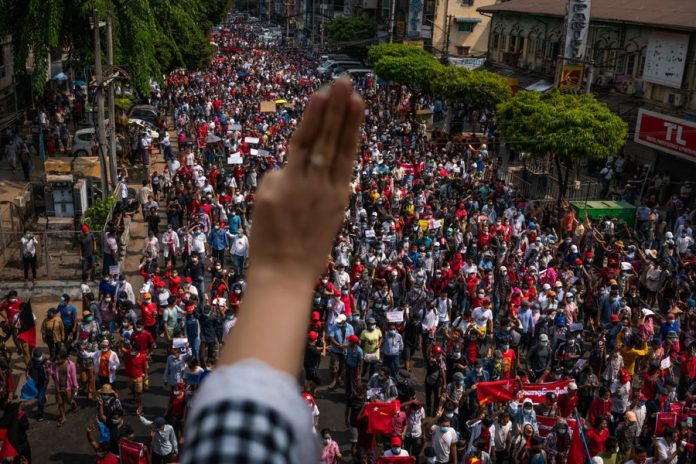
Civil disobedience movement protest in Myanmar's capital. PHOTO: Getty Images.

Written by: Dev Petrovic, Staff Writer

Rarely in Westerm mainstream media are events in foreign countries covered, which is why the political tension in Myanmar is not a topic that many people in the Western world are privy to. The seminar sponsored by the David Lam Centre, Myanmar, Once Again?, sparked an informative discussion through highly informed lecturers giving detailed insight on the unseen current events in Myanmar. 

Hosted by Shaheen Nanji, acting executive director of SFU International, the event featured speaker Robert Anderson and guest speaker Dr. Tun Myint. Anderson has been working in Myanmar for 21 years, leading a policy-making initiative with young environmentalists. He is also a professor in the School of Communication at SFU. Dr. Tun Myint has also been working closely in Myanmar as an expert on COVID-19 activities. 

Civil Disobedience Movement

To delve into the political tension in Myanmar, people must first know the specific events that led to Myanmar’s current situation. After the last election in November, some losing candidates protested the results and initiated a court case claiming the election was fraudulent. This eventually led the senior general Min Aung Hlaing to arrest politician Ang San Suu Kyi and a majority of the other winning candidates. Since then, martial law has been progressively implemented in Myanmar — something that has not been seen since the 49-year martial law that reigned from 1962. 

“[Myanmar] has a long history of military interruptions in social and political and economic life,” opened Anderson, explaining how “the military is so deeply embedded, it’s hard to see how it can move in any other direction.”

He explained that the photos of demonstrations and civil confrontations against the military highlight the persistence of the Myanmar people exhibit through years of military conflict.

“Although the gun is powerful,” said Anderson while showing a picture of a protest on Sule Paya Road in downtown Yangon, “so is the camera.”

The pictures he showed were intriguing, each photo displaying the thousands of demonstrators who showed up to rebel against the military’s actions. Some of the images were taken by drones — a different perspective that really how large of a turn out the protests really had. There were also images showing monks sitting with signs in solidarity with the movement. 

Commenting on the general’s response to the protests, Anderson paraphrased: “He wants to take action against the money behind the riots and the protests.” He elaborated that the general was taking a stand against a parliamentary committee for getting monetary support from foreign organizations. 

“This is a quite familiar position that coup makers [take],” Anderson pointed out., “It is a traditional response in Myanmar to say that all these previous entities that were created by this previous government are now illegal and they must be if they’re getting support from outside the country.”

Anderson closed his overview by showing a picture of a registered lobbyist from Ottawa, known as Ari Ben-Menashe, who was “contracted by the Myanmar military to assist in the removal of international sanctions and alter world perception[s] of the coup.” 

Ben-Menashe runs the Canadian lobbying firm Dickens & Madson, and is a former Israeli Military Intelligence official. He was incarcerated in the United States from 1989–1990, and charged with trying to sell transport aircrafts to Iran. He was eventually acquitted as he claimed he was following Israeli government orders. Other sources show that he was paid $2 million to represent the Myanmar military, shortly after the movement broke out. 

Anderson’s thorough explanation of the events, with personal anecdotes from his time spent there, made the complex situation easy to understand and follow. His storytelling abilities, along with the images he showed, made the events engaging and fascinating.

Dr. Myint asked Anderson about the likelihood of the Myanmar government keeping its promise of granting civilians a fair elected government if they are currently holding control of power. 

“I would say they are going to try to, as in a chess game, put the pieces on the board in their favourite positions, so that when the game begins, their pieces can play,” answered Anderson. He added that it hurt them to see a loss in the last election so that moving forward “they won’t play again, I predict with great respect, until the pieces on the board are in a better position to play.” 

COVID-19

Dr. Myint provided insight into how the post-election movement, also known as the civil disobedience movement, evolved during COVID-19. He showed news articles of how medics went on strike to protest the actions of the military. Pictured in these articles were medics holding placards with red ribbons for the red ribbon movement, condemning the coup. 

Myint explained that close to 90% of healthcare workers joined the civil disobedience movement, causing hospitals to shut down or only operate to a limited degree. He showed pictures of set up fever clinics, that are separate from government hospitals, aiding in trauma, minor injuries, and non-communicable diseases. During the protests, civilians were tormented, tortured, arrested, and some killed — at times when being treated by medics — and medics who chose to protest were also arrested and harassed.

As a professional researching COVID-19 activities in Myanmar, Myint also showed statistics of how COVID-19 cases have escalated, now being the fourth most infected country in South-East Asia. Among other images, he also showed a graph of Myanmar’s case count in which after the coup, the numbers appeared to be lower only because of the low volume of people getting tested. He explained that the vaccine situation is currently being manipulated by the government, in which the distribution of vaccines has been used as an incentive to stop protesting. 

Resolving the Conflict & How Canadians Can Help

One participant asked what countries are most likely to put pressure on the generals and why and how they might do that. 

“As for the regional powers,” answered Anderson, “Canada, of course, is a marginal player and it can gang up with embassies or gang up with other like-minded countries, which is a classic formulation.” He explained the main investors like South Korea, Japan, Thailand, and Singapore are the big players in the monetary world and that China has probably invested everything it’s intended to. 

“We do know there was some talk of a three-part ultimatum issued,” continued Anderson. “We don’t know all the details, but China does have a disproportionate influence. India could, if it was, in my opinion, in closer liaison with the Japanese and the Koreans and perhaps with the ties could exert considerable pressure, but on its own, it hasn’t done so in the past.” 

To close off the event, the speakers were asked what Canadians can do to help with the situation in Myanmar. 

“To put pressure on our government,” responded Anderson, “expect them to provide the evidence for us to reveal more than just what we see in video clips of nuns standing in front of soldiers who want to shoot them.” 

He added that we should expect more from our government and from our agencies. “There is an ambassador there,” he said.

Anderson left attendees with some words of hope, “I hope that the general public will show more interest in Myanmar, it is an extremely interesting country and has great potential and from time to time, in my opinion, gets sidetracked from the real issues that face it.”


SFUnexplained: SFU started the pandemic to finish construction (and to make President Andrew Petter feel better)

2
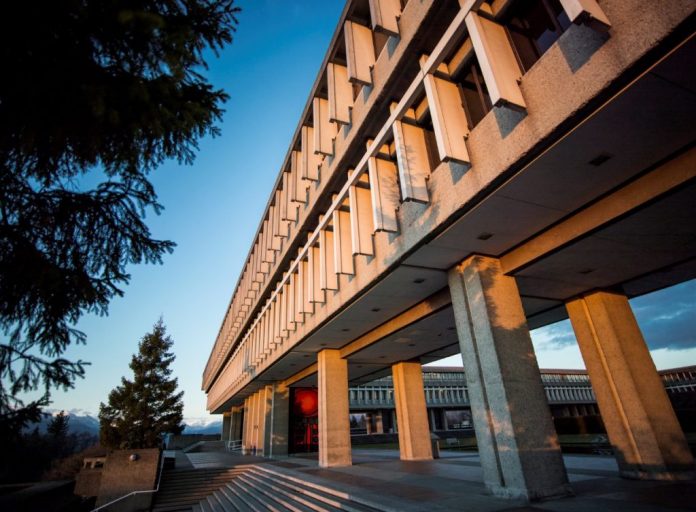
Photo courtesy of Simon Fraser University

By: Dev Petrovic, Staff Writer

Don’t you think it’s a little strange that “construction” and “pandemic” have the same amount of syllables? Coincidence? I think not. 

Clearly, SFU started a global pandemic just to finish the endless drilling and pounding — also to get students to cut the construction jokes. They really started hurting a certain higher-up’s feelings, okay?

I bet Andrew Petter was getting insecure while scrolling through the SFU Dank Memes Gang page on his fake Facebook account. Imagine seeing all the construction memes at his expense. Heck, I’m sure the campus mazes he thought would improve student morale, started to get annoying for him, as well. I sympathize with Andrew; starting a pandemic must have been a difficult choice for him, and then to organize all of his colleagues to back him up? I’m impressed at his hustle. Think of how many emails, how many lofty spiels in all those SFU Mail messages . . .

If you think about it, just as the Burnaby campus was starting to become purely a compilation of loud noises, a strange virus also gets discovered? It all adds up chronologically. Although, I think the whole ‘let’s stop roasting the President, pretty please?’ pandemic plan went awry when an actual virus came into the picture, but by then it was too late to turn back. No one was supposed to actually get sick! He just wanted to stop the drill jokes from drilling into his head!

Poor little Andrew must have had quite the meltdown when the CDC announced the pandemic as a state of emergency. Imagine the stages of grief he must have gone through, the anxiety! “It isn’t fair,” I imagine him saying on the phone with his mother, “I just wanted them to stop making fun of me!”

Look, It got out of hand. He didn’t mean for it to go this far — since now a bunch of goofs don’t even believe in it. Ridiculous. It was only supposed to be an SFU-wide scheme for a few months to finish all these projects. Now, somehow, the government and global community are involved? Here’s how I imagine the conversation between Andrew Petter and Jonathon Driver went down:

Andrew: “Jon Bro, remember that whole pandemic thing we talked about? You know . . . to get that construction stuff done, get our investors— I mean, students to stop roasting us?”

Jon: “Yeah bro. What about it?” 

Andrew: “It’s real now bro”

Jon: “real? You mean an actual—”

Andrew: “Keep your voice down man! Yeah. It’s for real.”

Jon: “ . . . ”

Andrew:  “ . . . ”

Jon: “Fuck”

It just all makes sense now. SFU needed a reason to close down campuses, but the snow excuse was never actually plausible without any actual snow and, well, it wouldn’t make sense considering SFU’s snow day track record. They needed something that would last longer than a couple of days. A pandemic only made the most sense. 

So, did it work? Maybe. Is anyone surrounded by construction? I’m not. Are students still roasting Andrew Petter for the never-ending construction? No, he’s not even president anymore! Point proved.

My quirky quarantine habit: creating a deadly plague in The Sims

0
ILLUSTRATION: Kitty Cheung / The Peak

By: Kyla Dowling, Staff Writer

From the 20-somethings who are knitting, baking, and essentially living out the life they’ll be living in 50 years (back pain included,) to those like my roommate who have devoted their quarantine to dressing up their childhood stuffed animals in tiaras and making them hold the Torah, no one’s isolation experience is the same. 

My quarantine habit might be a little unconventional, but at least it’s not that weird. 

Without having to account for travel time between classes, I had so much extra time on my hands. Instead of studying, I slapped open my laptop and opened a game I hadn’t played in years: The Sims.

At first, I created a small family. The father was a criminal, the mother was a computer programmer (both with a hankering for performing credit card fraud; how romantic), and they lived next to the Goth family with their two small children. The details of their day to day life had me invested for a week or so, but soon it got boring. I had to kick it up a level. When Donald Trump decided to play at God, he was assisted by the Russians. That was my next step. 

After trading all of the personal information on my computer to some Russian hackers (who were honestly pretty chill), I was given access to every single The Sims expansion pack for free. Instead of blowing $40 to go to fake Sims university and become a fake doctor, I could now blow $40 on tiaras for certain teddy bear roommates.

This time around, I played a young adult surrounded by a legion of cats. The only thing hissing louder than said cat legion was my laptop threatening to combust at any moment while I played. As my Sim grew up, got married, and had children, I bred the cats to ensure that their lineage would remain. At around the eighth generation, the youngest child was playing with a hamster when he was bitten. After a few game days, he started convulsing and foaming at the mouth, turned into a giant hamster, and died.

After the requisite two game days of morning (approximately 10 minutes in-person), I decided to experiment. Could I replicate the real world pandemic in The Sims? How good would they be at social distancing and isolating? 

I set up a few apartments and gave one of the tenants the Rabid Rodent Fever. Within a day, she sneezed on another tenant while doing laundry. That tenant passed it to their roommate. Then, the neighbours came knocking. They had baked a fruitcake. One of the infected individuals went out and greeted them. 

Within a few days, the infected individuals were dead, and the uninfected Sims were receiving phone calls informing them that their neighbours and neighbour’s neighbours had passed. I had started a plague. I had killed Eliza Pancakes. Jesus wept at what I had become. 

I closed that game and started a new file, determined to never repeat my mistakes. This time, I made two young adults who were enrolled in university and stuck them in an apartment. I left one of them to her own devices and controlled the other, ensuring she did her homework and put out her roommates’ kitchen fires. She was magnificent, and only had a slight fear of hamsters. A being of my own creation. A blue-haired university student/journalist, living in the city, getting As in all her courses. The best version of myself.

Board Shorts — February 26, 2021

0
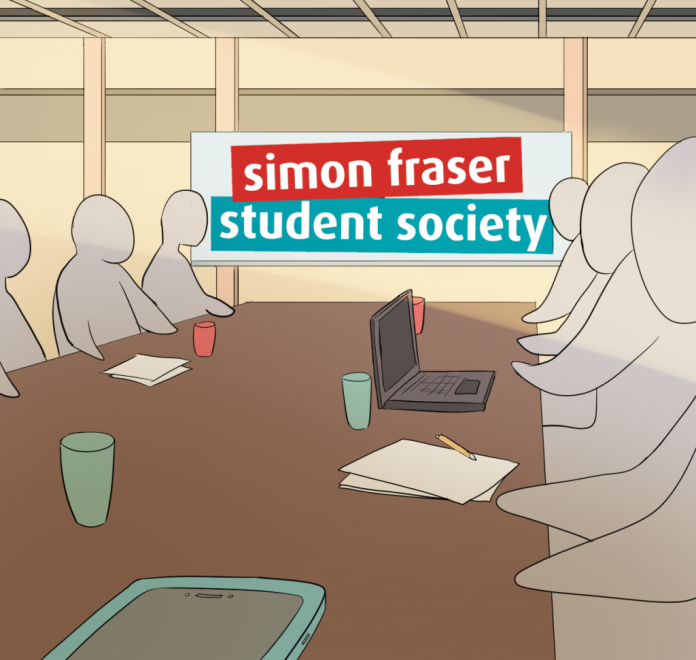
Image: Irene Lo

Written by: Jaymee Salisi, News Writer

Student Union Building (SUB) reopening plan

SFU recently announced plans to reopen in Fall 2021. In preparation, Vice President (VP) of Finance Corbett Gildersleve brought forward a motion for the Simon Fraser Student Society (SFSS) to begin coordinating with SFU and the SUB tenants to develop a reopening plan.

VP University Relations Gabe Liosis said the majority of the students in the 18–24 age bracket should begin vaccinations by September. 

In hopes of less restrictive summer public health orders, Liosis suggested a “soft opening to see what further steps we can take.” Considering the components associated with reopening, such as student safety and the university’s undecided plans, the Board agreed to create a working group led by Liosis to prepare for the fall.

Building manager for the SUB, John Walsh, projected that the building could be ready for use in four to six weeks. He explained that in four weeks, the physical structure of the building will be equipped for students, but the SFSS would need to give their cleaning company time to hire staff. 

The motion was carried unanimously. 

Recognizing Black History Month long term 

Brought forward by Balqees Jama, At-Large Representative, and Nafoni Modi, Health Science Representative, this motion supports the SFSS’ long-term commitment to respectfully celebrate Black History Month.

With consideration to “the performative nature of organizations when it comes to addressing Blackness in general,” Jama emphasized the policy was intentional in its stance to proactively support and amplify Black students. 

As Vancouver’s Black population consists of less than 1%, she said embedding the recognition of Blackness is crucial to maintaining representation.

SFSS President Osob Mohamed commended the policy for highlighting Black joy as “Black people don’t only exist when we’re talking about racism.” Liosis said the way policies are structured and enforced “really tell a lot about an organization’s stance on systemic oppression and its inclusion of Black folk.”

Board members unanimously supported this motion, saying, “[It’s] a good example of how we can use our policy-making power to amplify the voices that historically have been silenced.” 

Properly defining club-violation procedures

Edits to sections four and six of the Club Terms of Reference documents were brought forward by Phum Luckkid, At-Large Representative. 

Jama raised concerns regarding section six, which states that executives who violate club policies may be “subject to removal as an executive member by the SFSS.” She said this statement is unclear about who exactly would take responsibility for this action. 

To fix this, Liosis suggested that coordinators could advise options to executive members, but the Council would make the final decision. Although the process might be time-consuming, he said, “Sometimes the bureaucratic hassle is worth it in order to make sure these decisions are being made thoughtfully.”

The Board unanimously agreed to bring this motion to the Governance Committee for review and will bring back the recommended changes when completed.

Clearview AI and 48 Canadian law enforcement agencies violate Canadian privacy laws

1
PHOTO: Scott Web / Unsplash

Written by: Harvin Bhathal, Features Editor

Clearview AI, the US technology company, recently came under scrutiny for their violation of Canadian privacy laws. A joint investigation from four Canadian privacy commissioners (BC, Alberta, Quebec, and federal) discovered the company indiscriminately compiled a database of over three billion images, including those of Canadians. 

Illegally obtained photos, as well as biometric facial arrays, were collected without consent, and then disclosed to law enforcement agencies for them to compare and crossmatch with a suspect’s face. 

In an interview with The Peak, Sun-ha Hong, assistant professor at SFU and expert in data and surveillance, shared his thoughts. 

“I wasn’t surprised, but I despaired,” he said. “There is a long track record with surveillance technologies where we break things fast and then worry about the consequences later. Clearview AI is so well known for its extraordinary privacy risks, as well as the company’s numerous questionable ties to white nationalists. The default should have been to approach this with extreme caution.”

Founded in 2017, the company operated in near secrecy until an exposé from the New York Times in January 2020 first made the company’s practices public. The current investigation set these practices within Canada.

The findings of the privacy commissioners’ report show that at least 48 law enforcement agencies across the country used their facial recognition technology, in violation of provincial and federal privacy laws. Agencies such as the RCMP, VPD, and many more admitted to their use of the technology after hackers obtained the company’s client list and leaked it to BuzzFeed

“The fact that 48 Canadian agencies have already used Clearview AI shows us how quickly [technology is] used in real life situations — certainly much faster than any rigorous, independent test of whether these tools actually work, and whether they cause more harm than good,” Hong said.  

Clearview AI avoided the existing frameworks of privacy law in Canada by claiming this technology was “being trialed or not fully implemented,” though its use was continuous in active operations. 

Doug Mitchell, lawyer for Clearview AI, said the company “only collects public information from the Internet which is explicitly permitted under PIPEDA [Personal Information Protection and Electronic Documents Act].”

While Clearview AI is no longer permitting the use of their technology in Canada, they refuse to delete existing photos of Canadians in their database, unless individuals apply through a lengthy process. 

Hong said, “I think it’s also a reminder to us that surveillance is now a truly global market, and we Canadians aren’t immune [to] all this.”

The federal government is examining its privacy laws, including Bill C-11, a proposed data privacy legislation. However, Clearview AI’s violations do not constitute financial penalties outlined in C-11. 

Hong added, “The key here is that these technologies are currently incredibly under-regulated. 

“The industry has spent millions on the messaging that any and all regulation will destroy our technologies, but of course they would.”

Hong said the impacts surveillance technologies are reaching across many facets of society. From being “used by police, or used in courts to recommend jail or parole, or to select candidates in job interviews,” surveillance technologies “are starting to have life changing impact[s] on ordinary people.”  

He added, “But it’s often very hard to actually see the algorithms and the data these companies use” as it’s unknown whether Clearview AI uses independent audits properly. 

“There are many good things about C-11 and Canada has an opportunity to lead other nations on properly regulating harmful technologies. The key bottleneck is enforcement and accountability. It is about establishing clear precedents that when you build and sell unproven, harmful surveillance tech, there are strong consequences.”

Black Academic Success in Sciences: A Conversation

0
PHOTO: Alfons Morales / Unsplash

Written by: Charlene Aviles, Peak Associate 

SFU health sciences recently hosted Black Academic Success in Sciences: A Conversation where Black professors and students detailed their journey and resilience in the field. 

Moderated by Dr. Henrietta Ezegbe, the event featured SFU health science associate professors Dr. Angela Kaida and Dr. Ralph Pantophlet, and students Tsion Gebremedhen, Nafoni Modi, and Gisele Umviligihozo.

At the start of the panel, Dr. Kaida discussed her motivation to pursue health sciences. Reflecting on her family’s experience of HIV in East Africa, she chose to specialize in sexual and reproductive health.

Recounting the pushback she received for pursuing her ambitions, she said, “As you come against people who don’t have the same experiences, or perspectives, or lived experiences as you, the fact that it’s not important to them does not mean it’s not important.” 

Dr. Panthophlet focused on medical microbiology and later opened the Pantophlet Laboratory at SFU, which specializes in research on vaccines. He said, “Not everything works. You do get rejected. And the thing over time that has kept me going is a belief in science — [to believe] you have a good idea and pursue it, but also be critical enough to say when it’s not working.” 

Modi also spoke to her experiences — due to her upbringing in South Sudan, she aims to help her community by “creating efficient, tangible programs, for specific demographics to work with their health inequities.” 

In preparation for her future career path, she currently works as a program coordinator in programs that address domestic abuse, resiliency, and mental health. 

“Don’t let your failures hold you back from continuing on, because I think it’s especially important — especially for Black students — to hear because we often lack support systems in the university setting when we’re trying to navigate it,” she said. 

Gebremedhen elaborated on her aspirations to facilitate global health’s transition away from imposing Western knowledge. She said because global health is “not empowering those local communities and building their capacity, she aims to partner and learn from locals to implement sustainable approaches to health.  

“What I want to do in global health is change [the West-centric] narrative. We need to embrace local expertise. We need to work with local communities, local institutions and organizations, and actually learn from them, because there’s so much that we can learn from them.”

The panel also explored what success meant to each speaker. “I think being successful is being able to achieve your goals on a regular basis and being able to move forward — not to be stuck in one thing,” Umviligiho said. 

For Gebremedhen, the pursuit of academic success also builds up the community because it entails a combination of transferrable, analytical skills, and mentorship opportunities for others. 

“Part of being successful is being able to leave that legacy and being able to help promote other people — your colleagues, your friends, anybody who comes afterwards — to be able to be just as successful or even more successful,” she concluded.

The full event can be found on YouTube

SFU releases report on Black alumnus arrest

0
PHOTO: Ahmed Ali / The Peak

Written by: Michelle Young, News Editor

Content warning: descriptions of police violence. 

On March 11, president Joy Johnson released a report to the SFU community detailing the conclusions of a Black alumnus’ campus arrest

The report, which was conducted externally by Andi MacKay of MacKay Boyar Law Corporation, concluded there was “no evidence of racial profiling” or “lack of training in de-escalation techniques.” Further, MacKay stated SFU’s policies were clear and properly implemented, adding the alumnus was aware of COVID-19 policies. 

The findings come after the alumnus was arrested at the SFU Burnaby Mountain campus “for causing a disturbance.” When “an officer attempted to arrest him [this] led to a physical altercation between the two resulting in the officer being placed in a chokehold. The RCMP officer then pepper sprayed and tasered [the alumnus].” 

The event caused students to question “whether racial profiling played a role in the arrest.”

MacKay recommended SFU “should improve its definition of ‘community member,’ its policy regarding alumni access during the pandemic” and “should have its communications reviewed from an equity, diversity, and inclusion perspective.” 

The report added, “On December 11, 2020, the [a]lumnus’s interactions with a University Member caused them reasonable fear for their safety such that they requested a safe walk from CPS [Campus Public Security],” clarifying “CPS engaged with the [a]lumnus because of the University Member’s safe walk request.” 

MacKay concluded, “CPS could not permit the [a]lumnus to remain on campus after being alerted to the safe walk request.” She added security called the RCMP once “the [a]lumnus became aggressive and refused to leave campus [after given] multiple opportunities to leave.”

The Simon Fraser Student Society (SFSS) responded to the statement, “We are deeply concerned by the lack of concrete findings and recommendations of this investigation. We take issue with multiple elements of the report.” They said the alumnus was not aware of the safewalk request and was asked to leave campus under the basis of COVID-19 campus guidelines “which were vague, conflicting, and not widely accessible.”

They added it was a concern that to their knowledge, there is no CPS policy “that state[s] SFU [s]afewalk requests result in an automatic and immediate removal of a person from campus.” 

The SFSS concluded, “[SFU] must commit to taking tangible action led by racialized voices in tackling these systemic problems. SFU’s vague, inequitable, and inaccessible policies, always gives space for institutions to disportionately target marginalized communities.”

The SFU Black Caucus also responded to the statement, “Nothing in the report explains the violence that was unleashed on the alumnus [nor] indicates why the police were justified in this use of force.” 

Johnson said the event “has reinforced concerns about racism on our campuses and that SFU needs to continue to take real and meaningful action to address systemic anti-Black racism and increase inclusion of Black and Indigenous people and people of colour.” 

She encouraged the SFU community — particularly Black students, alumni, faculty, and staff — to reach out for support if needed.