Home Blog Page 353

Your weekly SFU Horoscopes: March 29–April 4

0
An illustration of a girl with long flowing hair. Astrological signs and stars shine around her.
ILLUSTRATION: Marissa Ouyang / The Peak

By: Charlotte Gravert, Peak Associate

As spring arrives, the animals are waking up from hibernation! Who, you wonder, is your mammalian lookalike? The stars hold the answers . . .

ARIES: Imagine this: you are walking in the park minding your own business, when a rampaging Canadian goose starts chasing you. What the hell? you might think. But have you ever seen yourself typing that email to your TA complaining about a half-point missing? You’re soulmates.

TAURUS: You are the teddy bear of our childhood, always there to comfort us when times get rough. But on the odd day out, when life is pulling on your fluffy ear one too many times, you turn into the scariest of the creatures. Never, ever poke the bear. 

GEMINI: Somewhere between an adrenaline hunter and someone bad at self-preservation, you somehow manage to constantly put yourself in both emotional and physical danger, like a squirrel running over a bustling street. I don’t want to run you over, so it’s on you if I send my car off the road, jerk!

CANCER: You’ve heard it all before: you’re a hermit crab, the home bod, the crustacean who’s hiding in their shell. From here on out, pinch those comments in the butt! There’s nothing wrong with being an introvert. Let them come to you for advice on everything: love, life, how to prepare crab legs . . .

LEO: I haven’t seen a lion in real life, but I have seen fluffy dogs pulling their overwhelmed owners all through Stanley Park. They know they are worth the money. They know they are hypoallergenic. They know they are the first choice of the Baracks, a previous presidential family. You, friend, are a purebred doodle. 

VIRGO: You listen to ASMR videos when you are stressed. You probably get a similar sensation from watching oddly satisfying TikToks, too. Like a spider following an imaginary perfect pattern, symmetry just makes you feel good. Too bad your pretty webs catch all kinds of things, even the unsolicited dick pics. 

LIBRA: Dear God, send me a Libra. Like otters floating through the ocean, you can’t help but put a smile on others’ faces. You hold hands with your partner so you don’t drift apart at night, for goodness’ sake. Make sure your hands don’t get too clammy overnight, though.

SCORPIO: Based on looks, it’s hard not to fall in love with you. With your adorable stripes, we might mistake you for a cat, but unlike a cuddly kitty, you roam the streets at night. If someone crosses you, that would be a rotten situation for them. Got it yet? No? That stinks.

SAGITTARIUS: You love being the class clown, but somehow, you always take the joke too far. When you dropped your phone in the trash, did you really have to smack the whole thing over and spread its content across the sidewalk? At least you’re used to wearing a mask, though, raccoon.

CAPRICORN: Which animal do you think has a retirement plan set up while still in college? A beaver. No other critter is so meticulous about their homestead. I bet they even pay taxes the day they get their T4 slips. We bow to your work ethic. It’s a DAMning responsibility.

AQUARIUS: Have you ever seen a seagull steal a half swallowed starfish from another? They’re ruthless. You are ruthless. If you want it, you get it. If that means getting creative, you will reinvent the wheel. Or just steal from hoomans; it turns out their food is even tastier. 

PISCES: What is the number one Disney movie to make you cry? Correct, it’s Bambi. But do you know why it hurts so bad? Because his mother was selfless. We know you’d catch a grenade for us, throw your hand on a blade for us. Jump in the middle of the forest clearing for us . . .


Looser COVID-19 restrictions don’t override personal security

1
Even if the government says you can go outside, you don’t have to. PHOTO: Gudrun Wai-Gunnarson / The Peak

by Alex Masse, Staff Writer

BC recently loosened COVID-19 restrictions to allow outdoor gatherings of up to 10 people, following a ban that began back in November. Many people I know are celebrating this change and making plans in their yards or nearby parks. They see it as another step towards this whole pandemic being a thing of the past, right alongside BC’s updated vaccination schedule claiming that everyone will have their first dose by the end of June. 

This lifting of restrictions makes me nervous, and I’m not the only one. Some health experts think it’s a bit too soon, even if outdoor settings are safer when it comes to virus spread. These lifts also come at a time where we’re still seeing an influx of new cases in BC — on March 22 it was reported that there were almost 2,000 over three days. Because of this, I highly doubt this minor change in restrictions will be properly followed, and people have every right to be uncomfortable.

Let’s be real here: when it comes to COVID-19 restrictions, some people love to push the envelope. Between the pandemic’s start and October of 2020, 77 fines were issued to those who broke quarantine rules. Just this month, two citizens were arrested for hosting a party in their Vancouver condo. These few examples happened before the restriction lift, and are proof people push boundaries. 

The COVID-19 virus has a tendency to squeeze through any crack it can. Even when everything is done right, there’s still a slight risk. My father got it from a coworker while outdoors, without ever removing his mask. He then gave it to me the day before his coworker told him he’d tested positive. Cases like these are definitely rare, but for a lot of people, it isn’t worth the risk —  especially more vulnerable groups such as the immunocompromised. One of my close friends has asthma, and he hasn’t seen any of his friends in over a year because he can’t afford to get sick.

I’m not saying this for the sake of scaring people. I’m saying that it’s okay to feel hesitant about seeing other people right now. You’re allowed to have your own comfort level and stand by it. Don’t let others, or the government’s loosening of restrictions, pressure you into something that feels unsafe. This’ll all be over someday, but in the meantime, your health and comfort should be the priority.

Monday Music: You’re the protagonist of a dark academia novel

0
"Monday Music" in giant yellow block letters with a red background
Monday Music: your weekly themed playlist. Image courtesy of The Peak.

By: Kyla Dowling, Staff Writer and Alliteration Aficionado

If you’re anything like me (and for your sake, I really hope you’re not), the only thing getting you through university is pretending that you’re the main character of a dark academia novel. Yes, I may have spent an extraordinary amount of money on blouses and houndstooth skirts to fit the aesthetic, and yes, my roommate does have to physically drag me away from old bookstores whenever we go for a walk downtown. However, all you truly need to get in the dark academia zone is music (and coffee, probably).

“Rival” by Ruelle

Image courtesy of Ruelle Music / Tone Tree Music

The only thing nearly as enchanting as Ruelle’s expressive voice is the amount of control she has over it. Her voice lingers at the top of her range before sultrily slinking down to a gorgeous alto. Both the lyrics and the production are sparse, yet haunting. Ruelle hums along to the piano melody between verses, her voice giving weight to the song. She sings, over and over: “My only rival is within.” These lyrics encourage you to stop comparing yourself against others, and to compete only with yourself. It speaks to both the solitary and intelligent aspects of the dark academia aesthetic, telling you that your goals are the ones you must aim to beat. 

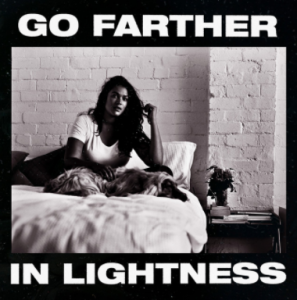
“Achilles Come Down” by Gang of Youths 

Image courtesy of Mosy Recordings

 Look, the dark academia aesthetic is deeply Eurocentric and many novels in that genre rely heavily on Greek mythology as the “be all, end-all” of education, but I do maintain that this song, based on the myth of Achilles, is a brilliant piece of art. The song packs an emotional journey, an existential crisis, and a candid discussion of nihilism into a whopping seven minutes. The vocalist urges Achilles to find meaning in his life after the death of his beloved, pleading: “See how the most dangerous thing is to love / How you will heal and you’ll rise above.” With a symphony of strings, French musings on death, and battling voices pushing Achilles in different directions, this song is beautifully unique.

“Coffee Cups and Cigarettes” by Tomo 

Image courtesy of Tomo

Listening to this song feels like living in an apartment complex with incredibly thin walls. Everything sounds just a little far away, as if your neighbour is baring his soul, armed with a guitar. With lyrics referencing addiction, philosophy, and unrequited feelings, Tomo expresses vulnerability in a way that makes the listener feel like they’re intruding. The song is miserable and uncomfortable in all the best ways. The lyrics encapsulate the tragedy of being dependent, whether it be on a lover, like Tomo is, or on substances, like his lover is. Next time you’re having an existential crisis and mourning the fact that you ever allowed yourself to be attached to anything, just listen to this song. It might make your crisis worse, but it’ll help cement your brooding dark academia vibes that match perfectly with the themes of unrequited love and addiction. 

“The Secret History” by The Chamber Orchestra of London

Image courtesy of Kerry Muzzey

Do you really have a dark academia aesthetic if you don’t listen to orchestral music? Yes, absolutely, because I refuse to be elitist, but I do highly recommend this piece. With a title synonymous with one of the most popular dark academia novels of all time — Donna Tartt’s The Secret History — this song has made itself onto many studying and dark academia playlists. The piece, described as a blend between a film score and a contemporary classical work, has a mysterious yet thrilling energy to it. At the 2:40 mark, the score grows in passion, evoking a sense of careful urgency as the violin soars above the rest of the orchestra with a gripping harmony. If you’ve ever wanted to feel like the main character as you write an essay, exhausted yet energized by the sheer beauty of learning, this is the piece for you. 

Need to Know, Need to Go: March 29–April 4

0
Illustration of a blue calendar, with "Need to Know, Need to Go" written on top
Arts & Culture events to catch around the city. Image courtesy of Brianna Quan

By: Charlene Aviles, Peak Associate

North Shore Art Crawl | Online | March 12April 12 | FREE

The North Shore Art Crawl showcases various art mediums including paint, photography, and ceramics from over 50 local artists. Attendees can learn more by watching the event trailer on YouTube and reading the art crawl’s brochure.

Mobilizing Canada for the Climate Emergency with Seth Klein | Online | March 29 from 67:30 p.m. | FREE with registration

Seth Klein is a public policy researcher and urban studies professor at SFU. His speech will summarize his book A Good War: Mobilizing Canada for the Climate Emergency. Klein will discuss lessons from Canada’s response to WWII, how to adopt a similar approach to the climate crisis, and how the climate crisis and inequality are interconnected. Registration available via Eventbrite.  

Learn to Cook Lamb in New and Delicious Ways! | Online | March 30 from 67:30 p.m. | FREE with registration

Choices Markets will be hosting a cooking class taught by executive chef Mandy Finley-Chiarenza from Vancouver’s The Red Accordion. Attendees will learn about lamb’s nutritional value, how to choose high quality lamb, and how to prepare two lamb recipes. Registration available via Eventbrite.

MOVirtual: (Not-so) Distant Decades – Vancouver in the 50’s, 60’s, & 70’s | Zoom | March 31 from 5:306:30 p.m. | $2.18$12.20

Bérangère Descamps and Charlotte Chang, the Museum of Vancouver (MOV)’s education team, will be hosting a tour of MOV’s 1950s gallery. The virtual exhibit features post-war nightlife, and the “You Say You Want a Revolution” gallery, which displays the Vancouver activist movements during the 1960s and 70s. After the tour, participants can submit their questions to Descamps and Chang. Tickets available through Eventbrite.

Let’s Hear It! Live – Celebrating Women’s History Month | YouTube and Facebook Live | March 31 at 7 p.m. | By donation

In honour of Women’s History Month, the Music BC Industry Association and Women in Music BC present Let’s Hear It! Live. Participants can enjoy performances by artists Lowkita, Neela, Nicky MacKenzie, and Old Soul Rebel. Registration available via Eventbrite.

SFU’s community isn’t just on social media

0
Being angry on the Internet may be valid, but often unproductive. PHOTO: Jesse K. / Unsplash

by Victor Tran, SFU Student

The Internet allows for the SFU community to remain connected no matter the distance. However, comment sections on SFU social media groups are filled with hateful and argumentative comments that contribute nothing to the issue at hand. Instead of participating in social media comment sections this way, SFU students should direct that time and effort towards realistic actions in order to make changes.

But first, we have to understand why Internet rage is a real phenomenon. There are two main reasons for it: anonymity and deindividuation. Since the Internet allows for anonymity, web users are more prone to composing angry or hate-filled comments from a lack of perceived responsibility. This leads to the phenomenon called deindividuation, where “social norms are withdrawn because identities are concealed.” Additionally, we cannot ignore the fact that the pandemic contributes to this issue. The negativity accumulated from not being able to interact with others has a role in raging on the Internet. This is because people have limited options to express these negative feelings because some ways of interacting socially are no longer safe. What is even worse is that the Internet is one of the only ways to reach out to people during the pandemic. So how do we make use of all these energies? 

Students would be better off taking constructive action on controversial SFU issues by looking for alternative outlets. These actions would benefit students’ mental health and overall lifestyle. It has been shown that rage can hurt our health; more participation with Internet rage, doesn’t help this. The Internet filled with argumentative posts, negative comments, and provocative headlines tends to encourage people to also participate in these kinds of activities. This immensely affects Internet users’ productivity as most of their time is spent arguing on the web. Yet, constructive actions can solve both of these issues. 

For example, joining a student union can not only provide career benefits, but mental ones as well. Becoming a part of a student union means that students are no longer anonymous, eliminating the first cause of Internet rage. Acting on our words in a student union also means that we are dealing with real issues face-to-face with people, requiring greater responsibility. Taking on greater responsibility can lead a student to be more motivated to make relevant changes. This ultimately takes time away from participating on the Internet, increasing both our productivity and mental health state. Putting in effort to make changes means that we take real action instead of spewing pointless words; we solve the issues instead of pushing the issues deeper by endlessly continuing irrelevant online arguments. 

Yet, we also have to understand that Internet rage is a real emotion that comes from real people. These arguments can be filled with aggressive emotions because they stem from real experience. Comments with the sentiment “stop being angry” are common in rebuttals, which absolutely does nothing to cool down arguments and denies the validity of commenters’ feelings. However, social media is not the only way that we can make use of our negative emotions or interact with people. There are better alternatives for online interactions which offer benefits for productivity and mental health.

Internet rage is a real thing but it is not inevitable. In order to create a healthy and productive SFU community, students should attempt to take a step back and evaluate how they spend their time and effort, which can instead be invested in taking constructive action.

“Minari” is what we need right now in these trying times

1
Lee Isaac Chung’s latest work is quickly becoming an awards favourite. Image courtesy of A24

By: Lester Leong, SFU Student

Since its premiere at the Sundance Film Festival back in early 2020, Minari has garnered much critical acclaim and an ever-growing list of accolades. Although its most recent win at the Golden Globes was arbitrarily and poorly relegated to the Foreign Language category, it has since been nominated for six Academy Awards, including Best Picture and Best Director for Lee Isaac Chung. Steven Yeun even made history by being the first Asian American to be nominated for Best Actor. Indeed, Minari is breaking new ground in Hollywood.

A semi-autobiographical account of director Lee Isaac Chung’s childhood, Minari tells the story of a Korean American family, the Yis, who relocate from California to rural Arkansas to pursue a better life. The father, played by Steven Yeun, wants a bright future for his children. So, he decides to start a farm, where he can sell the crops he grows, while also sexing baby chicks on the side to make ends meet.

Despite the Golden Globe placement, Minari is very much an American film. The story centers on a Korean American family and the pursuit of the American dream is one of the main themes. The allure of that concept prompts the father, Jacob, to start his own business; it also causes him to ignore the valid concerns of his wife, Monica, about the potential hardships of doing so. As Jacob’s hopeful optimism clashes with Monica’s more realistic point of view, a rift occurs in their marriage. Meanwhile, their two children learn to adjust to their new home while also spending time with their maternal grandmother, who has moved from South Korea to be with them. 

Another huge theme is the resiliency of immigrants in the face of hardships. Experiencing countless setbacks when creating and maintaining his farm, the odds are stacked against Jacob. However, he still comes up with ingenious solutions. In a very telling scene, he rejects the services of a water diviner because it is expensive. Using common sense about nature, Jacob finds a good spot to dig a well by himself instead. This do-it-yourself mindset eventually leads to a huge setback, but Jacob learns from this experience and adapts to the circumstances.

Minari, at its core, is about the Asian American experience. It’s about learning to reconcile two contrasting cultures within oneself: the individualistic culture of the West and the collectivistic culture of the East. This theme is most evident in the subplot of David, the youngest member of the family, learning to accept his grandmother, Soon-ja, for who she is. Having never met her, he is initially avoidant of Soon-ja because she doesn’t live up to his more Western expectations of what a grandmother should be (e.g. baking cookies, not swearing). David even complains that Soon-ja “smells like Korea.” However, as time goes on, David discovers that Soon-ja still very much loves her grandchildren, and finally begins to warm up to her.

With exquisite cinematography and a beautiful musical score, Minari is a compassionate exploration of the immigrant experience and the blind optimism that comes along with it. This is the kind of film that the world desperately needs right now. The hope it inspires for the future is very therapeutic and it’s one of the best films that 2020 had to offer.

Visibility isn’t an option for all trans people

0
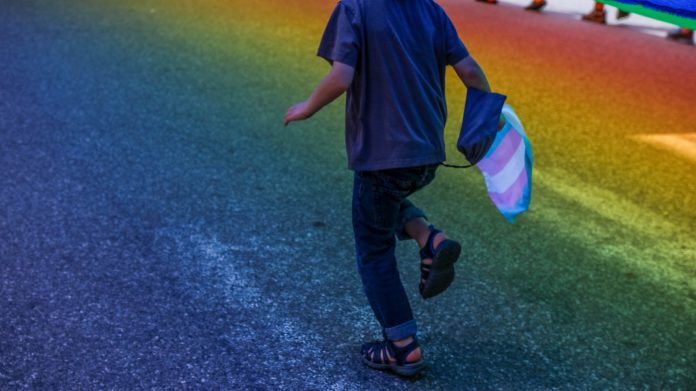
Trans people face many barriers related to intersectional marginalization and social status that can limit visibility. PHOTO: Mercedes Mehling / Unsplash

by Carter Hemion, Peak Associate

With International Transgender Day of Visibility on March 31, it is vital to recognize that trans visibility is a privilege and occurs on a broad spectrum. Celebrating trans people’s accomplishments and fighting oppression requires recognizing trans people in all of our experiences, not just those who are most represented. Trans visibility is never as simple as whether we are openly trans, in the closet, or living in stealth; it is a matter of privilege and deeply personal choices. 

Despite the pressure placed on trans people to be visible and involved in queer communities, there is no right way to be trans or come out. We do not have to come out to everybody we know, or all at once, nor do we have to choose a high level of visibility in order to be valid. Choosing our safety over our visibility is not shameful, and can be more practical. For many trans people, visibility can be dangerous. We are at a higher risk than our cisgender peers for being victims of hate crimes, partner violence, losing jobs, poverty, healthcare discrimination, and other forms of targeted discrimination. These kinds of barriers are why some trans people choose to delay coming out, come out only in certain spaces, and/or live in stealth after transitioning. 

However, for many people, embracing visibility as a trans person is validating. Being openly trans can be empowering; it is a way to hold space to redefine gender. Trans people can find joy in living openly and authentically, which is in itself is resistance to oppression. Coming out and remaining visible is a demonstration of trans resilience.

Despite this, coming out as anything is still a process, and not all spaces to do so are created equally. For people who experience multiple forms of marginalization, there can be extra layers of complexity and greater risks in coming out. Those who already experience oppression due to other factors like race or class, or who come from a background less accepting of queerness may face greater barriers. Even spaces meant for queer people can often be created solely by and for cisgender queer people and especially cater to thin, white, neurotypical, non-disabled queer people. Trans visibility has never been equally accessible to all trans people who want it.

In addition to the barriers of coming out, factors such as socio-economic status and specific gender identification can affect visibility. Gender non-conforming, Two-Spirit, and non-binary trans people especially may not have the option to live in stealth and may spend their lives coming out repeatedly in order to be recognized as themselves. Transfeminine people are also at greater risk of facing violent transmisogyny that can invalidate and endanger them. Despite these barriers, trans people find ways to support each other, through groups like the local Coalition Against Trans Antagonism.

Additionally, gender dysphoria and transitioning look different for different people, and not every trans person wants to, or has the privilege to access resources allowing them to “pass” as their gender. The concept of “passing” as either a binary man or woman is dangerous, unrealistic, and inaccessible; it incorrectly implies that we become trans because we transition, not that we may choose to transition because we are trans. It also adds pressure on non-binary people to present as gender non-conforming, setting rigid ideals for what a trans person is expected to look like. 

This type of normative thinking also places value on Western ideas of gender, excluding Two-Spirit identities and reinforcing colonial gender roles. For non-binary trans people —  especially those who use pronouns other than he/him or she/her or use un-gendered terms —  visibility and coming out may be a lifelong process because of the prevalence of the colonial gender binary forcefully placed on people living in Canada. This framework implies there are only two sexes, two genders, and one sexuality and has long been contradicted by countless cultures worldwide. However, white, Western gender roles are commonly considered standard, further limiting visible trans representation. 

Being trans is more than transition and level of visibility: we can be empowered in finding ourselves, connecting with our community, and learning from each other. Rather than only placing value on trans visibility, it is most important to recognize the reasons visibility looks the way it does, and represent the limitless range of trans experiences. We should instead celebrate trans people in our diversity this International Transgender Day of Visibility and raise awareness of the barriers in trans joy to accomplish that.

Kazuo Ishiguro shares the significance behind his latest book “Klara and the Sun”

2
The award-winning author captivated a virtual audience. Photos courtesy of Knopf and Matt Karr

By: Yelin Gemma Lee, Peak Associate

Imagine attending an event where the backdrop is a Nobel Laureate’s living room. That’s where I found myself on March 15, 2021, when Penguin Random House hosted a virtual event to celebrate the release of Klara and the Sun, Kazuo Ishiguro’s highly anticipated new book. The event included Ishiguro, as well as Canadian poet Souvankham Thammavongsa, and I was surprised to find it more accessible and intimate than a typical in-person book launch. It felt like I was having a casual weekday wine night . . . with two award-winning literary giants who are making history. The event was a glimpse not only into Ishiguro’s book, but Ishiguro as a person — something you don’t get with an overcrowded in-person book signing.

Thammavongsa has published five poetry books and her book of short stories How to Pronounce Knife was the 2020 Scotiabank Giller Prize winner. In other words, she is a big name in Canadian literature. It felt really special to have her there in conversation with Ishiguro. 

Ishiguro showed great interest in their conversation and in Thammavongsa as a writer, frequently turning questions back to her and her own works. Ishiguro explained that Klara and the Sun originally started as an idea for a children’s story, but his daughter said it was too dark to be a children’s book. In the end, this original idea for Klara and the Sun was shaped into a deeply moving, dystopian sci-fi novel for adults. The plot follows Artificial Friend, Klara, through her life’s journey, starting from the shop window where she’s waiting to be chosen and taken home; waiting for purpose and meaning. The book poses existential questions we are all familiar with: What does it mean to love? To be human? And how do we find the meaning of living behind it all?

“Do you think as adults, we still need these stories to explain the world to us? Do we still need that gentleness, that kind of protection?” Thammavongsa asked Ishiguro. 

“I think we do,” Ishiguro responded.  “Although Klara and the Sun does present quite a dark world in many ways, I wanted the main character to retain that kind of childlike hope and faith in something powerful and good that’s watching over her and watching over everybody. I wanted her to never lose that all the way through.”

Ishiguro shared that when writing, making something that people won’t forget is one of the most important things for him. He asks himself questions like “how long will it linger afterwards?” and “how do you stay in the mind of the reader?” It was comforting to hear that even a Nobel Laureate has writer worries such as this. The event as a whole was a truly wonderful experience, and it was nice to see a big-name event hosted entirely by Asian Americans and Pacific Islanders. 

This event was part of a series that Penguin Random House is hosting in collaboration with independent bookstores across Canada. In support of these beloved local booksellers, the tickets to these events are obtained through the purchase of the related book from any of the affiliated stores. The local bookstore nearest to me was Massy Books — we stan Massy Books. For the Ishiguro event, the first 10 pre-orders got a signed first edition of the book, and I was so excited to be one of those recipients. In case you were wondering if Ishiguro’s signature is as sharp as his prose, it is — it’s perfect. 

What Carr Sappier’s return means for the Skoden Indigenous Film Festival

0
Sappier is proud to represent Indigenous filmmakers. Photo courtesy of SFU School for the Contemporary Arts

By: Harvin Bhathal, Features Editor

The Skoden Indigenous Film Festival (SIFF), organized by CA389 students, is in its third year. This year marks the return of one of the festival’s original co-founders, Carr Sappier. Alongside Sappier, the course is being co-lectured by Kathleen Mullen, a filmmaker, film festival consultant, and mentor of Sappier’s who helped organize the inaugural festival. 

Founded in 2019, co-creators Sappier and Grace Mathisen aimed to create an avenue for celebrating the work and voices of Indigenous filmmakers. The Peak interviewed Sappier to discuss their return and highlight the festival.

“Being back in my Wolastoqew community, Neqotkuk, has allowed me to reconnect with my people and the reason why I went to university,” said Sappier. “My profs in the film program really pushed me to think outside the box when it came to the stories I wanted to tell. 

“I’m using all that gained knowledge and experience to be a better artist and express myself as a Two-Spirit, multi-genre filmmaker in my community,” they said. “Having a better understanding of who I am and where I want to be has made me more confident in collaborating with my students in the third annual SIFF.” 

Sappier said student feedback so far in the course “has been positive, especially when we are having deeper conversations around the topic of truth and reconciliation and what that means from an Indigenous perspective.”

Sappier added, “Building our relationships on the seven sacred teachings/the Rights Relations Agreement of Love, Respect, Humility, Courage, Wisdom, Honesty and, Truth has been beneficial to our work in the practicality of organizing our festival, but also in our respect for each other.”

Continuing on, Sappier mentioned “the amazing students and their eagerness to represent this year’s festival in the best way they can” was also empowering.

Inviting guest speakers to the course “has proved to be very inspiring to [their] students,” Sappier said, explaining that the guest speakers this semester have included local Indigenous filmmakers like Jules Koostachin and Ry Friday. Sappier added, “Most importantly of all, we were able to invite our elder, Syexwaliya, to our class to help us with our land acknowledgment and she shared with us some stories that reinforced why we are doing the work we are doing.”

For future iterations of SIFF, they believe it would be beneficial for the students and the festival itself if the course was two semesters long instead of one.

“Yes, it is possible for us to make SIFF happen in three months, but I can only imagine how much more we could do if given more time. Most larger festivals like VIFF, TIFF, and ImagineNative are working all-year-around and are able to accomplish so much more. So, it excites me if we were given more time to do the work and make SCA/SFU more Indigenous inclusive and create more space for conversations and relationship building.”

Regardless, Sappier said they are thankful the festival was made into a course to begin with, as even if “there is always more that we can do,” it “takes baby steps and time.” They added that they are excited about the future relationship between SIFF and SFU.

Particularly exciting to Sappier is Back to Grassroots, a program from this year’s festival happening from 7:30 p.m. to 9:00 p.m. on March 26. It will have “films that reflect on the reconnection to land, language, culture, and ancestors.”

They continued, “This program connects with me because it is something that is close to me right now as I am back home after five years in Vancouver. Now you can find me roaming around the forests and waters surrounding my community playing with my camera

“I’m so excited about all the films in all the programs and I can guarantee you, that you won’t find any film that looks the same at this year’s festival.” 

SIFF 2021 is available for viewing on Vimeo until April 5 with registration. To register for the festival, visit www.sfu.ca/sca/skoden for more details.

Lawsuit filed against SFU for data breach

0
PHOTO: Gudrun Wai-Gunnarsson / The Peak

Written by: Jaymee Salisi, News Writer

Following SFU’s data breach on February 3, 2021, BC law firm Slater Vecchio LLP filed a class action lawsuit against the university on behalf of the 200,000 individuals affected by the incident. The lawsuit argues that SFU students should have a higher safety standard for the storage of their personal information.

In Slater Vecchio LLP’s lawsuit notice, they said SFU failed to take preventative measures to protect the security of students as they were unable to adequately detect unauthorized collection of data. 

According to the firm, SFU did not act “in accordance with the standards imposed by the Personal Information Protection Act,” which holds organizations responsible for protecting their users’ personal information. 

As a result of the breach, the firm claims students suffered:

  • Violation of privacy
  • Psychological distress
  • Costs related to identity theft prevention 
  • Out of pocket expenses
  • Wasted time
  • The inconvenience of taking precautions to reduce the likelihood of identity theft
  • Possibility of exposure to future identity theft

The cyberattack exposed personally identifiable information including name identifiers, date of birth, student/employee numbers, and academic standing data of past and present faculty, staff, and students. The server was breached for eight minutes while undergoing system security improvements, and was discovered two days later. This is SFU’s second data breach in the span of 12 months.

In an email interview with The Peak, Slater Vecchio LLP lawyer Samuel Jaworski said lawyers were alerted to the breach by SFU alumni in the firm.

“It is more important than ever that entities entrusted with personal information be held accountable when they fail to take proper precautions when storing sensitive data,” Jaworski said.

Slater Vecchio LLP is asking SFU to offer paid credit protection services for five years to those impacted. This would help monitor potential fraudulent activity on a person’s credit card.

Jaworski said, “We see class actions as an effective way of protecting the privacy rights of individuals.”

When asked about the firm’s expected outcome from the case, he responded, “We will have to defer further comments on the merits at this time. We have faith in our justice system and will allow the court process to unfold.”

The Peak also reached out to SFU to speak to the case, but they were unable to comment. 

“We are not able to speak about any legal action where a matter is before the courts,” said senior director, media relations and public affairs Angela Wilson. 

More information about Slater Vecchio LLP’s civil claim against SFU can be found online.