Home Blog Page 349

Osob Mohamed reflects on her year as SFSS president

0
PHOTO: Gudrun Wai-Gunnarsson / The Peak

Written by: Carter Hemion, Staff Writer

As the 2020/21 Simon Fraser Student Society (SFSS) Board closes their year, outgoing president Osob Mohamed reflected on her time at the SFSS.  

Accomplishments 

Mohamed told The Peak one of the things she was most proud of was the student turnout at the annual general meeting. She said, “About 800 students attended and more than 600 participated in our tuition condemnation vote — and that in particular for me was important because it felt like a step in the direction of getting SFU to acknowledge the tuition burden on students.” 

She said The SFSS has taken strides in listening to student feedback. Recalling the struggles  students faced with COVID-19, Mohamed highlighted some of the SFSS’ solutions: providing emergency financial aid, leading the elective pass/fail grading scheme, and supporting initiatives like the “Don’t Forget Students” movement

“I also feel proud because I think we’ve tried to really make an effort to support marginalized students in a number of different ways this year.” 

She noted the SFSS is hiring for a Black Student Support Centre and recently hired a coordinator for the First Nations Student Association, which creates support for student groups.

Challenges

In addition to working remotely, making resources like the Women’s Centre, food bank, Out On Campus, and in-person events accessible was challenging, but she said the SFSS managed to adapt. 

With remote learning, student advocacy also changed. Mohamed noted the SFSS has been learning “digital organizing tactics and how to really get students together and mobilize on certain topics.” 

She said despite challenges, the university’s student population of over 37,000 holds the most power. Mohamed recognized that “if we were to really band together [ . . . ] we can definitely get what we want.” 

Notable moments

Mohamed said virtual club days and welcome days were enjoyable with the use of virtual booths. “A notable moment for me was having that feeling of getting to see what people were up to and what different groups were out doing.”

She also reflected on concluding a long-standing battle of clubs looking for space in the new Student Union Building (SUB). “This year we kind of were able to put an end to the very long — and I think very painful for a lot of people — fight for space in the SUB, particularly for the groups in the Rotunda like Students of Caribbean & African Ancestry, Embark, and CJSF [radio]. We were also able to allocate space to the Disability and Neurodiversity Alliance.” 

Future changes

Looking to the future, Mohamed said the SFSS will move away from making decisions as a Board of Directors, composed of 16 people, and instead towards a Council structure. With this change in May, “departments and faculty, student unions, and constituency groups make up the Board of Directors and have a direct say and vote at the Board table.” She said she hopes this change will bring more balance to the Board’s decision-making powers.

At SFU, Mohamed would like to see a tuition freeze, and for SFU to “commit to active lobbying of the BC government in their current review of the post-secondary funding system.” 

Another thing she would like to see more of is a commitment to equity, diversity, and inclusion (EDI) from SFU. “I know that with the new president and some of the new university administration, they’re taking a very different approach to EDI and trying to centralize that in their messaging about what they want to do. 

“But then when it comes down to it and we’re having those conversations with them about what we’d like to see to make the university more equitable and to take on these anti-oppression initiatives — it became clear to me that it’s very surface level. And so we want to see commitments tied to tangible action.”

Significance

Mohamed said that in her two years with the SFSS, there has been progress in increasing advocacy. 

As her time as president comes to a close, Mohamed reflected that through mobilizing and supporting grassroots organizations, students have the power to change SFU.

“I think we are more powerful than we think we are and that we can make the decision makers listen.”

Council Meeting — April 28, 2021

0
Image: Irene Lo

Written by: Karissa Ketter, News Writer

Update on SFU’s security measures since recent ransomware attack 

SFU chief information officer Mark Roman presented security updates to the SFSS Council. In light of the recent ransomware attacks, Roman reported SFU’s new security approach is “safety over convenience.”

Part of the new security system includes enforcing multi-factor authentication (MFA) for all faculty and staff by the end of May 2021. By the end of the year, all students will be required to use MFA. Students can switch to MFA at any time. Failing to do so before the deadline may result in account restrictions.

They are also introducing a Virtual Private Network (VPN) to all faculty and are hoping to extend the VPN to all students. 

Part of reimagining SFU security will include bringing SFU faculty who are experts on criminology, computer security, and privacy into a committee to guide decision making.

“We’re dealing with professional criminal organizations [and] nation-states. In other words, parts of nations’ armies now do cyber warfare and they’re attacking us,” said Roman. They added that attacks are becoming increasingly complex and sophisticated.

“Universities are institutions of national significance but we are culturally open [ . . . ] and that makes us vulnerable.”

Prior to social distancing protocols and off-campus projects being implemented, security perimeters used to exist around the university. “In IT, we used to have a data centre and some people on campus — and that was our perimeter. We could put firewalls around it and protect it,” said Roman. Now, creating a defense to cyber-warfare is growing increasingly complicated.

Roman noted over 12 cyber attacks on established Canadian post-secondary institutions since last February. Additionally, they said in the first week of April 2021, there had been multiple high security threats to major American universities such as Stanford University, University of California Berkeley, and Harvard Business School.

French student union representative Kylee Pocrnich questioned why it was necessary for students to provide their social insurance number on goSFU as it puts students at higher risk of identity theft. Roman did not comment, explaining it wasn’t in their expertise — but said they would update Pocrnich with more information at a later date. goSFU states that “SFU is required to collect your Canadian SIN/ITN or US SSN/ITIN for government reporting purposes and/or student financial assistance.”

In effort to protect data, Roman recommended students do not wait to sign up for MFA but so do immediately. They also said, “When we do open up VPN for everyone, I’d strongly suggest that [students] use VPN to access systems.”

Roman said SFU will be running a student advisory council for IT which is currently seeking volunteers. 

Donation of remaining funds

As the last Council Meeting of the 2020/2021 term, the Council decided to donate the remainder of their funds. This was introduced by Disability and Neurodiversity Alliance representative Serena Bains, who requested the funds go to an anti-Asian racism organization. 

Council voted unanimously to donate the $520 remainder of their budget to SWAN Vancouver: a local advocacy group for immigrant/migrant sex worker Asian women.

Sikh Heritage Month Recap

0
Discover our province’s hidden history through literature, podcasts, and more. Image courtesy of Sikh Heritage Month BC

By: Alea Mohamed, Staff Writer

In Canada, April is Sikh Heritage Month. This year’s theme was Finding Sehaj – A Journey to Peace and Tranquility. Even though April has come and gone, it is important to continue recognizing Sikh heritage. The following event highlights show how vibrant Sikh culture is and how significant the community’s contributions to BC are.

On Thursday April 15, the Vancouver Maritime Museum hosted a presentation about the tragedy of the Komagata Maru. There shouldn’t be anyone in the Lower Mainland who has not heard of this tragic 1914 event where Canadian immigration authorities turned away Indian immigrants who did not possess extreme wealth. Tragically, 20 passengers were killed by Indian authorities upon returning to Kolkata. Hosted by Dr. Renisa Mawani, this presentation told the story of tragedy, alliances, inter-faith collaboration, and revolution that resulted from the Komagata Maru. The presentation was based off of a chapter in Dr. Mawani’s upcoming book titled Viapolitics: Borders, Migration, and the Power of Locomotion (out in December).

Studies have shown that art therapy can have direct positive impacts on personal wellness, along with other benefits like social skill improvement and emotional exploration. With that in mind, the World Sikh Organization of Canada (WSO) hosted an event with art therapist, Rapinder Kaur on Sunday April 25 to provide a healing art space for the Sikh community. For many, this past year has been a traumatic one, especially in the face of the pandemic and the #FarmersProtest movement. 

Also on April 25, The Nameless Collective, a podcast hosted by a group of South Asian Vancouverites, discussed the long, hidden history of the Sikh community in the Lower Mainland. This virtual walking tour took people from Vancouver all the way out to New Westminster, stopping to feature the history and stories of the beginning of the Sikh community in the Lower Mainland. The story takes us back to where the roots of the Sikh community were laid in Vancouver starting in the Kitsilano area, moving Downtown, and settling in South Vancouver. 

Then, the tour works its way through South Vancouver’s Punjabi Market neighbourhood, a neighbourhood that started really flourishing in the 70s and hasn’t stopped since.

The Sikh community is an integral part of BC’s and Canada’s cultural fabric. There are over 500,000 members of the Sikh community in Canada, which is the second-largest community outside of India. So keep your eyes peeled for future events and mark you calendars for Sikh Heritage Month 2022!

An inside look into Vancouver’s restaurant industry during COVID-19

0

By: Sara Wong, Arts & Culture Editor

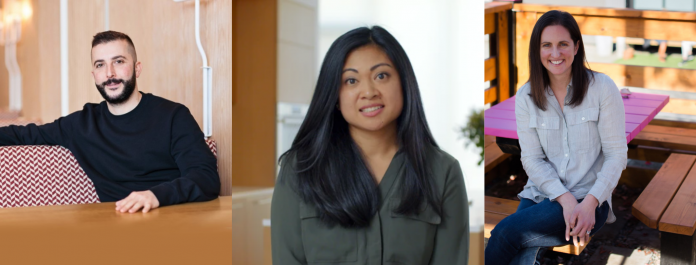
Now more than ever, the restaurant and food service industry needs support. The Peak interviewed three Vancouver culinary leaders, working in various sectors of the industry, to uncover — firsthand — how small, local businesses are managing during the COVID-19 pandemic.

The Restaurateur: Paul Grunberg

Photo courtesy of Paul Grundberg

Being the owner and operator of Vancouver’s Savio Volpe, Pepino’s Spaghetti House, and Caffè La Tana, Paul Grunberg is busy on any given day. Throw in a global pandemic, and the job becomes even more demanding. In an interview with The Peak, Grunberg discussed what the challenges of running a small business during COVID-19 have been so far and what the future of restaurants looks like.

“It’s obviously been stressful and there’s been a lot of pressure,” Grunberg began. “You worry about the day-to-day right now, but you’re also now worrying about the pandemic [ . . . ] because the last thing you want is [for] you or one of your associates to get COVID.” 

While this is a problem that all workplaces are currently facing, Grunberg pointed out that restaurants are suffering more so than others because a majority of business depends on people being able to dine out and feeling safe in doing so. 

At the same time, he emphasized how fortunate he feels to be living and working in BC. A veteran in the hospitality industry, Grunberg believes that our province’s restaurants “have made as safe an environment as possible.” 

He credited organizations like WorkSafeBC and public health leaders such as Dr. Bonnie Henry and Adrian Dix for providing “a really clear roadmap as to how to be successful in this pandemic.” In addition, he noted that, federally, they have received “a ton of support with the wage subsidy, with the rent subsidy, [and with] CERB.”

On a municipal level, however, Grunberg felt less content. In May 2020, the Vancouver Sun reported on the obstacles Caffè La Tana was facing from the City of Vancouver in obtaining a liquor license. While the federal and provincial governments were working on ways to minimize the damage COVID-19 caused to businesses’ bottom lines, which included easing restrictions around alcohol sales, the City of Vancouver wanted Caffè La Tana to undergo a rezoning and re-development process before being able to serve wine. 

When asked if the process of getting their liquor license was still ongoing, Grunberg said, “Much to my chagrin, it is. It’s actually shocking that we are still in search of this liquor license. We have appeased the City of Vancouver with respect to our application, we’ve got a unanimous vote from Council [ . . . ] and now, we are getting glued up again with more paperwork, permits, drawings, and, in my opinion, it is a joke.”

Continuing on, the restaurateur proclaimed that if he had known from the start how costly the procedure was going to be, both mentally and financially, he would not have gone through with it.

With more than 20 years of experience in the restaurant industry, Grunberg is used to hurdles. However, dealing with COVID-19 has proven to be the biggest one thus far. 

“It’s just a challenging time for everyone. It’s a challenging time to be anything, whether it’s a restaurant business [or not,] navigating today and tomorrow and next week [ . . . ] have been difficult,” he said. “But, you know, myself personally, I’m getting through it with a lot of perseverance and optimism.”

Grunberg also had a hopeful outlook on what the industry will look like post-pandemic. 

“I think that there’s going to be everlasting scars and trauma from COVID-19. I think we’re going to be dealing with, post-pandemic, all sorts of new ailments with respect to business,” he admitted. 

“But do I think that restaurants are going to thrive post-pandemic? Absolutely.”


The Baker: Lisa Beecroft

Photo courtesy of Lisa Beecroft

Lisa Beecroft is a force to be reckoned with. She is the co-owner of Port Moody’s Gabi & Jules and Caffé Divano, the latter of which also has locations in Burnaby and Coquitlam; she is a founding member of the non-profit Shop Local Port Moody, which further advocates for small, local businesses; and she is currently co-chair of the Presidents Group, a BC organization that champions inclusive employment practices. 

In an interview with The Peak, Beecroft, an SFU alum, described how she has been navigating her businesses through COVID-19 and discussed why making workplaces more accessible for neurodiverse people is imperative.

At the start of the pandemic, Beecroft went from having 71 employees to one. “We had, at that point, shut down the three Divanos and we didn’t know [ . . . ] how long businesses were going to stay shut for,” she began. 

Backtracking, Beecroft explained that the Caffé Divanos closed one by one based on how staff were feeling. 

“We had some older staff at the Port Moody location who were feeling quite uneasy early on, so they shut down first. And we tried to keep Coquitlam open for as long as we could because we had some staff members there that weren’t eligible for any benefits,” she elaborated.

The focus then shifted to Gabi & Jules. They shut down for a short period of time to transition their business 100% online and organize a schedule for pick-up orders. 

“Everything now went through our website, which we had to madly update with items; and what we did is we took back all of our inventory from Divano and just tried to sell everything,” Beecroft said. 

Timing-wise, Beecroft’s business hit a sweet spot. 

“Everyone was baking bread [ . . . ] we sold an obscene amount of yeast,” the Gabi & Jules co-owner reflected. “And we were well-positioned because we already have packaged items at the bakery, we had all the things needed to package everything [too].”

With business steadily increasing again, Beecroft was able to bring bakers back “pretty much every week.” She was also able to re-hire some of the front of house team, which became responsible for operating pick-ups and assisting with packaging. By summer, when both the caffés and bakery could offer reduced seating (in the case of Gabi & Jules, this meant picnic tables in the parking lot), Beecroft had been able to hire back almost all of her staff.

“It wasn’t until things started to open up a little bit more that I really got an appreciation for how successful we really were on what we had done, relative to others who didn’t seem to pivot as quickly,” Beecroft shared. 

She credited her dedicated and efficient staff, as well as the public rallying behind small, local businesses, for Caffé Divano and Gabi & Jules’ relative success during the pandemic.

That being said, Beecroft also emphasized that her businesses’ pandemic journey has not always been positive. “We’ve been at this for a very long time and there’s been different times that have been incredibly challenging and stressful [ . . . ] what’s unique about COVID is just so much of it was out of our control,” she said. 

In some ways, that continues to be the case. 

“Now, there’s the new added stress of customers not being happy about the restrictions and the abuse that some of our staff are taking, which is incredibly frustrating for us because we can’t be everywhere to intervene with that and it’s very disheartening to see,” Beecroft remarked.

Pre-pandemic, about 30% of Gabi & Jules’ workforce was comprised of individuals on the autism spectrum. 

“We’re an inclusive employer, that’s a big part of what we’re all about, [but] unfortunately that has probably been the most challenging aspect of our business to rebuild,” Beecroft reported. “I was very sensitive early on, and continue to be, with everyone’s mental health and how everyone on the team was managing; and some of our folks on the spectrum require a little bit more patience and a little bit more bandwidth in terms of managing, and I was really aware of not wanting to add more to their plate when some of them were just struggling to get themselves to work and be able to continue to function.”

Beecroft, who has a daughter on the autism spectrum, knows all too well about the cracks in the system for supporting neurodiverse folks. Speaking for children with autism, Beecroft explained that right now “there’s no working with agencies that might be able to support you when you’re out of school [ . . . ] so essentially when these kids graduate they’re falling off a cliff.” 

That is part of what inspired Beecroft to make her businesses inclusive employers. 

“You’ve got one in 54 kids now, I think, that are diagnosed with autism. That’s a lot of kids that are going to grow up, and in 18–20 years, they’re going to be looking for work. There needs to be opportunity for them,” she said emphatically. “I try to be a really vocal advocate for this one issue, but it’s part of a greater issue, which is just recognizing that everybody has value.”


The Entrepreneur: Marie Grapé

Photo courtesy of Marie Grape

During the pandemic, the demand for meal kits has skyrocketed. For Marie Grapé, who co-founded and officially launched Vancouver’s plant-based MANNA|Sacred Meals in November 2020, this came as a relief.

“Never having launched a business before, let alone during a pandemic, MANNA has been my biggest challenge and learning curve,” Grapé said in an interview with The Peak

“I had left my last employer of 9 years a few months prior to the pandemic so when COVID hit [ . . . ] I questioned my career [choices] and how this would affect the future of MANNA. [I felt] a lot of self-inflicted pressure to ensure I [was] making the best decision not just for the business, but all involved.”

With none of the initial COVID-19 benefits available to her and no other job prospects, Grapé poured all of her energy into MANNA|Sacred Meals. 

“Being a subscription ready-made meal delivery service with an extensive sterilization process for our returned packaging, we have been able to adapt to our new normal while also ensuring the safety of our customers,” Grapé said.

The decision for MANNA to sell only plant-based meals came from Grapé’s personal experiences. 

“Having a Filipino-Canadian background has influenced my high meat, high sugar, and high fat diet; eating plant-based was not introduced to me until later when I felt compelled to defy traditional medicine and normalize my autoimmune disease through transitioning to majority plant-based eating,” the head chef shared. “I’m happy to share that my lab results have remained positive since this change.”

Grapé added that watching documentaries “on the environmental benefits of plant-based eating” and seeing “the excessive consumption of unethically sourced meat” also influenced the direction MANNA took. 

“MANNA is driven to help people protect their most sacred resources — time, their health, and the environments that they call home,” Grapé said. 

With that in mind, The Peak asked Grapé if MANNA aims to reach students, and she immediately said yes. 

“We believe that being a student takes a lot of time and hard work [ . . . ] we want to help students feel nourished and focused while also supporting their busy lifestyle by saving time with the meal prep,” Grapé continued. 

As for the food, Grapé noted that “each recipe [MANNA] offer[s] has been run through the gauntlet to ensure that it is nutritionally balanced while offering full and satisfying flavour.” MANNA works with local chefs and a team of nutritionists in order to ensure the best meals are produced. As an added bonus, customers can prepare most of the meals in about ten minutes.

Looking towards a post-pandemic future, Grapé expressed a desire “to step away from being in the kitchen daily to personally meet our customers and show gratitude for their continued support.” She pointed out that this would help her further connect with the community and serve as an opportunity for her business to learn and grow. Grapé revealed plans to open kitchens in “high customer zones” — which are yet to be determined — in order to reduce gas emissions.

“It will be interesting to see how or if business changes for us post-COVID,” the MANNA co-founder said. “But we believe that the pandemic has taught us all to slow down, create more time with our loved ones, and have a heightened sense of awareness to make efforts to change for the better.”

On behalf of MANNA|Sacred Meals, Grapé would like to offer students a 25% discount, with an additional 20% if they subscribe using the code “SFU2021.” Visit their website, https://mannamenu.com/, to place orders.

The recent rise of anti-Asian hate crimes and their long history

0
PHOTOS: Gudrun Wai-Gunnarsson / The Peak

By: Kelly Chia, Peak Associate

Content warning: graphic descriptions of violence, sexual assault, racism

Soon Chung Park. Hyun Jung Grant. Sun Cha Kim. Yong Ae Yue. Delaina Ashley Yuan. Paul Andre Michels. Xiaojie “Emily” Tan. Daoyou Feng.

These are the eight names of the people that were killed in the mass shooting in Atlanta on March 17. Being a Chinese woman, this incident is perhaps the first time I felt both of those identities intersect — I could see myself, my mom, and my friends in these victims. Some of these victims were immigrant mothers, one of them would have been celebrating her 50th birthday. The stories of the victims and their families came out, and each one felt like a fresh personal wound.

While this crime was in Atlanta, vicious crimes against our elderly and our vulnerable are prevalent in Canada, and in Vancouver specifically. It follows a long list of attacks made across the Asian diaspora prior to and during the pandemic, and I’ve felt a myriad of anger, hurt, and helplessness. After all, how do you begin talking about feeling like a target?

A discussion with my peers about their personal experiences navigating these crimes has been a start.  We talk about the presence and history of anti-Asian sentiment and how those factors play into anti-Asian hate today. I also include resources for people to learn more ways to support the Asian community. 

I would also like to note that my article mainly focuses on East Asian, and specifically Chinese, perspectives because of my experiences and knowledge — but these crimes happen across the Asian diaspora.


Anti-Asian Sentiments in 2020 and 2021

In early January and February, social media and news outlets went wild with conspiracies about how COVID-19 had originated. Rumours suggesting that Chinese people eating bat soup in Wuhan caused the virus to spread began to circulate on social media. A quick search on Google for “coronavirus meme” easily reveals a plethora of memes and jokes in the same vein. These jokes increased anti-Asian sentiment by othering Chinese people and their cultural practices.

Daily Mail wrote an article spreading a video of someone consuming bat soup, describing her actions as “revolting” and suggesting a link between the soup and the virus. This language helped fan fears of Chinese people, even though it was later discovered that the person in the video was eating a dish in Palau four years prior, not in Wuhan. 

Other rumours suggested that the virus was a bioweapon created in a lab in Wuhan, which aggravated fear and anger towards Chinese people. These videos and the ways they were framed have affected the perception of Chinese people, and people of East Asian descent. They not only framed Chinese people as the ones who originated COVID-19, but also suggested that they deserved it because of their eating habits and cultural practices. The rumours were unsubstantiated, but the damage had been done. A troubling correlation between East Asian people and the virus was forming: if you looked like you were Chinese, you were a carrier of the virus.

Former US president Donald Trump consistently referred to COVID-19 as “Kung-Flu” and “China virus,” nicknames that inflamed bigotry specifically toward Chinese people, but would also go on to affect East Asians, Southeast Asians, and anyone perceived as being Chinese. 

Because of these actions to scapegoat Asians for the spread of COVID-19, our communities began to experience a spike in violent attacks and verbal abuse starting in March 2020. People started avoiding Chinese businesses because they associated the virus with Chinese people. Amy Go, president of the Chinese Canadian National Council for Social Justice (CCNCSJ) stated that many Chinese businesses and restaurants saw a drop in sales before the start of the pandemic.

Project 1907, a grassroots group of Asian women in Vancouver joined with the CCNCSJ, the Vancouver Asian Film Festival, and the Chinese Canadian National Council Toronto Chapter to release their findings on the data of anti-Asian racism in Canada. 

They found that Canada had a higher number of anti-Asian racism reports per Asian capita than the United States. Additionally, of all sub-national regions in North America, BC had the most anti-Asian incidents reported per Asian capita. Verbal abuse made up about 65% of reported incidents, and assault made up about 30% of reported incidents. 

The ties to  COVID-19-related racism showed statistically, too. In a survey conducted by the CCNCSJ across 1,130 adults in Vancouver, Toronto, and Montreal, 14% of respondents were concerned that all Chinese or Asian people carried COVID-19. A further 20% thought that it was not safe to sit next to a Chinese or Asian person on a bus who is not wearing a mask. 

At the time of writing, covidracism.ca has had 976 reported incidents of anti-Asian hate across Canada. The first incident that covidracism.ca reports is a Korean man being stabbed on March 17, 2020, in Montreal. The Korean community expressed concerns of rising anti-Asian sentiments, and the South Korean consulate issued a warning for Koreans in the city to be cautious. 

In Vancouver, Global News reported a 92-year-old Asian man with dementia had racist remarks shouted at him before being shoved to the ground in East Vancouver on March 13, 2020. In the article, the police noted that, of the eleven crimes reported to them in March, five of them had an anti-Asian element. 

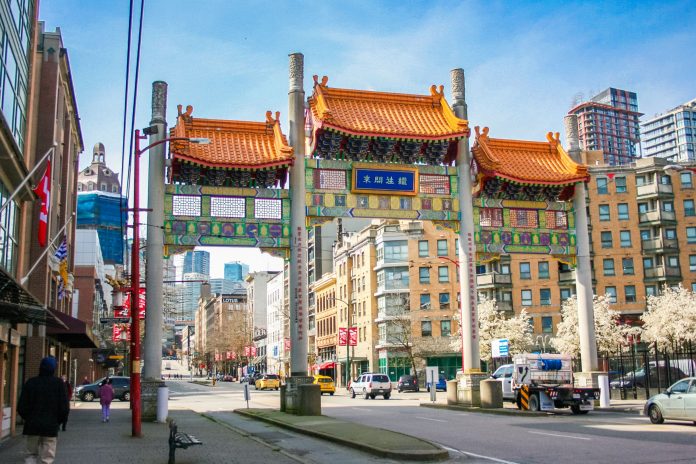
In April, CTV reported that the Chinese Cultural Centre in Vancouver had hateful messages using slurs for Chinese people graffitied in the windows and walls. “Kill all,” one message read. “Let’s put a stop to [Chinese people] coming to Canada,” another message said. These two events marked the escalation of anti-Asian hate crimes in Vancouver.

While anti-Asian sentiments were sinophobic, it affected anyone that was perceived to be Asian. In May, Dakota Holmes, a young Indigenous woman was punched repeatedly in a Vancouver park after she sneezed. Holmes reported that the man called her racist slurs and told her to “go back to Asia,” before punching her. Following this, in November, two East Asian women were assaulted in two days: one whom was punched in the nose, and another was spat on by a man. 

The constable on these cases expressed concern that in both cases, the victim and suspect had no relation to each other, suggesting a racial component to the attacks.

We then see the sharp increase in anti-Asian hate crimes reflected in the annual review done by the Vancouver Police Department, where anti-Asian hate crime incidents rose by 717% from 2019 to 2020, growing from 12 reports in the year prior to 98. 
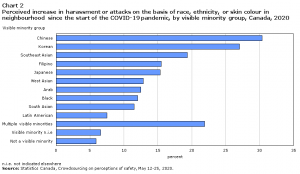
The effects of living through increased Asian hate crimes are palpable — fears of increased attacks and harassment have been felt throughout the Asian diaspora. In a survey conducted between May 12 to May 25, 2020, Statistics Canada reported that visible minorities (18% of participants) perceived an increase in harassment or attacks based on race, skin colour, or ethnicity since the start of the pandemic, with Asian people showing the most pronounced increase: Chinese people showed a 30% increase, Korean people at 27%, and Southeast Asians at 19%. 

Reading about these attacks has a profound impact on my sense of personal safety. I discuss my experiences with three other individuals: Hilary Tsui, a student at SFU, Xenia Xu, a Master’s student living in the United States, and Alex Cagaoan, a SFU alumni.


Taking a closer look at our anti-Asian experiences

Late March last year, I stepped out of my house wearing a surgical mask for the first time. I remember taking it off before getting on the bus, worried that I’d draw too much attention to myself. I sat on the bus scrolling through Twitter feeds that made jests out of the “China Virus,” and Instagram stories of my friends saying that they were glared at for coughing. It marked the first time that I felt nervous to be in my own skin, which I had always felt relatively safe in despite the microaggressions I experienced growing up.

Xu echoes this story. “I remember during the beginning of the pandemic when masks were not mandatory in America — it was probably a few days after ‘lockdown’ — I wore a mask to the grocery shop,” Xu says. 

Xu got a lot of weird looks from people, and like me, decided not to wear a mask and instead risk exposure to the virus because she was scared that she might be in danger. 

While this was the first time I felt nervous about my safety, I knew that this wasn’t just about the virus. Everyone that I spoke to thought COVID-19 provided the fuel for the targeted attacks against Asians, but there was always potential for us to become targets because we had been targets before. 

“Anti-Asian hate has always been in North America, since the times of the California gold rush, the 1914 Komagata Maru ship incident, and the 1923 Chinese Immigration Act in Canada,” Tsui says. “It was always there; it’s just that now the pandemic gave [people] a chance or excuse to act on that hate.”

A brief look at North American history proves that anti-Asian sentiment has spiked before — for example, in 1923, when the Federal Exclusion Act was put in place in BC to prevent Chinese people from entering Canada. We can also point to World War II, when Japanese citizens were kept in internment camps after Pearl Harbor, or the Vietnam war when people that had Asian features experienced perils of “looking like the enemy,” and Post-9/11, when vitriol against South Asians spiked

The exploitation of Asian people despite fears of them is woven into the fabric of BC. Before BC became a province, Chinese labour was hired to build the Canadian Pacific Railway (CPR) because it was cheaper. They were paid $1 a day compared to their white workers at $1.50 to $2.50 a day. They also had the most dangerous tasks, like handing explosive nitroglycerin. Hundreds of Chinese Canadians died from malnutrition or accidents. 

The celebratory photograph of the CPR completion does not show a single Chinese Canadian worker, despite their efforts. The government and white citizens wanted to celebrate a white BC, even though Chinese people were crucial to building. Once exploiting their labour became less profitable, BC passed laws to curb Chinese migration.

A few years later in 1885, the BC government would pass the Chinese head tax under the Chinese immigration act so that Chinese people needed to pay to enter Canada. This act devastated many of the migrants, most of whom were men hoping to bring their wives and children to Canada. It was a clear attempt to control the flow of Chinese migrants in the country, and by making sure they were being paid paltry wages, the government was also controlling their lives. 

Today, we still notice the ways Asians become threats in news headlines. Prior to COVID-19, headlines of rich Chinese people buying real estate in the last 20 years prompted fears of an “Asian invasion” from some politicians.

News media has definitely contributed to anti-Chinese sentiment over the years, and readers make negative correlations between the actions of the Chinese Communist Party (CCP) and Chinese people, just as they have the correlation between COVID-19 and Chinese people. As the protests in Vancouver in solidarity with Hong Kong suggest, not all Chinese people support the actions of the CCP.

Anti-Asian sentiment moves in phases, and we know that COVID-19 is not the first or the last time it will happen. Prior to the pandemic, Cagaoan recalls a particularly harrowing experience in her neighbourhood of predominantly white people, making her nervous when anti-Asian hatred grew in the pandemic. 

She tells me one of her neighbours had put up “no parking” signs on their lawns, noting that they didn’t want people parking on the street in front of their house even though it was public property. “It just made it clear to me and my family that the families in those homes are not pleased with having new neighbours to share street parking with,” she says. 

“A few months after we moved in, a second-generation Indian family moved next door to us. They were the only South Asian family in our immediate area,” Cagoan says. She explains that most of the families living there were East Asian, white, and her own family was the only Filipino family in the area. 

“[The father of the family] told us about a time that one of the [home]owners . . . came up to them as he was entering his car to [tell them] to never park there again,” Cagaoan says. The neighbours also left profanity-filled letters on their car window telling their ‘brown ass to stop parking on the street and to go back where they came from.’ This family would eventually end up moving in February 2021 after the constant harassment. 

Again, this is not the first time that anti-Asian sentiments have been in North America, and as an immigrant, I have grown up with my fair shares of microaggressions. But the mass shooting in Atlanta feels like the first time we are truly speaking about it as a mainstream issue. 

Xu believes that it is a cultural thing for Asians to be silent when things happen to us, to not cause any trouble or conflicts. My mom told me something similar: she didn’t want me to speak up because it was safer to be silent.

I think the perceived safety of silence is caused by the model minority myth: it portrays Asians as economically successful, clever, law-abiding citizens. The idea was that if we kept quietly to ourselves and worked, we would be safe and we would succeed. 

This myth, of course, is not for our benefit, but to protect white supremacy while also using Asians to target other minorities. Kat Chow of NPR says the goal of this myth was to minimize the role of racism in the struggles of other ethnic groups, particularly Black Americans, because Asians were seemingly able to attain success. Being quiet only serves to hurt us and other minority groups by taking away our platform to speak on the injustices that we faced.

The model minority myth also undermines our own struggles, hiding them under the guise of the “successful Asian.” And because wildly successful Asians are portrayed in the media, it further entrenches this notion that all Asians are successful. 

In an op-ed on the gaslighting of Asian-American struggles, Leanna Chan writes, “The struggle of being an Asian immigrant is a common experience, but it’s not one that we get to see on the screen . . . Crazy Rich Asians was an amazing milestone as it was the first film with an entirely Asian cast in 25 years . . . however, the film focused on the story of the rich and the elite. Some who watched the film may think every Asian person lives such an extravagant lifestyle. However, Asians have the largest income inequality of any racial group in the United States.” 

“Politicians do not, and will not care about our community, even with us speaking up,” Xu says honestly. “I think it is quite obvious as anti-Asian crimes have been going on for a while. There were so many attacks, yet, barely any politicians spoke up . . . Literally, it felt like no one cared until the shooting in Atlanta. How many more lives does the Asian American community need to lose before our existence is recognized?

“It just feels really helpless.”

Then, there was the fear that came with being an Asian woman specifically. The culprit and authorities initially claimed it as a crime of sex addiction. The culprit’s assumption that these spas, owned by Xiaojie Tan, provided sex services shows that Asian women in massage parlors are conflated with being sex workers whether they provide those services or not — which is separate from the fact that the rights of sex workers are also important. 

The hypersexualization of Asian massage workers is evident in racist phrases like “Me love you long time!” or “Happy hour!” which both Cagaoan and I were familiar with growing up.

In “White Sexual Imperialism: A Theory of Asian Feminist Jurisprudence,” a paper written by Sunny Woan, Woan explains that exploiting Asian women is a tool of colonization. Military presence, particularly during World War II, the Philippine-American War, and the Vietnam War heavily affected it. 

“The Philippine-American war raged on for more than a decade, murdering over 250,000 Filipinos. . . . More than half the country lay in waste from American-caused destruction. While occupying the islands, the American soldiers referred to the Filipinas as ‘little brown fucking machines powered by rice.’” Woan goes on to say that the military claimed access to women’s bodies as a “necessity” and a “spoil” of war. 

Today, these horrific experiences manifest in Asian women being fetishized as submissive and weak. Asian people are also trafficked at disproportionate rates, with most victims subjected to sexual exploitation, according to the United Nations Office on Drugs and Crime.

“While contemporary media and the arts portray women generally as objects for consumption, they cast Asian women into the most inferior of all positions, below white women. Portrayals of the interrelationships between white American GIs (a man enlisted in the army) who go overseas, the Asian women they meet there, and the white American woman back home show this dynamic,” Woan says. 

It made me really cautious in my dating life, especially when a white man was interested in me. But beyond the precautions and stereotypes that we have learned to live with, there was also the dynamic of Asian women disproportionately being targets in anti-Asian hate incidents.

Project 1907 reported that in BC, Asian women overwhelmingly accounted for nearly 70% of all reported incidents. Stop AAPI Hate also reports a similar number — across 3,800 reported incidents, 68% were reported by women. The perception that Asian women are submissive also seems to make them more likely targets. Racism and misogyny are compounding factors that make Asian women more likely as targets because they are perceived as more submissive.

“My feelings of fear have grown recently as I hear more and more hate crimes happening in my community along with the increase of young women being harassed, assaulted, and going missing,” Cagaoan says. 

Cagaoan is referring to the news and videos of women being followed and missing women in Vancouver. It’s something that I feel now whenever I go out, and the shooting in Atlanta has only worsened my fears of walking around as a Chinese woman and being targeted for it.

After all, if people are still arguing over whether there is a racial component in this crime, there is so much that they do not know about the ways in which Asians have been treated as enemies whenever white supremacy sees fit to make us enemies. How do you begin having a conversation about your struggles when so much of its history and its ongoing effects have seemingly been shoved under the proverbial rug? 

The truth is, even as I am writing this, I find it troubling that we are our own advocates. I don’t mean that people of colour and allies haven’t been supportive, as I’ve found the most solidarity and assurance from fellow minority groups. I mean that it feels like we are having this really heavy conversation for the first time, and like we are having to justify why we are hurt. I am not confident that these conversations will amount to much more than pointing to the mass shooting in Atlanta as a tragic anomaly, even though there are plenty of assaults in America and in Canada to justify our fear of doing normal things like going out to get groceries. 

“No one really even cared about us in America,” says Xu. “They never even bothered to learn about us. Most people just assume you are Chinese . . . when they see that you have Asian features such as black hair, dark brown eyes, brown-yellow skin.” And further, people commodify us by our food, our music, our entertainment to empathize with us.

Social media lit up March 17 in support of the victims of the shooting in Atlanta, but there were plenty of tweets like, “If you like anime, or Kpop, or Asian food, you should care about these issues.” While I appreciated the sentiment, I was hurt that Asians still needed to be measured by what we could culturally provide for people to simply empathize with us. 

Tsui stresses that education is key, and I tend to agree. “I think it will take a lot of years, a lot of healing, and good leadership condemning racism, for [us to recover],” Tsui says. 

I can’t stress anything more than continuing to listen to all people across the Asian diaspora about their experiences and to protect them. Asian hate is not a new trend — it is evidence of the ways white supremacy historically turns Asians into enemies in their narratives, just as quickly as they use Asians as model minorities to hurt other minority groups, deflecting the effects of systemic racism. 

Please listen to us. Protect our elderly, our sex workers, our vulnerable. Please.

Soon Chung Park. Hyun Jung Grant. Sun Cha Kim. Yong Ae Yue. Delaina Ashley Yuan. Paul Andre Michels. Xiaojie “Emily” Tan. Daoyou Feng.

These were their names. May they rest in peace.

The web version of the article on www.the-peak.ca will include a section at the end with resources, organizations, and people to help support.


Resources

Fundraisers towards the Atlanta shooting victims

Eun Ja Kang, a survivor of the Atlanta shooting. 

Elcias Hernadez Ortiz, a survivor of the Atlanta shooting who is currently undergoing trachea surgery.

Hyun Jung Kim, a victim of the Atlanta shooting, leaves two brothers behind. They will need help with basic living necessities, such as food, bills, and other expenses.

Delain Ashley Yaun, a victim of the Atlanta shooting, leaves two children behind. This funding goes towards their trust funds, and to cover her funeral expenses.

Paul Michels, a victim of the Atlanta shooting, this fund is being raised for Bonnie, Michels’ wife, to help with funeral proceedings with her husband.

Sun Cha Kim, a victim of the Atlanta shooting, this fund is raised on the family’s behalf to help provide a memorial and funeral for her.

Yong Ae Yue, a victim of the Atlanta shooting, this fund is raised for managing Yue’s affairs, costs for her family to travel to her memorial, and memorial service costs. 

Ying Tan “Jami” Webb, the daughter of Xiaojie “Emily” Tan, this fund is raised to go to Jami to help her recover for trauma, settling her mother’s affairs, and potential legal fees since this is part of a murder investigation.

Gwangho Lee, the husband of Soon Chung Park, this fund is raised for Lee’s living expenses as he is unable to work due to the trauma of losing his wife.

Organizations to support

Project 1907, a grassroots group of Asian women that aims to explore Asian history, identity, and advocating for solidarity. They track incidents of anti-Asian racism, and have resources on solidarity, decolonization, anti-Asian racism. 

SWAN Vancouver, a group that advocates and supports immigrant women engaged in indoor sex work. They help provide individual supports, like providing information and referrals to housing, immigration, and social services, as well as crisis management, advocacy in appointments. They also provide a platform where immigrant women engaged in sex work can disclose unsafe experiences of violence or injustice to help other women feel safer.

Yarrow Society, a foundation that supports low-income immigrant seniors in the Downtown Eastside and Chinatown. They provide seniors resources like groceries, accompanying them to their medical appointment to help them translate, and helping seniors apply for social housing. 

CovidRacism, a website that tracks and reports anti-Asian racism across Canada.

Vancouver Chinatown Foundation hopes to protect historic buildings in Chinatown. One of their projects is to build more financially accessible housing on Hastings with 230 new homes, with a 50,000 square foot health center that serves the community.

SFYou: Dr. Lesley Schimanski

0
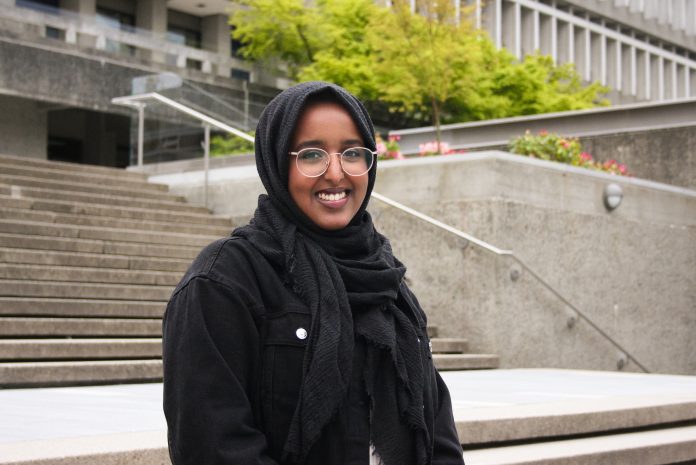
Photo courtesy of Dr. Lesley Schimanski

By: Katarina Chui, SFU Student

Name: Lesley Schimanski
Pronouns: she/her/hers
Departmental Affiliation: Department of Psychology
Hometown: Pincher Creek, Alberta
Occupation: Sessional Instructor, Psychology and Cognitive Sciences

Among students, Dr. Lesley Schimanski is known for three things: living on the Sunshine Coast (and thus having a long commute to SFU), her unwavering kindness, and her dedication to students. A single glance at the Facebook page Must Knows for Courses at SFU attests to these traits. Countless students recommend their peers to take classes with her, often mentioning their experience with her or her personality in the comments.

Dr. Schimanski (or Dr. S., as most students refer to her) came to SFU as a sessional instructor in 2017. Her resume is impressive: before SFU, she taught for over a decade at the University of Alberta and in multiple schools in Arizona. In addition to teaching at the University of Arizona, she studied rat brains in mazes there with Dr Carol A Barnes, a prominent neuroscientist. Since coming to SFU, she has taught a multitude of classes, such as introductory psychology, data and research methods in psychology, cognitive, and neuroscience courses. 

Similar to how she teaches, Dr. Schimanski exhibited a quiet, calm demeanour in the interview, preferring to pause before answering and carefully crafting out her next sentences. She acknowledged this, saying, “I’m pretty quiet, generally. And in real life, I’m not a big talker, really, socially.” 

Our conversation shifted easily from one topic to another as we swapped stories about our experiences and interests, her openness and the ease she shared stories about herself evident.

“I grew up in Pincher Creek, a small town in southern Alberta. It’s this [rural, conservative] town right outside the Rocky Mountains. We could see the mountains from my backyard,” she recalled fondly. 

Her childhood filled with nature influenced her life-long passion for the environment, and gave her an appreciation for aesthetics — something she captures with photography. 

“It’s [the only] way for me to be artistic that I have enough patience for,” Dr. Schimanski added with a laugh, explaining that she usually abandons arts-and-crafts projects a quarter of the way through. “I can’t do repetitive things! I just can’t. It drives me crazy. Photography does not require too much patience; it’s almost instant gratification. My [mother and grandmother are] probably totally embarrassed by me [as] they are knitters, crocheters, stitchers, [and] seamstresses.”

As an adult, she and her family eat a mainly plant-based diet. When asked about her favourite food, she said, “I can’t pick a favourite [food], I like food. [ . . ] Chocolate. Pizza. Pie. Cake. I’m gluten-free so this has become more challenging; many of my favourite foods are not compatible with my dietary restrictions these days.

Dr. Schimanski also does freelance photography of people and animals. She is a big believer in animal rights and against animal cruelty. On the side, she does volunteer freelance photography for animal rescue shelters, such as SPCA. 

“If I [can] use my talents to help [the animals], I want to help,” she told me. 

Her love of neuroscience began in high school, when she took an IB class on the brain and genetics. This sparked her interest in neuroscience and psychology, inspiring her to enrol in pre-medicine at the University of Lethbridge. She wanted to help others and decided that the best way to do so would be in the medical field. However, there was one catch. 

“I’m a very empathetic person,” said Dr. Schimanski. “I figured I wasn’t cut out for this life-and-death stuff; I didn’t trust that I could leave [the things I saw] at work.” Remembering her love for the brain and genetics from IB, she transferred to a neuroscience program in her second year of university.

When asked about her favourite subjects, she said “biology, math, and writing [ . . . ] three things that make up a lot of neuroscience/psychology research, actually.”

She taught in Arizona for five years, but eventually moved back to Canada, settling with her family on the Sunshine Coast. She attributes her decision of living outside of Vancouver to her childhood: “When you [grow] up living under the Rocky Mountains, [ . . . ] you miss that when you leave.”

Her lecturing style says a lot about her personality and interests; she carries herself with a quiet demeanour, is empathetic toward her students, and frequently mentions her dog, Jake. 

“I see my role as a facilitator to help each person achieve their best,” she said. “It’s difficult with the way university is structured, but I don’t want my [students comparing] themselves to everyone else. It’s my goal to make things interesting, accessible, and to provide whatever support I can so that everyone can achieve their best.” She believes everyone brings different things to class and strives to make psychology personalizable for her students to individually relate to the material in some way.

She has been focusing on improving her craft and her teaching methods since she began teaching in Arizona. “It was really scary!” she exclaimed, recalling the first time she taught. “I was really young, maybe 23 or 24 at the time. I have no doubt that a bunch of my students were older than me. [ . . . ] I wasn’t a particularly confident person at that time [and] I didn’t have much experience speaking [at the time].” Dr. Schimanski added that she was really worried about being accurate and “knowing [her] stuff.” 

So how did Dr. Schimanski. become the confident teacher she is today? She credited her students. 

“I’ve [probably learnt] just as much from my students as they have from me.” She sees her students as individuals, acknowledging that every single one of them has different skills, talents, different methods of understanding and relating to the material, and different strengths and weaknesses. 

Dr. Schimanski tries her best to find a middle ground so everyone can feel like an equal participant in her classes. This is one of the things she enjoys most about teaching, she told me. 

“My job [is] to assist other people in furthering their knowledge as best I can. It’s not my place to judge; it’s not my place to have any particular expectation on anyone other than what they are able to give at that point. That being said, I ask a lot [of my students] [ . . . ] because I want them to do their best. As I’ve learned, the more I ask for, the more I can push people to achieve their best without asking. They may not realize their potential.”

She noted her teaching style was influenced by her own experiences as an undergraduate student. 

“I was afraid to talk in class,” she revealed. “[So now,] I’m mindful of that when I design what we’re doing in class. [ . . . ] I want to be [someone] my students are okay with approaching. I don’t want to be [the] scary person up in the scary office. I want them to come to me if they’re having a problem or if they need help with something.” 

Something people may not know about Dr. Schimanski is that “[she] enjoy[s] listening to classic rock a lot and [her] favourite author is non-fiction novelist Eckhart Tolle.”

As our interview came to a close, I asked Dr. Schimanski one more question: what four words would you use to describe yourself? 

“Empathetic, approachable, kind,” she said. “And determined,” she added after a while, acknowledging that that last one can also be a weakness as she is “ambitious to a fault.”

What’s Going On: Indian Farmers Protests

1
PHOTO: Varan Nm / Pexels

Written by: Sharon K. Malhi, SFU Student 

For over three months, millions of farmers have been protesting in India over new agriculture laws. Three bills were passed by Indian parliament in September and signed into law by prime minister Narendra Modi. The government is being accused of defying parliamentary procedure by passing the bills and not allowing deliberation. 

The bills loosen regulations concerned with sale pricing and storage of farm produce. 

The first bill, Farmers’ Produce Trade and Commerce (Promotion and Facilitation) Act, allows farmers to sell produce outside of government sanctioned markets. This means corporations can now directly buy from farmers at mutually agreed prices and there will no longer be any mandi tax — a fee for the purchase and sale of agricultural produce

The second bill, The Farmers (Empowerment and Protection) Agreement of Price Assurance and Farm Services Act, reiterates farmers can now “do contract farming and market their produces freely.” 

The last bill, The Essential Commodities (Amendment) Act, is “an amendment to the existing Essential Commodities Act. This law now frees up [previously limited] items such as foodgrains, pulses, edible oils, and onions for trade.” 

The government argues the bills provide more freedom and opportunity for farmers so they can earn more money for their produce. Modi claims the laws are necessary reforms for the country’s agriculture industry. “We need to move forward, not backward. We need to give these reforms a chance,” he said.

Farmers say by getting rid of the current regulated markets and consequently minimum support price (MSP), they will no longer have control over prices set by private buyers — leaving them vulnerable to exploitation.

Across India, roads have been barricaded by police in an attempt to stop protesters who are against the bills. 

Individuals who’ve attempted to advance past barricades have been met with tear gas shells and water cannons. Protestors have been held on criminal charges. Indian police continue to cut food and fresh water supply to protest sites. 

While these events unfold in New Delhi, farmers are complaining pro-government media fails to fully report them. 

Further, if the protests are covered, they are misconstrued, misinterpreted, and politicized against them, they say. In response to this, protest participants and supporters have turned to social media platforms to share their dissent by sharing footage of the events. 

The government has ordered multiple internet shutdowns at protests sites, taken down activist social media accounts, attempted to censor trending hashtags, and arrested journalists and activists for sharing information and news.

Raminder Hayre, a practicing lawyer in Vancouver and social media activist told The Peak, “The government and the Indian media [have] tried to focus on censorship, but [also] creating backlash on those in the west [ . . . ] creating that negativity so the energy shifts towards that rather than looking at the problem on hand.” 

Hayre said when compared to the previous tactics used by police at the protests sites, “[censorship] is more dangerous because the goal in censorship is manipulating what can be in the media so they are not exposed.” As a result, citizens and protestors are unaware of the tactics being used against them.

“It’s scary to see how their system is so subjective,” Hayre said. 

“What they’re doing is not what you do in a democracy [ . . . ] they are tarnishing the reputation of a democracy by undergoing these acts, the right to a democracy means you have the right to a peaceful protest [and] freedom of expression.

“[They] have a right to be heard, and these farmers were not heard in the first place,” she added.  

Members of Indian diaspora have been holding protests worldwide. 

According to Global News, dozens participated in a sleep out at the Vancouver Art Gallery Saturday night. Kisaan Sleep-Out organizer Navjot Mannan said, “We just feel like we owe it to our roots and our ancestors and our relatives [ . . . ] that are still in India to speak up for them, because they don’t have a voice in their government right now.” 

“The fear of a genocide is real right now — we’re at about eight out of ten steps of a genocide. The only that are left are the actual killing of individuals and the concealing of it. That’s scary when you can see how they’ve already tried to classify and demonize the farmers,” Hayre said.

Rogers’ acquisition of Shaw shouldn’t be able to happen

0
Rogers - one of the big three - shouldn’t get even bigger. Photo courtesy of Rowanlovescars via Wikimedia Commons

by Emma Jean, Staff Writer

On March 15, it was reported that Rogers Communications had signed a deal to purchase Shaw Communications for a whopping $26 billion. That not only leaves three national cellular providers in Canada —  Bell, Telus, and Rogers —  but less than 10% of the country using any other provider. Unless the perspective comes from a high-stakes investor with financial gain from this big merger, this is bad for everyone. 

As it is, Canadian consumers pay some of the highest prices in the world for their cell phones, internet, and television; in other words, their telecommunications. Compared to almost all countries across Asia, Africa, Europe and North America, Canadians pay the most for all of the above. This coverage leaves many rural areas with minimal or non-existent coverage. Because these three companies only compete with each other, there’s no need to lower their prices or spend more to expand their coverage if they all can raise their profit margins as a result. To stop these kinds of deals from happening, there are three things that need to be done in the short, intermediate, and long term. 

In the short term, action can be taken to stop this merger from taking place at all. This deal only passes if the Competition Bureau, which regulates Canada’s antitrust laws, allows it to. While it’s hard to say whether they will allow it, conventional wisdom suggests that Rogers and Shaw wouldn’t have signed the deals if they thought it would be shot down. However, as the consumers who will be affected by this, that doesn’t mean that we can’t fight like hell to stop them. Writing a complaint to the competition board insisting that the increased prices, poor coverage for rural areas, and horrible precedent is not something we need could be key to stopping this deal from happening. It could be a long shot but, if done in large numbers, it also could be the best shot. 

Looking at the intermediate picture, it’s important to consider how to prevent a deal like this from happening again. If this purchase goes through, it’s because the current laws that prevent the domination of a few companies and collusion in the private market are inadequate. Each time any attempt to break up the big three telecommunication companies happens, the same consolidation happens over and over again — like a never ending game of Pac-Man. As several independent cellular providers entered the market in a government-backed attempt at competition in 2008, each one was bought up by either Telus, Rogers, or Bell. The only exception in this case is Freedom Mobile who was bought by Shaw, but they may now be bought by Rogers. It’s a scary Russian nesting doll game of who’s going to be raising cell prices and cutting Will Arnett’s advertisement checks next. 

No matter what action private telecommunications businesses take to create more competition, it’s just going to end up like this again and again — unless Canada creates stronger federal antitrust laws. These would stop only a handful of companies from running essential services, but would actually be enforced by the competition bureau. If stopping the Rogers/Shaw merger is the battle, changing and enforcing antitrust laws is part of the larger war. 

If appealing to the Competition Bureau and stepping up Canada’s antitrust dealings are the small and intermediate solutions, it’s time for the big. What if Canada created a nationalized cell provider? It would be owned by the federal government and operated using cellular infrastructure already built and publicly owned, offer accessible plans for anyone who wishes to use them, and actually reach all of Canada. It’s an idea that puts a lot of (likely naive) faith in the federal government to do what it promises, and do it well. But it’s one that would create an unbuyable competitor that would force private companies to compete with truly affordable prices. It would also acknowledge telecommunication services as a crucial part of daily life, consistent with the COVID-19 guidelines that declare it an essential service. It’s an idea that’s picked up steam in academic circles — sometimes suggesting that all telecommunications be nationalized — and it’s one worth taking seriously and fighting for when the time for policy formation comes. 

Some would argue that the best solution here is to allow American telecommunication giants to compete with Canadian ones. But the last thing we need is for huge companies to get even larger. That’s part of what got us into this problem in the first place. 

Rogers buying Shaw is awful for almost everyone and is a symptom of a much larger cause. Let’s start treating it by making some serious changes to what the telecommunication industry can legally do to ensure it doesn’t happen again.

What Grinds Our Gears: Professors who don’t update their syllabi

0
Copy and paste shouldn’t happen with syllabi. ILLUSTRATION: Shaheen Virk / The Peak

by Alesha Garcha, SFU Student

I am tired of professors at SFU thinking their tenure means they do not have to adjust their syllabus, especially when their course’s failure rate is incredibly high.

Students pay a premium dollar to learn, not to have an unreceptive professor. They should be keen to support us in achieving all learning outcomes. A failed class or a low mark could frighten students and deter us from studying subjects we are passionate about. Professors should work to improve their syllabi and adjust how concepts are learned to avoid this fear.

I am experiencing this firsthand, as I left a pesky breadth science requirement for my last semester. I am enrolled in a 100 level class that my friends had informed me was the least hellish option. But every time assignment grades are released, the mean is exceptionally low. I was told in previous semesters that this professor never made an effort to re-evaluate their syllabus, but I guess I got lucky because I was given a chance to blow off steam in a web survey. However, despite all this data, the professor assumed that because the mean had moved from 40% to 50%, everyone experienced a “learning curve” in the course. The professor also thought 10 extra minutes on an exam would fix a midterm average of 53% — hooray, a majority of us are now barely scraping by!

Dear SFU professors, re-evaluate your syllabi. Failing marks are not because the masses are unintelligent. It’s usually because you are doing something wrong.

Joy Johnson can’t save us

0
Johnson isn’t a total joy to the world when she promotes faulty health resources. Photo courtesy of Simon Fraser University via Facebook

by Madeleine Chan, Opinions Editor

Last year when Joy Johnson was announced as SFU’s new president, leaving Andrew Petter to the dust, it seemed like a win. Petter, who preached self-important politics, had relative inaction on social and student issues, and staunch bureaucracy, was leaving, we were getting someone who said their first priority was students, and she’s a woman! Surely that girlboss power would deter at least some of the sexismrelated and otherwise prejudiced problems that SFU has hosted over the past decade. 

At the time, anything seemed better than Petter. But over a year after she was announced as his successor, I’ve come to realize that she isn’t all that great. In fact, any new president SFU receives from now on won’t be so revolutionary either.

I want to be crystal clear that I don’t hate Johnson. She seems like a perfectly nice, well-intentioned person and I don’t think she, personally, has deserved any dislike. But her actions so far and position as president do raise some concerns. 

Johnson started her tenure last fall, hot off the heels of Petter’s commitment to SFU Athletics’ name change, and smack in the middle of the pandemic. Her long-preached commitments to equity, diversity, and inclusion were at the forefront of her introduction, and seemed to be an apt amplification of Petter’s final actions. Since then she’s doubled down on her words, making four commitments to act on this sentiment, including creating a vice-president people, inclusion, and diversity position. 

It really seems like Johnson has the best intentions with spearheading the formation of this new role, but it so easily seems like it’ll lead to another administrative figurehead whose job is to only exude SFU’s good graces. It’s the same with her writing a Burnaby Now article on why we need a gondola. Why choose to write on that when Trans Mountain is preparing to drill a reconciliation-shattering pipeline expansion through Burnaby mountain right now? Especially when reconciliation is one of her top three priorities entering the role. She also seems sincere in her words to act on the suggestions in the final report on the December 11 arrest, but I can’t believe her. 

She does all of these things that sound great, but can easily be written off as performative despite any legitimate good intention — and there lies the problem. Her hierarchical role as someone bureaucratically restrained to expressing her thoughts with polished statements and vague sentiments does not, and cannot, make her intentions true. After all, what is a university’s president if not someone whose job is to make the school look good?

These past two semesters she really has tried to prove herself to students. But promoting resources like MySSP and SFU’s Health and Counselling that students have expressed don’t work shows the disconnect she has with students. It’s obvious she means well in sharing “inspiring” social media messages and nice photos of the campus at springtime, but it just feels so oblivious to the fact that students are suffering — from the lack of true action she has taken thus far to support them, no less. 

This distanced thinking comes from the fact that she’s in a position of extreme power and affluence — something that students can only dare to experience in movies and magazines. How can someone who makes an assumed $443,850 a year truly relate to the people she is supposed to serve — who are barely keeping up with tuition increases and surviving on limited income as it is?

Just her position as someone so much higher on the social chain, she’s hierarchically removed from students. She literally lives atop Burnaby mountain in a penthouse suite, one which the school fervently fought to have air conditioning for, despite it violating the strata’s bylaws. They even seemed reluctant to pay a couple hundred dollars in fines for something they brought upon themselves. Living in the lap of luxury and having this much influential support means she can’t truly relate to and serve students, no matter how hard she tries. 

Considering these circumstances of presidency, if I, for example, were to somehow become SFU’s president, would I be able to make the comprehensive changes to our education system, faculty, and overall institution that I would want? I don’t think so. Unless the conditions around how the institution’s president is supposed to act, express opinions, and how they are positioned in power is changed, no future president will actually be able to fully enact the changes their words seek, or will be able to be the change that students want to see. 

I want to be proven wrong about SFU’s president. I want to be shown that she’s going to be the drastic change that the school desperately needs, that someone in her position can actually prioritize students, and that all of her successors would continue that trajectory. But considering how the position works and what she’s done so far, I highly doubt that’s going to happen. For now, we’ll have to wait to see over these five years what her girlboss cred can accomplish.