
By: Sara Brinkac, SFU Student






By: Alesha Garcha, SFU Student
When the Pass/Fail (P/F) phenomenon was first introduced in March 2020, students were relieved to have their term marks hold less weight amidst the online learning switch.
As of March 2021, SFU has passed a different option for students. The Pass/Credit/No Credit (P/CR/NC) grade system option can be used on elective courses that are not a requirement for your program. It is applicable for up to 12 units throughout Spring, Summer, and Fall 2021. If students choose to use the option it will not impact their GPA, but students are encouraged to speak with an advisor to see what option best suits their needs.
With SFU issuing the option again, students should be aware of the work ethic implications that may follow with its potential overuse. The P/CR/NC option can impede the student body’s ability to navigate what works and what doesn’t in their academic career. For some students, there’s a possibility it could dilute the seriousness of poor academic performance and contribute to an unsustainable, nonchalant attitude about studying which cannot be maintained.
To clarify, this stance is not negligent to students who have experienced circumstances beyond their control. With SFU’s diverse student body, many have experienced unique struggles — like international students being separated from their families and those facing job loss and other mental health-related struggles. It is important to understand that it is not shameful to use these options. However, I want to emphasize the grey areas in their usage.
The P/CR/NC option is advertised by SFU as beneficial for students wanting to expand their course choices, without the burden of worrying about course performance. However, students must still be focusing on meeting learning objectives. An overreliance on the P/CR/NC option could be treated as an excuse to disregard the learning opportunities available in courses outside of program requirements (such as in writing, quantitative, and breadth courses).
Being in my final year at SFU, I was shocked to discover that some graduate programs disregarded Spring and Summer 2020 marks, due to the P/F being a popular pandemic-integrated system among universities. The transition to online classes was so delayed I had already submitted my final assignments. My efforts to maintain my GPA were disregarded due to the use of the P/F option. I am concerned that with SFU’s continued use of these options, some of my other course marks may also not be considered. Furthermore, students in difficult situations may be unaware of the exceptions that apply with using these options.
All students need to be wary of the new P/CR/NC option, particularly if they are working towards a post-graduate degree. The formative years of in-person university instruction allow students to develop study habits and attitudes applicable for continued academic and professional success. Although remote learning has had its challenges, there are resources for students to get back on track, and reap the benefits from attending university.
Written by: Karissa Ketter, News Writer
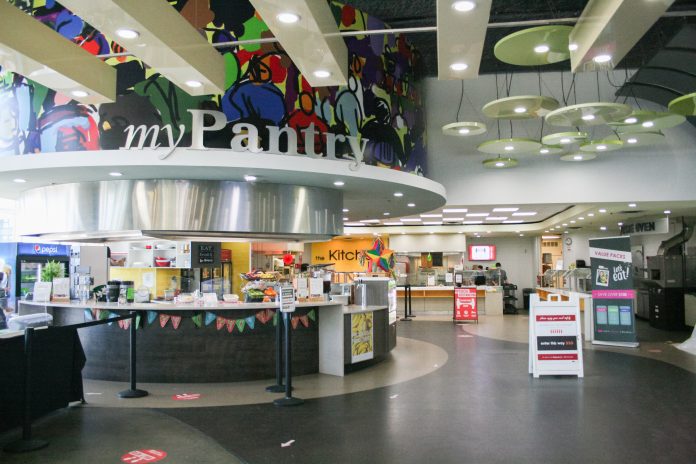
SFU currently hires their food and cleaning service workers through the third-party company Chartwells Canada. It has been a month since the Contract Worker Justice campaign sent an open letter to president Joy Johnson and vice-president finance Martin Pochurko asking them to end the contract and rehire workers directly. Representatives sat down with the administration in a meeting to discuss the campaign’s goals.
In an interview with campaign co-founder John Calvert said initially ending the contract and “bringing the work back was not something that [Johnson] could see doing in the immediate term.”
In a subsequent interview, Calvert told The Peak he had received a letter from Johnson following their meeting. “The tone of the letter that we received was a bit different from the tone of the meeting.”
Johnson’s letter suggested “that [SFU] begin work on a case for change in the Fall of 2021, when we have more information about the university’s financial outlook.”
Calvert found that although Johnson is “not committing she will actually bring back the work [ . . . ] it’s more positive than we had originally assumed from the meeting.”
The letter from Johnson stated that, in the fall, SFU will look to “document costs, benefits, potential savings [and] required support structures.”
“Justice may cost a little bit of money, but at the end of the day we want justice,” said Calvert.
When he described his initial meeting with Johnson and Pochurko, Calvert said they declined to consider the initiative at the time. He felt a contradiction between Johnson’s claims to support equity, diversity, and inclusion (EDI) and reluctance to hire food and cleaning service workers directly. Especially “given the nature of the workforce we are talking about,” he said.
“If the university is really serious about the EDI that it’s been promoting, then this is an important element of that because we’re looking at two groups of employees that are primarily women, racialized, low-paid, and arguably very vulnerable,” said Calvert.
Despite this observation, “there is no data regarding the diversity of these workers, since they are not direct employees of the university” as previously reported by The Peak.
Unlike other staff at SFU, contracted workers don’t receive a living wage, extended health benefits, or an appropriate health and dental care plan, according to the campaign’s open letter. The letter also claimed they have insufficient vacation time and no access to SFU facilities. Further, the campaign said the nature of contracted work means workers have little job security each time the contract is re-tendered.
“As long as the injustice is there, we have a reason to continue fighting,” said Calvert.
In an email statement to The Peak, Pochurko said, “We appreciate and understand the desire to improve working conditions and economic inequities for workers in the SFU community.
“Replacing services or changing a service model needs to be considered with care and attention, inclusive of the unions representing these workers and must balance concern for tuition increases and the university’s multi-year recovery from the pandemic,” said Pochurko.
“From the viewpoint of those in the campaign, this is an encouraging step,” said Calvert.
Calvert reported that the campaign has seen support through over 800 signatures on their open letter — many of which are from faculty members.
They continue to pursue their objective, and recently met with the mayor of Burnaby, Mike Hurley, who “indicated that he is highly sympathetic to what we were trying to achieve and also pointed out that he has been doing the same thing in Burnaby — bringing back in-house some of the contracted work.”
SFU staff and students can respond to the campaign’s Google form to get in touch or email them at [email protected]. They are active on Facebook, Twitter, and Instagram.
By: Nancy La, Staff Writer
Earlier in April, the Contract Worker Justice campaign sent out an open letter to president Joy Johnson regarding the school’s use of third-party companies to hire campus personnel. This includes food service workers and cleaners. Since contracts are renewed periodically, there is no safeguard against massive permanent layoffs, which is what happened to the contracted workers at SFU during the lockdown phase of COVID-19. When these companies look to cut costs, they do so through workers’ wages and benefits. SFU’s decision to outsource its labour creates an environment in which workers are exploited.
SFU’s use of cheap and outsourced labour makes it a substandard workplace. The use of companies such as Chartwells Canada and Best Service Pros Ltd. creates “downward pressure” for workers since SFU is primarily interested in selecting the least expensive companies. Yet instead of saving money, SFU is misallocating its funds. Third parties also take a cut of the money, which could be used for workers’ wages if they were employed by SFU directly. For context, the living wage for Metro Vancouver was $19.50 per hour in 2020, yet the highest paid contract janitorial worker only makes $17.93 per hour. It is hypocritical of SFU to claim that it is making an effort towards equity while ignoring the basic living standards of the people who maintain our campuses.
Another consequence of using outsourced labour is the lack of job security for workers. Because the workers are under contract, SFU cannot redirect them to other parts of the school for other assignments, a solution used by UBC and UVIC since their workers are hired in-house. This proves that contracting workers is an inefficient labour approach. Since SFU locked itself down to contractual terms and conditions, this leaves no alternative path when it comes to deploying workers as needed.
The open letter makes a point regarding the racialized and gendered representation of the contracted workforce, which consists primarily of women, immigrants, and people of colour. Extensive research has been done on the vulnerability of immigrants to discrimination in the workplace and has shown that migrant women are disproportionately affected by such discrimination. Through its use of contract workers, SFU creates a space for the marginalization of the people who are already vulnerable.
SFU prides itself on establishing performative gestures, like the Equity, Diversity, and Inclusion subcommittee. Meanwhile, its workers are expected to provide services in return for low wages and a lack of benefits and job security. Between the school’s daily operations and its promise of an equitable workplace for everyone, SFU’s actions don’t match up with its politics.
Another effect of outsourcing is the lack of benefits accessible to contract workers. Because contract workers are not technically SFU staff, they are not eligible for extended health care benefits, and their sick leave and parental leave days are abysmal in comparison to workers of the same positions at UBC and UVIC. SFU chooses to do the bare minimum for the people who contribute to its daily operations just to save money.
The issue of contract workers goes beyond that of money. SFU has the opportunity to prove that it can support its community and do the right thing when it comes to justice and ethical labour standards. To address the issues of outsourced labour, SFU needs to take an active role in the employment of janitorial and food service workers.

By: Carter Hemion, Staff Writer
These days, students are expected to prioritize hard work over all else. We grind all day, stay up late working, and skip meals to finish assignments. We are taught to give up everything for our grades, even our personal lives and health. The culture that encourages these habits at best interferes with maintaining a healthy learning environment, and at worst is incredibly dangerous for our well-being.
Valuing labour over learning is a threat to academia because it creates busy work at the cost of learning. SFU cannot claim to be a comprehensive or engaged university while favouring unattainable exam standards over applying knowledge in meaningful ways. The use of the GPA system creates a competitive environment for students, particularly through curved grading, and deprives students of collaborative learning opportunities.
It is unreasonable to expect students to thoughtlessly regurgitate lecture material into assignments for the sake of completion when understanding course content should be the focus. Quantifying learning in the form of repetitive assignments reduces its quality drastically. This standard only leaves students exhausted and without the critical thinking skills we expect to develop in university.
Valuing our labour over our health is a threat to student lives. A North American psychology study on post-secondary students found that about 64.5% of students experience “overwhelming anxiety” and about 44.4% of students are “so depressed that they [have] difficulty functioning.” Expecting students to constantly prioritize grades and work well beyond what is healthy can place a dangerous amount of stress on students both mentally and physically. It is problematic that we are taught that neglecting our health for hard work is an achievement.
We need post-secondary institutions to prioritize learning opportunities over assignments, and we need support from our professors and administrators to change this culture. Administrators need to adjust the grading scale to be more consistent and more reasonable for the average student and recognize that our GPAs are not worth the loss of learning. Compassion from professors needs to increase, and workloads need to be more reasonable. We cannot sustain the current standards and still consider our education to be comprehensive, and we cannot accept that neglecting our needs is the best path to academic success.

by Maya Beninteso, SFU student
Tip #1: Ease into a regular sleep routine
I’m sure you have all heard some variation of this tip before, and remote learning does not lend itself to a perfect sleep schedule. However, it would be a good idea to start training your body to sleep earlier and earlier as the semester goes on. According to Statistics Canada, adults aged 18–64 require 7–9 hours of sleep each night.
It is likely that some of you have not been receiving that amount of sleep, especially when it comes close to finals season. Although, a major culprit (and I hate to admit it) is our digital devices. Trust me, I am not immune to the allure of technological devices. I have often fallen victim to the common lie: “I am only going to scroll for another 10 minutes” — only to be on my phone for hours. Make it a point to try and stay off your devices as soon as you begin preparing for bed, or even better, an hour or so prior. Too much all at once? Try weening off your phone by starting with 10 minutes of device-free time and gradually increasing the time as the week goes on.
Tip #2: Do not overlook the syllabus
Syllabus week, by far, is the most overlooked week in the semester. Who wants to shift back into studying after a relaxing break? Nonetheless, this week is pivotal in determining your semester success. As soon as you acquire this sacred document, download it and note the key dates. If your professor has been kind enough to detail major assignments/test weeks, write. them. down. Whether that be on a physical calendar, a digital calendar, or both, just make sure you have it noted somewhere. Some other key elements of the syllabus to note are office hours, late policies, and grade weighting.
Another expert tip: if on the first week of classes you are not overly busy, try and get ahead. This will lessen your load as the semester progresses and will naturally give you more time to relax. Since the first week is mostly syllabus revision, what else is there to do?
Tip #3: Schedule EVERYTHING
I know what you are thinking and, yes, this is extremely tedious. While it may seem over the top, scheduling: studying time, food/mind breaks, exercise, and time with friends will make the semester all the more bearable. For those who prefer a physical copy of their schedule, invest in a day planner. Conversely, for those who prefer a digital space to organize your day, utilize Google Calendars or other calendar/planning-oriented applications.
SAMPLE SATURDAY (Tasks Only)
10:00 a.m.–11:00 a.m. Exercise (gym, running, biking, hiking, etc.)
11:30 a.m.–1:50 a.m. Snack
12:00 p.m.–1:00 p.m. Review Course #1
1:00p.m.–1:30 p.m. Lunch
1:30 p.m.–2:30 p.m. Review Course #2
2:30 p.m. –2:50 p.m. Break
2:50 p.m.–3:50 p.m. Review Course #3
3:50 p.m.–4:10 p.m. Break
4:10 p.m.–5:10 p.m. Review Course #4
5:10 p.m.–6:30 p.m. Free Time
Sound intimidating? Try scheduling the biggest things first and then getting more specific from there. Your planner should be there to help you organize your life, not stress you out even more.
Tip #4: Review cumulative course material once every two to three weeks
This tip is crucial in reducing cramming in the weeks (or, let’s be honest, days) leading up to finals season. Constantly reviewing cumulative course material allows your brain to retain the information, encoding it into your long-term memory for later retrieval instead of just your short-term memory. This may even include creative techniques, such as making a catchy TikTok video about your course content. Try and have fun with your studying strategies; it may make it a bit more enjoyable.
About three weeks before finals, start to review weekly or once every few days. This will ensure that you are sufficiently prepared for the final exam. The same rule applies for any papers you have to write; reviewing and planning well in advance sets you up for success. Following this tip will consequently reduce stress and eliminate all-nighters spent cramming.
Still think cramming is effective? Read this informative BBC article. You may still opt to cram, but reviewing material in manageable chunks will serve you better in the long run.
Tip #5: Prioritize your mental and physical well-being
The reality is, post-secondary can be mentally and physically draining; and the pandemic has not made it any easier. While I have received numerous emails from various professors detailing the respective supports offered by SFU, they are simply not enough. Your mental health is the basis of your overall health and once your mental well-being begins to deteriorate, your physical wellness will soon follow. In fact, the Canadian Mental Health Association asserts that physical and mental health go hand-in-hand. They state poor mental health places you at risk for chronic physical conditions, and vice-versa. With that said, ensuring you are exercising and getting outside (safely) is equally beneficial to your mental health as it is for your physical health. Exercising is even known to alleviate some symptoms of depression. A good way to get some physical activity is to go for a walk around your neighbourhood.
Take extra special care of yourself during your exam period. Students tend to neglect eating, or really anything other than studying during this time. Make sure you are setting yourself up to succeed in your exams. That includes taking time to rest and nourish your body. Another way to take care of your mental well-being is accessing counselling. While SFU’s Health & Counselling Department offers free counselling, there are external alternatives. Foundry BC has free virtual counselling for youth ages 12–24 and various mental health-related resources available online.
At the end of the day, everyone learns differently and has their own studying techniques. So use these tips and modify them in a way that best helps you. And of course, be sure to prioritize yourself and your own mental/physical health. Take breaks and do the things you enjoy. You’re going to school during a pandemic. Cut yourself some slack.

By: Jennifer Chou, SFU Student
Content warning: if you choose to search up the songs and read the lyrics, some of them reference death and violence.
Have you ever wanted to scream in anger and frustration because of a group project? If you have, these are the songs for you — they scream so you don’t have to ruin your vocal cords. A lot of these songs are on the angsty side, but with a little imagination, they can be surprisingly applicable to group project settings.
While listening to these songs can be cathartic, it is important to be mindful of others’ circumstances. Your group project members may be dealing with things you don’t know about, so whenever you feel like screaming at them, listen to these recommendations instead!
Warning: turn the volume down before listening unless you’re really angry.
Denial: “Let’s Bury The Hatchet . . . In Your Head” by Ice Nine Kills

Despite the violent title, this song represents denial to me. No one can argue that there is clearly a lot of anger here — you can hear it in the way the vocalist screams “I’m f****** done with you” four times in a row. However, unlike the other songs on this list, there is hope “to find a better way” repeated in the chorus, which is lighter than the rest of the song. Whether that “better way” is getting through to your group project members or having a chat with your professor, you believe that there is still a chance to salvage the project.
Anger: “Hypocrisy” by Sworn In

You can hear the anger right from the beginning. This song is perfect for when you have no patience for unreliability; having no trust is a recurring line screamed by the vocalist. If you’re looking for a song that is heavy all the way through, listen to this one — it’s as heavy as the workload on your shoulders.
Depression: “Raccoon Dead” by a crowd of rebellion

Raccoons are beloved on SFU’s Burnaby campus, but there is a reason why you are supposed to stay away from them. This song explores these reasons and how to “survive in the world of raccoons.” It starts off by saying “life isn’t easy,” and themes of being lost and trapped are repeated throughout the rest of the lyrics. Heavy parts of the song are mixed with a lighter, melodic chorus, reflecting the duality of someone carrying the weight of a group project: angry and frustrated within, but trying to be understanding of others on the outside.
Bargaining: “Leech” by AngelMaker
Right off the bat, the title is very apt for a group project setting. The song starts off heavy, screaming about “coward[s who] . . . suck the life out of [you].” Despite there being themes of injustice, there are hopeful elements scattered throughout the song: you’re sure you will “learn” and “grow” after completing the group project. This song reflects your struggle to find meaning through the pain of your workload. Hopefully your group project grades can help the anger fade away.
Acceptance: “If You’re Looking for Your Knife . . . I Think My Back Found It” by Zebrahead

Despite the title, the song has a more cheerful beat with less screaming. At this stage of the group project, you’ve just accepted all the work you need to do: you claim “[you’re] doing fine” and tell others to just “give it to [you]” when there is uncompleted work no one is willing to do. Despite the song opening with “I want to burn it down,” you’ve accepted that you have to do what must be done to complete the project — there’s nothing “left to gain” and you’re ready to say your “last goodbye.”

By: Carter Hemion, Staff Writer
Locked Upside Down | May 21–23 | $12–30 (Sliding Scale) | Online
Locked Upside Down is the product of three Vancouver-based circus artists. On film, Leyna Bella, Kasha Konaka, and Stephanie VanDyck express their experiences as performance artists during the COVID-19 pandemic. They use contortion and balance to “explore the possibilities and obstacles of being locked within the confined spaces of their homes.” Buy tickets on TicketLeap to access the event from Friday to Sunday evening.
VIDF: Yvonne Ng | May 20–21, 7 p.m. and May 22, 4 p.m. | FREE | Online
The Vancouver International Dance Festival (VIDF), running virtually this year, presents Yvonne Ng’s performances of In Search of Holy Chop Suey & Weave . . . part one. Ng is a choreographer, presenter, arts director, arts educator, and the founder of princess productions. In her performances, she draws from contemporary dance, kung fu, and her personal history. In the first performance, she presents “a life of creation and imitation in movement”; in her second, she performs a piece inspired by her and her mother’s experiences as Peranakan Chinese women. Tickets can be reserved through VIDF’s website.
Parāśakti: The Flame Within | Now–May 31 | $0–20 (Sliding Scale) | Online
Vancouver-based dance artist Arno Kamolika and vocalist Akhil Jobanputra, alongside three instrumentalists, tell the story of Hindu goddess Parāśakti. This new production uses Indian music and dance to explore the Goddess’ narratives and human experiences on a path to enlightenment. Reserve tickets through the Chan Centre for the Performing Arts’ website.

By: Marco Ovies, Features Editor
ARIES: Your fiery spirit will give you the motivation to light a flame this week, just like a Darmanitan going into its Zen Mode. With Jupiter’s planetary ingress into Pisces, you will be full of inspiration. Make sure to take a breather, though. This will help you discover your passion (and Psychic type).
TAURUS: The New Moon on May 11 has dropped you a Moon Stone and you have evolved from Nidorina into a majestic Nidoqueen. The new addition of your Ground typing with Poison will make you a valuable party asset. Just don’t let your ego get in the way. Remember, you don’t learn any new moves once you evolve.
GEMINI: After a long wait, you’re starting to see abundance entering your life. Just like the smol Budew, you took your time building friendships and it is now time for you to flower into the beautiful Roselia. Start manifesting that Gym Badge, that elusive Shiny Stone, or even a social life. The sky’s the limit.
CANCER: Magikarp is seen as weak (like you) and appears to be perpetually screaming (like you). Unlike Magikarp, it’s time for you to stop splashing around. Try finally hitting level 20 and becoming the glorious Gyarados you were meant to be. It’s not that hard — grab your Experience Share and make others do the work for you.
LEO: You are Snorunt: cold, forgettable, and kind of terrifying to look at. You can either wait to evolve into the pure Ice-type Glalie or decide to go Ghost like Danny Phantom and become Froslass. I recommend Glalie — it consumes frozen Pokémon with a ferocity that resembles yours when no one compliments your hair.
VIRGO: It’s time for you to open up to new possibilities and outlooks in life, which is why you are the perfect Eevee. You have so many options for your aesthetic. Fulfil your cottage-core dreams and evolve into Leafeon, or become cold and distant like your ex and choose Glaceon. The world is your Cloyster.
LIBRA: When the going gets rough, don’t let it get you down, Rockruff. You may look like the smallest and cutest dog, but you’ve got a rock-hard attitude. You have the resilience (and Defense stat) to take on any challenge that will come your way this week.
SCORPIO: When you were an Eevee, your trainer played with you and fed you Poffins 24/7. But once you evolved into Sylveon, you were abandoned into the Pokémon Box System beside all the other Eeveelutions. That’s right, you were a pawn in a ploy to complete the National Pokédex.
SAGITTARIUS: This week, you may feel like you are not receiving enough love, and that is why you’re Shedinja. Despite having the amazing Wonder Guard ability, your measly one HP and poor base Speed make you inferior to your counterpart, Ninjask. Keep your chin up and pray to Arceus that you won’t be hit by a Flying-type move.
CAPRICORN: With Gemini season fast approaching on May 21, now is the time to start pursuing artistic endeavours, which makes you the perfect Smeargle. You have the ability to learn any move possible. Maybe consider learning Pay Day to get some extra cash for all those Potions you’ll need for working too hard.
AQUARIUS: Love is in the air with the sun entering Gemini this week. Luckily, you spend all of your time in the air as a Woobat. Use this extra affection to evolve into Swoobat (and finally get a pair of eyes). Heck, you might even want to use Attract if a special ‘mon catches your eye.
PISCES: You thought you were going to get a Water type because you’re a Pisces? You’re wrong. You’re getting a Water type because you will be emotionally exhausted this week, just like Sobble. The New Moon will be in Taurus, meaning you are going to be a mess, just like our sad lizard. No, don’t give me that Tearful Look.
Written by: Kelly Chia, Staff Writer
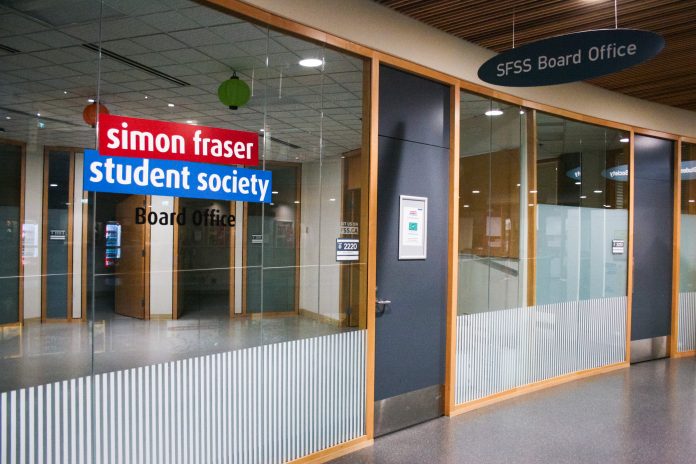
As of May 2021, the Simon Fraser Student Society (SFSS) Board of Directors and Council merged to form one governing body. They also approved a pay raise for the SFSS members. The Peak spoke to vice president internal and organizational development Corbett Gildersleve on the changes.
He explained that by merging Council and Board together, Council can be more directly involved in the decision-making process. With the new model, alongside traditional responsibilities, some Board members have additional executive responsibilities, like approving the annual budget and long-term contracts and administrative work.
With the new model comes an increase in pay. Last semester, Gildersleve looked at how much money SFSS councillors receive for their work. He discovered their pay hadn’t been changed since 2008. Biweekly stipends amounted to roughly $14.50 per hour which put councillors below the minimum wage for 2021.
The SFSS “has historically been a living wage employer with exceptions for some student staff,” Gildersleve explained. He constructed stipends based on the living wage model and found that they should go up to $17.96 an hour, and then $19.50 in 2022/23. The motion for the raise was approved in April 2021.
Gildersleve said the motion to merge the two bodies started with a review of their administrative and governance structures.
The previous model was intended to separate the Board of Directors from tasks that could be done by the other SFSS administrative staff while the Board focused on governance work, like reviewing plans and the work of the executive director.
However, by focusing on governance work, Gildersleve observed that each year, Board members learned less. While “people tend to be on Board because they have passion for the work and want to be able to use their skills to benefit the Society,” the previous model presented limitations to those skills.
The Board wanted to restructure their model so that Board members would still do governance work, but also be more directly involved with student life. “A lot of Board members wanted to be directly involved in planning events, or helping change some rules to help clubs to get grants.”
As the Board began to work on a new model, they worked with Council to ensure they were involved in the consultation process.
Gildersleve said that up until that point, Council was an advisory body, indicating that they had less say in the decision-making process. While Council had an advisory role — the Board was not required to follow their advice. This resulted in clashes between the two governing bodies.
“What came out of the discussions with Council was the idea of merging the two together so that Council would have much more of a direct oversight role,” said Gildersleve.
The Peak reached out to Council for more information, but they did not respond by the publication deadline.


