Home Blog Page 338

Return to campus plan

0
PHOTO: Gudrun Wai-Gunnarsson / The Peak

by Charlene Aviles, Peak Associate

SFU announced that they anticipate that 70–80% of SFU’s Fall 2021 courses will be held on campus. This is based on Dr. Henry’s recommendations for post-secondary institutions to reinstate in-person learning. In June 2021, SFU will specify which classes will be in-person and which will be remote. As Canadians’ vaccination rates increase, SFU clarified that there is no minimum vaccination rate required prior to Fall 2021 but recommended that students get vaccinated. 

After SFU re-implements in-person learning, the university will continue to adhere to the BC Center for Disease Control’s guidelines, WorkSafeBC, BC’s Restart plan, and Dr. Henry’s guidance.

“The reality is COVID-19 will continue to circulate in our communities for years to come. With advances in treatment and vaccinations, COVID-19 will be less threatening, but it will not disappear in the short term,” said Catherine Dauvergne, SFU’s provost and vice-president, academic.

SFU’s Learning Experiences Transition Survey results indicated that 45% of participants wanted in-person classes, especially for labs. However, “of those [participants] living outside of the Lower Mainland, 72% have expressed concern about barriers for their return,” such as safety, travel, and immigration policies.   

According to SFU’s Campus Recovery Plan, the transition to in-person learning will be gradual, as reflected by their implementation of four stages. Stages one to four all require approval for their safety plans.

For Fall 2021, the policies on face masks and social distancing are tentative and will be updated based on the pandemic’s progression and the upcoming edition of the COVID-19 go-forward guidelines for BC’s post-secondary sector.

At Thompson Rivers University’s post-secondary town hall with Dr. Henry, she explained that she does not require universities to enforce social distancing since classrooms are not a major area of concern. COVID-19 spreads through “intermingling” such as hugging, talking loudly, or close face-to-face contact. Sitting at a desk in a classroom without this close contact does not pose as great a risk as places like overcrowded buildings and social settings with poor ventilation. 

SFU announced that they will consistently implement these policies, maintaining campuses’ cleanliness while also reopening campus services. Students will have access to “food services, the Bookstore and Spirit Shop, computer labs, recreation services, and library services.” Currently, alumni are not permitted to visit campus.

There are four stages for reopening and they are as follows:


Stage 1: Due to the rising case numbers of COVID-19, campuses have an occupancy limit of 10% capacity and there is limited access to buildings. Upon approval, researchers may conduct studies on campus. All classes are online.

Stage 2: This stage allows for 10–40% capacity, limited building access, and a few in-person classes. Positive COVID-19 cases remain high but there is limited transmission. Unless faculties approve, researchers are not permitted to conduct on-campus research. This is the stage SFU is currently in.

Stage 3: While there are limited case numbers and occasional outbreaks, the building capacity will increase to 40–80%. Some classes are offered in-person. On a case-by-case basis, guests may visit campuses. 

Stage 4: This stage is SFU’s goal for Fall 2021. It entails 80–100% building capacity, continuation of public events, and reduced community spread, case numbers, and outbreaks. Based on public health guidelines, there are few restrictions. 


SFU’s COVID-19 Go-Forward Plan states that during all stages, members of the SFU community are required to self-assess themselves daily for COVID-19 symptoms, such as a fever, sore throat, and cough. Before visiting campus, students must complete the COVID-19 Awareness for Students module via Canvas.

Those experiencing symptoms, waiting for test results, or those who may have had contact with someone with COVID-19 must quarantine. Students who tested positive and live in residence must email [email protected]. Other students who may need services during self-isolation should email [email protected]. For students with financial need and require hotel accommodations and food while self-isolating, the COVID Assistance and Remote Engagement Support (CARES) program is still accepting applications.

By developing a pilot project for rapid COVID-19 testing, SFU researchers’ innovation may possibly be used on campus, depending on demand and public health guidelines. 

Students, staff, researchers, and alumni can stay updated with SFU’s COVID-19 Go-Forward Plan by visiting SFU’s COVID-19 support webpage, resources, and frequently asked questions. Staff who would like to learn more about Fall 2021’s transition to in-person learning can attend the Staff and Faculty Townhall on SFU’s Return to Campus, which is on June 10, 2021 from 11 a.m. to 12:30 p.m. Those with more questions about SFU’s COVID-19 Go-Forward Plan can email [email protected].

SFU alum Harpo Mander on empowering young women in business

0
Harpo Mander: entrepreneur, podcast host, and more. Photo courtesy of Brown Girl Guilt

By: Charlene Aviles, Peak Associate

At the heart of the Brown Girl Guilt (BGG) podcast is the desire to establish a strong community of women. SFU alum Harpo Mander is the founder of BGG and one of the recipients of Surrey’s Top 25 Under 25 Award. Through BGG, she has increased awareness on the importance of body positivity, female empowerment, and diverse representation in media. In an interview with The Peak, Mander discussed why these initiatives matter to her.

With over 3,000 followers, BGG clearly resonates with audiences. For Mander, this was affirmation that her goal to increase representation for Punjabi women in creative outlets was succeeding. She recalled how rare it was for her to see Punjabi women in mainstream media during her childhood. She learned the importance of representation through forming strong connections with other Punjabi women while in school.

“I always say that you can’t become what you can’t see,” Mander said. 

“What I want to do at Brown Girl Guilt as the host of this community, of this podcast, is to show other young Punjabi women [ . . . ] that we are able to openly talk about ourselves and our lives and put ourselves first, and that we can be successful in more creative outlets.”

Community is something Mander values highly. But the BGG host saw the opposite when becoming an entrepreneur. While describing how competition hinders relationship-building, she recommended an alternative: “Instead of stepping all over one another to get to the top, if we hold our hands together and walk towards this goal of ours together, we’re all winning, and we’re actually creating more space.”

One of the ways Mander is uplifting other female entrepreneurs is by working to remove financial barriers. She explained that, while resources such as professional photographers streamline the process of building a brand, they are not always affordable. In honour of Women’s Day on March 8 this year, Mander and her colleague Amneet Athwal, also an entrepreneur, launched the $1,000 BGG Scholarship, which was funded by Barinder Rasode

Mander praised Rasode for sponsoring BGG without hesitation. “I think that’s really important for young women [to see], because often we’re so scared to ask for money. We’re also so scared to just have any conversation around finances and money in general, and it’s really hard for us to approach people in positions of power to say, ‘I think you should really invest in me,’” she explained. 

The BGG Scholarship not only provides financial support, but also features the “#cutiegirl starter package,” which includes resources for business management and marketing. By financially supporting female entrepreneurs, the BGG Scholarship intends to reduce competition between women and promote collaboration.

Another issue Mander is passionate about, and one she often discusses in her podcast, is the importance of body positivity. She believes that while mainstream media has touched on the idea of body acceptance, the conversations need to be more fulfilling. “It’s so easy for us to tell women — and I mean tell everybody really — to love themselves, but [ . . . ] your body is something that you embody,” Mander said.

“I used to have a lot of distaste and a lot of disgust for this vessel through which I’m operating the world,” she continued. “When I shifted to, ‘It’s a blessing. It’s such a privilege to even occupy this vessel, for me to even have this body,’ my relationship with my body shifted tenfold.”

According to Mander, “so much of what [she is] today comes from the SFU community.” Similar to her podcast’s vision, she said she would like to see SFU “really investing in [students, staff, and alumni] who are telling diverse stories, who are going against the grain, changing the narrative, and adding to the discourse.”

Supporters can follow Mander’s journey by following her on Instagram, @browngirlguilt_. The BGG podcast is available for streaming on Apple Podcasts, Google Podcasts, and Spotify.

What Grinds Our Gears: People who make conversations about themselves

0
ILLUSTRATION: Ponomariova_Maria / iStock

By: Paige Riding, Copy Editor 

Being naturally introverted, the thought of opening up to a friend or loved one about myself already bombards me with anxiety. If I do gather the mental energy to talk to someone about a matter I’ve been struggling with, I do so with the faith that they may help me work through, and maybe even feel better about, that problem.

That idea is great in theory, but it often falls apart faster than me during essay season because some people can’t seem to shut the fuck up about themselves for one measly conversation.

Nothing is more disheartening than finally getting over my inner voice screaming “no!” every time I try to talk about myself — only to have the other person immediately turn the conversation onto themselves. If I’m telling you about my stressful semester and your first response is to point out how you’re doing twice as many courses as me, maybe you should try to shake off that main character hat you’re rocking and come back down to Earth.

If someone trusts you enough to talk to you about their struggles, the least you can do as a decent human being is pause your inner monologue of self-centred responses before you say them. Instead of just waiting for your friend to finish talking so you can immediately respond, actively listen to their concerns, and don’t respond with something about yourself. Not only will this save your conversation from awkward interruptions, but it will also make you less of a jerk.

For matters big or small, your friends notice how you respond, and that response may determine if they feel they can come to you with problems in the future.

Slacktivism is not an effective approach to online activism

0
Instagram activism requires more work than sharing and re-posting. PHOTO: Solen Feyissa / Unsplash

By: Nancy La, Staff Writer 

As someone who has organized an online educational resource on the Downtown Eastside overdose crisis, I’m familiar with the pros and cons of using social media as an activism tool. Based on my experience, there are essentially two types of online activism: active content creation and passive transmission. From what I’ve seen, the former, albeit difficult and time-consuming, is effective. The amount of effort put into content creation can be equivalent to (or even greater) than traditional forms of activism. It is passive transmission that gives online activism a bad reputation, earning it the term “slacktivism.

Slacktivism is essentially activism through social media, characterized by its lack of commitment to the cause in question. Activities such as reposting or reblogging are the most commonly seen forms of it. Remember the black squares that flooded the internet last year? That is a prime example of slacktivism — it does nothing to the cause and actually causes problems for the movement it is supposed to help by distracting from other resources in feeds and hashtags. Because slacktivism does not require further effort from the person participating in it, the level of actual work done is only surface deep. Slacktivism is a category of performance activism, where the main goal is to put on an appearance of action when in fact, nothing is done for the cause.

There are exceptions to this, as seen in the justice movement against the occupation of Palestine. When it is explicitly stated that reposting and sharing of knowledge is integral to the movement, then it is important for that to be respected. What is important is the distinction between reposting because it is helpful and that is what the creators of the movements wanted, and reposting because it’s easy, effortless, and helps with a person’s online presence. 

That is not to say that all online activism is worthless. We have to keep in mind that activism, in general, has changed. It is no longer mandatory for participants to march on streets to prove a point. For those unable to physically participate in a protest, or if a pandemic renders it impossible to meet in groups, online protests are the way to go. If trying to garner as many signatures or attention on a certain subject is the goal of a protest or movement, then the convenience of online activism makes it an effective and inclusive way to support the fight against global and local injustices. The problem is — out of the 100 reposts or likes for a particular post, how many people will continue to advocate for it and help make it happen?

There’s no need to look far for an example of online activism being effective. The Black Lives Matter movement, started by Alicia Garza, Patrisse Cullors, and Opal Tometi, began with a Facebook post back in 2013. The hashtag and the protests associated with it went on to be popular and frequently used on Twitter. The Black Lives Matter movement is an example of how active content creation and engagement with the cause can succeed online. An example of the movement’s success is the ban of chokeholds in certain states such as Colorado. Unlike slacktivism, creating content and encouraging engagement online is extremely difficult.

From the work that I’ve done on social media, I know that consistently creating content within the limits of the specific platforms is time-consuming and at times, exhausting. The statistics for my project were abysmally low, despite working with support from SUCCESS, one of the biggest social service agencies in Canada. The issue was that despite reaching a wide audience, the content itself never received interactions beyond that of a “like” or “thumbs-up.”

Meaningful work cannot happen without effort, and those who believe otherwise are disillusioned by slacktivism’s easy appearance.

Slacktivism alone is not enough to change the systemic issues we are facing today. It is also not representative of the power of online activism. In the end, it all boils down to how much work a person is willing to invest in a cause that they believe in. Whether a person is passive or active in their online activism, it is honestly better than doing nothing at all and looking the other way.

Bright-er Side: Too much free time has led to new hobbies

0
ILLUSTRATION: Siloam Yeung / The Peak

By: Meera Eragoda, Editor-in-Chief

This pandemic has undeniably brought isolation, uncertainty, stress, and precarity for many — and still continues to. While none of this should be downplayed, for some of us privileged enough, the extra time we had to fill pushed us to try new hobbies.

People were making sourdough and dalgona coffee, gardening, and biking. I was no different. At first, trying new things was a way to help with the monotony and to take care of my mental health. Then, it helped me become more creative and adventurous.

I hadn’t really ridden a bike since I was a kid and didn’t own one, but like many, I bought one last summer. Riding it around the city helped me feel freer, like there were still new ways to break out of the mundane. Being able to bike down streets lined with chestnut trees on a sunny day or bike to Pacific Spirit, watch the sunset, and then bike back on a warm summer night made me fall in love with biking again. This summer, I have plans to go even further and do some multi-day trips. Without all this time to fill, I might never have discovered this side of myself.

I also got really into cocktails last summer and had a great time experimenting. Those fancy drinks that previously seemed too complicated for anyone other but bartenders turned out to actually be pretty easy. Heck, I’ve now even made a cocktail with bell pepper (thank you, TikTok). 

While this and the embroidery skills I picked up aren’t things I plan on doing every day, they have been new creative outlets that I would not have otherwise attempted and that has been affirming.

Comics

0
ILLUSTRATION: Sara Brinkac / The Peak

By: Sara Brinkac, Peak Associate

Words are not enough, the NHL needs to invest in Indigenous youth

0
Cree hockey player Ethan Bear’s encounter with racism should have been better addressed by the NHL. PHOTO: Derek Leung / Getty Images

By: Harvin Bhathal, Peak Associate

Edmonton Oilers defencemen Ethan Bear, an Ochapowace Nation hockey player in the NHL, was recently subjected to racism by Oilers fans. This news is not surprising given the NHL is a league with racism embedded in its history. Still, it doesn’t make it any better. The NHL must learn from its mistakes in the past and make more of an effort to address the situation. 

This news came to light on May 26, 2021. Bear’s girlfriend made a public statement on her Instagram story about what Bear had been experiencing in the comment sections and DMs of his social media.

Among the thoughts she conveyed, she wrote, “To hide behind a screen is cowardly. But to use stereotypes against him as an Indigenous person is dehumanizing and awful!!”

The racist remarks came after the Oilers’ first-round loss to the Winnipeg Jets. Writing about the loss, editor of Native Hockey News Philip Paul-Martin added, “Just as the way Bear turned over the puck, so too did [Connor] McDavid. But nobody questions his ancestry. Or where he comes from. The core [of] his being. He just made a bad play.”

While Oilers fans and others in the hockey community were quick to show their support for Bear on social media, the responses by the Oilers and the NHL were not as meaningful. As hundred million- and billion-dollar businesses respectively, words are not enough — they must be accompanied with meaningful and monetary action. 

The league and its teams ran into a similar problem at the height of the Black Lives Matter movement after the tragic murder of George Floyd. The NHL launched a grassroots program for young skaters of colour that would be run with the Hockey Diversity Alliance (HDA).

However, according to multiple HDA sources, the alliance was told of the partnership the day before the NHL released a public statement and was denied permission to review the statement’s wording. The HDA’s request for program details, such as how much funding the league was planning to contribute, was also rejected.

In November of 2020, the HDA announced that going forward, they would operate independently from the NHL, citing that “it is clear that the NHL is not prepared to make any measurable commitments to end systemic racism in hockey.” NHL commissioner Gary Bettman has a chance here not to make the same mistake.

Hockey is an increasingly elitist sport to get involved with; between the costs of equipment and the different camps and academies to attend to get into the NHL pipeline, it is expensive. What this means for racialized children, who often come from lower-income backgrounds, is that they cannot afford to play. 

Out of over 700 players in the NHL and AHL today, less than 5% are people of colour. The numbers are even worse for coaches of colour in the NHL’s 102-year existence.

If the NHL and the Oilers believe that Bear and “all people from Indigenous backgrounds deserve to feel empowered and respected on and off the ice,” then they must invest in Indigenous youth and youth of colour.

In the past, the league has funded organizations and instituted programs to assist racialized youth. Through the Edmonton Oilers Community Fund, the team has annually supported Right to Play’s Indigenous programs. 

But the NHL’s failed partnership with the HDA does not instill hope that the league’s initiatives will have a meaningful impact. The NHL must be forthcoming with details regarding their plans and increase their investment in racialized youth.

Considering the lack of diversity in the league among its players, coaches, and staff, there is no such thing as too much of an investment. Since 2005, the NHL’s revenue has increased every year (apart from the pandemic seasons). It is clear that money is not the reason for their failure to act. 

Both the league and the team should also make serious investments into Bear’s hockey school for Indigenous youth, Ochapowace Nation Sports Academy.

Indigenous youth and youth of colour deserve an equitable chance to play Canada’s national sport. The NHL, Oilers, and other Canadian teams should go above and beyond to support them and be the pillars in the community they claim to be.

Note: As Ethan Bear’s girlfriend is a non-public figure, we have left her name out of the story out of respect for her privacy.

It’s okay to be worried about the post-pandemic world

0
Many of us may experience post-pandemic anxiety. Photo courtesy of JING.FM

By: Ira Rishi, SFU Student

It’s probably safe to say that, for many of us over the last year, our social skills have been collecting dust. So naturally, there will be a certain amount of reluctance, fear, and anxiety as things reopen. We’ve all been so accustomed to seeing each other through screens that our return to in-person activities might be overwhelming.

Many of us are looking forward to the return to normal. But, it is likely to induce anxiety about being back in public spaces and what that means for our safety and health. It’s completely valid to feel hesitant or worried about engaging in activities that are supposed to be normal but were restricted because of the pandemic. We may exercise some caution in approaching any kind of physical interaction and we might still feel a little out of place as we venture back into the physical world again. We will encounter all kinds of people and social situations again — when people stand too close, those who hug tightly, people who are going to be partying hard, and those who will choose to stay home and binge-watch Schitt’s Creek (I don’t blame them). 

You may ask yourself, “Is it okay to shake hands now? Am I standing too close to this person? Is it okay if our hands accidentally touch?” While these thoughts may seem trivial, they can be pretty overwhelming, and it’s important we try to be mindful of the circumstances we’ve been through.

Some studies emphasize that the traumatic impacts of the COVID-19 pandemic on adults, children, and especially frontline workers, will be reflected even once we’ve returned to normal. Whether we’ve experienced fear over losing a loved one or struggled with general COVID-19 anxiety, our subjective experiences throughout the pandemic have exhausted us all at some point. 

It’s totally okay to feel anxious, overwhelmed, or confused as we combat the discomfort of having to socially readjust. There’s no shame in feeling exhausted after one social interaction or feeling scared of not being able to maintain a safe distance. 

Social and cooperative behaviour is something many of us thrive on. As exciting as the return to the real world may be, it can be just as overwhelming. But there is a good chance that everyone might be just as nervous as you. All your feelings, worries, and thoughts towards the post-pandemic world are valid. Remember: you are not losing your social skills; they’re just the same, but it might take you some time to get back into the same groove that you had before the pandemic.

SFUnexplained: There are aliens among us

0
Photo by: Chris Ho

By: Kyla Dowling, Humour Editor

The Day The Earth Stood Still, The 6th Day, The Fly II: what do all these movies have in common? 

They all were filmed on SFU’s Burnaby campus, yes. But that’s not all: these movies are also part of a massive conspiracy to hide the existence of a secret base underneath Robert C. Brown Hall that contains alien life. 

Think about it: Actor/heartthrob/immortal being Keanu Reeves starred in the 2008 movie “The Day The Earth Stood Still”. His first name, Keanu, when broken down into a numerical code based on the order of the alphabet, looks like this: 11+5+1+14+21=52. 

That’s right — 52, one number above 51, like Area 51. We all know that Area 51 is a top-secret American military base that shelters aliens. The only reason why the American government refuses to disavow this theory is because they’ve used it to create events like Alienstock, a “music festival” where they systematically wipe the attendees’ brains. Family members of those who went to Alienstock have reported that attendees unironically enjoy wearing neon clothing and dancing to electro-pop music. No normal person would ever admit to this — it has to be brainwashing.

SFU, though, is using a different strategy. By allowing our cold, concrete fortress to be used as a filming location for hit flicks like “Agent Cody Banks”, the school is hiding its secret alien base in plain sight. 

But that’s not all. SFU isn’t just hiding aliens beneath RCB; they’re actively integrating alien lifeforms into our society. Haven’t you ever found it strange that SFU is a commuter school with few, if any, social activities on campus? It’s the perfect first location to release aliens wearing human skin into society. With minimal social interaction and few ways off the mountain, SFU is the ideal place for aliens to learn about humanity and take helpful courses like “Death and Dying” and “Relationship Building”.

If you run into one of these aliens, be not afraid. They’re simply trying to learn about the hallmarks of being human, like watching The Office over and over again despite being unable to pinpoint what’s actually funny about it. The aliens can be identified by their red backpacks (in which they store their tentacles and other inhuman anomalies) and their inability to shut up about Sports (the name of their home planet).

Food for Thought: Arepas

0
This Venezuelan dish is a simple and tasty meal. Illustration: Alyssa Marie Umbal / The Peak

By: Michelle Young, News Editor

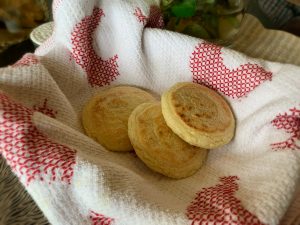
Arepas y café con leche is a typical Venezuelan breakfast. Arepas are made from pre-cooked corn flour, water, and salt. As a staple food that can substitute for bread, they can be stuffed with almost anything you want. But they’re delicious when accompanied with plain butter, too. 

Making them is extremely easy, and there’s a variety of ways to do so. Plus, they’re gluten-free! For beginners without an arepa machine, I suggest frying them, though you can also bake them. The only thing you’ll probably have to go out and buy is harina pan — the corn flour — which you can find at any Latin grocery store. 

Regular cornmeal will not work, because it won’t absorb the water to make dough. There is white harina pan and yellow harina pan. The one you use typically comes down to personal preference. The white flour is often softer, and the yellow is usually crispier and saltier.  

To make arepas:

For eight arepas, put about two cups of harina pan in a large bowl. The bowl should be large enough to fit both your hands. 

Add around 2½ cups of water. 

Add a pinch of salt.

Mix all ingredients together until it forms a kind of dough (the harina pan will absorb the water fairly quickly). Use your hands to squish it together — once mixed properly, the dough should be somewhat moist but not sticky. 

You should now have a large ball of dough. Break it up into smaller, round pieces, and flatten these. Once flat, grease the pan over medium heat and fry them for about five minutes on each side. Now, you should have crisp dough patties — arepas. 

Let them cool off for a few minutes, and then split the patties horizontally. Now, you have a bundle of arepas made with care! Add whatever fillings you would like inside.

Photo: Michelle Young / The Peak

Typically, my family has arepas for breakfast, but they can also be served for lunch and dinner. My mom usually has her arepas with ham, cheese, and butter, while I have mine with plain butter. If we’re feeling fancy though, we’ll have reina pepiada and fill the arepas with avocado and chicken.

Food is often tied to culture and family, and arepas have definitely shaped my identity. My mom would often fry tiny ones for my elementary school lunches, bringing many stares from fellow classmates who asked me what I was eating. While the attention was unwanted, and at first made me feel out of place, it was a way to share a piece of me with others. 

Some days, I do get tired of eating arepas, but I never tire of watching someone eat it for the first time. Seeing their reaction to something that is so familiar to me, yet new to them, is always gratifying. Having my friends ask me if we were going to eat arepas at my house made me rush to request them from my mom. 

Arepas will always be in my heart as a part of family meals and shared cultural traditions. Though, it extends beyond that. It’s a way to bring my culture with me and to bring memories together with the people I love, regardless of our diverse backgrounds and experiences.