Home Blog Page 327

Toxic veganism is turning people away

0
PHOTO: Gabriel Gurrola / Unsplash

By: Marco Ovies, Features Editor

I was transiting home one day from school, waiting in line for the bus at Surrey Central Station. It was then that I was bombarded by a group of masked animal rights activists, each holding a tablet and shoving it in people’s faces. The videos playing on the tablets were of animal abuse, and I won’t go into any more details than that. They chanted “eating meat is murder,” eventually hooking up one of their tablets to a big speaker so the whole bus station could listen. This happened four years ago, but that is still exactly who I picture when I think of the word “vegan.”

I understand they are very passionate about their message, and I completely agree that animal cruelty is wrong. But something about the way they were communicating their message was off. Instead of providing a welcoming atmosphere for people to ask questions and better understand their cause, they created a hostile environment which ended up with the police escorting them away. Instead of converting me to veganism, I felt like if I identified as a vegan I would be considered the exact same as them.

Fast forward a couple of years and I began to do research into plant-based lifestyles and climate issues, with the help of my parents who had converted to being plant-based. And yes, converting to a plant-based diet would definitely cut carbon emissions. Groups like Green America say, “One of the quickest ways we can lower our collective greenhouse gas emissions is to eat less meat.” But note what they said. Less meat — not zero meat. 

What sounds more reasonable to you? Someone telling you to immediately stop eating meat for the rest of your life or someone telling you to reduce the amount of meat you consume? The answer is the latter, of course. 

While this animal rights group did mean well, their methods were harmful, toxic, and I guarantee I was not the only one turned away from veganism that day. You can’t expect people to change their lifestyles instantly, but asking for small incremental change is significantly easier. 

If you really want to make a change, no matter what your cause is, you need to create an open and welcoming environment for everyone. Don’t start screaming in someone’s face who is just trying to get home from a long day at school. Lead with compassion and understanding, not hate. I promise you it will be more effective in the long run.

Four infamous tweets that should be made into feature films

0
PHOTO: Marten Bjork / Unsplash

By: Emma Best, SFU Student

You’ve heard of movies based on books, plays, TV shows, and even other movies — but what about a movie based on a tweet? Well, look no further, as the future of adaptation is upon us with Zola being released in theatres earlier this month. The film is based on the viral 148-tweet thread by the titular part-time stripper herself. With the film’s positive reception, there’s no doubt there will soon be more films based on the obscure forms of storytelling we have access to on social media. First it’s tweets, but before we know it, there will be an Emmy award-winning HBO mini-series based on a TikTok, and Timotheé Chalamet will win an Oscar for his portrayal of David Dobrik in a painfully out-of-touch drama about his life. But in the meantime, here are four tweet-inspired films that are sure to make their way to the big screen soon.


1.) Dinner With Papaw: All Papaw wanted was to put together a home-cooked meal for his six grandchildren. But, when only one grandchild comes to dinner, Papaw feels betrayed. In a mix of Taken and A Christmas Carol, Papaw and his one loyal granddaughter seek out those who betrayed him, hoping for an explanation, reconciliation, and most importantly: revenge. From the director that brought you John Wick and starring Christian Bale under 20 pounds of makeup and prosthetics, this geriatric action flick will have you calling your grandparents ASAP and will teach you to never ignore Papaw.


2.) The Brotherhood of the Sciency Pants: On his way to a chemistry lab, college student Jake realizes he’s wearing shorts — an act that would cause him to be kicked out of class! So he turns to a stranger on the sidewalk wearing sweats and tells him, “I need your pants.” Thankfully, the stranger swaps pants with him, allowing Jake to get to class right on time. But surprise! This pants swap does more than just save Jake’s chemistry grade. It creates a magical, pants-based bond between the two boys. Now, anytime Jake puts on pants, they’re immediately swapped with whatever pants his Pants Stranger is wearing instead. It’s The Sisterhood of the Travelling Pants meets the poorly executed Force-bond Rey and Kylo Ren had in the Star Wars sequel trilogy, but (sadly) without a shirtless, high-waisted pant-wearing Adam Driver. 


3.) Bean Dad: His daughter wanted beans, but what did he want? Power. Told from the perspective of the daughter, from the age of 9 to nineteen, this bildungsroman (bean-dungsroman) was filmed year by year in the style of Richard Linklater’s Boyhood (bean-hood). This storytelling results in a truly realistic and beneficial (bean-eficial) portrayal of adolescence (ado-lentil-scence) in the age of social media. In order to look at her future, she must look at her past. She must look back at her father’s actions and the way they impacted her, focusing less on where she’s been (bean) and more on where she’s going (garbanzo-ing. Okay, fine, that one is a stretch).


4.) Dinner With Papaw 2: The Last Supper: Having made amends with his five traitorous grandchildren just one year ago, Papaw decides to bring them together for dinner once again— but his criminal actions from one year ago are catching up to him. Now a pawn in New York City’s underground Mafia, all six of his grandchildren are kidnapped with a large bounty put on their heads. Papaw is then forced back into his criminal past, trying to save his grandchildren while also fighting those who want the bounty. From a completely different writer and director than the first film and starring a TikTok impressionist with a Christian Bale deep fake (Bale had to drop out due to a scheduling conflict), this film is sure to be the best follow-up since The Godfather: Part III.

Being mixed is as confusing as my ethnicity

0
PHOTO: Celia Krampien / The Globe and Mail

by Marco Ovies, Features Editor

In 1993, Time Magazine published a special issue titled The New Face of America with a computer-rendered image of a person mixed with many different races as the cover. This was supposed to be a “remarkable preview” of how “immigrants are shaping the first multicultural society.” Fast forward nearly 30 years, and race is as large of an issue as ever. The world has really started to pay attention to our treatment of BIPOC in our country — specifically, how they’re impacted by racism in their everyday lives. But where do mixed people fit in? 

Time Magazine may have predicted correctly as more and more mixed babies enter the world, with about 15% of all children being born mixed in Canada. Their vision of this mixed-race utopia without racial strife, however, is misleading. 

Conversations around being “white-passing” or not embracing one’s race enough pop up all the time. This is even something the United States’ new vice president Kamala Harris has to deal with. For multiracial people, defining one’s racial identity can be complicated because of others’ assumptions and expectations, and these assumptions show we still have a long way to go. 

I’m actually mixed myself. My dad immigrated from Mexico and met my mom who had immigrated from Germany. Within my family, I have basically zero connection to my Mexican heritage, and I have a sneaking suspicion it’s to do with me not being seen as “Mexican” enough. I have more of a connection to my German side, but not by much. Instead of accommodating the fact that I live in Canada and speak English as my first language, conversations with extended family from both sides are rarely in English despite both groups knowing how to speak it. I sit awkwardly at family gatherings, never being included and knowing full well I don’t belong. 

So where do I fit in? Because I’m not entirely “white,” but I look like it. Since I am white-passing, people’s assumptions of me change the way I am treated and exclude me from Mexican-dominated spaces. Upon the discovery I am not white, I have been dismissed from white-dominated spaces as well. So I ask again, where do I fit in? 

This even pops up in dating, when I get asked both by family or my peers to date within my own race. I get called out for being interested in someone white because I’m ignoring my Mexican culture, but I also get called out for being interested in anyone Mexican because I’m white-passing. If I date outside of my own race, I also get told to date within my own race. And so the cycle continues. Trust me, I am as confused as you are. 

I can’t dismiss the fact that being white-passing has definitely given me tremendous advantages in life and has ultimately led to where I am today. But I forever feel like I exist in this liminal space between races, and no one group will ever truly accept me. I don’t mind being called white (and I joke about it all the time), but it still doesn’t feel like the proper terminology to describe me. I’m not Canadian enough to be Canadian, but not German or Mexican enough to be considered either of those, either. 

The term “mixed” is what I feel most comfortable using, but it feels unsatisfying. Identifying as a person of colour feels wrong, but I also don’t want to dismiss my Mexican heritage on account of the whiteness I inherited from my mother. 

As a child, I didn’t spend much time worrying about my race or where I fit in. I lived in Newton, where 58% of the population is South Asian. There, I attended a private elementary school where I was one of a handful of “white” kids. It was easier to dismiss my identity as just being “white” rather than going through the lengths of explaining my cultural heritage — only to be told I was “white” by other people, anyway. So gradually I began to lose parts of my cultural identity as I mixed into the cultural melting pot Canada is so proud of. 

Being forced to choose between which race you identify as exemplifies the binary way of thinking that monoracial people use to identify others. By neatly putting you into one category, whether that be white, Black, Asian, etc., they are able to assign stereotypes to you based on their understanding of that specific race. If you’re more than one race, that confuses things. It’s easier for people to just place you into the category they think suits you the best. In reality, shouldn’t it be individuals that define themselves? Just because I have pale skin does not make me any less Mexican than I am. I still grew up with a Mexican parent and even lived in Mexico during my childhood. My race is not for other people to decide. It is my decision and mine alone. 

I wish there was a tidy way to end this article and come to some sort of groundbreaking revolution about my identity, but that’s just not the reality of it. And this is the truth for mixed people everywhere. Maybe one day we will arrive at that utopia Time Magazine envisioned, but we still have a ways to go. The first step: accepting how people identify themselves without questioning them. 

The Bright-er Side: Guest lecturers have improved my learning experience

0
IILLUSTRATION: Alyssa Marie Umbal / The Peak

By: Sara Wong, Arts & Culture Editor

As happy as I am to return to in-person classes, a part of me will miss remote learning. Besides not having to commute anywhere and living in loungewear 24/7, I’ve enjoyed Zoom classes because they challenge professors to diversify their lesson plans. 

Some were more successful than others, but the one tried and true method was bringing in guest speakers. I found myself looking forward to these special lectures because they were engaging and created a relaxed environment. I got to hear from a diverse range of professionals — from climate activists to commercial publishers — instead of being shuttled into another breakout room full of awkward silence or someone complaining about their workload.

Maybe guest lecturers aren’t unique to remote learning (I wouldn’t know because I was a first-year when the pandemic began), but Zoom has undeniably broadened the scope of these appearances since the platform is available in over 90 countries. Thanks to Zoom, I’ve had the opportunity to learn from remarkable individuals across Canada such as Michelle Douglas, who played an instrumental role in ending the Canadian military’s discriminatory practices against its LGBTQIA2S+ members; Dr. Pam Palmater, Mi’kmaq activist and scholar; and Josefina Vidal, the Cuban Ambassador to Canada. 

The above examples come from a current humanities class being taught by Svend Robinson. While I realize few teachers would have the same connections as Robinson, a former Member of Parliament, the bottom line is that keynote speakers enrich course content and make the overall learning experience more dynamic and valuable for students. As we transition back to in-person classes, I hope the trend of including more guest lecturers remains.

WGOG: Indian parents valuing the opinions of others over their kids

0
Let your kids do what they want.  PHOTO: Raj Rana / Unsplash

By: Child of Indian Parents, SFU Student 

Dear Indian parents,

You need to re-prioritize whose opinions truly matter. 

When you teach your children that the opinions of others are more important than your kid’s happiness, it sets up a toxic example for them to follow. For Indian parents who immigrated from India, it seems counterproductive and contradictory to reroute your entire lives to provide your children with the lives you could not have yourselves, only to prevent them from having that life. 

Holding onto these outdated structures of what children should and should not do will only make their lives unnecessarily difficult. 

If your kid wants to share their life with a person outside of their caste or ethnicity, or if they want to live with that person before deciding to spend the rest of their life with them, let them. There are too many examples in Indian households of unhappy marriages held together by the societal shame of divorce in the culture. Do not make your kid fall into that same cycle; let them go into marriage with a better idea of their partner and the relationship they share.

For careers, let your kid study and work in the arts. Do not force them into fields such as medicine if it is not their passion. There is more to life than having a high-paying job. If they are going to be spending most — if not all — of their life in their field, they might as well enjoy it.

But relationships and careers are just two examples of aspects in my culture that still have antiquated structures — there are plenty more, but it would take an essay to fit them all in.

What your children think of you should matter more than the opinions of others.

Top five things to do on campus when in-person classes are back

0
Courtesy of The Peak

By: Tiffany Chang, Peak Associate 

  1. Walk as fast as humanly possible past AQ promoters so they don’t approach you 

You did this before COVID-19 hit, and you should do it again! To further increase your chances of not being approached, use both hands and cup the sides of your face while you’re walking to avoid eye-contact with absolutely everyone. Terror in your eyes is a stylish choice, as well. This is a great way to avoid difficult situations for yourself when socializing again becomes mandatory.

  1. Go to Tim Hortons and buy up all the Timbits 

Nothing’s better than frequenting the fast-food places on all campuses, especially Tim Hortons. Before we had to stay home, Timbits seemed like a staple in the SFU student diet. Why not take all their visible Timbit inventory and enjoy a not-so-light snack? Who says shameless indulgence only happens at home? Hey, who am I kidding? SFU is your second home.

  1. Break out into a dance routine in a study area 

Have you ever wanted to blast a song like Tyler Shaw’s “Remember” and dance to blow off some steam at school? If you’re feeling overwhelmed when studying at, say, the common area near Saywell Hall, set a timer for just one minute. Sway from side to side for a few seconds before really going off. Then, my friend, dance like you’re about six shots in at a horrible nightclub where nobody knows who you are. Once the timer goes off, calmly take out your earbuds and go back to studying like nothing happened.

  1. Furiously wave your arms at the bus driver who takes off without you 

I’m sure most commuter students at SFU have experienced missing their bus by a split second. This time, put your whole back into this one. When you know you’re not going to catch the bus, flail your arms around just for the sake of it. Even when things don’t work out for you sometimes, it’s nice to show people you won’t go down without a fight. Who knows? Your would-have-been driver might see your flailing arms in the rear-view mirror as they drive off. They might remember you and drive away 20 seconds earlier tomorrow to avoid this from happening again.

  1. Demand outright to be enrolled in your waitlisted class

Everybody knows the feeling of praying for that one person to drop that waitlisted course so you can get into it. But are you tired of waiting? Here’s an idea: storm into one of the professor’s other classes and demand they give you permission to enrol. The surprise effect will give you the upper hand. They’ll have no choice but to say “alright.” Relish in their shock as they, with wide, disbelieving eyes, send administration that sweet, sweet, email. Don’t forget to smile and say “good” while gleefully skipping out of the classroom.

Canada to donate AstraZeneca vaccines to COVAX

1

Written by: Michelle Young, News Editor

As Canadian vaccination rates rise, 17.7 million of the AstraZeneca vaccine will be donated to COVAX, an initiative that distributes vaccines among “low- and middle-income countries.” This comes after a surplus in supply. The World Health Organization (WHO) said vaccine distribution is becoming increasingly urgent

“Many provinces stopped offering AstraZeneca as a first-dose option,” said CBC News. This was due to concerns of side effects, as the vaccine has been linked to rare blood colts. According to CBC News, “The National Advisory Committee on Immunization (NACI) also stopped recommending it as a second dose.” This resulted in a drop in demand for the vaccine.

There has been mixed information on mismatching vaccines. While NACI recommended mixing mRNA vaccines, WHO advised against it, claiming there was not sufficient evidence to suggest it was safe. It is now “up to Canadian provinces to decide whether they will mix and match.” The government has not specified whether Pfizer or Moderna vaccines will be donated.

Conservative MP Garnett Genuis noted Canada should not donate vaccines “it does not recommend for Canadians.” He added, “The government needs to clarify how they view the AstraZeneca vaccine, whether they believe that it is as effective as other brands, and why they are choosing to transfer this brand as opposed to others.”

In response, International Development Minister Karina Gould said there is a demand for vaccines in countries in the Global South and it’s necessary to administer as many vaccinations as possible. UNICEF Canada added AstraZeneca is preferable because it’s logistically easier to transport, as it does not require extreme refrigeration. 43% of Canada’s population has been fully vaccinated, with 68% having received one dose.

Olympic athletes should be allowed to protest

0
Athletes should have the right to speak up for the communities that raised them. PHOTO: Ryunosuke Kikuno / Unsplash

By: Clarence Ndabahwerize, Peak Associate

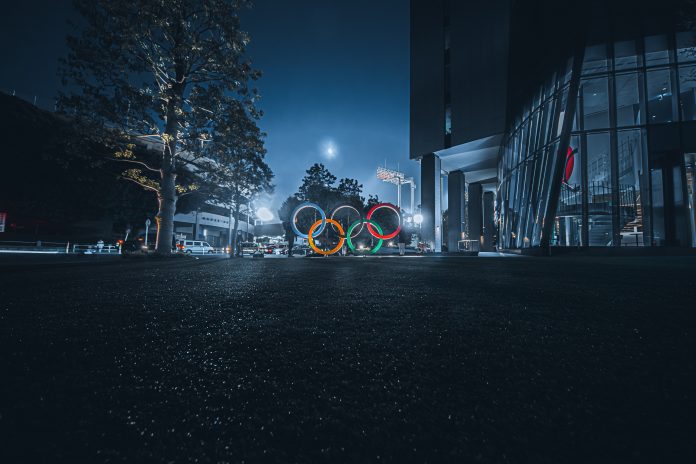
On April 21 of this year, the International Olympic Committee (IOC) upheld Rule 50 of the Olympic Charter ahead of this year’s Olympic Games, which were likely to feature protests from athletes regarding social and racial justice. Rule 50 prohibits any demonstration of political, religious, or racial propaganda in any Olympic sites or venues. According to the CBC, this decision was the result of a survey of about 3,500 athletes, 70% of whom said it was “not appropriate to demonstrate or express their views” on the field or at the opening or closing ceremonies. That same survey also showed 67% of respondents disapproved of podium demonstrations.

Sports can be a source of community and togetherness, as well as entertainment. Athletes put a lot on the line to give us that sense of community and be sources of inspiration. It is critical that appropriate platforms are integrated so we can listen to them on matters regarding their lived experiences and professions. 

This survey is a good indicator of what the majority of athletes feel is right. However, the Olympics are an event and movement that ought to have an active part in advancing human progress and dignity. This is even outlined in the Olympic Charter. Minority rights are and should be on the agenda this year and every year, given the recent events surrounding human rights abuses directed towards Black Americans, Palestinians, and Uyghur Muslims within their respective countries. 

The decision to uphold Rule 50 reveals a tension in the Olympic Charter that threatens to alienate minority groups and marginalized peoples in their pursuit of visibility, equality, and inclusion. Rules are quite often full of contradictions, and this goes for organizations all around the world. However, if the IOC is to truly operate by and realize some of the core principles in the Olympic Charter, it’d have to recognize this rule may be detrimental to that cause. 

Principle 1 of the Olympic Charter presents Olympism as creating a way of life based on the “joy of effort, the educational value of a good example, social responsibility, and respect for universal fundamental ethical principles.” Principle 2 goes on to say Olympism is meant for the “harmonious development of humankind” with a specific goal to promote a “peaceful society concerned with the preservation of human dignity.Principle 5 goes on to say “sports organizations within the Olympic Movement shall apply political neutrality” with the recognition “that sport occurs within the framework of society.” 

In the words of Bishop Desmond Tutu, “If you are neutral in situations of injustice, you have chosen the side of the oppressor.” Perhaps the issue is that, though the Charter is representing an idealistic future, it is a document from a different time and reflects the constraints of that time. 

In a BBC Sport article, some athletes, like Tianna Bartoletta, who had a good reason and intention to protest, said they were “made by” their communities, not the countries they represent. These athletes have the sympathy and backing of millions around the world, who are not only global citizens, but conscious humans that can feel the universal suffering of the marginalized communities they represent. For some athletes, their communities shaped them into the Olympians they are. These communities have been marred by struggle and structural violence, and in taking a stand, these athletes want to put an end to that. They want to see a better future for those that will come after them. 

Every four years, the Olympics create a rare global community. They present an opportunity to come together as one and be the best we can be as an ever-divided species. For a few weeks every four years, the Olympics have the chance to tell athletes, communities, and the world that we are moving forward, towards the world the Olympic Charter strives to reach. Tokyo 2020 unfortunately will not send that message. Tokyo 2020 as an Olympic community has missed the chance to shape humankind for the better by setting a good example. It has failed to be part of the vigorous global effort in progress to create and preserve human dignity.

We should keep some aspects of online learning after the pandemic

0
PHOTO: Chris Montgomery / Unsplash

By: Kelly Chia, Staff Writer

I’ll be the first to admit that remote learning simply doesn’t work for me: my deadlines get lost into the abyss of Canvas modules, I find it more difficult to engage with my classmates, and I find it a bit harder to ask for help over Zoom feedback sessions (especially because my internet doesn’t like to cooperate!). But just because I have problems with remote learning doesn’t mean SFU shouldn’t continue to invest in it, not just as a way to make learning possible during the pandemic, but also more accessible once we make a full return to campus.

Something I really value in my lectures is they are both recorded and auto-captioned. I find it difficult to properly hear what my lecturer is saying sometimes, so having captions really does make it easier for me to understand lesson concepts. In a similar vein, if I have something that distracts me in the middle of my lecture, or if I’m not feeling well and can’t focus, it’s useful to have the lecture accessible to view later.

I think incorporating recorded lectures with captions going forward would be a good tool to add on top of having in-person classes. It’s necessary to make university learning more accessible, as many students have different accessibility needs. Some may find remote learning more approachable, as there may be less sensory stimuli associated with asynchronous lectures. Students can focus on their screens rather than a moving professor and the noises of classmates in lecture halls.

Having courses available to take online would also make sense physically: SFU has three campuses. Transiting between campuses takes at least an hour, so it would be hard to schedule required courses at different campuses with time conflicts. There have been many courses that I had to wait a semester to take because I couldn’t make the transit time between campuses. Reviewing SFU’s undergraduate student survey, 75% of students were able to register in all of the required courses they wanted this term, higher than the 68% of previous years. 

When I took online classes prior to the pandemic, the lectures were pre-recorded, but they’d be filmed at a distance where I couldn’t hear the professors properly. I couldn’t interact with the professor in that period, and breaks were recorded as well, so I found it difficult to get important information from those classes. Something I appreciate about having lessons done through Zoom and Blackboard Collaborate is the option to participate in the chat and having the professor or TA respond to me in real-time. 

A big barrier preventing me from being excited for an almost full return to campus is COVID-19. It’s not certain COVID-19 won’t be a threat when we return to campus this fall. International students may face barriers like having difficulty accessing vaccines if vaccines aren’t distributed at a higher rate internationally. SFU has not released guidelines on whether students can quarantine in residence buildings, so they may also find it difficult to do so when asked to return to campus for the semester. I feel hesitant about returning to almost full capacity in the fall and would feel reassured knowing I can safely access the same lessons at home.  

Having shown that SFU is capable of having remote learning available for students already, I see no reason why they can’t continue. Removing asynchronous delivery and closed captioning in lectures would only introduce more barriers to education students. We should be able to have alternatives available for how we choose to participate in classes.

SFYou: Rumneek Johal, news journalist and social media savant

0

by Harvin Bhathal, Peak Associate

Rumneek Johal is what we would call a Peak success story – one of our own. A former Peak journalist who has written for publications such as CBC, Daily Hive, and more, Johal is an SFU graduate who is making strides in the journalism industry today. Johal reflected on her career in journalism so far and the work she would like to do. 

When she was younger, Johal “already knew [she] had a passion for writing and storytelling.” But it wasn’t until her second year of university that she got started on her path in journalism.

She emailed Sonia Sunger, a broadcast journalist and co-anchor at Global News, about getting started in journalism. Sunger told Johal to “just start,” and so she did.

So Johal began writing for The Peak, producing articles such as “Why doesn’t mainstream feminism embrace women of colour?” Five years later, her thoughts regarding this question remain relatively similar. 

“It’s 2021, and we’re still celebrating like, ‘oh my god, we have women in corporate positions,’ and that’s great [ . . . ] But that doesn’t take into account the experiences of marginalized women in this country. It doesn’t take into account the experiences of Indigenous women in this country. [ . . . ] There’s still so much more to do,” including in the journalism industry, she said.

For Johal, The Peak was a place for her to build confidence as a writer. Alongside her student journalism, her communication background helped her develop a critical lens in regards to the intersections of a given story.

While the critical lens she developed set the foundation for her journalism career, she noted that, in the journalism industry, “people try to call out that if you’re calling out those in power, ‘you’re trying to be an activist.’

“No, actually. It’s my job to call out politicians, call out bullshit,” Johal said. “If that makes me bad at doing my job, then fine, but I think that that’s quite literally the point [of my job].”

Her journalism career to date has included being the current full-time editor of 5X Festival’s blog, 5x Press, an intern for CBC News Toronto, and a staff writer for Daily Hive

In regards to working as a Sikh woman of colour in an industry dominated by white, heteronormative men, Johal said, “There are challenges because you have to push past ‘Am I being tokenized? Am I only here because I’m brown? Do they only want to tell brown people stories? Or [instead] do they not want me to tell brown people stories because they’re afraid I won’t be able to be objective and tell them properly?”

“I have to fight extra hard for the stories that I’m telling and show that I have a basis on which to tell them.” She noted white journalists aren’t likely to have that issue. 

Her experiences as a journalist reflect her personal experiences, specifically growing up in Surrey. Johal’s Master’s project from her graduate journalism program at UBC was an audio documentary about Surrey called Allow us to Reintroduce Ourselves. It concerned dispelling the stereotypes the city and its people experience.

“Every community has shitty people,” said Johal. To her, the focus should be on, “Why are these people doing shitty things? What [infrastructures] are we as a society not giving them? [ . . . ] There is no one answer.”

The stories Johal did at Decomplicated with friend and fellow journalist, Carol Eugene Park, represent the type of work she wants to do in her career.

“It [was] two racialized women, children of immigrants telling stories that we give a shit about.” According to Johal, the project’s goal was “to not be unapologetic in our voices, to be vulnerable, and to be unfiltered.”

Johal and Park’s inspiration behind Decomplicated stemmed from how Johal “felt that so many young people in [her] life, outside of the media sphere, were so disillusioned with the news.

“Now that I’ve been given this space, I’m going to take it and run with it,” she said. “That’s what my advice is to every other person: listen, if you’ve earned a seat at the table [ . . . ] if you have the microphone, speak. Don’t shy away from using it.”

Johal wants to use her platform to hold people accountable and, at the very least, make what she is currently doing a little easier for the next person in her position.

Her social media platform was a point of discussion during the interview, as she pointed out she finds out many of her stories through apps such as Twitter and Instagram. Johal mentioned that “so many racialized people find and tell their stories using social media because oftentimes, that’s the only place that our voices are legitimized.”

Johal is a Peak success story because she is breaking out of the barriers placed on women of colour in the journalism industry and doing her part to create change in an industry that has worked in favour of the status quo for decades.