Home Blog Page 323

The Bright-er Side: Quarantine motivated my family and me to become physically active

0
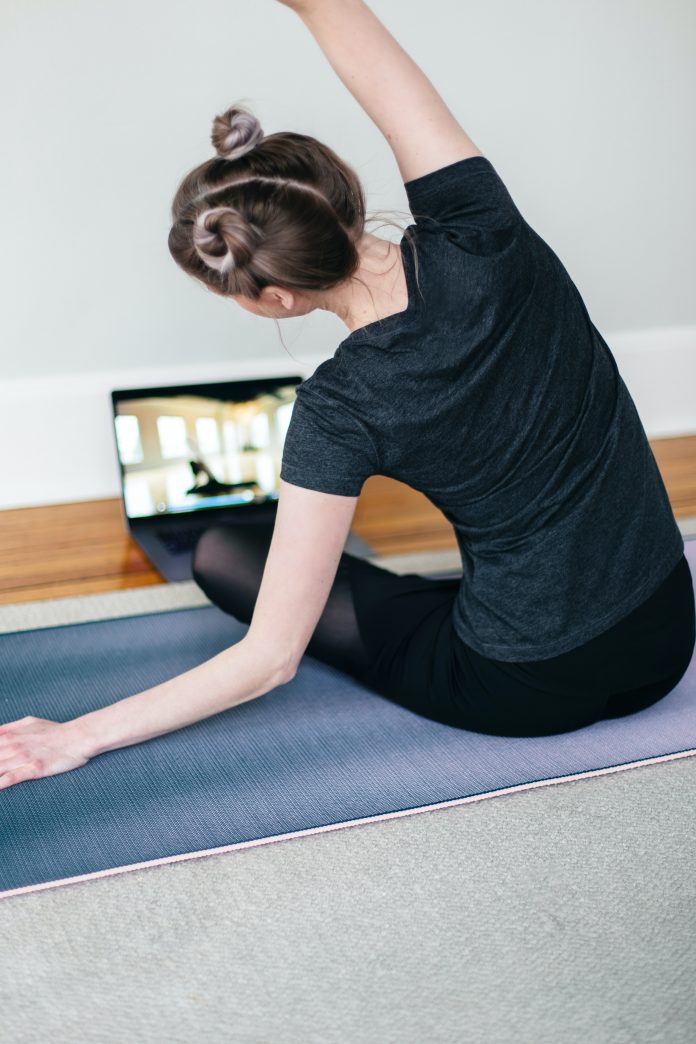
I’m more comfortable working out at home than at the gym. PHOTO: Kari Shea / Unsplash

By: Charlene Aviles, The Peak Associate

Since BC went into lockdown, my local neighbourhood gym has remained closed. Without a backyard or exercise equipment at home, I had to become more creative with my workouts.

I used my home’s staircase to incorporate cardio into my routine. I also follow High-Intensity Interval Training (HIIT) workout videos. Because these videos include short but frequent breaks, I am more likely to complete these routines over longer workouts with fewer breaks.

During the transition to remote learning, I realized there are fewer boundaries between my work, school, and home environments. With the boundary blurred, I needed to strive for a balance to avoid burnout and maintain productivity. My fitness routine has also helped me cope with my transfer to SFU by relieving stress

Whenever I had physical education classes in secondary school, there was often a range of  fitness goals and levels of physical fitness. For beginners such as myself, it was quite intimidating and physically overwhelming trying to keep up with experienced peers. Now that I am working out at home, I can customize my routine and exercise at my own pace.

Exercise has not only helped me become healthier, it’s also encouraged other members of my family to become physically active as well. My doctor recommended I continue working out throughout the pandemic, so I began going for walks with my grandmother and mother. Now that I have two workout buddies, we keep each other accountable, encouraging each other to stay committed to our fitness goals.

What Grinds Our Gears: Saying “no offence” to soften the blow of an insult

0
If you have to do damage control after a remark, chances are it may offend someone.  ILLUSTRATION: Carol Yip / The Peak

By: Tiffany Chang, Peak Associate

Lately, I’ve been getting better at taking criticism, especially when it’s constructive. I think this kind of honest feedback helps people grow.

However, criticism can often take a nasty or offensive turn. What drives me up the wall is when someone says “no offence” after mentioning something hurtful to their counterpart.

My question is this: why do people think saying “no offence” mitigates the offensiveness of their insults?

I find it astoundingly contradictory. It’s like trying to soak up a diarrhea accident with one toilet paper square. You know for certain it isn’t enough to clean up your disgusting mess, but you somehow think it’ll make a difference if an attempt is made.

“You suck! No offence.” “Your eyebrows look like they were plucked by a four-year-old with cheap tweezers. No offence.” “The colour of your nail polish makes me want to gouge my eyes out. No offence.”

How do people not see the uselessness of this saying? Without a doubt, it has the opposite effect of “not offending.” You already knew that what you were going to say seemed insulting. Adding snide comments makes it that much worse.

Long story short, trying to soften the blow of your insults will not garner any positive results whatsoever, so please stop.

Comics

0
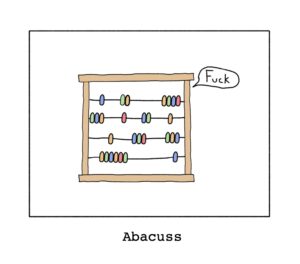
ILLUSTRATION: Sara Brinkac / The Peak

By: Sara Brinkac, Peak Associate

VP Corbett Gildersleve discusses the roots of the SFSS

0

Written by: Karissa Ketter, News Writer

Editor’s note: Previously, this article stated Gildersleve served on the Board in 2014. It has been corrected to 2015. Further, it was stated that Gildersleve ran with the SFU Progressives in 2019 — however slates were not allowed at that time. This has now been removed. Lastly, the elimination of positions was in the 2020/21 Board year, not 2019. This has now been corrected.  

The Simon Fraser Student Society (SFSS) has a long history, originating in the 1960s. Vice-president, internal and organizational development Corbett Gildersleve said in an interview with The Peak that the SFSS is “there to advocate on behalf of students for pretty much everything from academic to financial to mental health, physical health, and social needs.”

He explained the SFSS’ ability to take action for students has fluctuated over time. With a consistently high turnover rate of Board members, “you get periods of more progressive activism, and then it goes eventually down into more centrist [leadership].” Gildersleve described these periods as business-oriented.

The origins of the SFSS began with progressivism and social advocacy. Gildersleve noted the SFSS was involved in protests, sit-ins, and a tuition wall. “Activism is part of the SFSS, from the start.”

In 1966, then-SFSS President Shook wrote a letter to Martin Luther King Jr. in 1966, asking him to speak at the institution. SFU recently released Martin Luther King Jr.’s response from their archives.

Photo courtesy of SFU archives

In response to the archived letter, some students commented on the noticeable shift of student activism from its origins in the 1960s to present day. 

SFU student Saif Sunesara commented on Facebook, “Now students are scared to raise their voices because most of them are international students.” Students of Carribean and African Ancestry president Balqees Jama responded, “very valid. domestic students have to work in solidarity with international students to advocate.” Among lack of social advocacy, SFU students exhibit extremely low election turnout rates for SFSS leadership roles. 

“The reason why [international students] are marginalized is because SFU and others, for years, really didn’t care about their positions. They were taking the whole student body — the general concept of the majority — but there’s no real student body,” said Gildersleve. He noted that within, the last few years, the SFSS has shifted back into more progressive social advocacy for students. 

“You always have to ask for more than some people think is reasonable, but reasonable is subjective,” said Gildersleve.

When Gildersleve realized he wanted to get involved with the SFSS, it was a “changing moment.”

His first year as a board member of the SFSS was in 20154. During this time, he saw a change in their policy governance. Previously, the SFSS had been functioning on a model where an executive director had exclusive power and oversaw all management. Gildersleve reported this was not efficient for students “wanting to make change, or wanting to work on things themselves.” He said students ran campaigns, but found later on they didn’t have official power, for things such as increasing grants.

The Board terminated faculty and at-large positions in 2020/21 of their member positions, and 5 of their management positions. The budget was allocated to student advocacy positions such as campaign mobilization and equity officers for racialized, neurodiverse, and LGBTQIA2S+ groups.

Gildersleve said he has seen the SFSS begin to advocate for marginalized student groups during his time, for instance, when the SFSS board had declined former Rotunda groups spaces in the Student Union Building (SUB). 

The SFSS now aims to take a stance on international issues, said Gildersleve. This includes the the Board releasing a statement supporting Palestinian liberation. 

“To be an advocate you have to take a stance [ . . . ] If you’re not willing to take a stance, you can’t actually advocate for your members.”

Small grocery stores are in need of our support

0
Ingredients not found in big supermarkets can often be found in these small grocery stores. PHOTO: Fikri Rasyid / Unsplash

By: Jacob Mattie, Peak Associate 

I have a few small grocery stores close to where I live — not small like that Safeway without a decent bakery section, or even the Buy-Low Foods you can fully explore in a few aisles. I mean the kind of small where the employee stocking the shelves also runs the cash register and the company uniform is whatever they decided to wear that day. 

I was drawn to one by the surprisingly affordable produce laid out in front and was surprised by the products offered inside. Rather than being faced with eight different types of peanut butter (almost all of them identical, and yet somehow lacking crunch without added sugar), the shelves were stocked with ingredients I’d never seen before. Cactus slices in oil; more types of pickled foods than I’d ever imagined; arrays of spices (I’d had no idea you could buy whole curry leaves); and fruits, vegetables, and meats I’d never seen before in grocery chains.

It brought to mind a conversation I’d had with a friend a long time ago. She’d been doing policy work, trying to protect the exact types of stores in which I was now standing. She’d emphasized how much of a culture is drawn from the foods we eat. More than just a food source, a culture’s recipes provide a link to peoples’ histories, and their sharing has offered a way to connect with elders. 

There are plenty of discussions around the importance of food to culture — to the point where several culinary practices have been recognized on UNESCO’s Intangible Cultural Heritage of Humanity list, and such practices are formally studied under the field of food anthropology

Of course, central to a recipe is the ingredients used. Standing in the local grocer, surrounded by unique ingredients, really drove home the number of foods people have learned to use and the number of recipes that exist beyond what can be made with foods bought from the common supermarket.

As customers migrate from local grocery stores to supermarkets, small store owners are forced to either close or raise their prices — making specialty ingredients less accessible to those that would be looking for them. With the erosion of food culture, the history that can be passed between generations is reduced, and so too does the richness of the cultures that make our city so vibrant.

When you next find yourself out shopping for groceries or looking for a way to add a bit of variety to your pantry, stop by an independent grocery store. They play an important role in the cultures that surround us and would really appreciate the financial support.

Your weekly SFU Horoscopes: August 2–8

0
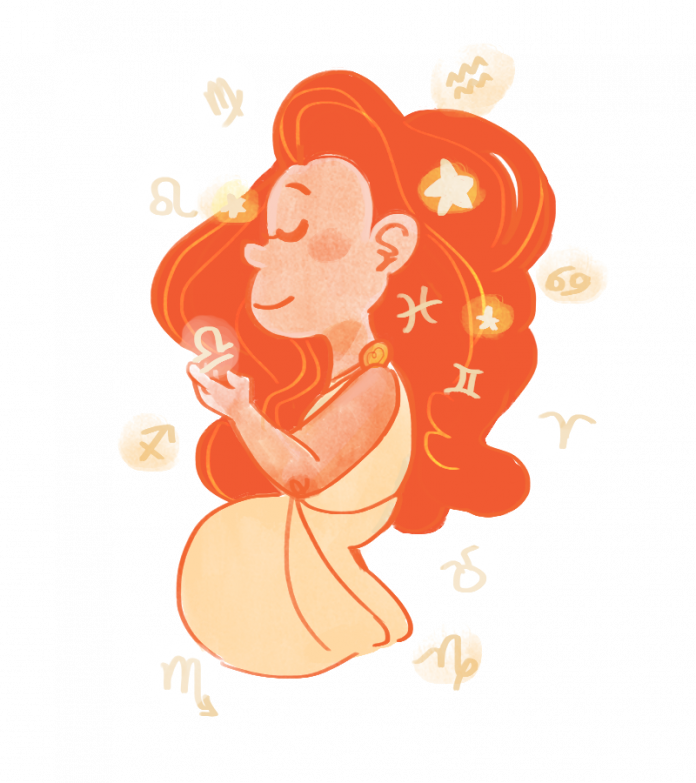
An illustration of a girl with long flowing hair. Astrological signs and stars shine around her.
ILLUSTRATION: Marissa Ouyang / The Peak

By: Kyla Dowling, Humour Editor 

ARIES: Isn’t it weird that Aries sounds like Ares, the Greek god of war? And that you’re at war with literally everyone you meet because of your incredibly over-competitive nature? Wow. What a strange coincidence. I’m sure those things are completely unrelated. 

TAURUS: You are indistinguishable from a cat. You sleep a lot, love snacks, and scream constantly for attention. I’ve never been more jealous. 

GEMINI: Download the Eat, Pray, Love soundtrack. Buy more lemons. Figure out what movie had Amanda Bynes and Colin Firth as a daughter-father duo and rewatch it. Write horoscope for Gemini. Wait, sorry, that’s my to-do list. You can do it too, if you want. 

CANCER: Some people say it’s good to express your emotions. Others say that, if you’re going to talk about how you feel, it should be to a therapist and not to the cashier who asks “how are you?” strictly as a courtesy. Please listen to the latter. This message was sponsored by Sandra, an employee at the West Mall Centre Tim Hortons.

LEO: Take a long, hard look at yourself in the mirror. No, not that long. Not that hard either! This was supposed to involve you contemplating your flaws and self-centred tendencies, not you admiring yourself! Stop! 

VIRGO: Sometimes you just need to scream at the top of your lungs until your voice gives out and your neighbours call the police because they think you’re getting murdered. This wouldn’t happen as often if you just dealt with your emotions like a normal person, but here we are. 

LIBRA: Take the road less travelled. The road less travelled, in this case, is getting a post-secondary education without resorting to exploiting your natural creativity in order to make resin decor. Seriously. If you need some cash, sell your body or something. The world does not need more glittery pyramids.

SCORPIO: For a water sign, you can definitely be a little fiery. And you’re just as grounded as the earth signs. Not to mention how you can keep up a conversation just as well as any air sign . . . You know, I’d go as far as saying you are the Avatar, master of all four elements. Not just because you’re versatile, though. It’s also because you embody a 12-year-old. 

SAGITTARIUS: It’s time to make like a 2012 Instagram influencer and give in to your wanderlust. Explore your surroundings! Journey to your laundry room and wash your clothes. Take an unexpected detour to your kitchen and go on the adventure of scrubbing your week-old dishes! Anything can be accomplished if you put your mind to it. 

CAPRICORN: You feel so overwhelmed. You’re way behind on laundry, just drowning in schoolwork, and you have to cope with Riverdale coming back next week. Throughout the hardships, just remember: Pitbull, your fellow Capricorn, has both been there and done that. 

AQUARIUS: You’re the main character, Aquarius! However, you’re not the main character of a glamorous yet relatable coming-of-age film. You’re the main character of a 1980s after school special. Remember to say NO to drugs offered by a menacing peer who exists solely to coerce you into illegal activities. Or say yes. I’m not your boss. 

PISCES: Try something new this week, Pisces. Survive only off of Cheetos. Switch up your wardrobe. Live out your life’s dream of adopting dozens of cats, only to have them all fight over who gets to devour your dead body after you pass away from malnutrition (because you were only eating Cheetos, remember?).

The SFU Avocado’s terrible, horrible, no good, very bad experiences

1
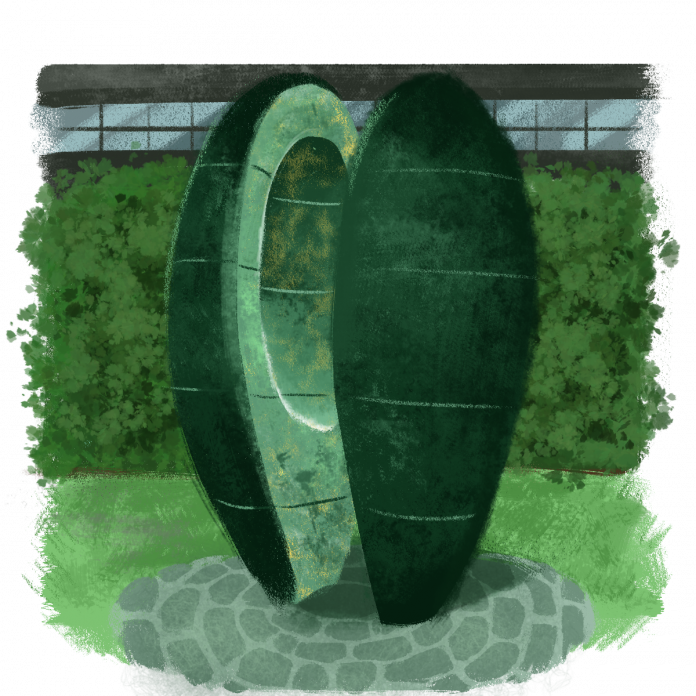
ILLUSTRATION: Tiffany Chan

By: Kelly Chia, Staff Writer


Dear SFU students,

It is I, the famous SFU Avocado. I’d like you to know that, lately, my life has been peaceful. Since most students have not been here for about a year and a half, I just get to relax, sit on a nice hill by myself, and maybe say hi to Terry Fox’s statue once in a while. People can just walk up to me and admire themselves in my handy-dandy reflection! Or they can check out their outfits, read, scroll on their phone . . . really, anything you can think of. 

But there’s something approaching that plagues my stony head each and every day . . . 

The Fall 2021 semester, or, as I’d like to think of it, the “fall” of my space of sanctity. The slow but steady stream of university students will return, and they will return horny. I do not know how, but they always do. As soon as the sun sets, everyone looks at the statue with an indent and thinks, “Ah, yes. I too would like to be dented.”

Indeed, I am the place to mount on the mountain. The place where people make some “guacamole.” The Academic Quad-reliever. I’ve thought of many puns, and I have seen so much sinning. 

Really, I’m not even an avocado! I think I’m an egg? Maybe? Either way, that really doesn’t help the conception jokes, but conception jokes are all I know, dear readers.

I was built for something more noble than a quickie. Okay, fine, I’m not sure what my true purpose is. But that’s why you’re on campus! Aren’t you supposed to figure these things out? Maybe you can look me over quickly and write 1,500 words about why my reflection is, in itself, a deeper reflection of the student body? 

Instead, I am looking at too many student bodies. And maybe all I reflect is your sins. 

So I beg you, dear readers. Please consider anywhere else: your house with your spying parents, the paper-thin walls of your dorm, the library where you can get screwed by both your work and your partner— alright, yeah, I understand why you would come here. But I do not condone it. I’d just like one more semester where I can stand erect against the fog in peace.

Sincerely,

A tired Avocado 

Cringe culture needs to die

1
As long as someone’s pastimes aren’t hurting anyone, you’re actually being the hurtful one when you shame another. PHOTO: Gracia Dharma / Unsplash

By: Paige Riding, Copy Editor

The act of “cringing” at someone for their actions, appearance, or behaviour is just bullying for miserable adults.

Cringe culture is a harmful, low-brow form of “humour” exacerbated by the internet and its users hiding behind screens. It involves harassing someone because their happiness or experiences seemingly affect youwhen they really don’t. 

When people vocalize how enjoying certain content makes someone “cringe,” those unnecessary comments can harm the person who is just trying to live how they want to. This culture of embarrassing someone in the name of “humour” needs to die.

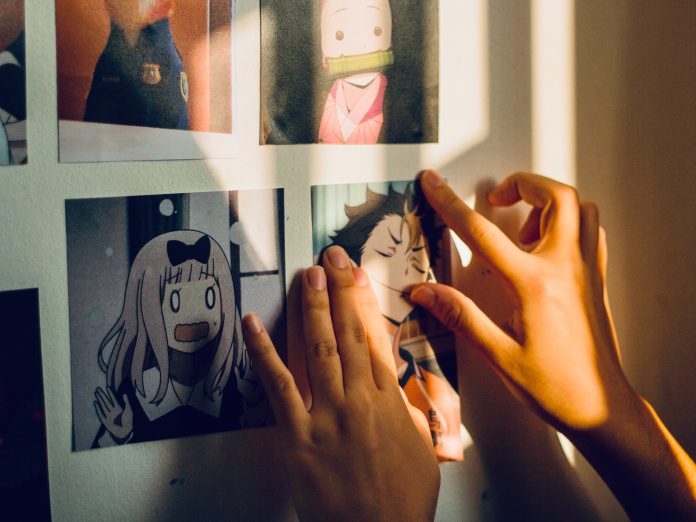
If you have an instinct to cringe when you see someone wearing an anime shirt or dancing in a social media video, you should consider what drives this bitter reaction. When you see self-expression in any form, why do you think your first response is so negative and self-centred? 

The answer often lies in internalized instincts of othering — we want to fit in, to be accepted by the greater majority, so we purposefully distance ourselves from “the other.” Herd mentalities, or prioritizing acceptance from the majority (usually at the expense of another) only perpetuates this othering. When we see a person with less popular interests, be it loving K-pop, boasting heavy piercings, or anything in between, often we act on internalized othering instincts and distance ourselves from people expressing themselves how they wish. 

With cringe culture, many of us don’t realize just how destructive this othering can be. This culture disproportionately affects groups already shamed for other parts of their identities, causing further discomfort where there should never be any in the first place. 

Instead of celebrating differences through self-expression, cringe culture promotes sameness. Blatant ableism, sexism, homophobia, and racism run rampant and appear to be excused through the internet’s sardonic and excluding nature.

Isabelle Ford for the Toronto Star speaks about finding fellow LGBTQIA2S+ community members on TikTok, an app often targeted by cringe culture. Despite its reputation for being a site of “bad dancing and lip syncs,” TikTok and similar platforms “provide resources, encouragement, and guidance,” connecting people through common interests. As the pandemic leaves us curled up alone in our beds on our phones, sites that provide comfort in lonely times should never be something to cringe at, but rather something to celebrate.

The Autisticats, a blog run by four people with autism, says cringe culture is “fundamentally ableist.” They highlight an ironic pattern of othering, where neurotypical people “have repeatedly ostracized, abused, and excluded autistic people,” thus driving autistic people out of dominating social groups. Neurodivergent people then discover “internet-based fandoms” where “everyone’s a weirdo and it’s okay,” finally finding places where they will not be ostracized. These social groups, however, get co-opted by neurotypical people, where they once again become the targets of harassment for not “being part of the [neurotypical] in-group.” 

Cringe culture targets people just trying to find what makes life more enjoyable. I encourage you to think before vocalizing how someone else living their life makes you feel. If you see cringe culture running rampant online, try supporting the target and encouraging them to enjoy what they like. If you have the energy, call out those perpetuating cringe culture and point out how harmful it is for their target and even the perpetuator.

When we head back to in-person classes this fall, I hope those happily bearing their favourite anime shirt or showing off a BTS enamel pin on their bag don’t send you into cardiac arrest. Better yet, I hope the time spent in isolation relatively distanced from judgment inspires you. Use these last weeks before classes return to explore your interests on a deeper level. Really consider what brings you joy, and also what you can do to help foster another’s joy instead of hampering it. 

We’re all guilty of partaking in cringe culture, myself included, but that doesn’t mean we need to carry this ingrained hatred with us from here on out.

A beginner’s guide to styling yourself post-pandemic

0
ILLUSTRATION: Siloam Yeung/The Peak

by Jaymee Salisi, News Writer

After a year of getting out of bed, changing out of my pyjamas, and opting for a slightly nicer pair of sweats to walk three steps to my desk to attend my Zoom lectures, I’ve been able to live my dream of not having to think about putting together full outfits every day.

Upon SFU’s announcement to reopen campus, this dream quickly turned into a nightmare.  I realized I would have to turn on the part of my brain that is receptive to actual style. With a few key concepts to keep in mind, I have faith that we will be returning to campus fashionably. . . late to our 8:30 a.m. classes.


Feel good, look good

When it comes to styling outfits, my golden rule is to always wear your clothes — don’t let your clothes wear you.

We should not have to squeeze into our pants or feel suffocated in our button-ups when clothes are made for us to wear. After exclusively wearing oversized clothes for the past year, the last feeling I want is one of discomfort. 

Truly wearing your clothes means finding pieces that compliment your body in a way that makes you feel comfortable and confident.

Sizing variation among stores can make this idea hard to grasp, as their systems provoke expectations and insecurity among shoppers. It’s confusing to be a size medium in one store but an extra small in the next. However, size numbering is merely a guideline, not something that needs to be strictly followed throughout all stores. 

It’s common for sizes to vary among different brands — extremely annoying, but common. That just means you’ll need to brave the storm of blouses and trousers to find out which option feels the best on your body.

Once you find a piece that hugs and loosens in all the right spots, the fitting room battle between yourself, the fitted tees, and the relaxed tees will have been well worth it.

The “don’t let your clothes wear you” rule applies to fitted and relaxed items, but sometimes we also need to emulate our oversized work-from-home sweatpants to take steps in that direction.


The sweat set trend

What a time to be alive — we live in a period where sweatpants are trendy?! This used to be a strange concept to me. Growing up, my mom used to tell me wearing sweats in public would make me look messy and unpresentable, so I never dared to step foot out the door in them.

However, matching sweat sets have become a trend among those working from home for the past year. They’ve even found their way onto high fashion runways. I’m sure the thought of this shakes my mother to her core, but this is the perfect scenario for us as we transition our pandemic outfits to function in the real world.

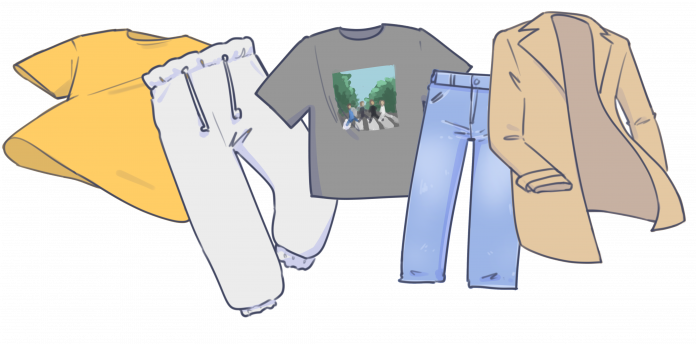
Pairing a matching oversized sweatshirt or a fitted T-shirt with your sweatpants can easily elevate a casual look. A fitted T-shirt will give you more of a silhouette under all the extra fabric, which balances the outfit’s proportions. 

On the other end of the fit spectrum, you could opt for a matching oversized sweatshirt. Personally, when I’m trying to look a little more put together, I prefer crewnecks over hoodies. I think eliminating the drawstrings and kangaroo pocket cleans up the look a bit more. 

Putting on a sweatshirt to complete the set doesn’t exactly scream that you are dressing to the nines, but monochromatic outfits can make you look like you put more thought into your look. 

Both options add intention and effort to your appearance — this can make a look go a long way. It tells the world that you chose comfort, but you were still thoughtful in coordinating your clothes.


Comfortable classics

If you’d prefer to move away from sweats, you can remain casual by opting for basics such as jeans and a T-shirt. For the look I have in mind, the denim is specifically a loose straight fit. Found in thrift stores and across retailers such as H&M, straight-fit jeans can be the most comfortable yet flattering fit of jeans to exist.

A straight-leg jean could range anywhere from ankle length to a “’90s straight-fit,” in which the denim stacks at the top of your shoe. Any option within the range works for this look as long as you’re comfortable.

Mirroring the sweat set trend, the same sentiment goes for the top to pair with the jeans. Get the look by shopping for fun and unique T-shirts at your local thrift store. 

The next best thing after thrifting is to join me in wearing band tees of musicians I have never listened to. I’m a simple girl. I see a T-shirt of four men walking across a street and I wear it — and no, I can’t name five songs by The Beatles. And I will live a happy life without that ability. 


Outerwear essentials

If all else fails, we are returning to campus in the fall, which means layering season. A statement coat or jacket is the most simple back to school outfit fix and the best way to dress up your look.

I consider coats and jackets to be the most important part of a fall/winter outfit since it covers 70% of your body. Wearing a monochrome base underneath a longline coat or standard jacket is a simple but effective fall style that gives the illusion of effort.

Since we go to school on a mountain and in a city known for its constant rain, we need to be realistic about the jackets we’ll be wearing on campus. 

Uniqlo’s Ultra Light Down collection is my go-to for a surprisingly affordable and warm water-repellent jacket. To add more depth to your outfit, this can also be a great layering piece under a coat for the one day out of the fall and winter months without rain.

A long line trench coat or cocoon coat transforms an otherwise stuffy, all-black, three-layer outfit into a relaxed yet elegant silhouette. 

With a double or single-breasted closure at the front, and typically finishing at the knee, these coats make a polished addition to any outfit. For more dimension, you can step away from the monochrome to wear a contrasting sweater underneath.


Styling yourself in this can launch you into a day full of romanticizing your life as the main character. Sip on a latte while sitting pensively on Burnaby Mountain, completely disregarding your seven assignments due at midnight. Your head is empty, word count is at two (and that’s just your name), but you look good in your coat. Who could ask for more?

 

Need to Know, Need to Go: The rest of Summer 2021

0
Illustration of a blue calendar, with "Need to Know, Need to Go" written on top
Arts & Culture events to catch around the city. Image courtesy of Brianna Quan

By: Sara Wong, Arts & Culture Editor

Sunflowers | Now until mid-September | From $10 | Lakeland Flowers

This family-owned Abbotsford farm is new to the flower festival scene, but it has quickly become a local favourite. The picturesque sunflower fields are pet-friendly and open daily. Also, compared to other sunflower venues in Metro Vancouver, Lakeland Flowers’ rates are the most affordable. Tickets can be purchased online up to five days in advance for $10 (plus tax). Each ticket includes five pre-cut sunflowers. More information can be found on Lakeland Flowers’ website.

Vancouver Mural Festival (VMF) | August 4–22 | FREE | Online and in-person

VMF has grown larger every year, and 2021 is no exception. There are over 60 new murals —  spread across 11 neighbourhoods — to explore. Two noteworthy locations are the Punjabi Market and Strathcona, where community efforts are underway to re-centre South Asian and Black stories respectively. Aside from mural tours, the event schedule includes a variety of live shows at VMF’s pop-up patio and introspective, virtual artist talks. Visit the VMF website for more details.

Vines Art Festival | August 9–19 | FREE | Various in-person locations

Centred around “land, water, and relational justice,” Vines was founded and continues to be directed by SFU alum Heather Lamoureux. The events, taking place in parks around Vancouver, range in focus from commemorating Prisoner Justice Day to showcasing emerging creatives in the performing arts. Additionally, the Earth Witnessing program allows attendees to enjoy the festival at their own pace. For event and venue accessibility details, visit Vines’ website.