Home Blog Page 3

Finding comfort at Harambe

0
PHOTO: Yoona Charland / The Peak

By: Maya Barillas Mohan, Staff Writer

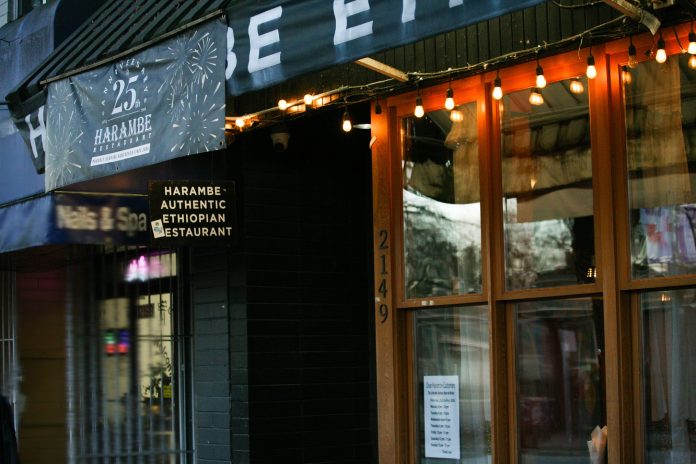
Situated a block away from Commercial-Broadway, I enjoyed a fashionable late lunch at Harambe. The restaurant has a long facade, fitting about 20 tables between jewel-toned walls adorned with art. There was one server working at 4:00 p.m. (when it opens on weekdays), and I noticed a distinct lack of sharp edges in the interior design. The doorways had been softened into sloping arches, and the tabletops matched. A series of low-slung lamps with large shades are poised over each table and frame the bar in the northwest corner of the restaurant. Each free ledge housed a floral arrangement bursting with tropical flowers; I saw white moth orchids, birds of paradise, and some sort of allium variety.

I took a table for one by the window facing the street. I noticed the offerings included vegetarian and gluten-free options, but I still wasn’t sure just what to try. After introducing myself to the server, she recommended the “one-person chef’s combination,” so I could try a little bit of everything. “You’ll love it,” the server beamed as she took away my menu.

While I stalked around the restaurant taking photos of the décor (and realized I needed to see an optometrist, none of them were in focus) my platter landed on the table. There was yebeg wot (stewed lamb), doro wot (stewed chicken), and alicha wot (stewed beef), accompanied by kik alicha wot (split lentil), and tekil gomen (cabbage). Alongside it was a generous basket of rolled injera, an Ethiopian soft bread that has a sharper tang than sourdough but the airy texture of a Swiss roulade. 

All the juices from the meat and vegetables soaked up nicely into the injera unrolled on the plate. Alicha wot, a mild beef curry with some chew to it, was my favourite. The atakilt component has cabbage’s signature slippery mouthfeel, but also a smooth, almost creamy texture while chewing. When the server returns to refill my water, she tells me her favourite is the doro wot, or maybe the gored gored: fried beef cubes. “I’ll try that next time I visit,” I reflected.

I don’t dine alone often, but found the experience enticing at Harambe because the place was almost entirely empty during the gap between lunch and dinner, and the traditional Ethiopian wedding music was voluble as it filled the space. Ethiopian food doesn’t come with a fork because it’s meant to be shared by hand. I would agree that most food and new experiences taste better with someone you love, but I didn’t feel alone in the brightly decorated restaurant. As the sun set outside and the restaurant lights enlivened, it felt transportive; Harambe felt like a cocoon away from the grime and bustle of Commercial Drive. 

Only $25 lighter, I left Harambe completely sated, and educated.
Book Nook: Across borders and memory

0
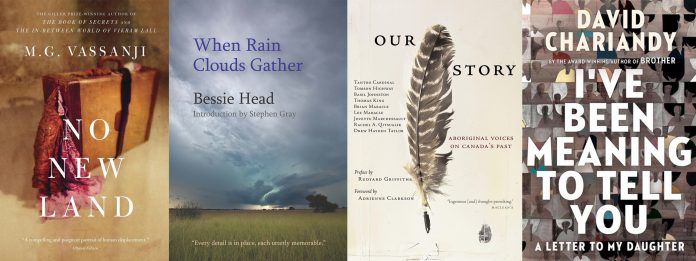
IMAGES: Courtesy of Emblem Editions (No New Land), Waveland Press (When Rain Clouds Gather), Anchor Canada (Our Story), and McClelland & Stewart (I've Been Meaning to Tell You)

By: Zainab Salam, Opinions Editor

Looking for books that explore migration, identity, and history across different communities? This short list offers four thoughtful reads that move between continents and perspectives while remaining grounded in deeply human experiences. These works span space, while following a common thread of exploring one’s identity in connection to land. 

No New Land by M. G. Vassanji follows a South Asian family navigating life between Tanzania and Canada. Set in Dar es Salaam and Toronto, the novel captures the emotional dislocation that can accompany immigration, as characters confront questions of belonging in spaces that are liminal — the characters grapple with their shifting sense of identity and belonging in regards to their old and new land. The title itself provides a hint into the tension between past and present, suggesting the physical relocation doesn’t necessarily create a clean break from earlier identities. Narratively, the novel centres on the protagonist, Nurdin Lalani’s gradual unravelling as he struggles to secure stability for his family, using everyday encounters in Toronto’s immigrant communities to reveal the pressures shaping his sense of self. Through an intimate look into the characters’ lives in the novel, Vassanji illustrates how diaspora communities negotiate memory, cultural continuity, and adaptation. 

When Rain Clouds Gather by Bessie Head takes the reader to Botswana, where a South African man, Makhaya, seeks refuge from apartheid and attempts to rebuild his life within a rural community. The story unfolds through Makhaya’s efforts to integrate into village life, particularly his involvement in an agricultural cooperative that becomes a focal point for collective change. While the narrative emphasizes cooperation and development, Head also traces Makhaya’s internal struggle with trauma, mistrust, and hope. Overall, the novel discusses the psychological toll of exile, discrimination, and identity struggles experienced by those displaced by political violence. It also showcases how shared labour and mutual reliance can be the foundation for belonging. 

Our Story: Aboriginal Voices on Canada’s Past by Tantoo Cardinal, Tomson Highway, Basil Johnston, Brian Maracle, Lee Maracle, Jovette Marchessault, Rachel A. Qitsualik, and Drew Hayden Taylor. This anthology brings together multiple Indigenous writers to retell historical events through fiction. Each story is introduced with a brief note from its author, helping situate the readers within the piece’s purpose, context, and conceptual grounding. The stories roam memory, myth, and historical reality to emphasize how understandings of the past are shaped by cultural worldview. The collection’s narratives present moments such as first contact, resistance, and survival through character-driven storytelling. The anthology invites readers to examine whose stories are prioritized in national narratives. It also highlights storytelling as a tool for dialogue and reconciliation. 

I’ve Been Meaning to Tell You: A Letter to My Daughter by David Chariandy offers a reflective, personal meditation on race, belonging, and family in Canada. Written as a letter to his daughter, the book examines how histories of migration and anti-Black racism shape everyday life and intergenerational identity. The narrative progresses through a series of intimate reflections, as Chariandy recounts formative experiences that have shaped his understanding of home. Chariandy’s approach blends memoir with cultural critique, encouraging readers to think about how love, vulnerability, and conversation can challenge inherited silences and overt and covert exclusions. 

SFUnexplained: Disappearing service tickets

0
PHOTO: Ali Imran / The Peak

By: Sasha Rubick, SFU Student

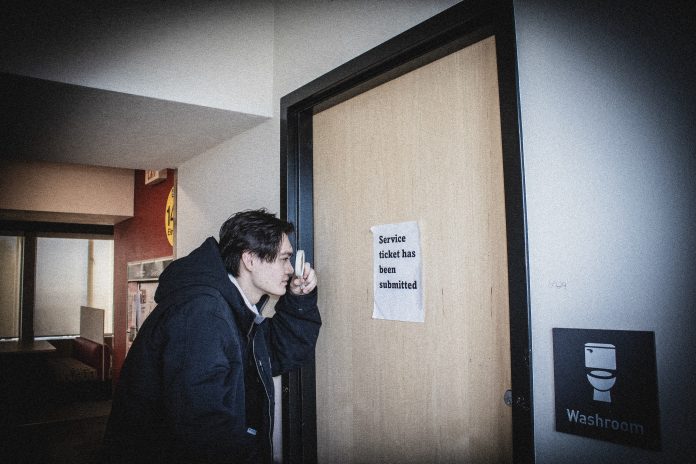
You can’t throw a rock at SFU without hitting an abandoned facilities services project. We all know that sign, posted in SFU letterhead, adhered with masking tape: “a service ticket has been submitted.” It mocks you as you pass by, daily, for months on end. Who can forget that the automatic doors in the WMC remained broken for the better part of last school year? Or months of walking through the SUB to see no headway on a shattered glass divider? Or the campus’ code blue phones, which have been out of order for more than a year? Most recently, the sign went up when they caution taped off that blue ink spill next to WMC’s courtyard. 

“A service ticket has been submitted.” Yeah, right. Where’s the work, then? Wake up, sheeple! If the service tickets aren’t going to facilities services, then where are they going? It’s a conspiracy, so you know The Peak’s SFUnexplained is on the case. 

Ad break: The Peak is selling red-white-and-blue anabolic steroids. These food-colouring-enhanced injections are way safer than vaccinations. Sign up for a month’s supply, only for $3000, on our website. 

Welcome back to the Real Truth That They Don’t Want You to Know!™ I’m your host (information redacted). You know I’m trustworthy because I’ve been banned from Twitch 17 times — THEY are trying to censor free thinkers, and I refuse to be silenced. I surveyed SFU’s free-thinking patriot population, asking what they thought about the service ticket conspiracy. 

One theory we saw floating all over the place is called “tam-gate,” which claims that the missing service tickets are stored in that hat Joy Johnson wears to graduation. Said hat is used to discreetly transport the service tickets to the dining commons, where Joy drops them off. They’re then tossed with a little vinaigrette and served for dinner to unsuspecting undergrads. However, a conflicting source tipped us off that it’s also possible that Dr. Joy Johnson drops off the service tickets at a Purolator, where they are annually “sent to Minnesota like Quinn Hughes.” What a delightfully Wild theory. 

One of our genius respondents theorized that Burnaby Mountain is actually an active volcano, and that the SFU Board of Governors, dressed in cultish robes, throw the service tickets into the lava (Lord of the Rings style). Now that’s the type of theory we’re looking for here at SFUnexplained. But The Peak did some digging on our own and we think we’ve found our own shadowy cabal at the heart of all of this. 

According to ChatGPT, SFU policy was to throw service tickets directly into the trash, but the university administration recently pledged to recycle the service tickets instead as part of their ongoing commitment to sustainability. You heard that right — environmental initiatives. Orwellian. This is exactly like the Sparknotes for 1984. This, right here, is exactly what postmodern pre proto ultra meta hypo-hyper neo-Marxism does to a society. 

SFU may have its nose in the woke-coke, but you don’t have to. Boost our engagement analytics — ahem, I mean, read more SFUnexplained, you fearless truth seeker — on our website.

When your chai latte order goes wrong

0
ILLUSTRATION: Yan Ting Leung / The Peak

By: Michelle Young, Co-Editor-in-Chief

I will not say chai tea, I will not say chai tea, I will not say chai tea. I chant in my head as I approach the barista. If I say “chai tea,” she will frown upon me with disdain because I will be ordering “tea tea.” I will sound uneducated and uncultured. The line thins in front of me, and my turn is approaching. I am sweating. “Hello,” I say in my most cheerful tone of voice to indicate that I am a friendly person. “Can I have a chai tea latte with oat milk?” I gasp. My eyes enlarge, I scan her face, in anticipation of reaction to my foolish ways because I just ordered “tea tea.” 

As she punches in the order without a word, eyes bulging, I can hear her screaming inside, thinking to herself, “Would you order a café coffee latte milk?! Ridiculous!” I can feel her aura completely change, darkness emanating off her body and clouding the air with each tap. When she looks back up, I’m crushed by the weight of her judgemental stare. I move to the side of the counter, in shame, waiting for my drink. 

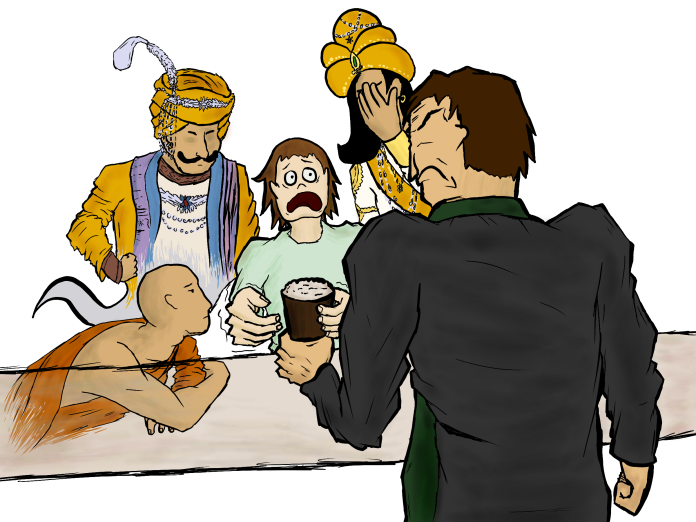
On the counter, miniature spirits of a Buddhist monk, King Harshavardhana, and Emperor Ashoka materialize before me. “How dare you insult my creation?!” Harshavardhana shrieked. Not only was my poor barista judging me, but now I was being haunted. Emperor Ashoka began waving his arms, “Chai latte isn’t even South Asian. It was popularized by Starbucks! Not only do you ask for tea tea, but you add milk to it!” Harshavardhana began, “If you add milk to chai, you will never be able to stay awake during your long hours in court — as I originally intended! You will dilute the chai!” Appearing very concerned, the monk added, “Those who earn their living by . . . destroying the environment, exploiting nature and people, or producing items that bring us toxins may earn a lot of money but they are practising wrong livelihood. We have to be mindful of protecting ourselves from their wrong action.” 

Holding a rag, a giant hand smacks all the spirits away. I continue waiting. Silence. They are rebelling against my ignorance. They are ignoring me for ordering a “tea tea.” Perhaps it’s better this way. I can leave and pretend none of this ever happened. I turn away, until a voice booms, “Excuse me!” I turn around to find a tall man with a beautifully groomed beard. “I am so sorry miss, I think we misplaced your order. What was it?” I start sweating profusely. I have to say it again?! The “tea tea?!” Now my eyes are bulging. The cashier stares at me. She’s giving me another chance. I breathe deeply, thinking I should make the spirits proud. I will say it properly, “A chai tea latte.” AAAAAAAAAAAAAAAAAAAAAAAA. Tears begin welling up inside me. “Of course,” he smiles, taking a warm cup from the side and giving it to me. “Enjoy!” Carefully taking my drink, I rush out of the café, with no intention of returning after such an embarrassing ordeal. I sip the frothy tip of the cup, and warmth spills into me. The perfect balance of sweet, spice, and a creamy texture.

Perhaps . . . I will come again . . . 

Does your love life need a nudge in the right direction?

0
ILLUSTRATION: Cliff Ebora / The Peak

By: Sonya Janeshewski, Peak Associate

Have you always dreamed of a fairytale romance like the ones in the movies? That famous story of love at first sight that feels straight out of a Hallmark rom-com

I have the answer for you. Meet-cutes! Every good meet-cute starts with a shared mishap, like someone falling, tripping, or losing their balance; because, like the saying goes, you can’t fall in love unless you fall on your face in a large and preferably public setting. And lucky for you, I’m here to provide that final shove towards destiny. 

We all know how it goes — one minute you’re just going about your day . . .  but the next you’re thrown into an endearingly awkward mishap with a stranger (a hot one, of course), and feel a sort of connection right from the very first glance. Those electrifying moments when eyes lock and hearts race, and you could have sworn their hand lingered just a bit too long when they helped you up. When you blush and say something like, “Sorry, I probably look really unconventional and quirky right now,” and bashfully tuck your hair behind your ear like Debby Ryan in Radio Rebel. Except, then you would remember that real life doesn’t work like it does in the movies. But that’s about to change thanks to my new innovative solution — pushing people.

Here are some of the packages I offer! Remember, hiring someone like me to exert brute force on strangers  is 100,000% more likely to work when compared to the boring standard of “accidental” meet-cutes.

Package A: I shove you into someone, either a specified individual or a person at random. Keep in mind that I cannot be held legally responsible for any injuries you receive upon impact. 

Package B: I shove someone into you, either a specified individual or a person at random. By purchasing, you agree to be held legally responsible for any injuries the other person receives upon impact. 

The possibilities are endless because people can be shoved anytime, anywhere, making real-life love stories more accessible than ever. And rest assured —  I will get the job done. As a customer, you’re 100% guaranteed to be shoved aggressively into a passably attractive person in a large public area. Our commitment to reputable, high-quality service is what makes our company stand out, in addition to our flexible services as detailed below. 

    • Coffee Conundrums: Meet your cutie while waiting in line for your cute pink drink. Maybe there’ll be some red in the mix after someone falls . . . 97% of these meet-cutes end in a first date. $999/hour.
    • Bicycle Bob: I’ll disguise myself as a traffic cop on a bike and force you two to meet for the first time. Romantic, right? Bicycle insurance not included. $300/hr.  
    • Hallway Monitor: I’ll trip either one of you, causing your papers to fly all over any SFU hallway. $200 flat fee, $150 surcharge to play Kiss Me over the radio and blow wind through your hair. 
    • Baby Shark: I’ll crawl underwater at your local pool. When the target is locked in, I’ll drag one of you into the water, causing the other to rescue them. I’m not responsible for death. $3,000 flat fee. 
    • SkyTrain Cupid: I’ll shove whoever is in the aisle seat of your SkyTrain ride into the other person. The best thing is that they’ll never know I’m a paid cupid — this is just standard SkyTrain etiquette. $2,000 for every station past Lafarge Lake-Douglas I have to ride to find the perfect time and wait for your perfect match. 

Valentine’s Day sale (LIMITED TIME ONLY!): This special package allows you to select two separate individuals and have me shove them together. Perfect for secret matchmaking or forcing that annoying will-they-won’t-they to make a decision. This is a limited time offer, so call now! 

To hire Sonya’s Amorous Shoving Solutions, call 1-800-SHOVE-ME and get ready to fall

. . . in love!

Burnaby Mountain’s wildfire prevention system to undergo revamp

0
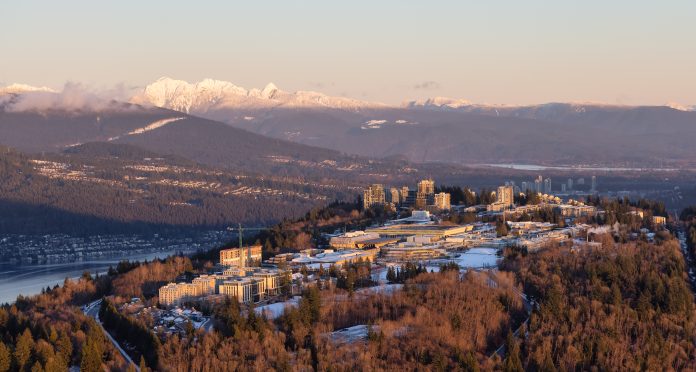
A bird’s-eye view of Burnaby Mountain, where you can see the SFU Burnaby campus, is pictured during sunset.
PHOTO: edb3_16 / Adobe Stock

By: Heidi Kwok, Staff Writer

On January 14, the City of Burnaby announced they will be investing in an “autonomous early wildfire detection system” for Burnaby Mountain to address growing wildfire risks amid warmer and drier summers. The Peak interviewed Scott Alleyn, chief staff officer of the Burnaby fire department, for more information. 

Alleyn cited past wildfire activity along the Burnaby Mountain corridor as the reason to implement a modernized wildfire detection system. The existing wildfire management system is largely reliant on reports made by the public, which Alleyn said slows down emergency response times. This new technology is meant to expedite the detection of wildfires before they escalate by automatically detecting them. The program was initiated following the recommendations of Miles Ritchie, fire chief for the Burnaby fire department, the City’s mayor and council, and SFU. 

SenseNet, a Vancouver-based tech company that offers artificial intelligence (AI)-driven wildfire solutions, will supply the early detection software as part of a $250,000 contract. Their smoke detection cameras and ground sensor nodes are to be integrated into existing firefighting applications within the Burnaby fire department’s communication centre and the City’s emergency operations centre. 

“Our city consulted with the City of Vernon, who has completed a two-year trial,” Alleyn said. He revealed that over 200 potential wildfires were detected during the trial, saying, “The technology is proven. It’s just making sure that we integrate it into our communication centre so we can mitigate the situation as quick as we can before it turns into something a lot larger.”

A press release from the City of Burnaby detailed, “Devices will be strategically placed at urban-wildland interface boundaries, evacuation corridors, and near industrial infrastructure such as the Trans Mountain tank farm (Burnaby Terminal) and the Shell Burmount Terminal.” Concerns have been raised for years about the potential safety risks if a wildfire occurred on Burnaby Mountain due to the construction of the tank farm and its limited spacing, which could cause wildfires to spread quickly. The press release noted, “The project will also include installation of a detection system near the Parkland Refinery in North Burnaby.”

“Our camera selection locations are encompassing all of Burnaby [ . . . ] We’re looking at locations throughout Burnaby that give us the best view of Burnaby Mountain, UniverCity, and SFU,” Alleyn said. He told The Peak that the cameras will provide a peripheral view of the mountain in addition to forested areas in Deer Lake Park and Burnaby Lake. “We’re best off having the cameras further away [throughout the city] so that we can see the Burnaby Mountain SFU landscape in its entirety instead of just certain sections of it. So the cameras are positioned so that we can see the whole landscape from north, south, east, west, in its entirety.

“We’ve been experiencing hotter and drier summers historically throughout the recent years,” Alleyn explained.

We did our research and the reason it’s [the project] being pushed now is because of those early detection capabilities that allow our firefighters to mitigate a situation a lot quicker than what we’ve experienced in the past.”

— Scott Alleyn, Burnaby fire department’s chief staff officer

“It also gives our command staff predictive modelling of the fire’s behaviour so our responding crews can protect critical infrastructure along UniverCity and SFU, and evacuate residents well before the wildfire has the opportunity to spread.”

The system will be fully operational this coming April or May, before the next fire season.

Top three places to go on your first date at SFU

0
PHOTOS: Elliott Marquis / The Peak

By: Heidi Kwok, Dating Specialist

Hello lovebirds. First, let me congratulate you on finally scoring yourself a date — and just in time for Valentine’s Day too! Go ahead, give yourself a pat on the back. You’ve almost graduated from the singles club. Looking to make this change permanent? As The Peak’s resident dating specialist, here are my top recommendations for some first date locations on campus to impress your baddie. You’re welcome. 

Your date’s academic advisor’s office

How do you know your date isn’t a creepy weirdo or a serial killer with skeletons buried in their backyard? This first date spot idea is for the chronic overthinkers. Step one: book a meeting with your date’s academic advisor. Step two: meet up at their office and don’t tell them the location beforehand. Call it a surprise so they won’t bail out. 

Sure, SFU advisors have a reputation for being notoriously useless when it comes to enrolling you in mandatory courses, but they’re also frighteningly good at judging someone’s character. Think of them as part-time matchmakers. Oh, and your date’s academic record? That’s their new rap sheet. 

Does your date have an A+ in an elective like LING 401: The Semantics of Advanced Compliments? Green flag. This person clearly knows how to flirt at an academic level. A B+ in CA 315: Methods in Clownology? Also a green flag. It shows they’re goofy at heart and won’t take themselves too seriously. 

North Parking Lot

Picture this: A romantic wildlife watching tour at sunrise complete with glasses of underpriced wine and a massive charcuterie spread. You and your date are snuggled up on a picnic blanket. Binoculars in hand, you wait in anticipation to witness SFU’s most spectacular wildlife flock to their daily roosting spots — a magical sight akin to the Serengeti wildebeest migration

There! You spot the first sign of movement and excitedly yell out to your date. A silver beast pulls up in a huff of toxic smoke, screeching to a halt with a growl — ah yes, you’ve just made a rare sighting of the highly endangered Toyota MR2. 

Approximately 5 minutes past dawn, more begin gradually circling the lot, looking to stake their claims in the highly coveted North Parking Lot breeding ground. Do watch out for the sub-breed of carnivorous white electric vehicles, however, as they display highly aggressive and territorial behaviour. African safaris or local whale watching boat tours in this economy? Nope. Folks, this represents the next best alternative! See! What a lovely date idea. 

AQ Level 0

Maybe you’re more partial to clubbing and early morning hangovers. Well, I know just the perfect spot for y’all. Be warned, though. Finding this place is more difficult than tracking down the wardrobe to Narnia. Here’s what you need to do: Buy a box of 20 assorted Timbits. Pinpoint the security guard who prowls the third floor of the AQ — it’s the one with the permanent scowl — you’ll know them when you see them. Bribe them with the Timbits in exchange for the security code. Make your way to the elevator on the AQ’s southern side and take it down to Level 0. You’ll find yourself in a sketchy maintenance tunnel. Don’t worry, that’s just an elaborate front to keep out the nosy people. Take a left and key in the security code to unlock a set of bunker-like doors. Bingo — you’ve just discovered the location for Burnaby’s trendiest and most exclusive disco nightclub (or most elusive place to get your freak on)!

Gossip Peakie: It’s time to get laid

0
IMAGE: plaisanter~ / Flickr

By: Gossip Peakie

Hey, Burnaby Mountain dwellers. Gossip Peakie here, your number one source for hot goss on campus. ‘Tis that time of year, love is in the air. All you single monsters seem to have forgotten — oh how I take great pleasure in telling you from the back of my sugar daddy’s sports car. I wish I could see your faces. 

Oh no! Don’t cry, babes. Fear not. This year, I have the perfect solution for your miserable self. Presenting some Valentine’s Day cards you can send to that one person you’re crushing on but don’t have the guts to fess up to. The goal is to get you laid. And laid you shall be (because this damn school is filled with single losers like you).  

With that being said, get ready to paste these blurbs into a Canva template (be an independent queen), print them out, and stick them on your ex’s tutorial room door. Oh, and you might need a condom, too. It’s time to get freaky. 

Card 1: 

I get wet at the thought of you — being a responsible guy. Uh-huh. I need a Beedie Bro to rock my world (gotta have a rich partner, fr). So, how much money can you embezzle into this hole?? 

Card 2: 

Roses are red, my eyes are very blue, can we both goon to a picture of  Madonna’s hair-do in the back of our lecture hall, dude? #threesome 

Card 3: 

I couldn’t tell if you were also gay. Please send me your recently watched shows on Crave. Cheers to running to the cottage, babe.  

Have fun, baddies. You know you love me. XOXO, Gossip Peakie.

“The fire that heals us”: a collaborative zine-making workshop

0
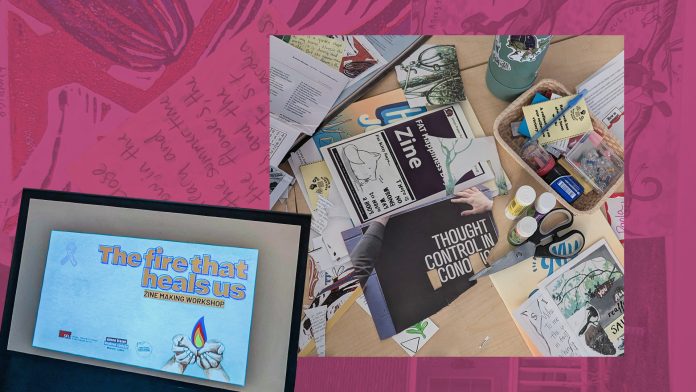
A collage of images from the workshop is compiled: a PowerPoint slide reading “the fire that heals us” with a fire in someone’s palms and a desk with zine-making supplies (scissors, papers) are pictured on top of a bright pink page of someone’s zine.
PHOTOS: Noeka Nimmervoll / The Peak

By: Noeka Nimmervoll, Staff Writer

Content warning: conversations about sexualized violence and sexual assault.

On January 28, SFU students and community members gathered in the SFPIRG Lounge for “the fire that heals us,” a zine-making workshop. The SFU Sexual Violence Support & Prevention Office (SVSPO), the Simon Fraser Public Interest Research Group (SFPIRG), and the Simon Fraser Student Society Women’s Centre hosted the collaborative event at the Surrey and Burnaby campuses. Open to all, this event aimed to provide a space to reflect on how personal healing can happen within a communal environment. 

Participants received magazines, markers, and decor to create pages based on prompts about “ancestral, land-based, [and] community-based healing.” The resulting pages will be compiled into a collaborative zine. A zine is an informal, independently published work that often incorporates collages and writing with roots in political activism and punk rock. The Peak attended the event and spoke to SVSPO educator Paola Quirós-Cruz, SFPIRG director of research and education Hannah Ghaderi, and Women’s Centre coordinator Simmi Dhaliwal to learn more. 

Throughout January, the SVSPO held a series of sexual assault awareness events to increase awareness and knowledge around the topic. One point the SVSPO highlighted at their zine-making event was that trauma is connected to the historic, cultural, and societal context in which harm occurs. “Even though it happens to an individual, it happens within a system, so it is [a collective] responsibility to find ways that people live in dignity, feel safe, and believe,” said Quirós-Cruz. 

The biggest motivation for this event was to create a healing environment through an accessible craft that had many options for self-expression. “It was a really low-pressure, flexible, creative space to also strengthen the autonomy and agency of people to create what they want,” shared Quirós-Cruz. As well, “the Women’s Centre has its own zine-making culture,” said Dhaliwal.

Ghaderi from SFPIRG shared that healing looks like many things, but “one of the ways to do that is to just have fun.” She said, “Sexual Assault Awareness Month can sometimes feel heavy because it’s really focused on statistics and prevention, which is completely important, and that work matters for sure. But at the same time, survivors really need spaces to be able to centre care and creativity and repair.” 

“Survivors don’t just exist in the aftermath of violence. We exist as creative, meaning-making people that deserve softness, deserve agency, deserve community.”

— Hannah Ghaderi, SFPIRG director of research and education

Supporting victims of all manners of sexualized violence starts with believing them, shared Ghaderi. She emphasized that supporting them includes “educating yourself without asking the survivor to teach you,” through the many resources openly available online or in person. Quirós-Cruz shared that the SVSPO holds a workshop on disclosure for those who are interested in learning more about supporting survivors. 

For more information and resources, visit the SVSPO at sfu.ca/sexual-violence. For in-depth conversations around Sexual Assault Awareness Month, listen to “Healing Together,” a podcast in collaboration between the SVSPO and CJSF 90.1FM. 

SFU hosts talk on residential school denialism

0
A wall of “Every Child Matters” and little stick-figure children holding hands in circles is pictured.
PHOTO: Jonathan Cooper / Pexels

By: Jonah Lazar, Staff Writer

On January 29, Dr. Sean Carleton of the University of Manitoba led a webinar titled Truth Before Reconciliation hosted by SFU’s archaeology, history, English, and Indigenous studies departments. In this webinar, Carleton aimed to address an increasing trend in mainstream Canadian media of residential school denialism, which has taken centre stage in Vancouver. 

The Tyee has written that “residential school denialism is not the outright denial of the Indian Residential School system’s existence, but rather the rejection or misrepresentation of basic facts about residential schooling to undermine truth and reconciliation efforts.”

Last year, Dallas Brodie, a British Columbian MLA representing the Vancouver-Quilchena district, was ousted from the provincial Conservative caucus for mocking testimonies of residential school survivors, and has since co-founded the alt-right, OneBC political party. On January 22, she appeared at UBC’s Indian Residential School History and Dialogue Centre to debate the legitimacy of the 215 suspected unmarked graves found in Kamloops five years ago. There, she was met with almost a thousand protesters and the RCMP eventually escorted her off the premises. 

Following the event at UBC, the UBC Indigenous Student Society, Union of British Columbia Indian Chiefs, and BC Assembly of First Nations all condemned the “university’s decision not to prohibit the demonstration.” In an open letter, the Union wrote that residential school denialism “promotes white supremacy, racism, and misinformation.”

Tarene Thomas, a First Nations PhD stu­dent at UBC, told CBC that the demonstration “created an unsafe space on campus for First Nations, Inuit, and Métis staff and stu­dents.” She said the university “should have done a better job at protecting us,” and that even after leaving campus, “it [the event] still heav­ily impacted me. I still had a really awful day.”

This situation is part of what Carleton sees as a growing trend in Canada of residential school denialism. Carleton, a former SFU student, is now an assistant professor in the University of Manitoba’s history and Indigenous studies departments. Here, he has extensively studied the history of residential schools in BC. 

During the webinar, he asserted that the rise in denialism regarding the cultural genocide and forced assimilation of Indigenous Peoples perpetrated via the use of residential schools can be partially attributed to “willful amensia.” This is a form of denialism where people are resistant to the idea that Canada could have perpetrated such violence. Politicized forgetting has led to certain people profiting from spreading misinformation about residential schools online and garnering attention by hosting inflammatory debates against professors and students regarding the issue. 

Carleton believes this problematic theme is all too common on university campuses. It gives the false impression that [these are] duelling, equally weighted views,” he said.

Denialists will make pleas to academic freedom, freedom of speech, the necessity of debate and dialogue, as a way of further entrenching these ideas as legitimate; as ‘another perspective.’”

— Dr. Sean Carleton, assistant professor of history and Indigenous studies at the University of Manitoba

At numerous reprises during this webinar, he referred to residential school denialism as a copy and paste of Holocaust denialism,” where people use similar tactics of spreading dangerous and hurtful misinformation to garner media attention. 

Despite this wave of misinformation, Carleton holds hope for the future. “The truth has been established,” he said. “We just need to keep building better relationships and focus on dignity and respect for one another.”