Home Blog Page 263

SFSS to appoint new committee members

0
Photo of the SFU stadium. The stands are nearly empty, only a few people walking. The outdoor stadium is seen with a sunny sky behind.
SFSS committees support the executive Board with engagement and policy alternatives. PHOTO: Krystal Chan / The Peak

By: Olivia Visser, Staff Writer 

At the Simon Fraser Student Society (SFSS) council meeting on June 8, committee elections were held for 28 vacant committee seats. Council members nominated themselves or a fellow council member for each committee. 

According to the SFSS, Board committees exist to “help assist the Board of Directors at SFSS do their job.” This includes preparing policy alternatives, among other initiatives. The SFSS currently has 14 committees, such as the university and academic affairs committee, the events committee, and the HR and personnel committee. Four seats were available in each election.

The first committee receiving nominations was the Black, Indigenous, people of colour (BIPOC) committee. The BIPOC committee seeks equity for BIPOC students on campus through a variety of engagement initiatives. They also ensure accountability on SFU’s equity, diversity, and inclusion commitments

The four members unanimously appointed to the BIPOC committee were Nimrit Basra from the Women’s Center Collective, Linda Chobang from Students of Carribean and African Ancestry, Simran Basra from the gender, sexuality, and women’s studies student union, and Keianna James from the SFU First Nations, Métis and Inuit Student Association.

The first year engagement committee was another with open seats. The first year engagement committee coordinates “engagement events and initiatives,” as well as “first year advocacy activities and projects” for new students at SFU. 

The four members unanimously appointed to the committee were Aarthi Srinivasan from the behavioural neuroscience student society, Ayooluwa Adigun from the science undergraduate society, Liam Feng from the engineering science student society, and Ashley Flett from the philosophy student union.

The Surrey campus committee was also seeking councillors. Their committee “focuses on issues affecting students at the Surrey campus” such as “engagement initiatives” and “community building events.” 

The four members unanimously appointed were Ryley McWilliams from the mechatronic systems engineering student society, Jung-Yeon Lee from the interactive arts and technology student union, Vaibhav Aora, vice president events and student affairs, and Gurmehar Singh from the software system student society.

The accessibility committee is another vital group that was asking for nominations. This committee oversees the student society accessibility fund’s spending, approves “accessibility-related capital expenses,” and recommends accessibility focused changes around the university. 

After a council vote on 5 nominees, the final appointed members were Vivian Ly from the Disability and Neurodiversity Alliance, Brydan Denis from the political science student union, Gurleen Grewal from the biomedical physiology and kinesiology student association, and Rastko Koprivica from the faculty of communications, arts, and technology. 

The SFSS website has more information about their Council and committees. 

Chris Lewis becomes SFU’s first director of Indigenous initiatives and reconciliation

0
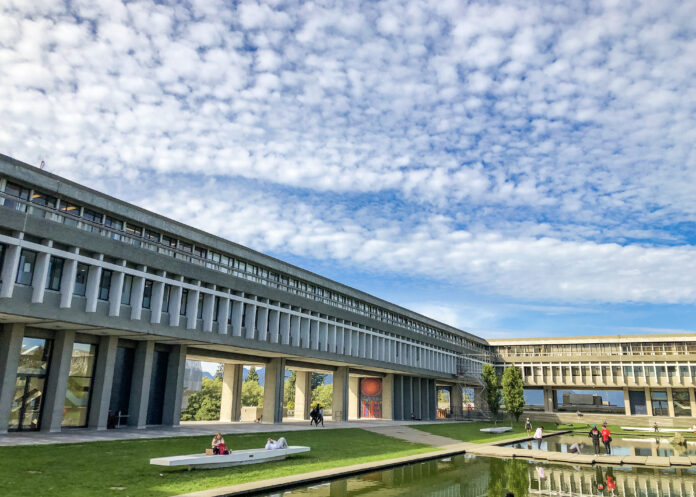
The photo is of the outside of the SFU Burnaby campus Academic Quadrangle. There are students sitting on the benches near a small pond surrounded by grass.
Lewis was assigned this position in February of 2022. PHOTO: Allyson Klassen / The Peak

By: Pranjali J Mann, News Writer

Chris (Syeta’xtn) Lewis was appointed to the role of director of Indigenous initiatives and reconciliation at SFU in February 2022. 

Lewis was previously a co-chair of the Indigenous Leadership Listening and Implementation Task Force which is working towards recommendations for the SFU-ARC and their subsequent Pathways Report, which recommends “pathways for Indigenous students to and through Simon Fraser University.” Prior to his position as director, he was part of numerous advisories and initiatives including being elected councillor and spokesperson for the Squamish Nation, Board of Governors’ Chair, and recipient of Chancellor’s Distinguished Service Award.

The Peak interviewed Lewis to know more about his vision, upcoming initiatives, and his contributions in this position. “I’m just really humbled with the position that I have,” he said. “I really understand the responsibility, and the privilege, and a little bit of the weight that kind of comes with that role.”

When Lewis began the role, he met with senior leadership, deans, Indigenous faculty and staff to “listen and learn from all of the great work around what they’re doing.” 

Gaining insights from these conversations, Lewis navigates collaborations regarding Indigenous initiatives and reconciliations which “transcend faculties and departments” — not limited to one  section of the university. He recognized that his work includes “creating safe and welcoming spaces. So all of us have a sense of belonging.”

Unpacking the term reconciliation, Lewis said, “Reconciliation just isn’t an Indigenous matter. It’s a collective responsibility that we all have at the university.” To achieve this, he reiterated the need for collective action and effort. This included having support resources and capacity building to assist the ongoing work of Indigenous students, faculty and staff.

Lewis highlighted another essential step in the process of reconciliation: recognition. He explained it’s important to honour and appreciate the gifts of Indigenous students, faculty, and staff. But he pointed out that this inherits a challenge: honoring existing contributions can mean looking at things that have often been forgotten. 

“We really need to build capacity on all fronts, and look at our governance structure, to ensure that it’s supporting the Indigenous work that we must do,” said Lewis.

His position allows Lewis to look into these concerns more closely and he hoped to work on the “Indigenous university wide governance structure on how the university needs to pivot to meet the needs and collective goals around Indigenization and reconciliation.” He said he is excited for an upcoming project that addresses Call to Action #5 from the Aboriginal Reconciliation Council (SFU-ARC) report around “bringing Indigenous names back to the university.” Lewis said he looks forward to “creating a sense of belonging, especially for Indigenous community within the university,” through the project.

Lewis noted he is looking forward to working with the “largest urban Indigenous population in British Columbia,” in Surrey, including Métis, Inuit, and other five host communities to “create safe and welcoming spaces.”  

What does it mean to be an immigrant on stolen lands?

0
A Canadian flag flying against a blue sky
This Canada Day, we can hold space for the nuances that make up the immigrant experience. PHOTO: Hermes Rivera / Unsplash

By: Meera Eragoda, Features Editor

Content warning: war, genocide, colonialism, anti-Indigeneity, racism

It’s uncomfortable but necessary to think about what it means to be a racialized immigrant settler on stolen lands. For many of us, life is better than in the countries we came from. But at whose expense has this been possible? And what forces went into making our home countries places we needed to leave in the first place? Understanding this might help us all learn how to better work together in solidarity.

I came to this country with my single Tamil mother, fleeing both the genocide of our people in Sri Lanka and my abusive father. My mother struggled, disconnected from the community, with a law degree worth little here. I grew up shopping in thrift stores long before it was cool — and not in a way-ahead-of-the-game way but in a deeply shameful and poor kind of way. I saw her struggle between pride and accepting hand-me-downs from strangers who knew me. 

Life wasn’t easy at first but it slowly became more stable. And regardless of what it was like here, she taught me English first for a reason: she knew that she wanted us to leave Sri Lanka. And it was a privilege to be able to leave, as fucked up as that is. To not be one of over 300,000 internally displaced people, to not have been killed or disappeared by the Sinhalese government, and to know where our family members are (even if we don’t talk to them). We also lived in Colombo, the capital, as opposed to the north and east of Sri Lanka where Tamils are concentrated, and therefore targeted. Aside from when we visited my grandparents, we were relatively separated from the conflict with enough money to leave.

My grandparents lived in a city called Kalkudah in the east and I have vague memories of being there, surrounded by my grandfather’s rough voice and whiskey breath and my grandmother’s scratchy saris contrasting with her soft skin. Their love for me permeates into memories of dusty roads, the sea, and their farm with monkeys rustling in the trees above. I was shielded from the context we were living under but I also remember hearing practice drills at the military base beside their farm. 

Placing this into historical context, I learned how colonialism touches everything. On the surface, the civil war in Sri Lanka is a straightforward conflict between the Buddhist Sinhalese majority and the Hindu Tamil minority. However, this conflict emerged from tensions British colonizers capitalized on and exacerbated. Once the British left, they handed power back over to the Sinhalese who started enacting discriminatory policies, culminating in the two genocides of Tamil people in 1983 and 2009. 

Like many other Tamils fleeing the genocide, our first point of entry was Toronto. This is where the largest diaspora of Eelam Tamils outside of Sri Lanka resides. I, like many of us, grew up being told Canada was a utopian alternative to the US. Canadians are polite, multicultural, and more progressive than the US. We’re told this even as we face racism and discrimination. On the other one hand, I am safer here. I have more opportunities, I can be openly queer, my non-binary identity is accepted, I can have tattoos, and I don’t live under a state that is trying to enact genocide on my people. 

At the same time, fleeing one genocide just to benefit from the genocide of another group of people places me, and others like me, in a complicated position. The more deeply I examine my place here, the more I see the intersecting threads of colonialism that make up this country. The British created a problem in my country and left a sea of wreckage behind them as they exited. Then they sold us the solution by way of immigration to countries like Canada. Canada has a history of using immigrants to claim ownership over the land and continue their displacement of Indigenous people. In many ways, we are all pawns in this game.

When I immigrated to Canada, there was little education about Indigenous people and Canada’s genocide and displacement of them. What I was taught made it seem like this history was so long ago. I didn’t learn that the last residential school closed in 1996. I didn’t learn that the residential school system morphed into the foster care system. I didn’t learn about the over-incarceration of Indigenous people or how many still grapple with very real intergenerational trauma resulting from displacement and colonialism. I didn’t learn about the vast diversity of Indigenous cultures, their resistance, their resilience, their creativity, and their care for the land

The more I learned about colonialism, the more I realized how interconnected oppression is and, conversely, how it would be so powerful to come together to dismantle the system. Conservatives of any ilk like to tell us the success of other groups comes at our own detriment.

We’ve been taught to divide so they can conquer. And we have been taught this. Who told us to see brown people as terrorists? Who told us to see Indigenous people as criminals? But how do we all unite so we can conquer colonialism and capitalism? Sometimes I think like we silo our own movements instead of fighting for collective liberation. But who taught us this? When we should be seeing a win for one group as progress and as opening space for us all to uplift each other and unite against colonial and capitalist structures. 

It’s true that many of us can’t go back to our home countries. I, for one, have been so separated from the language and the culture that even if I wanted to, I would not be able to live in Sri Lanka. We can hold multiple truths about our experiences here. We can be thankful for the opportunity and the relative safety and we can also recognize we’re here because of colonialism and capitalism. We can realize we can’t return to our countries but also understand that our presence here perpetuates settler colonialism. For those of us who are vocal against oppression in our home countries, we need to see the connections here and show up in solidarity with Indigenous people. That means paying attention to Indigenous voices calling to change the system, that means showing up when they ask us to, that means educating ourselves and our communities, and that means holding politicians accountable.

None of us are untouched by colonialism, whether we benefit or not. And this Canada Day, I think all of us have a duty to examine our history and help other immigrants to understand that when we celebrate “Canada,” we celebrate the same forces that set the stage for volatility in our countries that are responsible for the loss of so many cultures and languages, are responsible for the destruction of land, and an ongoing legacy of genocide right here. Britain has colonized the world. We don’t have to let them colonize our minds.


Inches v. miles: The Depp v. Heard trial verdict is not a reason the bash the #MeToo movement

0
#Metoo tile art
You can’t cherry-pick cases to debunk the entire #MeToo movement. PHOTO: Lum3n, Pexels

By Isabella Urbani, Staff Writer 

Content warning: mentions of abuse

For a while there, it seemed like nearly the entire world flocked to the high-profile celebrity trial between former partners Johnny Depp and Amber Heard. After weeks of testifying, the jury unanimously sided with Depp. The verdict has been interpreted as a strike back against the #MeToo era — used as a way to prove that women lie about abuse. 

It’s not just anonymous Reddit-dwellers taking victory laps. Most concerning are the powerful people treating the verdict as a successful strike for men in the culture wars. The Twitter account for the House’s GOP members of the judiciary committee, finding nothing better to do with its time, tweeted out a GIF of Depp from the Pirates franchise. Donald Trump Jr. celebrated the verdict as being “perhaps a case that could end the effective rabid [feminist] notion that all men are guilty before being proven innocent that we’ve seen as of late.” It’s a recurring “worry” articulated by right-wing personalities. Fox News’ Tucker Carlson once mused about the intentions of the #MeToo era, suggesting that the movement could be out to “destroy men, or complete the destruction of men.” 

Those narratives are perpetuated even by people who are outside of the reactionary right. Comedian Chris Rock wasted no time putting his two cents in on the trial during one of his stand-up shows, imploring his audience to “believe all women except Amber Heard.” It’s a problematic line for two reasons. First, it’s a joke that works based on poking holes in a tenet of the #MeToo era that tries to make sure abuse victims aren’t silenced. Second, it subtly changes the actual message of the #MeToo movement, which is “believe women,” not “believe all women.” The latter, as a Washington Post Op-Ed explains, is an intentionally false argument that diminishes the movement by making it seem absolutist. The Depp v. Heard case is being used to give life to both those narratives. 

Nobody wins when we point the finger and perpetuate stereotypes about who can and can’t be abused. Women remain at much greater risk of assault than men. In 2019, 79% of police-reported domestic abuse in Canada occurred against women. By creating generalizations about who can and can’t be a victim, we create an atmosphere of distrust that discourages victims from coming forward and reliving traumatic events. Why report an accuser only to be subjected to people who may or not believe you?

The trial is not a referendum on the validity of the #MeToo movement, and it’s not providing justice for those who decide to come forward and expose themselves at their most vulnerable. At its core, #MeToo was made to shine a spotlight on cases of abuse and hold people accountable. Those who relish in debunking the entire movement aren’t seeing larger issues — and that’s the problem. 

Dining with Sophistication: Townies, Tricks, and Trash

0
A Raccoon with glasses poses pensively
Reginald Trashpanda III, Acclaimed Food Critic. Maple Sukontasukkul / The Peak

By: Nercya Kalino, Staff Writer

Restaurant: Townhouse Compost
Rating: ★★
Location: SFU Residence
Appetizer: Spinach and mushroom soup
Entrée: Prawns sautéd with cherry tomatoes
Dessert: Yogurt cheesecake
Wine: Water

Simply disappointing. Those were the first words that came to mind as I exited the Townhouse Compost this sad evening.

This week I had the pleasure of Chef Lotor’s exciting cuisine. He claimed to be a freelance chef hired by SFU . . . Suspicious, but I was optimistic. He’d sent out an invite made specially for me, Reginald the III, of course. He stated this was yet to be another tasty treat only meant for the likes of my noble self. 

I beg to differ. Unfortunately, this restaurant and its . . . delights have left my tongue, dare I say, displeased. I will not be seeing Chef Lotor anytime soon, that’s for certain. 

Off the bat, the appetizer, spinach and mushroom soup, was disappointing leaf water. All I could taste was the blandness of it all. No salt, creaminess, nor any garnish. I think at some point, the soap had layers of unpalatable awfulness of what was justified as “soup.” If you are familiar with homemade broth, the layers of fat and the liquid is what creates the taste of umami. What was in my bowl was simply not that. Far from it, in fact. The mushroom was raw and the spinach had withered into non-existence. More like a garnish than a feature! Stirred together, I saw the clear reflection of my regret in those murky waters. I nearly sobbed into my little paws. The downside of the whole appetizer is that this is supposed to be a simple tummy-warming dish, but at some point I felt it claw back up to my throat. 

I insisted on skipping the entrée, worried that my night would suddenly become unpleasant from the indulgences of this regrettable meal. Chef Lotor, oblivious to my apparent disgust, brought this horror forth. How can one think to cook this meal and ration the least amount of prawns one can ever think of is beyond me. The whole point of prawns sautéed with cherry tomatoes is the prawns! The tomatoes overpowered the whole meal and it lacked zest and aroma. The spinach in this meal was, well, present. Come to think of it, the amount of spinach in this meal could have been used sufficiently in the spinach and mushroom soup. 

The dessert was the only part of the meal that was able to calmly stay in my belly. I had no intention of finishing the whole fiasco, but the proportions of the ingredients and its warmth made the experience somewhat less vile. It was sufficiently filled with dairy, and I admit a small weakness for cheese. I sadly chewed on the soggy graham crust while thinking over my sordid meal.

For the many reasons I can list on for eternity, this meal did not deserve any assortment of wine, so I drank water to quench the filth stuck in the back of my throat threatening a torture that would proceed the night.

Was this restaurant worth my time? No. I have never been more disappointed in Chef Lotor’s recommendation, he has started to lose his dazzle. Worse, I suspect he unintentionally tried to poison me. I, Reginald Trashpánda III, your honorable and favorable food critic. I am deeply immersed in the love for cuisines but this was not anywhere close to that. I now must get on that Yelping app to warn my fellow readers of this monstrous chef!

We need to stop harassing people who’re sleeping in their cars

0
photo of living equipment in the backseat
It’s a symptom of a much larger issue. PHOTO: Mitchell Hartley, Pexels

By: Nercya Kalino, Staff Writer

Everyone needs a place to rest. We’re all leading busier and busier lives, and need time to recharge. The problem is that not everyone has enough money on hand to get a roof over their heads, particularly in Vancouver. Enter, the problem of having to sleep in your car. And while I don’t see the harm in someone having a car to sleep in when going through a hard time, that’s not a widely accepted position. That’s not to say that squatting is something that we need to embrace, but we do need to acknowledge that sleeping in cars is often a last resort and a terrible symptom of a much larger problem.

Just last year, the City of Vancouver demanded 30 RVs parked near East 12th Avenue and Slocan Street vacate the area or face fines. Taryn Scollard, Vancouver’s director of streets, said of the encampment that officials had been “seeing a lot of increased concerns in the area as the number of RVs increase,” which in turn demands increased bylaw enforcement. Across the Strait of Georgia, the Victoria Police have spoken out against relaxing car-sleeping rules. Police issued the statement when the Mayor and a city councillor proposed relaxing bylaws to prevent tickets from being issued to people sleeping in cars parked on the street should the city’s vacancy rate dip to 3%. The acting Victoria police chief said at the time that the police need to have the “discretion” to deal with people sleeping in their cars. 

But you don’t need discretion. What we all need to do is reflect on the societal failures that leave people no other option than to live in their cars. If we’re not willing to do that, then the very least we could do is stop criminalizing people’s living spaces as a last resort. 

The problem is bigger than we think. According to the CBC, Metro Vancouver’s 2017 homeless count found 58 people living in their cars across the region. Peer-Daniel Krause, who managed BC’s 2017 homeless count, suggests the 58 people figure is a “vast underestimation” of the number of people who live in their cars. 

There are any number of reasons why a Vancouverite might turn to living in their car. We know, for example, that the housing market in BC continues to prohibit stable living situations, from ridiculously overpriced housing, to the gap between wage-earning and the municipal housing cost for rent and buying. There are huge problems preventing Vancouverites from affording a home. Sleeping in your car gives people, at the very least, a modicum of personal security that sleeping on the streets or in shelters can’t provide. 

Instead of policing people sleeping in their cars, we need to express compassion for their impossible situation. But beyond compassion, meaningful policy adjustments are needed. There’s the small stuff, like allowing people to stay overnight, in cars, in public parking lots. But the larger solution is, of course, tackling a dearth of affordable housing options in Vancouver. People want to live in cities. Tackling zoning laws that prevent multi-family complexes might be a good place to start. 

Enforcing bylaws on car-dwellers doesn’t solve the problem, it shuffles it, temporarily, out of sight. Car-dwellers are a natural outgrowth of the housing issue. They are not to blame for their circumstances, and shouldn’t be harassed by overzealous bylaw or police officers. Instead, we need to realize that antagonizing people who already have it hard enough is plain out not okay, and start chasing meaningful reforms to housing and work that make our cities affordable again.

Local organization launches new harm reduction program

0
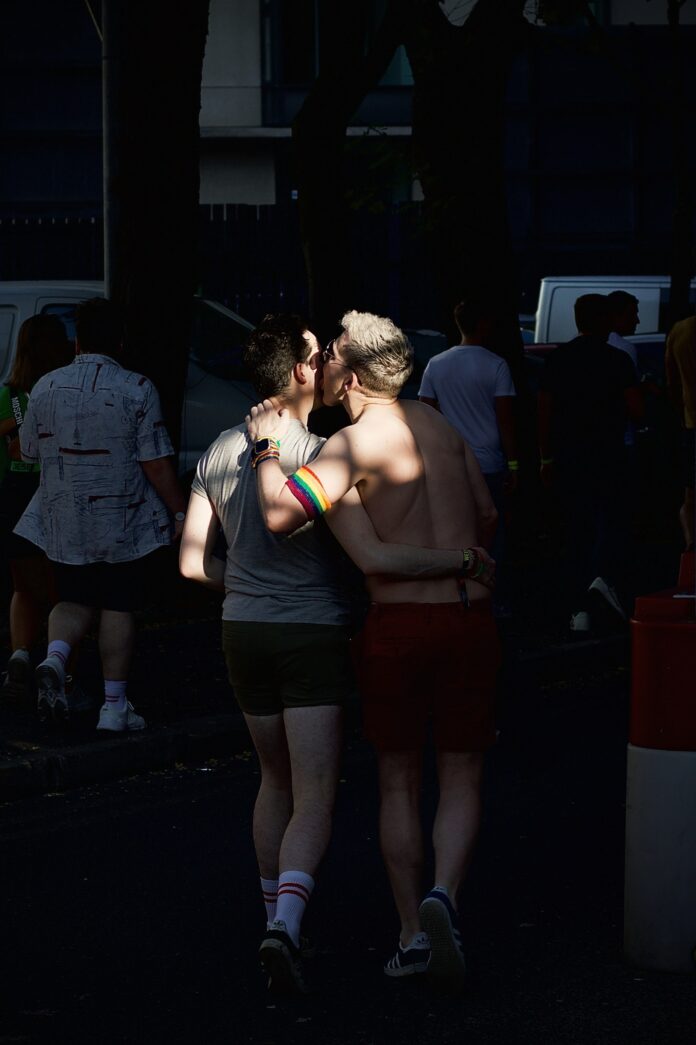
The photo shows the backs of two men, walking arm in arm, as they engage in a kiss. One man has a rainbow painted onto his arm.
Clients are not required to abstain from drug use to access services. PHOTO: Sushil Nash / Unsplash

By: Chloë Arneson, News Writer

The local non-profit society Health Initiative for Men (HIM) has launched a new harm reduction program called PnP & Me to help clients identify and achieve their personal health goals for sexualized substance use. Colloquially known as party and play (PnP), the use of methamphetamines in a sexual context is common for gay, bisexual, and queer men (GBQ) as well as gender-diverse people.

To learn more about their 16-week counselling program, The Peak reached out to Evan Matchett-Wong, program director of HIM. The PnP & Me program is currently running its first cohort of clients, providing peer-led and drop-in group counselling. They also provide one-on-one counselling sessions with a professional. “The big component of this is not only receiving the mental health services, but also the social connections,” they said. 

Matchett-Wong noted LGBTQIA2S+ individuals often face higher rates of poverty and job discrimination. “[They] might be encountering a life that is hard to live and hard to find joy [ . . . ] for some individuals drug use is the only way they can find that joy.” 

The BC’s coroners service reported at least 161 British Columbians died from toxic drug supply in the month of April. Substance abuse particularly affects the LGBTQIA2S+ community — members are more likely to suffer from substance abuse than their heterosexual counterparts. The American Addiction Centers explains these numbers are affected by lack of support, internalized homophobia, disproportionate rates of mental health issues, and the need for specialized treatment options.

“Drug use has a multitude of complex factors and reasons for why someone would go into using any type of substance.” Matchett-Wong added, “It can be anything from surviving conversion therapy, being disowned by their families, or having difficulties accessing other services.” 

In an interview with Global News, Matchett-Wong discussed how harm reduction is crucial in mitigating the effects of toxic drug supply. “The major component about having a harm reduction based program like this is to help reduce those deaths within the community just by limiting the usage of it,” they said. “We have a firm belief that people are masters of their own bodies and have control over their own health, meaning that if someone wants to join the program and they don’t want to quit using crystal meth, they don’t have to.”

This means anyone whose goal is to reduce their usage may join the program without the pressure to remain abstinent from drug usage entirely. The strategy HIM employs is called contingency management, where they encourage clients to set goals with incentives if they achieve them. “We approach [the program] with a sense that it’s not condescending or patriarchal,” said Matchett-Wong. They note the program, unlike many others, does not require individuals to test clean for methamphetamines to participate. “We don’t believe in punishing people for using.”

On their website, HIM states their goal is to “strengthen the health and well-being in communities of self-identified GBQ men and gender diverse people in BC.” They have health centres in the Lower Mainland as well as anonymous testing events in the interior of BC to prevent and treat HIV and STIs for GBQ men. Their physical and social health programs provide holistic support to the GBQ community in BC.

To learn more about HIM’s harm reduction program and services, you can visit their website or email [email protected] for more information.

CONFESSIONALS: If you leave the group chat, I am leaving you for the sharks

0
Illustration of a closed envelope, with the text, “Confessionals”
ILLUSTRATION: Marissa Ouyang /The Peak

By: Kelly Chia, Humour Editor

Is this a confessional or a reckoning? At this point, I’m not sure. I am a destroyed woman. And it’s because of you. I will RUIN you.

Look, I know how I sound. 

I’m a nice person. At least, I think I am. I always say thank you when I leave the bus, sometimes even when I leave the SkyTrain. But I am not patient. I’m about two inches away from releasing fresh hell, and I will not apologize. 

A bit of background on my dilemma. I admit, this group project wasn’t everything to me, three months ago. I mean, it wasn’t graded strictly, and I thought we were all about sharing the tasks. Then, we had the naive pretense of exchanging contacts via Discord, or WhatsApp. We laughed about taking on group responsibilities and joked about the long syllabus.

We had the joy of laughter then. 

But it is the eve before our presentation. The crux that breaks the ship on which our friendship sailed. I’m not dramatic. I tried to be patient. I believed that you’d do your part when I had seen you in class last weekend. You told me, with a smile on your face, that you’d respond! 

I sent you a text through your cell number. I waited. I messaged you on Discord. I waited. Five days passed.

I accepted the truth. I have been ghosted. 

You left me asunder in an ocean of Google Slide transitions and the most unhelpful illustrations. Please tell me how I’m supposed to use a vector of a sad boy eating ice cream for our Shakespeare analysis. You make me feel like a sad boy. With no ice cream.

Left in my thoughts, I monologued on and on, much like Edgar Allen Poe and the worst group partner. You were supposed to be my partner, and you’ve parted my heart. I am running on three Red Bulls, and I’ve just had a revelation. In fact, I’d call it inspiration. 

Tomorrow’s presentation will not only have no trace of your work in it, it will condemn you, in the most academic sense. You see, I have decided to do a fun mad-lib. We know the plot of Othello so well now, I’m sure the class will be excited at my creative decision to use your name in place of Iago. You are the betrayer!

Tomorrow, you will receive my fair deliverance. Everyone will hear it, the professor, the TA, and the class that could really care less. What use is the high road in a 100-level Shakespeare elective?!

. . . Or, I could go back to my chicken noodle soup, and never look at a Messenger group chat, ever again.

Political Corner: Don’t call us taxpayers!

0
Canadian flag against skyscrapers
An engaged citizen is worth more than a taxpayer. PHOTO: Adrian Lang, Pexels

By Luke Faulks, Opinions Editor

How do you describe your priorities as a Canadian voter? From climate change to income inequality, from reconciliation to immigration, we all have a range of issues that animate us. But what’s true for everyone is that those interests don’t stop at our wallets. We’re not just taxpayers, we’re citizens. Reducing the public to “taxpayers” minimizes our roles, reduces our interests, and teaches politicians the wrong lessons. 

In any given election cycle, Canadians, and by proxy, their interests, will be reduced to taxpayers and taxes. It’s a trend we can see across the political spectrum. An easy search through Liberal, Conservative, NDP, and Green statements shows parties embracing the term. And our political leaders aren’t the only ones who’re guilty of leaning into the rebrand. News and Opinion pieces from prominent Canadian outlets sprinkle the term throughout articles, as does academic research

We need to fight back against the impulse to use the term. 

“Taxpayer” reduces our role in politics to that of a piggy bank. It assumes stymied participation, something Canada doesn’t need help with. Canadian political participation has yet to match the over 79% turnout observed during the late ‘50s and early ‘60s. The “taxpayer” brand is a symptom of that low turnout. Outside of paying taxes, the term suggests, Canadians don’t have a role. We don’t have a role in running for office ourselves, volunteering with public organizations, or otherwise engaging outside of whining about how our tax dollars are spent. It reduces our role to the point of endangering a healthy political system. 

The term is also derogatory to Canadians, whose political interests exceed how politicians are going to spend their money. Case in point, we’re a country that knows fully well that fighting the climate crisis requires significant investment. We want effective climate action, anyways. Indigenous reconciliation is another issue that requires substantial investment. Despite the impersonal nature of the problem for most Canadians and the hefty price tag attached to it, it’s an issue that Canadians feel passionate about, which makes it worth politicians’ time to integrate these issues in a way that doesn’t reduce us to the taxes we pay. 

 Lastly, the taxpayer brand risks not just softly disenfranchising and explicitly reducing Canadians, but creating a reverse effect telling politicians that raising or lowering taxes is the way to win votes. A 2013 study found that politicians on both sides of the aisle were convinced their voters tended to be more conservative than they actually were. The study suggested politicians were more likely to overestimate voters’ desire for austerity measures, and more likely to underestimate voters’ appetites for tackling social justice issues. 

The race to the bottom on taxation  the natural result of politicians’ belief that they can run on lowering taxes since the beginning of the neoliberal era has had a damaging effect on the government’s capacity to problem-solve. To effectively solve issues like climate change and Indigenous reconciliation, we need a fully-funded government. Using the term “taxpayer” implies a penny-pinching public that’s reluctant to see their money go anywhere but into their bank accounts. Using a more comprehensive term, like “citizen,” would help support the perception that voters are willing to support spending initiatives.  

During his inauguration as Canada’s 28th governor general, David Johnston provided a rallying mantra for citizens: 

“We are a smart and caring nation. A nation where all Canadians can grow their talents to the maximum. A nation where all Canadians can succeed and contribute.”

Each of Johnston’s important calls to action requires much more than being referred to as “taxpayers.” We have interests that both encompass and exceed worrying about how politicians spend on us. We’re citizens, not just taxpayers.

What Grinds Our Gears: SFU students aren’t eligible for a U-Pass during a semester off

0
Vancouver SkyTrain
SFU students are still SFU students during an off semester. PHOTO: Diego Mazz, Unsplash

By Luke Faulks, Opinions Editor

You know what’s cool? The U-Pass system. Through SFU, we’ve got unlimited access to the Lower Mainland’s sprawling bus, SkyTrain, Seabus, and gondola (c’mon folks) network. You know what’s less cool? Revoking that access when students aren’t signed up for enough courses. Dick move, whoever runs this thing. 

Maybe eligibility is based on some erroneous assumptions about students. Let’s picture the SFU student who’s taking a break between semesters. Are they going to commute for work to fund their continued academic goals? Are they going to head out on the town to unwind after a grueling semester? Apparently, the survey says “nope!” No, what the U-Pass system tells us is that a semester off is spent sequestered away in your place of living. No travelling. No commuting. Why else would the powers that be halt the Compass card system when SFU students are still part of the community? 

Now, yes, paper pushers, I can feel you fuming. “We pay for the U-Pass in our semester fees,” you say. “We don’t pay during off semesters,” you argue. “Stop pestering me for my take on the U-Pass system,” you add. True, true, and apologies, Tyler. Every semester in which we take courses, we pay a fee of just over $170 for access to the U-Pass system. That’s a lot. And it’s enough that we should be able to have a carryover semester where we, as SFU and Translink’s sometimes-year-round-money piñatas, get to use the transit system for free. 

Even between semesters, a great deal of what we do remains in service of achieving our academic goals. Why grind our lives to a halt by intermittently dropping students’ U-Pass eligibility?