Home Blog Page 256

Food for Thought: Menemen

0
Skillet of menemen atop a table with a green and white checkered tablecloth
Make menemen for your next meal! Photo courtesy of Vedat Zorluer / Pixabay

By: Yasmin Vejs Simsek, Staff Writer

Are you desperately looking for new recipes that are easy to make and budget-friendly? Are you sick to your stomach of instant ramen 5–7 days a week? Would you like to add a hearty, healthy, and delicious meal to your repertoire? Then I want to introduce you to menemen, the Turkish breakfast dish which is just as perfect for lunch as it is for dinner. Originating from the Menemen area close to Izmir in Western Turkey, it shares a lot of similarities with the well-known shakshuka, another popular dish in the Mediterranean and the Middle East. The best thing about making this dish is that you can customize your ingredients: you are the master of what goes in your menemen.

This dish reminds me of the summer holidays in my family’s hometown of Kayseri, Turkey. More often than not, we would be in 40 ℃ heat, sleeping in late, and waking up to the smell of my babaanne’s menemen. In my family, we would add a popular Turkish sausage called sucuk, an amazing garlicky beef sausage which adds a wonderful depth. It is not easy to find in Vancouver, but Mediterranean Specialty Foods on Commercial Drive sells them. Other meats typically used for breakfast dishes are a fine replacement. What makes my grandmother’s cooking unique is her love for sucuk and her generosity with olive oil — the house would frequently be immersed in cozy aromas of garlic. Sitting in my PJs at the table with the whole family gathered around it, we would dig into the feta, olives, and most importantly, the menemen. 

The main ingredients needed for this recipe are peppers, tomatoes, and eggs. There are huge debates on the addition of onion, with a 51/49 split on the matter. I belong to the “onion and garlic in everything” team, so I always add both to my menemen. 

The great thing about this dish is how customizable it is. You can easily make it vegetarian or vegan; simply withhold the eggs and sausage and let the vegetables speak for themselves. Similarly, you can just add whatever you have at home or substitute fresh tomatoes with canned tomatoes for a cheaper meal. Bread goes perfectly with menemen, but for fewer carbohydrates, it can easily be enjoyed on its own. In Turkey, it would be served with the basic and inexpensive Turkish bread called somun ekmek. You can buy somun ekmek in literally every store there and it’s the perfect bread for soaking up the delicious, tomato-based sauce. I like to show off by poaching my eggs in the sauce, but traditionally it is scrambled into the mix.

Here is how I make menemen for 3–4 portions/people, so you can be sure to have leftovers the next day.

Ingredients:

  •       6–8 fresh tomatoes or 1 jar of canned tomatoes 
  •       1–2 peppers (traditionally green capsicum pepper, but I use red/orange bell pepper)
  •       1 onion (white, but again, use what your fridge has to offer)
  •       Garlic (an optional amount, I shamelessly go with 3–4 cloves)
  •       4 eggs (if scrambled, otherwise as many as will be eaten when served)
  •       Preferred meat (pork will make it much less Turkish, but you’re the boss)
  •       Butter or oil to fry (more is always better)
  •       Spices (such as paprika, black pepper, herbs)

Instructions:

  1.   Heat up a pan with oil or butter on medium heat and dice your onion to preferred size. Add them to the pan.
  2.   Add your crushed or finely chopped garlic when the onions have started to soften.
  3.   Meanwhile, cut pepper in squares and roughly chop the tomatoes. They will soften during cooking.
  4.   After 5 minutes on the pan, add pepper and meat to the onion and garlic.
  5.   After another few minutes, add the tomatoes and spices — again, you’re the boss, add some chili flakes if you’re feeling spicy.
  6.   Turn the heat down to low-medium, and let it simmer with a lid on for 10–15 minutes.
  7.   When the tomatoes are basically dissolved and the dish has turned appropriately saucy, add the eggs. If scrambled, scramble them in the mixture till it reaches the preferred texture. If poaching, crack the eggs evenly around the pan and put the lid back on. Let it cook for 6-7 minutes or until the whites have hardened.
  8.   Sprinkle a little salt on top and serve in the pan for the most authentic presentation.

Afiyet Olsun (Enjoy your meal)

Incoming SFSS president Helen Sofia Pahou discusses plans for the upcoming year

0
Pahou is seen standing outside of the AQ located at SFU. She is smiling and looking directly at the camera.

By: Jaymee Salisi, Promotions Coordinator

With hopes to ease student hardships, Helen Sofia Pahou is prepared to begin her term as president of the Simon Fraser Student Society (SFSS). Pahou spoke with The Peak about her plans of action for the 2022/23 year. 

As president, Pahou aims to ensure clearer communication and collaboration within the SFSS. She hopes this will benefit students by increasing their access to opportunities and resources. 

Pahou plans to begin her term by “bringing events back to campus for SFU students to enjoy.” She said this would look like organizing town halls, educating students on Studentcare coverage, and encouraging clubs and departmental student unions to use the facilities in the Student Union Building (SUB). 

In regards to these new events, Pahou did not specify COVID-19 guidelines. However, Pahou discussed her plans to deal with campus concerns regarding COVID-19. “The SFSS is inclined to follow protocols and good practices recommended by the BC provincial government and their current province-wide restrictions.” 

The SFSS plans to continue circulating recommendations throughout the SUB on wearing masks in public spaces, washing hands, and wiping down high contact surfaces. 

Pahou noted they will continue to make spaces with cleaner air circulation accessible to students as the pandemic continues. She mentioned the spaces in the SUB’s 1000 level are equipped with HEPA filters. 

Additionally, she hopes to work alongside the SFSS Women’s Centre to increase and amplify safe spaces for women and the LGBTQIA2S+ community on campus. She explained being a woman in a leadership role inclines her to empower women, as well as educate the SFU community on sexual violence and prevention.

“Amplifying sexual violence prevention training to student leaders, and creating more dialogue on the realities of sexual violence on campus, will be a key project going into this year,” Pahou said.

To do this, she plans to collaborate with SFU’s Active Bystander Network and SFU’s Sexual Violence Support and Prevention Office. Both groups offer the opportunity for SFU students and employees to be educated on and receive support for sexual violence. 

Pahou said she is “inclined to uphold the work, initiatives, and policies that have already been put in place to support students a part of marginalized communities.” She added, “Consultation with these communities, and holding ourselves accountable to serving these communities, will also be a key part of our role while forwarding initiatives and surveys centered on amplifying their needs.” 

To make her leadership services more accessible to students, Pahou said her plan is “to offer in-person and online office hours a few times per week for students to say hello, create new points of connection, and speak to [her] about whatever concerns they may have.” 

She aims to increase accessibility and engagement by frequently having members of the SFSS executive available to student members in Convocation Mall on the Burnaby campus. Pahou believes this will allow herself and her team to make better connections with students and answer their questions. 

Pahou said she is experienced in the functions of student politics and leadership as a result of her previous roles as SFSS vice-chair of council, SFSS councillor for political science, and SFU undergraduate senator for the faculty of arts and social sciences. During her time serving in the Senate, she was involved in sub-committees including the Senate Committee on University Priorities and the Senate Committee on International Activities.

Since the SUB’s soft-opening in August 2021, the building has not been fully operational. Pahou said as the SFSS re-introduces more in-person activities, she expects there to be a “learning curve” in engagement and event planning upon the building’s grand opening.

However, she said she feels “very lucky to be working with a fantastic staff, and an eager team of vice presidents ready to help us overcome all these new challenges.”

Students interested in getting in touch with Pahou can email her at [email protected].

Political Corner: The best strategy for fighting climate misinformation is pointing to the world around you

0
picture of a climate rally framed around a sign that reads “fight today for a better tomorrow”
Climate change predictions are being fulfilled before our eyes. Photo: Kira Schwartz / Pexels

By Olivia Visser, Staff Writer

Climate change is real, imminent, and one of the biggest disasters facing humanity. More than sixty years of scientific research has led to the conclusion that humans must act quickly to prevent a global ecological and humanitarian crisis. Sadly, misinformation and disinformation still run rampant in conversations about the threat of climate change. An explosion of fake news on social media has only increased the level and accessibility of misinformation. By pointing out climate change has moved beyond a prediction to a reality negatively affecting billions, we can start to effectively push back against that misinformation. 

It’s important to identify the drivers of climate change denial. Not everyone who shares misinformation does so out of malice — some people are genuinely uninformed. On the other hand, those who spread disinformation deliberately attempt to misinform people. You should not count on changing the minds of people who are caught up in disinformation, because they aim to  reject evidence that opposes their existing beliefs. From my personal experience, those who are genuinely uninformed benefit the most from exposure to evidence. Emphasizing the massive consensus on human-driven climate change in the scientific literature is important. But it’s through examples like increasingly frequent heat waves and floods that we start to paint a humanitarian crisis.

The unprecedented North American heat wave of 2021 was made possible because of increased temperatures caused by greenhouse gas emissions. At least 595 lives were lost in BC alone to heat-related deaths. During this heat dome, the town of Lytton suffered devastating damage from a wildfire that displaced over 1,000 people and destroyed infrastructure. 

Meanwhile, in Abbotsford, we can point to the 2021 “atmospheric river” that caused 15,000 people to evacuate and $450 million in damages. It’s the kind of eye-catching event that can be used to underline how extreme weather events are increasingly severe in a changing climate. It’s also a personal reminder of the human cost of climate change. Lives and small businesses were upended. The examples don’t stop there. The federal government published a handy list of 10 extreme weather events from 2021, including expanded wildfire seasons and unprecedented hurricanes.

I believe much of our futures will be spent suffering through the consequences of ignoring climate change. These natural disasters are not isolated events, but an increasing reality that is catastrophically changing life on earth. Their unprecedented nature makes it particularly poignant as a potential tool to convince climate deniers of a shift in their environment. 

Climate predictions encourage people to act with their futures in mind, but catastrophes are already being realized. We must remind misinformed people of the existing and worsening humanitarian crisis that is climate change. If you care about people then you should care about the climate, because humans will continue to suffer exponentially if the issue remains unaddressed. 

Brave new-ish world: Want to prepare students for the real world? Permanently hybridize classes

0
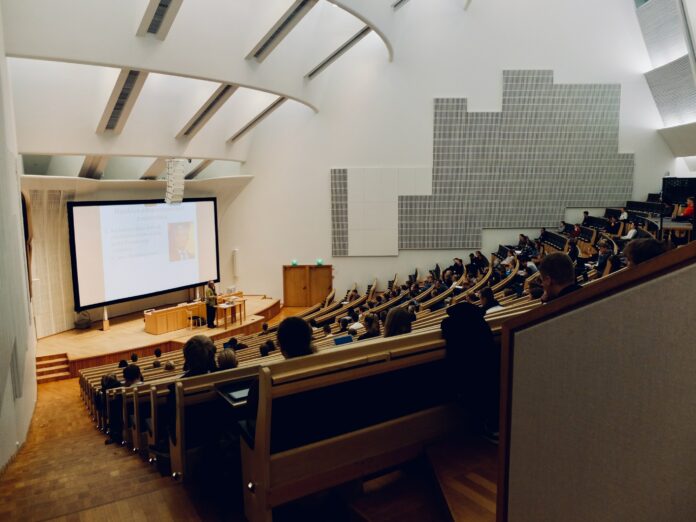
University classroom filled with students
A hybrid system represents the best of both worlds. Photo: Dom Hou / Unsplash

By Michael Le, SFU Student

Over the last two years, we’ve learned to work in a whole new way. As of 2021, 66% of business leaders have cleared out space for a hybrid model going forward. With the popular trend seemingly here to stay, it only makes sense that SFU adapts a hybrid model to best prepare its students for the new job market. 

While it’s been a challenge to adapt to, we’ve all felt the benefits of a hybrid system over the course of the pandemic. According to the consulting firm McKinsey & Co, over half of the surveyed workforce prefers hybrid because of its flexibility. As a student, I’ve felt the same way. Not only are we gaining more time from a reduced commute, but we’re also able to work from anywhere. As an accounting intern myself, being able to take naps in between breaks was a godsend. A hybrid system can also help students who may experience a short-term upheavals, like moving or surgery. With more content available virtually, students will have an easier time working around unexpected shifts in their schedules. 

Hybridization also helps to clear frequent hurdles associated with the workplace. Being entirely in-person presents challenges for commuters who might not have access to frequent bus routes or a car, thus increasing commute time and stress. On the virtual side, workers that don’t have proper access to reliable internet services or electronic devices might not be able to keep up with the class. Through hybridization, workers and students alike have the best of both worlds. Despite some bumps along the way, we’ve proven the hybrid model can work. 

That’s not to say there aren’t some real concerns about the hybrid system. 

One recurring critique is that it risks undermining “office culture” in the workplace, or “campus life” at school. Socially, it’s true that a purely virtual environment severely limits the ways we can communicate and puts us at risk of Zoom fatigue. Completely hybridizing work, however, opens the door to choice in communication. It’s a key part of the business environment. Aside from creating a fun environment, socialization fosters psychological safety — a sense of being able to provide and receive positive feedback between co-workers. Adopting the communication channels needs and standards of today’s workforce early on gives students a headstart in practicing their hybridized communication skills.

Should SFU pursue an expanded hybrid model, there are more factors than just an in-person culture to consider. Over the course of the pandemic, teaching staff have borne the brunt of having to adapt to a mostly virtual, sometimes hybrid environment. They’ve done so without the kinds of support they need from the administration and without adequate compensation that reflects the extent of new training and extended hours they’re working. To prevent instructors from having too many non-teaching duties associated with a hybrid system, the administration needs to step in. Training intended to increase knowledge of requisite technologies and programs aimed at keeping learning fresh will help smoothen the transition to a hybrid system. Sitting down to establish a new pay scale that reflects an expanded job purview is also a necessity. 

For students, SFU can work to tie success to performance, which can enhance productivity. In a class setting, instructors can reinforce this by incorporating graded micro-projects or assignments throughout the semester to help students walk through the class material via experiential learning, rather than large heavily-weighed exams. Moreover, students have to keep in mind that accountability has always been an in-demand skill, no matter the environment. 

With the hybrid model a likely mainstay to some degree going forward, students will need to not only embrace but adapt to the challenges that come along with it. This also means that, on the administrative side, SFU should allow students to continue with in-person and virtual learning systems. The hybrid system has been a rare benefit of the pandemic. It’s time for SFU to lean in. 


Embrace the Unexpected: Why joining a student organization was the best decision I ever made

0
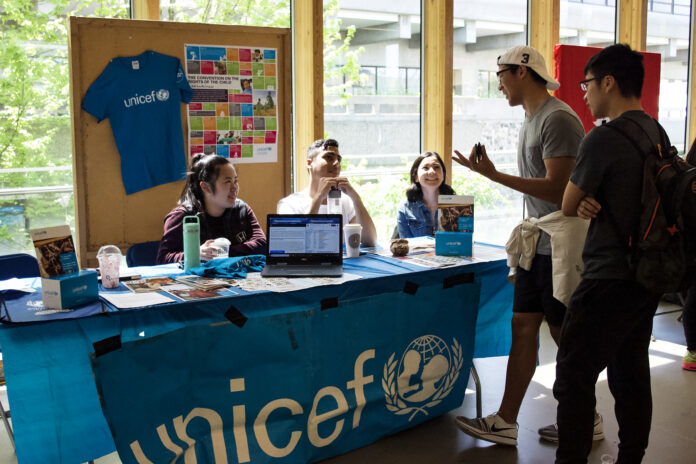
Clubs Day booths on SFU’s Burnaby Campus
Clubs Day returns in person for the first time in two years (photo taken before COVID-19 pandemic). Photo: Gudrun Wai-Gunnarsson / The Peak

By Luke Faulks, Opinions Editor

This May, for the first time in two years, Clubs Day is back in person at SFU! From May 17–19,  SFU’s diverse set of clubs and student organizations will be on display for potential recruits, from the Bowlers to the Introverts, the Knitters to the Optimists. And you should join! But not because of the standard reasons you’re pressured to join; you should join because there’s no telling where your involvement will take you.  

 I know “join a club” is a tired piece of advice. Joining, they say, will do everything from enhance your resume to giving you a new pool of friends to just keeping you busy. Those reasons are valid, but getting involved could open up a much wider world. 

Take my case. During the pandemic, when I found myself with a bit more time on my hands, I said “yes” to a number of opportunities that came across my plate. The first big one, the one that has not stopped paying me back, was signing onto a new student journal, Gadfly. I got to be a part of the first year of this journal, SFU’s first-ever journal of undergraduate political science research back in 2020/2021. 

Yes, it looks good on my resume. Yes, I’ve been able to spend a great deal of time with some fantastic, like-minded people. That’s all a given when you join a club or student organization. What I couldn’t have seen coming were the ways in which the journal provided a stepping-off point for more learning, more skills, and ever more opportunities on and off-campus. 

Because I fell into a section editor and head copy editor roles, I’ve been able to interact with contributors throughout the review and publishing process. Getting to learn about the issues that animate members is a big, unpredictable benefit of joining. Working with other students challenged my worldview and positions in the political arena outside my climate and energy focus. 

The big spin-off effect of joining a club is following your passions to join other clubs. One of the single best things to come about from my joining Gadfly has been my tenure at The Peak. Absent an Instagram account, and in the throes of a hectic semester, I’d missed the call for applications to The Peak’s open positions. An eleventh-hour suggestion by my Gadfly editor-in-chief that I go for a staff writer position prompted an ultimately successful application to this paper. Thanks, The Peak. Thanks, Gadfly

This May, instead of carefully avoiding the eyes of the bubbly folks stationed at booths in Convocation Mall, go talk to them! If that’s not your thing, I feel you. Hit ‘em up on social media! Joining a club opens up a world of possibilities that you have no way of appreciating until you’re in the thick of it. You’ve just got to take that first leap.

If you’re interested in becoming a contributor, sign-up for pitch meetings on our website. And don’t forget to pop by the paper’s booth this Club’s Day!

Consuming in good conscience: The next generation will be ashamed of our record on animal rights

0
Protest championing progressive causes clearly leaving out injured animals.
You can make a difference without changing your entire lifestyle. Illustration: Stella Nguyen / The Peak

By Olivia Visser, Staff Writer

It’s 2022 and we’re still failing to treat our animals with dignity. Despite significant strides made on progressive causes, we’re still not thinking clearly about the scale of corporate animal abuse. Instead, the profit motive keeps animal welfare a low priority in Canada. 

That’s not to say our country is entirely absent of animal rights. The Canadian Food Inspection Agency is responsible for enforcing laws that prevent the infliction of “avoidable” distress or pain upon agriculture animals. In BC, the Prevention of Cruelty to Animals Act provides legislation to protect animals’ living conditions. However, most laws only regulate what they refer to as “generally accepted practices” which have been criticized for their loose definition. Under this state of legal limbo, Canadian animals still aren’t living cruelty-free lives. 

The Canadian meat industry provides heartbreaking examples. Every day, around 62,000 male chicks are culled for their lack of financial value. As female hens produce eggs, the cost to keep male chickens alive outweighs the profits they would bring in. Dairy cows are similarly culled after three to five years despite their 20-year life expectancies; the effects of being forced to stand all day, give birth, and produce milk cyclically result in severe calcium deficiency and illness.

The profit motive is the fundamental issue underlying these modern animal rights abuses. When profit is at the center of meat production and consumption, overproduction and overconsumption  arise. Without considering the implications of strictly for-profit meat production, animal rights will never move beyond being a discussion of individual dietary decisions. The scale of production and how that scale is achieved are driven by our purchases. Choosing based on convenience and ignorance demands the mass production and exploitation of livestock. 

More than 800 million animals in Canada alone are slaughtered every year for consumption. The scale of suffering associated with mass agricultural production is so extreme that it cannot be overlooked. Meat consumption is not inherently unethical if it is done sustainably with consideration and respect for the life of the animal. The present level of meat production achieved through meat factories is incompatible with this model and, as such, demands a reduction in consumption. 

Informed consumers don’t need to remove animal products from their diet and go full vegan. If you enjoy meat, you should make an attempt to actively pursue ethically sourced animal products from local producers. Skipping the supermarket is a good bet. Doing research into local farms in your area and going to smaller, speciality outlets or local butchers that sell those farms’ products is a good way to avoid eating abused animals. Indigenous providers are ahead on this issue. With conservation being key to continued food supply, purchasing from Indigenous providers can help consumers secure ethically-sourced food while contributing to the financial well-being of a disenfranchised community. In doing so, you contribute to your local economy while reducing the demand for factory-farmed meat.

Acknowledging the inhumanity of the meat industry doesn’t mean we need to abstain from animal products. Instead, we should be aware of the suffering animals endured because of mass consumption and consider how our decisions may play into the mistreatment of farm animals. Animals do not exist to be exploited; like humans, they deserve to live in good health. As consumers, we have the ability to reduce suffering, and it’s well past time we do so.

Maybe it’s the system: Capitalism is killing us and telling us the problem is our brains

0
Professionally-dressed woman in black and white visibly struggling with mental health
We’re failing to tackle the root causes of mental illnesses. Photo: Jonadan Cheun / The Peak

By Meera Eragoda, Features Editor

One in three Canadians are likely to experience a mental illness in their lifetime. In 2020, pre-pandemic, The Tyee reported one-third of Canadians had been diagnosed with anxiety. Additionally, one-third had been prescribed antidepressants. Since the pandemic, CBC reported 54% of Canadians felt their mental health has worsened. Given the scale of the problem, when do we recognize it’s not an individual but a systemic problem? 

There are many reasons why your depression and anxiety may not just be your problem. As mental health provider Madeleine Ritts writes for Jacobin, declining mental health is the inevitable outcome of an exploitative capitalist system. Case in point, a 2022 report released by the Intergovernmental Panel on Climate Change found that climate change negatively affects mental health, with impacts being felt disproportionately depending on intersecting vulnerabilities, like race and class. 

If you can’t afford to rent or buy food or live or barely make ends meet, doesn’t it make sense you would feel anxious and depressed? If there’s a war going on in your country or you’re targeted by state forces, doesn’t it make sense you would be anxious and depressed? If you’re living through climate disaster after climate disaster, doesn’t it make sense you would be anxious and depressed? Instead of us being sold the idea that we need therapy or we need to medicate, perhaps the real solution is to stop war, to give people basic needs, address multiple isms, and to ensure we will all have a world to live in?

Capitalism and colonialism’s cycles of extraction and oppression are sending us hurtling over the cliff’s edge of climate destruction, all while we’re being told there is something wrong with us. We need to recognize what we’re being told may not be the whole story and to hold leaders of every institution accountable to make wide-scale changes.

Now, I’m not saying that mental illnesses are not real (they are) but perhaps the scale at which they are proliferating is indicative of something beyond individual issues. I’m not saying we should stop advocating for low-cost access to counselling, medicine, and other supports. After all, we still have to live under late-stage capitalism and its intensifying series of crises — most recently, climate change and COVID-19 — which affect certain communities disproportionately. But while we advocate for these, we should also recognize that a capitalist system will demonize and dismiss anything that goes against its ability to extract and profit to create the illusion that it is not the problem.

The late Marxist blogger Mark Fisher explained that capitalism creates a problem, offsets that onto individuals, and sells them the solution. Fisher suggested capitalism causes instability and oppression that people can’t cope with. As a result, Fisher argued capitalism prompts people to believe there’s something wrong with their neurochemistry. He added they can solve it by paying pharmaceutical companies and therapists. Fisher explained that because of this, “any question of social systemic causation is ruled out.” All of this prevents examination of the wider systemic causes of the problem and maintains the status quo for those in power.

While we should continue to fight to lower barriers to accessing mental healthcare, we equally need to fight against the systems that cause such high levels of stress to our mental health. This fight starts in our communities — whether at home, at school, or in our workplaces. As sci-fi author Ursula LeGuin famously said, “We live in capitalism. Its power seems inescapable. So did the divine right of kings. Any human power can be resisted and changed by human beings.” 

Food service workers to sign historic contract

0
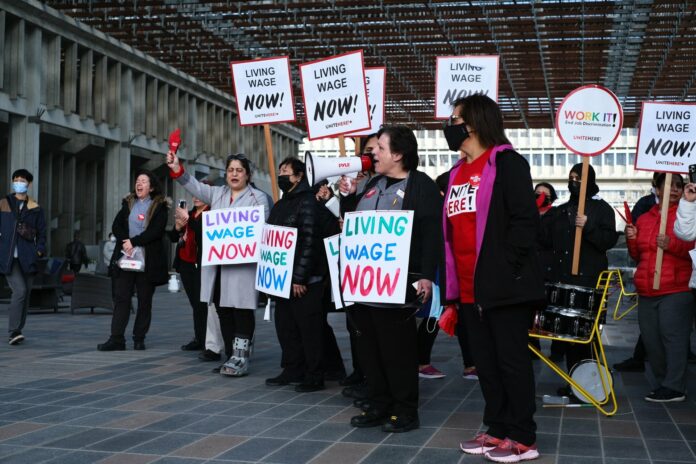
SFU workers are seen at SFU holding signs that read “Living Wage Now!” There are 11 people in the photo, most holding signs. One holds a megaphone and appears to be speaking.

By: Chloë Arneson, News Writer

Over the next three years, some SFU food service workers are expected to see up to a 17% increase in wages. This is the largest increase for food service workers in SFU’s history

In their press release, UNITE HERE Local 40 — BC’s hospitality workers union — stated that after pushing for a living wage and rallying at SFU, the union’s bargaining committee was able to achieve a collective agreement with Compass Group. 

In addition to wage increases, workers can expect better health benefits and recall protections. Recall protection promises during emergencies such as COVID-19-related shutdowns or natural disasters, workers will not lose their seniority. 

SFU hires all food service workers through Compass Group, a third-party company. This means workers must bring their concerns to this external company instead of the university. 

In an interview with The Peak, Stephanie Fung, communications organizer for UNITE HERE Local 40, noted the health benefits from the new contract. “Physiotherapy has doubled to $500 a year, massage therapy [has] tripled to $300 a year, and dental has increased from $1,500 to $2,000 a year,” she said.  

She elaborated on the struggles that SFU’s food service workers face due to COVID-19. “During the pandemic, workers were struggling with increased workloads, trying to ensure that the community’s health and safety was protected while they were serving meals to the community [ . . . ] Workers are feeling exhausted at the end of the day and feel like they’re not being treated with respect by their company,” Fung said. 

Fung said many of the workers are women of colour who have served the community for decades. The Peak had previously reported, “there is no data regarding the diversity of these workers, since they are not direct employees of the university.”

The focus of the campaign was to provide food service workers with a living wage. They had planned a protest in February of 2021 which was cancelled when Compass agreed to renegotiate their contract. 

According to the press release, “costs of living are soaring in Burnaby and Vancouver.” Fung explained, “A living wage [will] make a tremendous difference for food service workers.” 

The minimum wage in BC is currently $15.20 whereas the living wage in Metro Vancouver was $20.52 per hour in 2021. “Other companies and workers are noticing this [ . . . ] and it gives us more fuel to rise up and demand what we deserve,” Fung noted. “There are many other hospitality workers across the province who have been working through the pandemic [with] increased workloads and want job security during this time.

“It’s time they get what they deserve for all the hard work they’ve done,” said Fung.

UNITE HERE Local 40 is continuing to advocate for SFU’s food service workers. They’re asking for increased community benefits, including access to university facilities, such as campus libraries. Other employees directly hired by SFU already have these benefits. 

According to Fung, Compass Group “has agreed to meet within 45 days” of the announcement “to discuss expansion of access to university facilities for workers. 

“[It’s] a good sign that there will be conversations moving ahead,” said Fung. 

For more information or updates on their campaign, visit UNITE HERE Local 40’s website.

Windows to the past: building up historic Chinatown

0
The outside of a building with a pink and grey storefront on the bottom floor with a neon sign that reads Foo's Ho Ho Restaurant accompanied by a bowl of noodles and chopsticks
The buildings in Chinatown hold a history of quiet strength. ILLUSTRATION: Josh Ralla / The Peak

By: Kelly Chia, Humour Editor

Growing up, my fondest memories of Chinatown were walking through the iconic Millenium Gate that greets every visitor and seeing the dancing lions parading around red street lights every Lunar New Year. I also think back to the bakeries I would go to with my parents. We would come home with soft steamed pork buns and flaky pineapple buns. It’s only in recent years I’ve grown more appreciative of the history of Chinatown and the placemaking efforts of Chinese Canadians to make it such an iconic part of Vancouver. The buildings that make up Chinatown, some of which have existed proudly since the 1800s, reflect the strength of the neighbourhood and the community, offering a glimpse into its history of resistance and resilience. 

A Brief History of Chinatown in the 1800s

Though Chinese immigration to BC started in the 1850s as part of the Gold Rush, the history of permanent settlement in what is now known as Chinatown dates largely back to the late 1800s. This coincided with the influx of the approximately 17,000 Chinese migrants arriving to work on the Canadian Pacific Railway (CPR). 

Though Chinese migrants made up the majority of the railway worker crew by the end of construction, none of them were in the historic photograph capturing the railway’s completion. It was clear the BC government only employed them as cheap labour, with hundreds dying through this work. They were given the most dangerous tasks, worked in harsh conditions, and were paid $1.00 a day while paying for food and gear out of pocket. Comparatively, white workers made $1.50 to $2.50 and were provided food and equipment. 

Additionally, due to racism and economic segregation, they were forced to self-segregate in the area which eventually became Chinatown

After the CPR’s completion in 1885, the federal government no longer needed this labour force and enacted the Head Tax in an attempt to restrict Chinese immigration. This fee required every Chinese person immigrating to Canada to pay $50.00 (approximately $1,240.00 today). That fee increased exponentially to $500 in 1903 (approximately $12,408.00 in 2022). 

Despite this, more than 90,000 Chinese immigrants entered Canada between 1885 and 1923. By 1901, Vancouver’s Chinatown had a population of around 2,900 people. 

Then, the government passed a new Chinese Immigration Act in 1923, completely banning Chinese migrants from entering Canada, leaving many unable to bring their families over. In a Canada Museum for Human Rights interview, the grandson of a Chinese migrant, Dr. Henry Yu, noted the act made it nearly impossible for most men to marry and have grandkids, and many would die alone. These policies resulted in the population going from 45,000 in 1923 to a little over 20,000 by 1947, when the act was finally repealed.

Chinese people faced segregation in places like swimming pools, movie theatres, classrooms, and were excluded from voting. Their efforts to build a community in Chinatown faced constant threats, most notably in 1907, when thousands of white settlers rioted through Chinatown and Powell Street, destroying businesses and homes of Chinese and Japanese migrants. Looking into the history of the buildings in Chinatown show the efforts of Chinese Canadians to unify their growing communities, in spite of the discrimination they faced. 

Wing Sang Building 

The oldest building in Chinatown — the Wing Sang building — was constructed in 1889 by Yip Sang, an immigrant from Guangdong. Yip Sang is often recognized today for being a formidable community leader in the then-budding Chinatown.

Hired by the CPR as a bookkeeper, timekeeper, and paymaster for the Chinese railway workers, Yip went on to establish his own business — the extraordinarily successful Wing Sang Company. The import/export company, founded in 1888, opened a two-storey office on Pender Street which would eventually become the Wing Sang building.  

Beyond his business acumen, Yip helped build a number of social institutions. In 1902, he established Aiguo Xuetang, a school for his and other Chinese children. It provided a safe space in which students had proper access to education and could learn both English and Chinese. This, along with similar schools established by others, were likely a response to the racism Chinese students faced in the BC school system from additional entrance barriers to outright segregation

The Wing Sang building remained in Yip’s family until 2004, when it was bought by Bob Rennie, a real estate marketer, with the intent to restore and preserve it. For the legacy and community it represents, the Wing Sang building will be donated as the home of the Chinese Canadian Museum in 2023.

Chinese Benevolent Association Building

Another key building Yip helped establish was the Chinese Benevolent Association (CBA). Built in 1910 on Pender Street, the CBA building was one of the first in Chinatown with recognizably Chinese architecture: Chinese eaves, recessed balconies, and an inscribed parapet (a barrier that starts at the roof). 

The CBA was an important umbrella for many social services and provided crucial support for the educational and communal needs of the growing Chinese community in Chinatown.

They helped establish burial rights for Chinese communities in Vancouver and Victoria, provided some financial stability to CPR workers who were laid off, built a clinic in the building, and established a Chinese Public School. 

The clinic, which would later be incorporated into the Mount Saint Joseph Hospital, provided Chinese patients free medical services when they were not welcome at other medical establishments.

In addition to providing services, they were politically involved, advocating against the Head Tax. While the Chinese Immigration Act was repealed in 1947, many of the restrictions remained in place. In 1956, the CBA helped relax them, finally allowing many Chinese Canadian men to bring their families to the country. The CBA also fought for Chinese Canadians to gain the right to vote in 1947 — a fight that was successful.

Movements to Revitalize and Preserve Chinatown

By the time the anti-immigration laws had relaxed in 1956, large historic parts of Chinatown and Strathcona faced threats of demolition for modern development. Hogan’s Alley, a historically Black neighbourhood in Strathcona, was destroyed

The 1950s to 1970s thus saw Chinatown leaders making efforts to revitalise the area. Hong Kong entrepreneurs made new investments in the area, and Chinatown’s value as a cultural neighbourhood was recognized with it being deemed a historic district in 1971. Groups like the Strathcona Property Owners and Tenants Association fought to preserve the historic areas against threats of demolition. 

In 1979, the Chinatown Historic Area Planning Committee funded Chinese-style elements,  like red street lamps and paved crosswalks, increasing the cultural value of the neighbourhood.

This revitalization marked a new era. Leaders of Chinatown focused on drawing in citizens all over the city for their social scene through food and entertainment. 

Foo’s Ho Ho Restaurant

One of the major attractions of Chinatown in the 1950s were the neon signs that decorated the streets. Adorned with a neon bowl and chopsticks, Foo’s Ho Ho restaurant stood out to many visitors.

It was built in the Sun Ah Hotel, a 1911 building commissioned by Chinatown merchant Loo Gee Wing. Loo wanted to invest in real estate in Chinatown that would cement Chinese aesthetics to shape the city’s appearance and heritage value. 

On the bottom floor, Ho Ho restaurant, a buzzing social hub, was opened in 1954 by the Quon family, featuring Cantonese dishes

In 1997, the neon sign was removed, and the restaurant moved across the block. The building was designated a historic building in 2014. There are plans to reopen the restaurant on the same spot in 2022. 

Jack Chow Insurance Building

During this time, another iconic building was being renovated — Jack Chow Insurance, also known as the narrowest building in the world. 

In 1985, Jack Chow bought the four-foot, 10-inch deteriorating building that would later become Jack Chow Insurance. The lot had originally been bought as a bet by businessman Chang Toy to see if he could create a building in the tiny space. When Jack Chow purchased the building, he saw potential in the thin building and renovated it for $250,000. The iconic neon sign decorating the building was wider than the building itself, and has since been moved to the Western entrance of Chinatown.

In a CBC interview, Rod Chow said his father had the foresight to install sidewalk facing service windows, a feature which helped serve people in a socially distanced manner during the height of the pandemic.

Altogether, the unique visual features of this building kept people coming. The building would go on to win the International Live Design Award of Excellence in 2016, and is just as much an insurance business today as it is a tourist attraction. Rod says his father’s goal had always been to keep people interested in returning to Chinatown — to keep Chinatown alive.

Dr. Sun Yat-Sen Classical Chinese Garden

I cannot discuss any significant historical buildings without discussing Dr. Sun Yat-Sen’s Garden, which sits staunchly in the heart of Chinatown. 

According to the garden’s website, the community recognized a need to create a central cultural artefact to preserve Chinatown as a civic asset. The Dr. Sun Yat-Sen society formed with the hope to build a Chinese classical garden for the Chinese migrant community.

But there had never been a garden like this built outside of China. Architects Joe Wai and Don Vaughan were enlisted to work on the Ming Dynasty Chinese Garden, and they worked with the Suzhou Garden administration to help design and construct this garden. The garden received large funding from the Canadian and Chinese governments, as well as many private and public contributors

Not only is it a physical reminder of the efforts to preserve cultural heritage in the face of demolition, it serves as a non-profit at the centre of Chinatown. The garden provides many educational programs and tours, and partners with various community organisations in Chinatown to promote cultural connections and celebrations. 

Chinatown’s Fight for the Future

Through these buildings, I’ve learned there is a palpable determination and love for community in Chinatown. The next time you find yourself in Chinatown, I encourage you to take a walk through the neighbourhood and appreciate the culture and strength of a people who built it up in the face of harsh discrimination from the government and others. 

Chinatown has endured the rage of anti-Asian sentiment for decades. It still takes the brunt of these sentiments, particularly after 2020. In recent years, the Dr. Sun Yat-Sen garden, businesses, and murals have faced rampant vandalism. Gentrification has also threatened to displace lower income tenants. Even so, the fight to keep Chinatown alive has always been a part of Chinatown itself. However disheartening this period may be, Chinatown is here to stay. It has weathered so many disasters and formed a strong community nonetheless.

You can learn more about the stories of Chinatown from the 1880s onwards at the Chinatown Storytelling Centre. Neon lights are visible through their augmented reality app, which I highly recommend.


Plants you can grow in student climates

0

By: Amirul Anirban, SFU Student and Gem Yelin Lee, Arts & Culture Editor

Although plants have many healing properties, they can be hard to grow as a student with limited free time and a home with limited sunlight. Plants benefit our health by ensuring a “healthier environment, more optimism, and lower stress and anxiety.” 

Summer is just around the corner so without any more delays, gear up with your gardening arsenals and begin growing vibrant plants in your home! Here are some plants you can try to grow successfully in dorms and basement suites with limited lighting. 

Chinese Evergreen / Aglaonema

illustration of a chinese evergreen plant in a peachy pink planter
Illustration credit: Alyssa Umbal

If you are looking for a plant which can brighten any dark corners of your room, the Chinese evergreen is a top choice. It has vivid green foliage and is the best plant to start with because it requires less attention and time. Its known to be a low-maintenance plant that “grow[s] tall, narrow, and glossy oval foliage on short stems.” For a student who has to deal with a ton of academic work and exams but is also a nature enthusiast, the Chinese evergreen is the perfect plant to grow this summer. The plant grows slowly but surely, nestled in varying indoor spaces and students’ busy lives. They do well in student living space conditions that are typically not optimal for plants with little natural light or too much moisture. 

Tips from for growing and maintaining Chinese Evergreen / Aglaonema:

  • This plant does well even in fluorescent lighting, but avoid too much direct sunlight. It likes humid air and damp (not drenched!) soil so Vancouver climate is perfect for this  plant. 
  • If you want to be extra good to your Chinese Evergreen, you can use indoor fertilizer biannually.
  •  If you begin to see different colouration on the leaves, make sure those areas of the plant get extra sunlight.
  • Be careful! This plant can be toxic to animals and people if ingested and its natural plant juices can irritate skin.

Maranta leuconeura / Prayer Plant

Illustration of a prayer plant in a cylinder peachy pink planter
Illustration credit: Alyssa Umbal

Prayer Plants have bright, uniquely patterned leaves that grow lusciously in the space you give them. It is sure to make the dreary areas of your home come alive and acts as a natural air-purifier that will come in handy when you’re stuck indoors studying for exams. The name derives from how the leaves close vertically even at night, which resembles “prayer hands.” This house plant is grown for its “variegated green and cream leaves with bright red veins” and unique properties. It is another slow-growing plant and its height grows up to one foot

Tips for growing and maintaining Maranta leuconeura / Prayer Plant:

  • The plant grows well within the range of low to bright light. However, it prefers its leaves to be protected from direct sunlight.
  • The plant favours a humid environment so make sure to keep the soil moist by watering it once a week with low-fluoride room temperature water. 
  • Prayer plants are also toxic for animals and humans.
  • Can attract indoor pests so keep an eye out. 

Aspidistra elatior / Cast Iron Plant

Illustration of a tall cast iron plant in a peachy pink planter
Illustration credit: Alyssa Umbal

The cast iron plant got its name and reputation for how tough it is: if the plant can thrive outside with low sunlight in a shady forest, it can thrive in your basement suite with a bedroom window the size of your forearm. Who doesn’t want a friendly plant that can survive just about the worst of conditions and still play nice with others? This plant grows to be a bit bigger, up to 2 feet long and 4 inches wide. With its glossy, forest green leaves and air-purifying qualities, it is sure to add a homey and refreshing feel to your space.

Tips for growing and maintaining Aspidistra elatior/ Cast Iron Plant:

  • The plant requires minimal maintenance. By that I mean it does better if you leave it be.
  • It gets very unhappy and could die if you overwater it or expose it to too much direct sunlight.
  • This plant is non-toxic for animals and humans.