Home Blog Page 253

Bright-er Side: There’s a boatload of free parking at Burnaby Mountain Park for classes at the Burnaby campus

0
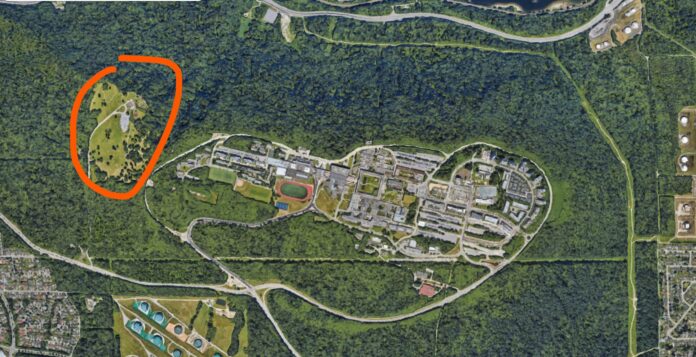
Satellite photo of Burnaby Mountain Conservation Area with parking lot encircled
Go forth and park there for free. Screenshot: Google Maps

By Nercya Kalino, Staff Writer

Listen, fellow impoverished students: you already pay plenty for your car, from the cost of gas to the cost of insurance, to the time spent in traffic. Why not do your best to avoid parking fees this semester? Fortunately, Burnaby Mountain Park has the parking you need! 

From 6:00 a.m. to 10:00 p.m., students can take advantage of a wealth of free parking just a little ways away from the Burnaby campus. It’s well-traveled, well-kept, and I cannot stress this enough free!

No one is going to walk up the mountain. Nor should you. It’s long and strenuous. But you can get in a 20-minute walk in by parking over on the other side of the mountain top. The walk from the parking lot to campus definitely qualifies as “getting in your steps in” if you’re looking to maintain a healthy and active lifestyle. 

But not everyone likes a refreshing walk. That’s okay. There’s still a big incentive to park over the hill. If you have class later in the afternoon and you park at Burnaby Mountain Park, you’ll find a fantastic view as you come back to your car through the gravel path. With the sunset coming a bit later these days, who knows? You might just be lucky to watch one. 

The park’s parking lot is usually empty of students. But we can park there, in a free, beautiful, and safe environment, rather than choosing to pay exorbitant fees to park in the depths of a concrete future prison. 

Choose better, my friends. Choose free parking.

Monday Music: crystal clear Korean vocalists

0
"Monday Music" in giant yellow block letters with a red background
Monday Music: your weekly themed playlist. Image courtesy of The Peak.

By: Yelin Gemma Lee, Arts & Culture Editor

So, you’re at your desk late at night again working away at an article for The Peak (this could be you!). You’ve overplayed your Lo-Fi playlists and frankly, they make you a little bit sleepy. I have a roster of Korean vocalists, whose voices are so clear they will tickle your brain — in a good way. Their voices will help you feel like you can breathe easier when you’re racing against the clock and your increasing fatigue. 


안녕 Goodbye By DIA

This song has been on repeat since I found it this month and is an absolute jam. I was shocked to find DIA is still a fairly unknown artist with only about 36,000 monthly listeners on Spotify. The production on this track is refreshing and her voice is like a clear night sky full of stars so stubborn you can see them through the city smog. The Korean phrase “안녕” (Annyeong) means both hello and goodbye. The song uses this duality to talk about bittersweet feelings associated with the past: how to remember and honour the past, but also let go and live in the present. Some of my favorite lines translate to, “Hello (goodbye) my childhood memories / I have so many words I couldn’t say / I would go back in time just so I can say them / Our beautiful past days are hanging in the sky.” 


Dandelion by BOL4 

I’ve loved everything BOL4 put out into the world so far. Anh Ji-Young’s voice is clear yet quite distinctive and she’s known to produce some of the most beautiful ballads. This beautiful track is one that I always come back to, with its simple lyrics flexible to interpretation. Rather than a break up, I believe it is about remembering a loved one that passed away. The chorus translates to, “You are the yellow dandelions / You visit my heart and then disappear again / After venturing the sky for a long time / I hope you come back and stay here.” BOL4’s voice reaches the high notes so easily as though she’s simply breathing. While the lyrics are melancholic, this song is a dose of endorphins for me.  


Snow 눈 by SURL 

SURL’s androgynous and unique voice paired with the industrial indie instrumentals is my go-to for any mood, especially when I need to de-stress and stay awake. His voice engages the listener tenderly in “Snow 눈,” and his lyrics are so poetic that English translations always fall short of capturing it. This song is about navigating loneliness, melancholy, and depression during winter holidays. SURL’s collaboration song titled “Don’t Say No (feat. Jay Park)” is another beloved track by this artist, and a little bit more upbeat if that suits your fancy. 


0310 by Yerin Baek

Yerin Baek is one of my favourite artists and not just because of my bias towards an artist with the same Korean name as me. She has a powerful yet gentle voice and the engaging production on her songs is sure to stop you in your tracks. Accompanied by beautiful instrumentals, Baek croons about a passionate but unsustainable love that needs to come to an inevitable end. 


Everest (with Sam Kim) by AKMU 

AKMU is a sibling duo that surfaced into the music scene and was signed after winning SBS’ K-POP Star 2, a music competition show in Korea in 2013. This cheerful duet only features one of the siblings (Lee Su-Hyun) who has the voice of an angel. The electric guitar accompanied chorus has me taking mini air-guitar breaks at my desk. This track is literally a love letter to Mount Everest which I think is super cute. Symbolically, it’s also an encouraging song about perseverance and courage. The AKMU siblings, Lee Chan-hyuk and Lee Su-hyun, harmonize flawlessly and it is sure to put your mind at ease. Another one of my favourite tracks by them is “Happening.”

Colouring the world Mauvey

0
mauvey singer on stage
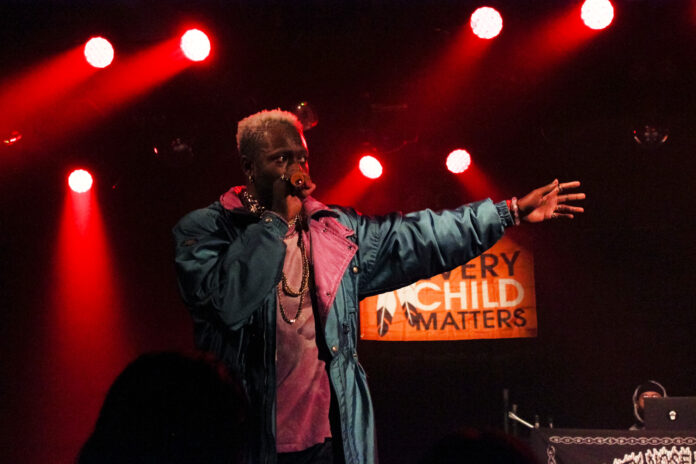
Mauvey burst onto the Commodore Ballroom stage, energy level at 100. Meera Eragoda and Gudrun Wai-Gunnarsson / The Peak

By: Meera Eragoda, Features Editor

With his notable mauve hair and a pink and blue trench coat, Mauvey was hard to miss at the Commodore Ballroom on May 6. Combine his dreamy intergalactic aesthetic with his open exuberance and you get an incredible performance. Mauvey is a Ghanaian-born UK artist who opened for Snotty Nose Rez Kids, a truly phenomenal Haisla trap/hip hop duo

Represented by Vancouver-based label, 604 Records, Mauvey currently spends his time between Vancouver and the UK, though he also spent a short period of his high school years in Agassiz, BC. Additionally, he has collaborated with other BC artists like Fionn.

Similar to a shooting star, Mauvey’s performance was vibrant and all too brief. Creating a hazy purple mirage, he vibrated around the stage everywhere at once, his zest infectious. I was new to Mauvey’s music but the single he closed with, his latest release “THE KING,” made me eager to listen to more ahead of his next album release sometime this fall.

Though mainly defined as alternative pop, Mauvey introduces a myriad of styles into his music. There are synth beats, Afro influences, and rap and punk elements, just to name a few. With influences from Childish Gambino to Prince to Oumou Sangaré, Mauvey seamlessly integrates all of these into his music, creating a unique sound.

With “THE KING,” Mauvey explains he wanted to subvert the idea of celebrating men all throughout history. He states, “I wanted to write a song tearing that apart. “THE KING” is a redistribution of power and respect to everyone, especially the immensely powerful women we have in our world.” Before launching into the song, Mauvey pointed to the audience, disregarding gender and telling each individual, “you’re a king” and “you’re important.” 

These messages are consistent with his aim to spread a message of love through his music. His last album, The Florist, makes this clear with songs about all aspects of love, including its beauty and its complications. While some of the lyrics are serious, there are others that are quirky and cute. “Bought you flowers but the pollen say achoo,” from the song “9” is one of my favourite examples of playfulness in his music, also reflected in its music video.

Mauvey is gaining steam and making his way into more than one list of new Canadian artists to follow. Though he has wrapped up his Vancouver tour dates, he’ll be back in BC soon, playing festivals in Cowichan and Squamish this summer. I wouldn’t be surprised to see him back in Vancouver in the near future and highly recommend catching his genre-bending tunes and fiery performance.

Stories from the Intersections: The Invisible Muslim

0
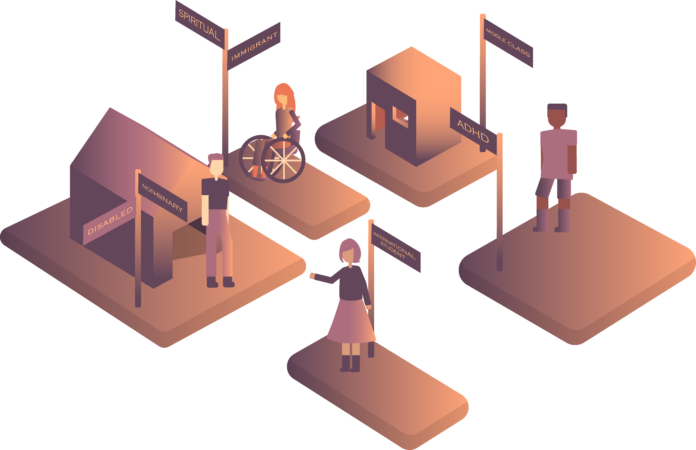
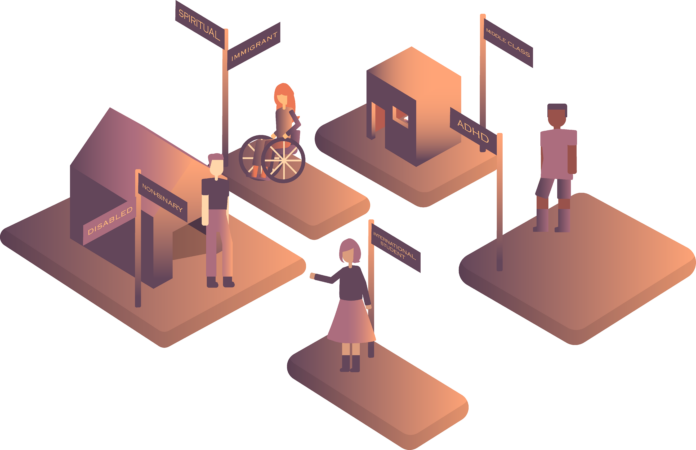
People of different identities standing at intersections, each marked with street signs that read things like international student, ADHD, etc.
Many people occupy a crossroads of multiple identities. ILLUSTRATION: Stella Nguyen / The Peak

By: Aicha Habib, SFU Student

Content warning: discussions of Islamophobia

We all use different characteristics to identify who we are: “I’m a mom” or “I’m a student.” I find it fascinating which aspects we focus on when introducing ourselves. The list of what I am is long: I’m a writer, I’m white, I’m a daughter, I’m Middle Eastern, I’m creative, I’m queer, I’m a sister, I’m a grad student, I’m Muslim, and so much more. I pride myself on being creative so I often lead with that. However, creativity is a skill that can be developed. Being half Scandinavian and half Middle Eastern, on the other hand, is something that cannot change and something most other people are not. 

 I grew up in a predominantly white country, and despite my Middle Eastern sounding name, nothing really screams brown about me. My family on my father’s side are entirely from the Middle East but I did not get the thick, dark, luscious hair that my cousins have. When looking at my mother, it is easy to see that there must be a different color palette in me to juxtapose her blonde hair, blue eyes, and fair complexion. But when I walk down the street by myself, no one would think twice about my heritage. This has obviously granted me a privilege that my brown family members do not have, and no one would ever guess that we are related. My heritage is a huge part of who I am and how I became me, but navigating it has not always been easy.

When I was born, my family was surprised to see a blonde baby enter the world. This, along with the fact that I lived in a very white, affluent neighborhood, whereas my Muslim family members lived in a poorer, more diverse neighbourhood made me feel like an outsider in my own family. 

Being the only Muslim in my small-town “community” ensured I would not feel like I belonged there either. I was repeatedly told that if I did not eat pork, I could not be part of the community — I don’t think the bigots realized that would alienate vegetarians and vegans too. In high school, I went to a friend’s house for dinner. She told tell her parents her new friend doesn’t eat pork because she’s Muslim. When I turned up, they laughed and said they expected me to wear a hijab and have a unibrow. As if all Muslims looked the same and that there was a problem with having body hair. They added I wasn’t at all like the other Muslims, as if it was a compliment. Islamophobia is real, and the Islamophobes of the world seem to think I’m on their side because of my fair skin and lack of a hijab.

But things also got complicated when I would go to my dad’s home country every summer. People would stare at me and yell at my father for not teaching me the language properly. I was so confused about what I was that, until the age of 10, I would tell people I was half Muslim. Everywhere I went, I was never whole, just half.

This all led me to seek a place of belonging outside of my home. I moved to the UK and found a chosen family, where no one cared what I was, just who I was. I’ve found the same thing in Vancouver, and I’ve been pleasantly surprised by how many people are like me here. I imagine it’s because most people here have some sort of different background, as settlers in Canada — at least in my community. 

I feel more comfortable about being multinational here, but I still put a lot of emphasis on my multicultural upbringing, because the child in me will always long for belonging — and just being Scandinavian doesn’t properly explain who I am. When people talk about how close their Muslim family is, I want to join in, because so is mine. When they talk about how their Middle Eastern aunts always gossip and will tell any secret to the whole community, I want to join in, because so do mine.

When I learned that you can’t really be half Muslim, I started going by just Muslim. Like many others in their 20s, I ended up with a religious identity crisis. Is there really a God? If so, where is she when I need her? When I was a teenager, I became aware of LGBTQIA+ issues (the 2S came even later, when I moved here). When I moved to the UK, I realized I also belonged in that community but found it seemed to clash with many organized religions, including Islam. I didn’t want to be associated with people who held outdated beliefs and, therefore, not with any organized religion. But is it possible to have the faith without the organization behind it?

As I was trying to juggle my conflicting cultures, I spent a few years not identifying as Muslim because it seemed like such an all-or-nothing kind of situation to me. When I became old enough to feel more confident in who I was, I realized most of my beliefs matched the core of Islam: be good to each other, respect your family, and give to people in need. 

So why wasn’t I Muslim? Because I like to have a drink every once in a while? Because I don’t wear a hijab? Because I’m queer? I’m pretty sure Allah has bigger fish to fry and couldn’t care less that I have a frozen margarita or who I one day choose to love. And the Allah I believe in does not preach sexism or homophobia.

I am an invisible minority and I will never try to compare that to a visible one. I will never stop trying to learn how my white privilege sets me apart from my family and how I am responsible for using that to make a difference. I will also never stop trying to find the things that unite me and my family: wanting to do good, relying on each other, and loving each other. And I will never stop teaching people that being Muslim is about your values, not your looks.

Masking the data: Whether people like it or not, we’re still in a pandemic

0
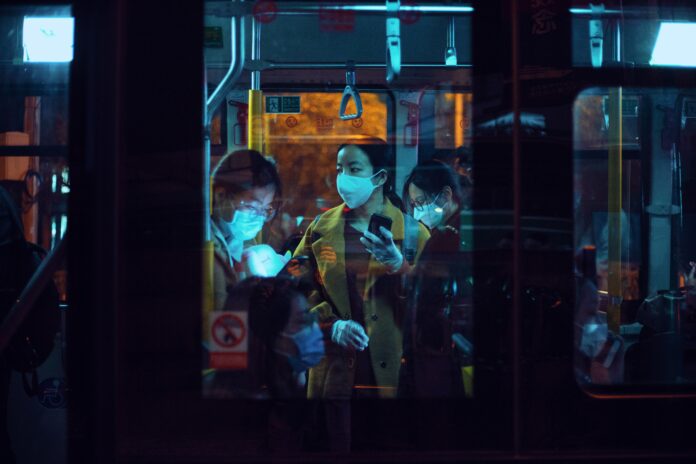
People masked up on the bus at night
Why are we playing chicken with the next wave by not masking up? Photo: Zydeaosika / Pexels

By Isabella Urbani, Staff Writer

It may seem like we’re far removed from the nationwide lockdown in March 2020, which sequestered people to their homes (minus the occasional run to the store for the bare essentials), but we’re not out of the pandemic yet. Even though we’re still in the thick of COVID-19, it’s becoming harder to grasp given the recently lifted mask requirements and vaccine cards.

British Columbians became hopeful last year when a vaccine was introduced. At the time of writing, 86% of British Columbians have received their first dose, with similar numbers for their second. The booster, on the other hand, was largely disregarded by many. At present, only 52% of people in BC have had three shots.

It’s as though people believed they’d done their fair share by receiving two shots to fill out their vaccine card that was put in effect last summer. They’re wrong, according to Dr. Tedros Adhanom Ghebreyesus, general-director of the World Health Organization.

“We are concerned that a narrative has taken hold in some countries that because of vaccines — and because of Omicron’s high transmissibility and lower severity — preventing transmission is no longer possible and no longer necessary,” said Ghebreyesus in February.

There’s this false belief that, after vaccination, COVID-19 will either just walk out of our lives — or if it doesn’t, it’s simply too hard to reduce transmission. Other ongoing measures, like mask-wearing, have sometimes been argued as detrimental to a person’s way of living. However, since the very beginning of this pandemic, the idea of masking was sold to British Columbians as being a temporary measure. It’s only natural that some might be confused by pandemic precautions being reinstated after continually patting ourselves on the back about BC’s “high vaccination rates.”  

Baiting people, whether intentional or not, with a sense of normalcy after two years of uncertainty is sure to have them biting. Whether it’s those that haven’t been conscious of COVID-19 procedures since the very beginning or those who’ve been doing their best, citizens are taking the bait and relaxing despite our having been in the midst of thea sixth wave.

What might contribute to that relaxation is that BC stopped reporting daily COVID-19 data just last month. It makes predicting the impact of the sixth wave that much more difficult ahead of the busy summer months. How can people begin to get a fair assessment of what they need to do to remain safe when they have limited information?

In April, unvaccinated individuals accounted for over half of the hospitalizations and deaths in Canada. From March–April 2022, vaccinated individuals were four times less likely to die from COVID-19 than their unvaccinated counterparts. Add in a booster shot and that figure increases to seven. Dr. Bonnie Henry already has said to expect a COVID-19 surge in the fall. With how quickly COVID-19 can mutate and spread, and given that a substantial amount of mild cases result in long-term health consequences, why are we still taking chances?

Masks shouldn’t be something we put on just to deal with a pandemic. Time and time again, Henry put the ball in peoples’ courts to wear a mask. It wasn’t until November 2020 that masks were required amongst retail workers. It’s no surprise that many people are opting to be maskless in close quarters with it now being “a matter of personal choice” — despite masks being the most effective when widely-used. I’m not sure why my potential exposure to a rapidly mutating virus should be up to others.

Masks should be an everyday item people carry on themselves and wear when they start to feel under the weather. We also need to normalize prioritizing health. If you’re sick, stay home. It’s what’s best for your recovery, and it’s what’s best for the people around you. Workplaces are struggling with a sick workforce. Whether it’s workers with mild enough symptoms to come into work, or workers taking sick days, businesses are struggling under an incoherent pandemic approach. 

A world of “learning to live with COVID-19” should include precautions to make it safe for everyone to participate in society. This would include masks, upgrades to ventilation, and social distancing. Wouldn’t this be better than letting a quickly changing virus rip through our society and stopping and starting precautions when hospitals become overwhelmed? 

People may not want to go back to living with COVID-19 precautions, but by not taking necessary precautions and jumping directly into the deep end, we’re just setting ourselves for an endless loop of re-instituted pandemic protocols. 

Need to Know, Need to Go: May 28–June 12

0
Blue and white calendar illustration with block text “Need to Know, Need to Go”
Arts & Culture events to catch around the city. Image courtesy of The Peak.

By: Yelin Gemma Lee, Arts & Culture Editor


Yellow Fever — A Powell St. Mystery 

Closing off Asian Heritage Month with a bang, Firehall Arts Centre hosts a radio play production of the “award-winning comic mystery” Yellow Fever by R.A. Shiomi. The play, “set on post-war Powell Street,” weaves between “complex threads of political intrigue, racism, and police corruption with a sharp wit and fast-paced dialogue.” This canonical Japanese Canadian production is being presented around the Powell St. area where the play is set for the first time in over 30 years. If you haven’t experienced a radio play, I encourage you to go seize the opportunity! All showtimes are on a Covid Compassion Pay What You Will ticketing system from $15–$40 per ticket. On top of that, some Wednesday 1:00 p.m. shows operate on a pay what you can basis, so this play is perfect for students on a tight budget. 

Where: Firehall Arts Centre (280 East Cordova St. Vancouver)

When: May 28–June 12, various showtimes depending on the day


Spring Soundwalks: Listening to Paint Dry and Pump Up the Volume 

Looking for a way to go for a walk, and experience something different at the same time? How about using your Sunday afternoons to participate in two free “soundwalks” presented by Vancouver Soundwalk Collective and Vancouver New Music. Soundwalks “are silent group walks led along a planned route to experience a location’s ambiance and underlying rhythms.” You are invited to take in the ordinary persistent soundscapes around us rather than blocking them out with music or a phone call. Both events have specific meeting spots and short post-walk discussions to process the experience. Whether your jam is Mount Pleasant’s artsy, mural-filled streets (Listening to Paint Dry) or the bustling life in West End (Pump Up the Volume), these sound like meditative, community-building experiences you won’t want to miss.

Where: Northeast corner of East 8th Avenue and Kingsway, Vancouver (Listening to Paint Dry) and Morton Park, 1800 Morton Ave (Pump Up the Volume)

When: May 29, 2:00 p.m.–3:45 p.m. (Listening to Paint Dry) and June 5, 2:00 p.m.–3:30 p.m. (Pump Up the Volume)


Man Up — May Musicals 

Man Up is one of my favourite recurring local queer events that feature drag performances and a dance party with some of the best DJs in town. The performance theme for this particular event is Broadway theatre. Guests are required to be double vaccinated at Eastside Studios and this is a 19+ event with a cash bar. Man Up has a “zero-tolerance policy for oppressive behaviour in all forms including but not limited to cultural appropriation, misogyny, transphobia, racism, fatphobia, and ableism” and they also have their buddy system in place “to combat rape culture and enhance the safety of our queer events.” Tickets are $22, and $25 for advance, and at the door respectively and “Pay What You Can” tickets are available in limited quantities. I always recommend getting tickets ahead of time as these events are always popular! 

Where: Eastside Studios (550 Malkin Avenue, Vancouver)

When: May 28, 9:00 p.m.–May 29, 2:00 a.m.


Doors Open Richmond

The Richmond museum is presenting its 15th annual Doors Open Richmond event from June 2–5! This free event that celebrates Richmond’s diversity is offered in a hybrid format this year with over 35 sites around the city taking part. Attend exciting food events like a tasting tour at Saint Germain Bakery’s central facility or an introduction to Persian food traditions at Anar Persian Cuisine. They also offer a faith bus tour where you will explore Az-Zahraa Islamic Centre, Lingyen Mountain Temple, and the Richmond Jamia Mosque. Many have drop-in options available so be sure to check out their programming! 

Where: Various locations across Richmond and virtual programming

When: June 2–5, various times 


Food For Thought: Bánh Mì

0
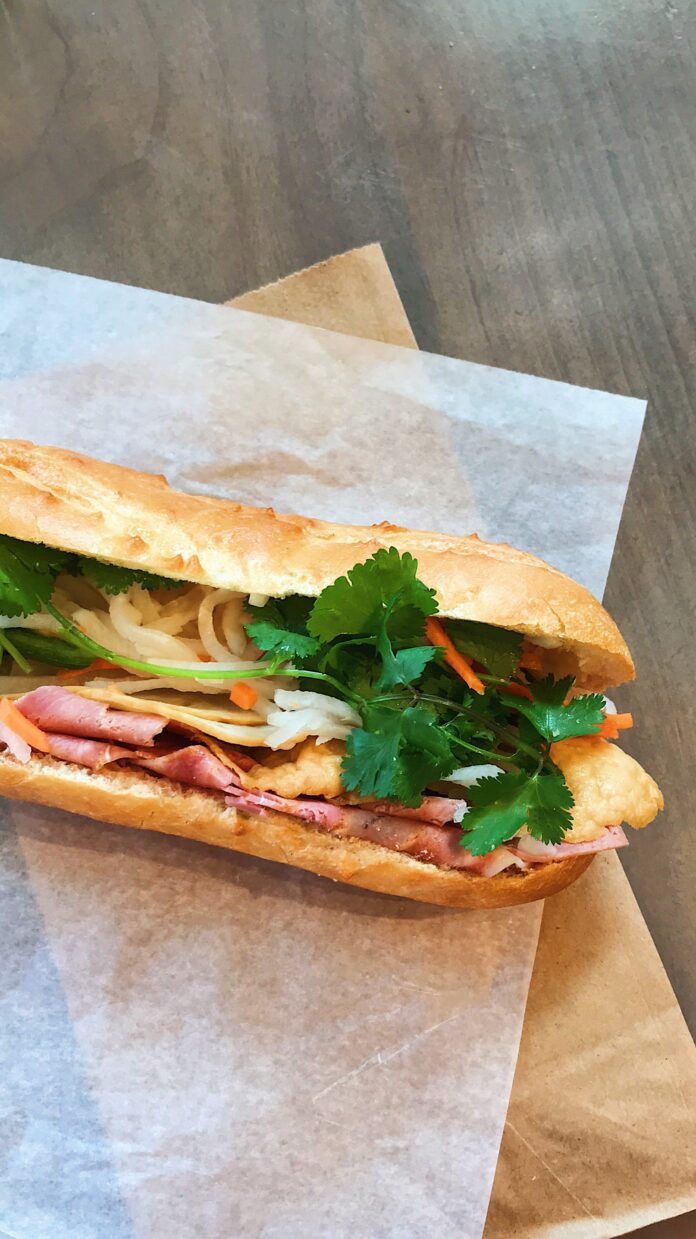
Photo of a bánh mì sandwich on a sheet of parchment paper and a paper bag beneath it.
bánh mì’s history. Photo courtesy of Amy Tran on Unsplash.

By: Michael Le, SFU Student

Being Vietnamese, I grew up eating bánh mì. I still have very fond memories of visiting Ba Le with my mom as a child. My favourite sandwich was the cold cut which included pâté, head cheese (which doesn’t actually have any cheese at all despite the name), chả lụa (boiled pork meatloaf), and assorted sliced ham. It just so happens that this is also the most classic recipe and style of bánh mì. Being that they are flavourful, filling, and cheaper than a Subway footlong, I would argue they are the perfect food — especially for students. But did you ever stop to think about where this perfect sandwich came from?

The first thing that comes to mind when I think of the bánh mì is the baguette. In fact, the Vietnamese word bánh mì literally translates to “bread” and sure enough, the “bread,” or baguette, is not native to Vietnam. The baguette was brought to Vietnam during 19th century French colonization. However, the Vietnamese locals didn’t have access to baguettes: transporting them was expensive and thus this bread was reserved for the French. They were treated as luxury goods. Over time, bread became increasingly accessible to the general public as more staple ingredients like flour were imported to Vietnam to cater to European needs.

In the same spirit of catering to the French, charcuterie, which we now know now as the cold cuts, was added to the sandwich. Still regarded as a luxury item even after the French left Vietnam in 1954, the Vietnamese population continued to have cravings for the cold cuts bánh mì. Because many of the French traditional cured meats were not available in Vietnam, the locals improvised with what they had — mostly pork and pork scraps —  to make cold cuts, pâté (also originated from France), and head cheese.

Having learned about the sandwich’s history from my mom and being exposed to so many bánh mì places here in Vancouver, the sandwich always reminds me that there are history lessons behind food. Reflecting on bánh mì’s history makes me think of how far ours has gone — it wasn’t supposed to be Vietnamese, we made it so. It was brought over to Vietnam only to appease and satisfy the colonizers, but now, the bánh mì fillings we know are inexpensive and available to the masses. Albeit being a bittersweet journey to this savoury food, I realized that claiming our version of a sandwich meant exclusively for the colonizers is synonymous with the claiming of our independence. In my eyes, this simple reclaiming of food was essential to the renouncement of the colonizers’ power.

The struggles from the French colonization of Vietnam helped this classic recipe evolve into, arguably, the perfect sandwich. If you’re in the mood for one, I recommend checking out Pho 99 at Cornerstone Mews on Burnaby Campus, or my personal favourite spot, Lucky Supermarket Deli right beside the Surrey Campus — trust me, you won’t regret it. 

I’ll take mine with extra cilantro, Maggi sauce, and đồ chua (pickled carrot and radish), please.

At the intersections: malas energías, queerness, and shaky hands

0
People of different identities standing at intersections, each marked with street signs that read things like international student, ADHD, etc.
Many people occupy a crossroads of multiple identities. ILLUSTRATION: Stella Nguyen / The Peak

By: Cynthia Piña, SFU Student

Everyone is made up of multiple components and experiences that culminate in a sense of identity. These components can include what we like, the school we go to, and the culture we grew up in. Intersectionality, first coined by Kimberlé Crenshaw, can be thought of as “the interconnected nature of social categorizations such as race, class, and gender.” However, this can also expand to the overlap of things such as culture and religion.  

I’m Latina, queer, and disabled. I don’t think I’ve acknowledged these aspects of myself together — only in individual pieces. I have friends from the Latinx community, queer community, and disability community. However, none of them have really crossed paths. This disjointedness has made me feel like I’m moving from one space to another, spreading parts of myself into different spaces, but never being whole

It’s only in recent years that I’ve even been able to see parts of myself overlap in other people. In 2014, journalist Daisy Hernández published her memoir, A Cup of Water Under My Bed, where she explores ideas of race, class, and queerness. Never before had I resonated with the vivid descriptions of growing up in a Latin American household: the mixture of English and Spanish, “las malas energías” (bad energies), and what it means to be a woman in an immigrant household. 

Not only was it an intimate examination of what it means to be Latina, but it also explored being a bisexual Latina. Because much of my experience at home has echoed the ideas of shame in sexuality and queerness often found in larger Latin American society, I was grateful to find a memoir I could relate to on more than one front. 

Being a part of the diaspora comes with its own issues: clumsy accents, fitting into two different cultures and never really belonging in either, and a disconnection from my history. Even when I tried to look deeper into the roots on my mother’s side, there wasn’t really a trail to follow, since documentation in rural Venezuela was minimal. Birth certificates alone were hard to find beyond my grandmother — her name was changed to a European one in an attempt to find more opportunity. 

While I have found solace in my wonderful Latinx friends who share cultural similarities, I felt left out when considering my queerness and disabilities. Those like Hernández have made me feel all the more comfortable exploring my intersectionalities. However, it can be hard to live in a society that continues to create barriers on various fronts, especially when conversations around identity rarely explore how different identities connect. 

While I haven’t been disabled my whole life, my fine motor skills have generally gotten worse over the past few years. Washing my hair, plucking my eyebrows, and applying cosmetics have left me feeling frustrated. However, the moment I set my eyes on the Rare Beauty line by Selena Gomez, I was overwhelmed with joy. Easy-to-open packaging by someone who has both spoken about her chronic illness and Latin American roots is something I didn’t know I needed. While I’m generally reluctant to promote specific brands, Rare Beauty’s packaging feels like something actionable to help disabled folks and is something that goes beyond sharing experiences. Again, I felt less alone knowing there was someone who shared intersecting identities and has made my makeup routine largely less irritating to my hands. 

Only in recent years have I started to feel the inequities that come from disability, how it’s defined, and how people understand it. What I learned was that people may have a full understanding and acceptance towards one part of you, but they may be very misunderstood about another part. They are for LGBTQIA2S+ rights, but hold internalized racism. They have an understanding of racial issues, but can’t understand the access needs of disabled folks. The list goes on, and while I may feel safe in certain spaces with parts of my identity, I’ve had to advocate for myself on other fronts. 

However, altogether, these experiences have left me wondering, where do I fit in? Do I want to focus on one aspect of myself over others? I had always pushed down these identities and ignored them until I no longer could — so now what? How much space can I claim when others have been advocating for these communities long before me? I don’t particularly have the answers, but I do know it’s important to talk about visibility and the need to create these spaces on all fronts. This way, others can also see parts of themselves in various communities and feel included in their entirety.   

Identities aren’t the only thing that define me, but I am grateful to see how they intersect and how they inform the way I move through the world.

Horoscopes: May 22–29

0
An illustration of a girl with long flowing hair. Astrological signs and stars shine around her.
ILLUSTRATION: Marissa Ouyang / The Peak

By: Isabella Urbani, Staff Writer

Aries
Sweet Aries, you’re toootally not a summer semester person. I know you want to get a move on your degree and more importantly, stop yourself from streaming every Netflix movie possible, but it isn’t working. You already missed your first week of classes and tried to order a Pumpkin Spice Latte at the campus Starbucks. Who does that in summer? Go home and try again in the fall.

Taurus
My Taurus child, your birthday has come and gone and so has the care for your degree. Are you even sure you’re in the right class right now? It might help if you start taking notes instead of filling your online shopping cart with clothes that are way beyond your budget for a non-existent vacation. But, happy belated birthday, I guess??? gingerly showers you in confetti

Gemini
I like your style, Gemini. You take on a realistic course load that allows you time for yourself this summer.You wake up early enough to have breakfast and dress to impress on campus. How the hell are you put together and cheery at a school that looks like a prison? And trust me, I’m not the only person taking notice (winky face emoji). In fact, you’re the cat’s meow on campus.

Cancer
What made you think you could read the student newspaper while you’re on vacation? You’re NOT one of us. You’re getting lost venturing the city, and I’m just lost, period. Classes? Don’t know, haven’t found them yet. Let me take a rain check on that. Oh, and did I mention, it’s still raining!? IN MAY. AT LEAST GIVE ME SOME SUNSHINE! shakes fist angrily

Leo
I put in a good word with the people upstairs to make sure the summer bucket list you created with your middle school friends finally comes true. You may be an attention seeker, but the only person getting your attention lately is your bed. And not for those kinds of reasons, you nasty.

Virgo
Learn how to say no more, Virgo. Look at the mess you’re in! You’re accompanying your friend to all their summer classes when you aren’t even enrolled in any. Don’t tell me — OH MY GOSH, YOU DON’T EVEN GO HERE TOO! Are you seriously taking notes? Put that pen down. Don’t make me rat you out to the professor! Get a grip, go for a walk, and make it far away from all school campuses.

Libra
Libra, Libra, Libra . . . I don’t even know how you’ve found the time to read your horoscope in between the three jobs you’re working this summer. Bless your little heart. They’re all in retail. It’s like you’ve never worked those types of jobs before. Here’s a tip: make them seasonal. I heard Subway is hiring in the fall.

Scorpio
Scorps, take a breather! It’s been one class and you already have the syllabus memorized front and back — all 13 pages. You know the course material better than the professors themselves. That assignment due at the end of the semester isn’t going anywhere. Kick your feet up, but make sure to move the textbooks half-haphazardly scattered around your room — that’s pretty reckless of you tbh. Keep it up.

Sagittarius
So you decided to get a job over the summer and landed on working for the student newspaper? One, ew. Two, you haven’t quit yet? Double ew. What did you say you do again? Write horror stories? No, that’s not it. Something with an “h.” Come on, people only read The Peak for the crosswords, sudoku, and horo—OHHHHH, that’s what you do!

Capricorn
Oh, no Capricorn. Hate to be the one to break it to you, but that one professor you wrote a really bad — but fair — review for has cursed you! Your punishment? You get to take another one of their classes this summer! Seriously, did you even look ahead of time to see who the instructor was? The stars are not on your side. Get out while you can.

Aquarius
Aquarius, you’re going to put the WHORE in HOROSCOPES this summer while respectfully masking up. Who says you can’t do it all with just your eyes? It’s about time you get back on the prowl. Leave your number all over campus — and yes, even in the avocado. Sorry, it’s just that kind of year.

Pisces
Ugh, it’s you again. For the last time, I do horoscopes! I can’t and will not give you the answer key to that upcoming test. It’s easy really: have a night in and stream all your unwatched lectures like they’re the newest season of your favourite tv show. My oh my, does McSteamy from Grey’s Anatomy ever look different!


Upintheair Theatre presents rEvolver Festival 2022: six must-see productions

0
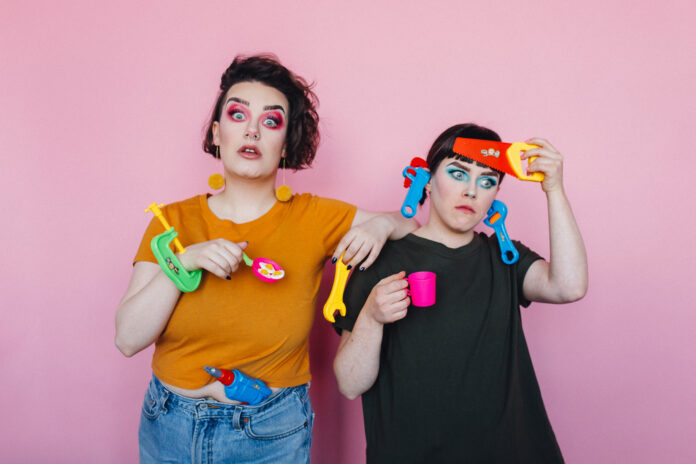
Two individuals standing against a pink background armed with various children’s toy construction tools. They wear shocked and confused facial expressions and blue and pink eyeshadow.
rEvolver festival features inclusive and innovative performances by Canadian artists. Photo courtesy of Mike Tan.

By: Jocelyn Stevens, SFU Student

Upintheair Theatre will be hosting its highly anticipated annual rEvolver Festival at The Cultch in East Vancouver. The 12-day festival returns in-person this year from May 25–June 5. In regards to COVID-19, masks are recommended or mandatory depending on the show, and are provided upon request. The festival presents various performances and events produced by “a new generation of Canadian interdisciplinary artists.” Tickets are priced between the following options: $30, $22, or $15. They also offer ticket packages, with the all-access pass being $120. 

This year’s programming focuses on the theme of interconnectivity and ranges from theatrical performances and stage readings to intimate interactive digital and audio experiences. With such an impressive and inclusive roster this year, the festival is not one to miss.

Gender? I Hardly Know Them by Elena Belyea and Syd Campbell

Photo Credit: Elena Eli Belyea
Gender? I Hardly Know Them is created and performed by comedians Elena Belyea and Syd Campbell from Tiny Bear Jaws in Edmonton. This sketch show is “out to queer the world” through comedy in a fun yet provocative approach. What really interests me about this piece besides it being a comedy — which I’m a big fan of — is that the show is based on the Alberta Prairies. It makes me wonder: “What is it like to be queer in the prairies?” 

You can view this sketch from May 26–May 29.


Holy Moly by Jarin Schexnider

Photo Credit: Jarin Schexnider 

Go find a pair of corded headphones for this next show performed and created by Jarin Schexnider. It is a unique, interactive, “choose your own adventure” production that gives the viewer control on how it plays out. If you attend, you will be given a random audio track from Schexnider’s personal cassette tapes. These cassette tapes are mixed with “jazzercise, cooking shows, and Schexnider’s own childhood field recordings to recover a feeling of holiness.” I’ve never been a part of an interactive performance where the audience decides how the plot plays out, so I’m really excited for this one. 

You can view this performance from May 25–May 29.


Harvesting Ancestral “Tea-Chings” by Siobhan Barker

Photo Credit: Siobhan Barker

This is another interactive performance that includes stories and traditional African cooking from writer, producer, and performer Siobhan Barker. Those who attend will partake in humorous storytelling and cook-along while “exploring known and unknown mixed-racial identity and intersectionality in living with disability.” The goal of this interactive performance is collectiveness and reconnecting with cultural roots. As a Métis person, this piece interests me because it talks about ancestral teachings, displaced and colonized people, and how the “Black/African diaspora carry the land” with them in every form; experiences which are familiar to the Indigenous peoples of Turtle Island (Canada) as well. 

This performance is available May 26–June 5, with an in-person viewing (masks mandatory) available on May 26.


Built Different by Connor Runnings

Photo Credit: Tamara McCarthy

Couch Dwellers Productions presents a play that follows four autistic young adults who bond by reflecting on difficult truths after the passing of their behaviour consultant. This dramedy about “love, loss, and solidarity” will be one that stays with the viewer. This production gives perspective on what dealing with these types of scenarios can be like for an individual with autism. There is a “relaxed performance” viewing where lights will remain partially dimmed and doors will be left open.

This performance will be held from June 2–June 5, with the relaxed viewing held on June 4.


FR (Friendship Ritual) by Calvin Peterson

Photo Credit: Calvin Peterson 

This one I found not only cool, but super cute in the sense that it’s something you can do with your loved ones, whether they are your closest friend, family member, or your partner. Here, you and one other person go through an intimate and interactive 45–60 minute audio experience. The fun audio programme guides you through friendship with art, dancing, and deep reflections. I personally want to give FR a try as its concept centers around encouraging you to appreciate the people in your life that have been with you through thick and thin. 

Another cool note is that this event is free (who doesn’t love free stuff?) and remote, so it’s very accessible and available throughout the entire festival.


New Societies by Re:Current Theatre

This last performance is quite a unique one: a strategic 120-minute long game night moulded into a theatrical narrative that is ultimately created by the players’ choices. Attendees are placed into groups to build their own societies through improv and compete against other imaginary societies. What intrigues me about this piece is that it encourages the players to reflect on how our world and societies operate, which can be something one tries to avoid consciously and subconsciously. It gives players a chance to create a new and, perhaps, a better world: their very own utopia. 

New Societies takes place off-site at Progress Lab 1442 running from June 1–June 4.


To learn more about rEvolver Festival 2022 and to purchase tickets, check out their website and Instagram.