Home Blog Page 243

Opera Mariposa hosts its annual Benefit + Awareness Campaign

0
Singer Jacqueline Ko is standing in a sequined dress in front of a vintage microphone. She is spotlighted by a beam of light, against a dark backdrop of purple mist.
The event will be held online and over a month to increase accessibility. Image courtesty of Stephanie Ko

By: Charlene Aviles, Peak Associate

Opera Mariposa, an opera company, is hosting its 10th annual Benefit + Awareness Campaign for myalgic encephalomyelitis (ME) and fibromyalgia (FM) during May 1–June 1, 2022. Their website notes they are “Canada’s first entirely, openly disability-led and run opera company.” 

The virtual campaign will include a music video from singer Jacqueline Ko and interviews with Ko and YouTuber Robin Hahn. Opera Mariposa has also partnered with Christina Baltais — an artist living with myalgic encephalomyelitis who uses paintings, photography, writing, and art to showcase their experience living with chronic illness. 

Opera Mariposa reports myalgic encephalomyelitis can lead to issues ranging from “chronic pain, cardiac issues, and immune problems to neurological symptoms like movement disorders, light sensitivity, and intermittent dyslexia.”

They also note fibromyalgia is characterized by chronic fatigue, widespread pain, brain fog, issues with sleeping, and digestive issues. According to ME | FM Society of BC, “the cause of myalgic encephalomyelitis is not yet known.”

The campaign’s goals are to increase public awareness on myalgic encephalomyelitis and fibromyalgia, raise funds for the ME | FM Society of BC, and build a community.

In an interview with The Peak, Stephanie Ko explained her sister Jacqueline was always passionate about fundraising and educating others on myalgic encephalomyelitis. They realized from first-hand experience how few people were educated on myalgic encephalomyelitis.

“We’ve encountered that first-hand in the medical system trying to seek health care, and then that flows through to family and friends and the public, the lack of understanding, the lack of support,” said Ko.

She added, “There’s an additional urgency now with COVID-19, because the majority of these types of illnesses [can be] triggered by viruses.”

Ko reported, “Researchers are estimating that one in ten folks who get COVID-19, including mild cases and even initially asymptomatic cases, are probably going to develop myalgic encephalomyelitis.”

The response to the annual campaign has been positive. She explained many participants approached her enthusiastically about how the event was the first of its kind in Canada.

“When we started these events, we had folks phoning us up saying that they’d never heard of an event like this and being excited, saying ‘And it’s in Canada where I live!’” said Ko. 

Ko explained the urgency of this cause, especially since many people with myalgic encephalomyelitis and fibromyalgia have difficulty accessing health care resources.

“Myalgic encephalomyelitis is a very prevalent illness. Prior to the pandemic, it affected over half a million people in Canada [ . . . ] but it’s not even talked about in most medical schools. For people, it takes many years to get a diagnosis, and they think about 90% of people with it aren’t even diagnosed.

Statistics Canada showed that myalgic encephalomyelitis and fibromyalgia had the greatest unmet healthcare needs of any chronic patient population in Canada and the highest poverty levels,” said Ko.

At the heart of the campaign is Opera Mariposa’s commitment to accessibility. Taking into account the different aspects of accessibility, the campaign will be online, self-paced, sensory-friendly, and feature closed-captioning, and alt-text.

“To me, temporal access, temporal accommodations, is one of the most invisible but pervasive aspects of accessibility, or the most common friction points, particularly for people with energy limiting illnesses or access needs,” said Ko. Participants will be able to watch the interviews, experience Baltais’ work, and Ko’s music online at their own pace.

Opera Mariposa is accepting donations via Rally Up.

To learn more about the campaign or to purchase entry tickets, visit Opera Mariposa’s website.

Climate Crisis: We can handle worrying about multiple problems — we just lack the time

0
Climate rally sign reading “one world,” written over a drawing of the planet.
Climate action remains on the backburner. Photo: Markus Spiske, Pexels

By Luke Faulks, Opinions Editor

Just over a month ago, the Intergovernmental Panel on Climate Change, the planet’s highest climate research body, released the latest in a series of damning climate predictions. Among the frightening calls to action was their finding that a livable world depends on global emissions peaking in 2025. It gives us just three years to reverse a horrifying upwards trend in planet-warming emissions. The problem is that it’s not resonating with citizens. 

Predictably, researchers have been trying to work out why climate doesn’t animate voters for a while. One idea that’s gained prominence recently is the “Finite Pool of Worry” (FPW) hypothesis. FPW argues that humans have a limited number of issues they can care to stress about at any given time. Though the term was coined in 1991, the hypothesis was first applied to climate change in 2004. The study investigated why climate change remained on the backburner of public opinion. They put a survey to two groups of farmers. Each was presented with a research on seasonal climatic conditions for the coming year, one favourable, one not. It found that beyond ranking climate as a higher concern, the group exposed to the poorer climatic outlook expressed less worry for other factors, like taxes or politics. Basically, “as the concern about climatic risk increased, concern about political uncertainty diminished.” 

The FPW hypothesis has been gaining traction in recent years, even leaping beyond academia to mainstream news outlets. Why the boom? COVID-19. 

Some academics had been worried that stress about COVID-19 would diminish climate anxiety. Instead, the research shows that climate worry stayed high as COVID-19 surged. A survey of the United Kingdom in 2021 suggests that climate has become an “intransigent” worry for citizens. In essence, it’s an issue citizens feel consistently upset about, regardless of the context — including, apparently, a global pandemic. Opinion surveys in Canada support the hypothesis. Early in 2021, before wildfire season and the heat dome, the environment surpassed COVID-19 as Canadians’ “top national issue of concern.” 

The question arises, then, why aren’t we doing anything about it? The answer is we don’t have the time to care. Research, let alone political participation, are luxuries that an overly-busy citizenry can’t afford in an economic system that demands so much of our time. 

Let’s take Canada. Whether it’s taking the time to exercise, to cook, or to lead otherwise healthy lifestyles, Canadians don’t have enough free time on their hands. That might be why, out of 30 countries surveyed this year, Canada ranked among the bottom five states whose citizens are aware of any national climate plan. In a busy country, we don’t find ourselves with the time to engage meaningfully with the issues of the day.  

British labour economist and universal basic income champion Guy Standing has written and spoken about the need to recapture citizens’ time. A new politics based on time, he argues, is necessary to spur citizens’ “community and political engagement.” He’s right. In Canada, politics based on reclaiming Canadians’ time is a necessity for climate action. Only a fully informed citizenry can be fully engaged on climate action, and right now, that’s not us. 

The FPW hypothesis doesn’t account for everyday pressures felt by Canadians. While climate remains ever-present on our minds, our ability to meaningfully engage on the issue, let alone keep it at the fore of our everyday lives, is hamstrung by smaller everyday pressures. Climate change alone is enough of a threat. To have a citizenry that’s meaningfully engaged on the issue, however, means reforming the way we work and live to afford us time. 

SUBstandard: The Student Union Building hours should match the rest of the campus

0
Student Union Building during the evening
The SUB forgets we pay for it. Photo: Jonathan Wong / The Peak

By Nercya Kalino, Staff Writer

How is it that the most student-centric building on campus has the most restrictive hours? Whether it’s during or in-between semesters, most of the Burnaby campus is basically open 24/7. Not so with the Student Union Building (SUB). It’s time for the building’s hours to match the rest of the campus.

To be fair, between 10:00 p.m. and 7:00 a.m, some of the campus’ doors are locked. But there’s always a way to get into campus. It seems like a no-brainer as to why. As students, our schedules vary based on our course load, extracurricular activities, and the lives we have outside of academics. I’m sure you’ll find during your university career that students have some of the weirdest schedules around. The rest of the campus has hours that accommodate students’ complex schedules. Case in point, the AQ is open 24/7

The SUB, it seems, has yet to realize the problem with restrictive hours. Between semesters, the building’s hours are 10:00 a.m. to  4:00 p.m. Fine, I guess. During the semester, though, the building opens two hours after the rest of the campus at 9:00 a.m. Why? That’s not even the worst of it, because the building is entirely inaccessible before then, unlike the rest of the campus.  

It feels like a bait-and-switch. We’ve spent so long waiting for the SUB to fully open, and now it’s opened with restrictive, seemingly arbitrary hours. And that is not all.  Due to this restriction, many of us crowd the building at peak hours in hopes of avoiding traffic in other communal spaces. Earlier this year, the SUB closed to reducing in-person activities due to rising cases of the new Omicron variant, despite the SFSS articulating their concern for the health of students. Not ideal in the middle of a pandemic where we’re apparently supposed to be social distancing. The SUB’s hours make that harder. 

That’s not even to mention the sheer number of critical student spaces the building houses that are off-limits to students thanks to those weird hours. The SUB is supposed to be one of the spaces that indulge students. We have spaces for food, retail, napping, recreation, dining areas, as well as study areas. We’ve also got important groups representing marginalized groups like the Disability and Neurodiversity Alliance, First Nations, Métis, and Inuit Student Association, and Students of Caribbean and African Ancestry residing in the SUB. 

All of this begs the question, “why?” Why the abnormal hours?

 If the SUB’s decision-makers are short-staffed, hire students! We need jobs. There are plenty of students that live on the Burnaby campus surely seeking experience. But if we’re being kept from the building because the SFSS feels overly protective of its new toy, well that’s harder to respect. 

Students don’t have predictable hours and we’re absent any concrete reasoning from the SFSS on why things like $11,000 parties are more important than paying for SUB maintenance staff. While in part, this is speculation, the building’s limited hours continue to feel like bait for something we can’t fully enjoy. The hours of operation remove groups of students that have unconventional schedules. It’s not us, it’s the hours. 

 We’ve paid for the space. We’re still paying for the space. It’s time for the building managers to unclench and line their hours up with the rest of the campus.  

The Darkest Timeline: Why are we so obsessed with the multiverse right now?

0
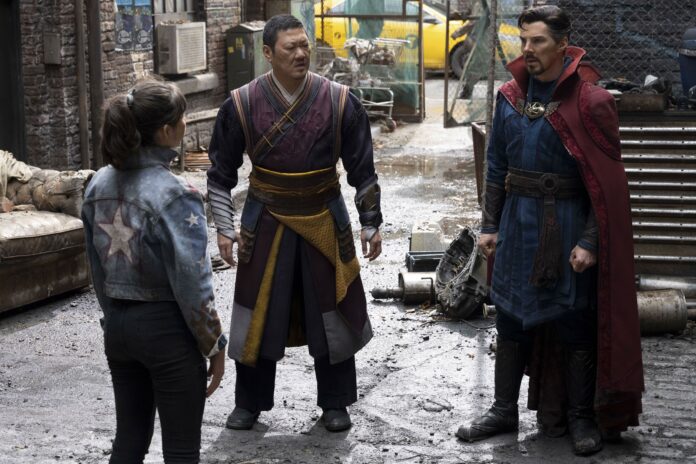
Dr. Strange (Benedict Cumberbatch), Wong (Benedict Wong), and America Chavez (Xochitl Gomez) in Doctor Strange in the Multiverse of Madness.
The multiverse is a cross-medium phenomenon in 2022. Image courtesy of Disney

By Yasmin Vejs Simsek, Staff Writer

The multiverse. It’s understandably on everyone’s lips right now. When it seems like our own reality is becoming increasingly nightmarish, we want to check-in on an alternate self to see who has it worse. Simply put, the multiverse is everywhere thanks to our increasing desire for escape and comfort.

That’s not to say The multiverse is a 2020-era invention. The idea of multiple parallel universes started circulating over 2,500 years ago in Ancient Greece. Flash comics and Michael Moorcock’s The Sundered Worlds helped re-introduce the concept to readers in 1961 and 1963, respectively. You’re probably familiar with the concept thanks to Marvel’s billion-dollar, movie-length meme. Marvel is not the only one exploring the multiverse. In the multiverse we also find comics such as DC, novels like His Dark Materials, and TV series like Rick and Morty. Undoubtedly the multiverse is most profitable capitalistic venture for show business.

So, why are we hooked on the multiverse right now? 

The best answer is the most obvious: COVID-19. These last two years have felt like the longest in living history and a lot of people wish there was a real end in sight to this pandemic. With Shanghai going back into lockdown, the finish line seems further and further away. Who doesn’t fancy an escape? A great escape would be to walk to another world, a parallel universe where there is no pandemic, no wars, no anti-vaxxers — just magic, heroes, and more Benedict Cumberbatches. 

With the multiverse, there’s a diverse array of escapist options. Everything Everywhere All at Once is a 2022 movie that makes absolutely no sense (humans have hotdogs for fingers at one point), but is a comedy about how the main character is struggling in our world and needs to connect with parallel universes to make sense of it all. If I didn’t convince you to watch it with hotdog fingers, it stars Michelle Yeoh, who we should watch every day, but especially during Asian/Asian American and Pacific Islanders heritage month. We all need a laugh these days, so watching a comedy about the multiverse is exactly the escape we need. 

It’s not just speculation. There was a huge surge in superhero and disaster movies in the ’00s. Just as we needed superhero movies after 9/11 to feel hopeful, we now see a need for several universes to feel there is a way out of the current state of the world. The reasoning was explicit in movies such as Iron Man and The Dark Knight. Both movies also revolved around terrorism — domestic and abroad. Despite increasingly problematic portrayals of Muslims, the media and political landscape allowed audiences to fulfill a desire for protection. Similarly now, humanity has plenty to gain safety from, so we seek it out in parallel universes. 

From Doctor Strange’s utopian Earth-838 to the fantastical, philosophy-heavy universes in His Dark Materials, the multiverse abounds. Check in to see if you’re really in the darkest timeline. 

Reconciliation on campus: Land acknowledgments at the start of classes are still performative

0
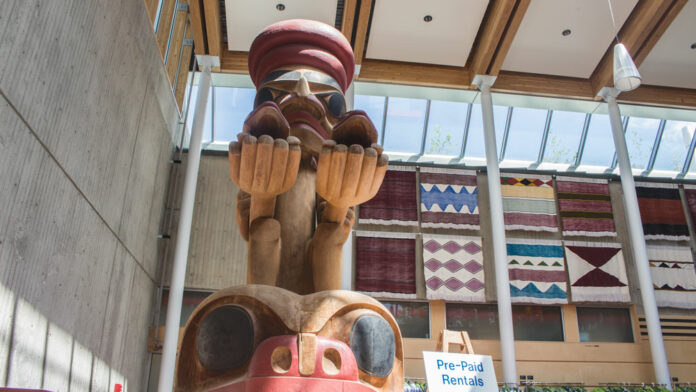
Indigenous statue pole in the AQ
Land acknowledgments are just the beginning of the work. Photo: Adam Madojemu / The Peak

By Maya Beninteso, Peak Associate

Content warning: mentions of graphic violence towards Indigenous peoples

As another semester dawns upon us, it means enduring another semester of empty words and abysmal attempts at reconciliation. The use of land acknowledgments, whether at the beginning or throughout the semester, lacks a key component: action. 

While important, land acknowledgments are the bare minimum and at the end of the day. In a world where Indigenous peoples lack clean drinking water, continue to end up missing or murdered, were confined and killed in residential schools, and comprise a disproportionate percentage of the foster care system, words uttered in a monotone fashion are purely performative. This chapter in Canada’s “dark history” is not closed — nor has it ever been — and SFU can do much better to act on Canada’s ongoing genocide

It seems as if Canada’s “engaged university” continues to lack engagement with respect to reconciliation. In my experience, land acknowledgments are met with a sigh by some faculty members — as if acknowledging we are indeed on stolen land is a waste of their breath. The attitude towards land acknowledgments may be a contributing factor to why Indigenous peoples see these utterings as superficial. In the words of the Algonquin elder Claudette Commanda, land acknowledgements are simply “a brownie point on [the] Truth and Reconciliation Commission report card.

Notably, the education system continually fails to address its colonial curriculum at every level. Education must expand its horizons beyond textbooks written by white cisgender heterosexual men with a Western lens. It often lacks Indigenous histories and perspectives but has been reinforced as “education.” 

Students, like the rest of our society, should be learning from an Indigenous lens within post-secondary institutions. They would gain invaluable knowledge from people who can share history from their own experience, instead of a colonial perspective. On top of that, this would fulfill Call to Action 63, which suggests education should integrate Indigenous knowledge and history into its curriculum. Faculty members need to be provided with the proper education in order to teach students on Indigenous ways of learning and knowledge. For instance, Indigenous knowledge has been recently consulted for matters pertaining to environmental protection. Faculty members can also invite Indigenous leaders and experts to share knowledge while retaining the integrity of their roots and paying them for their labour. Incorporating Indigenous knowledge, along with sincere land acknowledgments, is the bare minimum.  

The world of academia has historically been, and continues to be, composed of cisgender white men and SFU is no exception. There is a white bias towards white men that exists in the world of academia, wherein these candidates seeking research opportunities receive a response at significantly higher rates than any other intersectional identity. This reinforces systemic barriers that marginalized communities face. One way to combat this discrepancy is to add more diversity to educational institutions. In the Final Report of SFU’s Diversity Meter, a mere 3.7% of SFU’s faculty identified as Indigenous — a statistic which SFU claims is “proportionate” to the general population. However, according to the Government of Canada, 4.9% of Canada’s population identified as Indigenous as of 2020. 

SFU’s inaction doesn’t mean you cannot participate in reconciliation. Though I’m not an Indigenous person, there are a myriad of ways in which one may support reconciliation and Indigenous peoples. Namely, you can start by educating yourself on Indigenous history, culture, languages, and ways of learning. If you truly want to make a significant impact, you may further organize a fundraising event for a charity that supports Indigenous peoples.

Reconciliation doesn’t end with teaching Indigenous ways of learning and acknowledging we’re on stolen land. It means removing systemic barriers that Indigenous peoples face, listening to them,  and platforming their voices. 

Need to Know, Need to Go: Food Festival Edition

0
Illustration of a blue calendar, with "Need to Know, Need to Go" written on top
Arts & Culture events to catch around the city. Image courtesy of Brianna Quan

By: Yelin Gemma Lee, Arts & Culture Editor

When I think of summer, one thing that comes to mind is food festivals. Walking around an outdoor market and trying so many foods that you have to loosen your belt is one of my favorite ways to spend a hot summer day. Food festivals are also a great way to find out about new local brands and businesses to support. Mark these dates on your calendars because many of these food festivals only come once a year!  


Braid StrEAT Experience!

This food truck festival began in 2020 as a bi-weekly drive-thru to safely support food truck businesses and the Royal Columbian Hospital Foundation impacted by the pandemic. It’s returning as an in-person event this year, welcoming folks to set up a picnic and listen to live music while they eat. According to Daily Hive, there will be a rotation of 20 participating vendors differing each day and local businesses selling their products as well. 

Where: 97 Braid Street, New Westminster (next to Braid SkyTrain station)

When: May 21–May 22, 11:00 a.m.–8:00 p.m.


BC Halal Food Fest 2022

A new food festival is born this year and a much needed one at that. With BC being the home to over 79,000 muslims, the festival aims to “strengthen and unite the Halal food community to create a delicious collection of vibrant cultures and traditions in our own little corner of the world.” The event is free to attend and welcome to everyone, promising Halal food and drinks, vendors, and activities. 

Where: Surrey Civic Plaza 

When: June 25, 12:00 p.m.–9:00 p.m.


Planted Expo Vancouver

Previously called Veg Expo, the largest plant-based lifestyle expo of the year returns to the Vancouver Convention Centre this summer! The event boasts over 200 vegan food and lifestyle vendors and features a stage programme of inspirational speakers from all over the world. Every year I’ve gone to this Expo, the sense of community and compassion has always been strong. Whether you’re vegan or not, be prepared to learn something new and to try many different vegan delights. 

Where: Vancouver Convention Centre West (1055 Canada Place)

When: June 4–5, 10:00 a.m.–5:00 p.m. 


Richmond Night Market

With almost no need for mention due to its raging popularity each summer, the Richmond Night Market is introducing Hawaiian food to their stacked roster. Although not quite the same, the Richmond Night Market makes me nostalgic for late night food-stall snacking under street lamps in Korea. This is a fun place to try both innovative and nostalgic Asian street foods, especially with their expanded seating this year. 

Where: 8351 River Rd, Richmond

When: April 29–October 10, weekend evenings (hours vary)


Japan Market Summer Festival

As part of explorASIAN 2022’s programming, this Japanese market is making a comeback after a two-year hiatus. They promise over 70 vendors of Japanese edible treats and merchandise. The event is in the heart of downtown this year, so you can snack your way through the festival before checking out an exhibit at the Vancouver Art Gallery. 

Where: Vancouver Art Gallery North Plaza

When: June 11–June 12, 10:00 a.m.–5:00 p.m.

Monday Music: for the melancholic transition into summer

0
"Monday Music" in giant yellow block letters with a red background
Monday Music: your weekly themed playlist. Image courtesy of The Peak.

By: Cristina Liao, Peak Associate

As the weather gets warmer and the first bloom of sprind fades away, summer is peeking around the corner. These songs are perfect for the feelings I associate with the season: melancholic summer nights where the sun stretches into twilight or singing from the car window on a roadtrip. Get ready for a summer of high emotions. 


Apple Pie” by Lizzy McAlpine


Photo Credit: AWAL 

Lizzy McAlpine’s soft and beautiful voice on “Apple Pie” matches the sappy emotions that can be felt in the months between May and August on a chill morning. This is a song from McAlpine’s debut album in 2020, Give Me a Minute, and it encompasses the feeling of summer love. With minimal production and gorgeous lyricism, McAlpine croons about wandering through homes and missing somebody. She mentions her real home is with a person who can be presumed to be her lover. 


If By Chance” by Ruth B

Photo Credit: Columbia Records

“If By Chance” by Ruth B is a melancholic summer song, but it’s one of those pieces that you have to listen to on a July night at a cabin. If you can’t be there, this song helps you imagine it. The production on this piece features a mix of piano and orchestral elements. From the lyrics, one can tell that it’s about the singer telling her ex-lover that they’ll always have a chance even if they are with someone new. With lyrics such as, “And I don’t mean to be selfish / But my heart breaks every time / That I see you smile / ‘Cause I know that it’s not me,” this is definitely a song that will get you in your feels on a warm night. 


Falling Up” by Dean Lewis

Photo Credit: Island Records 

“Falling Up” is a perfect carpool karaoke song, that you scream out of an open car window on the highway. With the upbeat production, this is a sure hit for your dance party. According to Indie Band Guru, Lewis’ song “speaks to the loneliness and claustrophobia that can be relatable to the current pandemic. But it also speaks to frustration, anxiety, and the struggle to be truly content in life.” If you want a more acoustic feel to it, Spotify has guitar and piano versions of the song. 


Never Had A Chance” by Katherine Li

Photo Credit: Katherine Li 

More and more music can be discovered through TikTok. I initially found out about Li through her TikTok account, and thought that “Never Had A Chance” was a gorgeous piece by an independent artist. While being quite a sad song, it is one for the quiet and lonely summer nights. Similar to “If By Chance,” this has more of a melancholic feel and is about missing someone even if you had never been in a relationship with them. 


london (with Cam)” by Wrabel

Photo Credit: Big Gay Records/Nettwerk Records

The song “london” is a chill, easy-to-listen piece about missing someone in the summer. The singers talk about how when it gets cold in California, they think back to that winter in London. When they miss London, they’re missing that person. While the lyrics to this duet can be melancholic, it can also be understood as uplifting at the same time. The lyrics convey that they are still in love even if the relationship didn’t necessarily work out. As this song is a duet, it seems to show both perspectives of a relationship. The lyrics convey a cutesy summer feel for a montage of main characters running through a field of flowers.

Canadian Blood Services adopts inclusive screening practices

0
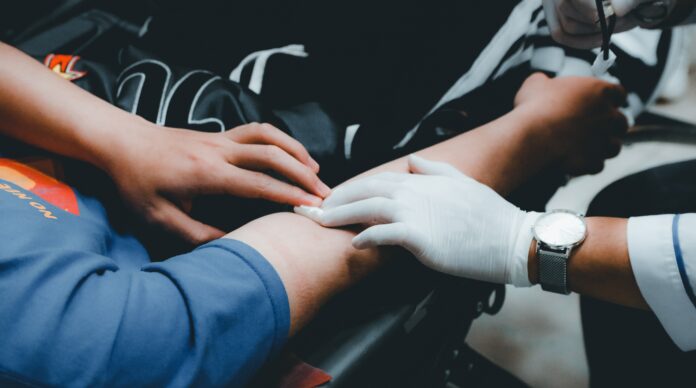
an individual in a blue shirt and black pants is sitting down with his arm outstretched. A doctor wearing white gloves is applying pressure to his arm with gauze. The individual is donating blood.
Michael Kwag discusses how the blood ban is a part of medical discrimination. Image Courtesty of Unsplash (Nguyễn Hiệp)

By: Chloë Arneson, News Writer

Canadian Blood Sevices (CBS) has announced that by September 30, 2022, queer men will be eligible to donate blood. Previously, gay and bisexual men were not eligible to donate blood if they had been sexually involved with men within a three-month span. On April 28th, Health Canada approved the CBS submission to change screening policies. The updated policy includes universal screening criteria that encompasses everyone who has sex with men, rather than only queer men. 

This means that regardless of gender or sexual orientation, each donor will be asked the same questions regarding their sexual health. Previously, screening questions regarding sexual activity was only asked to people in the LBGTQIA2S+ community.

Additionally, transgender donors will no longer be asked screening questions based on their sex assigned at birth. Non-binary donors will still be required to register with CBS in a binary gender. 

In an interview with The Peak, acting director of Community Based Research Centre (CBRC), Micheal Kwag discussed the policy update. CBRC is a non-profit organization that “promotes the health of people of diverse sexualities and genders.” In their press release, CBRC stated that LGBTQIA2S+ communities have “have long faced challenges when it comes to our health and well-being.”

“There are many folks in the community who are disappointed these changes didn’t go further in ensuring more gay, bi, and queer men could donate.” After the changes in CBS’s criteria, any donor regardless of gender who has had anal sex with a new partner will be required to wait three months before they can donate.

Kwag explained the blood ban was “one of the recommendations that came out of the Krever Inquiry, which was set up to investigate the tainted blood scandal which led to thousands of folks who received blood transfusions acquiring HIV.

“It effectively amounted to a blood ban on any gay men who wanted to donate,” said Kwag. This ban has changed throughout Canada’s history, starting first as an outright ban, then limiting the number of queer men who could donate by regulating their sexual activity. 

According to the Canadian Medical Association Journal, LGBTQIA2S+ peoples are more likely than heterosexual cisgender people to be diagnosed with “cancer, chronic fatigue, and heart disease.” They note that due to negative experiences with the medical system, queer people are “less likely to have family doctors” or seek out treatment. Historical medical discrimination during the HIV/AIDS crisis and the treatment of queerness as a mental disorder contributes to these fears. 

“The blood ban has been a type of public policy that has contributed a lot of stigma, misinformation, and ignorance about our communities,” said Kwag. “The fact that the policy existed was used to legitimize hate and discrimination towards our communitites.” He went on to explain that many queer people are afraid to navigate the medical system due to judgement and many also face barriers when trying to access care. 

CBRC has launched a new survey to discover more about health in the LGBTQIA2S+ community. Their goal is to “tell politicians, policy-makers, and service providers about the challenges and needs of our communities.”

You can follow CBRC for more information as well as updates via Facebook, Instagram, and Twitter.

Vancouver city council discusses increased surveillance to deter crime

0
Two CCTV cameras are seen on a pole. Their background is a bright blue sky.
The motion was defeated with only one vote in favour. Image courtesy of Unsplash (Michał Jakubowski)

By: Chloë Arneson, News Writer

A new motion was brought forward in Vancouver’s city council to increase the use of CCTV surveillance technology in areas around Metro Vancouver. It suggested cameras should be installed in partnership with the Vancouver Police Department (VPD). If the motion passed, the VPD would determine where the cameras would be placed.

The Vancouver City Council voted on this motion at the end of April 2022. The vote was turned down and recommendations to fund CCTV technology in Vancouver will not be made. Councillor Melissa De Genova was the only council member to vote in favour of the motion. 

Originally, the motion, put forward by De Genova, explained that large cities across the world such as London, New York, and Washington use technologies such as CCTV cameras or facial recognition technology to counter violent crimes. 

The motion stated violent crime has increased since the last council debate regarding increasing CCTV cameras in 2018. According to statistics provided by the Vancouver Police Department, crime has increased 11.3% since last year. The types of crime that increase this statistic are theft and mischief. Crimes against a person, homicide, and breaking-and-entering are down from last year. 

Some were concerned the motion would have infringed on citizens’ privacy rights. 

The Peak interviewed Dr. Darren Byler, an SFU professor who specialises in surveillance systems and their impact on marginalised communities, to find out more.  

“It’s hard to know exactly what effect [the cameras will] have. My sense is that when they say ‘critical areas,’ they’re referring to high traffic areas which might be areas where they say there are high rates of crime.

“Those locations are also locations where Black and brown people — people that are racialized — are often located,” said Byler. “My sense is that it will turn regular activity into something that could become criminalised.

“We should be very careful in how we use surveillance and think not from the position of those who are protected in the society,” Byler began, “but rather from the position of those that are more vulnerable, who have less protections, so you know stateless peoples, undocumented peoples, people that are already radicalized, they are the most affected by this. Because what surveillance really does is that it amplifies existing problems in our society, it makes them worse.” 

Byler noted that security is never neutral since it is designed to discipline. “You’re always being watched, or you might potentially be watched, so you monitor your behaviour [ . . . ] That assumes that the person being watched has the capacity to change their behaviour,” said Byler. 

Surveillance affects people from particular communities differently. Byler explained there is a disproportionate amount of surveillance directed towards certain socio-economic and ethno-racial statuses.

“Surveillance is never neutral. It is always about control, no matter where it’s situated.” Byler added, “It’s about controlling and disciplining people.” 

The Internet Freedom Foundation, an organization from India that promotes fundamental technology and privacy rights, suggests that CCTV surveillance is not effective in preventing sexual violence or crimes against women, as the majority of this violence occurs in private places. Internet Freedom Foundation reported CCTV cameras can have undesired effects on women, such as “voyeurism and moral policing.” They further suggest that improved street lighting may be more effective at preventing violence against women. 

Dr. Byler explained he believes “we should think about surveillance as a response to a symptom rather than treating the underlying cause.”

Horoscopes: May 16–21

0
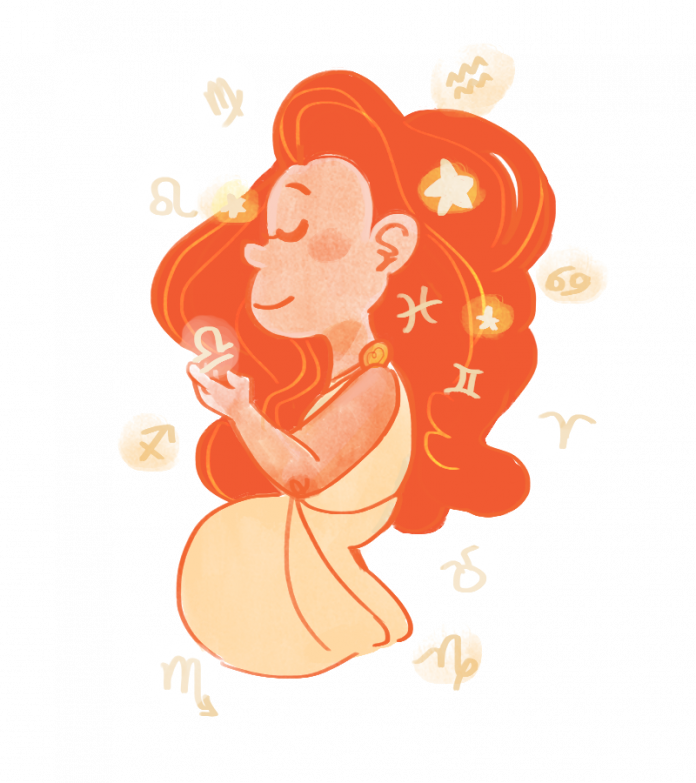
An illustration of a girl with long flowing hair. Astrological signs and stars shine around her.
ILLUSTRATION: Marissa Ouyang / The Peak

By: Hannah Kazemi, Peak Associate, Girlie In Training

Aries

Throw it back to 2012 and go to the super hidden and impossible to find Pink Alley. Take pics with the girlies, then go get bubble tea to reward your efforts. Taking Insta pics is a full time job, so treat yourself, bestie!


Taurus

Go window shopping in Kits and spend your whole paycheck even though you really can’t afford to in this economy, then post about it. Eventually make your way to the beach and when you do, guess what! Post about it. You know it didn’t happen unless you post about it, don’t you?


Gemini

Find someone with a backyard and a fire pit. Post a pic with the gals by the fire to commemorate how much fun you’re having in some rando’s backyard. Remember to stay six feet apart when you’re throwing it down on the dance floor! 


Cancer

“Hike” Quarry Rock in your Lululemon Aligns and take a picture of the view when you make it to the lookout point. Bring a speaker with you in your Everywhere Belt Bag and blast some throwback tracks to dance to on your way up and unleash your inner Katy Perry. You’ll be as bright as legal Vancouver fireworks, baby!


Leo

Find that spiral parking garage on Cordova (I know you know what I’m talking about) and have an ~artsy~ photo shoot. Post the pictures on Instagram immediately after, like the girlboss that you are. Bonus points if you made a series of IG stories while parking your electric car (you don’t make enough to pay for gas in this economy.)


Virgo

Party it uppppp with a few girlies at home (because girlies are responsible, but still know how to have fun) to celebrate the end of the semester. Put on 13 Going on 30 and paint each other’s nails to have the best slumber party EVER! 


Libra

Take on the Grouse Grind with your buddies and show off your muscles in a group pic when you get to the top. If you exercise and don’t post about it, did you even really exercise?? Pics or it didn’t happen.


Scorpio

Have a picnic at Stanley Park, then bitch about the prices of hot yoga.


Sagittarius

Take a day trip to Whistler. Make sure that you take a picture or video of the view on the Sea-To-Sky every five minutes (on the dot!) and post it to your Snapchat story so that everyone knows you’re driving to Whistler. Slay, but keep some distance and wear your mask, Sagittarius!


Capricorn

Stay home and cut your own bangs tonight. You need to prepare new lewks for stunning your profs! Self-care is important, too, bebs.


Aquarius

Go somewhere really cool and unique for ice cream, like Earnest Ice Cream or Rain Or Shine. Write a poem about your experiences. The world needs to know your feelings on these sleeper shops that no one has eaten at before! Be a trend-setter, hon!


Pisces

Get the girlies together, put on your oh-so-affordable Aritzia, take photos with a disposable camera at the beach and then gossip the night away!