Home Blog Page 234

Monday Music: Songs to cure fall semester blues

0
“Monday Music” in orange block text on a yellow rectangular background with rounded corners and an orange border.
Monday Music: your weekly themed playlist. Image courtesy of The Peak.

By: Hannah Kazemi, Staff Writer

As yet another summer comes to a close, it’s normal if you’re feeling down about starting school again this fall. The weather gets cooler, mornings start earlier, and the overall cheerful disposition of summertime begins to fade. Below are four songs that are sure to boost your mood.

PHOTO: Artisa Records

“Velcro” by spill tab (feat. Gus Dapperton)

I’ve listened to this song on repeat during my drive up the mountain to SFU countless times with all the windows down and the volume turned all the way up. spill tab is a French-Korean artist whose music, in both French and English, always makes me want to dance and sing my heart out. “Velcro” has a funky electric guitar-heavy bridge that has definitely almost blown the speakers in my car before.

PHOTO: Warner Music France

“Jolie nana” by Aya Nakamura

The vibes are off the chart with this song. Even if you don’t speak French, “Jolie nana” is super fun and easy to listen to. Its chill and laid back vibe makes it a great song to put on when you wake up in the morning and start your day. When I listened to this song for the first time, I couldn’t help but start to dance. Aya Nakamura’s voice is perfection — it’s so smooth you can hear the emotion behind it. 

PHOTO: Polyvinyl Record Co.

“Red Wine” by Grapetooth

This song is a bit more chill and smooth, but really fun and a great mood-booster. It gives me big “I’m on a boat in Greece” vibes, which is great when you really don’t want to go back to school. With a steady rhythm, softer vocals, and some upbeat instrumentals to kick it off, “Red Wine” is the perfect song to put on for your bus ride up the mountain. It’s impossible not to want to vibe to it. 

PHOTO: Sony Music Entertainment

“JAMBO” by Takagi & Ketra, OMI, and Giusy Ferreri

This is the best song to listen to when you’re feeling kind of down about things, because it is an instant mood-booster. I can’t stop my shoulders and hips from moving when I listen to this song. It’s part of the Afrobeat genre and has both English and Italian lyrics — you can feel the fun vibes radiating from it. Best played post-lecture and pre-study session, “JAMBO” is sure to make you want to dance.

Arrieta Art Studio opens in New Westminster

0

PHOTO: Amirul Anirban / The Peak

By: Nercya Kalino, Staff Writer and Gem Yelin Lee, Copy Editor

Arrieta Art Studio celebrated the grand opening of their New Westminster brick-and-mortar space on September 3. Located on historic Front Street, home to some of the locals’ favourite coffee shops, the studio welcomes you in with a colourful mural by Mishel Arrieta herself: the owner and manager of the studio.

The day before the grand opening event, The Peak interviewed Arrieta to learn more about the studio.

“For the grand opening, I wanted to build off what I already do, which is giving this — the studio — to the artists,” said Arrieta. “I’m trying to get all the things I want the studio to be and put it all in one day.” 

The grand opening featured artist Caleb O’Brien, poet Naaz Sidhu, and Astra Not. To incorporate an engaging art project at the event, visitors were encouraged to paint collaboratively on a large shared canvas. This canvas now resides in the teaching space in the studio, continually revised with leftover paint from the workshops.

Arrieta is the co-curator of the annual pop-up art show in New Westminster called APT POP. One of the first things you see when you walk in is a wall fixture for APT POP where the featured solo exhibitions are displayed, along with a lounge area and the artists’ merchandise for sale. 

Over the past several years, APT POP grew beyond the scope of where it started in co-curator Ben Pilger’s apartment. Each year, Arrieta and Pilger found themselves scrambling to temporarily find or rent a space that would fulfill the project’s needs. Being an artist and educator herself, Arrieta had been searching for a new personal studio space since leaving her old one. Armed with a passionate vision, Arrieta took the lead in searching for a permanent art space. 

Arrieta hoped to reopen her studio and find space for art exhibitions and other creative projects. She found a versatile space in a great location; one that would be able to serve her personal studio needs like teaching art and become the new home base of APT POP.

This was just the beginning of a new chapter for the artist — owning a business in a new location meant a new stream of ideas and new responsibilities.

She explained an important goal for the grand opening celebration was to build connections within the local community. Up to this point, she had mostly taught art one-on-one to children with disabilities and worked alone in her own studio. Through connecting more with the locals of New Westminster, she’s seeing the arts services and opportunities needed by the community and treading new ground — from working in her own bubble to working with all sorts of groups in the community.

“Now I am branching out and I am finding that there are so many groups of people who want to learn art,” said Arrieta. “Sometimes they want it to be in their own group; for example, there are some people who are retired and would like to have an only-retirees group, there’s some others who want to have a mom and baby [group]. 

“There’s a lot of requests, and I think there’s a lot of need.” 

She said a growing pain from this transition was finding a balance between fulfilling community needs, and what she personally wants for the space. 

In addition to fulfilling some of these specific community requests, she plans to have ongoing events such as hosting workshops, solo artist exhibitions, and artist talks. 

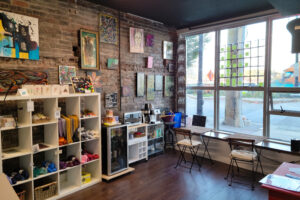
PHOTO: Amirul Anirban / The Peak

The warm and eclectic front area which highlights artists and their work, extends into the back, where there is a fairly unexpectedly large space — perfect to hold workshops, teach classes, and hold group events. The large open room in the back will be where the annual APT POP exhibition will take place.

“People come in and ask if I am new, which I am, but I feel like I have been here for so long,” she said.  

September 8 marked two months since the studio’s soft opening, but the space is already the physical representation of Arrieta’s commitment to community and art. 

To learn more about Arrieta Art Studios, shop from local artists, or to sign up for a class, visit them in-person at 707 Front Street, New Westminster or online through their website

Study finds frequent breaks are necessary for well-being

0
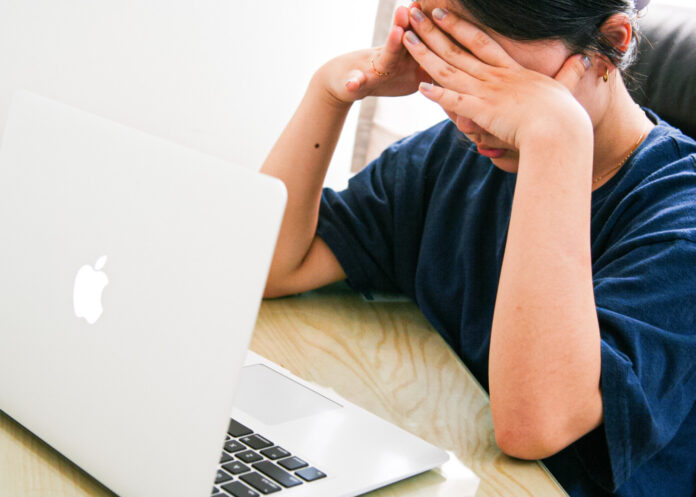
The photo is of a person sitting in front of their computer. Their head is in their hands and they look tired and stressed.
Social media as form of a work break is not found to be productive. PHOTO: Jonadan Cheun / The Peak

By: Pranjali J Mann, News Writer

SFU Beedie School of Business professor Zhanna Lyubykh led a recently published study on the importance of taking breaks from work to increase performance. 

According to the abstract, the research reviewed 83 existing empirical studies pertaining to the “relationship between work breaks and well-being and performance among knowledge workers.” The paper also highlights different categories of work breaks and how they affect the performance of workers differently. They categorized five features of work breaks which includes the initiator, duration of break time, frequency of breaks, activities done during the break, and experience.

To find out more about the research and its implications for students, The Peak interviewed Lyubykh. 

Explaining the motivation behind undertaking the study, she said, “We know on an intuitive level that breaks are good for well-being. But what about performance?” Lyubukh noted some people might hesitate to take breaks because they are time consuming. However, they are an important opportunity for mental recovery. The study revealed breaks are essential to maintain performance. 

Lyubykh noted the majority of the existing studies found a positive correlation between worker breaks and well-being. According to her, this was because taking breaks lowered levels of emotional exhaustion and depression.

Lyubykh’s interview touched on a specific kind of work break — social media. She found it is the most common form of break, used by 97% of people at work. 

“What we see in the data is that social media may have some beneficial effects in the short run, but in the long run it can really harm people’s productivity,” she said. “I would generally suggest taking other types of breaks, especially given how much time we spend on the screen. For example, we’ve seen that engaging in things that are different from your work — exercising, enjoying nature, having a short walk — are usually more beneficial than browsing social media.” 

Additionally, their study found taking unstructured breaks was found to be more beneficial, especially in the case of students. From an organization point of view, Lyubykh mentioned having rigid time slots for a break can be counter productive. Instead she recommended making time for breaks throughout the day, but not scheduling in a strict break time “because breaks are more beneficial when people can choose when they engage in those activities as well as the type of activity they engage in.”

For students, she said it’s important to prioritize breaks, especially when you are most busy. She underlined skipping breaks makes things worse and advised to keep an eye out for the mental indicators of fatigue. 

Horoscopes Sept 12–20

0
An illustration of a girl with long flowing hair. Astrological signs and stars shine around her.
ILLUSTRATION: Marissa Ouyang / The Peak

By: Max Lorette, Peak Associate and the vessel of an unknowable entity

Aries:

This week, I think you should branch out a little. Go for a walk in nature, collect some sticks off the ground, and join your brethren amongst the forest. I’m not quite sure what this will accomplish, but it feels like a nice September activity regardless.

Taurus:

The Stars have given me a warning for you this week, Taurus. They have informed me constant remarks of “Can you believe it’s September already?” and, “2022 is almost over! It feels like it just started!” will not halt the constant crawl of time passing. They do little but upset the gods of time. Let the passing of days and weeks become a steady stream, lest you invoke the wrath of Kronos.

Gemini:

The Stars have informed me that this week is a perfect time to treat yourself, Gemini! If you’ve been looking for an excuse to finally replace that beat up pair of sneakers you’ve been wearing for several years, this is it. Just don’t blame the Stars for your declining finances.

Cancer:

Listen, I’m just going to say this once. Now that Halloween is approaching, the Stars recommended you avoid making Spooky Season your entire personality for an entire month. The Stars think that you’re a lot better than reusable coffee cups from Wal-mart and Michael’s with silly spooky slogans.

Leo:

Unless you’re up on residence, you probably have a pretty long transit, Leo. The Stars recognize this as a universal experience for all SFU students, but they have specifically told you to put that precious time to use. Take up listening to audiobooks while you drive or ride the skytrain. Did you know most libraries offer them for free? The Stars suggest that you start off with The Necronomicon!

Virgo:

The Stars have a very special task for you this week, Virgo. Listen to me very carefully. In the dead of night, bring a singular black coffee (preferably from Renaissance) to the Avocado in the AQ. Circle the avocado clockwise thrice, then leave the coffee in front of the mirror. Chant, “You are SFU!” thrice before circling the avocado once more, counterclockwise. The Stars won’t tell me exactly what the reward for this will be, only that it shall be grand.

Libra:

The Stars have instructed me to inform you that no amount of fancy stationery shall give you the aura of productivity. Unfortunately, there really isn’t a cheat sheet for that kind of thing. The best thing that you can do is actually study for that upcoming quiz you probably forgot about.

Scorpio:

This week, the Stars are withholding your horoscope unless you are willing to undergo a quest for knowledge. The Stars have long been waiting for a brave student to seek out the forbidden knowledge that has long since evaded them: What actually goes on in the Halpern Centre? Has anyone actually ever stopped to ask that? Wake up sheeple!

Sagittarius:

Times are tough, Sagittarius. The Stars totally recognize that. In this economy, the Stars don’t think that you can really afford to have a freeloader anymore. If you’re struggling on finances, it might be time for you to tell your cat to get a job. Maybe they can pick up a shift at the Catfé? If you don’t have a cat, then tough luck I guess.

Capricorn:

It may be a bit soon, but the Stars have informed me to tell you straight up to stop avoiding taking classes that fulfill your breadth credits. No, seriously. The longer you put those off the worse it’ll be.

Aquarius:

The Stars advise you to take a few days off of social media. It’s seriously becoming a cesspool of terrible takes, and the Stars are concerned that you’re turning into someone who is chronically online. Touch some grass, Aquarius.

Pisces:

The Stars wish to remind you that you can actually get paid for writing for The Peak. Seriously! It’s a good opportunity, it’s easy to sign up for pitch emails, and take up prompts when it strikes your fancy. Who knows! Maybe you can even take up writing the Horoscopes with me! It pays well to become a mouthpiece for dark and unknowable entities dubbed as “the Stars.”


Community organisations put out a call to action to protect women amidst housing crisis

0
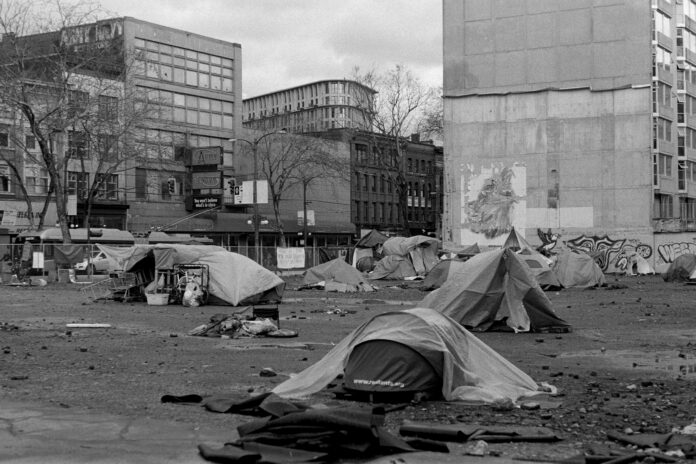
This image is of the downtown east side in Vancouver. Multiple tents can be seen in the middle of an abandoned lot.
Indigenous women are especially affected by this crisis, making up 45% of women experiencing homelessness. PHOTO: Randy Laybourne / Unsplash

By: Chloë Arneson, News Writer

Content warning: This article mentions acts of gender-based violence and violence against Indigenous peoples. 

On August 16, several organisations published a joint press release titled, “Women are not acceptable casualties in the response to the housing crisis.” The organisations who collaborated included the Downtown Eastside Women’s Centre, Battered Women’s Support Services, WISH Drop-In Centre Society, and Atria Women’s Resource Society. They condemned the city’s disregard for womens’ safety as the city sweeps homeless encampments in the downtown eastside. 

These encampments, also known as “tent cities” have lined the sides of several streets in Vancouver for many years, offering residents a sense of safety, security, and community. Marie Jameson, who lives in one of these encampments, told North Shore News about the importance this community serves in her life. “These are our neighbours,” Jameson said. “They’re our families. If someone gets sick, we look after them.”

On July 25, Fire Chief Karen Fry issued an order to remove all of the tent cities in the downtown area, citing safety concerns around fire hazards. Vancouver mayor Kennedy Stewart told the Vancouver Sun he supported Fry’s order. He noted Vancouver has recently opened 1,100 units of shelter-rate housing. As city crews continue to dismantle shelters, concerns are being raised as to how this will affect the hundreds of unhoused individuals who are left with nowhere to go. 

The press release condemned “those acts of violence, as well as the continued lack of strategy to address the homelessness crisis.” Specifically, they call upon the city for “a concerted, nuanced action that prioritises women’s safety. 

“Women are among those at greatest risk in encampments,” they said. Alice Kendall, the executive director of the Downtown Eastside Women’s Centre, discussed how their organisation sees an increase in gender-based violence due to tent cities. They explained tent cities occur due to overlapping issues including “the housing crisis, opioid crisis, deadly drug supply, lack of appropriate mental health care, and deteriorating access to general health services.” 

“No sustained effort has been made to address the systemic, institutional conditions that give rise to the extreme levels of intimate partner, domestic, and sexualized violence experienced by women in the community,” said Angela MacDougall, executive director of Battered Women’s Support Services. “Considering all this violence, the last thing we need now is the Vancouver Police Department coming to the neighbourhood to bust heads of impoverished and unhoused people.” 

Indigenous women are especially affected, facing both racial and gender-based violence. “These hardships intersect with centuries of sexist and racist colonial policies. And like everywhere, gender-based violence goes often unchallenged, unreported and unnoticed,” the release states.

The community of women-serving organisations is urging the city to create a “structured, concerted, anti-sexist, trauma-informed response” to the crisis. “We cannot settle for tent cities that re-emerge and grow each year,” they state. “Women’s safety cannot wait. Women deserve to be and feel safe in their communities and in public spaces, and women deserve to be safely and appropriately housed.” 

The fallen members of Vancouver’s sports world

0
A drawing of an orca trying to hold up a basketball, frisbee, and roller skates.f
I’m not one to point fingers, but one businessman played a role in two teams leaving the city. I’m just saying! ILLUSTRATION: Angela Shen / The Peak

By: Isabella Urbani, Sports Editor

The Vancouver Grizzlies (1995–2001)

We can’t start talking about forgotten Vancouver sports teams without starting with the Grizzlies (aka the team with the perfect powder blue jerseys people love to parade around in downtown). In theory, the idea of having a basketball team and hockey team play out of the same arena the one and only General Motors (GM) Place — was great. Plus, the Grizzles were in operation when Michael Jordan was still playing basketball. Surely, people would flock out to see those games? In practice, a horrible nightmare. 

How bad was it? Well, the original owner, John McCaw Jr., was from Seattle. That didn’t go over well when it came time to acquire local sponsors for the club. The attendance wasn’t anything that stood out on paper for the first few years, but it went rock bottom when the team could barely keep their attendance record beyond 13,000 in a 19,000 arena in their last two years. The real cherry on top was Vancouver never receiving the first overall pick in the NBA draft. This left the team with little to no starpower, and when they eventually got the second overall pick in the 1999 draft, their selection refused to play for the team. Go figure. 

The Vancouver Voodoo (1993–1996)

How the Vancouver Voodoo could fold with a name like that is beyond me. A+ for alliteration. I bet you’re surprised to find out that this was a roller hockey team one of the twelve founding roller hockey teams in the professional Roller Hockey International league. The league folded three years after the Voodoo’s demise. Just like any other professional sport, the games were aired on television during its brief three-year existence. However, what was unique to this sport was many retired NHL players flipped over to play roller hockey when their career was over. Former Canuck Jose Charbonneau spent a year during the Voodoo’s inaugural season playing for the team while he was still a Canuck. Not to mention, the team itself was also co-founded by former Canuck player Tiger Williams

A familiar foe actually played a role in the Voodoo’s disbandment. It was none other than McCaw Jr.! In 1996, the Voodoo started playing at GM Place after playing at both the PNE and the Pacific Coliseum. However, when McCaw bought out Orca Bay Sports & Entertainment, who owned the Voodoo, he put an end to the team. However, the team did finish in first place in their division each year. Post-season? That’s another story. 

The Vancouver Riptide (2014–2017)

I don’t know if you can call this one an oldie, but it definitely wasn’t a goodie. The Riptide finished their final season in the American Ultimate Disc League (AUDL) with only one win in 14 games. The team’s poor showing combined with a lack of community-wide viewership, despite coverage on television, forced the owners to pull the team from the city. In an official statement regarding the decision, co-owner Jim Llyod voiced his frustration about pouring “hundreds of thousands of dollars” into a team the “BC market does not fully embrace.” That may be the case, but the Riptide were also the 10th team in AUDL history to drop out of the league, so maybe there’s a bigger problem there.

SFU student finds bumble bee species declining due to changing climate

0
The photo is of a bee sitting on a flower.
Climate change subjects bees to temperatures that are beyond their limits. PHOTO: Sarah Johnson

By: Nathan Tok, Peak Associate

SFU biological sciences masters student Hanna Jackson and her research team recently published a paper in the scientific journal, Biology Letters, on how climate change affects bumble bee populations in BC.

The Peak reached out to Jackson in an email interview to find out more about this landmark study.

According to Jackson, BC has a higher speciation of bumble bees and given their importance in the ecosystem and food production, it was important to understand how they’re being affected.

Jackson explained, “Bumble bees are particularly effective pollinators. Many plants rely on them for pollination that allows them to reproduce and keep our ecosystems functioning.”

Jackson and the research team collected information on all bumble bee observations within North America from 1900 onwards. They also collected data regarding temperature, precipitation and flower abundance variables. A statistical model called an occupancy model was used to see how these environmental variables affected the bumble bee species.

Jackson and the team created two occupancy models. The first looked to see if speciation increased or decreased over the past 120 years. The second model examined how temperature, precipitation and floral resources predicted speciation.

The team found that 37 out of 46 species of bumble bees were adversely affected by temperature changes. Jackson said, “We did note that many of the species that were most negatively affected were species that live in boreal (more northern) climates.

“It is possible that warming temperatures have [led] to bumble bees being subjected to temperatures that are above their limit, leading to that species leaving that place that is now too hot,” explained Jackson.

As bumble bee species tend to be adapted to colder climates, Jackson said, “The negative effect of increases in temperature is not surprising [though] bumble bees’ responses to their environment is very different from species to species.”

As BC is home to a diverse range of bumble bee species, Jackson thinks a few species will increase their range as the climate changes. Though most will find their range inhibited by the changing climate.

Jackson believes the community has a role to play to prevent the decline of bumble bee populations. “People can help by planting gardens with native flowers that bumble bees rely on for food,” she said. Additionally, she suggested participating in community projects. “One easy example is the app iNaturalist where people can take pictures of species they find and scientists can identify them and then use these records in their research.”

Jackson’s research article is available on the Royal Society Publishing website.

SFU commits to offering a living wage to entire SFU community

0
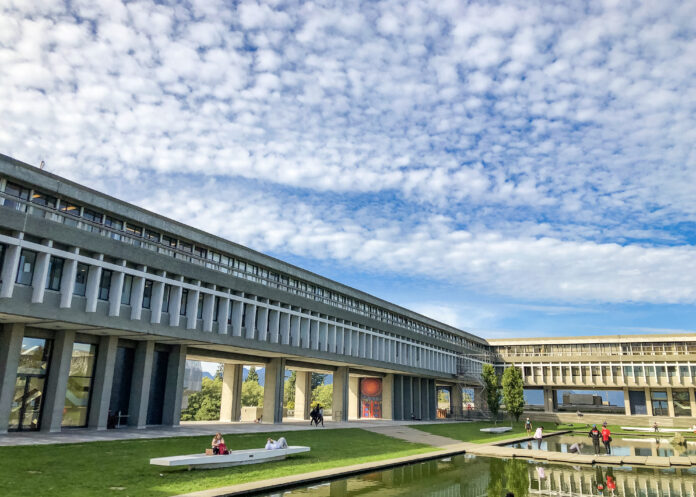
The photo is of the SFU Burnaby campus. The Academic Quadrangle and the reflection pond can be seen.
The community voiced the need to include worker voices in decision making processes. PHOTO: Allyson Klassen / The Peak

By: Pranjali J Mann, News Writer

This month, the SFU Board of Governors passed a motion to begin the certification process for becoming a living wage employer. 

According to Living Wage for Families BC, living wage is calculated by providing an estimated “bare-bones calculation” for wages as needed by the employees to meet their expenses. Under this wage rate, “employers take into account their employees total wage plus benefits. If employees receive non-mandatory benefits, the living wage rate is reduced.” 

SFU’s announcement aims to address the issue of low wages among their food and services workers and “will explore the creation of a program that supports educational opportunities for contract workers, provide access to additional campus benefits where applicable, and find other ways to enhance inclusion for contract workers as members of our campus community.”

The living wage and benefits are set to reach the contract workers in “a phased approach as contracts are renewed over the next three years.” 

To understand the announcement and its benefits, The Peak reached out to Yabome Gilpin-Jackson, SFU vice-president, people, equity, and inclusion. She said, “This move underscores our commitment to listening to our people and taking meaningful action that will have a positive and substantial impact on the lives of workers in our community. Moving toward becoming a living wage employer is an exciting step on our journey to greater economic equity and social inclusion.”

Contract Worker Justice Campaign 

The Peak interviewed Kayla Hilstob, a member of the Contract Worker Justice (CWJ) campaign coalition at SFU. She said, “Having a living wage is a very positive thing [but] outsourcing is really the root of the problem. And so, workers can have better wages, which is great, but their hours are usually cut, they are laid off seasonally, they have to apply for [employment insurance] all the time. Their benefits are worse than their counterparts at different universities. So yes, it does touch on one of the problems, but it’s not the main problem and there are all sorts of other problems that stem from outsourcing.”

Explaining the underlying issues with outsourcing workers, she said universities will select the lowest bidder to reduce their costs when looking for an external company. “What that means is cutting wages, cutting benefits. So, whoever can provide basically the cheapest workforce to the university, will get the contract. That in itself is the problem and that’s why workers are being paid less, having less benefits and have access to much less of the facilities on campus or basically none.” 

Hilstob’s interview also highlighted the problem of invisible labour and poor “working conditions that have a lot of arbitrary power imbalances” contract staff are exposed to. Some of the key matters included not having enough time off, inadequate uniforms, and allegations of discrimination, she explained. 

Workers’ voices

Similar problems surfaced in The Peak’s conversation with some workers within the cleaning and food services. One anonymous worker alleged they were given inadequate breaks in the heat. The interview took place in another language and has been translated to English by a fluent speaker. “They just give us a five minute break. That too, we have to call five minutes before taking the break. And after the five minute break, you have to inform them that.” They added their request for 10 minute breaks have been declined and are assigned two to three floors per person. The Peak was unable to independently verify this due to the publication deadline. 

The Peak also spoke with Nouha, a dining hall staff member. She indicated parking and daycare are key areas of concern for her. “I have a few women right now. They’ve done their job, but they don’t have any childcare. And they need some, at least for one day or two at the daycare. Who do we approach for that kind of help?” 

Nouha revealed the current wage is incapable of keeping up with inflation. She said, “Even though they gave us good pay, it’s not enough without the living wage.” Nouha added they receive a $0.40 raise in their second and third year of working, but that it does not account for inflation.

Hilstob noted the lack of direct involvement of the workers’ voice in the decision making process. She said, “When they did a study on outsourcing at the university, they published through Deloitte. They just published it. They didn’t speak to a single worker when they did a study about outsourcing.” Another worker said, “Someone should be there to listen to our problems. They should be solved right away. Nobody listens to our issues. Who should we tell them to — some higher officials or bosses? No one has ever made an effort to listen.”

Lastly, Hilstob stated, “We consider this announcement a win, but it’s not enough. Our goal is ending outsourcing and we’re not stopping until we win this goal [ . . . ] And so, we hope that students, staff, faculty, more contract workers, anybody else who wants to be involved in this campus community — we hope that you will join us!” 

This is a developing story that The Peak will cover in future issues. For more information on the CWJ campaign, visit their website.


“X: Psychiatric Solitary Confinement” gives patients their voices back

0
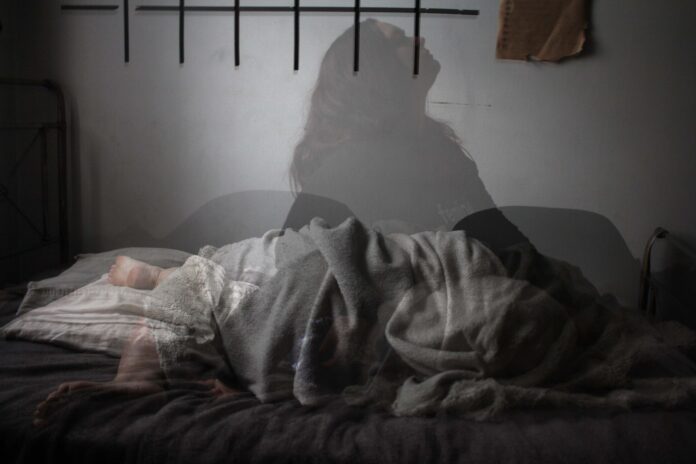
A women lying down in bed
PHOTO: Megan te Boekhorst / Unsplash

By: Roshi Chadha, SFU Student

Content Warning: Mentions and descriptions of psychiatric solitary confinement, traumatic experiences, mental health policies, and mistreatment of mental health patients

On July 7, SFU department of English hosted X: Psychiatric Solitary Confinement, a live performance by Erin Soros, SFU Shadbolt fellow. This event was conducted through Zoom and focused on mental health policies around solitary confinement for psychiatric patients. The discussion and Q&A portion of the event was moderated by Harsha Walia, an activist and author from South Asia with a home base in Vancouver. 

Previously, I had never thought of the plight that mental health patients go through within different psychiatric wards across the world. As someone who plans on working within the healthcare field, I knew this was an important topic to learn about. 

The event had accessibility features like live transcription, links to various articles and resources related to the event, spoken words by performers in the chat, and audio description throughout the performance. As the event could trigger audience members’ traumatic experiences, a content warning prefaced the performance and they welcomed anonymous questions from participants.

As the event unfolded, I tried to imagine entering a room with no sound. Suddenly a voice tells you, “No window, no lamp for reading. You cannot read, no clock. The one light in the ceiling is inescapable.” 

There were several performers who voluntarily joined Soros to help her run the event through their voices and powerful words. Many of them had also experienced forced mental health treatments and had joined to share their opinions and thoughts. This had a powerful effect of conveying solidarity to the audience. 

The performance started with the description of a person who is isolated in a dark room. As one of the performers said, “Words like ‘solitary confinement’ [are] borrowed from the realms of prison and its punishments.” As mentioned during the performance, restraint and seclusion are two different words in literature but in psychiatric language, are used interchangeably. This conveyed how convoluted the whole psychiatric model is and why there is a need to address these social concerns. 

I could feel the tension, uncertainty, and sadness as the performers kept on explaining the sufferings of someone who goes into confinement. “Come back. You cry to the wall. Come release me.” The performance showed their need to be released and free in the outside world. As they uttered the words, “No dialogue no movement,” I imagined it must feel like everything comes to a standstill for a person held in there. What kind of life or treatment is this? 

After an incredibly powerful performance, some audience members shared their experiences with one another, followed by a Q&A session. Soros discussed the legal challenges around BC laws. She explained how the government fought against the Council of Canadians with Disabilities’ charter challenge to the Mental Health Act. Now, the topic of solitary confinement is being challenged under the Canadian Charter of Rights and Freedoms, drawing on principles from the United Nations Convention of People with Disabilities. Soros concluded the event by highlighting the importance of being a witness and how she hopes to be a witness for others who go through these actions of ill treatment and be a voice for them. 

Redirecting Responsibility: Corporations are causing climate change, not individuals

0
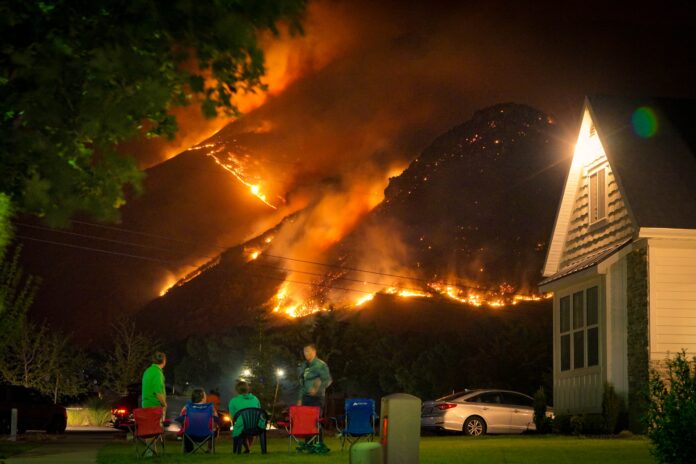
A group of people sit on a front lawn at night, directly overlooking a massive forest fire at night.
Individual efforts have minimal impact when our government refuses to regulate corporate greed. PHOTO: Mike Newbry / Unsplash

By: Annalisse Crosswell, SFU Student

The climate change conversation is constantly evolving. It’s gone from “does it really exist?” to “why should I take responsibility?” to “someone has to take responsibility but who is it going to be?” If you asked questions about climate change in the late ‘90s, you were likely told we’re simply overdue for an ice age. However, 20 years later climate change is a reality impossible to ignore, with more people choosing to contribute to the solution rather than passively letting the problem persist. It’s going to take more than individual citizens’ choices to turn this around. Now, more than ever, corporations need to do their part to fix the climate disaster they overwhelmingly contribute to.

Our individual efforts to combat climate change are already impacting corporations. Despite the fact that documentaries like the 2014 film Cowspiracy were probably the first time many young people considered issues like water consumption in agriculture, research says that the US plant-based foods market grew 20% in 2018. This positive impact is visible four years later in the expansion of vegan aisles at the supermarket and the number of environmentally conscious businesses now operating in cities like Vancouver.

Corporations still fail to make sustainable choices on their own, and it’s evident in reports calling out brands like H&M for “greenwashing,” a term used to describe the practice of falsifying or exaggerating sustainable company practices. The shipping industry alone accounts for almost 3% of global emissions  while also causing an enormous amount of damage to ocean life. One of the most prominent shipping companies, Maersk, was recently caught in greenwashing allegations. The company claims it purchased eight ships that could be carbon neutral, but experts allege that this isn’t possible. Something needs to change, whether it comes from within the decision-making ranks of corporations or through government intervention.

At the end of the day, most corporate decisions are made on the basis of financial gain. One avenue for demanding corporate responsibility is through our consumer voices and habits. This is done primarily through our purchasing power, where we choose products that reflect positive values and boycott products we disagree with. The other important solution, of course, comes from our elected government. Through governance, not only can corporate responsibility be mandated, like through minimal packaging mandates and taxes, but it can be integrated into governmental processes as well by choosing sustainable products, partners, and practises. Vancouver may be enacting this now through its plastic bans, but this is just a stepping stone in one city.

Younger generations today are unable to enjoy the notion of a future within their lifetimes, and they’re becoming increasingly angry about that. Given that Gen Z’s consumer trends and business models seem to be environmentally conscious while corporations create far more emissions than an individual ever could, it only makes sense to turn to their generation for help. While it would be nice to think corporations might make these changes out of the goodness of their capitalistic hearts, the reality is that we don’t have time to wait for their initiative. Stronger government mandates regarding zero-emissions vehicles and plastic use need to be put in place. This needs to happen quickly if we want to see a future beyond the apocalypse we keep envisioning in the media.