Home Blog Page 226

Indigenous studies should be integrated into SFU’s degree requirements

0
Indigenous studies should be part of SFU’s breadth requirements. PHOTO: Manmeet Sagri / The Peak

By: Hannah Kazemi, Staff Writer

SFU claims to offer a “well-rounded student experience,” but this can’t be true if students lack a genuine understanding of the trauma and oppression Indigenous peoples faced throughout Canadian history. There was a heavy focus on Indigenous studies at my high school, but when I started university that emphasis faded. This is especially concerning for individuals continuing their education with post-graduate studies or pursuing a career in fields that involve the public sphere. 

With the faculty of arts and social sciences (FASS) being SFU’s largest faculty, there are undoubtedly thousands of hopeful lawyers, teachers, and policy makers among us. These graduates will inevitably end up interacting with Indigenous people and others who experience marginalization in their fields of work. This is not exclusive to these career paths, though. Indigenous leaders have expressed support for Indigenous studies in BC’s school curriculum, because increasing our awareness of culture and identity fosters sensitivity for the people we interact with. It opens up opportunities for learning and productive dialogue.

In 2015, the Truth and Reconciliation Commission of Canada published a list of 94 calls to action to “redress the legacy of residential schools and advance the process of Canadian reconciliation.” Number 62 on their list discusses changes to education, which mentions curriculum changes for the K–12 system. These changes proposed increasing funding to integrate teachings about Indigenous history and cultures into classrooms. There’s a need for an increased focus on Indigenous education at the post-secondary level as well.

Earlier this year, British Columbia followed up on this change to the K–12 curriculum, making Indigenous studies a mandatory graduation requirement for students starting in the 2023/24 academic year. We haven’t seen this at BC universities yet, though. The University of Winnipeg made it mandatory for all students to take at least one three-credit course in Indigenous studies in 2016. Lakehead University in Ontario did the same, and the University of Regina also made one Indigenous-focused course a requirement for students in the faculty of arts. It’s time for SFU to be next.

Understanding Indigenous culture isn’t just about learning Canada’s colonial history. Canadian media often portrays Indigenous people poorly, and doesn’t acknowledge their  strong communities and rich cultures. History courses which focus solely on colonial events rarely expand our understanding of Indigenous identity. Instead, these courses must center Indigenous culture and agency through storytelling and exploration of Indigenous languages. 

Indigenous studies shouldn’t be mandated through a single required course. Instead, it should be part of SFU’s breadth requirements, giving students the option to choose a directed course that interests them. SFU currently requires six units each of breadth-humanities, breadth-science, breadth-social sciences, and additional courses outside each student’s major. These additional six units outside one’s program are where the Indigenous studies requirement could come in: students should be required to take at least one course with an Indigenous focus. The knowledge that can be gained by taking even one Indigenous studies or Indigenous-focused course is so important to developing more understanding of the world we live in and how we can make it better.


Monday Music: Nostalgic songs from my iPod Nano

0
ILLUSTRATION: Alyssa Umbal / The Peak

By: Petra Chase, Arts & Culture Editor

If I could bring back any cultural artifact from my formative years, it would be my iPod Nano. Whenever I hear a song from that era, I’m transported to a time when life was carefree. As a pre-teen, my iPod Nano played a seminal role in shaping my personality and individuality. It granted me the freedom to discover and curate a music library of my own, instead of listening to whatever was on the radio or the CD’s my parents had. Not only are these songs nostalgic, they’re also songs that deserve to be revived even a decade after their release.

“Lip Gloss” by Lil Mama

Photo credit: Jive

Lip gloss isn’t the only thing popping in Lil Mama’s groundbreaking song, “Lip Gloss.” At only 17, Lil Mama’s commanding rap flow and contagious confidence shot her to mainstream success. Eight-year-old me was convinced that the lip gloss she applied in her music video was magic, until her mom revealed — plot twist — “it was you all along!” The song not only has a boisterous rhythm perfect for strutting into grade four with glitter adorning my lips, it also instills the message that beauty comes from within. This classic is just as addictive now as it was then.

“Pyramid” Charice ft Iyaz

Photo credit: 143 Reprise Warner Bros.

“Pyramid” popped into my head recently and it was exhilarating to re-experience this power-duo’s R&B ballad after a decade. It’s one of those rare songs that can’t be overplayed and his powerful vocal range is majestic. The song is credited under Jake Zyrusdead name, and I highly recommend checking out some of Zyrus’ newer music, because his talent is next level.

“Don’t call me baby” by Kreesha Turner

Photo credit: EMI Music Canada

If you grew up in Canada, you’ll probably recognize this song because it was all over the radio in the summer of 2008. The nostalgia is so strong, it brings me back to a particular car ride when I was belting out the lyrics with a friend. We were probably on our way to hang out at the mall and get slurpees from 7-Eleven. While I love this song because it brings me back to the excitement of my childhood summer break, Turner’s brassy voice and assertive, catchy lyrics never get old.

“Poison” by Elise Estrada

Photo credit: RockSTAR Music Corp.

This is the song I knew not to play around my parents. “I know you’re bad, but I’m loving it,” felt like such scandalous lyrics at the time, not to mention Estrada’s heavy breathing, which I now realize was my sexual awakening. If you grew up on Canadian radio, you’ll probably recognize this adrenaline-inducing pop bop. I just wish it was on Spotify so I could add it to all my upbeat playlists.

The last hoorah for swimmer Jordan Doner

0
photo of Jordan Doner mid-competition in the water.
Doner will be pursuing other interests outside of swimming when she graduates. PHOTO: Korey Doner

By: Isabella Urbani, Sports Editor

“Enjoy the experience.” Those are the words senior swimmer Jordan Doner wishes she could tell her freshman self. “Everyone says university goes by fast, and it really does!” Although time felt like it flew by for Doner, it wasn’t without unpredictability and instability. “My journey here at SFU hasn’t been an easy one, we’ve had quite a few coaching changes,” the new team captain revealed. Doner has been coached by three separate coaches in the span of five years. This will be her second season under head coach Demone Tissira

While adjusting to new leadership has been a recurring challenge for Doner to face, the breaststroke swimmer’s preparations have gotten easier overtime. The biggest change in her routine has been picking up weight training to improve her strength and stamina for months of competition. “Staying in good shape in the summer is important to be ready for the season,” Doner shared. With extra time on her schedule next year, Doner hopes to take up weight training full-time, and experiment with rock climbing. 

Some of Doner’s fondest memories during her time at SFU has been receiving All-American honours, awarded to individuals and teams who finish in the top-eight. Doner did so last season with her team’s fifth-place finish in the 4×400 freestyle relay at the National Collegiate Athletic Association (NCAA) Championships. “It’s a great feeling to see all the hard work pay off at the last meet of the season,” Doner said.

As for this season, the returning senior is most excited to be reuniting with her fellow teammates and getting to witness how they fare in her final season. She has her sights set specifically on training camp in San Diego, which will take place before SFU’s first invitational during the first week of October in Stockton, California. Doner’s team-orientated approach has a lot to do with her mindshift change from freshman year to senior year. “I’ve realized it’s not only about how fast you go in the pool,” Doner admitted, “It’s about having fun and enjoying the experience with your teammates, because eventually swimming ends, but your friends will last forever.” 

Doner first got a glimpse of friendship when her swimming journey brought her to SFU. Hailing from Newmarket, Ontario, she made the trek west to stay within the country and compete at the NCAA level. Doner describes her initial transition as a “big change,” but one that was made easier with the support of her teammates. Now entering the year as a swim captain, and the only senior on the women’s team, Doner is looking forward to being an anchor for her teammates “both in and out of the pool.” She encourages new student athletes to reach out for support. “Even if it’s just talking to your teammates, there are lots of people who are here to support you.”

Food for Thought: The desperate journey to my Ketoprak

0
An illustration of Ketoprak in a bowl with a side of peanut sauce an an Indonesian flag on a toothpick
ILLUSTRATION: Alyssa Umbal / The Peak

By: Emily Huang, SFU Student

It all started when my parents in Indonesia sent me a picture of the Ketoprak they had for lunch.  As the day dragged on, the image of vermicelli noodles glistening in peanut sauce, accompanied by fried tofu, rice cakes, and a hard-boiled egg, haunted me.

Ketoprak is one of Jakarta’s iconic street foods. Whether enjoyed by the side of the street or in an open-air restaurant, vendors selling this plate of vermicelli noodles all have a similar set of equipment: mortar and pestle, two pans, and a tall red-capped biscuit can to store crackers. All of this equipment can be found behind an iconic wooden cart. What makes this dish so special extends beyond its taste — It encapsulates a familiar scenery and taste of home, which I cannot experience in a foreign land like Canada.

Giving into my Ketoprak cravings and homesickness, I decided to visit my nearby grocery store the next day to endeavour making it myself.

My first priority was the peanut sauce. Unfortunately, without a mortar and pestle, the backbone of the Indonesian kitchen, I surely wouldn’t be able to replicate the mouthwatering flavours and textures that can only be derived from crushing garlic and peanuts rigorously with stone. I wasn’t going to eat my Ketoprak with the nuts still crunchy, as that would be a sin against my tastebuds, but I struggled to find a different option. On the shelf stood a perfectly good bottle of Lee Kum Kee peanut sauce — the saving grace of any cheap recipe — and I decided it would do. 

Looking back, I should have backed down while I still had honour. Before me, there was a plate of vermicelli noodles drenched in a sauce that was ten shades too light and smelled too much like vinegar and defeat. I should have used peanut butter instead. Despite the aching feeling in my chest, food was still food, and I did not have the heart to throw it out. I took one bite out of the fried tofu and was satisfied enough to present my best efforts to my friends. 

Joko Widodo, one could not imagine the shock on my face when I saw the same conflicting expressions on their faces. Maybe it was because the Ketoprak had some enchanting jinx or that we all had rose-tinted glasses that led us to believe that peanut sauce can never taste that bad. Regardless, the three of us collectively agreed to forget about the dish in favor of the divine instant noodle rations our parents shipped to us in all too good timing. 

In the end, what mattered was the burst of oily shallots and bucket-load of MSG to bring me the comfort from home I was pining for. Even still, I still look forward to the day when I can indulge in a plate of Ketoprak again while feeling the 40-degree-celsius winds of Indonesia against my face. Maybe, then, I could share a piece of my other home with the place I grew up in, starting with a very good bottle of maple syrup.

Letter to a legend: Watching Serena Williams for the last time

0
overhead shot of a woman waiting for the ball to be served.
She was a symbol of Black excellence and transformed the sport of tennis. PHOTO: Renith R / Unsplash

By: C Icart, Staff Writer

Serena Williams won her first major title at the US Open in September 1999. She was 17, and I was six-months-old. By the time I started watching tennis with my parents, Williams’ reputation at the top of her sport was clearly cemented, and I hadn’t known anything else. I quickly became a fan of the woman who is widely regarded as the greatest of all time with 23 Grand Slam titles. Her power and flawless outfits captivated me. Reading the racist and sexist comments online about her build angered me. Her perseverance, despite the hate, motivated me. Growing up, I would set alarms at odd hours just to be able to watch her Grand Slam matches, regardless of the time zone she was playing in. My parents would laugh as I prepared to watch her defend her Australian Open titles at 3:30 a.m. 

When Williams announced she would be “evolving” away from tennis, the news hit me like a ton of bricks. I had never known a time when she wasn’t playing professionally. I intended on watching the US Open anyways, but I wrote down Williams’ matches in my calendar to make sure I wouldn’t miss a thing. I no longer live with my parents, but I texted them as soon as the match started to ensure they were watching. Watching Serena together had always been our thing, and that first-round match may have been the last time we had the chance to do so. 

Before she even stepped onto Arthur Ashe Stadium, a lovely tribute video narrated by Oprah played. And there she was, in all black, covered in sparkles. The outfit was custom-made and had six layers to represent her six US Open titles. I don’t know if I’ve ever seen as many Black people in the crowd of a tennis match. Even when I briefly looked away from my screen, I knew when she won a point because the crowd would erupt in cheers. 

I wasn’t sure what to expect from Williams, now a 40-year-old mother, who hadn’t played much leading up to the tournament. But she won. In the second round, it happened again. My mom called me, and my dad texted me. Here we were, over 20 years later, still in awe. Suddenly, it was the third round. She lost the first set against Ajla Tomljanović and fought back during the second. My eyes were glued to the screen as I watched her save five match points. She was not going down without a fight. In the end, Tomljanović defeated her. It was bittersweet to watch her do her signature twirl one last time, but all good things must come to an end. Watching her has always made me feel like I was part of something bigger, and I wasn’t the only one. A record-breaking 4.8 million viewers watched her last match at the US Open. Thank you for everything, Serena, and may the next chapter of your life be everything you want it to be. You’re a legend. 

Pierre Poilievre represents a concerning shift in Canadian politics

0
photo of Canadian parliament and flag
Canadians should keep an eye out for a rise in far-right rhetoric. PHOTO: Jason Hafso / Unsplash

By: Olivia Visser, Opinions Editor

Over the years, the world sat and watched in disbelief while those living in the US faced the rise of a far-right president. We experienced firsthand the increasing polarization of the political sphere. Genuine discussion of policy gave way to reactionaries, and it seems like success in politics these days requires nothing more than a “gotcha” moment against the other side. With many Canadians slowly losing their interest in politics, we need to be careful not to sit idly by as dangerous figures rise to prominence. Member of Parliament and newly elected Conservative candidate for Prime Minister Pierre Poilivere is a sign of Canada’s rapid descent into right-wing populism — that is, a society which favours the opinions of citizens on the right of the political spectrum. We should all be concerned.

Pierre Poilivere represents everything wrong with politicians. He latches onto anti-Trudeau talking points to avoid policy discussion, and uses anger to garner support. He chanted “truckers, not Trudeau” while heading a convoy rally earlier this year, after being seen shaking hands with the leader of an extremist group. A bill he introduced would ban all future vaccine mandates if approved, even if we end up really needing them again. His right-wing populist approach has led to the validation of anti-vaccine rhetoric. This shifting cultural mentality contributes overwhelmingly to COVID-19 incidence and death rates, but anti-vaccine propaganda also led to multiple North American measles outbreaks in 2019. 

If someone hates Justin Trudeau enough, they might overlook deficiencies in Poilivere’s arguments. He frequently argues Canada’s high inflation is due to federal deficits caused by Trudeau. However, inflation is high globally, and there’s no correlation between national deficits and inflation rates. His solution to the ever-pressing inflation fiasco? We don’t really know. He claims he’ll help by reducing deficits and bringing in more tax cuts, but gives no specifics beyond “dubious claims” that cryptocurrency is a way to “opt out” of inflation.

The unfortunate reality of Poilievre’s campaign is he promotes solutions that go against his supporters’ self-interests. Working class Canadians rally behind Conservative leaders and their promises to reduce taxes and bring new jobs. What politicians like Poilievre leave out is that lower taxes and cuts for the rich won’t fix long term problems — investing in quality social programs that benefit everybody will. Poilivere’s “small government” approach won’t relieve systemic class inequalities. He champions the idea of “making Canada the freest country in the world.” Certainly, this should start with free healthcare and education, and economic support for disadvantaged people. However, Poilivere believes our government should do “only the things that people can’t do for themselves,” which is, again, up for interpretation. He talks about defunding public news like CBC while promising to invest in more pipelines. Is our government a business, or a provider and representative for its people? 

Justin Trudeau is far from a desirable candidate, but he’s steps ahead of his Conservative opponent. Approval ratings for Trudeau and Poilievre are terrifyingly close right now. The last thing we need is a Prime Minister that participated in the trucker convoy and refuses to take a stance on climate change. Your vote will matter in the 2025 election, so let’s not allow complacency to be what sends our country further down a right-wing tunnel.

Should we be using the term “Latinx?”

0
multiple people holding up the progress pride flag
ILLUSTRATION: Alyssa Umbal / The Peak

By: Michelle Young, Editor-in-Chief and Daniel Salcedo Rubio, Features Editor

Latinx emerged as a way to describe Latin Americans who didn’t identify with the gender binary. This can include people who identify as non-binary, agender, intersex, and/or Two-Spirited. The term has a rich history: “The addition of the ‘x’ was a conscious decision. It was an homage to Indigenous Nahauatl languages, and functioned as a linguistic visibilization of the communities most directly impacted by colonial violence.” After the 2016 Pulse nightclub shooting, it gained popularity among feminists, progressives, and the LGBTQIA2S+ community. However, the majority of Latin Americans in the US haven’t heard of it, or don’t use it. Within the Latin American community, there is a discussion of the term, many critiquing its use for imposing English on Spanish speakers. Is the term inclusive or does it exclude the very community it tries to represent? 

Michelle: I understand why Latin Americans don’t like this term. However, it did catch on in Canada and the US. I started to use it because I wanted to be inclusive, and I’ve read about how non-binary Latin Americans struggle to navigate such a gendered language: everything in Spanish has a gender. From the moon (la luna) to juice (el jugo), the language is divided by gender binaries — there is nothing that has no gender. Because others have spoken about feeling seen with “Latinx,” I don’t think I should invalidate that just because it doesn’t work in Spanish. I use it when I speak English, and Latin American identity is more than the Spanish language. 

I think “Latine” is a viable alternative to use in Spanish, because language evolves. But Latin Americans are very diverse and they should pay attention to the queer folks speaking out from within their own community (regardless of their Spanish fluency level), and listen to how they want to be identified.

Daniel: I’m a bit on the fence with the “Latinx” term. I understand the sentiment behind not liking it. There’s an uncanny valley feeling to it, something that feels like it’s 85% about the Latin community and 15% foreigner. That being said, I use it all the time because I know there are non-binary Latin Americans that feel better represented by a genderless term. 

My problem with “Latinx” doesn’t come from it not making sense in Spanish. Languages evolve to meet the needs of the people who speak them. If there’s someone out there that feels represented and heard by this term, it’s valid despite it being grammatically incorrect. Yet, there’s something I don’t like about North Americans taking a Spanish word and changing it so it’s more palatable to English speakers. Doing this strips away a bit of our identity. I agree that our community is far more than just the Spanish language, but I do think that to understand a culture you should at least try to get to know a bit of their language. 

Michelle: It’s true that “Latinx” doesn’t feel Spanish. I don’t know if it was ever really meant to feel Spanish. I understand that the “x” was intentional to capture the complexity of colonial history in Latin America. While reading more about the term more for this piece, I learned “Latinx” actually has a history with queer Afro-Latinxs and Latinxs of Indigenous descent — people within our own community. 

I know Latin Americans have a history of terms being thrown onto them, so I understand the frustration of feeling like its always people outside our community trying to define us: first it was “Hispanics,” then “Latinos,” and now, seemingly, “Latinx.” Within all these categories are different skin tones, languages, and cultures. There is always terminology that tries to group us together. 

I personally always describe myself as “Latina,” because I identify with the gendered term. “Latinx” obviously means something important to people though, and I feel like the conversation against the term has been spear-headed by those who don’t recognize the term’s anti-colonial roots. It’s been argued by Afro-Indigenous poet, Alan Pelaez Lopez that the “X” also signifies the anti-Blackness and femicides in Latin American communities: “For me, the ‘X’ in Latinx marks the spot in which my African ancestors arrived after they were kidnapped, chained, transported and enslaved throughout Latin America and the Caribbean.” 

In this way, I feel like the term is so much bigger than who it elicits discomfort from. I love Spanish: the way it sounds, all the added vocabulary, and the different ways we can express ourselves with it. But I also want to be intentional with the way I examine my relationship with this language. 

Daniel: When we began this article I was only aware of the queer history behind “Latinx.” I wasn’t aware of the anti-colonialist roots nor the stories of anti-Blackness and femicides it tried to address.

I’ll always be in favor of movements and actions that center marginalized voices, but I’ll admit I often forget about the power language has as an active form of protest. We’ve seen similar situations with terms like “queer” which originated as an offensive imposition towards the LGBTQIA2S+ community. Now, some of us use it as a way to describe and empower ourselves. Though the origin and use of “Latinx” is completely different from this, its story of empowerment through words has some similarities.

When we started this article I had the assumption “Latinx” was a term mostly used by foreigners with close to no connection with the community. Now, I understand more of the complexity behind it. To quote J.A.O., “Latinx is a betrayal. It’s an attack. It’s a butchering of Spanish. And that’s why I use it.”

Michelle: “Queer” is an interesting term. You’re right that its meaning has evolved, and there are still people in the LGBTQIA2S+ community who don’t like it, don’t use it, and don’t claim it. I think a similar concept can be applied to “Latinx.” Language can be fluid. Latin Americans should describe themselves how they want, and how they identify. I reject the idea of telling people not to use “Latinx” simply because they don’t like or understand it. That erases so many people in our community. I also think we need to be more conscious of including our non-binary community members, because Latino/a isn’t really working for them, either. 

As a whole, I think the Latin American community needs to pay more attention to queer Latin Americans. It isn’t particularly unknown that sexism, queerphobia, and transphobia are still problems in Latin American communities at home and in the diaspora. I think the pushback behind “Latinx” is complicated in that it’s rooted in many issues within our community. For now, I’ll still keep using “Latinx,” and ask that when we do speak about Latin Americans, we keep those who don’t fit into the gender binary in mind, because they need to be included too.

StudentCare proposes referendum to increase student health and dental fee

0
This is a photo of the SFU Stadium at the SFU Burnaby campus.
Proposed referendum will have $299 health fee charged from Sept 1, 2023 onwards. PHOTO: Krystal Chan / The Peak

By: Pranjali J Mann, News Writer

During the SFSS Council meeting on September 14, Sophia Haque from StudentCare, presented the possibility of increasing coverage for student health care plans to include mental health services. She indicated potential for a “health and mental plan referendum” to vote on at the upcoming fall by-elections.

Citing results from the 2021 StudentCare Health and Dental plan survey, Haque said, “students are clearly indicating that it’s more important to them to maintain their current coverage levels, than it is to be keeping the plan cost at the same price.” She suggested that 88% of the student survey participants value good health practitioners and mental health services. Haque asked the Council if they would “consent to raise the SFSS Enhanced Health and Dental fee to $299?” This would become effective on September 1, 2023.

She noted increasing the fee from $267 to $299 would be comparable to what other Canadian post-secondary institutions are charging. The UBC plans cost around $277 and McGill University plans cost roughly $345. 

Haque stated the current plan only provided psychology coverage up to $500, which offers access to a limited number of counseling sessions. With the new fee in place, she noted students will have access to Conversation. This counseling service offers students unlimited counseling sessions, medical support, and psychotherapy sessions through StudentCare. 

Acting president Judit Nagy noted this would be a short-term 20 month trial so the SFSS can determine “how that works, how much students are using it, how we improve it, and if things go well.” 

Haque said the mental health support would be mostly online to enable “cost stability” and increase accessibility. If the referendum is passed in the fall, students will face an increased health and dental fee in lieu of increased mental health support and price adjustments to inflation. Haque is also suggesting they approve a maximum of a 5% increase in cost at any given point over the next five years.

Thanking Haque for the proposal, SFSS vice president university and academic affairs, Nikki Kirgin said, “I’m really interested in improving student mental health here and improving services.” She added, “Currently the StudentCare doesn’t really offer a lot of compensation for counseling and psychology type services. So that’s something that we, I think, would be a huge benefit to students.” 

Cozy games for a cozy autumn

0
IMAGE: Snoozy Kazoo

By: Meera Eragoda, Peak Associate

The final light of summer is fading away and soon, reds, yellows, and oranges will begin to colour the ground. There is no better time to snuggle up with a warm cup of tea beside you as you play these sometimes cute but always quirky games.

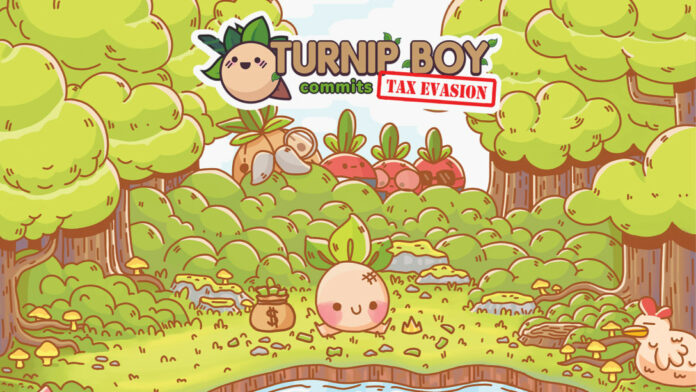
Turnip Boy Commits Tax Evasion

In this puzzle-filled action game, you play as an adorable turnip who is running around tearing up tax documents, fighting radioactive animals, and trying to unearth the mystery about the town you live in. Adorable graphics, a muted colour palette, and little quirks (like a sign saying to watch out for vegetarian snails) give this a nice, autumnal vibe. The cutesy energy of the game covers up the secretly post-apocalyptic world you’re inhabiting. Play the new update while awaiting Graffiti Games’ 2023 release Turnip Boy Robs a Bank.

Available on Nintendo Switch, Xbox One, Windows, Mac

Cult of the Lamb

Have you ever wanted to be a cult leader to a variety of forest critters? Well, with this recent release, now is your chance to do that and to do it as an adorable lamb. In this game, you run around the forest defeating the demons of the Old Gods, gaining a flock (hehe), preaching to them, and exploring the mysteries of the area. You also have to make sure to keep your followers fed and believing because if not, you may just have to sacrifice them. Can you tell I love a good, dark game but with a cute twist? This game is incredibly entertaining and you get to choose your difficulty level.

Available on Nintendo Switch, Xbox One, Playstation 4 and 5, Windows, Mac

Wytchwood

This game is one of the best encapsulations of fall energy. You play as a witch resurrected after many years. You get to explore the various areas of the woods, craft potions, cast spells, and solve mysteries to discover and defeat the myriad creatures Fmenacing areas of the forest. This is a very heavily craft-based game but the diversity of it and the unique situations and characters you encounter will keep you hooked.

Available on Nintendo Switch, Xbox One, Playstation 4, Windows, Mac

Graveyard Keeper

Ok, this one is basically like Stardew Valley but with a twist — you run a medieval graveyard. This game has one of the most in-depth crafting components I’ve seen and will keep you involved for hours. Luckily, you have a talking donkey to keep you company while you explore vast areas to gather supplies and complete quests. You also perform autopsies and slightly unethical experiments on the bodies that are brought to you. On top of that, you also run the church and give sermons to the villagers. What’s more fall than being the main character of your own spooky graveyard?

Available on Nintendo Switch, Xbox One, Playstation 4, Windows

Night in the Woods

Night in the Woods is beautiful, nostalgic, and will pull at your heartstrings a bit. You play as Mae Borowski, a 20-something college dropout who comes back to her hometown and reconnects with old friends. Though on the surface, it’s about exploring the mysteries that lie in the neighbouring woods; at its heart, it’s about connection and self-discovery. There are different options you can choose throughout the game that lead to one of two endings. This game is a very relevant autumnal reflection for anyone about to graduate.

Available on Playstation 4, Xbox One, Windows, Mac

What Remains of Edith Finch

The darkest game on this list, it is also the most beautiful. This game is very much about grief so play at your own risk. You play as Edith Finch, the last remaining Finch family member, as you return to your childhood residence. You explore each of the rooms belonging to a different family member and through reliving their death, learn more about their life and what they were like. While Spiritfarer might be more fitting for this list, I am blown away by how absolutely detail-packed this game is. It is one of my absolute favourites to replay and it’s perfect for moody autumn evenings. 

Available on Nintendo Switch, Xbox, Playstation, Windows, Mac

Canadian society is still far from accessible

0
wheelchair symbol at subway station
We still have a long way to go until society is accessible for everyone.

By: Olivia Visser, Opinions Editor

Able-bodied people often make their way through the world without worrying about accessibility barriers. They have less reason to be concerned about finding a seat by the door or catching COVID-19, nor do they have to face the reality of being forced into systemic poverty due to chronic illness. Canada likes to pride itself in being a relatively equitable country, yet many have no idea that our society is still far from accessible for disabled people.

Canadian city design is the most apparent example of inaccessibility. When I make my way around Vancouver, I notice a striking lack of benches for blocks on end. Other issues like dangerous sidewalk conditions and few crosswalks are prevalent in certain areas. Some of the most significant accessibility barriers in Canada are related to transportation. Many bus stops have no seating options at all, and SkyTrain stations only have a couple seats that are often occupied. What are disabled people supposed to do in situations like these? Multiple times I’ve had to sit on the ground awaiting the train because my body didn’t have the energy to stand that day. Factors like uncomfortable seating, limited disabled seats, and a lack of paratransit options are only a few limitations affecting the daily lives of disabled Canadians. 

The attitudes of fellow citizens also have an impact on accessibility. You can’t tell someone’s accessibility needs by looking at them, especially when many are too nervous to ask for a seat on their own. It definitely helps when people stand if they’re able to, and watch out for those who might need a disabled seat. Other behaviours, like kicking the automatic door buttons or using disabled stalls without needing them, can make life more difficult for those with accessibility needs. Some people rely entirely on door access buttons to enter spaces — the least we can do is keep them clean for everyone. 

The Canadian government doesn’t do enough to provide for its disabled population. BC’s Person with Disabilities (PWD) program offers income assistance to anyone with a disability that affects their ability to work and perform daily-living activities. However, this system sucks disabled people into lives of poverty by granting beneficiaries only $1,358 a month. This number allocates $375 a month for shelter, which is incomprehensible in a city like Vancouver with an average monthly rental price of around $2,000. No one should live in need because their health makes them unable to acquire or hold down a job. Raising PWD amounts is a huge step forward that our government should take immediately.

Disabled people deserve to actively participate in society like everyone else. Unfortunately, Canada still has some improvement to do in terms of creating equal opportunities for disabled people. And while disability justice is a systemic issue, everyone can do their part to ensure disabled people are included and treated fairly in our society.