Home Blog Page 218

TSSU gets victory on RA arbitration

0
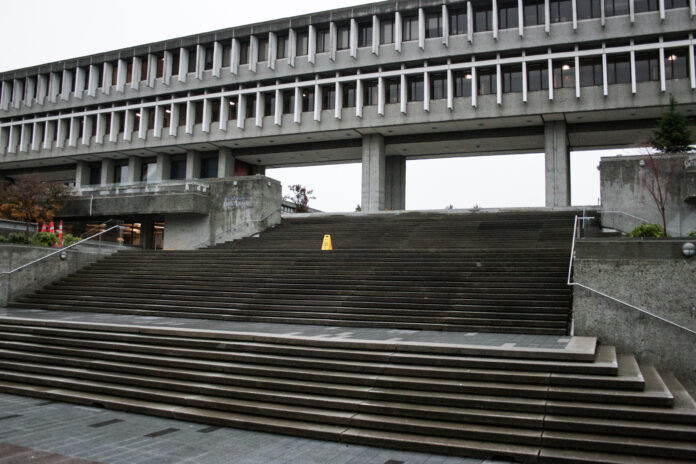
The photo is of the outdoor staircase leading into Convocation Mall at SFU Burnaby. The Academic Quadrangle can be seen.
The union has outlined several demands for RA’s as the university agrees to work on the bargaining table. PHOTO: Gudrun Wai-Gunnarsson / The Peak

Editor’s Note: The article was updated on November 15 to indicate that RA’s will be considered part of the union, only once a collective agreement is negotiated.

By: Pranjali J Mann, News Writer

The recent arbitration to include research assistants (RA) within the Teaching Support Staff Union (TSSU) has achieved a “monumental victory.” RA’s will now be considered as part of the union once a collective agreement is negotiated. The judgment called for clarification on the disagreement between SFU and 800 science and applied science RA’s. These RA’s were previously excluded from union and its recognition demands because their payment was executed “through scholarships/stipends from a grant.”

The Peak interviewed Amal Vincent, TSSU chief steward and contract committee chair, to find out more about this judgment. 

“SFU’s research reputation is built upon papers that are published and discoveries made with countless hours of RA work.” He added, “Respecting RA’s and treating them fairly is essential to keeping the university functioning.”

Vincent said, “RA’s at SFU have been exploited for decades. Late pay, no pay, and unequal pay, no written contract, no or few benefits. These were all common and among the reasons that RA’s decided to unionize in 2019.”

SFU released an official statement. They said, “There was no process in place to efficiently determine who is an employee of the university [ . . . ] which led to the university not meeting all the terms in Voluntary Recognition Agreement. That is where the university failed, we are sorry for this, and we are committed to doing better.”

As noted, the university administration will be working towards better defining the term “scholarship” in order to “properly differentiate graduate students receiving scholarship from those who should be classified as employees.” SFU is looking to implement the transition and recognize the inclusion of RA’s by “beginning of 2023.” SFU also has until November 14 to bargain with the TSSU on new RA compensation and benefits. 

SFU’s statement notes, “SFU will retroactively change payment for the academic term from scholarship to wages where required.” They also added operational issues created by the pandemic affected their ability to meet deadlines. 

Vincent signaled to the long fight of recognition the union has undertaken. He stated, “This wasn’t the first try: in the 1970’s research staff started to organize but SFU argued and won a decision that research staff were not SFU employees.” However, the fight continued until November 2019 when SFU agreed to the voluntary recognition of “TSSU as the bargaining agent for Research Assistants and Grant Employees at SFU.” 

TSSU’s Research is Work campaign pushed SFU to recognize RA’s and Grant Employees as part of the union. The union’s 2019 Voluntary Recognition Agreement, asked for recognition of TSSU as the bargaining agent. In the interview, Vincent explained this would mean TSSU can demand for providing RA’s with comparable wages, and “MSP coverage for international student RA’s.”

As highlighted on TSSU’s website, this is an ongoing fight. “Our goal remains as always, a fair deal for all RAs that respects their critical contributions to research at SFU. Subsequently, the determination of the ‘true scholarship’ situations and the determination of the quantity of damages will need to occur.”

For more information on the TSSU campaign and RA demands, visit the TSSU website.

Jahmal Wright is the only senior on the men’s basketball team

0
photo of Jahmal Wright dunking over a ball in a game.
Wright’s goal is to help SFU make an impact in Divison II basketball. PHOTO: Paul Yates / SFU Athletics

By: Hannah Kazemi, Staff Writer

The men’s basketball team is looking a little bit different this year with Jahmal Wright as the only senior on the squad. To his surprise, Wright didn’t realize this was the case until he showed up for the first day of  practice. This didn’t phase him; he says being the oldest player just means he’ll have more eyes on him. “I think people are looking up to me for different leadership purposes and energy. I feel like I need to bring a certain amount of energy every single day, because now I’m one of the main leaders on the team.”

Wright isn’t taking this role for granted, though, and says he lets his game speak for itself. He told The Peak he wants to focus on showing up and being present for his team. “If we’re in a game or practicing and I don’t bring the energy from the jump, from the beginning of the game, then [the team is] gonna fall below what I’m doing. They’re gonna follow my lead and my actions,” he said. “I’m holding myself to a bit of a higher standard than usual. In the long run, it’ll be good for not just me, but for the whole program.” 

The forward believes the team’s energy with 12 new recruits, and the different skills that each of them brings to the court, will offset the lack of experience some of their younger players have. While Wright anticipates more “slip-ups” and “minor setbacks” along the way, it isn’t anything he feels the  returning players won’t be able to handle.

Wright reminisced about the benefits of having seniors to look up to last season. He attributed them for his newfound leadership and intentions on how to support the current team. “I kind of just like to take those [routines], and apply them to myself, and then I like to lead by example. So kind of like having the younger guys watch me and see how I like to go about my day.” 

He maintained a positive attitude and outlook on the team this season, implying that just because the team is young doesn’t mean they should be discounted or expectations should be different.

“Yes, we’re a young team, but we still have the same expectations. We still want to bring that same fire, energy, and desire so we can be successful and be a winning team.” Being a winning team to Wright means hoisting the conference championship at the end of the season. “I want to play in Divison II March Madness. That’s my main milestone,” said Wright. “The only way we can do that is by winning games, so I want to win as many games as possible with this team.” 

While that’s the goal, Wright’s main priority is being a good teammate. “I want to make great connections with each and every guy,” he said. “I really want to make a name. I want SFU men’s basketball to [be] that major name in Division II basketball, being the only Canadian NCAA [team]. I want to put them on the map.”

A poetic homage to Strathcona’s heritage and history

0
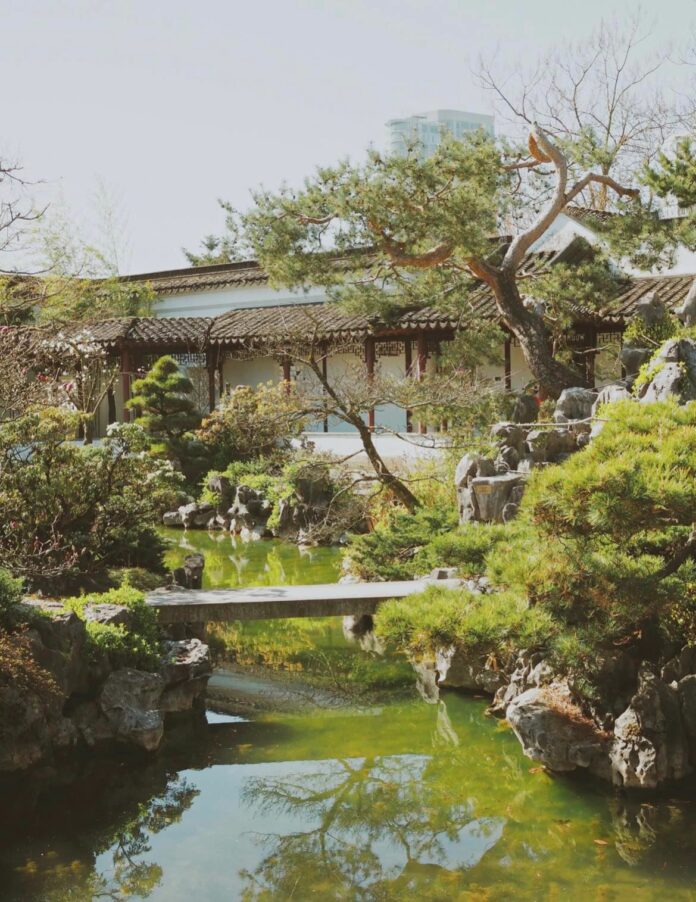
Photo of landscape at Dr. Sun Yat-Sen Classical Chinese Garden with a wooden bridge crossing a pond
Chinatown’s Ming Dynasty-era garden is a site for “cross cultural understanding.” PHOTO: Paul Matheson, Unsplash

By: Petra Chase, Arts & Culture Editor

Editor’s Note: This article was updated on November 9, 2022 to include information about the second stage of the City Poems Contest. The previous version of this article omitted this information.

On October 3, Strathcona Poems at the Garden brought emerging and established poets to Dr. Sun Yat-Sen Classical Chinese Garden, Chinatown’s Ming Dynasty-era landmark. Built in 1986, the Chinese cultural sanctuary is the first classical Chinese garden built outside of Asia. It serves as a site for “cross-cultural understanding.”

 The eight performing poets were finalists in the City of Vancouver’s poet laureate’s City Poems Contest, which set out to engage the public in writing poetry about the city’s ecological, cultural, and historical surroundings. Their poems interpreted the neighborhood of Strathcona

The event was presented by Fiona Tinwei Lam and is Lam’s ongoing Legacy Project to “encourage the generation of new poems and poetry videos to foster greater understanding about significant historical, cultural and ecological sites on the unceded traditional territories of the Musqueam, Squamish, and Tsleil-Waututh peoples.” 

Upon entry, I was greeted by an ethereal landscape and complimentary jasmine tea. Held under a traditional wooden pavilion within the garden, the tranquil atmosphere set the tone for a beautiful homage to Strathcona’s rich cultural heritage. The poets’ thoughtful reflections about the complex history of Strathcona included themes of identity, belonging, gentrification, colonialism, and immigrant heritage.

Coming from various backgrounds, the poets’ unique interpretations of Strathcona showcased how their way of connecting to a place is impacted by their lived experience. Kelsey Andrews, who recently published a debut poetry book, opened the reading with a poem set in the garden, “To the Otter Who Snuck into the Dr. Sun Yat-Sen Garden and Ate the Koi.” Based on a real event, Andrew relates to the “untrappable otteras an outsider in the downtown eastside.

It was inspiring to hear from youth who are new to poetry alongside established poets. The second-place winner in the youth category, Isabel Hernandez-Cheng, was the youngest poet who performed. Her poem, “Lotus Flower,” uses the lotus as a metaphor for a “Chinese immigrant blossoming even in the harshest environments.” She said, “In a society where he is not welcomed / Chinatown embraces and empowers / He can find a clan amidst the run-down streets / Where in this foreign land he finally belongs.”

Donna Seto’s third place poem in the emerging category, “CONTRASTS,” paints a vivid juxtaposition between the Chinatown her “century-old grandmother” once knew as home and the gentrified environment it is now. Her descriptions are starkly accurate, right down to the hipster tourist with “designer jeans he claims are from Value Village / but he purchased on a whim from Nordstrom,” and the “$7 oat milk latte.”

The winner of the City Poems Contest’s youth category, Adrian Yue, ended the reading with a powerful recitation of his poem, “ending credits for an ending of ‘chinatown’.” He described his poem as a lament, and his emotional reading gave me goosebumps. Keep an eye for Yue’s upcoming chapbook.

The second stage of the City Poems Contest, which will begin in 2023, will involve the making of poetry videos based on these poems and other City Poems Contest finalists’ poems about various city sites.

“Poetry videos can allow a poem to be heard, of course, but most importantly experienced through visual imagery, colour, pattern, sound effects, music, narration, and more,” Lam wrote in a blog post on her website. “They expand the reach of poetry by making it accessible to people across borders and backgrounds.”

You can find all the shortlisted City Poems Contest poetry readings on Vancouver Public Library’s YouTube playlist.

Tyler and Royce Dhillon: Telekinesis in process

0
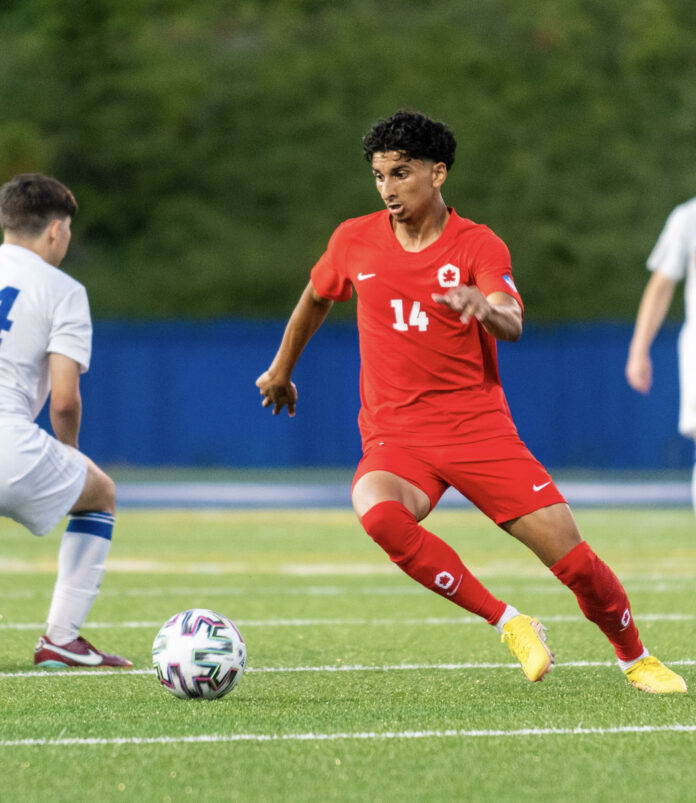
photo of Royce Dhillon playing on the field.
Sibling connection: Tyler and Royce seamlessly find the other on the field. PHOTO: Wilson Wong / SFU Athletics

By: Simran Sarai, Sports Writer

A lot of people grow up playing sports with their siblings, but not many can say they’ve done so at the post-secondary level like brothers Tyler and Royce Dhillon of the SFU men’s soccer team. Tyler, a fifth year centre/right back, and Royce, a second year winger, started playing soccer together when they were kids. “We both started really early, at around five or six-years-old, and we’ve just been playing ever since,” said Tyler.

In high school, both brothers continued their soccer journeys at Surrey United Soccer Club. In addition to difference in age, the two brothers bring entirely unique skill sets to the field with Tyler being “more of a defender,” and Royce “more of an attacker, [with] better dribbling.”

Tyler, who’s three years older than Royce, made his collegiate debut with the UBC men’s soccer team. He was signed by SFU in Summer 2020. When it came time for younger brother Royce to make a decision, he followed in his brother’s footsteps and also landed on SFU. The opportunity to have another chance to play together was warmly welcomed by the brothers. “I think we always talked about playing together at some point, and then it just kind of worked out this way where we both ended up at SFU,” said Tyler.

While there certainly are a lot of benefits to being able to play with one other, juggling two different student schedules are not one of them. “For scheduling, it does make it harder. Especially when you don’t live on campus“ said Royce. “We have to come, usually at different times for classes, so that would be one con.” While this certainly forces the brothers to find creative ways to coordinate their schedules, it’s not a terrible trade off for the opportunity to be able to play with each other. “I feel like the rest are just pros — being able to play together, always being together, and just having that assistance with classes and stuff.”

Tyler had nothing but good things to say about getting to go out on the pitch with his younger brother. “We’ve always played against each other growing up, so it’s nice to play together. We both push each other and we’re both very competitive.”

With pressure of playing at such a high level, we wondered if tensions ever built, culminating in the type of fight only siblings can have. “Not anymore,” said Tyler laughing. “Maybe when we were younger, but not anymore.” Another welcome aspect of competing alongside your brother? The post-game debriefs, says Tyler. “We always talk after games [ . . . ] we watch the game back and just see if there’s anything different we could have done, and try and talk about it together.”

Royce believes the sibling connection they share is a huge advantage on the field. Only a brother could know where the other is without needing to have eyes on the back of their head. “I feel like we both know how we are as players. When Tyler gets the ball from the back, he knows what movements I’m doing or where I’m trying to look for the ball,” Royce said. “We’re on the same page in that way a lot of the time.”

Displacing houseless people isn’t a solution, it’s violence

0
illustration of a person sleeping on a bench
Our approaches to helping houseless community members must be intersectional. ILLUSTRATION: Alyssa Umbal / The Peak

By: C Icart, Staff Writer

It’s been over two months since Vancouver Fire and Rescue Services ordered all tents in Hastings Tent City be removed. Since then, increased efforts for forced decampment have been taking place in the Downtown Eastside. 

Street sweeps on East Hastings Street have been carried out by the Vancouver Police Department (VPD) and municipal workers. They target unhoused residents of the Downtown Eastside and take their belongings. Displacing vulnerable community members, many of whom are Indigenous, is violence. The #stopthesweeps movement emerged to denounce the violence carried out against Downtown Eastside residents by the VPD. 

The tent city is a very visible way of seeing the state of the houselessness crisis in so-called Vancouver. This is why some still welcome street sweeps in spite of VPD violence. Rent in the city is incredibly high, and housing supply is low. However, houselessness is the problem, not the houseless. We need solutions that support the people in our communities, rather than alienate and attack them. Kukpi7 Judy Wilson, Secretary-Treasurer of the Union of BC Indian Chiefs, stated current inaction from the city and province neglects and criminalizes unhoused people. She said the houselessness crisis intersects with “toxic drug supply, Missing and Murdered Indigenous Women, Girls, and Two Spirit, and the colonial child welfare and justice systems.” 

Many people living in tents on East Hastings have been displaced multiple times from places like Strathcona park and Oppenheimer park. On top of the inadequate housing supply, many alternatives being offered such as shelters are less safe than living on the streets. Stigma also shapes how houseless people in our communities are treated and portrayed.

Heather Hay, CEO of Foundations of Social Change, has made similar arguments about inadequate services for houseless people. The non-profit organization is “currently running a pilot program that provides cash transfers to 200 homeless people in Vancouver.” This strategy has already been tried on a smaller scale with success. However, the program screened applicants for complex mental health issues, drug and alcohol misuse, and significant gambling issues. This meant that the vast majority of the interviewees did not meet the criteria, as a considerable amount of the houseless population in the DTES struggles with addiction and mental health issues. This means none of these vulnerable community members benefited from the cash transfers’ positive results. We need solutions that take into account these intersecting problems and barriers.

A recent poll found 73% of British Columbians think houselessness is a major problem in BC, and 55% think “their local government had done either a “bad” (32%) or “very bad” (23%) job of coming up with solutions to the problem.” I agree. On top of being dehumanizing and traumatizing, the fact that street sweeps have happened for years proves they don’t work.  

We need solutions that are evidence-based and not rooted in stigma. It’s important to unlearn many of the misconceptions about houselessness, addiction, and mental illness if we want to move forward and build a community that’s safe for all. The municipal election is coming up and candidates have spoken about how they plan on addressing the housing crisis. Voters must take this into consideration.

Greater Vancouver lacks transit accessibility

0
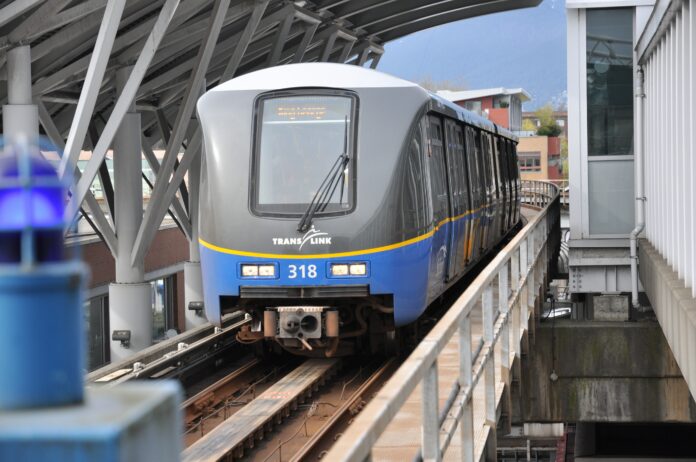
front shot of TransLink bus
A lack of reliable transit means many rely on cars for commuting. PHOTO: Diego Mazz / Unsplash

By: Karissa Ketter, News Editor

Once I graduated high school, I was incredibly excited to buy my first car. At the time, I didn’t care how expensive gas was, or how much I had to save for insurance. All I could do was offer to drive everyone I knew, everywhere. Reality sunk in very quickly once I started attending in-person classes, which are mostly in Vancouver. This means I live an hour’s drive away on a good day. The idea of driving for two hours, wasting gas, and spending the rest of my life savings on parking became unfeasible. After looking into transit options, I quickly came to the realization that Vancouver’s transit system is deeply flawed. 

A 2017 survey conducted by an outside firm for the TransLink’s Mayors’ Council found 90% of folks in Vancouver think there needs to be major improvements to the transit system. CBC News documented the community’s common complaints which range from bus overcrowding and not enough buses, to being very off schedule. Beyond the unreliability of bus schedules, the lack of access to the Greater Vancouver area is a major concern.

The housing affordability crisis in Vancouver is partly linked to poor transit systems. Population density tends to centre around areas with SkyTrains because people want better access to commute from work, school, and leisure activities. However, poor transit access in Greater Vancouver means everyone is trying to move into the city, driving up the costs of housing units even more. 

The lack of transit access in the Greater Vancouver Area and incredibly high rental costs in major cities means most people are forced to move far away from Vancouver and rely on their cars to get to school or work. Living anywhere but Vancouver brings forth numerous accessibility issues related to transportation: costly vehicles and unreliable transit are only a couple. This is an extremely unsustainable way for society to continue functioning.

The pandemic created huge challenges for TransLink, which forced them to cut some bus routes from Vancouver communities. Ridership plummeted to 44% of pre-COVID conditions in 2020. These rates are slowly recovering and sit at 75% in 2022, but transit access issues in the Greater Vancouver Area don’t seem to be getting much better. 

However, there is some mild hope for improvement. Recently TransLink announced their 10-Year Priorities plan. Their goals include extending the millennium line to UBC, increasing the amount of Rapid Buses, a rapid connection to the North Shore, and of course, the Burnaby Mountain Gondola. TransLink is also looking at expanding their outreach to Langley City by 2028. 

Perhaps there’s hope for improving the urban planning in Greater Vancouver. This issue isn’t something TransLink can dismiss — our access to quality social and economic life won’t improve while a huge portion of the community faces transportation barriers. For now, we’re stuck between the unreasonable costs of car maintenance and an extremely unreliable transit system.   

Monday Music: Sad boy fall

0
“Monday Music” in orange block text on a yellow rectangular background with rounded corners and an orange border.
Monday Music: your weekly themed playlist. Image courtesy of The Peak.

By: Hannah Kazemi, Staff Writer

Fall is here, (supposedly — what’s with this 25 degree weather?) and I don’t know about you, but I have mixed feelings about the season. I love putting on my Blundstones and quarter zip and walking through crunchy leaves, but I don’t love the frigid air or the threat of rain that’s always looming. Here are four songs to play while mourning the death of hot girl summer and cursing the imminence of sad boy fall.

Atlantic” by Kelsey Lu

Photo credit: Columbia Records

I love this song for its hazy feeling and Lu’s vocals. Her voice is so dreamy and the definition of “sing-song” because of how light and gentle it is. “Atlantic” maintains a similar tone in dynamics from the beginning until the end, which creates that feeling of longing that is threaded throughout the piece.

double take” by dhruv

Photo credit: Little Worry/ RCA Records

This song satisfies my inner romantic. It’s smooth. It’s sexy. It’s a love song like so many others but one that’s not cheesy as hell and is actually enjoyable to listen to. The beat is chill and relaxed, and dhruv’s vocals complement the music perfectly. The way he harmonizes with himself makes for a beautiful chorus and really adds to the feeling of desire and wanting that the lyrics describe.

Northern Attitude” by Noah Kahan

Photo credit: Mercury Records/ Republic Records

Kahan never fails to make me feel allllll of the feels. “Northern Attitude” is his latest release, and I already have it memorized. Kahan’s voice is so rich and clear in tone. This song is upbeat and energizing while simultaneously heartbreaking and full of yearning for a marriage. Scream-sing along while you’re driving with all the windows down with the crisp fall air hitting your face.

Weight in Gold” by Gallant

Photo credit: Mind of a Genius/Warner Records

“Weight in Gold” is one of those songs I put on when I’m laying on the floor in the dark and need to feel something. It’s the ultimate song for decompressing. Gallant’s voice is buttery and rich with emotion — you feel every lyric he sings. The slow beat and sultry tone of his voice add to the passion behind the lyrics, resulting in a therapeutic song that is full of emotion.

A scorned letter to the 143

0
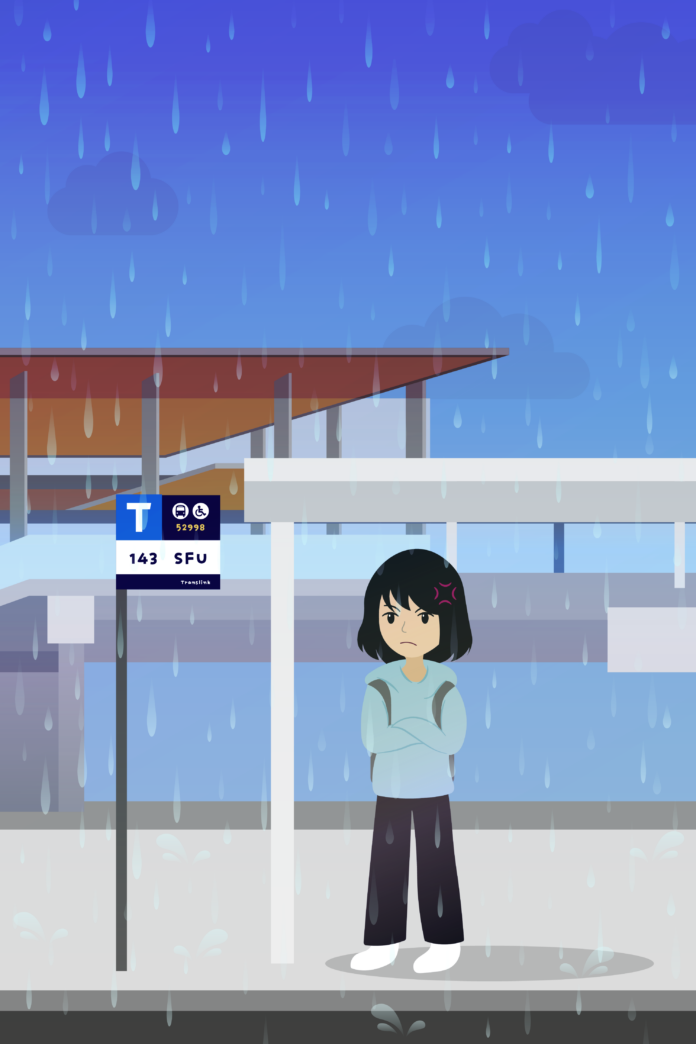
Illustration of a student left stranded on the bus stop.
Goodbye, my almost bus. ILLUSTRATION: Alyssa Umbal / The Peak

By: Kelly Chia, Humour Editor

Dear . . . Hah, you could never be dear again, so hell-o 143,

You may not remember me, but I sure as hell remember you. Yeah, that’s right, I’m the student you leave stranded at eight in the evening in the pouring rain. I think you are ashamed of yourself — you must be. Every time I descend from Burquitlam station, you’ve conveniently driven off without so much as a sign that you’d like to wait for me.

So be it. 

I remember your history. We used to ride from Coquitlam station to SFU together, remember? Back before you got all hoity-toity and posted yourself at Burquitlam. Ah, those were the times, going up that scenic mountain as we drove past the line of people waiting just one stop past the station. We laughed at those poor fuckers, didn’t we? I should have known you were toxic back then. But I was young, naïve, and ready to bus, bus, fall in love. I nodded off against those uncomfortably cold pane windows on hard back seats countless times, listening to my main character soundtrack. You were perfect for my imagination.

So perfect, in fact, that when you first left me stranded at 11:00 a.m. as my final exam had been cancelled and SFU had once again declared a snow day too late, I didn’t even blink. I just thought, “Ah, that’s reasonable, nothing can make it up these hills.” And then it happened again and again. I spent many days trudging down those hills feeling alone. I was the embodiment of the walking emoji: emotionless, hands in my pockets, and lonely.

I thought, it’s SFU’s fault, not my 143’s. The transit is still 10 minutes shorter than the 145, and the lines aren’t as scary! Plus, I’m too young and hip to commit to my full license or any sort of parking pass! Like I said, that was before I knew you. Before I took any evening class, where I realized you could never be there for all of me. Before I got stranded for the 10th time because I made the mistake of thinking it would be okay to take the bus between 2:00 p.m.–3:00 p.m. without being humbled by the horror of grade school children. 

Enough of dredging up our past. I am writing this as a farewell. I just want you to know that when the Gondola is built three decades after I graduate, I will be riding it up the mountain staring at you the whole time. But until then, you should know that I hate you.

Until my next class tomorrow,

Kelly

Vancouver city council candidates discuss equity concerns

0
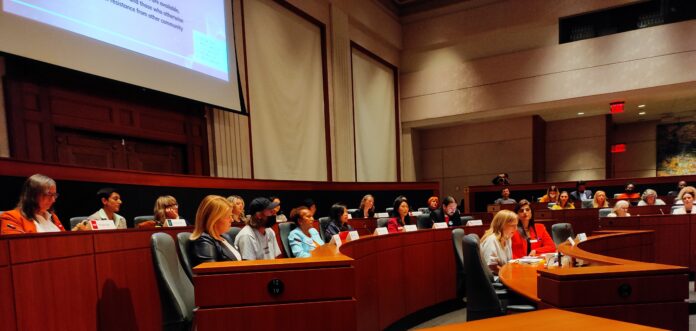
This is a photo from the SFU public square event where city council candidates are sitting at tables in front of an audience.
The panel conversation was followed by resident discussion and reception. PHOTO: Pranjali J Mann / The Peak

By: Pranjali J Mann, News Writer

On September 26, SFU Public Square and the department of gender, sexuality and women’s studies hosted a forum for Vancouver city council candidates to discuss issues of equity in the city. The event was moderated and organized by Ginger Gosnell-Myers and Women Transforming Cities (WTC): a “grassroot community of intersectional feminists.” 

Under WTC’s Hot Pink Paper Campaign, the organization has outlined eight key policy issues for candidates to address in their campaign. WTC’s campaign aims to amplify “the voices of communities who are otherwise not heard in the election process.” They work to hold the mayor and council accountable to the commitments they make. Key issues were centered in the conversation with the council and mayoral candidates. The issues discussed included the opioid epidemic, tenant’s rights, trans rights, and more.

Social Justice Programs 

Coalition of Progressive Electors (COPE) started off the evening discussing funding and council budgeting of social justice programs in Vancouver. Nancy Trigueros from COPE said it’s important to have a participatory budget process wherein the community and local organizations can give their input. “In budgets we need to do more, we need to serve the community and the priorities are very clear. We have people in the streets, we have women without houses.” This response and urge for participatory budgeting was echoed by other candidates as well. 

Housing Crisis

The next question related to the downtown eastside housing crisis. The conversation focused on single-room occupancy (SRO) accommodations in Vancouver. SRO’s are privately owned small one-bedroom hotels or non-market residence buildings that are made affordable for low-income individuals. On this, Morgane Oger from Progress Vancouver stated, “The situation in SRO’s in Vancouver is untenable. We have a significant number of people who refuse to participate in the SRO system because the servers are unsafe, and it’s just inhuman to ask people to go into dangerous situations when they’re safer outside.” She added, “We’re going to ask the city to set up the Vancouver Civic Housing Commission, which is going to act as a landlord and buy up land and make it available for rental in the mixed affordability model.” 

Tesicca Truong from Forward Together also built on the need of creating affordable housing by stating their party would work “with other levels of government, whether that be federal or provincial, to get some long term housing.” She added, “Being homeless is not a crime, and for too long we’ve been criminalizing poverty.”

Rebecca Bligh, incumbent councilor and returning candidate from A Better City (ABC) Vancouver highlighted the need for collaboration between various levels of government to work on the deep rooted housing crisis in Vancouver. 

Non-Partisan Association (NPA) Vancouver candidate, Melissa de Genova, also echoed the demand for collaboration between government levels and hoped to create low barriers to housing and opening newer avenues for social housing. 

Indigenous Reconciliation

VOTE Socialist and Green Party of Vancouver were asked to present their views on the issue of Indigenous self-determination and reconciliation, particularly for Musqueam, Squamish, and Tsleil-Waututh peoples. VOTE Socialist was represented by Sean Orr, who said, “I notice this is a colonial system that we’re working in [ . . . ] And we need to decolonize that.” He suggested some potential steps including giving Musqueam, Squamish, and Tsleil-Waututh peoples the right of first refusal for every land and stock sold, and returning Indigenous lands back. Orr expressed returning authority to Indigenous owners as a solution and stated, “Return that land [and] let the Musqueam, Squamish, and Tsleil-Waututh peoples build on that land however they see fit.”  

On behalf of Green Party of Vancouver, Devyani Singh said, “it is their land and they should have the right to say and be part of the economic development of this land which has been denied to them [ . . . ] I understand what it is like to be colonized.” She said the party will work alongside the community to “find innovative ways to include them at all levels of government, decolonize and truly work with them to make use of these opportunities.” 

Community Safety

TEAM for a Livable Vancouver called for “due diligence, accountability, and oversight” on the problem of community safety in the city. Their candidate Grace Quan, recommended having the position of a commissioner within the city police which would provide an “ombudsman approach so that people who are not getting the right responses from the traditional forces or different services, they have someone they can go to.” An ombudsman approach would include having a person in-charge to represent them and provide solutions outside of the institution’s existing hierarchy. This approach has been used in Ontario.   

Climate Change

The panel concluded with a question on climate emergency and “zero carbon mobility,” which was answered by candidate of Vision Vancouver, Lesli Boldt. She noted that under the city’s climate emergency action plan, work needs to be done to both “support transit enhancements” and green buildings. She declared that if elected, they would “extend the Broadway subway out to UBC so that students and folks on the West side can come in.” 

OneCity Vancouver’s candidate Iona Bonamis proposed placing amenities for residents closeby to enable less use of transportation, thus cutting carbon emissions. She said, “When you’re planning all types of uses to be located close together, you’re enabling people to walk or bike. [You could] transit to those places much more easily without having to get into a car, and so the climate emergency plan calls for 90% of people to live within an easy walk or [bike to] their daily amenities.”

You can get more information on the candidates and their campaigns, here

Horoscopes Oct 10th–Oct 16th

0
An illustration of a girl with long flowing hair. Astrological signs and stars shine around her.
ILLUSTRATION: Marissa Ouyang / The Peak

By: Kelly Chia, reader of the Stars and fanfiction

Aries:

Take literary inspiration and dress up as a scarlet “A” this year, as in Scarlet Letter. Not only will you show your teachers initiative by dressing as an A, you will also experience the public persecution of fitting your outfit through classroom doors! A+ for you, Aries!

Taurus:

Taurus, I’m feeling like you should dress up as specifically Rick O’Connell from The Mummy. No, the Stars haven’t been on a movie binge recently. Don’t you think you owe it to yourself to empower yourself with himbo energy?

Gemini:

The Stars aren’t sure you will dress up this year. You have like, a gazillion costume ideas, but ultimately midterms and finals may wear you down to dress up as a student trying their best. You know what? You’re doing great!

Cancer:

Ignore everything we just wrote about Gemini, because dear Cancer, this Halloween is your time to worship the Soothsayer of Forests: Hozier! We predict a flower crown and loose flowing outfits in your future. 

Leo:

Leo, you will be absolutely transcendent, darling. No, dressing up as a concept isn’t pretentious! Everyone deserves some glamour and sophistication, especially you, my dear. I love that you want to dress as “the vulnerability of being known,” or whatever that means! Superstar.

Virgo:

Virgo, no pressure, but you know you have to do this better than anyone else. You’ve been thinking about your Halloween costume concept since July, making foam pieces of armor, and putting it all together. Blow us away!

Libra:

Cringe culture is over, Libra. Who cares what people think? You want to pull out Scarlet Witch? Do it. You want to do a Winx fairy? Do it! Chase your bliss, and have fun.

Scorpio:

Do you remember when a few weeks ago I advised you to live your best 2014 Tumblr life? That’s right, babe, I think you should go all in. I think you should wear your SuperWhoLock shirt with pride. Or even dress up as a Supernatural character! I promise you will be adored.

Sagittarius:

The Stars divined your fate almost immediately, lucky creature! You should dress up as your comfort food, which is definitely some kind of soup. Just one look at your comforting ceramic shape should reassure everyone around you, just in time for exam season.

Capricorn:

Have you hit up a pumpkin patch yet? The Stars think you should take some time to relax and fulfil your childhood dreams of wandering through the pumpkin patch as a character from Narnia

Aquarius:

Oh, Aquarius, I think we are having some trouble getting your costume ready for you! It happens from time to time, some interception between the Stars and between me, their humble translator. Here, why don’t you take my trusty disco ball outfit. So you can be ballin’ and the belle of the ball!

Pisces:

We’re not sure if you are the kind to get in the spirit for Halloween, but you can still have fun! Take up some candy and carve out a pumpkin with your friends. Dress up as the Mario Kart characters together!