Home Blog Page 21

Mark Carney wants AI flight attendants for Air Canada

0

By: Sasha Rubick, SFU Student

The Air Canada strike may be over, but the lingering reasons for the strike aren’t resolved — or are they? Recently, 10,000 flight attendants hit the bricks in protest of low wages and unpaid labour, amidst new contract negotiations. The federal government ordered them back to work only hours later. The Canadian Union of Public Employees (CUPE) announced their intention to defy the back-to-work order. At the end of the day, a tentative agreement was signed, ending the labour dispute.  

In the aftermath, Prime Minister Mark Carney raised some eyebrows with his Labour Day address, where he suggested artificial intelligence (AI) could replace the flight attendants entirely and prevent future labour turbulence. 

“My time at Goldman Sachs gave me a grounded — no pun intended — perspective on the lives of Canadian workers. They’re such couch potatoes,” Carney said in his remarks. “You know, I go to work every day, and you don’t see me striking. We all have to sacrifice just a teeny tiny bit. You might call it austerity, I call it sucking it up. And trust me, I know what it’s like to be paid unfairly — I learned about it in a sociology class at Cambridge (which my dearest paPA paid for).”

Carney then outlined a plan for Air Canada to replace its flight crew and gate agents with AI, and decided to “just throw in the pilots too, for good measure.” This cost-cutting method would save Air Canada a couple of dollars a year in wage payments. According to an anonymous source, the airline is considering using this money for more pertinent expenditures, such as providing coffee, during executive meetings.

99% of Canadian boomers who voted for the Liberals in the last election support Carney’s latest proposition. In a statement to The Peak, one respondent said: “I’ve thought for years that it’d be impossible for Air Canada’s customer service to be worse. Now that it is, I don’t seem to mind. Our beloved prime minister knows best! Maybe those flight attendants ought to keep their elbows up and shut up instead of putting picket lines up.”  

Air Canada appears ready to move forward with Carney’s plan, but says it will need to change the prices of their flights. “We’re making up for a possible future deficit of about $2 billion for insurance payouts,” explained a representative, “just in case that AI pilot thing doesn’t work out.” The airline will add a $700 AI fee to all future flights, mimicking their current business model. The company has notoriously balanced deceptively inexpensive base fares with add-on fees: $200 for checked bags, $50 for pretzels, and $300 for premium-quality elbows up couture oxygen masks. 

Generously, Air Canada will allow customers to opt out of AI assistance and the associated fee if they’re willing to store 10 other passengers’ luggage in the overhead, train the stranger next to them on how to put on an oxygen mask, and accept the risk of guaranteed death by hyperventilation during mild turbulence.     

“Mark Carney is a national treasure,” a spokesperson for Air Canada announced in a press release this morning. “We can learn a lot from the recent election. The Canadian public wants to be served by opinionless robots. Slap a maple leaf on an android and call it a day. And that’s exactly what we shall do. We all have to make sacrifices, so if the flight attendants don’t want to work, we’ll just replace them all with AI. Simple as that.” 

Carney doubled down on his proposal this evening. “What’s best for Canada is whatever gets our planes in the air again,” he said. “As your prime minister, I’m an expert on filling an important job position with a crappy substitute. If we did it in government, we can do it for air travel.”In a statement to The Peak responding to these newest developments, CUPE simply typed “sigh.”
 

Timeshares for sale on Burnaby Mountain

0
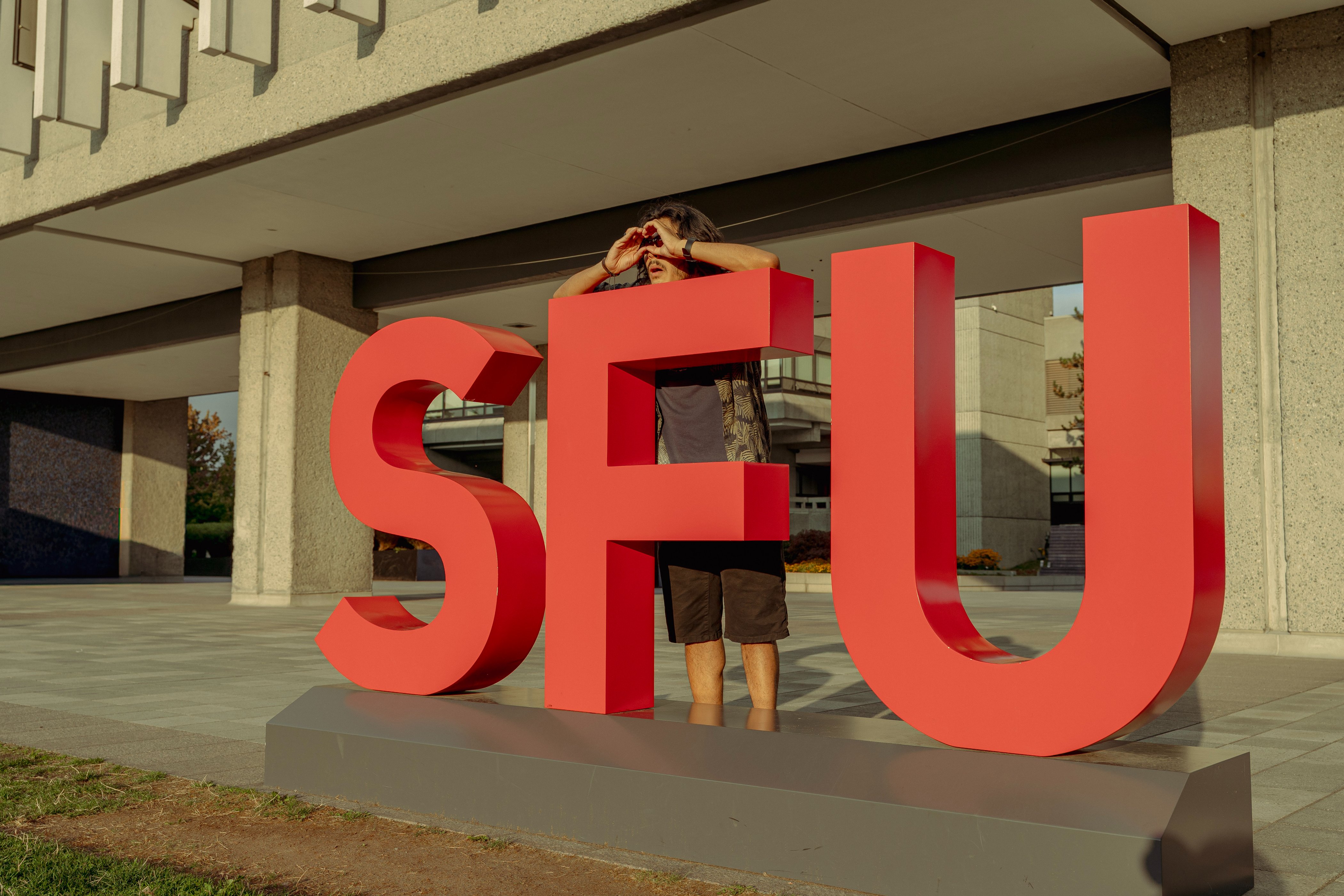
A man stands in the middle of a red, blocky SFU sign. His hands are cupped in front of his eyes, indicating awe or fascination with something — almost as if he is sight seeing.
PHOTO: Aedrian Salazar / The Peak

By: Mason Mattu, Timeshare scam detector and Humour Editor

Somewhere in the backrooms of Maggie Benson Centre, a group of tourists has been roped into a sales presentation about timeshares at SFU. Their salesperson? Tiffannee. She’s not just hungry for a commission, she’s hungry for love. This is her story.

Greetings! My name is Tiffannee (just Tiffannee with two e’s), and I am the newly-hired tourism coordinator at the Simon Fraser University Burnaby Campus. I’d like to first thank you all for coming to this info session about new timeshare options in Metro Vancouver’s newest luxury travel destination, SFU. I see a hand raised for questions already! Oh … Yes, you will receive the free Safeway coupons as an honourarium for your time. 

You are all here for one reason and for one reason only. You’re interested in — yes, we get it, Todd. You’re here for the goddamn Safeway gift card. Please, just let me speak.

As I was saying, SFU’s administration has invested big bucks into making our campus more appealing to the kind of tourists who would spend $15 on an ice water in Vegas. Oh. My. GOD. I wasn’t supposed to read that. My executive assistant, Tiffany, needs to get better at this. 

Vancouver as a destination has become way too oversaturated for tourists like you to spend your time. That’s why we’re proud to announce that SFU Burnaby will soon be home to timeshare units in what was formerly the secret campus hotel — The Simon. The Poconos? Hawaii? The Swiss Alps? All of those destinations are so yesterday. Boring!! We’re putting the chic back in chickpea by featuring accommodation so close to SFU’s world-class Dining Commons! We might have to keep workshopping that one . . .  

Anyways, picture yourself with a margarita in one hand and a — oh, shit. My cue cards are misordered. Please imagine you’re — Ugh. Tiffany. Alright. Imagine this — you’re sipping a margarita while looking over a beautiful mountain scenery. Rumour has it that Leonardo DaCapréow (often wrongly referred to as Da Vinci or something) came to Burnaby Mountain for inspiration for American Gothic. Yes, that’s right. 

Other than the mountain views, there are a lot of things to do when vacationing at SFU. You have a fantastic view of the Eiffel Tower, you can go bungee jumping at our totally fully-functioning climbing wall, and take a ride on our concept of a gondola. We promise, it’ll all be worth it. 

Then, you can take your significant other to our beautiful and artistic interactive theatre presentations. During our off-season, we convert our unused hotel rooms into an elaborate scheme that looks like a university campus. Here, feel free to interact with our actors. It’s all part of the experience.

Now, Todd will ask an insightful question that will allow you to gush about the amazing wildlife on the mountain. He’s totally not a paid actor to help push this sale — Jesus, damn these cue cards!! Make sure not to mention the — NOT AGAIN TIFFANY. Nevermind. What I meant to say is our offerings greatly surpass those of overrated travel destinations in BC, such as Whistler. For example, overpriced groceries can be found right at Nesters Market to really get you in that fancy mood. After eating some overpriced jam, you can take your significant other back to your room and — jam. 

Todd, I can’t play this sales gimmick anymore. These cue cards are so fucked up . . . I only took this job because of you. Mentioning this jam made me feel like we’re meant to jam together — you know we’re meant to be together. That should be US drinking boxed wine, sitting on top of the observatory (but not inside, I’m not a nerd), and making love all night on top of overpriced jam while jamming to jams. Fuck this job, let’s get married. Will you marry m —

Erm. Ladies and gentlemen, it seems like a fellow prospective timeshare purchaser of yours, Todd, had to leave early. I — 

I’ll be lonely forever, won’t I? Here are your Safeway gift cards. The timeshares are $300,000 a year — that’s cheaper than buying a house. Thanks for listening, and very sorry for the weird happenings today. HAHA. Fuck my life. 

The timeshare audience nods their heads gently. Unbeknownst to Tiffannee, all of them are tourists from Germany and don’t speak English.

Monday Music: Anything but indifference

0

By: Lucaiah Smith-Miodownik, News Writer

Carry the pieces by Small Forward

A steady beat with an influx of texture catches the ear just right and beckons the listener forward. “Carry the pieces” gently reminds us of an everlasting, sometimes all too real truth that we must keep moving forward. Life is beautiful for reasons often antithetical to our understandings of meaning. To make something special is to accept that it may collapse. If it does, “can you find a way to carry the pieces, when there’s nobody to carry you home?”


Axis by Tanner Agpoon

The same forces that help us to grow our wings can send us crashing to the ground. But perhaps it’s worth it to have ever seen the sky at all, to have felt the wind and looked down upon the Earth. “Axis” is a testament to the complexities of such passion. With simple melodies and smooth repetition, the song leaves room for the listener to fill in the rest with their own experiences. “Teach me how to fall, how to fly.”

Sunshineby Vaz

“Sunshine” is a reminder that risks, in life, in love, and elsewhere, make us human. With infectious vocals that crescendo into an uplifted chorus, Vaz expertly crafts an aural representation of what it means to step into something remarkable, like going from darkness into the sun. Sitting in the shade might feel nice, but those brave enough to step into the warmth will realize it’s well worth it, even if they get burned.

Foldby knitting

knitting expertly tucks lyrics of disappointment and regret into a comfortingly homey sound. Shame begets reflection, and it is often only after the fact that we can look back and wish we had acted differently. Sometimes it takes someone to “hold a mirror to the back of my head” to see our own choices from a new angle. We long to “mold myself into the middle man,” or “fold myself into a polly pocket silhouette.” And yet, is it better to long for a retry than to have never tried at all? In a world saturated by indifference and inaction, sometimes we are wiser to choose regret.

We who have known tides: the Vancouver Art Gallery’s upcoming exhibition

0
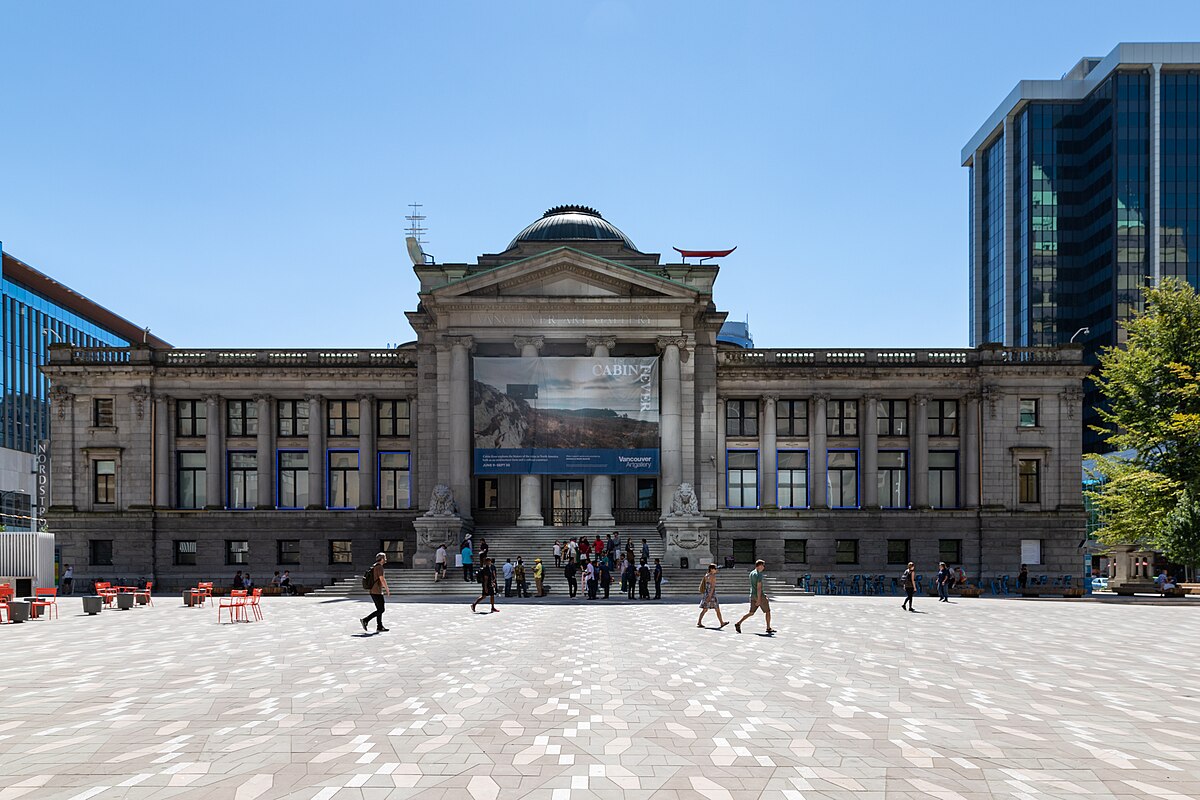
dronepicsr / Wikimedia Commons

By:  Noeka Nimmervoll, Staff Writer

With files from Hannah Fraser, News Editor

The Vancouver Art Gallery recently appointed Dr. Camille Georgeson-Usher as Audain Senior Curatorial Advisor on Indigenous Art. Of Scottish, Coast Salish, and Sahtu Dene heritage, Georgeson-Usher is the previous executive director of the Indigenous Curatorial Collective and is co-chair at the Toronto Biennial of Art. Additionally, she is an assistant professor of Modern and Contemporary Indigenous Art in the Department of Art History, Visual Art, and Theory at UBC. On top of contributing her expertise to upcoming exhibitions and acquisitions, she will unveil her inaugural exhibition, We who have known tides, in November this year. 

The exhibition is “a poetic inquiry that seeks to understand what it means to exist at the edges of the Pacific Ocean.” Featuring around 40 works of Indigenous artists, the connections between the ocean and the Indigenous Peoples who live by it will be poetically visualized. In a separate interview with The Peak, Georgeson-Usher said, “I want people to feel as though I am here to listen and that I am committed to presenting Indigenous voices in the Gallery.” She is set to present a space of deep respect to the ocean, where her personal and familial relationship that is bound to the ocean is sought to be contextualized. The Peak spoke to Georgeson-Usher to hear more.

The interview has been edited for length and clarity.

How did the idea for this exhibition come about? 

I was living in Montreal and Toronto. As somebody that’s from a tiny island in the Pacific Ocean, I found myself longing for water bodies and using writing and running long distances as a way of remembering what it feels like to be next to the ocean. What’s something that I’ve been developing that I could work in relation to other artists that I know were thinking in this way? And so I kind of use this poetic inquiry as a way of building my own relationship to the pieces in the collection and use that as a way to create the scope of this exhibition.


What is a common thread in the pieces in this exhibition?

One thing that I’ve noticed in all of the artworks, is that there’s this very distinct appreciation and respect of the ocean as this being that we have to live in relationship with that is very forceful and very powerful. And so I really respect that all of the works that I’m thinking alongside contain this deep respect of the ocean, which I’ve always felt. It’s nice to see it visualized.


How will the exhibit be contextualized?

There’s going to be longer texts that contextualize some of the pieces when it’s important to present the work in a good way. I’m also guiding each collection of artworks with a poetic prompt. I want people to come in and not feel like they need to know everything. Because I think one thing that Indigenous folks can teach people is that it’s not about knowing everything. It’s about just being there, witnessing and taking what we need, and taking what we are given. And so the poetic prompts are a gesture towards that.


Where are the art pieces from?

I wanted to make sure it was a bit broader so that we could kind of really show the scope of the territory, looking out of the Pacific. The scope of geography that I’m looking at is California to Alaska. But it is really communities and people who have worked at the edge of the Pacific and are showing this relationship to the Pacific.

“I like to emphasize contemporary Indigenous art in my work so that we recognize that we’re still here and we’re still making it and we’re still living here, too. I guess my mission in this regard is just to make that present and to bring our voices back in that way.”

— Dr. Camille Georgeson-Usher

See We who have known tides at the Vancouver Art Gallery from November 7, 2025 to April 12, 2026

Course Review: The wonders of classical mythology

0
ILLUSTRATION: Sonya Janeshewski / The Peak

By: Julia Nijjar, SFU Student

It’s often difficult to decide which classes to take for an upcoming semester. I constantly find myself lost in an entanglement of thoughts as I weigh the pros and cons of each potential schedule outcome. Choosing courses that align with our major and prerequisites can be straightforward, but what about the electives? Of course, GPA boosters, workload, and time management are all factors to consider. But what about finding a course which is simply enjoyable? Escape the labyrinths of your mind next enrollment period and follow the “clew” out of this tiresome dilemma. The mighty golden fleece is dull in comparison to the treasure called HUM 102

During my first year at SFU, I took classes within my psychology major and miscellaneous electives, one of which was HUM 102. I possessed little to no knowledge about classical mythology, yet I was in dire need of an elective that aligned with my schedule.

Taking HUM 102 was a shot in the dark, which turned out to be the best decision I’ve ever made.

In the first lecture, I learned about the central figures of Greek Mythology and their importance in ancient Greek civilization. Over the semester, I discovered more about the complexity of the Olympian family tree, and the stories and battles fought among the mortals and Gods. Even while lectures were lengthy, time seemed to have flown by quicker than the sails of Odysseus’s ship on his prolonged voyage back home to Ithaca across the relentless seas.

The entire course felt like one big storytime, and some days, class felt like a gossip session as my peers and I would discuss the victories and tragedies of immortal beings. 

The professor at the time, Antone Minard, appeared to have taken on the role of an all-knowing ancient bard while we eagerly listened at the edge of our seats. Now, HUM 102 is being taught online by Alessandra Capperdoni, and she’s set to teach it next semester. The course syllabus currently consists of two essays, four analysis posts, one creative assignment, contributions to a discussion board, ungraded mandatory quizzes, and the midterm and final. When I took it in spring 2024, the exams featured both written (long answer) and multiple-choice questions. Attendance was usually mandatory. I read the assigned literature once to understand, then once again to compose notes. Reading the material twice, or even three times, helped identify details I didn’t catch during the first read. 

I cared so deeply for HUM 102 that spending time writing papers and quizzing friends on the subject matter as exam preparation felt more like a hobby instead of a chore.  The class was engaging, and we were given opportunities to discuss topics like demigods, Homeric heroes, and seemingly impossible monsters. I felt immersed from start to finish, so much so that I decided to minor in Hellenic studies alongside my psychology major.

Even though Greek mythology may seem to differ drastically from the subject matter of psychology, I often come across overlapping themes. Take the story of the Trojan Princess Cassandra, for instance; she was gifted the ability to see the future by Apollo, who admired her. Cassandra rejected Apollo, so in anger, he cursed her never to be believed by others when she spoke of prophecies. Her struggles ultimately led to the inspiration for the naming of the mental illness called Cassandra Syndrome, which occurs in response to complex trauma and additional psychological factors discussed within the field of psychology. Neurologist Sigmund Freud was additionally heavily influenced by Greek plays such as Oedipus Rex by Sophocles and the myth of Perseus and Medusa, which inspired many of his psychoanalytic theories and beliefs.

Greek myth is so much more than just fictional stories. Many societal issues within the ancient Greek civilization mirror issues present in our society. Discrimination, misogyny, and inequality are all explored through figures like Medea, Medusa, and Pandora. Themes of love, loss, grief, and war are recurring components of life throughout the passage of time, and so Greek myths often serve as embodiments of the complex yet timeless events and emotions of humanity. By examining how these themes are portrayed, we can understand how they have helped us shape our views of society in the present day. For example, how did the people of ancient Greece create and view particular archetypes? Ares is the God of war, he represents physical strength, and is often associated with masculinity. Athena is the Goddess of war, and a strategist for the battlefield who represents wisdom. How did the people of ancient Greek assign gendered roles of the Gods? Why must Olympian brothers Zeus, Poesidon, and Hades rule over the endless skies, seas, and Underworld while their sisters rule over domains such as hearth, agriculture, and marriage? 

Asking questions about how and why ancient civilizations, visionaries, and artists held particular values and beliefs can help us reshape and challenge our perspectives. It’s important to understand and learn from the past in order to sculpt a stronger future with our diverse fingertips.

The course itself is considered a “W” (writing) course and is a breadth-humanities class, so be prepared to write a few essays. These essays provide opportunities to reflect and make connections between course themes and archetypes with relevant issues, while using creative freedom. I travelled down many rabbit holes while conducting research simply out of my growing fascination with the subject. I mustn’t be blamed for behaving in such a manner . . . who wouldn’t want to learn more about the enchantress Circe who practices witchcraft in solitude on the isolated island of Aeaea? Did I mention she can also turn men into pigs? 

I truly believe HUM 102 is an opportunity brighter than the Titan Helios himself. The course can equip SFU students with valuable skills such as academic essay composition and engagement with literature. I will always continue to recommend this course to my friends and peers as it has not only enhanced my experience at SFU; it transformed my life. As dramatic as it may sound, I sincerely hope other students at SFU can take a meaningful course that will alter the way they think. My only regret is that I hadn’t taken HUM 102 sooner. Perhaps the fates residing in the Underworld amongst Hades’ realm had chosen my destiny . . . finally, it is time for them to choose yours

SFYou: Adam Bremner-Akins

0
Courtesy of the Bremner-Akins Campaign

By Mason Mattu, Humour Editor

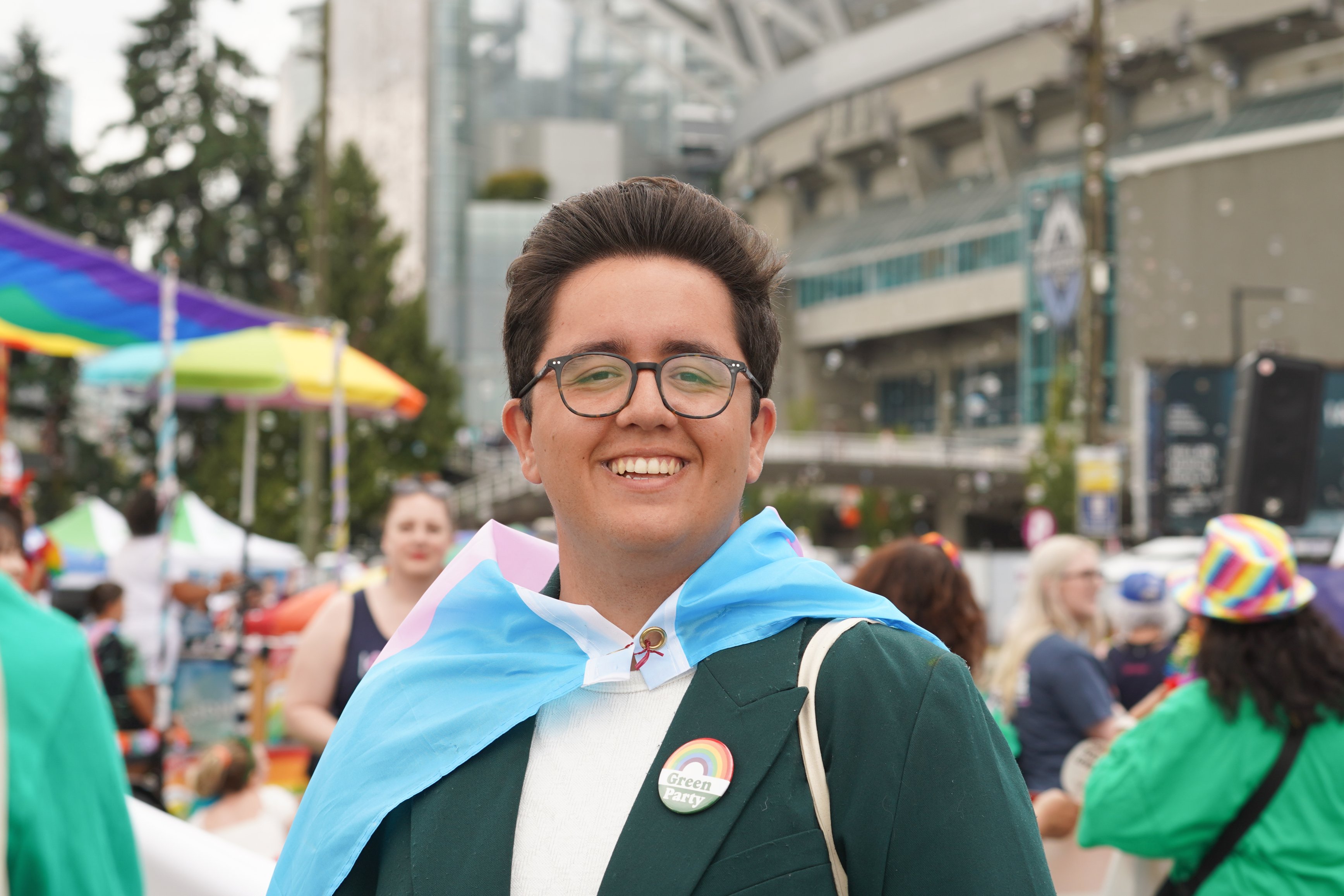
Adam Bremner-Akins is not your typical politician. He’s 23 years old, works a minimum-wage job as a restaurant waiter, has run for elected office twice, and is wrapping up a political science degree at SFU. 

Now he has his eyes set on becoming the next leader of the BC Green Party. Bremner-Akins, a former BC Green Party secretary and two-time MLA candidate, joins candidates Emily Lowan and Jonathan Kerr in a race to replace former leader Sonia Furstenau

The Peak sat down with Bremner-Akins to learn more about his journey as an activist, politician, and student — and why he thinks he’s the right person to lead the Greens.  

This interview has been edited for concision. 

How did your journey at SFU influence the way you think about the world? 

“Discovering urban planning at SFU changed how I see the world. Every time I leave my house, I can’t stop thinking about the design of our streets, the transit I am taking, or who decided suburban sprawl was a good idea. As well, I stopped viewing cities as traffic-clogged places where people work and started seeing them as living systems shaped by choices. It taught me that cities can be places where people live affordably, move safely, and belong, if we choose to design them that way.

PLAN 300 is the course that really got me hooked on urban planning. It introduced modern planning practices like gentle density, street design, transit-oriented development, and green infrastructure, and showed me how design decisions can either build a community or pull it apart. It made me want to build cities that put people first.”

What made you put your name forward in this race? 

“When I first started, there were some people I wanted to see run for the party who just didn’t have the time or weren’t going to. And so I sort of sat around. I talked to some people and told them, ‘Hey, maybe I should do it.’ I’ve been with the party for a while. I’ve been a candidate before.

“I am in an opportunity where I have the experience to go for this job, but I have the issues that everyone is struggling with on my shoulders. Living in Metro Vancouver, the cost of living is obscene. 

“All of these issues compound, whether it’s healthcare, lack of transit, or the inability to afford groceries. Because everything is getting more expensive quickly. If the world was going to burn down, I need to know I did everything to stop it.”

Tell me about what drew you into politics. 

It was when the BC Liberals began to go after teachers, and when they were on strike. That was the first time I interacted with large social movements. My parents are both educators. I sat with my dad on the picket line.” 

In 2019, then a student at Terry Fox Secondary School in Port Coquitlam, Bremner-Akins walked out of class with a single sign and sat on his school’s lawn to participate in a climate demonstration. Inspired by Greta Thunberg, he tells me, this started a movement at his school that saw upwards of 150 people out on that same lawn. 

This transcended into local advocacy initiatives for issues such as reducing single-use plastics from the school cafeteria and lowering the voting age to 16 in BC. 

How do you de-stress after a busy day on the campaign trail? 

“Calling friends on the way home from an event and debriefing. It’s probably the only time I get to not talk about politics right now. 

Aside from that, the conversations with voters do help, too, especially because it’s groups of people who believe in the same ideas as I do and the party does. Because of that, it hasn’t been terribly stressful. There’s still a group of people who are grounded in reality and care for our province.”

How would a BC Green Party under your leadership combat strategic voting efforts?

Anyone who I have talked to now, whether they’re a party member or not, are frustrated by politics and feel like the government doesn’t represent them. And that means it’s time to change the way we elect politicians to proportional representation.”

On the campaign trail in the four days preceding our interview, Bremner-Akins travelled over 1,500 kilometres. Although it’s been taxing, he noted that putting in hard work is what he wants to do as leader. Bremner-Akins said the reason why Conservatives have been successful in their campaigning as of late is because “they’ve found a way to communicate with people.” 

He plans to counteract that with his own communication — something he calls the “Dancing Green Tour.” It’s a plan that seeks to visit all of the electoral districts in the province to show people that he’s not like most politicians who “show up to campaign for a few hours.” Instead, he seeks to be accessible to those who wish to know about the Greens. 

If you had a campaign theme song, what would it be? 

Chappell Roan’sThe Giver.’ Of course, I love Chappell. Part of the song is, ‘you can’t stop me,’ and I refuse to be stopped. I’m going to keep on fighting for as long as I can for the issues I care about. 

“The song is a bit me too because as much as I talk about urban planning and density, I learned to drive manual on a tractor. My family and I live on a farm in Maple Ridge. Though it’s not really active right now, I have a background in a bit of agriculture and outdoorsyness that isn’t really traditionally reflected in my campaign.

“Because ‘The Giver’ is a country song from someone who lives in LA, it feels sort of fitting for me as someone who lives in a big city, but also has a bit more understanding or relatability to more rural issues.

What advice do you have for other young people who want to step up and get involved in politics? 

If you’re getting into politics, make sure you’re grounded in why you’re doing it. It gets scary and depressing, and sometimes not all that fun. You really have to, at the end of the day, just say, ‘I’m doing this because of [a particular reason] and it upsets me really bad.’”

What do you say to people who say you’re too young to run? 

“Age is just a number. Young politicians work twice as hard to get half the respect of older politicians. 

“I pay taxes, I have a job, I have a life. Anyone who does that is more than capable of participating in our democratic systems. And frankly, I have put the work in before this to make sure I’m politically experienced enough to do a job like this. 

“No one shouldn’t be allowed to run for party leader because they’re too young. That’s a criticism that’s not grounded in anything. Look at all the young politicians we’ve had in BC. Ned Taylor on the island, an incredible young politician. He accomplished so much as Saanich Councillor. I would say that, arguably, the politicians who do the worst stuff would probably be middle-aged politicians. And we don’t ban middle-aged people from running for office because we don’t like their actions.” 

Bremner-Akins told The Peak that he’s “ready on day one.” Will his campaign resonate with voters, especially younger ones? We’ll just have to wait and see. 

Members of the BC Green Party can vote in the leadership race. The virtual voting opens September 13 and closes September 23. For more information about Bremner-Akins’ campaign, visit adamba.ca. For more information about voting procedures and the other candidates, visit bcgreens.ca/leadership-contest/ and the news piece published in The Peak last week. 


Reading for joy is enough

0
The image of seven books lined up on a bookshelf, with their fore edge (the pages) facing the viewer. The bookshelf is not visible.
Courtesy of Emily / Pexels

By: Zainab Salam, Opinions Editor

You’ve probably witnessed it before — someone suggesting, with smugness only a self-proclaimed intellectual can summon, that reading authors like Dostoevsky is the only proper way to engage with true literature. I say this as someone who has spent many nights trying to parse the meaning of a single sentence in a Hannah Arendt essay. But I also say this as someone who reads murder mysteries under the cover, devours romance novels in one sitting, and has fallen in love with the main character in a certain YA book with a blue cover. Reading shouldn’t be pretentious — it should be joyful. 

Reading isn’t only for growing your vocabulary or building on your philosophy of life. It’s also for resting, for living vicariously through fictional characters. There’s a strange kind of snobbery that still haunts reading culture — a belief that books must be difficult to be meaningful. How very Dorian Gray of us. Somehow, enjoyment is seen as less noble than suffering and analysis. But, to me, joy is a serious business. 

When we dismiss books that center romance or rely on cliché tropes, we risk losing the emotional immediacy that first made many of us fall in love with books in the first place. Remember your very first book as a kid? When you had to sneak some kind of light source under the blanket, so you could read well past your bedtime?

What a gift it is to be gripped by a page-turner — to feel your heart race as a detective edges closer to danger.

What a blessing to see two characters find their way back to each other, despite every odd, and to believe in love. What a relief it is to escape. To read widely is to honour all the parts within us: the thinkers, the dreamers, the escapists, the romantics. No single genre can feed the whole self. 

The hierarchy of reading also deepens existing divides — classist and elitist ones. When particular genres are diminished, it’s as if the reading community is reinforcing the idea that only certain voices, certain aesthetics, and certain readers belong. 

So yes, read your Simone de Beauvoir. Read your Nawal El Saadawi. Read your Maya Angelou. But also read your cozy mysteries and beach romances. Let your reading diet be as varied as your moods. Let your bookshelf hold life in its many forms and variations. At the end of the day, what matters most about your book is how it made you feel.

The sweet relief of no final exams

0
the image of an exam hall, filled with desks lined up throughout the hall. There’s one person sitting with their back towards the viewer.
Courtesy of Duo Nguyen / Unsplash

By: Zainab Salam, Opinions Editor

Don’t you just love it when a course doesn’t have a final exam? I know I do. A certain joy overtakes me when I realize that one of my courses won’t end with me scribbling furiously under the watchful eye of the invigilators. Call me dramatic, but I swear I feel five pounds lighter. 

Without the pressure of a final, I can lean into the coursework. Every essay, presentation, and project feels more purposeful. The course becomes far more engaging, without the looming shadow of a future torture session — that torture session being a three-hour marathon, in an unfamiliar room, where I can’t control the variables. What if I end up getting sick that day? What if the room feels too hot? Or too cold? There’s simply too much at stake. 

Courses without finals let me focus on the content itself. Working through the course material is all about curiosity, creativity, and knowledge acquisition. And honestly, that feels like a much better measure of success than how well I can scribble answers in a booklet under pressure, or fill in bubbles on a Scantron sheet.

Remote learning shouldn’t have been temporary

0
the image of a laptop on a desk, with a green mug sitting right beside it. The laptop is logged onto a zoom call.
Courtesy of Chris Montgomery Unsplash

By: Noeka Nimmervoll, Staff Writer

Who remembers the early stages of the lockdown? Specifically, the second wave? I certainly don’t like to think about the isolation much, but some systemic changes that occurred could help us even beyond the direct benefits of illness reduction. 

During the early mandated COVID-19 restrictions, SFU pivoted to online courses. Despite the hardships of adjusting to a life of socioeconomic uncertainty, online courses provided an accessible portal to education that was not hindered by commutes and rigid scheduling. Students living with disabilities, in particular, benefited from online classes. Remote learning showed how education can be more equitable when access doesn’t depend on physical presence in classrooms. It protected the health and safety of students by providing an alternative option to a germ and virus-filled public space. When in-person classes were announced to be back in session, it wasn’t all cheer. Remote learning should have remained an integrated standard for classes at SFU; it’s safer and more flexible — but above all, more accessible and equitable for all students pursuing higher education.  

On January 24, 2022, in-person classes resumed and the safety that remote classes provided ended. Now, health is at risk for immunocompromised students each time they show up to class. During the early stages of the lockdown, it was mandated that all non-essential activity be ceased, so most people had to stay home. Furthermore, everyone should stay home if they’re showing symptoms of illness. Now, without many remote classes offered, people who are sick are pressured to come to class — to meet their graded attendance requirements as set by their syllabi. Not only is this awful for students who drag themselves to class while sick, but it also puts everyone else, especially immunocompromised people, at risk by exposing them to an infectious environment. These health risks reinforce how removing remote learning options creates inequality for students whose health limits their ability to attend in-person. Even with a relatively healthy immune system, I am seasonally incapacitated by sickness from other students (and teachers!) who attend classes while sick. It’s frustrating to have no control over your health and have no choice but to overexert yourself to keep up with school.

The switch to remote education showcased SFU’s ability to accommodate the needs of students.

The measures taken during the second wave of COVID-19 — remote learning, social distancing, and mandated masks — showed that SFU is capable of providing effective education in a remote learning mode.

Furthermore proving that offering remote options is both possible and already within SFU’s capacity. Which, to me, makes the removal of these accommodations hard to justify. 

Seasonal sickness is common and easy to spread, and it’s time that SFU acts like they know it. Remote learning is an accessible portal of education for all students, and one that SFU can provide. Although some things are better in person, online options offer flexibility and ease to the student experience. Above all, it ensures that disability and health status don’t determine who has access to education. After all, it was done once before — why can’t we do it again?

SFU conceals its environmental harms through greenwashing

0
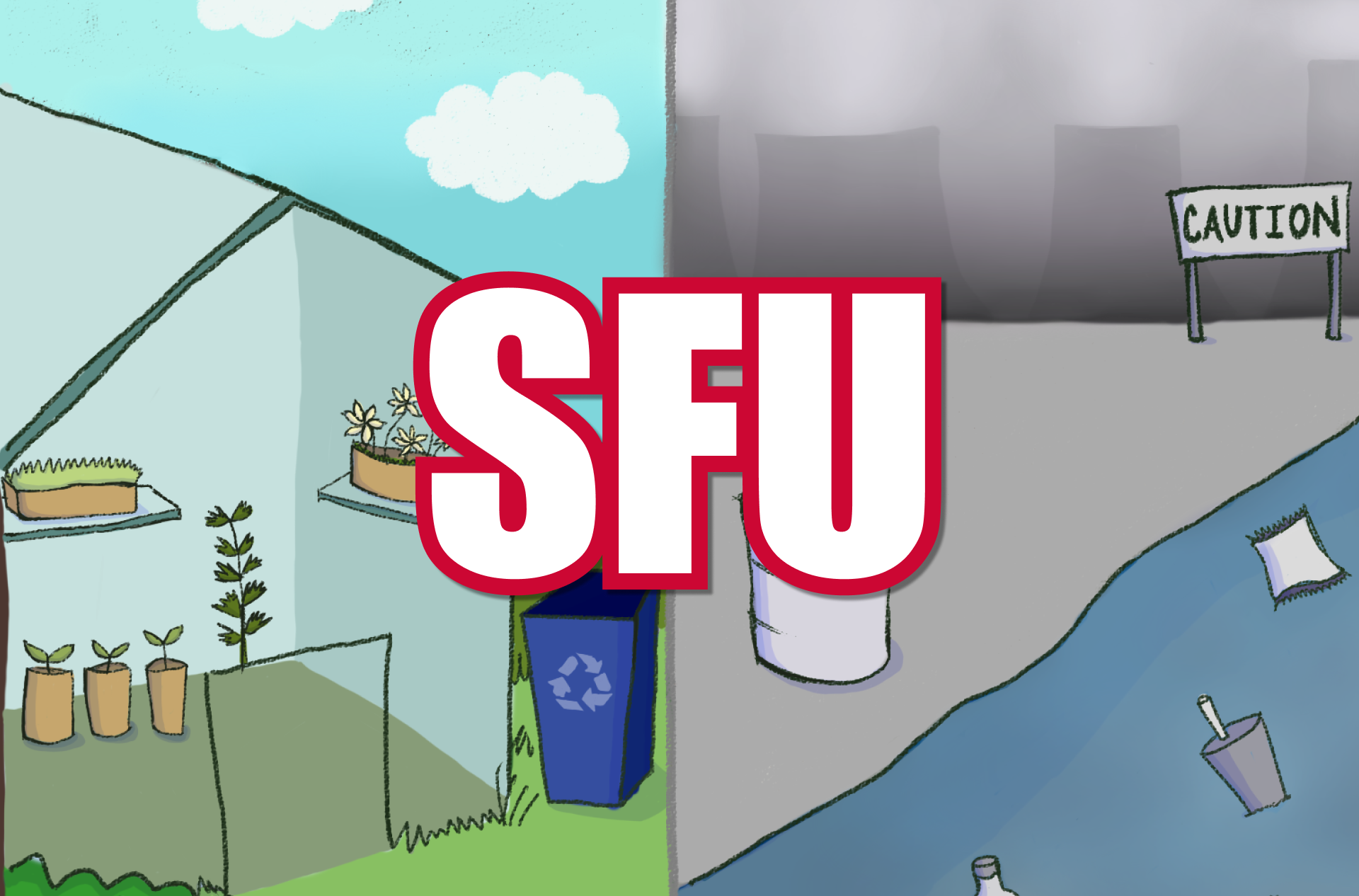
a bold SFU in the center of the illustration. On the right side there is a polluted river, with a caution sign right next to the river. The sky is grey. On the left side, there is a greenhouse with healthy plants and a recycling bin on the side. The sky is blue and has clouds.
ILLUSTRATION: Stella Laurino / The Peak

By: Heidi Kwok, Staff Writer

Every June, SFU’s marketing team paces restlessly in front of their computers in anticipation of the green light. Then, right on cue, they begin preaching about the university’s position as a world leader in sustainability and climate action. There’s no escaping the self-congratulatory press releases that echo the same sentiment, year after year. However, while SFU celebrates its sustainable accomplishments, the university’s environmental progress is consistently undercut by its contradictory investment practices, revealing a troubling case of greenwashing.  

Over the years, SFU has made some strides in committing to its targets for fossil-fuel divestments and reducing the campus’s operational greenhouse gas (GHG) emissions; however, these achievements cannot be taken at face value without examining the hidden fine print behind them. SFU’s 2022–2025 Strategic Sustainability and Climate Action Plan (SEMP) concludes this year, which provides an opportunity to critically assess the university’s public commitments to sustainability and climate action against its actual practices.

In November 2021, after years of pressure from student groups like SFU350 and the DivestSFU coalition, SFU finally acquiesced and committed to a full divestment and decarbonization of its investment portfolio to become fossil-fuel-free by the end of 2025 (also listed under Goal 5 of the SEMP). They simultaneously pledged to reduce the carbon footprint of the public equity portion of SFU’s investment portfolio by 60% below the reported 2016 baseline by 2025. The reduction target was then changed to 45% somewhere along the way. Did they keep their promises? Well, according to SFU’s Investment Portfolio Carbon Footprint, the university achieved a 74% carbon footprint reduction in early 2024.

This figure appears impressive — and SFU definitely markets it as such — but the number distracts from what really matters: where the university continues to invest. What the university fails to mention is that they continue to hold equity in fossil-fuel-related corporations (mining and pipelines). Including the likes of Pembina Pipeline Corporation, Teck Resources, and Agnico Eagle Mines Limited — the latter two of whom have been publicly condemned for polluting natural habitats and threatening endangered wildlife. SFU’s investment portfolio also includes stakes in fast-fashion companies like Aritzia and serial-polluter Nestlé.

Perhaps even more egregious is SFU’s investment in establishments that harm beyond the environmental and labour sectors. Despite being a signatory of the United Nations Principles for Responsible Investment, in addition to emphasizing investment practices that align with the environmental, social, and corporate framework, SFU continues to hold investments in the defence and military arms production industries. These assets include holdings in Booz Allen Hamilton Holding Corporation, CAE Incorporated, and Mitsubishi Corporation.

Nevertheless, that is not to discredit all of their accomplishments. In 2022, SFU surpassed its pledge to reduce operational GHG emissions by 50% from 2007. They have also actively transitioned away from fossil-fuel-derived energy in favour of carbon-neutral alternatives like the campus’s Corix biomass plant. Their commitment to carbon reduction is applaudable. SFU also joined the UN’s Race to Zero campaign to reach an 85% reduction in GHG emissions by 2030 and achieve net-zero by mid-century.

Nonetheless, SFU’s operational wins don’t erase the harms caused by their financial portfolio. In fact, the tension between their climate leadership on campus and their complicity in harmful industries is precisely what makes their greenwashing so damaging. 

This type of performative sustainability reveals SFU’s pattern. The university’s climate achievements are consistently undermined by practices that contradict the values it claims to hold.

It is insincere of SFU to flaunt themselves as a leader in sustainability and climate action when the university continues to financially benefit from fossil-fuel and war-adjacent industries despite ongoing protests from student advocacy groups.

This is antithetical to an educational institute that aspires to preserve the world for future generations.

SFU’s lack of transparency and deliberate failure to forefront the small print behind their greenwashed investment practices speaks to their concern for their brand image’s well-being — rather than for the climate crisis itself. If the university wants to genuinely lead by example, they must put their money where their mouth is. Instead of using deceiving numbers to mislead and distract from reality, they need to hold themself accountable for their harms. This can be done by publicly acknowledging their shortcomings and welcoming dialogue from the university’s community on areas to improve.